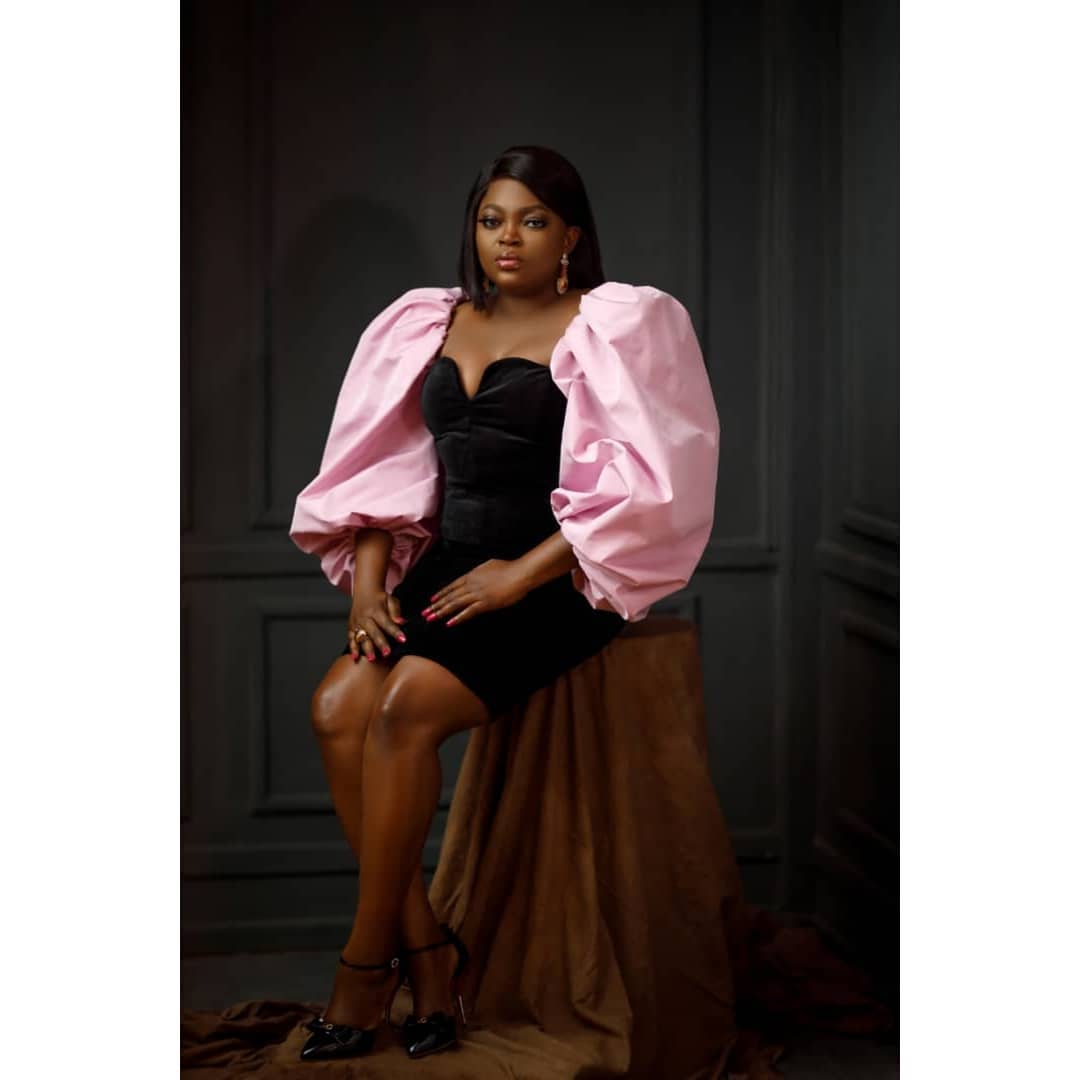
Funke Akindele Bello is the cover star of this week’s Vanguard Allure.

The award-winning Nollywood actor, producer and now director of EbonyLife Films‘ ‘Your Excellency‘ talks about growing up with strict parents; her big break; how she stumbled into playing the character, ‘Jenifa’; challenges that came with directing a feature film; her admiration for Mo Abudu; and positively impacting the lives of young people by creating platforms for them to excel.

Looking beautiful in these never-before-seen Emmanuel Oyeleke photos, we see a new side to Funke Akindele Bello.

Vanguard Allure hits the stands this Sunday, December 8, to herald the worldwide premiere of ‘Your Excellency‘ holding in Lagos.

Grab your copy now!

Photo Credit:
Creative Director: @nellymesik
Photography: @emmanueloyeleke
Hair: @dvreloaded
Makeup: @radiezbyeve
Styling: @medlinboss

Ambitious women are terrifying… especially to men who do not like women that stand up for themselves. To survive, women have had to find non-threatening workplace coping mechanisms that may not guarantee them career longevity and confidence but helps as they navigate the murky waters of workplace politics.

While we all know that not every workplace is toxic, opaque or political, many women admit to feeling unappreciated and otherness at work because of their gender.

Lois P. Frankel, in her book ‘Nice Girls  Still Don’t Get the Corner Office’, explains that if you work nonstop without a break, worry about offending others and back down too easily, explain too much when asked for information or “poll” your friends and colleagues before making a decision, chances are that you’ve been bypassed for promotions and ignored when you expressed your ideas. Women have now learned to communicate differently to attain inclusion. Temi, Supply Chain Manager with a pharmaceutical company, tells me: “last week, I came out of a meeting feeling over-competent and like I offended people”.

I have put together a survival guide that women can use to accomplish their goals, succeed in their careers and become leaders, without wounding the smashable male ego.

Protect the ego

Many women imagine their male colleagues see them as equal, but over the years, we have come to realize that deference is what most men want. Many cannot separate a female colleague from a subservient wife. Both, to them, are the same. Some years ago, I was told to resume at a location that will more than double my travel time daily. I was pregnant and I felt it was ludicrous, but I opted not to call the ‘boss’ or discuss it with his many loyalists. This didn’t help as the right thing to have done was to have started making calls and apologizing for real and imagined wrongs. He invited me for a meeting and told me there was an ego attached to his office and my silence was disrespectful.

Apologize for everything

An apology is a proven tactic for softening hard stances. Apologize before discussing an idea, requesting feedback or expressing a contrary opinion. Start with something like this ‘I know this sounds foolish, but I have an idea…’ Also, reticence is key when addressing sensitive topics. Another instance is, instead of saying ‘these numbers are wrong’ say ‘I am sorry, are these numbers right? I am not a numbers person’, then follow it with a self-deprecating laugh. Even when you know the numbers are clearly wrong, you will get the man to look at the numbers again without calling out his mistake and again, dearest ego will not be bruised. You can even take the fall for his mistake.

Do not be too assertive

There was this time a friend raised an issue at a town hall meeting at her workplace. She spoke up because she assumed that was the platform to talk. This point she mentioned got the CEOs attention and the director involved was asked to explain publicly. When she finished talking, everyone in the room was looking at her like she developed a third eye. Minutes before, a male colleague had spoken and his protestations were greeted with a round of applause, people nodding and whispering about his no-nonsense attitude. Gingered, she had stood up too. Well, let us just say she didn’t receive the support she imagined; her speech was greeted with a mixture of pity from her friends and disgust from does who did not know her. Though the incident sparked conversations and influenced how her organization executed projects from then on, it didn’t bring her much peace.

Have more male work buddies

Many times, in a bid to be seen as a serious woman, you will have to do your best to prove that you are one of the guys. Distance yourself from women, especially the not-too-popular women, the ones who get pregnant three times in two years and always have excuses to care for the family. If this involves disparaging other women and being totally inhumane, then do it.

Hesitance and a lack of confidence wins

Adopt wishy-washy language that makes you appear hesitant and unsure on purpose. Words like, ‘could’, ‘maybe’, ‘I don’t know’, ‘permit me to check with my boss’ and other phrases that demonstrate that you don’t want to take a stand is a winner any day. Instead of saying “I have an idea”, say “I am just thinking out loud here”. Being confident could see you being termed as a ball breaker. Many like it when you act a little like you could drown in a 2-feet pool without them and have fewer opinions.

Sleep with one or two bosses

This is extreme and a form of self-flagellation, but it helps to make you appear not so bright after all. We all know how much people look for ways to take the shine off a woman’s achievement by mentioning a scandalous affair or an influential lover. I remember admiring a woman during my internship days at one of the banks. She was clearly shrewd and attractive. One day, I mentioned to one of my male colleagues how I loved her self-confidence. He snickered as he told me her confidence came from sleeping with the boys who wear the ‘pants’ in this organization’ and he was excited to tell me more. Telling me she achieved so much, not just because she had big brains, gave him a certain satisfaction. Even when I mentioned her initiatives and achievement, he brushed them off, adding that she wasn’t better than anyone else.

Use lots of emoji and exclamation marks

Women, including myself, always feel the need to be charming and nice when sending emails, talking to male colleagues or requesting for updates. The high unemployment rate has forced men to respect the office, not necessarily the woman. However, your entry barrier to the ‘favourite club is sweetness and coyness to all men. It is very important for women to work hard but not come across as abrasive in their interactions with men. This is especially important relating to men who used to be your peers and now your subordinate. Even if your need for approval ends up hurting your leadership, it’s a small price to pay.

Collaborate more with men
Do you need something done? Ask a capable male colleague to help get it done. Make sure you emphasize the fact that you want a man to do it because they can be trusted with speed and combativeness.

You need a promotion or are interested in a project? Ask a male superior or peer to ask on your behalf. You have to show that you are not too ambitious at all times and you like men.

Never call out a man

Stella’s boss was doing his best to get into her pants and deliberately under-appreciating her efforts when it became obvious she was never going to let him. He’ll nitpick on her work, spell out every error and when she got something right he would pretend not to notice. After he tried to rape her and she managed to escape, she knew she had to report him to HR. Stella is not the only one he has been harassing in the department and she banked on the other ladies coming forward so she sent an email to human resources detailing her experience with him. Nothing came out of it because their HR was already compromised. The other women refused to come forward as well.  In the end, he got a slap in the wrist for being mildly inappropriate towards her. Calling out his behaviour did not do much to endear her to the team.

Pretend to be not too smart

When a male colleague is telling you something you already know, pretend you do not know it. An example is:

“Chichi do you know how to use excel for data analytics?”

“No, I don’t. Please will you teach me, I have so much to learn from you’. She replied.

Chichi runs an online training school on weekends teaching people data analytics. But you see, Chichi doesn’t want Mr. Oga to think she knows too much, so she plays dumb.

In her book How to Succeed Without Hurting men’s Feelings, Sarah Cooper summarised:  ‘The unspoken rules of how women should behave in the office are as numerous as they are confusing. Ask for a pay rise? Pushy. Take credit for an idea? Arrogant. Admit a mistake? Weak. Successfully juggle work and family? Unpromotable.’ 

You choose: succeed with a few enemies along the way or spend so much time trying to be liked by everyone? What are your thoughts?

Editor’s note: We know ordinarily we shouldn’t have to say this, but after much deliberation we decided it’s best to put it out there – front and center. We don’t want people getting annoyed needlessly. 

This is a tongue-in-piece cheek… or is it tongue-in-cheek piece?

We hope you enjoy this as much as we did. We believe there are notable take away points therein.

About Author

Chineze lives in Lagos with her husband and their 3 young children. She loves good food and good people. You can follow her on twitter @ChinezeAnuli and Instagram @chinezeaina

Source: Bellanaija

34-year-old Sanna Marin has been named the next prime minister of Finland, after the former transportation minister was elected by her party Social Democrats to the post of the PM on Sunday.

According to The Guardian, Sanna Marin, who is expected to take the oath of her office this week, will become one of the world’s youngest state leaders, and she will also be the youngest head of government in Finland’s history.

Finland’s transportation minister Sanna Marin was selected by her Social Democratic party on December 8 to become the country’s youngest prime minister ever.

Her appointment comes after Antti Rinne resigned on Tuesday, after a party in the coalition said it had lost confidence in him following his handling of a postal strike.

Photo Credit@marinsanna

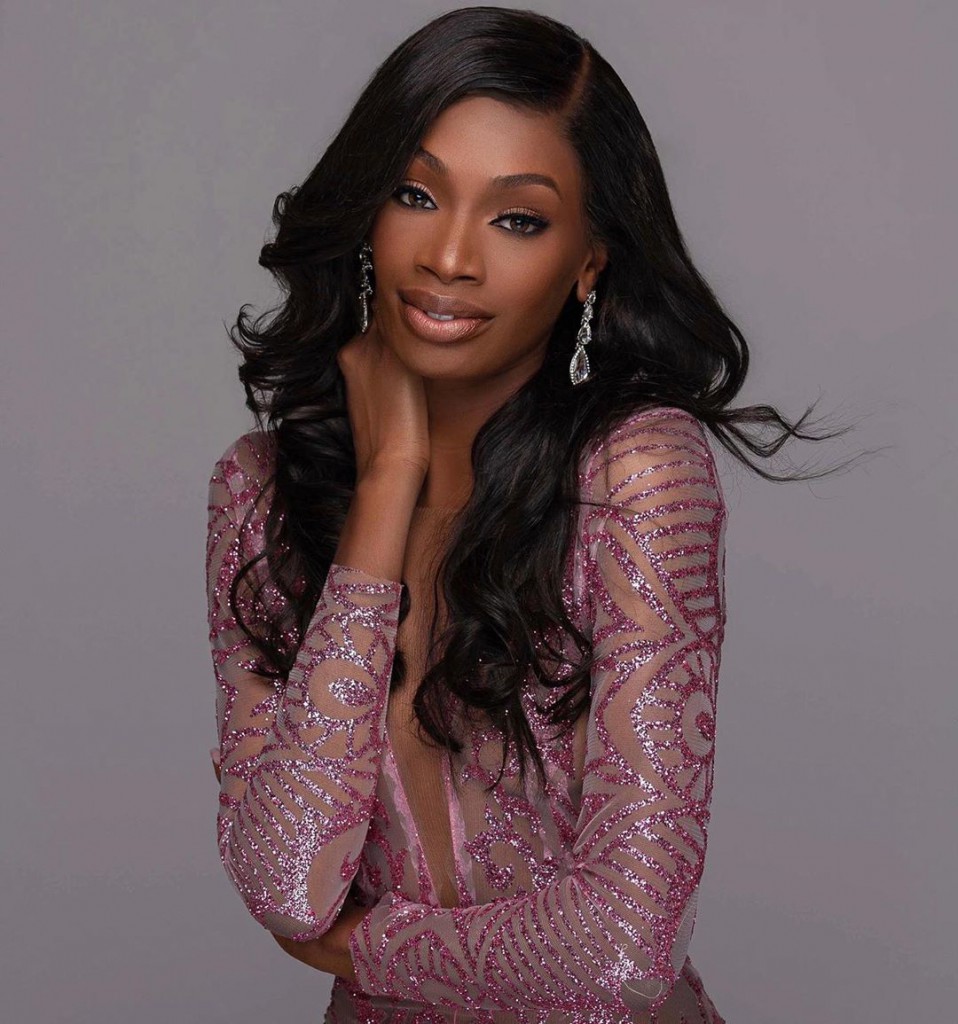
MBGN Universe, Olutosin Araromi, was definitely one to watch out for at this year’s Miss Universe beauty pageant, and this she proved by placing among the top 20 out of 90 contestants.

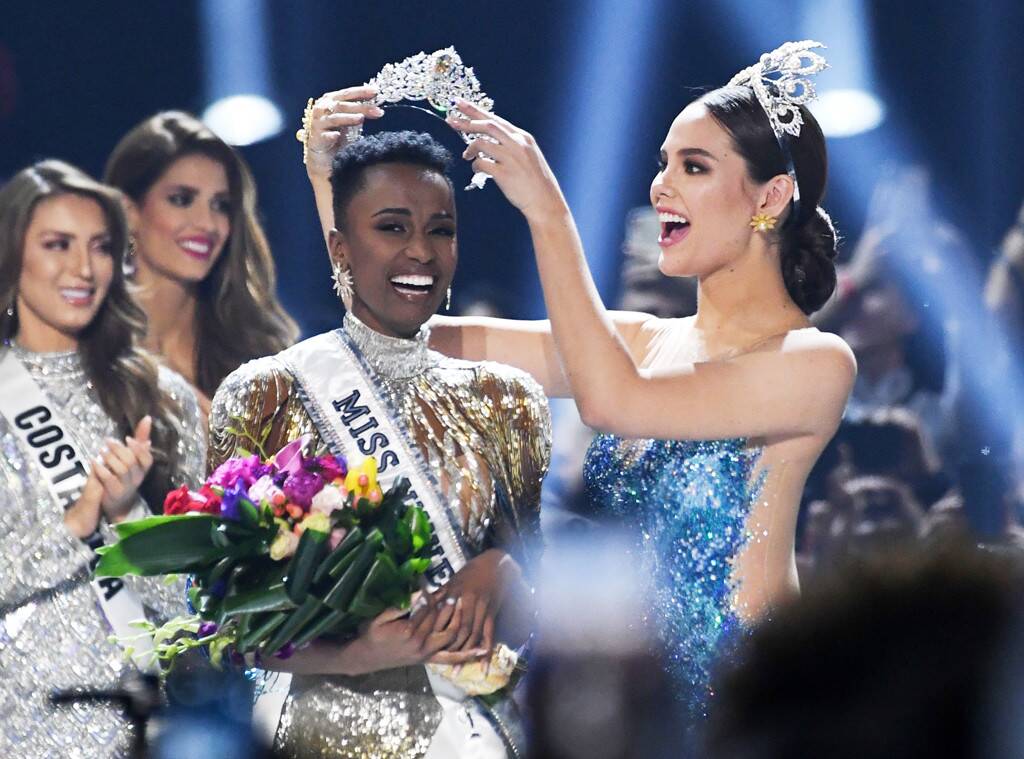
Olutosin competed alongside 90 other ladies at the Tyler Perry Studios in Atlanta, Georgia, at the event which saw South Africa’s Zozibini Tunzi getting crowned as the 68th Miss Universe.

Tosin’s general charisma, poise and intelligence made it possible for her to place as a finalist, which is interestingly the first time in many years a Nigerian will place at the top spot.

When it was Olutosin’s turn to say something about herself, the 25-year-old public speaker who tragically lost her mum during the 2019 MBGN pageant, mentioned that the death of her mom has taught her perseverance and she uses her story to inspire and uplift youths.

Here are the top 20 contestants below:

Nigeria – Olutosin Araromi

South Africa – Zozibini Tunzi (WINNER)

Vietnam – Hoàng Thùy

Indonesia – Frederika Alexis Cull (Top 10)

Thailand – Paweensuda Drouin (Top 5)

Albania – Cindy Marina

Colombia – Gabriela Tafur (Top 5)

Brazil – Julia Horta

India – Vartika Singh

Venezuela – Thalia Olvino

The Philippines – Gazini Ganados

USA – Cheslie Kryst (Top 10)

Mexico – Sofía Aragón (Top 3)

The Dominican Republic – Clauvid Daly

Peru – Kelin Rivera

Puerto Rico – Madison Anderson

Portugal – Sylvie Silvia

Croatia – Mia Rkman

Iceland – Birta Abiba Þórhallsdóttir

France – Maëva Coucke

Miss South Africa was just crowned Miss Universe! Zozibini Tunzi, 26, stood out from 90 other women, and made history as the first Black South African to win the title.

According to her contest biography, Tunzi is an activist who has devoted herself to fighting gender based violence and changing the narrative around gender stereotypes. She is also an advocate for natural beauty.

In her last response Tunzi emphasized what it was like growing up and her hopes for the next generation.

 “I grew up in a world where a woman who looks like me, with my kind of skin and my kind of hair, was never considered to be beautiful.” She continued, “I think it is time that that stops today. I want children to look at me and see my face and I want them to see their faces reflected in mine.”

Tunzi is now a part of the history making Black beauty queens as she joins Miss USA, Miss Teen USA and Miss America. It is the first time all pageants have crowned a Black woman in the same year.

The pageant was held at Tyler Perry’s studios in Atlanta, GA. 

Congratulations Zozibini!

1. Coconut oil

Coconut oil is a good product for taking off makeup [Health and Fitness City]

This readily available oil is a perfect substitute for makeup wipes. All you need to do is dab your face with a cotton wool that is already soaked with coconut oil. Leave it for one or two minutes. This will soften the makeup and prevent irritation. Then you can wash your face after.


2. Petroleum jelly

Vaseline is a good replacement for makeup wipes [Pulse Live Kenya]

Petroleum jelly/vaseline can take off any kind of makeup, even waterproof. All you need to do is apply the petroleum jelly on your face and wait for a while for the makeup to soften. You can clean it off after some minutes.

3. Milk

Milk is one of the beauty secrets that people are yet to unlock. By using the milk, you can clean your makeup and also nourish your skin at the same time. Apply milk on your face and then wipe off with a cotton pad.


Credit: pulse.ng

Uber has released its highly-anticipated safety report, which revealed 464 incidents of rape in two years in the United States alone.

In total, there were 5,981 reports of sexual assault in 2017 and 2018,  In 2018, more than 3,000 sexual assaults were reported during its U.S. rides. That figure includes 229 rapes across the company’s 1.3 billion rides.

In 2017, the company counted 2,936 reported sexual assaults during 1 billion U.S. trips. Uber bases its numbers on reports from riders and drivers, meaning the actual numbers could be much higher. Sexual assaults commonly go unreported.

The company noted that drivers and riders were both attacked, and that some assaults occurred between riders. The report, which Uber UBER, touted as the first of its kind, provides a rare look into the traffic deaths, murders and reported sexual assaults that took place during billions of annual rides arranged in the U.S. using Uber’s service.

It is part of the company’s effort to be more transparent after years of criticism over its safety record.

“I suspect many people will be surprised at how rare these incidents are; others will understandably think they’re still too common,” Uber CEO Dara Khosrowshahi tweeted about the report.

“Some people will appreciate how much we’ve done on safety; others will say we have more work to do. They will all be right.”

Uber’s share price dropped more than 1% in after-hours trading. Uber and competitor Lyft LYFT, have faced harsh criticism for not doing enough to protect the safety of their riders and drivers. Dozens of women are suing Lyft, claiming the company should have done more to protect them from driver assaults. A Connecticut woman sued Uber last month, claiming she was sexually assaulted by her driver.


Credit: LIB

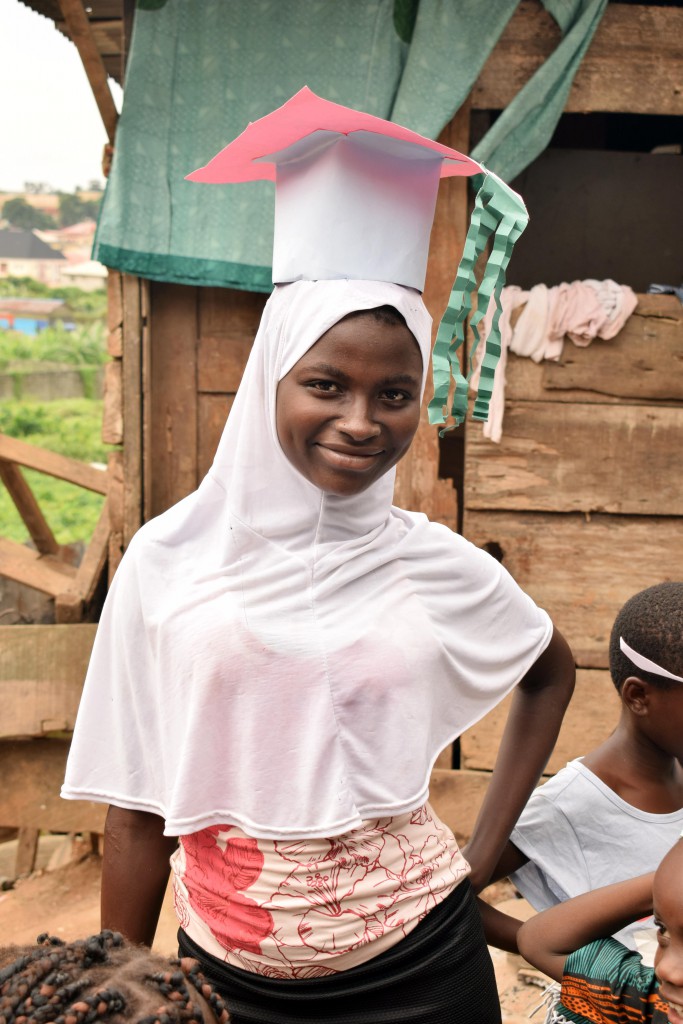
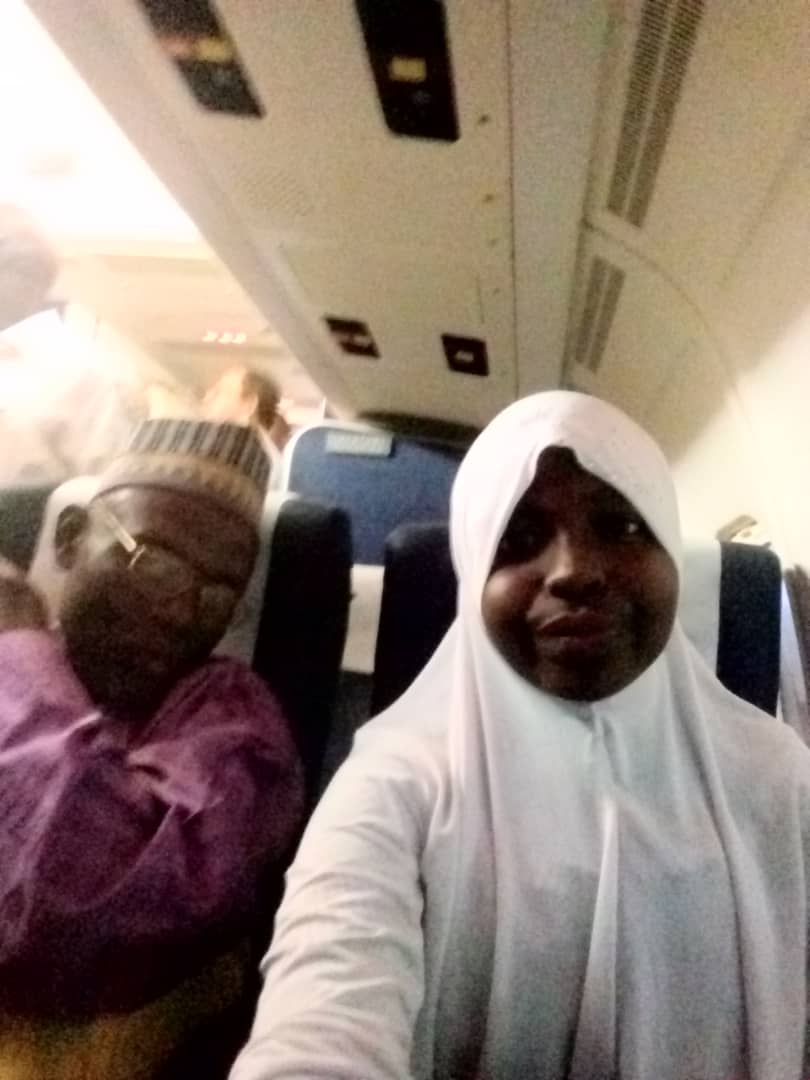
* Her dream to represent Nigeria at an international children’s conference was dashed by immigration officers in Lagos but she has not given up hope. Nicknamed by some as ‘Nigerian’s Malala’.

From the most unlikely places and amidst the darkest odds, stars keep emerging on the Nigerian horizon. One of them is 14-year-old Aisha Saleh who is currently making waves following the alleged frustration of her efforts to represent Nigeria at the International Children’s Conference in Geneva, Switzerland hosted by the United Nations recently (commemorating the 30th anniversary of the UN’s Convention on the Rights of the Child).

Aisha was born in Lagos on December 21, 2005 ago to petty trader Zainab Saleh and taxi driver Saleh Mohammed. At age seven, she lost her mother thus she and her younger brother Mohammed moved in to live with her grandmother in Monkey Village, a very impoverished neighourhood sited in a valley off the highbrow Allen Avenue in Lagos.

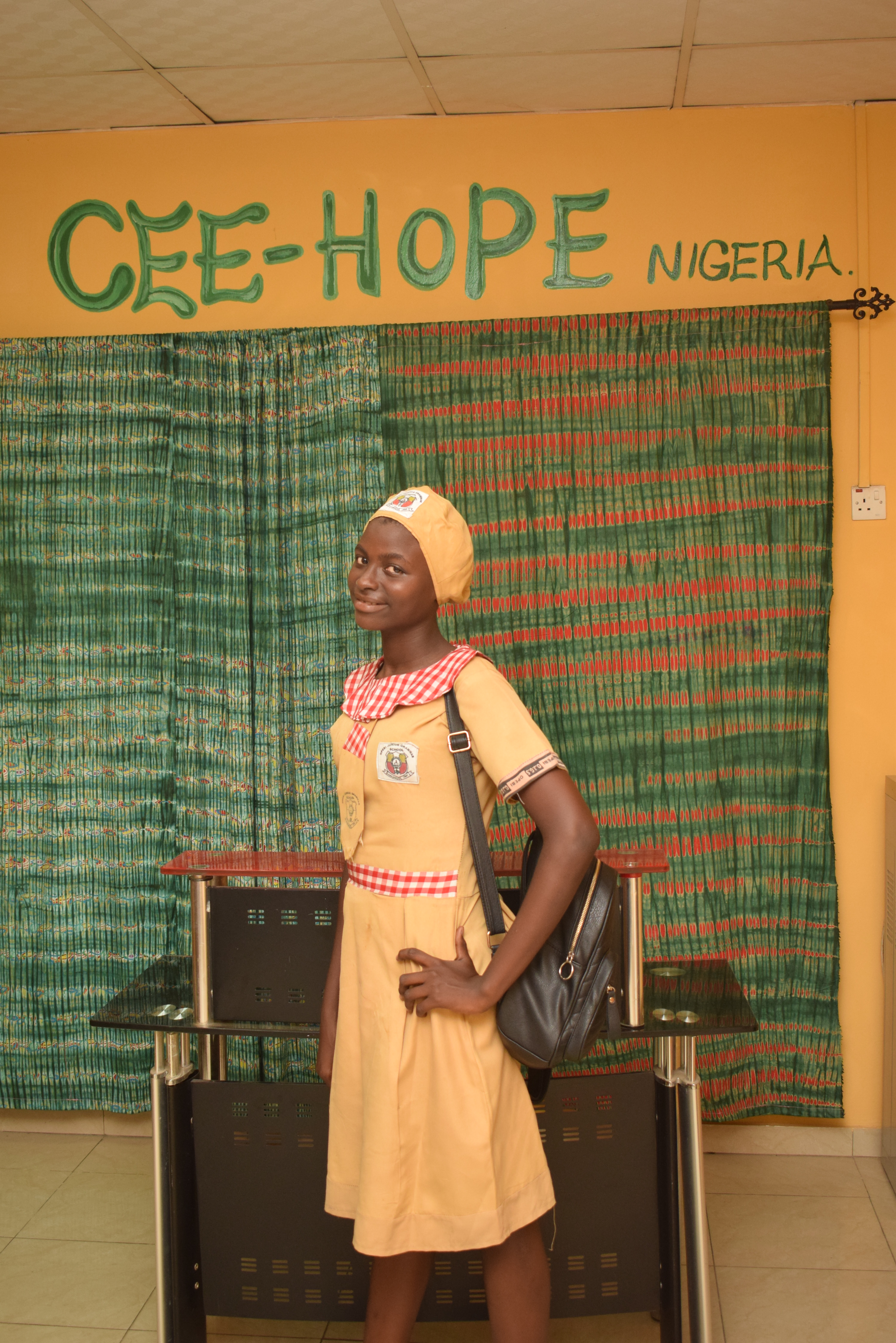
But the dark circumstances of her childhood and surrounding environment have not deterred Aisha from shining like a luminous star. Well known among her peers, school mates and teachers as an academic genius, Aisha spent only four years in primary school as against six as she was promoted twice.  Right from her nursery and primary school at Opebi Primary School in Lagos, and currently in Junior Secondary School Three at Opebi Grammar School, also in Lagos, Aisha consistently takes first position in her class. Her eloquent and apt answers to questions and her unusual intellectual depth continue to outstand her teachers and school mates alike.

A polyglot, from age 10, she was already speaking five languages including English, Arabic, Hausa, Yoruba and Egun. Aisha who is talented in arts and designs, hopes to become a lawyer in the future in order to  bring justice to oppressed children and people in general as she witnesses in her neighbourhood all the time.

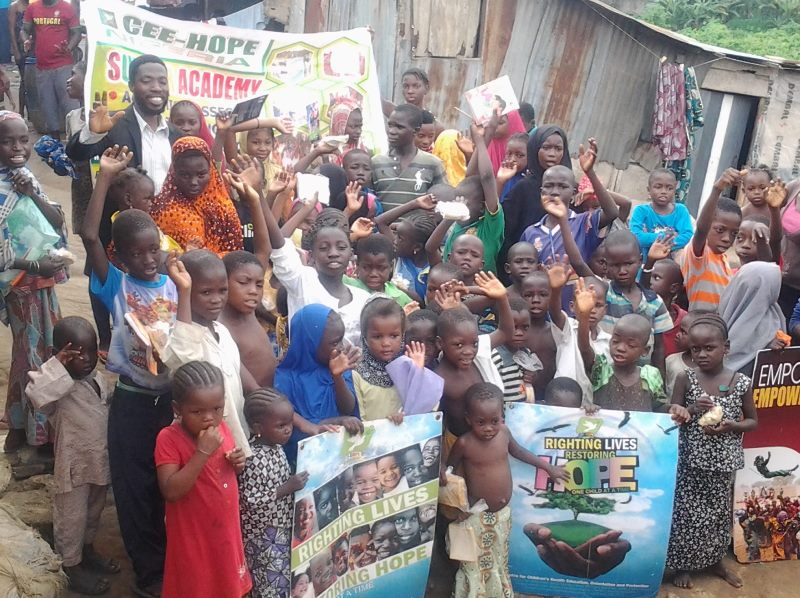
In 2016, at age 11, the Centre for Children’s Health Education, Orientation and Protection (CEE-HOPE), a child’s rights and development non-profit, started work in her community, engaging the children, starting an educational empowerment program and mentoring the children about their rights among others.

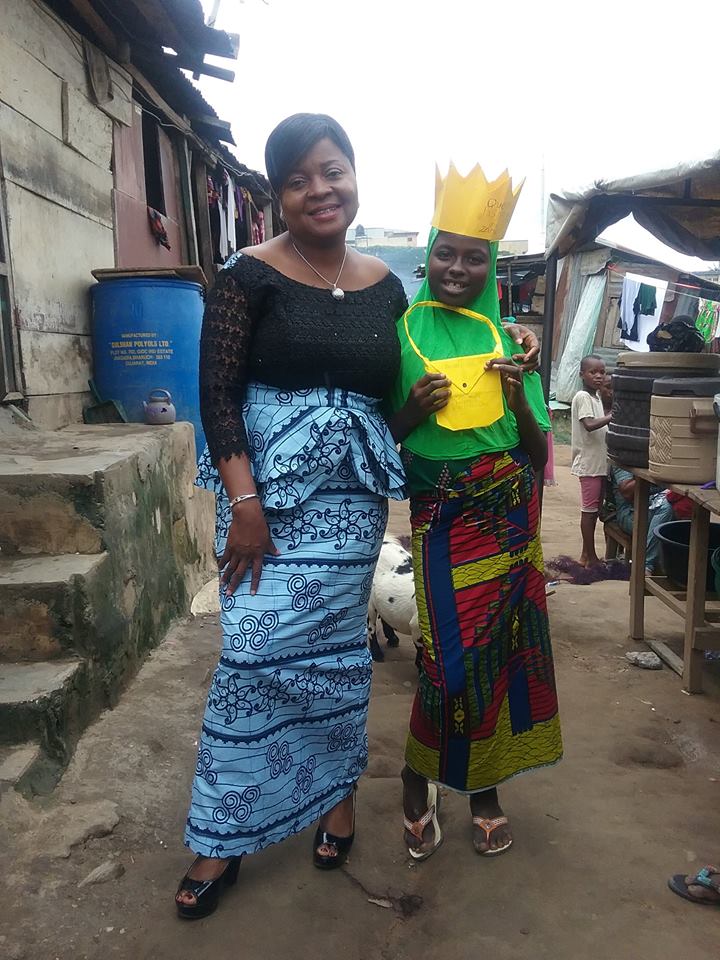
CEE-HOPE also started the Girls-Go-for-Greatness (Triple G) club and after discovering Aisha, made her the community coordinator of Triple G and also community librarian. Aisha currently helps to enlighten the children in Monkey Village about their educational and human rights, educates parents against marrying off their girl children (as child marriages and teenage prostitutions are rife among the Lagos’ urban poor and impoverished neighborhoods). She also gives out books to fellow children. Besides she enlightens the guardians in her neighbourhoods originating from neighbouring countries about the criminality of not sending their wards to school but using children as young as five as househelps.

Aisha also helps to coordinate children and teach toddlers during CEE-HOPE’s annual summer school program in the community.

At CEE-HOPE’s events both within and outside her community, Aisha shines brightly with her performances and scholarly contributions.

Since 2016, CEE-HOPE enrolled Aisha on its girl educational scholarship program to help her realise her educational dreams. In the past she was also awarded scholarship by The Women’s Helping Hands Initiative (TWHHI), an initiative of Mrs. Dolapo Osinbajo (wife of the current vice president of Nigeria which works with underprivileged children in Lagos.

Betty Abah, founder of CEE-HOPE which works with children in slum communities and beyond, describes Aisha as ‘a clear-cut genius, an unstoppable meter and one of our biggest discoveries.’

Aisha recently spoke on her botched trip to Switzerland, her activism in her community and future aspirations.

Childhood Influence

I was living with my parents and younger brother. But then, when I was seven, I lost my mum. We had to come and live with my grandmother in Monkey Village, a slum area in Opebi, Ikeja, Lagos State. My grandmother took care of us until I started primary school. I performed excellently in primary school and as a result was given double promotion so I spent four years in primary school. CEE-HOPE discovered me in 2016 in Monkey Village and since then, I was made a child right’s defender and volunteer of CEE-HOPE. My childhood didn’t prepare me in any way for what I do now because we were poor and, living in such an area, it was all impossible. But God has sent CEE-HOPE to be helpers to me. I thank God because I know nothing is impossible when God says yes.


My  inspiring work at Monkey village

Some of my inspiring work that I do at Monkey Village are: I am the leader of the girls’ club in my community; I am also the community librarian and  I teach the toddlers in the community during my free hours and during CEE-HOPE’s summer school program. In addition, I talk to parents to send their children to school and not to marry them off early. My desire is for everybody to acquire a good education.

Breaking boundaries at 14, being an agent of change  and adding value to the society

For me to be an agent of change to my society, am very happy and I know one day I won’t only an agent of change to immediate community or my society but to the world at large.

My Impactful work with CEE-HOPE


Okay, I have been working with CEE-HOPE since 2016 when they came into my community. That time, most of the children here were not in school. After they organised three weeks of summer school with us and donated school materials and put some of us the girls on scholarship, things improved. I think more than 90% of the children are now in school. We also don’t have child marriages here like that again. Also, the books given to me as Librarian, I borrow the children and many of them are now interested in reading. Some of them have read more than 10 books and they keep asking for more. I also coordinate them to go for computer lessons at CEE-HOPE office in Ogba. I also believe that many of the parents want their children to be like me so that can be selected to travel abroad too. Also, because of what happened, many people now know about Monkey Village. So I believe that I am a good ambassador for my community and I believe that better things will come for us. Some people even call me Malala of Money Village

Barred from travelling because of immigration issues

At first, I was excited when I heard that I would be traveling to Switzerland to attend the child’s right convention anniversary where I was going to meet stakeholders, other teenagers like me and big celebrities. It took us three weeks to get the international passport. The passport office people at Ikoyi were asking for different kinds of documents and we were going back and forth to get the (documents). I was missing school because of that but the people at the passport office kept delaying until I missed my trip. They said it was a lie that I was about to be trafficked and they set up a panel to investigate us, and even with all the letters and documents from the organizer in Switzerland, from Amnesty International in Abuja, from CEE-HOPE, my school results showing that I always take position, they refused. It was when one big woman called another big man in Abuja, and the passport was produced in one day and the PCO personally gave me. My father’s own was produced in two days (because he was to travel with me). When we got to Abuja, the Embassy of Switzerland said it was too late to give us visa and my father and I just returned to Lagos very sad. All through the flight I couldn’t eat or talk. But I know Almighty Allah will guide me through. More opportunities will surely come.

Dear President Buhari…

I will like to say the President of Nigeria should talk to the people at the passport office that they should never look down on anybody because they were once like that before they became who they are today. I know they did that to me because they saw that me and my father are poor. In those three weeks, I saw many people bringing their children, even small babies to get international passports for them and none of those people were stopped or investigated. Apart from my case, I am sad because they must have done that to so many other poor people who could not even talk to journalists just like I did and their dreams were killed by these same people. It is very wrong and the president should stop them.

Knowing there are people out there rooting for me

Yes, I am aware my story has gone viral, I read some of the reports and I feel happy and I really appreciate knowing there are people out there rooting for me.

Being a Ruby Girl

My outstanding academic performance and work with fellow children in my community.

Dear marginalised teenagers striving to be better…

My advice to the teenagers out there striving to be better is that there should not be discouraged or join bad groups. They should read their books and avoid bad habits that may damage their lives and future. Our dreams are bigger than our present environment and one day, things will be better especially if they face their studies well. May God guide us through.

In its 2019 edition, the list featured 600 trailblazers from 20 industries with an average age of 26.8. According to the magazine, the 30 were chosen from among thousands through a three-layer process that relies on the knowledge and authority of its community and experts.

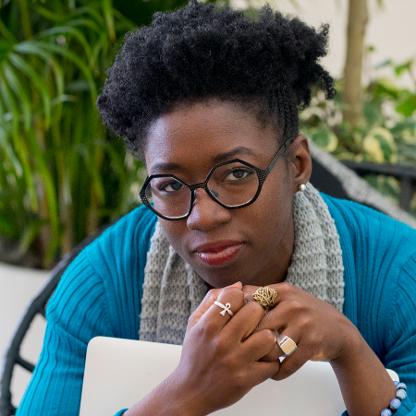
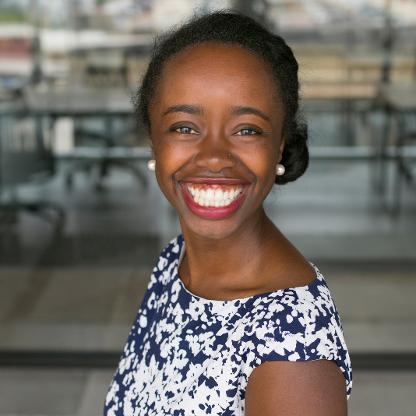
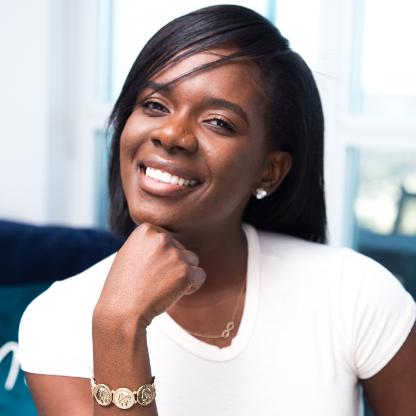
Among the featured individuals are eight outstanding Africans, Tomi Adeyemi, Tunji Adeniyi-Jones, Winnie Karanja, Ivy Awino, Wemimo Abbey, Obi Omile Jr., Nohemie Mawaka and Joy Buolamwini.

The Forbes “30 Under 30” list Class of 2020 is made up of 30 honorees for each of the 20 categories which vary from work in art and style to energy, finance, tech, law and more. The list is a diverse one, with 48 percent of the featured individuals identifying as either an immigrant or first generation.

Meet the Africans that were featured in the prestigious list below:

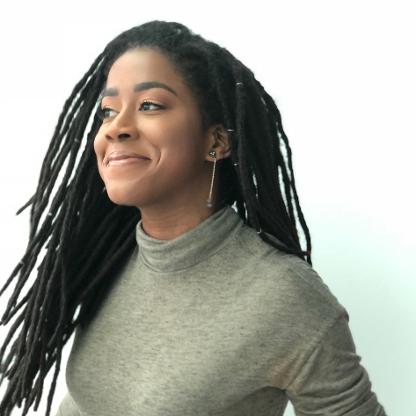
Tomi Adeyemi, 26

Tomi Adeyemi is the author of Children of Blood and Bone (Holt Books, 2018), the first novel in a young adult fantasy series, which reached No. 1 on the New York Times bestseller list. The book remains on the list nearly two years later and is being developed as a movie by Lucasfilm.

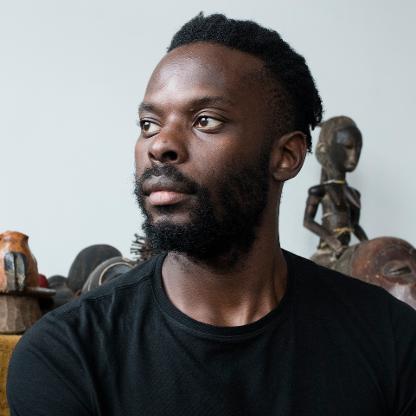
Tunji Adeniyi-Jones, 27

Adeniyi-Jones is a 27-year-old who finds inspiration for his figurative paintings in West African history and mythology and in his own Yoruban heritage. Artforum magazine has compared him to Matisse. The son of Nigerian immigrants, he was born and raised in London and earned an MFA from Yale. The Dallas Museum of Art owns one of his paintings and he has had solo shows in New York, London, and Los Angeles.

Wemimo Abbey, 27

Esusu helps users save money, access capital and build credit. In 2018, the fintech company debuted its peer-to-peer savings app on iOS and Android. The following year Abbey and Goel launched a reporting platform to give renters credit for making monthly payments, a benefit historically reserved for homeowners. Esusu has served over 30,000 people, saving them over $20 million in interest rates.


Joy Buolamwini, 29

Joy Buolamwini is a computer scientist and digital activist based at the MIT Media Lab. As founder of the Algorithmic Justice League, she identifies bias in artificial intelligence and develops practices for accountability. Buolamwini’s TED Talk on algorithmic bias has been viewed over one million times.

Winnie Karanja, 28

Winnie Karanja is the founder and executive director of Maydm Women and people of color are underrepresented in STEM jobs. Maydm, a Wisconsin-based nonprofit, is fighting to close that gap by training girls and youth of color on the skills needed to work in the technology sector.

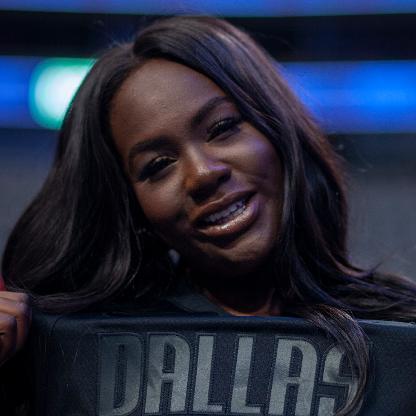
Ivy Awino, 29: Performing as DJ Poison Ivy, Awino is the second-ever female NBA team DJ and, in 2018, became the first woman to DJ the NBA All-Star Game. The former Mavs ball girl curates and programs the team’s in-arena audio as well as music used in digital programming. Her performances have amassed 10 million views on social media, and in 2019 she launched an initiative in Senegal for the NBA’s Basketball Without Borders program.

Nohemie Mawaka, 28

In 2017 Nohemie Mawaka founded Stats Congo to help the mothers and newborns in the Democratic Republic of Congo, who face one of the highest mortality rates in the world. Stats Congo aims to help Congolese hospitals go digital and to collect data to monitor medical indicators linked to that high mortality rate.

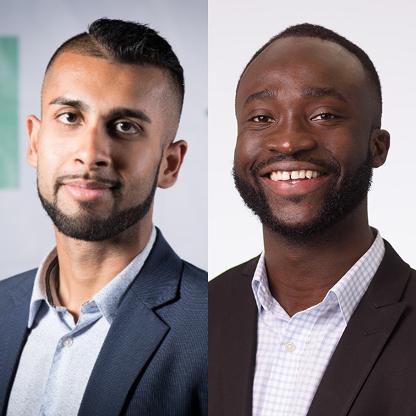
Obi Omile Jr., 26

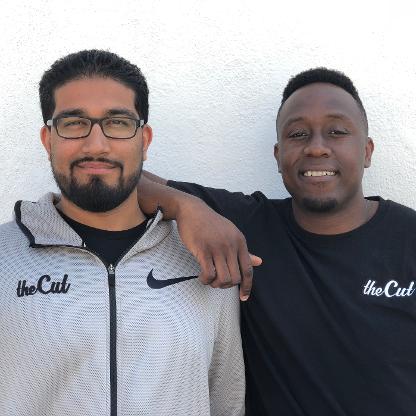
Founded by two high school best friends, Obi Omile Jr. and Kush Patel, theCut is a barbershop technology platform that allows users and barbers to schedule and manage appointments. A graduate of the TechStars program, TheCut has successfully booked 2 million appointments by over 350,000 clients who visited 22,000 barbers across the country. Previously, both founders worked in engineering with Omile at Wells Fargo and Accenture, while Patel was working at Microsoft and Yahoo.

Check out the complete list of Forbes’ 30 Under 30 for 2020.


Credit: Bella Naija

According to npr, new research has raised concern about the safety of permanent hair dye and chemical hair straighteners, especially among African American women. The study was published Wednesday in the International Journal of Cancer.

Previous research in animals has found links between certain chemicals in hair dye and straighteners and cancer. But findings from other human studies on the association between hair dyes and straighteners and cancer have been inconsistent. This large, prospective study provides firmer evidence of a link.

Researchers analyzed data from an ongoing study called the Sister Study, looking at medical records and lifestyle surveys from 46,709 women between the ages of 35 and 74. Women answered questions about their use of hair dyes and straighteners. While earlier studies on hair dye and cancer risk included mostly white women, the new study includes 9% African American women.

Researchers found that women who used permanent hair dye or chemical straighteners were at higher risk of developing breast cancer.

“The association was notably higher among black women,” says epidemiologist Alexandra White, study author and an investigator with the National Institute of Environmental Health Sciences, who studies environmental risk factors for breast cancer.

After eight years of follow-up, White found permanent hair dye use was associated with about a 7% higher risk of developing breast cancer among white women, “whereas in black women that risk was about 45 percent.”

That risk was even higher among black women who dyed their hair frequently, every one or two months.

Researchers don’t know which ingredients in the products might be of concern. The study did not look at the specific ingredients in the products women were using, only at whether they had used the product and whether they developed breast cancer.

All women in the Sister Study were already at high risk for breast cancer since they had a sister who had breast cancer. This family history put them at increased risk but that does not influence the findings of this analysis since all the women in the study had this same family history, but only some of them used hair dye and straighteners.

Researchers note that in the United States, breast cancer incidence remains high for all women and appears to be increasing for non-Hispanic black women, who also are more likely to be diagnosed with more aggressive forms of the disease and more likely to die from it.

Hair products contain more than 5,000 chemicals, according to researchers, including those with mutagenic and endocrine-disrupting properties such as aromatic amines, which can raise cancer risk, according to White.

When it came to chemical straighteners, risk didn’t vary by race. Both black and white women who used hair straighteners were about 30% more likely to develop breast cancer than those who didn’t use the products. However, black women are more likely to use them, with about 75% of black women in the study reporting they straighten their hair.

“For the chemical straighteners one of the big concerns there is formaldehyde, which is a known carcinogen,” says White. She notes that in the early 2000s just before the study began, Brazilian keratin treatments came on the market. This new treatment, commonly called a Brazilian blowout, contains formaldehyde, while earlier hair straightening treatments did not.

The study findings should be understood in context, says Dr. Otis Brawley, a medical oncologist with Johns Hopkins University. The actual risk found for use of these hair treatments is quite low, he adds, especially compared with other known carcinogens like tobacco or radiation. “This is a very weak signal that these things might be causing cancer in the population,” he says.

Much more research is needed, he says, to know for sure how risky these products are. For example, long-term clinical trials with a control group and placebo would be more definitive, but this type of study “would be difficult if not impossible to do.”


Continue reading here https://www.npr.org/sections/health-shots/2019/12/04/784838430/hair-dye-and-straightener-use-linked-to-higher-cancer-risk-especially-for-black-?utm_campaign=npr&utm_medium=social&utm_term=nprnews&utm_source=facebook.com


Culled from npr.org

​