Author

Women of Rubies

Browsing

Siblings bickering and arguing can be frustrating and mentally exhausting for parents. Although disagreements between siblings may drive parents crazy, it teaches our kids how to deal with and resolve conflict at an early age. This will, in turn, help them handle conflicts in relationships outside of their immediate family as they become adults. Nevertheless, when it seems like your children can’t get along even for a minute, then you can try these tips:

Look after each child’s needs

Children feel valued if you make it clear that it’s not okay for younger children to mess up older children’s activities, and vice versa. Also, take time out to bond individually with each child, and, most importantly, try not to compare children with each other.

Praise their good behaviour

Notice and give positive feedback to your kids when they’re well behaved. When you tell children clearly and specifically what they’re doing well, you’re likely to see more of that behaviour.

Show children how to get along

You are your children’s number one role model. Your children will notice if you iron out differences without fighting. If you would like your children to figure things out calmly and respectfully, they have to see you doing this. If you would like them to be ready to apologize to others, they have to see you apologising too.

Coach your children

You are your children’s problem-solving coach. You should teach them the way to handle disagreements and guide them toward skills for managing angry feelings, negotiating, and playing fair. This is much better than having to step in when they’re brewing or even worse, being a referee who breaks up fights.

You can also try these tips whenever they start fighting:

Hold hands

Whenever you notice your kids fighting, call them to sit together and hold hands till they solve their issues. Before you know it, they’ll laugh and forget that they were fighting.

T-shirt co-operation

The idea is that you simply have an extra-large men’s t-shirt that the kids must wear together until they stop bickering. Older kids can even be made to do chores while crammed within the t-shirt together. While the shirt is on, speak to them about how things work better once they agree to work together (trust me, if they need to try to do anything while wearing one shirt, they have no choice but to work together.)

Job bottle

Think of about a dozen chores. Write them on small strips of paper. Laminate them or cover with tape so that it can’t get mangled. Explain to your kids that each time a fight breaks out they all have to pick a job out from the job bottle. They don’t get to choose, they only grab one. When the squabbling starts, just calmly say, “job bottle.”

Hug it out

One time, I made my kids hug and told them they had to continue to hug each other until they stopped being mad at one another. I found them laughing at their situation because they were physically locked together. After that, ‘I love you’ and ‘I’m sorry’ would follow.

Give them a problem to solve together

You can try giving your kids a puzzle to solve together to stop them from arguing. When they finish that, give them a harder one. Solving puzzles together encourages them to get along, rely on each other, and help one another.

Finally, it may help to remember that a certain amount of bickering and fighting is normal and even healthy in your children’s relationships with each other. Try some of these ideas and see if one works for you.

Remember, consistency is key. When you find a solution that works for your kids, continue with it. I’m confident that you’ll see a marked improvement in how your children get along.

Do you have any tips to ensure your kids get along? Feel free to share.

Self-discipline is one of the biggest test in every relationship, especially one void of intimacy. The truth is Celibacy goes against the grain of bodily desires.As a [young] adult, your body is wired to crave sexual release and the fact that your mind becomes tuned to celibacy does not mean your body will be.

There will be times when it will be nearly impossible to keep the sexual urges under control.

So when you find yourself in situations like this, what doe you do? Here are seven useful tips that could help you out.

1. Don’t dwell on it

It’s impossible to not have flashes of sexual desire every now and then but because you do not want to have sex, you need ways to drown out the thoughts. It’s easier to abstain from what you are not thinking about. So try to not dwell too much on it.

It probably won’t be easy. But it’s what you signed up for.

2. Get busy

Invest yourself into something that requires your time, dedication, energy and all. The busier you are, the easier it will be to get lost in activities and forget about yourself and the urges, even if momentarily.

There’s a reason why they say an idle mind is the devil’s workshop, remember? You have to always use your sense.

3. Guard your space

Keep to the barest minimum anything that will lessen your inhibitions and trigger the desire for sexual contact. Movies, clips, photos, people, etc.

Mind you, spending time with your partner will also sometimes trigger this desire. Your discipline will especially be most tested in these periods.

4. Know when to run

Never trust yourself with dangerous situations. Better avoid the situations than try to stop the action midway through it.

You know what they say; na from clap dance dey start.

Women chatting [Credit: Black New Zone]Women chatting [Credit: Black New Zone]

5. Talk to someone

Yeah, it could be quite awkward to ask one or two married people you know if they waited for sex before marriage.

But then, if you somehow know someone who managed to abstain from sex before tying the knot, talk to him or her. It’d require some kind of close relationship to get to the point of speaking about something as intimate as this but if you’re lucky to have such person, ask them how they did it.

Their solutions could come in handy for you.

6. Discipline

The truth is that none of these things mentioned above will completely, absolutely take away the urges. There can be nothing to take that away as it is a natural phenomenon which, to an extent, even confirms your healthiness.

At some periods it could be quite a real struggle to rein it all in; but then again, putting these urges under control is the very underpinning idea of celibacy and you must have known that before embarking on this kind of relationship. This is why the need for sexual discipline cannot be overemphasized.

Waiting while dating is wholly an exercise in self-discipline and above all other things, this is what you need most. Restraint, discipline, a mental fortitude to keep your eyes on the goal is the most supreme here. Foreplay is very important

7. Will it be worth it in the end?

Never forget to keep asking yourself this question, and reminding yourself of the real reason why you decided to abstain from sex before marriage.

Constantly reminding yourself of this reason will also help keep your urges at bay. It’s like setting a personal target and meeting it.

You’ll be happy with yourself, and feel a sense of pride and satisfaction if you see it through. And again, all struggles you overcome make you stronger, right?

Source: Pulse Ng

The AWP Network Initiative has unveiled Patience Salifu of CondimentPlus, Ogola Lois Kange of Smiley’z Mobile Kitchen, Olufunmilola Shelika of Gef’s Smoked Edibles, Ebun Feludu of JAM – The Coconut Food Company, Chigozie Bashua of The Nutplace Ventures, Patrick Karunwi of Kalos Agro Homes, Boma Whyte of Kringle Cookies, and Chidimma Uzoma-Mba of Zayith Yogurt as selected vendors to supply ShopRite Nigeria.

The competitive AWP Network Vendor programme, which launced last year on July 15, 2020, received over 2,500 vendor applications. Only 100 vendors were accepted into the programme, while 61 vendors were certified to complete the programme and received the opportunity to pitch their products to ShopRite Nigeria. The programme in collaboration with ShopRite provides a real life opportunity for women entrepreneurs in Nigeria to get their products out into the marketplace.

The AWP Network Vendor programme will continue to work with small business owners who are interested in operating as suppliers, by working to recruit additional retailers as partners. The AWP Network also plans to invest more in food manufacturing and innovative programs.

Mary Olushoga, Founder of the AWP Network states, “Clearly, we see that this is a competitive program however, we need to do more to improve and increase a healthy food supply chain pipeline. Congratulations to the vendors accepted and approved to supply to ShopRite.”

In addition to pitching to ShopRite Nigeria’s Head of Procurement, Dawid Moelich; program participants also got the opportunity to pitch to Shimite Bello, Executive Assistant on Export Initiatives and Coordinator at the Delta State Government Unido Center, and Adaorie Udechukwu, Gender Specialist at the IFC.

The AWP Network vendor programme aims to increase the number of women entrepreneurs who supply to large retailers in a strategic manner. The AWP network Vendor program is a capacity building program for local vendors seeking professional guidance regarding best practices and guidelines to become vendor suppliers.

To date, the programme has hosted several expert speakers to include Habeeb Gbenle, Investment Association at Lofty Inc. Capital Management, Ini Abimbola, founder of ThistlePraxis Consulting Limited, Funkola Odeleye, co-founder of DIY Law Nigeria, Jessica Pinard, Raw Materials Specialist, Chinedu Enekwe, founder of Aux21 Capital, Annabel Kamuche, Managing Director at Nicert Limited, Jessica Hope, founder of Wimbart PR, Jola Ayeye, Screenwriter and Producer, Tobi Oreoluwa, Founder and Creative Director of Alaga Collections, Lisa Ebere, Founder of The Digitalist, Stephanie Anyamele, Managing Director of Charles Ardor & Co, Oluwatosin Olaseinde, Co-founder of Money Africa, Dr. Stella Ejiofoh-Alli, Organic Farmer and Gbemisola Oni, Performance Coach.

Dr. Gbonjubola Abiri is a Consultant Psychiatrist, Managerial Psychologist, Professional Speaker and the Medical Director of Tranquil and Quest Behavioral health, Lagos. She is co-author of the book Mental Health in the Workplace. A Fellow of the West Africa College of Physicians (WACP), member of Nigerian Medical Association (NMA), the Employee Assistance Professional Association (EAPA) and the American Psychiatric Association (APA), she has received trainings from the King’s College London, the University of Washington and the prestigious Harvard University, Boston USA. Passionate about research in child and adolescent forensic, women’s mental health, and occupational mental health, Abiri is driven by the holistic view to health. She also uses her knowledge in Psychiatry and Psychology to influence and maximize effectiveness and productivity in the workplace via the Employee Assistance Programme (EAP). A Director of Women’s Mental Health at the ASIDO Foundation, she currently volunteers with the Lagos State COVID-19 Psychosocial Response Team in the fight against the pandemic. She also works with the THR media, as a Consultant Psychiatrist, as well as Sexual and Gender Based Violence Advocate. In this interview with IJEOMA THOMAS-ODIA, she shares her drive for mental health and advocacy.

What endeared you to psychiatry?
The vulnerability of the young was the first source of fascination that spurred my interest in Psychiatry. As a child, I had suffered from Asthma; I had many attacks resulting from my frailty as a child and my inability to properly care for myself.

When I presented to Doctors, they barely had the patience to allow me express my symptoms or how exactly I felt. I was challenged to bridge that divide by becoming a ‘listening Doctor.’ I also noticed that as I grew older, people found it comfortable to speak and discuss with me concerning the issues that bothered them. They often expressed their relief after having such conversations.

You currently champion the cause of mental health, what led to this passion?
My passion for mental health was inspired by the need to fill the gap of lack of care for mentally ill persons. Mental health is clearly not given the attention that it deserves, in spite of the associated mortality, morbidity and reduced quality of life. The general perception, attitudes, language and behaviour towards persons with mental health conditions are often those of shame, stigma and discrimination. These attitudes impact negatively on the patient’s perception of themselves and their help-seeking behaviour.

Mental health is extremely important as it has impact on all aspects of our health; our ability to engage in productive activities, cope with the normal stresses of life, contribute our quota to the environment we live in and engage in thriving relationships. We all have a role to play in ensuring mental health for all.

How would you describe your journey so far?
My journey has been a beautifully challenging and rewarding one. My father, who is a Medical Doctor himself, inspired me early enough in life to toe the path of saving lives. In medical school, I took an elective course in 500 Level in Psychiatry at the University College Hospital, Ibadan. It was not commonplace at the time to leave school to go for such a course, but I insisted on having that exposure.

While there, I met one of my greatest influences in person of Prof Olayinka Omigbodun. Working with patients has been extremely rewarding as lives are impacted. My work ensures that patients live their best lives in spite of their illnesses. My work has ensured that mental health is spotlighted, and that mental health conversations are normalised. It has ensured that suicides are prevented; mental illnesses are well managed, and that parental, familial and marital relationships are restored. It has indeed been so fulfilling seeing this turn around. The success stories make the journey worthwhile and fulfilling; this of course makes me want to do more.

Could you share with us some of your activities in your cause for stable mental health?
I am involved and engaged in creating mental health awareness, advocacy and education via my social media platforms and on various print and electronic media. I make use of cartoons, animations and illustrations in indigenous languages to discuss pertinent mental health issues.

In May last year, which is the Mental Health month, I embarked on a 31-for-31 day campaign where distinguished personalities across different walks of life discussed mental health issues in order to enlighten others based on their experiences and expertise. I utilise my expertise and serve as member of the advisory council of Joy Inc, Director of Women’s Mental Health at Asido Foundation and co-founder of the THR media, which focuses on survivors of Sexual and Gender Based violence. I also give mental health talks to a diverse population including children, adolescents, women, men, religious and cooperate organisations on mental health and wellbeing. I currently run a social media series called the ‘#waitaminutewithDrG’ where I deliver pertinent mental health tips in a minute. I also serve as Consultant Psychiatrist and Medical Director at Tranquil and Quest Behavioral Health, a premier mental health and substance abuse facility.

In your years of practice, what do you consider issues women face that affect their mental health?
Quite a number of factors impact on women and their mental health causing pressures. Some of these include women’s multiple roles, personal and societal expectations regarding marriage, childbirth, parenting and career, exposure to trauma in childhood, domestic violence, body image issues, issues of self-esteem, self perception and self doubt as well as severe life events that cause a sense of loss, inferiority and humiliation. These factors increase the risk of mental health problems such as mood disorders, anxiety disorders, sleep, eating and sexual problems, psychosis, personality disorders as well as substance use disorders.

What is your view about the appreciation of psychiatry in Nigeria especially as it relates to mental health and mental illness?
Mental health and mental health conditions are not given the attention they deserve as they are looked at largely through the lens of religion and culture, which have continued to cloud our judgment with ignorance, stigma and discrimination. In Nigeria and even in 2021, individuals are unlikely to visit healthcare professionals for care at the first instance of a mental illness. Instead, they would visit religious organisations, as the belief is that mental illnesses are as a result of spiritual attacks.

Science has however dispelled most of these myths and misconceptions, as there is more awareness and understanding of the pathophysiology of mental health conditions with causation being linked to biological, psychological and social sources. This is why I have continued to engage in enlightenment, as it is necessary to dispel the myths surrounding mental health and mental health care, as well as change the health seeking behaviour.

Share with us your activities as a volunteer with the Lagos state COVID-19 psychosocial response team?
I have always enjoyed volunteering for causes I am passionate about. It’s such as altruistic act and a way to give back. I have always been motivated by John Bunyan’s saying that ‘you have not lived until you have done something for someone who can never repay you’ and so when the call to volunteer for the COVID-19 psychosocial team came, I heeded it.

Our work in the psychosocial team was largely to provide emotional and psychological support via the telephone for patients from the point of testing positive, to isolating at home or being treated at the hospital, to when they were discharged and continued to need psychological support. We also provided psychological support and training to frontline healthcare workers who were in charge of the patients.

What is your advice to women trying to find a balance in their lives?
Harmony is the new balance. Trying to put too much effort into ‘balancing’ their lives such that work, career, managing relationships and other interests and hobbies get equal parts is not realistic. While work-life balance sees work and life as equally distinct parts, that co-exist and thrive separately, work-life harmony encourages that you look at all areas as part of a whole. It also encourages that you work at synergising all the parts.

It is important for women to identify the areas of their lives and find what work-life harmony means to them personally. Don’t be pressured by other women who seem to have it all together. Be encouraged by them, but not feel inadequate Just ensure that you are a continuous work in progress and that you also make efforts to outsource and ask for help when needed.

How do you balance family and career fronts?
Creating a harmony between family and career, especially in a field that is highly demanding, and lacking in professionals can be indeed tough. The occurrence of the COVID-19 increased rates of mental health conditions and domestic violence. It also led to an increment in virtual meetings, and working from home (WFH) creating a work-hour blur.

Interestingly, my work didn’t reduce and so while everyone was at home during the quarantine period, my team and I worked everyday to ensure our patients got the best care. We also had the added work of doing online sessions. This of course had its effects on personal and family life.

It takes a deliberate decision, effort and action to ensure that I am able to spend time engaging in fun activities and creating memories with my family. There is a lot of dedication to ensure that they also get quality time and attention from me. Learning to outsource certain duties and not feeling like I am superwoman and have to do everything also helps. Plus I carry my family along with my work and decisions as this ensures they are in the loop about my decisions. And of course, sometimes, I shut out the world, by turning off my devices so that I can be mindful and enjoy the seemingly little things and the joy they bring.

Interview By Ijeoma Thomas-Odia for Guardian

There are many emerging female leaders in Nigeria, young women who are breaking boundaries, against all odd, to make their voices count. Ikanna Okim is one of them. A phenomenal woman, she believes she is equipped with everything needed to make a difference in the world. Ikanna is the movement leader of the No-FGM campaign against female genital mutilation in Akwa Ibom State communities where the practice is rampant. A student leader, she is currently the President of the LAWSAN Bar Association, University of Uyo Chapter. Teennation Country Lead for Nigeria and Head of Legals, Ikanna is a prolific writer and has authored five books, which have reached over 1,400 young people in Nigeria. As a result of her commitment to correcting social ills, she was conferred the honour of a Fellow of the African Young Leadership Fellowship in 2018 and in 2020, she made it to the nominee list of Community servants in Akwa Ibom State. She also acquired certifications from different institutions around the world, including University of Sheffield, United Kingdom, Negotiation studies certificates from University of California, Irvine Extension, and Yale University. A child of God and a preacher of the gospel of Jesus, her life principles are integrity, responsibility, and transparency. She shares her inspiring journey in this interview.

Growing Up

I tell people that if everyone was raised in my home, they may never get to see the sad realities of gender inequality existent in the world today. I was brought up in an African home of average social class. My dad is an ace journalist and my mum is a civil servant. We live in Lagos, Nigeria. I have a sister and a brother and my parents never made us feel like we were different – I mean the girls from the boy. I grew up with confidence, more confidence than my peers in school and church. My dad, especially, made me know that I could be anything at all that I wanted to be. My brother could wash plates and I would be trying to fix a bulb. No gender roles. I always came out first right from nursery school as much as I can remember. I never was intimidated by the boys in my class. I could argue with my dad on an issue. I was allowed to have a different opinion.
This is to say that my upbringing gave me zero preparation for the realities outside. Imagine the shock I had to see that the world thinks I’m a second-class human because I am a woman. I was shocked. I once got into a public bus when I went to Uyo for my tertiary education and I came down for a man to enter inside because my bustop was close by – just the next actually. The man became furious. He made a statement I can never forget. When people were begging him to just enter so we could move. He said “God forbid that I would sit inside for a woman, a small girl for that matter”. Wow. You can imagine. I have had many more sad experiences like that.

I can however say that my upbringing helped me develop an unshakeable confidence in myself and I gladly pass it on to other women who did not have the opportunity to grow up with the confidence I grew up with. This makes me feel like a woman on a mission. Other women have to come out of their shells and show the world the stuff they’re made of.

Inspiration behind NO-FGM campaign

I generally started having detestation for violence against girls from 2016 when I founded Fingerprints Group to engage my peers and help them build capacity to fight social issues. We evolved into doing projects concerning the girl child in secondary schools. We went from teaching girls confidence to teaching them how to defend themselves against rape through our #SheDefence series in 3 states in Nigeria. While interacting with these girls, I met girls who were circumcised in cities like Lagos! I could not sleep! The whole genitalia area off! In this time and age! Ha.

I felt heartbroken. Those conversations drove me to make more inquiries and to my shock, people in Uyo local government of Akwa Ibom state, where I am from and where I school, still mutilate their girls. I also discovered that it is still being practised in Oron, Uruan and Itu local governments of the same state in Nigeria.

It is true that the rate of female genital mutilation has reduced in Africa as compared to the situation in ancient times but that is not enough. That it is still being practised, despite laws prohibiting it, is a problem.
I needed people to first come to the realisation that this practice of female circumcision is still going on. By my research, it is prevalent among illiterates in Nigeria and the illiterate population in Nigeria is about 40%. So, you can imagine what these people do to their daughters.
I saw a need to get words out there to those people who do not read or write English, in the languages they understand that Female Genital Mutilation is evil.
Yes, we have many laws which prohibit female circumcision but how can one implement the laws? It is impossible to go round from house to house to tell girls “open your legs, let’s see whether you have been mutilated”. If you’re waiting for the victims to report, that’s far from possible because they don’t even realise that they’re victims in the first place. The custodians of a culture cannot report it. Also, the effect of the laws would only punish offenders and do little to prevent it. I saw that the solution to this problem is a mindset shift. I needed to help people think and see for themselves that they were killing their daughters.

That’s how I formed a team and took to the streets and market places to preach the No-FGM gospel. I also wrote and published a prose fiction to keep driving this conversation around the world and make people know that girls in Nigeria are still being mutilated. This is how I get people to join their voices with mine to save the girl-child.

Impact of My Work In the  Communities I Serve 

My work against Female Genital Mutilation has gone beyond what I saw, even though this is a long-term project. Changing people’s mindset is not drastic. It takes time, especially if they feel they can get away with whatever they do with their own families. Afterall, it’s their daughter, not yours.

Speaking of impact, let me begin from the 5-hour street/market campaign we did to begin the campaign in 2019. We printed fliers in pictures, Ibibio language, English language, pidgin English and every language an average person in Uyo can understand. We also made use of public address systems and aids.

The first thing which made me realise that our work counted was when a woman in the market told me that she was going to circumcise her daughter the following day but she would not because she had changed her mind because of the campaign. She didn’t know that there were dangers to FGM. I shed tears after she said so. One girl was saved. From that day, we had the fire to go on. We have had some positive reponses too. Many people told us that they never knew that FGM had long term effects so they promised never to mutilate their children (again).

I published Black Syrma and kept conversations going on online. I recently republished Black Syrma to push it to a wider audience. When it comes to awareness work, you cannot really match numbers to impact because not everyone provides feedback on what your campaign did to change their minds but that one woman at the market on the first day and the other feedbacks we had proved to me that something is changing in people’s minds.

I recently saw a United Nations report of the elders of a village in Ebonyi state renouncing the practice of female genital mutilation. That’s a stride. Ebonyi state has always had anti-FGM laws but that renouncement by the elders had much weight. That’s the voice of the people saying “No more FGM”.
We are working towards having that in Akwa Ibom. People threatened to pour water on us to send us away for preaching No FGM but things like that don’t deter us. They make us stronger.

Being The President Of A Bar Association In My University, And Managing Everything I Do

I have always been multitasker. At a point, I thought it was a problem because it was difficult to face one thing and do it. When I was younger, when people said they wanted to be a this or that, I couldn’t say it because I had about 10 things in mind that I wanted to be and could be. I recently learnt that it’s not a defect. It’s a super power and super powers should be managed. I cut down on some things according to priority so anything I do now is because I consider it highly important. So, I don’t spread myself too thin but I do everything that I manage to do and do them excellently too.

By God’s grace and without being immodest, I can say that I am an excellent student. I have won 4 major academic excellence awards while in school, even with all the non-academic work that I do.

Something that has helped me which I cannot fail to mention is my journalling life. I am in love with my journals. I have about 3 journals now which I run at the same time. They serve different purposes. In my journals, I write my goals, tick the ones I’ve achieved; I write my fears and my challenges; I write my daily to-do lists. This makes me the boss of my time and life. When I complained to a friend about losing control of my time and I said I don’t have my time any more, he said, “24 hours are enough, Ikanna. Time is a gift from God. You don’t squander gifts”. That has stayed with me. That was how I developed my journal culture. I am in charge of my time. Even my friends know that they cannot barge into my schedules and distort my day’s plans. I live a highly organised life.

Challenges of my work

I do a lot of work – leading LAWSAN Bar, Teenagers at Teennation, No-FGM campaign, Authoring, Mentorship, School work, helping women and girls and so on; but I would like to talk about my work with girls. This is because my major challenge falls in here.

Working to help and protect girls involves a lot of emotions. By research, reaching out or following up a case, I get to interact with victims of abuse. Their stories cut through my heart. Imagine carrying the baggages of many helpless girls at a time. It could hurt and be so destabilizing. Sometimes, I just cry to relieve myself of some hurt. I also pray a lot. That has helped me. I’m a very spiritual person. I am born again in Christ. So I pray and receive the assurances that all will be well and that God has made me a solution provider.

My  view of the legal system in Nigeria

We have a long way to go. I acknowledge how far we have come and the improvements made. I celebrate laws like the Discrimination Against Persons With Disabilities (Prohibition) Act, Violence Against Persons (Prohibition) Act and other ground-breaking laws which I have come to find useful in the course of my work.

However, the archaic nature of some procedures is worrisome. We need to be able to allow lawyers to start filing cases online from the lowest courts to the highest. My senior friends in other countries tell me how easy this is over there. There is a pandemic. This is enough reason to start putting those structures in place. Also, laws like the Evidence Act should be amended to reflect our present day digital realities.

Furthermore, many times in Nigeria, we have experienced sheer neglect of our laws. Why do we have laws if they would not be kept? We were taught that law is blind and so does not look at the person or his social class. But this is not true of the justice system in Nigeria today.

There’s a lot to complain about in the Nigerian legal system but I believe that there will be a change and the change has started.

3 Women Who Inspire Me To Be Better and Why

My three super women remain the same. I talk about them everywhere:

Dr. Utibe Alex-okoro. A medic and my big sister. She’s my only sister actually. I love the way she sets standards for me without speaking. She shows me how to live by doing it. My sister is not one to talk on and on about being strong. What she does is to be strong. I watch and learn.

Mmanti Umoh. I met her when I could not find my way around my long term goals. She came in and helped me through and has been my friend since then. Her life is a great example of walking on hot water to get to wherever you want to go. She inspires me to never give up.

Indra Nooyi, former CEO of Pepsi Co. I started following her last year and I’ve been a great follower since then. She represents the reality of women at the work place and succeeding nonetheless. I see her as the ideal woman in Sheryl Sandberg’s Lean In: Women, Work and the Will to Lead. That’s a book that changed my mind about many things. I want to meet Indra one day.

Being a  Woman of Rubies

I am an outstanding woman. I can go on and on about what I have and what I have achieved but what makes me a woman of rubies is not all of that. It is the fact that there is no other person like me in this world. I am unique, with all my weaknesses too. My weaknesses are beautiful.

Very few people enjoy routines, as a matter of fact, humans crave freedom, spontaneity and hate being stuck with routines but no thanks to Covid-19, a lot more people have been forced into routines they wouldn’t want to be in with absolutely no idea how long they will be stuck for.

No doubt, some people no longer look forward to the next day because, you guessed right! There is nothing exciting to look forward to except the usual wake up, have breakfast, attend your Zoom meetings, have lunch, binge-watch Netflix and chill till you fall asleep.

If you fall into that category and you can feel your mental faculties going numb and exhausted from forced schedules, we understand that the mind is the seat of productivity and as such, it has to be healthy and active for it to be productive so we present to you in this article, 5 great and practicable ways to keep your mind active and healthy in 2021.

  1. ART.

Art not only unleashes the inner Leonardo Da Vinci in you but it also is a great way to keep your mind active. Art is a form of creativity and when you create, your mind comes alive and becomes actively involved in the process.

Art is an encompassing word for creativity. Art means different things to different people so you have to find the exact kind of art that appeals to you or even try out art that doesn’t appeal to you – that is the whole idea behind keeping your mind active.

Here are the various forms of art you can engage your mind:

  • Painting: Painting simply is expressing your feelings in colors. We cannot deny that sometimes, words are not enough to express your exact feelings which is where painting comes handy. With a canvas (which can either be a wall, a hard paper that can retain wetness without tearing out) and colors, which can be dry or wet, you can paint a beautiful piece. Paint your favorite scene from a movie, paint a random item in your home. Just experiment with colors and see where it ends.
  • Poetry: You don’t have to be Shakespeare before you can create poetry. All you need is a note, a pen, words and voila! Poetry is born.
  • Drawing: Just like painting, drawing also helps you represent your emotions in pictures. Drawing does not have to be limited to expressing your emotions, you can draw your spouse, your own picture, your phone, just anything at all. Drawing can also be a great way to bond with your significant other while stimulating your mind. A win-win.
  • Music: You can decide to learn to play the piano, the guitar or even learn to sing. There are a plethora of videos on YouTube on how to do that. If you already know how to play, you can stimulate your mind by trying to play unusual pieces, try playing new forms of music. If you play only Rock, try playing Blues, Funk, Reggae and others.
2. READING

Reading is one of the most affordable means to keep your mind active. There are tons of books on the internet that you can read from your device. If reading from your device isn’t your thing, there is a book somewhere on your shelf gathering dust that you have not read because you keep postponing. Pick it up and read it.

Reading fictions help you walk through the book together with the author. It helps you see thing with the eyes of the author. Your mind brings to life every word, description and actions you read in the book.
Read books that are different from your usual genres. Switch from reading motivational and inspirational books to reading biographies and historical books. Your mid will thank you for it.

3. GAMES.

There are different games you can play that can engage your mind. Board games like Chess and Scrabble are a great place to start. Card games, Computer games or even virtual games with friends can stimulate your mind. You can do a zoom virtual game where you give a word and ask them to sing any song containing that word. For example, “Empty” as a word can result in a song like “An empty street, an empty house, a hole inside my heart…” by Westlife. It is a fun game to try out.

4. VIRTUAL CONVERSATIONS.

Thanks to ClubHouse, you can have virtual mind-stimulating conversations with complete strangers in a closed room. All you need is internet and ClubHouse App on your iPhone and you can join any of the room. You can review books, talk about what is trending, play games or just have a conversation about nothing where you can just laugh and have fun.

5. WRITE.

You do not have to be a writer before you can write. You can write your opinion on the latest movie you saw on Netflix. You can write your experiences during this Covid period. You can journal each day. Writing is an exercise that keeps the mind active and healthy at no cost.


When it comes to our physical and mental health, friendship may truly be the best medicine. strong social networks may lengthen survival in elderly men and women, with good friends being even more likely to increase longevity than close family members. 

“Friends are the family we choose for ourselves.”

A good friendship is indeed something to savor and protect. Yet, like any human relationship, even the closest of friendships can unravel in moments of weakness.

The closer we get to someone, the more invested we become in their emotions and behavior. We are far more likely to be reactive to our best friends. When they aren’t feeling or acting quite themselves, they can incite feelings of frustration, judgment, competitiveness, or hurt in us.

How can you avoid a falling out with someone you’ve long trusted and cared about? Start by accepting the fact that you can only change yourself. And, almost always, fixing a friendship is a matter of fixing yourself.

Think about what kind of friend you want to be as you consider these five tips for keeping your friendships strong throughout the years:

1. Be Honest

Relationships built on false build-ups or phony facades are only as good as their foundation. Superficial relationships often fizzle over time. To achieve a solid friendship, you have to be honest with each other. Being able to offer and receive feedback from someone you trust is a gift that can easily be overlooked.

Setting aside your ego and being willing to let someone know you and ask questions of you is invaluable. Friends are likely to ask the tough questions—“Why do you think you’re attracted to that person?” or, “Do you think you might be feeling jealous or hurt in this situation?” Having a friend who can tell it to you straight will help you know yourself better. Being able to reciprocate further challenges you to live with honesty, directness, and integrity.

There is no way to feel more connected to someone than to open yourself up to them. Plus, keeping an honest dialogue helps prevent you from building up cynicism and boiling over in a moment when you feel triggered.

2. Repair Misattunements

When you know someone well, you’re familiar with their strengths as well as with their weaknesses. And so, just as you know how to cheer them up, you know exactly how to tear them down. In moments of tension, we can let things slip out that are far more hurtful to our closest friends because they come from us.

No one is perfect. We are all sure to mess up at times, but when we do, we have to set pride aside and repair the situation. Being honest shouldn’t be about being cruel. Finding a balance where you can say what you think without being parental, defining, or judgmental is important for keeping a level of trust between you and a friend.

When you make a mistake, apologize for it. Make sure the friend understands that your intention is not to hurt or punish. Explain where you went wrong and what you mean by saying sorry. And don’t be afraid to be the one who reaches out; we all have either been part of, or known pairs of friends who’ve stopped speaking for months, because neither individual would come forward to admit fault. Time is precious and not worth wasting, especially when it comes to the people who make us happy.

3. Make Time and Show Appreciation

The familiarity and comfort we feel with another person can sometimes leave us crossing lines or forgetting to show gratitude. As with a spouse, partner, children, or family, we have to find time to make real contact with friends in order for the relationship to flourish. Slipping into a routine can leave us more likely to take friends for granted.

Make sure to express how you feel, and take actions that show how well you know and care for them. Generosity is the key to happiness. A good friend shows interest in who we are and what we struggle with, but it is important not to let the relationship become one-sided or to become self-centered in your focus.

Be sure to engage in acts of kindness and consideration that are focused on your friends. Do the things that they would perceive as caring. Consider their interests and passions when planning a way to say thank you.

4. Alter Your Expectations and Don’t Make Assumptions

In any relationship, we can start to impose certain expectations on others that set us up to feel hurt or disappointed. Don’t be quick to pick apart your friends. Accept that they are human and that they will make mistakes.

We may show our friendship in one way, whether through affection, favors, or gifts, but we shouldn’t necessarily expect the same from them. Don’t assume what your friends are thinking; Check it out instead. And accept that you could be wrong about their viewpoint—every individual possesses a sovereign mind and their own perceptions of the world. They may, in turn, have a very different way of expressing their feelings or showing that they care.

5. Choose Compassion Over Cynicism

A good rule of thumb when it comes to our relationships is to care more about doing what’s right than being right. When you get to know a person, you get to know their worst traits, and it’s easy to become cynical toward those negative aspects of their personality. It’s far more preferable to be compassionate. Compassion keeps us vulnerable instead of tough and guarded, or seeing the world through a negative lens.

Compassion, then, is its own reward, as it leaves us feeling good within ourselves regardless of how a friend may be behaving. Being honest and straightforward without being cynical is perhaps the most important quality of a good friend.

Why It Matters

Keeping close friends is an essential part of life that gives us meaning and fulfillment.

Holding yourself to these five standards will help you develop within yourself and expand your potential to grow meaningful friendships throughout your life. It’s no surprise that those people who are most giving of themselves are the most liked. Thus, keeping a realistic, yet compassionate outlook on the world will inherently expand your own world, attracting others along the way.

All of these characteristics are contagious: By being the kind of person you respect, you encourage others to do the same.


Building a successful relationship takes dedication. There are untold life situations that can spring up, and test the strength and unity of your partnership. Having compatible core values will provide you with the necessary strength and camaraderie to be able to navigate through those stumbling blocks together.

Similar core beliefs are fundamental for you and your partner in order to feel safe, protected, connected, and comfortable, to name but a few.

So what are relationship values?

They are the guiding principles that dictate your behavior; your personal perspective, not only about yourself, but about others and the world. Core values are the underpinnings of how you live your life.

Be sure your relationship values have substance when discussing them with your partner. Here’re 10 important core values for a successful relationship:

1. Trust

This core value stands above all others. It is the foundation of your relationship. Without trust you basically have nothing.

Trust is integral to happy and fulfilling relationships in both our personal and professional lives. We require trust to develop over time to build successful and meaningful partnerships.

You and your partner need to trust each other with all you have. You need to feel confident that they will have your back, that you’ll have theirs, and that if there are children involved, their welfare comes above all else.

Your beloved and you can have a triumphant relationship. How? Trusting that each of you will always do the best for the greater good of the relationship. If you truly trust your partner, and they you, you are on your way to conquering any hurdle that stands in the way.

2. Loyalty

This core value is extremely important and goes hand in hand with trust. Being loyal and having a loyal partner assures that both of you are on the same team.

Loyalty is dedication; knowing that you’re devoted solely to each other. That all of the choices and decisions you make have been considered with your partner and the impact on your relationship in mind. Your commitment never wavers and your bond is unbreakable.

If both you and your honey are reliable and true to each other above everyone else, you’re on the right path. If not, it could be a warpath. Loyalty is a key core value for the health and survival of your relationship.

If you are loyal to each other, your love will thrive in the best possible way. And isn’t that the goal of every successful relationship?

3. Religion

This core value is paramount, especially if you are going to raise children together. Religion has a strong place in many people’s lives.

Despite possible difficulties, you might still decide that your partner’s different faith isn’t significant.

It may be true that religious differences might not end the relationship, but consider the effects on your children if you happen to have them? How will you raise them? Will you let them make up their own minds when they’re old enough? Or are you going to say, “The children must be raised Christian/Muslim. And that’s final!?”

Even if the couple comes to a similar conclusion, there is also the issue of extended family. If they are intricately involved in their religion—the one you were raised in—they may expect that their grandchildren should be as well, and apply undue pressure to make it happen.

If it’s important to you, make sure you discuss this core value, and that you’re both on the same page. And if you are, you’re adding another building block to your already solid partnership.

4. Family

Your dream growing up may have been to get married, have children, and extended family nearby. That’s always been a core value for you. But what happens if your partner wants no children? You’re not going to get too far. Family is a highly critical value, and one that both of you need to share.

Decide early on what your values are on family. Do you want to live near your extended family? How often do you want to visit? Do you want to have a family of your own? If so, how many? This core value, if not shared, could mean the end of your relationship.

Ultimately, your family values will be specific to you and your family unit. They represent the ways you want to live your family life, and they may have been passed down through multiple generations throughout the decades. Knowing what a family–both the nuclear family and extended family–values can help solidify bonds among family members. Family values help kids and young men and women make good choices because they have a set of beliefs to help guide them.

When you both hold this core value near and dear to your hearts, it can be very rewarding, bringing you closer together, and expanding the great thing you already have.

5. Communication

Without a doubt, this core value is crucial to the development and well-being of your relationship.

Living together as husband and wife (or any romantic partnership) can only work when there is an effective back and forth of information between the couple.

Communicating with each other will bring you closer; allow you to get to know each other as deeply as you can. If you like to keep things to yourself, believing that no one needs to know your business, not even your partner, and your partner loves to talk about every feeling, then the relationship will more than likely fail.

Maybe you’re the type of person who likes to process situations before talking about them, and your partner wants to talk about them immediately. That’s OK. As long as you both want to keep the lines of communication open, it can still work. You and your honey can decide on a time to talk about the issue/s, and resolve them. The problem arises when there is no talking at all.

Remember to also communicate the good stuff. Communicating with each other is a way to invest in your relationship. Any time you are sharing a piece of yourself and your life, your relationship will benefit, and you’ll be rewarded with increased intimacy.

6. Lifestyle

Lifestyles are important to every relationship. If you both like to do different things all the time, spending no more than a few minutes a week together, then your relationship is less likely to prosper.

I’m not saying that you have to be glued at the hip, but it’s a good idea to spend fun, quality time with each other. If you’re an outdoorsman, and your partner is a homebody, or you love to go out partying every weekend, and your partner sits in the corner counting the minutes until they can go home, then again, that could create a stumbling block.

As a couple, it’s important you do things together; that for the most part, you enjoy participating in the same activities. But even if you like chasing tornadoes, and your spouse likes taking walks in the park, your relationship can still function totally fine. Just make sure that most of your other core values are on point.

7. Honesty

This core value is critical to every relationship.

Without honesty there is no foundation for a lasting or enjoyable relationship in any context, whether that be with a family member, friend or romantic interest. Honesty is a voice for love that builds trust. Without it, even ‘I love you’ becomes a lie in itself and there’s no real security in the relationship.

The value of honesty is priceless. When you and your partner are honest with each other; when you both believe that honesty is the only way to carry on your relationship, you are saying that your union is decidedly important to you.

If you and your partner are both genuine with each other, you are elevating your alliance to the highest place. There is no guessing game for either of you; you both know where you stand, and that is the best way to grow together.

Honesty can sometimes feel awkward, especially if what you have to say is difficult, but in the long run, it’s better than concealment, which can cause irreparable damage.

If both you and your partner share this beautiful core value, your chances are good that your relationship will thrive in the best way possible.

8. Self-discipline

You may wonder what self-discipline is doing on this list. Let me explain. Let’s suppose you get up every morning at 5:00 a.m. to work out. You are disciplined about your eating habits, maintain a clean home, and delay gratification for future benefits.

You regard self-discipline as a strong virtue. But what if your partner hits the snooze button every morning? What if he doesn’t get out of bed until 9:00 a.m.? How would you feel? In a case like this, resentment could easily fester.

It’s important to share similar core values in this arena to avoid constant arguments

If you, as the self-disciplined partner, don’t care about your partner’s habits, then it could work, but there’s a strong possibility that if you’re highly self-disciplined, you will expect the same from your mate.

9. Self-improvement

If one partner is on the path of learning and self-improvement, and the other partner remains stagnant, the gap between the couple could widen.

If you are on a continual quest to become the best version of yourself, and your mate doesn’t care to go beyond the knowledge he/she acquired in high school, consider this a cause for alarm.

Whenever you learn something new, it’s natural to want to share it. And who better than with your partner? If they’re not interested, it could lead to disappointment and frustration on your part.

Learn and grow together, and you’ll be on your way to a successful relationship.

10. Finances

In order for your relationship to flourish, you must have similar thoughts and goals about how you manage your finances. If one of your core values is saving money for a rainy day, and your partner’s is to throw it away like it grows on trees, then this is going to create havoc in the most fundamental parts of your partnership.

If you or your partner are making big financial decisions without consulting the other, then this shows a total disregard for the economy of the relationship, and the relationship itself.

Your core values on finances need to be the same, or frustration is going to plague the saver and the spender.

If you don’t share the same core values on finances, it will more than likely lead to lying on the part of the partner responsible for the financial infidelity. The lying will lead to broken trust and feelings of betrayal. This is significantly difficult to repair.

Make sure that you and your honey have the same core values regarding money. This will fabricate a more solid relationship, and a future where both of you, working together, will determine your financial future, and all that that includes.

Final Thoughts

Core values are deeply held beliefs. Those beliefs dictate how you behave in your life, and with others. Having a significant other who holds those same beliefs is a wonderful complement to the relationship, and the stuff that strong unions are built upon.

Having said that, your core values may change over the course of your life. You may have one set of values when you’re twenty, and then experience situations that alter those values when you’re in your thirties, forties, and beyond. Still, whatever changes occur need to be in sync with your partner’s for your relationship’s success.


We’ve all had that sinking feeling on a Sunday night, when you remember it’s Monday and the weekend is over. It can be tricky trying to launch ourselves back into work-mode, but with the right motivation and mentality, you can get your week off to the perfect start. Read on for our 12 top tips:

1. Prepare on Friday

Monday is often a busy day – catching up after the weekend and preparing for another full working week. On the Friday before, make sure any work you started has been finished, meaning there will be no unfinished business to deal with when you start back on Monday.

2. Avoid looking at work emails on the weekends

Enjoy your weekends, turn your notifications off and be work-free. Looking at emails will just cause unnecessary stress which can only be dealt with in the office. Weekends are for family or ‘me’ time, so spend it doing things you enjoy – you’ll be amazed at how much of a positive impact this can have on the following week!

3. Have enough sleep

Not getting enough sleep can really have an impact on your mood and productivity levels, so it’s best you get a good amount of shut-eye. And if that means having to record one of your favourite programmes then so be it, you can catch up another time.

4. Get your body moving

This might not be for everyone, but an early morning workout is effectively an all-natural cup of coffee that can boost your energy level by 20% and release happy endorphins to get you in a good mood. Even just a quick five-minute routine will help!

5. Dress for success.

Make Mondays the day you wear your favourite outfit or your newest purchase. There’s a direct correlation between how you feel and how you present yourself, so looking good will give your confidence a lift.

6. Don’t skip breakfast

It really is the most important meal of the day. Whether it’s an on-the-go smoothie, satisfying porridge or jam on toast, get your metabolism up and running and avoid your stomach growling come 9.30am.

7. Pick your playlist

Music can instantly enhance your mood through evocative lyrics or positive associations. So, before you let the dread of Monday kick in, listen to your favourite songs or podcasts during your commute to help you set your mind in the right direction.

8. Review your week ahead

A top tip for a productive working week is to know what you’ve got on. So, first thing on a Monday morning, prioritise your tasks and make a list of things you want to achieve for the week to ensure maximum productivity.

9. Go out for lunch

Break up your day by leaving the office for lunch, you could even arrange to meet a friend or family at a restaurant or coffee shop. The change in scenery can be refreshing and can help clear your mind.

10. Make midweek plans

Get through Monday by planning something to look forward to, arrange catch-ups with friends, date nights with your partner, or family time.

11. Avoid watching the clock

It’s true what they say you know, if you watch a clock it does take longer. Avoid constantly checking the time, it will make your day drag. Keep yourself busy with activities and the day will run quicker.

12. Don’t live for the weekend

Mondays can be a drag if all you’re doing is waiting for the weekend to come around again. Make fun plans during the week to help break it up and give you something to look forward to.

Fashion is like eating, you shouldn’t stick to the same menu. —Kenzo Takada

Over the years, fashion has evolved and from recent trends, it shows fashion is that thing that keeps and will continue to evolve as the days go by. Women no longer dress as they did in the early 2000s, which is clear proof of fashion evolution.

In the midst of these evolutions, there are 5 essential clothing pieces every woman should own in her closet.

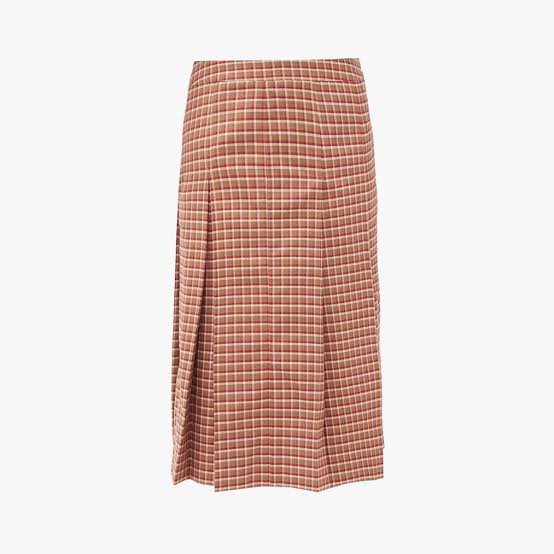
1.  A-Line Skirts.

If you want that flattering, classy and chic look, A-Line skirts are your best bet. Not only for the comfortability they provide but also that they can be matched with anything ranging from a T-shirt to a button down shirt to a tank top.

2. Pencil Skirts

Pencil skirts can be worn as a business, formal or a casual attire. It flatters most body shapes and figures and while it gives you that ladylike look, it is so readily available in Ankara prints, suit or stretchy materials.

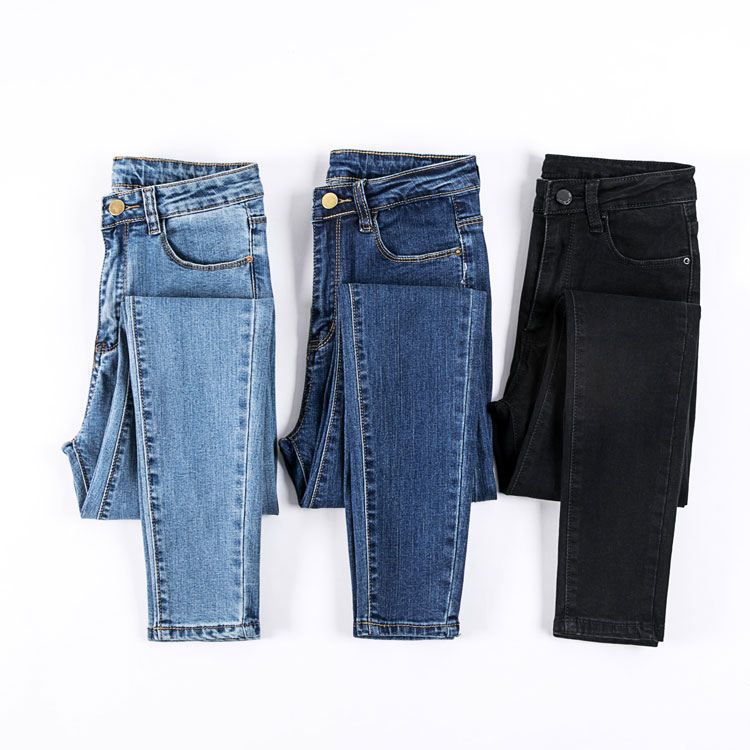
3. Denim Pants

You can never own too many denim pants. There is nothing as too many denims because these beautiful pants can be paired with almost anything you choose such as a blouse, shirts, jackets, plain tees. Just about anything goes with pair of denims!
They are sweet because if the versatility they offer and they are usually very comfortable and blend in perfectly.

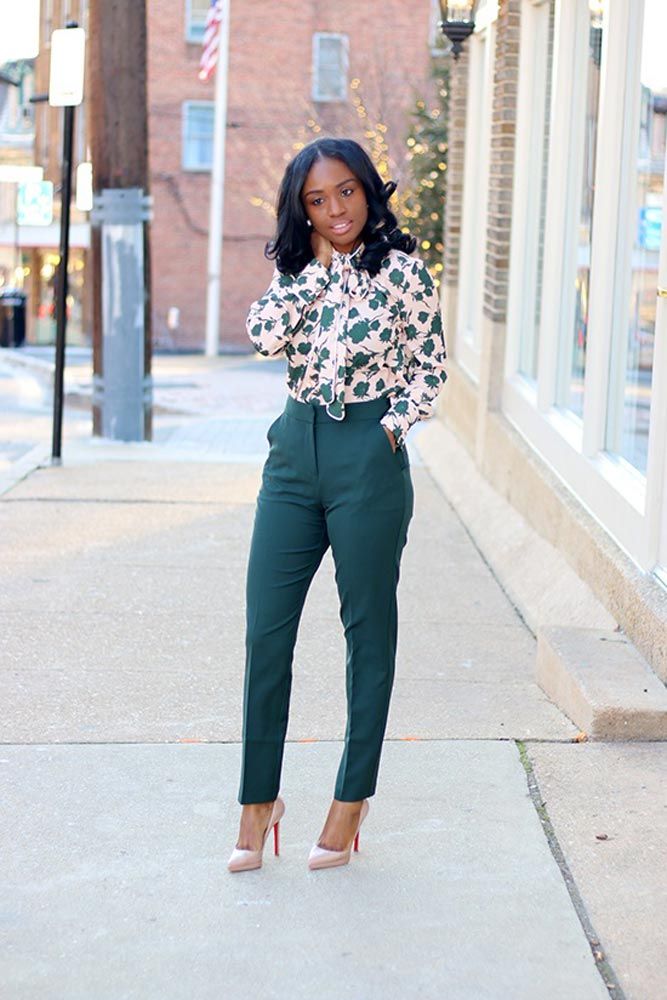
4. Slack/ Dress Pants

There are no such things as too much denims but your wardrobe should comprise only denim pants. A pair of dress pants can add extra touch to your closet. You can wear them for formal and casual events. They’re great in black, navy blue and Grey colours.

Choose the pair that suits your body style and fits perfectly.
Always choose a style with normal size pockets that are right at the centre of your backside.

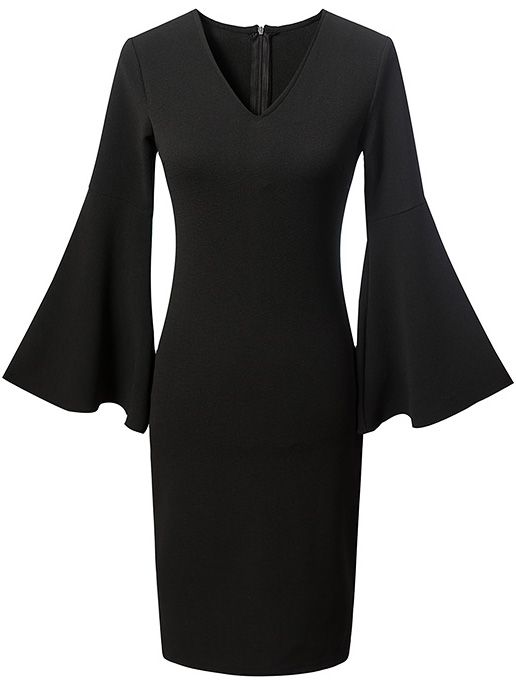
5. Non-Negotiable Black Dress.

Whether long, short, one-shoulder or with a unique detail it’s just one of those things that don’t lose style and you’ll always look put together with minimal effort! You can wear this up with a nice pair of heels and statement earrings or down with a pair of sneakers! it is designed to be functional and works in just about any occasion; cocktail parties, evening occasions and very perfect to go to work. This is why every woman needs a little black dress, multi outfits in one!

BONUS.

Plain T-shirt.

For that causal fit that isn’t too casual and can match with any accessory, plain t-shirts come into mind as it can be worn to casual hangouts. If comfort is what you seek while also looking prim and proper, a plain white T-shirt or any preferred colour worn with a pair of denim pants can never go wrong.