
Women of Rubies

Tag

women of rubies

Browsing

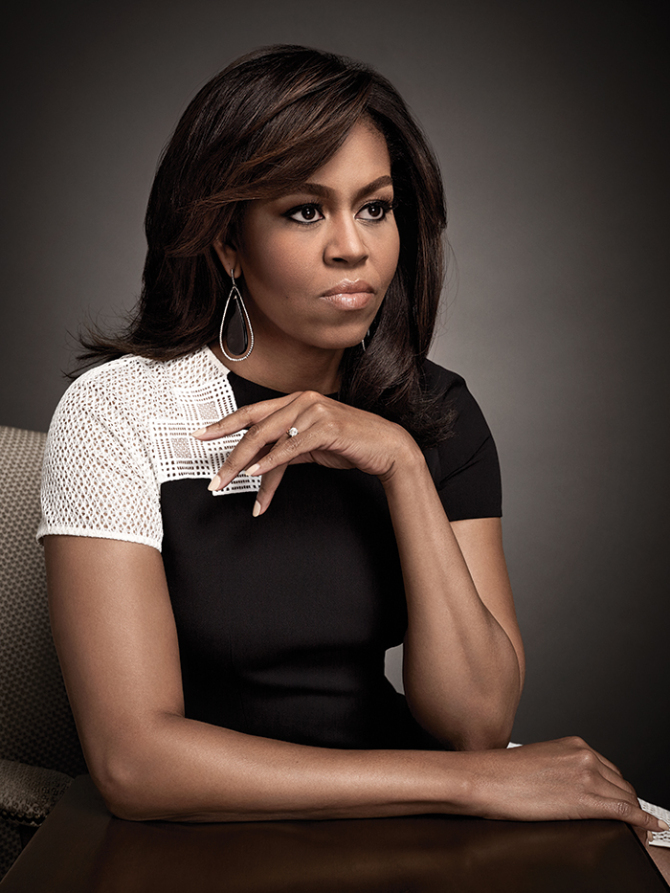
In 2008, Michelle Obama was tentative on the campaign trail, wary of saying anything to jeopardize her husband’s historic bid to be America’s first black president.

Eight years later, the self-assured first lady — back on the campaign trail — electrified Democratic Party faithful with a passionate takedown of Donald Trump and what she called his “frightening” attitude towards women.

“It has shaken me to my core in a way that I couldn’t have predicted,” Obama told a rally for Hillary Clinton in New Hampshire.

“This is not normal. This is not politics as usual. This is disgraceful. It is intolerable.”

The speech cemented the transformation of Obama, who turns 53 on Tuesday.

Once a reluctant ‘mom-in-chief,’ the tall, toned Princeton and Harvard graduate — America’s first black first lady — has evolved, becoming a singular voice for women and a political dynamo

During her husband’s two terms in the nation’s highest office, the native of Chicago’s South Side — who grew up in a one-bedroom apartment with her parents and older brother — has also become a style icon and global role model.

“One of the most intriguing things about Michelle Obama is that she represents so many things to so many different people,” Peter Slevin, a professor at Northwestern University’s Medill School of Journalism and the author of “Michelle Obama: A Life,” told AFP.

“She chose her issues, she stayed true to her values and she made the role uniquely her own.”

– From the South Side to Harvard –

Michelle LaVaughn Robinson was born in Chicago on January 17, 1964 to a stay-at-home mom and a father who never missed work at a city water plant despite a battle with multiple sclerosis.

She received an Ivy League education at two of the nation’s most elite schools — Princeton and Harvard, where she studied law, as her future husband would also do.

Michelle joined the Sidley Austin law firm in Chicago upon graduation and it was there that she met Barack Obama — a young associate she was asked to mentor.

That meeting would change her life. Obama’s political career skyrocketed, and by January 2009, their family would move into the White House.

– Her causes –

At first, Michelle Obama focused her attention on getting the couple’s two young daughters, Malia and Sasha, settled into their new home.

“Those early years in the White House were a real adjustment for Michelle,” David Axelrod, a former senior advisor to Barack Obama, told CNN.

“She had to start over in so many ways and she had to do it under the watchful eye of the world. And that’s a lot of pressure.”

The first lady soon found her stride, and steered clear of controversy, embracing causes with universal appeal.

Her “Let’s Move” initiative to stamp out childhood obesity through healthy eating and exercise earned praise, as did her work to promote the wellbeing of military families.

Jennifer Lawless, the director of the Women and Politics Institute at American University in Washington, told AFP the “strong argument she made for being active… resonated in a way that a lot of first ladies’ issues don’t hit home.”

In 2015, Obama went global with the “Let Girls Learn” campaign, a cross-agency effort to improve education for teenage girls worldwide.

“She connected powerfully with a wide array of audiences — as a working mother, as a progressive Democrat and, as she herself put it, as a ‘little black girl from the South Side of Chicago’,” Slevin noted.

Throughout her time at the White House, Obama has also emerged as a beacon of support for the US fashion industry.

She turned once little-known designers such as Jason Wu into major style stars, and made it acceptable to wear a cardigan to meet Queen Elizabeth II.

And she embraced social media and pop culture — dancing with late night talk show host Jimmy Fallon, rapping with Missy Elliott in a “Carpool Karaoke” sketch, or doing the mannequin challenge with NBA superstar LeBron James.

“She’s just fundamentally cool. She is comfortable in any kind of setting. She seems real,” Lawless said, adding that her television appearances or viral videos did not seem “artificial — just her embracing the way people communicate.”

– Political force –

Last year, as Clinton and Trump vied for the presidency, Obama took on a new and somewhat unexpected role: political powerhouse.

She was a natural on the campaign trail and a forceful surrogate for Clinton, herself a former first lady.

In October, Obama — a first lady who once shied away from controversy and endured racial slurs throughout her time in Washington from a small fringe of Americans — unleashed a fierce attack on Clinton’s Republican rival.

“This was a powerful individual speaking freely and openly about sexually predatory behavior. And actually bragging about kissing and groping women,” she said of Trump’s comments caught on video, which he dismissed as guy talk.

“The men in my life do not talk about women like this,” she said. “This is not how decent human beings behave.”

That day, Obama knowingly stepped into the political limelight she had long shunned — and people listened.

“She spent eight years developing a relationship with the American people and they came to trust her,” Lawless told AFP.


Moving on –

In an exit interview with CBS, the president admitted his wife was looking forward to regaining some semblance of a normal life.

“Michelle never fully took to the scrutiny,” he said. “She never fully embraced being in the public spotlight — which is ironic, given how good she is.”

Obama has repeatedly said she is not interested in a political career for herself, but could she follow in Clinton’s footsteps, from the role of first lady to elected office?

“In 12 years, if an Illinois senate seat is open and the Democrats have no one to run… who knows what can happen? Life changes and she’s young,” Lawless said.

Source: Guardian.ng

Bolanle was brought up in Nigeria, Israel and Kenya. Olukanni went to St. Guardian angels Primary school in Lagos and went ahead to Queens College . She moved to Nairobi, went to Rosslyn Academy in Nairobi, Kenya for some portion of her secondary school. Preceding her last year of secondary school, she moved to America for her senior year and went to Wichita Southeast High School in Wichita, Kansas, where she partook in the National Speech and Debate Tournament for Dramatic Interpretation .
In 2011, she got a Bachelor’s degree from Loyola University, Chicago, with a twofold degree – Bachelors of Arts in both Communications and International Studies. In May 2010, while still in school, she won the Loyola University Chicago Kale Williams Award for Exceptional Work in Promoting Human Rights and Social Justice.
Bolanle co-hosts Nigeria’s number one singing competition, MTN Project Fame with Joseph Benjamin and is also a co-host on Moments with Mo. She is a co-founder of ‘Girls For The Future’, an empowerment training workshop which focuses on giving aid to Nigerian girls through education.
Today, we celebrate a woman who is making a difference in our society!

When the slap landed on her face, even before Abiola could process the pain or feel that her jaw was shaking, the first thing she did as usual was to look around, to see who saw what happened.

The only person she saw was Tosin – their daughter.

Oh, she thought, that’s okay. It’s only our daughter.

Little did she know that years and years after she had died, that was the same thought floating through Tosin’s mind as she was being slapped and pushed out of a moving car by the man she let beat her too. This was before she hit her head on the curb, died.

Chidinna looked at his father with disgust, as he introduced him to yet another business partner. His father, meanwhile, looked at him with pride. His son, the one who has just graduated cum laud from Harvard University. He had ensured that his sons did not go to school in Nigeria. He did this to separate them from their mother’s influence. He did not like the way they, especially Chidinna, went to her defense any time he disciplined her with a few slaps.

He needed them to be men and to see that women need to be disciplined and set right like children.

Chidi glared at this brute of a man, wishing he could strangle him. Just the night before, he had heard his mother scream and the sounds of breaking glass in their bedroom. It took his two brothers and the maid to stop him from going there.

That morning she came out, checking to see who heard, who knew she was being beaten up. What a brute of a man.

Tonight Chidinna cannot understand what’s happened. He’s weeping because Ada his wife is curled into a ball after receiving the beating of a lifetime from him. All because she disgraced him at dinner. She didn’t know the right meals to prepare for his Harvard friends. She was not enlightened like him. She was just very drop deadly beautiful.

He also did not like the way she tantalized the men at the dinner like a common whore. They tore off her clothes and stripped her naked with their eyes he could see. She was taunting them, he could see. Why? Why would she do that? To him, why?

Little did they know then, that beating had ruptured her womb and she would never be able to bear a child.

Little did Ada know that despite several apologies and gifts and beatings later, she would be thrown out as barren and Chidinna would father 4 children from 2 more unfortunate women who see the outside product only, the fine, rich Harvard graduate – not the damaged, dangerous creature he really is.

Sir Shina Peters is on the stage; he’s showering praises on Agbesegbe, the Cocoa magnate who’s showering him with Naira. The money is flowing. The big boys are gathering, the big girls are throwing down. The spoilt under-achieving newly married son of renowned Lawyer and politician is in the crowd.

Due to his drug habit he does not have 2 bundles of Naira to rub together, but he too wants to be noticed. He wants to belong. He looks on to the sweet innocent who is dying to go home to nurse their newborn baby. ‘Do you have any cash he asks?’ ‘For Shina? Hell no. All I have is what I got from my mum this afternoon and it’s for the baby’s pampers and SMA’.

She looks to see, even before the pain sinks into her brain. Who is looking? As he twists her ankle, to wrench her wallet from her. Oyinade cannot help it, tears pour out of her eyes as the pain sinks in. She still checks at whose looking.

As she does, she sees Adewunmi has left the party after his spraying spree- leaving her behind. How does she leave this party and get back to their house?

She sees the catering van packing up. She recognizes their logo, they are based on the Island. She can trust these ones who don’t know her and Adewunmi. She begs for a lift.

When news surfaced the next day, a trailer had flattened a van belonging to a catering outfit killing all on board. Oyinade’s parents do not even give the news a glance. How were they to know their treasure, whom they had trusted into the hands of the renowned lawyer was amongst those flattened in the disaster?

Later on when all checks are done, the renowned lawyer and his wife sort their son out. Oyinade’s parents cannot even get access to their grandchild. Oyinade was their only child.

Whilst you still have life, whilst you are still whole, before you look at who is watching or who knows, LEAVE. It is more honourable to leave than to stay.

You are more valuable to your children both male and female if you leave than to stay. On this 21st day of January as we walk with women for their rights, say NO MORE! Enough is Enough. No more concealers, No more excuses, No more shades #nomoreshades


About Yemisi Wada

Yemisi Wada is a Lawyer and a Business woman. She has decided she has reached a stage in life where she likes to do what gives her Joy. She has just produced the Crime Series ‘Lasgidi Cops Serious Crimes Unit’ and last year when she turned 50 decided to start up a Blog where she can mentor younger ones on the realities of relationships and life.
She also loves giving back and has a Foundation for Street Children called the Haven for the Nigerian Child Foundation.
She is married and has 5 children. She blogs at www.namsblog.com.ng

A new study conducted in Ibadan, Oyo State, has revealed that the use of clean-burning ethanol stoves, as against kerosene stoves, can reduce hypertension and cardiovascular risk in pregnant women.

According to the lead study author and professor of medicine and family director of international programmes at the University of Chicago’s Pritzker School of Medicine, Christopher Olopade,  pregnant women who were used to using kerosene stove had lesser chances of developing high blood pressure when they switched to ethanol stoves.

In report titled, ‘Randomised Controlled Ethanol Cookstove Intervention and Blood Pressure in Pregnant Nigerian Women’, researchers stated that the frequency of developing hypertension and diastolic blood pressure were decreased in pregnant women who cooked with ethanol, rather than with traditional cookstoves fueled by wood or kerosene.

They, however, noted that systolic blood pressure levels of the pregnant women that took part in the study did not change significantly.

Olopade stated, “Although previous studies found that exposure to household air pollution increased the risk of adverse pregnancy outcomes, no randomised, controlled trial had investigated whether clean-burning fuel would reduce the incidence of hypertension in pregnant women,”

According to the report, Olopade and his colleagues enrolled 324 pregnant women living in Ibadan. However, women who smoked or lived with a smoker or who cooked for a living were excluded from the study.

None of the women enrolled were hypertensive when they enrolled and  they were randomised into the study between the 16 and18th weeks of pregnancy.

Half of the participating women who previously cooked with firewood or kerosene were randomly assigned to cook with ethanol. The other half continued to cook with either wood or kerosene. Blood pressure was recorded during six patient visits.

By the end of the study, the researchers found that   6.4 per cent of those cooking with wood or kerosene became hypertensive compared with 1.9 per cent of those cooking with ethanol. The study also showed that 8.8 per cent of those who cooked with kerosene became hypertensive compared to only 1.8 per cent who stopped using from kerosene and switched to ethanol.

It stated, “Mean diastolic blood pressure was 2.8 mmHg higher among those cooking with wood or kerosene than those cooking with ethanol. It stated. The mean diastolic blood pressure was 3.6 mmHg higher among those cooking with kerosene than those cooking with ethanol. “

Olopade said the findings have echoed the call by the World Health Organisation to remove kerosene as a home cooking or heating fuel.

Source: PUNCH

Sophia Ike-Onu is the Co-founder of DRYV, and the Founder/CEO of The5kShop. She has a BSc in Architecture and a Masters in International Architectural Regeneration and Development from Oxford Brookes University.

The5kShop is an online retail store, stocking fashion and home solutions all under the price cap of 5000 Naira, and have been in business for over 3 years. She invested all her savings into the business. Their first office was based in her living room- they rented their first office and warehouse 8 months into operation, and move into a bigger space shortly after then.

DRYV.ME is a service that allows users to request for drivers, on demand.

Sophia Onu won the 2016 Enterprise Challenge organised by Virgin Atlantic in partnership with Zenith Bank and Samsung. She has been profiled as one of SME 100’s young entrepreneurs under 25, making socioeconomic impact in Nigeria.

All vocalists can be singers but all singers cannot be vocalists. This is because of the weight in classical music. Singers that are adept in light music often find it difficult to sing in the classical mode. On the other hand, singers who sing in classical mode can sing in the light mode very easily. These are the main differences between the words, singer and vocalist. Here is our list of top five vocalist in Nigeria:

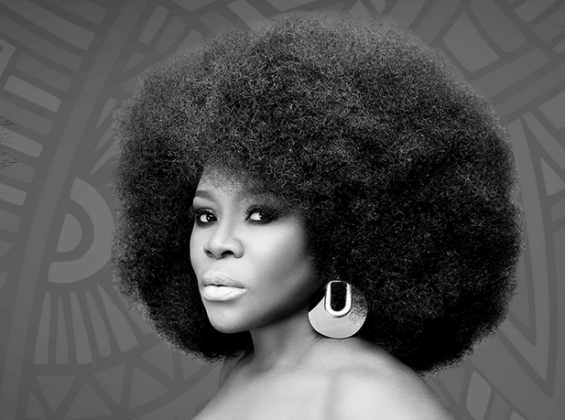
1. Omawumi

Omawunmi, the original Warri queen, came into limelight in 2007 when she became the first runner-up on West African Idol. She has since taken the Nigeria Music Industry by storm with her powerful soprano voice. Her music ranges from Jazz to R&B to Reggae, creating music that anyone can relate to. Her vocal prowess sets her aside and puts her on top of our list

2. Tiwa Savage

A vocalist per excellence, Tiwa has lent her sonorous voice to international music legends Mary J Blige, Chaka Khan, George Michael, Whitney Houston and Andrea Bocelli just to mention a few. After she had accumulated an exhaustive amount of vocal and lyrical credit, she returned  to Nigerian shores. Tiwa blessed us with sound goodies that showed her keenness in the vocal department.

3. Waje

The beautiful voice that made Psquare’s Do Me even more pleasant, Waje is another vocalist with a voice so powerful, you find yourself enamored. Her vocal range covers over 3 octaves. Her top notch vocals with her high energy is one of the many reasons why we believe she will be in the music scene for a very long time.

4. Simi

The ‘Ara ile’ crooner ventured into the music scene some years back, giving us a taste of her sonorous voice and giving us something to look forward to. She came back with full force, dominating 2015/2016 with her singles and melodious voice, making us want some more.

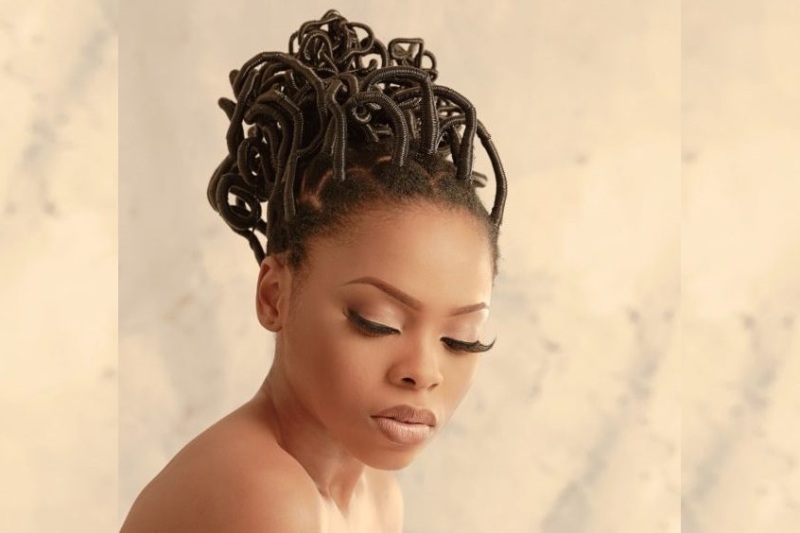
5. Chidinma

The winner of 2010 edition of MTN Project Fame dazzled us with her voice while still in the competition, that it was almost not surprising when she won. She then stepped into the music industry, giving us full serve of her rich and beautiful voice. Whether it’s a duet or a feature or her own song, Ms Kedike’s warm and sweet voice is a force to reckon with.


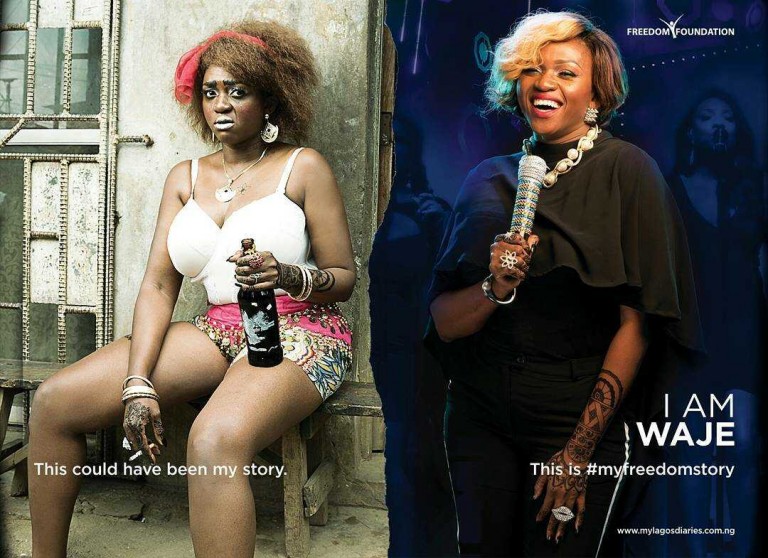
Nigerian singer, Aituaje Iruobe a.k.a Waje, in a bid to create awareness about societal issues and how to they can be overcomed, shared an inspiring story tagged #MyFreedomStory on Instagram.

According to the ”Omini knowest” crooner, she could have been a commercial worker battling with several sexually transmitted diseases(STDs) but instead she used the opportunity given to her to become an award winning song writer and musician.

She wrote:

”I could have been that commercial sex worker with no hope for the future, living in the slum and wondering if the next STD I contract would end my life BUT because of the opportunity given to me, I have become an award winning vocalist and songwriter and a voice for generations, leaving an indelible mark in the music industry and my country.This is

#MyFreedomStory

”Together we can transform more lives in our communities. Visit www.freedomfoundationng.org to help transform a life. @freedom_fdn #TransformAlifeToday”


You will need
2 canYou will need
2 cans of Plum tomatoes
2 medium red onions
Ginger – amount depends on your tolerance, but you should be able to smell the ginger in the uncooked pepper mix, otherwise you haven’t added enough
A sprinkling of thyme – emphasis on sprinkling
A sprinkling of curry powder
3 – 4 pieces of ata rodo – scotch bonnet/habanero pepper
3 pieces of tatashe
Sunflower oil – or your choice of veg oil
How To
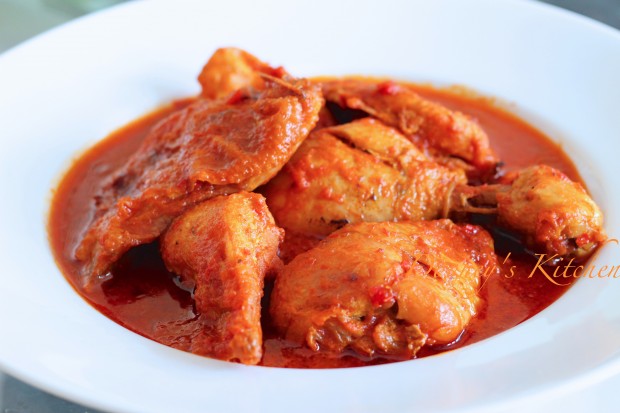
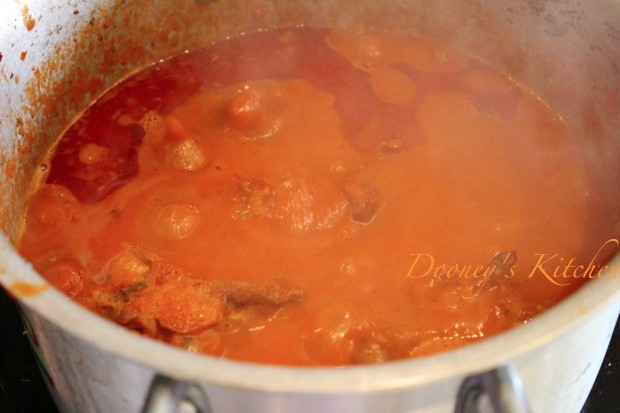
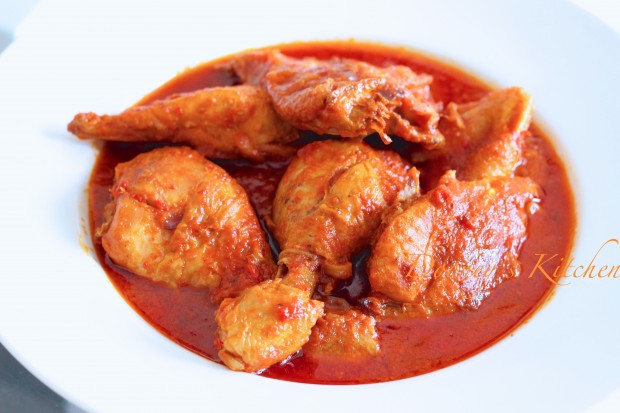
1. First things first, blend your pepper mix + ginger. Take out a quarter of 1 of the onions and set aside. Make sure you keep your nose out for the ginger. Very important, but carefully ensure that you do not go overboard with it. Boil the pepper mixture to reduce it until it becomes thick. Also be on the look out for the colour. Big Oladunni’s Chicken Stew is a feast for the eyes and palate.
2. Boil your chicken with chopped onions, ginger, salt and seasoning cubes. Dooney’s Kitchen Tip: To boil chicken, you start with steaming it first in its own juices, decanting that first batch of stock, adding a little extra water, and put back on the heat again. This is how Mummy does it. She always stressed that you should never end up with more than 2, cups of stock, per whole chicken, otherwise you have just adulterated the flavour of the chicken by boiling it with too much water. Advice drilled in my ears over time. Mummy would get quite upset with you if you boiled chicken with a lot of water. Fry or grill after boiling and set aside.
3. By now, you should have your aromatic and sweet smelling reduced pepper mix. When you get to make this and you leave feedback, I really would be expecting comments about the aroma of the pepper.
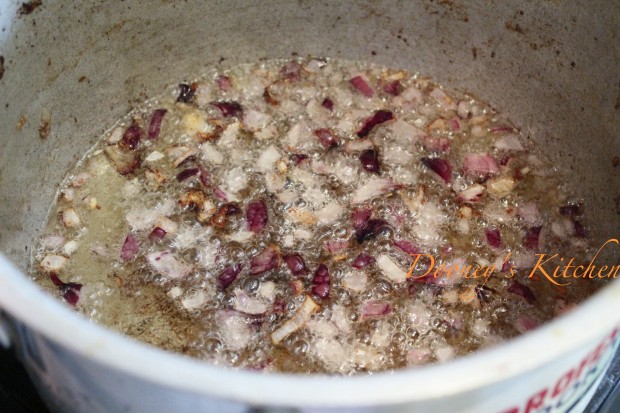
4. Heat up sunflower oil in the same pot you boiled the chicken with, so as to caramelise as much of the chicken bits left behind. Chop the last quarter of the onion from step 1, add to the oil and let it fry till it softens.
5. Add the reduced pepper and let it fry. See what I as saying about the pleasant to the eye colour. Yeeeeees, once you can achieve this, you are on to something fantastic. Allow it to fry for a bit until you start to see bubbles appear in the pepper.
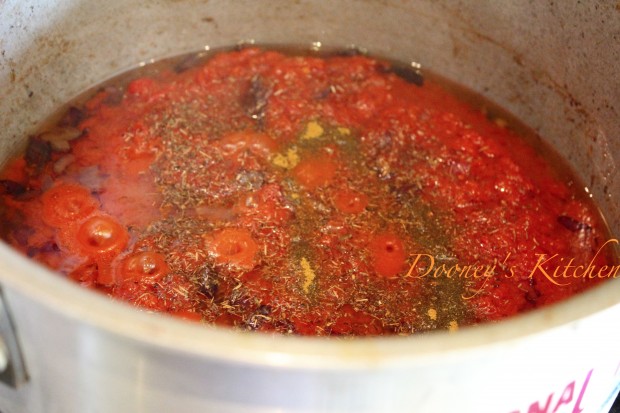
6. Sprinkle in a little curry powder and thyme. Emphasis on sprinkle because these spices are just flavour enhancers, and should not over power this stew
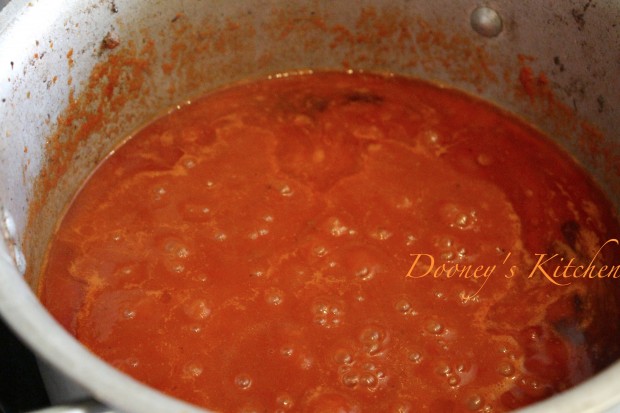
7. Allow the pepper to fry till it absorbs the oil and takes on a glossy kind of look. This is key.
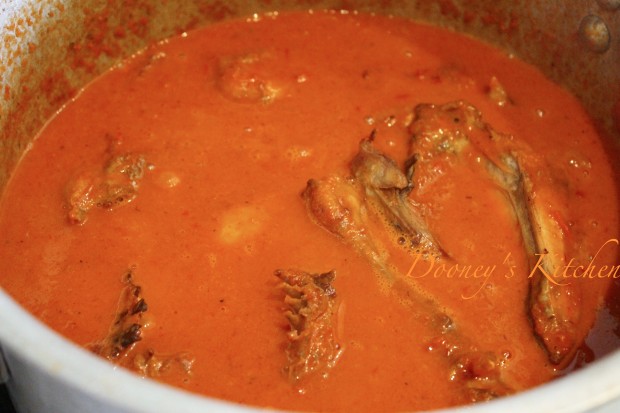
8. Big Oladunni’s stew is not fried for ages like Buka stew (recipe click HERE), or else you lose the flavour of the ginger, so keep an eye on the pepper. Once the pepper has thickened further from Step 7 above, add the chicken stock, and fried or grilled chicken. Stir and lower the heat. Now, this is where the magic happens.
Dooney’s Kitchen Tip: Lowering the heat is vital. You forget and you will hear her screaming from the living room “shey o ti yina e lole”. English for have you turned down the heat. I know some may be wondering if my mother speaks any English at all, not to worry she has a BA in English from University of Ibadan and was an English teacher for years before she left to setup her own schools. Some of my memories of cooking with her just happen to be in Yoruba.
9. Allow it to fry until you start to notice oil patches on top. Once you start to notice a little oil layer above the stew, take it off the heat, and as Mummy does, just leave it to sit on its own for a while, to allow the flavours to develop before you serve.
This is a bite your fingers, crush all the bones to smithereens kind of chicken stew. Its flavour is light, delicious, flirty on your palate and tingly aromatic on your nostrils.
You will enjoy this Chicken Stew, trust me.
Your Sunday Lunch Rice and Chicken Stew will never be the same
This stew is quite flexible, in that you can use leftovers for Peppered Chicken, which is exactly what I did yesterday. Step by step recipe for peppered meats, click
HERE
2cans of Plum tomatoes
2 medium red onions
Ginger – amount depends on your tolerance, but you should be able to smell the ginger in the uncooked pepper mix, otherwise you haven’t added enough
A sprinkling of thyme – emphasis on sprinkling
A sprinkling of curry powder
3 – 4 pieces of ata rodo – scotch bonnet/habanero pepper
3 pieces of tatashe
Sunflower oil – or your choice of veg oil
How To
1. First things first, blend your pepper mix + ginger. Take out a quarter of 1 of the onions and set aside. Make sure you keep your nose out for the ginger. Very important, but carefully ensure that you do not go overboard with it. Boil the pepper mixture to reduce it until it becomes thick. Also be on the look out for the colour. Big Oladunni’s Chicken Stew is a feast for the eyes and palate.
2. Boil your chicken with chopped onions, ginger, salt and seasoning cubes. Dooney’s Kitchen Tip: To boil chicken, you start with steaming it first in its own juices, decanting that first batch of stock, adding a little extra water, and put back on the heat again. This is how Mummy does it. She always stressed that you should never end up with more than 2, cups of stock, per whole chicken, otherwise you have just adulterated the flavour of the chicken by boiling it with too much water. Advice drilled in my ears over time. Mummy would get quite upset with you if you boiled chicken with a lot of water. Fry or grill after boiling and set aside.
3. By now, you should have your aromatic and sweet smelling reduced pepper mix. When you get to make this and you leave feedback, I really would be expecting comments about the aroma of the pepper.
4. Heat up sunflower oil in the same pot you boiled the chicken with, so as to caramelise as much of the chicken bits left behind. Chop the last quarter of the onion from step 1, add to the oil and let it fry till it softens.


5. Add the reduced pepper and let it fry. See what I as saying about the pleasant to the eye colour. Yeeeeees, once you can achieve this, you are on to something fantastic. Allow it to fry for a bit until you start to see bubbles appear in the pepper.


6. Sprinkle in a little curry powder and thyme. Emphasis on sprinkle because these spices are just flavour enhancers, and should not over power this stew


7. Allow the pepper to fry till it absorbs the oil and takes on a glossy kind of look. This is key.


8. Big Oladunni’s stew is not fried for ages like Buka stew (recipe click HERE), or else you lose the flavour of the ginger, so keep an eye on the pepper. Once the pepper has thickened further from Step 7 above, add the chicken stock, and fried or grilled chicken. Stir and lower the heat. Now, this is where the magic happens.


Dooney’s Kitchen Tip: Lowering the heat is vital. You forget and you will hear her screaming from the living room “shey o ti yina e lole”. English for have you turned down the heat. I know some may be wondering if my mother speaks any English at all, not to worry she has a BA in English from University of Ibadan and was an English teacher for years before she left to setup her own schools. Some of my memories of cooking with her just happen to be in Yoruba.


9. Allow it to fry until you start to notice oil patches on top. Once you start to notice a little oil layer above the stew, take it off the heat, and as Mummy does, just leave it to sit on its own for a while, to allow the flavours to develop before you serve.


This is a bite your fingers, crush all the bones to smithereens kind of chicken stew. Its flavour is light, delicious, flirty on your palate and tingly aromatic on your nostrils.


You will enjoy this Chicken Stew, trust me.


Your Sunday Lunch Rice and Chicken Stew will never be the same


This stew is quite flexible, in that you can leftovers for pepperedchicken

Source:dooneyskitchen.com

Queen Martins is the founder of Twenty5wishes, an initiative that supports 25 people with training, exhibition and investment opportunities to run their businesses. In this interview  she spoke on the project, the motivation and why entrepreneurs should be supported.

Inspiration behind Twenty5wishes initiative

Twenty5wishes is an initiative poised to annually bring into reality the dreams of young people in Nigeria. Committed to developing the human capital of the Nigerian youth, the initiative presents a platform through which dynamic individuals are groomed into successful entrepreneurs through mentorship, with industry influencers and the opportunity to receive tools and funds that facilitate their business endeavours.

To kick-start this process, referrals and personal requests are forwarded to us. Our wish team screens these referrals and requests on their merit, and in order to be eligible, individuals must have demonstrated passion in the particular field, where they desire intervention.

This year, our wishers have shown great interest in various industries, including photography, fashion, makeup, shoe-making, events planning, media, e-commerce and filmmaking. These wishes will be granted in three phases: Training, talent showcase, and business setup with tools.

The ultimate goal of the Twenty5wishes initiative is to set up an endowment fund and build an entrepreneurship training institute with global standards of learning, modern facilities, training equipment and facilitators, which the Nigerian youth can access to develop and broaden their creative talents and sharpen their skill set. We believe the multiplier effect will, overtime, positively impact lives, families, communities and by extension, the nation.

For the training, we reached out to industry leaders and they partnered with us to offer training and across the different phases of the project. For instance, in the field of fashion, we partnered with OFB Fashion School, as well as Africa Fashion Week Nigeria. With regards to photography, we partnered with Kelechi Amadi-Obi, Jide and Morayo Odukoya and an institute, including organisers of Lagos Photo Festival.

In the area of media, we partnered with Beat FM. For make up, we partnered with House of Tara. And for event planning, we partnered with Funke Bucknor. So, we partnered with quite a number of organisations and individuals.

How many people showed interest in the first pitch?

Quite a number of people. We had over 100 people from which we shortlisted. This is in spite of the fact that we did not really make a lot of noise about it. It actually started during my birthday. I was going to turn 25 and I decided to just do something that would be impactful, but it got to a scale that I knew I had to formalise things. That is how we evolved into a full fledge initiative.


What prompted that line of thought on your birthday?

Beyond just celebrating my birthday, there was also a personal conviction as to the reason I am where I am today, and the roles that people have played in getting me there. I know there are other people who have potentials as well, but just do not have the right platform to showcase their skills; they are not in the right network.

Also, there are a lot of people who have good ideas, but not very well skilled in being able to put proposals together to articulate those ideas. So, what we do is try to cut through the red tape and give these people opportunities that they need, help and nurture them that they are able to earn the income they deserve.

Feedback like from the first phase of the training?

The feedback was mostly good, but another thing I learnt through the first phase was the fact that sometimes it is not enough to have the skill, you also have to be business savvy, and know how to run a business. The good thing is that because of what we have been able to do and people are following on the social media, a lot more people have decided to come on board to help out with the different phases and mentor people. In all, the feedback has been good.

What was your reaction and experience after the completion of the first phase and the commencement of the second phase?

It is basically picking lessons from the first phase and inputting those in the next quarter of wishes, so that it could be better structured, as well as get more in terms of impact. Of course, there was also the challenge of partners that could come onboard, especially when you are doing something for the first time.

But now, we have the benefit of having done something and we are looking forward to partnering with larger corporate bodies, because the more partners we have, the more wishers we can bring on.

Moving forward, what is the projection?

For the first one, we are able to get partners, and they are not small-scale organisations. So, it is about closing up on what we have already and of course setting up our own training facility, as well. This is so that we are able to conduct some of the trainings within our facility and basically increase the scale. Instead of 25 wishers, we would be looking at 25 people each from different industries. What we have now are 25 people across different industries.

For the last stage, when the wishers are to start practising their wishes, are you giving cash to start their businesses?

After the training, and in the process of getting ready for their exhibition, they go through business seminar, so that they understand what it takes to have a business plan, because they need to have projections. You could give somebody money, but if they do not know what they are going to do with it, it would be a waste.

Therefore, we get them to prepare their business plans, and then pitch such to the angel investors, and based on how convinced the latter are, the trainees would then invest. Already, they had received free training, so they need to know that this is worth fighting for, and not a walk in the park. Succeeding in business demands a lot. You need to go out there, do your market survey, identify your unique selling proposition (USP) and it is only after this, that you have the chance of excelling, and one way to do that is having a business plan.

Has it been a rosy experience?

It has not been entirely rosy. You might be able to accomplish something without money, but to really make impact you need money. Of course, we need money, but I thank the Lord for some of the support we have received. Though it is not financial, but we have received a lot of partnership for some of the things we need.

Another thing is to want to help people and they are able to envision and focus on where they are going and not be distracted by anything along the way. We have had one or two cases of people not following through and it is almost like a waste because somebody else would have benefitted from the wasted slot. Overall, however, we thank the Lord.

What is the motive behind this?

The truth is that there are so many jobs available right now, but with the number of graduates that we turn out daily, there is not enough room in offices. So, people need to look inward and start to think of how they can earn an income. Otherwise, we are going to have a lot more criminals on the roads, as people need money at the end of the day. And if they were not able to earn it, they would look for a way to get it out there.

If we were able to create entrepreneurs, who are passionate about what they do and think on a large scale, we would reduce the number of unemployed graduates, as well as reduce the pressure on corporate organisations to employ all the graduates. And not everybody is cut for office work anyway. There are people who are good with crafts, so all they need is the right platform to earn an income.

Are you looking at partnering with government agencies supporting entrepreneurs?

We are also looking at those organisations, but right now, we have not established partnership with them. However, we are looking at approaching some of them for the next quarter of wishes.

Is the project limited to Lagos?

For the first phase, we had entries from outside Lagos, but we tried to keep it to Lagos for now because we are just starting. As we increase the level of partnership and are able to cater for the needs of people outside Lagos, we would consider entries from outside Lagos.

Do you think the Nigerian environment encourages entrepreneurship?

It promotes dogged entrepreneurs. If you are not determined, you will not succeed in Nigeria because the terrain is not for the light minded. You have to be tenacious and not give up at the first obstacle.

However, people should not give up on their dreams. Though they might have tried to do one project or the other and failed, they should not give up. They should just keep trying, using different approaches, get more counsel, somebody good in that field, to guide and counsel them and they will definitely make a breakthrough.

Source: Guardian.ng

Salawa Abeni Alidu born on May 5, 1961, is a well known Nigerian vocalist. An Ijebu Yoruba from Ijebu Waterside, in Ogun State, she started her expert vocation in waka music when she discharged her presentation collection, Late General Murtala Ramat Mohammed, in 1976, on Leader Records. It turned into the primary recording by a female craftsman to offer over a million duplicates in Nigeria.

Abeni kept recording for Leader until 1986, when she finished an association with the record label owner, Lateef Adepoju. She wedded Kollington Ayinla and joined his record name rather, remaining with him until 1994.

She was delegated “Queen of Waka Music” by the Alaafin of Oyo, Oba Lamidi Adeyemi in 1992. Waka is an Islamic-impacted, customary Yoruba music style, promoted by Batile Alake; it is a much more established kind than jùjú and fuji.
She is tagged a heroine to many women because of her lyrics, which are highly critical of the way they have been treated by their men. She is said to have popularised a new style of Yoruba music, heavily influenced by traditional songs and dominated by thunderous drumming, which of course never swamps her even more gutsy vocals.
She is highly respected for finding her grounds and becoming relevant in a men-dominated industry in the 70s. How can we not crush on her?