Category

womenofrubies

Category

Thirteen years ago, Theresa Kachindamoto worked as a secretary at a city college in Zomba, a district in Southern Malawi. It had been her job for 27 years. The youngest of 12 children, she was born into a family of chiefs — Malawi’s traditional authority figures — but she never expected to become a senior chief to more than 900,000 people. But when the chiefs called, telling her to pack her bags and come home, she did. She had been chosen as the next senior chief.

She was shocked when she saw girls as young as 12 with babies and teenaged husbands, and after her coronation rites, she was soon ordering the people to give up their ways and terminating underaged marriages.

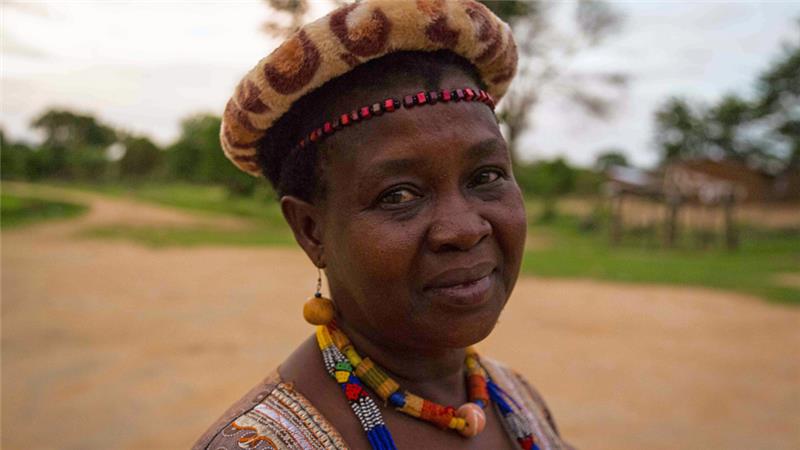
Chief Kachindamoto (Photo: AJEnglish)

A 2012 United Nations survey found that more than half of Malawi’s girls were married before the age of 18, especially in rural areas where parents are eager to get girls out of the house to ease their financial burden. It ranked Malawi 8th out of 20 countries thought to have the highest child-marriage rates in the world. Last year, Malawi’s parliament passed a law forbidding marriage before the age of 18. But under the customary law of the traditional authorities, and the constitution, Malawian children can still marry with parental consent.

Early marriage wasn’t the only practice Chief Kachindamoto was against, she also banned sexual initiation rights and sexual camps. In these rural areas, parents also send their underaged children (as young as age 7) bound for marriage away to camps for “kusasa fumbi” – which means cleansing. Reportedly, at these sexual initiation camps, the girls are taught ‘how to please men’ by performing titillating dances and sex acts.

Newly-initiated children are now regarded as adults after being initiation at camps for several weeks. (Photo: News24)

Some children “graduate” only by having sex with the teacher. Others return home untouched, only to be preyed on by a local “hyena” — men hired by parents to take their girls’ virginity — or by prospective husbands to impregnate them. In a country where one in 10 people have HIV, these rites of passage — which rarely involve the use condoms — are sentencing girls to a lifetime of trauma, and, in some cases, early death.

One in five Malawian girls is a victim of sexual violence, as is one in seven boys, according to the UN Children’s Fund, UNICEF. And a lot of Malawian traditions promote sexual abuse within the family. If a girl’s aunt or older sister falls sick, she can be sent to look after the household, and in some cases will be expected to have sex with her uncle or step-brother.

Chief Kachindamoto has faced a lot of pushback. Many parents did not want to hear her pleas to keep their girls in school or her assurances that an educated girl would bring them a greater fortune. The common response was that she had no right to overturn tradition, nor, as the mother of five boys, to lecture others on the upbringing of girls.

Children at a school in Chimoya where mothers’ groups campaigning to end child marriage say parents refuse (Photo: Hannah McNeish/Al Jazeera)

Realising that she couldn’t change the traditionally set mentality of parents, Kachindamoto instead changed the law, by getting her 50 sub-chiefs to sign an agreement to abolish early marriage under the customary law and annul any existing unions in her area of authority.

And when she learned that child marriages were still taking place in some areas, she fired four male chiefs responsible for these areas. They returned months later to tell her that all marriages had been undone. After sending people to verify this, she hired the chiefs back. She then drew community members, the clergy, local committees and charities together to pass a bylaw that banned early marriage under the civil law.

Over the past four years, Kachindamoto has broken up more than 850 marriages and sent all of the children involved back to school. She often pays for, or finds other sponsors to pay for, the schooling of girls whose parents cannot afford to pay school fees.

culled from konbini.com

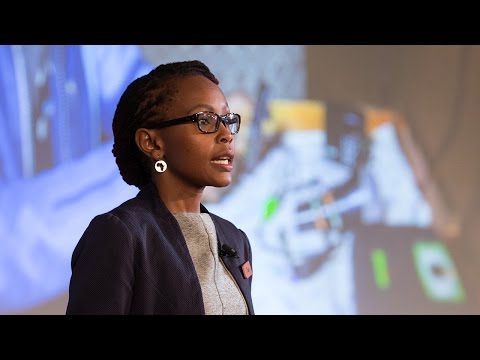
On the night of July 20th, 2014, Adaora was the doctor on call when Patrick Sawyer was wheeled into the Emergency Room at First Consultants Medical Centre, Obalende, Lagos, with severe complaints of fever and body weakness.

On Friday the 25th of July, Dr. Ada certified Patrick dead and only days later on Friday, the 1st of August, she had her first day of fever, and a test was carried out on Saturday, 2nd of August.

The 3rd of August 2014 would always remain fresh in her memory as that was the day Dr. Ada was informed that she had contracted the Ebola disease.

She underwent series and series of test, living daily not knowing if she would survive the disease but amazingly, she did.

She however did not take her second chance at life for granted- since then, she dedicated her life to the research, treatment, and prevention of future epidemics, going on to the Tulane School of Public Health and Tropical Medicine to acquire more knowledge of epidemics..

According to the brilliant young lady, “Ebola is going to come back. It may not be next year or the next five years. But it will come back. I know I was sick for a reason. There’s a lot more I have to do.”

Adaora, on Thursday, the 5th of January was Named As One Of Bill Gates‘ 5 “Heroes in the Field.” as a recognition of the courage and strength she has shown in helping Ebola patients and making sure more people survive.

Check out her story below


Source: fabwoman.ng

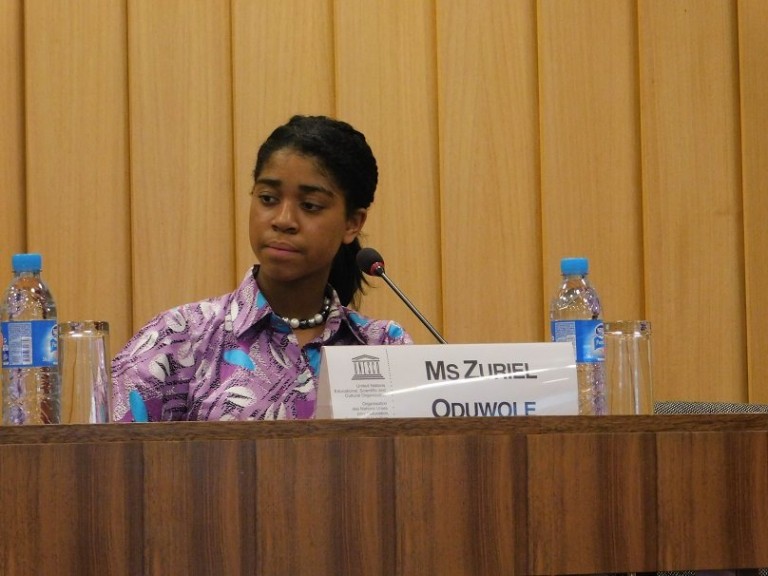
Zuriel Oduwole, young film maker and advocate for girl child education and gender equality has kicked off a film making session for 90 African girls in Nigeria, Ghana and Cote d’ Ivoire.

The partnership, which is bankrolled by Sahara under the Grooming Film Extrapreneurs project, aims at giving the beneficiaries a head start towards pursuing a career in the creative arts.

The programme, which kicked off on Monday, January 8, 2017 at the Lagos State Skill Acquisition & Vocational Center, Surulere will end on January 17, 2018 in Cote d’ Ivoire.

The partnership, which is bankrolled by Sahara under the Grooming Film Extrapreneurs project, aims at giving the beneficiaries a head start towards pursuing a career in the creative arts.

Tagged “Empowering the African Girl Child,” Oduwole said she was hopeful that the success of the project would encourage more corporations around the world to create partnerships with small groups to empower more girls across the globe.

Zuriel was among the winners of the 2016 New Africa Woman Awards.

Source: pulse.ng

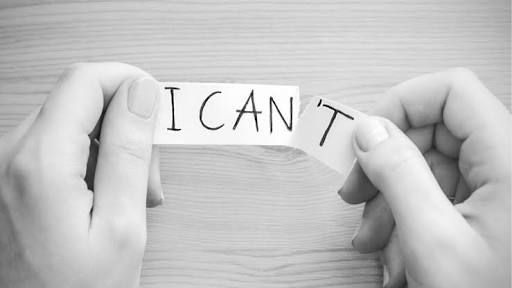
Use positive self-talk. Positive daily affirmations can help you to be more confident. Take a few moments before you go to work or school to look at yourself in the mirror and say something encouraging to yourself. You can either say something that you believe about yourself or something that you would like to believe about yourself. Some examples of positive affirmations include:

  • “I am an intelligent person.”
  • “I am a good father.”
  • “I have accomplished many important things in my life.”
  • “People enjoy spending time with me.”

Acknowledge and challenge your negative thoughts.

Negative thoughts are common in all people, but they may be even more common if you lack confidence. It is important to acknowledge and challenge any negative thoughts that you have in order to be confident. Practice acknowledging the thought and then saying what you do not accept it.

  • For example, if you have the thought, “I am stupid,” acknowledge that it is just a thought by saying to yourself, “I am having the thought that I am stupid.” Then, challenge the thought by replacing it with something positive like, “I am an intelligent person.

Visualize yourself being confident.
Visualization is a powerful tool that can help you to be more confident. To use visualization, close your eyes and imagine a time when you succeeded at something or when you felt especially confident. Try to remember every detail of that moment, where you were, who was there, what was said, and how you felt. Replay this moment over in your head once a day to help build your selfconfidence.

4
Write confidence boosting notes to yourself.

Little reminders placed all around your house may also help you to be more confident. Write positive messages to yourself on sticky notes and post them all around your house, in your drawers at work, or in your locker at school. The more you see these positive messages about yourself, the more you will start to believe them.

  • Some things you might write on the sticky notes include, “You are brilliant!” “You have the best ideas!” or “You’re doing a great job!” Use your imagination to come up with encouraging messages to leave for yourself.

5
Surround yourself with positive people.

Other people can also have a big impact on your confidence levels. If you have a friend who often criticizes you or who has a negative attitude, it may be time for a change. You can also try talking to your friends about their negative comments to try to get them to stop saying things that damage your confidence.

  • Keep in mind that you cannot change the way that people are. You can only change the way that you respond to people. Try to stay positive even if the people around you are negative.

Take good care of yourself.

Exercise, healthy food, rest, and relaxation are all important components in good self-confidence. By taking good care of yourself, you are sending your mind signals that you deserve to be taken care of. Make sure that you are devoting enough time to meeting your basic needs for exercise, food, sleep, and relaxation.

  • Aim for 30 minutes of exercise per day.
  • Eat a balanced diet of healthy whole foods like fruit, vegetables, whole grains, and lean proteins.
  • Get 8 hours of sleep per night.

Set aside at least 15 minutes per day to practice yoga, do deep breathing exercises, or meditation.


Culled from wikihow.com

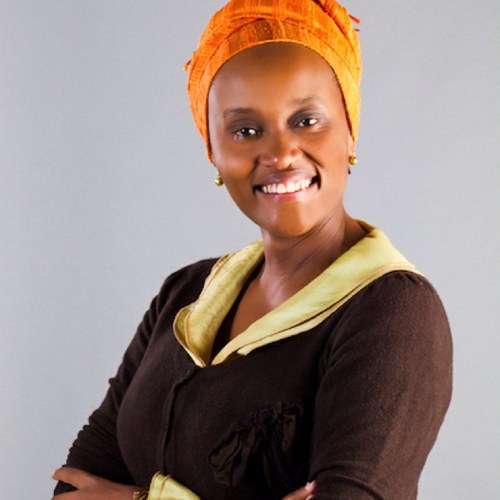
In East African business circles, few entrepreneurs shine brighter than Njeri Rionge. One of Kenya’s most successful and revered serial entrepreneurs, Rionge has co-founded multi-million dollar companies in quick succession. She co-founded Wananchi Online, a leading Internet service provider which has gone on to become East Africa’s leading cable, broadband and IP (Internet-based) phone company. Wananchi has become immensely successful, so much that it has raised close to $60 million in growth capital from a consortium private equity firms. She also founded Ignite Consulting, a thriving business consultancy; Business Lounge, Kenya’s leading startup incubator; Ignite Lifestyle, a health care consultancy; and Insite, one of Kenya’s most successful digital marketing outfits. She now divides her time between homes in Nairobi and Toronto where she runs her diverse business concerns.

Read excerpts from her interview with Forbes, below:

Let’s take a little trip down memory lane. When did you start your first business venture, and what was it?

As a twenty year old, my first business involved selling yogurt to the International School Of Kenya and Loretto Convent Musongari High School over their 10am and 4pm school breaks. I sold the yogurt from the car trunk which belonged to a friend of mine with whom I had partnered. We picked up the yogurt from a farm in Limuru (a town in Kenya) at 6 am and returned back every second day for more stock. Throughout this period I was employed as a hairdresser with a clientele consisting largely of high net worth individuals. Recognizing yet another opportunity, I traveled to London on a regular basis using discounted courier tickets to purchase re-sale luxury merchandise which were not available in Kenya at the time. I sold this merchandise to my clients.

You seem restless. Why do you keep creating companies serially rather than just sticking to one, and milking it for all it’s worth?

I create companies serially because I believe that Africa is the next economic frontier and we must build indigenous organizations that will support this growth.

Of all the companies you’ve built, which was the most challenging and the most fun?

Wananchi was a roller coaster ride in which we sought to challenge the assumption of regulators, the government officials and competitors that the Internet was not only relevant for the elite. Ignite has been the most challenging but Wananchi Online was the most fun of them all. I am now focused on my Nairobi and Toronto business locations for the wholly owned companies. Ignite Consulting has had a long development process which has taught me the true benefits of project management, performance management and time management without which a consultant can easily go-out of business. On the other hand, it is important to manage timely exits and succession.  I intend to hand over the businesses to business drivers to take them to the next level through a management sale or recruitment of a CEO.

Style: “Portrait B&W”


What have been the biggest impediments you’ve encountered in all your years of doing business?

The greatest impediments I have encountered personally are managing the brand value and promise of each brand while building a business. The Internet and social media present great opportunities to quickly communicate developments, changes in activities and interests. If these communication pieces are ignored or not managed they tend to bring about confusion within organizations and with their customers. The rules of engagement have shifted and yet much of our organizational cultures remain rooted in outmoded styles of operation that have little relevance in a globalised market place.

 What was the biggest lesson you’ve learned in business?

When you’re in business you are responsible for the good, the bad and the ugly, pay attention at all times and take responsibility for all that you and your organization does throughout its tenure.

What is your philosophy in business and in life?

I judge myself based on my performance vis-à-vis today’s challenges and opportunities. I am passionate about growth in others and myself. I am humbled and gain enormous strength from the many young dynamic people I have had the privilege of working with over the years. Success for me is defined by increased value – not simply financial rewards.  This is still to be tested in this phase one and the follow up phases.


In a nutshell, what is the most important piece of advice you’ll give to young, entrepreneurial inclined individuals out there- particularly the ladies?

Ladies, it’s like learning to ride a bike or driving a car. You need only to believe in yourself, trust your gut feeling and develop a clear plan or strategy, keep it simple and implement that plan step by step with courage, conviction and love above all. Ultimately be open minded and flexible to change course when needed and listen to your customers.


Learn more about Njeri Rionge at www.njeri-rionge.com


Credit: Forbes

Ace presenter and vlogger, Funmi Iyanda recently revealed that she once had a battle with low self esteem and while many people thought that she had t all, she saw herself as a weakling who was not good enough.

In an Instagram post which she has since deleted, the beautiful woman talked about a time in her life when she chose to listen to what other people thought of her which cost her a great deal of unhappiness.

In her words:

“I look at this picture in wonder because l used to think myself unattractive because many people said l was growing up.

This day took a lot of persuading by @frankosodirichard to get me in that dress. He did my make up and turban as l always wore my hair wild and refused makeup so l could be invisible. He used to tell me l was model material and beautiful, l did not believe him. Many people did but l distrusted them.

I was uncomfortable at that party and wary of any attention, l also had my passively manipulative partner telling me how long l should stay then driving over to pick me up in a cloud of seething anger. He never described me as beautiful, not once. I cannot believe l was that girl, no one would as l seemed confident, competent and outspokenly intelligent.

I want to reach back through time and tell her you are goddam beautiful, hug and get her the hell out of that situation. She did make it out herself but it took years for her to be able to see and accept her beauty.

I might tell her full story some day, l might not but this bit is for all the boys and girls who are being stunted by other people’s fear/mis-interpretation of their beauty/glory/talents/knowledge/being.
You are good honey, allow no-one tell you otherwise, keep going.”


Source: fabwoman.ng

Doris Simeon,beautiful Nollywood actress and mother of one has spoken about her family in a never before seen interview and she was open, humble and cheerful.

In an interview with Lovehaven, the actress opened up about her previous marriage, the relationship with her ex husband and her son.

We have some excerpts below:

1. Talking about her ex husband and Stella Damascus

“Well, But they have not taken my life and my shine. I am still shining and I am still looking good. Life goes on as long as you are breathing, be grateful.”

2. On how she reacts when she reads negative news about her and Daniel

“I am just me. That is his life. I’m living my life. He is living his. I don’t go begging from anybody. I am glowing. God has been good to me and when the time comes, I will talk about my son. I talk to my son and the boy is good. But for now, I have nothing to say.”

3. On if she has moved on

“I moved on long ago.”

4. On if she is getting married again in 2018

“Marriage is over-rated in this part of the world. If I get married fine, if I don’t, it’s OK. What is required is me being happy, feeling good and enjoying what I do. I will enjoy it to the peak.”

5. On her son being with her ex husband

“That’s Ok. I still speak with my son and that’s what is important now. I talk to my son, I don’t have anything to do with Daniel Ademinokan.”


Source: fabwoman.ng

Nothing gives me more joy than to positively impact a skilful woman – Omolara Sanni

Omolara Sanni is a graduate of the University of Ibadan, with a MBA (Entrepreneurship and Small Business) from OAU, Ile-Ife. She’s undertaken verifiable MOOCs with Coursera and Shaw Academy including – Creativity, Innovation & Change (CIC), Creative Problem Solving, and Digital Marketing. In 2014, Omolara started a crusade to nurture and promote home-grown Craft entrepreneurs via her blog – www.multicreativeme.com. Since then, she has gone on to rally a collective of over 6000 creative folks in an online crafting community – African Handmade Forum. Here, artisans and designers enjoy support, showcase, and free training opportunities.
Omolara is an enthusiast of all initiatives targeted at the crafts, artisan networks, micro business growth, and the creative industry as a whole. She shares her inspiring story and passion for the creative industry in this exclusive interview.

Growing up
Far back as primary school, I remember my Mum, a teacher, buying a kongo each of sugar and Omo detergent for my sister and I, so we could tie them in small portions and display in her hair salon. The stylists would help us sell while we went to school and we would rush to the shop on our return to count the money made as well as the remaining wares. It felt so exciting and important to be in business. LOL

At the end of each cycle, we got the profit while Mum would recycle the capital to get another batch of sugar and Omo for us.
This was my introduction to business and I remain grateful to my Mum for teaching us early. I toed the business line all through to University, selling stuff from time to time and making hair at some point. I also worked as a stylist at her salon anytime school was on break, and that formed my first contact with Customer management. Haha!

Inspiration behind Multicreativeme and handmade Nigeria

It was while serving as a youth Corper in Kwara state, that a visiting corper taught a handful of us how to make beaded jewellery and pouches, bags etc. I was so excited! This was in 2004/05 when beadmaking/weaving was just becoming a thing.

I have always loved designing and I caught on very fast, so much so that after our trainer left, I became the ‘madam’ that others came to learn from. I was so passionate about crafting that I would travel to unfamiliar Lagos and find someone to drag to the market so I could buy materials and then return to Kwara. Pretty exciting times!
Thereafter, I ran my own beading shop in Ibadan after NYSC; selling jewelry and training students, until I got a job… then 6 years later, I was out of job. I returned to crafting and picked a few more skills but now, I wanted more. So I looked out.

The craft sector I saw was loaded with potentials and the most precious raw talents, but it was in disarray, only few of the crafters and artisans were really making any profit.. so how do we make significant impact? Business skills were lacking. I decided to start a blog that would rally other crafters and provide them with helpful and developmental resources – Multicreativeme.com.
Then, as our community grew online, the need for an exclusive platform to sell handmade items online came to the fore. We needed to sell online but crafters were tired of having their handcrafted products compared with mass-produced factory products on marketplaces. And that is how www.handmadenigeria.com came into existence.

Being an Alumni of Daystar Leadhersip Academy
DLA taught me a lot about being a balanced leader. Beyond that, the Daystar’s culture of excellence has rubbed off on me, both in life and business – I would rather not do it at all than not do it well (give it my best shot) and this has nothing to do with starting small! I started small. my ultimate takeaway from DLA is that the Value that you give always comes back to you – thus when I only had the blog, I kept on dishing value to creative entrepreneurs (yeah, I had a few throw it in my face) even though I earned no income from it yet. Today I have income streams from skills that got honed doing that.

Why I chose the creative world
What can I say? The creative world is my world; I am fascinated with creativity in others and I love to create with my hands too. Creativity should be encouraged in every child because it comes with resourcefulness, a life skill that means you cannot get stranded.

Another reason is the Craft sector is somewhat of an underdog in a Nigerian creative industry that sparkles with music stars and block buster movies, but we are rising steadily. Yes, the recession did us good because local content received some long lost attention. A lot of corporate organisations have seen the need to support home-grown businesses and we have been welcoming them on our platforms. We need to consider how well the crafts are doing in developed countries and realize that we have what it takes here too. Like, have you seen some of the fashion accessories on our marketplace? Wowza!

What and who inspires you?

The Holy Spirit. Since I knew God in my high school days, I have felt a deep seated desire to live an impactful and extra-ordinary life. I remember thinking that it would be through my song ministrations, but well, that didn’t work out. Haha!
Now, I am driven to help make craft businesses highly profitable and sustainable. I want crafters, designers, and artisans in my network to grow significantly and be able to make a living from what they make with their hands.

Greatest Reward
That would be the testimonies of crafters that my content and activities have inspired with results. When I get tired, those keep me going. I was a finalist at the 2017 Wimbiz Impact Investment Competition; didn’t win. I have also been finalist in a seed funding competition and though I didn’t get the money, I felt greatly encouraged and validated.

Challenges

Hmm. First is the high costs of power, data and hardware procurement. Besides that, a lot of creatives have lethargic attitudes towards managing their online stores, inventories and all; I’m just grateful for my team – we work round the clock on some days managing both sellers and buyers. Thirdly, Nigerian buyers still have a propensity for offline transactions, even on a platform like ours and while this isn’t exactly a challenge, it does stretch our limited workforce.

Perception of women in the creative industry
Yes, I believe that limits only exist in the mind for women of this generation. Thanks to the MDGs and SDGs, we have seen a lot of women-targeted empowering initiatives, I almost started to feel sorry for the men, but Hey! We’ve had it coming a very long time.
A lot of women in the industry have stepped up too and are making us proud. But of course, we still have the hobbyist designers, who are yet to understand the business of their craft.

Handamade Nigeria!
Handmade Nigeria is an online marketplace for quality fashion and lifestyle accessories made by indigenous designers and crafters.We promote the handmade culture and facilitate smooth and secure transactions between buyers and sellers onsite, while providing quality control.
Another of my initiatives is a 6000+ support group for crafters on Facebook called African Handmade Forum. There we run free business trainings and generally support each other.
Giving Up
Several times oh! I have spent money on social media ads that yielded nothing, burned the midnight oil many times and ended up feeling drained. There are days it seems I have done all I know to do… Thank God that those moments pass, then the dream and the giver of it keep me going.

Being a Woman of Rubies?
I am passionate about lighting other women’s candles with mine. Nothing gives me more joy than to positively impact a skilful woman.

Final word for women who are thinking of going into the creative industry

Niche up and don’t be all over the place.
Then you must pay attention to the business side of things before you get in deep. Creatives are passionate folk and it is quite easy for them to run into unprofitability and frustration when bills don’t get paid, even though you’ve been very busy doing your thing diligently.

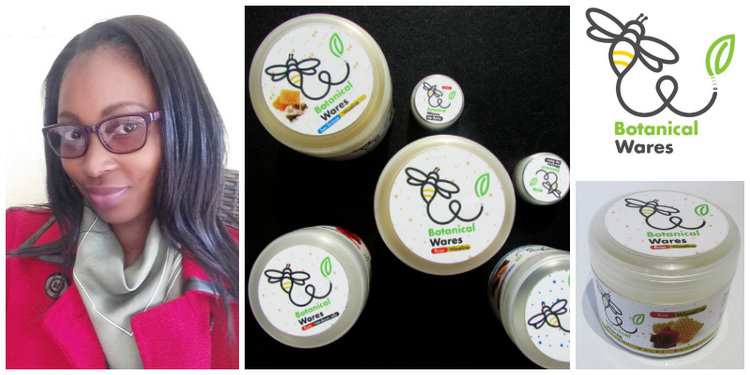
For all those who experience the challenges of sensitive skin, hope is at hand from Botanical Wares (Pty) Ltd, a Lesotho woman-owned company inspired by its founders who needed to find a skincare and cosmetics solution for themselves and their families. 

Lioness of Africa chatted with founder, Ntsoaki Mabejane in Lesotho find out more about the cosmetic brand.

Botanical Wares(Pty) Ltd…

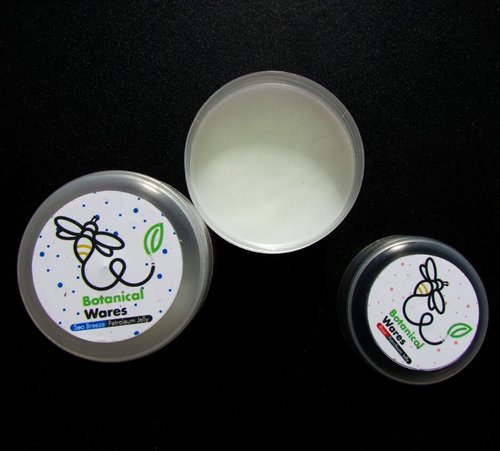
We produce organic cosmetics and refined petroleum jelly. Our lip balm is made of beeswax, propolis and prickly pear cactus extract. We also have a body cream made from the same ingredients as our lip balm and we have named it Waxeline. Our refined petroleum jelly is enhanced with the extract of prickly pear cactus and propolis too. All these products are the first of their kind.

Inspiration

My partner, Miss Mpona Semoli, and I have daughters who had very sensitive skin when they were infants and this was very frustrating for us. So we decided to make our own organic products that would suit their skin and all skin types. When we saw the good results we achieved on the skin after making samples, we decided to start the business.


Products and services…

Our products are organic and in producing them we are also not harming the environment. The ingredients and their benefits are as follows;

Propolis – this fights acne, rashes, pimples and reduces burns; it is a natural antiseptic and preservative; and it rejuvenates the skin.

Beeswax – this helps to calm and soothe the skin; it is a good source of Vitamin A, which exfoliates the skin giving it a new young look; it soothes temporary itching caused by dry and/or sensitive skin; It is antiallergenic, thus it is easily tolerated by even those with reactive skin; it soothes skin and helps heal wounds; when applied to the skin, beeswax forms a protective barrier that helps protect it from environmental assaults, while also holding in moisture and reducing dryness. It is known to have both antibacterial and anti-inflammatory qualities which make it good for sensitive dry skin, minor infections and reduction of irritation; it promotes the retention of water in the skin; and finally, beeswax has a natural honey fragrance that always leaves the product with a pleasant, light aroma regardless of other added fragrances.

Prickly pear cactus – this detoxifies, moisturizes and protects the skin that has lost its luminescence over time and has begun to dry, and the dull appearance due to the amount of toxins encountered everyday; the plant is cold tolerant and can protect the body during times of stress; it is rich in vitamins and minerals such as Vitamin A, Vitamin C, Calcium and Potassium (Vitamins A and C are important vitamins that play a role in protecting and repairing the skin while also supporting the production of structural proteins thus supporting the skin’s shape).

19679184_1828746997439350_8844412246013345261_o.jpg

Her team…

Botanical Wares is owned by two young single mothers. Miss Ntsoaki Mabejane is the Managing Director, whilst Miss Mpona Semoli is the Chief Executive Officer. We do all the production and packaging work ourselves, as we just started the business in April 2017. We have outsourced a marketing team which also takes care of our branding. We also outsource a harvester for the cactus that we use in our production.


Her entrepreneurial journey….

Our parents did own some businesses but not anymore. We actually resorted to entrepreneurship after being unemployed for a very long time. After the conception of the business idea we struggled a lot in finding funding to start our business. We only got as far as registering our company and producing the few samples in hand that we could not even sell to generate money. Our big break came when we were chosen as one of the Bacha Entrepreneurship Project (BEP) beneficiaries. This is an initiative by Basotho Enterprises Development Corporation (BEDCO), Standard Lesotho Bank and Lesotho Revenue Authority (LRA) that awards funding to the best three business proposals from unemployed Basotho graduates. Not only has BEP given us funding to start our business, these three cooperates are always there to assist every step of the way. This is how we got to know about the Lionesses of Africa….thank you Standard Lesotho Bank!

Contact or follow Botanical Wares

FACEBOOK | INSTAGRAM | EMAIL botanicalwares@gmail.com


Source: www.lionessofafrica.com