

I had an amazing experience recently I’ll like to share with you.
I was feeling a bit restless and overwhelmed with all I had to do in my job and business and I felt like there was a lot of clutter around me.
Then I did something a bit strange.
I started clearing my physical environment, my room to be more specific.
I cleaned up the whole place, rearranged the beds and wardrobe and even made preparations for a painter to come paint and set up a mini office/studio in all the new space I had just created.
It was an exciting experience for me!
From where my bed was now positioned, I could see my vision board more clearly and I was more inspired to achieve my goals.
You need to be very intentional about the experiences you create for yourself because what you see, feel and experience affects your worldviews, belief systems, the stories you tell and your ability to take massive action.
If you want to be able to make accelerated progress in your life, change your life experiences.
Another way you can change your life experiences is by traveling and going out for events in inspirational places. These experiences influence your worldviews, quality of life and the life stories you live and share.
This encourages you to be more confident in yourself and your ability to produce results.
About Esohe
Esohe Igbinoba is the Founder, The Global Brand Network. GBN is a brand management organization with a focus on teaching entrepreneurs the art of influential storytelling for attracting visibility and building an engaged audience so they can build profitable businesses. She helps them to achieve this through her unique system: The Influential Storytelling Formula. She has helped over 150 people in 10 countries. She helps them through her online school, GBN Business School where she offers one on one coaching programs, online courses and training programs.
You can connect with her on
Social media @queenesohe
Or send an email to esohe@queenesohe.com
Or on her website queenesohe.com
A Nigerian lady on twitter, @zynnnie, has won the hearts of many after she revealed that she is currently training as a cardiologist after she bagged a degree in law.
Many Nigerians are applauding her for doing what many think is unthinkiable which is to pursue a career in different fields that are ”very tough”.
Credit: LIB
Yesterday I saw these 3 boys at a construction site and my heart broke because I am certain that they are not up to 15 years old. As a child rights advocate these kinds of scenarios always leave me in a dilemma because I never know if I should complain to the boss because he’s encouraging child labor or thank him for giving the children the job because I know that they need the money.
It is always so easy to label things as abuse as “child labor” when we fail to recognize the living dynamic in the country. In 2010, the US Department of labor report claimed that Nigeria was witnessing the worst forms of child labor particularly in agriculture and domestic service; also in 2004, UNICEF reported that child workers in Nigeria were about 15 million.
But every time we discuss Child labor, nobody addresses the elephant in the room- Poverty and Lack of Opportunities!
The driving force for child labor is poverty and in Nigeria, we are extremely POOR.
Just this September, $124 sums up to N43, 694, which means many people in the country who earn N50, 000 don’t earn up to $200/ month.
So when we discuss child maids and outrightly say that anyone who hires one is bad, I am always reluctant to jump on that bandwagon because what are the other options?
It is unfortunate that many children will continue to work as domestic- helps in exchange for basics (education, shelter, and food), but that has been the only exit out of abject poverty for so many people!!
So if the boss refuses to send them to the same school as his/her biological child, it doesn’t make them bad people- Let’s focus more on how they treat these children. What is their workload? Are they abusive towards them? Do they ostracize them? Do they show compassion and kindness towards them? Are they fair?
I recall an article @elnathan_john wrote about this- he explained the living dynamic between the rich madam and oga and their child slaves masquerading as domestic workers. I have to say that I agree with his points but it’s not always black and white!
That child we fight for not to work as a maid/ bricklayer etc. because it robs them of their childhood will fight us for taking that opportunity from them because they have no other options!
So before we start bashing everyone who employs children, let us discuss and create opportunities for the children. If I get these 3 boys out of this site, what can I offer them in exchange? If you take that child maid out of the home, what can you offer?
Poverty is bad but the lack of opportunities is WORSE!
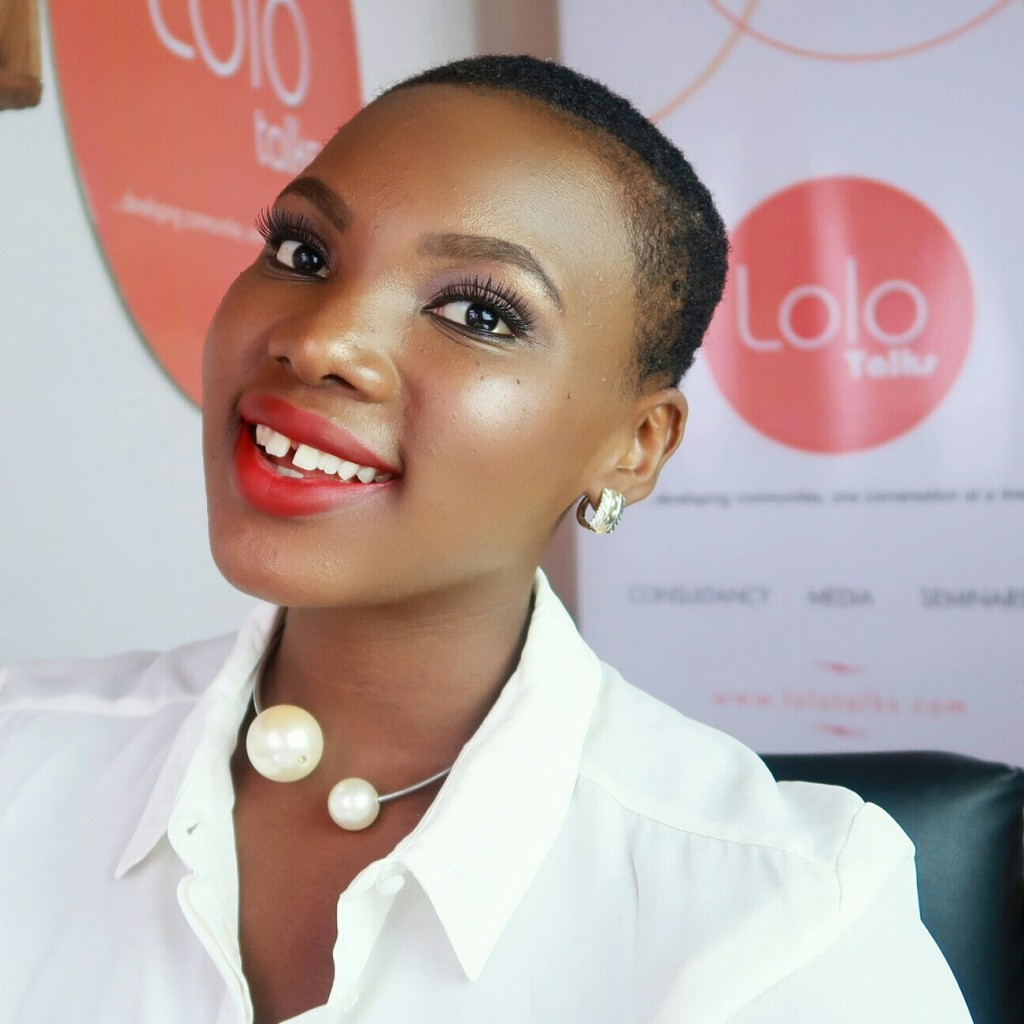
Lolo Cynthia Is a public health specialist, sexuality educator and founder of the social enterprise LoloTalks, that employs all forms of media (online and offline) to create awareness and sustainable solutions to our contemporary social and health issues in Africa. She also doubles as a documentary and talk show producer and lends her voice on issues regarding interpersonal relationships, sexuality, gender, and social issues through her YouTube channel LoloTalks and her blog.
Depression is the leading cause of disability worldwide, and a major contributor to the overall global burden of disease, according to WHO. Depression can lead to suicide, which is the second leading cause of death in 15 – 29-year- olds globally. Consequently, the condition can lead to more suicide cases in the country.
In the African region, close to 30 million people suffer from depression.
The global body gave the figures in a report released ahead of the World Health Day (WHD) today titled “Depression and Other Common Mental Disorders: Global Health Estimates.”
WHD, celebrated on April 7 every year to mark the anniversary of the founding of WHO, provides a unique opportunity to mobilise action around a specific health topic of concern to people all over the world. The theme of 2017 World Health Day campaign is depression.
According to the WHO report, depressive disorders and anxiety disorders are two main diagnostic categories of common mental disorders that are highly prevalent in the population.
Depression is a mood disorder that causes a persistent feeling of sadness and loss of interest. Also called major depressive disorder or clinical depression, it affects how you feel, think and behave and can lead to a variety of emotional and physical problems.
The WHO noted that at a global level, over 300 million people are estimated to suffer from depression, equivalent to 4.4 per cent of the world’s population and nearly that number again suffers from a range of anxiety disorders. It, however, noted that since many people experience both conditions simultaneously (comorbidity), it is inappropriate to simply add these two figures together to arrive at a total for common mental disorders.
The WHO noted that the consequences of these disorders in terms of lost health are huge.
Depression is ranked by WHO as the single largest contributor to global disability (7.5 per cent of all years lived with disability in 2015); anxiety disorders are ranked 6th (3.4 per cent).
According to the global health agency, depression is also the major contributor to suicide deaths (about 800 000 per year).
Why are Nigerians most depressed in Africa? “The number of persons with common mental disorders globally is going up, particularly in lower-income countries, because the population is growing and more people are living to the age when depression and anxiety most commonly occurs,” the WHO explained.
Who is most likely to get depressed? “Although depression can and does affect people of all ages, from all walks of life, the risk of becoming depressed is increased by poverty, unemployment, life events such as the death of a loved one or a relationship break-up, physical illness and problems caused by alcohol and drug use,” the WHO noted.
To address the issues of depression and anxiety disorders, the Lagos University Teaching Hospital (LUTH) has introduced LUTH-Suicide Research and Prevention Initiative (SURPIN) and its “ONE 1 MORE DAY” campaign aimed at reducing suicide deaths.
Consultant Psychiatrist and LUTH-SURPIN Coordinator, Dr. Raphael E. Ogbolu, told The Guardian yesterday: “SURPIN has hotlines (09080217555, 09034400009, 08111909909, 07013811143) through which members of the public seeking help can reach us. The main target groups are those at risk of suicide and are contemplating an attempt, those who have survived an attempted suicide and therefore may be in critical physical condition, and those who are bereaved by the suicide of a family member, because they themselves also then become at risk.”
According to the WHO, the health condition affects people of all ages, from all walks of life, in all countries. It causes mental anguish and impacts on people’s ability to carry out even the simplest everyday tasks, with sometimes devastating consequences for relationships with family and friends and the ability to earn a living. At worst, depression can lead to suicide, now the second leading cause of death among 15-29-year-olds.
Yet, the condition can be prevented and treated. A better understanding of what depression is, and how it can be prevented and treated, will help reduce the stigma and lead to more people seeking help.
Credit: Guardian
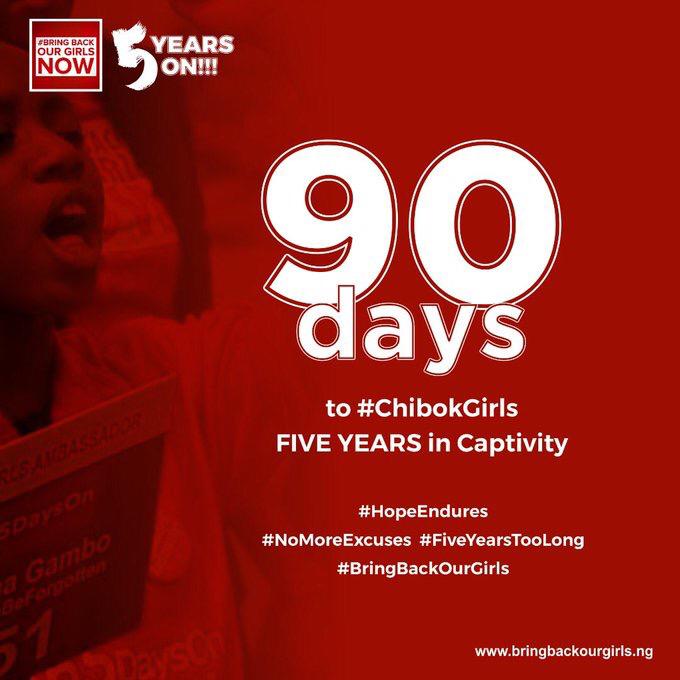
The Bring Back Our Girls (BBOG) movement has launched a 3-month Global Campaign starting on Sunday January 13th, 2019, 90 days to making it 5 years since the Chibok Girls
were last free citizens of Nigeria.
In a statement released on Monday, the BBOG said: “This 90-day campaign is to pressure our government to free our 112 Chibok Girls, Leah Sharibu, Alice Ngaddah and countless other abductees before the fifth anniversary of the abduction, which will come up on Sunday April 14, 2019.”
The statement continued:
As a movement made up of concerned Nigerians of all economic classes and provenance,
we demand that our government:
1. Bring back our girls NOW and ALIVE!
2. Equip and look after the welfare of our police and our troops
3. Give our children safe and secure schools
4. Properly rehabilitate those who have been victims of conflict or crisis
5. Respond QUICKLY whenever something bad happens to our citizens, and
6. Communicate about what they are doing to the victim’s families and the general public.
While we are aware of the efforts made so far, and commend the government for the
recovery of 107 Chibok girls, and 106 Dapchi girls, we will not relent in our advocacy and strident demands for the rescue of our school children and fellow citizens from captivity.
We also demand justice for the slain. We acknowledge and honour the sacrifice of our
military and express our thoughts and prayers to the families of our heroes in the armed
forces.
As concerned citizens of this country, the #BringBackOurGirls (#BBOG) advocacy group
has highlighted the plight of these innocent girls and other victims of the insurgency, both at global level, and at home through protest and through constructive engagement with the government and other agencies, to secure the rescue of the abducted girls. Our advocacy includes nearly 5 years of a daily sit-out in Abuja; weekly sit-outs in Lagos, Oshogbo, and Ibadan; visits to key local and international stakeholders; development of strategies and tools such as ‘Citizens Solutions to End Terrorism’ and the ‘Verification, Authentication and Reunification System (VARS)’ for missing persons.
While we remain hopeful and expectant that the rescue of ALL the girls is imminent, if this hope does not materialise before April 14, 2019, we will, with heavy hearts, mark the 5th year of captivity for 112 Chibok Girls by gathering with members of the Chibok community and members of BBOG from all over Lagos.
We empathise with the traumatised families and communities of all the victims of
insurgency, those missing, deceased, and forcibly removed from government schools where
their parents thought they would be safe. We pray that many more families will be able to share in the joy of their children coming back home and having a bright future.
We call on local, national, regional and global influencers and authorities to support
and pressure the Nigerian government to bring the nightmare of school abductions, violent extremism and insecurity to an end.
Signed:
For and on behalf of #BringBackOurGirls Lagos &Ejigbo Families
Abiola Akiyode-Afolabi
Adwoa Edun
Aisha Oyebode
Ayo Obe
Babasola Olalere
Deji Kolawole
F.T. Adebayo
Habiba Balogun
Jonathan Okanlawon
Monday Ojon
Ngozi Iwere
Yahi Bwata
‘Yemi Adamolekun
Yemisi Ransome-Kuti
Credit: Bella Naija
All the 365 days of 2018 was a pretty eventful year for me and I’m sure for a lot of people out there. There were the joyous moments, the sad memories, the pretty memorable times and of course the life changing events. Cumulatively, it had it’s lessons and ones we’d be sure to take note of in the never ending quest to becoming better versions of ourselves
Whilst 2018 had a lot of self evaluation lessons in it, these are a few that are definitely worth working with into the new year:
1: Be kind to yourself:
It’s no big secret that the country economy is tough and there are just about enough reasons to worry and beat yourself up over about each day. But, in the midst of all those thoughts and moves towards a better life, never forget to talk to yourself kindly . The world will still be there, even when you’re gone so why not relax a little after a long day, take time off work on the weekends and just enjoy the little things of life, you might just be surprised just how refreshing that would prove to be.
2: Be Expressive yet assertive:
2018 taught me just how much differently people can interpret what we say from what we actually mean. Yes, in the long run, you can’t control how people perceive and interpret your energy but one thing you can do however, is be very clear about your intentions. It saves everyone a lot of stress trying to decipher what you mean exactly at the end and that’s certainly what we want 2019 to be, stress-free.
3: Act and think positively:
A saying goes thus, “ the world will throw stones at you, it is your choice what you make of the stones, a wall against your self or build a bridge to your dreams”. I’d say I’d take the bridge, build an overpass and add an intersection to the whole lot. For every negative thought that crosses your mind, we always have a choice to dwell on it or banish it from us and look onwards with positivity, cause it can only get better this 2019!
4: Find and fuel your passion:
2018 was an enlightening year for me. I got to find out what really mattered and phased out gradually what didn’t. A passion is definitely something you’d want to find and keep doing. It gives life a purpose, it doesn’t necessarily have to be money oriented at the moment, just basically something that lights up your soul and gives you a sense of achievement.
5: Break that routine:
A routine makes life mundane and boring. When done over a long time, it limits one’s thoughts and creates this monotonous outlook on life. Once in a while, take out time to reach out to loved ones, take that trip to that wildlife conservatory you’ve always wanted to see, go see the movies or just enjoy your own company.
Finally, friends are a basic necessity of life, great friends add quality to life, trust me. Make friends that hold you accountable, and push you towards becoming the best you can be.Let’s do better this year!
Happy new year lovelies!.
About Jane
Veteran actress, Ngozi Nwosu has blamed Nigerian parents for increase in marriage crash and high divorce rate in the nation.
She advised parents to stop putting pressure on their kids when it comes to getting married to reduce the high rate of divorce in the nation.
According to her, such pressure might end up making the kids choose the wrong partner and then eventually having them split when things don’t work out.
Citing her failed marriage as an example, the 55-year-old beautiful actress in an exclusive interview with Plus TV Africa, said
“No Parent should put pressure on their kids to marry, it is better to be late than to marry early and choose wrong. That was part of what happened to me, I was under pressure to marry and things eventually didn’t turn out right”
The actress who admits being single and searching for the right man further said
“When you rush to do things because you are ageing or because your mates are doing it, it might be your doom so just live your life and wait till it is the right time. I am waiting on God’s time before I get married again, to avoid making another mistake”
I want us to talk about 5 brand stories you should be sharing with your audience. There are 5 types of stories your brand should be sharing:
Your personal story
If you want to start a conversation with a stranger, you do one of two things:
Introduce yourself briefly and ask about the other person
Find common interests and instantly bond based on shared interests.
None of the strategies is wrong, you can employ both.
The important thing is you make sure to share parts of your personal story that resonates with your audience.
Your self-awareness story
This is keeeeeeeeeeeeeeeeeeeeeeeey
You didn’t just wake up and decide to start the niche business that you are currently working on.
Even if you’re still finding clarity about what you want to do, you can share the different insights you’ve gotten from your self-introspection.
Your growth story
As you get more aware of yourself and you grow, you need to find out what periods in your life you experienced tangible growth (in your mind, capacity or results).
Journal all these experiences and use them as often as you can in your brand stories, as long as your audience can relate to them.
Your result-oriented story.
This is the part a lot of us jump right on to.
It’s not a very effective strategy.
The saying holds through, ‘’I don’t care how much you know until I know how much you care’’.
Hence, you communicate your results-based story with EMPATHY.
Communicate with a shared sense of understanding of the problem and struggles of your audience and how your growth journey and key milestones achieved qualifies you as a guide to help them on their own journey.
Make it all about them.
Never about you.
You’re the guide remember?
Empower your hero to stay in the spotlight. Be the guide.
Your movement story
This is when your storytelling gets interesting.
You have gotten the attention and trust of your hero and you’ve shared your journey: struggles, failures, milestones, successes and how that qualifies you as a guide.
Now, you have to CLEARLY communicate the journey you are taking the hero on and how you will take him on that journey.
Introduce your movement and trigger curiosity, interest, and excitement.
Find other heroes and introduce them too to your movement.
Lead your tribe.
About Esohe
Esohe Igbinoba is the Founder, The Global Brand Network. GBN is a brand management organization with a focus on teaching entrepreneurs the art of influential storytelling for attracting visibility and building an engaged audience so they can build profitable businesses. She helps them to achieve this through her unique system: The Influential Storytelling Formula. She has helped over 150 people in 10 countries. She helps them through her online school, GBN Business School where she offers one on one coaching programs, online courses and training programs.
You can connect with her on
Social media @queenesohe
Or send an email to esohe@queenesohe.com
Or on her website queenesohe.com