Women of Rubies

Category

self development

Category

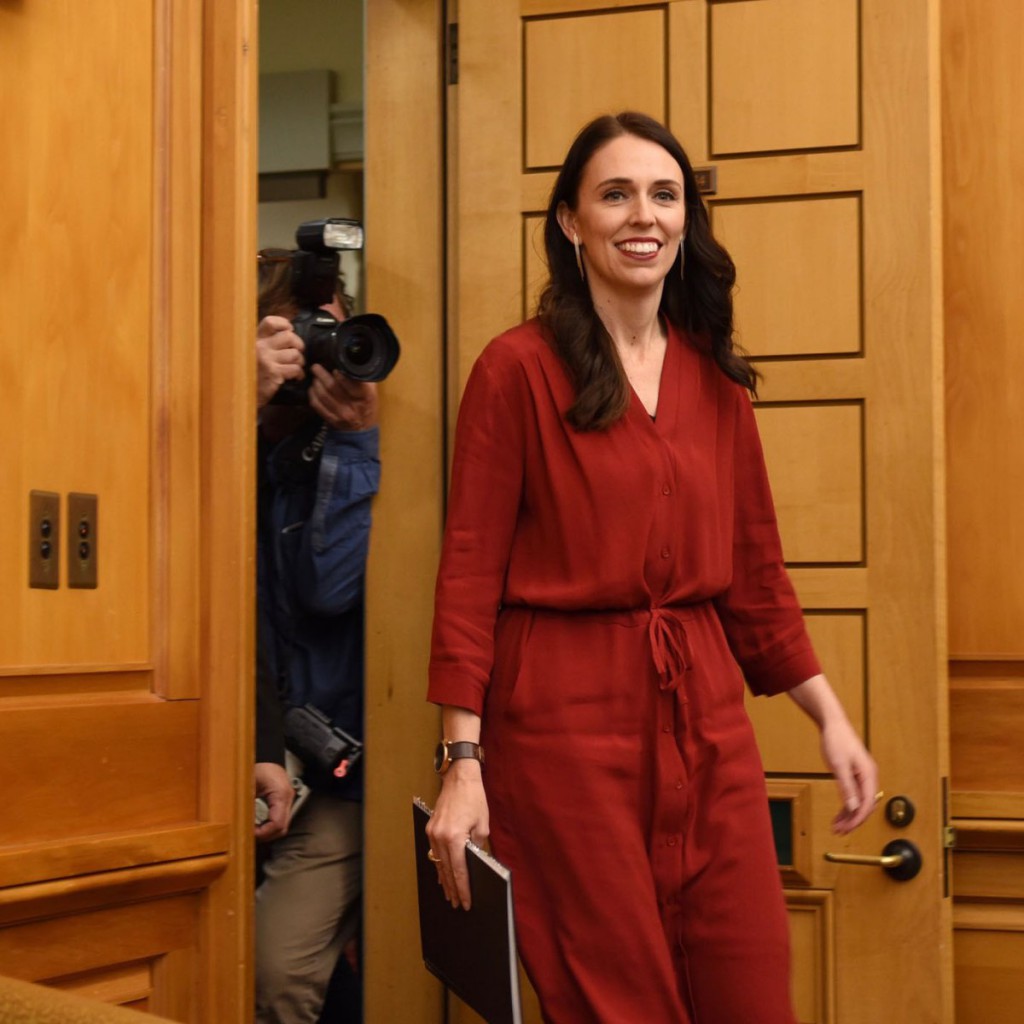
New Zealand’s prime minister Jacinda Ardern has been praised as a true leader for the way she has so far reacted following the Christchurch mosque shootings.

The terrorist who opened fire on two mosques in New Zealand killed 51 people and left many fighting for their lives.

Following the terror attack by a white supremacist, Jacinda Ardern stepped into her position as a leader and not only condemned the attack but offered consolation to the families of the victims and even visited Christchurch Muslims.


"She has reacted like a true leader" Jacinda Ardern receives international praise for how she handled the New Zealand mosque shooting (videos/photos)


She also vowed never to speak the name of the Christchurch gunman and said the person responsible would face the “full force of the law”.

In an impassioned speech to the country’s parliament, Ms Ardern implored others “to speak the names of those who are lost, rather than the name of the man who took them”.

She added:


He sought many things from his act of terror but one was notoriety. That is why you will never hear me mention his name.


Ms Ardern has received international praise for her reaction to the incident. She’s been praised for her resolve and compassion.


"She has reacted like a true leader" Jacinda Ardern receives international praise for how she handled the New Zealand mosque shooting (videos/photos)


“A day after the attack, Ardern led a multi-party group to visit grieving families and Muslim community members,” John Mair and Praveen Menon wrote.

“Wearing a black head scarf, she hugged relatives and let them set the pace and agenda as she listened and offered comfort.”

Journalist John Flint said Jacinda Ardern, 38, was a “pillar of strength”.

He wrote: “Whether it was at her media conference in the immediate aftermath of the Christchurch mosque massacre on Friday or comforting the devastated Muslim community in the shaken city yesterday, the 38-year-old leader has displayed the right balance of strength and compassion in the aftermath of the atrocity that killed 49 and injured 39 more”.


"She has reacted like a true leader" Jacinda Ardern receives international praise for how she handled the New Zealand mosque shooting (videos/photos)


Chris Urqhart said Ms Ardern is the kind of leader Australia desperately needs.

He wrote: “Where other leaders have baulked at immediately showing their hand, offering only epithets, or thoughts and prayers, she had resolve. Where others might fear the political consequences of acting, she feared the human consequences of failing to act.”

People also took to different social media platforms to praise the New Zealand Prime Minister.

US Senate candidate Qasim Rashid tweeted: “What a powerful example of compassion and leadership. May she & her nation prosper in love & peace.


"She has reacted like a true leader" Jacinda Ardern receives international praise for how she handled the New Zealand mosque shooting (videos/photos)


Australian TV host Osher Gunsberg also compared Ms Ardern to local politicians.

“Australia has an election in a few months. Please, please give us someone like Jacinda Ardern to vote for. Please.” he wrote.


"She has reacted like a true leader" Jacinda Ardern receives international praise for how she handled the New Zealand mosque shooting (videos/photos)


Belgian-Egyptian journalist Khaled Diab wanted NZ to export Ms Ardern’s compassion to other countries.

“Too bad that leaders cannot be imported. Jacinda Ardern is sorely needed in other parts of the world. New Zealand should consider lending her out,” he wrote.


"She has reacted like a true leader" Jacinda Ardern receives international praise for how she handled the New Zealand mosque shooting (videos/photos)


Videos below.


Credit: LIB

As the world marks the International Day of Happiness, Nigeria is ranked 85 out of 156 countries and second in sub-Saharan Africa.

This is according to the annual Global Happiness Policy Report produced by the Global Happiness Council, which was released on Wednesday. It was edited by John F. Helliwell, Richard Layard, Jeffrey D. Sachs, et al.

Nigeria’s ranking is an improvement from its 91 position ranking in 2018.

Finland came first as the happiest country in the world for the second year in a row, followed by Denmark, Norway, Iceland and the Netherlands.

The worlds least happy country is South Sudan followed by Central African Republic, Afghanistan, Tanzania, Rwanda, Yemen, Malawi, Syria, Botswana and Haiti.

The report ranks countries on six key variables that support wellbeing: income, freedom, trust, healthy life expectancy, social support and generosity.

This is the seventh World Happiness Report; the first was released in April 2012 in support of a UN High level meeting on Wellbeing and Happiness: Defining a New Economic Paradigm.

The report presented the available global data on national happiness and reviewed related evidence from the emerging science of happiness.

It showed that the quality of peoples lives can be coherently, reliably, and validly assessed by a variety of subjective wellbeing measures, collectively referred to then and in subsequent reports as happiness.

This year, the focus was on happiness and community: how happiness has been changing over the past dozen years, and how information technology, governance and social norms influence communities.

The report showed that the annual data for Finland have continued their modest, but steady upward trend since 2014.

So that dropping 2015 and adding 2018 boosts the average score, thereby putting Finland significantly ahead of other countries in the top 10.

Denmark and Norway have also increased their average scores.

The United States came in the 19th place, dropping one spot since last year and a total of five spots since 2017.

On the whole, Helliwell said: What stands out about the happiest and most well connected societies is their resilience and ability to deal with bad things.

After the 2011 earthquake and now the terrorist attack in Christchurch, with high social capital, where people are connected, people rally and help each other and (in after the earthquake) rebuild immediately, he said.


Credit: pulse.ng

Janet Jumbo is the first Nigerian model to walk for Louis Vuitton. The 16-year-old made history after walking the runway for the popular international fashion brand.

Jumbo strutted down the runway during the Louis Vuitton Women’s Fall-Winter 2019 Fashion Show at the Louvre in Paris. 

Her agency took to Instagram to announce the exciting news writing,

“TODAY, JANET JUMBO IS THE FIRST NIGERIAN MODEL TO WALK THE LOUIS VUITTON SHOW EXCLUSIVELY. WE FEEL NOTHING BUT ALL SHADES OF HAPPINESS AND WE CAN’T CONTAIN IT.”

Janet who is  from Rivers State in Southern Nigeria was spotted on her way back from church on a Sunday. Since then, she has been signed to an agency called Raw Model Management Nigeria. Jumbo is also signed to IMG Models Worldwide. 

This agency manages some of the most famous models in the world like Kate Moss, Alek Wek, Gisele Bündchen, Joan Smalls, Karlie Kloss, Miranda Kerr, and Candice Swanepoel.

Jumbo also shared the exciting moment on her Instagram page.

These exceptional women were recognised for the excellence of their research in the fields of material science, mathematics and computer science and they will each receive €100,000.

Their achievements were celebrated alongside “15 International Rising Talents” who are promising young women scientists from across the world at an awards ceremony on 14th March 2019 at UNESCO’s headquarters in Paris.

Dr Priscilla Kolibea Mante from Kwame Nkrumah University of Science and Technology, Ghana was one of 15 International Rising Talents and the only African award recipient. She is also the first recipient of the L’Oréal-UNESCO For Women in Science International Rising Talent Award from her institution.

Specialising in neuropharmacology and neuroscience, Dr. Priscilla Kolibea Mante is researching alternative, plant-based therapeutic options to manage drug-resistant epilepsy and the neglected tropical disease, neurocysticercosis.

She is currently exploring the anticonvulsant activity of the plant alkaloid cryptolepine and its solid-lipid nanoparticles in the management of neurocysticercosis-induced epilepsy. By identifying a way to help cryptolepine permeate more efficiently into the central nervous system, the risk of convulsion should be reduced, helping the patient to manage their condition as effectively as possible. “It’s very rewarding to know that my research could significantly alter complicated structures like the brain and positively affect people’s lives,” she says.

Dr. Mante believes the biggest challenge for women in science is managing negative perceptions of ambition in women and overcoming gender stereotypes. Having faith in the future, she is convinced that her generation has been fortunate to receive strong support, and believe women can tap into that and spearhead their careers to higher levels.

“The world will make room for us”, she says. “The more women push for senior roles, the harder it will be to ignore them.” The expert guidance of both men and women throughout her career has been so important that Dr. Priscilla Kolibea Mante now considers herself a “champion” of mentorship, regularly supporting younger scientists in pursuing their dreams. She concludes: “Sometimes it’s important to hold your mentee’s hand and guide them towards opportunities they never knew existed.”

In 2018, Dr Mante received one of two L’Oréal-UNESCO For Women in Science Sub-Saharan Africa post-doctoral fellowships. The programme recognised 14 fellows – 12 doctoral and 2 post-doctoral – from five countries in sub-Saharan Africa (Ghana, Mauritius, Kenya, South Africa and Nigeria). They were selected for the scientific excellence of their work from more than 480 applicants, by a jury of independent experts.


Credit: Bella Naija

Five Nigerian women have been recognized by FORBES WOMAN AFRICA for the significant work they are doing in their industry through their own organizations.

FORBES WOMAN AFRICA launched a new initiative, The New Wealth Creators list, where female entrepreneurs on the African continent running businesses and social enterprises that are new, offbeat and radical are highlighted for their work.

This list, which is titled, “Businesses Of The Future: 20 New Wealth Creators On The African Continent” is the first edition by FORBES WOMAN AFRICA and it recognizes five Nigerian women out of the 20 listed.

These women come from across the continent, from the villages and the suburbs, and are in their 20s, 30s, 40s and 50s. They have all adopted sustainable development initiatives in one way or another to help solve Africa’s problems.

They may be wealth creators but their businesses, ironically, did not stem from a need to make money,  but rather from the need to solve Africa’s persisting socio-economic challenges.

Know more about the listed Nigerian women here:

1. Jessica Anuna, 27 -Founder and CEO, Klasha

Sector: E-commerce

At the age of 23, Anuna, who grew up in London, decided to live in China to learn how the Chinese did business. Meanwhile, she had gained an understanding of the world of e-commerce from working for organizations like NET-A-PORTER, Amazon and Shopify Plus in London.

So, she started with a Fast-Moving Consumer Goods export company specialising in textiles. She would also source fashion and beauty products from factories in the Guangdong province in China and then ship them to clients in the UK and US.

When she returned to Nigeria in 2016 to expand her business, she found out that it was difficult for young people had to travel all the way to the UK or the US to shop fashion goods. So, she founded Klasha in 2017 as a platform for fast fashion retailers serving millennials in Africa.

With branches in Dubai and Lagos, and employees of six women, Anuna plans to make Africa one of the global players in the fast fashion industry.

2. Ngozi Adebiyi, 44 – Founder, CEO and Lead Consultant, OutsideIn HR

Sector: HR Innovations

Surprised by the lack of innovative processes within the HR sector, Ngozi took it upon herself to provide an innovative service to companies through gaming and business simulations.

She became an ‘accidental entrepreneur’ after working in the human resource (HR) sector for over 13 years.

“People that I had worked with starting asking me, ‘oh, come and help us with this, come and help us with that’, so I usually say that I became an accidental entrepreneur,” she explains.

Soon, she started her own company and offered talent management services, consulting and coaching and training services to clients.

But she found out that participants were not getting enough from the lectures as they were often distracted. So, she found innovative ways to deal with the problem and now, she offers HR and business simulation programs catered to each client. Her goal is to revolutionize HR in Nigeria by providing innovative services.

3.Vivian Nwakah, 36 – Founder and CEO, Medsaf

Sector: Digital Pharmacies

Born and raised in Chicago, Vivian started her company when she lost a friend who died as a result of taking fake medication as well as a lack of adequate healthcare services.

During her studies at the Georgia State University – J. Mack Robinson College of Business to pursue an MBA in International Business, she travelled to Nigeria for the first time in her life, to fulfil her internship requirements for three months, learning about the healthcare systems in the country.

But her experiences with the Nigerian medical system made her stay back so as to be a part of its solution. After three years of research and planning, in 2017, she founded Medsaf-a digital medication supply chain management solution, linking hospitals and medication manufacturers from all over the world through a “pay as you go” system.

Through the platform, she created a transparent, affordable and safe manufacturing method to get direct medication to hospitals and pharmacies across Nigeria. Medsaf also gives hospitals and pharmacies a ‘credit score’ based on indicators such as repayment history, insurance data and patient feedback.

According to Nwakah, more than 400 hospitals and pharmacies signed up to use the platform and app when they launched, allowing stakeholders to see drug information, tracking and tracing details on a smartphone.

They make profit from medication sold through the platforms as well as through inventory management and data subscription services.

Having raised $1.4 million, Medsaf is looking to expand to other countries.

4. Odunayo Eweniyi, 26 – Co-founder and COO, Piggybank.ng

Sector: Fintech

A first class graduate of computer engineering at Covenant University in Nigeria, Odunayo left her parents’ home to live with her aunt and begin with the process of finding a job.While job hunting, she met two former university mates, who asked her to join them on working on two projects but the projects failed.

In December 2015, they founded Piggybank.ng- a very secure online savings platform that makes saving possible by combining discipline plus flexibility to make you grow your savings. The company shut down two times because they had to put some vital things like regulatory rules, micro finance and security software on the platform.

By 2017, they re-launched and partnered with United Bank for Africa as a micro finance partner and launched a SafeLock feature which allows users to put aside an amount of money for a fixed period without having any access to it until that time is up. Users are also able to earn interest upfront.

By the end of the year, they managed to save N683 million ($1.8 million) and in March 2018, they raised an additional $1 million.With that money, they were able to purchase their own micro finance license and it was uphill from there.

The app has over 180,000 current users and has won several awards including Future Awards Africa Prize in Technology 2018, Business Day Top 100 SMEs, and the 2017 Village Capital Fintech.

She tells Forbes, “A new wealth creator is finding newer, more creative and easier ways to help people create wealth.”

5. Nneka Mobisson -Co-founder and CEO, mDoc

Sector: Digital Health

In 2010, Dr Nneka Mobisson’s father died from a stroke. This was due to the fact that there were no doctors to help control his hypertension. Six years later, she left her job as an Executive Doctor for Africa at the Institute for Healthcare Improvement to make life better for people living with chronic health care needs.

Her goal was to optimize the care experience of people living with chronic healthcare needs such as diabetes, respiratory system disease, HIV, asthma and cancer.

Through the mDoc platform, the people are led to a virtual care team consisting of coaches and nurses in real time. They assess patients, discuss their health goals and advise them on medical care actions. They also provide digital navigation, trackers and digital support groups for the patients.

mDoc has experts from South Africa, Zambia, Rwanda, Kenya, US, UK and Nigeria, operating on the service. On International Women’s Day, Nneka launched a micro-financing company for women to save for their health and have access to credit for economic empowerment.


Credit: fabwoman.ng

Oscar-nominated and Emmy-winning director, Ava DuVernay (Selma), has proven herself to be a true filmmaking force in Hollywood, and she’s been paying it forward by hiring women, especially black women, on her projects.

Her TV show, Queen Sugar has featured women in the director’s chair for every single season, and the fourth season will be no different. The directorial lineup will include Cheryl Dunye, Carmen Marrón, Numa Perrier, Heidi Saman, Tchaiko Omawale and Nigerian-American filmmaker, Bola Ogun.

Created by Duvernay and executive produced by Oprah Winfrey, Queen Sugar follows the life of three siblings, who move to Louisiana to claim an inheritance from their recently departed father — an 800-acre sugarcane farm.

While still up-and-coming, Ogun already has an impressive resumé. She created an award-winning short filmAre We Good Parents?, which premiered at SXSW, and she has worked in the production department of notable projects like The Dark Knight Rises and True Detective.

Bola Ogun has been using her lens to influence those who don’t often have a voice and collaborate with other creative minds to amplify fresh storytelling perspectives, and we are definitely going to be on the lookout for her episode(s) on Queen Sugar.

The fourth season of Queen Sugar will premiere on June 12, 2019.

(Photo: OWN/Queen Sugar)


Credit: konbini.com

Yes, women are not allowed to give birth in the village.

What happens is that when a pregnant woman is in labor, she’s taken out of the village and allowed to return only after the child is born.

A pregnant woman spoke to the BBC, asking that the practice be abolished.

Watch the documentary below:

Credit: Bella Naija

Actress, Bisola Aiyeola was part of a charitable group from The Temple Company, who visited a health center to donate relief materials to the victims of the Ita-Faji three-storey building collapse that happened on Wednesday, March 13, 2019.

She was joined alongside a singer Jeff Akoh and a comedian who is known as Mama Tobi, on a visit to a hospital where those who were affected were receiving treatment.


It was a sad day on Wednesday, when pupils attending the Ohen Nursery and Primary School, were covered in the debris of the building collapse.

In response on her Instagram, Aiyeola captured a mood of appreciation while mourning over the deaths that were recorded after the building collapsed.

“That we wake up and go about our daily activities is a special gift/grace that we must not take advantage of. What I saw today almost broke me till I realized that it was meant to strengthen me and remind me of how lucky/blessed I am.

“If you are reading this from the comfort of your home, office, school, club or on your way to or from one of them, you should be thankful too. May the ill and wounded be healed and the departed Rest In Peace.

“May God also console the bereaved,”she concludes in her Instastory.

On Instagram, Bisola Aiyeola is not taking for granted the opportunity to freely go about her business without the tragedy that befell victims of the Lagos Island building collapse.

In a report by Punch News on the day of the accident confirms a comment from a member of the family that own the building that collapsed confirming that the structure had given signs of an imminent disaster.

The comment was made by Erinoluwa Akinmoladun, the family member who shared that the house had close to 110 primary school pupils attending the learning center located on the top floor of the affected building.


Credit: pulse.ng

The business of tech continues to be redefined by innovators in a wide array of professional fields. Some are developers, with extensive backgrounds in programming. However, many of the people growing tech-enabled businesses, have little to no work or academic experience in the field.

From art and law, management to finance, the non-techies below, have all discovered a way to use their unique expertise to create value for customers through technology.

Sandra Oyewole
Partner & Head, General Practice Group, Olajide Oyewole LLP

Complex, ever-changing laws and regulations that guide the use of technology, require someone knowledgeable to help navigate the legalese. Sandra Oyewole, a lawyer with more than 25 years of experience, is a Partner at Olajide Oyewole LLP, where she heads the intellectual property, technology and telecommunications areas for the firm.

Technology’s impact on all sectors has made it imperative for her to consider digital technology when advising clients, citing the evolution of music distribution for redirecting her focus to technology, “The crash of the CD and the rise of digital distribution of music was a trigger for me in terms of technology.”

For women considering a career in technology, Sandra offers her two favourite quotes, “Rome was not built in a day.” and “The journey of a thousand miles begins with a single step.”

Lola Kassim
General Manager, West Africa, Uber

Good management is vital to the success of any company, inside or outside of tech. Lola Kassim, has found a space within one of the world’s top tech companies, leading the Uber West Africa team, overseeing operations, marketing, communications, legal and policy for the organization in two countries.

Before Uber, Lola worked with McKinsey & Company and the Liberian government, but was drawn to the world of technology because it has “the power to
impact lives and enhance how we live day-to-day.”

“Don’t feel that you need to have a tech-heavy background to succeed in the industry. Learn about things you’re interested in and explore your passions. You can’t predict now where your experiences will lead you to along the way. So dive in, and make the most of all opportunities to grow,” she advises.

Mohini Ufeli
Media Manager, Paystack

Mohini Ufeli’s superpower is multimedia storytelling. As Media Manager for Paystack, she leads media efforts for the rapidly growing, Lagos-based, fintech company crafting stories that create an emotional connection between the brand and its customers. Before Paystack, Mohini held a similar position with Andela, another tech company.

Mohini “fell into Nigeria’s tech scene by serendipity”, after a photo shoot with Andela developers led to her employment there as Media Manager. “Own your voice. You have value and perspective to add to the conversation,” she says.

Lexi Novitske
Principal Investment Officer, Singularity Investments

When tech companies require investment, they look towards venture capitalists and other financial funnels that help funds flow. Lexi Novitske is the Principal Investment Officer at Singularity Investments, a firm that has invested in several African tech startups including Paystack, Flutterwave, mPharma and Asoko Insight.

According to Lexi, she is “investing in and partnering with African entrepreneurs that will change the world. Strong talent driving new tech models in Africa would generate the continent’s next wave of economic growth.”

Lexi arrived Nigeria in 2012 and managed investments at Nigerian private equity firm Verod Capital Management. Before Verod, she worked at New York-based Sandler O’Neill Asset Management.

Lexi points out that risk aversion, a trait that is identified with women, make female-backed businesses solid investments.

Temie Giwa-Tubosun
CEO, LifeBank

Coming up with life-saving services is one half of Temie Giwa-Tubosun’s job. Management is the other. The Founder and CEO runs LifeBank, a company that leverages technology to improve access to medical products in Africa, and says she looked towards technology when she decided to improve access to life-saving blood and oxygen resources after a traumatic experience.

Having worked at different management roles in the health sector, including stints at the United Nations and the Lagos State Government, her knowledge of the health sector was a key differentiating factor for starting her company. She already knew the market and had the right relationships. When asked for her thoughts on women in technology, she responds, “We are just getting started.”

Damilola Marcus
Art Director, Dá Design Studio

Damilola Marcus and her Dá Design Studio team make things look good. Working in the space where aesthetics and tech intersect, they create the visual branding technology companies need for products and collateral. “Design and technology have ‘problem-solving’ in common,” says Damilola, who holds her passion and knowledge of design as a strength.

“Chase excellence,” she recommends. “It is extremely important to find a niche and own it. The easiest way to do this is to do what you love and learn it hard.”

Anike Lawal
CEO, Mamalette

Not being a techie did not stop Anike Lawal, CEO and Founder of Mamalette, from finding a tech-enabled solution to a social problem. After having her child, Anike’s interest in building a community of mothers led her to explore connecting via technology.

The Mamalette web-based platform delivers information about health services in local communities and provides support for expecting mothers, as well as infant care. Although she worked in business development and has a master’s degree in law and accounting, Anike decided to learn the basics of coding and graphic design when she started her business. Currently, she provides strategic and operational direction for Mamalette, while also managing programs and activities.

On getting more women to consider using tech to build products they need, My pet peeve is seeing men building and developing tech platforms for women or mothers, that could have been built by us.”

Solape Hammond
Co-Founder, Impact Hub Lagos

Developing tech products or services is one thing, developing a model that sustains the business is another. Impact Hub Lagos is part of a global network that provides the support and community emerging entrepreneurs need while growing their businesses.

Solape Hammond, CEO and Co-Founder of the co-working and innovation space, has a background in management consulting, strategy and social entrepreneurship. “I worked for one of the world’s largest technology consulting firms and saw firsthand how technology transforms businesses. This led to a determination to do the same for startups. To help new businesses solve problems in new innovative ways and scale fast.”

At Impact Hub Lagos, Solape works with entrepreneurs to accelerate their businesses, and contributes to ecosystem initiatives such as hackathons, innovation roundtables and studies. She encourages women seeking a career in technology to be bold, “There’s never been a better time.”

Eloho Gihan-Mbelu
Managing Director and CEO, Endeavor Nigeria

Eloho Omame Gihan-Mbelu is a former investment banker and private equity investor. As Managing Director and CEO of Endeavor Nigeria, she supports startups by mentoring high-impact entrepreneurs leading tech ventures. Meeting founders like Sim Shagaya of Konga and Tayo Oviosuof Paga, “who were building pioneering tech companies in Nigeria and were determined to succeed against all odds” helped her understand the value of mentorship for founders early in their journey. Under her leadership, Endeavour supports tech companies like BitPesa, Cars45 and Paga.
“Don’t wait until you have all the answers or even know all the questions, to build an effective network,” she recommends for those considering a tech career.

Tosin Dada-Faniro
Head, Startups (Lagos Innovates) LSETF

Government participation in infrastructure innovation is an important part of impacting communities. Tosin Dada-Faniro gets to do this as Head of Startups for Lagos Innovates, a set of programs, initiated by the Lagos State Employment Trust Fund (LSETF), aimed at making it easier to build a successful tech startup in Lagos. With a strong background in finance and project management, Tosin finds that she is “in a unique position to make a difference” through technology. “Women deserve a seat at the table. We have worked hard, continue to work hard and we should not be afraid to put ourselves out there.” Tosin says.

This post is brought to you by TechCabal and BellaNaija


Culled from Bella Naija

The writer tells Vanity Fair in a chat that proceeds from the sales of the neckpieces will go to PEN America, whose mission is to protect worldwide free expression.

Adichie explains the meaning of the design:

I was thinking about what I wanted to remember of this time. We’re living in a time where I feel a sense of urgency because—and it’s not just America—I think the Western world is moving to the right. I sometimes wonder if this [is] what 1937 was like, where people in Europe felt this sense of a shift. The reason that I find it really troubling is that the idea of dehumanizing your fellow human beings has become almost acceptable and casual. The crossed arrows represent the idea of living passionately and living knowing that our time here is short and that we need to make the most of it. I feel that every morning, actually. Every time I look at the pendant I want to think about this urgency—and that one must live in a way that is meaningful.

I grew up thinking of America as a place where certain things would never happen, politically. I no longer think that because all of the things that happened in Nigeria when I was growing up, which was a military dictatorship, are happening here. You can just sense it, there really isn’t the rule of law. You get the sense that institutions are not as strong and resilient as you thought, you even get the sense that the president can just bring in anybody from his family to become part of [the] government in a way that makes no sense. That’s classic in many African countries. I’m mourning an idea of America that I used to hold very close.