Women of Rubies

Category

self development

Category

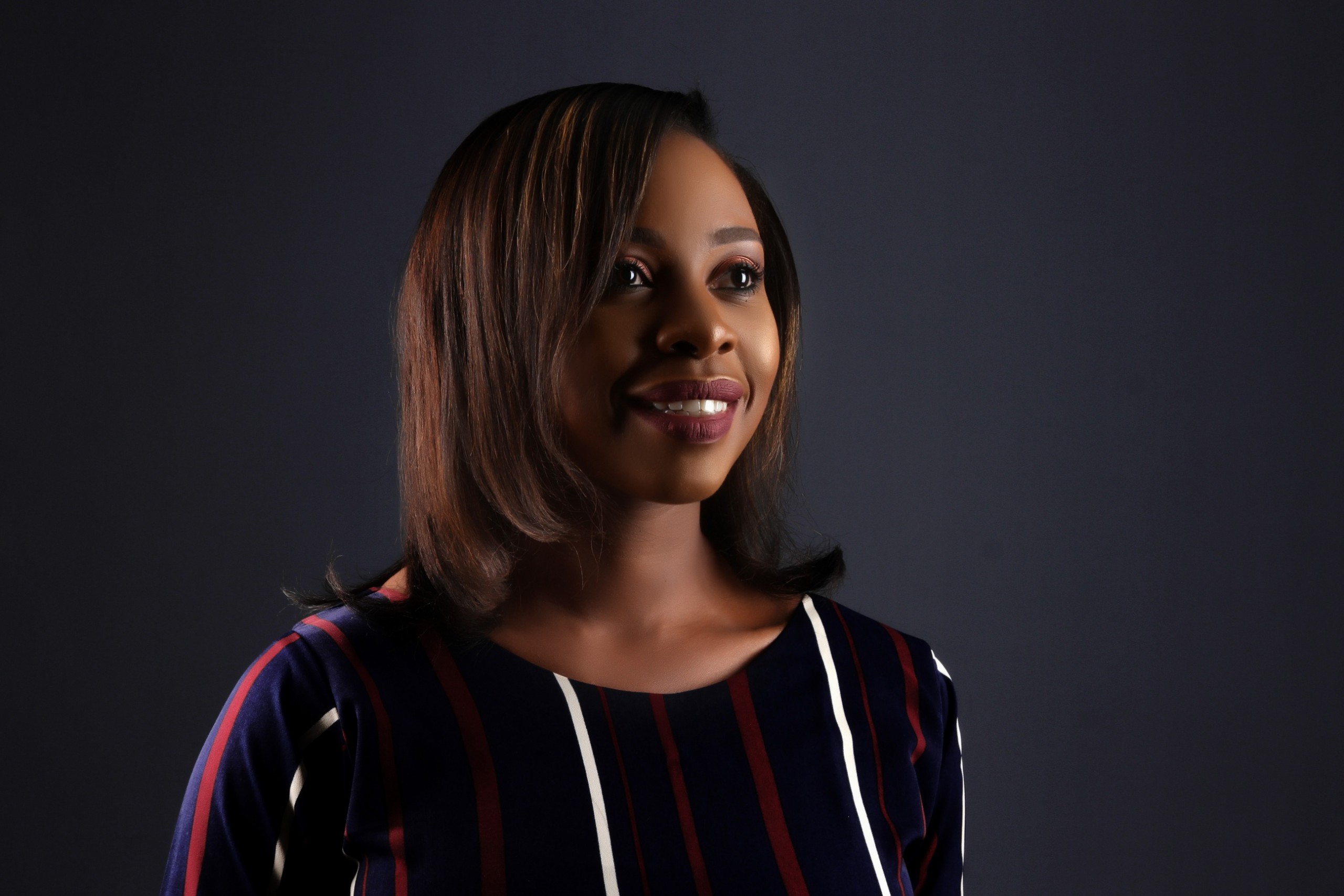
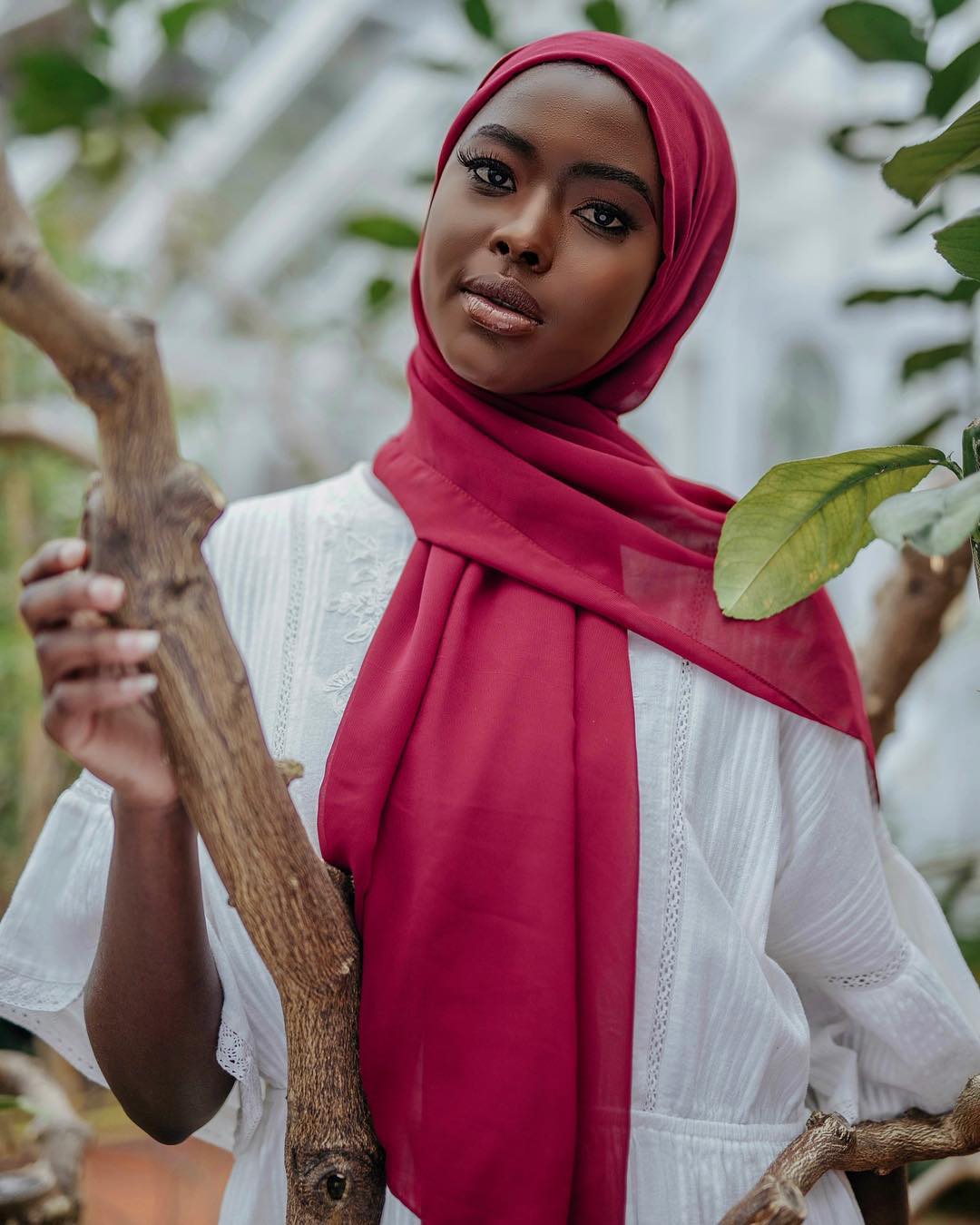
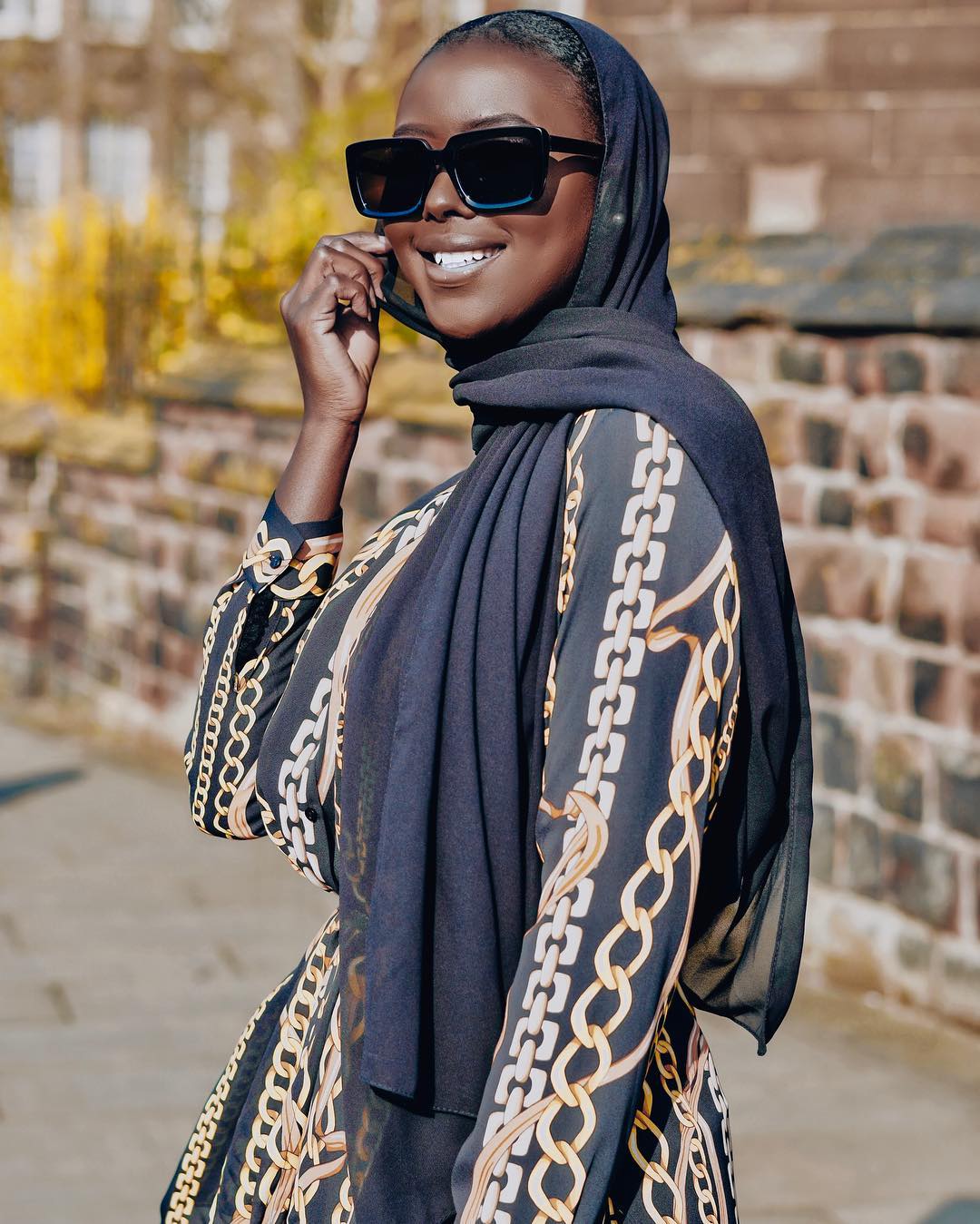
London-based Maryam Salam is breaking taboos about being a stylish Hijab wearer and has been helping inspire other women on Muslim beauty, fashion, and modesty with her fashion and lifestyle choices.

I’ve always worked on my faith journey with God and wearing hijab is something I’ve always wished for and prayed about. I believe dressing modestly is one of many steps to get stronger in my faith and closer to God.

The Nigerian blogger who transitioned to modest fashion including discussions around faith and being a hijabi in this millennial generation to her blog admits that adjusting her lifestyle and becoming more intentional about the way she dresses was not an easy one.

I lost my job then due to my choice to wear hijab in the workplace. However, this didn’t stop me, things got better. The more I embrace it, the better things get!

@itsmaryamsalam

Two years later, Salam is now one of the biggest modest Nigerian fashion influencers and right after bagging a degree in Entrepreneurship & International Business last month, announced her new brainchild Arewa Scarves which doubles as a fashion accessory brand and also a fund-raising platform for the education of the girl child with a portion of every sale going to a charity organisation based in Nigeria.

Bella Naija caught up with Maryam and she talks about the inspiration behind Arewa Scarves, why it was important to create that brand and the impactful ways she hopes to change the way hijab-wearing women perceive themselves.

***

BNS: Tell us about the new brand
Maryam: Arewa Scarves is a social enterprise providing carefully selected and high-quality scarves to suit every skin tones while supporting Girl-child education in Nigeria by donating £1 from every sale to our charity partner Global Hope Integrated Empowerment (an NGO in Nigeria for women and children) executing these aims.

BNS: What is the inspiration behind Arewa Scarves?
Maryam: The desire to make an impact in the community. In my mind, I had a plan to: finish my first degree, then second, then apply for jobs, get a small apartment then start saving to achieve my goals gradually but God had a better plan. After several years of being scared, planning and hesitating (sometimes), I launched a project very dear to my heart and finally, I can embark on this journey that isn’t just about me or for me. Arewa Scarves is more than a fashion brand but we hope it will become a movement/community where we can impact lives while still looking beautiful. It’s about coming together to support a cause: The girl-child and children in general for something we might see as little but impactful (£1 from every sale is donated to support Girl-child, implemented by our charity partners)

@itsmaryamsalam

BNS: Why was there a need to create this brand now?
Maryam: I am a hijabi and I struggle with finding high-quality scarves that suits me, that’s maybe because I am dark skinned. That’s why Arewa Scarves focus on pieces that enhance skin colour, especially for people of colour.

BNS: Who is your brand targeted at?
Maryam: Our target audience is first young people that believe in our brand promise: “together, we can make a big impact“ and people of colour who love to explore the beauty of scarves. We believe Arewa Scarves is an experience. We want women to feel beautiful, empowered and confident when wearing our scarves.

@itsmaryamsalam

BNS: What are some plans you have for the brand?
Maryam: To be able to spread our support across different countries and charity organizations in Africa.

Connect with Maryam on Instagram @itsmaryamsalam@arewascarves

Credit: Bella Naija

Sara Hinesley, a 10-year-old girl who was born without hands has just won the 2019 Zaner-Bloser National Handwriting Contest.

She said she found writing in cursive to be easy and practiced it a lot. “She can do just about anything often times better than me or my husband,” said her mom, Cathryn Hinesley.

Besides writing, Sara likes to create art, ride her bike, read and swim.

Below is a sample from Sara’s contest entry.

10-year-old girl who was born without hands wins the 2019 Zaner-Bloser National handwriting contest (Photos)

Photo Credit: Cathryn Hinesley

Credit: LIB

The students were informed that sexual harassment is both a civil wrong and a criminal offense.
The students were also reminded that rape and sexual assault by penetration carry life imprisonment, while sexual harassment is three years imprisonment.

In a bid to ensure continuous sensitization of students on sexual harassment and safety on campus, the Lagos State Domestic and Sexual Violence Response Team recently engaged students of both the University of Lagos and Lagos State University. The sensitization was done during orientation program for fresh students who have recently been enrolled into the two higher institutions.

The team spoke on the topic “Prevention of Rape and Sexual Assault on Campus.”

The focus on fresher students is key, as statistics have shown that they are at a greater risk of being sexually abused on campus, due to perceived naivety and an initial lack of safety awareness within campus or red flags they should be wary of.

They were also informed of what consent entails and understanding that consent is freely given, reversible and specific. The team also used this opportunity to address the criminality of sexual harassment, making it clear that students should report lecturers and people in authority in the respective institutions who solicit for sexual favors, or make unwelcome sexual advances that affect the students’ educational opportunity, or create intimidating, hostile or offensive learning environment. The students were informed that sexual harassment is both a civil wrong and a criminal offense.

The students were also enlightened on the appropriate channels through which reports of such acts can be made. Conversely, students were advised to report immediately to their course adviser, counselor or the Dean of Students Affairs. The orientation expatiated on the legal provision on sexual abuse in Lagos State. The students were also reminded that rape and sexual assault by penetration carry life imprisonment, while sexual harassment is three years imprisonment. The presentation also elaborated on the safety measures to take on campus, in social settings, and the steps to be taken if a student unfortunately falls victim to the vices. The students also received information, education, and communication materials with relevant contact details and quick steps to take in case of an emergency.

In an interview with CNN‘s Van Jones, Kim Kardashian opened up about why she decided to become a lawyer.

Kim was instrumental in the release of Alice Marie Johnson, a 63-year-old woman who’d been in an Alabama prison on a nonviolent drug charge since 1996. After her meeting with Donald Trump at the Oval Office to discuss prison reform, Alice was granted clemency.

Kim told Jones that she decided to become a lawyer because she discovered, during the process of getting Alice out of prison, that the “system is broken” and she didn’t know much about it. She said she took the step to know more about the system so as to contribute her quota to fixing it.

“I don’t want to be put in a box,” she said.

“I saw a comment where someone said, ‘You need to stay in your lane. You can have ambitions but don’t be too ambitious.’ And to me, that was that kind of like ‘shut up and dribble’ comment to where … I read it to my husband in bed, and I was just like, ‘This will even push me harder’,” she added.

Watch:

Credit: Bella Naija

“On April 21st I smiled in the face of bigotry and walked away feeling the greatest form of accomplishment,” Shaymaa Ismaa’eel wrote in a tweetposted Tuesday, April 23. That tweet included photos of Shaymaa, a 24-year-old who works with children on the autism spectrum in schools, posing and smiling in front of a group of protestors with signs attacking Islam and the prophet Muhammad. For an African-American Muslim woman in a hijab, it was a flex of epic proportions.

The tweet blew up; it now has over 230,000 likes, and 65,000 retweets, and people have said it belongs in a museum or could really sauce up a history textbook. On Instagram, one of the photos Shaymaa posted got over 200,000 likes.

View image on Twitter

شيماء@ShaymaaDarling

On April 21st I smiled in the face of bigotry and walked away feeling the greatest form of accomplishment.285K10:44 AM – Apr 23, 201980K people are talking about thisTwitter Ads info and privacy

Shaymaa told Teen Vogue the photo is from her trip to Washington, D.C., for a convention run by the Islamic Circle of North America (ICNA), a nonprofit organization dedicated to building Muslim communities. Protesters were there with Islamophobic signs targeting the gathering and the viral photo op that Shaymaa seized came as she was participating in the conference.

“They have a bunch of speakers, workshops, lessons, lectures, spoken words. They have really cool competitions, like a cooking competition. They actually didn’t have it this year, which we were really looking forward to,” Shaymaa said. “When you’re in a space with people of our faith, you kind of just get an uplifting positivity.”

Teen Vogue spoke with Shaymaa about her viral moment, how it’s not the first time she’s done something like this, and what that power of positivity and being unapologetic means to her.

Teen Vogue: What was your initial reaction to the protesters?

Shaymaa Ismaa’eel: I didn’t expect that they would be there. My initial reaction was to videotape them and get some footage, just because.

Then it reminded me of two years ago when I took a picture in front of similar people with similar messages on their posters. This is just my personality. I like to make light of a situation that could be heavy. That was my initial thought: I want to take a picture, but we have a lot to do. Toward the end of the day, when the convention died down, I wanted to go back out there. They weren’t there.

I was thinking about them throughout the convention because all the stuff we’re learning inside the convention was 100% positive — positivity, love, reminding ourselves it might be tough here, but we believe in the hereafter. The second day of the convention, they weren’t there in the morning. I don’t know why I was thinking hopefully I’d get to see them again.

Talking to someone like that is talking to a brick wall. You kind of can’t really do anything to combat it.

TV: You might not be able to talk to a brick wall, but you can use it for a photo backdrop?

S.I.: They were nice props.

We were wrapping up the second day of the convention and the first thing I saw was there they are. I showed my friend and she was like, ‘It’s Sunday. It’s Easter. Don’t they have something better to do?’ I was like, ‘Clearly, they need something from us.’

I took my picture while the security guard was blowing his whistle at me.

TV: Did you get in any trouble?

S.I.: I just walked off as they were making fun of what I was doing. They were like, ‘Oh, yeah, you need to cover your face, too.’ And then someone was like, ‘You know it’s a cult when everyone’s walking around in pajamas.’ I was like, ‘Hmm, is he saying that because I’m wearing loose pants?’ I love sarcasm, so I was like, ‘Thank you for that.’

Credit: Teen Vogue

When Polly Rodriguez started sexual wellness company Unbound, she struggled to find her place among male-dominated tech entrepreneur circles. “It was hard to be taken seriously in general because of the products that we were selling,” 

Rodriguez says. “And I grew up in the Midwest from a lower-middle-class background–so there was no one in my life that had started a business before.”

Instead, she turned to some of the enclaves for women founders in New York. “I think that’s how I ended up building a massive network of female founders,” she says. “I absolutely would not be here today if I didn’t have them to turn to.”

You’ll hear similar accounts from other female founders, many of whom feel shut out of more traditional networks of mentors and entrepreneurs. (Not to mention they’re starved for venture capital dollars, which are largely reserved for male founders: In 2018, just 2.3% of total capital went to women entrepreneurs.) Elle Huerta gave up on general networking events while starting Mend, a self-care app for heartbreak. “It was always interesting to me that a lot of people–men especially–couldn’t be imaginative about something that they didn’t have direct experience with,” she says. “This is something a lot of us experienced, so after a while, I stopped going to those events because they were just a waste of my time. I was like, ‘It would be more valuable for me just to go home, focus on building my company, and get traction so that I can be taken seriously.’”

For these women, building out networks of their own–much like the “mafias” of homogeneous founders spawned by tech exits–can be key to their success. In Silicon Valley, the moneyed alumni of tech heavyweights–and soon, the likes of Airbnb and Uber–have long offered guidance and financial backing to their peers and friends. For investors, entrepreneurs with that pedigree can seem like a sure bet. “They are looking for any indication or sense of validity because they’re inundated with pitches,” Rodriguez says. “You see time and time again that the generation of PayPal and Facebook went on to fund the next companies that went on to fund the next companies. And that’s largely because the VCs are like, Well, if he did well there, he’ll do well here, too. For women, we don’t have those examples to point to because all of us are basically first-time founders.”

Rodriguez often felt that potential mentors and investors in the Valley evaluated her work largely on the merits of her tech stack, and how it ranked against tech companies in more traditional verticals. “But I think women get it,” she says. “They get that making products is really hard. Branding is hard. Marketing is hard. It just doesn’t demand the same respect in the world of Silicon Valley when it comes to mentorship.”

What Rodriguez and Huerta also found was that female entrepreneurs were more candid about the challenges they had faced. “One of the reasons we bonded was because we all have this shared experience—the categories that we were in were ones where it was harder to raise money,” Huerta says of a circle of women entrepreneurs she frequently turns to, which includes Rodriguez. “But I have continued to really cultivate the relationships I have with my friends who are female founders of companies because they are so open and honest.”

If female founders tend to share more about the hurdles they’ve faced while fundraising or, say, hiring, Rodriguez believes it’s partly due to a lack of confidence. Finding a group of women founders who talk candidly about their experiences can also help silence one’s inner critic. “I think women are so much more forthright because we are more pragmatic,” she says. “We have to be. So when an investor is pressing you and is like, ‘Is there a possibility that this will fail?’ Most women are going to respond with, ‘Well, yeah.’”

Eva Goicochea, the founder of sex essentials startup Maude, has found these groups invaluable but wishes male peers were as forthcoming. “I would say the real value comes from the honesty around the topics,” she says. “I would love for men to be in the room if they would say they don’t have everything figured out. So yes, I’m pro-women and pro-women’s groups, but I’m also like, ‘Can we all just be honest about what it takes to build a startup?’”

WHAT COMPETITION?

Of course, carving out a female-friendly space isn’t just about camaraderie—it’s also good for business and helps lay the groundwork for a new ecosystem of female founders and investors. When Mend tested an ad-supported model of its app in late 2018, Huerta broached Rodriguez, who agreed to sign on as their first advertiser. (As a company in the sex tech space, Unbound has to contend with countless ad regulations, so advertising opportunities are harder to come by.) “I know Unbound really well,” she says. “I know what their mission is, and I believe in what they’re doing. So I have no problem introducing that brand to our audience. I can feel good about that, and it’s mutually beneficial.”

On Valentine’s Day, Mend put out a gift box, for which she collaborated with a number of founders in her network, including Unbound but also the minds behind vitamin startup Ritual and feminine wellness care brand Queen V. And in February, Mend hosted an event with Maude in its Brooklyn space, free of charge. “That kind of thing makes such a big difference when you’re a startup and don’t have a big marketing budget,” Huerta says.

Unbound and Mend have both also benefitted from tie-ups with founders and companies that are much further along. Mend has done multiple events with social networking platform Bumble. “Being able to plug into that audience has been huge for us,” Huerta says. “For them, we’re a drop in the bucket. So when a company that’s really been able to scale collaborates with smaller female-founded companies–which they’re doing all the time–that really helps.”

And according to Rodriguez, having Zola founder Shan-Lyn Ma as an investor and adviser for Unbound has shown her what it must be like to have the boys’ club at your disposal. “I didn’t know what a good adviser looked like until she became one of our advisers,” she says. “She opened up her network to me in a way that I was like, ‘Oh, this is how the men do it.’ She sent off a bunch of emails–and when Shan emails somebody, they’re going to take the meeting because she’s been so successful.”

In other words, this isn’t the one-upmanship that the likes of Lyft and Uber engage in. These founders recognize that as more female founders rise to the top–and clock billion dollar valuations–it boosts all female founders. In fact, some of Unbound’s “fiercest competitors” in the sex tech space are also Rodriguez’s closest friends. “Ultimately, we’re not competing against each other,” she says. “We’re competing against the patriarchy.”

Continue reading here https://www.fastcompany.com/90331125/these-women-entrepreneurs-are-working-to-help-each-other-succeed

Credit: www.fastcompany.com

Nollywood actress, Omotola Jalade-Ekeinde has revealed that she once had military men pointing their guns at her and she is not bothered about what is said about her on social media.

The actress made this revelation in an interview with the Guardian when she was asked about her feelings concerning the negative comments she received recently on social media recently when she engaged in debate with presidential aide on Twitter.
She said:

“I’m not overwhelmed by the reactions, especially the negative ones. I expected them. These ones were just talk. I faced bullets before. I faced military men pointing guns at me, and so, the negative reactions were nothing to me.

And why would I want to ruffle any nest? Who doesn’t want to hide his or her head? Do you know that when I had cause to speak up against previous governments, I was attacked? Not by words alone. But my business, my personal life, my finances were attacked. It is not something I enjoy doing, but sometimes, I worry too like every other normal human being. I worry for my safety. I worry for the safety of people around me.

Omotola added:

People think this is a joke. They think it is funny. They think it is something somebody just wakes up to do. I don’t have a choice than to speak the truth. I live here and I’m a born activist. I’m not just an activist, because I want to talk or I want people to notice me, this is who I’m. I have been like this since I was achild.

Everybody who knew me as a child would tell you that Omotola wouldn’t stand injustice. I’m that person who will speak out. Sometimes, I fight against myself too. I am like shut up, shut up; you don’t have to say everything. Keep quiet. I guess you can’t fight whom God has made you.

Credit: stargist.com

As a mother of five Black boys Fisher told Because of Them We Can that she was inspired by the representation and pride she felt after viewing Black Panther. She saw the absence of newborns dressed as Wakanda citizens as an opportunity.

“I’m constantly seeing creative images that reflect the current culture. I’ve seen babies dressed as every super hero, the Disney princesses, cake smashes and birthday parties of every cartoon imaginable. It’s rare that anything representing Black Panther comes across my screen even with all the popularity.”

After Black Panther was nominated for an Oscar, Fisher began to ideate around what a series featuring newborns would look like.

“I drew a sketch of what each character would look like as a swaddled baby and shelved it for a few weeks, realizing it was a massive undertaking. After the movie both shined, and in my opinion was snuffed, at the awards show, I pulled my notes back out.”

While Fisher tells us she isn’t a seamstress, it might be hard to believe as she handmade each of the costumes pictured. 


The final product is a masterpiece. Anyone who has ever photographed a newborn knows how much of an undertaking it is to get the right shot, but Fisher did just that times nine.

She hopes that her series helps people to reflect on the messages in the film and the opportunity we have to create our very own Wakanda.

“Wakanda might be imaginary but it’s a beautiful image of what could have should have and most definitely would have been if the narrative was different in the beginning.”

To find out more about this shoot or to view more of Fisher’s breathtaking work visit www.onceuponaflash.com.

In a country where mental health is seen as taboo and stigma thrives in a culture of silence, one woman set out to change this exactly three years ago. 

Award-winning founder, Hauwa Ojeifo who was at that time recently diagnosed with bipolar and posttraumatic stress disorder, and had a near suicide attempt barely 2 months before, set out to change the face of mental health in Nigeria by boldly speaking her truth publicly. She founded She Writes Woman on April 17, 2016.

For three years, She Writes Woman’s mission has been to lead a movement of love, hope and support that gives mental health a voice in Nigeria. She Writes Woman pursues this mission by taking back the misinformed narrative around mental health by telling new stories, connecting help with hope and normalizing mental health conversations by providing safe places where people can talk without fear or shame. Utilising education and awareness, advocacy and policy influence coupled with innovative and sustainable solutions, She Writes Woman’s mission is simple – to create better lives for Nigerians by improving the way they think, feel and behave.

Over the past 3 years, She Writes Woman has initiated a 24/7 mental health helpline averting over 50 likely suicides and counting, and sustained the only women-only mental health support group with over 39 editions directly supporting over 600 women and girls across 4 states in Nigeria. The leading mental health movement in Nigeria has also reached over 500,000 people globally with information and knowledge that will change their attitude and behaviour towards mental health, and recently created Safe Place Nigeria; a first-ever preventative mental health life clinic for young people to address life issues such as stress, relationships, fulfillment etc early enough before they become mental health problems, proudly donated by Airtel Nigeria as part of its Airtel Touching Lives CSR Initiative.

It is no wonder that amongst the organisations’ many accolades and recognitions include Ojeifo’s prestigious award from Her Majesty the Queen of England at the Buckingham Palace in June 2018, being the only African to be nominated (and won) the MTV Europe Music Generation Change Award in Bilbao, Spain and bagging the AstraZeneca Young Health Scholarship in becoming a One Young World Ambassador to the Hague, Netherlands.

In marking her three-year milestone, She Writes Woman unveils her Mental Health Ambassadors – a group of nine diverse women who are leaders in their industries and are passionate about mental health. Among these women are Esther Ijewere (Women of Rubies), Gusi Tobby Lordwilliams (Girl Hub Africa), Glory Edozien (Inspired by Glory, 9to5 chick), Olive Emodi (Award-winning OAP), Fatima Zahra Umar (Jaruma Magazine, Divorce Diaries), Adenike Oyetunde (Amputees United Initiative), Laila Johnson-Salami (Multimedia Journalist), Wana Udobang (Award-winning Journalist), Zahra Zakariya Abdulkareem (The Umm Fariha Network).

“I am so excited to become a part of the inaugural SWW Mental Health Ambassadors. Being able to give a voice to mental health is so important to me as someone that has been clinically diagnosed”, said Laila Johnson-Salami. Speaking on why this is an important position for her, the Jaruma Magazine Chief Editor stated, “I am a survivor of depression…Being that we live in a country that is only just beginning to come to terms with the importance of mental health, I look forward to being part of educating our people on the importance of sound mental health. Lordwilliams also added, “I look forward to representing all that She Writes Woman stands for, getting more people to be aware of its mission, uphold her core values and increasing our reach this year and beyond”.

In the coming year, these mental health ambassadors will use their personal and professional network to raise awareness on mental health and collaboratively work together in creating better lives for Nigerians, says Ojeifo

Currently, a lot of people, both men and women are speaking against police brutality, especially because innocent young men are profiled as cultists and fraudsters because of how they are dressed, their look and the kinds of phones and laptops they use.

To the affirmation of many, Nigerian youths have decried how unfair it is for the police to profile any young man based on his outward look. However, a writer, Doreen Uloma is using this situation to paint a clear picture of how rape victims are blamed for wearing mini-skirt, skimpy dresses, drawing tattoos on their bodies and going out at late hour.

Read what she wrote below

I know this is quite a sensitive topic to touch, but I think it’s time men started telling themselves the truth and began sharing responsibility for the SARS/police brutality they get themselves into.

I am not in support of police brutality of any sort, but men need to become extremely wary of their behavior and the personalities they project in order to avoid police brutality because, to be fair, the world is not kind to men.

Now let’s get to the point: The truth is that as a man, the way you dress says a lot about you. The police are trained to identify criminals with certain visual traits. The closer you are to these traits, the more likely you are to be targeted.

The way you dress speaks highly of your personality. Dreadlocks. Saggy pants. Tattoos. The chains and glitters. The designers. The phones you use. Even your dark lips sometimes pass a hint that you’re a weed smoker. These are visual xteristics that distinguish you from others.

In fact, these traits are common among criminals so there is literally no logical way to defend yourself if you are found wanting in those areas. How do you explain to an officer that your dreadlocks are simply personal and that it has no link whatsoever to a criminal mind?

How do you tell an officer that your saggy jeans have nothing to do with cultism? How do you begin to explain to an officer that your tattoos are not initiation marks? Or those chains – do you really think these officers can understand that your love for gold is innocent?

Do you think an officer understands that you bought those designers you’re wearing with your hard-earned money and that you’re not a thief or a fraudster? Why exactly are you using an iPhone X when you know that that is the popular brand for yahoo boys?

I am not in support of police brutality or things like that but the truth is that men need to start dressing how they want to be addressed. If you don’t want to be addressed as a criminal, then why dress like one?

Why are you giving policemen criminal vibes and then coming here to play victim? Remember, I am not in support of SARS or police brutality but this is the painful truth. I know men don’t want to hear this and will probably attack me for it but it’s the plain truth.

Why do you keep late nights when you know that that is the favorite working hours for criminals? Why do you carry laptops around when you know that that is a fraudster’s favorite working tool? Do you not like your life? Why do you put it at stake?

The other Friday night, a friend called me to bail him from the police station at 12:30 am. Why? He was driving home from the club and was accosted by the police and was yahooly profiled. I had to go pick him up but what was he expecting driving home by that time of the night?

A few weeks ago, I went to Zone 419 to bail another friend and when I arrived the scene, I was disappointed in him. He’d just gotten his hair locked and he had a giant tattoo of some barbed wire on his arm which the police interpreted to be a cult symbol.

Why do men deliberately do this to themselves even though they know that it puts them at the risk of these police people who are paid to do their fucking job? When will they start taking accountability for their contributions to their own plight?

What is even annoying is the way they have generalized policemen as if all of them are bad. Not all policemen are bad and that is a known fact. It’s just a few bad eggs and your bad experiences with a few does not mean that the rest of the pack is evil. Stop generalizing.

When you want to talk about police brutality, say “some policemen”, not “policemen” or “ALL policemen” bc that is a dishonest means of lumping all the eggs in a box. It is false generalization and just bc you’ve had a bad experience with one doesn’t mean that all of them are bad.

Additionally, change your circle. Ask yourself why you keep meeting bad policemen. It’s your fault because that is an indication that you’re doing something wrong. Stop projecting your pain on everyone else.

Another thing I don’t understand is why most of you bring your cases to social media for attention as if this is a court of justice. Take your problem to the authorities and stop littering our timelines with your tears.

You claim you hate policemen but you still hire them as escorts to protect you. Who exactly are you fooling? Grow up and take responsibility for your actions and stop blaming ALL policemen. They’re just doing their fucking goddamn job. Period!

PS: This is exactly how stupid, illogical, insensitive, cruel, unintelligent, foolish and dumb DUMB you sound whenever you blame rape on a woman’s dressing and other things. Or when you shut them down for narrating their experiences. Blame the assaulter and not the victim.

And if this riled you up, then you must also think of how much more it angers women who have to deal with this every other day and how bitter it makes them feel that they have to put up with your nonsense.

Source: woman.ng