Category

self development

Category

Brigitte and her family lived in Togo while her uncle lived in Ghana.

Unknown to her father, Brigitte was going to be a Trokosi – a culture where a member of a family (female) is chosen to pay for the crime of another family member.

Trokosis are called wives of the gods and they are held in a shrine run by a priest dedicated to the worship of deities.

At the time, Brigitte was only 7 years old. She had never been to Ghana before that time; neither did she understand their language. She was just told to go and live with her uncle.

Brigitte’s uncle had committed adultery and she had to be a Trokosi, so that evil does not befall her family as it is popularly believed in the communities where it is practiced.

“The community leaders of where Trokosi is practiced believe that when there is sickness in the community, someone has sinned and there is a need to appease the gods of the land. Sometimes, the gods demand a human being, not to be killed but to be isolated.”

The Trokosi practice has survived for over 300 years and is still in practice even though it was banished since 1998.

Life as a Trokosi was a hard and difficult one especially as a child who did not know why she was dumped at a shrine.

“Each day, I was woken at 5am and sent to fetch water. I had to carry heavy buckets on my head. It was hard physical work for a child. I was made to sweep the compound and work long hours on the farm. I wasn’t allowed to play or even go to school. I was in total isolation,” Brigitte said.

Luck smiled on Brigitte when an American news crew visited the shrine to cover what was going on there. The report gave her freedom, as an American viewer flew to Ghana to negotiate her release. His name was Kenneth Perenyi and he became her adoptive father. He took her to the US where she spent the next 13 years.

Unfortunately, these girls are left wondering why they are in the shrine as they are not familiar about the practice.

Meanwhile, for the practice to be completed, there was a need for the traditional priest to sleep with the virgin girl who comes in and the girls often bare the children of the priest.

Brigitte didn’t have to go through that because she got her freedom even as a child.

“I was liberated before purity so I didn’t go through it. When I left the shrine in 1997, there were about 5000 women and children in Ghana alone. Thousands were liberated and Trokosi was made illegal in 1998 but no priest has ever been prosecuted and the practice still goes on,” she explained.

The practice is so age-long that when a Trokosi dies, another girl is brought to replace the deceased.


Credit: woman.ng

 

The group’s members are on a mission, to permeate West Africa and teach women across the sub-region about health and hygeine.

Their name, however, and the emphasis on the term “female’ highlights the first challenge they must face, being female bikers in a society that sees bike riding as too brash and unfeminine for women.

Some people think all women who ride bikes are crazy but the truth is women who ride bikes are some of the sanest people in the world“, one of the bikers, code named “Agent Chocolate” told BBC Pidgin.

However, the unwanted attention that comes from the novelty of seeing a female biker is often flipped to their advantage. In the right situation, it makes people gravitate towards them, not away.

It’s a normal thing for a man to ride a bike“. Ogoru Akpevwe Attracta, a member of the group says, “but if a woman rides up on the bike, people say, “Ah – it’s a woman”

That makes everyone gather round and then we can talk to them“, she continues. “We tell them about breast cancer, cervical cancer and how they can take care of themselves so that they can live well“.

The spectacle that is their presence is often enough to pique the random observer’s interest but sometimes, the bikers also organise events like bike rides to raise awareness for cancer.

Last year, we did breast and cervical cancer awareness

We raised money, got sponsors so we could pay for women’s tests

We paid for over 500 women who benefited from this.”

The courage that the bikers have shown in challenging gender stereotypes is very commendable.

But even more important is the void they fill in a country where healthcare is, very often, either inadequate or too expensive for the average person.

Cervical cancer is a disease that women are not supposed to get“, says Dr. Omolola Salako, of Sebeccly Cancer Care, “But if women go for screening, we would detect it at stage zero and limit complications

We want to change their minds, because some people think that all female bikers are crazy”, one of the bikers says. “But the truth is they don’t just party. They don’t just ride bikes. They’re thinking and working together, finding ways to move society forward“, a biker says.

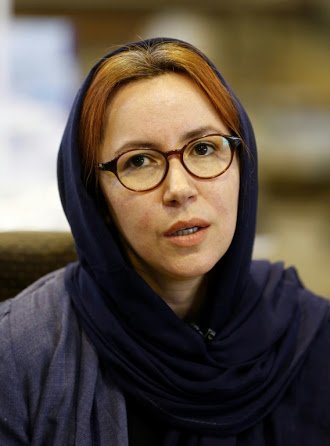
When Leila Daneshvar was a little girl, she used to sit on the floor of her father’s workshop, asking for small jobs.

“He was a mechanic, and I always had the most fun when I was in the garage with him,” She told AFP.

“But in those days, there were no mechanical careers in Iran, so I went to college in India. Even there, I was the only girl in my year of 139 students. I had a hard time.”

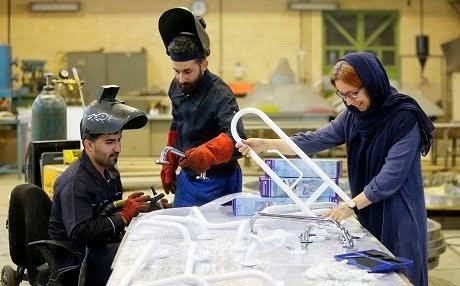
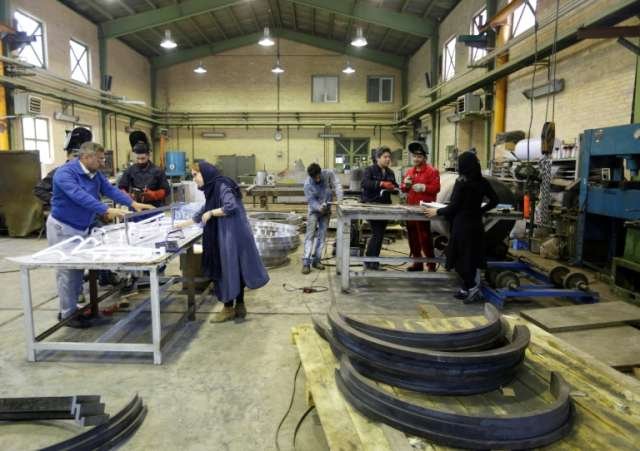
But she persevered. Now 37, she runs her own company in Iran, making mobility equipment for hospitals and the elderly.

“I went to Europe and saw how disabled people live happy, independent lives. I wished my own people had this equipment, and I thought: ‘This doesn’t look complicated. I’m a mechanical engineer — I can do it.”

The breakthrough for the company, called KTMA and selling under the brand “Lord”, came in early 2016, just after Iran’s nuclear deal with world powers came into force, lifting international sanctions.

Within a couple of months, a Swedish investor, Anna Russberg, had agreed to buy 25 percent of the company, bringing much-needed business skills and capital.

“Leila had a reputation for quality production, which was practically unknown here. But I needed to turn the business upside-down,” said Anna.

“It worked. People could tell we were a good mix. We respect each other’s knowledge. She’s the engineer, I’m the businesswoman.”

Being women in Iran’s patriarchal business world could be tricky, but also an advantage.

“Hijab is difficult when you’re a manufacturer. You have to climb things, go below things,” said Leila, laughing.

“But being a woman has its advantages. Everyone remembers you.”

Anna added: “People don’t know how to treat us exactly, which is useful in negotiations.”

Things were looking up: low production costs meant they could charge five times less than foreign firms and they were doubling sales each year, finally landing a major contract with Qatari hospitals.

But then, President Donald Trump pulled the US out of the nuclear deal.

It soon became hard to import crucial raw materials, particularly stainless steel.

“We already had problems in getting raw materials… and now it’s impossible. Either I have to close the factory, or have to continue with much higher prices,” said Leila.

“We had to let four or five workers go last month because we couldn’t pay their salaries, and it breaks my heart.”

“These sanctions are not on the government, it’s on the people. I can give less to disabled people, to the elderly. Our saying was that we are providing European quality with affordable prices. Can I do that anymore? I don’t know.”

Anna remains positive.

“Iran has 10 million older or injured people who can use our product. With or without Trump, we still have a business,” she said.

“It’s a real pity. Being an investor in Iran is a rollercoaster — you take one step forward, three steps back. But it’s an amazing country with great opportunities,” Anna said.

Leila stays positive by remembering her father, who passed away last month.

“When I become weak and tired… I remember his strength,”

“There is no going back. Iran faces so many problems, but I learned from him that the strength is inside me, and my partner. When we believe we can do it, we will do it,” She said.

Credit: AFP, Pulse News

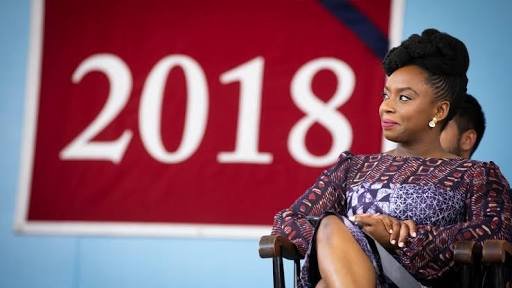
In a speech that was the culmination of the school’s annual pre-commencement festivities, Ngozi Adichie juxtaposed the idea of truth to the state of American politics. She drew from her experience growing up in Nigeria during a military dictatorship, and said , “America always felt aspirational — but today the political discourse in America is from the land of the absurd.”

The writer challenged graduates to be “citizen leaders,” seeking out what is right.

Even if there is no value in the other side, there is value in knowing what the position is,” she said.

She referenced the concept of fake news and fake facts perpetuated after the election of President Donald Trump.

“If you are reporting about the sun rising in the east, you don’t need to hear about the other side because there is no other side,” Ngozi Adichie said.

Her message rang true for graduating senior Priscilla Guo, who mentioned Harvard’s Latin motto of “Veritas,” or “truth.”

“Veritas is more than just a motto,” Guo said.

“It was her asking that we acknowledge our ignorances, which struck me. She noted that ignorance acknowledged is opportunity. I walked away from her speech thinking that acknowledging what I do not know can be both powerful and enlightening in my quest for truth and justice.”

Ngozi Adichie’s work has been translated into more than 30 languages. She is known for novels including “Half of a Yellow Sun” and “Americanah,” which explores how a young Nigerian encounters race in America.

“Few writers have captured the challenges of immigrants and others navigating those changes as Adichie,” the university said.

Credit: wtop.com

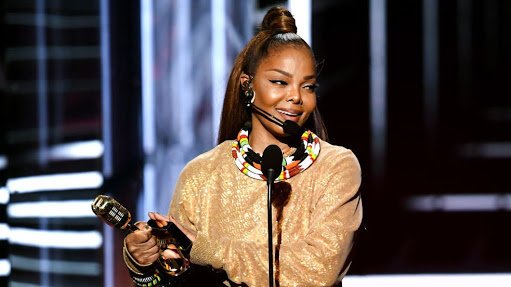
Janet Jackson has said she supports all the women around the world who “have made it clear we will no longer be controlled, manipulated or abused”.

Janet who picked up the Icon Award at the 2018 Billboard Music Awards, used her acceptance speech to praise those who have come forward and given prominence to the #MeToo and Time’s Up movements.

Before taking to the stage, Bruno Mars introduced her as the “the youngest member of the Jackson family” while the audience was shown a short film outlining her numerous accolades, including being the first black woman to receive the coveted award.

After performing a vibrant medley of three of her best-known songs (“Nasty”, “If ” and “Throb”), Jackson – amid an overwhelming “Janet” chant – then addressed the arena.

“I am deeply humbled and grateful for this award. I feel that for all the challenges, all of our challenges, we live at a glorious moment in history,” she said:

“It’s a moment when at long last women have made it clear that we will no longer be controlled, manipulated or abused.

“I stand with those women and with those men equally outraged who support us in heart and mind – This is also a moment when our public discourse is loud and harsh.”

She ended her speech by thanking God, telling fans that “everything we lack, God has in abundance.”

Oprah Winfrey, Reese Witherspoon, Meryl Streep and Chadwick Boseman recently joined forces with British counterparts Letitia Wright, Michael Sheen and Thandie Newton to pen an open letter to world leaders demanding an urgent push for global gender equality.

The letter warns leaders they are being put “on notice” and asks for a commitment to help every girl get an education. It hits out at the inequality between women and men, particularly in the poorest countries of the world.

Amy Poehler, Amy Schumer, Chelsea Clinton and Ryan Reynolds are also among the 140 signatories – as well as Neil Patrick Harris, Natalie Dormer and Robin Wright.

Jackson is one of the famous Jackson siblings and her older brother, Michael, is widely considered one of the biggest-selling musicians of all time.


Watch Janet Jackson’s acceptance speech on https://www.billboard.com/articles/news/bbma/8456860/janet-jackson-icon-award-speech-bbmas-2018-watch?utm_source=twitter


Credit: www.billboard.com

Oprah Winfrey is no doubt the undisputable Queen of Media. She went from a 19-year-old news anchor for a Tennessee TV station to a billionaire with her own television channel, even though her former boss once told her that she was too emotional and ‘unfit’ for TV!

However, Oprah widely known as the “Queen of Media” encountered a number of hardships in the process of cultivating her media empire.

Amidst criticism over the Oprah Winfrey Network’s low television ratings following its 2011 debut, Oprah Winfrey told People magazine she had reached her “breaking point.” But Winfrey overhauled the company, took on the CEO role, and went on to help make her network a fixture on cable television. Through it all, she learned some valuable lessons on how to overcome adversity. Check out her quotes below.

On the inevitability of failure: 

It doesn’t matter how far you might rise. At some point, you are bound to stumble. If you’re constantly pushing yourself higher and higher, the law of averages predicts that you will at some point fall. And when you do, I want you to remember this: There is no such thing as failure. Failure is just life trying to move us in another direction.–Harvard Gazette

On failing more than once:

“Do the one thing you think you cannot do. Fail at it. Try again. Do better the second time. The only people who never tumble are those who never mount the high wire.”Forbes 

On coping with hardships:

“Now, when you’re down there in the hole, it looks like failure. When that moment comes, it’s okay to feel bad for a little while. Give yourself time to mourn what you think you may have lost. But then, here’s the key: Learn from every mistake, because every experience, particularly your mistakes, are there to teach you and force you into being more who you are.”–Harvard Gazette

On failure as a blessing in disguise:

“Challenges are gifts that force us to search for a new center of gravity. Don’t fight them. Just find a different way to stand.”–evancarmichael.com

On the power of “you”:

“Although there may be tragedy in your life, there’s always a possibility to triumph. It doesn’t matter who you are, where you come from. The ability to triumph begins with you. Always.”–Achievement.org


Credit: inc.com

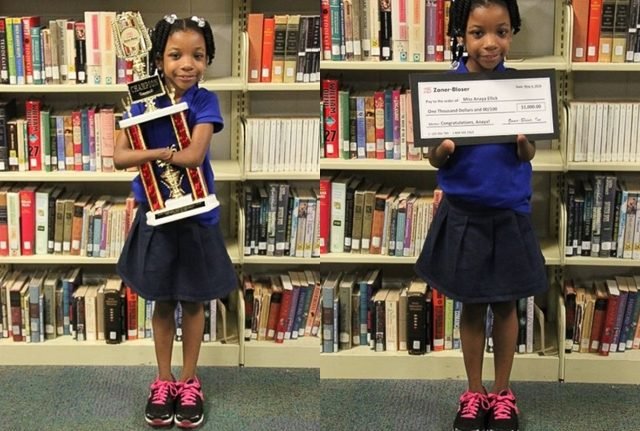
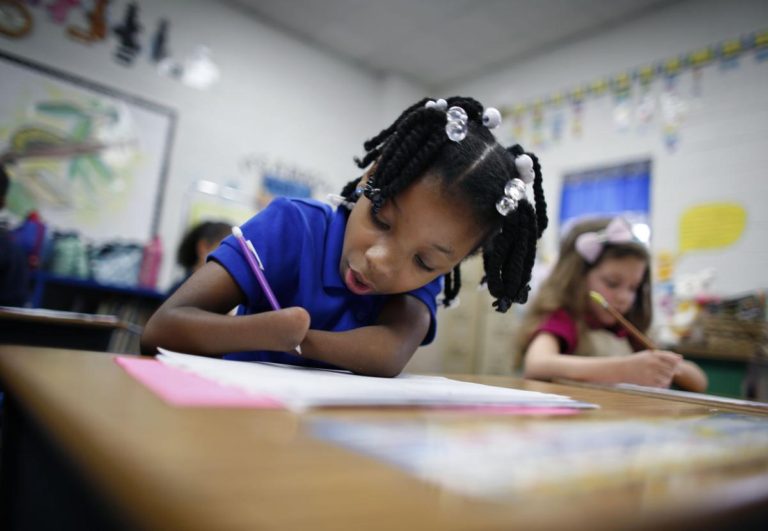
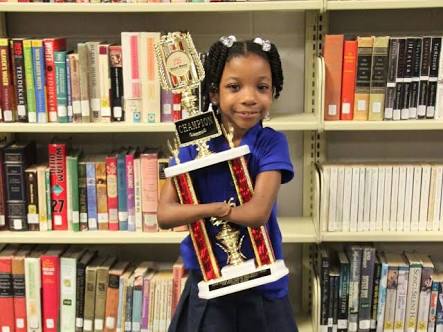
9-year-old Anaya Ellick was born without hands and doesn’t use prosthetic hands but has been honoured with a prestigious award for her skillful handwriting.

A third-grader in Chesapeake area of Virginia, United States, she won the 2018 Zaner-Bloser National Handwriting Contest, under the Nicholas Maxim category, an award that rewards outstanding manuscript and cursive skills among students.

In 2016, Anaya won an award for her print writing.

Growing up, her mother helped her form letters, but she soon learnt how to hold a pencil between her two arms to write and draw.

Although quiet and shy, Anaya always tried out things and believed she could do it.

“She’s really independent – from tying shoes, putting clothes, getting baths. It was always like ‘I can do it’. So, that just carried on over the years,” her father told News 3


TV personality/ actress Zainab Balogun, who just had her traditional wedding earlier this week, has become the brand ambassador for De-Deon Syrup under Daily Need Group Pharmaceuticals.

While sharing the news via her IG page, Zainab said she is happy to be part of the family.

She wrote,


“When your week starts on a high!!💃🏽 I am sooo excited to finally share with you all that I am officially the Brand Ambassador of @dedeons syrup from Daily Need Group Pharmaceuticals. I stand here with 2 generations of this phenomenal family business that I can now call home.”


View her post below.

The rare feeling you get about realizing that you occupy a space on someone’s mind even for a second is matchless. However some “Strong” women find it very difficult to let their hearts encounter love. This is because of some viewpoints that all men are not to be trusted; a man can only be with you for one thing, your body; all men are cheats, men are all the same, the list goes on. However, researches have shown that the excuses mentioned above are not the major fears of the “Strong” woman. Some of her fears include the Fear of being vulnerable, her problem of trusting a bit more, she is comfortable in her small cubicle and does not want to be exposed to hurt; she loves her sovereignty and does not want to be subjected to unnecessary commitment.

Behind these fears, the “strong” woman craves for love and affection but finds it uneasy to get, this is because her fears have become barricades to catching the fresh air of love.
The feeling of love opens you up to a total new experience that you never knew existed. It relieves your nerves and sometimes saves you from stress by letting you overlook issues. Love makes you feel this overwhelming rush of endorphin and adrenaline that fill you with so much joy and fulfillment. Weigh it any how you deem fit, love is such a beautiful thing that you must experience.
If you are one of the strong women that relent on love, I strongly advice that you give love a chance because it might just happen when you least expects it and when it hits you, you might not be wearing the most suitable protective measure so please stop nursing your fears and let your heart love and be loved.

This month will mark three years since I moved back from Nigeria to the UK. As much as I remember Nigeria for all the great experience – having an event to attend every evening of the week, fun times with friends on the weekends, no Monday ever feeling like a Monday, I also remember the level of stress I and those around me put ourselves under almost daily over things we had no control over. The mad Lagos traffic for one, or people never keeping to appointments and sauntering three hours late with barely an apology.

Instead of letting go and letting life flow, we obsess over what we cannot change or control, often forgetting that life would be far more peaceful if we accept things we cannot change or assert our control on those we can.

Moving back to the UK and settling into a saner pace of life I have now found the zen place where I have accepted the things I cannot change and strive to change those I can control, I find day to day life is a lot more fun. This weekend, recalibrate, reenergise and take on the new week ahead with a new mindset of just worrying about the things you can control in a world where you can rarely control much else.

Your emotions
When stressed or upset, our first reaction is to fight the feeling rather than accept it, not realising the fighting leads to yet more anxiety. Here’s the easiest way to bust stress and find peace of mind: Acknowledge emotions. Whether it is anger, sadness, anxiety we feel, it is best to come to terms with that state of mind as opposed to fighting in and ride it out. That was, just like a surfer on the crest of a wave, you are in control.

Your reactions
Humans are actually quite one-dimensional in the sense that we choose one of two reactions when faced with a predicament: fight or flight. Fight if we are not feeling strong enough to tackle the situation at hand, fight if we are predisposed to take on the world without a second thought. Whichever you are more prone to, stress levels increase when you have a knee-jerk reaction to situations. Instead, step away from the situation, reassess your options and act instead of reacting.

Your time
Most stressful situations arise from lack of organisation and time management. We often tell ourselves that we don’t have enough time in the day. There is no bigger fallacy. Once you learn to plan ahead and plan well, your time is one of the easiest thing to control.

Your day
Much like our time, our day to day tasks are also under control, however much that may not seem the case on a manic Monday. Some like “eating the frog” first – i.e. getting the hardest task out of the day so the rest of the day goes smoothly – while others leave it till later in the day for when they have got their bearings right. Don’t let others dictate how you structure your tasks; only you know your biological clock and the ebb and flow of your energy, so pay attention to your peak times and plan your day accordingly. Once you take control of your day, you will see stress melt away.

Your perspective
I recall a time at work almost a decade ago when I had to tackle a toxic colleague while trying to get to grips with a new job, and the situation was getting increasingly distressing – until I had a heart-to-heart with another colleague who told me about NLP and ran me through some calming techniques. One effective method was ‘framing’ – imagining a stressful situation as a picture, then framing it in your mind and stepping away from the frame, almost imagining step by step how your perspective changes the more you remove yourself from the situation. What is overwhelming when you are right at the centre becomes more and more insignificant once you start distancing yourself mentally. Your perspective is the one thing you can take control of that will magically reduce your stress levels.

Your mindset
Much like ‘framing’ another method which proves effective when faced with difficult situations – either at home or at work – is to ask yourself a simple question: Will this matter a week, a month, a year from now? The chances are, the answer is often a resounding no. Then remains only one other question: Why worry now if in a week’s or a month’s time, this will be insignificant? Once you master these technique, you will have absolute control over your mind.

Your body
Have you heard the saying “I work out because punching people is frowned upon”? Truly, we have no control over challenging people or situations; and often once you start to feel like you are losing control, your body is the next to shut down. Have you had days when you feel almost petrified because of a stressful situation? The trick is to hit the court, the pool or the gym – whatever your choice of exercise, once you start sweating, and the endorphins kick in, you will immediately feel all the better for it. If controlling your body is within reach, with positive effects on controlling your mind, then get packing that gym kit already!

Source: Guardian.ng