International beauty retailer Sephora have been on the hunt for talented influencers to join their exclusive squad. Through this Squad partnership, the ambassadors will receive peer and professional coaching, content and networking opportunities, product collaborations and early access to products at Sephora in exchange for content support on their platforms.

The full #SephoraSquad tasked with creating content for the international beauty retailer [Credit: FastCompany]

The full #SephoraSquad tasked with creating content for the international beauty retailer [Credit: FastCompany]

Over 15,000 beauty influencers applied to be part of the #SephoraSquad earlier this year with only a special being selected to join the team. From more than 240,000 testimonials the brand chose a diverse group of 24 bad-ass beauty influencers.

The selected beauty influencers will create content on behalf of the international beauty store for the powerhouse beauty retailer using products that they stock and their exclusive in-store lines which includes, Fenty Beauty.

Whitney was selected from a pool of talent thanks to her amazing engagement and coining the term #TheWhitneySmile which is in reference to her megawatt smile which is what has gotten her noticed online.

Speaking about the amazing opportunity. Whitney said:

Truly grateful & blessed to have this journey with you guys! Thank you for years of support and love! Shoutout to God & @Sephora for this moment!

Whitney was in attendance at the #SephoraSquad launch event which held in LA over Easter weekend and got the chance to meet her ‘new family’.

In an interview with Glossy, Sephora’s Chief Marketing Officer Deborah Yeh said:

We see social behaviors constantly evolving and, in order to stay relevant, we felt it was time to take influencer relationships to the next level. We wanted to amplify the beauty community in a larger way and expand the number of voices and perspectives we were using in our work.

Credit: pulse.ng

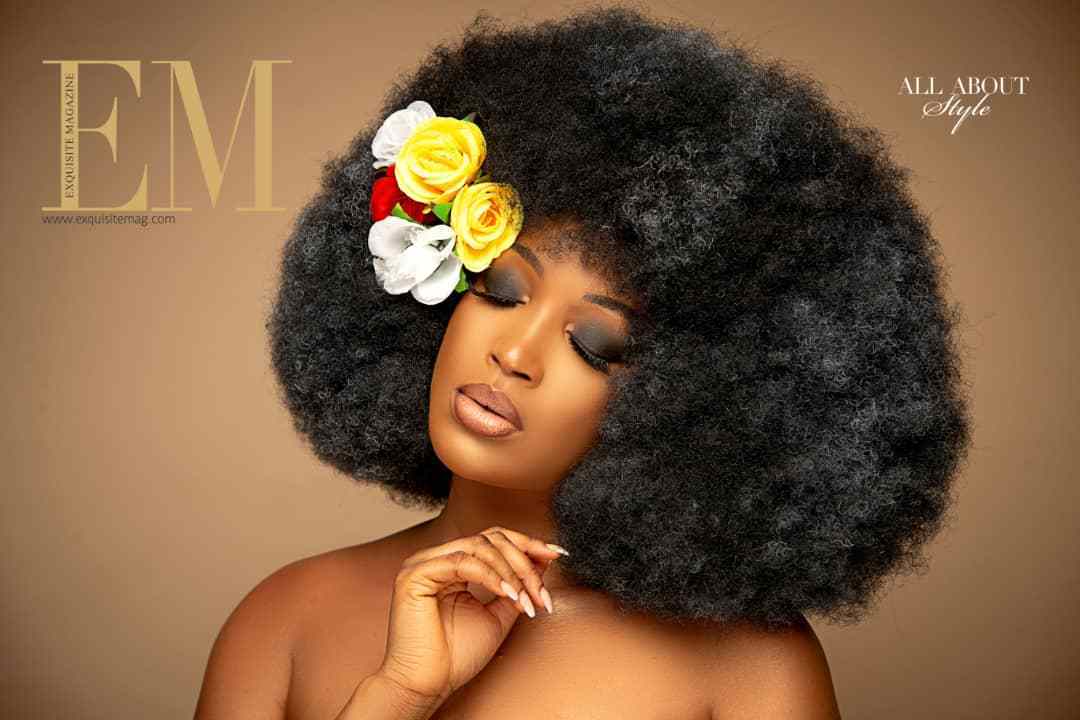
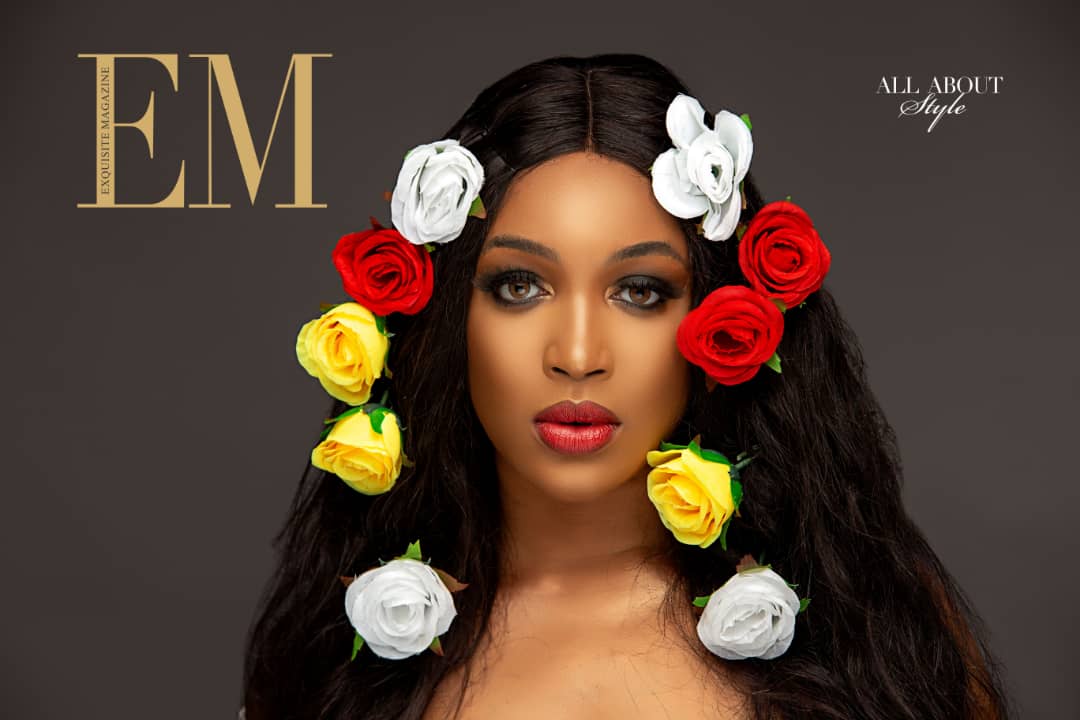
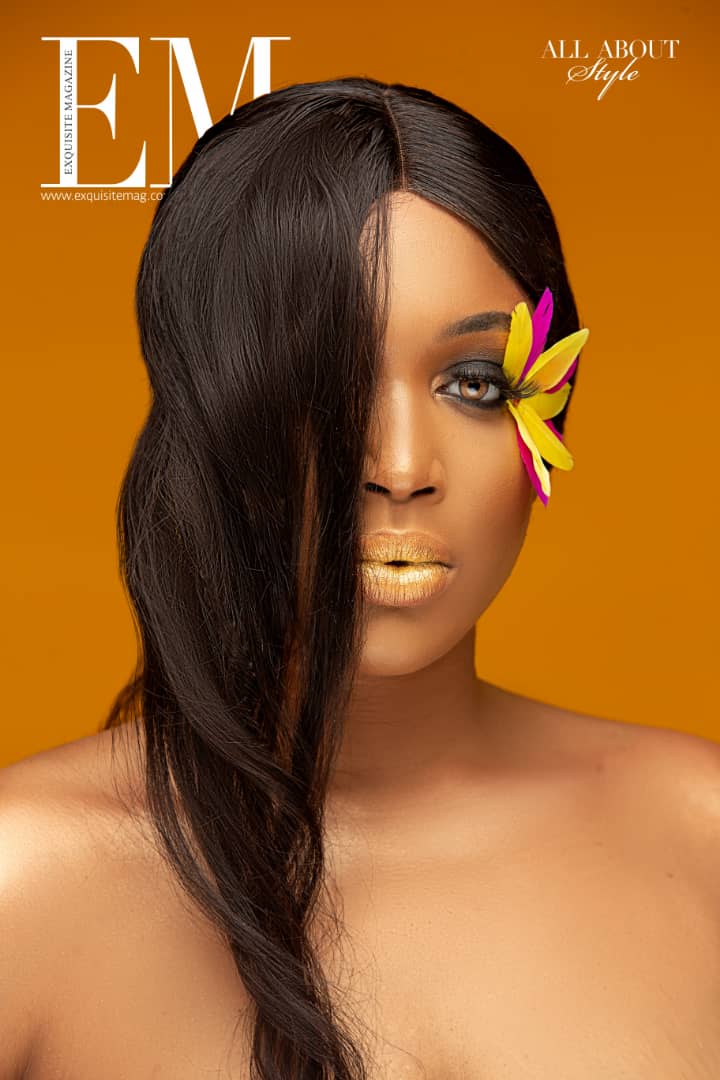
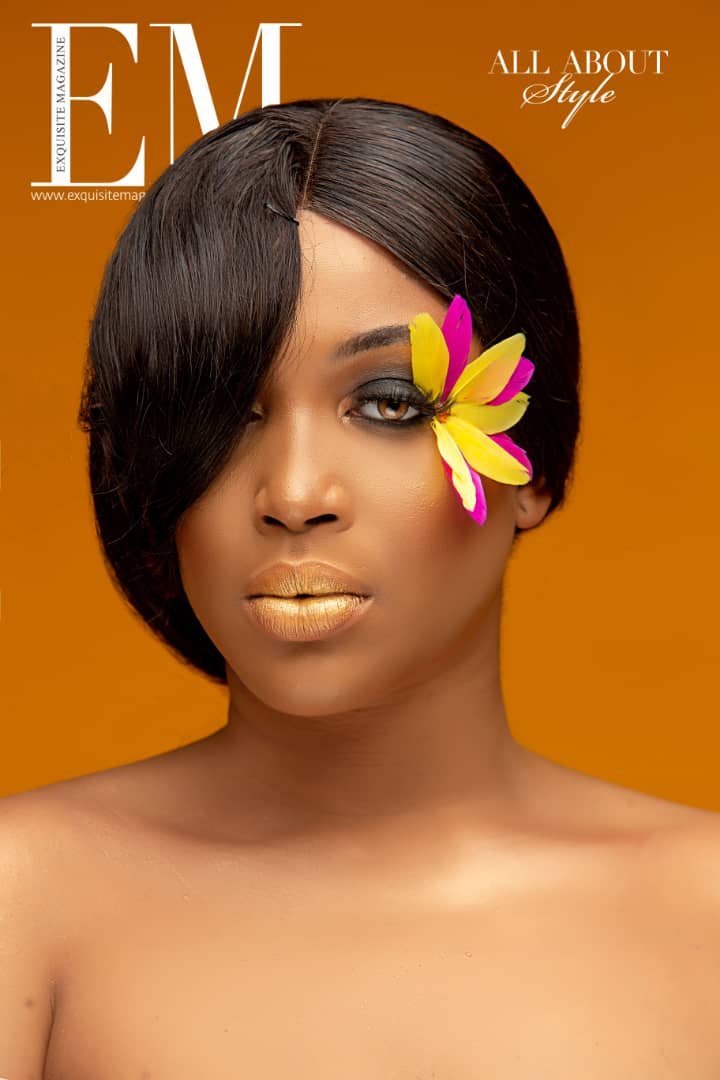
Beauty entrepreneur Dabota Lawson is the cover girl for Exquisite Magazine‘s April 2019 issue!

The ex-Beauty Queen looks beautiful in the photos following the cover feature. She rocks different bold lipsticks with smokey eyes and flowers adorning her hair

Here’s what the magazine had to say about the cover:

Our cover diva is a beauty with a purpose. She is on a mission to take on the beauty world, one product at a time and in the process empowering other people. Meet Dabota Lawson, the founder of Dabota cosmetics.

EM is for the unlimited woman, YOU. You are a powerful, unique, special and exquisite woman. We aim to help you restyle your mind to live the life you desire intentionally. Therefore, in this issue, we have included tips on how to work at a job you don’t love and more.

See the photos below.

Credits
Photographer@praise_that_phtographer
Art Director/ Styling @infoworldcharming
Assist Stylist@davidstarr_@ceeyonceemua
Makeup@dom_krasota
Special Effect@lekeshades
Hair Stylist@highdtosin
Weave@myhairltd
Editor in Chief @tewaonasanya

Credit: Bella Naija

In an interview with CNN‘s Van Jones, Kim Kardashian opened up about why she decided to become a lawyer.

Kim was instrumental in the release of Alice Marie Johnson, a 63-year-old woman who’d been in an Alabama prison on a nonviolent drug charge since 1996. After her meeting with Donald Trump at the Oval Office to discuss prison reform, Alice was granted clemency.

Kim told Jones that she decided to become a lawyer because she discovered, during the process of getting Alice out of prison, that the “system is broken” and she didn’t know much about it. She said she took the step to know more about the system so as to contribute her quota to fixing it.

“I don’t want to be put in a box,” she said.

“I saw a comment where someone said, ‘You need to stay in your lane. You can have ambitions but don’t be too ambitious.’ And to me, that was that kind of like ‘shut up and dribble’ comment to where … I read it to my husband in bed, and I was just like, ‘This will even push me harder’,” she added.

Watch:

Credit: Bella Naija

Today, the Senate confirmed the appointment of Ms Omolola Edewor as Executive Director, Corporate Services, Nigeria Deposit Insurance Corporation(NDIC).  

This followed the presentation of a report by senator Rafiu Adebayo, Chairman, Committee on Banking, Insurance and other Financial Institutions at plenary. In his presentation, Adebayo said the nominee, who is currently occupying the same position, was screened and found worthy of confirmation for a second and final term of five years.  

He said the Senate at its sitting on April 9, referred the request for her nomination to the committee for screening. The lawmaker noted that “the committee held the screening and we went through her curriculum vitae, security clearance form and code of conduct bureau details.  

He said, “She hails from Ogun State and she will be in charge of the administration of the organisation. The committee also found out that the nominee has no petition against her and she is qualified to hold the position for another term. So, we recommend that she be confirmed”.  

Seconding the committee’s recommendation, Senator Barau Jibrin(APC-Kano), said, “the nominee has shown to be eminently qualified and by her pedigree, she is qualified to be confirmed”.  

In his remarks, the Senate President, Bukola Saraki put the confirmation to a voice vote and it was adopted by the lawmakers. It would be recalled that the committee had on April 18, screened the nominee and promised to refer the report to the Senate in plenary.  Meanwhile, President Buhari had written the Senate, seeking Edewor’s confirmation in accordance with provisions of 5(4) of the Nigerian Deposit Insurance Corporation Act.    

Ms Abiola Edewor is the first daughter of the acclaimed winner of the June 1993 presidential election, Moshood Abiola. She is also a former member of the House of Representatives. With the confirmation, Edewor will be serving her second term and final term of five years as the executive director.

Credit: LIB

“On April 21st I smiled in the face of bigotry and walked away feeling the greatest form of accomplishment,” Shaymaa Ismaa’eel wrote in a tweetposted Tuesday, April 23. That tweet included photos of Shaymaa, a 24-year-old who works with children on the autism spectrum in schools, posing and smiling in front of a group of protestors with signs attacking Islam and the prophet Muhammad. For an African-American Muslim woman in a hijab, it was a flex of epic proportions.

The tweet blew up; it now has over 230,000 likes, and 65,000 retweets, and people have said it belongs in a museum or could really sauce up a history textbook. On Instagram, one of the photos Shaymaa posted got over 200,000 likes.

View image on Twitter

شيماء@ShaymaaDarling

On April 21st I smiled in the face of bigotry and walked away feeling the greatest form of accomplishment.285K10:44 AM – Apr 23, 201980K people are talking about thisTwitter Ads info and privacy

Shaymaa told Teen Vogue the photo is from her trip to Washington, D.C., for a convention run by the Islamic Circle of North America (ICNA), a nonprofit organization dedicated to building Muslim communities. Protesters were there with Islamophobic signs targeting the gathering and the viral photo op that Shaymaa seized came as she was participating in the conference.

“They have a bunch of speakers, workshops, lessons, lectures, spoken words. They have really cool competitions, like a cooking competition. They actually didn’t have it this year, which we were really looking forward to,” Shaymaa said. “When you’re in a space with people of our faith, you kind of just get an uplifting positivity.”

Teen Vogue spoke with Shaymaa about her viral moment, how it’s not the first time she’s done something like this, and what that power of positivity and being unapologetic means to her.

Teen Vogue: What was your initial reaction to the protesters?

Shaymaa Ismaa’eel: I didn’t expect that they would be there. My initial reaction was to videotape them and get some footage, just because.

Then it reminded me of two years ago when I took a picture in front of similar people with similar messages on their posters. This is just my personality. I like to make light of a situation that could be heavy. That was my initial thought: I want to take a picture, but we have a lot to do. Toward the end of the day, when the convention died down, I wanted to go back out there. They weren’t there.

I was thinking about them throughout the convention because all the stuff we’re learning inside the convention was 100% positive — positivity, love, reminding ourselves it might be tough here, but we believe in the hereafter. The second day of the convention, they weren’t there in the morning. I don’t know why I was thinking hopefully I’d get to see them again.

Talking to someone like that is talking to a brick wall. You kind of can’t really do anything to combat it.

TV: You might not be able to talk to a brick wall, but you can use it for a photo backdrop?

S.I.: They were nice props.

We were wrapping up the second day of the convention and the first thing I saw was there they are. I showed my friend and she was like, ‘It’s Sunday. It’s Easter. Don’t they have something better to do?’ I was like, ‘Clearly, they need something from us.’

I took my picture while the security guard was blowing his whistle at me.

TV: Did you get in any trouble?

S.I.: I just walked off as they were making fun of what I was doing. They were like, ‘Oh, yeah, you need to cover your face, too.’ And then someone was like, ‘You know it’s a cult when everyone’s walking around in pajamas.’ I was like, ‘Hmm, is he saying that because I’m wearing loose pants?’ I love sarcasm, so I was like, ‘Thank you for that.’

Credit: Teen Vogue

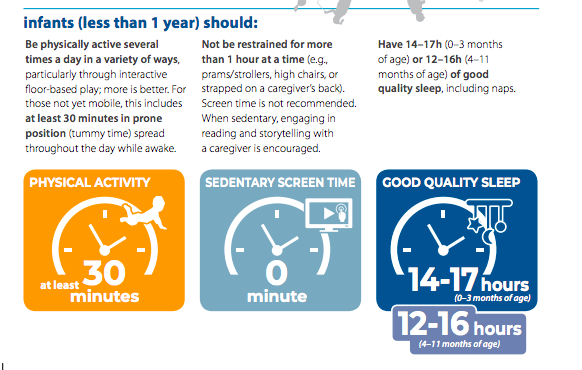
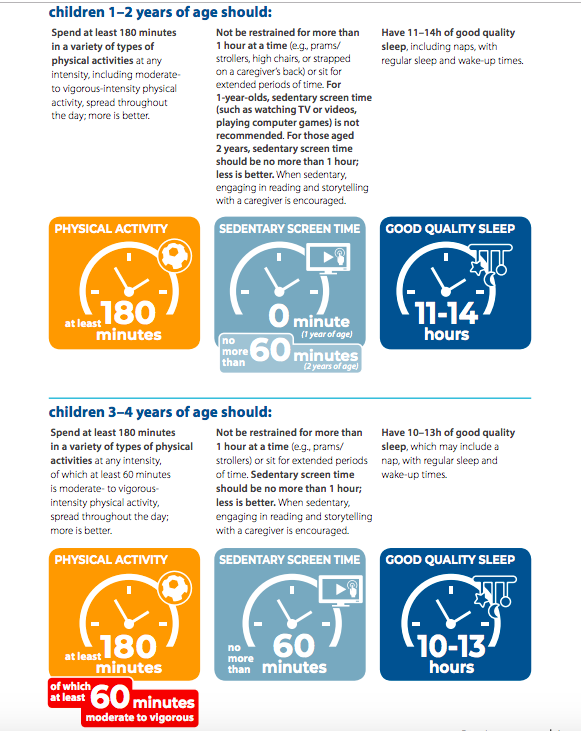
The World Health Organisation (WHO)has issued guidelines on physical activity, sedentary behaviour and sleepfor children under 5 years of age.

Notable in the guidelines, is the amount of screen time toddlers should get, which the UN agency said should not be more than one hour for those under 5 and none at all for those under 1.

The guidelines are to address the increasing amount of sedentary behaviour in the general population, WHO said, adding that physical inactivity can cause death, and is a contributor to the rise of obesity.

The primary audiences for these guidelines are policy makers in ministries of health, education and /or social welfare, NGOs, community or family nurses or doctors, paediatricians or occupational therapists, WHO said.

WHO’s guidelines also add that infants less than one year should spend at least half an hour every day on their stomachs and toddlers should get at least three hours of physical activity every day.

Some experts however, have some criticism of the guidelines, according to TIME.

Director of Research at Oxford Internet Institute at the University of Oxford, Andrew Przybylski, said the guidelines “overly focuses on quantity of screen time and fails to consider the content and context of use. Not all screen time is created equal.”

Dr. Max Davie, the Officer for Health Improvement at Britain’s Royal College of Paediatrics and Child Health said: “Our research has shown that currently there is not strong enough evidence to support the setting of screen time limits. The restricted screen time limits suggested by WHO do not seem proportionate to the potential harm.”

Download the guidelines here.

Credit: Bella Naija

When Polly Rodriguez started sexual wellness company Unbound, she struggled to find her place among male-dominated tech entrepreneur circles. “It was hard to be taken seriously in general because of the products that we were selling,” 

Rodriguez says. “And I grew up in the Midwest from a lower-middle-class background–so there was no one in my life that had started a business before.”

Instead, she turned to some of the enclaves for women founders in New York. “I think that’s how I ended up building a massive network of female founders,” she says. “I absolutely would not be here today if I didn’t have them to turn to.”

You’ll hear similar accounts from other female founders, many of whom feel shut out of more traditional networks of mentors and entrepreneurs. (Not to mention they’re starved for venture capital dollars, which are largely reserved for male founders: In 2018, just 2.3% of total capital went to women entrepreneurs.) Elle Huerta gave up on general networking events while starting Mend, a self-care app for heartbreak. “It was always interesting to me that a lot of people–men especially–couldn’t be imaginative about something that they didn’t have direct experience with,” she says. “This is something a lot of us experienced, so after a while, I stopped going to those events because they were just a waste of my time. I was like, ‘It would be more valuable for me just to go home, focus on building my company, and get traction so that I can be taken seriously.’”

For these women, building out networks of their own–much like the “mafias” of homogeneous founders spawned by tech exits–can be key to their success. In Silicon Valley, the moneyed alumni of tech heavyweights–and soon, the likes of Airbnb and Uber–have long offered guidance and financial backing to their peers and friends. For investors, entrepreneurs with that pedigree can seem like a sure bet. “They are looking for any indication or sense of validity because they’re inundated with pitches,” Rodriguez says. “You see time and time again that the generation of PayPal and Facebook went on to fund the next companies that went on to fund the next companies. And that’s largely because the VCs are like, Well, if he did well there, he’ll do well here, too. For women, we don’t have those examples to point to because all of us are basically first-time founders.”

Rodriguez often felt that potential mentors and investors in the Valley evaluated her work largely on the merits of her tech stack, and how it ranked against tech companies in more traditional verticals. “But I think women get it,” she says. “They get that making products is really hard. Branding is hard. Marketing is hard. It just doesn’t demand the same respect in the world of Silicon Valley when it comes to mentorship.”

What Rodriguez and Huerta also found was that female entrepreneurs were more candid about the challenges they had faced. “One of the reasons we bonded was because we all have this shared experience—the categories that we were in were ones where it was harder to raise money,” Huerta says of a circle of women entrepreneurs she frequently turns to, which includes Rodriguez. “But I have continued to really cultivate the relationships I have with my friends who are female founders of companies because they are so open and honest.”

If female founders tend to share more about the hurdles they’ve faced while fundraising or, say, hiring, Rodriguez believes it’s partly due to a lack of confidence. Finding a group of women founders who talk candidly about their experiences can also help silence one’s inner critic. “I think women are so much more forthright because we are more pragmatic,” she says. “We have to be. So when an investor is pressing you and is like, ‘Is there a possibility that this will fail?’ Most women are going to respond with, ‘Well, yeah.’”

Eva Goicochea, the founder of sex essentials startup Maude, has found these groups invaluable but wishes male peers were as forthcoming. “I would say the real value comes from the honesty around the topics,” she says. “I would love for men to be in the room if they would say they don’t have everything figured out. So yes, I’m pro-women and pro-women’s groups, but I’m also like, ‘Can we all just be honest about what it takes to build a startup?’”

WHAT COMPETITION?

Of course, carving out a female-friendly space isn’t just about camaraderie—it’s also good for business and helps lay the groundwork for a new ecosystem of female founders and investors. When Mend tested an ad-supported model of its app in late 2018, Huerta broached Rodriguez, who agreed to sign on as their first advertiser. (As a company in the sex tech space, Unbound has to contend with countless ad regulations, so advertising opportunities are harder to come by.) “I know Unbound really well,” she says. “I know what their mission is, and I believe in what they’re doing. So I have no problem introducing that brand to our audience. I can feel good about that, and it’s mutually beneficial.”

On Valentine’s Day, Mend put out a gift box, for which she collaborated with a number of founders in her network, including Unbound but also the minds behind vitamin startup Ritual and feminine wellness care brand Queen V. And in February, Mend hosted an event with Maude in its Brooklyn space, free of charge. “That kind of thing makes such a big difference when you’re a startup and don’t have a big marketing budget,” Huerta says.

Unbound and Mend have both also benefitted from tie-ups with founders and companies that are much further along. Mend has done multiple events with social networking platform Bumble. “Being able to plug into that audience has been huge for us,” Huerta says. “For them, we’re a drop in the bucket. So when a company that’s really been able to scale collaborates with smaller female-founded companies–which they’re doing all the time–that really helps.”

And according to Rodriguez, having Zola founder Shan-Lyn Ma as an investor and adviser for Unbound has shown her what it must be like to have the boys’ club at your disposal. “I didn’t know what a good adviser looked like until she became one of our advisers,” she says. “She opened up her network to me in a way that I was like, ‘Oh, this is how the men do it.’ She sent off a bunch of emails–and when Shan emails somebody, they’re going to take the meeting because she’s been so successful.”

In other words, this isn’t the one-upmanship that the likes of Lyft and Uber engage in. These founders recognize that as more female founders rise to the top–and clock billion dollar valuations–it boosts all female founders. In fact, some of Unbound’s “fiercest competitors” in the sex tech space are also Rodriguez’s closest friends. “Ultimately, we’re not competing against each other,” she says. “We’re competing against the patriarchy.”

Continue reading here https://www.fastcompany.com/90331125/these-women-entrepreneurs-are-working-to-help-each-other-succeed

Credit: www.fastcompany.com

Nollywood actress, Omotola Jalade-Ekeinde has revealed that she once had military men pointing their guns at her and she is not bothered about what is said about her on social media.

The actress made this revelation in an interview with the Guardian when she was asked about her feelings concerning the negative comments she received recently on social media recently when she engaged in debate with presidential aide on Twitter.
She said:

“I’m not overwhelmed by the reactions, especially the negative ones. I expected them. These ones were just talk. I faced bullets before. I faced military men pointing guns at me, and so, the negative reactions were nothing to me.

And why would I want to ruffle any nest? Who doesn’t want to hide his or her head? Do you know that when I had cause to speak up against previous governments, I was attacked? Not by words alone. But my business, my personal life, my finances were attacked. It is not something I enjoy doing, but sometimes, I worry too like every other normal human being. I worry for my safety. I worry for the safety of people around me.

Omotola added:

People think this is a joke. They think it is funny. They think it is something somebody just wakes up to do. I don’t have a choice than to speak the truth. I live here and I’m a born activist. I’m not just an activist, because I want to talk or I want people to notice me, this is who I’m. I have been like this since I was achild.

Everybody who knew me as a child would tell you that Omotola wouldn’t stand injustice. I’m that person who will speak out. Sometimes, I fight against myself too. I am like shut up, shut up; you don’t have to say everything. Keep quiet. I guess you can’t fight whom God has made you.

Credit: stargist.com

Facebook recently announced that it will nominate PayPal executive Peggy Alford to join its board of directors, making her the first African-American woman to sit on the board. 

The announcement comes shortly after former American Express CEO Kenneth Chenault became the first African-American to join the social media giant’s board last year.

“Peggy is one of those rare people who’s an expert across many different areas – from business management to finance operations to product development,” Black Enterprise reports Facebook’s CEO Mark Zuckerberg saying in a statement. “I know she will have great ideas that help us address both the opportunities and challenges facing our company.”

Alford, who serves as SVP of core markets at PayPal, is a Silicon Valley veteran who has held executive positions at many companies including eBay and Rent.com. Prior to stepping into her current role, she served as chief financial officer and head of operations for the Chan Zuckerberg Initiative, which is the philanthropic organization founded by Zuckerberg and his wife Priscilla Chan. 

“What excites me about the opportunity to join Facebook’s board is the company’s drive and desire to face hard issues head on while continuing to improve on the amazing connection experiences they have built over the years,” she said in a statement. “I look forward to working with Mark and the other directors as the company builds new and inspiring ways to help people connect and build community.”

While Facebook’s efforts to diversify its board are a step in the right direction, civil rights leader Rev. Jesse Jackson tells USA Today that the Black board members now have a responsibility to speak up and out on the issues that impact the Black community. 

“They must review its civil rights policy, social justice policy and the pathway for growth in the company,” he said.