Yvonne Nelson has some regrets about her years as a student, and it is about not being serious with her education. 

The Ghanaian actress and Mother of one in an interview with Joy FM, narrated how she had little time for her books after getting a spot in the entertainment industry. She further explained the challenges she faced in making out time to re-sit for some papers, after she failed her Senior High School (SHS) examination. 

“I would go on stage every Saturday in SHS. I had to rewrite some papers. I was so into entertainment that I didn’t take my schooling serious. You can easily mess up and not make it to university. I regret not paying attention to my books so when I see kids of today, I tell them to pay attention to their books,” she said. 

Yvonne Nelson also stressed the need to climb the educational ladder, regardless of career path.

“I was in Central University. And it wasn’t easy mixing sets with classes. I had to make up my mind. It was tough. Nigerian producers were giving me juicy offers and I was torn between accepting the offers or not. But, I had to focus on school and I was so happy to have graduated, I didn’t want to defer,” she added.

Credit: LIB

MiAngel Cody had seen enough of the criminal justice system. As a capital investigator, she listened to the stories of those headed for death row, and after working as a corporate lawyer and a state-federal defender, MiAngel Cody decided to look for new ways to use the legal system to dismantle mass incarceration. So Cody created The Decarceration Collective, a federal criminal defense firm that works to release people sentenced to life in prison on drug charges.

According to the Sentencing Project, drug offenders make up one-third of those serving life sentences in federal prison. The U.S. Sentencing Commission states that offenders can be sentenced to life if they are caught with a large number of drugs. However, “large quantities” under federal law can be as small as 1 kilogram of a drug substance.

Not interested in fighting for those who were “innocent,” Cody joined forces with Brittany Barnett’s Buried Alive Project to bring home those sentenced to die in prison.

“It started with, like, a text message one night, and we were like, ‘We should see how many people we can get free,’” Cody says. From there, the duo created spreadsheets of all of the people who had been admitted into district courtrooms throughout the country. They began reaching out to those with federal life sentences for drug offenses and gave them a survey to gather information about their case. 

Seventeen people were released under their #90DaysOfFreedom campaign, where they used the newly passed law, The First Step Act, to gain their freedom. In their new Third Strike Campaign, Cody centers the stories of formerly and currently incarcerated folks who received life sentences for nonviolent drug offenses, specifically highlighting those affected by the notorious Three Strikes Law, a law that gives mandatory minimum life sentences to those who have been convicted three times with nonviolent drug offenses. 

The Third Strike Campaign

When The First Step Act was passed last December, it included a provision that made The Fair Sentencing Act retroactive, a law that gave mandatory minimum sentences to eliminate the inequality of crack cocaine and powder cocaine cases. No longer subjected to mandatory minimum sentences, cocaine offenders were able to receive reductions in their sentences or an early release.

One of the folks freed by MiAngel Cody was Albert Reed, Jr., who shares his experience of incarceration through the Third Strike Campaign. When Reed received a life sentence for a drug-related “crime”, he was determined to get out of prison. He applied for clemency and was denied under the Obama administration. The rejection for his freedom shook him to his core. 

The Third Strike Campaign

A year after his rejection, Reed received a survey, sent it back with his information, and was released from prison under Cody’s legal representation. Cody used The First Step Act to her advantage as a way to litigate his release.

In addition to cocaine offenses, The First Step Act also reduced the mandatory minimum sentence for non-cocaine drug offenses from life to 25 years, but it was not made retroactive, meaning those who have already been sentenced to life imprisonment for non-cocaine drug offenses, such as marijuana possession, won’t have their sentenced reversed. 

Now, Cody is going back to free the rest, particularly those that The First Step Act did not consider.

“There are a whole bunch of people who are still sitting in prison today under yesterday’s law. And that’s really the point of the Third Strike Campaign. It’s to say if it’s unfair going forward, then it’s unfair looking back, particularly when we’re talking about black bodies being imprisoned,” Cody says. 

As for Reed, he can now move forward. He is now reunited with his family and is still rebuilding his connection to his community by working with a basketball camp and a cleaning company. He has dreams of getting into real estate to develop some affordable housing in his neighborhood.

“Anything’s possible after this year. I say to myself every day, ‘Why not dream big? Because you blessed, and all you had to do is think it, and you can bring it into existence.’”

Credit: blavity.com

Music icon Patti LaBelle is expanding her huge frozen foods empire with a new line of soul food that will be sold at Walmart.

Onstage at Essence Festival on July 8, LaBelle announced that she was partnering with Walmart to sell a line of frozen soul food that she believed was one of the first widely available.

“Coming soon to a Walmart near you, you’ll have my savory foods. There will be nine skus, foods like macaroni and cheese. It’s greens, it’s brisket, it’s chicken and biscuits, and five more I can’t think of them,” she said onstage during a cooking presentation.

In addition to her legendary singing career, LaBelle has created a wildly successful line of pies that have sold out at Walmarts across the country since 2015.

With the success of her pies, she decided to move into frozen foods, starting an inventive line of frozen dumplingsthat are also sold at Walmart. 

“Patti LaBelle and I are now partners in our new Co BCH GROCERS LLC – bringing frozen dumplings such as French Onion Soup, Pastrami, Lamb Gyro & Bacon Cheeseburger Dumplings to Walmart – adding to the huge success with Walmart of Ms Patti’s record selling Sweet Potato pies,” famed author and restaurateur Stratis Morfogen said after celebrating the deal at Brooklyn Chop House with LaBelle, her son Zuri Edwards, Alex Thompson and Charles Suitt. 

Credit: blavity.com

Poppy Northcutt began her career as NASA’s first female engineer in mission control, and the sexism she faced on the job inspired her to pursue a legal career egal career fighting for women’s rights. Now the state president for the National Organization for Women’s Texas chapter and still handling the occasional legal case, she tells Teen Vogue that she wants her multifaceted career to be a model for young women today.

“The idea of having one career in your life — that was what people had 100 years ago,” she says in an interview. “You need to be more flexible these days.”

Northcutt, a pioneering woman in hard sciences before the idea of STEMeducation or jobs even existed, also tells Teen Vogue about how she’s seen sexism change, the importance of doing the hard thing, and more about her groundbreaking work at NASA, which is documented in the new threepart series from PBS’s American Experience, “Chasing the Moon.”

Teen Vogue: Could tell us a little bit about what led you to your job at NASA when you were coming up through school and how you got that position?

Poppy Northcutt: In high school, I always scored well in math classes, and I enjoyed them. I decided to major in mathematics when I was in college. The stereotypical jobs for women were very limited. If women went to college, they were expected to end up as executive secretaries, nurses, or teachers.

When I got out of college, I started looking for a job in the Houston area and ended up taking one with a contractor for NASA. I hadn’t been planning on going to work in the space program; I just lucked into it. The job title I had when I started was “computress.” I don’t know if you’ve seen the movie Hidden Figures, but that’s the title that those women had as well. But at the time, I had no idea about the history. I didn’t know about the women in Langley.

I mainly just thought that my title was really strange. First of all, I’m not a computer. Secondly, you’re going to gender me as a computer?

TV: Was that gendered title indicative of what working there was like?

PN: They may not have had the gender in their title, but at that time, almost all jobs were highly gendered. If you opened the newspaper, the newspaper had sections for “Help Wanted: Female” and “Help Wanted: Male.” And it was the late ’60s, before litigation and demonstration stopped newspapers from classifying jobs that way.

I started work as a computress number-crunching for engineers. After I’d been there about six months, I had my first job evaluation. The head of Houston operations told me that they were looking to promote me to the technical staff, which is the phraseology they used for the people doing engineering work. I started working on Apollo in that first year that I worked there.

TV: You were in the mission control center at Houston. What was it like being a woman in a space like that?

PN: By the time I was there, I was used to being the only woman in the room because that was just sort of the normal situation. There just weren’t many women doing technical functions. We did have some women doing computer programming.

TV: Were there any specific challenges you were facing as a young woman doing this incredible scientific work?

PN: It wasn’t just me. It was all women at that time. We existed in a sea of sexism. The waters are a little clearer now. They’re not as murky as they were 50 years ago. But all women at that time, in all the places around the world, were living in a sea of sexism.

If you were the only woman in a particular area, you stood out because you were different and you had the feeling that people were watching you more. Some people may be hoping that you failed.

I was fortunate I worked for a company that was very progressive for the time. You might not think they were very progressive, looking at them through today’s eyes, but if I had been working at one of the other companies, I might not have been promoted. The promotion was very hard for my company to get.

The head of Houston operations told me later was he could’ve more easily fired me and rehired me than to get that promotion because the increase in pay was so great. They have these rigid rules about how big of a salary increase somebody can get, so he had to fight for it. Most people would not have had somebody who fought that hard for them.

Even after I got the promotion, he told me, “You’re still underpaid.” All he could do was to get me to the bottom of that pay category, but he said, “I’m still going to work on trying to improve that.”

That’s a problem women still have today. If you were hired in and underpaid, it is extremely difficult to ever catch up because your future employers so often are basing your new pay on your previous pay.

TV: What made you want to go to law school after you’d worked at NASA?

PN: I had become very conscious of the women’s rights movement, partly because of my experiences being the only woman and with pay disparities. I also became very aware of the fact that I was actually really lucky. Even if I was discriminated against, I wasn’t experiencing nearly as much as most women were in the workforce.

I became involved in the National Organization for Women and was on their board of directors in the early 70s and became an activist. As a result, I was contacted by a new mayor elected in Houston, a new young, progressive mayor. He had made a commitment to appoint a “women’s advocate” on his staff. I was lucky enough to end up in that role.

Part of what I was doing was looking at equal pay problems and other kinds of discrimination. I was looking at the treatment of rape victims by the police and our health department and trying to increase the number of women who were on boards and commissions. I became increasingly aware of how laws affect us and can help close some of these gaps. I ended up going to law school.

TV: It seems like that activist streak carried through your work with Jane’s Due Process, the nonprofit ensuring legal protections for pregnant minors in Texas.

PN: I still work with them! I had worked for the Harris County district attorney’s office, and I was the first felony prosecutor in the domestic violence unit when we set that up. As for activism, I’ve always tried to do something to improve the status of women.

TV: People may think of studying STEM and studying law as very separate paths. What would you say to young people who want to have the range that you’ve had in your career — who have this activist streak and might also be into science?

PN: They should go for it. The idea of having one career in your life — that was what people had 100 years ago. But our life span is greatly increased at this point.

They may also want to change careers, or it may actually be a need. You need to be more flexible these days. I think you need to pay more attention to what’s going on in the world around you in terms of economics and be flexible.

TV: Any other advice for Teen Voguereaders?

PN: My big advice is to go back and read what John F. Kennedy said when he laid out his plan of going to the moon and understand that mission statement — land a man on the moon and return safely back to the earth — was a specific goal. But it was also followed by the reason why: We do it not because it’s easy, but because it’s hard.

We should all look at doing the hard things, especially when setting goals for our careers. Do the things that are going to challenge you. That’s where you’ll really find your potential. And you’ll also make bigger contributions to society as a whole.

Culled from: Teen Vogue

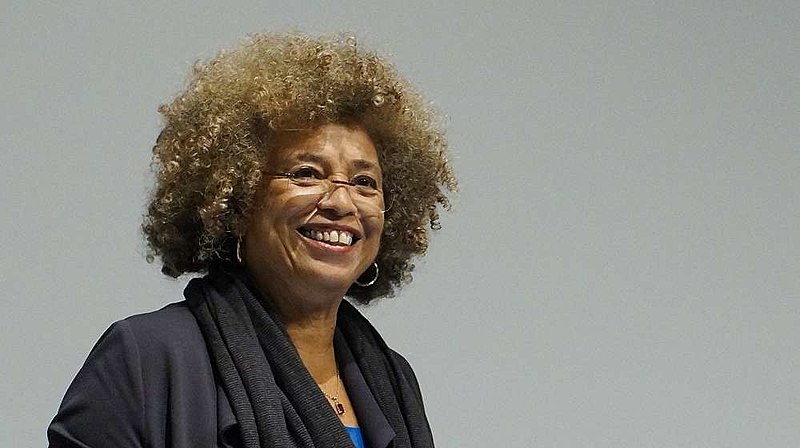
In honor of her tremendous strides in social justice and education, professor and activist Angela Davis is set to be induced into the National Women’s Hall of Fame.

The organization, which was established in 1969 and is the oldest membership entity and museum dedicated to celebrating the achievements of American women, announced Davis and others as the 2019 cohort of inductees on Wednesday. More than 250 women have been honored by the National Women’s Hall of Fame. 

The University of California Santa Cruzemerita professor was nominated by the public and selected by a group of experts across various disciplines based on her contributions to the areas of the arts, education and humanities. 

This year marks a century since the 19th Amendment was ratified, giving women the right to vote. Davis’ involvement in the fight for human rights has spanned over the past six decades as a former member of the Black Panther Party and the Student Nonviolent Coordinating Committee (SNCC). In recent years, she has focused on social problems of economic injustice, mass incarceration and the criminalization of Black and brown communities. 

Davis, along with nine other inductees, including U.S. Supreme Court Justice Sonia Sotomayor, will be honored. The ceremony will take place on September 14.

A pre-teen developed an impressive robot to help with one of life’s most tedious tasks.

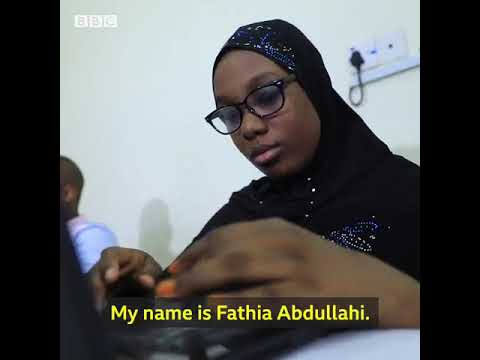
Many people put off folding their clothes after washing and drying. While you were piling your garments in your closet, 12-year-old Fathia Abdullahi developed a robot with the ability to fold clothes.

“This is the t-shirt folder,” the young Nigerian told Reuters. “I made it because there are too much clothes to fold on Saturdays and Sundays when you wash a lot.”

When someone places a shirt in the middle of the surface, it is folded by the four grey beams on each side. The machine is a prototype, according to India Times, but it already folds t-shirts perfect.

Abdullahi started coding when she was 11 years old and aspires to be a food scientist. Coding is a passion for the young techie.

“When I grow up, I will love to be a food scientist,” she told BBC last month. “I would be able to use this coding to build so many things that would help me.”

Abdullahi’s peer, Oluwatobiloba Nsikakabasi Owolola, is also dabbling in robotics.

“This is the robot grabber,” he said. “I programmed it to identify the object, grab it and take it to another position.”

Owolola started coding when he was only 10 years old and wants to learn everything about it.

“I found Lego robotics interesting,” he said. “I wanted to do it all though.”

Like Abdullahi, he truly enjoys it.

“I love coding, that is why I want to be a robotic engineer,” Owolola declared.

Credit: blavity.com

If you are on a tight budget, avoiding weekend travel often results in huge savings. Mid-week travel is much cheaper than the weekend.

The holidays are almost upon us. Whether you are travelling abroad or staying closer to home, here are some travel money tips to help you save and manage your money during the summer vacation.

Make a travel budget
Have you planned for this holiday or are you just going to dip into your savings and head off no matter the cost? How much can you really afford to spend? Set an overall spending limit and then determine where it can take you. Try to stick to it. There is so much involved – accommodation, transportation, food, shopping, entertainment, gifts, telephone calls, excursions, and so on.

Book early
You really ought to have booked long before now to get the best deals. Fares can vary considerably, depending on the time, day or month of travel. The long school vacation attracts very steep fares, as families across the world embark on their summer holidays. If you are on a tight budget, avoiding weekend travel often results in huge savings. Mid-week travel is much cheaper than the weekend.

If you travel off-season, you are bound to get better deals than if you go at Christmas time or during school holidays. Not only will fares be much cheaper and air mile tickets readily available, but destinations will also be less crowded. Indeed, now is a good time to book your Christmas travel!

Must you fly direct?
It is so much more convenient to fly directly to your destination, but if you have time to spare, there are significant savings in considering a flight with a stop over or two. Some passengers have passed through Dubai from Nigeria, or through Ethiopia on excellent Ethiopian Airlines, to get to Europe and the Americas at very decent fares and with good service.

Inform your bank or credit card company of your travel plans
Don’t forget to inform your bank or credit card provider if you are travelling abroad. If they see unusual transactions from a foreign land, to secure your account from fraud, they may block your card. It is also best to take along more than one card, in case you experience some problems with one of them; sadly, this is still a common occurrence with some Nigerian debit and credit cards. Even though we like to be cashless, it always pays to have some cash on you, just in case the card is declined for whatever reason.

Always keep your bank’s international customer service number handy, as well as an individual name; you might need it. There is nothing worse than being stranded without money in a foreign land.

Separate your money
Don’t keep all of your cash and cards in the same place incase you are a victim of theft. You might have a card in your wallet, but have another card and cash in a separate bag, just in case.

Cash is king. If you lose your wallet, your cards are declined, or the ATM has run out of money, you will be so glad that you had some cash on you. But avoid having too much cash on you, as it may not be covered by your travel insurance if it’s lost or stolen.

Avoid borrowing to go on holiday
There is so much pressure to keep up appearances; children in school want to show their friends that they travelled “abroad,” and with “everyone else” travelling, you just cannot “afford” to stay at home. Some will even go as far as borrowing to finance an expensive holiday. Avoid this, unless there is the absolute certainty of an impending inflow of funds or a compelling reason to do so.

Remember that your focus should be on your goals and not on other people’s goals; we don’t really know “the Jones” story but they are usually broke and trying to keep up with you!

Buy travel insurance
A medical emergency can literally wipe out your savings. Always take out travel insurance. For a small premium, protect yourself and your family, should one of you fall ill or have an accident during your travels. This sounds obvious, but so many people just don’t bother to purchase travel insurance, and end up losing a lot of money when things go wrong; this could rage from cancelled flights, lost money, baggage or getting ill far from home.

Make transport arrangements
You are at your most vulnerable when you arrive at a new destination. That first airport taxi ride from the airport may be one of your most expensive, so plan ahead. Try to research the lower-cost alternatives including train, coach, etc. If you are staying in a fairly decent hotel, they will usually have a free shuttle service; remember to ask about this when you are making your booking. It makes you feel safe as well, particularly if you are travelling alone.

It’s best to figure all of this out before your trip; when you arrive tired and with tons of luggage, the last thing you need is to be ripped off by an unscrupulous driver, or enter an unauthorised vehicle and put yourself in an uncertain situation when you’re far from home.

Secure your valuables
Protect valuable documents. If you have ever lost your passport when you are travelling, you will know that it is a horrid experience. You can be completely stranded and insecure; identity is critical. Having most of your important documents and photos backed up is essential. Keep both digital and physical photocopies copies of your passport, visas, driver’s license, birth certificate, health insurance card, and important phone numbers on you, just in case.

Avoid carrying very expensive items including jewellery when you travel, particularly if you cannot afford to lose them either financially or emotionally. Make use of the hotel safe and put valuables away.

Cheaper accommodation
Over the last few years, there has been so much innovation in holiday rentals. Local residents can rent out their rooms, even entire apartments. AirBnB, for example, has transformed accommodation options. Many travelers actually find this experience more rewarding, as it is usually more spacious and cheaper than hotel accommodation.

Be conscious of the exchange rate
Doing a little research on the local exchange rate against your home currency can make a huge difference. Quickly do your mental arithmetic before you make a purchase; it helps you make more efficient purchase decisions.

Roaming can cost you
How much could a few texts, a few email checks, social media updates and downloads on the go possibly cost per day? A lot! Purchase an international roaming plan that will cover your travels, as roaming charges can result in a staggering telephone bill when you return home.

They are a source of huge expense when you travel, especially since you must check emails and download on the go. Don’t forget to keep data switched off until you need it. Be sure of what you will be paying, both for making and receiving calls. Pay your bills in advance so that you don’t get cut off whilst you are away.

Switching to a local sim card as soon as you arrive at your destination is a good idea; it is always cheaper to make local calls. Make sure that your loved ones, colleagues, and key contacts have the number so that you don’t miss important calls. Pay for a good internet package, unless you will be in a connected environment most of the time.

Secure your finances
Be careful when it comes to making online transfers or dealing with sensitive transactions in public places, as many hotspots are not at all secure. If you must use them in an airport in transit for example, be sure to log out completely to protect your self from identity fraud.

What is the essence of a vacation?
Remember the essence of a vacation. It is really about spending quality time with loved ones and having time to rest and rejuvenate. This may just be the time to simply stay at home, a time to revisit your passions, hobbies, pastimes, and sports.

A vacation need not be that expensive. Don’t attempt to pay for what you cannot afford. You do not have to travel abroad; rediscover your own environment by visiting places close to home with your children. Have you visited Idanre Hills in Ondo State, the Ogbunike Cave in Anambra State, Obudu Ranch Resort in Cross River State, Yankari Game Reserve in Bauchi State or Abraka Turf Club in Delta State? Let us get our children to know more about our beautiful country. If we don’t visit our heritage sites, we cannot expect foreigners and tourists to visit, spend valuable foreign exchange and create jobs.

With careful planning, you can find a balance between having an enjoyable vacation without breaking the bank.

Have a great holiday!

About Nimi

Nimi Akinkugbe has extensive experience in private wealth management. She seeks to empower people regarding their finances and offers frank, practical insights to create a greater awareness and understanding of personal finance. You can reach Nimi via the following: Email; info@moneymatterswithnimi | Website: www.moneymatterswithnimi.com | Twitter: @MMWITHNIMI | Instagram: @MMWITHNIMI | Facebook: MoneyMatterswithNimi

James Bond fans wanting 007 to be either black or female are in for a double treat — with the movie spy about to be played by a black woman, according to a report on Sunday.

British actress Lashana Lynch, 31, will be introduced as the new 007 in what is being described as a ‘popcorn-dropping moment’ in the franchise’s 25th movie that is currently being filmed, according to the Mail on Sunday.

But it is not a complete do-over — with her just taking James Bond’s secret agent number after he retires from MI6, the report states.

Bond himself will still be played by Daniel Craig — and will still adhere to his old-fashioned macho characteristics, an insider told the UK paper.

‘Bond, of course, is sexually attracted to the new female 007 and tries his usual seduction tricks, but is baffled when they don’t work on a brilliant, young black woman who basically rolls her eyes at him and has no interest in jumping into his bed,” a source told the Mail.

The insider called it a “pivotal scene” when Bond is called back from retirement and introduced to Lynch as the new 007.

“It’s a popcorn-dropping moment. Bond is still Bond but he’s been replaced as 007 by this stunning woman,” the source told the Mail.

Londoner Lynch, who played the fighter pilot Maria Rambeau in “Captain Marvel”, is hoped to modernize the franchise criticized by many as being too dated and sexist.

“This is a Bond for the modern era who will appeal to a younger generation while sticking true to what we all expect in a Bond film,” the source said.

“There are spectacular chase sequences and fights, and Bond is still Bond but he’s having to learn to deal with the world of #MeToo.”

In 2006, Tola had  the privilege to travel to the United States to further her education, she graduated in 2010 and obtained a bachelor  of science in business administration from Middle Tennessee State University, In 2012 , she obtained a Master of Business Administration in general management and a a second Master of Business Administration in Supply Chain Management in 2013, both from same university. While attending college, she was inducted into academic honor societies such as Beta Gamma Sigma and Phi Kappa Phi due to excellent academic performance.

Today, she is  an entrepreneur and the Founder of Fortunate Hands foundation; A non-governmental organization with a vision to care and help improve the wellbeing of the less privileged children. Growing up, her mother not only ensured going to church was compulsory, but she also made her  apply what was preached in the church to her daily life, this informed her decision to give back and start an NGO In 2015;where she gives hope to kids in rural areas, enroll them in school and also give them scholarships.

Tola is running her organisation passionately and also combining her educational knowledge for positive results. The young humanitarian who works 9 to 5 alongside running an NGO, shares her aspirations with me in this inspiring interview.

Growing Up

 I was born in Lagos to the family of Stephen & Moji Assan. I am the 4th of 4 children so I grew up around siblings. Growing up, my parents didn’t have it all, but we were okay. I attended a boarding house in Epe called Lagos State Model College Igbonla; where I attained my high school degree. The boarding house experience wasn’t exactly pleasant but one common theme between staying in a boarding house and living at home during the holidays was church.

Church was a must while in school and my mum also made sure I went to church while I was home for the holidays. I remember one consistent topic even back then was giving and its benefits, that principle stuck with me and surely has some impact on what I do today.

Inspiration behind Fortunate hands

I always knew I wanted to help others but founding an NGO for that purpose was never in the plan.

I got the inspiration for fortunate hands from a couple of things of which spending time with God would have to come first. I started attending church at a very young age and giving is one of the principles that stuck with me, I can say for a fact that helping the needy comes with benefits.  One day I was spending time with God through his word and he directed me to the bible verse that says, “Carry each other’s burdens”. As soon as I read that, I got the vision for fortunate hands foundation; a vision to care and help improve the wellbeing of the less privileged children.

Prior to the NGO being formed, I would render a bit of help to others here and there, but it got to a point I realized I wanted to do more.  I know I am failing if I am able to count the number of lives I have touched.

 I have to admit I also got some of my inspiration from beggars on the streets, especially those with their children. Each time I walked or drove past them, I felt the urge to help them.

I also get continuous inspiration from the events we have in slum areas; the atmosphere is always the same. The kids always seem so content despite their living condition and I feel joy in my spirit just spending time in such areas and having fun with them.

Nigerian’s and  Philanthropy

Only a few Nigerians genuinely support the type of work and this is a good medium to create more awareness. For some reason, most people are unaware of the slum areas that exist, and Lagos alone has about 14 of such areas. According to trading economics, 50.2% of Nigeria’s population lived in slums and this number can only have increased due to a growing population. Other Nigerians who are aware of such areas have concluded that the improvement of the wellbeing of those who stay in such areas dwells with the government and do not see it as their responsibility. The truth is, one doesn’t need to have billions of Naira to leave an impact in such areas; a little goes a long way. Today the support is quite minimal, but I am sure we will get there as we continue to create awareness.

Balancing it all

 Balancing a 9-5 job, a business and a non-governmental organization keeps me very busy. I am not a perfectionist, but I like to be on top of things, I am cognizant of the fact that nobody can treat your business like you so I try to do as much as I can myself. When we have events for the foundation, I get help from the project coordinator and that goes a long way in keeping a balance. I also try to audit my time daily that way I know where I need to focus more time and what activities I need to cut out of my day to maximize my time. I make sure to have “me time” and take a break when I need to.

Challenges

Challenges from a nongovernmental organization standpoint are numerous. Getting people to buy into a vision they just don’t understand can be discouraging and that is why being passionate about what you do is pivotal to the longevity and impact of the organization. There are a lot of hurdles we have to cross to make a good impact which shouldn’t be so. The biggest challenge comes from the government, they make it difficult to do simple things like enroll kids in school because they require a few letters and approvals; In 2018, the organization was able to enroll a few kids to school in the Ajegunle community and while I thought we just had to select kids, take them to school and make a payment, that sure wasn’t the case.

 Another common challenge we face is with the community heads of these slum areas; most of them act as though they are doing you a favor by letting you visit their community.

On giving up

The thought of giving up is an inevitable temptation in life but Christianity has helped me to see it as a no option. Severally, I have thought about just saving up my money for other things that some of my mates own but then I am reminded that is not an option because helping the needy does come with benefits, though not immediate but eternal.

Sometimes I get burned out between running a business, doing a 9-5 and planning events for the organization but I am like I said, giving up is not an option.

In March 2018, I lost Tomi my 15-year-old niece after a brief illness and that was really a trying time because we were very close. Severally I went to church and would remember her during worship and just run out crying, I would go into the toilet at work and cry because I couldn’t focus. This incident did impact my following through on enrolling few kids in school, I wanted it to be for her.

Being a Woman of Rubies

When I hear the word Rubies, precious comes to mind and every precious thing takes time to be created.

That brings me to the bible verse that talks about been “Fearfully & wonderfully made”, which happens to be the theme of our next event in Makoko. I am a woman of rubies because I am fearfully & wonderfully made by God, I hope to be able to make every life touched feel the same way. 

Advice for women

Dear woman,

You can do anything as long as you are willing to put in the work and go through the hurdles

You can start that business today using funds from your paycheck

You can renew your mind by constantly reading books

Never assume the other person knows, verify by doing your own research

Never be afraid to ask questions from people doing well in that field you want to go into

Build your network and

Remember, you don’t have to be a billionaire to make a positive impact.

As long as you put in the work and never give up, you are unstoppable.

Mrs Bisi Fayemi, the Ekiti State First Lady, has said it is discriminatory to expel pregnant schoolgirls from school while allowing the boys who impregnated them to continue their education.

Mrs Fayemi said this Thursday during a meeting in Ado-Ekiti with wives of Coordinating Directors and Community Development Officers of the 16 Local Government Councils in the state. 

She pointed out that all girls, regardless of their status, have a right to education. 

The Ekiti State First Lady acknowledged that pregnant girls face various forms of punishments, including discriminatory practices that deny them their right to education. She went on to reveal that the state government is ready to implement relevant laws, including the Child Rights Act, Gender Equality and other laws to protect the interest of children.

She added that a sensitizattion campaign to increase awareness on the importance of protecting the rights of children, especially the girl child, will hold in the state in the coming month.

Credit: LIB