
Women of Rubies

Author

Esther Ijewere

Browsing

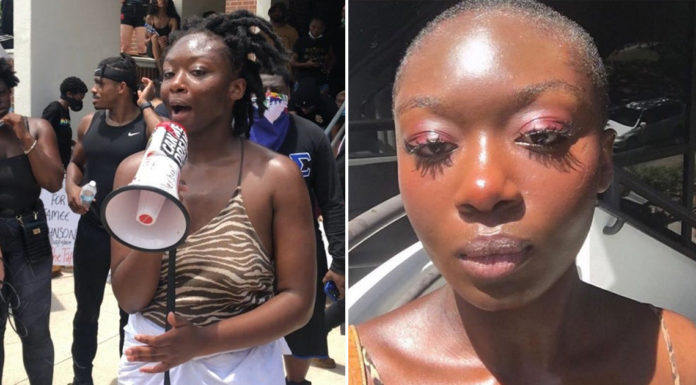
A 19-year old American with Nigerian roots, Oluwatoyin ‘Toyin’ Salau, has been found dead after she went missing last week.

Toyin, just 19-years of age, was an ardent Black Lives Matter activist who had been vocal during the recent protests stemming from the murder of George Floyd by a white police officer.

She had revealed on social media that she had recently been sexually assaulted.

Not long after, she went missing and this morning, she became a trending topic on Twitter with many mourning her passing.

Her body had reportedly been found over the weekend in Tallahassee, the state capital of the U.S state of Florida.

Tallahassee police have revealed they are investigating a double homicide and have arrested one suspect.

Twitter has descended into mourning with news of her death – another black person brutally killed in the United States under mysterious circumstances.

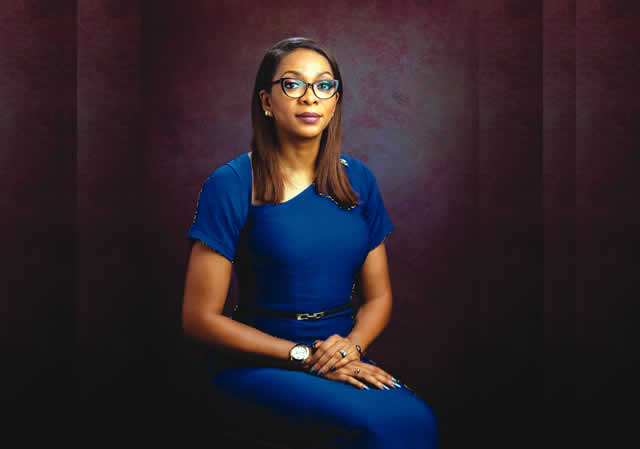
Nkiru Olumide-Ojo holds two decades of experience in Strategic Marketing and Corporate Communications Management, looking after multinational and national brands in Nigeria and some African Markets. Her work experience spans across various sectors including Financial Services, Aviation, Telecommunication and the Oil and Gas sectors.

An expert Reputation and Crisis Communication Manager, she currently works as Regional Head of Marketing and Communications at a financial services Group in South Africa. Nkiru holds board level experience having sat on the boards of Stanbic IBTC Trustees Limited and CMC Connect Burtson Masteller.

A frequent Conference Speaker, she was the immediate past keynote speaker at Google Nigeria’s 2019 International Women’s Day celebration. London Advertising Week, Africa Public Relations Conference, and Standard Bank’s Blue Heels Women’s Programme are some of the conferences where she has spoken.

Over the past couple of years, Nkiru has had several recognitions such as Leading Woman in Marketing and Communication in 2016, Marketing Personality of the Year 2017, NIPRO’s top 40 under 40(2008), Brand Journalist of Nigeria’s Award for Leading Marketing Personality amongst others. She holds a Master’s degree in Strategic Marketing Management from the Kingston University Surrey, London, alongside a Post-graduate Diploma in Management/first degree in Biological Sciences, and many professional trainings.

Nkiru is the published author of the Pressure Cooker- Lessons From A Woman at Work. A female enthusiast, Nkiru is keen to see women develop leadership skills and is the Founder of a female social development organization, the LightHouse Women’s Network. Nkiru is married to Olumide and they have two children.

In this interview with GuardianWoman, she sheds more light on the activities of the LightHouse Women’s Network as the organisation holds its annual conference today in Lagos.

You were once described as a person of many parts – tell us what that means?
I’m not entirely sure what the person who was describing meant, but I do strongly believe that everyone has the ability to express themselves in more than one way if they choose to and I do so -wholeheartedly. I’m a wife and Mum. I run a social development agency focused on women, I’m an author/writer and I work at an organisation doing marketing and corporate communications.

Tell us about the LightHouse Women’s Network and why you set it up?
The Lighthouse Network was an accidental baby, one that I’m delighted happened.

As an outcome of my personal frustration trying to be the best mum/wife/daughter/daughter-in-law, church worker/friend and more- I was struggling with many bottles dropping- I kept putting my hands up to ask questions at every female gathering I attended- I felt the answers I was getting weren’t assuaging my needs and so I started expressing myself via a column called the PressureCooker.

The outcome of this column was tonnes of questions coming through- I didn’t have the answers (as I was obviously still searching myself). But I realised I could find the answers within my network- I started bringing women within my network together annually to answer these questions- it’s been six years now and we have made it more formal with various signature activities impacting the working woman and the girl getting ready for the workplace.

Give us a peep into the Network and some examples that have worked for some women that others can learn from
We are five principal players with five diverse board of trustees, cutting across three generations- Yomi Badejo-Okusanya, Bunmi Oke, Olumide Ojo, Eniola Edun and Temitope Jemerigbe. Because impact measurement is important to us, we only embark on specific projects and taking on numbers we can deliver on. We have three signature activities- our “Getting the Girl Ready for the Workplace” project – which we carry out in polytechnics and other higher institutions. The CEO Roundtable where we have senior executives glean directly from a CEO and our Standard Mentors Connect Project. For all of these, we follow through to gauge progress participants have made and our virtual group helps foster continuity. We are so far from where we’d love to be, but we are making progress.

You mentioned the column you kept which you said became a book, tell us some of your personal struggles that you shared in your book
I talked about the maternal wall- and what I call mummy guilt- the one you feel as a working mum who is away from her children. I talked about why sponsorship is so important for women, I talked about the boy’s club, my faith, the error of not managing your boss well and the one dearest to my heart, lessons from failing- specifically about not making moments of failure monuments of failure, rather to learn from it.

What informed the analogy of your book with the kitchen pressure cooker? 
Definitely the pressure I was feeling as a working young mum- I consistently felt like I was being boiled in a pressure cooker!

Do you think it would be proper for employers to give working mothers some concession at work?
I do think so for it would improve productivity- and I’m not talking flexible work hours alone, I mean things like breastfeeding room or even crèches, if the company can afford it. The physiology of breastfeeding is such that the mom does need to express breast-milk during work hours and you’d agree the bathroom isn’t the best place. It would be brilliant of the organisation if it can include a crèche to help both get the mothers’ hearts at rest and get more out of them.

As workplace readiness is something the Lighthouse focuses on, what do you think are the top three skills required for the girl to succeed in the workplace?
. Communication – The ability to understand what is being said as well express yourself clearly, confidently-
. Thinking/Problem Solving Skills – the real reason corporates are set up is to solve problems- you’ve got to have the ability to think up solutions. Having the right attitude- completely non-negotiable, as this is a basis for learning and growing within organisations

What in your view precludes women from advancing in the workplace?
I believe sometimes we stand in our own way- I mean our beliefs- that some roles are unattainable and therefore we limit our ambitions. I can assure you if we took a poll of 100 girls working in an office, only 10 per cent are aiming to be CEOs of that organisation- the rest don’t quite care.

The maternal wall also manifests itself in ways that makes the career trajectory a bit uneven as we do take off maternal time. I think in some industries-the boys club still exists- a club where males think some roles are exclusively theirs.

How do you think we can curb the above?
I think by instituting policies in this regard. Some sectors have strong policies requiring businesses to achieve gender-balance in management and this same policy has ensured balanced representation in some countries. Rwandan government has a balanced representation of both genders, with young females holding very interesting positions. Most importantly, I think including men in the gender conversations helps greatly which is why our signature event this year is themed: Views From The Other Side and we are having four generations of men discuss the woman and the workplace. It is our view that only when they know what the issues are can they support wholly.

How have you been able to maintain the work-life balance?
I have a work like integration approach- where I have structured work into my life. Structured because it does have a specific time allocated to it all day round, similar to how I have structured the many other important things in my life- each then takes its order of priority- faith, family, work, socials, but then again there is an art required in the blending. Lastly, I think the frustration comes from trying to do all at once! Some things will have to take a backseat at different times.

As an example, my social life took a back- seat once when I had a fast-paced work, really because I had to balance other facets- I made up for that way later.

What’s your advice for women who are still struggling with it?
Having a good home support system, a supportive spouse. I meet working girls everyday, who have what I think to be the strangest hang-ups such as, “I like to do everything in my house myself,” “I don’t like my in-laws.” I think both are strange hang-ups if you work because you can reasonably outsource the first in order to spend more time on another equally important thing or the latter. Your in-laws can serve as a support system for your children rather than strangers.

With your busy career, how helpful and supportive has your husband been?
My husband works as well and has females in his team, added to myself, his sisters, he does have full “consumer insights” and is fully supportive of the working woman.
Mention some of your favourite female authors.

Brene Brown is my latest hang-up, I’m currently lapping up every book she has written and can’t get enough of her- her authenticity in embracing notions people typically wouldn’t want to talk about completely inspires me-vulnerability and shame. A few of the obvious -Chimamanda Adichie, Sefi Attah. Their way with words and the ability to keep you suspended from reality days after you have dropped their books. Otherwise, I love my good old John Maxwell, Norman Vincent Peale- I always have their books around me.

How has mentorship helped to shape your career and lifestyle and how are you helping to mentor younger women?
I actually am a product of many mentors/teachers- bosses, pastors, leaders who have been instrumental to my all round growth – my husband Olumide Ojo, Ephraim Osunde, Funke Felix-Adejumo, Yomi Badejo-Okusanya are the ones for whom I have pulled out a seat to be directly mentored, otherwise, I have been mentored informally by many, especially my bosses and pastors. In return I do have structured mentees assigned from the Lighthouse Women’s Mentors Connect.

Who are the women you admire and why?
Funke Felix-Adejumo-for her uncanny wisdom, Sola David-Borha for her many accomplishments delivered with amazing humility, Mo Abudu, for being many things having made a detour from a corporate life.
Arianna Huffington for being many things after Huffington post. Then a few of the obvious- Oprah for making giving so intrinsic to success. I could go on.

Aside writing what are your other interests?
Poetry (sorry I know you said asides writing) but poetry is a new exploratory ground for me and I’m embracing it. I love comedy festivals and stage performances- I love a good laugh. I’m also exploring a few outdoor sports, I haven’t liked any as yet, but then again, I haven’t been consistent- I’d be a bit more confident to speak around these shortly.

Tell us about growing up, family life. 
I grew up in a small family in Port Harcourt.
My dad worked in Total and Brossette before he set up his own business, my mum worked in First Bank before resigning to look after the home. My father it was who instilled values for the workplace in us. Till his death, his first question during his daily call was “ I hope you got to work on time?’’
We grew up in an area called D/Line, with neighbours as close friends, a children’s club on our street and an Anglican church nearby. I loved PHC, with our sharp wits and mouth. I often say PHC imbues you with some natural confidence.

What’s your personal style and what are your favourite colours? 
Classic- I’m not given to trends, as I’d like that my look remains timeless. I love colours, I find black so boring and constantly needing to be “brightened up”.

I therefore only wear it to work, once it isn’t a work function or environment- I express myself in bold colours.

What’s relaxation for you? 
Sleeping.

Your life’s mantra? 
You don’t walk so lightly that you don’t leave footprints- make sure your footprints make a good impact.

Advise for younger women trying to climb the career ladder 
You can. There’s also a God factor- he causes “time and chance to happen.’’ You should pray to “be lucky.”

Source: Marie Diamond for Guardian Woman

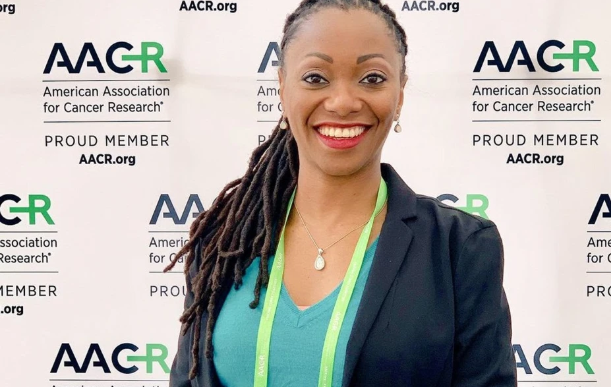
Dr. Hadiyah-Nicole Green just became the first person to successfully cure cancer in mice using nanoparticle technology, Black Enterprise reports. 

Green was first inspired to pursue cancer treatment efforts after watching her aunt and uncle battle with the disease. Her aunt, Ora Lee, eventually lost her battle with cancer and her uncle, General Lee Smith, struggled with the side effects of chemotherapy. Seeing their experiences firsthand motivated Green to find a cure. 

Her work began as an undergraduate student at Alabama A&M University where she studied physics and optics. She went on to pursue her masters in physics from the University of Alabama at Birmingham and eventually began working at the Comprehensive Cancer Center and the Department of Pathology. 

Her new cancer treatment uses laser-activated nanoparticles that were found to successfully cure cancer within 15 days in mice. The treatment doesn’t require chemotherapy, radiation, or surgery and is a revolutionary breakthrough in the field. The U.S. Department of Veterans Affairs has awarded Green with a $1.1 million grant to continue her cancer treatment research.

Breakthroughs in cancer treatment are critical to ultimately curing the disease. With every new treatment, the life expectancy for cancer patients goes up. While people are living longer after a cancer diagnosis, studies still show that roughly 1600 people will die from cancer each day in 2020 in the United States. 

Thankfully, because of the work that Dr. Green is doing, we are one step closer to a cure! 

Thank you!

Source:Becauseofthemwecan.com

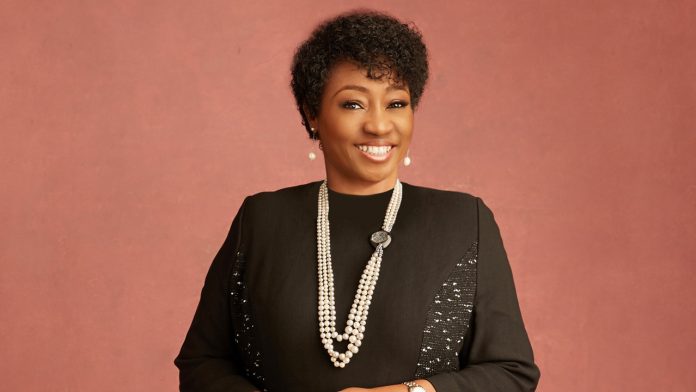
In celebration of her 57th Birthday, The First lady of Ekiti State; Erelu Bisi-Adeleye Fayemi donates N1m to Rubies Ink Initiative for Women and Children, through her Above Whispers “A Wrapper for Women  Initiative.

The aim of the donation is to support Women in dire need during this uncertain time in the World, and alleviate their pain.

The Wrapper Network which started In October 2019 was inspired by a question she asked  during her speech at a Women’s conference.

According to Her Excellency;

Those wrappers symbolize solidarity, unity, love, protection, care and so on. If we want to be blessed as women in any way, Where is your wrapper? Where is your wrapper for the poor widow who is struggling to pay the fees of her children? Where is your wrapper for your wealthy but very sad friend who is experiencing domestic violence? Where was your wrapper when a woman told you she had been raped but you asked her what she was wearing?

In addition, a lot of women need help with modest contributions that could make all the difference. That is why I decided to start The Wrapper Network, for women who need a wrapper and for women who are prepared to give wrappers to other sisters. I am flagging it off with an initiative for some women entrepreneurs to mark my birthday on June 11thThe Wrapper Network will be able to support up to 40 women with between N50,000-N200,000 for various businesses. I hope that the sisters who will benefit can go on to bless other sisters with a wrapper when things are good for them”.

We will be disbursing the funds in the next couple of days among 100 women; from the most vulnerable to the downtrodden, we will make sure these Women get a “Wrapper”  of hope from this donation,and the names of the beneficiaries will be published for accountability.

We appreciate Erelu Bisi Fayemi for her kind gesture and we will make sure the funds gets to those who truly need it.

Happy Birthday to a wonderful Mentor, Encourager, Women lifter, Wrapper Giver, A woman above Whispers, an enigma of hope and purpose. We celebrate you today and always.

Esther Ijewere

Founder, Rubies Ink Initiative for Women and Children & Editor-In-Chief; Women of Rubies


Many reports and predictions during the ongoing COVID-19 pandemic show that there is a silent wave we must fight off–the mental health wave.

Because of the effects of the coronavirus, global-scale lockdowns, and quarantines, people have become prone to anxiety, depression, and even suicide, especially in the wake of a global recession and mass layoffs. And with 90% of minority businesses locked out of the Paycheck Protection Program (PPP), there can be added worries and concerns among employees.

For businesses that now work remotely, it can be even more challenging to become a champion for employees’ mental health. But it doesn’t take much effort to do so. All employers need to do is follow these 10 tips to support your remote employees’ mental health.

7 Tips to Support Mental Health of Remote Employees

1. Do regular face-to-face check-ins

In this 2020 State Remote Work report, loneliness is still ranked as one of the biggest challenges that a remote worker faces in their everyday life. In the United States, loneliness is considered an epidemic– and the risks are heightened when people are discouraged from going outside amidst a global pandemic.

So one way to show remote workers you’re there for them? Doing regular non-work-related check-ins.

Use your online collaboration tools to schedule a time to meet, either one-on-one or as a group. Strike a balance between checking in with employees individually and as a team.

If you’ve never done this regularly, it may be a little awkward at first. So, ease everyone in with some virtual icebreakers to lighten the mood and get everyone out of work mode.

2. Offer added benefits and perks

Can you perhaps offer additional benefits or perks for employees during these trying times? Some employers are now considering health plans that include mental health services for employees to enjoy– and it can be a good benefit to add if you can’t hand out raises as often as before.

If changing your company health plan isn’t an option, you can give smaller, one-time perks instead. For example, help your remote team build their dream productive workspace at home by subsidizing expenses for certain office supplies or equipment.

3. Send a mental health survey

Sometimes employees can’t open up about their mental health concerns in a virtual meeting. Some might find it easier to evaluate their wellbeing if they’re sent a guided survey or form to express where they’re struggling.

A mental health survey tells you as the employer where you can support your employees more in a very specific way. Encourage employees to be very honest when answering this survey, especially if it means it will help you support them emotionally and mentally in and out of work.

4. Encourage employees to take leaves from work

Sometimes remote employees may feel they aren’t entitled to take leaves because they already work from home and have greater flexibility. But everyone needs to take a break from work, even for a few days. Encourage employees to take their paid leaves or apply for unpaid leave whenever needed.

An effective way to encourage employees to do this? Model the behavior yourself: take leaves from work and show employees that rest is an essential part of their work lives.

5. Share mental health resources in a dedicated newsletter or channel

Sometimes sharing resources like articles or videos about mental health are enough to show employees you’re thinking about their wellbeing. Regularly send new resources to help them manage stress, reduce anxiety, or get over relatable work issues like being “always on” or being afraid of taking breaks from work.

Share these in a dedicated Slack channel for mental health, so everyone knows where to find them. Or send them in a company newsletter each week.

5. Create a company exercise calendar

There are strong links that support physical exercise being one of the most effective ways to alleviate stress and boost the spirit. As a business owner, try to find ways to get everyone to stay active, even if they’re stuck at home.

One fun way to do this is creating a company exercise calendar, or scheduling different physical activities anyone can do. For example, you can schedule a weekly dance party or invite instructors for a fun company yoga session online.

6. Express gratitude often

Gratitude is one of the only things you can give away without losing anything in return. And when it comes to your employees, expressing gratitude can help boost morale and make them feel appreciated.

Work gets stressful for everybody, but you should still reward good work and employee presence with praise. Thank everyone individually for their contributions and even praise teams for jobs well done in public Slack channels or company newsletters.

7. Put up extracurriculars and team-building activities

Give employees something to look forward to each week or month with extracurriculars they can join outside work. Encourage teams to start book or film clubs, get everyone together for a team talent show, or just have a good time playing virtual games with each other.

You can even encourage ownership of these tasks by getting volunteers to manage these activities. It can be a great way to empower employees to contribute in ways outside work and really highlight their personal strengths.

8. Host or sponsor mental health seminars

Try inviting mental health coaches to come aboard one day and give intimate seminars to the company. This can be a space for your remote employees to talk to real professionals in the mental health industry about actual issues and concerns that may be bothering them.

These seminars may also benefit you, since you can see areas to support employees in more intimate or much-needed ways. The mental health industry constantly sees changes and improvements in their research and studies, and it doesn’t hurt to stay informed.

Additions

9. Empower employees to help their communities

Sometimes we can uplift ourselves when we uplift others. Inspire a sense of community and contribution within your company by starting a volunteer program or fundraising campaign, especially in causes that matter most to your employees.

For example, Diishan Imira of Mayvenn, an online platform that helps hair stylists connect and gain new clients and customers, started a #SaveTheSalon fundraising campaign.

She and her company sought to help displaced hair stylists whose incomes were severely cut because of the recent COVID-19 measures that closed down several industries, including salons, out of safety risks.

10. Put employees’ well-being first

When you take care of employees, your employees take care of business. This maxim is especially true in a remote workforce that eliminates in-person interactions.

Follow these 10 tips to help you become champions of your remote employees’ mental health, and you’ll see a happier, healthier workforce who’ll stay with you for the long haul.

Source:Blackenterprise

Remember how a petition was launched in March, urging the Nigerian government to implement a sex offenders registry (i.e rape, paedophilia, sexual harassment and assault)?

Well, the National Agency for the Prohibition of Trafficking in Persons (NAPTIP) has now published names and photographs of some convicted sex offenders on the Nigeria Sex Offender Register.

The DG of NAPTIP, Dame Julie Okah-Donli, shared a list over the weekend via Twitter. She said the agency is determined to start naming and shaming all sex offenders, and more names of sex offenders would be published once they are convicted.

Sophomore Danielle Geathers just made history after being elected as the student body president at Massachusetts Institute of Technology. The win makes her the first Black woman to lead the undergraduate association.

A mechanical engineering major, Geathers and her running mate, Yu Jing Chen, presented a well balanced platform that focused on unity, equity and authenticity.

“Someone asked if the UA president was a figurehead role [during the debate]. I think no, but minimally, a black female in that role will squash every perception that MIT is still mostly white and male. Minimally, the immediate image of that will make MIT a more welcoming and inclusive place,” Geathers told the school’s paper, The Tech.

Prior to running for office Geathers founded the “Talented Ten”, a program focused on  increasing applications and enrollment amongst Black women at MIT by pairing high school juniors with current students.

Geathers’ statement on the organization’s website reads, “I have created the Talented Ten because I understand the value that black females bring to campus while also understanding the tremendous loss the MIT community experiences when a qualified, underrepresented minority student chooses to not enroll.”

Now with Geathers’ in place as the student body president, she’s focused on pushing MIT to become a place where all students receive the institutional support they need to thrive.

Congratulations Danielle! We’re rooting for your success!

Source: Becauseofthemwecan

The owner of Black Girl Sunscreen secured a $1 million investment from a private woman funder, Forbes reports.

Even in the midst of the coronavirus pandemic, Shontay Lundy, owner of Black Girl Sunscreen (BGS), was still able to secure the investment needed to take her business to the next level. BGS is the only Black-owned indie brand carried full time in Target’ sun care section, an accomplishment in and of itself. Now, Lundy partnered with a private investor to the tune of $1 million to help scale her brand even further. 

The company currently only sells adult and children’s sunscreen. The BGS SPF 30 and BGS Kids SPF 50 is sold in over 200 Target stores across the country and the brand is worth a cool $5 million. With only 5 people on staff, Lundy wanted to ensure that she continued the company’s momentum through the pandemic, instituting an “all hands on deck” approach that included aggressive social media strategy and marketing efforts, resulting in an increase in e-commerce orders. 

“I told the team we need to change the narrative and be very nimble to survive this. I worked hard for three years. We created a groundbreaking product for an underserved market that resonated with our community. Black Girl Sunscreen brought awareness and shifted a mindset around people of color wearing sunscreen. Lastly, it didn’t hurt that we [already] secured a partnership with a big-box retailer, which activated national exposure for our brand,” Lundy told Forbes. 

The brand launched in 2016 and has been popular with women of color. The paraben free product that includes moisturizing natural ingredients like avocado, jojoba, aloe, cocoa butter, and carrot juice caters specifically to melanated women, allowing them to enjoy wearing the sunscreen without the residue and harsh chemicals included in other brands. With Black-owned women companies receiving less than 1 percent of all venture capital funding annually, Lundy said that seeking an investor who was also a woman just felt “natural” to her. 

The company not only sells sunscreen but also educates melanated women about why the product is needed for their skin as well, warning against sunburn, skin cancer, and signs of aging.  Lundy says the funds will help take the brand to the next level and allow the company to release more products sooner than later. She hopes that her story will encourage other Black entrepreneurs to seek out all resources when getting their businesses off the ground.

“My advice for other minority businesses looking for funding is to take advantage of grants and available resources, participate in pitch competitions to learn how to sell your business and gain exposure, have buttoned-up financials; and put yourself in environments to meet investors/high-net-worth individuals,” Lundy said. 

Congratulations Shontay! We can’t wait to stock up on our sunscreen!

Photo Courtesy of Black Girl Sunscreen

Source: Becauseofthemwecan

Oscar winning actress Octavia Spencer recently announced a donation of breathing monitors to nursing and medical facilities in Alabama and New York fighting the coronavirus pandemic. 

Spencer partnered with Mikucare, a company that specializes in baby monitors, to provide their state of the art monitors to medical facilities. The monitors track everything from breathing levels to sleep patterns, equipped with two-way talk and video capabilities that allow medical staff to communicate with patients without even being in the room. 

“I, like many of you, have felt helpless in knowing how to help during this time. Seeing what is happening in the communities that I love, I have teamed up with @Mikucare to donate monitors to nursing and medical facilities in Alabama and New York to provide much needed relief to nurses as they navigate care for COVID-19 patients,” Spencer wrote on Instagram.

A North Carolina graduating senior has a lot to be excited about, getting accepted into 45 colleges and receiving more than $4 million in scholarships, WTVD reports.

Ive Jones is a senior at Apex Friendship High School in North Carolina. While commencements everywhere have been canceled as a result of the COVID-19 pandemic, Jones is still celebrating, and rightfully so. The 17-year old is graduating summa cum laude, with acceptance letters to 45 out of the 50 schools she applied to and $4 million in academic scholarships. 

“Being awesome was being authentically me, and I didn’t know that until I saw other Black kids doing it,” Ive told Because of Them We Can.

The rising college freshman has worked hard to get to where she is today. At just 11 years old, she organized a fundraising campaign to help children in Africa who were orphaned as a result of the Ebola pandemic, setting an initial goal of $4,000 and raising nearly $30,000. Last year, Jones organized a health conference in Raleigh, North Carolina to encourage young women and people of color to pursue careers in STEM. She’s always had an interest in the health sector and has focused most of her energy thus far on making an impact there. The irony of her graduating while navigating a pandemic here in the U.S. isn’t lost on us. 

“As a student, these things are things we’re going to be discussing in class and I’m going to need to know thoroughly in order to apply my knowledge later on,” she said. 

Jones is taking her talents to Princeton where she plans to major in global health on full scholarship. Her mother, Catherine Jones, said she’s just so proud. “I’m immensely proud of her. She’s just a hardworking person. [Graduation] was a moment we’ve looked forward to. But in everything you have to find gratitude. And you know, at the end of the day we’ll still get to celebrate. I’m West African and we find ways to celebrate,” Catherine Jones said. 

Ive is still hoping that she can celebrate with her class when this is all over. But for now, she’s just focused on the future.

Congratulations Ive!! 

Photo Courtesy of WTVD