Author

Esther Ijewere

Browsing

As the pandemic continues to impact black-owned businesses across the globe, some of the celebs we know and love are working to provide business owners the opportunity to keep their doors open, and Beyonce is one of them!

Through her global initiative, BeyGOOD, Beyonce has developed a program in partnership with the NAACP to provide black-owned small businesses with the capital they need to pull through the pandemic. The BeyGOOD Black-Owned Small Business Impact Fund will provide $10,000 grants to businesses in need.

“Over the last couple of months, the pandemic and outpours for justice throughout the Black community and across the country has been felt in every imaginable area of our lives, including how our local businesses continue to operate,” the NAACP said in a statement.

“The challenged of Black business owners navigating in the climate cannot be understated, as the effects of uprisings across the nation have led to many businesses being placed in dire straits due to damages and other small business needs.”

The grant applications is open to black-owned small business owners in the states of Houston, Atlanta, New York, Los Angeles, and Minneapolis. Applicants will need to provide and estimate of property damage or replacement as a result of the pandemic. According to the NAACP website, applications are due by July 18th, and recipients will be notified by the 31st.

“The NAACP is proud to partner with BeyGOOD to help strengthen small businesses and to ensure economic empowerment for Black businesses.”

The initiative is similar to that of the economic stimulus package, which includes an application for grants provided by the United States Small Business Administration. The SBA is also giving grants in the amount of $10K to business impacted by the pandemic.

Source: Shaderoom

“I don’t understand why Lagos Landlords have a problem with renting out their apartments to single women” I hear the worry and frustration in my sister’s voice at the other end of the line. The prawn crackers I was munching on became tasteless in my mouth. We’ve been on this conversation for the past twenty minutes. I sigh. I understand her predicament. Our other sister had the same issue while she was apartment hunting. Ever the adventurous one, she had wanted to move out of the house as soon as she got a job after serving the fatherland in Kwara State.

She was initially posted to the far end of Wamba in Nasarawa State, our parents, after a long series of argument, emotional blackmail, and threats had reached a compromise with her; they would agree on a state not too far from home but Ogun, Oyo, and Osun States are out of the options. Fully aware of the efforts it took her to reach a compromise; they had agreed to facilitate her redeployment to Kwara State. After service, she got a great job at a top publishing firm in Lagos and couldn’t wait to leave home; “A girl also needs her privacy” she always says. I recall the number of times she would lament to our parents and whoever cared enough to listen about how unfair society treats women. A single woman can hardly get accommodation in a decent environment without pretending to be engaged or presenting a father figure in her life to testify of responsibility and his willingness to grant her the freedom she desires. Long story short, after much persuasion, dad had gone with her to the agents of some of the apartments she was interested in.

I try persuading my sister to go through the route our other sister eventually took. I mean, if a single woman cannot gain decent accommodation because of the prejudice the society has on singleness and women in general, what else can a girl do? Lagos landlords are of the opinion that women are mostly sponsored by their parents, husbands, or the numerous men in their lives. If things go sour between the ‘small girls’ and their ‘big gods’, the rent will suffer for it. That again is another prejudice, a stereotype that women are not as hardworking and financially stable as their male counterparts. My sister still continues to rant, demanding to know why her decision should be based on her marital status or parental influence. Seeing that I was making no headway as she is already determined, I calmly listen to her rants and let her know all will be well.

After saying our goodbyes, I begin to ponder on what we had just discussed. I have never thought about leaving my parents’ house without leaving for my matrimonial home. I still have no intention to do so, except if my career demands it. Probably because I’m very attached to my parents, being the last child. I recall my brother didn’t have this kind of problem. The landlord had only insisted that the rent be paid when due, the number of occupants shouldn’t be more than three at any point since that was stated clearly in their agreement form and loud parties will not be tolerated. Those rules were fair enough. Any responsible person would easily abide by them.

I can’t help but believe these hideous beliefs and bias stem from the deeply rooted patriarchal system African countries, especially Nigeria are cursed with. Why my financial capabilities would be judged by my gender. A woman by ‘default’ is judged incapable, not because she doesn’t have a job, but because she’s a single WOMAN.

It’s funny how many people would turn a blind eye to discriminating against females wanting to be independent. Others might even validate the act. It is very understanding and acceptable if the basis of rejection is based on the premises of the individual doesn’t have a stable job hence the fear of defaulter in payment of rent or the individual has a track record of recklessness and irresponsibility. I recall reading about an interview with a property owner and landlord, Coleman Nwafor and BBC Africa, Mr. Nwafor had said that the bulk of his tenants are men because they have more than women.

Asides the financial ‘insecurity’ bias, many landlords and property developers, are driven by the belief that women cannot — or should not — live outside their father or husband’s house. Another evidence of how much damage the patriarchal belief system has done to our society.

My sister had earlier shared with me the very unnecessary and invasive questions the landlords of the apartments she had inspected had thrown at her, “Why would you want to leave alone? Don’t you know you’re a woman? Are your parents still alive? What do they think of this act of yours?

Another had said “You look old enough for marriage, why are you still unmarried? One of them had even with all sincerity told her that men do not want a woman who is already ‘settled’ getting an apartment as a single woman would reduce her chances of getting married, no man wants a woman who doesn’t need him, a woman who has it all would find difficult to be submissive to her husband. The society has made marriage the ultimate attainment of a woman and normalised policing women about. There is already established bias, that the need for a single lady to live apart from her parent is to fuel her wayward lifestyle, most definitely to live her life unsupervised. The upper-class single women seem to have it a little easier though they still endure some wagging tongues and snide remarks about their lifestyle.

If we are aware of and irritated about how tribalistic landlords can be when it comes to choosing their tenants, and then we can imagine how most women have it worse, one from discrimination against their tribe and then their gender.

Can you testify to these ridiculous and backward reasoning acts? Please share your experience with us and how you handled it.

Written by: Olabisi Animashuan

Hope Ifeyinwa Nwakwesi is the founder of Almanah Hope, a non-governmental organisation focused on lending a helping hand and giving a new lease of life to Nigerian widows. Though she was widowed early in her marriage, the educational supervisor, author, radio presenter and social entrepreneur, was never deterred in her life’s course. Joining the rest of the world to celebrate this year’s International Widows’ Day, she launched Nigeria’s first Widows’ Database, which seeks to accommodate Nigerian widows, especially those in the rural areas. In this interview with TOBI AWODIPE, she talks about the widows’ protection bill, ending harmful practices against widows and why men must begin to take family planning and will writing more seriously.

You recently organised an event in Nigeria to mark the International Widows Day (IWD), how did it go?
It went well. We had Her Excellency, Dr Aisha Buhari as the Special Guest of Honor, with the Minister of Women Affairs, Dame Pauline Tallen, as the host. We also had notable speakers such as the UN Women Country Representative, Comfort Lamptey, the media and other notable stakeholders and speakers. Pauline Tallen launched the Nigerian Widows Database, as Comfort Lamptey confirmed the parameters required in the data collection. We discussed the need for the widows’ protection bill and the importance of amplifying these issues and works.

Tell us about the database, how would that benefit widows?
The Nigeria widows’ database initiative came up during this pandemic. As we all know, the effects of the lockdown affected so many especially widows whose source of income are predominantly from daily sales. I have many widows on my phone, seeking for assistance even from other states. I remember seeing some government agencies on Twitter talking about their palliative actions and I asked for help for my widows, but they didn’t respond to me. I then realised that there’s a need to help ourselves using data so that widows in the rural areas can also benefit. We contacted Women Radio to partner with us as we set out to start the data collection.

One fundamental challenge during the distribution of palliatives was a clear absence of a comprehensive database, including a database for widows in Nigeria. A database will go a long way in direct Federal Government intervention through the Ministry and in the appropriate channeling of much-needed resources to target programmes, demographics and households, thus directly improving the welfare of widows. It will help commissioners and local councils create localised programmes on skill acquisitions and empowerment. Having a database will in time, help widows seek for their own rights from relevant authorities knowing that they will have no excuse of not knowing how to reach them. A demographic database will also help attract international bodies with programmes and facilities as they can easily and directly access them from the data. The psychological effect of being counted is an antidote of the long experience ‘sin of omission.’

How did you get into fighting for the rights of Nigerian widows?
I was widowed young with four young kids between the ages of 4 and eight. It was a painful experience as I had to battle at every side; from harmful cultural practices (though my rites were the basic as the human factor was excluded off mine as I had my liberal and literate in-laws which shunned the vindictive ones) to the social issues. As a widow, my experience was traumatic and a long one. One month after I buried my police officer husband, I came back from the village to the barracks to meet a letter ejecting my children and me from the barracks. Three months later, I went to my office at a police school where I worked as a teacher and saw some people at the notice board. As I went there to see what they were reading, posted on it was my letter of suspension. My legs buckled under me and I fainted. These are just a few examples of the systemic rot that goes on to which millions of women are not speaking about due to fear and shame.

How do we eradicate these harmful practices perpetrated against Nigerian widows?
For last year’s IWD walk, we said we were going to end every widowhood rite that violates women’s dignity; we shared flyers in the streets and markets of Lagos Island and Mainland, Awka and Abuja with our suggested 7 points action which are: Government must pass the law and transmit it to the masses using all channels; Traditional rulers send a letter to every family; use town criers to disseminate the stop order; Religious leaders must talk and preach against these harmful practices; All age-grades meetings must begin to speak against and stop these practices; Schools must inculcate it in the curriculum and enlighten children and youths; Improved media enlightenment and campaign; Posters calling for the end to these practices must be pasted on all women affairs offices, secretariat, Local Government headquarters, primary healthcare and strategic centres; stating it with the place of complaints in English and local languages.

And I add again, organisations, review your CSRs, let your advertising inculcate it; sponsor programmes that address social issues. Imagine a company’s advert and billboards saying, ‘Confiscating a widows property is stealing; report to so and so if you are a victim.’

You have been advocating for the widow’s protection bill, how would this bill protect them?
Yes, Almanah Foundation has prepared and submitted for consideration in the Federal House of Representatives, a bill for an Act to eliminate all forms of repressive cultural practices against widows, provide for the protection of their fundamental human rights and for other matters connected thereto, 2020. This Bill shall be cited as Widows Protection Bill, this is currently in the hand of Hon. Adejoro Adeogun (Akoko South East/South West Federal Constituency), which he promised would be having its first reading in March but was badly affected by the lockdown. I call upon all women and influencers to please partner with us and get this comprehensive protection rights for women passed.

You are also at the forefront of the fight to eliminate violence against women and girls, how far have you gone in that regards?
As a teacher and educational administrator with three daughters and six grandkids, I believe in nipping SGBV in the bud. There’s a subtle downward transmission of these GBV practices from our culture and intentional teaching is required to re-orient our youths. This gave birth to our inter-secondary competition on violence against women and girls in celebration of International Day for Elimination of Violence against Women and Girls through the 16 days of activism from which I produced my second book, Message to the Youth.

Schools are made to decorate the entrance with posters depicting the various forms of this violence and students write articles and poems on them. It has been informative and rewarding these past three years but regrettable, as neither the Women Affairs Ministry nor Education Ministry, which I have constantly approached, found it interesting or a need as I continue to spearhead it alone.

Loss of financial power is a major challenge most widows face, how are you helping them surmount this hurdle?
By mentoring them; start at your level, readjust your lifestyle but don’t destroy yourself. Create a ‘financial hub’ by having multiple sources of income, even if it is to sell sachet water. Change accommodation, schools and whatever if you must begin again at your strength. We’ve supported some with cash and others with the loan, but I’m a great advocate of widowhood not being a charity case. So, it’s better to help them to build up themselves from where they are.

Tell us how your widow cooperative club works, how do members benefit?
We have two types; Esusu, where we contribute and each takes and contributes and shares quarterly, yearly or as the need arises. The second is a partnership business we just flagged off in Enugu, an AHCoOps agricultural business where we buy, produce and sell farm products in partnership.

You often say that until widows’ issues become an integral part of all discussions and actions of gender equality, there will be no equity in the equality, why?
My simple answer will be what transpired between two women and myself. First, I met an educated, widely travelled woman I met after church service one day and gave her a copy of my book A Widow’s Window to buy. She pushed it back to me, saying, “Hold it till I know any widow I can give it to.”

The second encounter, I met a woman two years ago in Abuja, a prominent actor, a one-time political head, a great influencer and a personal assistant to another bigger politician. We sat on the same table at the Women Radio Voice of Women award 2018. I gave her an invitation to The Widows Summit we were having that November. She gave me the invite back, saying she’s not a widow; that’s the attitude of women to widows’ issues from churches, social, family circles and so on. Some people think I’m crazy, but after 26 years as an educationist, I’m not. I have even sent a letter to UN Women asking them to first address the ‘sin of omission’ by changing to ‘International Day for Elimination of Violence Against Widows, Women and Girls’ having identified Day of the Girl Child, International Women’s Day and International Widows Day. Removing them on a day they want to address the violation is an exclusion that makes us invisible.

A lot of people have argued that the Ministry of Women Affairs isn’t doing enough for Nigerian women, what’s your take on that?
Yes and No. Yes, because I’m personally yet to see or hear of a standing project of empowerment to girls, women and widows to which any of this group is benefiting from. Judging from my past experiences of having approached them for most of our programmes that are serious GBV issues, their outright unrest, even as we seek the only endorsement, leaves me bewildered. No, because of the singular act of the present honorable minister of Women Affairs this IWD of her endorsement of the Nigeria Widows Database and her promise to ensure their rights are enshrined. The Ministry of Women Affairs needs to wake up and present a preventive, prosecutive and rehabilitative front; not just in their files, but also in the communities. They should start by sponsoring programmes on GBV education on radios in their various states and create posters and billboards on these issues across their local government communities.

Do you think these women can be better empowered and supported through careers as against just teaching them to make soaps, bread and the likes?
I think that skill acquisition is part of career development, but it is the presentation that is the issue. I’m of the school of thought that says our new norm of empowerment of widows and women must be modified to our former vocational and technical education. University education is great, but we can see the massive unemployment and importation of almost everything we use today. We used to have secondary/technical and vocational schools for both women and men, but they’ve all been abandoned. Proper skill training for young women and girls will help her build a career as she perfects her skill, but ad-hoc empowerment training often does not as she’s not fully equipped. We have a Widows and Women Empowerment Program (WaWEp), a project that will take this training to the widows and women to their space, giving them ample opportunity and time to master one skill and build a career of it; which we’ve already submitted to Federal Ministry of Women Affairs.

How do you think the government and private individuals can lend tangible support to widows?
Government should provide a policy to protect her rights, having identified the absence of a legal framework that is targeted at widows. I personally believe that supporting widows is protecting her rights and providing facilities for her to be independent and not be a liability. An educational scholarship/loan for her children, health insurance, SME loans by government, organisations and individuals can help cushion her struggle as she builds herself with less humiliation and abuse.

How can Nigeria end SGBV against women and girls?
We must go back to the basics, starting from family, schools, media and religion. As parents, we must teach our children from infancy that ability is not gendered sensitive. While the physiological differences must be respected and observed accordingly, abilities are both inherent and can be nurtured for both sexes. Schools must have gender-based education as core and extra curriculum and intentional education of SGBV laws. Last year, walking into one of the schools, a teacher approached me and said, ‘you’re Almanah Hope? I just want to say thank you!’ I asked what for and she said, ‘when I was nominated to prepare our students on the competition, I was angry, asking myself what is this one again. But something I observed between my students changed my perception. An argument ensued between students (a boy and a girl); the girl jumped on the boy and grabbed his collar. Raising his fist high, he dropped it and said, “If not because they said beating is violence, I would have given you the beating of your life.’ The competition was to draw, colour and paste on their school entrance the various activities of violence against women and girls. Imagine that young boy absorbing this teaching intermittently; he will grow with a respectable attitude to the female gender. Media must intensify education and information; Religious bodies must begin to preach an end to SGBV on the pulpit and even in Sunday school classes.

If you could change something for Nigerian women, what would that be?
Our cultural perception of women! The patriarchal society aftermath of ‘she’s a women,’ her ability defined in her sexuality.

Where do you draw inspiration from, how do you stay motivated when things aren’t going the way you want?
My inspiration comes from God and life itself. You see, my life did not go as planned, but I had to walk into the unplanned to get a plan. My motivation comes from my experience and my profession. Yes, I told myself that life would not swallow me as I got up to move and at each difficulty; I pause to say if I survived that I will survive this. When things start going wrong and I seem to see myself in the left, I have learned to walk on the right.

What last words do you want to leave with women reading this that have been inspired by you?
Widowhood is in the life evolution of every woman who says, ‘I do.’ Women are strong forces in families, the ‘Umuada or Ndi nyom’ speak up and take actions. Women, be independent in your dependent; love and respect your man, but let not your man be your hands so that his death will not be an amputation of your hands. Mothers, let’s teach our daughters and not just give them working tools, but also make them greater worker before they say, ‘I do.’ Women, keep your hands very busy and be involved in all his doing. Family planning education and will writing campaign should start again especially in our rural communities, making them know they can enjoy sex without producing children. Many children at bereavement are more responsibilities for those left behind. Men, as husbands, plan your home from day one to protect your wife and kids in case God forbid, the unplanned happens. You cannot be too sure that your family will do the right thing, but one thing you can be sure of is that the mother of your kids would take care of them with her life.

Widows, if your in-laws rob you, seek redress legally, but don’t make it your profession; you must face front and take responsibility for your life.

There’s been an argument on Twitter about widows remarrying, after a number of men said they will raise hell if their mothers try to remarry and Waje has reacted to the argument.

A number of men stated that their fathers are allowed to remarry but they will not allow their mothers remarry if their fathers die.

"Some men are selfish" Waje reacts as a number of Nigerian men say they


It led to a debate and one man disagreed. He stated that he’s in search of a companion for his mother (read here).


Responding to a particular tweet from a man who vehemently opposed his mother remarrying, singer Waje stated that some men are selfish. She said that a man is adviced to remarry if his wife dies. However, if a husband dies, the wife will not be allowed to find happiness. She added that adulthood has taught her to appreciate her mother better. She further stated that children should want their parents’ happiness

See below.


"Some men are selfish" Waje reacts as a number of Nigerian men say they

The Enugu State Command has arrested one Effiok Umo and his wife, Nnenna Umo, both of Okwojo Ngwo, Udi LGA, for allegedly abusing and assaulting their twelve (12) years old daughter, Mercy Umo, after she fell asleep while slicing onions for the food they were preparing.

Police arrest couple for brutalizing their 12-year-old daughter in Enugu (photos)


A statement from the spokesperson of the state police command, ASP Ndukwe Ekea, says the arrest is sequel to information received by the Commissioner of Police, CP Ahmad AbdurRahman, MCPSS, MCJ, MNIM from the National Human Rights Commission, Enugu on July 12. Ekea said upon receiving the information, the police commissioner immediately instructed the Divisional Police Officer, 9th Mile Police Station, to ensure the suspects are arrested and prosecuted accordingly.


”Preliminary investigation shows that the couple are used to abusing and assaulting the child for little or no justifiable reasons by using objects, such as sticks, electric wires, heels of shoes and so on to mercilessly flog, hit and/or beat her up.

The height of it happened on 10/07/2020 at about 2230hrs when the wife, who is the child’s stepmother, abused and assaulted her to the extent of inflicting her bodily harm on the excuse that she dozed off while slicing onions required for food being prepared the said night.

This led to neighbours, who have found their act of inhuman treatment of the child unbearable, reporting the matter to the Police through National Human Rights Commission.” the statement said

Police arrest couple for brutalizing their 12-year-old daughter in Enugu (photos)

Ekea said the state Commissioner of Police, while frowning at the unbecoming occurrence of acts of child abuse, assault and inflicting of grievous bodily harm on children, has vowed to prosecute the suspects to serve as a deterrent to parents/guardians, who intend or have been committing such inhuman acts that infringe upon the personality and Fundamental Human Rights of children, especially susceptible ones.

He appealed to residents of the State to promptly report any person(s) found committing acts that impinge on the well-being and fundamental Human Rights of vulnerable children to the nearest Police Station or by calling the Command’s hotlines on: 08032003702, 08075390883, 08086671202 or 08098880172.

Police arrest couple for brutalizing their 12-year-old daughter in Enugu (photos)

Guys, before you run your fingers through her curly or straight tresses, gently ask if she is wearing a wig or she has fixed a temporal hairstyle to avoid any brouhaha😊🤣

Wearing a wig cap is the new norm even among our stars. If you are too busy hustling between work, learning for a degree and managing your home, the best option is to braid your hair and get a wig cap to compliment your stunning look.

It even gets better, hairstylist have wig caps for braids, you don’t have to sit for 4 hours to get a hairdo. Whether you want big tresses or half the size of a straw, you can get it readily available to buy.

However, some women are having difficulties keep the wig caps keeping their wig caps in good condition for future use. When it comes to wig caps, most women wear it for at least a month, switch for another hairstyle, the next one and probably wear the first one in the cycle again.

If you love wig caps as we do, here is how to keep it intact for reuse.

  1. Brushing

Brush the wig thoroughly to remove any dirt or hidden particles. Brushing the wig cap makes it easier to wash

  1. Washing

Treat your wig with care. Pour a trusted shampoo in lukewarm water and gently place the wig in it. Don’t squeeze and rub it. Let it soak, then move the hair clockwise and anticlockwise. Repeat the process twice and transfer to clean water.

Never use hot water to wear your wig because it can hair discolourization and weaken the fibres, and cold water can’t remove all the dirt accumulated in the hair.

  1. Drying.

Pat dry your hair on a clean towel. Any sealed moisture can lead to mould growing on your wig, hence the need to make it completely dry before storing.

Don’t hang, blow dry, or place the wet wig in direct sunlight as this can damage the fibres.

  1. Detangle.

Comb and detangle your wig cap starting from the ends. Starting combing from the ends first, then to the roots with a detangling comb with large teeth to prevent shedding. Apply your desired hair cream or hair oil and dry again with a hand dryer for 20 to 30 minutes.

  1. Storage.

Fold your wig in half from ear to ear or braid the ends into two or four sections to prevent crumpling. You can place a hair net on the folded or braided wig cap to keep it in good shape especially with curled or wavy wigs to keep the style intact.

You can store the wig cap in a clean plastic bag. Pick a dry storage area and out of direct sunlight. Sunlight and heat will the dull the colour of your wig and break down the hair fibres for the strands to fall out.

You can place the wig you use often on a wig stand. If you are not using the wig anytime soon, you can bring it out from the storage and air dry it at least once a week to prevent it from smelling.


As an undergraduate, I was made to believe that if you finish with 2:1 (second-class upper) and above, you’re more likely to get a better job than your peers. During my SIWES (compulsory Industrial Training), I worked in an oil and gas consulting firm where Graduate Trainees for Chevron were sent for a PDMS Training, so you can imagine my determination to ensure I get into Chevron. The first step was to ensure I get a 2:1 so that I will get a fighting chance. Starting with a 2.48 (third class) as my first GPA, I struggled through my 5 years to cross that 3.5 GPA with a thin margin. I was hopeful because, during my NYSC, I zealously read GMAT and GRE books; I was told that most multinational companies used them for their assessment.

I was ‘over-ready’ for any assessment test because I had already imagined myself as a Graduate Trainee in multinationals – wearing pantsuits during the on-boarding and eventually growing in my career.

As an undergraduate, I regularly spoke to a large audience as a fellowship leader, so I didn’t think I was going to struggle with interviews.

My first real interview for a multinational company was in August 2015. It was time to go to the assessment centre and I was ready. I had practiced in front of the mirror and in front of my siblings and parents – what didn’t I do to ensure I got the job? Nothing! The popular phrase that says “Once you have a game plan, confidence comes naturally” was in my head, because I had imagined myself confident and even dreamt of the interview.

I went into the interview room and began to shake. My words were incoherent, everything went wrong! “What’s happening?” I masked myself. Could it have been the seriousness of the panel or could it just have been that unnecessary phobia? I dusted that experience off and my rejection email was a big stab, but I was over it in less than a week.

Another opportunity came up in November 2015, but I had learned all my lessons from the last one. I met another four-man panel and the questions started. After 3 failed attempts to answer all the easy questions I was asked, a man wanted to break the ice and asked me ‘What’s your favorite movie’. My heart raced fast, I began to scratch my head. Yes! My head was blank! I was even clueless about my name at that point. I couldn’t remember anything, I wished the ground would just open up for me to enter. At that point, I felt like a failure. The only thing that managed to creep into my blank brain was ‘Spiderman’. What the…? ‘How could I think of that? For someone who was the hub of movies back in school, this really pained me. I muttered Spiderman and they all laughed and said “No more questions”. I began to leave and I said to myself “I’m sure these people must believe I have a fish brain”. I wanted to cry at the door but I got myself back together.

I think of these moments and smile anytime I am interviewing young graduates who I sometimes perceive may be going through similar situations. Most people think only introverts have this kind of problem but some real extroverts go through this. Interview phobia can happen in an unfamiliar circumstance that usually triggers a natural response. This involves adrenalin being released into the body – creating the effect that may involve being jittery, stammering, blank head, inability to look people in the eyes, etc.

I know thousands of other graduates who may be in this situation; they need to know that they’re not alone! It can be daunting for you to know you are capable of something but unable to show it to people or express yourself. It can lead to depression and the loss of self-worth if not properly handled. However, it is fixable. Yes! Training can help you through it.

It’s mainly about ‘Situation Management’; the process of becoming familiar with the interview situation on your terms. If you can try to build yourself up to a point where you self-manage the interview, you would be able to change the narrative and finally overcome interview phobia.

This was the major factor why I started the Employability Fitness Program so that I can help young graduates overcome interview phobia. You can join us via Instagram Live (@careerlifeng) on Saturday, 18th January 2020 by 12:30pm

I wish you the best in your career journey.

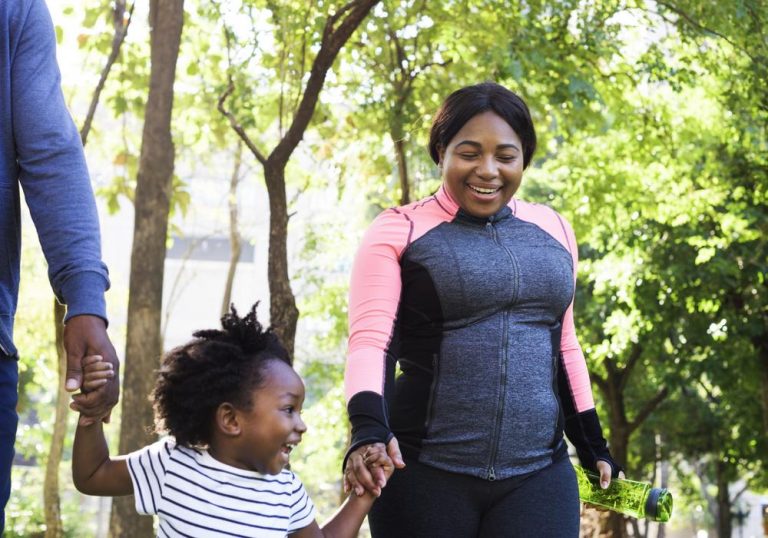
Balancing children and a full-fledged workload is not a walk in the park, especially during this period. It’s okay to occasionally treat yourself now and then to your favorite meal or a movie for your efforts. Most importantly, enjoy the process as you get to spend more time with the people that mean the most to you!

With schools closed around the country and most companies opting for remote work, keeping your kids engaged while you work can be a daunting experience. For many parents, it’s a healthy mix of chaos, family time, stress, fighting, and bargaining with their partner on who will take which shift so the other can get some work done.

Although it won’t be easy in this period, this can also be an amazing time to bond with your kids and get to know them better. Most importantly, go easy on yourself. There’s no doubt this time is impossibly difficult, so doing your best is the best decision for everyone.

Here a few ways to  keep your children engaged while you work from home:

Create a schedule

I know you’re probably tired of hearing this but the truth is that kids do best when they have a structure,  so creating a daily schedule will make it easier for them to stay focused as well as hopefully provide periods of productivity for you too.

Schedule your work-time to align with the activities you plan for them. You can plan your zoom meeting and calls at the same time with their screen time, that way they will be too engrossed in what they are watching to disturb your meeting.

Also be sure to schedule ‘in time’, in which you are part of their day as well, for example, 12 pm -1 pm can be board games or lunch break with mummy. Your children will have something to look forward to each day and the mental break will be good for you, especially when you are dealing with a stressful situation at work.

Take your lead from the teachers

Most schools have introduced virtual classes as a means to make up for the lost time. You can take a look at your child’s scheduled classes for the week, this will help in knowing when they will be in class and when to schedule other activities to keep them busy while you work.

Create projects

You can create fun age-appropriate projects that will keep your kids engaged and entertained. Go to YouTube to check for age-appropriate DIY videos for your kids. An example can be building a city with cardboard boxes, pillows and blankets, and so on. Toymaking, art, and craft, or even painting projects. The good thing about this is that it not only keeps your kids busy, it helps in stimulating their minds, enhancing their motor skills and creativity.

If you can, plan the night before

Some days, you may just want to go to bed after a long day. That’s normal and perfectly fine. But if you can, try to plan the next day’s itinerary before you sleep. This is very important especially if you have an early morning meeting the next day. It’ll ensure your kids are happy and occupied, and not throwing a tantrum during that video conference with your CEO.

Spend time outside, if you can

If you live in a house with a big garden or backyard, allow your kids to go out and play. Vitamin D is great for our overall health, and going outside even for a few minutes each day gives children the space they need to roam. If your kids aren’t up to the age where they can play without supervision, you can take your laptop outside so you can keep a watchful eye on them.

Write letters to teachers, friends or grandparents 

You can keep your kids busy by channeling your son or daughter’s creativity toward letter writing or picture drawing. Let them write a letter to their friends in school or to their teacher or even to their grandparents while you get some work done. Not only will your child learn a lesson in compassion, but your relative will also receive a nice surprise to lift their spirits.

Assign ‘work’ to your kids

For the foreseeable future, when your kids ask you what you’re doing, you’ll likely say “working”. This word doesn’t always make sense to them, so a way to teach them is to assign tasks to them.  Give them puzzles to finish, LEGO lands to build, separate the bean seeds from the shaft, arrange the throw pillows in the sitting room. You can set a timer for an hour so they can work and then ask them to prepare a presentation afterward to show off their work.

Dance videos

Most kids can operate tablets and phones from younger ages. Set your child up with some music (that isn’t too loud to disturb your work), show them how to make a video (if they don’t already know how), provide props or dress-up clothes and have them take dance videos (or other silly videos) that they can share with you.

Designate an area for your ‘home office’

It is important to have a designated area (preferably a spare room) that will enable you to organize your files, stay on task, and minimize interruptions. Let your kids also know that this is mummy’s work area and teach them not to come to the work area while you’re working. It is important to follow a schedule even while working so if you work 9 -5, try to keep it at that with short breaks in between to check on the kids.

Balancing children and a full-fledged workload is not a walk in the park, especially during this period. It’s okay to occasionally treat yourself now and then to your favorite meal or a movie for your efforts. Most importantly, enjoy the process as you get to spend more time with the people that mean the most to you!

Have any tips to keep your kids busy while you work from home? Feel free to share.

Arowolo Olamide Temitope, a Nigerian lady who was barred from boarding an evacuation flight to Nigeria by the Lebanese airport management after receiving orders from her employer in Lebanon, has finally arrived Nigeria.

Arowolo who was evacuated from Lebanon by the Federal Government on Saturday July 11, narrated her ordeal while in Lebanon, warning young Nigerian girls against travelling abroad.

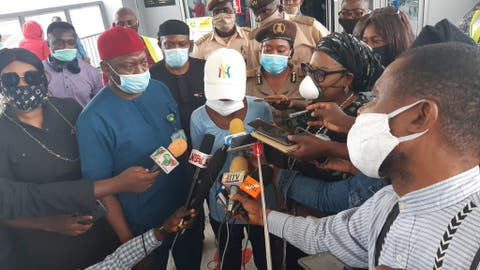
Arowolo, 31, was among 19 other victims on who were received by officials of the National Agency for the Prohibition of Trafficking in Persons (NAPTIP) and the House of Representatives Committee on Diaspora Affairs at the Nnamdi Azikiwe International Airport In Abuja, today.

A video of Temitope circulated on the internet regarding the violation of her human rights in Lebanon. She said in the viral video she was beaten by Mahmoud Zahran, the husband of her employer, Feyzeh Diab, on April 25, at their home in Choueifat, South of Beirut, after accusing her of stealing a phone.

She continued narrating instances of emotional, physical and sexual assault she recieved from Zahran and Diab.

After the video went viral, the Federal Government asked Lebanese authorities to bring her back to Nigeria.

Temitope, speaking to journalists at the Abuja airport, said Lebanon was like ‘hell’ for her and cautioned Nigerian girls against being lured abroad.

She said, “I’m happy being home. Going to Lebanon is like (going to) a hell. Nobody knows that will happen there. I advise other girls to stay here in Nigeria and try to make it the way the Lord puts them through, because going outside there was like a hell, not only in Lebanon. What I experienced in Lebanon, I pray even not for Satan to experience it.”


The Chairman, House of Representatives Committee on Diaspora, Rep. Tolulope Akande-Sadipe (APC-Oyo) described Temitope’s return as “a dream come true.”

“Today, Temitope is back home, unfortunately, I will not allow her show her face, the whole issue has not come to an end we really want to understand what happened in court back in Lebanon.

“We are happy, she is happy to be back home.

“I hope this will be a sign to others young girls out there who want to go abroad for greener pastures to ensure that the circumstances they are going into are the expectations they have when they signed up for these agents,” she said.


Arowolo’s employer had accused her of stealing $5,000 and attempting to kill him. Her prosecution in court had been stalled as the accusers failed to show up, while she was granted bail.


The committee had, however, said it was established that Arowolo suffered abuse and sexual harassment from the husband of her employer, Mahmoud Zahran, during her sojourn in Lebanon.