

Women of Rubies

Tag

Reputation Management

Browsing

What happens after people discover your work? Can they understand your value, trust your expertise and see where you belong in the conversations that matter?

These questions shaped the conversations at Women of Rubies’ Media Visibility Bootcamp 6.0, held virtually on October 17 and 18, 2026. Across two days, speakers and panelists explored the connections between personal branding, business growth, financial confidence, digital security, leadership and strategic visibility.

Convened by Esther Ijewere, Founder of Women of Rubies and Media Strategist & Brand Visibility Consultant, the bootcamp encouraged women to move from learning into action.

Day 1: Building the Foundations for Sustainable Visibility

Moderated by Dr. Oluwanifemi “Niffy” Fagbohun, Day 1 brought together perspectives on the personal and business foundations that support a visible brand.

Keynote speaker Sarah Hashem opened the conversation with an encouraging message about potential and the possibilities women can pursue when they recognise their value.

The sessions that followed connected that encouragement to practical decisions about money, business systems, marketing and showing up consistently.

Give Your Money a Purpose

Hosna Kadary shared a straightforward framework for financial confidence: know it, plan it, automate it and review it.

Her message encouraged participants to understand their financial position, give their money a purpose, choose a sustainable savings amount and review their progress regularly. For founders, the takeaway was practical: financial habits deserve the same attention as the public-facing parts of a business.

Build a Business That Can Support Growth

Ola Adeyemi brought business growth into the visibility conversation through her session on creating a business that scales.

Her contribution invited founders to consider what happens when increased attention brings more enquiries, customers and opportunities. Visibility works best when the business behind it has the capacity, systems and direction to respond.

Let Visibility Build Over Time

Linda Du contributed insights on building in public and allowing visibility to develop through continued sharing.

Her session offered a reminder that founders do not need to wait until every part of their journey feels polished before communicating their work. Useful ideas, experiences and lessons can help audiences understand the person and purpose behind a business.

Protect Your Presence and Choose a Sustainable Schedule

During the fireside conversation, Funke Ernest-Omoruyi shared practical cybersecurity reminders: use unique passwords with a password manager, enable two-step verification and verify links before clicking.

Preethi Balasubramanian encouraged participants to choose a small, repeatable content schedule they could maintain, instead of stretching themselves across every platform and becoming overwhelmed.

Princess Adetola Oluyede connected visibility to marketing strategy, encouraging founders to think about how their content and positioning support business goals and conversion.

Together, these conversations showed why a sustainable visibility plan needs security, consistency and a clear purpose.

Day 2: Using Your Voice with Clarity and Intention

Guided by moderator Tosin Ayodele, Day 2 explored authenticity, confident communication, podcasting, leadership and reputation management.

The conversations encouraged participants to think about how they want to be known and what they need to put in place as their influence grows.

Use AI Without Losing Your Voice

Hava Maloku addressed authenticity in the age of artificial intelligence, particularly in content creation.

Her message encouraged participants to use AI as support while retaining their own experience, perspective and judgment. Content should still reflect the person or business it represents. The practical lesson was to review AI-assisted work carefully and add the insights that come from lived experience and expertise.

Communicate Your Value Clearly

Cynthia Mwangi focused on communicating with clarity and confidence. Whether introducing a business, speaking on a panel or presenting an idea, professionals need to help others understand what they do and why it matters. Her contribution encouraged participants to practise explaining their value and delivering their message with greater confidence.

Let Podcasting Take Your Expertise Further

Event host and podcast coach Ejiro Osakede highlighted podcasting as a way to make ideas, expertise, experience and perspectives available to people who might never otherwise encounter them.

Her session invited participants to consider the conversations they are equipped to lead and the knowledge they could share beyond their immediate networks.

Ejiro also offered two podcast training sessions for those interested in learning more. Enquiries about the opportunity can be sent to info@womenofrubies.com.

A Special Guest of Honour: Women’s Leadership Above the Whispers

A highlight of the second day was the participation of Her Excellency, Erelu Bisi Adeleye-Fayemi, Special Guest of Honour.

The Co-founder of the African Women’s Development Fund and gender and development specialist spoke about the importance of women in leadership rising above the whispers. Her contribution brought a wider leadership perspective to the bootcamp: women’s voices belong in public conversations, and growing visibility calls for courage, purpose and a commitment to the work that matters.

Visibility, Access and Reputation

The Day 2 fireside conversation brought together Monica Kretschmer, Ibukun Omololu and Esther Ijewere.

Monica encouraged women to invest in media opportunities, explaining:

“Invest in media opportunities because visibility creates access and proximity creates opportunity.”

Her message connected visibility to relationships, networks and the conversations that can lead to new possibilities.

Ibukun reminded participants that meaningful contribution does not require being the loudest voice in the room. Intentional participation and a clear understanding of your value can help you make an impact.

Esther addressed protecting your reputation as your visibility grows. Her contribution highlighted the importance of clear boundaries, documentation and thoughtful communication, alongside a focus on relevance when building a brand.

Turning the Bootcamp Lessons into Action

The next step is to choose a lesson and put it to work.

Participants and readers can begin by:

  • Updating their professional bio to explain their expertise clearly.
  • Choosing a realistic content schedule.
  • Reviewing passwords and enabling two-step verification.
  • Identifying a relevant media platform to pitch.
  • Applying for a speaking opportunity or an award for which they qualify.
  • Keeping business agreements and delivery records organised.
  • Sharing one useful insight from their own experience.

A manageable action, followed through consistently, gives learning a practical purpose.

Thank You to the MVBC 6.0 Community

Women of Rubies thanks our Special Guest of Honour, keynote speaker, main speakers, panelists, moderators and participants for their time and contributions. We also appreciate Naijapreneur Canada, House of PAc Media and Montreal Vendors for helping amplify the bootcamp, alongside the team working behind the scenes.

Every question, shared experience and thoughtful conversation helped shape this edition.

Continue Your Visibility Journey with Women of Rubies

Women of Rubies supports women in communicating their expertise through storytelling, visibility strategy and media outreach.

Explore how to work with Women of Rubies, discover more stories and resources on our blog, or email info@womenofrubies.com to discuss your visibility goals.

Replay update: The recordings are being prepared. Registered participants whose packages include replay access will receive their access details by email once the replays are ready.

The bootcamp has ended. The opportunity to act on its lessons continues.

A reputation can take years to build and only a few moments to place under pressure. A misleading post, negative review, public disagreement, security breach or poorly handled response can quickly influence how people perceive a person or organization.

In the digital age, these situations rarely remain in one place. Screenshots can be shared, search engines can preserve information, and conversations can move across several platforms before the person or organization involved has decided how to respond.

This is why reputation management should not begin after a crisis. It should be an ongoing strategy for building trust, monitoring risk, documenting important information and communicating responsibly when pressure arises.

What Is Reputation Management?

Reputation management is the process of influencing, protecting and maintaining how a person, business or organization is perceived. It includes the information you publish, the experiences people have with you, what appears when someone searches your name and how you respond when something goes wrong.

A strong reputation is not built by attempting to control every opinion. No individual or organization can prevent all criticism. It is built through credibility, transparency, consistency and the ability to respond appropriately when trust is tested.

Why Digital Reputation Management Matters

Before working with someone, many people search for their name or business online. They may review a website, social media profiles, media coverage, public comments, customer feedback and professional affiliations. The information they find can influence whether they make an enquiry, recommend the person, offer a partnership or move forward with an opportunity.

Your digital reputation can affect:

  • Client decisions
  • Employment opportunities
  • Media invitations
  • Speaking engagements
  • Partnerships
  • Investor confidence
  • Community trust
  • Professional relationships

Visibility brings opportunity, but it also increases exposure. The more visible a person becomes, the more important it is to understand what is connected to their name online.

Reputation Management Begins Before a Crisis

Waiting until something goes wrong can make a difficult situation harder to manage. Proactive reputation management creates a stronger foundation before pressure arrives.

Begin by reviewing your digital presence regularly. Search your name, business name and important programme names. Examine the first pages of results and note what information appears.

Check whether your website, biographies, photographs, contact information and social profiles are accurate and consistent. You should also know who has access to your platforms, where important documents are stored and how decisions will be made if an urgent response is required.

Preparation reduces confusion when time and emotions are working against you.

1. Document the Facts

When a reputation issue develops, your first responsibility is to understand what has happened.

Preserve relevant emails, screenshots, dates, links, messages and documents. Keep the original files whenever possible and record the order in which events occurred.

Documentation helps you separate verified information from assumptions. It may also become important if the matter needs to be reviewed by a lawyer, platform administrator, security professional, employer or another appropriate authority.

Avoid relying entirely on memory, especially when the situation is unfolding quickly. Good documentation provides a factual foundation for whatever decision comes next.

2. Pause Before Responding

A fast response is not always an effective response. When a situation feels personal, unfair or threatening, the instinct may be to reply immediately. However, an emotional response can introduce inaccurate information, escalate the disagreement or create a second crisis.

Pause long enough to understand:

  • What happened
  • Who is affected
  • Whether the information is public
  • How widely it has travelled
  • What evidence is available
  • Whether an immediate response is necessary
  • Who should advise on the situation

Silence should not become avoidance, but a brief strategic pause can prevent a permanent communication mistake.

3. Decide Whether the Matter Requires a Public Response

Not every negative comment requires a public statement. Some matters are better addressed privately, through customer service, legal correspondence, platform reporting or direct communication with the people involved.

A public response may be necessary when:

  • Incorrect information is spreading widely
  • Public safety or security is involved
  • Clients or stakeholders require clarification
  • Silence could reasonably be interpreted as indifference
  • The issue affects the organization’s ability to operate
  • The matter has already attracted significant media attention

Before speaking publicly, determine what the response is expected to accomplish.

A statement should provide clarity, protect trust and explain appropriate next steps. It should not be used to release every detail, settle a personal score or win an argument online.

4. Communicate With Clarity

A crisis response should be clear, factual and proportionate to the situation.

Depending on the circumstances, an effective statement may include:

  • An acknowledgement of the issue
  • The verified facts currently available
  • What action is being taken
  • What information cannot yet be shared
  • When another update will be provided
  • Where people can find accurate information

Avoid speculation and exaggerated language. Do not make promises that cannot be kept. If the full picture is still being established, say so clearly. Credibility is strengthened when your public communication matches the actions taking place behind the scenes.

5. Know When to Seek Professional Support

Some reputation issues require more than a communications response. Legal disputes, impersonation, threats, account breaches, data leaks, workplace complaints and safety concerns may require support from qualified professionals.

A communications adviser can help shape the message, but communication should not interfere with legal, security or regulatory obligations. Create a list of trusted contacts before a crisis occurs. This may include:

  • A lawyer
  • A public relations or communications adviser
  • A cybersecurity professional
  • An insurance representative
  • A human resources adviser
  • A platform support contact
  • A trusted internal decision-maker

Knowing who to contact can save valuable time.

6. Protect Your Digital Assets

Reputation management also involves protecting the platforms that carry your name and work. Use strong, unique passwords and enable multi-factor authentication wherever possible. Review account administrators regularly and remove access that is no longer required.

Secure your website domain, email accounts, social platforms, brand files and important intellectual property records. Keep copies of essential content and maintain a record of account ownership.

If a platform is compromised, lost or suspended, having independent digital assets such as a website and mailing list can help you maintain communication with your audience. Your reputation should not depend entirely on one social media platform.

7. Build a Strong Body of Credible Content

One of the best ways to protect your reputation is to build a consistent digital record of your work. Publish useful articles, interviews, professional insights, case studies and accurate information about your services.

Maintain updated biographies and professional photographs. Document your achievements, programmes, partnerships and community contributions. A strong body of credible content gives search engines and audiences a fuller picture of who you are.

It also means that one negative or misleading piece of information is less likely to become the only story people find.

8. Monitor the Situation Without Becoming Consumed by It

Monitoring is necessary during a reputation issue, but constant checking can make it difficult to think clearly. Identify the platforms that matter most and decide how frequently they need to be reviewed.

Track significant changes, media enquiries, stakeholder concerns and the spread of inaccurate information. Avoid measuring the seriousness of a situation only by the number of comments it receives. A small conversation involving important stakeholders may require more attention than a noisy discussion with little real impact.

The purpose of monitoring is to support decisions, not to respond to every person participating in the conversation.

What Experience Has Taught Esther

As a media strategist, columnist and Founder of Women of Rubies, Esther Ijewere has learned that not every issue requires an immediate public reaction.

There are moments when speaking clearly is necessary. There are also moments when documentation, professional advice, private action and strategic restraint are more effective. Responding responsibly does not mean ignoring what happened. It means considering the long-term consequences before deciding what to say, where to say it and who needs to hear it.

For Esther, reputation management is not simply about protecting an image. It is about preserving trust and evidence, establishing boundaries and making decisions that reflect your values, even under pressure. You may not be able to control every narrative, but you can control the integrity and consistency of your response.

Rebuilding After a Reputation Crisis

Reputation recovery rarely happens through one statement. It happens through consistent actions after the immediate attention has faded. Review what created or intensified the problem. Update weak systems, clarify responsibilities and address legitimate concerns. Continue publishing credible work and communicating with the people who matter to your organization.

Trust is rebuilt when people see that the response was followed by meaningful action. A crisis may become part of your story, but it does not have to become the complete story.

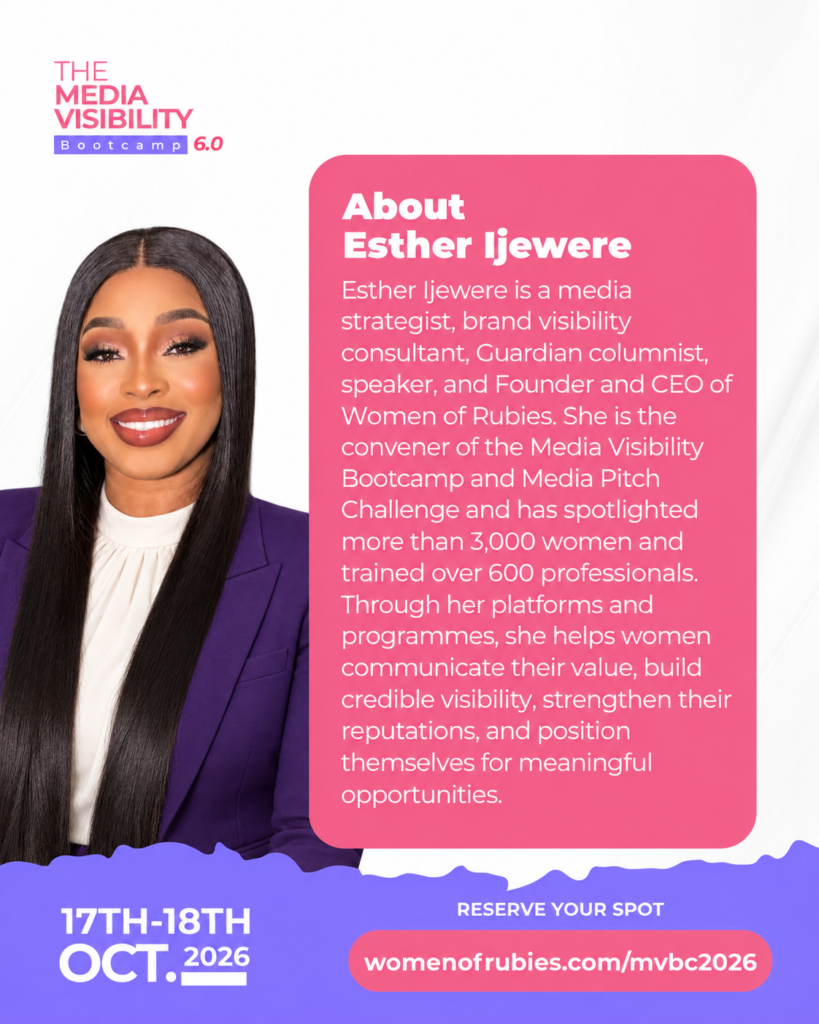
Esther Ijewere at Media Visibility Bootcamp 6.0
Esther Ijewere will facilitate a Day 2 session on Reputation Management in the Digital Age at Media Visibility Bootcamp 6.0.

Learn More at the Media Visibility Bootcamp 6.0

Our founder, Esther Ijewere, will facilitate a short session on Reputation Management in the Digital Age during Day 2 of the Media Visibility Bootcamp 6.0.

The session will explore how visible leaders and entrepreneurs can document issues, protect trust, communicate under pressure and make strategic decisions during a reputation crisis. The Media Visibility Bootcamp 6.0 will take place virtually via Zoom on October 17 and 18, 2026.

Reserve your access at womenofrubies.com/mvbc2026.

Connect With Esther

Connect with Esther Ijewere for insights on media visibility, personal branding, reputation management and strategic communications.

Website: womenofrubies.com
LinkedIn: Esther Ijewere
Instagram: @estherijewere
Facebook: Esther Ijewere
X: @estherijewere