

Women of Rubies

Category

self development

Category

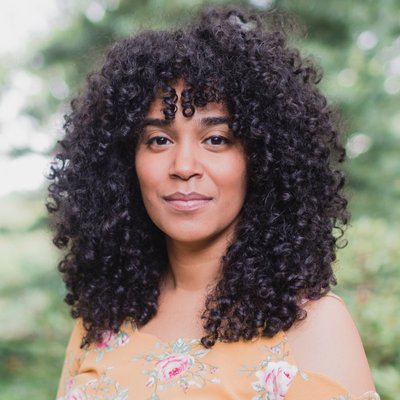
Dominican American writer, Elizabeth Acevedo added some color to the Carnegie Medal’s lily-white roster when she won the award this week.

Acevedo is the first person of color to receive the honor in its 83-year history, according to The Guardian. The Carnegie Medal is the top honor for children’s book writers in the United Kingdom.

Acevedo won the prize for The Poet X,a novel about Xiomara, a Dominican girl who uses slam poetry to “understand her mother’s religion and her own relationship to the world.”

“Xiomara Batista feels unheard and unable to hide in her Harlem neighborhood. Ever since her body grew into curves, she has learned to let her fists and her fierceness do the talking,” read a synopsis on Acevedo’s website.

“But Xiomara has plenty she wants to say, and she pours all her frustration and passion onto the pages of a leather notebook, reciting the words to herself like prayers — especially after she catches feelings for a boy in her bio class named Aman, who her family can never know about.”

Acevedo was inspired to write the book while she taught middle school English in Maryland. Katherine, a former student, refused to read assigned books because “none of these books are about us.”

“I felt like this student had given me a challenge, or at least permission to write a story about young people who take up space, who do not make themselves small, who learn the power of their own words,” the writer said in her acceptance speech.

A need forrepresentation inspires Acevedo to keep writing.

“I write for us. I write for us to see ourselves depicted with tenderness and nuance and ferocity and unflinching honesty,” she told Hip Latina in May. “I hope young Latinx readers, particularly if they are Afro-Latinx, see that they are allowed to be the heroes, they are allowed to live loudly and colorfully and with their whole selves. I hope they know they are seen and loved and that I’m rooting for, and cheering on, their triumphs.”

Her second novel, With the Fire on High, was released in May and centers around Afro-Latinx cuisine. Acevedo’s culture provides her with plenty of material.

“I have no other basis for comparison in regards to my identity, except for my own upbringing, but I think what being my parents’ child ultimately does is make me aware of the different ways we can tell stories,” she said.

“The jokes and riddles and folktales I grew up with at home become entwined with the hip-hop, first generation, hood stories of the world I live in outside of the house. My writing is an homage, and hopefully upliftment, of the many intersections my body houses.”

Acevedo is currently working on her third novel, Clap When You Land. The story about “sisterhood, love, and loss” will be released in 2020.

Credit: blavity.com

Mary is a survivor of rape in South Sudan, and her story is a point of interest following the disasters in the region.

Initially, her husband was shot, and then, soldiers killed her young sons, ages 5 and 7. What’s more, they snatched her daughter from her hands, leaving her with nobody.

Mary hails from the Nuer tribe in South Sudan.

Recently, the people have been experiencing a power struggle between the country’s President Salva Kiir, of the Dinka tribe, and his Vice President, Riek Machar, a Nuer.

They fought this war based on ethnic reasons, and the Northern part of the country has been turned into a wasteland.

According to the United Nations, 50,000 people have been killed, and close to 4 million people face famine, 2.2 million fled their homes, and they have all told the story of severe maltreatment, torture and manslaughter.

Among these people who suffered the adverse effects of the war, Mary and her family members were some of the people who sought freedom and looked forward to gaining refuge. They were at a U.N. peacekeeping base in Bentiu when they encountered Kiir’s forces on the road in June 2014.

According to Mary, 27, the soldiers told her that they perceive the Nuers to be rebels, and the reason her sons were killed is that they don’t want them to grow up becoming fighters.

“We don’t kill the women and the girls,” the soldiers told Mary.

“They said they would only rape us. As if rape were different than death,” Mary adds.

Mary retreated to a safe house in neighboring Uganda run by Make Way Partners, an American Christian organization that provides housing, medical care and schooling for South Sudanese orphans and victims of human trafficking.

Following the murder of her husband and sons, five soldiers forced her to watch them rape her 10-year old daughter, Nyalaat.

“I couldn’t even see my little girl anymore. I could only see blood.” Mary says. After they had raped her daughter, they played a game of taking turns with mother and daughter, raping them both.

Within a few hours, Nyalaat died and Mary says that she wanted to die too. However, Mary didn’t give up. She rather made it to a U.N. camp for civilians displaced by war.

This didn’t stop the soldiers from attacking evebtuaeve. The violence continued, and the soldiers were still able to make their way into the camp and rape all the women they were able to get their hands on.

Mary adds:

“IT HAPPENED TO ALL OF US: LITTLE GIRLS, GRANDMOTHERS. THEY DIDN’T CARE. IF YOU CALM DOWN WHEN THEY ARE RAPING YOU, THEY WON’T BEAT YOU. BUT IF YOU RESIST, THEY WILL BEAT YOU, EVEN SO MUCH TO USE THE GUN IN YOU.”

Read more in the link below:

Rape and War on Time Website

Credit: fabwoman.ng

Marijuana Pepsi Vandyck (yup, that’s her real name) graduated from Wisconsin’s Cardinal Stritch University in May with a Ph.D. in Leadership for the Advancement of Learning and Service in Higher Education. She wanted to prove to the world that, despite having a rather unique name, she could make it in life.  

“People make such a big deal out of it, I couldn’t get away from it,” Vandyck told the Milwaukee Journal Sentinel.

Marijuana Pepsi is her legal name — and no, she doesn’t smoke and she’s not a huge fan of soda.

“Vandyck” was added after she married her current husband Fredrick in 2017. The 46-year-old, who grew up between Chicago, Illinois, and Beloit, Wisconsin, says she used to question why her mom gave her such an odd name (her sisters are named Kimberly and Robin).

“It makes it difficult sometimes,” Vandyck previously admitted to TODAY. 

Her mom apparently believed her name would take her places. And in reality, she has gone places. Vandyck lives on a farm in Pecatonica, Illinois, with her husband (they have four children — her 16-year-old son, as well as three children and a grandchild on her husband’s side). In addition to teaching and running a performance coaching company, Vandyck started an annual scholarship award for African American students enrolled at the University of Wisconsin-Whitewater.  

But it wasn’t always easy. Vandyck was constantly teased growing up, especially in junior high. She dreaded when teachers conducted roll call.

“Every single class, the teacher is taking attendance out loud, and as they slowly get down through the J’s, I’m just like here it comes. ‘Marianna? Marijuana?’ And all the students turn to see who it is,” she said. 

Vandyck used these situations to her advantage and wrote her thesis on the topic: “Black names in white classrooms: Teacher behaviors and student perceptions.” 

For her dissertation, she spoke with other Black students who had unique names. They also opened up about those tense moments when teachers would pause on their names during roll call.

Today, she is proud to call herself Dr. Marijuana Pepsi. In a way, she thanks her mother, and she admits her name may have given her a sense of resilience.

“I’ve grown into my name because I am a strong woman,” she told TODAY. “I’ve had to be.”

Credit: blavity.com

A North Carolina teenager is heading to college for free after she received more than $1 million in scholarships.

Ny’Quasia Brown has been on the road to since middle school. She began taking high school courses when she was in the eighth grade, and consequently, she’s graduating high school after only three years. As she prepared to graduate, Brown began applying for scholarships to pay for college. Due to her efforts, she secured $1.5 million in scholarshipsfrom 87 schools.

 “It was very overwhelming,” Brown told WCNC. “It just felt like all of my hard work had honestly paid off.”

The 16-year-old overcame several obstacles to get to this point. She was raised by a single mother while her father was incarcerated.

“He’s my best friend, he’s my other half. And with him gone I know I have to fill his shoes that he would want me to,” Brown said. “I do everything I do because of him and my uncle.”

Brown admitted there were challenges, but she knew she had to keep going. She also worked two jobs and played basketball along with her studies.

“I know it gets hard, it gets very hard. You miss that other parent, but you can’t lose the vision,” Brown said. “Because at the end of the day you have to think, ‘what would that parent want you to do.'”

The White Oak High School senior credits her mother and godparents for ensuring she keeps her priorities in check.

“I feel so lucky because some people don’t have any parents,” Brown said. “My mom made sure I don’t feel any less than a child with two parents.”

The young scholar also has a network of friends who act as accountability partners.

“I have my five friends that when I’m down and say ‘guys I can’t do this’ they always push me to continue,” Brown said. “We’re gonna be great.”

Brown had an array of choices, but she already had her mind made up, according to HBCU Buzz.

“I’ve always wanted to go to an HBCU (historically black college or university),” Brown said. “When I started doing my research, I looked at colleges that ranked high in the nation where I knew I could also get a great education.”

She is headed to North Carolina Central University (NCCU) to study political science and has dreams of becoming a lawyer. Her mom, Crystal Gill, believes she can do it.

“Ny’Quasia is very independent and has a mind of her own, and I support her,” Gill said. “I see her being a successful attorney. She will be phenomenal and make changes in the world.”

Her principal, Dr. Christopher Barnes, spent years watching Brown work toward her goals.

“My first interaction with Ny’Quasia showed me she was a very vocal and confident freshman,” he recalled. “She has become intense and determined about success beyond high school,” Barnes said.  “Her ability to know what she is after, where she is going and how to get there is admirable. She is a mold-breaker.”

Brown has simple advice for students who want to follow in her footsteps.

“Leadership is very important; take advantage of every opportunity you are given,” she said. “Place God first. Utilize your full potential. God has blessed me with a community and family that have supported me when I couldn’t do it for myself. Always remember that you have to sow a seed.”

Credit: blavity.com

Analysis of new surveys on single mothers in America have revealed that Black single mothers have made huge advancements economically in the last decade, particularly in corporate America.

Both The New York Times and Forbes released reports in the last week highlighting findings from Current Population Survey data and the 2018 Motherly State of Motherhood Surveyshowing that a number of federal and state policies during the Obama presidency made it somewhat easier for single mothers to work.

The number of single mothers in the country’s workforce has grown by four percent and best-selling author Christine Michel Carter wrote in Forbes that the number of single black motherswho earned more than $75,000 grew 106 percent between 2012 and 2017. This was 30 percentage points higher than single white mothers, according to the survey. 

During that same time period, single Black mothers have been able to secure higher income growth than all other single mothers by two percentage points. 

Analysts have attributed these gains to a variety of policies enacted during the Obama administration and said it resembled growth seen during the Clinton administration in the 1990s.

Both periods saw an improving economy and low unemployment numbers. But what makes the most recent advances for single mothers strange is that there has been a decrease in federal efforts to provide a safety net.

Carol Burnett, executive director of the Mississippi Low Income Child Care Initiativetold The New York Times that the federal safety net has been “evisceratedand work requirements have increased.” But some studies showed that the introduction of Obamacare helped more single Black mothers get to work, and states that adopted Medicare expansion saw significantly more single mothers working.

Researchers in The New York Times report and Forbes had rival theoriesas to what lead to the recent economic gains, but some said the decreased federal safety net has forced certain states to enact policies that protect and help single mothers like paid leave and public preschool.

Single mothers, especially Black mothers, had no choice but to work with less help coming from the federal level and the growth of America’s gig economy was making it a bit easier for them to do so. 

“Even with increased wages and even with the changes that are being made around leave policy and the like, employees are still at the mercy of their employers,” University of Michigan associate professor Kristin Seefeldt said to The New York Times.

“The way we think about workers, it’s on us to take care of our personal and family issues. It’s embedded in our culture that it’s not the employer’s job to do that.” 

The studies showed that warehouse work, nursing opportunities and gig economy jobs were increasingly becoming avenues for single mothers to make money. A number of states also increased the minimum wage, something that has had a massive effect on increasing the wealth of single Black mothers. 

Although the studies found that Black mothers were four times as likely to be single parents than any other race, millennial Black mothers were more optimistic about handling motherhood and a career than any other race. 

“Perhaps these single black mothers have discovered the secret to achieving work-life balance, juggling successful careers and parenthood,” Carter wrote

“Taking a deeper look at the largest generation of single mothers in the work force to date, over 23% of black millennial moms feel they can combine a career and motherhood, citing it’s possible to combine them creatively (compared to 14% of all millennial moms).”

Credit: blavity.com

Photo Credit: Google

Ifu Ennada, Big Brother Naija ex Housemate and business woman, has said the man who sexually abused her will be exposed soon.

While disclosing this during an interview with NAN, the budding entrepreneur said she stopped talking about the incident because she did not want to be seen more as a victim than the businesswoman and entertainer that she is.

The reality star who got infected with a Sexually Transmitted Infection (STI) in the process added that her abuser was a popular name in the entertainment industry.

“I stopped talking about it because I didn’t want people to see me as just a victim. There is so much to it,” Ennada said.

“I am above that but at the right time, I will expose my abuser. He is even in Abuja.”

The movie producer, who also owns a haircare product line, had in 2018 released ‘Tears of a Broken Virgin’, a short film detailing her story in order to raise awareness on rape culture in the society.

On how she supports rape victims, the entertainer cum entrepreneur said she offers free consultation services.

“I do private consultation with a lot of these women and encourage them the way I can. Also, I speak to young women at events for free to help them become better,” she said.

“I hope to do more especially now that I have new, proper management. I hope to out and help more women.”

Credit: fabwoman.ng

A Ghanaian student pursuing a doctorate in Information Systems at the Dakota State University has won two national honors from the university.

A Ghanaian native, Francisca Opoku-Boateng, was at a loss for words this spring when she learned she had been awarded two national honors in one week from the Dakota State University, USA. “This is an amazing, phenomenal package,” said the Dakota State University doctoral student in Information Systems.

Through the Google Women Techmakers Scholars Program, she will receive a $10,000 scholarship for the 2019-2020 school year, attend a Google Scholars’ Retreat, and take part in professional development and community outreach opportunities. Also, via the blackcomputeHER Fellowship, she and a cohort of other fellows will explore technical and professional development through monthly trainings on a wide range of tech topics.

Francisca didn’t expect to receive either because of the large number of people applying from the U.S. and Canada, but is very excited for the opportunities provided by each. At the Google retreat in June 2019, she will tour the Google headquarters and network with employees. “I can’t wait for this,” she said, “I’ve always wanted to experience Google and see what it’s like.”

Through the fellowship she anticipates being able to improve leadership skills and learn how to thrive in a minority environment as a woman in technology. Dakota State has had students win similar honors in the past, a result of efforts of the university to introduce students to programs and opportunities at a national level, said Dr. Pam Rowland, assistant professor of computer science and cyber security.

Students attend conferences such as Women in Cyber Security and are involved with the National Center for Women & Information Technology. This is an important part of their education because “cybersecurity isn’t a local or regional issue, it’s a national and international one,” said Dr. Ashley Podhradsky, associate dean of The Beacom College of Computer and Cyber Sciences. “We want our students to be as successful as possible, and that means collaborating and competing on a larger stage.” These large-scale efforts go hand-in-hand with small stage work. Opoku-Boateng is active with the DSU CybHER program, which works with girls interested in STEM and cyber security.

She has assisted or led activities at over 30 outreach events since she started at Dakota State, and suspects that her efforts with this contributed to her selection. Her future goals in technology are to “learn all I can learn and give back to my community and help girls in STEM tap into some these opportunities I have received.” These national, large stage experiences are things she can share on the small scale. “If I can give young girls a real-life experience or tell a story of opportunities I have actually experienced, I think that will add more to their understanding of technology fields.”

Read more: https://yen.com.gh/128727-ghanaian-graduate-student-wins-national-honors-top-us-university.html#128727

Did you know that you can give 110% effort and fail miserably, even with a good business idea?

I’ve seen it more times than I can count. An eager entrepreneur has a brilliant idea and quickly forges ahead, only to come back disappointed that things did not work out.

By the time they come to that realization, they have likely invested a lot of money, energy and time that they will never get back.

Entrepreneurs going through this experience usually assume that they are simply not cut out for entrepreneurship.

It is at this point that I dig a little deeper into their execution process and I find that the real problem was that the idea or goal was underdeveloped, leading to poor execution. It was a set-up for failure from the start.

I then have the task of talking the entrepreneur off the ledge by explaining that there may have been nothing wrong with their effort, resources or intentions. The reason for the apparent failure was likely that the goal was an inherently bad goal.

When it comes to execution in business, a good goal is not just noble in its intention, but it also S.M.A.R.T.

It is specific, measurable, attainable, realistic, and timely. Ensuring that your goal meets these criteria increases the likelihood of success.

It eliminates wasted time and hones in on the best strategy for success.

Specific goals break down your general goals into manageable pieces so that they are easier to achieve. A great example of this might be to increase your annual revenue.

“Increase revenue in 2019” is a noble general goal.

An even better goal is to “increase revenue in 2019 by identifying profit leaks and creating monthly marketing campaigns in order to obtain new clients.”

Using that example, it’s easy to see how an entrepreneur can go from casting a wide net and taking a chance on what sticks, to identifying a specific strategy for success.

Even that specific goal can be further developed as you think about other factors that will affect the outcome.

By adding metrics and changing the goal to “increase revenue by 40% in 2019, by identifying profit leaks and creating monthly marketing campaigns in order to obtain new clients,” the direction and initial action steps are even clearer.

This way, there is little room for wasted resources and time.

The attainable and realistic factors in the S.M.A.R.T. formula are subjective factors determined by the individual’s readiness to start working on their goals.

An entrepreneur who does not have a marketing budget needs to first raise the money or create a budget for marketing before embarking on the goal above.

Without a budget for a robust campaign, attempting to increase revenue by creating marketing campaigns will prove futile.- @andrena_sawyerCLICK TO TWEET

It seems obvious enough, but many entrepreneurs still do not count the cost before they set their foot on the pavement.

The last piece of the formula is timeliness. This ensures that the person setting the goal has a sense of urgency and can fend off complacency when working toward their goal.

It is easy to overlook this final piece, but it is just as critical as the others because it has two extremes: too much time allotted for the goal, and not enough time.

When there is too much time, it is easy to fall into traps of procrastination and complacency. These are traps that force individuals to believe they have more time to do the work than they actually do.

They lose their sense of urgency, which opens the door for others to leverage their ideas, or for a competitor to get to a product launch before they do. The other extreme is not to give yourself enough time.

No goal is perfect, and neither is every process, and there is room for imperfection. – @andrena_sawyerCLICK TO TWEET

By rushing toward the goal, entrepreneurs stand the risk of sabotaging by not properly assessing the risks and all of the factors necessary for success.

After all, there’s value for the entrepreneur in trial and error and even failure.

However, by ensuring that your goals are S.M.A.R.T., you set yourself up to experience the thrill of achievement that will become a motivation for future successes.

ANDRENA SAWYERCONSULTANT | ENTREPRENEUR | AUTHOR

Andrena Sawyer is the President of P.E.R.K. Consulting (www.perkconsulting.net), and the author of The Misadventures of a New Entrepreneur: 5 Things They Won’t Teach You in Business School. Connect with her on LinkedIn, Twitter or Instagram @Andrena_Sawyer

Culled from sheleadsafrica.org

Credit: SLA, Andrena Sawyer

Mrs. Beatrice Lillie, an 80-year old grandmother, has graduated college with an Associate’s degree in business management from Houston Community College’s Business Center of Excellence.

“I would not have believed it, I don’t think, although we can do all things through Christ, who strengthens us,” Lillie told KHOU 11.

Lillie successfully finished her degree after four years of hardwork and determination. She’s also grateful for her younger classmates that kept encouraging her and she inspired them too in return. She remembered them telling her, “I know I can do it, if you can do it.”

She said college has showed her a new perspective about arts and it taught her how to use technology. But before actually getting her first ever college degree in business, she already had a lot of business experiences. She was an owner of her own answering service even before voicemails and cellphones were used. She also served as a secretary in the Harris County Probation Department.

Lillie, who has now been volunteering at the Northeastern Houston Multi-Service Center, decided to go back to school despite her age after Pastor Maceo Dillard Jr. motivated her.

“I said ‘Go for it. You can’t win if you never try,’” said Dillard, who works with the seniors at the center. “It’’ important for people to keep going and engaging their minds, instead of just sitting back.”

Aside from that, Lillie particularly wanted to set an example to her children and grandchildren.

“If Grandma can do it, [they] can do it.”

Credit: Blacknews.com

Presently, women make up 18 to 20 percent of the cruise ship workforce, with the first woman cruise ship captain not being appointed until 2007. Breaking the glass ceiling in this industry is Belinda Bennett, who is the World’s First Black woman cruise ship captain.

According to Forbes, Bennett has worked for the cruise line Windstar Cruises for 14 years. She came to the cruise ship line in 2005 and worked her way up from second officer, to chief officer to now captain, which is a position she was appointed to in 2016. Currently, she is captain of the MSY Wind Star and is in charge of sailing the ship through the Caribbean in the winter and Europe in the summer.

Growing up on a small island called St. Helena, which is between South America and South Africa, Bennett says she’s always had a love for the ocean. She started her career in the cruise ship industry at just 17 years old, working on the island’s local ship called RMS St. Helena. From there, she went on to train as a cadet and admits that her journey to moving up the ranks has been met with a lot of push back and hard work as a result of her gender and race. 

“Unfortunately, I had a rough start,” she says. “When I was training as a cadet, I sailed with the chief officers who made me work harder than the other guys. During your cadetship you’re starting out as a sailor, so you do every job that they do. I had a chief officer, unfortunately, who made me work later than the sailors, so they would knock off for the day, and I would be left outside continuing to work until it got dark.”

After working on a private yacht of Monaco for two years, Bennett went back to school to get her masters and then tried to work her way into the leadership ranks of the yachting industry. But, she was again met with barriers when she says an agent in Antibes sat her down and told her that finding a job in yachting would be hard because she is more educated than most of the captains, she’s a woman and she’s Black.

Using the criticism to find motivation for a different route, Bennett left the yacht industry and joined the cruise ship industry in 2005 when she landed a job with Windstar Cruises.

Most recently, Bennett’s work in the industry has led her to be awarded with the prestigious Merchant Navy Medal award for Meritorious Service in the U.K. While she says most of the career goals that she initially set for herself have been accomplished, she admits that getting to where she is today has not been an easy feat.

“Being a woman, you have to work extra hard to prove yourself – even more than a man,” she explains. “Some men might not like that, but that’s the way it is. I’m driven. I wanted to be captain, and so, I am.”

Credit: Becauseofthemwecan.com