Category

Interviews&profile

Category

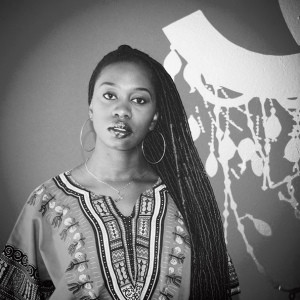
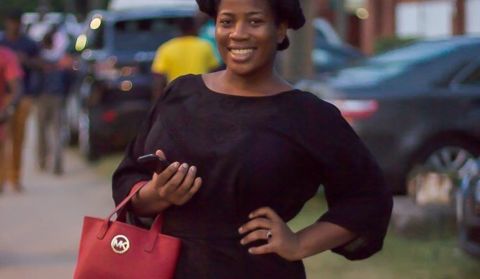
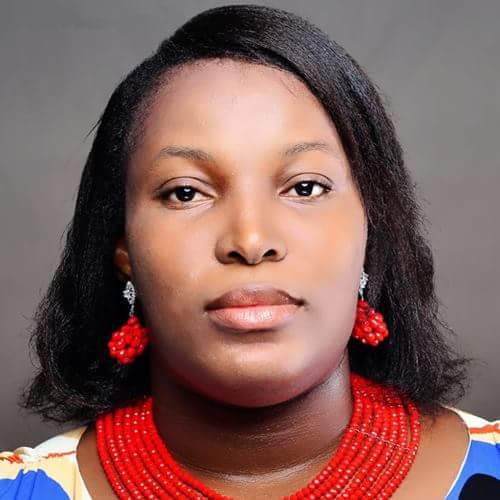
Dr Damola Ladejobi is a professional nutritionist and weight loss expert. She also has a law degree from the University of Exeter with a BL from Nigerian law school. She once had a severe case of started Gastrointestinal Reflux Disease which doubled up her size and weight. She got inspired to start ‘Ask Damz’ after her personal experience with weight loss, to help people going through similar issues

Read more about her inspiring interview with Women Of Rubies below;

Childhood
As a child, I always knew that I wanted to help people in any way that I could so that’s probably why I chose to study law but as we will have it I’m currently in the nutrition field so I still get to do what I grew up wanting to do.

Meet Me
I am a professional nutritionist and weight loss expert. I am a UK certified personal nutritionist with a diploma in nutrition. I have a law degree from the University of Exeter with a BL from Nigerian law school. I am the first child of my parents; I have one amazing sister (Farah). I am married to my best friend Mr Adebisi Ladejobi and the mother of two lovely children Ifeoluwa and Oluwatobiloba Ladejobi.

What’s the inspiration behind “Ask Damz”
The inspiration behind Askdamz will have to be my personal experience with weight loss. Earlier in my life, I had severe GERD (Gastrointestinal Reflux Disease) and my size affected not only my health but my passion for fashion as well because I couldn’t fit into most of the outfits in the stores. Also knowing that a lot of people are going through these same issues as I did and the drive to want to help people live a healthier lifestyle, look and feel better about themselves hence the birth of Askdamz.

Why I chose nutrition over practising Law
I wouldn’t say I completely chose law over nutrition as I still advise people in a way or the other on legal matters but nutrition is more or less like a God-given passion. Also, through my personal experience with weight loss and the drive to help people going through the same situation as I did thus me choosing nutrition.

Other projects and activities
I do have other projects in works but they are not completely finished, once they are ready it will be made known to the public.

Greatest reward
I wouldn’t say there has been one reward I will call the greatest, but whenever I have clients who say I have helped them reach their desired weight goal or body goal and how I helped them improve their diet and also live a healthier lifestyle, the joy and fulfillment I have in my heart can’t be contained. That alone is the greatest reward.

Nigerians views on Nutritionist
I do think Nigerians appreciate nutritionists.The world is evolving and people are becoming aware of the need to eat healthier and ultimately live a better lifestyle. Nutrition is not a one size fits all approach because our bodies and systems react differently, you’d need a nutritionist to advice on the kind of food you should be eating and what quantity or portions you should be having in order to live a healthier life.

Women who inspires me
Ibukun Awosika, Fade Aluko, Omilola Oshikoya and Foluso Gbadamosi just to name a few. These are women who inspire me considering how successful they are in their different fields and they make me want to do and be a better person and give me the urge to contribute to the society at large.

On whether Nigerian women are well informed about their diet
There is literally information out there for everyone but what works for A will most likely not work for B. So I will say there is information but not everyone knows how to tweak it in a way to better improve their diets.

I am a Woman Of Rubies
It’s the God in me.

Final word for women all over the world
It doesn’t matter what size you are, you are beautiful in your skin. Don’t try to be like the girl in the magazine, the girl in the magazine doesn’t look like the girl in the magazine.


33 year-old Blessing Liman  made history as the first female military pilot in the sub-region in the Nigerian Air Forcein . She was enlisted into the Nigerian Air Force in July 2011 and was commissioned on 9th December, 2011.

After passing through various training programmes said to have cost billions of Naira ($650, 000 each) within the country and abroad in countries such as United States, United Kingdom, Greece, Pakistan, and Egypt include 14 fighter jet pilots, Flying Officer Blessing Liman and 29 other combat flying officers were yesterday decorated at an elaborate ceremony in Abuja.

Excerpts from media reports:

History was, Friday, made in Abuja as the Nigerian Air Force produced the first female combat pilot in the sub-region following the badge decoration (winging) of Flying Officer Blessing Liman and 29 other pilots as combat flying officers at a well attended ceremony hosted by the Chief of Air Staff, Air Marshal Mohammed Dikko Umar.

The Pilot officers who had in the last 12 months undergone various training programme said to have cost billions of Naira ($650, 000 each) within the country and abroad in countries such as United States, United Kingdom, Greece, Pakistan, and Egypt include 14 fighter jet pilots.

History making Flying Officer Blessing Liman, an indigene of Zango Kataf, Kaduna state, was born on 13 March, 1984. She enlisted into the Nigerian Air Force in July 2011 and was commissioned on 9th December, 2011. Her outstanding performance helped her in attaining the historical height.

Present at the ceremony, to add colour to the feat achieved by Liman were minister of State for Defence, Erelu (Dr) Olusola Agbeja Obada, the leadership of the National Council for Nigerian Society (NCNS), the Presidential Adviser to the President on Ethics and Values, Dr. (Mrs.) Sarah Jubril, Mrs. Appolonia Petirin, Mrs. Ihejirika and Mrs. Dikko Umar.

In her speech, she disclosed her awareness of the enormous responsibility on her shoulder as a record maker but was optimistic that God would help her to live up to the expectations of the society and the Nigeria Air Force. According to her, “I am going to work, with prayers, dedication and hard work, I know I will succeed.”

To see a lady achieving such feat in the midst of so many men is truly inspiring. Her achievement goes a long way to show that nothing is impossible with determination and hardwork.

She might have gone through her training as the only female in the group and with no other female combat pilot in the Nigerian Air Force to look up to, surely, what she achieved is totally admirable. Now, she serves as a role model to any other female wanting to follow in a similar path.

Well done Blessing. May you continue to soar even higher!

Source: Vanguard

A facilitator/management trainer, she is also a consultant on non-profit management and strategy. A Sustainability Expert and Speaker, she is the founding curator, Global Shapers Forum Nigeria. Owing to her experiences, Osayi sits on the board of several organisations that includes Immediate past Chairperson Women in Management, Business and Public Service (WIMBIZ), House of Tara, Chairperson Zapphire Events, Culinary Academy and Global Dignity, an affiliation of the World Economic Forum in Norway impacting the lives of over 100,000 students over the last five years. In this interview with TOBI AWODIPE, she talks about juggling several responsibilities, why women are not doing well in business and her plans for the future.

Tell us about yourself briefly
I am Osayi Alile, CEO of ACT Foundation, a subsidiary in partnership with Access Bank. I have been doing this for 18 months and before taking up this position, I was CEO at FATE Foundation for nine years. Before joining FATE, I worked at Junior Achievement where I was the Vice-President of programmes. I have always been in this sector: non-profit community development and it is something I have enjoyed doing over the last few years.

I had my primary school education in Lagos before moving on to FGGC, Warri for my secondary education. For university education, I have a degree in Sociology from the University of Lagos and a master in Public Administration from Rutgers University, New Jersey, USA. Notwithstanding, I have done several courses and executive programmes at Yale Univeristy, Harvard Business School, Stanford and so on. I believe it is necessary for everyone to try as much as possible to always continually take themselves to the next level and that is what I have been trying to do in the last few years.

Do you think that is where you are now? The next level?
Life is a journey and you never know where you are going to but I just feel I am practically just starting my life; it’s still at the beginning stages and we will see how it goes from here.

How has your journey been like, getting several educational qualifications, sitting on the board of so many companies and industries?
It has been very eventful and interesting and I have learnt a lot, faced a lot of challenges, and had some successes and quite a few failures as well along the way. I have never told myself, “This is exactly where I want to go,” but when the environment throws different things to you, you learn to cope. Gathering knowledge and education I believe is necessary. I was once asked at a conference if it was necessary to keep getting and education and learning and my answer is: learning is continuous, it doesn’t stop. No matter how much you think you know, there is always something new to learn. I have been CEO of a company for nine years, but this is a new challenge and there are new things to learn here. Education and knowledge is constant.

You mentioned challenges you face; how do you handle them?
I always take a step back. In the past, when things happen, I rush around, trying to find solutions, but now I take a step back and think things through. Challenges would come and you have to be ready because things cannot go smoothly forever. In my mind, I know they will come, I might not know which challenge or where it is coming from but my mind is prepared that if it does happen, how will I manage it? You also need strong people around you and I always employ people that I think are smarter than me, a bit more knowledgeable than I am so that when challenges come, you can have the right people around you to get ideas from.

Also, it’s always good to have a strong board that you can go back to and mentors that can help so you can run to them for help. Even on boards I sit on, we are always available to help because we are not in the grind constantly and they can come to us for another perspective.

You talked about mentoring and truthfully, a lot of women going into entrepreneurship have mentioned the difficulty in getting good mentors. How can female entrepreneurs access good mentors and how can it help them grow?
Mentoring is key and I cannot talk about my success today without talking about all the wonderful people that have walked with me and held my hand. Of course, the major foundation for me is God but there have to be people around you that guide you along the way. I wouldn’t be where I am today if I didn’t have people guiding me. With FATE Foundation, I had Mr. Fola Adeola and he was such a great mentor to me and he still is. So many things happened in my eight year journey with him, so many mistakes I could have made but he guided me and pushed me to do things I never thought I would be able to do. It is essential, especially if you want to get into leadership position, to have someone you can speak to. You need to have a critic and a coach at all times. A critic would tell you what you’re doing wrong and your mentor can be both to you. However, you must be mature enough to accept correction and work with them and plot the direction you want to go.

After your exit from FATE Foundation, is it still serving the purpose for which it was set up?
Yes. I am still close to FATE and still relate very well with the founder. The present CEO is someone I talk to constantly. I believe it is one organization that has pushed itself out there, constantly working with entrepreneurs. This has been my field in the last few years, building businesses, working with entrepreneurs and helping businesses to be sustainable long term.

Tell us about ACT Foundation and the purpose it is serving?
We just started recently and it is my new baby. We are working in four major areas of health, environment, leadership and entrepreneurship. We are trying to work with communities, give them grants and see how they can improve the communities they’re living in. in a few months, we are hoping to expand and push it out more, work with other NGOs and other community based outfits and see how we can improve communities based on those four pillars.

You’re a facilitator and management trainer as well, what does this aspect entail?
It is not my full time job but something I love to do. In a week, I teach at one or two places, schools, conferences, seminars and so on. I would describe it as a calling because I believe there is so much to share with people and also an avenue to learn. There is no way you can sit in a room with thirty people and you’re speaking to them about something and not get something in return.

How do you joggle all your responsibilities: sitting on several boards, being a full time CEO, teaching and mentoring?
(Laughing) I am a very organized person and like to plan everything. Also, I have a passion for small businesses and once you have a passion that you feel obligated to, it becomes easier, doesn’t feel like work. I sit on several boards and enjoy seeing them grow, I enjoy seeing them enjoy what they do and this doesn’t feel challenging. I will put it down to organization, preparation and time management. Relationships are key as well; I can’t work with you or sit on your board if I don’t have any form of relationship with you. We don’t necessarily have to be best friends but we need to have some form of understanding, the same values system, be on the same page to some extent. It is necessary and easier because when you’re saying something or trying to make changes, they know it is coming from a good place.

A lot of women are going into businesses now but several fold up quickly. What do you think they can do differently to change this?
I believe there are several factors responsible for this. I have been involved with small businesses and enterprise for 14 years now and I am happy to say many women are going into businesses and from my observation over time; women tend to enter businesses from passion or a hobby. Most don’t realize that though it is a small business, the foundation has to be in place from the onset. Just like building a house, you have to ensure that the foundation is done properly. Even if it started out as a passion, once it becomes a business, you have to do things properly. A lot of women don’t know how to handle the financial part of their business, taking it day by day. There are no defined structures or plans in place and it is difficult for an investor or bank to take this kind of business serious.

Also, women find it hard taking risks and so you see a business a man and woman started at the same time with the man’s own doing better after a while. However, I wont say it is all bad because things are changing steadily. You sit in a room with ten women, seven are running businesses and at least four are doing exceptionally well with strong foundations in place. Any woman that wants to venture into business must realize that every business is a risk but must ensure the foundations are in place from the beginning.

The ratio of women to men taking advantage of available opportunities like loans, grants and the likes is still very lopsided and poor. In your experience, why is it so?
It still boils down to the risk factor mostly when it comes to loans. Out of 10 people looking for loans or grants, eight would be men with two women. Women are sadly averse to taking risks and it is sadly being passed from generation to generation. Women can take loan from friends and family members but when it comes to structured loans, they are absent.

Regarding trainings, sometimes it is lack of information; women are not following and reading what they should be reading. When I was chair at WIMBIZ, we had so many opportunities available but we had to consciously make noise about them to get the women to follow through. Even with the YouWin programme then, I can tell you confidently that 85% of the people that applied were men and the government was puzzled. This was free money, there was no repayment needed and still women didn’t apply. They had to do another programme for just women alone and WIMBIZ had to get involved to ‘force’ women to apply. I tell women that the same force they use in bringing up children, they should apply it to their businesses and the difference would be clear. Happily, the younger women coming up are pushing and trying to change the status quo.

You’re affiliated to the World Economic Forum (WEF), tell us how it applies to Nigeria and what benefits can be derived from it?
It is an international body and I became a member and Young Global Leader several years ago. It is a platform for coming up with suggestions on how the world should be run. In it, you find private sector, government, non-profit, everyone is there, coming up with different solutions with issues and it affects every single country. Nigeria hosted the WEF Africa four, five years ago. I started the Global Shapers Forum here in Nigeria and it is mostly for youths, to come up with unique solutions to issues peculiar to them. We have a few YFGLs and Global Shapers and everyone is doing their own thing. I have a forum, Global Dignity and it has held in 13 states, reaching over 100, 000 students in the last six years. This is my pet project and it is affiliated to the parent WEF.

What has been the impact of Global Dignity so far?
Global dignity is all about dignity of labour, of life, and trying to push the students to think outside of the classroom. We try to open their minds to think big, to think beyond where they are presently. We teach them on the dignity of working to fend for themselves, to be independent and innovative. We have set up clubs in different schools called Global Dignity Club and we now have ten in the different schools we work with.

How do you think we can make the economy more appealing to foreign investment?
The world has become a global village and no country can work in isolation. Over the last few weeks, some changes have been happening and I’m hoping it continues like this. It is a slow process and everyone is feeling the pinch. There are opportunities out there and despite the recession, people are becoming billionaires daily, new businesses are taking off and doing well. Things are hard but there are opportunities and we have to remove our eyes from problems and think on managing available opportunities. This is where foreign collaboration is good because nobody can do it alone, you never know what can happen.

How can SMEs and startups be encouraged in doing business, as the environment and present infrastructure is not exactly favourable?
I believe this government has started making little efforts in this regard. The amount of days to register a business has gone down and things like that. The process would take time and there are several new policies in place now to help SMEs; the government is thinking in the right direction and we need to remain patient but insistent on what we want.

What can be done on the issue of double taxation, which is crippling a lot of startups?
Not to support the government but when you go and find out, a lot of people re not getting their information from the right places. Someone says he has six taxes to pay and the next person beside him says the same thing or even increases the number. If you do diligent checks, it is not as much as people claim they are. I always tell entrepreneurs to check everything for themselves and not depend on word of mouth. Once you pay all necessary and legal taxes, anybody that comes to you asking for extra money, bring out your phone and record the transaction. Ask questions, find things out for yourselves, do your own research so that you don’t fall victim to thieves.

On another note, how do you relax?
I’m a spa addict, I like massages and going to the spa. Every person has to take time out to wind down. Lagos is stressful, Nigeria is a stressful country and you wont realize until you leave the country and come back. I either go to the spa or watch series all day; it helps me de-clutter my mind.

What legacies do you want to be remembered for?
I am a helper; I don’t believe that because one door has been opened to me I cannot now take other people along with me. One of the things I want to walk away with is looking back and saying to myself that along my journey, I helped X number of people and they themselves helped others. I want it to be like a ripple effect and I tell others this as well. When my time is up, I want people to be able to say I was gracious to them and I opened doors for them and their lives and businesses became better by virtue of meeting me. In another ten years, I might think differently but at the moment, I believe God has called me to help and to work with people.

For women that look up to you, what would you tell them?
I haven’t started yet so they shouldn’t look up to me (laughing), I’m just starting my life. This generation thinks things must be immediate and fast but it is a journey, there is no easy way to get things and we all have to work hard to get what we want. Of course, there would be challenges but always put your best foot forward and do the best you can. I will tell women: life is a journey and as you journey along, enjoy the process, enjoy every moment and live in it. You don’t want to look back and begin to have regrets of what you wanted to do but were afraid of doing.

Culled from : Guardian


Achenyo Idachaba is an entrepreneur, computer scientist, and business analyst born in United State. She moved down to Ibadan, Nigeria, in 2009 to set up an environmental consultancy, and discovered a specie of weeds called ‘Water Hyacinth’ (Eichornia crassipes). This aquatic weeds pose a major challenge to local communities and have been a target of government initiatives to stem the damage they cause for some years. Their extensive, knotted root systems tangle together and and clog waterways, which are a key transportation network to inland populations. They also deplete nutritional resources in their surroundings, leading to a drop in the fish population, which impacts food supplies and livelihoods for riparian communities, who are reliant on fishing.

Having read a book about how communities in southeast Asia afflicted by the water hyacinth had harvested the weed and transformed it through weaving into marketable products, she determined to make this method work in Nigeria also. She visited a community in the city of Ibadan and moved close to a couple of artisans who had experience in weaving doum palm and rattan. She worked with them to develop the company’s first products – a table tidy and a wastebasket: two fitting products to make from a tangled weed! She collaborated with local craftspeople to set up a range of products that were woven from the dried plants. The company was called Mitimeth. She developed products such as a waste basket and a table tidy which were made from plants that are usually only known for being invasive. In 2013, she won a grant from the government and employed seven staff. The weeds are harvested, dried and then made into rope which can then be made into products.

In 2014, her creative initiative was recognised when she was given the Cartier award. This was the women’s initiative award for sub-Saharan Africa. She has been featured on CNN and her TED talk in 2015 achieved over a million hits.

Water Hyacinth

According to Wikipedia, ‘She has taken an environmental problem and turned it into a win-win solution for her business, local communities and the country’. Each hand-crafted piece is created from the weeds which are harvested from the local waterways and dried out in the sun before they can be used for weaving into highly intricate and beautiful finished products such as baskets, tableware and even jewellery

Olubukola Adio is wife, mother and a business owner. A graduate of business administration from Yaba college of Technology. Bukky worked in the banking sector before relocating to south Africa to pursue a career in nursing, On her return she started a clothing store out of her passion for humanity, after encountering several kids who were clothe less, she started donating to these kids and some orphanage homes, this informed her decision to start her clothing store “Clothezoo”. Bukky shares her inspiring journey in this interview.
Childhood Influence
I will say a yes to that because I practically grew up not knowing my mother. I lost her early in life and I have a polygamous background, even though I have a caring father the absence of a mother growing up meant I had to do a lot for myself . I have always looked inwards rather than look in the wrong places to fill the void. So growing up I had a little poultry in the house and I sold eggs, made and sold clothes, I sold cold drinks, marketed computers and a host of other little businesses that bred the entrepreneurial spirit in me. So I would say yes my childhood had a major part to play.

Meet Bukky!
My name is Olubukola Adio nee Okoya. A wife, mother to 3 wonderful kids and a business owner. I attended Yaba college of Technology. Studied business administration and I’m also a chartered administrator. Prior to now in terms of work experience I had my industrial attachment at First Bank then my Service year at Tantalizers. I worked at This Present House as an admin staff before temporarily relocating to South Africa to pursue a career in nursing .

Starting “ClothesZoo”
I have always had a thing for clothes; it has always been in my head that I will do this one day as I was compelled to go into this business when I saw a lot of clotheless kids when I returned to Nigeria and So there was no looking back once I started . I started by giving free clothes to some street kids before delving into this business full time. I hope to come out with our own branded clothing soon that will match quality with affordability and also support people who can’t afford to clothe themselves. With my clothing store “Clotheszoo” I hope to be able to make an impact not just as a clothier but one who also gave hope to those who can’t afford to clothe themselves.


Women Who Inspire me to do more
People’s success stories are a great source of inspiration to me .It works like a rush of adrenaline in my system. People like Oprah Winfrey who I think is a standard of success for women inspire me, also Iyanla Vazant, Nkoyo Rapu, Grace Aiyedogbon and every striving and thriving woman out there.

Reward
It gladdens my heart when people walk into my store but also make reference to hearing about me by or two people I clothed for free. This make me realize there is something I am getting right and that’s my reward.

Challenges
Finance is always a major issue and it’s further compounded by the seeming uncertainty in the financial market. Funds for expansion is readily not available, interest rates are most unfriendly and the lack of support for growing businesses from regulators

Giving to the less privileged
I run a socially responsible business that gives back at every given opportunity .We’ve and are still supporting orphanages with clothes for the children. We do a regular give away during festive seasons and clothe street kids

Never felt like giving up
It has never crossed my mind to want to give up. Primarily because I’m living my dream, to be successful one has to be happy on the inside and that’s what propels me in addition to having a wonderful and supporting husband. Not forgetting an amazing family and friends.

I am a woman of Rubies
A woman of rubies exemplifies moving from adversity to a position of strength. I started from nothing then from a suitcase, to a shop to where we are right now and we still aspire to be bigger than this. Just like an airplane that takes off against the wind I keep breaking through adversities and a shining example to other women. The fact that I also give freely to the less privileged makes me a woman of rubies.

Women are not weak!
I want women to understand that we have a role to play in the scheme of things. God created Man then Woman as support .What we must understand is this; what must support another object should also be stronger or of equal strength as the object. God did not create women weak; we are not the weaker vessel.

Omoyemi Akerele is a Nigerian fashion designer, founder and artistic director of Style House Files. She is the founder and creative director of Lagos Fashion and Design Week. Her creative development agency gives African brand the opportunity of showcasing on Pitti Immagine in Italy and the Lagos Fashion and Design Week. She has a Bachelor’s Degree in Law from the University of Lagos. She also has a Master’s degree in International Economic Law from the University of Warwick. She worked at Olaniwun Ajayi a Nigerian law firm & Co from 2000 to 2003 prior to becoming a fashion designer. She was the fashion editor for a Lifestyle magazine called True Love.

Style House Files is a creative development agency for Nigerian and African designers. The agency is a pioneering agency in image consultancy and creative direction within the West African country, Style House Files works with Nigerian brands on brand positioning and retail strategies.

Founded by Akerele in June 2011, Lagos Fashion Design Week (LFDW) runs a four day schedule featuring a select list of talented up and coming designers and fashion entrepreneurs. Partnered with the British Fashion Council, the show has been instrumental in raising the profile of the Nigerian fashion industry, and has drawn international attention and acclaim from journalists such as Suzy Menkes and Cristina Manfredi, as well as attracting a host of international buyers.

Omoyemi Akerele is widely regarded as a driving force behind the burgeoning Nigerian fashion industry. She has successfully positioned Nigerian fashion industry right in the center of the global spotlight which she continues to do annually. Her initiatives have created platforms to celebrate and showcase Nigerian fashion while setting the pace for others to emulate.

Francesca Onomarie Uriri is the Founder of Leading Ladies Africa, a women empowerment non-profit that celebrates the lives of African women, and promotes gender inclusion. She equips African women with the skills they need to succeed in life and business through effective mentoring, organizing capacity building events and showcasing the achievements of successful women to inspire others. In this women’s month, she presents LLA’s 100 Most Inspiring Women List 2017, and also tells NIKE SOTADE what drives her passion to assist women

Tell us about yourself, education, family, career path
I’m the Founder of Leading Ladies Africa, a women-focused, registered non-profit that promotes Leadership, Inclusion and Diversity among women of African heritage. I am also a Public Relations and Communications Consultant, working out of the Nigerian office of a global PR Agency. I have nearly 12 years experience in media strategy and management, perception management, image consulting, perception and crisis management, and event planning and management. I’ve got a wide assortment of interests, which include reading, watching Crime & Investigation, writing, eating, travelling and meeting people.

I come from a small, close-knit family; made up of my mom, and older brother. Sadly, my father passed on two years ago, but I’ve got a small circle of friends and relatives who are the next best thing to having a large family. Education-wise, I did all my schooling in Lagos – Nigerian Navy Primary School Ojo and Malu Road, Nigerian Navy Secondary School Ojo, and the University of Lagos. But because I was a military child, and my father moved around a lot, I’ve seen quite a bit of Nigeria, and travelling personally has also helped me visit some of the most incredible places in the world.

How did you found Leading Ladies Africa?
Leading Ladies Africa was created initially to be a platform that inspired women with the stories and achievements of other women. But as the vision grew, it became clear to me that raising a generation of female African leaders was important, if not essential. I realised that the task of transforming Africa, and reshaping the cultural and socio-economic narrative would be impossible without women. So the challenge was, how do you raise women to see and think of themselves as leaders? What skills do they require? How can they learn from the experiences of other women, leading in the fields of governance, enterprise, advocacy and business (corporate professions)? As we’ve grown these are some of the issues we’ve created solutions for.

What’s your perception of the African woman and your vision her?
If I look at the women in my family – my mother, my aunties, cousins and friends – I see strength; strength of character, and the power of vision. The African woman is strong, bold, driven and an incredible multi-tasker. I say this, not because it’s a cliché, but because it is true. From the Tomato farms in Kano Nigeria, to the tea plantations in Kericho, Kenya, from politics, to business and civil society, women are putting in the work and are achieving great results. If I even speak from a personal perspective, the women within my network are focused, and are making consistent, measurable impact in all fields of endeavour.

So the African woman is indeed the one who is building sustainable structures with the bricks life has thrown her, and I celebrate her for that.

To what extent have you been able to network among women such that you could profile 100 at a go?
That’s a great question. The list itself, took about four to five months to compile, and remember that it was done in conjunction with YNaija in commemoration of International Women’s Day, so we definitely didn’t do it alone. That being said, the LLA platform is very strong on profiling women who are doing incredible work across board, so we constantly have our eyes and ears out on who’s doing what and when. In addition to that, the list started with about 300-400 names, but passed through a rigorous vetting process, which included reviews from our partners and those within the women empowerment space. We wanted to be sure that the list was a reflection of the core LLA values of promoting Leadership, Inclusion and Diversity.

You also sit on the board of the Future Project, what are the objectives of the organisation?
The Future Project is an organization that is building empowered citizens across Africa, with a special focus on Leadership, Enterprise and Advocacy. They are also the organisers of the hugely successful The Future Awards Africa – one of Africa’s most prestigious awards ceremonies; it identifies the brightest and best young Africans and deploys them as role models; to inspire a generation of Africans to hope and to believe in their capacities to change their countries. I am particularly honoured to serve on the board, because it has opened up my eyes to see that the only way to truly build and transform Africa, is to raise a network of empowered and knowledgeable citizens, who are equipped to lead and run enterprises.

You are a very busy woman with many things to accomplish. What keeps you going in the face of challenges?
Oh wow. The first thing is prayer. I go through challenges like everyone else, and sometimes, I get overwhelmed by the pressures of the things I have to achieve, and life in general. So I make it a point of necessity to pray at least once or twice every day, and to study my Bible; luckily, I have the YouVersion Bible App on my phone, so it’s easy for me to tune out and get a word that uplifts and directs me. I find that praying calms me down – mentally and emotionally, and causes me to think and process things better.

I also have what I call my “inner circle,” friends I can call on at any time of the day, who help me think through or pray through some of life’s challenges. My mentors also help me process challenges, especially professional and personal ones – because they’ve been there before and can understand where I’m coming from.

And lastly, I’m passionate about the things I do. Passion fuels the vision. So the days when I’m dejected and discouraged, I remember that God is the author of the vision I run with, and so He will ultimately show me the hows and the whens. Not always easy to do, but ultimately rewarding and fulfilling.

To what extent have you been able to empower women with the LLA project?
We empower women through a variety of ways – our editorial content, specialized events and workshops, and mentoring programmes. Our content creates a platform where women can learn about other women doing incredible things, and connect with them, so they collaborate and achieve even bigger goals. We have quarterly specialized events and workshops called the “Power Talk Series,” where women from specific career and professional backgrounds have the opportunity to learn, be inspired, and connect with one another. These workshops also train women on specific areas of business and career like funding, capacity building, scaling and all of that. We’ve recorded success stories of women going off to start their own businesses, and improve their careers after attending the workshops, so for us, that’s a way to measure impact.

Any experiences in life that made you become so passionate about women issues?
Growing up as a child, I was surrounded by strong, intentional, women who juggled a lot of things but seemed to succeed at them all – at least to varying degrees. My mother for instance, practically raised my brother and I single-handedly in our early years, because my father was in the military and was away a lot. As a grown woman now, I see how difficult and challenging that would have been, but somehow she made it work. And as I grew up, I found that I was drawn to the lives of purposeful, powerful women, who used their influence for something greater than themselves, who were not afraid to be different and chart their own course. Women like Benazir Bhutto, Gail Devers, Funmi Iyanda and even Princess Diana. There was something almost defiant and proud about the way they chose to be themselves, and express their gifts to humanity. All of those experiences would subliminally create a passion for female and gender issues.

My late father, also played a huge role. As a girl child, I was never told that there was anything I could not do. I was encouraged to climb trees, go racing with the boys, play soccer, and essentially do the things that came naturally to me. He encouraged my brother and me, to speak our minds frequently and honestly, without fear. So growing up under those circumstances sort of re-enforced to me that women can do anything they set their minds to.

In starting Leading Ladies Africa, the goal is to encourage women to become leaders in whatever sector or sphere they find themselves. To build capacity, and the skills that require them to participate in conversations on nation building and socio-economic transformation.

Who are your role models?
I have several of these – women that I know and even, some that I don’t know. So it will be a disservice to mention some and not the others. But any woman who is making a consistent and deliberate change to society and humanity is my role model.

What motivates you?
Love for what I do. Results for the work we put in. Success stories of women who’ve gone off to achieve monumental things after encountering LLA. Stories of women making change and shattering boundaries globally. Support and affirmation from my friends and family. And God.

You are looking ever young. Tell us your beauty routine.
Oh, thank you! First, I look the way I do, mainly due to genes, we have this Benjamin Button scenario playing out in my family (lol). That being said, I walk for an hour three times a week, I try to exfoliate my skin thrice a week, I drink loads of water and I try not to use makeup frequently, so my skin can breathe. Lastly, and perhaps, more importantly, I try to declutter my mind, laugh from my heart and find new ways to preserve and nurture my joy and peace of mind.

What’s your message for women in this women’s month?
Live your dreams out loud in full colour. Start now; don’t wait for the perfect time or perfect moment – it’ll never come. Become the person that you seek others to be to you. And learn to be intentional and disciplined about achieving your goals and visions.

Culled from : Guardian

Mary Jean Treolar is the Founding Director of three Jewellery brands and a partner in a Interior and product design company. She has a Bsc in Interior Architecture from the University of Pretoria. She started MARY JEAN in 2014.

MΛRY JEΛN is a South African brand of fine, handmade jewellery inspired by the beauty and simplicity of the bold, geometric patterns and meaningful symbols found throughout – and unique to – the African continent. The brand designs and manufactures fine handmade jewellery that is inspired by patterns and symbols found across the African continent. Each symbol has a meaning behind it and so all the handcrafted pieces have within them a story and a uniquely delicate yet bold design.

Having grown up in a creative family that has an incredible love of geology and semi-precious gemstones, Mary Jane went on many remote family holidays across Southern Africa where she and her sibllings would dig for and find their own gemstones. Her father then taught her how to cut, shape and polish them. She started her  first jewellery brand called ‘The lucky bean range’ that still currently supplies jewellery exclusively to the luxury safari industry.

During an interview with Lioness Of Africa, she said;

MΛRY JEΛN Jewellery came about April 2014, out of a desire to develop a personal brand where I could design truly unique, quality handcrafted and African inspired jewellery that could run alongside my other brand, as well as challenge me as a designer and manufacturer.

Mary Jean Treolar is skilled in Jewellery Manufacturing, Jewellery Design, Interior Architecture, Product Design, Concept Art, and Interior Design.

Tale Alimi is the CEO/Lead Coach of Tale Alimi Global. A foremost entrepreneurial thought leader, business coach and strategist, she is on a mission to raise a new generation of entrepreneurs that would bring about change and transformation. To achieve this, she has written a book titled UpLevel to guide business owners. She tells NIKE SOTADE about the upcoming book launch and more

Tell us about yourself, education, family and career-path
Family wise, I was born into a close-knit military family. My Dad was an Airforce officer. I grew up with a lot of discipline and structure, which has stayed with me till today. Education- wise, I have a first degree in Accounting, an MBA and numerous certificates in business and technology including a certificate in personal coaching from the Coaching Academy United Kingdom. Career-wise, I have worked in multiple sectors of the economy especially in consulting and Technology, which equipped me for the work I do as a business coach. I have also ran several businesses, some have become successful and some have failed!

You are so passionate about doing business and raising entrepreneurs. What experiences in life prepared you for this mission?
My academic qualification in Accounting and Business administration equipped me with the business skills. I have always been business inclined because I saw my mum start and run several businesses growing up. I started my first formal business selling makeup while I was doing my MBA and it helped me with my expenses during the MBA. My second business, which was in fashion retail, was also inspired by case studies on the MBA like Kate Spade and Tory Burch who have built successful fashion brands.

Also, my business failures and experience, combined with my career working in a consulting organization helping people start and grow successful businesses, has fuelled my passion and given me the requisite skills to work with high achieving aspiring and emerging entrepreneurs who want to succeed.

You’ve spoken to over 5000 business owners in the last five years, from your own experience with them, what have been their major challenges of doing business in Nigeria?
The major challenges I hear continually are capital and infrastructural challenges which makes it challenging especially for entrepreneurs in manufacturing. The recent rise in foreign exchange is also a major challenge because imported goods now cost three times their former price, and this is a big challenge for an import dependent country like ours with 70 per cent of the population living below a dollar a day. I believe this has encouraged a lot of inferior goods to come into the Nigerian market. The positive side to these challenges is that a lot of Made-in-Nigeria products are getting appreciated because we have begun to look inwards.

You are also on WFM for the same purpose, what’s your content for radio and what time do you go on air?
I used to host a show on WFM 91.7 called The Entrepreneurs Journey, which was focused on interviewing successful entrepreneurs and drawing lessons from them that would be applicable to aspiring and emerging entrepreneurs. Truthfully, I did the show for myself also because I wanted to demystify entrepreneurship for myself and the common man who has gone through struggles starting a business or was afraid to even start. The show was put on hold because we could not secure a sponsor despite promises from major Organizations. This was due to the tough economic climate in the country. I plan to continue educating and informing entrepreneurs using free to air mediums like Youtube.

Tell us about your new book Uplevel. What motivated you to write it? Is it only for business start-ups or for everybody in business? Do you address men, too?
Uplevel is a book for everyone who is tired of living a mediocre life and ready to Uplevel and live to their highest potential in life and business. The book is for both men and women and everyone who is on the journey to live their best lives and profit from it. I also decided to write this book because it was a long road for me to find my own niche in life and business and it came after several false starts, mistakes and failures. The book is the guide I wish was available to me when I was on that journey and I hope it will be a guide for the reader to help them find their niche, share their story, build their tribe and profit from their passion. The book launch workshop is taking place next week Saturday at Trends House, Remi Olowude Street, Lekki Phase 1.

You were also a renowned shirt-maker with the Recreation Shirts label? What happened to the label? Have you been able to take it to the next level?
Interesting question. I got into shirtmaking like I explained earlier because I was inspired by fashion retail case studies during my MBA. At the height of the business growth and expansion, I got an investor in the business. At some point, I had to walk away from it because we had a misunderstanding. I shared the story and lessons learned in choosing business partners and understanding your strengths in detail in my new book Uplevel.

If you’re not doing what you’re doing now, what else would you be doing?
I really like what I do and I think my life is still going to unfold in several dimensions. I will probably be a full-time writer and business show host because I am intricately a story teller and I like to curate people’s stories and lessons and analyse them in a way that other people can learn from them and make their life and business better.

Going by your write-ups, you’re known for your boldness, tenacity and can-do spirit. What keeps you going in the face of challenges?
My faith in God and understanding that I am here on this earth for a higher purpose. When I am discouraged, I pray and ask God to encourage me. I also listen to people who motivate me and have succeeded against all odds, which keeps me going.

How do you unwind from your busy schedule?
I love exercising! I try to work out six times a week. I jog sometimes, do aerobics and core training. I used to play lawn tennis, but I have not played in a while. I also love to spend time with my family and my eight-year-old son. I am a sort of foodie, so fine dining is something I hope to do more. I am also some sort of geek so I am constantly reading and researching.

Who are your role models?
Sincerely I have so many locally and internationally because I am constantly learning and growing. And the truth is they have changed as the seasons of my life have changed. The number one person I turn to these days is God. This is very important because I can get unbiased and Divine counsel from my Creator. I also seek counsel from Mrs Adenike Ogunlesi, Founder of Ruff& Tumble and Dr Enase Okonedo, Dean of the Lagos Business School.

Culled from : Guardian

From time to time, parents might find themselves telling their children to put away a soccer ball and stop playing. Now, thanks to an innovation by Jessica Mathews Company ,  Uncharted Play, those same parents might be encouraging some extra playtime. Uncharted Play has created the SOCCKET, the power-generating soccer ball that literally turns play into energy.

Jessica, a dual citizen of Nigeria and the United States, first came up with the idea for the company when visiting Nigeria for a family wedding. When the power went out during the party, her relatives switched on the noisy, noxious diesel generators that have become a way of life for nearly 60 million Nigerians. As we all know by now, only 25 percent of Nigerians have access to regular electricity, and the nation averages 32 eight-hour power outages per month.

This inspired the Harvard graduate to innovate on possible off-grid power solutions. Alongside the SOCCKET ball invention, Uncharted Play is also credited with other innovations such as PULSE, an emergency battery charging jump rope. Both products use Uncharted Play’s proprietary M.O.R.E. (Motion-based, Off-Grid, Renewable Energy) technology to harness power generated by minutes of play to create hours of electricity.

She believes that people should not have to be restricted to being connected to walls to have access to power and has been making great strides in converting kinetic energy to usable electricity.

Though her company is based in New york, she has revealed plans to spread her power solutions to other parts of the world including Africa, and with the recent 7 million dollar funding she has just received, She just might get her wish.

The $7 million investment in Uncharted Play makes Matthews the 13th black female founder who has raised more than $1 million in outside investment.

In the tech ecosystem, black female founders receive basically zero venture capital. Of the several thousand venture deals that went down from 2012 to 2014, less than 1 percent of them went to black women. This goes to highlight just how much of landmark this is for Jessica Matthews and all African American women in the renewable energy sphere.

Some might argue that Mathews is yet to truly create a lasting solution to most of the world’s power struggles but at 28 years old one would be foolish to bet against her achieving that in the nearest future.

In an interview when she was questioned about comparisons with her schoolmate – a certain Mark Zuckerburg, she emoted, saying

“I said to them, ‘I just have to come clean; I don’t know if I can do this. Zuckerberg and I went to the same school, but we grew up in a totally different experiences, He is much more like them (silicon valley type). They won’t understand me. They won’t understand the experience.”

She further explained that personal experiences and struggles give birth to solutions. Zuckerberg could not have invented SOCCKET,   because his struggle was he could not get a date while at Harvard. Meanwhile, Matthews’ solution is based her own family’s struggle with energy issues in Nigeria.