WHAT IS EMOTIONAL ABUSE?

Just like physical abuse — emotional abuse is an attempt to control another person. Rather than hitting or kicking the other party, however, the perpetrator uses emotion as their weapon of choice. The abuser might be aware or unaware, but they generally are keenly aware of a deep-rooted insecurity (which drives them to belittle, harass and demean their partner, spouse or family member).

A typical emotional abuser might accuse a spouse of cheating when they’re feeling insecure about their lovability, or they might be compelled the blame their partner for something unrelated or insignificant; inspiring conflict that more-often-than-not proves their darkest prophecies true. They might also constantly trying to control every move, he /she becomes an incessant criticizer and might verbally attack the other person when they feel as though they are not being “obeyed”.

Emotional abuse looks different, however, from partner-to-partner and case-to-case. Being able to spot the signs of emotional doesn’t just start with an understanding of the concept, it starts with understanding what an abuser can look like, as well.

WHAT AN EMOTIONAL ABUSER LOOKS LIKE.

Unfortunately, there’s no one hard-and-fast recipe for what an abuser looks like. There are, however, some central signs to look for and some facts that can help deepen your understanding of their behavior. Though it may not seem it at first glance, abusers feel powerless. Rather than fessing up to their securities, they over-compensate and conceal the truth behind a nasty wall of overbearing attitude and behavior. A personality profile which often looks a little something like this:

  • Need to be correct or in control.
  • Very jealous.
  • Doesn’t trust anyone.
  • Extremely insecure.
  • Verbally abusive.
  • Blames others for everthing.
  • Cruel to animals or children.
  • Very possessive with partners and “things”.
  • Has a history of aggression.
  • Hypersensitive to criticism.
  • Suffers from untreated mental health problems.
  • Needy with unrealistic expectations.

At first, it’s easy to rationalize and respond to this type of abuse in a logical way. Over time, however, that becomes harder to do as your resilience is worn down by the constant stress of conflict and confrontation. Knowing what abuse is, and knowing what an abuser looks like isn’t enough, though. You need to be able to spot the signs of abuse, especially the more subtle ones.

THE SUBTLE SIGNS OF EMOTIONAL ABUSE YOU MIGHT BE OVERLOOKING.

Physical abuse comes with obvious physical signs that are instantly recognisable to the trained and untrained eye alike. Emotional abuse doesn’t work that way, however, and many of the signs (warning or otherwise) aren’t so easy to spot — or fess up to.

Opposing

Opposing occurs when the abuser argues against anything and everything you say. They challenge your perceptions, your opinions and your thoughts; they’ll even challenge how you carry yourself or live your life. Emotional abusers don’t care whether you’ve volunteered your thoughts or not, they treat you like an adversary and say “no” whenever they can.

Denying

Abusers love to deny the things that they’ve said or done. They’ll deny a conversation took place, and deny entire events altogether. They deny their abuse and, often, when confronted, resort to declarations of love and caring where once there was only scorn or vitriol. This manipulative behavior leads the abused party to doubt their own memory, perceptions and even experience — leading eventually to an extreme and persistent pattern more commonly known as gaslighting.

Blocking

Blocking occurs when an abuser switches topics, in order to avoid a conversation or confrontation that they don’t like. Abusers might also use accusations or blame to block you from the point you’e trying to make, and they do it with an ease that is almost breathtaking.

Undermining & interrupting

Those who abuse are fundamentally broken people, who are incapable (in the current moment) of facing their own inadequacies in any kind of meaningful way. Because they can’ face their own insecurities, they focus on the insecurities of others; working hard to undermine any sense of self-esteem or self-confidence the other party might have remaining. They’ll tell you that you don’t know what you’re talking about and even interrupt your sentences.

Minimization

One of the more subtle techniques used by emotional abusers is minimization. This practice isn’t just about making someone feel small — though that’s definitely a major part of it. More realistically, it’s the downplaying of important things, or the rendering of meaningful things as insignificant. It doesn’t matter if you’e expressing your emotions, feelings, views, problems or experiences. To the emotional abuser: it’ all worthless, and nothing to be fussed about.

Unreachable expectations

Emotional abusers are all about tearing their partners down, even when they appear to be building them up. Unreachable expectations are one of the way abusers zero in on their prey and destroy the last facets of their self-esteem. They do this by putting their partner on a ridiculous pedestal, which then allows them to react with constant disappointment and disdain. Feeling disappointed, the abuser then feel empowered to amplify their behavior, heaping even more scorn over an already scorn-filled relationship.

Walking on eggshells

The term “walking on eggshells” refers to the tendency of victims to to judge everything in their environments against how their abuser will react to it. If you find yourself making decisions based entirely around whether or not they upset your partner — you might be dealing with an emotionally abusive situation.

Isolation

Abusers need isolation in order to successfully destroy the self-esteem of their partners. For this reason, they work hard to isolate their victims from the activities and people that they love, leaving them rudderless and without help, perspective or guidance in the midst of a very turbulent unravelling. If your partner is keeping you from seeing or contacting your friends and family, then you’re in danger of dissociating from the critical support system that you need.

This article was written by E.B Johnson. Full piece here

Cover Photo: Laci Jordan

Source: Leading Ladies Africa
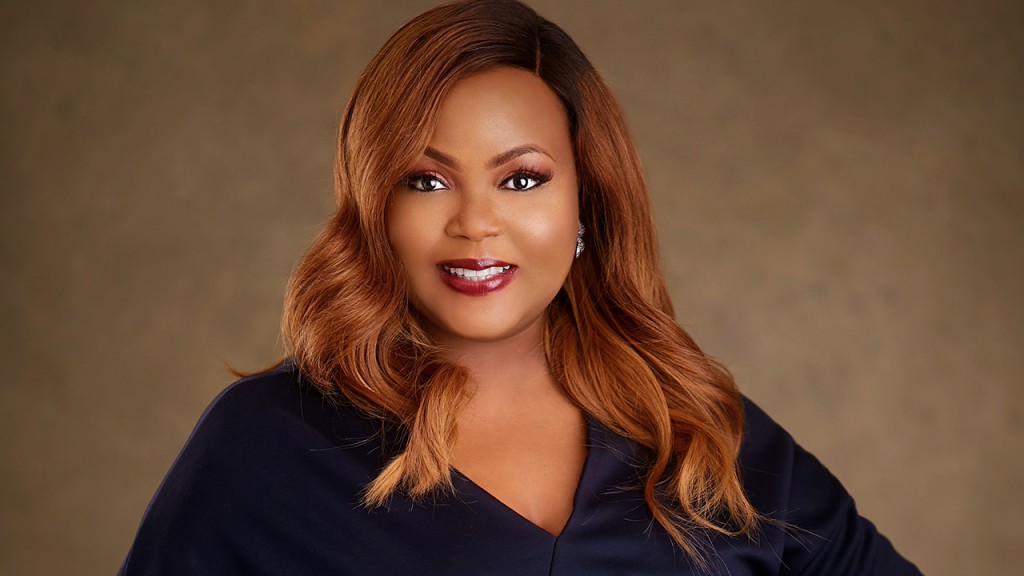
Peju Ugboma is the Founder/CEO of I Luv Desserts and also runs a blog, The Service Critic where she reviews restaurants. A graduate of Microbiology from the University of Lagos, she was the Head of Business Strategy at First Independent Global before resigning and setting up her business. Certified from Gastronimicum, Agde and Le Notre in France and The Taste Lab in the United Kingdom, Peju wants to launch a training school for aspiring chefs, baking enthusiasts and home cooks. In this interview, this ardent Manchester United fan talks about dumping Microbiology for dessert making, turning a huge business mistake into a best seller and three things women-owned businesses must do and avoid to stay successful.

Making desserts is a pretty unique concept, what led you down this path?
I cannot honestly tell you why I chose desserts, but it possibly stemmed from watching chefs on TV do amazing stuff with butter, sugar and flour. I would watch on TV and wish there were places locally to buy them. I still remember the first time I went to a store on Awolowo Road in Ikoyi and saw a white forest gateau, I was in cloud nine.

When I started out, I knew only a handful of people who were doing desserts commercially for events back then. There were lots of cake makers but proper desserts connoisseurs weren’t available locally. I knew to be able to do it the way I saw it on TV, I would require at least basic knowledge in basic baking techniques, so I enrolled in a baking school locally for one month and the classes were very hands on. I also bought loads of books to help out. By the end of the first month, I knew I wanted more of the real stuff. I searched locally for a proper culinary school but nothing was available so I had to look outside Nigeria.

You switched from microbiology to dessert making, what informed this decision?
To be honest, Microbiology was never my first choice. I come from a home where daddy’s words were the law. My dad initially wanted me to study Medicine but I didn’t score high enough in JAMB to study it.

Secretly, I was quite pleased, but I dared not show it outwardly. I had just about enough points to study microbiology. If I could have chosen my own course, it most likely would have been the arts. I hated Chemistry and other science subjects.

Peju Ugboma, Founder/CEO of I Luv Desserts and blogger, The Service Critic
When I finished from university, I knew I was not going to do anything with the Microbiology, so I tried my hand at different things but I didn’t find any job exciting enough to keep me occupied till I went to work in a customer service training company.

I loved it enough to stay for a few years before I moved in a completely different direction into learning about business strategy. I learnt very quickly and was fully dedicated to it because I needed to grow up. I eventually got restless there after about two years. My husband (then boyfriend) knew how excited I was watching baking shows on TV, so he always encouraged me to try it out. Then I quit my job and went for my first baking course and 12 years later, I am still at it.

You were once a 9-5 employee for over five years, what would you say is the difference between entrepreneurship and full-time employment?
Entrepreneurship is a full time job, especially when you are a start-up. You eat, drink, sleep and dream your new business.

In my candid opinion, entrepreneurship is way harder because you are responsible for other people’s livelihood. People are dependent on you so you have to strive to make sure things are done properly. If you don’t have a dime for yourself, you must provide for others.

When I started out, I was the baker, cleaner, delivery personnel, phone operator, shopper, everything! When you are in paid employment, you have a job description but with entrepreneurship, you are a one-man army.

In your opinion, what are some of the key issues startups face, especially in Nigeria?
I know you have probably heard funding many times but I disagree. The main issue a lot of startups face is knowledge, the knowledge of how to run and manage a business properly.

You have a business idea, it looks good on paper and we run with it without adequate checks, research and even proper training on know-how. We start, then get stuck and eventually throw in the towel until the next best thing comes along. Access to funds is also another big problem.

I am very anti-get a loan from a bank to start a business, the interest rate will almost cripple whatever you have gathered. I am a firm believer in starting small and dreaming very big. Electricity is also a big problem. I know this is a third world problem but it’s a huge challenge in my line of work.

A large chunk of our generated income goes on power generation. I would also say human power because in my industry, retaining excellent staff who are dedicated to the job with great work ethics are very few and far between. Artisan turnover is quite high.

Your company pioneered frozen cookie dough in West Africa, tell us about that?
The cookie dough project came about when there was some kind of ban on importation of goods into Nigeria. Before then, when you go to the freezer aisle of most supermarkets, there weren’t any locally manufactured brands of cookie dough stocked there. It got me thinking and research started on producing cookie dough locally.

The idea behind the frozen cookie dough was to create convenience and save time for the average home baker whilst still enjoying freshly baked cookies in the convenience of your home. All you need to do is place dough balls on trays and bake for 15 minutes.

The whole process took about 24 months from inception to product testing, sourcing packaging and licensing from NAFDAC. We rolled out and gradually started retailing in stores. We were stocked in about 22 stores in Lagos and Abuja then we hit a brick wall. I think it was largely because we had lapses in our marketing strategy and supply change management.

I am no longer ashamed to say that it failed the first time it launched, it was quite humbling and I refused to talk about it for a while but I have learnt a whole lot from this experience, because this kind of experience, as humbling as it is, helps you build resilience. We are back to drawing board trying to retrace our steps to understand why it didn’t work in the first instance. Hopefully, it will work out better and stay in the market for as long as we have projected it to stay.

How important is mentoring for women especially those in business?
I have often heard women say it was a waste of their time, but in my own case, it was one of the wisest decisions I took. If you are in business, whether man or woman, you need mentoring. It is hard enough running your business solo, with you being the all in one CEO and ‘Jackie’ that does even the most menial of jobs.

Personally, I have benefitted from having a mentor who not only guides me as regards my business but spiritually and even issues regarding the home-front.

When I am asked how I chose a mentor, happenstance, I came across her by accident and I prayed that I was choosing the right person. The first question she asked was “what are you bringing to the table.” I was stunned. When I asked her why she said that, she wanted to know how serious I was about our relationship. I have since nicknamed her iya-aje because of how tough she gets when she needs me to do something.

Tell us something that has influenced your life and career positively today?
It took me a while to figure this out, but life became much easier when I got an understanding of Proverbs 3:5-6. It says trust God with your heart, lean not on your own understanding, in all your ways acknowledge Him and He will straighten all crooked path before you. As hard it may be, I have chosen to trust Him.

As a member of BTS Welfare Hub, what do you do specifically for women?
BTS Welfare Hub is a faith-based group, it doesn’t cater to just women, but to the needs of the downtrodden. The hub takes care of a range of things like visiting old people’s homes, orphanages, cerebral palsy centers, poor communities and visiting the streets to encourage someone. An average visit to a poor community will include sharing the word, praying with the people in these communities, encouraging and then giving out presents and food.

As a former business strategist, briefly tell us three basic things women must do/avoid when running a business?
First, separate purses; your business account is not your personal account; you should not draw funds from the business account just because you can. I believe you should pay yourself a realistic salary. If the business is unable to pay you a salary, create an IOU, which can possibly go towards your equity in the company, there must be some sort of reimbursement for the work you do.

Second, whilst I believe you shouldn’t hire too soon, I also believe that it is important to delegate so that you don’t burn yourself out. Micromanaging when you delegate is a killer of creativity. You need to prioritize what is important, what can be delegated and what you can afford to put on the back-burner.

Finally, don’t be afraid to make a mistake or be too cautious to take a risk. I know it is not always easy to accept when we assume we have failed at something but it shouldn’t define who we are.

One of my biggest sellers at the moment, the cheesecake popsicle came about as a mistake I made when mixing one of our products. Now I am grateful that it happened, I acknowledge that it’s not all mistakes that have a somewhat happy ending but use whatever mistake as a stepping- stone to better yourself.

If you could influence change, what would you want to do for Nigerian women?
If I could influence change, I would like to start with reorientation, reorientation of the mind, that being a woman is not a limiting factor. I can be anything I want to be if my mind is aligned to it and I am willing to put in the work.

A lot of our parents did some form of damage in us with a limiting mindset, that no matter what we do or achieve, the kitchen is where we will end up as women. I would also love for women to truly support one another, not just using it as a buzzword but also actually bearing one and other up. These are little things we can be deliberate about it.

What do you do to relax? What is your guilty pleasure?
Relaxing is relative nowadays, as an entrepreneur, shutting down, mind body and soul is hard. So the easiest thing for me nowadays is reading and eating out. I also love watching football but nowadays the team I support isn’t doing well so it is a bit of a drag. My absolute guilty pleasure is travelling to new places, learning new cultures and experiencing new culinary adventures.

What should we expect from you in the next five years?
Whenever I am asked this question, I get a bit overwhelmed. Whilst I understand the need to plan for the future, I have learnt to take it one day at a time, planning five years in advance in my books is a wrong pressure trigger.

So I will change from the next five years to tomorrow or in the near future; I want to co-own a properly run internationally certified culinary academy in Nigeria and an online culinary school because that’s where the business world is gearing up to. I pray for sustenance, God’s grace and grit to carry forth.

Source: Tobi Awodipe for Guardian

South African singer, Nhlanhla Nciza, who is one half of the Mafikizolo music duo, has announced that she is splitting from her husband of almost fifteen years, Thembinkosi Nciza.

The 41-year-old singer posted a statement on Instagram saying:

After almost 15 years of our strong bond of marriage, my husband TK Nciza and I have come to a  tough but amicable decision to bring an end to our union.

I am thankful for the support we have given each other over the years while raising our children.

We shall remain on good terms and continue our endeavor to be great and exemplary parents to our children.

We appreciate the support we’ve received from family and friends. At this stage, we would like to appeal for privacy, particularly for the sake of our children. We thank you🙏

All queries may be directed to David Feinberg at
davidf@rwr.co.za

She also posted a few photos of herself and her husband.

The couple has three sons, Nkululeko, Thamsanqa, and Luvuyo. Their daughter, Zinathi, was killed in a car crash in 2009.

A few days ago, Nhlanhla shared a Father’s Day post where she thanked her husband for being a good role model to their sons.

Photo Credit@nhlanhla_nciza

Credit: Bella Naija

A black South African lawmaker has confirmed that she punched a man in self-defence after he allegedly hurled racial abuse at her.

Phumzile van Damme from the opposition Democratic Alliance said she got into a row with a white woman at Cape Town’s V&A Waterfront when the man intervened. She said the man, who was white, was “threatening violence” and used vulgar language to tell her to get out, referring to her as “you black”.  

The V&A Waterfront, a top tourist site, has apologised for the incident.  Ms van Damme was unhappy with the treatment she received from a security officer when she reported the incident.

Ms van Damme said she was standing in a queue in the supermarket when she had a quarrel with a woman who allegedly told her she would “push [her] aside”.  “Then when I went out, she was standing there with her family in a threatening manner. And I went to her and said, ‘why are you looking at me in a threatening manner?’ Then she said, ‘it’s because you’re black’, Ms van Damme said in a video on Twitter.  

She said a man, who was with the woman, “was threatening violence so in self-defence I punched him in the head”.  Ms van Damme said she accepted V&A Waterfront’s apology and their commitment not to tolerate unacceptable behaviour from its patrons. She has, however, threatened to file charges with the police.

Credit: LIB

A wonderful poet once said ; You will face many defeats in your life, but never let yourself be defeated.” I bet she had Odedina Abimbola in mind.

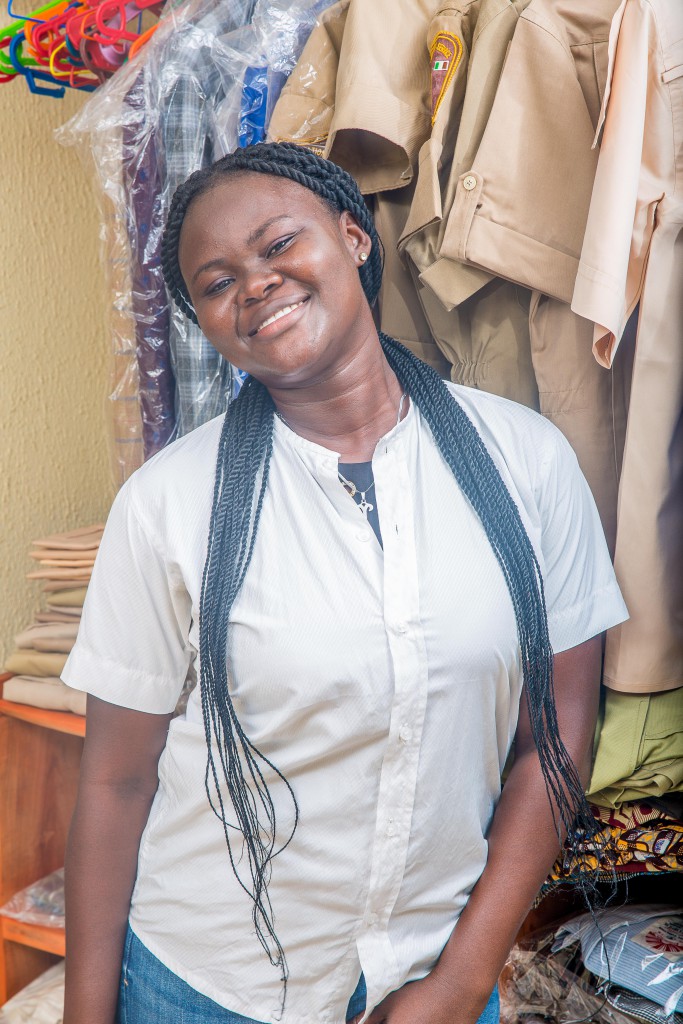
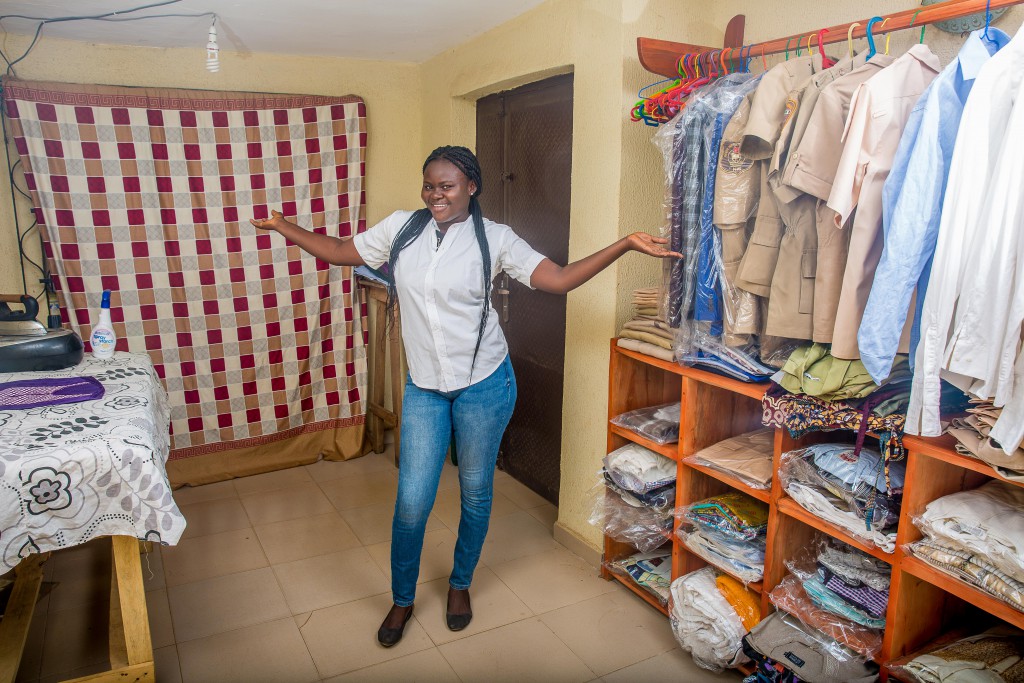
Bimbo was singlehandedly raised by her hardworking mother who sells foodstuff and charcoal at Ipodo market, Ikeja. She lost her Father at a tender age in 2009, for her  growing up was a very challenging experience, she , her mom and younger sister Adepeju had to take refuge in a room and parlour apartment in the ancestral home of her maternal grandfather in Ipodo, Ikeja where she hustled through life to make a living; selling charcoal and taking up different jobs to save towards her education and  also support her family. ​Her story went viral a month ago when she posted her laundry Business on Twitter, a tweet that has now been shared over ten thousand times​ and reposted on other social media platforms​, Giving Bimbo leverage for her business, showing the ripple effect of determination and doggedness and also​ reminding us ​of ​the power of social media. ​The young budding entrepreneur ​shares her Inspiring story with me in this interview.

Growing Up

Despite my humble background, I was determined to do what it takes to change my family’s fortune. Immediately after Secondary school, I started taking up several jobs to assist my mother to fend for the family and saving towards sponsoring myself to the university.  In 2012, I gained admission into Adekunle Ajasin University Akungba, Akoko to study Business Administration, while in school I made several trips to Lagos to do promotional ushering jobs during weekends and I took up part time jobs during every semester break working with Wrangler as a sales representative at Ikeja Mall, while still studying hard in school, eventually graduating with. ( CGPA) second class degree.

In 2017 after graduation, while waiting to be posted to serve my Fatherland (NYSC). I  took up several jobs part time jobs, saved some money to start dealing in charcoal business having learnt the trade from my mother, I started selling in small and large units to food vendors, restaurants around Ikeja axis. But eventually had to quit the trade due to constant pressure to join Charcoal dealers pressure group.

In November 2017, I was posted to Adamawa state for the mandatory NYSC scheme, spent 3weeks in camp for the orientation exercise and eventually redeployed to Ibadan, Oyo state due to insecurity in the North.  As a Corps member in Ibadan I was posted to a secondary school where I was to resume 8am and close by 2pm, I decided to look for another part-time job to raise extra money for my upkeep and increase my savings.  Lucked smiled on me and I got a sales activation job with British American Tobacco, Ibadan sales unit. There I was required to work between 5pm to 10pm on Tuesday’s to Thursday, 5pm till 2am during the weekends. Though stressful, the pay was good and I was able to save the BAT salary towards starting a business. Eventually, the 3month contract with BAT ended and I had to make a decision on what business to do. As a member of WINNER’s Chapel I’ve always heard Bishop Oyedepo emphasize on the importance of seeking divine direction, so I prayed to God to show me the business to do and miraculously I got divine direction to start a laundry business in a dream.

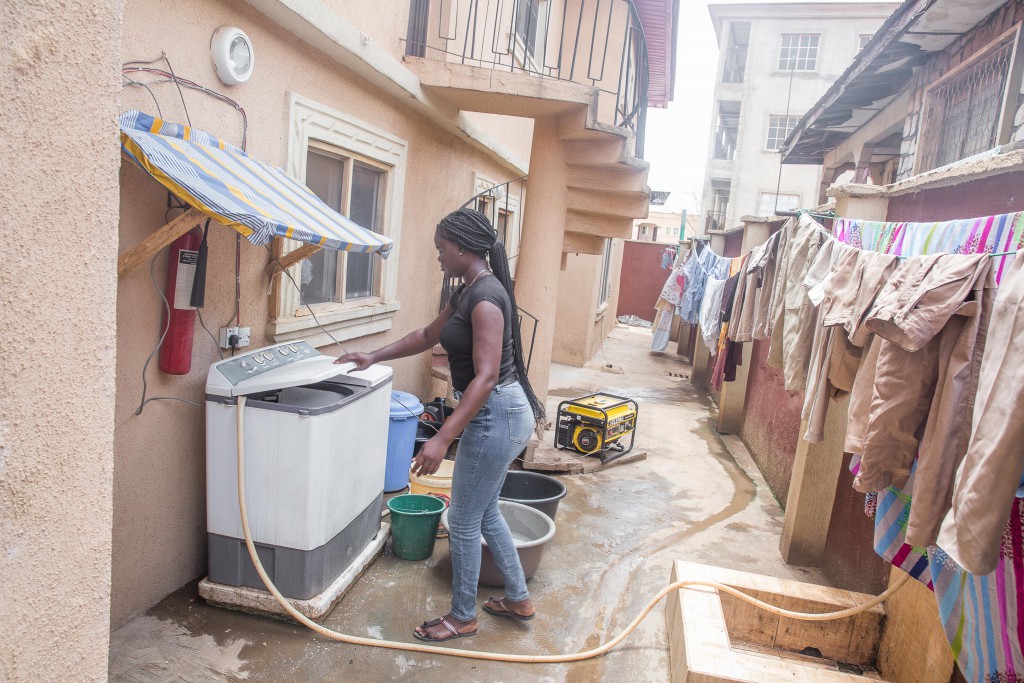
Thereafter, I had to seek wise counsel from friends and I was directed to see a young man (Mr. Falade Ayomipo Oluwaseun) who also owned a laundry service here in Ibadan. I was told he also started as a Corps member and he was willing to teach me how to start and manage a laundry and dry cleaning shop at an affordable fee. I was able to learn within 3weeks while my PPA was on break. Few days later with the assistance of my Boss, I used all my savings to buy a washing machine, generator, industrial iron and other materials, equipment and items needed to start a Laundry and Dry Cleaning service.

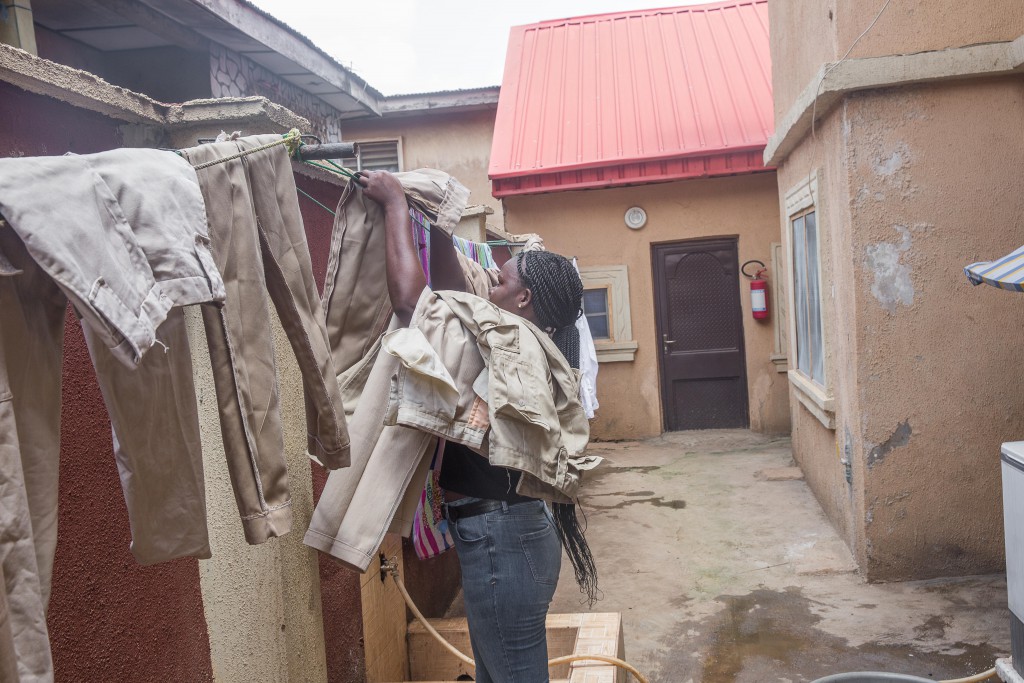
On 10th May 2018, I started business washing 15shirts, 7 trousers and some under wears.  Today I’m a proud owner of a booming Laundry business (CRYTALZ EXCLUSIVE CLEANING SERVICES) that is registered with the CAC, I have 4 employees; 2pressers, a washerwoman and a delivery man. On the long run I intend to engage in large scale laundry and dry cleaning service and also perform Janitorial services.

Abimbola doing her thing

Inspiration behind Crystalz Laundry

Crystalz Laundry was God inspired. During the service year, I did a contract job with Benson and Hedges Ibadan sales unit. I was required to work between 5pm to 10pm on Tuesday’s to Thursday, 5pm till 2am during the weekends. Though stressful, the pay was good and I was able to save my salary towards starting a business. When the contract job ended.  I had to make a decision on what business to do. I prayed to God to show me the business to do and miraculously I got divine direction to start a laundry business in a dream.

What inspired me to advertise my business on Twitter

A friend of mine  (Juba Adeola) told me about how Twitter has helped many entrepreneurs (e.g Dolapo shawarma) increase sales at no cost. He suggested we take professional pictures of me at work, summarize my story while tagging Influencer’s and praying to God to help make the post go viral. And it did go viral by God’s grace.

Reception since I started Crystalz Laundry

My entry into a male dominated laundry business met with cold reception from family members, friends and many others. Some people even advised I do something more “Womanly” though my strong resolve and determination made many change their mind. My choice of business still baffles a lot of people till today

My vision

Crytalz Exclusive Cleaning Services is registered with the CAC.  On the long run I intend to engage in large scale laundry and dry cleaning service and also perform Janitorial services. So far, I have trained and assisted 2 people to set up their laundry business. I have a vision to periodically organise skills acquisition training and empowerment programs for people with a major focus on women. I may also diversify my business based on the ever changing business environment.

Challenges

Unstable power supply, I spend a large amount of money on petrol monthly. I use a motorcycle rider to do my delivery and we have survived 2 terrible accidents. The unstable cost of buying materials is also an issue. Getting new customers usually require extra effort.

Abimbola Odedina at work

On giving up

I had a rethink after I survived  2 terrible accidents in the course of doing pick up and delivery.  The scars are  still visible on my body but I eventually overcame my worry and resolved not to give up

Being a Woman of Rubies

My strong determination to succeed. I sponsored myself to the university. As an undergraduate in Adekunle Ajasin University Akungba, I made several trips to Lagos to do promotional ushering jobs during weekends. I took up part time jobs during every semester break/strike working with Wrangler as a sales representative at Ikeja Mall. Before going for NYSC, I did charcoal business but had to quit due to pressure and debt. Despite all odds, I’m self-employed, an employee of labour and my story has inspired many.

Advice for women who want to go into the laundry business

The business world is not the exclusive domain of men, women have what it takes to own, run and manage businesses. What is required is a determination backed by a strong resolve to succeed in your chosen field; despite the odds and the heavy burden society has placed on women.

Poet, writer and musician Joy Harjo — a member of the Muscogee Creek Nation — often draws on Native American stories, languages and myths. But she says that she’s not self-consciously trying to bring that material into her work. If anything, it’s the other way around.

“I think the culture is bringing me into it with poetry — that it’s part of me,” Harjo says in an interview with NPR’s Lynn Neary. “I don’t think about it … And so it doesn’t necessarily become a self-conscious thing — it’s just there … When you grow up as a person in your culture, you have your culture and you’re in it, but you’re also in this American culture, and that’s another layer.”

Harjo, 68, will represent both her Indigenous culture and those of the United States of America when she succeeds Tracy K. Smith as the country’s 23rd poet laureate consultant in poetry (that’s the official title) this fall. Her term, announced Wednesday by Librarian of Congress Carla Hayden, will make her the first Native American poet to serve in the position.

“It’s such an honoring for Native people in this country, when we’ve been so disappeared and disregarded,” Harjo says. “And yet we’re the root cultures, over 500-something tribes and I don’t know how many at first contact. But it’s quite an honor … I bear that honor on behalf of the people and my ancestors. So that’s really exciting for me.”

A native and resident of Tulsa, Okla. — she is also the first Oklahoman to be named U.S. poet laureate — Harjo says the appointment is an opportunity to continue a role she has often assumed throughout her career: as an “ambassador” of poetry. The Library of Congress calls the position “the nation’s official poet” and assigns a “modest minimum” of official duties in order to enable individual projects designed “to raise the national consciousness to a greater appreciation of the reading and writing of poetry.”

“Since I started writing in 1973, I’ve almost always been on the road with poetry, and meeting people and communities … every state in the union, small and large communities, for years on behalf of poetry — and the gift that poetry brings to all of us,” Harjo says.

Harjo is the author of eight books of poetry, including the American Book Award-winning In Mad Love and War (1990). She has also written a memoir and literature for children and young adults. She has taught at the University of California, Los Angeles, and the University of Tennessee.

A new collection called An American Sunrise will be published in August. Its title poem interpolates and salutes a famous Gwendolyn Brooks poem, but imbues it with new meaning about the persistence of Native people: “We are still America. We / know the rumors of our demise. We spit them out. They die / soon.”

Born in 1951, Harjo did not have an easy start to her life as a multidisciplinary artist. Her memoir Crazy Brave discusses her father’s alcoholism, her abusive stepfather, teen motherhood, a failed first marriage and living in poverty — before finding the “spirit of poetry.”

“I needed to find my voice, I think, in order to live,” she said to Neal Conan on NPR’s Talk of the Nation in 2012.

The memoir also discusses the time that she heard Miles Davis on her parents’ car radio and experienced a transcendental moment, which she connected to her mother’s singing and her deep identification with music. Much later in life, nearing age 40, she picked up a saxophone for the first time. She has now released five albums of original music and won a Native American Music Award in 2009.

Harjo talks about her poetry as a kind of music — like making a fire by slamming two rocks together. “You hit words together with rhythm and sound quality and fierce playfulness,” she says.

But in terms of subject matter, she also sees poetry as “an immense conversation of the soul.” She says she’s driven by “justice and healing and transformation: The idea that you can … transform the images of our people from being non-human to human beings, and the ability to transform experiences that could potentially destroy a people, a family, a person to experiences that build connection and community.”

Her work often merges the global and the personal, the imagery of the natural world and that of the inner one. She speaks often not only of the diversity of humanity, but also of its unifying story, its oneness.

“To her, poems are ‘carriers of dreams, knowledge and wisdom,’ and through them, she tells an American story of tradition and loss, reckoning and myth-making,” said Hayden in a statement. “Her work powerfully connects us to the earth and the spiritual world with direct, inventive lyricism that helps us reimagine who we are.”

In “She Had Some Horses,” found in the collection of the same name, Harjo describes the many, often contradictory “horses” within a woman: “She had some horses she loved. / She had some horses she hated. / These were the same horses.”

In “This Morning I Pray for My Enemies,” which she read for NPR, she relates the sun to the heart.

And whom do I call my enemy?
An enemy must be worthy of engagement.
I turn in the direction of the sun and keep walking.
It’s the heart that asks the question, not my furious mind.
The heart is the smaller cousin of the sun.
It sees and knows everything.
It hears the gnashing even as it hears the blessing.
The door to the mind should only open from the heart.
An enemy who gets in, risks the danger of becoming a friend.

The poem appears in Harjo’s 2015 collection Conflict Resolution for Holy Beings. Harjo says that humanizing and healing will be her aims as poet laureate — “a healing of people speaking to each other, with each other,” she says.

“Communities that normally would not sit with each other, I would love to see … interchanges with poetry,” Harjo says. She suggests gathering “cowboys and Indians” for a poetry summit. “I really believe if people sit together and hear their deepest feelings and thoughts beyond political divisiveness, it makes connections. There’s connections made that can’t be made with politicized language.”

Credit: Npr.com

At 103, Julia “Hurricane” Hawkins has cemented her title as the oldest woman to compete on an American track after finishing the 50- and 100-meter dashes at the National Senior Games in New Mexico.

Event organizers say the Louisiana resident holds the world record for her age group of 100 and over in the 100-meter dash.

In this photo provided by the National Senior Games Association, 103-year-old Julia Hawkins, of Baton Rouge, La., competes in the 50-meter event at the 2019 National Senior Games in Albuquerque, N.M., Monday, June 17, 2019. (Brit Huckabay/NSGA via AP)

She didn’t beat her previous time Tuesday but crossed the line in just over 46 seconds in Albuquerque.

On Monday, she was clocked at 21.06 in the 50-meter event, which appears to be a new Senior Games record for the women’s 100-plus age division. There’s no record of a past female competitor in that contest.

The retired teacher says staying active keeps her sharp and she hopes she can serve as an inspiration to others.

In this photo provided by the National Senior Games Association, competitors in the 90+ age division, including 103-year-old Julia Hawkins, of Baton Rouge, La., far right, wave to the crowd after their 50-meter race at the 2019 National Senior Games in Albuquerque, N.M., Monday, June 17, 2019. (Brit Huckabay/NSGA via AP)

Credit: abc22now.com

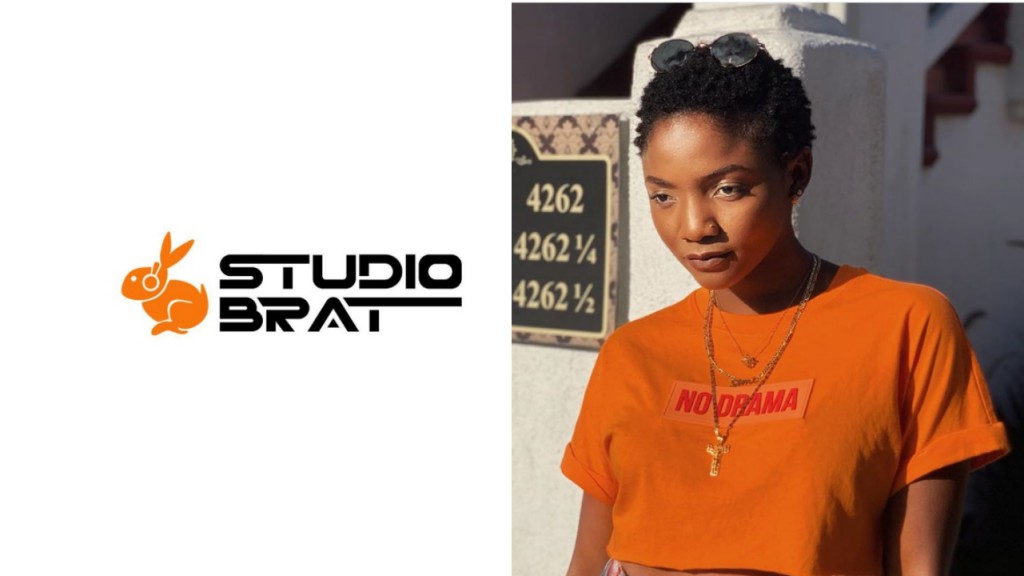
Months after announcing that her contract with record label X3M Music would not be renewed, music star Simi has officially launched her very own company – Studio Brat.

Simi shared the exciting news in a statement to her fans saying:

The norm is to do a formal and proper press release, with big, impersonal words – but this is me and you.

We started with true laughs, constructive criticism, silly jokes and personal moments. We’re gonna keep it that way.

All I’ve ever wanted was to live my dreams – to do it on my terms, but for you. Each step I’ve taken has brought me here. This is only the beginning of the best part of my journey. I hope that you stand with me, fight with me, love with me and grow with me. My team and I have continuously put our hearts into it. Like Michael Jackson said, “Don’t stop till you get enough…” We never want to let you down. Proof: I’m using a Michael Jackson quote.

So, with a heart full of excitement, I introduce Studio Brat to you. It’s Ours. Let’s do what we do! 💙

Credit: Bella Naija

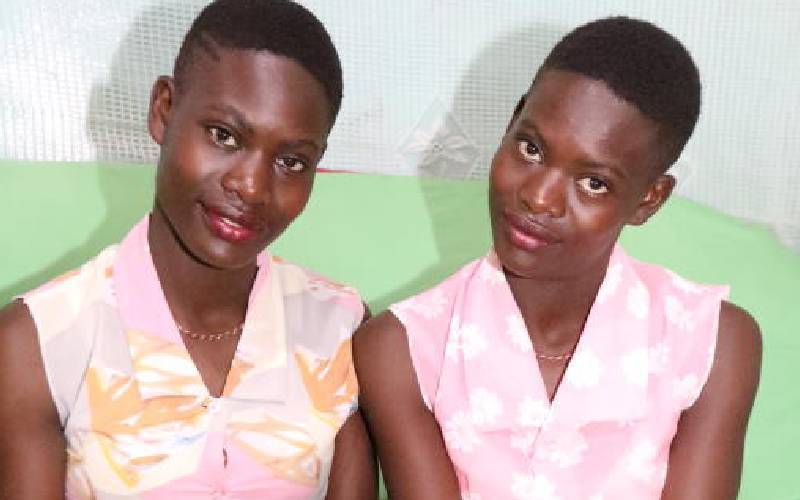
On August 15th, 1999, one Rosemary Khaveleli Onyango, pregnant at the time, went to the hospital, expecting to give birth to triplets, but delivered twins instead.

The twins were placed in an incubator at Kakamega County Teaching and Referral Hospital in Kenya, for a week due to low birth weight after which Onyango took them home.

But the twins were not identical. Onyango had her doubts, but she let them go and raised the girls – Melon and Mevis.

Fast forward to April 2018, her daughter Melon met her lookalike, named Sharon, on Facebook. The two connected and they had an online altercation, accusing each other of impersonation.

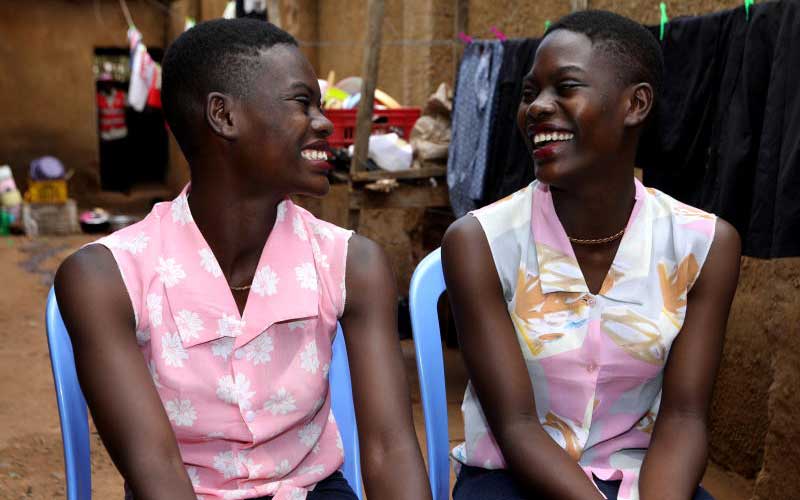
Melon Lutenyo and Sharon Mathias

In December of that year, the two met at a bus-stop, following constant mention by their peers and teachers of their striking resemblance.

Sharon had participated in a high school music festival where Melon’s school had also participated.

Melon’s teachers and classmates were surprised to see someone that looked exactly like her at the festival, even though she wasn’t participating.

Her classmates took Sharon’s photo and showed it to Melon.

Out of curiosity, they contacted each other and informed their parents about it.

In April 2019, both families decided to seek professional help to find out if they children were related.

The recently released results revealed that Sharon and Melon are twins.

Melon Lutenyo and Sharon Mathias

“Ms Rosemary Khaveleli Onyango could not be excluded as the biological mother of the twins who have compatible obligatory maternal allelic profile with a 99.999 per cent probability,” the result stated.

The result also disclosed that Onyango is not the biological mother of Mevis. 12 out of 23 loci tested showed a mismatch. (Three or more mismatches are considered grounds of exclusion of paternity/maternity).

The test also showed that Mevis is the biological daughter of Angeline Omina, the woman who raised Sharon as her child.

Omina gave birth to her child at the same hospital where Onyango delivered her twins, just a day prior – August 14th, 1999.

Melon Lutenyo, Sharon Mathias and Mevis Imbaya

Both families have said they’ve agreed not to sue the hospital, but The Standardreports that the Office of the Director of Criminal Investigations said it will still pursue the case against the hospital.

The report added that the hospital provided proof that the two mothers gave birth there, but said it did not have documents showing mode of delivery, dates, as well as other details.

Photo Credit: Kevin Tunoi / The Standard

Nikki Howard and her sister Jaqi Wright’s Furlough Cheesecakes will now be available in 100 Walmart stores in the DMV,WJLA reported.

The ingenious sisters were among the 800,000 people affected by the federal government shutdown. Bills piled up. Their savings served as the only way to keep food on the table and roofs over their heads.

“We prepared for rain, but we got a monsoon,” Wright, who worked at the Department of Justice, told NBC Washington.

So the pair of furloughed federal workers took a leap of faith and chose to start a cheesecake business to make a way for themselves. Now, the two are making bank through their Furlough Cheesecake. “Cheesecake has been my weakness since I can remember,” Howard said in January.

The government shutdown began on December 22 and lasted for over a month, making it the longest shutdown in American history. Howard and her sister were compelled to make best of the situation.

“How do I look at my child and say, ‘I can’t send you back to school’?” asked Howard, a former Food and Drug Administration worker.

Within the first week, Furlough Cheesecake received 100 orders outside of the DMV including Atlanta, Indiana and Texas.

The sisters’ story quickly gained national attention, attracting comedienne Ellen DeGeneres, who placed a $20,000 order. Since going viral, business has been consistently booming. The pastry makers no longer have to work their federal jobs.

Furlough Cheesecake is their full-time job now. Walmart will have smaller, mini versions of their cheesecakes available sometime in August.

Credit: blavity.com