One of the biggest environmental challenge in the world is waste management. Often times as humans we only focus on the consumption of the products without thinking of the diverse effect of releasing the waste to the environment. So many people have been trying to change the narrative and sensitize the society on the the need to manage our waste products  the same way we screen what we consume.

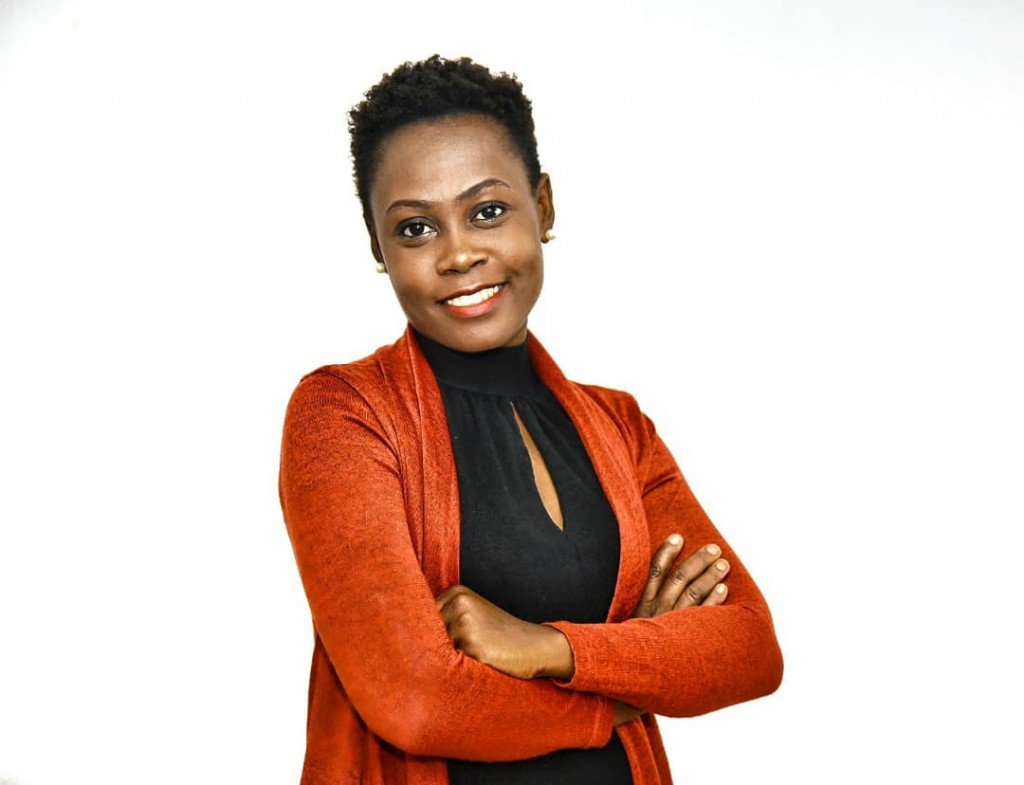
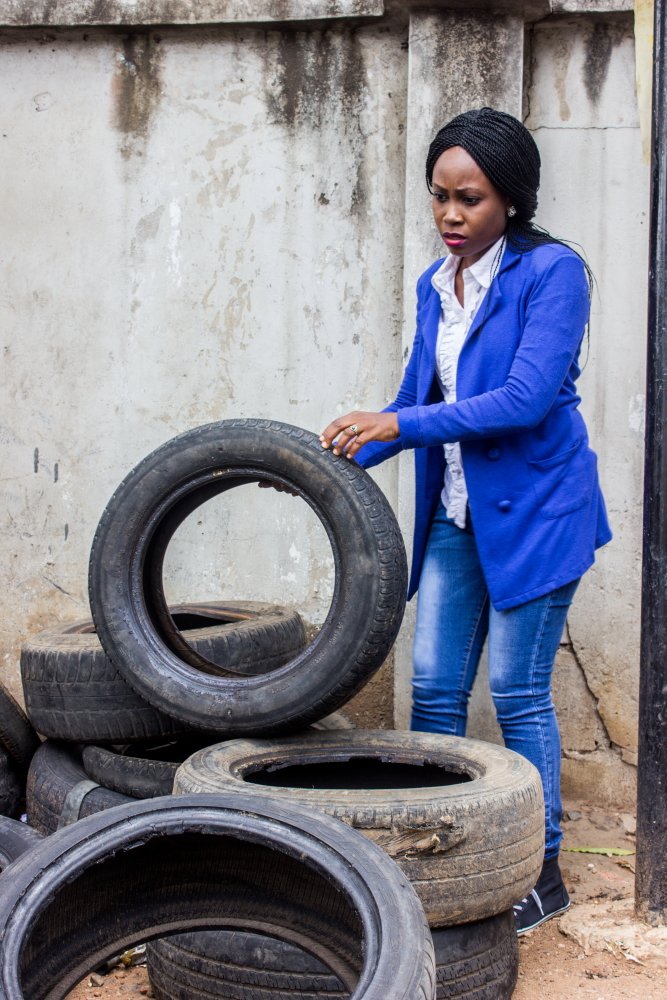
While effective disposal is one of the major mechanisms to waste management, recycling and remodelling the waste is a better way to preserve it for re-usage. Olamide Ayeni-Babajide has taken this up through her Pearl recycling initiative. In 2016, she started a social enterprise that remodels solid waste into sustainable, eco-friendly products for the last-mile citizens. Her organization trains women and unemployed youths on waste to furniture vocational skills. She also solves the problem of inadequate chairs in public schools by producing ergonomic classrooms chairs from waste for the pupils, a project sponsored by the US Embassy Abuja.

In 2017, she was selected as one of the Tech women Emerging Leader by the United States Department of States which makes her interned with In 2018, she was named as an Obama African Leader for her impact work and also named as the most outstanding social innovator by LEAP AFRICA.

Olamide who holds a Bachelor of Technology degree in Computer Engineering and several certifications from CISCO and ISACA and With more than eight  years’ experience as a Network Infrastructure . She shares her inspiring story with me in this educative interview.

In her words : “ The environment is not enabling for most start-up founders due to rigid government policies stifling life’s out of young start-ups.   ”
Childhood Preparation

 I grew up in the rural part of south-western Nigeria. I was taught early that when things are broken, they are fixed and not thrown away. I think the learning came from the fact that we didn’t live a life of luxury neither did we live in penury but the little we had, we were  taught to use it well. Also, coming from paternal generation of wood carvers was also part of what contributed largely to my creative nature. At an early age, I started repairing my spoilt shoes and slippers myself, I had all the shoe repairer tools, I could weave and sew, and I had my hands on practically every skills.

Inspiration behind Pearl Recycling

Pearl Recycling started on the flight back to Nigeria from UAE in 2012.  I had gone for a conference on Infrastructure engineering and bought few home decorative products. I checked one of them and realized it was made from waste corn-husk. You can imagine my anger and unbelief when I made this discovery. First, I had issues with customs bringing those decorative products into the country and coupled with the fact that they  were expensive. As days goes by, my anger turned to curiosity. I told myself we have corns in Nigeria, but we are throwing the husk away. Why can’t I start collecting the corn husk from the roadside corn sellers and start turning them into beautiful work of arts? That was how Pearl recycling started. We progressed from corn husks to plastic, wine corks and tyres. We currently work with all form of solid waste, turning them into artistic pieces either as furniture or décor.

Pearl Recycling, was selected by World Youth Forum as one of the 100 initiatives from Africa and she was selected to represent Nigeria at World Entrepreneurship Investment Forum in 2017 due to the impact that Pearl Recycling is making locally. We have also been featured on several international and local media including, Reuters, Washington Post, and Aljazeera

Impact of being an  Obama African leader and Leap Africa’s  outstanding social innovator

In 2018, Obama Foundation made a call for outstanding leaders in Africa who are changing narratives in their field. We know we are constantly breaking the glass-ceiling with the waste remodeling niche we are  building so I applied. I was selected as one of the 200 Obama African Leaders.  This gave me the opportunity to meet with other change-makers in the continent, connect with investors and create a ripple effect of change. One of the highlight was pitching the waste to tiles project as an alternative to bad roads in Africa rural locations. The project was selected and scaled to top four out of seventy other projects and we  pitched it at the pitching event. A fellow leader from Angola took the idea back to his country and started working on the project.

LEAP Africa SIP is a progamme for social innovators in Nigeria where selected social entrepreneurs are trained on important subjects like  structuring social enterprises and building a sustainable social enterprise. I was selected in 2017 and after the one year programme,  three outstanding social innovators are selected and awarded grants of 1  million Naira each to scale up their impacts through the support of  Union Bank. I was selected and the grant has helped us to scale up our  distribution outlets and acquire more tools.

Reception

When we started officially in 2016, there were a lot of cultural  inhibitions, negative stereotypes and complete rejection of the idea.  The first hurdle we had to break was the age-long belief that “waste is  dirty and meant for landfills”. We came up with a strategy to make waste  enticing to feel and touch and that was how we were able to break the  negative stereotypes. In 2016, we could go a whole week at the office without anyone calling to ask about what we do. However, there has been significant change in perception and acceptance. We get up to six calls weekly from individuals and organizations asking about what we do and the service we render.

From computer engineer to eco-friendly products and waste

After the curiosity of my UAE trip, I started working with solid waste products on weekends. I was in an 8-5 job and the only time I had left to work on my passion was weekends. I started showing colleagues what I made from waste and they were interested and willing to buy. That was how I started making wall decors and art pieces from waste for colleagues and friends. In 2015, I applied for Tony Elumelu foundation grant with the idea. It wasn’t a registered business. It was just an idea and it was selected. That selection birthed Pearl Recycling. It was  a defining factor for me, knowing that an organization like TEF founds  such a niche worthy propelled me to make it a full time job.

Challenges

The most significant challenge of all is the perception of people to waste. This time around, not from a place of negative assumption, but  from a place of complete ignorance. People aren’t aware of the treasure in waste and they end up throwing them away. The second issue is government intervention for emerging businesses like ours. The environment is not enabling for most start-up founders due to rigid government policies stifling life’s out of young start-ups.

Also, we lack proper funding institutes or organizations locally that  can fund social innovations. Most funding organizations are international and this has impeded the growth of local social  enterprise.
On giving up

There are many times I felt like throwing in the towel and  picking up a paid job. Most especially, when I am fully aware of my  skill and worth in the labour market. However, tenacity of purpose and understanding my Why has been the reason why I can stay and fight to see  my vision become a reality. In an environment like ours, everything is  working to choke your vision and you must be ready to fight to survive.

Being a Woman of Rubies

I became aware of my worth at the young age of ten and the inherent power I have as a women to create positive impact around me. I am a  woman of rubies because I create the change I want to see without waiting for anyone to do it for me and by so doing, I am also helping  other women to see and acknowledge the inherent power in them

Advice for those who want to go into my line of business

You must be sure of your WHY. You passion must be able to sustain you  when every other thing fails. You must listen and open your mind to learn. You need to build bridges and know that collaboration is the new  competition. However, you must be smart in all your dealings.

Dr Venita Simpson became the first Black woman in Baylor College of Medicine’s history to finish a neurosurgery residency.

The wildly accomplished Navy Lieutenant Commander has joined the 1% of Black women neurosurgeons in the U.S., according to Because of Them We Can

She’s served in the Navy for 13 years and is slated to return in the near future. She’ll now be working for the Navy in Portsmouth, Virginia.

“When I knew I wanted to go to medical school, my high school guidance counselor told me to be realistic. Even though I had a 4.0 GPA, she recommended another student of privilege for the scholarship I was applying,” she told Because of Them We Can.

“When I originally applied to Neurosurgery I did not match, but I dug my heels in, got back on the grind and matched the second time around. Never let anyone tell you what you can’t do. God is always in control and has a plan far greater than you imagined if you keep faith.” 

Baylor College of Medicine has been around since 1956 and is known for its connections to prestigious cancer hospitals and massive amounts of funding for research.

Before getting to Baylor, Simpson earned a doctorate from Georgetown University. She finds much of her inspiration from Dr. Alexa Canady, the first woman and Black woman neurosurgeon in the U.S.

“I was inspired to go into medicine since I was seven-years-old after I had surgery. I was just amazed at all the gadgets in the hospital. I fell in love with Neurosurgery after witnessing Deep Brain Stimulation for Parkinson’s Disease and movement disorders and how life changing a seamless placement of electrodes in the brain could alter and enhance someone’s life,” Simpson told Because of them We Can.

“Dr. Alexa Canady resonated with me more so because not only was she Black, she was a woman. In a field dominated by white men it can be intimidating, but she persevered and I definitely have pulled strength from her.”

Simpson was featured in a fun Washington Post article last fall where she jokedthat she “left a patient open on the table” while trying to vote for the first time in Texas.

Credit: blavity.com 

Melissa Harville-Lebron never imagined that her entrepreneurial pursuits and ambitions would lead her to make history as the first African American woman to solely own a race team licensed by NASCAR.

Harville-Lebron, a 47-year-old single mother raising her three biological children as well as her siblings’ four kids, started her career in the entertainment industry as an intern at Sony Music. In 2005, she launched her own music label while working for New York City’s Department of Correction office. Nearly a decade later, she suffered from a severe asthma attack that forced her into early retirement and inspired her to take the risk of launching a multifaceted entertainment company, W.M. Stone Enterprises Inc., in 2014.

A RACE TO HISTORY

Harville-Lebron says her journey into auto racing began unexpectedly when she took her sons to a NASCAR experience event at Charlotte Super Speedway in hopes of deterring them from taking up such a dangerous hobby. Instead, the experience only piqued her sons’ interests and eventually led to her investing hundreds of thousands of dollars to develop her own team.

“I got invited to a NASCAR experience and I brought my boys along thinking that it would discourage them from driving,” she told Black Enterprise. But “it did not work that way.” They drove 149 mph and 150 mph during their first session and loved every minute of it while she watched in awe.

Nonetheless, seeing the passion and joy that her sons had for racing compelled Harville-Lebron to want to help them follow their heart. However, as she explored the sport’s history, she noticed its notorious lack of diversity. There were little to no drivers of color, let alone an owner. That motivated her all the more to fill the gap.

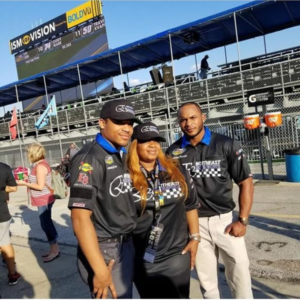
Melissa Harville-Lebron (center) with her sons Eric (left) and Enico (right) Lebron. (Provided Photo)

She created E2 Northeast Motorsports under the umbrella of W.M. Stone Enterprises, Inc. The E2 Northeast Motorsports team became the first multicultural team to race competitively in NASCAR, with four black and Latino drivers — two in the camping world truck series and two in NASCAR’s Whelen All-American Series. Two of the drivers are brothers and Harville-Lebron’s sons, Eric and Enico.

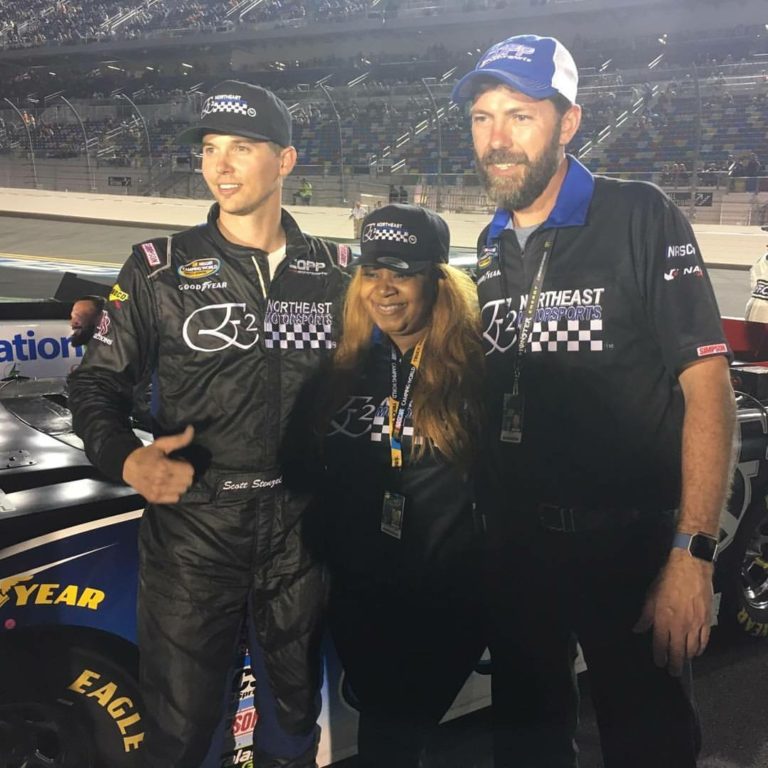
Besides making history, Harville-Lebron celebrated another victory on Feb. 16, when her team ran its first official race in the Camping World Truck Series (NCWTS) at Daytona. Scott Stenzel started the race in an E2 Northeast Motorsports Chevrolet, marking his return to the NCWTS following a three-year hiatus. He came in 15th place at Daytona International Speedway.

In a statement released earlier this month, Harville-Lebron called it an “honor” to partner with Stenzel and the NCWTS team, Copp Motorsports. “This team truly exemplifies diversity, that is sure to attract a younger multicultural fan base. It’s an honor to announce that Stenzel is now a part of this racing family.”

In addition to granting opportunities to people of color, Harville-Lebron wishes to see more become sports owners, particularly of NASCAR teams. “It’s important for our culture to push generational wealth to our children. It’s important to lead by example. All too often our children see negative images of our culture and I think it’s very important for people of our culture actually succeeding in business,” she said.

Melissa Harville-Lebron (center) with Scott Stenzel (left) and D.J. Copp (right), owner of Copp Motorsports and Crew Chief. (Provided Photo)

According to a representative from NASCAR, while  Harville-Lebron is the first black women to be the sole owner of a NASCAR team, Jennifer Satterfield-Siegel  is the first women of color to co-own a NASCAR team.

Editors’ Note: This article has been updated and edited to correct Melissa Harville-Lebron’s age. It incorrectly stated that she was 37 years old. She is 47. The article also previously stated that her team came in 18th place at Daytona International Speedway. The article has also been updated to reflect that she is the first black women to solely own a NASCAR racing team. 

Credit: birminghamtimes.com

Wife of singer, Timi Dakolo, Busola, has accused controversial clergyman and founder of the CommonWealth of Zion  Assembly COZA, Biodun Fatoyinbo, of sexually assaulting her when she was much younger.

In an explosive interview with YNaija, Busola, the mother of three, recounted how the clergyman who has been embroiled in a number of sexual assault related cases, Ese Walter being the most prominent, allegedly raped her in her mother’s house while she was still in secondary school. In her interview, Busola recounted how the clergyman also allegedly tried having sex with her inside his matrimonial home when she came in to help his wife, Modele, when she had their first child. 

Recall that Timi Dakolo recently launched an attack on the clergyman, anonymously. He called out the pastor, accusing him of taking advantage of women in his ministry and leaving them broken emotionally. Read hereand here.

Read the interview as reported by YNaija below and watch the full interview below

ON MEETING BIODUN FATOYINBO FOR THE FIRST TIME

Busola Dakolo was born and lived most of her early life in Ilorin. The first time she left Ilorin was for secondary school at Suleja and that time away allowed her really find her Christianity. She joined and rose to become the vice-president of the Gifted School Academy Suleja’s fellowship and embraced a conservative approach to Christianity, growing to become distrustful of churches and fellowships that tried to copy worldly trends as a way to reach people outside the church. She returned home for the holidays to find that her sisters had started attending a non-denominational ‘youth club’ that embraced all kinds of people and focused on worship and fellowship over doctrine and legalism. It took a while but  her sisters convinced her to go by telling her she needed to meet different kinds of people, especially former prostitutes and cultists that have given their lives to Christ.

Busola reluctantly joined her sisters for the youth club, but she wasn’t comfortable there, partly because of the way they worshipped and because I was the youngest person there. After the service, there was a first timers call, and Busola stood up and introduced herself, explaining her initial skepticism and how their worship had changed her mind. After the service, the pastor of the club, a much younger Biodun Fatoyinbo came looking for her after the service. 

Pastor Biodun wasn’t yet married ( though he was engaged to his current wife) and the Commonwealth of Zion Assembly (COZA) wasn’t yet a church, it was called Divine Delight Club.

He expressed his surprise at how bold she was for someone so young and encouraged her to keep speaking up for herself. He also managed to convince her to sing at their next meeting before she left back for school. To sell this idea, he offered to personally rehearse with her, mentioning that he played the keyboard. This was before mobile phones and internet, so Busola’s sister had to take her to Fatoyinbo, who was living with his parents at the time. 

Though Busola remembers the song they rehearsed, their rehearsal was uneventful, and at the next meeting she performed, her performance moving enough that a former cultist who was attending the club public renounced his past and embraced Christianity. After, the members of the club affirmed her and Fatoyinbo convinced her through gifts of books and cassette tapes to keep attending their club when she was back home from school. 

Returning to school and the more conservative worship environment she was used to was harder than she had anticipated. For the rest of her secondary school year, she struggled with guilt, shuffling between her role in the conservative Fellowship of Christian Students (FCS) and the more liberal world of Fatoyinbo’s COZA. She felt she was living a dual life. Eventually she graduated and returned home to find that Divine Delight Club had grown into a church headed by Fatoyinbo, and her sisters had convinced her family to join the church. It felt like the only option she had to join as well. 

A YEARNING FOR UNDERSTANDING LEADS TO RAPE

Busola had embraced conservatism because she’d grown up in a polygamous family and she wanted some control over her own life in service of something bigger than herself. Her father was largely absent in her life and her mother had tried to shield them from the financial difficulty that came with parenting her and her sisters alone but she saw and it affected her deeply. Conservative Christianity gave her purpose and the structure she desperately craved. She joined the choir at COZA as a way to integrate into the church and rid herself of the discomfort she felt towards the church. Being in the choir made her visible and eventually Fatoyinbo would take an interest in her, inviting himself to her home under the guise of getting to know her better.  

The first time he visited, he asked if she’d join him on an errand run. Her mother was concerned but didn’t really push when Busola insisted that she wanted to go. They drove in his white Mercedes Benz and finally spoke for the first time. Though she was normally guarded around men, Fatoyinbo was charming, using his knowledge of her family and the absence of her father to gain her trust. Before long, he was visiting the house regularly, engaging her in ways her unavoidably distant sisters weren’t. 

Fatoyinbo showed up at her house unannounced. It was a Monday morning early enough that Busola Dakolo was still in her nightgown. Her mother had traveled with her sisters and were absent at service the previous sunday. He didn’t say a word, forcing her onto a chair, speaking only to command her to do as he said. It took Busola a while to come to terms with what was about to happen, and it was why she didn’t struggle or make a fuss when he pulled down her underwear and raped her. She remembers he didn’t say anything after, left to his car, returned with a bottle of Krest  and forced her to drink it, probably as some crude contraceptive. She remembers him saying. 

“You should be happy that a man of God did this to you.”

At this time, his wife had just given birth to their first child, Oluwashindara. 

AFFLICTION STRIKES A SECOND TIME

Busola spoke up because her husband, the singer Timi Dakolo put up a social media post on Instagram accusing Nigerian clergy of condoning rape and sexual assault. People had approached him anonymously about Pastor Biodun Fatoyinbo targeting underage girls for sexual relationships and he felt obligated to publicly speak up on their behalf. His posts had created intense backlash and support and sparked rumours about who the subject of his post was and who the victims were. This wasn’t the first time Timi Dakolo had spoken up about sexual assault and he was aware of what had happened to her from the beginning of their relationship. 

What motivated her to speak up about her rape was a social media post from an anonymous account that had insinuated that she had been promiscuous as a teenager and had affairs with pastors when she lived in Ilorin and questioned the paternity of her children.  

The reality was, rather than the fabricated promiscuous teenager, Busola Dakolo was an isolated girl, terrified of Fatoyinbo whose salvation story heavily featured his past as a cult member. She was too terrified to tell her sisters or mother about his violence, stewing in silence for a week. Her sisters were active in the church, and to avoid suspicion she followed them to church the next Sunday. She remembers he spoke about grace during the service and after, Modele Fatoyinbo asks that she come to help her with her new baby, something she had never done before. It was normal for church members to come serve at the pastor’s house so her sisters allayed her protests. 

Feeling she had no options, she went to her pastor’s house, Fatoyinbo tried to isolate her later that night from his wife and their daughter by insisting she slept in the family’s guest room. She managed to thwart his plans, appealing to the pastor’s wife to let her sleep in their master bedroom. 

“No one ignores me.” 

He would tell her this the next morning, smacking her butt. It was an ominous enough statement that Busola became apprehensive and tried to leave for her house once it was past twilight. It was the first of many threats she would get from the flamboyant pastor. Fatoyinbo would insist on dropping her off at home, even though she protested several times. Instead of dropping her off at the junction as he had promised, he detoured, driving her away from safety and towards a secluded spot. He threatened her the entire drive, making proclamations about how he owned her and how he was angry that he had thwarted her the night before. He opened the car, pulled her out of the passenger seat and raped her a second time in the space of a week. First behind the car, then moving her to the bonnet for ease of access. 

She didn’t fight, she had lost all her will to. She’d protected her virginity for so long that having it forcefully taken this way broke her. He guided back into the car when he was done, and told her he loved her, speaking of how he’d told his pastors that men of God raped women, that there was nothing special about what he did. He dropped her off outside her home as though everything was normal. She bathed immediately after and didn’t leave her room for three days, but while her siblings were worried about her, no one made any connections between her sudden mood and her married pastor. Busola’s family was a ‘church family’, a family so involved in church activities that their home was routinely used as a hostel for visiting ministers and guests of the church. Fatoyinbo had exploited that, and did it again when he showed up the next Sunday, to ask why she hadn’t gone to church that Sunday. She was afraid of drawing attention to herself, so she went to church the next Sunday, and kept going, even though she left the choir and began to voice her dissent towards Fatoyinbo. 

THE BEGINNING OF RELIEF

A dream was the catalyst for Busola opening up for the first time about Fatoyinbo raping her. Her elder sister had relocated to Lagos, and she pleaded to visit, drained from avoiding the pastor. In Lagos, her sister who she believes has the Sight, told her about a dream she had had, where she’d seen Busola crying, blood on a chair and Fatoyinbo smiling. She asked her pointedly, breaking months of silence and starting a flood of admissions about the rape and everything that had happened. Her sister convinced her to return to Ilorin and together they told her other sisters and her brother, who was studying at the University of Ilorin. Her brother flew into a rage, grabbing a pocket knife and taking her to Fatoyinbo’s house. He was able to intercept them before they reached his house, and together with Wole Soetan, who she suggests is now the pastor of the COZA Portharcourt branch, convince them to return home and that Fatoyinbo would follow. 

The pastor and two of his church members would eventually come to pacify her family, blaming the devil and Soetan even promising to leave the church to show how little tolerance he had for promiscuity. After Soetan would confide in Busola that he couldn’t leave the church because he felt Fatoyinbo was ‘weak’ and needed spiritual guidance and support. He convinced her siblings to keep the rape and assault from her mother.  Numb to all emotion, Busola pretended to concede and after two weeks of constant visitation from the pastors and the unspoken implication that Fatoyinbo was an alleged reformed cultist with a lot to lose if news of her rape went public, she returned to the church to protect her family and project normalcy. It was clear to her at this point that she would never feel comfortable within organized religion. 

Fatoyinbo continued to target Busola in the intervening months, organizing prayer sessions and specialized deliverance sessions with guest pastors to help ‘repair’ her ‘bondage’ and suggesting to her that the violence he had meted towards her was a problem they both had in common and needed communal deliverance, Busola would find out that Fatoyinbo had been telling church members that she wasn’t ready for a relationship when the pastor’s cousin befriended her. Their time would eventually develop into a relationship and she would confide in him about what had happened to her. 

With his help, she would leave the church and join another congregation.  

Credit: LIB

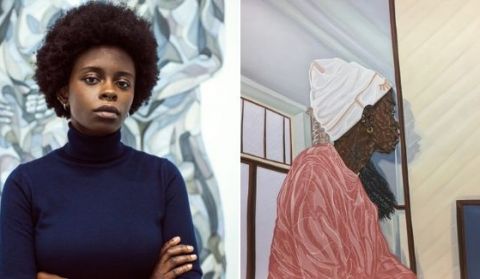
Toyin Ojih Odutola has gained a lot of popularity over the years for her pen ink drawings, which raise pertinent questions about the construct of blackness. Now, with a recent sale of one of her stunning pieces, she’s officially the third highest selling Nigerian artist of all time. 

After moving from Nigeria to America at the age of five, Ojih Odutola became aware of her blackness and began questioning her identity. Due to the shock of this transition, she used art as a coping mechanism, and over time, it transformed into an “investigative, learning activity” for her. 

Speaking with Vogue about how art helped her escape, Odutola said:

“I was obsessed, capturing everything I saw and being fascinated with the incredibly simple task of looking at something and transmitting it onto paper. It’s an immediate magic.”

Yesterday at the Sotheby’s, Toyin sold one of her fantastic drawings, titled ‘Compound Leaf’, for £471,000 (roughly N215 million), making her the 3rd highest selling Nigerian artist of all time — behind fellow female artist, Njideka Akunyili Crosby, and the legendary Ben Enwonwu.

Check out more of her work right here: 

Credit: konbini.com

For the first time in Portland, Oregon’s history, two Black women are leading both the city’s police and fire bureaus.

On June 13, Sara Boone became chief of Portland Fire & Rescue, joining the ranks of Danielle Outlaw, the Oregon city’s police chief.

According to the U.S. Census Bureau, people who identify as Black account for only 5.7% of the city’s population of more than 653,000 residents. However, of the nation’s 100 largest cities, Portland is the only one with police and fire bureaus led by Black women, reports Willamette Week.View image on Twitter

View image on Twitter

Multnomah Co Sheriff@MultCoSO

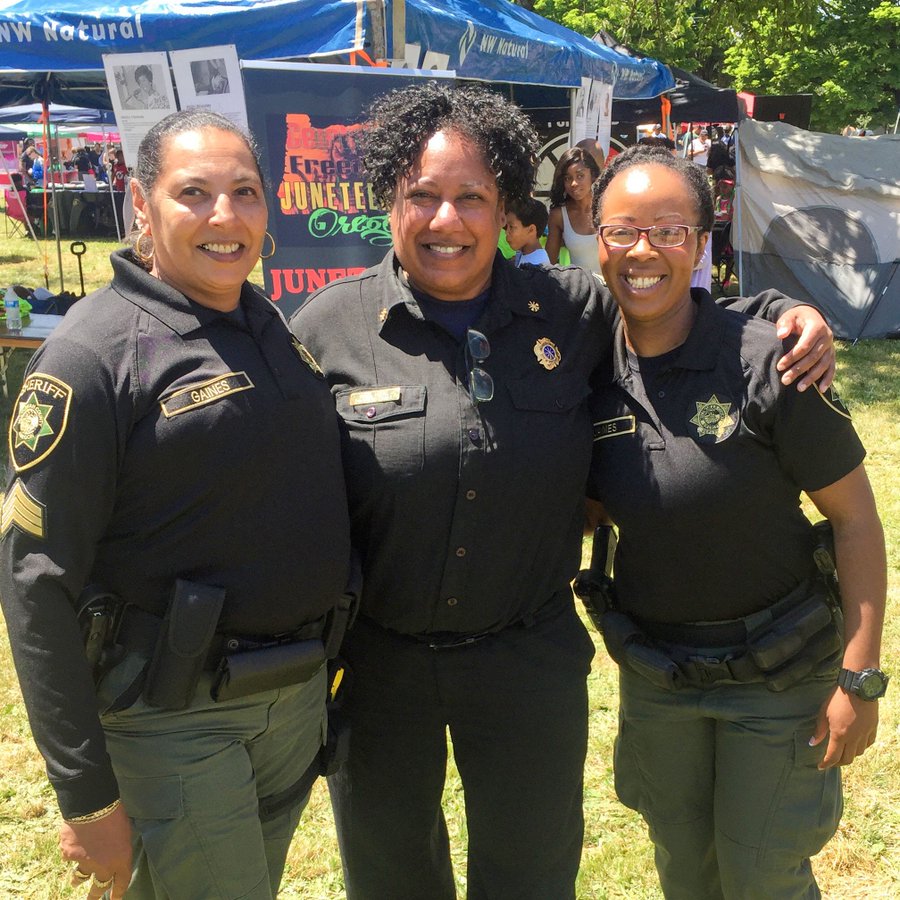
Today is #Juneteenth and last Saturday, MCSO joined the local community to celebrate!
During the festivities we ran into Portland’s first African American Fire Chief, Sara Boone. We are proud to serve alongside such great and diverse public safety professionals.@PDXFire184:25 PM – Jun 19, 2019See Multnomah Co Sheriff’s other TweetsTwitter Ads info and privacy

Outlaw, who was appointed Portland’s police chief in 2017, has focused on the city’s hotbed climate for protestors and continues to make reforms in leveling back excessive force and handling growing crime rates.

Boone’s appointment makes her the first Black fire & rescue chief in Portland history, but it isn’t the first time she has trailblazed in her hometown. Upon starting her career as an entry-level firefighter 24 years ago, the Northeast Portland native was the first Black female firefighter to join the department since 1883, according to The Skanner News.

“I am deeply honored to be the next Fire Chief of Portland Fire & Rescue, a bureau I hold in high esteem because of the men and women who serve with honor, integrity, and sacrifice,” Boone said. “I am committed to ensuring that our responsiveness and our professionalism live up to the highest ideals of service, integrity, and equity.”

Boone will be sworn in as chief at the beginning of August.

Twins, Tia and Tyra Smith recently graduated from Chicago’s Lindblom Math and Science Academy with 4.0 GPAs and secured the title of co-valedictorians.

The 18-year-old sisters each excelled in 12 Advancement Placement courses, including U.S. history. In fact, they both juggled five AP classes in their final year of high school. 

“I was like, ‘No, I’m not approving this. That’s not a stress level I’m comfortable with,’” Lindblom guidance counselor April Weathers told the Chicago Sun-Times.“What did they get? Straight A’s.”

For their senior year, Tia and Tyra launched two major projects at Lindblom: the academy’s first Black history, student art-featured gallery, titled “More than 28,” and a community health campaign for kidney disease. 

Both sisters credit their achievements to hard work, encouraging one another and consistent communication with teachers. 

“I think we’re successful, because of ourselves and because we’ve worked together throughout all these years,” Tia said. “I think it makes sense to do this together.”

Though they both will be studying theater this fall, Tia will attend Duke University while Tyra will enroll at Northwestern University. 

Both have been awarded a total of $5 million in scholarship funds. 

“Their achievement did not come as a surprise because we’ve been working with them at a very early age,” the sisters’ mother, Lemi-Ola Erinkitola, told Good Morning America. Erinkitola is an educator, author and founder of The Critical Thinking Child, which provides consulting and tutoring services to children, educators and families.

“It was very, very emotional and goes beyond just the title. It was the fact that they can share that platform together and a memory they can carry throughout their journeys in life.”

While neither sister knows exactly where their path will take them, Tyra said she has her eyes set on “be[ing] happy,” and Tia wants to dive into the world of theater, making it “more accessible” for the masses.

Credit: blavity.com

As the first Black, transgender and disabled model signed to a major model agency, Elite Model Management, Aaron Philip just landed her first full spread feature with Paper magazine.


View this post on Instagram


i’m so happy to share my @papermagazine cover for this year’s #PaperPride ❤️ me by my dear friend @mylesloftin, styled by icon @tiffanistyles, makeup by legends @raisaflowers @kbank.s, hair by wonderful @evaniefrausto, nails by @yukomanicure 💗 this is my first major cover and i just could not be more grateful or excited. i’m speechless, but what’s new? thank you to this fantastic team and thank you @justintmoran for always supporting & loving me 💕 @richiekeo @elitenyc i love you xoxo

A post shared by aaron philip (@aaron___philip) on Jun 24, 2019 at 7:10am PDT

Gracing the cover donning a fluorescent feather boa, the 18-year-old model is one of seven features for this month’s issue celebrating Pride and was interviewed by iconic supermodel Naomi Campbell. Philip, who was born with cerebral palsy, is very vocal about the representation disparities on the runway.

“As of right now, I’m one of two physically disabled models in the entire industry,” she told CNN in February

“The fashion industry has only known one type of body, and one type of marketable figure for so long. (But) now we’re entering this time, and this climate, where all types of bodies want to be pushed forward and celebrated —not only celebrated, but be seen as desirable and marketable.” 

She adds that the marginalized should not be responsible for amplifying their voices when others could advocate on their behalf. 

“But it’s just the way of getting to where you need to be,” she said. “So I’ll do it. And hopefully I’ll do it so that other girls in my position don’t have to.”


View this post on Instagram


LOOK 18 ON @aaron___philip , a moment that will forever make my heart full ✖️ photos/videos by @elischmidtphoto #queercapital #madeinnyc

A post shared by @willienorrisworkshop on Jun 19, 2019 at 1:28pm PDT

Philip’s presence on social media has garnered much attention with a total of 120,000 followers on Instagram and Twitter. 

“Honestly when i get scouted/discovered by a modeling agency it’s OVER for y’all!,” she tweeted in 2017.

Since being signed to Elite, Philip has remained booked and busy with several featured profiles and brand marketing campaigns including Dove, Sephora and Teen Vogue.

Credit: blavity.com

Kidpreneur Alex Hopkins and her mom, Patrice, have curated a box that delivers self love and serves as a launch pad for self-awareness and self-esteem programming for girls across the nation.

Alex and Patrice Hopkins, founders of Confident Girls

Alex and Patrice Hopkins, founders of Confident Girls

Founded in 2016 by mother-daughter duo Alex Hopkins and her mom Patrice, Confident Girls is a plant-based company committed to the empowerment of young girls, through education and positive self-care. Confident Girls is excited to announce the release of its new subscription box, Confident Crate. Confident Crate offers a fun yet empowering monthly subscription box, that caters to a young daughters’ uniqueness along with fun surprises for the entire family to enjoy. The box contains 2-3 full-sized beauty products and an additional 3-4 curated items with a new and unique overarching theme each month.

Confident Girls is represented through a vibrant mix of characters named Jadira, Alex, Shima, Aja, and Andraya. These characters are loosely based on the characteristics, imagery, and personalities of Alex, her two sisters, and her two cousins. The Confident Girls characters represent the diversity that encompasses the Hopkins family.

Studies show that by the age of 6, girls gain awareness of their body image. By late elementary school 50% of girls develop a negative body image, and 78% by the time they reach seventeen. This lack of self-esteem has lifelong consequences. Girls who are raised with confidence are more equipped to handle stressful situations, exhibit a more positive attitude and have the ability to positively influence others and seek leadership roles in their community. The creation of Confident Crate allows us to bridge this gap and accomplish three key principles: the importance of self-care, seeking diversity in everything we do, and most importantly instilling in young girls all over the world the belief “that confident girls look like me.”

When asked about the importance of this crate Alex states, “Confidence to me is the courage to do something that other people are afraid to do. One of those things is being yourself and doing what you feel is right. Starting Confident Girls with my mom we hope that we can give people the courage and confidence to stay true to themselves.”

The Confidence Girls mission is to create a supportive environment that brings girls together. Alex and Patrice were so touched when girls and their mothers, having seen the characters on their skin care products, would approach them saying say, “Wow, there is a girl with red hair. She looks like me!”

“Representation matters and all girls need to see the best representation of themselves,” said Patrice, who serves as the company’s COO.

Alex is not only the CEO of a successful skincare line for her and her peers, she is also an honor roll student, star on the soccer field, and a county champion in track and field for her middle school. Patrice uses her M.ED in Special Education to create a curriculum for their educational programs and workshops which focuses on self-care, mother-daughter relationships and enhancing their vision of building the self-esteem of young girls all around the world.

For more information about Confident Crate, Confident Girls products or programming, visit www.confidentcrate.com

PRESS CONTACT:
Patrice Hopkins
571-228-6869
patrice@confidentgirls.net

Credit: Blacknews.com

For you, your argument might be that the lady is giving you confusing signals, and I agree that some women do that. But even then, no woman ever wants her freewill to be overridden. You have an obligation to respect that.

At different times in the last month alone, I have spoken with men who, during the conversation, have said, “When a woman says no, she means yes.”

You have heard that statement, no doubt. In fact, you are possibly one of the millions who believe it because, after all, women don’t know what they want. When men and women were created, why did it take so long for a woman to come on the scene, if not that they weren’t originally intended? What that means, of course, is that women don’t have as much anything as men, including freewill.

Ordinarily I wouldn’t be so bothered about statements like this, except that more than a few men have repeated the sentiment around me, which is really bothersome. That and the sad news about rape I’ve been hearing lately.

Women are raped and nobody enforces the law to protect them. But we force them to live with the consequences long after the incident. Do we really think that little of women?

When anyone – male or female – makes a statement like “When a woman says no, she means yes,” that person is propagating rape. See, people would have you believe that this statement applies only to instances where the man has a disagreement with the woman. They will say that when a woman says she wants to be left alone, what she is saying is the man shouldn’t go anywhere, that he needs to intensify his apologies. That is a big problem, however, and as well-meaning as it sounds, it is flawed. Highly so.

If you have been in enough disagreements, you can tell that staying, when someone has told you expressly not to be there, is fodder for aggression. What often happens is instead of abating the tension, the offender’s presence incites more anger. Why incite someone to aggression when you could easily walk out and talk about it at a more appropriate time? And let us not pretend that this is different, because it is not.

Unfortunately, religious leaders preach messages like this, too, which poses problems, because beyond petty disagreements between couples, they blur the lines and start to take statements like that to mean women are not intellectually sound enough to decide for themselves.

Can you see the problem here? Taking a word with a very direct meaning to mean something else, which is very consistent with how rapists think. Look at the recent abhorrence that happened in Abuja with policemen raping women. What if those women were prostitutes? Is that to say that a woman who chooses to earn her living sleeping with men is okay to be raped?

Well then, we might as well pass it into law that raping prostitutes is legal since we’re being all morally smug.

Freewill is the key here, and with it comes choice, as such no is a word that must never be negotiated.

Every time I think about the privilege of my humanity, one of the things I’m most thankful for is my ability to choose. But the world operates with such tyranny that one wonders if the infinite intelligence that put the power of choice in every human being didn’t know what it was doing when it did that. We have a world full of the effort to control people: sexual trafficking, domestic labor, war and all that sort. But the mandate was for everyone to dominate, not even over each other but over the earth.

When you say that a woman doesn’t really mean it when she says no, you take her for a fool. You take away the power of her freewill and give other people the permission to do the same. When you conveniently misinterpret her, you send her an unconscious message that her assertion carries no weight. Sadly, you then resort to blaming her when someone with as skewed a perspective as yours takes advantage of her. You didn’t invent the English vocabulary, so why give the words another meaning than originally intended?

For you, your argument might be that the lady is giving you confusing signals, and I agree that some women do that. But even then, no woman ever wants her freewill to be overridden. You have an obligation to respect that.

Irrespective of what a woman’s body language says, no means no. You must show a regard for her when you hear what she is saying, and respond.

Source: Bellanaija