Spiritual warfare is the tactic Satan uses to distract, destroy, and cause us to stumble. If we are children of God, he knows he can’t have us. But he will do whatever he can to hinder what God wants to do in and through us. Why? Because he hates God and he hates us.

Not only does he hate Christians, he especially hates the marriage between two believers. He’ll use every weapon he has to attack strong marriage and delight when they crumble.

Why does Satan hate Christian marriage?

Christian marriage is a picture of Christ and the church. It is a platform for the gospel. “This mystery is profound, and I am saying that it refers to Christ and the church,” Paul writes in Ephesians, about marriage. The enemy knows that if he can destroy our marriage or put it in a state of constant conflict and confusion, he will hinder the kingdom-building work God wants to do in and through us.

In marriage, most of the battle takes place in our heart and mind. The enemy knows the subtle lies he whispers in our ear can quickly do a lot of damage.

Here are 10 lies that the enemy whispers in our ears in his attempt to tear down a strong Christian marriage:

Lie #1: Your Spouse Is Meant to Satisfy Your Deepest Longings

“Your needs aren’t being met. They are being ignored. You deserve better than this. Your spouse is not making you happy or putting you first.”

Truth: The only one that can truly satisfy and make me happy is God. No person has the ability to meet all my needs or satisfy my deepest longing.

Lie # 2: If You Don’t Have the Energy to Invest in Your Relationship, That’s Okay

“You are so tired. You don’t have the energy to invest in the relationship with your spouse like you used to. Besides, you are married! You don’t need to do that anymore. They don’t appreciate it anyway and they don’t do much for you either.”

Truth: My spouse is a gift and I need to make it a priority to invest in the relationship. God can give me the strength I need, even when I am tired, to nurture our marriage relationship.

Lie #3: You Can Still Grow in Your Marriage without Intentionally Trying

“I know you haven’t had much time to talk with your spouse lately, but your brain needs a break! You are mentally exhausted. Take some time and scroll through Facebook for a little bit. Oh! Wait! And you need to catch up on your favorite show! Hello Netflix!”

Truth: We never know how much time we have, and we need to make the most of the time we are given. The Bible tells me to “redeem the time” and to live a disciplined life. I need to be careful I don’t waste time.

Lie #4: Date Night Isn’t Something You and Your Spouse Need to Prioritize

“You are so busy! You have to get the kids to school, and then you have all this work to do. And you probably should be more involved at church. Date night can wait.

Truth: It is important that I take time, on a regular basis, to evaluate and prioritize. My marriage is most important, and I need to make time for it, even if it means I can’t be committed to a few other things.

Lie #5: Marriage Is about Making Each Other Happy

“You deserve to be happy and you could really use some romance in your life. You need someone who will meet that need! You should really think about leaving if things don’t get better soon.”

Truth: Marriage is not about my happiness. It is a picture of Christ and the relationship to His church. It is meant to point others to Him. Yes. Romance is nice, and is a part of marriage, but I need to be committed to my spouse and to the covenant I made.

Lie #6: You’re Owed Something Out of Marriage

“You have the right to do what you want to do. You work hard and you are owed something. You work all day, and you deserve to rest. You deserve to be appreciated! You deserve a break from the kids.”

Truth: My life is not my own. I am called to serve my family and have a calling on my life to faithfully obey God regardless of how I feel.

Lie #7: A Budget Is Restrictive and Your Money Is Yours to Spend as You Want

“Don’t worry about budgeting. Why even try? Plus, you need a bigger house and your kids need a bigger yard. You need to be in a nicer neighborhood. You can get a part time job to finance it if you need to.”

Truth:I need to learn how to be a good steward of all that God has given me. I don’t need all that the culture says I need. It’s more important that I use my funds wisely and responsibly, and that I be generous with what I’ve been given.

Lie #8: That Person’s Husband/Wife Has Something Mine Doesn’t

“Don’t you wish that your spouse was more like your friend’s spouse? I bet he doesn’t play video games all evening or work late. If your spouse had a job like his, you’d be able to do so much more!”

Truth:Comparisons are not wise. I need to continue to pray for God to work in my heart and in the heart of my spouse and pray that we would learn how to best serve and encourage each other, being content with what we have been given.

Lie #9: Your Spouse Is the One at Fault, Not You

You are not at fault! He doesn’t realize how he comes across or that the way that he talks to you causes you to respond that way. He is the one that needs to change, not you!”

Truth:I am responsible for how I respond, no matter what my spouse does or says, and I will be held accountable for my actions.

Lie #10: You’ll Never Change (And You Don’t Need To)

“You can’t help it that you act this way. It’s the way your parents were. You learned it from them. You will never change.”

Truth: No matter what my parents did or how I grew up, I do not have to choose to repeat any negative behavior. With the help of God, I can do what is right and honor God with my words, and actions.

No matter how strong our marriages may seem, none of us are immune from these lies and, in a moment of weakness, we can fall prey to believing any and all of them.

We need to remember that our love for God should be what shapes and motivates all that we do and say in our marriage. Our posture should be one of servants, not demanding, entitled rulers. When God is elevated, when he sits at the center of your thoughts and life, you will be aware of the fact that only he can meet your deepest longings and needs. Your marriage, although it can be a blessing here in this life, does not exist entirely for our happiness alone, but for God’s purposes.

What lies have you let slip into your marriage recently? What can you and your spouse do this week to reconnect and remember what is true about marriage?

Gina Smith and her husband have served on a Christian college campus as the on-campus parents for over 20 years. They have lived on the campus where they homeschooled and raised both of their children. In her spare time she loves to write and recently authored her first book, “Grace Gifts: Practical Ways To Help Your Children Understand God’s Grace.” She also writes at her personal blog: ginalsmith.com.

Isabel José dos Santos, is an entrepreneur and investor. She was named by FORBES magazine as Africa’s first female billionaire with a net worth estimated USD $3.7 billion (March 2014). She was also named one of Africa’s 40 Richest people after having increased her stake in Portugal’s ZON Multimedia, a cable TV and Internet company, to 28.8% in 2012. That stake was worth a recent $385 million according to the magazine.

The are questions about how Ms. Santos accummilated her wealth during her fathers reign over Angola from 1979 to 2017.

She also owns 19.5% in Banco BPI one of Portugal’s largest publicly traded banks and is a board member and own a 25% stake, worth a conservative $160 million in Banco BIC Português, which recently acquired Banco Portugues de Negocios, a nationalized bank.

Ms. dos Santos controls her investments through two companies, Santoro Finance, based in Lisbon, Portugal and Unitel International Holdings BV, based in the Netherlands.

Ms. dos Santos started her business career in 1997, at age 24, opening a restaurant in Luanda, called the Miami Beach.

In the early 1990’s she was employed by Urbana 2000, a subsidiary of Angola’s Jembas Group, as an engineer and project manager.

Her father Jose Eduardo dos Santos, has been President of Angola, an oil-rich country with an estimated 40% poverty rate, since 1979, four years after the country gained independence from Portugal. He stepped down in fall 2017 anfer 48 years as president.

Ms. dos Santos holds a Bachelor of Arts & Science from King’s College, London.

The O.B. Lulu Briggs Foundation, named after the national statesman, High Chief (Dr) O.B. Lulu-Briggs, who passed away on December 27, 2018 in Accra, Ghana is providing free surgery and after-care to 100 women living with fibroids. The programme will be launched with an awareness raising campaign that would kick-off on the Foundation’s 18th anniversary celebration today. Chairman of the Board of the Foundation, Dr (Mrs.) Seinye Lulu-Briggs shed more light in this interview

The O.B. Lulu Briggs Foundation is celebrating 18 years of its philanthropic work. How has the journey been like for you?
It has been a fulfilling journey and I am proud of the work that the Board and staff of the Foundation have been able to do over the years. Primarily, I am grateful to God who has enabled us to have the resources to do this-and who has equally blessed us with the wisdom to celebrate him in this way. On September 21, 2001, I formerly announced that I had established the Olu Benson Lulu-Briggs Foundation. I did so to honour and institutionalise my husband’s prolific giving. High Chief Lulu-Briggs’ love and commitment to humanity shone through his charitable and philanthropic acts. For years, he had provided funding to build and support structures that secure people’s spiritual and material well-being. He was very proud of our accomplishments. The Foundation has, therefore, fulfilled its role and is a fitting Institution to warehouse his philosophy of sharing joy and ensuring that his philanthropic legacy lasts in perpetuity.

For its annivesary celebration, the foundation is focusing on fibroids. What makes this ailment of concern for you?
It was as a result of findings at the second medical mission we hosted this year in Bakana, Rivers State from May 20-24, 2019, where 3,853 people were treated and received health awareness information- earlier in the year in Akinima, 5,105 people received treatment. We do perform surgeries free of charge during our medical missions.

In Bakana, one of the services we offered was ultrasound scanning. We were surprised by the number of women who found out they required urgent fibroid surgery. Regrettably, due to the nature of the surgery and after care requirements needed, we were unable to provide fibroid surgeries during the mission.

However, we promised the women we would cover the cost of the fibroid surgery and after care they required. In the process of planning for their treatment, we discovered about 80 percent of women over 50 years old have fibroids and about 30 per cent of this group will develop symptoms such as undue discomfort of heavy and painful menstrual bleeding, premature labour, miscarriages and even loss of fertility.

We, therefore, decided to mark our 18​th anniversary by addressing the many myths and beliefs about fibroids in our communities through a month-long fibroid awareness-raising campaign. We also felt that our campaign would not be complete without us also offering, free of charge, the most common treatment women with fibroids in Nigeria are prescribed- fibroid surgery and after-care to 100 women who need urgent surgery but cannot afford the high costs associated with it. Fibroid surgeries cost about N500, 000. This is in keeping with our commitment to raising public knowledge about diseases that are prevalent in our communities.

In that case, the foundation has done a lot to promote the health of the people of the Niger Delta.

That is very much true. Past health awareness campaigns include Parkinson’s Disease, Prostrate Cancer, Kidney Disease and Diabetes. You must be aware that we recently provided N50m to endow a chair in Geriatrics at the Rivers State University College of Medical Sciences. For the fibroid project, we are partnering with the University of Port Harcourt Teaching Hospital and Rivers State University Teaching Hospital.

The Foundation actually began its life with the Care for Life Programme, a project that provides healthcare, shelter, caregivers, food, social and spiritual engagement and a monthly cash stipend to elderly citizens in Rivers state who have no resources to care for them. That still remains our flagship project. Since 2005, we’ve provided quality healthcare services, health awareness and education to ​124,826​ men, women and children through 32 free medical missions in rural and semi-urban communities in Akwa Ibom, Bayelsa, Cross River and Rivers State. We provide potable water, build potable water points and toilets in communities such as Ogonokom 1 & 2, Oproama, and Opu Ogbogolo, and in public facilities like the Degema and Port Harcourt prisons, to enhance well-being and public health. And through our education programmes, we build and renovate schools and provide scholarships (add numbers here). We also provide funding to teachers and trainers. Let me add that beyond training, the Foundation also provides working capital, equipment, skills building and training to micro and small business owners, particularly women and youth in our region, over 1,000 have benefitted.

Many would ask why you are doing this when your husband is yet to be buried, close to a year after his death and your family appears to be in a turmoil…
Unfortunately, you are right in a way. My beloved husband, High Chief (Dr) O.B. Lulu-Briggs, our grand benefactor, passed into glory in Accra, Ghana on December 27, 2018. It has been nine months of drama and needless controversy since then. Left to me and a majority of the children of my husband, we would have obeyed his wishes and given him a befitting burial months ago. But his three eldest children seem to have a different plan and they have done everything to keep the burial on hold. But in all these, despite lawsuits and trials by petitions to various law enforcement to tie me and the other children down, we have remained strong and unshaken because we know we are on the side of truth and no matter how long it takes, truth will always prevail. My husband will be buried at the God-endorsed time.

How do you feel, as the matriarch of the family, to see the image of your family negatively splashed across the pages of newspapers?
It is distressing, but perhaps inevitable, because the stakes were high for some people in the family. The initial idea was to blackmail me and falsely paint me as this Jezebel husband killer, but God has been on my side. All efforts to entrap me have been nullified. I have been told other plots are in the offing, but I remain unmoved because my conscience is clear. I lived with and nursed my beloved husband, an extraordinary God-fearing Christian, loving, kind, total gentleman, for years and I will remain loyal to him till my last breath. He taught me so much and reposed a lot of confidence in me while he was alive. As husband and wife, we were one and he died still confident that I would best protect his legacies. That is a huge responsibility that I will never run away from. In a way, I understand that the hostility that has come my way is a continuation of the family tensions and betrayals that my husband managed with grace and fortitude while he was alive. Those who are close to the family are well aware. I also know some of it is due to the contempt that some people in our society have for women. They don’t believe women have any rights or social standing. They are wrong, of course and in my case, I am thankful that my husband a paramount ruler himself had a contrary opinion. He took me to all functions with him, even the chiefly ones, where I was often the only female present. Indeed, I was his better-half.

What are your expectations over an early resolution of this crisis?
One can only hope. Let me state here that I am grateful to the committee set up by our traditional ruler, the King-Amanayabo of the Kalabari for its efforts to resolve the matter of the non-burial of my beloved husband. High Chief’s friends, contemporaries, associates and even acquaintances including former President Olusegun Obasanjo, General Ibrahim Badamasi Babangida (Rtd.), High Chief Abiola Ogundokun and many of my late husband’s friends- (most visibly High Chief Abiola Ogundokun), have waded into the matter based on their love and respect for my husband. Our governor, Nyesom Wike has also weighed in. I remain grateful and indebted to all of them, but it takes two wings for the eagle, or any other bird for that matter, to fly. I believe when my husband’s three eldest children finally realise I am beyond manipulation, they will see reason to give due respect to their father, announce a burial date and let his mortal remains be laid to rest as mandated by our Christian faith. I always find it curious that people appear fixated on inheritance, without giving a thought to the fact that the person that worked and built up the assets is no longer here with us and should be given the dignity of a peaceful and loving burial. But the work of God is unstoppable. My life’s mission is to uphold and enhance the legacy left behind by my husband. I will continue to do that, and I believe that he would have been delighted that the O.B. Lulu-Briggs Foundation is continuing its duty of care for humanity as he wished and thoughtfully planned for in his lifetime.

By: Kolawole Igandan

Mrs. Biodun Bello is the Administrator of Wholistic Outreach, a pet project of the wife of the General Overseer of the Redeem Christian Church of God (RCCG), Pastor Folu Adeboye, with the aim of rehabilitating commercial sex workers, destitute, rescuing stranded and homeless girls, among others. In this interview with ENIOLA DANIEL, the coordinator spoke on parenting, how the mission is rescuing the destitute and what government can do to discourage the social vice.

When did you start Wholistic Outreach and what are the things it set out to achieve?
WHOLISTIC Outreach was established in 2002 by our mother-in-Israel, Pastor (Mrs) Folu Adeboye. It’s a home to cater to commercial sex workers, trafficked girls, and stranded teenagers, restoring their lives and giving them hope. To the glory of God, we achieve this through rehabilitation.

We have a team lead by Mrs. Kemi Aaredokun Richard, and we go out on a weekly basis to brothels and other places to rescue the girls. And we go anywhere they give us the opportunity to minister and tell them about the Love of God and if the manager of the place permits us, after then, we hold special outreach where we go with our medical team and food. And once they come out, we have a shelter home, which we call the first point of entry. They spend a minimum of three months and maximum of six months in the shelter home. We have various programmes for them, they fast, they pray and they go for different programmes including deliverance in Hallelujah House; after that, we reconcile them to their families.

After preaching to them and they accept to follow us, we take them to the police station to record them that they are with us because we don’t want to go against the law, and we sign them out when they are going back to their family. Some go back to their families while the families release others back to us.

What category of people do you rehabilitate?
We deal with girls from age 13 to 38; sometimes we have girls below that age. We send some of them back to school.

Can you tell us how many girls have been rehabilitated since inception and is the Outreach only for rehabilitation of trafficked girls and sex workers?

We have rehabilitated hundreds of girls. Wholistic is mainly for commercial sex workers but we have some girls that ran away from home and are staying under the bridges.

What have been the challenges of changing the orientation of these women to embrace a decent lifestyle?
The challenges are two-fold. We don’t just go to hotels and bring them out; they must be willing before we rehabilitate them. We go there and tell them that there is a better place for them, so we leave after telling and sharing with them. They come out on their own free will.

The challenges mostly are that when they come, some of them get tired and want to go back. Some of them would say they have sex urges and feel like sleeping with men whether they want to pay or not, but that’s why we have counselors, people that stay and pray with them. It’s not something you can stop all of a sudden. Most of the girls don’t really want to go into prostitution; you will be surprised to see some of them are the ones taking care of their family needs.

How do these brothel managers react whenever you visit?
The Bible says that you cannot go to a strong man’s house without binding him. We go in the name of Jesus Christ and with the help of the Holy Spirit. Most of the managers do give their lives to Christ. The manager of the last brothel we visited in Shagamu said he doesn’t want to do the job anymore. One of the girls got married in August. We have lawyers and many who have passed through Universities and are doing well among the rescued.

African parents have been accused of not paying the same level of attention they pay on the female child to the male child, why is Wholistic doing the same rather than focusing on both genders?
RCCG has a home for boys and we call it Habitation of Hope, we have another home for the drug addicts. Presently, we have 48 girls in our home and some of them have children, we have a girl who has been with us since junior secondary school and now she is the University.

What do you do after releasing some of these girls to their parents and they return to the streets because their parents cannot cater to them?
If their parents can’t take care of them, they release them back to us. There are some of these girls from wealthy backgrounds, but they turned into prostitutes. Just like the crime rate in the country is on the rise, it’s the economy that makes some of them do what they do. Some of them follow their aunties to the city without knowing what they’re doing in the city. When the parents cannot take care of their children and one big aunty drives to the village in a big car, they allow their children to follow her; some even take them abroad for prostitution.

You mentioned that some of these girls come from a rich background, what could actually have pushed them into prostitution?
It’s unfortunate that some of our parents are wealthy in resources but don’t really have time for their families. Some may be due to peer pressure.

Picking up a girl as young as 13-year-old off the streets shows how bad the situation is, how do you feel seeing these girls?

You will be surprised to see an 11-year-old on the streets. Some of the commercial sex workers have children in the brothels, many of them give birth in the brothel. A little girl was brought here after she was molested, they destroyed her private part, we treated her and now she’s in JSS1.

We call them daughters in our home, so we sit together and talk and mummy G.O also pays them a visit.

Can you tell us how much you spend on each person monthly?
I can’t give that but I know how much we spend monthly. We spend over N2million monthly, aside from that, we go to mummy G.O to get foodstuff. The mission gives us money on a quarterly basis and she gives us money every month to cater for the needs of the girls.

Do you partner with other NGOs?
This is not about RCCG alone; we just came back from training in Abidjan, Ivory Coast. We have other NGOs that even if my home is filled up, I can call other people to accommodate them.

Based on your experience, what would be your advice to parents and society at large?
Parents must find time for their children; everything cannot be solved with money. We have a girl in our home whose grandfather was molesting her and we got involved, the grandma said, “baba was just playing with her,” after he was caught.

Parents must learn to visit their children in school unannounced. And our daughters must not think everything must be achieved now, they must look at the future, they must know that the sky is just a starting point.

Source: Guardian

Success does not come at the blink of an eye, it is a gradual process of everyday hard work and input irrespective of how small, and these daily efforts eventually emerge into stunning results. This is the case of Victoria Olufunmilayo Awomolo (SAN), who started her career as a primary school teacher in 1974 and later, Court Clerk, at Kwara State Judiciary in 1976. From there, she got admission to the Kwara State College of Technology for her A’ Levels. During her National Youth Service Corps programme in 1981, she taught Chemistry at Army Day Secondary School Bida, Niger State and later joined the Ministry of Education, Kwara State in 1982 and was posted to Queen Elizabeth School, Ilorin Kwara State where she taught Chemistry for 10 years. Her passion for self-improvement in order to fulfill a burning desire eventually made her quit teaching to study law at the University of Ibadan with the 1991/1992 session and became a lawyer in 1998. Awomolo is a member of the Nigeria Bar Association, International Bar Association, Commonwealth Lawyers Association, International Federation of Women Lawyers Association, Chartered Institute of Arbitrators United Kingdom, and Fellow Charted Institute of Arbitrators of Nigeria.

She has traveled the rigorous paths of the legal profession and held several elected and appointed positions which include, Secretary Organising Committee, NBA Conference Ilorin 2007, Secretary, International Federation of Women Lawyers (FIDA) Kwara State Branch (2004-2006), Chairman, Organising Committee, two decades of FIDA (Nig) Abuja Branch and Vice Chairperson, International Federation of Women Lawyers (FIDA) Nigeria Abuja Branch (2013-2016).

Her love and passion for the legal profession and her desire to equip herself more for greater exploits in the law practice with a view to positively impact humanity and make useful contributions to national and global development has seen her rise to the level of FIDA International Regional Vice President, Africa North and West, a post she was elected into in the Bahamas in 2017. In this interview with Guardian Woman, Awomolo talks about the height of her profession, the ideology behind FIDA and how the non-profit organisation, made up of women lawyers who are called to practice, in order to treat the issues of women in Nigeria and on the continent.You are one of the few women privileged to become a SAN, tell us about the height of your career as a lawyer?
Out of over 350 Senior Advocate Of Nigeria (SAN), only about 22 of us are women. The first woman to become SAN was Chief Folake Sholanke in 1981 long after we have had several men as SAN. It has been a very slow journey for women to reach the peak of this profession in Nigeria. I was the 18th woman to become SAN. It is about practise and your character. It is strictly on merit. You are treated with what you have done and accomplished in the profession.

Is there any reason why women have slow access?
Yes, this issue came up at the just-concluded NBA 59th Annual General Conference in Lagos. Women tend to be very slow at pursuing a career due to a lot of factors that are solely related to women. Looking at the statistics, more women study law now than in the last 10 years. Also, more women get a first-class at the law school, but immediately they are called to bar, a lot of factors come in, marriage, childbearing, cultural biases, and the rigours of practice, thereby obstructing the furtherance of career. Some male lawyers don’t even like to employ a female lawyer because they know that she would soon leave for marriage. They say they can’t even send married female lawyers on a trip, they can’t tell her to travel with them, marital restrictions on women, maternity leave and all. These are some of the factors that inhibit our growth to the highest level in the legal profession. And so you find more women that go into ministries, banking sector, the corporate organisations.

Tell us about FIDA, what is the ideology?
FIDA is a Spanish acronym for Federación Internacional dé Abogadas, which translates to the International Federation of Women Lawyers and it was founded in Spain by a group of women.

The ideology is to bring women together and to look at the issues of women and children in our society, everywhere on the continent and then to be able to defend them. We do probe women services, we go to court, we do legal clinics, we use advocacy, we work on our men, our leaders, and traditional rulers about all these practices that are against women, widowhood, inheritance practices and others. Lately we have the gender-based violence that is rampant, rape cases, sexual abuses, a lot. These are the issues that we take up and try to advocate against. And where rights are involved, we go to court. In matrimonial issues, maybe the husband is not responsible, not doing the right thing, we put a call through, we settle, and speak to them because we believe in maintaining a stable marriage. FIDA is not a woman activist group; we are into human rights and to look at the indigenous women and children. We have been working over the years. FIDA is over 50 years in Nigeria. We have done a lot of work and there’s nowhere in Nigeria now that FIDA is not known. We are in the 32 states of the federation and more states are coming up to be inaugurated. It is an NGO, we depend on grants, on donations. We go into the prisons, teach them skills, and do a lot to impart the society.

Tell us about the forthcoming FIDA conference, what are the issues to be addressed?
The issue to be addressed is centered on this year’s theme “The growth of women and children in Africa: Beyond rhetoric”. We cannot continue to see our women stagnant, we need them to grow and develop. Look at our political space for example, the percentage of women in the legislature is embarrassing and it is getting lower and lower everyday. We have only seven women in a group of 43 ministers, seven senators in a House of Assembly of 109. The House of Representatives with 306 members, women are not up to 10 per cent there. So what are we saying? We are saying that Nigeria in particular and Africa in general needs to do something about the status of women. The men also know, the politicians know that women constitute a larger percentage of the voters, so we have to figure out a way to get us working and on the move to. The congress commences on October 11-15 2019. This is Africa and African issues are going to be discussed. We are going to look at different issues concerning our children and women in Africa, so that we can make recommendations.

One of the many issues of women is financial empowerment; how is FIDA treating that?
The second day of the congress, Saturday 12th is our skills acquisition for 50 women. It is not about teaching them and letting them grow. We want to give them materials that will start them up. We don’t want to give them money, we will teach them how to be skillful and industrious. I believe that if the monetary social empowerment programme the federal government is doing goes to the poorest masses, they should be seeing changes in their lives by now.

How do you raise funds?
We go into collaboration with banks, with multinational companies and we also get grants that help us to work in states and empower women because we have discovered that no matter how much advocacy you do, if we don’t empower women, they will continue to suffer these prejudices from men, because some men intentionally trample down on their wives so that they will not have any power at all.

Does FIDA also handle the issue of gender equality
Yes, that’s the basis of our goal. We are affiliated with the United Nations, we go there every year and come back home and then deliberate. The last General Assembly, there was a gender equality bill that was brought back by Senator Olujimi and I was going to come out to give FIDA’s position when they said we should come and defend it. But alas, we got to the National Assembly, they told us that they didn’t form a quorum and asked us to go away indefinitely. Up till today, the papers are still on my table. We were not able to defend it. But thank God for the VAPP – Act (Violence against Persons Prohibition), it deals very much with issues about violence against men and women. That act is being used now by NAPTIP and by other agencies to deal with offenders. We also have the child right act. Children now have rights in Nigeria. We now have this set up in most states of the federation’s family courts so that if there’s any infringement on any child, these courts handle them separately. We have collaborated with other agencies and big players in the actualisation of these laws. We advocate for gender equality, going to the markets, going to villages, discussing with traditional rulers and all stakeholders.

How does FIDA treat the issue of Rape?
FIDA has always condemned rape. In fact, at FIDA branches, they will tell you everyday, one rape case comes up at that desk and we have curb against it vehemently. But thank God for social media, the issues are more open, because there used to be a culture of silence. Victims will not want to speak out, parents would want to cover them up, whereas victims are psychologically and physically traumatised. Some have contracted diseases such as HIV/AIDS, others, without speaking out. Diverse cases like fathers raping their daughters, men raping toddlers and all.

Is FIDA involved in the case of the Benue girl, Ochanya?
FIDA is on the case in Benue State, we have taken it up. The 13-year-old girl, Ochanya, who had been raped since she was seven years old, unfortunately, died. FIDA is on it. Also, we must speak to ourselves as women to be more humane, sensible and sensitive to such issues. Look at the other woman that locked a boy inside a dog’s cage. Another one beat her daughter until she collapsed and died in Ondo State.

Is there anything FIDA is doing to keep women in marriage and still find a way to pursue their career?
Marriage is a private thing and it is a choice. FIDA will not go into any man’s house, or any woman’s home to ask how are you doing? How is your husband treating you? But if there is a problem reported to us, we now call the husband, seat them down and mediate. But generally, whenever we have the opportunity for advocacy, whether we go to them directly or we speak on radio, we insist on women empowerment. We tell women not to give up on their jobs for marriage.

While they stay to take care of their homes and children, they should at least get something doing however small so they can be financially independent. However, with what is happening in the world now, in the last five years, I don’t think any woman who has a job before marriage will give it up because of a man.

Any plans to go into politics?
Yes if I have the opportunity and feel safe about it because politics, as it is being played in Nigeria, calls for caution and intense passion. At my age, I must be careful. I won’t just jump into politics, I would rather wish to be approached to come and represent my people, that way, I have their support. However, I don’t have the kind of money put into politics but God can provide.

How do you relax, considering how much work and time you put into everything you do?
I ensure to keep work away from home, the same with my husband so we can spend quality time when we’re together. My husband is my best source of detox, I love and respect him and he is my number one inspiration.

Interview by Marie Diamond for Guardian 

The WeWALK smart cane was born from a visually impaired engineer named Kursat Ceylan. He is also the CEO and co-founder of a non-profit called the Young Guru Academy (YGA), the one responsible for making WeWALK come to life. As someone who faces the daily challenges of being blind, Kursat Ceylan knew the limitations of the current technology that people like him have to make do of. Knowing this, he created the WeWALK in hopes of changing the lives of the blind.

This innovative cane includes a built-in speakers, voice assistance, Google Maps, a Bluetooth system that makes syncing to other devices possible, and high-end sensors that alerts the user through vibrations when above chest level obstacles are within proximity—something a regular cane cannot provide.

Google maps helps people with their smart cane.
WeWALK Facebook Page

In these days we are talking about flying cars, but these people have been using just a plain stick,” he explained to CNN. “As a blind person, when I am at the Metro station I don’t know which is my exit… I don’t know which bus is approaching… which stores are around me. That kind of information can be provided with the WeWalk.”

One of Kursat Ceylan’s goal in making the WeWALK is to make the social participation of people like him full, and easier. To him, the WeWALK was made to “support the visually impaired in their full participation into social life.” This device is not completely new, but the fact that he was able to utlize and incorporate existing technologies such as voice assistance, Google Maps, and Bluetooth syncronization, makes it a completely new idea.

WeWALK Facebook Page

A lot of people have expressed their joy and excitement for having this kind of device available for the visually impaired.

Well done Ceylan! This will enhance lives of of the visually impaired by so much!” Julia Teng Roo Seen shared.

Just add a taser and it’s perfect for all situations!” Bill Ward joked.

Even Duygu Kayaman, a proud user of the WeWALK shared her sentiment regarding this innovative device.

WeWALK Facebook Page

To me, WeWALK represents the end of an era and the start of a new one.

According to the World Health Organization, an estimated number of about 36 million are blind. Just imagine the possible change and impact of the WeWALK in these people’s lives once they get their hands on this groundbreaking device!

Know more about the WeWALK by going to their official website and watch Kursat Ceylan as he introduces the smart cane below:

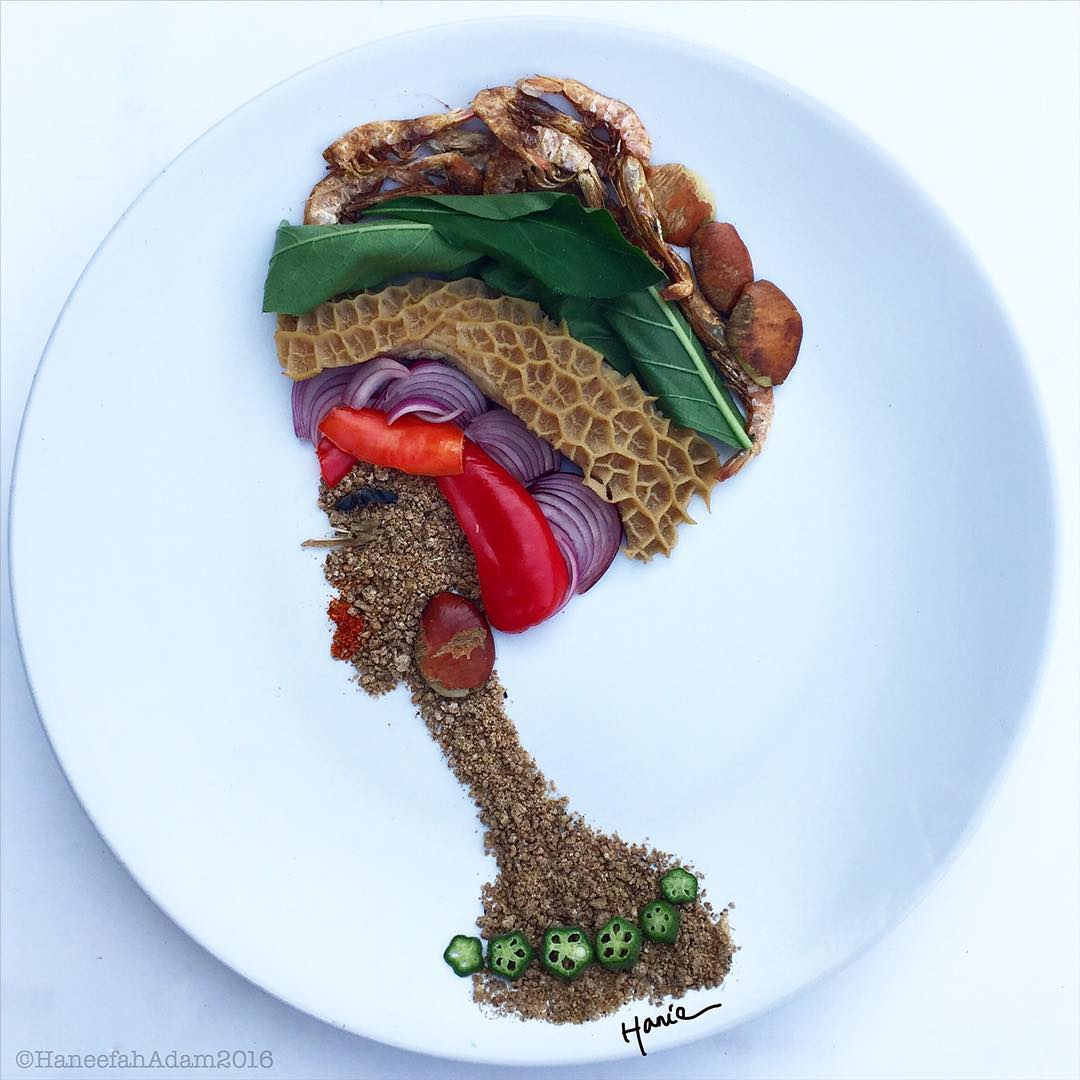
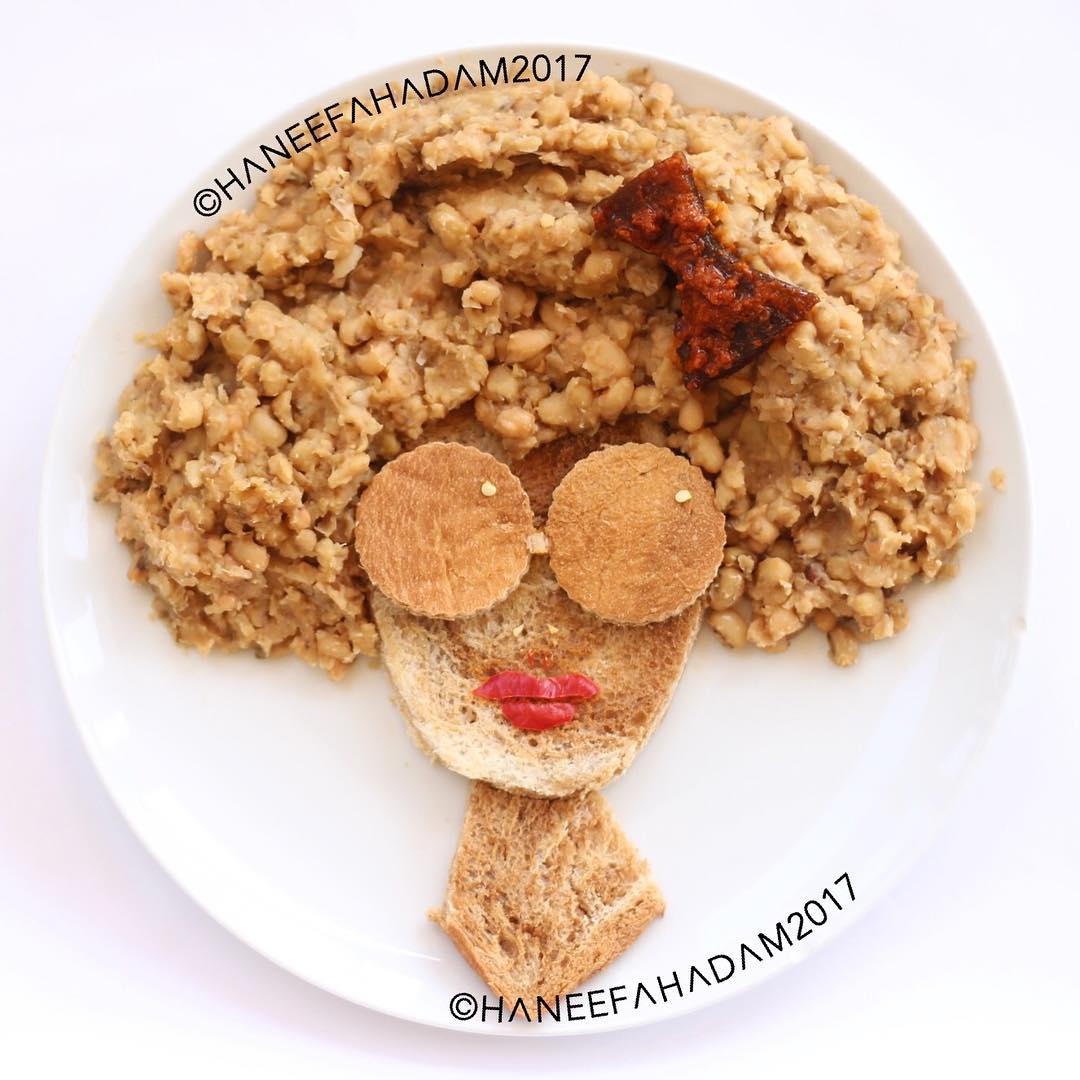
Nigerian visual artist Haneefah Adam is known for her food inspired, eye-catching and creative artworks talks to CNN International about her work and her passion.

In the interview with CNN, Haneefah says  “I have always been artistic, growing up, my mother said I had a flair for art. I do regular portraits, I sew and paint, but what excites me the most is food”.

On her next steps, she says: “I want to partake in more exhibitions. I currently live in Kwara, northern Nigeria; it is difficult to make a mark in the country’s art scene from here.”

In 2016, she won the #TechMeetsArtNG exhibition, sponsored by Samsung Nigeria and Rele Gallery. The competition was a culinary exhibition aimed at exploring the artistic presentation of some of Nigeria’s local meals.

See some of her food art:

Haneefah Adam

Haneefah Adam

One of the biggest challenges to saving anywhere, is impulse buying which may also be as a result of people thinking the cash at hand is too small to take to the bank. But it’s the little drops of water that makes the mighty ocean, yeah? People are beginning to recognise this.

In the last few years, the use of piggybanks, popularly called “Kolo” in Nigeria, have increased, as more and more people are beginning to become for financially responsible.

This means there’s a market for Kolo manufacturers. Ufia Aniebietabasi, recognised this, and is now building a thriving business – Kolo Lagos.

Ufia was in her final year in the university when she realised that she had no savings whatsoever, whether at the bank, or even at home.

She decided to change this. She got a carpenter to make a piggybank for her and she disciplined herself to save money.

It worked!

And she told her friends about it and they were interested.

That was how Ufia’s journey began.

She began making Kolos crafted and designed to promote the rich and beautiful culture in Nigeria and Africa. They are really colourful and beautiful, making saving

Today, Ufia has a distributor in another Nigerian city, and she’s currently in talks with an international distributor.

The Mass Communication graduate from the University of Lagos is also a conference speaking, focusing on the importance of maintaining a savings culture.

We celebrate Ufia for recognising a market and creating a thriving business as a result which is impacting people’s lives.

Ade Balogun was working as an architect a decade ago when she made the decision to permanently loc her hair due to her crazy schedules and spending 2 to 4 hours twice a month at a hair salon wasn’t working for her.

She decided to loc her hair. But that came with its own challenges. Her colleagues made fun of her and at some point, she began to dislike how she looked.

It brought back memories from 3 years prior. While in architecture school, she told her mum she wanted to loc her hair and her mum said nothing until they were driving one day and saw a mentally ill man and she goes: “is this what you want to do to your hair?”

Ade kept at it and a year into her hair journey, she had a conversation with a friend who kept her natural hair and made her understand that there’s nothing wrong with wearing her natural hair.

This motivated her to keep wearing her hair the way she loved. To combat the lack of societal acceptance of dreadlocks, limited styling options and unprofessional salon services, Ade re-created styles from watching YouTube videos and applied her architectural leanings towards generating even more unique hairstyles.

She decided to start a blog (locitude.blogspot.com) to help people like her going through the same challenges with their locs. That was how her platform Locitude (Locs with an Attitude) was born.

Locitude is a community for people with locs. The platform has five pillars – its hair studio, product line, events, content creation via its blog and magazine, and education.

Ade also promotes societal acceptance of locs, self-confidence, networking, collaboration, and hair care and maintenance among people with dreadlocks, through her platform.

She hosts the annual Loc Appreciation Day in Lagos and has given talks at a TEDx event as well as Social Media Week, Lagos.

Ade is a visionary who is putting the fun back in for women and men who want to rock their natural hair with attitude and panache, and we’re totally rooting for her!

Wadi Ben-Hirki was only a 17-year old undergraduate at Covenant University when she decided to be a voice for the voiceless. Wadi founded the Wadi Ben-Hirki Foundation (WBHF) to help disadvantaged children in the areas of education and social welfare.

WBHF runs lots of projects including #EveryChildIsYourChild, Sapphire by WBHF, #RescueMakoko, #Street2School, #GirlsNotWives and #LITMOW (Love In The Midst Of War), through which it has reached hundreds of children across the country, with a focus on northern Nigeria.

With #EveryChildIsYourChild, WBHF teaches and encourages people to treat every child equally, irrespective of gender or biological parents.

With Sapphire by WBHF, the foundation raises funds through the sale of merchandise, and in the long run, hopes to employ only less privileged, disabled and victimised children.

The #Street2School initiative works to take the millions of out-of-school children into the classroom.

WBHF is fighting child marriage and gender inequality with #GirlsNotWives.

#LITMOW (Love In The Midst Of War), running in north-eastern Nigeria affected by the Boko Haram insurgency, is an initiative through which the WBHF spreads love to the residents.

Wadi is one of the Country Representatives for the Chatham House Common Futures Conversations. She has also been selected to serve on the African Leadership Institute Youth Advisory Board

Wadi was one of the youths selected to participate in the African Union Regional Youth Consultation on Human Rights (August 2016). She has been nominated for the Choice Humanitarian of the Year 2016 (AYCA), West African Philanthropist of the Year 2016 (CNBC All Africa Business Leaders Awards). She also won Nigerian Teen Choice Awards’ Choice Philanthropist of The Year (2015 & 2016) as well as Humanitarian of the Year (2016) at Covenant University.

Wadi is spreading hope and love to children across Nigeria and we’re rooting for her!