University of Port Harcourt, UNIPORT, has launched its policy against sexual harassment where amorous hugging between lecturers and female students is now an offence with those found guilty punished severely.

The Vice Chancellor of the University, Professor Ndowa E. S. Lale at the launch of the policy ceremony, which held at Ebitime Banigo hall said the University decided to raise the bar on sexual harassment to ensure that the young men and women put in the charge of lecturers are protected, especially from antics of sexual predators who use their privileged positions to blackmail or railroad their unwilling students or subordinate staff into granting them sexual favours.

He said the management of the University in the policy document defined the rules of engagement in terms of the acceptable of engagement between lecturers, administrators and students, including visitors to the university. Prof Ndowa vowed that sanctions would be meted to earring members of staff but added that there was a robust in built checks and balances to protect those who are innocently accused.

He also warned that any person so accused would be presumed guilty until he or she could prove otherwise under the established rules of fair hearing. Prof Ndowa also warned that henceforth, lectures and administrators who did not remember to tell their tailors to sew zippers in front of their trousers should be ready to bear the consequences of their amorous liaison with female students.

He warned that the same applied to students who harassed lecturers to award them undeserved grades, saying they should equally be ready to face the music if and when caught in the act of self advertisement to their lecturers.


Credit: LIB

When Kheris Rogers was bullied because of her skin color in the first grade, she found strength in affirmations. Her mother helped build her confidence, and Kheris reminded herself daily that the only person’s opinion that mattered was her own.

With that new outlook, the saying that Kheris’ grandmother had been repeating to her and her sister took on a whole new meaning. That’s when Kheris, now 13, decided to start a clothing line dedicated to fighting against colorism and bullying.

“I was like, ‘wow, why am I dark, why don’t I become lighter?’ I wanted to stay in the bathtub one time so I could get lighter,” Kheris said. “When I told my mom about it, she started making me feel more comfortable in myself, saying affirmations in the mirror every day that I’m beautiful [and] it doesn’t matter what other people think of you — only what you think of yourself. You know that you’re smart, creative, special at the end of the day. And that’s basically what my message is behind Flexin’ in My Complexion.”

A

Kheris said she got the idea for the clothing line because her grandmother constantly told her and her sister that they were “flexing in their complexions.” So, Kheris and her sister Taylor acquired a screen printer and some t-shirts, and started stamping the phrase on clothing. The first batch of shirts, Kheris said, sold out in just 10 minutes. So began Kheris’ journey to being an anti-bullying and anti-colorism advocate.

The line has been worn by celebrities including Alicia Keys to Lupita Nyong’o, and has won Kheris honors like being named one of Teen Vogue’s21 Under 21 class of 2018, and being chosen to participate in a Lebron James campaign for Nike.

Now, Kheris has taken her message beyond the clothing line, going to speaking engagements and sharing her story with her peers on social media. This, she said, helps show other young people experiencing bullying, racism, or colorism that they aren’t alone. One way she helps her peers sturdy themselves against the words of their bullies is the same way she overcame her own detractors: with affirmations.

With so many young people becoming advocates not just for themselves but for their peers, Kheris said she has hope that the future will be ripe with confident young people like her.

“My vision for the future is everyone being themselves and loving themselves on the inside and out,” she said. “I just love my complexion, I love who I am — and everyone should.”


Culled from Teen Vogue

Entrepreneurs are known to possess specific skills that fuel their desires to start, manage, and succeed in a business venture. These traits, however, are also being seen as contributing negatively to their mental health at a given time in their lifetime.

Recent investigations indicate that entrepreneurs are more likely to suffer mental illness. According to Michael Freeman, a psychiatrist, psychologist, and former CEO, entrepreneurs are 50 percent more probable to report having a mental health breakdown, with some particular conditions being more prevalent among founders.

In a recent study, Dr. Freeman observed that up to 72 percent of entrepreneurs surveyed self-reported mental health issues.

THE FINDINGS FROM THE RESEARCH INDICATE THAT ENTREPRENEURS ARE:
  • Twice as likely to suffer from depression
  • Six times more likely to suffer from Attention Deficit Hyperactivity Disorder (ADHD)
  • Three times more likely to suffer from substance abuse
  • 10 times more likely to suffer from bipolar disorder
  • Twice as likely to have a psychiatric hospitalization
  • Twice as likely to have suicidal thoughts

Let’s talk about Mental Health

According to the World Health Organization (WHO), mental health is not merely the absence of mental health challenges.

It is the “state of well-being in which every individual realizes his or her own potential, can cope with the normal stresses of life, can work productively and fruitfully, and is able to make a contribution to her or his community”.

Also known as mental well-being (MWB), mental health, which is traditionally studied in medicine, psychology, and public health, is increasingly gaining attention in other disciplines as well.

Scientists, psychologists, economists, management experts among many other experts are taking an interest in the mental health issues of entrepreneurs.

The experts have concluded that mental disorders are not only common but may, in fact, fuel the entrepreneurial spirit.

According to Michael Freeman – executive coach to entrepreneurs and clinical professor of psychiatry at the University of California-San Francisco School of Medicine…

“Mental health conditions are accompanied by positive traits that enable entrepreneurs to excel.”

Take ADHD, a condition that research suggests is more prominent among entrepreneurial types.

“If you have ADHD, two of the positive traits are a need for speed and an interest in exploration and recognizing opportunities,” he says. “[you have] an ability to act without getting stuck with analysis paralysis.”

Entrepreneurs are recognized as contributing to economic growth, innovation, and job creation across the world. They do so by identifying and addressing the needs in a particular market.

The late Steve Jobs referring to entrepreneurs said, “People who are crazy enough to think they can change the world are the ones who do.”   

In the midst of stiff competition and many challenges, entrepreneurs have to employ strict and strategic measures to remain in business. By so doing, these business-oriented individuals often neglect their wellbeing in a bid to grow their ventures.

Although in the past, entrepreneurs’ mental health has not received much attention, recently, leaders across the world have begun discussing mental health issues to create awareness on the matter.

Earlier this year at the World Economic Forum meeting in Davos. World leaders including the UK’s Prince William, CEO of HSBC, among others, shed light on mental health problems in a therapeutic and non-stigmatic way.

The mental health crisis in start-ups

With such alarming and scary statistics, the question is: why are entrepreneurs more likely to experience mental health issues?

Speaking from his Nairobi office, director of Consulting and Training at People Centric Management Company, Ken Munyua shared with us insights on the following seven areas that make entrepreneurs more susceptible to mental problems.

1. Fear of failure/uncertainty

“Fear of failure has crippled many people even before trying,” observes Munyua.

Uncertainty and anxiety contribute negatively to our mental well-being. With so much competition, uncertainty is ever a looming phenomenon among entrepreneurs.

Remaining positive and pressing on in the time of our powerlessness should be the ultimate goal for any businessman/woman.

“Get out there and try; if it does not work, use the experience to improve on your next venture, Munyua advises.”

2. Social isolation

Incognizant of how they contribute to mental problems, those close to the entrepreneurs can create a social gap through alienation.

While entrepreneurs are excited about the new venture, often, the society including friends and family fail to offer the needed support.

Choosing to the non-traditional path can bring about social isolation as one focuses all energy and time into succeeding in the business.

3. Stress

Munyua notes that in the formative stage, in particular, entrepreneurs require more time to start and ensure the business survives.

During this time, many people in business are pressed hard in managing both business and social life.

Over time, the stress leads to sleepless nights, overworking, and lack of appetite or skipping meals due to work and the problems keep spilling over, which can lead to depression if the stress is not addressed well on time.

4. Impression management

One thing that entrepreneurs do well is acting like everything is working even at the edge of failure.

By creating this facade, entrepreneurs do not seek help even when they need it as they do not want to appear weak.

This disconnect between personal experiences, and what they share with the public creates insecurity, and a sense of confusion, further leading to stress, and consequently depression.

5. Inadequate resources to address mental health

Mental health resources in entrepreneurship, as is the case in other fields, receive little or no support.

As organizations and firms come together to fund and support budding as well as existing entrepreneurs, factors such as mental wellbeing of the businessmen and women should be factored into the budget.

6. Too many expectations

Munyua observes that Carl Rodgers, a renowned psychologist, warns that human beings are disturbed when expectations are not met. “Always hope for the best but prepare for the worst,” Munyua adds.

Our mantra should be “expect nothing, and be prepared for anything,” as the saying by the Samurai of ancient Japan goes. We should be open-minded about the eventualities that might come; both positive and negative.

Munyua calls on entrepreneurs to have a go-to person (s) who is ready to support and invest in your well-being.

Moreover, establish a routine that allows you time off business or any other work-related duties. Use this time to rest and rejuvenate physically, spiritually, and mentally.


Article written by Maureen Murori


Culled from sheleadsafrica.org

Photo credit: google.com

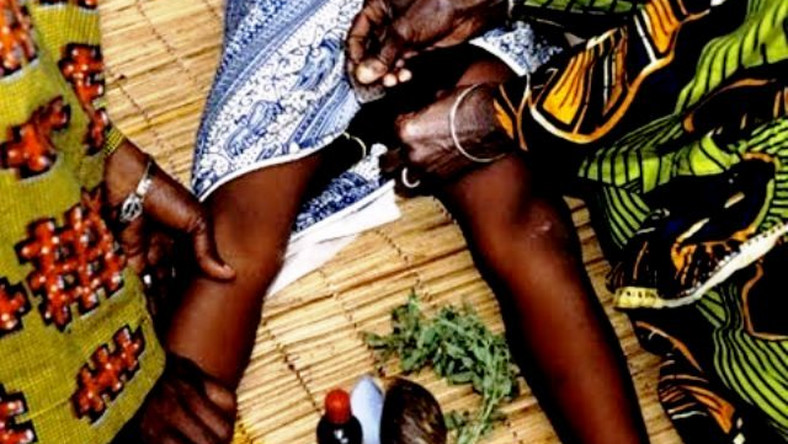
The people of Ilawe-Ekiti, Ekiti South West Local Government Area of Ekiti State, on Friday officially renounced the practice of Female Genital Mutilation (FGM).

Oba Adebanji Alabi, the Alawe of Ilawe-Ekiti, who is also the Chairman, Ekiti State Council of Traditional Rulers, described the act as unlawful and promised that the community would no longer be involved in the act.

Alabi spoke in Ilawe-Ekiti, during an event, organised by the state chapter of the National Orientation Agency (NOA), in conjunction with United Nations Children’s Education Fund (UNICEF) on FGM elimination.

“I want to declare today, on behalf of my people, that we will no longer be involved in the act of Female Genital Mutilation, because it is highly despicable and unlawful. Oba Alabi said.

“Henceforth, it is now a taboo for anyone to do it to our kids. I am surprised that at this age people are still into this act that has sent many of our children to early grave; and even those that survived it, are left impotent.’’

The state Director of NOA, Mr Dayo Famosaya, regretted that the FGM was on the increase in the state, especially in Ilawe community, describing it as an outdated act.

He assured that the agency would continue to collaborate with all relevant stakeholders in a bid to put an end to the menace in the state.

The UNICEF South West Consultant on FGM elimination, Mrs Aderonke Olutayo, disclosed that Ekiti State ranked third in FGM prevalence rate in the country.

Olutayo reiterated that the act was a violation of the fundamental rights of girls and women, and was compromising their health and psycho-social well-being.

She advised the government to demonstrate more political will in ending the act, by making budgetary provisions that would enhance advocacy.


Credit: LIB

According to Black enterprise, 12-year-old Gabrielle Goodwin just inked a major deal to sell her product, GaBBy Bows, in 74 Target stores across the country.

We first reported about Goodwin back in January when she and her mom, Rozalynn Goodwin, expounded upon the young CEO’s business, launching their Mommy and Me Entrepreneurship Academy. Gabrielle is the owner of GaBBy Bows, a company she started at the age of 7 with the help of her mom. The 12-year-old created the first patented double-face, double-snap barrette. She began selling her product, eventually expanding the business to include hair care products, books and the Entrepreneurship Academy which allowed other kids and their moms to microfranchise GaBBy Bows. 

Goodwin has gained national recognition for her invention, being featured in a number of publications and being named Black Enterprise’s “2018 Teenpreneur of the Year.” Her new deal with Target allows her to expand the brand even further.

The pre teen spoke with Black Enterprise previously saying, “Everyone talks about how I’m so amazing. I want them to know that they can do similar things as me and know that anything is possible.”

Now that she’s expanding her business, she hopes that it inspires young women even more. “This dream coming true helps girls know that whatever they put their minds and hard work to, they can achieve, Goodwin said. 

You can find GaBBy Bows at your local Tar

T R U S T–a simple five-letter word. Yet one that carries so much weight. Trust is the soul of any relationship. It is the super glue that binds it together. If you have it, it is the reason you can go to sleep at night next to your partner and feel at peace; the reason that the ding of a text, or the ring of a phone doesn’t shoot off alarm bells; the reason that your partner working late doesn’t cause an anxiety attack.

Lack of trust, however, creates just the opposite effect. It causes untold psychological distress. It turns you into a spy as you search for clues that will validate your suspicions. It pits you against your worst insecurities. It makes you sick and hypervigilant; it keeps you up at nights wondering, Am I not good enough? Is it my fault? Is everything we have a sham? What will people think?

If your trust has been shredded, you might feel hopeless. But, there is good news. A relationship that has been tarnished by a betrayal can be saved. As Jennice Vilhauer, Ph.D, writes in her article in Psychology Today:[1]

“Relationships are very complex and, depending on the circumstances, betrayal doesn’t necessarily mean the end of the relationship.”

Like a masterful tapestry, relationships are colossally multiplex. Understand that trust was broken because something in the relationship was broken. Are you willing to invest the time and effort it takes to salvage what took you years to build? Are you willing to find the missing pieces that made the relationship crumble? If so, then it’s possible to put the pieces back together.

Let’s learn some of the ways to do that…

  1. Get Clarity

When a betrayal occurs, it feels cataclysmic. Emotions are fragile, fingers are pointed, and a war of sorts ensues. But no event that big is born in a vacuum. Things happen for a reason. To gain clarity, you must dig deep. Was there something that should have been addressed, but ignored instead?

Talk to your partner. Find out what happened and why. You are going to be angry, no doubt, but if you want to reconcile, you must listen. The answers will often reveal the corrosion poisoning the relationship prior to The Event. The betrayal was the symptom, not the actual problem.

“Both sides must be willing to come to the table and be open, honest, and vulnerable. They must also care enough to want to put forth the effort that is required to make the relationship work again.”

If this doesn’t happen, then the relationship will surely die in a heap of pain, regret, and resentment.

  1. Discover the Motivation

People do things for different reasons. Usually, those reasons are significant and rational to the person doing them. They might feel hurt, lonely, and/or unappreciated. Sometimes, an outsider does the job that the other partner is failing to do.

Motivation plays an important role on whether or not your relationship can be saved. Neglect, an unsatisfactory sex life, anger, lack of commitment–they can all lead to infidelity. You might blame yourself for what happened, maybe even had a part in it. Then again, you may have had nothing to do with it

  1. Commit to Rebuilding the Relationship

How valuable is your relationship to you? Once the dust settles after the infidelity, ask yourself these questions:

Am I willing to commit to him/her despite what happened? Do I still love him/her? Will I be able to do what it takes to get through this crisis? “Do you have enough admiration and respect left to salvage the relationship? Be honest and ask yourself: Do we still have fun together and enjoy each other’s company most of the time?”

If you answered yes to those questions, then despite the long road ahead, it will be a worthy endeavor. If you are committed to each other, willing to examine the situation, and work on rectifying it, it is possible to pull through and come out on the other side.

Once you commit, forge ahead. Don’t half-heartedly work on it. It’s got to be all or nothing. If you’re halfway in, that means you’re halfway out.

  1. Consider Couple’s Therapy

In some instances, regaining trust and working through an affair might be too difficult a challenge. In that case, perhaps couple’s therapy is in order.

With a trained professional, you can address issues you might not otherwise be able to do sitting at home, talking over a bottle of wine, and asking, “Was she better than me? Tell me everything! I want all the details.” You actually don’t, but I won’t get into that here.

Outside help is an invaluable tool. You’ll learn how to navigate the rockiest of roads. And this is exactly what you need at a fragile juncture such as the one with which you are dealing

  1. Forgive

You’ve fought hard for your relationship; worked tirelessly to get beyond what happened. Your relationship is still tender, but at least you’re still together, and working to keep it that way. Sometimes, however, even though you’re still together and you think you made it through the crisis, anger and resentment linger. All is not forgiven.

The victim can start using that to their advantage. “You have nothing to say about (blah, blah, blah), especially after what you did!” The hurt party can hang the betrayal over their partner’s head, reminding them continuously that they better tow the line, or else. Because of what happened, the hurt party feels entitled, and maybe even becomes a little punishing.

In order to really get beyond The Event, there has to be forgiveness. On both sides. The betrayer may be feel so guilty that they can barely stand themselves. In fact, they may start acquiescing on things that they shouldn’t.

Forgiveness, while not easy, is key to the survival of the relationship.

  1. Give it Time

My son required jaw surgery when he was 19 years old. It was quite a painful ordeal. After the surgeon broke his jaw and put it back together, my son’s jaw was wired shut for six weeks in order for the proper healing to take place. He could only eat soft foods through a little syringe in his mouth. It took a good month and a half before his jaw was healed. Unfortunately, betrayal is not like jaw surgery. It’s much worse. To mend a broken heart requires the skill of a surgeon and lots of time. You’re looking at about 18 months to three years, depending on how long you’ve been together.

If you’re committed to making your relationship work, patience is crucial. You’re going to be nursing anger, sadness, disbelief, insecurity, maybe some even shame. That’s a full plate.

  1. Be Transparent

…like a perfectly see-through glass window! In order to regain trust, the guilty party needs to be absolutely transparent. The betrayed cannot think for a minute that there are any secrets. Secrecy will create further distrust.For instance, when the phone rings, don’t say, “I’ve got to take this,” and walk into another room. As a trust trasher, there is a lot of mending to do. Put aside the fact that you feel like your privacy is being invaded. You haven’t earned it at this point. You will need to re-earn their trust, so be open.

  1. Cut Ties Completely

If you are the person who has betrayed your partner, you must cut all ties with the interloper. That means no phone calls, no texts, no emails, no coffee dates. No last meeting for “closure.”

No contact means no contact. If it’s over, then let it be over. Your partner deserves that. You may have had your reasons for doing what you did, but have a better reason for rebuilding your relationship. That can’t happen if you maintain contact with the “Other” person.

Your partner will not be able to rebuild trust if they know you’re still seeing and talking to the person that nearly destroyed your lives together.

  1. Don’t Keep Bringing up the Event!

When you arrive at the point where you’ve picked up most of the debris, rebuilt your lives, and feel like you can move on, move on. That means, do not keep bringing up what happened. That will only serve to re-open the wound. Imagine severely cutting yourself. You get multiple stitches, and get it bandaged up. Instead of letting it heal, you keep taking off the bandage, and ripping off the stitches, just to look at the damage. Ouch!

If you truly want your relationship to become solid again, put the affair in the past, and leave it there. Learn from what happened, make the necessary adjustments, then proceed onward. Talking about it ad nauseam will only keep the pain alive.

  1. Do What You Say You’re Going to Do!

If you’re the betrayer, then this one is very important: Don’t lie! Say what you mean and mean what you say. Even the smallest lie, a “white” lie, if you will, could cause doubt to sprout, and result in your relationship taking another hit. At this point, irreversible damage can be done. Be consistent, reliable, and honest.

11. Apologize

Express your remorse. Be genuine. This goes a long way to start repairing the damage. Do what it takes to let your partner know how truly sorry you are.

The suggestions listed above can work. But there has to be a willingness to try, a commitment to do what it takes, and a decision that the relationship is worth saving.

But that’s a decision only you can make. So what’s it going to be?

Source: Rosanna Snee

 

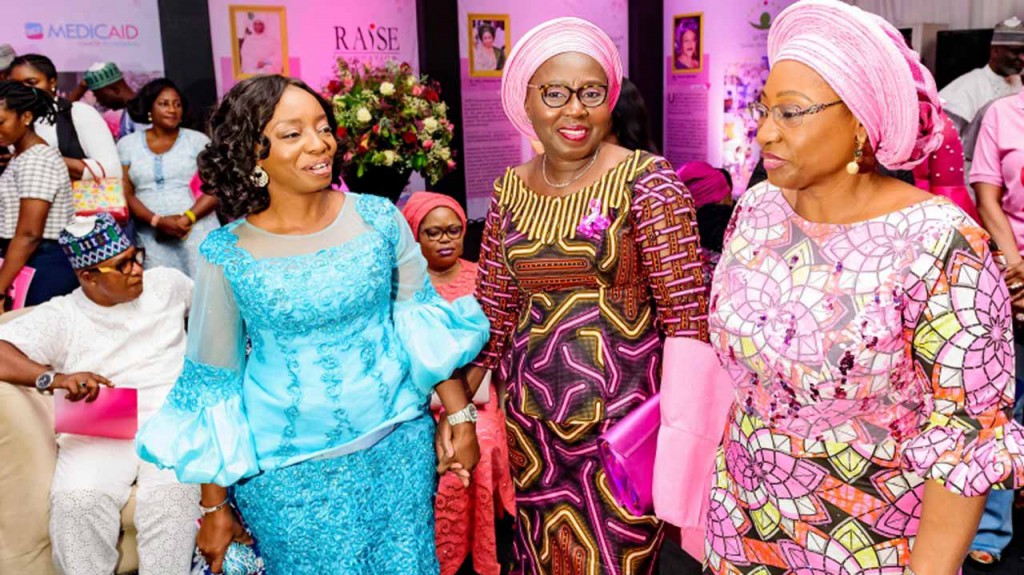
First Ladies of various states and their respective Foundations have joined hands to form an alliance called First Ladies Against Cancer (FLAC) to create awareness and tackle the deadly scourge. This is in commemoration of the global Breast Cancer Awareness Month (Pink October).

The ceremony which witnessed the unveiling of the FLAC logo also had the breast cancer awareness movie, Diamonds in the Sky, produced by filmmaker and actor, Femi Adebayo for Leah Foundation screened. Health officials from different foundations also held practical demonstrations on self-examination and advised women on the importance of early detection and treatment to individual life.

The First Ladies present include the wife of Ondo State Governor, Arabinrin Betty Anyanwu-Akeredolu; Dr. Ibironke Sanwoolu of Lagos State; Erelu Bisi Fayemi of Ekiti State; Deaconess Omolewa Ahmed, former First lady of Kwara State; Dr. Mrs. Linda Ayade,Cross Rivers state; Dr. Zainab Bagudu, Kebbi State; Mrs. Monica Ugwuanyi, Enugu State; Mrs Abimbola Fashola, former First Lady of Lagos State and her Ogun State counterpart, Mrs. Olufunsho Amosun.

Other guests who attended include Joke Silva, Toyin Abraham, Binta Ayo Mogaji, Omowunmi Dada, Desmond Elliot, the Director of the movie, Kunle Afolayan, Producer, Femi Adebayo and Pastor (Mrs) Iluyomade.

In her remarks, the chief host, the wife of Lagos State Governor, Dr. Ibironke Sanwoolu said that cancer is responsible for over 72 per cent of deaths every year, thus the need to step up intervention drive. Hence, FLAC was conceived to scale up advocacy against cancer.

Leading her colleagues to unveil the FLAC logo, wife of Ondo State Governor, Mrs. Anyawu-Akeredolu said: “Women most especially need to understand how cancer progresses over time and all hands must be on deck to spread the gospel that cancer no longer kills. According to her, women no longer need to die needlessly from the disease as awareness about screening can make it possible for a woman to detect it early.

In her comments, the First Lady of Niger State, Dr. Amina Abubakar Bello, noted that FLAC was conceived in 2017 to give voice to the cause, noting that part of its goal is to get government and individuals’ attention to fund cancer treatment.

Have you explored using LinkedIn to get clients as a freelancer, coach, consultant, or entrepreneur?

If you’re a freelancer, coach, consultant, or entrepreneur with a service-based business, LinkedIn is the right platform for you to be on now. The opportunities are endless, and if you use it right, it can be your major platform for getting clients for your business. For me, about 70% of my clients have come through LinkedIn. After months of using it successfully, I’ll share 5 key things you need to get clients consistently on LinkedIn:

Connections

This is the first key ingredient to getting clients on LinkedIn. And I don’t just mean any connection, you need relevant connections. Make sure the majority of your connections are your target clients. If you’re a graphic designer and you mostly connect with other graphic designers, how do you want to get clients? As an editor, I make sure that most of my connections are copywriters. You can’t connect with just any and everybody. It’s much better to have a small but targeted connection list than a large but irrelevant connection list. If you get this right, it will be a game-changer for your business.

Visibility

If you’re not visible on LinkedIn, you’re not going to get any results. This means that just setting up your LinkedIn profile is not enough. The only way your target clients can find you is if you’re actively posting and engaging. If you don’t post on LinkedIn, then forget about using it to get consistent clients for your business. The LinkedIn algorithm is set up in such a way that it favours only those that are active on it.

So what can you do to stay visible?

  • Post content regularly (at least 3 times a week if you’re just starting out).
  • Comment and engage with other people’s posts.
  • Play by the algorithm’s rules. The LinkedIn algorithm determines the reach your posts will get. So if you’re just starting out and you don’t play by their rules, you won’t get visibility, no matter how often you post.

Relevance

Posting and commenting is great, but if what you’re posting is not relevant to your target audience, then you’re posting amiss. You’ll be like someone punching the air when there’s a clear target you’re supposed to hit. This is so common on LinkedIn. I see so many people posting about several unrelated topics and then complain that LinkedIn isn’t working for them.

Besides posting relevant content, you also need to comment on relevant posts. If you don’t actively engage with posts by your target clients, how are they going to notice you? You can’t just comment on any and every post hoping that someway or somehow, you will attract the right clients. No, you won’t. And even if you eventually do, it’ll take you months or years to get tangible results.

So what makes a post relevant?

It’s valuable to your target audience. For example, since I’m an editor for copywriters, I make sure my posts are about what copywriters find valuable. I post a lot about writing and editing tips that can help copywriters. The goal is for most of my posts to drive discussions among my target audience so it will attract even more of them. Sometimes, I can talk about other areas that are relevant to them like freelancing. Still, those posts don’t show my expertise, so I don’t spend time making those kinds of posts. So before posting, ask yourself, “Is this topic going to drive discussions and attract my target clients?”

Originality

This one is huge. Showing your expertise is crucial to getting clients through LinkedIn. You can post, comment, and be visible on LinkedIn with relevant content. But if that relevant content is not your own, you’re selling yourself short. You need to have original posts. It’s not every time you should share or copy and paste a post. For potential clients to come to you, they need to see you showing your expertise. And they see it in full force when you post original contents that touch on topics that are relevant to them. You need to have your own voice and be able to voice out your opinions and advice.

Consistency

This is the glue that holds everything together to get you the results you want. If you only show up once a month and post valuable content, you won’t get any results. LinkedIn is a long-term investment with high yield returns. You need to set a weekly schedule to be consistent with everything you’re doing. Whether you’re connecting, posting, and engaging, you need to stay consistent to see tangible results.

What do you think? Have you explored using LinkedIn to get clients as a freelancer, coach, consultant, or entrepreneur?

Source: Bellanaija

The article titled “Nigerian Women Say ‘MeToo.’ Critics Say ‘Prove It.’ by Julie Turkewitz has gone viral, with Nigerians home home and abroad sharing their view on the #Cozagate incident.

This reaction – the need for proof of assault – seems to be a general one, as revealed in the article.

In Julie’s word ” But many women who have come forward in recent months have also experienced a fierce backlash, including attacks on their reputations and accusations that they’ve lied about the assaults. While their critics say they are merely applying appropriate skepticism to unproven allegations, their supporters say that the hostile reaction reveals just how difficult it is for women in the region to speak out about abuse.

Busola, speaking to the New York Times, revealed that the personal cost of coming out to tell her story has been high. “You begin to ask yourself,” she said, “did I do the right thing?” She shared that she’s been harassed on the internet, and has been threatened over the phone. She’s also had to have a very difficult conversation about rape with her three kids.

She spoke about the BBC #SexForGrades investigation, which she was although glad to see receive so much attention, also made her frustrated because Nigerians “seemed to need to see a man caught on video to take an allegation seriously.”

A woman who spoke to the New York Times about Busola’s alleged rape said that, “She was old enough to know to fight back.” The 25-year-old woman revealed that she too was a survivor of sexual assault.

Another man who spoke about the alleged rape seemed to believed that the rape actually happened, but asked that Busola forgive the pastor.

Read the full article on the New York Times.

Wear what you want to wear, go where you want and hang out with people you consider of similar interest without feeling guilty or having a subconscious voice judging you. If you are your true self, you will also attract people that you are aligned with.

You change so much on a daily basis that you have no choice but to be yourself. You are not person you were yesterday but rather, a different version of yourself. You can either be your better version or your worse version.

Often, society forces you to be and act in a certain way that is deemed appropriate and acceptable. There’s a societal benchmark for acceptance and likeability and this ‘appropriate’ way is said to likely give you leverage to having an acceptable and fruitful life.

So you go out and act in a certain way mostly to impress people that you don’t know, don’t care about you and make a good impression for people you may never see again. Don’t get me wrong, making a good impression is good, but is that impression the real you or a borrowed you? Do we need to scratch the surface to find out the truth about you?

You know this laid down way of living won’t get you a fulfilled life. Beneath those facades of socially or cultural propriety, you want to break free, hack your own mind and discover who you are. For you, this is a battle you need to fight.

Being your full self depends on how much of societal standards you can challenge. So, what if you dare all societal standards to be your relentless and unapologetic self? What if you can say what you need to say and when you need to say it? Wear what you want to wear, go where you want and hang out with people you consider of similar interest without feeling guilty or having a subconscious voice judging you. If you are your true self, you will also attract people that you are aligned with.

Oftentimes, when you act a certain way or standout, you seem weird, standoffish and sometimes, weird is cool. It’s okay to be unique. That’s the spice of your being and, hey, we need many spices here. Normal can sometimes be boring and frustrating. Besides, does playing by the rules not depress you?

Not being yourself, or limiting yourself comes from your fear of being judged. Your environment and, of course, the society, can either lead you to constantly berate yourself – leading to self and personality sabotage, or encourage you to live a limitless self.

Don’t Self Sabotage

By self-sabotaging yourself, you live in ‘personality-denial’ because you have judged yourself and recoiled to fit in the societal and patriarchal standards that seem normal and appropriate. You change according to the environment, impression and there is no in-between. You are either real or fake.

Self-sabotage won’t lead to a purposeful and fulfilling life because it interferes with long-standing goals. Accumulation of dysfunctional and distorted beliefs can lead to underestimating your capabilities and suppressing your feelings. This can wear you out because you can’t live like this forever. You can’t hide from the world. So what if they don’t like you? What if you are not ‘acceptable’ according to societal standards? You are free, knowing you are staying true to yourself, constantly hacking your own mind and living in your authenticity.

Dare To Be Yourself

When you look in the mirror, do you recognize the image you see? Do you know him/her? Is that image staring at you as your friend? You shouldn’t ever feel uncomfortable in your current state, allow yourself to develop at your own pace. Daring to be yourself is to be kind to yourself, it is the awareness of the need for self-actualization. The way you carry yourself or act in public should be you being your actual true self and not because of the impression you want to convey or the acceptance you seek.

Cultivate your inner advocate and lessen the voice of the inner critic. Take good care of yourself, trust yourself, believe yourself, think for yourself and form your own opinion even when the waves of opinions are drowning your voice. One thing is certain, you are either accepted for who you are or who you are not. Being accepted for who you are not is to be in the wrong crowd that might never understand you and your essence. Break into each dawn with the audacity of will to wholly embrace your personality, the world will always adjust.

It will be more convenient to be your genuine self. Talk to yourself and consistently say “I am enough, I am worthy and I deserve to be authentically me.”

About the Author

Nneamaka Onochie is from Anambra State but based in Porthacourt. She is a girl child activist and women empowerment advocate. She is a content creator a freelance/creative writer and personnel manager at Chrone projects. She loves reading and singing in shower. She teaches at her spare time.

Source: Bellanaija