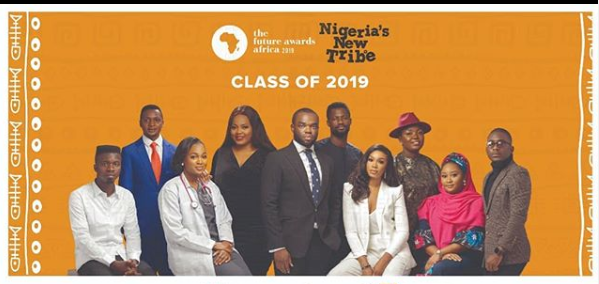
Chief Zebrudaya of ‘The New Masquerade’ has debunked the news of his onscreen wife’s death saying she’s not dead.

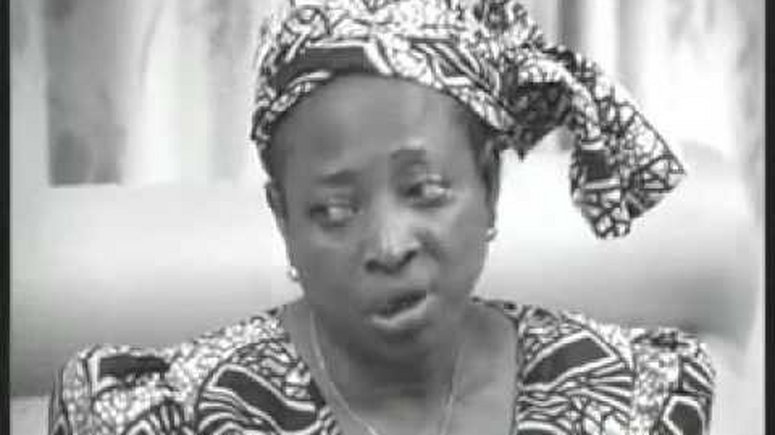
Lizzy Evoeme aka Ovularia was rumoured to have passed away after making a name for herself in the 80s sitcom, ‘New Masquerade’ but her onscreen husband, Zebrudaya has denied the claims.

Chika Okpala aka Chief Zebrudaya of the now rested sitcom, ‘The New Masquerade, has dismissed claims that Lizzy Eveome aka Ovuleria is dead.

According to several reports, Zebrudaya debunked the death rumour when he was contacted on the telephone.

He reportedly said Ovuleria is hale and hearty, not dead.

Who’s wishing her dead? I am telling you now that Ovuleria is not dead. You can call on the telephone and she will speak to you. Wishing death means that she will live longer,” Zebrudaya said.

Two member of cast of the 80s sitcom, 'New Masquerade', Chief Zebrudaya and Zaccheus have debunked Lizzy Evoeme aka Ovularia's death rumour.

However, Ovularia’s onscreen husband, Zebrudaya said the actress is currently suffering from arthritis as well as eyesight problem. “It does not mean that she’s dead,” he added.

Also, debunking the rumour, Tony Akposheri, who played the role of Zaccheus, Chief Zebrudaya’s house-help, told Vanguard that he just finished speaking with the thespian now, adding that she’s not dead.

On Tuesday, November 5, 2019, Twitter user, Churchill Ebhodaghe tweeted  about Evoeme’s death. The Twitter user had no details to back his claims.

In March 2017, Veronica Njoku, who is popular for her role as Ramota in ‘The New Masquerade,’ passed away. The late Njoku played the role of Chief Jegede’s (played by Claude Eke) wife and a close ally of Ovularia.

Her death was confirmed by Tony Akposheri, who played the role of Zaccheus, Chief Zebrudaya’s househelp.

‘The New Masquerade’ was a Nigerian sitcom that aired on the Nigerian Television Network during the 1980s until the mid 1990s. It was created and written by James Iroha who also acted in the sitcom as Giringori Akabogu.


Credit: pulse.ng

Walking with Shadows’, Funmi Iyanda’s debut film will premiere at AFRIFF on November 14.

‘Walking with Shadows’ first premiered at the BFI London Film Festival on October 9, 2019.

Directed by British filmmaker, Aoife O’Kelly, Walking with Shadows, stars Funlola Aofiyebi-Raimi, Ozzy Agu, Zainab Balogun, and Funsho Adeolu. The film is produced by Iyanda’s production company, OYA Media, in collaboration with The Initiative for Equal Rights (TIERs).

‘Walking in Shadows’ is a screen adaptation of a Jude Dibia novel published in 2005.

It follows the story of Adrian Ebele Njoko, a married executive whose sexuality is exposed by a disgruntled colleague causing an impact on his family.

Speaking about the premiere at BFI London Film Festival, Iyanda said: “Through the unique way the plot unfolds, the film fully explores many pressing societal issues and promotes the importance of self-discovery and acceptance in cultural society.

“It is an honour to premiere this movie at one of the most prestigious film festivals in the world. We are thrilled by the opportunity to share this with the international community and hope they are inspired by it as much as we are.

Funmi Iyanda is a multi-media personality who is popular for her TV show, New Dawn with Funmi Iyanda that ran for a decade on the national television station, NTA.


Credit: pulse.ng

Folasayo Ayodele is a business woman and founder of Single mothers Tribe, She answers our famous #7Questions below

What is your biggest fear?

My biggest fear is failing my sons. I will not give anyone a chance to say they lack in any aspect in life because they were raised by a woman.

2. In your darkest moments, what do you do?

I look back at where I’m coming from and how far I’ve come. Then I look ahead with gratitude for all things.

3. What is that one thing you would like to change about yourself?

Procrastination and not finishing up whatever I start. I have too many abandoned projects and decisions I’ve been procrastinating on.

4. Where do you see yourself five years from now?

I projected where I’d like to be now five years ago. I didn’t meet my mark and had to make some brave adjustments like relocating to Lagos. I am looking at five years from now; I should have been well settled into my business in Lagos. I see a me who has got everything together; business, my tribe would have by then made unforgettable impacts on more single mums.

5. What keeps you going?

I stay focus on the positive, I try not to permit negative energy in my headspace and around me. My tribe also keep me going, just knowing my challenges are not peculiar to me is a sure sign that I’ll win.

6. What is your stand on feminism? Do you consider yourself a feminist?

I like to consider myself humanist. I believe every human being deserve to be treated with respect and dignity. Be they male or female.

7. What keeps you up at night?

My dreams for myself and my kids keep me awake. Thank you.


Professor Olabisi Ugbebor is the first Nigerian  woman to have a PhD in mathematics at the age of 25.

Born in Lagos, Professor Olabisi attended Queen’s College, Lagos and proceeded to Cambridge Higher School Certificate.

During her time at Queen’s College, she taught her classmates mathematical topics that seemed difficult for them.

In 1969, she won a Federal Government  scholarship to study mathematics at University of Ibadan, where she was the only female student in her class of seven, and graduated in 1972 with Second Class Upper Honours degree in mathematics.

The University of Ibadan later sponsored her to the University of London, the First University Statistics Department in the world,  for her masters programme in 1973 and her PhD in 1976 at age 25.

Professor Olabisi is also the first Nigerian woman to be appointed Ag. Head, Department of Mathematics, University of Ibadan.

She is a Reciprocity member of the London Mathematical Society; she is also a member of the Nigerian Mathematical Society, member of the Mathematics Association of Nigeria, member of the African Economic Society, and a member of the Third World Organisation of Women in Science, Italy.

An associate Professor of the Mathematics Department in University of Ibadan, she still derives pleasure in imparting knowledge.

According to the Academy, nominees in the Best International Feature Film Category must have a predominantly non-English dialogue track, and ‘Lionheart,’ despite being an unmistakably Nigerian film, fails to tick this box.

The announcement has attracted concerns from movie producers, with major voices like American filmmaker,Ava DuVernay speaking up against the disqualification on social media.

Responding to this recent development, the NOSC Chairperson Chineze Anyaenesaid:

The budding Nigerian film industry is often faced with producing films with wide reach which often makes the recording dialogue predominantly English with non-English infusions in some cases.

Going forward, the committee intends to submit films which are predominantly foreign language – non-English recording dialogue. We are therefore urging filmmakers to shoot with intention of non-English recording dialogue as a key qualifying parameter to represent the country in the most prestigious award.

The committee is working tirelessly in organizing workshops, seminars and using other available media to create robust awareness on the guidelines and requirements for an International Feature Film Entry.

Lionheart passed on other technical requirements from story, to sound and picture except for language as adjudged by the Academy screening matrix, which was a challenge for the committee at a time. This is an eye opener and step forward into growing a better industry.”

The Best International Feature Film category is stated to carry certain requirements, which must be fulfilled before a film can be submitted.

Some of them are:

1. The film must have been first released in the country submitting it, after which it must have been exhibited for a minimum of 7 consecutive days in a movie theatre.

2. The movie must be predominantly non-English which means that movies with predominant English dialogue will not qualify for the award.

3. The film must not be transmitted electronically or otherwise, before its official release in the theatre.


Credit: Bella Naija

President Buhari has appointed ex CBN Deputy Governor, Sarah Omotunde Alade, as Special Adviser on Finance and the Economy.

This is according to a statement by Garba Shehu, the president’s spokesman on Tuesday, November 5th.

Here are some facts about her.

1.Sarah Alade is 62 years old

2. She attended the University of Ife, Ile-Ife, where she obtained a B.Sc (Hons) degree in Economics in 1976. She also obtained an M.Comm degree at the University of Melbourne, Australia in 1983 and a PhD Management Science (Operations Research), from the University of Ilorin in 1991.

3. Alade started her working career in 1977 with the Ministry of Finance and Economic Development, Ilorin, Kwara State.

4. In 1991, she joined the University of Ilorin as a lecturer in the Department of Accounting and Finance.

5. She joined the Central Bank of Nigeria in 1993 as an assistant director in the Research Department, where she served as head of the State Government Finance Office (1993–96), head of the Federal Government Finance Office (1996–2000) and head of the Fiscal Analysis Division (2000–04).

6. She was appointed the director of the Banking Operations Department in May 2004. In that capacity, she served as chairman of the board of directors of the Nigeria Interbank Settlement System (NIBSS) as well as secretary of the National Payments System Committee (NPSC).

7. She served as deputy governor (Economic Policy), Central Bank of Nigeria from 26 March 2007.

8. Alade was appointed the acting governor of the Central Bank of Nigeria by President Goodluck Jonathan on 20 February 2014 during the suspension of Lamido Sanusi until the appointment of Godwin Emefiele.

9. She retired from the Central Bank of Nigeria (CBN) as Deputy Governor in 2017 after spending 23 years in the apex bank.


News Credit: fabwoman.ng

Beyonce had Nigerian superstars, Wizkid, Burna Boy, Mr Eazi, Tiwa Savage and Yemi Alade and other African artistes on the album “The Gift”. However, most people are not aware that Niniola also worked on the album alongside other Nigerians.

The singer wrote and performed the track “Find Your Way Back” which contains elements of her hit single “Maradona”.

Niniola took to her Instagram page to reveal that working on the album was a dream come true and thanked fans, her team, and family for their support.

In her words, MARADONA!!!” The Song that keeps giving! When the advance royalty cheque comes in from featuring on @Beyonce’s Album, “THE GIFT”, and you can’t but give thanks to God. ???? Being a contributor to the “Find Your Way Home” Song off Queen B’s Album was a dream come true for me and I cannot wait to share with you, greater news and opportunities that this has opened me up to, internationally. 

As always, a big thank you to all of you for continuing to support the Niniola brand. Special thanks to my Label, @@drumrollrecords, my Management Company @Naijareview my Publishers @kobaltmusic my lawyers @rbmmnigeria and everyone that continues to work behind the scene to ensure I achieve my God-given potential. I love you all.

Credit: tooexclusive.com

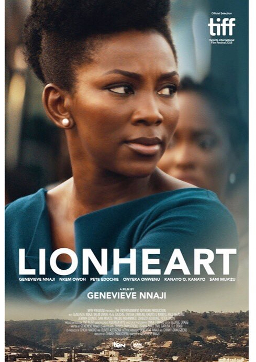
Nigeria’s 2020 Oscar entry ‘LionHeart’ was disqualified on Monday November 4, for having too much English dialogue.

The movie which is Nigeria’s first-ever submission to the Academy Awards, was submitted for the international feature film Oscar category. The Academy’s description of an international feature film “is a feature-length motion picture (defined as over 40 minutes) produced outside the United States of America with a predominantly non-English dialogue track.”

LionHeart which is not excluded from entering other Oscar categories including consideration for best picture, has just under 12 minutes of dialogue that is in the Igbo language native to Southeastern Nigeria, while the remaining 94-minutes is in English. With the disqualification, the number of films in contention for the award has dropped from 93 to 92.

However reacting to the disqualification on Twitter, Genevieve Nnaji wrote;


 “This movie represents the way we speak as Nigerians. This includes English which acts as a bridge between the 500+ languages spoken in our country; thereby making us #OneNigeria.” She added, “It’s no different to how French connects communities in former French colonies. We did not choose who colonized us. As ever, this film and many like it, is proudly Nigerian.”


American filmmaker who directed the Netflix drama miniseries When They See Us, Ava DuVernay also reacted to the disqualification. She tweeted;


 “To @TheAcademy, You disqualified Nigeria’s first-ever submission for Best International Feature because its in English. But English is the official language of Nigeria. Are you barring this country from ever competing for an Oscar in its official language?”


LionHeart movie disqualified from Oscar consideration, Genevieve Nnaji and Ava DuVernay react


Credit:LIB

The Future Awards Africa 2019 nominees list was unveiled on Sunday, 3rd of November.
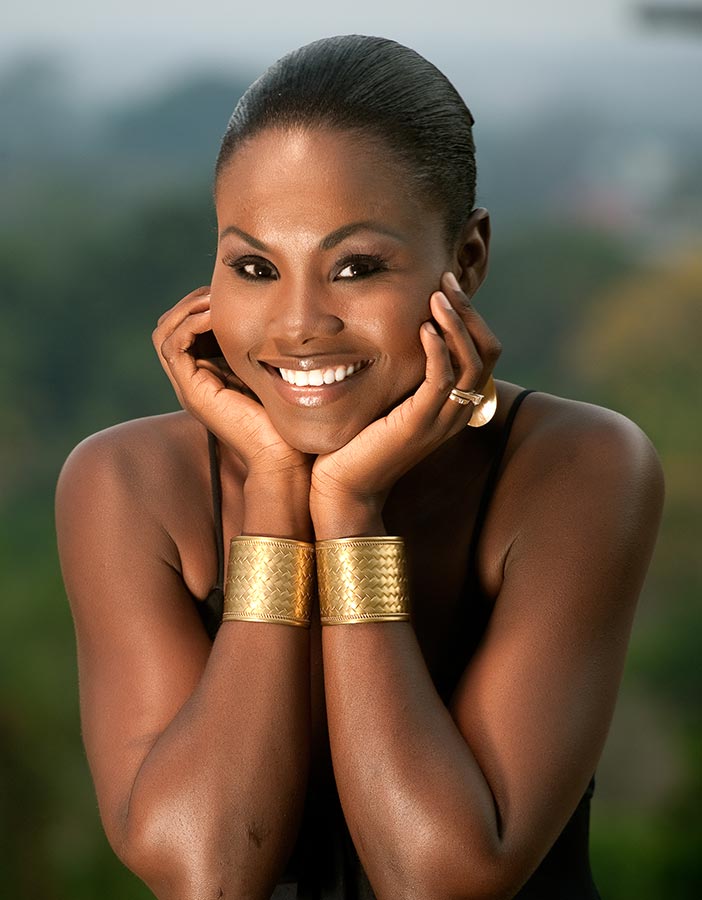
The nominees consist of young Nigerian leaders doing exceptional things in their chosen fields.

Nominees for 2019 include Teni Apata, Sharon Ooja, Rahama Sadau, Ife Durosinmi-Etti, Tosin Olaseinde, Andrea Iyamah, Oyinkan Braithwaite to mention a few.

The main event will hold on November 24.

Check full nominees list below (the females have been highlighted)

THE FUTURE AWARDS AFRICA PRIZE FOR ACTING

Timini Egbuson (32)
Bimbo Ademoye (28)
Bandele ‘Baaj’ Adebule (30)
Sharon Ooja (28)
Fatima Washa Abdullahi (26)
Moshood Fattah (28)

THE FUTURE AWARDS AFRICA PRIZE FOR AGRICULTURE

Emmanuel Maduka (24)
Chiamaka Ndukwu Theresa and Kenneth Okonkwo (25/25)
Uka Eje (29)
Divine-Love Akam (24)
Rotimi Olawale (29)

THE FUTURE AWARDS AFRICA PRIZE FOR ADVOCACY

Hamzat Lawal (32)
Bright Jaja (29)
Uchechi ‘Ucy’ Rochas (27)
Ifedayo Durosinmi-Etti (30)
Funke Adeoye (27)

THE FUTURE AWARDS AFRICA PRIZE FOR ARTS (VISUAL & APPLIED)

Arinze Stanley (26)
Ken Nwadiogbu (25)
Dipo Doherty (28)
Olarinde Olayemi Ayanfeoluwa (22)
Olabanke Subair (28)

THE FUTURE AWARDS AFRICA PRIZE FOR COMMUNITY ACTION

Abdulazeez Kaltumi (27)
Yetunde Fadeyi (27)
Kelechukwu Nwachukwu Lucky (25)
Tony Joy (27)
Akpobi Elvis (31)
Isaac Success (28)
Stephen Teru (29)

THE FUTURE AWARDS AFRICA PRIZE FOR FILM-MAKING

Kayode Kasum (28)
Dare Olaitan (28)
Chinney Love Eze (31)
Rahama Sadau (26)
Uche Odoh (30)

THE FUTURE AWARDS AFRICA PRIZE FOR LITERATURE

Akwaeke Emezi (32)
Ijeoma Umebinyuo (30)
Lanaire Aderemi (20)
Oyinkan Braithwaite (31)
Otosirieze Obi-Young (25)

THE FUTURE AWARDS AFRICA PRIZE FOR MEDIA

Peace Itimi (24)
Paul Alasiri (27)
Edirin Edewor (28)
Samuel Ajiboye (28)
Tosin Olaseinde (31)

THE FUTURE AWARDS AFRICA PRIZE FOR MUSIC

Teniola Apata (26)
Damini Ebunoluwa ‘Burna Boy’ Ogulu (28)
Folarin ‘Falz’ Falana (29)
John ‘Johnny Drille’ Ighodalo (29)
Sadiq ‘Wurld’ Onifade (32)

THE FUTURE AWARDS AFRICA PRIZE FOR PROFESSIONAL SERVICE

Bukky Akomolafe (31)
Adesola Ade-Unuigbe (28)
Yinka Iyinolakan (30)
Onoriode Reginald Aziza (27)
Peter Tega Oghenejobo (32)

THE FUTURE AWARDS AFRICA PRIZE FOR OAP (VISUAL & AUDIO)

Osato ‘EDK’ Edokpayi (27)
Huisaina ‘Dashen’ Usman (31)
Mayowa Ogundele – Adegoke (30)
Simi ‘Drey’Adejumo (21)
Sandra Ezekwesili (30)

THE FUTURE AWARDS AFRICA PRIZE FOR PUBLIC SERVICE

Adetola Onayemi (28)
Ibijoke Faborede (31)
Moses Onalapo (29)
Dr Achama Eluwa (31)
Fehintola Ajogbasile and Judith Oguzie (27/32)

THE FUTURE AWARDS AFRICA PRIZE FOR SPORTS

Al-farouq Aminu (29)
Georgia Oboh (18)
Eseoghene Oguma (21)
Samuel Chukwueze (23)
Israel Adesanya (30)

THE FUTURE AWARDS AFRICA PRIZE FOR EDUCATION

Olaseni Cole (32)
Omozino Eguh (28)
Eyitayo Ogunmola (31)
Seyi Oluyole (27)
Farida Kabir (27)

THE FUTURE AWARDS AFRICA PRIZE FOR TECHNOLOGY

Chinedu Azodoh/ Adetayo Bamiro (29/32)
Zang Luka Bot (28)
Muhammad Salisu Abdullahi (28)
Timothy Adeleye (25)
Funfere Koroye (29)

THE FUTURE AWARDS AFRICA PRIZE FOR FASHION

Andrea Iyamah (26)
Derin Fabikun (29)
Tuboboreni Sandrah (28)
Osemwengie Victor Odion (31)
Kenneth Izedonmwen (29)

THE FUTURE AWARDS AFRICA PRIZE FOR BUSINESS

Adekunle Hassan (31)
Obi Ozor (30)
Chika Madubuko (30)
Olawale Ayilara (31)
Tiwalola Olanubi (31)

THE FUTURE AWARDS AFRICA PRIZE FOR JOURNALISM

Aisha Salaudeen (25)
Joey Akan (28)
Ayodeji Rotinwa (29)
Shola Lawal (25)
Kiki Mordi (28)

THE FUTURE AWARDS AFRICA PRIZE FOR PHOTOGRAPHY

Adah Clarence (30)
Yemi Ajala (31)
Praise Nnemeka (21)
Stephen Tayo (25)
Tolani Alli (27)

THE FUTURE AWARDS AFRICA PRIZE FOR YOUNG PERSON OF THE YEAR – Full list to be unveiled in a press release.


Credit: fabwoman.ng

In life, attitude is everything.

If you’ve got a negative attitude, it will taint your entire outlook on life and dramatically decrease your ability to succeed. With a negative attitude, you will make little (if any) progress on the goals and ambitions you set for yourself.

Instead of consciously crafting a successful life, your negative disposition will often lead to a passive personality, one in which you shrug your shoulders and let life happen to you, rather than making things happen for you.

If that’s not the life you imagined for yourself, then it’s time to transform your current attitude into a can do attitude.

Here are some powerful and practical ideas you can start using today to make that attitude shift and start an upward cycle of success for yourself that will reverberate into every area of your life.

1. Starts with Your Mindset

Since the early days of boxing, experts relied on what they called the “tales of the tape” to predict how successful an athlete’s boxing career may or may-not be. These “tales of the tape” were a series of physical measurements that included the fighter’s fist, reach, chest expansion and weight.

Experts thought these measurements could predict which athletes would be most successful in the ring based on how their numbers shook-out against these measurements.

But get this: did you know Muhammad Ali—hailed as one of the greatest boxers of all time—failed every single one of his measurements? But nonetheless, against all odds, Ali went down in history as one of the greatest boxers of all time.

What exactly was it about Ali that contributed to his incredible success in boxing? What made him “the greatest,” as he often proclaimed? It wasn’t his brawn. It was his brain.

Author Carol Dweck explains Ali’s success as follows:

“[Muhammad Ali] was not a natural. He had great speed but he didn’t have the physique of a great fighter, he didn’t have the strength, and he didn’t have the classical moves. In fact, he boxed all wrong. He didn’t block punches with his arms and elbows. He punched in rallies like an amateur. He kept his jaw exposed. He pulled back his torso to evade the impact of oncoming punches, which Jose Torres [former colleague of Ali] said was ‘like someone in the middle of a train tack trying to avoid being hit by an oncoming train, not by moving to one or the other side of the track, but by running backwards.’”

Throughout his career, he was constantly matched with athletes that were bigger, stronger and faster than himself. But he beat them anyway.

It wasn’t his physical talent or skill that helped him do succeed over and over again. It was his mental attitude. His can-do attitude to be more precise.

This leads me to believe that in many cases, the critical factor between someone who achieves success vs someone who does not, comes down in large part to your mindset.

Our mindset determines the way we deal with tough situations and setbacks as well as our willingness to deal with and improve ourselves.

A person with a growth-mindset automatically has a can-do attitude because they don’t give up when they fail. Instead, they use failure as a learning opportunity that does nothing more than get them closer to success.

Ali helps us understand that developing a growth mindset—and by association, a can-do attitude—is about rising strong regardless of how lackluster his physical endowments may have been. Instead of looking in the mirror and saying, “I’m not good enough to be a champion;” instead he said, “I’m going to use a different path to achieve greatness.”

And that’s what he did. He showed everyone that success comes first from the gem between your ears. The same gem that chooses to leave behind negative beliefs and replace them with an attitude that says, “I can do this.”

2. Focus on Being Congruent

“While some researchers and clinicians argue that you can change your life by just changing your thoughts, actions, or feelings, I have seen no evidence in my research that real transformation happens until we address all three as equally important parts of a whole, parts that are inextricably connected to one another, like a three-legged stool.” —Brene Brown, from Rising Strong

Your thoughts + actions + feelings are like a three-legged stool.

This is similar to people that follow the old self-help advice to just “think positive.”

If we THINK positive, but we still FEEL negative, then how will we ACT?

Positive thinking is powerful, but only when we think of it as one of the three necessary legs that reinforces the stool we’re sitting on.

If we don’t want the stool to wobble or break, we’ve got to make sure we give each leg the care it needs to keep us from falling down and getting hurt.

3. Be Mindful of Your Self-Talk

Your self-worth depends upon your self-talk.

An all-star baseball player once decided to visit a prison to inspire the inmates to better themselves. He told them a story about how his father always encouraged him when he was a little boy. His dad always told him, “son, if you keep on hittin’ the ball like that, you’ll end up in the MLB one day.”

Sure enough, he ended up playing professional baseball.

Upon hearing this story, one of the prisoners stood up and said, “hey, my dad told me something similar when I was a little boy. Every time I did something my dad didn’t like, he looked at me and said, ‘son, if you keep on mis-behaving like this, you’ll end up in prison one day.”

Sure enough, he ended up in prison.

As it turns out, 90% of male prisoners were treated like dirt by their parents when they were children. Many of them were spoken to like they were prisoners WAY before they ended up behind bars.

Now, obviously this doesn’t mean that our parents determine the future for us in advance.

We all have the ability to respond to our circumstances however we want.[1] But it certainly makes things a lot easier if we have a solid foundation to build upon.

Regardless of how your parents spoke to you though, the take-away from this story is very simple: the way we speak with ourselves plays a massive role in the way we perceive ourselves.

And the way we perceive ourselves plays a massive role in our ability to develop a can-do attitude, and reap the rewards it affords. Our attitude goes a long way towards determining whether we decide to take on challenges and pursue success in the face of adversity.

Encourage yourself. Believe that you can do it—whatever it may be.

Your self-talk plays a huge role in your self-image.

Your self-image plays a huge role in your attitude.

Your attitude plays a huge role in your ability to succeed in the various endeavors you decide to pursue in your life.

Drop whatever limiting attitudes you’re holding on to about yourself and replace t hem with a strong, self-starting can-do attitude.

4. Become an Activationist

“Excellent ideas are not enough. An only fair idea acted upon, and developed, is 100 percent better than a terrific idea that dies because it isn’t followed up.” —David Schwartz, The Magic of Thinking Big

Plenty of people have excellent ideas, but only a select few are able to see their idea through to action.

There are two types of people on the planet: “activationists” and “passivationists.”

Activationists come up with ideas and execute them without hesitation—the embodiment of a “can-do” attitude.

Passivationists on the other hand, might have just as many ideas as an activationist, but the passivationist executes none of them. They postpone and procrastinate their dreams and goals continually.

This lack of action – this lack of success – is the result of having a passive mentality about life and neglecting to cultivate a can-do attitude.

So, what can we do to break ourselves of the passivationist habit?

You Can Do This!

Here’s a quick recap of what we’ve gone over in this article.

1. It all starts with your mindset.

If you want to achieve success in all dimensions of your life, you’ll need to get your mental game in check. Ensure you’re mindset is directed towards growth and progress for most of your waking hours.

2. Positive thinking can only get you so far.

To generate true change, to develop a real can-do attitude that helps you succeed in whatever endeavor you want, you will need to place equal importance on your thoughts, feelings, and actions.

Treat them parts of yourself that are achieve their peak power and potential when they are unified and treated with equal importance. In other words: we cannot simply “positively think” our way to success.

We must combine those positive thoughts with forward-facing action.

3. Your self-worth depends upon your self-talk.

Repeatedly affirm to yourself that you have a can-do attitude. Look yourself in the mirror and literally say it out loud, “I have a can-do attitude! I have a can-do attitude! I have a can-do attitude!” Do this exercise every morning after you brush your teeth.

Yes, this will absolutely feel silly at first, but you will find that the benefits of success far outweigh the momentary feelings of embarrassment or self-consciousness you experience as a result of doing this.

4. Become an activationist.

Do not allow fear to freeze you in place and prevent you from achieving your dreams. Embody the habits of an activationist and take consistent action until you achieve what you set out to achieve.

With each achievement, you will find your self-confidence getting stronger and stronger. This then, will lead to more action, which will lead to more success…

… And this cycle of success? It never needs to stop.

Source: Lifehack