Author

Women of Rubies

Browsing

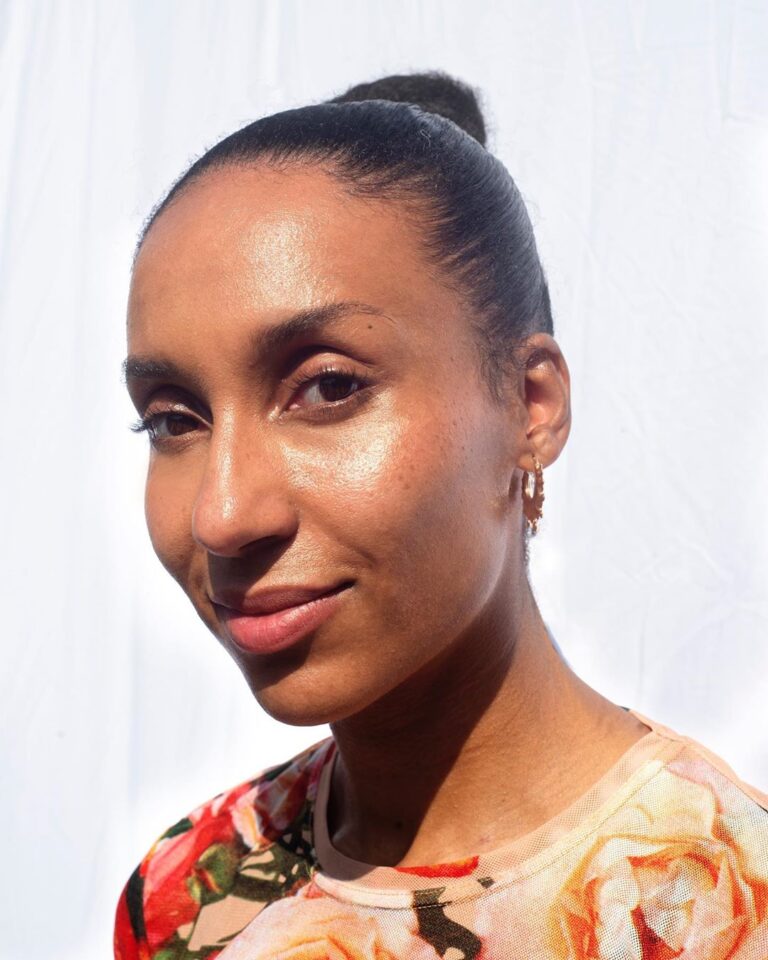
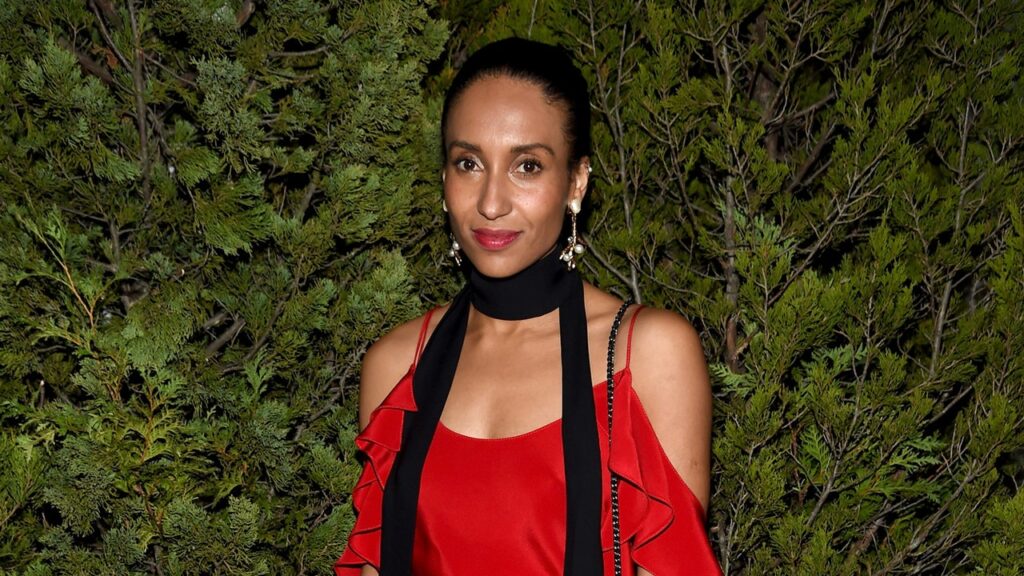
Vogue.com has a new editor— Chioma Nnadi, replacing Stuart Emmrich, who announced his departure in June.

In her new role, Chioma will oversee all of Vogue’s digital content.

The fashion journalist and editor has made a tremendous impact in the fashion industry especially in recent times where she has been a powerful and notable voice in the fight for inclusivity and diversity within the industry.⁠

She started her career at the features desk of the Evening Standard Magazine in London, before moving to New York to write for Trace, an independent style magazine. She then went on to work as the Style Director at Fader and landed at Vogue as a fashion writer in 2010. Nnadi was named Fashion News Director in 2014 and has stayed in that position up until her newly announced promotion.

She studied English and French Literature at Manchester University.

In a statement, Chioma Nnadi said:

In these unprecedented times, it feels especially urgent and exciting to be telling stories. And now the touchpoints through which we communicate are more expansive than ever. Vogue has first and foremost been a place of discovery and I think in this moment it feels especially important to amplify the new voices in fashion and culture who are changing the zeitgeist.

“I am so thrilled that Chioma will be the new editor of Vogue.com,” said Anna Wintour, the editor-in-chief of Vogue and the artistic director of Condé Nast, said in an official release according to WWD. “Above all, we know her as someone who intuitively understands fashion and brings to it a genuine love of discovery. She looks in unexpected places and all over the world to find out who is doing the best work and who we should be celebrating now. I absolutely rely on her eye and her cosmopolitanism and her taste. Even better, she is forward-looking and understands that Vogue needs to reach new audiences and do so in new ways.”


Photo Creditnnadibynature

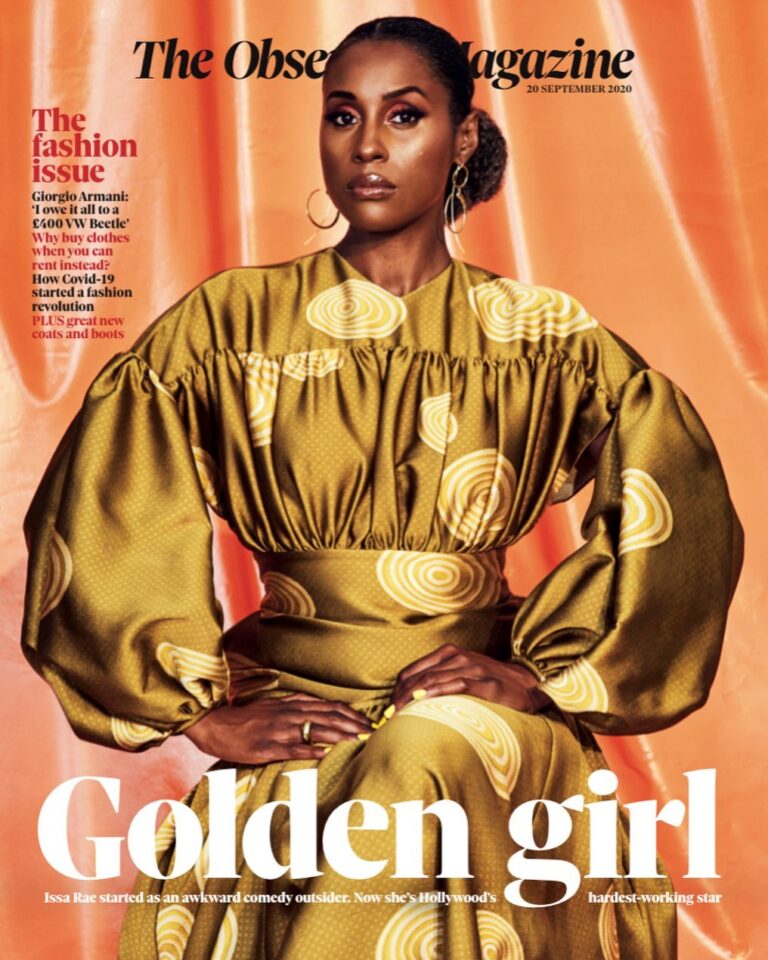
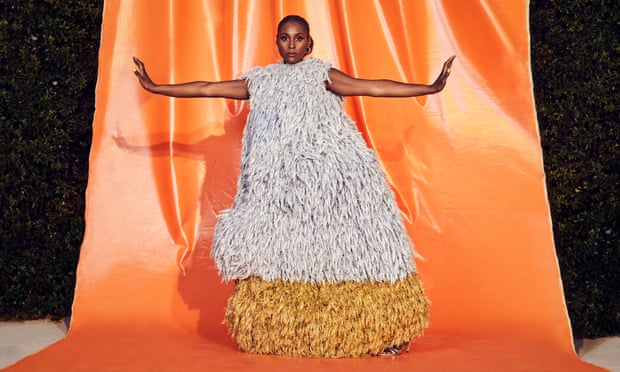
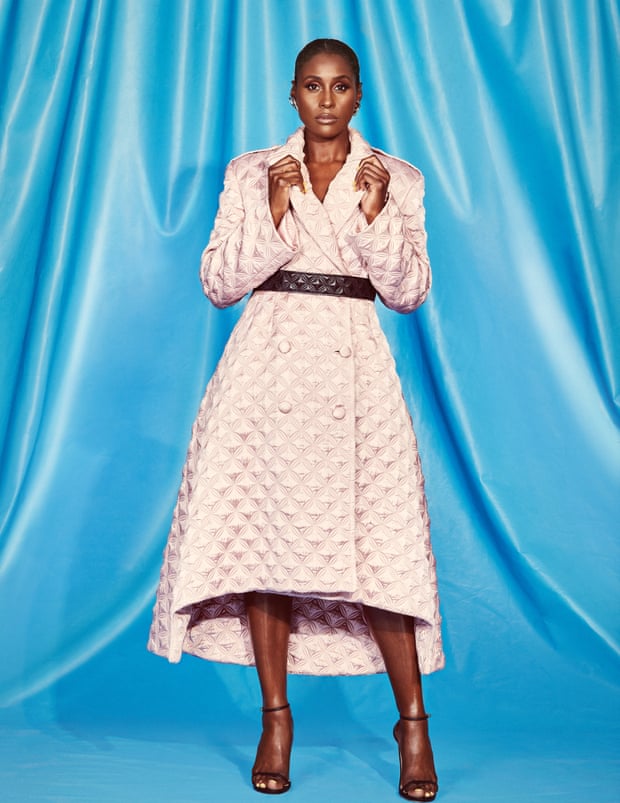
In this Observer Magazine, cover shoot TV girl, producer and all-around creative Issa Rae is lauded as the golden girl, who started as a comedy outsider, now she’s Hollywood’s hardest-working star. The Emmy-nominated and Golden Globe-nominated actress speak to Observer Magazine about her upcoming HBO film “Coastal Elites“, being the booked and busiest, the importance of legacy and more.

Her hit HBO show, “Insecure”, has indeed transformed her into the patron saint of black millennial creatives.

In the magazine, she shared how story growing up in Senegal and LA. Being “too black for white kids, too white for black kids”.

She grew up middle class, her father a Senegalese paediatric doctor and her mother a teacher. In childhood, her family moved a great deal, first to the primarily white suburb of Potomac, Maryland, then to Senegal, until they finally settled in LA. Issa was in the sixth grade then – an 11 year old. She was one of the only black girls in her elementary school in Potomac and then the only American girl in her elementary school in Senegal. She struggled to belong in each setting. When she started at a school in LA, attended by predominantly black and Latino students, she found herself the subject of the ballad of many black middle-class teens – “too black for white kids, too white for black kids”. When Tupac died in 1996, she attempted to find common ground with her mourning classmates and mispronounced his name, becoming a social pariah in the process.

Read some excerpts from her cover feature below:

On “Insecure”.

“It is a compliment and a burden that people take so much ownership over the show,” Rae says, “because there aren’t a lot of shows about us, so people feel like you have to tell all the stories that can be told, and if you don’t you’re failing us.”

On how sharing a name and face with her character on “Insecure”, has made privacy a priority.

“People have a lot of shit to say and I just don’t want it to be about me, unless it’s talking about my work,” she says. “People fill in the blanks about my own life because of the characters’ choices, but I’m fine with that. As long as it’s not my real shit and it’s wrong then talk away!”

On the upcoming film “Coastal Elites”.

“I actually had never heard the term ‘coastal elite’ until this movie so I’m just like, “What does this mean? Oh OK, it’s me.” Rae and her character, Callie, both live in LA, and they’re both “outraged by the current administration”.

“You see so much of the concentrated fuckery of this current president in one place,” she says. “Hopefully you’ll watch the movie and say, ‘This is not normal. I should be upset, I should be outraged.’ Satire or not, we’re living in this and to accept this is to be part of our own destruction.”

“Do I get burned out? Hell yeah!” she exclaims. “That was why I took a break last year because I didn’t really think about how to do everything and do everything well. But it’s not just me – I get a lot of credit, but I work with really great people.”

On the complicated diversity within Hollywood.

“It’s just another way to divide us, unfortunately,” she sighs. “Seeing Daniel Kaluuya in that Fred Hampton trailer, I was like, go the fuck ahead! You transformed, you’re an actor! Sometimes I’m pleasantly surprised when I’m watching white shit and I’m like, ‘Oh! The bitch is Australian? That’s so dope! I would have never known.’”

On her legacy.

“As far as legacy is concerned, I have so much to do,” she says. “And I’m fine with that, but it definitely keeps me up at night. My feet aren’t firmly planted just yet. I’m still walking, I’m still paying my dues, in a way that I’m not mad at. I want to earn being here.”

Read the full feature at the Observer Magazine

Credits:

Photographs: @daniellelevitt
Styling: @jasonrembert
Hair: @lovingyourhair
Makeup: @joannasimkin

For the first time, married women in Botswana will now be able to own lands independent of their husbands, following a new amendment to the 2015 Land Policy which prevented married women, widows and orphans from inheriting land or acquiring new land entirely.

President Mokgweetsi Masisi shared the news on Twitter and started off by saying that he was fulfilling the commitment he made during Botswana’s Democratic Party campaigns last year.

The Botswana Land Policy of 2015 was discriminatory against married women. Section 72 (iii) stated that since only one spouse can apply for a plot, the surviving spouse must as a right inherit their land allocations.

This clause did not give married women equal treatment with men and I am happy to report that this discriminatory subsection has since been repealed.


Historically, land that belonged to husbands followed patriarchal traditions of inheritance. A World Bank research shows in 40% of countries, women encounter a host of obstacles owning land, be it through skewed inheritance rights or restricted authority over assets.

This new policy will protect widows and orphans who may be the head of their households.

The Revised Botswana Land Policy of 2019 now gives married women the right to apply for land.

It reads thus:

“Each Motswana will be eligible for allocation of one residential plot at an area of their choice within the country, on both state land and tribal land. ”

Section 72 also of the Botswana Land Policy 2015 recognises that there are instances where some widows and orphans are compelled to head households and find themselves in an urgent need of land for residential purposes as a result of being denied access to their deceased husband’s or parents’ property.

However, the rights of these are protected in the law and Policy and encourage Local and Land Authorities as well as Non-Governmental Organisations to step up campaigns to educate women and orphans about their legally protected rights and offer them legal support to successfully claim their legitimate land right.


In 2015, the African Union addressed gender inequality as it pertains to land rights and stipulated that women should be allocated 30 per cent of land across Africa. However, even this meagre percentage has yet to be achieved. Zambia, Ethiopia and Uganda are a few of many African countries where land rights are still not afforded to married women.

They are the best of times, and they are the worst of times… yes, I’m referring to your roaring 20s! This unique, awkward, blooming, uncertain time of your life is pretty essential to how you’ll live the rest of it. And there are A LOT of growing pains you won’t be able to avoid during these times of development. Just remember that you will not be experiencing them alone.

1. Friendships will get weird, deteriorate, or fail.

The sad truth is, some of your friends now won’t be your friends forever. Some of your best friendships will fade. And as daunting as that may sound, it isn’t always a bad thing. As you travel through your personal journey as a 20-something, your pals will be trucking on their own as well. You may go months without speaking, have moral-related disagreements, or just simply fall out organically. As much as you’d like to keep your #girlgang alive, you may have to let them go like those old Lil’ Bow Wow posters.

2. There will be trial and error in your relationships.

Unless you’ve decided to stick with your middle school sweetheart, you’ll find out that dating and relationships will not be the fairy-tale you dreamed of as a child. This is the time when you’re not only figuring yourself out, but you’re also figuring out the type of people you want to be with and what you will or will NOT tolerate in relationships. You’re older now and when shacking up and long-term commitments come into play, you’ll find yourself kissing A LOT of frogs trying to find your perfectly-flawed prince. You’ll most likely get your heart broken, pieced together again, and broken one more time.

3. You might hit a point in your life where you don’t know what to do. 

Let’s be honest, there’s more than a few of us out here who have no clue what we’re going to end up doing with our lives. We feel the pressure after comparing ourselves to our peers that seem to have it all together and examine our own lives and say “What the heck am I doing?!” We want to make an impact in the world, but we don’t know what we want to do, who we want to be, or how we’re gonna go about making that impact.

4. Decisions about your career, education, and life will be made…and made again.

One minute you’re enrolled in five classes at a university and the next you find yourself taking a year off in hopes that you’ll figure your life out. There’s never really a one-and-done system with making decisions during this time. There’s always a, “Oh! I want to be a psychologist” followed by a, “I think I’m gonna move out to L.A. and sell art for a living”…  Do you move, do you stay, do you pursue your dreams? Like WHAT DO YOU DO?

5. You can’t always pay yo’ bills.

As much as we may be warned about managing our money, we will still spend our last savings on some Takis after getting fired from Old Navy (thanks Bibi). Bills are foreign to us until we have a few of our own, and our cashier position at Wal-mart may not cover that light bill you’re already late on from last month, so naturally, we learn to penny-pinch and pinch some more….and some more to be able to partially pay our bills but still hit the sale rack at Charlotte Russe.

6. You’ll get cut off or decide to go it alone without your parent’s help.

If this never happens to you, God bless your soul. If so, then brace yourself for a very rude awakening. Being cut off financially doesn’t feel so great. It’s like having a fur coat yanked from your body during winter in New York.  On the other hand, some of us tap into our pride and decline our parents help because we want to do it by ourselves…. until we can’t and we have to borrow $40 for gas for the week.

7. The pressure of your parents will be REAL. 

“So what exactly are you doing with your life?”

“Why aren’t you spending your money right?”

“You should just come back home and let us take care of you again”… Truthfully, I don’t think our parents will ever trust us as adults. There’s always something we’re doing wrong, and they aren’t shy about letting you know it.

8. Every few years, you won’t recognize yourself.

Think about who you were in 2015, and who you are now in 2017. I bet if you look at pictures you’re amazed (and a little embarrassed) at what you see. As you go through these inevitable experiences, your perspectives, appearance, and just about everything else about how you once were will change.

9. People will still think you’re too young to have real-life issues.

I can’t tell you how many times I’ve heard, “You’re only 21, you don’t know what it’s like to (insert “something I know what it’s like” here). Even when you’re older, people older than you will always think their experiences are grander and that they’re much wiser than you are. Truthfully, they still consider you a 15-year-old high school student who’s only concerned about the homecoming dance next Saturday….if it’s any conciliation…I get you, I understand…we see each other.

10. You will struggle to try to balance school, work, and a social life.

School is taking your mornings, work is taking your mid-day and sometimes nights, and your social life is thrown in every chance you get an hour or two between or after school and work. There is no such thing as balance really….

11. You’ll want to go back to being a young adult so badly.

Naps will become a thing again. Running to your parents for help will become a thing again. Pouting and not getting your way in life — will become a thing again. But the luxury of just being a kid in an adult world will become a fantasy that you’ll never be able to get back into your reality.

12. You will become self-aware.

The twenties are generally referred to as the “finding yourself” years as well as your prime and many other things. But I refer to it as the accountability “call yourself out on it” stage. And from there, you make the appropriate changes or remain an irresponsible self-sufficient twenty-something forever. We all know we do NOT need any more of those. As of now, you’ve been pretty much told who you are and what you can and can’t do. But as you navigate the world alone, you’ll explore every area of yourself that will kind of punch you in the face when the time comes. You’ll find out how you are in relationships, how you treat other people, how you treat and feel about yourself.

Truthfully, we shouldn’t allow our twenties to make or break us. Because they’ll be different hardships in our thirties, forties, and so-on. But our foundation and self-awareness do begin here, make it count!

Source: https://baucemag.com/inevitable-hardships-twenties/

If you are in a long-term relationship, you may find that there is no longer that spark and magic that you once enjoyed. Over time, most couples fall into a routine and they have other commitments that result in romance being put on the back burner. Of course, this does not mean that they no longer care about one another, it simply means that they have to put other things first and romance simple doesn’t get a look-in.

Well, if you want to try and bring back some of that romance, there are ways in which you can do this. You can use simple yet effective methods that are easy to put into place but can make all the difference. When people want to add spice to their physical relationship, they often turn to measures such as adult toys and will buy dildos online along with other toys. However, if you want to add romance, it is important to think with your heart.

What Can You Do?

There are various methods you can use in order to add some romance to your relationship. So, let’s take a look at some of the options:

Cook a Romantic Meal

One very simple thing you can do to romance your partner is to surprise them with a romantic home-cooked meal. You will find lots of great recipes for romantic dishes online, and this means that you can enjoy good food, good company, and a wonderfully romantic atmosphere with your partner. This is a method that costs very little and can be fun for you. You get to choose all the dishes and whip up culinary creations that will impress your partner. You can set the table with candles and chilled wine, or you can even head to the patio if the weather is good and dine al fresco.

Go for an Afternoon Picnic

Another great way to surprise your partner with a romantic gesture is to whisk them away for a surprise afternoon picnic somewhere beautiful. You can make some simple picnic dishes, pack some cold beers and other drinks, and head to the beach or a local park to while away the afternoon. This is a great way to get outdoors without spending money but still being able to have a great time with your partner.

Book a Short Trip

Depending on your budget, you could surprise your partner with a romantic trip away to their favorite type of place. This could be a secluded cottage, and cabin, a beach hotel, or a spa hotel depending on the type of thing they like. By doing this, you both get to benefit from a change of scenery, and you can look forward to spending some quality romantic time together without distractions. You don’t have to spend a fortune – you can even go on a romantic camping trip.

So, these are some of the ideas you can consider if you want to add some romance back into your relationship.

Source: Bauce Mag

Let me start by saying that dating is defined by what you do in it.

Dating is an act of spending time with a person to get to know them well and consider if you want to get committed.

Dating is not necessarily about sleeping with different people to ascertain who you want.

There are 3 ways to date on purpose and following this method can save you from unnecessary heartache.

  1. DATE INWARDLY: This means spending time with yourself to know what you want, who you are, the kind of relationship you want to build, who you are becoming, your personality, values and emotional needs. Gaining clarity in these areas of life helps you understand who you are. Another way of knowing yourself is seeing yourself through the lens of God because your internal lens may be broken if you have not healed from past hurts and you can’t afford to allow your wrong perceptions of your identity keep you stuck. You’re more than you think you are.


  1. DATE OUTWARDLY: Definitely, it is necessary to spend time with other people so you can network and engage well with them. Dating is a social word for meeting people and it is what you do in it that matters. You can have friends and spend time knowing them well before thinking about a relationship. Don’t be too quick to get into an intimate relationship with a person, consider knowing them for a while, asking the right questions, meeting their friends, observing patterns, giving value, praying about it and listening to your intuition before getting serious about it.


  1. DATE UPWARDLY: This is definitely your relationship with God, unshaken. If you don’t get this part right, it can mess up with the WHY around your dating. You should not date someone to feel complete or valuable.


Seeking for approval or validation from a man or woman for that can lead to more identity crisis.

This is still a process because some people haven’t really spent time knowing themselves, hardly go out or have a sour relationship with God. Do you see why you should sit down to also create a plan that can make this strategy work?


Here are examples:


  1. Dating yourself: Read books around self-discovery, Identity and Purpose.


  1. Dating outwardly: Hang out with some friends monthly or weekly, depends on your time. Read about building healthy relationships and boundaries.


  1. Dating upwardly: Spend more time knowing God through fellowship. Journaling is good too.


Which of these do you need to get better at?

Mrs. Zouera Youssoufou is the Managing Director/CEO, Aliko Dangote Foundation (ADF). Fluent in English, French, Spanish and Hausa, She holds an MBA in Finance from New York University’s Stern School of Business and a BBA in Marketing from the University of Massachusetts at Amherst’s Isenberg School of Business.

At ADF, she leads the Foundation’s efforts to improve the health, nutrition, education and economic empowerment outcomes for the needy, primarily in Nigeria and in Africa. She’s responsible for the Foundation’s short, medium and long-term strategies, provides overall management oversight for the Foundation, and provides support on Social Investments to the Corporate Dangote Group. She also sits on several Boards, including SE4All, Private Sector Health Alliance of Nigeria, ONE Global Leadership Circle, Center for the Strategic Studies on Africa, and ABC Health. As of March 2020, Zouera coordinates the Secretariat of CACOVID, the Nigerian Private sector coalition against Covid-19.

Prior to joining ADF, Zouera was the World Bank Country Manager for Gabon, Equatorial Guinea and Sao Tomé and Principe. As such, she was the front-line person in the relationship with all three governments and conducted day-to-day dialogue with all levels of government, donors and civil society. Zouera spent six years at the International Finance Corporation, IFC (private sector arm of the World Bank Group), where she led the Global Women in Business Program (WIN). In that role, she was responsible for creating opportunities for women entrepreneurs in the developing world, specifically in access to finance. She joined the World Bank Group in 2005 from Citigroup’s Smith Barney unit in New York and Atlanta where she covered emerging markets and 13 industry sectors as an Equity Research Analyst. Her previous experiences include working with the European Union on private sector development issues, and management consulting with Deloitte in Ghana.

In this interview with KEHINDE OLATUNJI, she shares her career experiences, highlighting the need for women to prepare themselves for top positions and responsibilities.

Looking at your background and places you’ve worked so far, what really influenced your choice of career?
The biggest influence in my life, obviously, is my parents who always said things like, ‘you have to do your best at school, and there is nothing you cannot achieve.’ I grew up in Niger and that is a country where we are still struggling with female education. My dad was very clear that he wanted us to go to school and was very supportive and today, we are all doing well in our careers. The success of any girl in life isn’t to be a housewife; we all went to school, and grew up in an environment where this was not normal to do. Also, my dad had opportunities to travel to different places, and he took us along so that we could see different models of how people could learn; that has been the biggest influence.

There are lots of women who have influenced my life and career. Women like Okonjo-Iweala; I met her when I was working on my first project with Access Bank in Nigeria. She was Minister of Finance at that time, and I was working at International Finance Corporation (IFC). I had a conference in London and we were both on the panel; I was shocked when I saw her on the same platform with me. After the event, we got talking and she asked me to give her a call whenever I’m in Nigeria; I never thought she was serious.

I came to Nigeria and told my friends that I was going to Abuja to see her, everyone was like, ‘how do you think you’re going to meet her?’ When I eventually met her, she was the nicest, most supportive person I ever met; I didn’t even think she was going to end up being a mentor to me. Since then, we have had an amazing relationship.

Also, I’ve had mentors that are men. My first boss who taught me about asset management was an African-American man who was pro-African kind of a person. Even now, somebody who I realised has influence in my life is my boss, Alhaji Dangote. What I get from him is just humility; I have never met anybody as humble as Dangote. I have met other rich people, but nobody was as simple and humble; he doesn’t take people for granted. He reminds me of how we all need to behave. Working in his foundation help us to live with these values and show people you don’t have to be nasty and look down on others because you are better than them. On the contrary, we need to lend helping hands to people, and think of how the world can be a better place for all.

Considering the effect of COVID-19 pandemic on the masses, what have you done so far as Chief Executive Officer of CACOVID? 
CACOVID is a coalition of private sector people led by Alhaji Aliko Dangote and the Managing Director of the Access Bank Group, Herbert Wigwe. They came together mid-March, when they saw how the pandemic was shaping the world. They decided that the private sectors in Nigeria needed to do something instead of everybody doing their own thing; that efforts should be put together and have one big private sector coalition. So, that was how CACOVID was birth.

Before then, Aliko Dangote Foundation (ADF) had been working with the Nigeria Centre for Disease Control (NCDC) in responding to the crisis. The first person that was diagnosed with Coronavirus came into the country in February 27, 2020. So, the very next day, the NCDC put out an incident action plan and said N16 billion was needed right away to address the issues. Different donors came in and everybody committed money; ADF gave N200 million; we bought ambulances and other things relating to surveillance system to gather information on people diagnosed with COVID-19. We bought four ambulances, which we donated to the Lagos State Government. So, we fulfilled the N200 million pledges, and while we were in the middle of doing this, Alhaji Dangote said we needed to step it up a notch and CACOVID came to being.

We know that money is needed; we also put our technical committee in place because none of us are doctors or laboratory scientists. It’s very important to have a technical committee that would drive CACOVID in making the right investments that makes sense for Nigeria. In the technical committee, we have people like Dr. Sani Aliyu, who’s the coordinator of Presidential Tax Force, Dr. Chikwe Ihekweazu, who’s the head of the NCDC, Prof. Christian Happi, who’s the scientist that decoded the COVID-19 genome in Nigeria. We also have World Health Organisation, Bill and Melinda Gates Foundation and the United Nations. We have people like these to help drive the thinking about what it is that CACOVID should do.

The two things that came up was the need to increase testing and our isolation center capacity. So, the first two things we did was to ensure that Nigeria got enough testing supplies and also set up isolation centers in every single state and the Federal Capital Territory; that effort cost billions of naira. For instance, we wanted a hundred bed isolation centre capacities in every state, so we did that. We bought over 4,000 beds, the monitors, the thermometers, basically everything that you need to set up an isolation centre. We delivered them to the 36 states and the FCT. So, that was the first expense, and testing was the second.

As time goes on, lockdown happened, and the idea of palliatives came up. If you tell people to stay at home, it means no traffic and the people who sell by the roadside wouldn’t have a means of livelihood anymore. People who have to get up and go to work are not doing that anymore, so what happens to them? The drivers and people who have to go out everyday to make a living? So, that was when the idea of the palliatives came up.

We made sure the 36 states and FCT received their allocations according to the proportional number of families. That is about 1.7 million families, and a total of 10 million people. These 1.7 million families each received 10kg of rice, 2 cartons of noodles, a carton of Spaghetti, 5 kilos of sugar, 1 kilo of salt, and either 5 kg bag of Maize, Semo or Garri, depending on where they live in the country.

As a career woman, do you think enough is being done to promote women representation in work places?
I think there is still a glass ceiling, although we have made a lot of progress, but there is still a lot that needs to be done. How many women do we have on the board of companies in Nigeria? How many do we have as CEOs of organistions? How many women do we have as head of states? The reality is that we don’t have a proportional number of women in charge in the society.

For instance, in the medical profession, both genders can be doctors, but how many ends up being Chief Medical Director (CMD)? How many women are in charge of the health sector? These are examples of glass ceiling. There are some things that are perceived hampering women in the course of doing their job. For instance, when a woman is married and begins to have children, it does something to her career. The two times I had my children, my colleagues who were performing less than me at my work place, got promoted over me because I took four months of maternity leave. It proves that there is a glass ceiling. If everybody just goes to work, without raising a family, how do we sustain humanity? Women need support. Ngozi Okonjo Iweala is the first Minister of Finance that is a woman, and that was in the year 2000; other women were minister of women affairs, or social issues. If you look at the Stock Exchange, how many women are running the companies there and how many women are Chair of the Board of Companies? But I think the attitude is changing; when I look at my daughter, I wonder at her expectations because they are totally different from mine. She completely believes that nothing is going to stand on her way to do whatever she decides.

Some companies are trying, but I think it has to be discussed and promoted; women should not be seen as a threat because they are not. It shouldn’t be such a big deal that we are still talking about how we don’t have enough women on our corporate board. Surprisingly, it is the same everywhere, however, Nigeria is not really doing badly. In Africa, the only example we can point to where they have half male and female parliament is Rwanda, and that’s because of the genocide experience. Sometimes, we don’t need such a horrible history to get there, but nowhere so far in the world do we have disparities the way we have it in some countries. So, we still have a long way to go and I do think that a lot of conversations are happening around this. I think efforts are going on in different parts of the world, but we are definitely not where we need to be yet.

How can organisations, professional bodies and government help to improve the situation?
We have never had a female governor in Nigeria yet; we’ve had deputy governors who are female. I really think corporate organisations are trying; the Nigeria Bar Association last year did a lot of discussion on gender issues, women lawyers, women judges and how to get more women into the profession. I spoke at the event and it was really good, because it was like a realisation for everybody. Men are used to working with women, not that they are shock that there is a woman in the office, but a situation where we don’t make it to the peak, is a challenge. I believe this is because of the networks we don’t have.

For instance, if you were not in the conversations when the bosses are discussing something, how would they be thinking of bringing you in? The stereotypical example in developed countries is the weekend golf games.

Few women play golf, so, when the boys are out there playing golf, hanging out at the weekend, if you’re a mother, that is the time you have to take care of the children. So, how do you get into the conversation of promotion? A lot of people support, encourage, nurture, and promote the people that they see in their comfort zone everyday, and so, if you’re not in that comfort level path, then organisation has to make an extra effort to think of you for promotion as a woman.

What should be done is to actively and deliberately promote women. If the government decides that in Civil Service, we need to have some level of clarity and everybody who is a permanent secretary cannot be a man, then, we are actively looking to promote women. Things like this have to be done deliberately, otherwise, everybody just stays in their comfort zones and women are not necessarily part of it.

What role do you think women can play in bridging the gap?
I actually don’t agree with the idea that women don’t like to work with themselves. I think it is true that some women are like ‘I have to fight my way to the top, I have to struggle to do it, and now that I have made it, this other little girls who just want to quickly climb the ladder, have to struggle too just like I did.’ Some women really feel that way. But what I find out is that, we also are part of the stereotype thing. If you give me two CVs of a boy and a girl and they have the same qualification, it is most likely that I will pick the girl; that is because I am a woman. So, I don’t think it is true that women don’t want their counterpart to succeed; that is a narrative that men promote.

Women are way supportive of each other; we discuss things that pertain to us. You can’t discuss breast-feeding with a man in the office; different women and different ways though. Some are supportive and some are not; some wants to work with women, and others would rather not.

So, what is your advise to women?
Women need to be ready for these top positions and responsibilities. Women need confidence and self-development to get to top positions. They should not expect that because they are women, and it is their turn, they should get it.

They should be prepared. Just like everybody is getting to do extra courses and certification, they should be doing that too. There is no excuse for you not to get things done like the male gender. We should never have a sense of entitlement; we are not entitled, nobody owes us. We have to work just as hard as men to get to where we need to be.

We also need to self-assurance. What I found out as one of the biggest obstacles for women in the workplace is, lets say there is a job that is advertised and 10 criteria are listed to get the job, a woman will have eight of the criteria, but will be discouraged because of the remaining two that she doesn’t have. Meanwhile, a man with just three will apply, and get the job. So, the woman will be wondering how did he have it? So, women need to put themselves forward; get all the knowledge, training, and the most education that we can, get the assignment that nobody wants to do. Then, when it is time for promotion, you will be recommended.

Although certain social and economic situations for women have improved, but when it comes to personal finances, a lot of women still have hurdles.

Given your experience, how do you think women can overcome these challenges?
When I was working in City bank, the company had something called Women and co; it’s like an investment for women. I was wondering that why do we have separate investment for women? But it was clear that women were not making the most of their financial capacity and investment; they wouldn’t take the same risk as men. A very clear thing is that women and men have a very different perception of risk. It is not that women are risk averse, is just that we don’t assess risk the same way men do. My husband will be ready to mortgage our house for a business venture, and

I’ll be like what if something goes wrong with the business?
So, women don’t look at their finances the same way men do. We have a lot of social issues; there are lots of things that hinder women from being all that they want to be. Financial services for women are a huge opportunity to get women to invest their money in the best possible way. I believe in being independent; I think women needs to be independent. Where they can take care of themselves, they should. When women are overly dependent on men for their livelihood, they give their power away. There is a part of you that has to be responsible for you. You cannot give your entire life to a man; you can be married and respect your husband as an independent woman. I have been married for 25 years, so its not like I don’t know what I am talking about. Being in a relationship comes with some level of submission, compromise and trying to make things work, but I think it is important to remember that we are individuals and God made us two. It is important for women to understand finance and make decisions. You cannot be 100 per cent dependent on somebody else once you are an adult.

Are you in support of a joint account for married couple?
My husband and I have three accounts; we have a joint account and separate accounts. The reason I have my own account is that we don’t want to have conversation about how I need to buy a pair of shoe. There is a part of our money that is jointly owed because we have a joint life, and joint responsibilities. He has his money and he can do what he wants and I have my own money, and I can do what I want with it; we decided this when we were getting married.

Our church has a mandatory counseling session for intending couples and so we had to discuss with our pastor how we wanted our lives to be. They ask very difficult questions, like ‘what happens if you don’t have children? What happens if you have a disable kid? How do you see your financial life and how are you going to manage it?’ So, these three things works for me, but some people don’t know how much their spouse earns. Everybody should do whatever works for them.

Picking a mate is the most important decision a woman ever makes; men too, but I think for a woman, picking a mate who supports you, who will be there for you, who will be a good father for your kids, who will let you be all that you can be, that is really important.

When it comes to choosing career path for children, what is your advice for parents?
My advice as a parent is to look at what your children are good at and encourages them to do it. Too often, we have a specific career we want our children to do, because we think that is what they should do. But, I think it’s important to let children do what they actually are interested in.

What do you do at your leisure time?
My favorite thing to do is read; read and write.

Source: Guardian

Parenting can be very challenging, even when both parents are available, let alone having to do it all by yourself. It is hard and draining!

5 dating tips for single mums

So it is understandable if dating is not your priority at the moment as a single mum. Take all the time you need.

This article is for single mums who are willing and ready to give love/relationship a shot again. Here, I’ve shared strategies and tips Single mums who are currently dating swear by —hopefully, they’ll help you, too!

1. Ditch the Guilt

Guilt may creep in. Especially on occasions where you have to leave your kid(s) in the care of someone else to go out on a date. Release the feelings of guilt. As much as you want the best for your kids, you also deserve to be happy and have fun. Take time away when you need to

2. Prioritize Dating

I know it sounds weird. How can dating be important when you have 1 million pending items to check off your todo list? A happy mum makes a happy child(ren). It’s easy to sit home and be tired and follow the same routine every day and totally forget yourself. Don’t!

3. Know your Deal Breakers

A misfit between your kids and the person you are dating is definitely a deal breaker as you don’t want any friction or pressure added to the one you already have.

4. Be Blunt

Be straightforward with your expectations. Dating as a single mum is a lot different from dating as a spinster. You need to be able to state clearly what your expectations are. Are you looking for a buddy to hang out with and just have fun? Or are you looking for a life partner? It’s best to find out if your relationship goals align as early as possible to avoid drama and time wasting.

5. Don’t be desperate

People automatically assume being a single mum makes you desperate for companionship. You need to empower yourself financially, emotionally and mentally. That distinction is important because it changes the power dynamic.

 The easiest way to get healthy skin is by incorporating certain nutritious foods into your diet. Save money on cosmetics and skip filter if you try these natural and inexpensive foods.

Carrots

This vegetable has high levels of beta-carotene which is turned into Vitamin A in the body.

This vitamin has been found to decrease the skin’s oil production, and there’s also some evidence that it can improve psoriasis.

One cup of carrot juice straight or in your smoothie will give you about 22 mg of beta-carotene, as well as a good dose of vitamin C, which also could help the skin appear more firm and plump.

READ ALSO: 3 easy homemade treatment for your hands

Avocados

Avocado is a superfood used in many face mask. They are a rich source of Vitamin C and E. Avocados are rich in antioxidants, vitamins and fatty acids that can really improve your skin from the inside. You can directly apply the pulp on your face for deep moisturization and regeneration.

Oranges

Citrus fruit, orange is a loaded with Vitamin C which helps reduces wrinkles, dark spots, and blemishes. Oranges peels also do wonders for your skin with its anti-aging properties.

Eggs

An egg is a popular ingredient in the most face mask. The amino acids found in protein-rich foods like meat or eggs are the building blocks of collagen production.

Dark chocolates

Aside from the numerous health benefits, dark chocolate is great for skin firming. It also has flavonols, which is a very potent antioxidant.

In this article, you will discover some of the natural ways to make your teeth white and shiny.

5 natural ways to make your teeth white and shiny  [thehealthy]
5 natural ways to make your teeth white and shiny [thehealthy]

Although everyone desires white and shiny teeth, there are some who have resigned themselves to the belief that nothing can be done to bring their wish to reality.

After all, they’ve tried every possible means to make it work without achieving a positive result.

Well, you might as well change your belief if you’re one of them; because, in this article, you will discover some of the natural ways to make your teeth white and shiny.

Here are five natural ways to make your teeth white and shiny

1. Banana peel

Surprising but efficient, the banana the peel has been proven to contain lots of magnesium, potassium and other teeth whitening minerals that can make the colour of your teeth look better.

However, it is very easy to use the banana peel method. Rub it on your teeth for some minutes after brushing and rinse out of your mouth with warm water.

2. A mixture of baking soda and hydrogen peroxide

Both the hydrogen peroxide and the baking soda have been known to give results when used singly and have been used as home remedies for whitening the teeth for quite some time now,

As a matter of fact, a mixture of the two is bound to give better results.

This remedy is used by mixing the hydrogen peroxide with baking soda and forming a sort of paste, which is then used as a toothpaste.

However, it is not advisable to make use of this remedy regularly because of the abrasive nature of its components.

3. Baking soda and lemon combo

The paste is formed by using half a lemon and a teaspoon of baking soda.

Apply it in your teeth using a cotton bud and let it stay for a few minutes (not less than one minute and not more than two minutes).

Use your regular toothpaste to wash off afterward.

4. Baking soda and coconut oil

When it comes to either home remedies of DIYs, coconut oil is king. And this is because it contains a lot of nutrients and minerals.

However, when combined with baking soda, they form a teeth whitening paste that can be applied to the teeth for a few minutes before washing off.

Apply baking soda and coconut oil paste to teeth for few mins and rinse with warm water.

5. Use of foil and toothpaste

Cut out two rectangles of aluminum foil and rub your toothpaste or any of the above homemade remedies. Use the foil to cover the teeth on your upper jaw and lower jaw and leave it for a few minutes before removing it.

In conclusion, when making use of the homemade remedies, remember to apply them consistently, because that is the only way you can get your desired result.