Author

Women of Rubies

Browsing

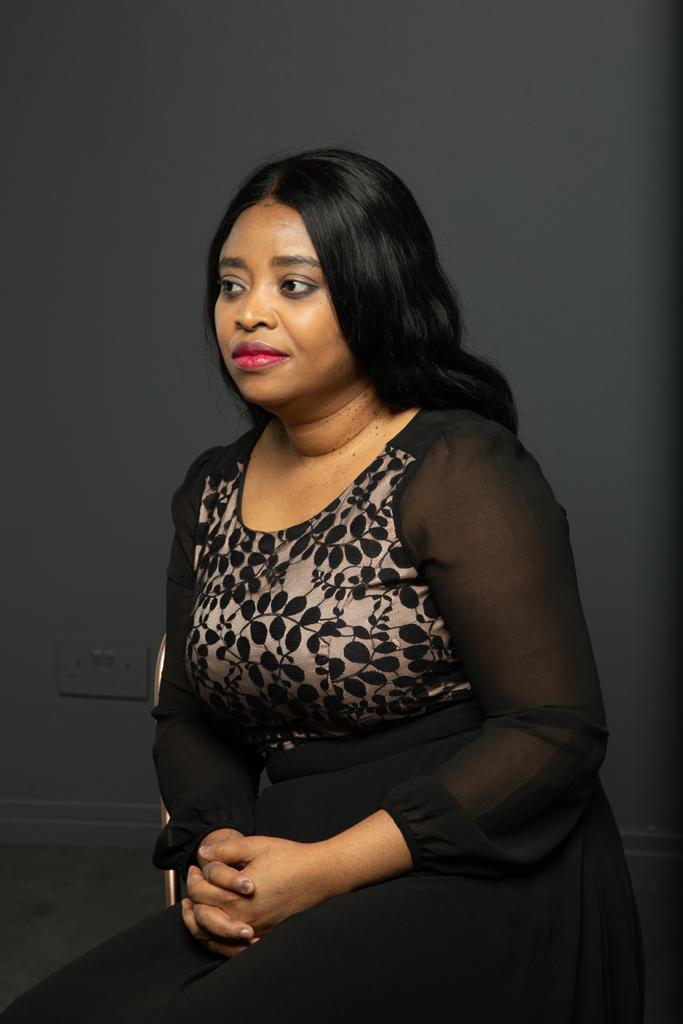
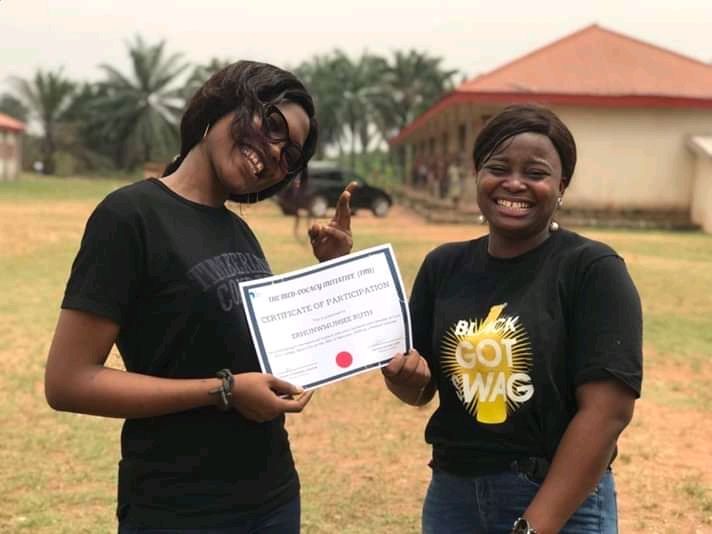
Imiesor Ojo is a fifth year pharmacy student at the university of Benin. She’s a peer educator and a SRH(Sexual and Reproductive Health) advocate.

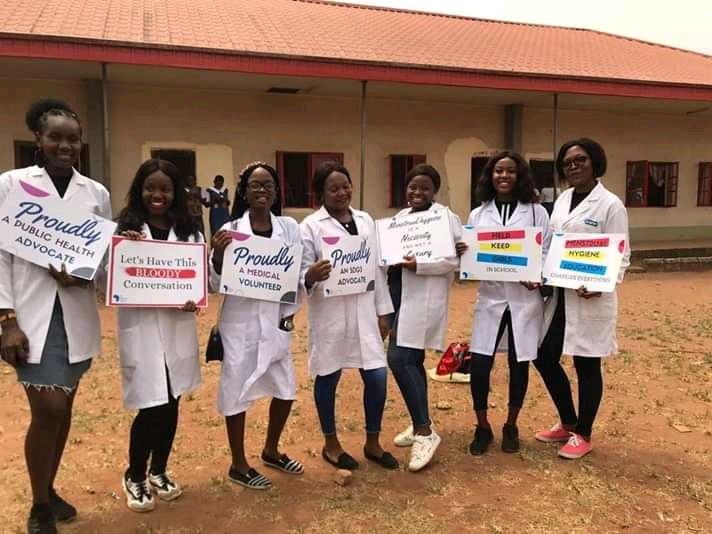
She volunteers at The Medvocacy Initiative (TMI), where she’s the programs director. She is also a volunteer with the Girls’ In Charge foundation(GIC).

She shares her story with the Ruby Girls team.
1. Let’s meet you. Who is Imiesor Ojo?

Imiesor Ojo is a young female entrepreneur with a passion for gender eqality and SRH advocacy. She is also a Pharmacy student at the prestigious University of Benin. In a bid to gain further knowledge and competency in sexual and reproductive health advocacy, she has participated in several certification programs. One of which is the prevention of campus sexual violence program courtesy the EU-UN spotlight initiative and WARIF (Women At Risk Foundation). She also volunteers with The Medvocacy Initiative and Girls In Charge Foundation, which serves as outlets to effecting positive changes around her immediate environment and beyond.

2. What inspired you to choose a career in pharmacy?

My love for chemistry at the time (back in secondary school) made me choose Pharmacy as my course of study despite the fact that my siblings wanted me to opt for Medicine.

*3. What is the greatest challenge for young entrepreneurs in Nigeria?*

The inability to properly manage finances. As much as people credit a lack of substantial capital as a major challenge, the fundamental problem lies with the management of funds. Poor financial management will most certainly lead to the ruin of any business.

4. Did your field of study motivate you to become a sexual reproductive health advocate?

Yes it did, although not entirely. I was also partly motivated by the negative impact that misinformation regarding sexual and reproductive health had on young people. Especially when a host of these consequences, which stems from uninformed choices, can be avoided by being privy to the right information.

5. Most people are still ignorant of the fundamentals of sexual and reproductive health, how can you address this?

The cure for ignorance is knowledge (education). Educating the masses, especially young adult, is my duty as a peer educator and a Sexual and Reproductive Health advocate. By using every platform available, I’ll be able to reach out to as many persons as possible and educate them on the subject matter.

6. Your greatest fear?

Not being able to harness all of my potentials.

7. What are some challenges you face as an advocate of sexual and reproductive health?

Lack of policy formation, review and implementation on the part of the government.
8. What was growing up in a Nigerian home like for you? Did it in anyway contribute to everything you do now?

Growing up in a family like mine hasn’t been the sweetest experience. Amidst all the disciplinary actions and strict upbringing I can gladly say it has contributed to who I am and what I do now.

9. If you were to be the President of Nigeria for a day, what would you change?

Well, Rome wasn’t built in a day, but if I were the president of Nigeria I would love to make changes to the educational sector of the country. The implications of poor/lack of education is devasting for self and the nation and it’s economy.
10. Mention 3 women who inspire you and why?

Mrs Florunsho Alakija inspires me a great deal. Albeit her status as a wealthy and prominent woman, she’s a symbol of sheer doggedness and hard work, and most importantly, she’s a woman of God. She’s a breathing evidence that women can achieve whatever they set their minds to, despite the odds.

Prof. Dora Akinyuli stands tall in that regard. she’s a symbol of intergrity, courage and passion in the Pharmacy profession.

Miss Chioma Uzoma, even though she’s a colleague of mine, has been a huge part of my success story so far. She’s purpose-driven, likes to carry everyone along and also she’s fearless (whatever she sets out to do, nothing stops her) and that motivates me.

11. Where do you see yourself in the next 5 years?

As a well-established pharmacist, SRH and gender equality advocate. A woman that has come to the complete knowledge of herself, a woman of influence and power.

12. How do you juggle being a student, reproductive health advocate and running a hair business?

Time management cannot be over emphasized. Knowing how to share/manage my time has made my life a lot easier because quite honestly, school can be quite demanding.

13. If you were given the opportunity to address a group of young females five years younger than you, what will be your advice to them?

Whatever it is in life you want to do never relegate your education and the ministry of you to the background. Also, do not let people’s opinion of you validate/define who you are. And whatever it is you are called to do, do it, whether you’re scared, unsure, or inexperienced, do it anyway because there is no better time to do it than now.

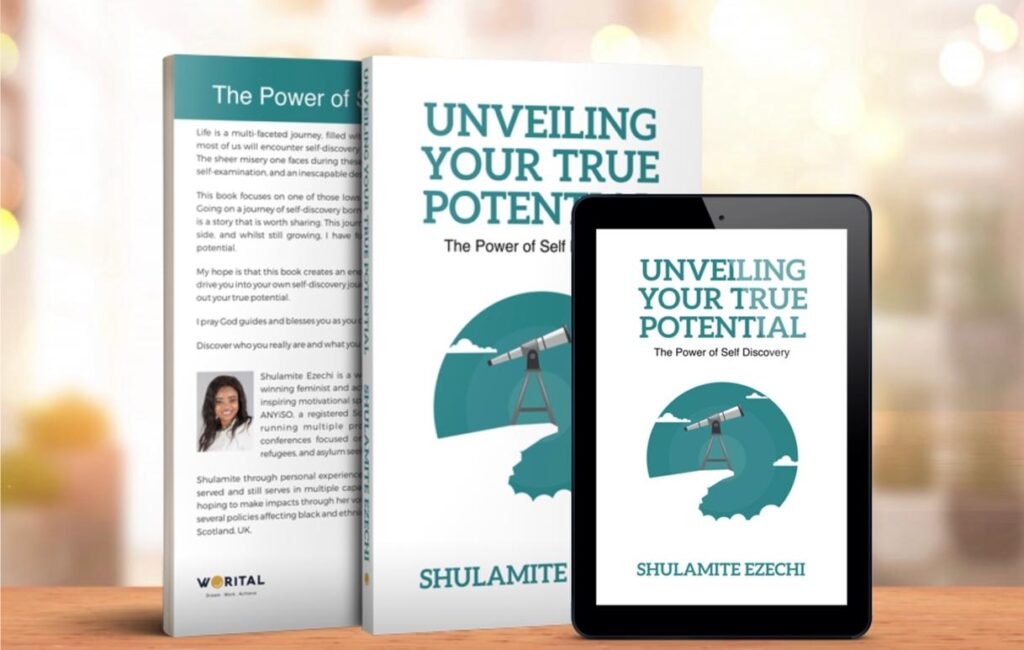
Shulamite Ezechi is the author of the fast selling motivational book “Unveiling your potential”, she is an active and inspiring motivational speaker, and founder of ANYiSO, a registered Scottish Charity organisation.

Shulamite through personal experiences and passion for driving change, has served and still serves in multiple capacities in various human rights groups to make impacts through her voice. She is involved in reviewing several policies affecting black and ethnic minority women and young people in Scotland, UK. She is an author, a community leader and a mentor to many young people, men, and women.

Shulamite holds a bachelor’s degree in Nutrition and Dietetics, two master’s degrees: one in Clinical Nutrition and Health and the other in Policy Analysis and Global Governance both from universities in Scotland, UK.

Shulamite has won many awards including ‘the Inspiration to the BME Community award’ that was conferred to her at the Glasgow City Chambers, United Kingdom. She has been privileged to be invited to Oxford University Women leadership Symposium to deliver a talk on ‘’girl child marriage’’ and lead a group of women to UNESCO Spring School to tell their integration stories through drama.

According to her; “The book focuses on one of those lows pertinent to me and my experiences. Going on a journey of self-discovery borne out of a very unsettled time in my life is a story that is worth sharing. This journey has taken me through to the other side, and whilst still growing, I have found myself, my calling, and my true potential.

My hope is that this book creates an energy and determination in you that will drive you into your own self-discovery journey pushing you to experience and live out your true potential.

You can get a copy of “Unveiling your true Potential” on https://shulamiteezechi.com/

Follow  Shulamite on LinkedIn here; https://uk.linkedin.com/in/shulamite-ezechi-55729812b

A 15-year-old Brooklyn chess champion was just awarded a $40,000 college scholarship as she aims to become the first Black woman chess master in the world, CBS New York reports.

Jessica Hyatt is one of the top 10 Black women chess players in the nation, dedicating five to seven hours a day playing the game. At just 15-years-old, she is very close to making history as the first Black woman chess master and was recently awarded the Daniel Feinberg Success in Chess Award, a $40,000 college scholarship. She joins other young Black chess champions like Nigerian refugee, Tanitoluwa “Tani” Adewumi and Cahree Myrick, in courting greatness before they were old enough to drive.

“I play whenever I get the chance, like in my free time, like during my classes, like sometimes during classes,” Jessica said. 

She’s currently a sophomore at Success Academy, a school known for its elite chess program. Just five years ago she met her coaches, Tyrell Harriott and David Mbonu, both National Masters, who took a liking to her immediately. 

“The first thing she did right around when class was over is she walked up to me, and she was like, ‘Can I play you?’ and I remember, I was like, ‘oh.’ There has never been a Black woman player to break the master ranking and that’s what Jessica is going for,” Mbonu said. 

To become a chess master, Jessica has to earn a ranking of at least 2,200; she’s already at 1,950.

“I learned the game when I was 15, so for Jessica to be at 1,950, that’s a huge edge,” Harriott said.

As a result of the pandemic, Jessica is spending most of her time playing online. Her mom, Loy Allen, said she hopes Jessica’s story will inspire other young children of color.

“If your kid’s passionate enough about it, have them go for it because the sky’s the limit, right?” Allen said.

Jessica plans to reach her goal of chess master first, followed by applying to college at MIT with the hopes of teaching chess to children in her community.

Congratulations, Jessica! We can’t wait to cheer you on to your rightful title!

Nollywood actress, Genevieve Nnaji has pleaded with the Feminist Coalition to reconsider its decision to stop receiving donations aimed at supporting #EndSARS protesters.

The group, which has been offering administrative support to the #EndSARS protests, had earlier announced that it would no longer accept donations for the campaign against police brutality.

It had also urged other protesters to leave the streets following President Muhammadu Buhari’s address on Thursday to prevent further violence.

But in a post on Friday, the actress said sustaining such an initiative is imperative to meet the financial needs of several Nigerians amid the issues trailing the movement.

Nnaji also said that the reality in the country has shown that citizens can no longer depend on government for survival.

She commended the group for its heroics during the heat of the #EndSARS campaign, while also promising to keep donating to support Nigerians.

“God bless you for all your hardwork ladies. But please don’t stop. I’m tired of people dying because they can’t pay before service at hospitals,” she wrote on Twitter.

“Bail money will be crucial now more than ever. I want to keep donating for it is clear our lives and well-being are in our own hands.”

The group had on Friday revealed that it received N147,855,788 donations and spent N60,403,235 over the past 14 days while the protests lasted.

Genesis Cinema has claimed that Nigeria lost about seven movie theatres to the hoodlum attacks and vandalism that trailed the #EndSARS protests.

In the past few days, there have been serial looting and vandalism of private businesses and government properties, and the burning of police stations across the state following the crisis that erupted as a result of the #EndSARS protests.

These attacks were triggered by the shooting of unarmed #EndSARS protesters at Lekki toll gate in Lagos on October 20.

In a chat with Arise TV on Tuesday, Ope Ajayi, executive director for Genesis Cinema, counted the losses incurred by the brand due to the vandalism and lootings that were recorded during the violent aftermath of the protest.

He said the firm’s Novare, Lekki and Sangotedo stores were affected while its restaurant at Circle Mall was also hit.

“In total, I think we’ve lost about seven cinemas in the country, generally from this EndSARS protest, not just Genesis now. Our store at Novare, Lekki; Sangotedo was affected,” Ajayi said.

“But we’re probably better than our colleagues in the industry. Our restaurant at Circle Mall was also affected.”

The damage to Nigerian theatres come after the financial losses incurred amid the COVID-19 lockdown, the delayed reopening of film houses thereafter, and the safety measures that forced the industry to operate below capacity.

Ajayi expressed concerns that the affected brands might have to stay out of business for a while before a comeback.

“Generally we all hope for a safer country. There are a lot of stalls along Admiralty Way that are standalones. And there were others that were not necessarily malls that were targeted,” the director added.

“I don’t think it’s a mall thing. I agree malls are a target but I think a better strategy is to ensure the malls are safe. And to see how to prevent general unrests going forward. We’re not moving to standalone. It’s also just as risky.

“Our premises are insured but there’s so much insurance can do. You’re going to stay out of business for a while.

“Even when you reopen, sometimes there’s a buildup. You’re not just going to reopen and business picks up. Yes we’re insured, which reduces the impact of the losses, but it’s still a huge hit on us.”

Public Eye’, a show by Funmi Iyanda, a Nigerian media personality, is set to make its television debut on November 1.

In a statement on Friday, the producers said the show will air every Sunday at 5 pm on Television Continental (TVC).

According to the statement, the show, supported by MacArthur Foundation, aims to beam the searchlight on current happenings in the country with a view to improving the situation.

“Nigeria is bleeding. The nation is on the precipice of a revolution sparked by outrage and pain. How do we make sense of everything that is happening? Where do we go from here?,” the statement read.

“Public Eye is here to shine a light through the fog of confusion and fear and provide answers to these nagging questions.”

The show is expected to feature stakeholders from different sectors who will be analysing various issues while also suggesting solutions.

“With Public Eye, Funmi Iyanda brings together the different stakeholders affected by the many problems in Nigeria police brutality, poor education, sexual abuse, and more and those with the power to fix these problems,” it added.

“The problems are not just discussed, but contextualized in a manner that highlights why these problems persist and the solutions.”

You can watch a trailer for the upcoming episode of the show here.

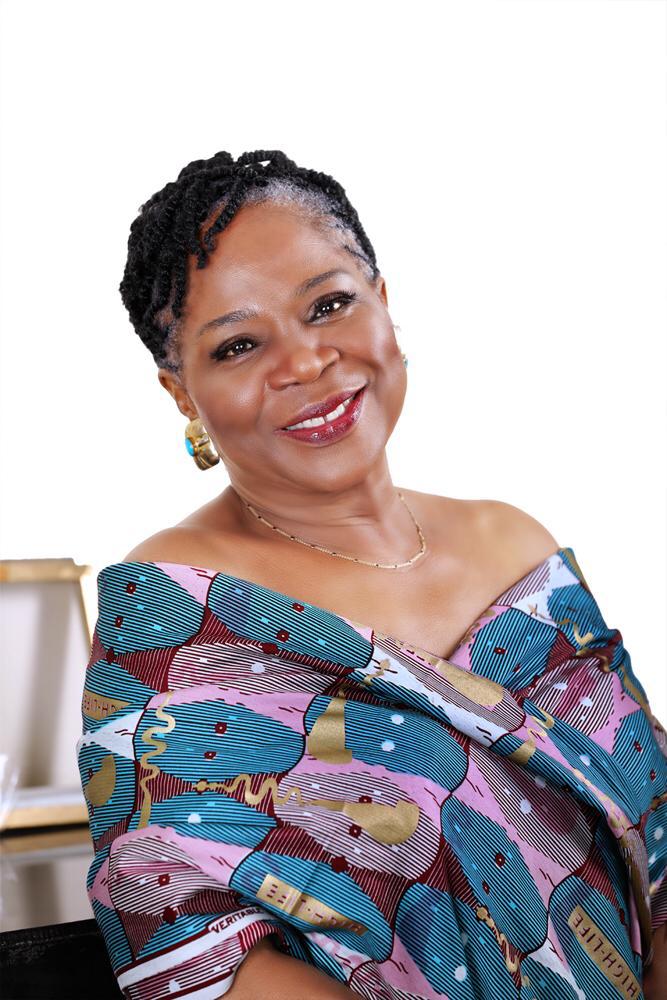
Onyeka Onwenu is a singer/songwriter, actress, human rights activist, journalist, and politician. Popularly called the Elegant Stallion, she is a former chairperson of the Imo State Council for Arts and Culture, as well as former DG, National Centre For Women Development (NCWD). She has won many national and international awards in recognition of her inspirational work in many fields. At the recent launch of her autobiography, My Father’s Daughter, she describes the book as a deeply personal account of her life and everything she has ever done. She tells TOBI AWODIPE of her introduction to feminism with her mother being the first role model of a liberated woman, how Nigerian youths are giving the nation hope with the #End SARS campaign, why more women must participate in decision-making and execution to stir growth and development.


Could tell us about your childhood? How would you say it shaped you into the woman you are today?
My childhood was idyllic, filled with the extraordinary love of an indulgent father, but too short-lived. It was filled with memories of good times and strewn with life’s lessons.

You recently released your autobiography, why did you decide that the time was right?
I think that the book decided for itself when to come out. If I had my way, it would have come out two years earlier, but situations and circumstances kept delaying its completion. I stopped worrying when I realised that each break afforded me the opportunity to better the book. It ended up being a case of all things working together for good.

You’ve been involved in music, journalism, politics, and so on, did you ever feel you had to sacrifice a parts of your life to succeed at all these?
Thank you for this huge compliment. I may not have planned my life that way, except that I took on opportunities as they presented themselves and dared to believe that I could give them my best shot. There is a whole lot more to be done. I will not limit the God who works in me; I am not able, but He is. I have never sacrificed one thing for the other. Like every other woman, I am simply multitasking. I can do many things at the same time and bring them together in some sort of harmony; it comes naturally to us.

In your book, you spoke about your contact with feminism and how your father’s life influenced your decision to join politics, tell us a bit about this?
I spoke about how my mum, Hope Onwenu, a strong Igbo woman (she had to be as she was widowed twice by age 37 and raising a family on her own) was for my siblings, a veritable role model of a liberated woman. She carried herself with a sense of self-worth, determination and grace. I was taught to carry myself in a similar manner. If that is feminism, then that’s what it is.

As an activist yourself, you must have felt some stirring within you regarding the recent #EndSARS protests sweeping the nation. What would you say to the youths and government respectively?
As a mother of young men and being of an older generation, you have no idea how proud of the Nigerian youth I am. I am familiar with their angst, their frustrations, and at some point, their hopelessness. I live with them; they are my children and wards. I have gone through the pains with them, in discussions and debates, arguments, and agreements, these topics have always been part of our interactions.

Some of us of an older generation had wondered if the youths would one day shake off their apathy and take back their destiny. Then one day, seemingly out of nowhere, the youths of Nigeria woke up. In the process, they taught us some greatly needed lessons. I am writing this today, but I have spent the last two days weeping and depressed for the mowing down of our beautiful children, right in front of our eyes. I am shocked and grieved beyond measure.

I never thought that our government would, in front of the whole world, take such an unwise retroactive measure, to kill in cold blood our unarmed youths, who are legitimately demanding a better life for us all. But something has happened with the #EndSARS campaign that can never be erased. There is hope still; I feel personally vindicated. The agitation and activism one has been engaged in for so long has not been in vain. The youths will yet save Nigeria or versions of it.

Having experienced the Civil War, do you fear that we might ever go down that path again with present happenings all over the country?
I have my fears about my country and my war experience informs that fear. We would not survive another, no country ever has. The question is this: do we have enough Nigerians who care to give peace a chance by doing the right things and giving us all an equal stake in this entity we call our country? That is what we need to ask ourselves right now.

As an advocate for social change, what are some ways young women can drive this even more in Nigeria today?
Instead of devising more ways to extract more obligatory commitments from women who are overstretched and hardly supported, I would rather we enable and allow them to participate in decision-making and execution. Believe me, we would witness remarkable growth and development in Nigeria.

You mentioned in your book that you experienced workplace harassment, what would you advice women that find themselves in that position?
I cannot assume to have an answer for everything. I just stated what I did and how I coped with workplace sexual harassment then. Perhaps, they can learn something from my experience. I said a firm ‘no’ and left the environment.

x

As a seasoned TV journalist, would you say the profession is friendly to women?
I never experienced any discrimination on account of my being a female journalist.

Tell us some of the challenges you faced when you ventured into politics, are women today still faced with these issues?
The challenges I face when I ventured into politics are well documented in my book, My Father’s Daughter. I recommend it highly to everyone.

As a Nigerian music icon and entertainer, are you satisfied with the state of the industry? What can we do to improve it?
The answer to this question should be a whole interview on its own and would require more than my contribution. Suffice to say that we have no functioning institutions and no government agencies with oversight functions really working. They have allowed the ones that exist, like COSON (a copyright collective society), to run amok. No one is in charge here and it shows.

Not many people know you married a Yoruba Muslim, is this something you generally don’t talk about?
I generally do not talk about my private life, but it was necessary for the authenticity of the book; it rests there. It was never hidden, but it was not for public consumption, only on demand.

Many women are going into activism today and are at the forefront of many protests, how does this make you feel?
It is lovely to see young women not allowing themselves to be kept down by the limited expectations of society and its rules. The women are awesome and it is a delight to watch them in their strength, boldness, and purposefulness. I am proud of every one of them.

What peculiar challenges would a woman that wants to venture into the entertainment industry today face?
The problems in the industry are not peculiar to women, except that would have to deal with the added pressure of sexual harassment and lack of respect from a society that does not appreciate the achievements of women. We only care they see them as sexual objects and not much else.

What is the importance of feminism to Nigerian women?
To me, feminism is the right to be myself, to believe in my self-worth, and to do my best work. These are the convictions that have allowed me to excel in anything I have the opportunity to do. Does it make me a productive member of society? Most definitely, yes!

What last words do you want to leave with people reading this?
Hopefully, these will not be my last words but my words for now. Keep striving; God’s got your back. Soar, no matter what. You are here for a purpose. Keep trying. I love you.

Source: Guardian

Demand Accountability Around Monetary, Material Distribution

President of the Nigerian Women Trust Fund (NWTF), Mufuliat Fijabi and CEO, Women’s Radio, Toun Okewale-Sonaiya have lent their voices to women groups that have decried the poor representation of women in the distribution of cash and relief items to cushion the effects of the COVID-19 pandemic and subsequent lockdown.

They revealed that most women lost their source of livelihood during the lockdown while a good number of women and girls suffered sexual and gender based violence. They urged government at all levels to show Nigerians how they spent the monies raised and who benefitted from the palliatives they claimed was distributed to the most vulnerable as studies show many vulnerable people, including women and differently-abled persons did not benefit.

“Covid-19 palliative distribution is no different as it concerns Nigerians and transparency is essential. According to Partners West Africa Nigeria, a whooping 87percent of Nigerian women lost their jobs/source of income during the lockdown with 61percent unaware of provisions made by government; this shows we need to dig deeper and ask more questions. Our primary assignment as the media is to inform and educate, therefore asking for how palliatives were distributed whether in cash or materials is critical and appropriate. During the lockdown, we gave palliatives to women and their families including cash to widows. These were donated by Nigerians within and outside Nigeria and we gave a breakdown with video/photo evidence of how donor funds were spent. This is accountability and this is all we ask of our leaders. The media must continue to demand for accountability on COVID-19 palliatives. The media is a key stakeholder of democratic accountability and at every opportunity, must ask her leaders questions and demand for answers,” Sonaiya said.The NWTF boss on her part divulged that there have been several complaints about the distribution of palliatives, especially government initiated ones which means the agencies in question need to be more strategic in the distribution of said palliatives through point of contact. “While I do not think women should take over the heading and distribution of palliatives, I believe we all need to work together to ensure these relief items get to those who most need them.”

She added that women have been in the forefront of the pandemic as care givers, health workers and family managers and have continued to do all these with little or no government involvement. “Unfortunately, less visibility has been given to women’s efforts and government at all levels have refused to involve women. At all levels, government should deliberately mainstream women into all its activities and response to COVID-19 and the efforts already made by women who did not wait for government to involve and invite them must be acknowledged.

Sonaiya said that whilst individual women and women organizations are pushing for inclusion and amplifying female voices on national issues, more women are demanding accountability, condemning corruption and challenging stereotypes. “We need more women in positions of authority to speak up, we need to be more strategic and utilise varied approaches to increase our numbers and strengthen our visibility. Take for example, the equal opportunity bill of 2016 that was presented in 2019 by Senator Olujimi, it’s a bill that every Nigerian woman should be talking about and every Nigerian man should support because it seeks for a fair, healthy, and conducive Nigeria for all. We’ll continue to ride on the wings of those who paved the way as we widen the road for more seats to be created. We need put gender on national agenda and make it everyone’s agenda.”

Okewale-Sonaiya lamented the fact that an alarming number of women and girls suffered increased violence during the lockdown, with the home being most unsafe place for them. “According to reports, 36percent of married women experienced spousal, physical, sexual and emotional violence during the lockdown. 55percent didn’t seek help due to fear, lack of support and ignorance and from our engagement with Northern Nigeria women, mostly due to religion and culture. We need to advocate against any belief and custom that aids silence, violence and suppression of women. We need more male voices to educate and teach other men that the holy books do not preach violence but love and compassion.”

She commended the efforts of women organizations and donor agencies during the lockdown, reiterating the call for a simple framework for rape and sexual assault victims as the current process of reporting rape and sexual assault remains extremely cumbersome and vague. “From over 70 programmes we organised during the lockdown, it saddens me to say that 89percent of respondents do not know the process of reporting a rape. Seven of 10 women said reporting to the police can be humiliating, thus discouraging reporting and hindering justice whilst eight of 10 do not know that evidence of rape in court must come from only approved government hospitals. We need more legal aid, free counselling and support groups and better grassroot awareness on how to report sexual abuse. Sexual Assault Referral Centres (SARCs) are our lifesavers and any governor that genuinely cares should have a SARC established in every state.”

She revealed that many Nigerians still don’t believe COVID-19 exists and this is due to lack of trust in the government. “Some governors were initially discrediting it with zero data sharing in most cases. While media houses continue to play its role to sensitise, the government needs to intensify awareness. People go about without using masks and physical/social distancing is no longer practised. We may not have experienced a pandemic in Nigeria and cases may be decreasing, but people are still contracting it,” she said.

Let’s start off by saying that not all emotional vampires are bad people. Sometimes, they don’t even realize what they are doing. After reading this, you could realize that you have been an emotional vampire to someone. That is not to say that they cannot be vindictive, mean, and cruel, but it is always important to note that they are also just human, and humans are flawed and make mistakes, and that is okay.

What Are Emotional Vampires?

If you have an emotional vampire in your life, it is easy to recognize when you know what to look for. If you interact with someone who routinely makes you feel anxious, stressed, overwhelmed, intimidated, and depressed, you have a vampire. They are called this because they suck up the happiness inside you, like orange juice out of a carton, and then discard you when you are empty.

It’s important to understand that you will never be enough for an energy vampire.

They are trying to fill an endless chasm inside themselves, and no matter how much they try and take from you, it is never enough, because the thing they need to feel better comes from within.

What Are the Signs of an Emotional Vampire?

There are several ways to recognize things you yourself do when you’re around an emotional vampire. For example, these are the 8 things emotional vampires do:

  1. They never take accountability for their actions, you are always the problem.
  2. They always have to be the best.
  3. They criticize everything.
  4. There is always drama.
  5. They use guilt trips.
  6. They act like a martyr.
  7. They play down your problems and talk about themselves and their issues.
  8. They spout mean comments that make you uncomfortable.

How to Deal With the 9 Types of Emotional Vampires

The first thing you have to know is that you can’t control their behavior. You need to understand that and know you aren’t responsible for their actions, only your own.

The second thing you need to do is, if possible, walk away, cut out, or distance yourself from your emotional vampire. You can’t change them, you can only protect yourself.

Despite your best efforts, some vampires are unavoidable[1], so here is a list of the types of vampires and how to protect yourself from each of them when they cross your path.

The Narcissist

This is the most dangerous of the vampires. These sorts of people don’t have empathy, and they simply don’t care about your feelings.

When dealing with a narcissist, you have to understand that they are what they are, and that is an emotionally limited person. They do not feel as much as you do. You can’t expect them to be something they are not; it will exhaust you.

Lower the boundary of what you expect from them and know your worth. Emotionally distance yourself from them, and focus on making sure your self-esteem and value come from yourself and not from pleasing them. Once you focus on pleasing yourself, the narcissist’s power over you will weaken.


The Victim

We all know the victim, someone who is constantly talking about all the bad things that has happened to them. The person that when you offer advice, they have no interest in solving their problems. Eventually, they may grow to blame you for their problems, even though they are of their own doing.

They key thing to note with this vampire is that you can’t actually help them fix their problems. Let go of the idea that you can actually help them, because you can’t, and it isn’t your responsibility or your job.

With the victim, protecting yourself is always about creating a healthy boundary. They will try and keep you in conversations, but you have to kindly but abruptly cut them off after a few minutes to avoid being sucked in to their constant negativity.

The Controller

This is the vampire that wants you to do your things its way. It wants to control how you do things, what you say, what you do, and eventually, who you are. They will comment with things that they think you should be doing and saying it’s in “your best interest.”

You may have met this one before; they will try and make subtle suggestions and encourage ways they want you to be and will leave you feeling fake. They will also invalidate all of your feelings when they aren’t suited to them.

When dealing with a controller, this is where assertiveness can come in. You can be assertive and kind at the same time. Just thank the person for their advice, but say you are doing things this way because it feels more authentic. Don’t be afraid to stand up to a controller and say “thank you but no.” They have no right to tell you how to live your life.

The Chatterbox

At some point in your life, you will have come across the chatterbox. This is a person who just constantly talks about themselves, their lives, their problems, and drama around them, and if you try and talk about yourself, the conversation swiftly comes back to them.

The chatterbox, in essence, isn’t interested in you or your feelings; you are just an audience to record and dictate their life so they feel heard, validated, and important. Unfortunately, that can leave you feeling like your relationship is one-sided, drained, unimportant, and ignored.

The best way to protect yourself from the chatterbox is direct communication. They do not respond to soft cues like attempts to change the conversation. You have to talk to them directly but politely to change the topic of conversation to something more positive.

The Drama Llama

There is no way you haven’t met the drama llama. This person will make everything into the biggest deal ever. Everything will be a problem or a thing, even something completely unnecessary, like the fact someone didn’t see them in the street and wave back.

With the drama llama, it really does depend on the context in which the llama is in your life and how the drama is affecting you. The most effective way is to not get involved or invested in their conversations. If you get caught in one, excuse yourself quickly and find a more positive person to chat with. Try to distance yourself from gossiping as well; it will help you not be drawn into the drama.

The Judge

The judge is a vampire that constantly judges other people, and no one is free from their scrutiny. They will judge everyone, and they leave you wondering what they say about you behind your back. The judger is one of the most toxic people to have around because, when they judge, they have nothing positive to say. They will leave you feeling insecure, pathetic, and even small.

With the judge, this is all on you. Just because someone is critical towards you doesn’t mean you have to care. The judge is critical for the sake of being critical; there is nothing constructive about it. So you can choose not to value what they have to say.

The judge tries to chip away at your self-worth because they are struggling with a lack of that themselves, but we know that true self-worth comes from within. Refuse to take what the judge says personally, and don’t get defensive with their comments. Keep a cool head, because if they know you feel hurt by what they said, they win.

The Critic

This person is the one who always has a critique about you or anything around them. Nothing is ever good enough, so they will always nitpick and make unnecessary, rude comments. You will start to notice that they have nothing nice to say about anyone, and their only dialogue is rude and critical. Nothing is ever good enough or even passable; it is always bad.

When dealing with the critic, you have to not take what they say personally and remember that they are just taking out their negative feelings and problems on you. Don’t get defensive. With the critic, remember you give power to what you give attention to. Don’t give their critiques attention, and always pivot the conversation to a positive alternative.


The “I Am Better Than You”

This is the person who is always trying to one up you. No matter what, they have done it bigger and better than you. This one is the most annoying to have around because their whole intention is to make you feel small. This vampire will leave you feeling insecure, small, exhausted, and anxious.

You have to understand that, with this vampire, it comes from a deep-rooted insecurity that they are not good enough. Encouraging and reassuring them doesn’t work with this vampire because they have an almost false big ego, so you will just be feeding that fake ego. They need to find validation from within.

But for you, you need to make sure that you are reassuring yourself that you are good enough. They will do their best to make you feel worthless and insecure. If you do want them to feel better, give them genuine, real compliments about their self-worth, reminding them that they are important and they matter. Just make sure you are reminding yourself of that first.

The Innocent

I always see this one as the second most dangerous vampire because you never see them coming. The innocent vampire is someone who is just a little helpless, and you just help out now and then, but it spirals out of control. Soon, they are dependent and expectant upon you to help them, and it drains you to a crisp.

The innocent is a vampire that feeds on your compassion and empathy, and they can often not see the line because you haven’t enforced it. You let them cross the line over and over again, and they had no idea they were asking too much, especially since you probably encouraged it by saying that it was no trouble.

It doesn’t make you a bad person to say no to helping people, especially people who have taken advantage of your hospitality. Defending against this type of vampire is drawing a line, a boundary, and enforcing it. This can be hard, but the reality is that they need to become self-sufficient, and you can encourage that all while drawing a thick line.

Source: Lifehack

Do you sometimes feel you are not good enough, or think your best isn’t enough? This article is for you.

Confidence — it’s a powerful word and an even more powerful feeling. Can you remember a time in your life when you felt confident? A time when you felt unstoppable… on top of the world? Now imagine you could feel that way more often. What impact would that have on your health and well-being, your career, your relationships?

Not only does being confident feel good, it helps you seize potential opportunities, take more chances and make that big change or take the next step in your life and career. Life is crazy, busy and beautiful. Figuring out how to be more confident is just part of the journey.

So how to be more confident?

Lack of confidence can stem from many places.

Perhaps, growing up, your parents said a certain career was outside your reach and you could ‘never do that’. Or maybe you have a belief system that says ‘I could never start my own business, I’m not entrepreneurial’.

Perhaps you had a bad experience which opened the door for self-doubt to creep in. Or maybe your inner self-critic is telling you ‘you can’t’ or ‘you’re not good enough’. Maybe (ok, likely) you’re comparing yourself to someone else – a friend, colleague or spouse.

Or perhaps you feel there is something missing in your life – a relationship, the dream job, kids, a degree or title.

Here are 9 powerful ways to be more confident

1. Uncover What Gives You Confidence

This is personal, so it will vary from person to person. There’s no one size fits all approach to confidence and what works for one, won’t always work for another.

How can you figure out what gives you confidence? Think about a couple times in your life when you felt most confident. Now, think about what was it about those times that made you feel so empowered.

Was it the environment you were in? Something you were doing? A feeling you had? The more you get clear about this for yourself, the easier it will be to tap into when you need it.

2. Be True to You

One of the surest ways to lose confidence is try to be someone else. One of the best ways to build your confidence? Be true to yourself

When you’re trying to be someone you’re not, every part of you resists it. You are not everyone else. You are you. And the more you can understand who you are and what you value the stronger you will be.

When you stray away from who you are, you lose confidence because it’s ‘just not you’.

How?

Think about what makes you, uniquely you. Write it down. Think about what you value and what’s important to you. Write that down, too.

3. Stop Comparing Yourself

Nothing zaps your confidence more than comparing yourself to others. Especially now, with social media and the wonderful opportunity to judge yourself against so many others! Lack of confidence comes from a gap in where you see yourself and where you think you should be.

Imagine you are preparing to give a big presentation or speech. So you do your research, which includes watching some of the best speakers in the world doing their Ted Talks. Of course you are going to feel inferior.

How?

Stop comparing yourself to others. Just stop. If you still feel a compelling need to compare – compare yourself to yourself. Measure how far you’ve come. See how much improvement you’ve made. Acknowledge your wins and successes.

4. Realize You Are Enough

This may sound a little bit corny, but try it. This positive affirmation will resonate at a deep level and have a powerful effect on your subconscious.

How?

Every day for the next 21 days repeat this mantra “I am enough.” Don’t just say it, but feel it, deeply, at the core of who you are.

Want to get more specific? Replace ‘enough’ with whatever word you’d like to ‘be’. What would give you the most confidence?

I am brave. I am strong. I am smart. I am beautiful. I am confident. I got this.

5. Acquire New Skills

Since confidence is often directly linked to abilities, one of the best ways to build your confidence is to get new skills or experience and step out of your comfort zone.

Growing your skills will in turn grow your confidence. And please, as you work on building your skills and expertise, don’t mistake a lack of perfection for a lack of ability. No one is perfect. But if you’ve got a perfectionist bone in your body (like I do), it can make you think that just because you’re not the best, that you’re not good at all.

Make sure to check yourself – am I really not good at this, or am I not good as I want to be just yet?

How?

Ask yourself: Is there a specific area where you are lacking confidence? How can you expand your expertise in this area?

6. Change Your State

Changing your physical and mental ‘state’ is one of the quickest ways to access a feeling of confidence. To do this, you need to know what the state of ‘confidence’ looks, feels and sounds like for you.

How?

Here are a few strategies you can use to access that:

  • Remember – Think of a specific time, associated with feeling confident. Sink into that feeling deeply and moment by moment relive every detail.
  • Imagine – Imagine how you would feel if you were confident. How would you act? Feel? Be?
  • Modelling – Think about someone you know who exudes confidence. Imagine what that person would do.

7. Find Yourself a Cheerleader

Yes, while I understand confidence is a state from within, you can also boost your confidence by the people you choose to spend your time with.

How?

Make a concerted effort to surround yourself with others who provide encouragement, positivity, and inspiration.

Spend more time with people who ‘get you’ and see all of your greatness – and less time with those that zap your confidence or cause you to feel self-doubt.

8. Just Do It

When Nike came up with this slogan in the late 80’s, they knew just how to get the general population off their butts and moving. Turns out, this is a great strategy for being more confident too.

Action builds confidence and each step you take builds it further.

How?

Think of one step you could take right now that would get you moving in the right direction. Then Just Do It and see what happens. An incredible thing about human brain is that once it realizes something is working, it will keep that momentum going!

Final Thoughts

Being more confident starts with one thing — YOU.

YOU making the decision to take action. And when all else fails, YOU can make a choice.

YOU can choose to be confident. YOU can choose confidence over fear and self-doubt.

Your mind believes what you tell it. If you continue to tell yourself the story that you are not confident, you will believe it and your self-doubt will continue. But if you tell yourself you can do it, that you got this, your mind will believe that too.

Remember, fostering a strong sense of confidence is critical to experiencing overall levels of health, happiness and success.

And once you get started you’ll be unstoppable. Be brave. Be confident. You got this.