Author

Women of Rubies

Browsing

Oluwatoyin Sanni is the Group CEO of United Capital Plc, a leading African Investment-Banking Group, which provides capital and financing solutions to African governments, companies, and individuals.She was the African Business Woman of the Year at the All African Business Leaders Award (AABLA 2017) and also the first female that won the PEARL Award for the most outstanding CEO the same year. In this interview with KEHINDE OLATUNJI, she speaks on her life as a mother, author, wife, pastor and stockbroker among other things.

You are a notable CEO, author, stockbroker, and chartered secretary among many other things, what drives you?
My driving force is the convictions I have that every human being came to this world for a purpose. I have a very strong sense of purpose and I especially believe that women, aside the fact that we are frequently wives, mothers, sisters which makes the society to rely on us, does not mean we do not have our own individual mission. I believe every woman should take the time to connect with our Maker and confirm what is her purpose in life and set to fulfilling it.

It is often said that irrespective one’s background one could still achieve a lot, how has your background contributed to your success?
I was born into a family of seven, my late father was an accountant and my mother was a businesswoman, I studied Law at the University of Ife and graduated at the age of 18. I worked at the Ministry of Justice as a prosecutor after which I joined the financial industry and I have been in this industry for a couple of decades. I have been in investment banking for about 18 years. I qualified with the Institute of Chartered Secretaries and Administrators and also qualified with the Chartered Institute of Stock Brokers, which I am a Fellow. However, I would like to attribute my success to a combination of sources: My Heavenly Father who is the source of all wisdom, my late mother who was a serial entrepreneur and irrepressible survivor, my late father who was a role model when it comes to financial discipline, ethics and governance. The wealth of experience gained from my rich and extensive working career cannot also be left out.

It is said that women are not given enough space in politics, governance, business and other key areas in leadership, do you agree with this?
I totally agree with you that women do not seem to have the same opportunities that men may have had and that is across major areas in leadership and politics. It is also clear in financial inclusion and this narrative has to change. It is especially hard for a woman to achieve much without ambition due to the limiting beliefs and societal bias, which would hardly allow anything to be handed over to her which she had not first actively pursued or striven for.One of the initiatives I am part of which is Women in Finance is an initiative that engages policy advocacy to ensure that the government put in place policies that would be favourable towards the economic advancement of women. This initiative was established in 2016 with a view to becoming a strong voice for the financial empowerment of women, it is a networking platform for women. Part of its mission is to advance the cause of women, pursue financial inclusion, advance financial literacy, engage policy makers on initiatives that will grow the economy and be favourable to women and promote gender parity in the country.

Having highlighted the mission of Women in Finance can you tell us what steps the organisation is taking to achieve this task?
We develop skills in women and we do this through workshops and seminars for the development of financial skills. Though it is not every woman that will work in the financial industry or be in a finance role, however, I am convinced that every woman should be financially literate. Financial literacy is a passion I have and worked on, both on the platform of Women in Finance, and also in the financial literacy committee which runs across our financial industry where I am the Chair. We also extend the hand of fellowship to the male counterpart; it focuses on creating financial literacy in every Nigerian. I must admit that there is a low level of financial literacy among our women.
It is believed that every woman should understand basic principles of keeping track of their monies, delayed gratification, saving a proportion of their earnings or income, discipline of budget that enables them to know how far they should go in terms of spending so that they can have something put aside for the future. Women should be in control of their financial destiny. It is surprising that some women cannot balance their checkbooks; you will be surprised how many women don’t even know how the bills in the house get paid, I am not suggesting that they should insist on paying the bills where the man can or insist on paying a particular portion of the bill, but it is good for us to have a good understanding of how much is consumed in electricity, water and other things and have an idea on how this bills are settled.

How do you balance work with home and every other thing you are involved in without getting dilapidated?
I guess one of the things that help me is planning; with disciplined planning any woman can multi-task and I believe that every woman should multi-task. Also, I support myself with capable assistance many of which are women and I think that they are good people to work with. Surrounding ourselves with capable people to support us both at work and at home is very important and that has helped me a lot.
I have never involved myself in anything I don’t believe is part of my mission in life. This gives me the drive, commitment and willingness to sacrifice and enables me to keep doing what I do without regrets. I love and enjoy every part of my life. My work is not a chore or job to me, it is a big part of my mission, my life’s work. It all fits together nicely. Also, being a pastor enables me to fulfill my goal of helping others maximise their lives and being a wife and mother is not only a joy, it also helps to demonstrate to younger women that they, too, can combine all these roles and maximise their lives.
Writing books, articles and posts closes the gap by providing a platform for remote mentoring. Beyond the above, I enjoy tremendous support, encouragement and understanding from my husband and children who are all equally purpose-minded. Finally, I have amazing assistants at home, work and in church to whom I delegate everything not requiring my personal attention and who are also growing and learning from me so that they, too, can lead people in the future. It’s an entire ecosystem.

How do you relax and what time do you devote to writing?
When I am working on a book project I set aside time everyday to work on the project. My writing desk is very close to my bed, when I am working on a project I will not go to bed until I have put in a number of hours that I have committed to work on it. I read a lot. I love to watch movies and, as I raise my children, we get used to going to the cinema together, sometimes we stay at home to watch the movies together. I enjoy music a lot, I listen to music, I sing and I jog and walk for exercise.

In 2017, you got the award for the most outstanding CEO, what are the criteria for winning this award?
The award is a recognised Capital Market Award that reviews and gives award to private companies across the country. It was the first time in the 22 years history of the award that a female CEO would emerge as the CEO of the Year. The Pearl Award committee have a highly respected board which comprises of former SEC DGs. They have a very credible award committee which reviews the performance of Nigerian CEOs year after year, they look at the financial performance of the company, the brand perception of the company, the returns of the company, they rank the CEO across all these different areas, they also rank within the sector which you operate and based on these different rankings a winner emerges.
In that particular year, United Capital which I run won five awards, we won the best Corporate Governance Awards, Sectorial Awards for Financial Services, the Highest Dividend Yields award, the CEO of The Year award and the Most Outstanding Company of the Year award. I believe that rating my performance and the performance of the company across all those indices earned us the awards.

Advise to women aspiring to achieve great things
The first thing to every young woman is to believe in yourself, don’t let anybody put you down or underestimate what you are capable of. I tell women that there is no female brain and there is no female spirit, so the person on the inside of you is as brilliant, capable and powerful than anybody could imagine. Against the background of your confidence in yourself and what has been put in you, work as hard as you possible can, demonstrate to everybody that you are not asking for special favours.
I like one of the things that Meghan Markle said recently. She said: “Women deserve a seat at the table and, if that is taking time coming, create your own table.” So I tell any young person to do the best to get a seat at the table and peradventure the seat is slow in coming consider inventing your own table. Change the game if you need to in order to win. People usually say that all that is needed to do is to play hard at the game, but if you play hard and you are not winning, perhaps you are playing the wrong game and you should play the game in which you are equipped to win; there are always alternative games.

As you climb the ladder of success what is your advise to companies who think less of women?
Companies need to understand that there are hidden treasures in the other 50 per cent of the population that they often do not consider when they are recruiting. Women are skilled and increasingly better equipped in terms of education, professional qualifications. They are a flexible band and they possess lots of leadership and management skills. Companies should give women the opportunities to prove themselves, they won’t disappoint them on the contrary we will pleasantly surprise them.

What role do you think the government can play in this?
We have to start from the protection of the girl child. Government needs to ensure that our schools are safe for the girl child and the community is also safe for them. The should provide adequate security for them and make sure that our daughters are not kidnapped, abused or prevented from going to school because that is where it starts. They should make sure that employment practices are fair and not discriminating also, the judiciary needs to protect women who have been discriminated against and our laws must be fair and even- minded all the time.
In closing, I will like to encourage all of us to believe in Nigeria and recognise that there is plenty of room for our dreams to be fulfilled even in this nation and to understand that our economy can grow again and women have a big part to play in the development.

By Kehinde Olatunji

For Guardian
Self-love, body confidence, curvy girls rock, melanin popping among other words of self-affirmation have been formed into such beautifully popular hashtags that people all over the world use on the internet to spice up their social media captions among other reasons but I wish that more than being just hashtags and things we say to be cool on the internet, we truly believe them and have as much “positive energy” in real life and in our minds as we have online about our bodies.

At a time where the global society has immense focus on appearance and even more so an obsession with beauty and “perfect” appearance leaving little or no room at all for different appearances or diversity within the generally conceived idea of what beauty is – which basically means that if you don’t look a certain way or at least try to look a certain way you’ll be considered way far from being perfect and maybe even downright ugly – the gospel of healthy body image and how it affects our self-worth, productivity and even our mental health should be preached to all ends of the earth but more importantly, it should be practiced. Why is this a topic? How bad do these things get?

Well, Imagine being unable to do basic things like go shopping or go to parties or speak at a business meeting because (you are afraid) of how people view you and what they say. These unkind comments have led many to depression and suicide.

The problem isn’t that we don’t know this is a problem, it is that we don’t treat it as one. People can tweet all day about these subjects but millennials have often been called the hashtag generation because we do not translate our online advocacy to real-world behaviours.
Still, in 2018, women still have to worry about not being judged by their size or weight. So many women still suffer from depression because of how they look and people still have preconceived ideas of plus size women. With every hashtag trend regarding body confidence, we get more comfortable about talking about these subjects, yet we still Judge.

This is sadly not a problem that can be solved overnight, neither is this an epidemic we can solve with a one “fits-all” solution. However, while this might be a complex issue at the core, a change in perspective might just be all we need to rid ourselves of “body shaming”.


Written by : Awazi Agbalaga

Source: Guardian

Pic credit: Pintrest

Ajayi Beauty Martins is a 400level student of the University Of Port Harcourt in the Department of Sociology and the reative Director Beauberry creations, the umbrella company of her signature brand “Tyniture” where she is reusing and recycling of tyres into furniture with a sense of class and beauty such as sofa, coffee tables, side stools, chairs, thereby reducing waste in the environment and at the same time Creating a source of livelihood.
Beauty Martins is also a volunteer for Non profit organizations and Social Work groups within and outside Port Harcourt serving in different capacity. The young entrepreneur shares her inspiring story in this interview and where she sees her brand in the nearest future.

Growing Up
Yes it did and I can say 80% of what I do today is as a result of my growth process, I wasn’t born with a silver spoon , and we had to live at the mercy of family and friends, at some point in my life, I had to tell myself the truth about Life, because I knew I would have to emancipate myself and my family from the den of living on others and the only way out was for me to Work Hard. At age 7 my grandad used to buy me chicks to train and sell, although most of them died (lol) and then after school hours I used to make coconut candy and ice-cream made from milk and water to sell to my mates around my area, some evenings my aunt would roast corn and sell oranges in front of the compound and I always had to join her so we could make sales, at home we also sold drinks and sachet water in small quantity to keep us running, for me it was fun and I always looked forward to getting back from school to start selling.
My mum had a salon and most evenings I and my younger sister would have to go to her shop with our ice-cream and candy to sell so we could raise money although it was little but it gave me a sense of responsibility and every step of these way I had to learn different skills to keep me going and all these indirectly prepared me for the business world.

Meet Beauty
I am the first of two girls, raised by a single Mother, born on the 4th of April 1997.Attended De-Harry International School from Nursery to Junior Secondary school and then Moved over to Government Senior Secondary school, Elekahia and currently a 400level student in the department of Sociology, University Of Port Harcourt. I am a fun loving lady and a fighter.

Inspiration behind your brand “Tyniture”
Basically for me, I had always been disgusted by the unending and indiscriminate increase in poor disposing of waste, mostly non-degradable, the rate of tyre waste has recently been on a high side, I thought to myself that I needed to do my bit and also in trying to avoid being killed by breathing bad air and the soot menace, that has clouded our beautiful city, of which a certain % comes from tyre burnt in abattoirs, tyre burnt in streets, used to burn bushes and just randomly burnt most times ,i needed to create my own little awareness by showing to my community that great and beautiful things can still be made out of waste Tyre and that birthed Tyniture for me.

Balancing school and work
I prioritize my time. I work extra hard and smart to put in as much effort as I put into my academic into my business, so I don’t flop in any area and even if I flop, I get up, balance things and continue to push.
When it’s time for School I face School strictly and When its time to get dirty and work, I give full dedication.
It’s not been easy, because it takes discipline and sometimes I get really stretched but it’s been worthwhile.

Work challenges
Restriction in getting these tyres from some locations. Restrictions and Poor Support System in Creating a Clear and Truthful Awareness about the hazards in tyre burning and misuse.
Lack of Material/Machine Support in Getting new tyre artifacts, designs and arts produced due to lack of funding.

I do more….
Aside from the Tyniture brand and Waste to Wealth Recycling.nI am involved in Handcraft using Africa Inspired Materials. I am Currently the Primary Licensee and Organizer of TEDx University Of PortHarcourt. Volunteer at Keeping it Real Foundation, I volunteer for center for youth entrepreneurial development.I was also Privileged to Volunteer for NBC Youth Empowered PH in 2016.
On a personal note I run an Outreach, made up of a group of friends, we do social media and crowd funding to buy gifts and foodstuffs during festive periods to visit orphanages, hospitals (children wards) and street children to have fun and share the good news of Love with them.

Reward
The greatest Reward for me has always been that I am happy with what I do and whether or not anyone rewards me, I am proud of the fact that I am making impact from my little corner.

“Tyniture” in 5 years
Growth is a process and I am sure that with continuity and sustainable work, The brand would be known far and wide for Excellence and Top notch designs in a Few Years to Come.

Giving up
When I first started I had a lot of persons who told me I was going to fail and that drained me so much that I became depressed for a while but I stepped on it and worked harder, Here I am today because I didn’t give up on my dreams

My Inspiration
My mum is my biggest Inspiration and my hiding shell, even on days when I get tired and broken, want to relent and just be a normal girl, she tells me I can’t stop till I reach the finish line. My mum is my Biggest Fan.
Also, Mrs. Bitebo Gogo inspires me to work hard and excel as a woman. Her life is an example of Excellence despite the odds and Challenges. The Zeal to Make Impact, Create a mark on the steel of mother Earth and Hearts of Men Keeps me pushing.

Being a woman of rubies
I am a woman of Rubies because My Strength and Passion is found within the very depth of my heart and I am a Precious Stone that’s rare to find.

To young female entrepreneurs in Nigeria….
No business is meant for the male gender or is too dirty for a lady, You see something you like to do and feel you can? Go ahead, People will talk but Remember what matter most is your Happiness and the love you have for your business. Never Relent, Even when you fail, Try Again,Make sure you fail forward.And to those thinking about starting, Its never too late or too early to start anything. All you need is GOD ,Iron Will, Hands to Work, a Strong Heart and Indisputable Zeal.

To women all over the world
Be true to yourself at all times. Never let Circumstances get the best of You, Sit at the table and add value wherever you find yourself.

Proactive people are constantly moving forward, looking to the future, and making things happen. They’re actively engaged, not passively observing. Being proactive is a way of thinking and acting.

Let’s look at the five Ps on how to be more proactive.

1. Predict

In order to be proactive, you must first develop foresight.

Proactive people are rarely caught by surprise. Learn to anticipate problems and events. Understand how things work; look for patterns; recognize the regular routines, daily practices and natural cycles that exist in your business. At the same time, don’t allow yourself to become complacent. Use your imagination when anticipating future outcomes. Don’t simply expect the past to always be an accurate predictor for the future; use your creativity and logic. Come up with multiple scenarios for how events could unfold. Proactive people are always on their toes.

2. Prevent

Proactive people foresee potential obstacles and exert their power to find ways to overcome them before those obstacles turn into concrete roadblocks.

They prevent problems that others would simply look back on in hindsight and claim unavoidable. Don’t allow yourself to get swept up in a feeling of powerlessness. When challenges approach, take control and confront them head on before they grow into overwhelming problems.

3. Plan

Proactive people plan for the future.

Avoid one-step, “here and now” thinking and instead, look ahead and anticipate long-term consequences. Bring the future into the present; what can you do today to ensure success tomorrow? Don’t make decisions in a vacuum; every decision is a link in a chain of events leading to one final conclusion. In order to make the best decision, you have to know where you came from, where you are, and where you want to end up.

4. Participate

Proactive people are not idle observers, they are active participants.

In order to be proactive, you must get involved. You have to take initiative and be a part of the solution. Recognize that you are only a piece of the whole and that you influence—and are influenced by—the actions of others. Don’t simply react to them. Engage with them. Exert your influence and make a contribution.

5. Perform

Being proactive means taking timely, effective action.

You must be decisive and willing to do the work NOW. Procrastination is not an option. Take ownership of your performance and hold yourself accountable. Stand behind your decisions. Being proactive means you have taken careful, thoughtful steps to choose the appropriate path; you’re not just reacting impulsively to your environment.


Culled from https://www.eatyourcareer.com

Dr Sigma Jagne, Commissioner for ECOWAS Social Affairs and Gender, told newsmen in Abuja that this would tackle gender inequality issues.

She said poor representation and participation of women in politics posed a serious challenge for sustenance of democratic growth in West Africa.

“The men have been there for a long time and they have not taken us where we want to go and we think that, as long as women are left out, we will not get where we want to go.

“We have to work hand in hand to the place where we all want to be which is where men and women work together and make decisions together.

“Senegal made it a law to have 50 per cent women in parliament and 50 per cent men and I think all the other countries can take (a) cue from Senegal.

“We urge Nigeria, which has the lowest representation of elected women, to also work on legislation for the 2019 elections.

“To ensure that women representation move up, if not 50 per cent but from its 8 per cent to 25 per cent; we (can) take (it) slowly to 50 per cent by another five years after 2019.’’

She identified the belief that men were designed to lead women as a culture that hinders gender growth.

Jagne urged political parties to create a level-playing-field that would encourage gender equality.

She said women would participate fully in electoral processes with adequate funds and motivation.

Source: Pulse News

Brigitte and her family lived in Togo while her uncle lived in Ghana.

Unknown to her father, Brigitte was going to be a Trokosi – a culture where a member of a family (female) is chosen to pay for the crime of another family member.

Trokosis are called wives of the gods and they are held in a shrine run by a priest dedicated to the worship of deities.

At the time, Brigitte was only 7 years old. She had never been to Ghana before that time; neither did she understand their language. She was just told to go and live with her uncle.

Brigitte’s uncle had committed adultery and she had to be a Trokosi, so that evil does not befall her family as it is popularly believed in the communities where it is practiced.

“The community leaders of where Trokosi is practiced believe that when there is sickness in the community, someone has sinned and there is a need to appease the gods of the land. Sometimes, the gods demand a human being, not to be killed but to be isolated.”

The Trokosi practice has survived for over 300 years and is still in practice even though it was banished since 1998.

Life as a Trokosi was a hard and difficult one especially as a child who did not know why she was dumped at a shrine.

“Each day, I was woken at 5am and sent to fetch water. I had to carry heavy buckets on my head. It was hard physical work for a child. I was made to sweep the compound and work long hours on the farm. I wasn’t allowed to play or even go to school. I was in total isolation,” Brigitte said.

Luck smiled on Brigitte when an American news crew visited the shrine to cover what was going on there. The report gave her freedom, as an American viewer flew to Ghana to negotiate her release. His name was Kenneth Perenyi and he became her adoptive father. He took her to the US where she spent the next 13 years.

Unfortunately, these girls are left wondering why they are in the shrine as they are not familiar about the practice.

Meanwhile, for the practice to be completed, there was a need for the traditional priest to sleep with the virgin girl who comes in and the girls often bare the children of the priest.

Brigitte didn’t have to go through that because she got her freedom even as a child.

“I was liberated before purity so I didn’t go through it. When I left the shrine in 1997, there were about 5000 women and children in Ghana alone. Thousands were liberated and Trokosi was made illegal in 1998 but no priest has ever been prosecuted and the practice still goes on,” she explained.

The practice is so age-long that when a Trokosi dies, another girl is brought to replace the deceased.


Credit: woman.ng


The Duchess of Sussex, Meghan Markle is going to be receiving 6 months intensive duchess lessons as ordered by the Queen.

The Queen has reportedly selected one of her senior aides to spend the next six months training Meghan in how to properly act like a member of the royal family.

49-year-old Samantha Cohen, the Queen’s senior aide, has been entrusted with the task of showing the new Duchess the ropes. Cohen has even moved out from Buckingham Palace to Kensington Palace to be closer to Markle.

According to a source, “It will be six months of listening. She is seeking out advice from a range of people. She is going to proceed with humility. It is not going to be quiet, though. It is going to be a very busy office. She has worked every day of her life. She is used to a demanding schedule.”


The developed countries integrate and engage their youth in the mainstream development and governance processes. They believe that these young people, in particular, have the power and responsibility to stand up and take action to achieve unity and sustainable development in their countries.

While resisting the temptation to start rolling out names of many young people, who have changed the world today, there is no doubt that the passion and commitment to creating scientific breakthrough and social change, demonstrated by these young individuals, remind us how much the youth achieve when given the right opportunity.

But it is a twist in the tale in Nigeria where the youth are never given the chance to exhibit their innovative and leadership skills. For instance, we see many university graduates (even with First Class Degrees) being churned out but end up wasting away or gallivanting on the streets while others do dubious ventures.

The plight of the youth, in Nigeria, is very disturbing!

As part of Women of Rubies’ collaborative work with NGOs, I am delighted to introduce Sandra Okeleke, the President of ‘Passion for Self Discovery Initiative’.

I interviewed this ‘young activist’ to discuss some of her NGO’s most iconic campaigns and her quest for a better Nigeria.

Meet her and her kind of Activism
Okeleke Ifeanyi Sandra is my name – born to be ‘MAD (Making A Difference)’. I’m a graduate of Mass Communication from the prestigious Moshood Abiola Polytechnic (Abeokuta, Ogun State) and also, a BSc student of Crescent University where I’m studying Mass Communication.I’m the Founder of ‘Passion for Self Discovery Initiative’ – it is a Non-Governmental Organisation. Our aim is to create an atmosphere where youths can thrive in every facet of life while contributing positively to nation building. We also help our youth to discover their talents, nurture it and put it into use. There is this gap we help to bridge in the literacy level between the rich and the poor. So far so good, we have seen our impact as we continue to help the youth develop patriotic, entrepreneurial and self-reliant spirit.Our organisation is not gender based – it is for both male and female.

The alarming increase of unemployment in our society was what motivated me and I strongly believe that when we teach these young ones how to be self-reliant, this problem would be reduced to a minimal level.On facing the ‘youth stigma’ as the President of an NGO since young people are often dismissed in the ‘running of things’ simply by virtue of their age:Youth stigma is inevitable and I am one of its victims but I have learnt to go for what I want and never accept “No” for an answer. My passion, to make a difference, drives me on – always!

The value young people bring to Activism
Young people actually bring lots of value to activism for reason being that the entire society looks up to us to be ‘MAD’ and so, as a youth, when you ‘Make A Difference (MAD)’, the society appreciate you and want to reckon with you.

On funding her NGO
Funding? That’s a major challenge for a young lady wanting to make a difference – I must say it hasn’t been easy at all. I am a student (a corps-member) and running a Non-Governmental Organisation without a good paying-job – you know what that means! Well, in spite of all these commitment, some people share my vision and would always support financially when the need arises; more so, my family and friends are not left out, especially my fiancé, who has been of tremendous support in all ways.Her NGO’s campaign she is most proud of

I can’t readily pick one or call to mind but generally, I am proud of all our campaign as we have identified the hidden potentials in young ones and helped them to grow in those areas, and the results have been wonderful.On issues limiting the chances of the Nigerian youth and her advice.My advice to the younger generation, any time and any day, is for them to discover who they are, discover their passion and work on it and I tell them, they would never regret doing so.

On thoughts to give up on her project
Many times, I have felt like giving up, especially due to lack of funding. There are times we have had projects (already prepared and everything is set) but there was no money to carry those projects out and we had to cancel them. Such experience breaks the heart and I’ve often felt like quitting but each time that feeling arises, something in me reminds me that so many lives would suffer if I take such a decision. That reminder has always been my driving-force.

The group’s members are on a mission, to permeate West Africa and teach women across the sub-region about health and hygeine.

Their name, however, and the emphasis on the term “female’ highlights the first challenge they must face, being female bikers in a society that sees bike riding as too brash and unfeminine for women.

Some people think all women who ride bikes are crazy but the truth is women who ride bikes are some of the sanest people in the world“, one of the bikers, code named “Agent Chocolate” told BBC Pidgin.

However, the unwanted attention that comes from the novelty of seeing a female biker is often flipped to their advantage. In the right situation, it makes people gravitate towards them, not away.

It’s a normal thing for a man to ride a bike“. Ogoru Akpevwe Attracta, a member of the group says, “but if a woman rides up on the bike, people say, “Ah – it’s a woman”

That makes everyone gather round and then we can talk to them“, she continues. “We tell them about breast cancer, cervical cancer and how they can take care of themselves so that they can live well“.

The spectacle that is their presence is often enough to pique the random observer’s interest but sometimes, the bikers also organise events like bike rides to raise awareness for cancer.

Last year, we did breast and cervical cancer awareness

We raised money, got sponsors so we could pay for women’s tests

We paid for over 500 women who benefited from this.”

The courage that the bikers have shown in challenging gender stereotypes is very commendable.

But even more important is the void they fill in a country where healthcare is, very often, either inadequate or too expensive for the average person.

Cervical cancer is a disease that women are not supposed to get“, says Dr. Omolola Salako, of Sebeccly Cancer Care, “But if women go for screening, we would detect it at stage zero and limit complications

We want to change their minds, because some people think that all female bikers are crazy”, one of the bikers says. “But the truth is they don’t just party. They don’t just ride bikes. They’re thinking and working together, finding ways to move society forward“, a biker says.

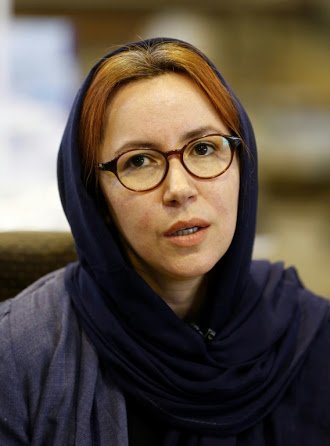
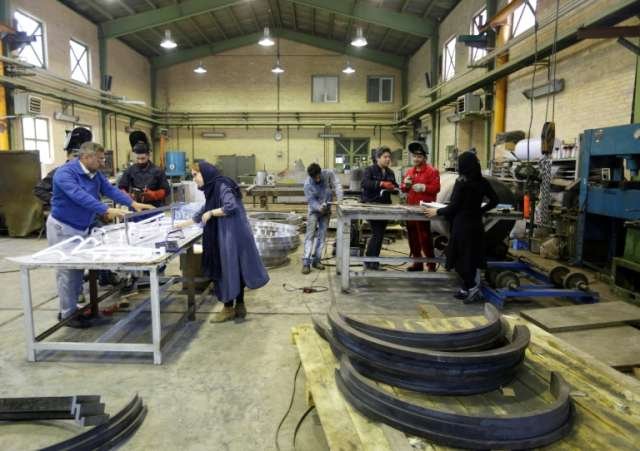
When Leila Daneshvar was a little girl, she used to sit on the floor of her father’s workshop, asking for small jobs.

“He was a mechanic, and I always had the most fun when I was in the garage with him,” She told AFP.

“But in those days, there were no mechanical careers in Iran, so I went to college in India. Even there, I was the only girl in my year of 139 students. I had a hard time.”

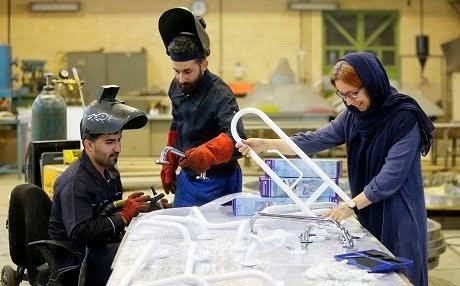
But she persevered. Now 37, she runs her own company in Iran, making mobility equipment for hospitals and the elderly.

“I went to Europe and saw how disabled people live happy, independent lives. I wished my own people had this equipment, and I thought: ‘This doesn’t look complicated. I’m a mechanical engineer — I can do it.”

The breakthrough for the company, called KTMA and selling under the brand “Lord”, came in early 2016, just after Iran’s nuclear deal with world powers came into force, lifting international sanctions.

Within a couple of months, a Swedish investor, Anna Russberg, had agreed to buy 25 percent of the company, bringing much-needed business skills and capital.

“Leila had a reputation for quality production, which was practically unknown here. But I needed to turn the business upside-down,” said Anna.

“It worked. People could tell we were a good mix. We respect each other’s knowledge. She’s the engineer, I’m the businesswoman.”

Being women in Iran’s patriarchal business world could be tricky, but also an advantage.

“Hijab is difficult when you’re a manufacturer. You have to climb things, go below things,” said Leila, laughing.

“But being a woman has its advantages. Everyone remembers you.”

Anna added: “People don’t know how to treat us exactly, which is useful in negotiations.”

Things were looking up: low production costs meant they could charge five times less than foreign firms and they were doubling sales each year, finally landing a major contract with Qatari hospitals.

But then, President Donald Trump pulled the US out of the nuclear deal.

It soon became hard to import crucial raw materials, particularly stainless steel.

“We already had problems in getting raw materials… and now it’s impossible. Either I have to close the factory, or have to continue with much higher prices,” said Leila.

“We had to let four or five workers go last month because we couldn’t pay their salaries, and it breaks my heart.”

“These sanctions are not on the government, it’s on the people. I can give less to disabled people, to the elderly. Our saying was that we are providing European quality with affordable prices. Can I do that anymore? I don’t know.”

Anna remains positive.

“Iran has 10 million older or injured people who can use our product. With or without Trump, we still have a business,” she said.

“It’s a real pity. Being an investor in Iran is a rollercoaster — you take one step forward, three steps back. But it’s an amazing country with great opportunities,” Anna said.

Leila stays positive by remembering her father, who passed away last month.

“When I become weak and tired… I remember his strength,”

“There is no going back. Iran faces so many problems, but I learned from him that the strength is inside me, and my partner. When we believe we can do it, we will do it,” She said.

Credit: AFP, Pulse News