Author

Women of Rubies

Browsing

The Government scheme, which aims to tackle “period poverty”, is considered a world first and will be made available to residents with little money, including girls in “school, college or university”.

Menstrual protection (Photo: BSIP/UIG via Getty Images)

According to the BBC, the scheme was first launched in July last year and, since being renewed for another six-month pilot in March, has distributed free products to more than 1,000 women.

Equalities Secretary Angela Constance has now announced plans to provide charity FareShare with more than £500,000 to extend the project to reach an estimated 18,800 more people.

As the Scotsman reports, free sanitary products will also be available to those “at school, college or university from August.”


The campaign to provide free feminine hygiene products was led by Community Food Initiatives North East (CFINE) – and had been welcomed by anti-poverty groups, including The Trussell Trust.

It follows growing calls demanding “dignity” for women whose budgets do not quite stretch to sanitary protection.

The scheme was – in part – inspired by Ken Loach’s 2016 film “I, Daniel Blake” which includes a scene where an impoverished female character shoplifts a packet of tampons.

Scriptwriter Paul Laverty reportedly penned the scene after meeting with women who struggled to afford essential hygiene products.

“It is unacceptable that anyone in Scotland should be unable to access sanitary products,” Constance said.

Gillian Kynoch, head of FareShare in Scotland, said: “We are excited to be working with the Scottish government to use our network to make sanitary products available to people across Scotland.”

Labour MSP Monica Lennon welcomed the extension plans, but called for a statutory requirement to ensure free provision in schools, colleges and universities as well as “placing a duty on the Scottish government to deliver a free universal system of access”.

She said: “Scotland can be a world leader in tackling period poverty if we are bold enough to take these radical steps.”

Source: konbini.com

Popularly called the pickle lady, Spirit Payton munches on lettuce, pickles, candy, and other foods directly into a microphone to create soothing sounds that trigger ASMR.

Autonomous sensory meridian response (ASMR) is a term used for an experience characterized by a static-like or tingling sensation on the skin that begins on the scalp and moves down the back of the neck and upper spine.

Payton was having a bad pain anxiety on a particular day in 2012, so much that her daughter laid on top of her and her son put pressure on her feet, holding her down.

Later, her daughter put headphones on her ears and she was hearing some light tapping and some crinkling sounds. Surprisingly, it calmed her as she slept for two days.

When her daughter showed her what she listened to, it was a lady tapping on the camera, crinkling paper, and just making sounds. The more she listened to ASMR, the better she became and that was how she learnt about ASMR.

In 2015, she started making videos when she lost her growing florist business, her home and had to live with her children in her car, and then, she got diagnosed with a rapidly degenerating bone disease.

Payton’s diagnosis read that she was going to die within five years. The only place she found succor was with ASMR as it became the only way to relieve pain, find peace, and fall asleep.

When Payton started watching ASMR videos, she realized they were all the same. With the belief that there are sounds that has to be ‘eaten,’ Payton started to munch on edibles.

For her, the sounds of someone eating are some of the most beautiful in the world. She believes that a person naturally eating is making water sounds, crushing sounds, sounds like one is walking in the snow, like one is in a cave or like water is dripping.

One of her most popular clips is of her loudly crunching on a pickle, with comments like, “I never understood why it was so relaxing but it is.”


Credit: woman.ng


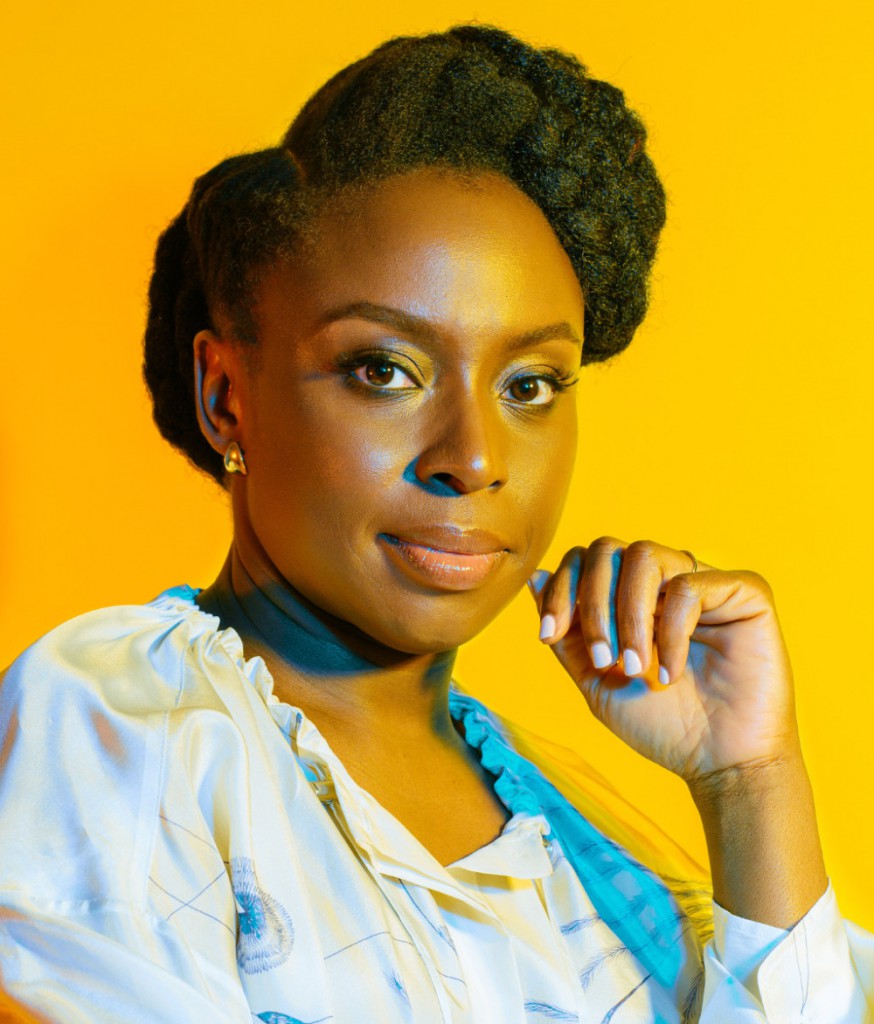
Nigerian author, Chimamanda Ngozi Adichie has been awarded the PEN Pinter Prize, a prize in honour of late Nobel laureate Harold Pinter.

The prize is awarded to a writer from Britain, the Republic of Ireland or the Commonwealth, who casts an “unflinching, unswerving” gaze upon the world, and shows a “fierce intellectual determination … to define the real truth of our lives and our societies.”

The judges of the prize described Adichie’s understanding of gender, race and global inequality as “sophisticated beyond measure.”

“In this age of the privatised, marketised self, Chimamanda Ngozi Adichie is the exception who defies the rule,” they said.

Adichie, speaking on the prize, said:

`I admired Harold Pinter’s talent, his courage, his lucid dedication to telling his truth, and I am honoured to be given an award in his name.’’

She will be presented with the prize on October 9.

She will also, on that date, announced her co-winner, the winner of the “International Writer of Courage,” a prize given to a writer “who is active in defence of freedom of expression, often at great risk to their own safety and liberty.”

The award is given by English PEN, and is supported by the Blavatnik Family Foundation, Ruth Maxted, and the Thompson Family Charitable Trust.

The award was named after the late Harold Pinter, the master playwright (1930-2008), who was a vice-president of English PEN and a tireless crusader for human rights and, particularly, for an end to torture.


Source: The Punch

The platform which is home to several reality shows, Nollywood and Kannywood movies, launched on Saturday, June 9, 2018.

There are seven categories on LITV: Continue Watching, Trending, Reality Shows, TV Series, TV Shows, Movies and Recently Added.

Just like video services like Netflix and IrokoTV, LITV subscribers are expected to pay a certain amount of money to have access to the wide array of content on the platform.

LITV will be available to subscribers at the cost of 1000 naira for a month, 3000 naira for three months, 5500 naira for six months and 10000 for a year.

Currently, there are episodes of reality series such as “King Tonto,” “Toyin Abraham: True & Bare,” “Ice Prince: Rise & Grind,” “Oyinbo Wives of Lagos,” “Gidi, Magodo Mums and their single friends”  “Annabel: My life as a former stripper,” “Highway Girls of Eko,” “Ajegunle With Love” and “Real Naija Ladies of Dallas ” are currently available.

There are also other TV shows such as“Verified,” “Double Trouble,” “Life Lessons with Betty Irabor,” “Crime Story,” “Black Room” and “I Survived.”

According to Ikeji, there are plans to add foreign movies and series from countries such as Ghana, Kenya, South Africa and USA, and Kannywood movies and series to the already existing content on the platform.

Also, there are plans to live stream some of the reality shows in the future.

Linda Ikeji announced her venture into the reality TV business on December 14, 2017, with the announcement of “Oyinbo Wives of Lagos,” a show which focuses on Nigerian women married to white men.

The LITV android app is currently available on Playstore, while the ios app is expected to be available later this week.

Credit: Pulse News

Water is a fundamental human need. Each person on Earth requires at least 20 to 50 litres of clean, safe water a day for drinking, cooking and simply keeping clean. Like the popular Naija saying by our own famous Fela “water e no get enemy”.
Our focus here will be on the life-changing reasons to drink more water. Do you know that any point in time you feel thirsty or experience the sensation of thirst, you are already dehydrated? That thirst is your body calling for re-hydration.

So why must we drink more water?
1. IF YOU DON’T DRINK WATER, YOU WILL DIE. It is that important. It depends on our environment, we can survive only a few days without water, probably a week. We can live much longer without food. It is mandatory that we prioritise the consumption of water far more than we currently do.

2. HELPS LOSE WEIGHT: Most times when we think we are hungry, we are actually thirsty. Our body just starts turning on all the alarms and gives us signals when we ignore it. For those of you trying to drop some pounds, staying hydrated can serve as an appetite suppressant and help with weight loss.

3. BE LESS IRRITABLE: Research says dehydration can affect your mood and make you grumpy and confused. To stay happier and think clearer, drink more water.

4. PREVENTS CANCER: Yes, that’s totally right – various research says staying hydrated can reduce the risk of colon cancer by 45%, bladder cancer by 50%, and possibly reduce breast cancer risk as well.

5. FOR BETTER PERFORMANCE: Proper intake of water increases the performance of an athlete. Water composes 75% of our muscle tissue. Dehydration can lead to weakness, fatigue, and dizziness. These conditions can reduce our efficiencies and output.

6. HAVE LESS JOINT PAIN: Drinking water can reduce pain in your joints by keeping the cartilage soft and hydrated. This is how glucosamine helps reduce joint pain, by aiding in cartilage’s absorption of water.

7. FLUSHES OUT WASTE AND BACTERIA: Our digestive system needs water to function properly. Waste is flushed out in the form of urine and sweat. If we don’t drink water, we don’t flush out waste and it collects in our body causing a countless number of problems. Also combined with fiber, water can cure constipation.

8. ‎ HELP PREVENT HEADACHE: Sometimes headaches can be caused by dehydration, so drinking water can prevent or alleviate that nasty head pain. Next time your head hurts, try drinking water.

9. MAKES YOUR SKIN GLOW: The skin is the largest organ in the body. Regular and plentiful intake of water‎ can improve the colour and texture of your skin by keeping it building new cells properly. Drinking water also helps the skin do it’s job of regulating the body’s temperature through sweating.

10. NOURISHES THE BODY: Water is essential for the proper circulation of nutrients in the body. Water serves as the body’s transportation system and when we are dehydrated it makes it difficult for things to go around the body

Pic credit ; Bing

Fashion Designer and singer, Mo Cheddah has opened up on her struggle with clinical depression and how after dealing with it for years, she decided to get help.

According to her, mental disorders, including depression, are still not regarded as serious health problems in the country.

“Depression is a medical illness contributed to by an interplay of both biological factors, that is, genetic predisposition, hormones and neurotransmitters and environmental factors such as adverse life events.

“Due to lack of awareness, many people do not know that they or someone they know have depression and try to cope with it sometimes for years without the necessary help.

“Although, knowledge of existence of mental health problems is improving with education, information dissemination through the media and NGOs, the level of this awareness is still quite low. In general, psychological illnesses are not regarded as `serious’ problems.

“There is also a lot of stigma and discrimination attached to people who have psychological disorders. People usually seek help when symptoms become severe, incapacitating or embarrassing,” she said.

The consultant psychiatrist also urged the governments and relevant stakeholders to put more attention and resources, including trained staff, into developing and equipping the Primary Health Care (PHC) system.

She said that most of the detection and initial management of depressive disorders need to be at the primary healthcare centres in the rural and semi-urban communities.

See her posts below

The Federal Government of Nigeria has increased maternity leave for women from three to four months and this was disclosed by Minister of Labour and Employment,Senator Chris Ngige at the ongoing International Labour Conference (ILC), in Geneva, Switzerland, on Tuesday, 5th of June.

Senator Ngige also told delegates that employers of labour in the public and private sectors in the country have been barred from sacking women from work either due to their marital or maternity status, Vanguard reports.


Employers of labour (in Nigeria) are, by regulation, requested to provide workplace crèches for nursing mothers for ease at work place.

In the public service, government recently increased the period for maternity leave from 12 to 16 weeks; to allow enough recuperation for both baby and mother, especially in the area of breast feeding.

In addition, all disciplinary proceedings against any female staff, which might have been taken during the period of her maternity leave shall be put in abeyance till the expiration of the leave.

Employers of labour are also barred from removal of women from work due to their marital or maternity status, illegal labour migration, contract staffing and labour casualisation which affects most women, are being reformed through policies and regulations at national, bilateral and multilateral levels.”

The ratification, domestication and implementation of the Maternity Protection Convention No. 186 are conscious efforts to ensure that more women enjoy maternity protection in the country.”

However, the minister informed that a lot needed to “be done in terms of putting in place appropriate legislation, policies and practices to deal with the gender gaps that inhibit the greater participation of women in the labour force.”

He added that the most effective method of eliminating gender inequality from the workplace lies in vigorous opposition to employers’ discriminatory conducts, policies and harassment in all forms wherever and whenever they occur.

“Women who fall victim to these abuses are encouraged to oppose such through legal actions and reporting to Labour Inspectors. The infusion into Labour Inspection Guides Laws and Code of Practice, with severe sanctions and serious punitive measures are prescribed as future deterrents.

In this respect, we will need the Technical Assistance of the ILO in the area of gender audits, considering the good news that the ILO has in her pool, over 80 certified Audit facilitators. We can adopt the Train the Trainers (TOT) approach in this regard.”


To address gender inequality and youth unemployment in Nigeria, Mr Ngige told delegates that the federal government drew up and has been implementing an Economic Recovery and Growth Plan (ERGP).


Source: fabwoman.ng

FORBES AFRICA has released its 2018 Under 30 list and you can be sure that there are Nigerian women on it. These women are said to be challenging conventions and rewriting the rules for the next generation of entrepreneurs, creatives and tech gurus.
Described as Africa’s most promising young change-makers, Forbes says, they could be the billionaires of tomorrow, even though they are yet unknown.
You could learn some things from these women who talked about their goals, how they started their businesses, doing business in Nigeria and their achievements.

ANITA ADETOLA ADETOYE
26-year old founder of Anita Brows Beauty, popularly known as ‘Anita Brows’, is an Irish-Nigerian professional makeup artist, beauty educator, and entrepreneur. With over seven years of experience, she has built an award-winning brand, creating jobs for young Nigerians.
“My move to Nigeria was the defining moment for me in the beauty industry. It was the moment my hobby became a livelihood and then became a business. I didn’t choose this path by faith, this path chose me. My goal is to change the face of makeup and beauty artistry.”

BIDEMI ZAKARIYAU
28-year old Bidemi is the founder of LSF|PR, a public relations agency based in Lagos. Growing up, Bidemi acquired skills in project management, sales and communications from her father, who built a taxi service and real estate company from nothing. Her father convinced her to study law and she interned in law firms but she stopped to follow her passion in media.
“Securing my first client was very difficult because I had no public relations experience; I would visit different blogs in Nigeria and look for contact numbers in the article credits and call the designers requesting to work with them for free.”

KENE RAPU
28-year old Kene Rapu launched her first product line, ‘Slippers by Kene’ in 2011. She uses locally-sourced materials to make slippers and sandals. According to her, running a business in Nigeria is hard work.
“The odds are against us, as more businesses are expected to fail than to succeed. From lack of adequate power supply, to sufficient skilled man power, to the costs and scarcity of materials, the list goes on. I remember on my hunt for property for my factory last year, I met a gentleman who made it extremely clear he would not, under any circumstances, rent his property out to women.”

GOZIE COKER
29-year old Gozie is the founder of Coker Creative, a boutique event company. She spent her holidays interning for event companies. When she graduated from school, she went on to pursue a master’s in Strategic Management.
“Planning events is something I have always done, so much so that growing up, I was nicknamed ‘the organ’, short for organizer. I derived joy planning all my family and friends’ celebrations, from vacations to birthdays, and even anniversaries. I used my graduation thesis to test my business plan for what we now know as Coker Creative.”

MAYA HORGAN FAMODU
27-year old Maya is the founder of Ingressive, a tech integration company that provides market entry services and tech research for corporates and investors.
“I launched Ingressive LLC to solve the funding pipeline, redirecting global focus and capital to the continent.”
She also founded Ingressive Capital, a multi-million dollar venture fund focused on early-stage African tech.
“We have worked with thousands of African tech-enabled youths. Our client list includes over 50 investors and technology companies. Our clients have gone on to fund more than 20 African startups. I have funded three high-growth African technology companies, and we’re continuing to invest now.”

INK EZE
28-year old Eze is the founder of Aso Ebi Bella, an online community connecting traditional fashion enthusiasts with SMEs in the fashion, beauty and wedding industry primarily in Nigeria with growing interests across Africa and beyond.
“The #AsoEbiBella journey started with a hashtag I created in 2013 while I was an employee of BellaNaija.com where I convinced my employer to launch a then bi-weekly, now weekly AsoEbiBella feature on their site as it garnered millions of website views, it became my side hustle.”

YEMI ALADE
29-year old Yemi is a singer and songwriter. She sings in English, French, Swahili, Portuguese and Pidgin English.

JOYCE JACOB
28-year old Joyce is the founder of Joyce Jacob Beauty, which launched in 2009. She has worked on the sets of many local and international music videos, magazine photoshoots and TV commercials.“The vision behind my brand is to empower women of all ages, of all backgrounds and race to feel beautiful at all times through the power of beauty and makeup. Part of that vision is to have a premium line all women can use and create a truly authentic African beauty brand.”

BEVERLY NAYA
29-year old Beverly is an actress and entrepreneur. She studied script-writing and film-making in the UK before relocating to Nigeria to join the Nigerian film industry.

SONIA IRABOR
28-year old Sonia is a writer, filmmaker and actress.

TANI;A OMOTAYO
26-year old Tania is a model and an entrepreneur. She is creative director of Ziva Lagos, a fashion brand.
“Ziva Lagos is dedicated to boosting the Nigerian trade and labor market. Hence all fabrics are locally sourced and the clothes designed and produced in Nigeria.”

Source: woman.ng

Hafsat Abiola, Nigerian activist for human rights, civil rights and democracy was appointed June 5, 2018 as the Executive President of Women in Africa (WIA) Initiative. This is a key step for the global platform dedicated to the economic development and support of leading and high potential African women. The founder, Aude de Thuin, and Hafsat Abiola share their thoughts on this significant step for the Initiative.

Aude, why has Hafsat been appointed at this time?
This is the stage of maturity. Since the beginning of WIA Initiative, I have always said that I would give my place to an African woman, because it is in the logic of WIA to have an African President. It is with women that Africa will develop in trust and in complementarity with men.

Hafsat Abiola, why did you accept?
I believe in the vision of Women in Africa Initiative . Women are the greatest untapped resource the continent has. So I want to help lead the organization that is working to harness their potential. It could very well be the game-changer that unleashes the long-anticipated rise of the continent.

Aude, why did you choose Hafsat?
First, because of her personality. She was one of our first WIA Ambassadors, and joined WIA Council a year ago. Secondly, because of her career as an activist for human rights, civil rights and democracy, and values so close to ours made her the ideal candidate. Finally, for her analysis and her vision of the role of women in the economy. All this combined made it obvious that she is the right person at the right place.

Hafsat, what are you main goals as president for 2018 and the two coming years?
My goals for 2018 are understandably modest. It is primarily to learn. To learn how the organisation currently operates, to meet our partners and listen to their vision and interests, to engage with our members across the continent and learn what they see as the biggest opportunities and the toughest challenges. In the coming year, my focus will be on building out the structure for the future and beginning to tie that structure to performance. I’ll be focusing on ensuring that we have ambassadors in all the countries of Africa, that we have active councils in at least a third of these, and that we expand the network of partners that we engage on behalf of our members.

Hafsat, how will your background contribute to the development of WIA Initiative?
In some ways, it seems that everything I have done in my life was preparing me for this role. A little over two decades ago, I got involved in advocating for democracy in Nigeria at a time of military rule. I was in my early twenties and due to the particular circumstances, I was one of the spokespeople for the movement. It entailed traveling around the world, working with a diverse community of organizations and associations to push for the global community to support the Nigerian people’s demand for democracy. Since then, I founded an organization that is dedicated to the empowerment of women and young people in Nigeria and then served for seven years as a member of cabinet in Nigeria’s industrial state, Ogun State, where I was responsible for the Millennium Development Goals and later the Trade & Investment portfolios. As a result of these experiences, I have built quite a broad network of relationships with global and local leaders, organizations, foundations, and governments from Washington DC to Ouagadougou that will be useful to WIA Initiative now as it seeks to expand its footprint and impact.

Aude, what are the challenges of this new presidency?
Hafsat becomes Executive President and CEO of Women in Africa. The main office will be based in Lagos, Nigeria from next October. Paris will keep a representative office, just like Casablanca. Hafsat will be in charge of the “vision” for Women in Africa and, as such, in charge of the programs and all the contents of the summits, whether global or regional, and the digital platform. She will be the spokesperson and interface with the pan-African and global partners who accompany us. She will chair the Council and expand the network of our ambassadors. She will be accompanied by the team in place, composed of seasoned professionals, and she will complete this team as WIA grows. In the short term, in addition to being the spokesperson for WIA Marrakech 2018, Hafsat will contribute to the program whose generic theme is “Watch Africa with confidence and Believe in its talents”. Hafsat will also put together the second regional summit to be held in Lagos at the end of the year with the WIA team.

Hafsat, what do you think the current assets of WIA Initiative are?
The organization has a great network of women across Africa and around the world as well as strong relationships with companies and organizations, especially in Europe. Internally, we have a dynamic team that is committed to delivering results for Women in Africa, which means that there is no limit to what we can achieve, so long as we remain focused on our goal, which is to ensure the rise of the women of Africa.

Aude, what role will you play now in WIA Initiative?
I am 67 and I will keep a promise made to my family to slow down my intense life of work: I will bring my vision, to help Hafsat and her team apprehend the specific job which was mine during years ; I will also nurture the relationship with major French and international partners that I have known for a long time. And suggest names of speakers because through my intense daily readings, I spot incredible talents that I will submit to the group “program” who will then decide, under the authority of Hafsat. I want to continue writing too, because I still have a lot to say about what I see in this ever-changing world, who is so unwilling to really welcome women as true economic partners, capable of having a vital role in the evolution of our societies.

Hafsat, how do you consider the sharing of experience with Aude?
I have profound respect for Aude. Well before she founded Women in Africa Initiative, I followed her work at the Women’s Forum for many years. I was always impressed and inspired by her achievements and have long wished to work with her, which was why I didn’t hesitate to accept the invitation to become an ambassador for Nigeria for Women in Africa and later to join the board and now to serve as the President/CEO of this laudable organization. I expect ours to be a strong partnership built on a shared belief in the promise of women in Africa, complementary strengths and the deepest commitment to realizing this promise.

Aude, what is your assessment of WIA Initiative nearly two years after its global launch?
I am proud of what we have achieved, because we organized a recognized world summit in Marrakech in September 2017, and a first regional summit in Dakar last April, which will be followed by a second in Lagos at the end of the year. We have also developed a leading African database and strengthened the network we had. But there is still so much to do. We are developing a digital platform connecting leaders, entrepreneurs and investors. We want to connect our members with young talents through a mentoring program. We are finalizing our website and have included a pure-player media to showcase the women we spot. And thanks to our partner Roland Berger and the sponsorship of Société Générale bank, our Foundation, WIA Philanthropy launched our second call for applications to receive in Marrakech next September 54 women entrepreneurs, one by continent and/or one from the diaspora. We will present them to investors, connect them with our community and the media so that the world will see how African women are creating new business models, all significant for the future of the continent. Whether in the fields of health, nutrition, education, energy, water, technology, finance, women are major players in this economy that Africa is in dire need of, and we want to make it known loud and clear.

Hafsat, what are the crucial needs according to you for African women in terms of career development, entrepreneurship, empowerment?
In Africa, women need know-how, finance, enabling policies and other forms of support. They need more than lip service. They need services and projects that are relevant and carefully designed to address the real challenges they face.

Aude, after these two years of experience, what advice as a woman leader do you want to give African women?
Whether in Africa, France or anywhere in the world, my advice to women is to have more self-confidence. They must know that the world would be different without them, and that they are the future of their countries. As far as Africa is concerned, the whole world knows that it is through women that things will move. The world is waiting for them and needs them.

Source:  Women in Africa

US born college basketball player of Nigerian descent, Arike Ogunbowale, made headlines when she helped her team, the Notre Dame Fighting Irish win the NCAA championship.The win gave her team their first women basketball title since 2001.

In a semi-final match against Uconn, Arike had beaten the team with a 2-pointer with just 1 second left.

Arike got her team the championship when she scored a 3-pointer with just 0.1 second to go, a feat widely described as a ‘shot of a lifetime,’ in her game against the Mississippi State Lady Bulldogs.

Her shot will reportedly go down as the greatest last-second shot in championship game history as she was named the tournament’s most outstanding player.

Born in the United states to Gregory and Yolanda Ogunbowale, her father reportedly used to be a footballer in Nigeria and once served in the Nigerian Army before he relocated to the United States. Her mother, Yolanda, was her grade-school basketball coach.
Born to parents that are sports oriented, it is no surprise that Arike excelled in her career even while growing up.
She won four Wisconsin State Cup championships during her club soccer days with Lake Country United (2010-12) and FC Milwaukee (2009)