Author

Women of Rubies

Browsing

In a classroom in the South African township of Soweto, girls listen carefully, knowing they need to learn how to avoid the threat of rape that hangs over their daily lives.

“You are going to pretend that it is the rapist’s testicles,” says trainer Dimakatso Monokoli, holding out a padded target.

An 11-year-old girl charges without flinching and delivers a powerful knee slam.

It is part of a day of self-defence and rape avoidance strategies taught at the Thabisang school, where chairs and desks have been pushed back to the pink walls of the classroom.

Official statistics suggest that more than 110 rapes are recorded by the police every day in South Africa.

But such numbers are widely seen as inaccurate due to under-reporting. Some studies suggest only one in 13 rapes is reported to the police.

Recent news stories have triggered fresh horror among South Africans over the prevalence of rape.

In September, a 17-year-old was raped in a hospital maternity ward by a man pretending to be a doctor one day after she had given birth.

Around the same time, a seven-year-old girl was raped in the toilets of a popular chain restaurant in the capital Pretoria, with a video footage emerging of the naked man moments after the attack.

For the African National Congress Women’s League, drastic action is needed.

“We have tried our best… there’s nothing that seems to lower (the number of attacks). Hence, we are calling for chemical castration,” ANCWL secretary general Meokgo Matuba said after the two rapes.

Spotting the risk

Back in another classroom in Soweto, Monokoli teaches not only self-defence, but how girls can read and react to potentially risky situations.

“Don’t ever, ever make the mistake of being in the same room as someone you don’t feel comfortable with because your guts have warned you,” she says.

“They have sent a message — you are not supposed to be alone with that person.”

If you are attacked, she says: “Scream as much as you can.”

Monokoli works for Action Breaks Silence (ABS), a South African charity that works with schools to educate girls in self-defence.

It also runs a “Hero Empathy” programme for boys to try to preempt abusive and violent behaviour.

ABS founder Debi Steven was herself raped as a child, and has spent decades teaching and advising at schools and companies.

“Violence has been normalised in South Africa,” she told AFP.

“There is so much rape that people have become desensitised to it.”

Setting boundaries

She advocates a mix of self-defence training with mental awareness.

“The self-defence gives girls the confidence to set boundaries,” she said.

“If I have an education about what is wrong and right, I know what abuses it, and I am going to identify the minute you start abusing me emotionally, physically, sexually, financially.”

In many cases, sexual violence is committed by relatives or people known to the victim. Steven says two women are murdered every day by their partners or former partners in South Africa.

In the classroom, the girls — wearing their blue school uniform and long socks — giggle occasionally but the atmosphere is serious and focused.

“We are going to teach you how to fight smart, without strength,” one male instructor tells them, pointing out they can always “rip off the ears and nostrils.”

And the lessons seem to have sunk in.

“We are warriors,” says Nonkululeko, an energetic 11-year-old.

“I have this amazing drug in me, adrenaline, that helps you fight. It helps you to do almost the impossible.”

The classes are often cathartic, with pupils occasionally sharing with instructors their own stories of abuse they have suffered.

Teaching boys too

At another Soweto school, boys in the “Hero Empathy” programme run through roleplay games that encourage them to show emotions and develop empathy for other people’s feelings.

They have to act out moods such as anger or sadness while their classmates try to guess how they feel — not always successfully.

“In an African community, it is often taught that boys (should not) show emotions. When you show emotions, it is like a sign of weakness,” said instructor Isaac Mkhize.

ABS has taught over 13,000 children, and its impact has impressed the government health ministry, which has asked the charity to train 160 new staff.

One mother, Mali Masondo, explained how deeply the fear of rape is embedded in the daily lives of children and families.

“You don’t know who to trust, who to love and who to care for,” she said.

“Sometimes you don’t even allow people to love your kids as they wish because every time you think of the negative side”

Credit: Pulse News, AFP

Betelhem Dessie is a 19 years old Ethiopian that is at the forefront of Tech in Ethiopia. She runs five projects and works at Ethiopia’s first Artificial Intelligence lab, iCog Lab. 

In Addis Ababa, Ethiopia, Artificial Intelligence and Bioinformatics research is part of the services rendered by iCog Labs. In July this year, Ethiopia was one of the few countries to host Sophia, “one of the world’s most advanced and perhaps most famous artificial intelligence (AI) humanoid robot.” Sophia was at the Information and Communication Technology International Expo in Addis Ababa. Parts of Sophia were assembled in Ethiopia.

Within Ethiopia’s expanding tech industry, 19-year-old Betelhem Dessie has quickly risen and the young pioneer’s star keeps shining bright. Dessie is a project manager at iCog and is “interested in solving people’s problems by using simple yet effective tools.” Dessie started coding when she was ten years old. She said, “I learned informally because I wasn’t able to get classes in coding where I was raised in Harar.”

Sophia speaking at the AI for GOOD Global Summit, International Telecommunication Union, Geneva in June 2017. Photo: Wiki commons

In Harar, her father’s computer served as part of her training ground for who she is today. She got into video editing, computer maintenance and installing software for mobile phones. Gradually she updated her computer skills and knowledge. Part of Dessie’s mission is to implement projects that play a key role in the development of the community. She focused on the training aspect of coding in order to get more Ethiopian women engaged in such activities. Her foray in tech led her to work on a project with the US embassy called Girls Can Code. Forty girls were trained and created their own projects that could help their communities.

At her young age, Dessie is running five projects and has obtained seven patents; four of the patents are privately owned by her, while the remaining three are in collaboration with other organisations. One of Dessie’s project, Anyone Can Code (ACC) is in collaboration with iCog Labs. It aims to teach high school students about robotics and coding.

iCog Labs has its mission to advance science and technology for the good of all humanity, with a focus on advanced AI and on the use of cutting-edge technology to help leapfrog Africa into the future.


Culled from thisisafrica.me

Serial entrepreneur, Toyin Lawani is now the latest author in town!

The fashion mogul has just unveiled her new book titled Be Unstoppable in which she’s sharing The Business Mogul’s Guide.

According to her, the purpose of the book is to share a few business tips that have worked for her over the years and her personal experiences in business with hopes that it can answer any questions that you may have as a startup or as an entrepreneur who is already in business.

See more photos below:

Miss Oluseyi Abdulmalik, Communications and Media Manager of WaterAid Nigeria, disclosed this in a statement on Sunday in Bauchi, to mark the Global Handwashing Day, celebrated annually on Oct. 15.

“We already know progress is not fast enough; about 60,000 children under 5 years in Nigeria still die each year because of diarrhea.

“That is linked to dirty water, poor toilets and poor hygiene, pointing out that everyone has a right to water and our leaders must act to leave no one behind.”

According to her, washing hands with soap and water reduces cases of diarrhea by almost 50 percent, yet on average, around the world only 19 per cent of people wash hands with soap after defecation.

She urged governments to prioritise the promotion of handwashing, along with water and sanitation to save lives.

She said the WaterAid Nigeria Country Director, Dr ChiChi Aniagolu-Okoye, also advised on personal hygiene and an intake of good diet as health boosters.

Handwashing with soap and good food hygiene brings health and economic benefits.

“Handwashing with soap is essential for health workers, improving quality of care and reducing risk of cross-infection. It also makes children healthier.

“We are advocating alongside our partners, Action Against Hunger, to demand that governments should develop cross-ministerial coordination mechanisms between the WASH and nutrition sector championed at the highest level to support sharing of information and joint planning and implementation of policies.

Abdulmalik urged policy makers to prioritise nutrition-sensitive WASH interventions and include specific objectives to improve WASH within nutrition plans and policies.

“Clear entry points to integrate WASH and nutrition include behaviour change promotion and improvement of provision of WASH in healthcare facilities and schools,” she said.

The WaterAid Communications Officer, also advocated more investments to improve handwashing practice and access to basic handwashing.

“For citizens to join in making this happen by using the power they wield in their hands to vote in the coming elections for leaders, who pledge commitment to improving WASH access, ” she said.

Abdulmalik, however, enjoined all citizens to participate in the WASH project, to achieve a healthier environment and country.

Credit: Pulse News

An estimated 60 million Nigerians are at risk of suffering from depression, according to the Nigeria National Depression report produced by Joy, Inc. in partnership with NOIPolls.

The report, which is the first nationwide study of happiness and depression, was released in commemoration of the World Mental Health Day 2018, and contains results from at least 1,000 interviews, all of them conducted by telephone, in five major Nigerian languages: English, Pidgin English, Yoruba, Hausa and Igbo.

“This report is a product of our surveys as we seek to better understand the needs of the population we serve,” one of the authors of the report and member of the Central Working Group, Glory Apantaku explained. “Our results serve as an important reminder of the urgency of this work, mental health issues are real and it is high time we paid attention,” she said.

Highlights of the report include:

  1. Most Nigerians surveyed defined happiness as having the basic needs of life. The second largest group of respondents defined happiness as having peace of mind.
  2. Several Nigerians believed that they are averagely satisfied (4.99) with their life as a whole these days, and are hopeful that they will be better satisfied in life five years from now. Most Nigerians also felt they were better five years ago (standing at 6.41) than they are currently.
  3. 31.6% of polled respondent reported experiencing depressive symptoms. Putting this in perspective, 3 out of every 10 Nigerians are at risk of depression.
  4. 27.8% of respondents reported experiencing symptoms of anxiety
  5. While both physical and mental health are important for a flourishing life, mental illness explains more of the misery in the society more than physical illness, poverty or unemployment.
  6. Nigeria needs to be proactive in taking mental and emotional health seriously by reviewing the national mental health policy and creating a viable legislative framework to meet global standards, investing in public education to influence the culture to one that promotes resilience and creates safe spaces for emotional and mental healing, and investing in research, innovation and development.

The report also recommended that new metrics for measuring human progress should move from the use of financial values like GDP and focus on happiness and flourishing of citizens.

The National Depression report can be downloaded at report.joyinc.xyz.


Credit: Bella Naija

The Clinic is being built to complement the existing 17 bed Maternity ward at the Centre.

Aisha Buhari’s personal physician, Dr. Mohammed Kamal, while inspecting the project said, the clinic when completed will cater for the health need of the people of Adamawa, Borno, Gombe, Taraba as well as the neighbouring Cameroon Republic.

Kamal, said the clinic was built as part of Aisha Buhari’s commitment to improve the healthcare of women and children in Nigeria.

The inspection was conducted to ascertain the level of work so far done.

Kamal, conveying Aisha’s optimism, said the project would be completed and handed over before the end of the year.

The facility, which is being built through private partnership comprises of emergency operation ward, consultation rooms, ultra sound room, Antenatal and Gynaecology ward, pharmacy, laboratory as well as family planning units.

The facility, when completed, will have the capacity of attending to 200 patients.

The Chief Medical Director, Federal Medical Centre, Yola, Prof. Auwal Abubakar, said, the new Antenatal complex will assist the Centre to adequately cater for the health needs of women and children.

Abubakar said that the existing maternal centre was over stretched due to the influx of patients within and outside the state.

He said that the new complex will go a long way in reducing the challenges faced by patients during emergencies.

Credit: NAN

Akhona Makalima has made history as the first woman to officiate a men’s professional football match in the country.

Since South Africa’s Premier Soccer League (PSL) was founded in 1996, the league has fielded only male referees until 2015, when Ahkona changed the narrative.

Achieving this feat in a male-dominated sport wasn’t easy for Makalima. About seven years ago, she took advantage of an initiative created to get more women involved in football, and she eventually earned her first refereeing certificate.

She went on to become the first South African woman to pass FIFA’s fitness test for certifying referees, scaling through a series of trials most men fail.

When she eventually came on to officiate her first professional match in 2015, Makalima proved naysayers wrong by doing an incredible job. Since then she has officiated over a hundred matches in PSL, Sasol Women’s League and Africa Women Cup of Nations.

She started Inter-Refs in 2016. Through the initiative, she teaches girls about the laws of football and how they can make a livelihood through the sport.

(Photo: Lefty Shivambu/Gallo Images)


What is the first thing we do when we get into an argument with our men? For many of us, the answer is to call or send a message to our female friends immediately it happens. When that heavy feeling of anger takes over, you feel like you need an outlet now, right? Someone who you can be 100% real with, someone who you can bitch, whine and complain to, and most importantly, someone who will take your side. Am I right? I know I’ve certainly been there before.

It’s especially easy to fall into this trap when your relationship is still new because you want the approval of your closest girls, you want everyone to like him, you want them to tell you that you picked a good one. Whether it’s your best friend, mom, or sister, you get peace of mind from being able to vent to them about an argument that happened with him. Talking it out with them helps you get your head on straight and gain more clarity before going back to your guy and then actually dealing with the situation. But really, how much is that actually serving you and your relationship with him?

Sure, the girls want what’s best for us but there are some reasons why you might want to think twice before dishing the details to them again and these reasons are very important.
Every woman has a different outlook on men and relationships through their own individual experiences, but your outlook is the only one that matters.

It could be that she’s been your best friend since primary or secondary school, maybe you tell each other everything, and maybe she’s a woman with high standards whose opinion you respect a lot. But, if she’s single or if she’s in an unhappy relationship, her opinions might sway you in a different direction than you would’ve gone if you hadn’t asked for her input.
Even if she means well, if she’s unhappy in her own relationship, or if she’s subconsciously feeling left out because she’s single, there’s a chance she might have a biased outlook on men and relationships in general. Or, she might have underlying negative feelings towards men. The result of all of this will come out in the way she talks to you about your relationship. And, I hate to say it, but there is always going to be a certain amount of “man bashers” out there. You know the type who always talk about how all men only want one thing, how they’re all cheaters, liars, etc. If you’ve got women like this running in your circle of friends, it’s possible that you’re more likely to start having those same thought patterns. The women we’re closest to always influence our decisions.
Another thing to look at is whether or not you have fair weathered friends in your circle. It’s not pretty, but jealousy happens. It’s human nature. But pay attention, because a jealous friend, whether they have malicious intent or not might not always be looking at your needs first, their main concern might be what makes them feel best.

Family members will always take your side.
There is a reason you shouldn’t involve your family members in your relationship. Be it when the relationship is just fresh or when you guys are married. Unless it gets way beyond your hands before you bring them in. The fact of the matter is, people get into arguments, people mess up, and sometimes your partner will let you down.

You have to accept that as a part of life.

Your partner is not going to be perfect all the time. It’s impossible for things to be peachy ALL of the time. But when you go airing your dirty laundry to your sister and your mom, they’re likely going to look at the situation from your side, because they’re your family and they never want to see you hurting, no matter whose “fault” it is. Their opinion will almost always be biased. You’re better off sticking to telling them the good stuff about your guy rather than the bad stuff. In addition to this, I’ve always found mom-advice to be a little bit off base when it comes to dating. Not because she doesn’t know what she’s talking about, but because if she’s in a happy marriage where she’s been playing mom and wife for the last 40 years, then the way she interacts with her husband is going to be very different from the way you interact with your boyfriend. You’ve been dating your man only for a year, and she’s been with her husband for 40 years, so don’t take her word for it when she tells you to do something nice for your boyfriend like cooking him a five star dinner when he’s being a little distant. The relationship dynamics aren’t the same, and therefore her advice isn’t going to get you the best results. Men of those days are quite different from the babies we have now. Yes I said babies because that’s what the men of these days are. But you could try though…you just might be lucky.

Your mind will start to feel cluttered.
Once you get into the habit of telling your girlfriends everything, it can be a hard one to break. Pretty soon you realize that it becomes more like “word vomit” anything he does or says that causes a shadow of a doubt in your mind, or that slightly bothers you, you go and tell them. You start talking to all of your girlfriends about your relationship, and pretty soon, you have ten different opinions on one situation, when the only opinion that should matter, is yours!

When you tell others the intimate details of your love life, you’re giving them permission to influence you. Their reactions and words influence you, and when you start getting a million different perspectives, you can’t even hear your own inner voice anymore. You stop going with your gut and intuition, and you start depending on other people’s reasoning and advice. All this will do is create drama in your mind and in your relationship, and you’ll likely end up doing something you regret because someone else thought you should do it. Then a month later when you’ve been detoxed of all the other voices cluttering your mind, you’ll probably realize that you did something you wished you hadn’t.

It’s Disrespectful.
Not only is it disrespectful to your guy, but it’s disrespectful to your relationship. A woman who took pride in her relationship wouldn’t go around telling everyone the details of an argument she had that morning. It lowers the value of your relationship. Your relationship is something precious that you should protect and honour, not a hot topic of entertainment. It’s also disrespectful to him. Do you see him talking to his buddies and telling them the intimate details of your conversations? Most guys don’t do this. They keep things to themselves for the most part. They don’t go around blabbing about their fight from last night. How would he feel if he knew you were telling everyone (or even just one friend) about the personal stuff between you two? It’s the ultimate disrespect to a guy. I would even take it so far as to say that some look at this as a form of betrayal.

Lack of Intimacy.
This one is a biggie. It prevents you from becoming intimate with him! Believe me, I can totally empathize getting all worked up about something and wanting to go to a girlfriend so you can explode and let it all out. But by doing that, not only are you hurting your relationship in other ways, you’re also stopping yourself from becoming closer to him. And isn’t that the reason why you’re upset in the first place? You’re feeling detached from him in some way, angry or annoyed with him, or uncomfortable about something, and you want to make that better. It takes some emotional bravery and vulnerability to go to your guy and tell him if something is bothering you, and let him in on the inner details of your mind. But instead of telling him, you tell your girlfriends, your relationship isn’t benefiting in any way. And in the long run, it will prevent you from learning how to better your communication skills for future problems.
The moral of the story is that if you often find yourself discussing issues within your relationship to anyone other than your partner, try keeping things private for a few weeks and see if your relationship improves in any way. I strongly believe it will. Give it a try. Keep your friends and family out of it and you will see it lasting a long while.

To our hapiness. Cheers.

By: Kemi Amushan

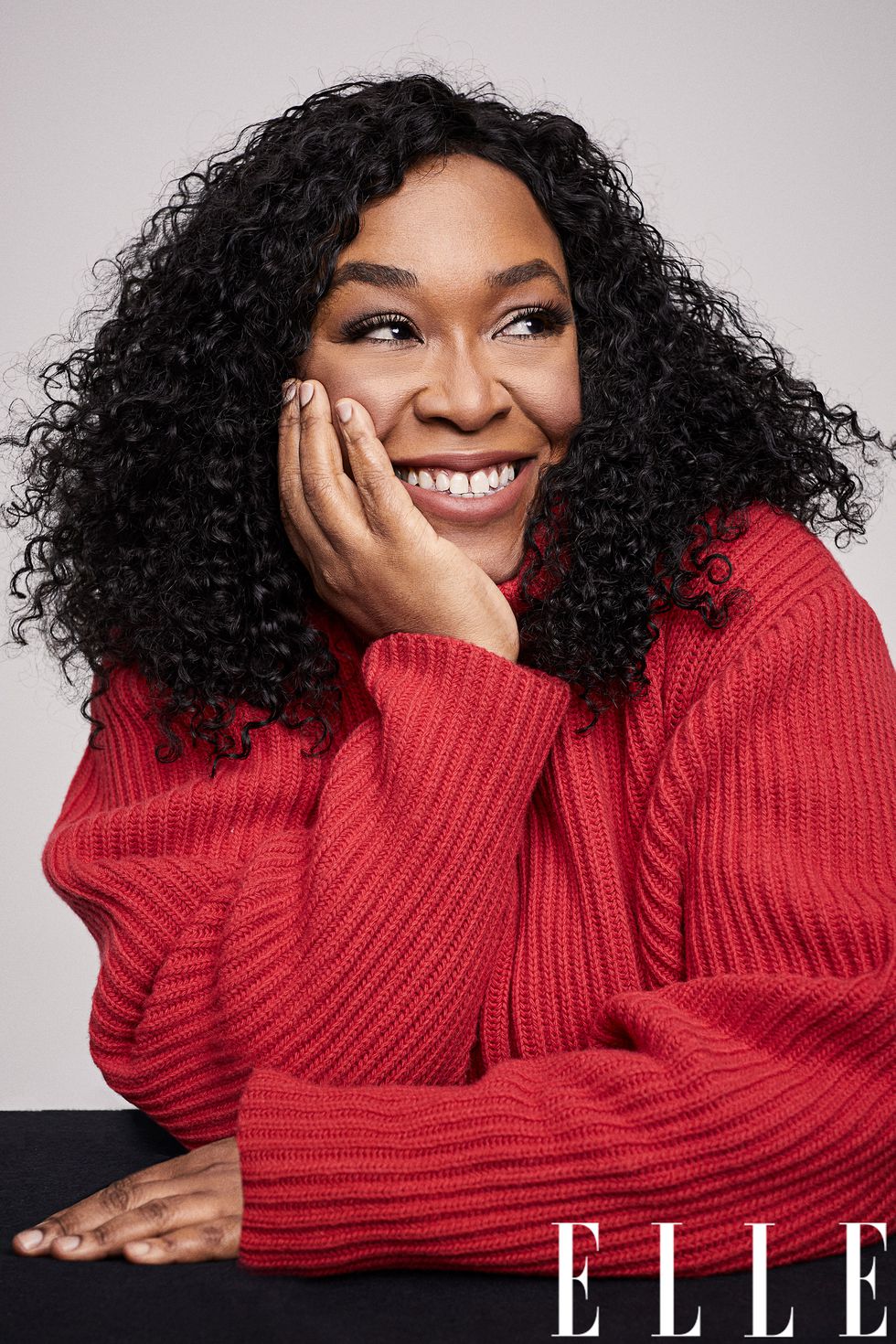
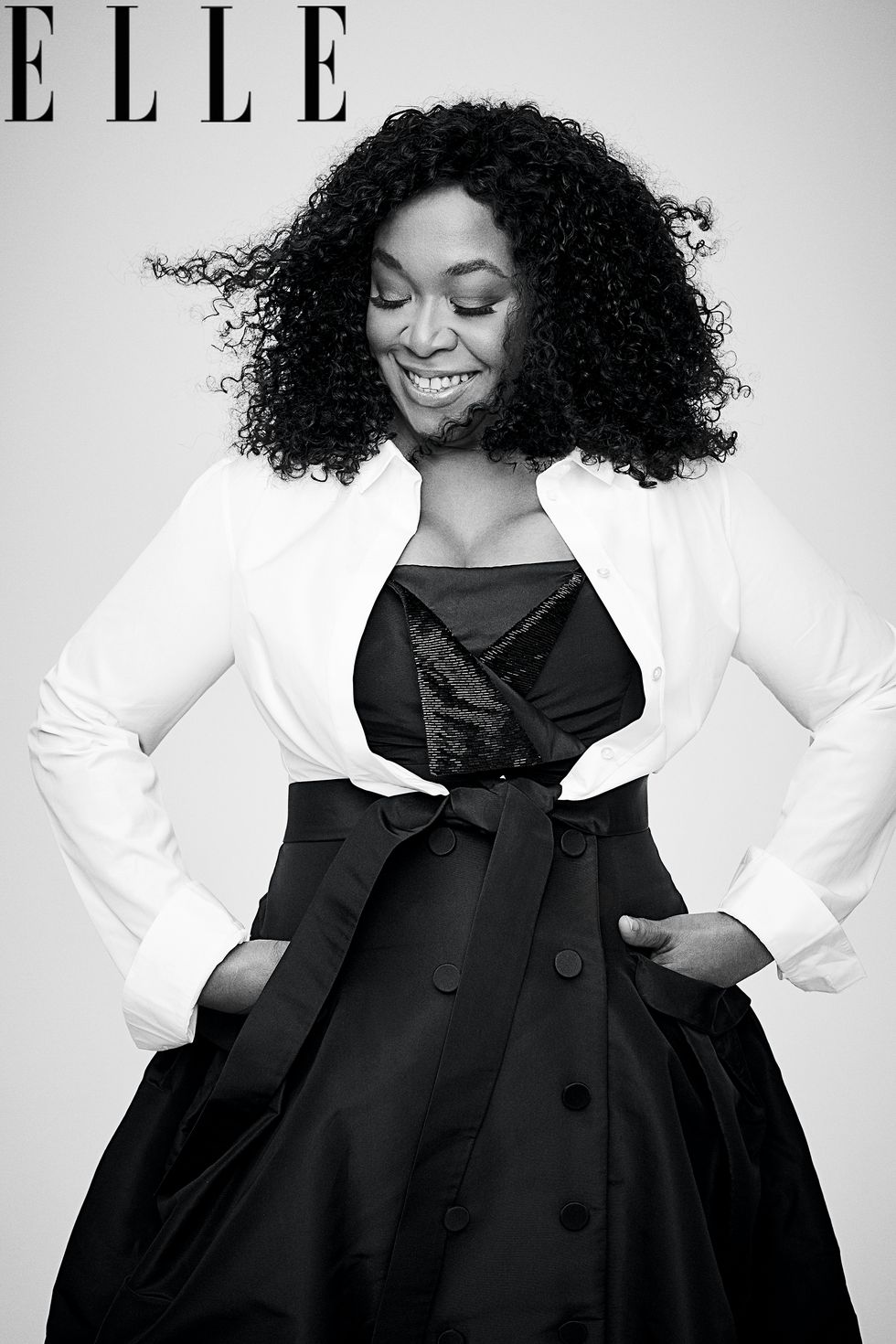
Shonda Rhimes is on one of the eight covers for Elle‘s Women in Hollywood issue and the television producer – who is behind shows like Grey’s Anatomy and Scandal – spoke about how she’s making TV that represents everyone, talking to her daughters about success and more.

Read excerpts below.

On her deal with Netflix: I keep hearing about how I got lured away as if somebody wagged a piece of candy in front of me. But really, it was me deciding I had a vision, and [Netflix’s chief content officer] Ted Sarandos shared that vision. I wanted to be able to decide what kind of shows we were going to make and how we were going to make them. So to have that kind of power has been an amazing experience so far. It’s also a little bit like Christmas because there’s a very ‘Yes, we can’ attitude. Almost so much that we have to be careful what we ask for, like, ‘Don’t ask for the moon, because they will build you the moon.’

On making shows with representation:It’s hugely important, but I didn’t know how conscious it was until I was inducted into the Television Academy Hall of Fame. I was trying to figure out my speech, and I realized it was about how you cannot be what you cannot see. I talked about having grown up watching Oprah every single day of my life. How this was a woman of color, who did not look a certain way, who was [based in] Chicago, and who took over the world through television, basically. When I started writing TV shows, I wanted to represent everybody, because it should look like the real world. It should feel normal when you turn on the television and see people who look like you.

On what she tells her daughters about success: For a long time, my oldest daughter thought I was a doctor, because I was always at work, and it was a hospital. Now she’s 16, so she doesn’t think that anymore. My little ones are six and four and think there’s a land called Shonda. They don’t really understand how it relates to their mother, but it’s nice that they understand that women go to work and enjoy it and that you can have a business and be in charge.

For more from Shonda, visit  Elle.com!

Credit: Bella Naija
On Air Personality, Adenike Oyetunde, Sharon Okotie, and Olivia Malachy, graced the cover of La Mode Magazine’s October Issue.


The October issue was themed, “Beyond Disabilities” which was  in line with the annual event of La Mode Magazine “Green October Event” which had several celebrities in attendance.

The aim of the theme is to inform individuals and communities that a disabled fellow is like anyone else, they’re just living life in a different way.