Author

Women of Rubies

Browsing

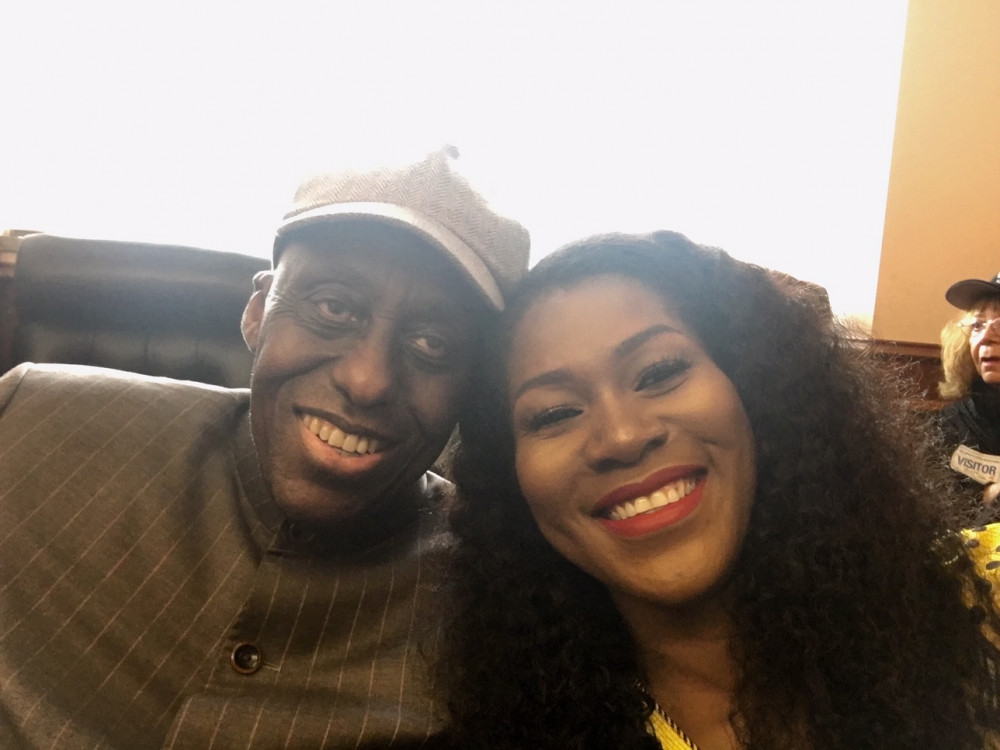
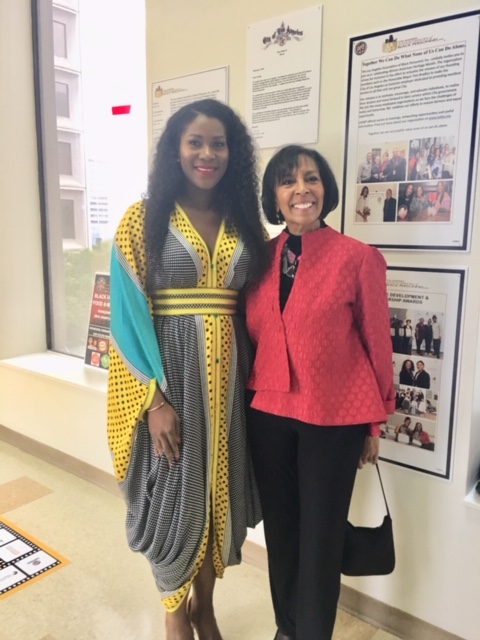
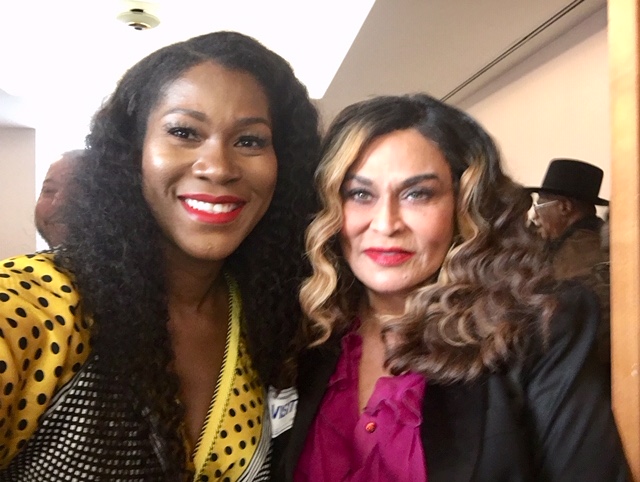
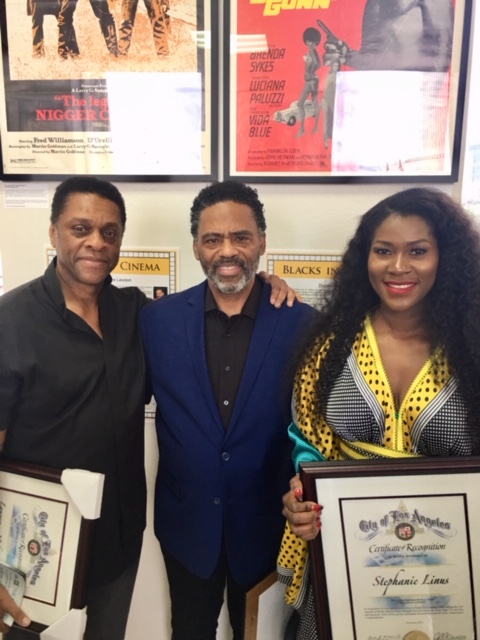
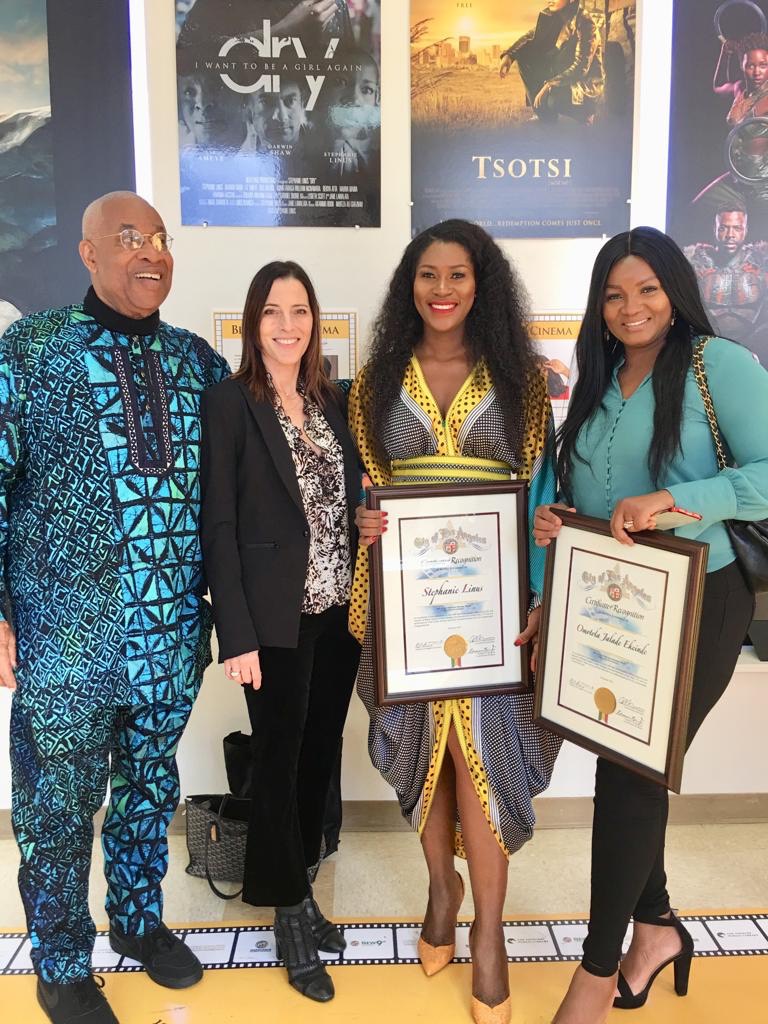
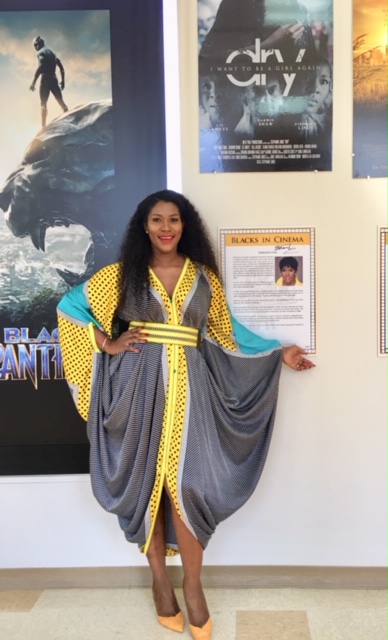
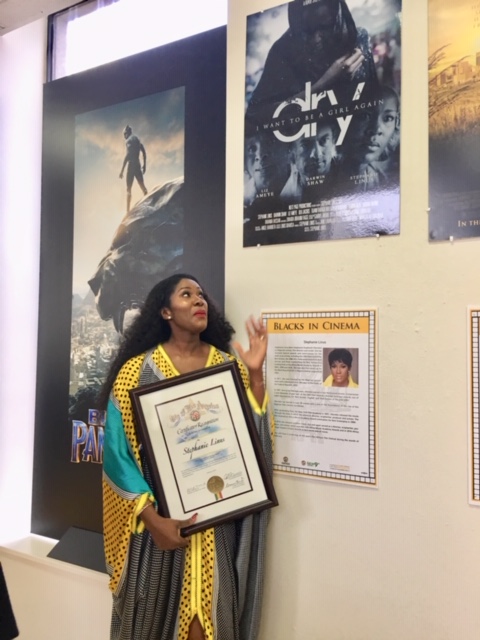
Nigerian actress and producer, Stephanie Linus has received special recognition at the first Blacks in Cinema presentation. The recognition was for her movie, “Dry”which was released in 2016.

The Blacks in Cinema presentation held at the Los Angeles City Council Chambers yesterday as part of the opening of the highly-covered Pan African Film & Arts Festival (PAFF) which will hold in Los Angeles, USA this month.

Los Angeles City Council President, Herb J. Wesson kicked off the Black History Month by honoring the actors and filmmakers who paved the way for people all walks of life to be represented in film. With the help of some legendary African-American actors and filmmakers, the day was officially proclaimed #BlacksInCinema in Los Angeles.

“Dry” had already screened in 2016 at PAFF while also winning the Best Narrative Feature at the festival. The movie will now screen for the second time at PAFF on the 9th, 13th and 18th of February 2019. The movie was recalled to the festival due to the growing importance of global human rights advocacy, which was the core of the movie.

The movie’s core narrative is based on changing the narratives surrounding the issue of child marriage and other forms of social injustice.

Watch Stephanie Linus speaking at the Los Angeles City Council:

see photos below:

Stephanie LinusStephanie Linus PAFFStephanie Linus


Credit: Bella Naija

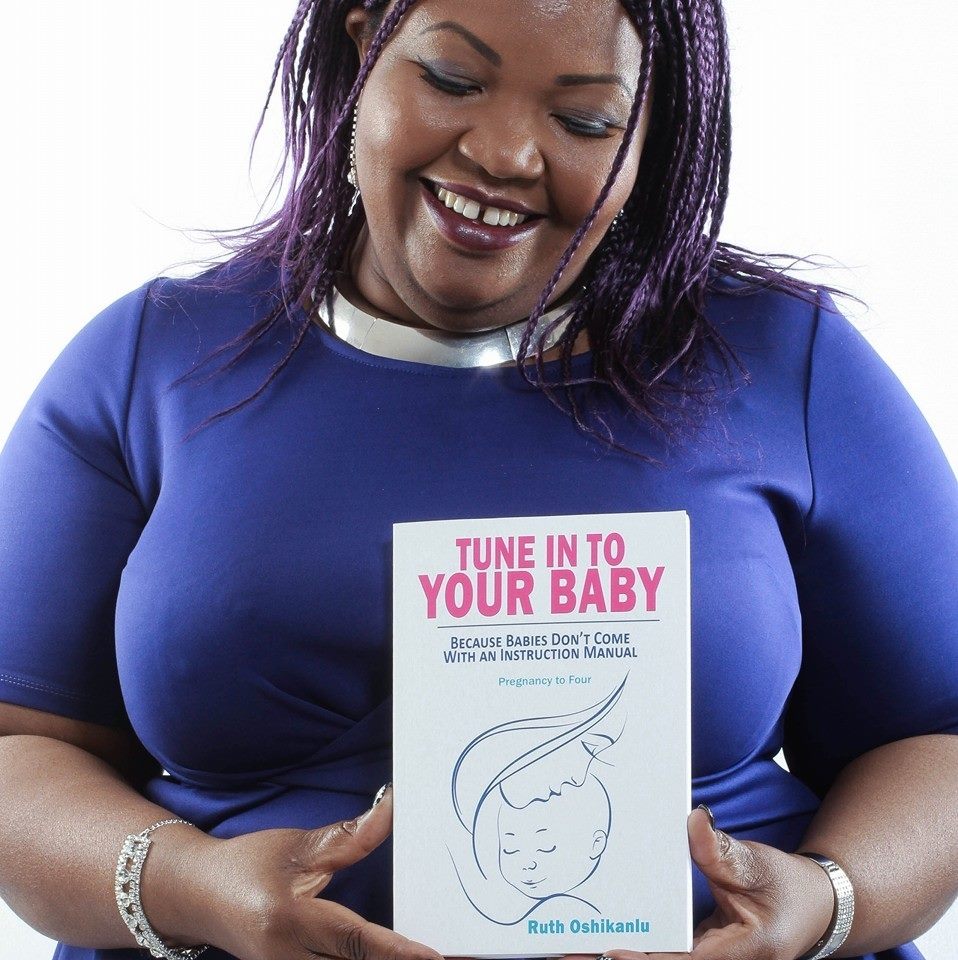
Ruth Oshikanlu has been appointed as a member of the order of the British Empire (MBE) in the New Year 2019 Honours List for her services to Community Nursing, Children and Families

Ruth is an award-winning pregnancy mindset expert, a nurse, midwife and health visitor with over 25 years experience practising in the United Kingdom.

Growing up, Ruth’s father wanted her to become a doctor but she knew that wasn’t her calling, so, she went on to qualify as a midwife. After a thorough grounding in the National Health Service and hospital environment, she decided to focus on community midwifery, helping women to have their babies their way.

Oshikanlu, who is a parenting expert, Queen’s nurse, midwife and health visitor with over 22 years experience, runs Ruth’s parenting centres on beginning the bonding process in the womb.

She is also the author of Tune Into Your Baby: Because Babies Don’t Come with An Instruction Manual, and has developed the Tune Into Your Baby™ approach.

The approach is a holistic parenting programme that equips you to harness the power of your mind along with connecting with your baby in utero to get the desired outcome of becoming a happy and connected mother of a happy and connected baby.

She enables pregnant women to have a stress-free pregnancy, become serene and soulful as they grow a happy soul within them. She also equips mothers with a template that they use for the rest of their parenting journey.

Oshikanlu is also the founding director of Goal Mind, a coaching consultancy that specialises in improving personal performance at work by uncovering employee motivations.

Ruth’s work has earned her numerous health and business awards including:

  • Fellow of The Royal College of Nursing
  • Fellow of The Institute of Health Visiting
  • The Queen’s Nursing Institute’s Queen Elizabeth The Queen Mother Award for Outstanding Service to Community Nursing
  • Recognition Award – Nigerian Nurses Association UK (June 2017)
  • Recognition Award – Women4Africa 2017 Awards (May 2017)
  • The Nigerian Achievers Awards – Outstanding Entrepreneur Award
  • Named on The Nursing Times Leaders List in 2015
  • Named on The HSJ BME Pioneer List in 2014


Credit: fabwoman.ng

When I think about the empowerment of women and children, I like to tackle the issue from the ROOT cause and in many cases- the lack of financial empowerment is one of the root causes of their disempowerment.


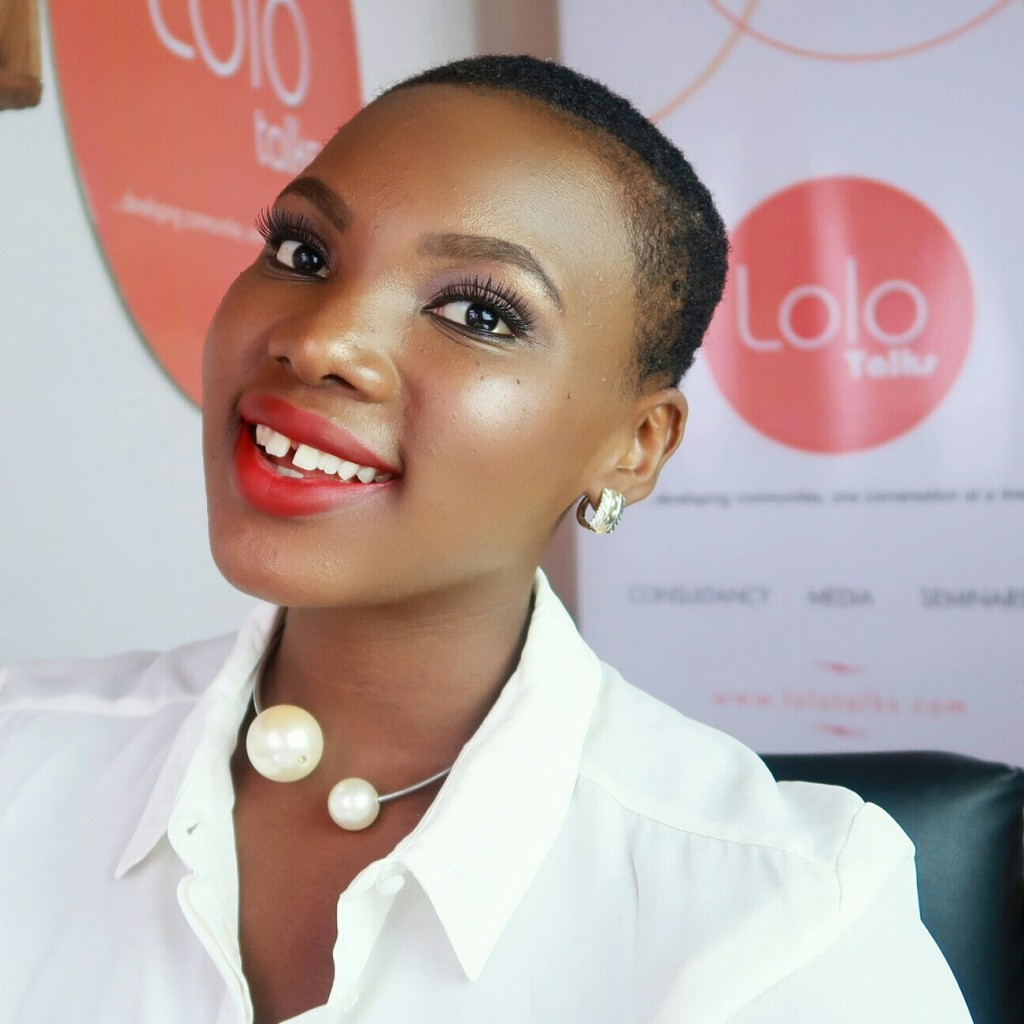
Lolo Cynthia Is a public health specialist, sexuality educator and founder of the social enterprise LoloTalks, that employs all forms of media (online and offline) to create awareness and sustainable solutions to our contemporary social and health issues in Africa.  She also doubles as a documentary and talk show producer and lends her voice on issues regarding interpersonal relationships, sexuality, gender, and social issues through her YouTube channel LoloTalks and her blog.

Women tend to outlive men and stay mentally sharp longer, and a new study out Monday could explain why: female brains appear on average about three years younger.
Female brains appear on average about three years younger than men’s, a new study has found

The study enrolled 121 women and 84 men, who underwent PET scans to measure brain metabolism, or the flow of oxygen and glucose in their brains.

Like other organs in the body, the brain uses sugar as fuel. But just how it metabolizes glucose can reveal a lot about the brain’s metabolic age.

Subjects ranged from their 20s to 80s, and across those age spans, women’s brains appeared metabolically younger than men’s, said the findings in the Proceedings of the National Academy of Sciences, a peer-reviewed US journal.

A machine-learned algorithm showed that women’s brains were on average about 3.8 years younger than their chronological ages.

And when compared to men, male brains were about 2.4 years older than their true ages.

“It’s not that men’s brains age faster,” said senior author Manu Goyal, assistant professor of radiology at Washington University School of Medicine, St. Louis.

“They start adulthood about three years older than women, and that persists throughout life,” said Goyal.

But why?

One theory is that hormones might begin shaping brain metabolism at a young age, setting females on a pattern that is more youthful throughout their lives, compared to men.

Scientists hope to find out if metabolic differences in the brain may play a protective role for women, who tend to score better than men on cognitive tests of reason, memory and problem solving in old age.

It “could mean that the reason women don’t experience as much cognitive decline in later years is because their brains are effectively younger,” said Goyal.

More work is underway to confirm and better understand the implications of the research.

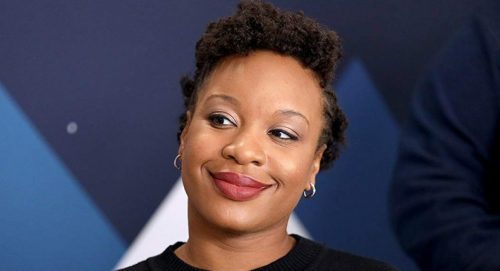
Chinonye Chukwu is a Nigerian-born, Alaskan-raised screenwriter, producer and director, and her works have received recognition and awards.

On Sunday, January 27, 2019, she won the most notable award at the 2019 Sundance film festival, thereby making her become the first black woman to receive the hugest prize.

Her film, ‘Clemency’ won the festival’s biggest prize– the Grand Jury Prizze for U.S. dramatic entry. This makes Chinonye Chukwu the first black woman to win the grand jury prize.

In 2012, Ava DuVernay was the first black woman to win a directing award, and now, Chukwu is a notable first black woman for the biggest prize.

Alfre Woodard stars in this gripping death row drama that definitely deserved the award. Deadline says Chukwu will work  with Blacklist scriptwriter Alyssa Hill who will adapt the screenplay from the memoir A Taste of Power: A Black Woman’s Story.


Credit: Fabwoman.com

The world in 2008 was a very different place, and methinks, much simpler. The worst kind of race argument you could get caught up in and viciously slated was debating Barack Obama’s biracial identity – and get caught up in a debate and viciously slated I did, when on a Facebook post I questioned why Barack Obama was always referred to by the mainstream media as “America’s first black president.”

Sad, how it’s been 11 years since “America’s first black president” was a reality and not a dream, and how 11 years on America seems to have regressed into Jim Crow era, but that’s for another day.

I don’t have a child yet, but one day when I am blessed with one, she will be blessed with Turkish-Nigerian roots. My argument in 2008 was that Barack Obama was no more black than he was white. As a biracial son of a Kenyan father and American mother, he was the “first biracial American president.” But alas, post after post, my Facebook friends and frenemies kept reminding me of the infamous one drop rule – a social and legal principle of racial classification, ironically, created by white Americans.

I had heard of one drop rule of course, but I refused for my then imaginary children to be defined by that one drop at the expense of half of their DNA, identity and heritage. “If someone calls my child Nigerian,” I remember arguing, “that may as well deny my whole existence in their creation, because, whatever happened to the other half of them that is undeniably Turkish?”

I even brought in my dual heritage into the mix, which has since become even more of a contentious issue in my native Turkey; for all the similarities on the surface, Turkish and Kurdish connote very different things in my ever polarised home country, where increasingly you’re having to pick a side. It may not be a case of the one drop rule just yet, but say out loud you’re Kurdish, and in the eyes of some, you might as well have admitted to having leprosy. In this melting pot of centuries old ethnic cultures, I was fortunate enough to have never had to choose, being born to a Kurdish father and a Turkish mother. To date, when talking about how dissimilar we are, my mother still reminds me I am the daughter of a Kurd after all, not in a derogatory way, but as a loving reminder of my late father’s heritage. Exactly as I would want my children to embrace both sides of their ethnic makeup, without being pigeonholed into one, or forced to pick side.

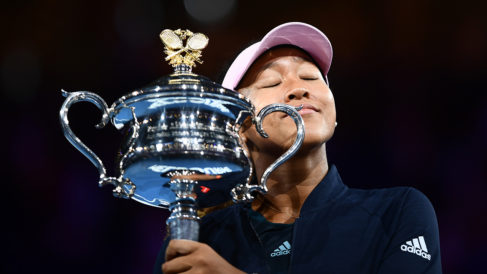
In the year 2019, while much has changed, some things remain the same as I was reminded earlier this week, when the new tennis sensation Naomi Osaka fielded a question from a Japanese reporter who wanted her to reply in Japanese and Osaka replied that she was going to say it in English before going into her answer.

Last year, upon winning the third round of the Australian Open, Osaka had to educate another Japanese reporter who wanted to know what her victory as a “very proud” Japanese means for her people.

“You moved to New York when you were two years old and lived in the United States for a long time, but you’re very proudly Japanese, obviously. What will this victory mean for the people back home, for both sets of fans who will be watching this for you?” asked the reporter, not knowing his mic would be handed back to him with the kind of sass we now know Osaka to be capable of.

“Actually, I live in FL now. But, I mean, of course I’m very honored to be playing for Japan. But my dad’s side is Haitian, so represent. But um, yeah. I forget the rest of your question. Sorry!” responded the tennis ace.

Following her latest win, USA Today called Osaka “the first Japanese player, man or woman, to win a Grand Slam trophy.” ESPN called her “the first tennis player from Japan to reach No. 1 in the rankings.” A story too similar to the French national football team made up of sons of immigrants who carried the country to the World Cup final who were relegated to the second class row behind the lily-white, pure-blooded French boys who went up to receive the cup, or the immigrant who was Malian one day but became French almost the next upon saving the life of a toddler dangling off a balcony, or men of African descent, footballers, scientists, politicians, who are defined by their country of adoption at the height of the success – how many times have you heard “American scientist of Nigerian parentage” or “British politician of Caribbean descent” – and dismissed by country of heritage at first sign of misdemeanour – “the terrorist thought to be Nigerian having gained naturalisation in 2015…”

So much may have changed in 11 years, but so little seems to have, if we are still debating the race of my still imaginary children. All I know is that I hope they will not be defined by the one drop rule, their non-black side erased, or whitewashed to make them fit into the success story that dictates all hint of colour should be removed. Above all, I hope they will have as much sass as Naomi Osaka in not letting anyone put their well-rounded selves into square boxes of racial tick boxes.


Credit: Guardian Woman, Sinem-Bilen Onabanjo

The 2018 report of the Domestic and Sexual Violence Response Team of the Ministry of Justice, Lagos State, has shown a 134 per cent increase in cases of rape, defilement and domestic violence handled by the agency compared to the previous year.

The report indicated that DSVRT handled 2,356 cases in 2018 – 1,312 higher than 1,044 cases treated in the preceding year. In the year under review, the agency recorded 1,750 domestic violence cases, 279 child abuse cases, 78 defilement cases, 44 cases of rape, 51 attempted rape cases and 154 other cases.

While the number of domestic violence cases increased by 817, the incidence of child abuse and defilement rose by 251 and 37 respectively. Rape cases was 24 higher compared to the 2017 report.

According to the 2018 statistics, the office on the average received 166 new cases monthly and got 840 genuine reports via the 6820 emergency short  code.

The report stated, “The team recorded a major increase in the number of cases handled in 2018. A total number of 2,356 cases, including 1,750 domestic violence cases, 279 child abuse cases, 78 defilement cases, 44 rape cases, 51 attempted rape cases and 154 other cases were handled. It was discovered that the number of cases increased by 134 per cent in the year 2018.

“DSVRT has responded to 439 reports of domestic violence, 215 reports of sexual abuse and 186 reports of child abuse – all reported via the 6820 platform. What is most exciting about the platform is that it breaks the initial barrier of people not wanting to make formal reports at an office or police station. We are now able to interact directly with survivors and concerned witnesses and take vital steps in dealing with a case.”

The report  added  that DSVRT focused on children who experienced violence  at  the hands of close relations, noting that a total number of 2,646 children were exposed to domestic violence within the home. Some of the children were said to have been taken through counselling programmes to ensure  that their experiences  did not have permanent and negative impacts on them.

The report said, “From January 2018 to December 2018, the attention of DSVRT was drawn to incidents of child abuse in 19 schools. All the erring schools are under investigation by the Office of Education Quality Assurance in the Ministry of Education. All the defilement cases have been taken to court.”

Credit: LIB

The Anambra State Ministry of Women and Children Affairs on Sunday, said that it has received a complaint about an alleged underage marriage involving a girl from Ihiala identified as Chinwe, and a man from Ozubulu, Mr Izuchukwu Igwilo.

The statement signed by Lady Ndidi Mezue, the Commissioner, Anambra State Ministry of Women and Children Affairs, said the ministry is following up on the case as it continues to collaborate with several persons and organisations including security agencies towards quick resolution.

“The ministry is in contact with the girl’s family, Anambra Police and other interested parties in the matter including human rights activists,” the statement reads.

“The ministry’s utmost concern at this period is the safety and well-being of the young girl in question, as well as the well-being of her young child. As a result, the ministry has up till this time not made any press statement, granted any media interviews nor released any pictures concerning this matter, this is to protect the dignity and privacy of the innocent persons involved. We call on all those working on this case with us to toe the same line.
We can report at this time that considerable progress has been made on the matter and wish to state that the young girl in question is not yet in the custody of the ministry as reported on several social media platforms.
We wish to assure the public that in line with our mandate, and as can be seen in previous social welfare interventions undertaken by the Ministry, we will pursue this particular case towards achieving a satisfactory and positive outcome.”

Credit: LIB

This is according to the Independent National Electoral Commission (INEC) final list of governorship candidates displayed on Thursday at its headquarters, Yaba.

The females eying the state governorship seat include Asisat Abdulraheem of the African Peoples Alliance (APA); Patience Omeebere of the Allied Peoples Movement (APM) and Abiola Adeyemi of the Democratic Peoples Congress (DPC).

Others are Pauline Adegbe of the Progressive Peoples Alliance (PPA); Omolara Adesanya of the Providence Peoples Congress (PPC); Oluwatoyin Ogunbambi of the Peoples Trust (PT) and Adebisi Ogunsanya of the Young Progressives Party (YPP).

They will slug it out with Mr Babajide Sanwo-olu of the All Progressives Congress (APC) and Mr Jimi Agbaje of the Peoples Democratic Party (PDP), among others in the March 2 poll.

The list showed that DPC has both its governorship and deputy governorship candidates as females while the other six female candidates have male deputies.

Also, 22 male governorship candidates have female deputies while the other 16 male candidates have male deputies.


Credit: Pulse News

These spent days got me reflective and imagining all the odds life can offer me but not wishing them into being so when I feel I need some breathe if fresh air, gist and laughter then Facebook becomes my relaxation spot. So this bubbly young woman that I have come to respect for her sense served with humour and sarcasm sometimes puts up a post with a picture of herself and her husband, it was their wedding anniversary. As it is with me, I choose to read through all the comments and my heart broke on her behalf. ‘Why don’t you have a child after 3 years of marriage?’ became the new congratulatory messages.

Then I got into her shoes in my subconscious, would I feel shame or pick up my joy if I have to explain childlessness for any reason?
We have fixed a pattern to living and added time limits such that the feeling of failure crawls in when we are unable or yet to meet up with the standards especially marriage and childbearing. There is no shame in Childlessness! There is no shame I’m finding medical solutions such as IVF! Even adoption has no shame! And if you choose not to tow any of these paths and let nature takes its toll, there isn’t no shame!
Childbearing is just another phenomenon as every thing time and chance allows some of us to own while some are not privileged, it isn’t a curse till we allow the gloom of myth borne out of biased minds become a defined standard. Women are still crying their eyes out when nothing is stopping them to choose IVF, some would rather dwell in gloom because the society isn’t yet in sync with the idea of IVF. Same society isn’t in sync with adoption but will forever be in sync with shaming and bullying.
Oh Daughter of Eve! Bury the shame of Childlessness. Bury the shame of attached to whatever plan you choose to work on to share in the joys of motherhood. Do what works for you and be happy. Whether a child born out of the vagina, or through surrogacy (which I hope will be legalized someday and not seen as the worst curse), or through IVF or adoption is a child and he or she bears your name and will forever cherish the life you’ve given to him/her through your boldness.
 
The society isn’t sure of the template to follow so everything in our world is just turnioniown *winks* so do more than swallowing the bitter pills of the naysayers and try other options.
 
And to every Queen that has tried all options and are yet to have their little kings and queens, I hold you all dear in my prayers and we believe your celebration time is at hand. But that isn’t enough reason to dwell in shame.
 
Alongside with other issues we are making a grave for as women, we are burying every iota of shame attached to Childlessness.
 
And to everyone who the Lord has not given counsel to know the right words to use, we hold you dear in our prayers too.
 
Love and Strength.