Dr Victor Fayomi, a General Practitioner at a private hospital in Gwagwalada, FCT, says crying is therapeutic in managing emotional stress.
Fayomi said this in an interview with the News Agency of Nigeria (NAN) in Abuja.
Heavy hearts, like heavy clouds in the sky, are best relieved by letting off a little water. Let your tears flow and where they go, let your sorrow follow.
Overtime, crying and shedding tears were considered bad and usually associated with ill health, grief and sorrow. However, this is not totally true.
Tears have also flowed as a result of good news, sound health, joy and laughter, he said.
Fayomi said the first sign of life, of a healthy one which must be seen within life’s first minute, was the aggressive cry of a new born baby.
He said it was better to let the tears flow in grief, disappointment, sorrow and when a loving relationship suddenly hits the rock.
Fayomi said bottling up ones emotion could actually break down ones health, saying that sorrow which had not vent in tears might make other organs weep.
Crying does not only reduce emotional stress, it also helps to improve our mood.
When we cry, our nasal passage is also cleared as crying helps to loosen up mucus in the nose.
Children will usually also fall asleep after crying, it stands to reason that crying helps put children to sleep, he said.
Fayomi said crying should not be seen as a sign of weakness, adding that it should be done when the need arises.
In an attempt at staying healthy, be sure to make your crying occasional; that is, only when indicated.
Too much of it, and when too often, may signify a sign of depression.
The key is this, cry only when indicated, do it moderately, get refreshed, lighten your mood and move on, he said.
You have been working out and trying to eat healthy, but the pounds still are not coming off. Its frustrating, we know. Thankfully, there are lots of little changes you can make to get on the right track. These are a few of the most surprising things that might be holding you back.
You are following a diet and exercise plan that isn’t tailored for you.
Everybody is different: thats the message Bruce Lee, the executive director of the Global Obesity Prevention Center at Johns Hopkins University, wants to send when it comes to weight loss. Theres been a lot of fad dieting and fad exercise programs, Lee says. The reason that a single diet plan and the same exercise routine dont work for everybody is that we all live different lives in unique bodies that have their own needs.
You have to tailor what you do to yourself, he says. Instead of following a specific diet or exercise plan, dont be afraid to try lots of different things to find what works for you.
Eating healthy foods and healthy portions needs to take a front seat.
Weight loss isnt just about working out: Its also about what you eat. But many people still dont pay enough attention to food and portion size, Lee says.
You wont have much success sustainably losing weight without getting your diet under control, for two reasons. First, without the proper fuel, even getting into the gym or out on the road is hard. Youll drag. Second, diet and exercise are both factors shaping weight loss, Lee says, and trying to figure out which one is more important is sort of like asking which is more important, your arm or your leg? That means you should pay as much attention to what youre eating as you do to how youre working out, which may mean investing more time in meal planning.
Intimidated? To start with, he suggests keeping a food diary and writing down everything you eat for a couple of weeks. Then figure out where you can trim unnecessary calories from your regular diet, as well as unnecessary dollars from credit card bill. Eating healthy has gotten expensive, Lee says. This method will help you figure out how to make your money count.
Youre only exercising at the gym.
Sure, your time at the gym is helpful in losing weight, and we’ve got tips to help you make the most of it. But the exercise outside the gym-and the mindset that goes with it-that will help you make long term changes to lose weight and keep it off. When it comes to exercise, Lee says, if you cant keep doing it, its not going to work.
That doesnt mean stop going to the gym-it just means you may need to change your mindset a bit. Your day-to-day life has plenty of opportunities for meaningful exercise, like taking the stairs, walking instead of driving, or adding half an hour of vigorous playtime with your kids to your daily schedule. Taken all together, these activities help ensure that even if you dont make it to the gym quite as often as you mean to, you can still do things that make a long-term difference in your fitness and weight.
The number on the scale is moving-but slowly.
Many people who lose weight dont keep it off: Take the oft-cited example of Biggest Loser contestants. When you lose weight, your bodys resting metabolic rate (the amount of calories you burn just by living) slows down. When contestants on the show lost large amounts of weight-an average of 100 pounds-over seven months, their RMRs decreased significantly.
That means they had to work harder than they previously would have had to just to keep the weight off. Researchers who followed up with 14 of those contestants six years after they left the show found that their resting metabolic weights had remained low, which contributed to them gaining back some of the weight they had lost. The key to sustainable weight loss is time, not giant scales and reality television. What you have to do is retrain your body slowly, Lee says.
Unfortunately, theres no single thing that will make you lose weight. The good thing is that your weight loss goal might help you make your whole life better. Its more about lifestyle and long term changes, says Aaron Roseberry, a biologist at Georgia State University who studies obesity and eating.
Youve hit a weight loss plateau.
Plateaus happen: its all in how you handle them. Be patient, and dont give up on your goals, because slow and steady is the key to sustainable weight loss. What you have to do is retrain your body slowly, Lee says. If you see your weight on the scale not going down for a while, that may mean its time to reassess how youre approaching diet and exercise and see if theres something you need to tweak. Check out our list of the most common reasons people plateau for some ideas.
Still bummed? There are other indicators that youre getting healthier you can look to for motivation, like waist size. Abdominal fat, also known as visceral fat, surrounds your internal organs and is the most unhealthy kind of weight to carry, Roseberry says. Keep track of your waist measurement and how your belly looks: even if youre not losing overall weight quickly, youll be able to measure a loss in belly fat as you get healthier.
You need more sleep.
Sleep is essential, both for mental acuity and to help your body recover from working out, but it can be hard to get enough good sleep. Besides making time for that 7-8 hours of shut eye, ensure you’re getting quality sleep by evaluating your sleep environment and looking at your habits for things that could be decreasing sleep quality. If you need a little extra, try folding in a nap. Oh, and don’t hit snooze. It wont help.
You need to think about mental health.
Mental health can affect [weight] in a multitude of ways, Lee says. From stress which can change your hormones, to depression, which can cause someone to withdraw from others and not take care of themselves, these unseen factors can have huge impact. If you’re having trouble losing weight, maybe its time to look at the things in your life that may be impacting your mental health and evaluate how you can address them. For some people, that might mean seeing your doctor or seeking out a therapist, something that our editor wrote last year can still be very stigmatized for men. Know that you’re not alone, and that you are doing whats best for you by considering your mental health.
You need to see your doctor.
In some cases, underlying conditions that your doctor can treat or help you manage may be the reason why youre not losing weight. Head to your doctor (with that food diary in hand, preferably) and see if they can help you figure it out.
Medications youre on may also be affecting your weight loss, such as antibiotics, says Lee. You can stop in at your local pharmacy and ask if they can help you evaluate what youre taking and if it might be holding you back.
Where you live and work is making it hard.
If the only place near your work to grab lunch is the Wendys, chances are youll lunch a the Wendys-at least more than you would if you had other choices. If the nearest grocery store to your house doesnt have a lot of healthy options, youll probably buy and eat fewer health foods.
A common mistake people make in thinking about weight is to believe its all on you, Lee says. He suggests taking a systems approach to weight loss: In order to figure out why you’re not losing weight, look at the systems around you that make you keep it on. Once you’ve assessed your environment, you can figure out how to optimize the things in it that you can control. Whether that means folding in a lunchtime walk at work because your neighborhood isn’t easy to walk in during the evening, packing your lunch rather than eating out, or starting to eat breakfast, small changes can make a huge difference.
Unsure what to look at? Three factors affect weight, Lee says: diet, physical activity, and metabolism . Chances are you can make some changes in your life to affect all three. But don’t be too hard on yourself: Were so outcomes-focused, Lee says. And there’s only so much you can control.
You need a little help from your friends.
The good news is, you don’t have to do it alone: when it comes to habit changes, Lee says the people who participate in those habits with you can also help you change them. If you and the guys meet regularly for wing night, try mixing it up with a healthier option, or better yet, hit the courts for a game of pick-up basketball. Enlisting your friends to help you lose weight might also help them get started on a healthier path.
Dr Bamidele Iwalokun, a medical researcher, on Thursday condemned the use of tissue papers as sanitary pads by women, saying it could lead to severe health complications.
Sex during menstruation
Iwalokun, who is the Head, Immunology and Vaccinology Research Department, Nigerian Institute of Medical Research (NIMR), Yaba, made the call in an interview with the News Agency of Nigeria (NAN) in Lagos.
He said that some tissue papers were products of waste paper, and such tissue papers were not hygienic for draining blood during menstruation.
The habit of using tissue paper in form of sanitary pads is a poor hygiene practice on the part of any woman.
Because no health policy has supported the use of tissue paper as sanitary pad, so its a bad behavior and should not be adopted health wise.
It doesnt have any credibility of use. This should be a way of informing women that it carries a serious public health risk.
The practice places such women at risk of having infection which may pass through the vagina cavity and enter the blood stream, thereby having a serious health impact, Iwalokun said.
The researcher said that the use of tissue paper during menstruation could affect the reproductive organs that could lead to other complications in life.
Sometimes it may be chronic infections that may not give serious symptoms to warrant going to the hospital, but it is indirectly damaging the reproductive system or that pathway.
One of them is the Pelvic Inflammatory Disease (PID), many women do not know they have PID until when issues of infertility comes up and untreated PID is a major cause of infertility.
It also depends on the pathogens that are coming from such paper, so it is important to identify the types of pathogen that are isolated from such tissue papers.
There must be quality study that will show the various types of pathogens, in order to identify the type of damage it can cause.
However, women should abstain from the practice of using tissue paper as sanitary pads, in order to avoid such health complications.
Women should always adopt a proper hygiene at all times, especially during the monthly menstrual period, he said.
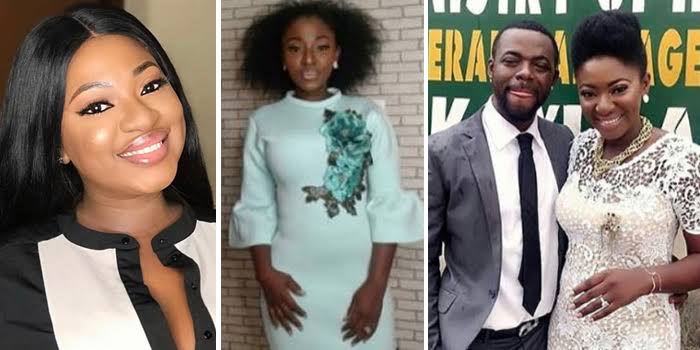
For 14 years, Gospel artist Nancy Masara and her husband, Abel Mokaya were looking for children. But today their home peals of laughter from their one-and-a-half-year-old triplets.
Speaking to People’s Daily this week, Masara beams with joy as she looks at the playful triplets – Patience Mokaya, Esther Kemunto and Samuel Elias– running around the house.
To Masara and her husband, this is nothing short of a miracle.
“I sometimes look at the children and wonder whether they are really mine,” says Masara.
She recalls her struggle with childlessness, how she sought medical help from different hospitals and how at some point she avoided visiting their rural home in Riakuro, Nyamira county as a result of the open stigma and pressure that had begun to mount from relatives after clocking her fifth year in marriage without a child.
“I got married at 22 years and getting a child was never part of my concern. That is until I turned 30. I started visiting hospitals including herbal facilities to look for answers,” she says.
At the height of her desperation to get children, she advised her husband to marry another woman to fulfil his dream of becoming a father and save him the humiliation that comes with being childless. He rejected the offer.
“Deep in my heart, I had started giving up and I expected my husband to be cheating on me because all tests had shown that he was okay.
I had already allowed him although I would cry silently. I was surprised when he told me he was not ready to let me go. He repeatedly assured me he would be by my side forever. He even suggested that we adopt a child if God had not planned a biological child for us,” Masara says.
Years came and went and the couple traversed the country seeking solutions to her problem.
“The number of hospitals I visited in this country in search of a child are more than I can remember,” she says.
Her story changed when she bumped into a gynaecologist and fertility expert at Pandya Memorial Hospital in Mombasa who told her there was a 50-50 chance of becoming a mother.
The doctor then put her on medication and she would go for frequent check-ups to monitor the situation. December 2016 was the turning point of her life.
“I remember it was mid-morning when the doctor broke the most exciting news I have ever had in my life—that I had conceived… I was torn between crying and jumping in joy,” explained the mother of three a midst sobs and tears of joy.
The announcement would mark a new beginning full of hope, a complete departure from the trauma she has known in all her marriage life. But it came with financial strains.
“We would spend up to Sh20,000 per month just for antenatal clinic,” she says adding that her husband who works at a local clearing and forwarding agency was forced to borrow a Sh500,000 loan to enable them settle some of the growing hospital bills.
On July 7, 2017 she delivered triplets through Caesarean section (CS). They were delivered in a space of two minutes apart and were put under special care as they were born prematurely.
“The firstborn weighed 1.1 kilogrammes, the second born was 1.8 kilogrammes and third born was 1.7 kilogrammes,” she says.
The family, however, had to contend with a Sh2 million hospital bill after the children were discharged. But nothing could dampen their joy.
Taking to Facebook today, she shared a newspaper clippings of her interview with People’s Daily.
“In the sight of the lord I can’t hide my joy or what God has done to me, no challenge is permanent when God says yes no man can say no, maybe ure in situation where u feel like giving up, maybe u re asking God questions why he has not answered your prayers,maybe people re calling you names which u can’t understand, u have nowhere to hide your head don’t be tired or never give up the best place to be is at the feet of Jesus, no prayer can be answered in Jesus name, one day, time, sec God will take away your shame and pain in Jesus name. Thanks God for triple joy..”
Women around the world are granted only three quarters of the legal rights enjoyed by men, often preventing them from getting jobs or opening businesses, the World Bank found in study published Wednesday.
South Asia made the biggest improvements in women’s rights in the past decade, while six countries including France and Sweden achieve perfect scores in the World Bank’s index
“If women have equal opportunities to reach their full potential, the world would not only be fairer, it would be more prosperous as well,” Kristalina Georgieva, the bank’s interim president, said in a statement.
While reforms in many countries are a step in the right direction, “2.7 billion women are still legally barred from having the same choice of jobs as men.”
The study included an index measuring gender disparities that was derived from data collected over a decade from 187 countries and using eight indicators to evaluate the balance of rights afforded to men and women.
The report showed progress over the past 10 years, with the index rising to 75 from 70, out of a possible 100, as 131 countries have agreed to enact 274 reforms, adopting laws or regulations allowing greater inclusion of women.
Among the improvements, 35 countries have proposed laws against sexual harassment in the workplace, granting protections to an additional 2 billion women, while 22 nations have abolished restrictions that kept women out of certain industrial sectors.
Six nations — Belgium, Denmark, France, Latvia and Sweden — scored a 100, “meaning they give women and men equal legal rights in the measured areas,” the World Bank said.
A decade ago, no economy had achieved a perfect score.
On the other hand, too many women still face discriminatory laws or regulations at every stage of their professional lives: 56 nations made no improvement over the last decade.
South Asia saw the greatest progress, although it still achieved a relatively low score of 58.36. It was followed by Southeast Asia and the Pacific, at 70.73 and 64.80, respectively.
Latin-America and the Caribbean recorded the second highest scores among emerging and developing economies at 79.09.
Conversely, the Middle-East and North Africa posted the lowest score for gender equality at 47.37. The World Bank nevertheless pointed to encouraging changes, such as the introduction of laws against domestic violence, in particular in Algeria and Lebanon.
Media mogul, Mo Abudu is set to receive the 2019 MIPTV Médailles d’Honneur in Cannes alongside three other television executives. The other three are Stéphane Courbit (France) Jane Millichip (United Kingdom) and Ilene Chaiken (USA).
Mo Abudu who has been described by Forbes as “Africa’s Most Successful Woman” shared the exciting news via her Instagram page.
GOOD MORNING BEAUTIFUL PEOPLE. I AM THANKFUL AND OVERJOYED AT THE NEWS OF BEING ONE OF THE 4 RECIPIENTS OF THE 2019 MÉDAILLES D’HONNEUR AT MIP TV. THIS NEWS WAS ANNOUNCED YESTERDAY💃🏽💃🏽💃🏽. SO OFF TO CANNES IN A COUPLE OF MONTHS TO RECEIVE THIS MÉDAILLES D’HONNEUR. I AM SO EXCITED AND MOST GRATEFUL FOR THIS RECOGNITION OF OUR WORK AND MORE THAN ANYTHING, THAT OUR STORIES ARE NOW MAKING A DIFFERENCE ACROSS THE GLOBE. WE MUST BE IN THE ROOM!!! OUR STORIES MUST BE TOLD, HEARD AND SEEN – LOUD AND CLEAR!!! YES, WE ARE CHANGING THE NARRATIVE!! IT REALLY IS HAPPENING!!! ALL THANKS AND GRATITUDE TO MY AWESOME GOD, THE INCREDIBLE AND RESILIENT EBONYLIFE TEAM AND MY DEAR FAMILY AND FRIENDS THAT ARE ALWAYS THERE FOR ME. I PRAY WE TRULY ALWAYS HAVE REASON TO CELEBRATE ONE ANOTHER🙏🏾❤. LINK IN MY BIO. #MIPTV2019#CANNES#CHANGINGTHENARRATIVE#AFRICATIMETOSHINE#NIGERIATIMETOSHINE
The MIPTV Médailles d’Honneur is usually awarded to senior executives who have, through their talent, leadership and passion, made a significant contribution to the world of television and the development of the international TV community.
The four will receive their MIPTV Médailles d’Honneur at a cocktail and awards ceremony taking place in Cannes, France, at the InterContinental Carlton Hotel on Monday 8 April 2019.
Pollyanna Rodrigues De La Rosa sat in the back of a cab, on her way to her favourite Toronto Latin music club, El Rancho. To get herself in the mood for a Saturday night of salsa, bachata and reggaeton, she asked the driver for the auxiliary cord to play “Eres Mia” by Romeo Santos from her phone. The music filled the cab and she sang along, the lyrics flowing smoothly off her tongue in Spanish, the language she speaks at home with her family. The driver raised his voice over the music and asked Rodrigues De La Rosa about her background—but her answer wasn’t what he was expecting.
“I thought you were Black!” he said. Rodrigues De La Rosa, who is part Cuban and part Panamanian, is used to this type of reaction. She stands at just over five feet tall, with big, long, black curly hair. Her dark skin matches her brown eyes, and if you saw her on the street you’d probably have no doubts about her racial identity, either.
But what the cab driver didn’t understand was that while she is indeed Black, she is also Latina. To be fair, Rodrigues De La Rosa didn’t always understand the nuances of her racial identity, either. “For the longest time, I actually didn’t know I was Black,” she says. That’s because, growing up, her family considered themselves Latino.
Though they shared the same skin tone and hair texture, her family never talked about their African heritage—in fact, they preferred to pretend it didn’t exist. Rodrigues De La Rosa’s mother even pressed her about her romantic choices, questioning why she dated Black men instead of white men. And the anti-Black racism was present in her extended family, too. When she visited Cuba in 2015, many of her family members would ask her to straighten her hair for a “better” look.
Between her family’s Latino identity and the anti-Black rhetoric she internalized, Rodrigues De La Rosa questioned whether or not she identified as Black.
Then, in 2015, she discovered a term on social media that she truly felt described her: Afro-Latina. The broad definition is simple—someone who identifies as Afro-Latina, Afro-Latino or the more inclusive and gender-neutral Afro-Latinx is Black and from Latin America. But the term’s meaning is much more political.
In these communities, which have a deep history of anti-Black racism, Afro-Latinx refers to “someone [from the Latino community] who reclaims their Africanness and Blackness, which for so many years was erased,” explains Colombian-Canadian academic Andrea Vásquez Jiménez, the co-director of the Latinx, Afro-Latin-America, Abya Yala Education Network (LAEN). “Utilizing terms such as Hispanic erases our Blackness.”
While Rodrigues De La Rosa may have felt like she stood out among her peers, she is actually part of a large cultural community. A quarter of the Hispanic population in the U.S. identifies as Afro-Latino according to a 2014 study. (Similar data is not available in Canada in part because though the census includes Black and Latin American as visible minority categories, there is no category combining the two identities. Respondents can write in their own classification, or mark all the categories that apply, but the data is counted towards the Black and Latin American categories separately.)
“I get looked at all the time when I start speaking Spanish. It’s still a culture shock, especially to old farts. I quickly let them know that there are Black people in [Cuba and Panama],” says Rodrigues De La Rosa, adding that people often seem to think that it’s impossible to be both Black and a Spanish-speaking Latina.
“When I heard the term Afro-Latina, as sad as this is going to sound, it was the first time I thought I was considered Black,” says Rodrigues De La Rosa. “I loved it.”
Unlearning anti-Black racism as an Afro-Latina
People like Rodrigues De La Rosa are why Vásquez Jiménez started LAEN. She made sure the organization was a space for Afro-Latinx people to not only have a voice, but learn about their heritage.
“Blackness is global. An extremely high percentage of [people from Latin America] have African ancestry. The identities of Blackness, Africanness and being Latinx are not mutually exclusive,” says Vásquez Jiménez.
The African diaspora originated with the transatlantic slave trade, when European colonizers dispersed millions of people from Africa to North America, South America and the Caribbean. And regardless of where slaves were taken, sexual violence was common. “This is the most f-cked up part, I don’t know if my Spanish ancestor loved my great-great-great-grandma or raped her,” says Rodrigues De La Rosa.
The intersectionality of Afro-Latinx people can get even more complex, especially for people like CityNews reporter Ginella Massa, who wears a hijab and is from Panama.
“Often, in the realm of my work, my Muslim identity is discussed; my ethnicity or my heritage are rarely ever mentioned,” says Massa. When she made headlines in 2016 for being the first hijabi news anchor, the coverage described her as a Muslim Canadian, but the Afro-Latinx aspect of her identity took a back seat.
CityNews reporter Ginella Massa
Even within Canadian Afro-Latinx communities, positive discussions about embracing all aspects of this intersectional identity are rare.
“Because of anti-Black racism, many folks don’t necessarily speak nor highlight our Blackness within families,” says Vásquez Jiménez.
That’s especially true among older generations of Afro-Latinx people, who have internalized centuries of institutionalized anti-Black racism. Massa says her family’s Blackness was rarely discussed at home. Her family only focused on their Latin heritage.
Adidas is back with the latest collection in its series featuring emerging female designers, this time collaborating with New York designer Ji Won Choi, who has given the brand’s iconic track pants and three-striped logo a fresh feel. Lilac, navy, green, and red wide-legged track pants are paired with matching crop tops, jackets, and mock turtlenecks, all with the logo plastered horizontally and vertically in multiples. The clothes make a strong fashion statement but are still cozy, highlighting the duality of Choi’s customer, who she characterizes as “expressive, but with ease.”
Born in Seoul, Choi was partially inspired by her thesis collection at Parsons, where she made heavy use of stripes based on her love for architecture and her Korean heritage. The collection is now available at Adidas flagship locations and select retail partners, including Dover Street Market, Net-A-Porter, Barney’s, Nordstrom, KITH and Urban Outfitters.
Teen Vogue spoke with the designer about the inspiration behind the collection and her advice for upcoming designers.
Teen Vogue: What was the inspiration behind this collection?
Ji Won Choi: It was very much a coming together of my aesthetic, which draws from the architectural shapes of Korean garments and classic Adidas motifs. It was meant to be inspired by my work at Parsons. My thesis collection used the concept of a stripe as the starting point for each garment and incorporated a repeated stripe motif throughout. What could be more natural than evolving this into the iconic Adidas three stripes?
TV: What does the opportunity to design for Adidas mean to you?
JWC: I’m honestly still processing it. It means that my work, which can tend to be more on the niche end, has this massive global platform and a bigger audience than I ever thought would be possible. Anywhere in the world, if someone sees the three stripes, they know exactly what they stand for. It’s an amazing family to be a part of.
Courtesy of Ji Won Choi
TV: How do you want people to feel when they put on your clothes?
JWC: Strong and confident! Expressive, but with ease.
TV: The clothing was showcased in a colorful 3-D maze with models walking up and down the staircases. How did this imagery tie into your collection?
JWC: It was important to me that we incorporate movement into the presentation since that’s a big part of the inspiration behind this collection and all of my work. I knew the presentation couldn’t be static. I really wanted to celebrate individuality and have a diverse group of women representing the collection at the presentation. The end result was beyond imagination — the set designer Ben Cullen Williams brought our vision to life in an incredible way.
Courtesy of Ji Won Choi
TV: Any advice for young designers looking to get their feet wet in the industry?
JWC: My biggest advice for young designers is to have a very clear point of view and defined design aesthetic. Your design aesthetic can always evolve, but when you’re just starting out, it’s very important to have a clear sense of who you are and who you are as a brand.
Naomi Elizée is the fashion market assistant at Vogue and a Teen Vogue contributor. This interview has been edited and condensed.
Liberal MP Celina Caesar-Chavannes kicked off Black History Month by writing a touching love letter to Black women.
“Even though we may have been distant, and I may seem far away, I love you and #ISeeYou,” Caesar-Chavannes writes in a HuffPost blog.
She starts the letter by admitting she hasn’t always been able to support her community the way she’s wanted — depression, anxiety and life have gotten in the way — but she wanted to thank those who held it down when she wasn’t able to.
The MP for Whitby, Ont. has been vocal about her challenges with mental illness in the past and went viral last year after giving a speech on body-shaming in the House of Commons.
“Body shaming of any woman in any form from the top of her head to the soles of her feet is wrong, irrespective of her hairstyle, the size of her thighs, the size of her hips, the size of her baby bump, the size of her breasts or the size of her lips, what makes us different is what makes us unique and beautiful,” she said last October.
And while Caesar-Chavannes touches on that theme again in her HuffPost essay, her focus in this letter is celebrating Black women and recognizing what they’re up against. She gives a shout-out to elders, entrepreneurs, activists and educators. Most heartbreaking was a reminder of what Black children face—“the streets, and the institutions that keep them down and funnel them into prisons and foster care”—and how much needs to change, as she lauds mothers for protecting their kids.
She ends off her note recognizing the toll it can take to be “twice as good” and with a nod to Maya Angelou.
“Being twice as good, twice as fast, twice as everything, because that is what we were taught. That is the only way we can succeed. I also see that it comes at a cost. The wear and tear. The exhaustion. The mental drain. I see that you are tired. And yet, still you rise.”
The one thing I hear women complain about in their relationships is the level of emotional labor that they render to their partners that is often never reciprocated. I have wondered why women were the ones who seemed to be plagued by these one-sided relationships until I came to a realization that women might be the ones guilty of enabling this behavior in their partners.
I have noticed that many women are unaware of their co-dependent nature; a trait that I strongly believe originates from both nature and nurture (socialization). If you are not sure of what a co-dependent relationship means, I have an article that explains it in details, but the gist of it is that a co-dependent relationship is one where one person is giving more in the relationship because the other person requires more attention and psychological support.
But why do I believe women enable this behavior? Well! Because, of what we call the Female Ego- where women take pride in nurturing their partners or people around them. This ego is fostered by socialization as women are often taught to “serve”, that when one is asked of the qualities of a good woman, it is not uncommon to hear that she must give a lot of herself and sacrifice for her partner or children. But, this ego is not only fostered through socialization, but nature also comes into play as some women are innately more nurturers than men.
This ability to nurture is certainly not a bad trait to possess but once one begins to determine her self-worth from her ability to nurture people then it sends a red flag.
A prime example is when a woman dates a “bad boy” with the belief that she would be the one to change him, and even though she might not recognize that train of thought, it becomes evident when there’s a little change in his behavior and she takes pride in the fact that she was the one who changed the man.
However, things could easily go down South from there. For instance, If the woman is dating a man who drinks a lot and begins to realize that he has reduced his alcohol intake and continues to spend more time around her; both of them love the change and the woman is happy because she has rescued him from himself and can finally be with the King she knew he could be. But after a while, he goes back to his old habit, and instead of walking away from the situation that she knows would drain her emotionally, she refuses and takes it as a challenge to work harder to rescue him- after all she has done it before so she can do it again!
A good woman is meant to be there to rescue her man and reap the rewards when she succeeds
This need to rescue the man means that she has to become more understanding, compassionate and nurturing; and just like every human, the man knows this and continues to take advantage because he knows she won’t leave him in that state. So, even when she is frustrated, she can’t let go because she has convinced herself that the man needs her- even when this need to care is clearly her ego aching for her to prove her worth as a woman, after all, what kind of woman will she be if she leaves her man in that low state without trying to fix him?
A good woman is meant to be there to rescue her man and reap the rewards when she succeeds- This played out recently with the death of Rapper Mac Miller, the ex-boyfriend of the Pop Star Ariana Grande. He had overdosed on drugs and trolls went on her Twitter and Instagram to blame her for his death; also a few months before his death, he had been arrested for drivingunder the influence and people also blamed Ariana for not caring for him but this time replied with this- “I have cared for him and tried to support his sobriety and prayed for his balance for years,” she wrote. “But shaming/blaming a woman for a man’s inability to keep his (expletive) together is a very major problem … I will continue to pray from the bottom of my heart that he figures it all out and that any woman in this position does as well.”
Some women see the potential in men even when the men don’t see it, but this so-called potential is what holds most women captive in emotionally draining relationships
Codependent behavior is also evident in mother-son relationships because so many mothers give their sons all the emotional support that they need, that many times the sons become oblivious to what their mothers are going through.
This is one reason on twitter why there is always a gender battle – where men say they want wives just like their mothers and women reply that no one wants to be like their mothers because of the hardships, their mothers have had to endure in silence.
Another prime example I believe illustrates this, is the work women do during the moment of Ramadan (Muslim Fasting Period), as the women have to wake up really early to prepare the meals for the family. The men always praise their mothers on their steadfast ability in providing their meals and of course, this appeals to the female ego- the fact that she’s fulfilling her womanly duties. But at that time, what she needs might not be ego stroking comments but for him to assist in the kitchen. Sadly, this rarely happens because the women might never speak up due to the passive-aggressive leanings of many women and their need to hold their own as a nurturing woman, so they hold it in and foster resent towards that person.
One thing that I also find interesting is that even when the man asks to help, we may refuse immediately but quietly hope that he insists so we can soothe our ego by telling ourselves that we had no choice. This happens in different scenarios- wives who hover over their husbands when he decides to care for their child- they find it so difficult to let go of that control they have over that “territory” even when they know they need to!
The female ego tricks us into staying in painful relationships because it deceives us into believing that the amount of suffering and sacrifice we can endure is a clear determinant of how womanly we are
So, when we women complain about the fact that our partners are burdening us with their troubles, we need to stop and ask ourselves – Do I derive pleasure from offering this help? Underneath this anger and frustration, is there somewhere that leaps for joy when I know I can be the one that nurtures him back to peace?
Sometimes, this need to nurture can become very toxic- I can’t help but reminisce about the time I was co-dependent and very passive aggressive- I dated men who wouldn’t ask about me, the same way they burdened me with their troubled and because I couldn’t vocalize my frustration, I would manipulate my way to ensure I hurt him where it hurts. You see, as one nurtures, they come to possess intimate details of their partner and therein lies their power- I would say mean things purposely about his insecurities just to bruise him because I knew I would be the one to fix him and nurture him back to peace. It became a vicious cycle!
We, women, need to learn to be selfish! We complain that men are selfish but the truth is we are just not selfish enough – the movie Acrimony depicts this perfectly!
The female ego tricks us into being in painful relationships because it deceives us into believing that the amount of suffering and sacrifice we can endure is a clear determinant of how womanly we are; we need to learn to walk away from things that appeal to our ego but doesn’t soothe our soul because once we are done nurturing everyone, what time do we have to nurture ourselves?
Lolo Cynthia Is a public health specialist, sexuality educator and founder of the social enterprise LoloTalks, that employs all forms of media (online and offline) to create awareness and sustainable solutions to our contemporary social and health issues in Africa. She also doubles as a documentary and talk show producer andlends her voice on issues regarding interpersonal relationships, sexuality, gender, and social issues through her YouTube channel LoloTalks and her blog.