Author

Women of Rubies

Browsing

Cornrows have become a crowd favorite for women of every culture in the last 10 years. Whereas it used to be worn by children, especially young African and African American girls, the style has become widely popular across women of all ages.

But many do not know the deep and rich history of the hairstyle that saved the lives of many. Moreover, they do not know of its role in the freedom struggles which have led to the liberties we now enjoy.

Rihanna wears cornrows

Cornrows have long been a facet of African beauty and life. In many African societies, braid patterns and hairstyles indicate a person’s community, age, marital status, wealth, power, social position, and religion. In the Caribbean, the style may be referred to as cane rows to represent “slaves planting sugar cane”, and not corn.

order to create a single line of raised row, creating the cornrow”.

Blackdoctor.org writes on the history of cornrows:

“Depictions of women with cornrows have been found in Stone Age paintings in the Tassili Plateau of the Sahara, and have been dated as far back as 3000 B.C. There are also Native American paintings as far back as 1,000 years showing cornrows as a hairstyle. This tradition of female styling in cornrows has remained popular throughout Africa, particularly in the Horn of Africa and West Africa.

Emperor of Ethiopia (1872–89)

Historically, male styling with cornrows can be traced as far back as the early nineteenth century to Ethiopia, where warriors and kings such as Tewodros II and Yohannes IV were depicted wearing cornrows.”

Now to its role during the Transatlantic Slave Trade:

During the Atlantic Slave Trade, many slaves were forced to shave their hair to be more ‘sanitary’ and to also move them away from their culture and identity.

But not all enslaved Africans would not keep their hairs cut. Many would braid their hairs tightly in cornrows and more “to maintain a neat and tidy appearance”.

Enslaved Africans also used cornrows to transfer and create maps to leave plantations and the home of their captors. This act of using hair as a tool for resistance is said to have been evident across South America.

It is most documented in Colombia where Benkos Bioho, a King captured from Africa by the Portuguese who escaped slavery, built San Basilio de Palenque, a village in Northern Colombia around the 17thcentury. Bioho created his own language as well as intelligence network and also came up with the idea to have women create maps and deliver messages through their cornrows.

“Since slaves were rarely given the privilege of writing material or even if they did have it, such kind of messages or maps getting in the wrong hands could create a lot of trouble for the people in question, cornrows were the perfect way to go about such things.

No one would question or think that one could hide entire maps in their hairstyle, so it was easy to circulate them without anyone finding out about it.”

Afro-Colombia, Ziomara Asprilla Garcia, further explained to the Washington Post in the article, Afro-Colombian women braid messages of freedom in hairstyles:

“In the time of slavery in Colombia, hair braiding was used to relay messages. For example, to signal that they wanted to escape, women would braid a hairstyle called departes. “It had thick, tight braids, braided closely to the scalp and was tied into buns on the top.

And another style had curved braids, tightly braided on their heads. The curved braids would represent the roads they would [use to] escape. In the braids, they also kept gold and hid seeds which, in the long run, helped them survive after they escaped.”

Garcia said with satisfaction that there has been a resurgence of braided hairstyles in Colombia in recent years. But this reality is not only evident in Colombia but all around the world.


Source: Face2FceAfrica

Lee Young love for Disney brought about the thought of having black girl Princesses.

She grew up watching Disney cartoons and movies and as she grew older, she found and joined the Disneybounding online community.

After joining the group, in 2017 she had the thought and even had someone sketch an African print mermaid skirt so she could  dress the part as Ariel of “The Little Mermaid.” 

Image Source: Madeline Barr Photography

 “It was all black girls and @followtheyellowbrickgirl (another member) had always wanted to do the Muses from Hercules. That was when #blackgirldisneymagic began. A year later we got together again and all bounded as different versions of Tiana (since she has so many outfits).

Later that same week I came up with our next idea. Since we were out of black Disney girls I said ‘why don’t we make the Disney girls black?’ I wanted to #disneybound as Disney princesses but in African Print

Getting 14 women on african to take on the various princess from Anna to Aurora wasn’t  easy.  

African Disney print princesses Image Source: Madeline Barr Photography

“It was important to see this through because when I came up with the idea, it was literally because our group had run out of black women Disney characters to portray,” she explained.  

Lee said she worked mostly through Instagram with the women to brainstorm and come up with ideas of how they wanted the outfits to look. The women decided that Black History Month would be the perfect time to showcase their Disney fashions with African prints and fabrics.  


It would make a bigger impact and really showcase the point of the idea,” she said about debuting during Black History Month.

The group got together on Disneyland Feb. 8 and really caught people’s attention. Folks stopped, took pictures of the African print princesses. Even Mickey Mouse, Donald Duck, Chip and Dale stopped in their tracks to talk with the princesses, the outlet reports.  

“At one point we finally had to leave Main Street because there were a lot of people staring and pointing as photos were being taken,” Young said. “All day guests were commenting on how beautiful and majestic we looked.”

The characters represented include: Aurora,Ariel, Snow White, Elsa, Anna, Rapunzel, , Merida, Vanellope, Belle, Tiana, Moana, Cinderella, Pocahontas, and Jasmine.  

The attention from the social media has bee amazing.

“The response has been overwhelming. I’m still in shock that it has gotten so much praise,” she told Atlanta Black Star. 

Lee intends for Black girls to be inspired by the courage of her creativity.  

“For all the little girls out there who still don’t see the representation they deserve or who are still told that their black/brown skin and kinky hair are undesirable, you are beautiful princesses. The standard of beauty is YOU! You can be a mermaid, you can be a boss lady, you can be a warrior, you can be an adventurer,” Young said. “Dream big and dream bold.” 

Click here for more photos

“When they called my name at the final, I didn’t believe it. I stepped forward and did the only thing I could do; smile. I spent the night anesthetized.”

In 2016, Ana Flávia Santos made history in Brazil as the first black model to win Brazil’s Ford Models contest after the competition’s 43 years of existence.

She and 15 other candidates that were drafted from various regions of the country contested together. Her win saw her getting a four-year contract with Ford Models in the amount of $150,000.

The  Brazil’s Super Model of The World competition is an annual event organised by Ford Models Brazil which was a steppingstone for notable world-class models like Adriana Lima, Chanel Iman and Nicole Trunfio.

The competition which is internationally recognized first held in 1980 by the co-founder of Ford models Eileen Ford and ever since the first one, different versions of the Super Model of The World competition have been staged around the world.

Santos is the daughter of an unemployed bricklayer and a general service assistant, born and raised in Mussurunga, a town on the outskirts of Salvador in Brazil.

Like most graduates, she searched for a job after school, but her experience portfolio failed her, so she resorted to seeking employment as a salesperson at the mall.

A friend told her about a modelling contest, but she paid little attention to it. However, her friend was insistent and submitted a picture she had on social media to a scout, Vinny Vasconcellus who reached out to her.

However, she responded after a month. According to Vinny, “The picture on the internet was old, I couldn’t see it right. When she went to the agency and I saw her in person, I said, ‘That’s it!’

“It was a girl who thought she was ugly because she was tall and thin, and stayed home embarrassed. On the same day, I took a photo, presented it to an agency in São Paulo and started the preparation.”

Vinny’s team began preparing Ana for the modelling world but first, she had to go through some lessons on aesthetics, psychological work and most importantly, catwalk lessons.

“It was a whole process that presented the leap for her, a crude stone, with not a notion of beauty. Then the thing flowed, and she started to have more self-esteem,” he said. Before the Super Model of The World competition, Santos’ debut on a runway was at Afro Fashion Day (AFD) to celebrate the Day of Black Consciousness.

On winning the Super Model of The World competition at the time, the model now 24/year old said “It was wonderful… I’m opening doors for other Black girls. I received lots of messages telling me that I was being an inspiration.”

She has walked many runways currently and done editorials and commercials for big names like Lacoste, Chloé, Harper’s Bazaar Brazil, Zara, and Dior.

“Would also be happy to do campaigns for other brands that I love like Chanel, Prada or Versace and walking for Off-White again.”


For full article click here

Aramide Akintimehin she earns a living as a primary school teacher with a 1st class degree in Economics.

Apart from using her certificate to work in a primary school, she also runs a free school for out-of-school children, Talent Mine Academy.

A 20-year-old first-class degree holder in Economics, Aramide Akintimehin, embraced a career in training future leaders by dedicating her life to teach primary school pupils.

She earns a living as a primary school teacher who also runs a free school for out-of-school children, Talent Mine Academy.

Aramide said she was prompted to embark on this journey because of the poor quality of education in public schools.

Legit.ng gathers that Aramide is also working on obtaining a diploma in Education from Babcock University.

In the course of impacting knowledge in these kids, the 20-year-old teacher also said she learns from them.

She narrated a scenario where she was unable to solve a verbal reasoning question which had already been solved by one of her pupils. She said the pupil explained to her how she arrived at the answer.

Aramide shared on her Instagram page: “We had Verbal Reasoning this morning and while trying to draft out the correct answers to the questions, I struggled with finding the answer to a particular question. I decided to check the notes of my kids to see if they attempted it because that question was a bit dicey.

“I finally got a hold of Rashidat’s note and there was the answer staring at me and the worst part was that I didn’t know how she arrived at the answer. I called her to explain to me how she got the answer. I got a better understanding and apparently, there was an error in the workbook. We corrected the error, I explained well to the class and everybody was happy I can imagine the confusion I would have brought to my kids if I didn’t keep my rep and pride one side to learn from a 9-year old.”

Source: Legit News

Xia Peisu has been hailed “the mother of computer science in China.”

Throughout her long career, Peisu made numerous contributions to the advancement of high-speed computers in China and helped establish both the Chinese Journal of Computers and the Journal of Computer Science and Technology. A devoted educator, she taught China’s first course in computer theory and mentored numerous students. In 2010, the China Computer Federation honoured Peisu with its inaugural Lifetime Achievement Award in recognition of her pioneering work in China’s computer industry.

In April 1960, China’s first home-grown electronic digital general purpose computer – the Model 107 – went live. Xia Peisu, the machine’s engineer and designer, had just made history.

After decades of war with Japan and the Chinese Civil War in the first half of the 20th Century, the country’s technological innovation had fallen behind much of the developed world. Chinese scientists relied heavily on hardware and expertise from the Soviet Union to build up their computing power after relying on the west.

But when the relationship between China and Soviet Union dissolved in 1959, China was once again isolated and it had to look inward for a way forward in an increasingly computerised world.

Within a year of the Soviet Union withdrawing aid, Xia delivered the 107 – China’s first step on the road to independence in computing.

Although currently,China happens to be a global leader in computer production. In 2011, they surpassed the US to become the world’s leading market for PCs, and the desktop PC segment of their computer industry alone is projected to bring in a revenue of over $6.4bn (£4.9bn) this year.

Xia was an important personnel to this. She helped shape some of China’s first computing and computer science institutions and developed their training materials. She taught the first computer theory class in the country. Over her career, she would usher hundreds of students into the country’s burgeoning field of computer science.

In the aftermath of war and political upheaval, Xia shaped a new field of science and a new industry in China. Through both her technological innovations and the many students she taught, Xia‘s influence resonates throughout China’s computing world today.

Born into a family of educators in the south-eastern municipality of Chongqing on 28 July 1923, Xia rarely went without an education. First attending primary school aged four and receiving private home tutelage at eight, she went on to excel at Nanyu Secondary School and graduated top of her high school class at National No. Nine in 1940.


Xia Peisu’s home of Chongqing, China during a Japanese airstrike in 1940 (Credit: Getty Images)

Xia graduated with a bachelor’s degree in electrical engineering in 1945. The same year she met Nanjing war refugee and fellow National Central alumnus Yang Liming, now a professor of physics at the university.

Xia developed methodologies that could more accurately predict variations in frequency and amplitude within electronic systems, which led to wide-reaching applications for any system with an electrical frequency, from radios to TV to computers.

In 1950, she was awarded her PhD. Later that same year, she married her husband in Edinburgh. Both scientifically-minded and deeply invested in putting those minds to work in their home country, the couple returned to China in 1951. They both took up positions at Tsinghua University (or Qinghua University), where Xia worked on telecommunications research.

Xia Peisu would go on from a PhD in electrical engineering to designing China’s first home-grown electronic digital general purpose computer (Credit: Wikimedia Commons)


In 1950, the USSR and China joined an alliance, a relationship that would directly impact China’s computing industry (Credit: Getty Images)

Xia became intricately tied to Sino-Soviet partnership when, in 1953, mathematician Hua Luogeng visited her place of work at Tsinghua University and recruited her into his computer research group at the Chinese Academy of Sciences (CAS). She was now one of the three founding members of China’s first computer research group.


With her knowledge of electronics and mathematics, Xia was an ideal choice

In 1956, she joined a delegation to Moscow and Leningrad to explore Soviet research, production and education in computing. When she returned that same year, she undertook translation of Soviet computer design from Russian into Chinese, including a 1,000-page manual that became the course text for teaching Chinese students Soviet computing.

Xia was involved in developing the computer science courses at both institutions, and as a course developer and lecturer, she oversaw the training of hundreds of students between 1956 and 1962.

“What [China] needed above all was a training program,” Mullaney notes. Xia gave them one.

By 1959, China had succeeded in replicating two Soviet electronic computer designs; the 103 model and the 104 model, each based on the Soviet M-3 and BESM-II computers respectively. But just as China began making progress in producing computers, the Sino-Soviet relationship was in dissolution.

The relationship had become so bad by 1960 that the Soviet Union withdrew all support, both material and advisorial, from China, says Mullaney. After the Soviets withdrew, many other countries assumed that China’s computing industry just stopped.

It didn’t.

Far from stopping after the 1960 USSR withdrawal of support, China’s computing industry continued to advance (Credit: Getty Images)

Xia’s 107 model was the first computer that China developed after Soviet withdrawal, and unlike the 103 and 104 models based on Soviet design, the 107 was the first indigenously designed and developed computer in China.

Throughout this time, Xia continued a balance of research and development in high processing speed computers and training new computer scientists and engineers. In 1978, Xia helped found the Chinese Journal of Computers as well as the Journal of Computer Science and Technology, the first English-language journal for computing in the country. And in 1981, she developed a high-speed processor array called the 150AP. Compared to the earlier Soviet-based model 104 that performed 10,000 operations per second, her 150AP boosted a computer’s operations to 20 million per second.

Due in large part to Xia, computer science coalesced into an independent field of study in China and the country’s computer industry emerged despite a tumultuous beginning. “In terms of someone who held her position and was such a central actor in a leadership role, I have not come across other women of her stature at that time,” Mullaney says.

By the 1970s, China had developed powerful, sophisticated computers with integrated circuits (Credit: Getty Images)

She was later named the processing chip of China’s first CPU computer “Xia 50”.

Dubbed in China the “Mother of Chinese Computing”, Xia is still recognised as a founding member of the country’s computer industry. The China Computer Federation awards the Xia-Peisu Award annually to women scientist and engineers “who have made outstanding contributions and achievements in the computing science, engineering, education and industry”. Chen Zuoning and Huan Lingyi received the award most recently in 2019: Chen for her work in developing domestic high-performance computing systems and Huan for her research in CPUs and other core computer devices. Continuing along the path Xia charted for them, Chen and Huan have strengthened China’s domestic computer technology.

In a world of lost untold stories of heroes,  BBC new Future column, “missed geniuses” is out to celebrate them today.

For full article click here

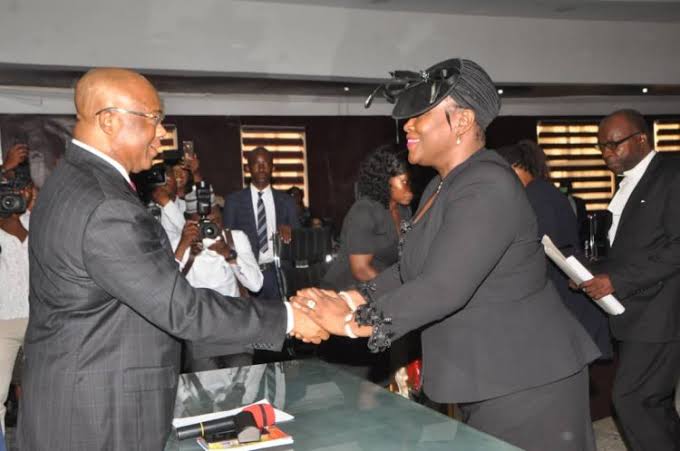
Following the murder of her son by a hit-and-run driver, Justice Monica Dongban-Mensem, now spends part of her time controlling traffic.

She undoubtedly believes many drovers in Nigeria do not understand the rules of driving. Aside ensuring free flow of vehicles, she also visits motor parks to educate drivers

Justice Monica  is not just a judge of the appeal court in Nigeria, she is much likely to be the next possible president of the appellate judicial arm of government as Zainab Bulkachuwa, the current head, prepares for retirement. Impressively, she does this during her spare time.

The 62-year-old senior judge does this voluntarily.

The senior judge, however, has a dark memory she has nursed for about eight years – her son was killed by a hit-and-run driver – and as a result, she thinks she can play a major role in changing the psyche of Nigerian drivers and ensuring proper knowledge of the road.

Dongban-Mensem laments that because many drivers in the country are not patient, some of them have caused accidents that have sometimes been fatal.

While speaking with the British Broadcasting Corporation (BBC), she said she never knew the driver behind her son’s death, but it is her determination to touch as many road users as she can.

Despite her position in the country, she has spent time a visiting bus parks for the enlightenment of drivers.

She revealed that her experience with the drivers had shown that most of them do not understand road signs nor have the proper training needed to carry out their daily activities.

Therefore to further boost her resolve, the judge now has a foundation named after her late son and with the aim of enlightening drivers. She further has a plan to create a driving school for would-be commercial drivers.

She also said she spent weeks with the Federal Road Safety Commission (FRSC) training to control traffic before she ventured into the practice as a warden.

Her son, who she called Kwapda’as Dongban, was 32 years old when he died in 2011 at a busy area in Jos, Plateau state.

She said her son, a law graduate from the University of Jos, was in Plateau for his certificate when the incident happened. He broke his two legs, was left without assistance as he groaned in pains till he lost the chance to live.

Click here for full article

Like many people, you are probably settling back to work after the much needed holidays. (Hopefully, you actually took a break.) So here you are, with all your resolutions and new energy. 2020 is that year, right? Where we hit all the goals and achieve everything on our vision board. The only problem is our tendency to procrastinate. That book you want to write, that song you want to produce, have you started giving excuses? Maybe you are already turning January goals to March because you think you have time.

Personally, as far as goals go, I like to work with deadlines. With deadlines, you can plan your time and manage your tasks properly. And you get to avoid pushing your results towards an imagined future date. The thing about procrastination is that it rears its ugly head at the most important phase of a project. The execution stage. I remember Uni days studying a course that was 100% coursework. It was basically executing brief after brief and project and after project, both in teams and alone. I was very good at laying the foundation, doing the groundwork and strategizing, even down to planning a work schedule. But when it came to the actual execution, I lagged behind.

Back then, Instagram wasn’t even a thing (yes this shows my age, lol.) Still, I found other ways to procrastinate. And it cost me. I met my deadlines at the last minute and the work was good but sub-standard. I knew it and my lecturers knew it. And the thing with procrastination is, it pushes you into a cycle. Dealing with the disappointment of my lecturers and my disappointment in my sub-standard work led me to beat myself up. And beating yourself up does the complete opposite of motivating you to do better. So you find yourself in a cycle of defeat.

Now, I am anything but lazy. I have since come to realize that procrastination and laziness are not the same things. When you’re lazy you can’t be bothered to do anything, whether you actually enjoy it or not. And I discovered that I was well able to do other things, that I enjoyed, that came easy to me. But if you don’t do the hard stuff, how will you grow?

So I’m all grown up now, well not really but I’m wiser now and I’ve learned that in the real world you can lose much more than the faith of your lecturers. You can lose jobs, clients, money and great opportunities if you procrastinate. I helped myself by acknowledging my bad behaviour and learning my triggers. As an adult, especially if you have a lot on your plate, you tend to do the things that come easy to you first, because your brain likes that. I had to reverse that and do the hard things first. You know, get them out the way then onto the easier things. If I’m overwhelmed by a project or task, I break it down and take it bit by bit, step by step because yes, the big picture can look so overwhelming that you shrink back from it till it’s too late. I also learned to understand my body. My brain is much sharper in the morning, this wasn’t always a case though, there was a time I was nocturnal and my brain was much sharper at night, but let’s say I’ve evolved. So I know to do the tasks that are harder for me, early in the morning when my brain is ‘woke’.

I’ve learned real life doesn’t always forgive you for procrastination and even if you think you got away with it, something else ultimately gets affected. So am I procrastination free? No. But am I taking deliberate steps to do better? Yes. Because we need to do better this 2020.

Written by Jemima Ughen from Lady’s Room blog

Dr. Hadiyah-Nicole Green has become the first person to successfully cure cancer in mice using laser-activated nanoparticles, according to Black Culture News.

Unlike traditional cancer treatments, Green’s revolutionary and unique nanoparticle technology, which was found to successfully cure cancer after testing on mice within 15 days, does not require chemotherapy, radiation, or surgery. Green received a $1.1 million grant from the U.S. Department of Veterans Affairs to expand her nanoparticle cancer treatment research.

Green’s interest in cancer treatment stems from witnessing the death of her aunt, Ora Lee, who suffered from cancer, and her uncle, General Lee Smith, who also was diagnosed with cancer and experienced the negative side effects of chemotherapy treatment.

Green is, not surprisingly, highly educated. In her pursuit to fight cancer she obtained her bachelor’s degree in physics and optics from Alabama A&M University and later earned her master of science in physics from the University of Alabama at Birmingham, both of which she received full scholarships for. After earning her degrees, she transitioned to the Comprehensive Cancer Center for five years and the Department of Pathology for one year, according tot of Pathology for on Green’s Ora Lee Smith Cancer Research Foundation, the nonprofit she founded in memory of her aunt, is continuing to fight cancer using laser-activated nanoparticles and focusing on its mission to make cancer treatment accessible, affordable, and effective. She devotes time to helping young black students as well.

Strides in cancer treatments/cures are very important. According to the American Cancer Society, in the U.S. alone, an estimated 606,520 people will die from cancer in 2020. This equates to 1,660 people dying of cancer each day in 2020. Approximately 69% of people diagnosed with cancer between the years 2009 and 2015 were alive five years after their diagnosis. This is higher than people who were diagnosed with cancer between the years 1975 and 1977. Between these years, 49 out of 100 people, or 49%, were alive five years later.


Source Black Enterprise

Emma Yang
Innovator, Entrepreneur, Student

Iam a tech founder, innovator, entrepreneur, machine learning researcher, and high school student.

At age 15, my life seems to be a series of beginnings, but I’ve found that sometimes you don’t recognize the start of something important until after it’s happened. Before everything else, I was a primary school kid who really liked computers.

I began coding when I was six years old by bouncing cartoon cats around the edges of my screen. Scratch, the tool MIT released to teach kids about coding when I was about five years old, was full of fun characters (“sprites”) that you could rotate and whose colors you could change by dragging vibrant blocks of code into the window. The blocks would join together with a satisfying “snap” that I can still recall. I remember sitting on my grandmother’s couch many days after school, holding a heavy laptop, and playing with the sprites, before I began looking into other users’ projects and starting to figure out more complex structures.

WATCH: Changing the world with code | Emma Yang | TEDxFoggyBottom

WATCH: Changing the world with code | Emma Yang | TEDxFoggyBottom

A few years later, my interest turned from games and animations to mobile apps. I stuffed my heavy laptop into my parents’ black mesh computer bag and took the bus to First Code Academy, one of the first coding schools in Hong Kong (where I lived at the time), which was founded by a female entrepreneur, Michelle Sun, who had just returned from Silicon Valley.

Learning loops, logic, and user interfaces at First Code was exciting and presented three beginnings for me: it was the first time I learned about developing mobile apps, which is a significant part of my work now; it was the first time I was one of the youngest people in the room, a role to which I’ve since become accustomed; and it was the first time I was one of very few girls, if not the only girl, in the room, another role I’ve since gotten very used to.

My interest in coding and eventually computer science continued to expand. I took online classes in HTML/CSS and learned Java with books about object-oriented language, encapsulation, and methods. In sixth grade, my family moved to New York, and I found the Technovation Challenge, a global technology entrepreneurship challenge for girls. I participated with a friend of mine from school and we made it all the way to the finals in San Francisco, where we won second place globally. The challenge was the first time I was in a room full of girls who were all passionate about using technology for good. I started to see technology not just as blocks of code or an animated whack-a-mole game, but as a strength, tool, and platform for a middle-school girl who wanted to change something (maybe even the world).

Emma Yang stands on stage holding a check for $50,000 that she won at the Women Who Tech startup challenge in 2018

Emma Yang holds the grand prize at the Women Who Tech Emerging Tech Challenge in 2018 for her app, Timeless.
I took my second live coding class when I was in the seventh grade. It was a high school class for creating iOS apps, and, again, I was the youngest in the room and one of the only girls in the class. The four other girls and I would sit in the back and work through group projects together, almost forgetting how isolated we were from the rest of the class. The class dynamic was so different than what I experienced at the Technovation Challenge and served as another beginning: my first exposure to the gender imbalance that exists in much of the tech world.

A cellphone screen shows how the app, Timeless, assists Alzheimer's patients.

Timeless’ “Today” screen shows the patient’s upcoming events for the day.
For the last three years, I’ve been building my company and mobile app, Timeless, which I created to help my grandmother, who has Alzheimer’s disease, stay connected with my family. Now, Timeless 2.0, which we just launched globally, helps hundreds of families across the world do the same. Timeless has given me unthinkable opportunities to travel the world, sharing my story and using my voice to encourage more girls and young people to pursue their passions.
All of these small moments have broadened my understanding of what it means to be a girl in the 21st century who wants to improve the world, and who wants to become her best self

There was no single event that gave me my start down this path. I had no “aha” moment animating cats on my grandma’s couch in Hong Kong or listening to girls from across the world pitch their solutions for social injustice in an auditorium in San Francisco. It wasn’t just the fact that I’m often the youngest person in the room, or the only girl, or the only computer science geek, that made me want to create something that was meaningful to me and, ideally, to millions of Alzheimer’s patients around the world. But all of these small moments have broadened my understanding of what it means to be a girl in the 21st century who wants to improve the world, and who wants to become her best self.

Someone recently asked me what I would want to achieve if I had unlimited resources. I said that I would cure Alzheimer’s, expand the way we leverage machine learning, and optimize research for diagnostic tools. At Timeless, we’re working on it. And in the meantime, I’ll keep my eyes and mind open for new opportunities, because you never know what might change the future.

In an interview with Women of rubies below, she shares her story;
Victoria

Childhood Influence

While growing up as a child, I always knew I wanted to be influential. I was very agile and active as a child.
As little as I was in primary school I knew I wanted to study accounting.
I never fancied other professions like being a doctor, lawyer, nurse etc. People said it was because my dad is an accountant… Maybe.

While n secondary school, I was so good at writing. English was my best subject. I loved talking so it wasn’t any news I joined the press club. Fast forward to my SS1 my junior secondary English teacher Mrs Obimma having heard I was going to the commercial arm called me alongside two other teachers. She was heartbroken that I decided to pursue accounting. Why not law? Mass communication? What is wrong with you? I want to talk to your parents! Blah blah blah! My mind was made up a long time ago… As regards profession it was only accounting I saw.
Just to inform you though I never liked maths or account! So what was the biggie? Why the interest in accounting?
Let’s reverse to my primary/early secondary school days.
I love(d) talking and writing. I had the voice and the aura while presenting speeches.
I remember I always picked my dad’s newspaper and pretended to be the newscaster…Oh how I enjoyed it!
I remember holding my hands as the mic and introducing my self. I just spoke(whether it made sense or not but I’m sure it did make sense😉) I hosted all the events at my children church, I anchored news in my school.

But I still wanted accounting as a profession! It was the perfect profession I thought. I didn’t want to put on white coats like the doctors, or wear a robe like the lawyers, and gloves like the engineers. I wanted to wear suit! As little as I was I admired great ladies and knew I could be one, I termed it as ‘boss lady’

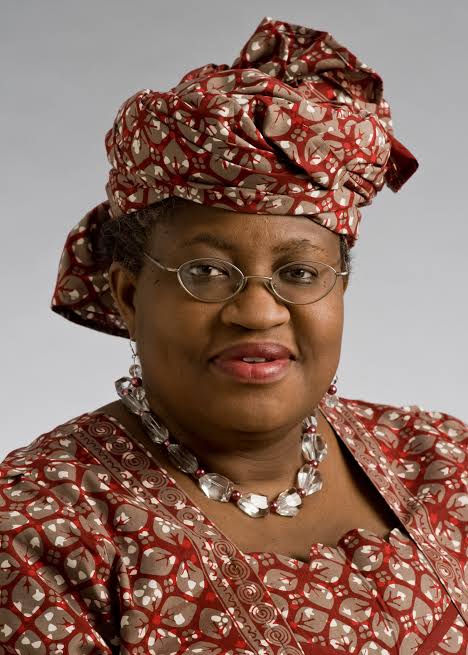
I have lost counts of how many times I imagined myself in an executive office. Ngozi Okonji was one of my models.
So despite my not so strong love for maths I opted for accounting because of my childhood desire to be a boss(well as a child I thought bankers and accountants were cool😂😂)

But! I also wanted to talk! Be on TV, inspire people… When I got to secondary school I always wanted to see YOUths do things right, I was Miss adviser.

It’s amazing how far I have come from my desires and dream as a child till now.
How by bits I have started playing out my dreams.
Clarity isn’t gotten in a day! I stand in awe each day and a lot about what I only thought as a child without even knowing how is coming to play.
My dreams are valid, Rome wasn’t built in a day so I will keep moving.

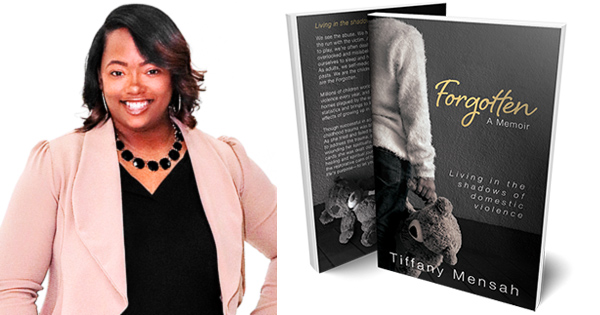
Yes,this is me VICTORIA NWANNA, an ‘accountant by profession’ but a ‘boss lady’ by inherent nature with or without the accounting profession, inspiring others and living purpose. It’s all adding up! Also,I don’t believe I have wasted four years studying accounting it is all instrumental to my build up (although I ‘might’ not use this certificate)Please don’t tell my dad Godwin Nwanna (hahaha) My childhood dreams and plays is all turning out for real. In my book Life’s colour I shared some practical steps I took in turning my dreams to reality https://thevictorianwanna.com/shop/

GET UP YOUTH AFRICA and Life As An Executive Director 

Get Up Youth Africa is a non-profit youth organisation focused on building a generation of changemakers and African leaders who would champion sustainable growth in Africa. Via our three-fold mandate (to Inspire, Ignite Imagination and Provoke Right Action for sustainable nation building), we are establishing avenues for young people to proactively engage in personal and community development to fight unemployment through Quality Education (SDG4), create a positive environment for Decent Work and Economic Growth (SDG8) and End Poverty (SDG1).

We have executed several projects, the project pad a girl, our girl child empowerment where we trained over 1500 young girls on purpose passion, sex education and financial literacy. We have also taught 700 of them on digital skills in partnership with girl lead Africa and other facilitators in Benin City. We launched the skill Up Academy Last year where we empowered over 700 youths in relevant digital skills like website design, presentation and communication, brand communication, project management and 12 more skills, we partnered with facebook and JCI. Recently we launched our secondary school tour Not Too Young To Make Sense project -This programme is committed to crusading and championing self and purpose discovery, intentional career choices. It is designed to provide the teenagers with the knowledge, skills and network required to effectively lead their lives at young age through our mentorship, career fair,discussion sessions and distribution of books(personal development, business and career books). We cannot afford to allow these kids to be kicked (by whatever reason) into becoming the adults they won’t be proud of so we arm them with the right war tools now for life’s battle.

As A Professional Master Of Ceremony 

Our event is as good as your host. Naturally I am energetic and people wonder how I take on a lot but my skill and experience as an MC has also helped me in achieving certain results.

 My Expectations.

I expect the older generation to create a conducive environment for growth, there is no competition. If the youths are not properly allowed to grow in years from now when the older generations are no longer on the scene what will sustain our dear nation?
Also according to Alvin Toffler ‘For society to attempt to solve its desperate problems without the full participation of even very young people is imbecile.”
I expect that brands increase the active participation and partnership with young people. The more comprehensively brands work with us as service partners, the more we all increase our public value to the entire community because Nigeria need all the energy, brains, imagination and talent that young people can bring to bear down on our difficulties. 

Challenges As A Youth Driver.

A lot of challenges and one major challenge is our value system especially in this part of the world.
It is disheartening that many times youth developmental projects lack funding while heavy funding goes into supporting a brand that sells short of decency and the values we should upload as a nation. I grew up to this fact, hardly do we have good sponsors for value adding events or projects. In my university days huge sum are spent on beauty pageantry and all the sort but hardly on conferences. What we are thereby communicating is that ‘we are ‘only’ interested in the financial returns than the investment on good values and this has affected so many aspects of our lives as a society.
Also I have heard many people say we aren’t loud enough and while sometimes it is important to put our work out there, I personally think it changes the essence of what we stand for if all I am committed to doing is ensuring I am ‘loud’ enough for awards, recognition etc. By loud I mean just vanity metrics. My point is this, while it is great to invest in a good PR when that becomes the focus of all that we do we truly lose the meaning in the long run.

Plans About Unemployment through Skill Up Academy 

It absolutely makes sense to skill up. In present days emphasis is laid on performance not just certificate. We are interested in your ability to do, not just in saying you know and this is where skilling up comes in. Our educational system is faulty to an extent, real life skills and even practical relevant skills are not taught but it is our responsibility as youths to take charge of our life and create what we want.
My coach always says your competition isn’t your neighbours or village person but global. If we must stand tall in the global stage then we must level up in terms of relevant 21st century skills.

I always ask the youths I have been honoured to speak with, What skills do you have that you can be paid for?
What skills do you have that can upscale your business? What skills do you have that can be an extra source of income?What skills do you have that can add value to your employee? What skill do you have that can make you a better person and extra buck of money?
The challenges just like any worthy movement is real. One major challenge is getting to partner with organisations that can provide job(full time or contract based) opportunities to our students to use the skills learnt. We also are running on a snail pace instead of on a jet speed because we do not have the support from many yet. Most of our projects are self funded, which isn’t really sustainable in the long run. Project that are focused on human capital development is really capital intensive.
Despite the seeming challenge, Get Up Youth Africa in line with the SDG 8 aims at promoting development-oriented projects that support productive activities, decent job creation, entrepreneurship, creativity and innovation, and encourage the formalization and growth of micro-, small- and medium-sized enterprises.
We are ready to take immediate and effective measure towards dealing with unemployment. Step by step we will get there. We refuse to allow the process mapping cripple our present efforts however little.

The consequences of high unemployment rate in Nigeria affects each and everyone of us as members of the Nigerian Society. The rate of crime…

This is a fight we are interested in engaging in at Get Up Youth Africa and we do hope more people join us in this fight.

As a two time Amazon bestselling author, I want you to know this
Don’t be in a hurry to just blow focus more on growing than blowing, growth is sustainable, ‘blowing’ is fickle. Commit to Process!

Would I consider a Senatorial/ House of Rep position 

I have always been ‘interested’ in politics as a child, and I just have this special love for my country,I want us to get this right ..
But, my involvement in politics so far hasn’t been an active one in terms of taking ‘positions’. I want to be a leader in my own right who influences certain decisions for the good of my country but I am not sure yet if it is via the active political platform.

As a Woman of Rubies
First of all I appreciate this platform for celebrating, inspiring and being a sounding board to many women.
I am a woman of rubies because I understand that I was not created as an experiment,I was not created as a test to see if I would function/work properly or not. The moment I realised who I am the game changed, I am a detail oriented being creating with every specificity only I possess and this has empowered my many actions. I am committed to being the best version of myself per time and act with the conciousness that lives are connected to me, my failure to raise and live my beet best is and hindrance to those lives. So this isn’t just about Victoria, but the generation tied to my existence.

5 women who inspire me to be better and why?
Udo Okonjo. She has built a business…a successful one, is committed to investing in others as well and her relationship with God remaining unshaken. I am glad to know a successful woman can balance it all…I actually believe in having it all.

Esther Ijewere…she is fierce in a good way! She is the definition of support and even though I really don’t know any toxic person in my corner I am aware there are lots of them out there, having a woman who doesn’t hold back in helping is really commendable.

Dr Yolanda(Aunt Landa) for a long time right from my child hood this woman was my woman crush back to back. Her outreaches are amazing , she is in fact love personified! She daily shows that love is an action word. To think of it now, maybe this unconciously influenced my community actions.

Oprah Winifred and Michelle Obama. No way would I leave them out of this hahaha. Sweetly enough we are January born and I look forward to hosting them to a diner event sometime in the future(January). These women are epitome of strength and more, they operate at a dimension I marvel at and this all the more makes my dreams look possible and valid! If they can grow into a delight we all applaud I sure can too. I shouldn’t be the one to say this but allow me toot my own…Let’s watch out for Victoria Nwanna.

Final word for young female change makers 
I know while starting out it could be overwhelming trying to balance a lot and prove a point, the need to always do is heavy. Hello hero, learn to pull down your mountains one step at a time. Be careful of analysis paralysis, yes drafting out a full plan is great but sometimes you can not see the next turn until you make the move. It is also important to understand the place of being and not just doing (Low current no dey carry iron). You can’t give what you don’t have, grow, learn, volunteer. You can be a change maker not necessarily by starting out your NGO, sometimes by working with someone’s vision too you are part of the solution. It is an honorable thing to be a midwife birthing others babies and so the title of executive director or CEO shouldn’t be the motivation. Be careful not to be the problem you are trying to solve for others. In this journey called life it is you and your assignment, no one before you or after you. Finally God has left the creation process to you, you have been given the power to create the reality you want on your life. Life is by design not fate…live as such god! You are the real deal…unapologetically so.

Further information 

Get Up Youth Africa is open to collaboration, partners and sponsors for our projects. We are dealing with the seeds (Teenagers and Youths) of our country and so investment must be made in their lives. We are planning skill up Academy again but this time a physical one and this would cost a lot financially and getting experts. We trust that you can come in and help on skilling up the youths of our dear country.
www.thevictorianwanna.com
getupyouthmovement@gmail.com