Author

Women of Rubies

Browsing

Take it or leave it, technology is here to stay – forever and ever. As the world changes, humans evolve and technology advances, there’s always a need to be innovative and explore the many opportunities technology offers us.

Technology in Nigeria today has gone beyond torchlight phones and coloured televisions, we can (almost) explore the world through our mobile devices. Thus, it is important for everyone to not only be abreast of new technological innovations, but to be able to harness the immeasurable potential of technology.

Contrary to many people’s belief, the tech space is not for men only. There are women who have gone beyond using technology for themselves alone to empowering more people in the tech space – and women (and people) in general – and changing the face of technology one step at a time.

Juliet Ehimuan-Chiazor

Juliet Ehimuan is the Country Manager of Google in Nigeria. Often called Nigeria’s ‘Queen of Technology’, she is passionate about bringing affordable internet access to Nigeria and also increasing the participation of women in technology. She previously worked with Microsoft in the UK and also Shell Petroleum Development Corporation. Juliet is the founder of Beyond Limits Africa, an initiative geared at mentoring young women to achieve success.

For Juliet, knowing your strengths and knowing how you operate is very important. She says: “…some people are night people, when everybody has gone to sleep and its all quiet, that’s when you do your best work, right? So it’s important to understand your patterns in that way. In your day to day life as well, make sure that you’re able to leverage opportunities to be productive.”

Damilola Anwo-Ade

Damilola is the managing partner of Sprout Consulting and the founder of CodeIT – a platform that mentors the next generation of coders, including young women. Damilola strongly believes in encouraging and empowering young girls to study in science and technology areas. She was honored by the American embassy in Nigeria in 2017 for her contribution to technological education in Nigeria.

Focused on driving effective Educational and social impact-driven Solutions as well as work to improve the structure and efficiency of IT systems in education-focused organizations.

Nkem Okocha

Nkem Okocha is the boss! A former banker, Nkem is the founder of Mama moni, a social enterprise and Fintech startup that empowers women with microloans and free financial and vocational skills training.

Through her Mama moni platform, Nkem is changing the narrative of Nigerian women who struggle to secure investment, loan, or do not have any vocational training.

Nkem is very passionate about lifting women out of poverty and her company aims to break the cycle of poverty in Nigeria. The startup has been able to impact the lives of more than five thousand low-income women in rural communities across Lagos. Nkem is an alumnus of the Tony Elumelu Foundation Entrepreneurship Programme and the Young African Leaders Initiative, as well as a LEAP Africa 2016 Social Innovator.

Ire Aderinokun 

Ire Aderinokun is a self-taught Frontend Developer and User Interface Designer from Lagos, Nigeria. She is currently the co-founder, COO, and VP Engineering of BuyCoins (YC S2018), a cryptocurrency exchange for Africa, and previously worked with eyeo, the company behind products like Adblock Plus and Flattr Plus, building open-source software to make a better internet.

Ire is a Google Expert, specializing in the core front-end technologies HTML, CSS, and Javascript, but is passionate about all aspects of technology.

Ire is giving back to the society through her blog; she has a mailing list of almost 3,000 subscribers on her blog and has written over 100 articles on topics related to tech. She also shares her knowledge by speaking at conferences around Africa and the world.

She organizes Frontstack, a conference for front-end engineering in Nigeria and started a small scholarship program to sponsor Nigerian women to take a Udacity Nanodegree in a technology-related field of their choice. One of her many dreams is to “build up the technical knowledge of women in technology”.

Funke Opeke

Funke Opeke is the Founder and CEO of MainOne.

After 20 years of working in U.S. telecoms, Funke Opeke returned to Nigeria to ‘correct the country’s connectivity problems’. The former Verizon executive joined public telecoms company NITEL and learned satellites were just part of the problem. So in 2008, she turned her engineer’s eye towards the ocean, raised $240 million in funding and laid 4,400 miles of fibre optic cable from Nigeria to Portugal. The big business quickly followed; online banking, booking services, and retail websites helped build what is now Africa’s biggest economy. Nigeria’s internet presence, once associated mostly with scams, is now a growing space for international business opportunities. It’s a change for which Opeke is often credited.

She obtained a first degree in Electrical Engineering from Obafemi Awolowo University, Ile-Ife Nigeria and a Master’s degree in Electrical Engineering from Columbia University, New York.

***

We are so proud of these women and every other Nigerian woman doing amazingly well in their various fields. So do you know other women doing amazingly well in tech? Go ahead and share their names.

Photo Creditinstagram.com/okocha.nkem | instagram.com/ire.ade | SproutDigital.xyz |

In 2015 Temie Giwa-Tibosun was revealed in Nigeria with the creation of LifeBank, a platform that supplies Nigerian health centers with blood. This Nigerian entrepreneur wants to save lives. And to achieve its goal, it has relied on technology to improve access to blood transfusions in Nigeria.

LifeBank works with blood banks, hospitals and blood donors. Because Temie Giwa-Tubosun would at all costs want to ensure a better availability of blood to save lives.

After her training in the United States where she studied at the University of Minnesota, the young entrepreneur made the decision to return to her country to make a difference in the development of her country. She puts her know-how at the disposal of her compatriots. It is by working with a non-governmental organization that she noticed the lack of blood in the country’s hospitals. The problem is much more common in poor communities.

Childbirth, accidents and other situations are poorly managed due to lack of blood. In addition to this, in his report, the absence of an organization that allows to store the blood banks according to blood groups and protect them in good conditions.

For the last three years, LifeBank has been helping hospitals better understand the sources of blood, oxygen and vaccines. Then the platform team takes care of the delivery. Today, LifeBank has about 40 blood banks.

To be effective and respond to a concrete and urgent request. “We have cars and motorbikes to avoid traffic jams. We can deliver in less than an hour, “she says. To ensure the safety of boxes that contain blood, there is Bluetooth locking system. A real innovation.

To mark the success, LifeBank will continue to educate people about the importance of blood donation. Every year she organizes blood donation campaigns in the country. These campaigns take place at least four times each year and can supply the startups’ blood stores. The platform already has more than 5,000 volunteer blood donors.

Since 2015, LifeBank has delivered nearly 10,000 units of blood. The platform collaborates with a hundred hospitals in the country. Beyond Lagos the capital, the startup intends to expand its activities in other cities.

Source : WomenAfrica

Elizabeth Amoaa was born with a rare condition: two vaginas, two cervixes and two wombs. She only got to know five years after the birth of her daughter.

Amoaa in 2015 was diagnosed with uterus didelphys. Uterus didelphys, or “double uterus,” occurs during fetal development, when the two tubes that normally form one uterus instead become two separate structures, according to the Mayo Clinic.

A double uterus may have one cervix that opens into one vagina, or each separate uterine cavity may have an individual cervix and vagina, leaving a woman with two vaginas, according to Health.com.

It’s entirely possible for women with a double uterus to carry a baby to term. However, the condition does come with an increased risk of miscarriage or premature labor per Health Line.

Previously diagnosed with uterine fibroids, doctors told her she was infertile. Amoaa, however, went on to give birth to her daughter Rashley who’s now nine. Uterine fibroids are benign tumors that originate in the uterus (womb). Although they are composed of the same smooth muscle fibers as the uterine wall (myometrium), they are much denser than normal myometrium. 

Amoaa’s double womb caused excruciating problems throughout her pregnancy – but neither she or her doctors noticed its existence.

Living with two vaginas Elizabeth Amoaa, 36, of Walsall, was finally diagnosed with Uterus Didelphys in 2015 ? five years after her daughter was born.
Picture: Barcroft

“In 2008 when I was diagnosed with uterine fibroids, I was told that conceiving was going to be very difficult for me.

“They told me I was actually infertile, so when I fell pregnant it was a huge surprise [and] it was a challenging pregnancy, I was bleeding throughout, fainting and feeling tired,” Amoaa told Metro.

“They actually thought it was ectopic pregnancy as they didn’t know I have a double womb, and nor did I. I would go to have a scan, which I had to do frequently because of my fibroids, and one minute they would see the baby is in the womb, then the next they could not find the baby.

“Sometimes they were scanning the wrong womb, I had 20 scans and no-one pointed out I had a double womb – because it’s so rare they weren’t looking out for it.”

At some point, doctors suggested that Amoaa terminate the pregnancy but she kicked against it.

Image result for elizabeth amoaa
Picture: Mirror

“They’d say ‘We cannot see the baby, maybe the fibroids are hiding the baby’ and persisted in saying I should have a termination, but my belly was growing and I realized “actually it’s a baby” and I was determined to carry it to birth. The day my daughter was born was a miracle because during the pregnancy it didn’t feel real,” she said.

An MRI scan in 2015 eventually revealed Amoaa’s condition. She had two vaginas, two wombs, and two cervixes. “It was kind of a shock; you want answers to your health but that wasn’t what I was expecting.

“It was new, I had never heard of anyone born with a double womb, then in 2016 they did keyhole surgery and found I also had two cervixes and two vaginas,” she said.

The surgery also revealed that Amoaa had stage 5 endometriosis – a painful disorder where uterine tissue grows outside the uterus – on her bladder, Metro reported.

In 2017, Amoaa was pregnant again but suffered a ‘silent miscarriage’– a miscarriage without bleeding four months into the pregnancy. She had to have a medical abortion and evacuation of the womb to remove the fetus.

Amoaa set up ‘Speciallady’ – an organization dedicated to educating women and young girls on gynecological conditions and menstrual hygiene after the miscarriage.

“I always say that Speciallady is my second baby. I want to be the voice of the voiceless for every woman out there who is going through symptoms like what I went through.

“My condition means that I am a high risk of cervical cancer or ovarian cancer, so I decided I wanted to live out my dreams,” said Amoaa who is originally from Ghana, but moved to the UK from France in 2003.

She was in Ghana recently to create awareness of gynecological issues.


Source: FacetoFaceAfrica 

Lupus or SLE – Systemic Lupus Erythematous is an autoimmune disease in which a person’s immune system attacks its own body’s tissue, with symptoms and severity varying from patient to patient.

In simple terms your immune system is doing exactly what it is not supposed to do; which can cause disease of the skin, heart, lungs, kidneys, joints and nervous system. 90% of Lupus patients are women.

Although the disease can affect anybody, 90% of lupus patients are women between the ages of 14 – 45 years-old. For some, it’s life-threatening and for others, it’s entirely manageable.

Unfortunately, There is no known cause of Lupus and also no cure. The only way to manage it is through medication and maintaining a healthy lifestyle.

The symptoms vary from person to person but here are 9 common symptoms every woman can recognize easily.

NB: Here are some symptom, not all.

1. Joint swelling and pain
Joint pains and joint swelling and stiffness in the morning are all classic signs of lupus. It most commonly presents in the wrists, knuckles, and fingers. Swelling can also come and go with lupus and doesn’t get progressively worse it tends to occur more in younger patients.

2. Shortness of Breath or Chest Pain
There are manifestations of lupus where the disease attacks the lining of the lungs, causing fluid to leak out and surround the lungs.

This can make it feel painful to breathe. “In some cases, that same process can occur around the lining of the heart, which is called pericarditis,” she adds.

3.Skin rashes and photosensitivity
Lupus is sometimes marked by a distinctive “butterfly rash” forming over the bridge of the nose and cheeks, which is exacerbated by sun exposure.

4. Hair loss
Lupus also causes women to lose their hair especially when combing. It can also cause sores in the scalp and lead to baldness. If you present with this symptom, you should also have your thyroid evaluated because hair loss is a classic symptom of hypothyroidism.

5. Ulcers of the mouth and nose
Unlike typical sores that develop on the sides of the mouth or gums, ulcers triggered by lupus usually develop on the roof of the mouth and are painless. Lupus-related ulcers can also appear inside the nose.

Curated from WomenAfrica

Growing up in Lagos, Nigeria, my mother’s hair salon housed many vivid memories. I recall how my eyes would tear up from the sting of menthol as I greased scalps. I remember my arms cramping from prepping hair extensions, or worse, undoing micro braids. (This was the 1990s. These days, we are more into Peruvian weaves, wigs, and crochet braids.)

I also remember eavesdropping on women swapping recommendations for skin lightening products. Some women gave directions to beauticians who were known for mixing special creams. Others would exchange homemade concoctions, like how combining certain products with moisturizer could mitigate the harshness of the chemicals, or how a certain egg-based shampoo made for effective lightening results. Sometimes code words like skin toning, brightening, or glowing would be used in place of the pejorative “bleaching.”

Thinking back, the question “what are you using?” was a common refrain in my youth.

Personally, I didn’t feel like I needed to be lighter, but I certainly didn’t want to get darker. Like so many Nigerian girls and women, I found myself avoiding the sun as much as I could, a habit that continued into my early adulthood. My older sister is very light skinned, and growing up, it was palpable how both men and women fawned over her. Somewhere in the depths of my subconscious, I too had equated lighter skin tone with beauty.

As I entered my early 20s, I began to interrogate beauty standards and those ideals started to lose their power. But still, despite all the work I’ve done to accept my natural color, when I walk into a salon to get my eyebrows waxed, someone inevitably recommends a product to, as they put it, “heighten my glow.”

Today, the global skin lightening industry is estimated to be in the multibillion dollar range. In Africa, Nigeria is the largest consumer of skin lightening products. While there is no substantial data on the use of skin lightening products around the world, a World Health Organization report claims that 77 percent of Nigerian women use them on a regular basis. Countries like Togo, South Africa, and Senegal are not lagging too far behind.

Skin lightening, however, is not limited to Africa. In 2017, according to Future Market Insights, Asia-Pacific made up more than half of the global market for skin lightening products, with China accounting for about 40 percent of sales, Japan 21 percent, and Korea 18 percent.

In Africa, there is no documented history of when skin lightening took off, but Yaba Blay, who teaches black body politics and gender politics at North Carolina Central University, believes that it began as African countries gained their independence.

In a 2018 interview with the online publication Byrdie, Blay says that white women have historically used their whiteness as a way to communicate purity. This belief was exported to Africa, and around the time of independence, skin lightening began “exploding.”

Television host and actress Folu Ogunkeye has experienced her share of rejection when auditioning for film and television roles as a dark-skinned woman. “What I have found in Nigeria is that leading roles are not readily available for dark-skinned actresses,” she explains. “Initially I had simply assumed that I wasn’t suited for the particular role for which I had auditioned, but then each time, the role was given to a lighter-skinned contemporary. After discussions behind the scenes with industry experts, it has been said outright that certain leading roles are simply not given to darker-skinned actresses because executives do not believe that audiences [want to] see darker women in romantic or leading lady roles.”

One of the seemingly oxymoronic aspects of skin lightening in Nigeria is the sense of shame and denial attached to using these products, particularly among elite women.

A few African countries, like Kenya and Ghana, have attempted a crackdown on the importation and sale of certain skin lightening products, especially those containing chemicals like hydroquinone and mercury. More recently, Rwanda enforced a nationwide ban on skin bleaching products, leading to authorities removing creams and soaps from shelves across the country.

Colorism is a complex and loaded notion that requires re-examining our cultural norms of beauty. This sort of long-term educational approach will take a lot of time and effort. But I think there is hope.

Just in the same way that the natural hair movement caused a decline in the sale of chemical hair relaxers, forcing beauty companies to create products for natural hair, or how black YouTubers forced the makeup industry to rethink its products and marketing, the same can happen to the skin lightening industry.

With education and awareness campaigns and a deliberate move to broaden the spectrum of the skin tones that we see on our television screens and billboards, the needle on colorism will eventually shift. However, while we wait for that change to happen, we need strict regulations to ensure the safety of skin products being sold in stores across the continent.

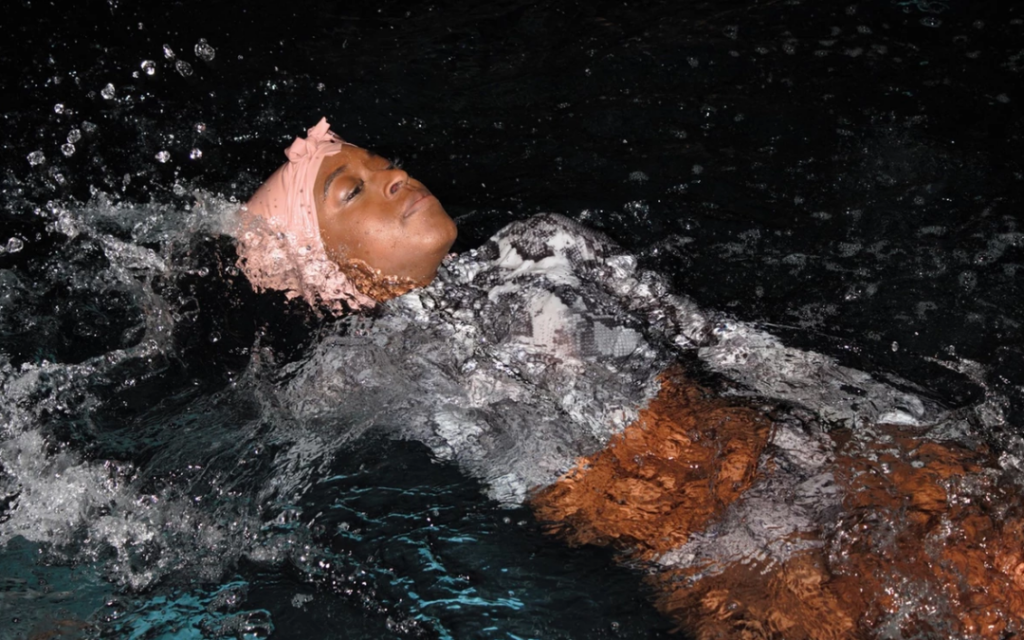
Now in my 30s, I am surprisingly asked about my skin regimen despite sporting a heavy tan from taking on swimming as a new hobby. I think this is because Nigerian’s perception of what it considered beautiful skin is becoming more expansive, and there is an increased awareness that beauty isn’t monolithic.

Recent shifts in how we see beauty such as the body positivity and natural hair movements as well as dark-skinned, Oscar-winning Kenyan actress Lupita Nyong’o becoming ambassador for French luxury cosmetics house Lancôme, are contributing to our gradual redefining of beauty. My hope is that one day in the near future, no woman in Nigeria will feel she has to lighten her skin to feel beautiful or improve her odds of success in life.

Source: WomanAfrica

Mary Abye Ombugadu is the very first female pilot from Nasarawa State, North-Central Nigeria.

In a chat with Vanguard, Mary speaks on her life as a pilot, working in a male-dominated field, among other issues.

“I like to say flying chose or found me. Growing up and watching my father have a remarkable career as an engineer, all I wanted to be was an engineer”, she said.

She got trained at the Nigerian College of Aviation Technology, Zaria, Kaduna State. She also had further training in the Finnish Aviation Academy, Finland; Flight Safety in the USA; South Africa and CAE in the UK.

“I had wanted to apply for an engineering course when my mother picked up my form from the Aviation College but because there was no engineering course selection exercise scheduled at the time, I was advised to try the Standard Pilot Course exam and I did.”

Interestingly, she had an exciting training “I was going into something I hadn’t dreamed of but the opportunity availed itself and I caught the flying dream right after resuming as a flying student. I made up my mind to give it my all and excel.”

“There was no bias whatsoever. We all wore the same uniform, black pants, white shirts, black ties, and the school provided the same schoolbags. We were given equal opportunity and I didn’t feel less simply because I am female as much as there were more males than females. Coming into the industry fresh from school.

” I didn’t know what to expect but all the men I have come across so far are encouraging, supportive and I am grateful. I see everyone at work first as a colleague whom I need to work with to achieve a common goal, irrespective of gender. There may be conflict of interest at some point and that comes with living and sharing the world with other humans.

“Although, Mary experienced a low point like most graduate when she needed employment but never gave up. “Low point I remember was after I graduated, and was told at a job interview that I didn’t have the minimum experience required for their kind of operation, and I wondered “how do I get any experience if you do not employ me?” That did not deter me, I kept applying to airlines and general aviation flyers until I got my first job.

A typical day of work for her involve showing up ready and fit for the day. “You show up ready and fit, report at the operations control center where your flight dispatcher gives you all relevant information pertaining your flight, from weather to serviceability of your aircraft, to any route changes, and gives you a briefing pack containing all the paperwork.”

“The captain briefs the entire team also. You then proceed to your aircraft, do your external and internal checks; set up the aircraft and ensure the cabin is comfortable and ready. Checks are done by professional cabin crew.
You call for boarding of your esteemed passengers, fly the aircraft safely and efficiently from point A to point B, and repeat again until you have completed your assigned flights for the day,” said Mary.

To quit flying is something she wouldn’t do because, she loves it so much.

“Since the first day I started line flying in school, I told myself there is no going back. Some of the flight training exercises were tougher than others but we had a chance to repeat before moving onto the next.
I have never felt like quitting. Thankfully, my instructor, Instructor Shettima Abba Jato, was very kind and patient.”

“I have come to love and enjoy flying, it is not just a job but a way of life for me. I intend flying until retirement. I suppose my ever-growing passion for what I do has kept me going.”

Mary believes every young woman has a world full of opportunities before them and can achieve whatever they want because they really can.

“There are different career opportunities in the aviation industry for pilots, from airline to general aviation. After your initial flight training, you decide early what you want out of it and go on to have a rewarding and fulfilling career,” she added.

Perpetua and her slave girl Felicitas including four others, were in jail in Carthage in North Africa. The charge against them: They were Christians.

It was around the year 200 AD The Roman emperor Septimus Severus was out against traitors. These Christians showed a dangerous lack of loyalty. They wouldn’t offer incense to the Roman gods even under threat of death.

Historians like Eusebius and Tertullian who lived centuries later helped this ladies to be known.

Perpetua began writing her diary when she and Felicity, along with three others, were arrested for apostasy.

Perpetua is probably the first known female chronicler of Christianity. She was about 22 years old and had recently given birth to a son, and likely new Christian, too–she was actually baptized while in prison. Felicitas, her slave girl, was like a sister to her. And she too was a new mother, giving birth shortly after her arrest.

Three times Perpetua’s father was allowed in to beg her to change her mind. No decent daughter in this patriarchal society would deny her father’s pleas and cause him public disgrace.

The resolve of the two young women and their friends was unshakable. To deny Christ was worse than death. To follow Him was their first loyalty, no matter what the cost. Shortly before her trial, Perpetua received a series of visions from the Lord, reassuring her of his strength and presence.

When the fatal day came, Perpetua and Felicitas left the prison for the arena “joyfully as though they were on their way to heaven,” as the eyewitness account puts it. Before a raging crowd, the Christians were thrown to the wild beasts. A mad heifer charged the women and tossed them, but Perpetua rose and helped Felicitas to her feet. She was ready, even eager, to die for the Lord.

As the Catholic apologist site, New Advent, puts it: “The sufferings of the prison life, the attempts of Perpetua’s father to induce her to apostatize, the vicissitudes of the martyrs before their execution, the visions of Saturus and Perpetua in their dungeons, were all faithfully committed to writing by the last two.”

For their faith, the two were sentenced to death in the most cruel way. They were let into an arena, the scene of ancient bloodsport and along with others, including actual criminals, Perpetua and Felicity had wild animals released against them to battle.

The two women are now considered martyrs of the Catholic church and in commemoration of their faith, the church celebrates a feast every March 7.

Alake Olanike Pelumi is a plus-size model and fashion designer. She speaks about overcoming body-shaming and how tough it can be because the society made her feel she has to be a particular size to be beautiful. She is now in love with her body and flaunting what she’s got.

Pelumi created Curvy Pink, a platform where she inspires and motivates plus size women to love and accept their body and maximize their talents.

She wrote:

My definition of body negative is how people see their self in a negative way, when you don’t like anything about your body, unrealistic way of how you see your body. Body negativity can be from the result of body shaming, feedback about your body from peers,family members and friends etc.

Sign and symptoms of body negativity * obsessive self criticize or study in mirror *frequent comparison of your own body to our people’s body size and shape *envy : the body of a celebrity or some one else in the media.

I usually tell people that media is one the causes of body negativity, when the media portray the kind of beauty and the society feel you have to look a certain way or standard size, Women and young girls are now living in a society where their bodies define who they are. Girls are terrified to gain weight and are continually reminded by the media about various new diet products on the market, and the value in weight loss.

They are also bombarded by countless television shows on plastic surgery and the number of cosmetic surgeries in this country are increasing every year. Women today face impossible images of beauty on a daily basis when they watch television, see a movie, or view a magazine. It is estimated that young girls are exposed to 400 to 600 media images per day.

Solution to body negativity/ways to overcome body negativity
1. Fighting fatism
Learn to accept people of all sizes and shapes, this will help you appreciate your own body. Who are the people you admire, who are your mentors, do they preach body confidence create a list of people you admire that do not have “perfect” bodies. Does their appearance affect how you feel about them? Do you know in 1940’s the women that are consider beautiful women like Marilyn Monroe(size14) and Mae West were full bodied and truly plus-size women but today those beautiful women will be considered over weight, fat. Learn to fight fatism( the discrimination of fat people)
2. accept heredity
Always remember that many part of your body can not be changed, 20 percent of your body can be determine by your genes. While they are some aspect of your body you cannot Change. Learn to accept change and change start with you it is inside of you and it start with self respect, self love and body confidence. So it important to focus on your health more than your size and it is important not to compare your body with your friends, celebrities, family member or media images.
3. Think of your body as a tool. Create an inventory of all the things you can do with it, You know I usually say this all the time, learning to express your self with what you are good at,what you are best at doing it might be fashion, beauty, motivation talks, just express your self with whatever you are best at. I knew I loved fashion and I wanted to be a voice to plus-size women I combine it and created @curvypink.

5. Replace the time you spend criticizing your appearance with more positive, satisfying pursuits.

6. Be your body’s ally and advocate, not its enemy.

7. Have this positive mind that your body is perfect just the way it is.

Don’t let your size keep you from doing things you enjoy( fat is not a disease).


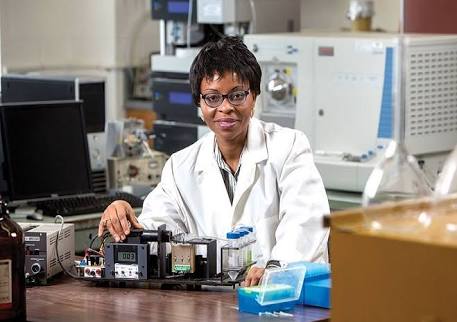
Dr Wendy A. Okolo is the first black woman to obtain a Ph.D. in aerospace engineering from the University of Texas at Arlington and the 2019 winner of the BEYA Global Competitiveness Conference award for the most promising engineer in the United States government.

At only 26 years old, did she became the first black woman to obtain this Ph.D, where she earned both her undergraduate and doctoral degrees.

Today, the 30-year-old is an aeronautics and space administration genius. She works as an aerospace research engineer at the Ames Research Center, a major research centre for the National Aeronautics and Space Administration (NASA) in Silicon Valley.

In her undergraduate she was president of the society of women engineers in the university.

Working in the Control Design and Analysis Branch of the AFRL – Wright Patterson Air Force Base – Okolo was part of the team that flew the world’s fastest manned aircraft, which flew from coast to coast in 67 minutes.

Okolo, then a graduate student, at first felt she had no place working with such a great team.

“I was like I am sure these guys are so smart, what am I going to bring in,” she said.

She found an error in the code in the systems and she fixed it and “that fixed the impostor syndrome for a while,” she was quoted by The Cable.

Image result for Aerospace woman wendy okolo
Wendy Okolo. Pic credit: The Cable

She received her BSc and PhD degrees in aerospace engineering from the university in 2010 and 2015 respectively.

Okolo calls her sisters all-time heroes – who gave her biology and other science lessons through their everyday realities.

She would subsequently excel in school and make tremendous moves during her undergraduate years at the University of Texas in Arlington, where she became the president of the society of women engineers in the university.

Related image
Wendy Okolo. Pic credit: NASA

During this period, she interned at Lockheed Martin working on NASA’s Orion spacecraft and first worked in the requirements management office in systems engineering before moving to the Hatch Mechanisms team in mechanical engineering.

Okolo later worked as a summer researcher at AFRL and has since taken off her career at NASA, a United States agency responsible for the civilian space program, as well as, aeronautics and aerospace research.

Having done research in the area of aircraft formation flight as a fuel-saving method of flight, Okolo has written several publications and is currently a special emphasis programs manager in the Intelligent Systems Division of NASA’s Ames Research Center.

She is working on the System-Wide Safety (SWS) project, where she has led the task of predicting GPS faults in drones, according to The Cable. The talented engineer is further working on a Space Technology Mission Directorate Early Career Initiative (STMD-ECI) project at the Ames Research Center.

Under this role, she “leads the controls team to develop unconventional control techniques for deployable vehicles, to enable precision landing and improve maneuverability during the entry, descent, and landing phases of spaceflight.”

Okolo has also worked with Langley Research Center in Virginia to investigate flight data and facilitate data exchange across and within NASA centres.

She wants other young girls to take an active interest in science technology, engineering and mathematics (STEM).

Click here to read more