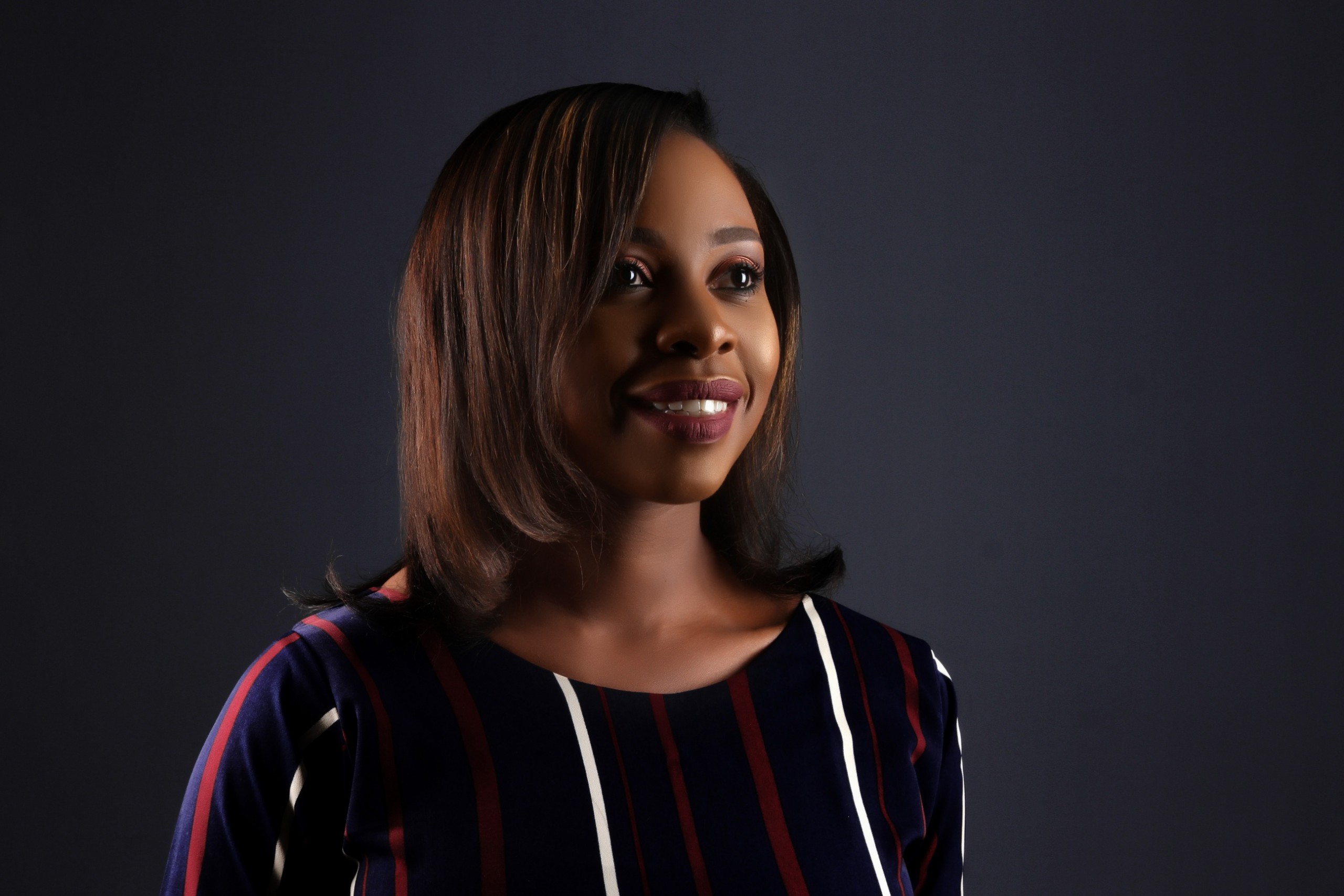
Adun, the daughter of late Nollywood actress, Moji Olaiya
has graduated from Babcock University two years after her mum’s death.
She shared photos from her graduation with the caption, ‘a
degree hotter. I’m grateful to God and my family for helping me come this
far’.Bsc international law and diplomacy
There is no doubt that the advent of social media has brought it with many welcomed and some not so welcomed developments. Social media platforms have revolutionised the way we stay in touch with each other and it has become an integral part of the daily life of many.
While there are many positive roles played by social media, it has many setbacks as recent reports have said that over- or misuse of social media can have a negative impact on self-esteem and mental health, particularly among younger users.
So how and when might social media use be detrimental to our mental wellbeing?
Addiction
One piece of research posited that tweeting or checking emails may be ‘harder to resist than cigarettes and alcohol’. The more social media use becomes an important part of our daily routine, the more we may become too emotionally and psychologically dependent on it. Asides that, addiction to social media affects our everyday relationships, sleep hygiene, or our performance at work or in our studies.
The Fear of Missing Out (FoMO) Factor
Getting into the habit of checking social media at any available time may lead to us checking on impulse. This can lead to us never really switching off or taking time to relax. Many social media users today live in the fear of missing out on an update from a friend or celebrity causing them to constantly check their social media platforms at all available given times.
Comparison
One thing that makes social media fun is that we get to have a glimpse into the lives of others and keep up to date with them. However, being in constant contact with the lives of others can lead to critical comparison leading to feelings to insecurity. We forget that most of what we see on social media platforms are carefully selected and filtered content and we aspire to unrealistic expectations.
Loneliness
One study has suggested that the more frequently you visit social networking sites the more likely you are to feel socially isolated. However, like many of the studies exploring the effects of social media on mental health, it is difficult to pinpoint causation.
Cyberbullying
One major headache of social networking is the issue of cyber or online bullying. 70 percent of young people and 40 percent of adults say that they have experienced some form of cyberbullying. The Royal Society for Public Health says that victims of bullying are more likely to experience depression, anxiety and even self-harm.
Anxiety and depression
One study has reported that simultaneous use of multiple social networking sites led users to be more likely to report feelings of anxiety or depression. Those that already have difficulties with anxiety, problems such as body dysmorphic disorder and low self-esteem issues may be compounded by social media.’
When you look at your kid or your ward or someone younger that you ae somehow responsible for, you want them to look at you are be proud. You always want them to be able to see in you the perfect example. Ask any parent – what drives you? You’d hear stuff like, “I want to give my kids a good example, I want them to look up to me, I want to show them that they can achieve anything they set their minds to” and who wouldn’t want to do or be all these things?
But parents, you need to take some pressure off yourself too. Even Superman needs a little Clark Kent time once in a while – we like to think we can do and be everything for our kids’ but the truth is – we can’t. Guess what? the kids don’t expect us to either.
I remember growing up, my mum was everything rolled into one and some days I just wanted her to rest. I saw what it was doing to her attempting all questions with 5 children every single day. Not easy.
I would understand if she could not be there for me at a time because she just needed to do HER but she never let up and many of you might never let up either. Maybe it’s how we were made – who knows?
Here’s what I want you to take from this –
Every parent wants to be their childs’ hero, they want to be the one their kids look up to but trust me when I tell you it’s better to just be honest with them. Tell the truth, they will understand.
Sometimes as parents we have to make tough decisions – sometimes we need to live away from our families for work or school or whatever. It sucks but telling them the truth helps them understand instead of just cope.
So, you can’t make the school game this week. Say, “Baby, I can’t make your school game on Friday ok – I am really sorry and I promise I’ll try to be at your next one – I’ll get your teacher to record it for me and we’ll watch it together at home, ok?”
That is so much better than promising them you’ll show up when you know – you really won’t be there.
Everyone loves a hero, but no one loves a liar and if you can’t be a hero, at least be honest.
You will disappoint them more by your lies rather than your truths. The truth you tell might hurt for the moment but the pain of lies can last a lifetime.
I was talking with a friend one time who said when he was 5, his parents dropped him off at boarding school and said they’d be right back. The next time he saw them was 3 months later at the end of the school term. I cannot even begin to imagine what that must have felt like. He cried every day for days until it became clear that neither mum nor dad was turning up and so at age 5, he was forced to become a man.
You might say – his parents probably just didn’t know how to explain it to a 5-year old and I think that too but did not-explaining make it easier on the child or on the parents?
Please stop trying to have it all figured out, stop trying to be so strong for them –Tell your kids the truth. Tell them in a way they can understand – they will and will love you for it too. You will demonstrate to them that honesty does not always feel good, but when the choice is presented – you should choose honesty over heroism, always.
You know one of the things I love most about being a parent – it’s that I get to hold right now in my hands what could be a crucial part of shaping a future generation and even if I cannot change the world myself – the idea that I can raise someone who CAN is hands down THE most amazing and terrifying part of being a parent. For me!
We don’t know everything, but we know some things. Let’s do the best we can with the best we know.
Think about how you’re going to choose honesty with your kids even if what you have to tell them is really difficult.
The End.
About Olachi Olatunji
Hey, my name is Olachi and I like to refer to myself as a ‘thinking enthusiast.’
I love a few things, number one of them being learning and number two would be spreading.
I believe in the power of right thinking to transform lives and as a result; I enjoy spreading knowledge, inspiring thinking and encouraging movement.
I however am not a very serious person so please don’t expect to find me in a suit… In a crowd with beating music though, find me somewhere in the middle – moving to the beat and filling my soul with joy.
Choosing the right foundation could be extremely tricky and overwhelming, especially as a makeup beginner or if one decides to try a new product. There is the problem of not just choosing the right shade but also choosing a foundation that matches one’s skin type. The foundation is to help one’s skin look best and not to look like one has layers of makeup on.
Here are 4 steps to choosing the right foundation to give one’s makeup a flawless finish:
Finding the Best Foundation for Your Skin Type
The first and most important step to choosing a foundation is to find one that matches your skin type. Each skin type has a particular type of foundation that matches it and works best for it, hence it prevents having a face that it has makeup layered on it. For oil-free skin prone to breakouts, using a thick foundation or one that has a lot of moisturisers could make the skin even oilier. As such, people with acne prone skin should stay away from heavy pancake foundations that could clog the pores. Instead, use a lightweight foundation with salicylic acid whose formulas can reduce or to some extent, prevent breakouts.
Liquid foundation is precisely the best type of foundation or dry skin. While some mineral based powder foundations can nourish the skin, they typically aren’t the best foundation choice for dry skin. Rich creamy foundations work very well with dry skin. For oily skin, matte foundation is the best fit as they would prevent the makeup from breaking.
Matching one’s complexion and colouring
Figuring one’s skin tone is the first step to matching one’s foundation to one’s complexion. Undertone differs from skin colour or tone, while one’s skin colour might change, the undertone remains the same. Undertones could be warm, cool or neutral. In addition to pigment or colour, foundations also have cool, warm or neutral tones. To effortlessly blend one’s foundations seamlessly, it needs to work with one’s undertone. Foundations often come in three shades; fair, dark and medium. For each shade, there is also a range of undertones; cool, warm and neutral. The goal is to find the right shade with the right undertone.
Ensure to Test out Foundation Shades before Buying
Often, buying foundation online is not advisable especially if one has no idea of one’s foundation shade or trying out a new product. To avoid buying a wrong foundation, it is important to test out different foundation shades before buying or better still, visit stores for recommendations. Foundations could look different in a bottle as opposed to when on the skin. Also, these stores have a wide array of options that allows one to choose from. It is important to do test patches before choosing a foundation shade. However, there are rules to this.
For under-exposed faces, the chest is a good option for selecting the foundation shade. The jawline is one of the most common areas for doing a foundation patch test. This is a good way to ensure the foundation matches one’s neck. Note that the skin on the arm or hands is not a good place for a foundation patch test. This is because, more often than not, the skin on one’s face differs in colour and texture from that of the hand. Also, try to see how well these shades look in natural light as opposed to the fluorescent lighting of most makeup stores. Finally, ask for a second opinion from the makeup professionals manning the counter.
Getting the Right Look The choice of a foundation can make or break a look. Because of this, it is necessary to choose one that matches one’s needs and style. Lightweight water-based liquid foundation gives a luminous glow, an oil-based foundation with moisturiser gives a nice dewy glow and a matte finish can be gotten using matte liquid, matte powder or a mousse foundation. Also, take into consideration the weather and environment, if one’s plans include physical exertion or humid weather, then a water-resistant or sweat-resistant foundation is best. For fluorescent lighting, a foundation with a little warmth is best and for long events, a matte foundation works best.
The first Mnet Face of Africa and renowned supermodel, Oluchi Onweagba-Orlandi is no stranger to the limelight as she found international fame at an early age. Wife, mother, businesswoman and now founder of LuLu, she sat down with GUARDIAN WOMAN to talk about what it means to be woman amongst other things.
What does being a woman mean for you personally? I have always wondered what it truly means to be woman. Not “a woman” but “woman.” You don’t choose to be born female, you literally wake up one day and realise that you are.
Oftentimes it is because growing up especially in Nigeria, there is a constant reminder of what you should do, how you should act, what you should think simply because you are not male.
In narrating his marital issues to me, a man wrote… “I MET my wife during one of my visits to Nigeria. We got married with the understanding that her joining me in the UK is immediate. We soon had a child but, after some time, I noticed her body language towards me wasn’t right, and I asked her questions. Her response was like I shouldn’t bother, that we are fine.
Each time I’m visiting, she never does anything special to woo me. No special hair-do, no makeup, no special food, etc. On several occasions, I’ve asked her if I’m doing anything wrong or if there’s something she needs. Her answers are always “everything is okay.”
The love-making is just zero. She doesn’t show she misses it! Then, I said to myself that she must have been getting it from someone else. So I started looking for clues and secretly investigating.
I managed to get hold of her bank statements. I then noticed a very small amount of money coming into her account from a man! I asked her about it, and she said the man is a family friend from her mother’s side.
During my visit to Nigeria in January, I asked her mum about the man and she said they’re not related. Immediately I returned to the UK, we had a big argument, words were exchanged and both families were insulted. My wife blocked me on all her phone lines and social media platforms. A friend of mine helped me to persuade her to talk to me after awhile.We started talking but she has so much anger in her.
The issue now is that she said she doesn’t love me anymore and not joining me in the UK. What should I do? Should I just let her be?
Please note: . Her documents for joining me in the UK are being processed.
. I send money to her on a weekly basis.
. I buy her lots of things whenever I am coming to Nigeria- from mobile phone to underwear.
. I visit two to three times a year.
. I bought her a car even before she learned how to drive.
I wouldn’t know if her anger is because she once saw a chat between me and a lady that I dated in the UK. But, that relationship has long ended.’’
The impact of Western civilisation in Africa is enormous and documented, from culture and religion to political structure. But Africa isn’t a country.
Some societies and tribes, somehow, have remained unaffected by the reach of civilisation and thus making their dressing, custom, traditions and lifestyle uniquely peculiar.
Till date, these tribes in Africa still exist in an uncivilised bubble, maintaining traditions long left behind by the rest of the world and providing a wealth of information for anthropologists seeking to understand the way cultures have developed over the centuries.
Here are the five African tribes unaffected by civilisation:
The Hamer Tribe
Photo The Gridasia
The Hamer are located in south-west Ethiopia and in the Omo valley.
They live in huts and villages and have been able to preserve their unique culture, wherein young men jump over bulls in order to transition into adulthood and women offer themselves to be whipped by men who have recently been initiated.
They are Agro-pastoralists, meaning they grow crops and keep livestock. Many elements of their traditional religion are practised today. For instance, they believe that natural objects such as rocks and trees have spirits.
The Bayaka ‘Pygmy’ Tribe
Photo Magnum Photo
The Bayaka are found in the southwestern Central African Republic and are reported to be constantly dwindling in their numbers.
The reason is that their natural habitat, which is the rainforest, is always under threat from illegal mining, genocide and deforestation.
They call themselves the people of the forest and they are masters at exploiting the resources of their environment. They are hunter-gatherers.
Dogon Tribe
Photo Flickr
The Dogon are an ethnic group living in the central plateau region of Mali. They are believed to be of Egyptian descent who have managed to preserve their culture over the years.
The majority of them live in rocky hills, mountains and plateaus. They are mainly into agriculture, leatherwork and craft.
The Dogon are also famous for their mask dances, wooden sculptures and architecture. Like many African societies, the Dogon are agriculturists, cultivating millet, sorghum, rice, as well as peanuts, onions and tobacco.
The Karo
Photo Behance
With an estimated population of 1,000 to 2,000, the Karo Tribe makes up some of the smallest indigenous groups left in Africa. The ethnic group occupies the Lower Omo Valley in Southern Ethiopia.
The Karo paint their bodies with a mixture of white chalk, yellow mineral rock, iron ore and charcoal to express beauty.
Another symbolic custom practised by this tribe is body scarification, a tradition down to express cultural identity and community status.
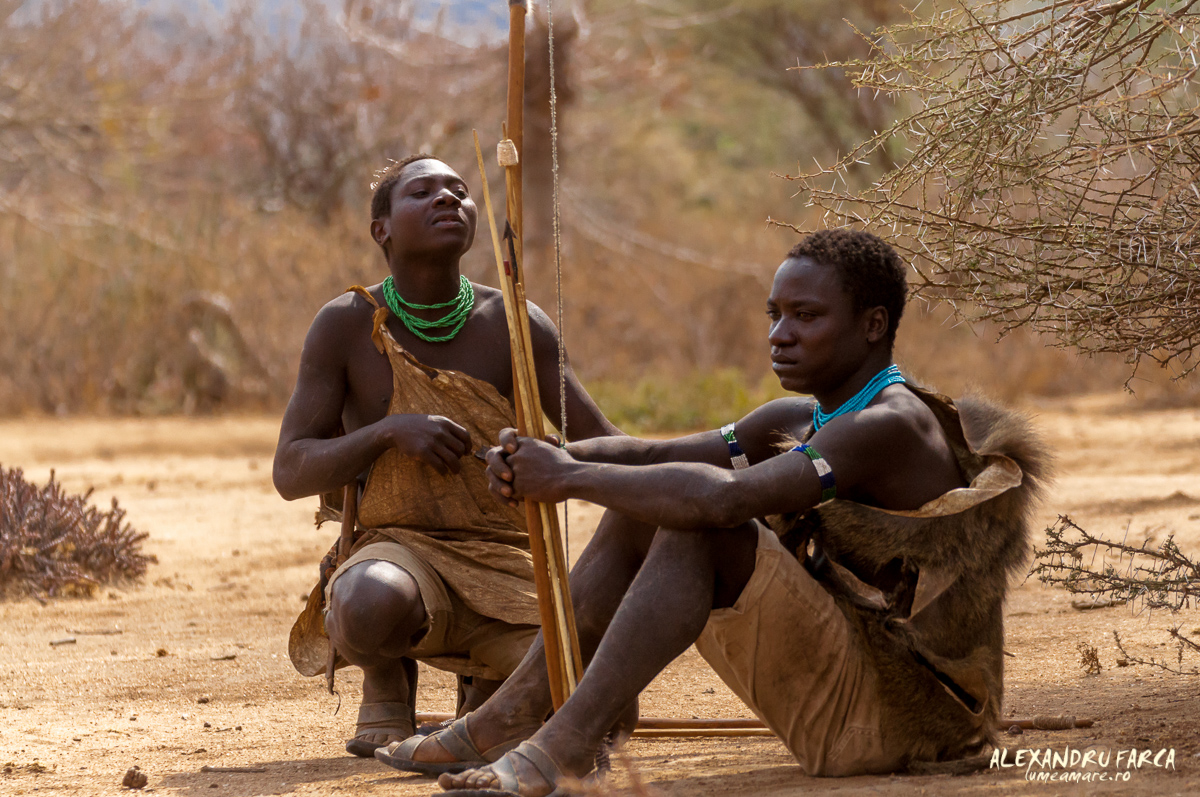
The Hadzabe
Photo Idstudio
The Hadza tribe occupy the shores of Tanzania’s Lake Eyasi in the Great Rift Valley, whose way of life has remained the same for more than 10,000 years. One of the intriguing aspects of the Hadza tribe is their language. They speak a distinctive click language which has led to the belief that they are related to the Khoisan of the Kalahari Desert.
This Tanzanian tribe mainly rely on wild fruits, tubers, and roots for food. They are also avid hunters who use bows and arrows to hunt antelope, buffalos and birds.
Last Friday, Oprah Winfrey paid a visit to West Side High School in Newark, New Jersey to not only surprise the students and staff with a pizza party, but to also give a $500,000 donation for its after school program called “Lights On.”
The program, which was started by the school’s principal Akbar Cook, provides students with a safe place to gather on Friday nights where they can play basketball, video games, shoot pool or practice cheers until 11 p.m. throughout the school year, CNN reports. Over the summer, the program runs three times a week.
In addition to implementing the “Lights On” on program, Principal Cook also installed a laundry room in the school after finding out that students with dirty clothes were being bullied by their peers and, in turn, missing class.
Winfrey posted a video about her visit on Facebook, saying, “When I saw what Principal Akbar Cook was doing for his students at West Side High School in Newark, NJ, I had to come see what it was all about and share some delicious O, That’s Good pizza.”
In a video posted by Cook, Winfrey announced her half a million dollar donation to the school, and added that she wants to encourage the community to “keep doing what you’re doing because what you’re doing is moving in the right direction.”
Cook’s work and influence at his school was first shared on a national platform when he appeared on the Ellen DeGeneres show last September. He tells NJ.com that since his appearance, his school has received gifts of detergent, clothing and toiletries from all over the world.
“It’s crazy man,” said Cook, who also serves as the school’s varsity basketball coach. “I never thought anything like this would happen.”
In March, DeGeneres invited the principal back on her show to further praise the work he’s doing and to give him a $50,000 check for his school.
This past February, after sending Cook a personal letter, Newark’s former mayor and current presidential candidate Sen. Cory Book praised the principal on Twitter, saying, “His tireless work is an inspiration to us all.”
Principal Cook, thank you for making a difference!
A number of people are plagued with mouth odor and they might not be fully aware to what extent it makes people around them uncomfortable.
Bad breath typically originates in the mouth, where bacteria are ever present. When you eat, bits of food get caught in your teeth. Bacteria grow on these bits of food, releasing foul-smelling sulfur compounds.
The most common cause of bad breath is poor dental hygiene. If you don’t brush and floss often, the bacteria in your mouth continue to grow, and a thin film of bacteria known as plaque builds up on your teeth.
Here are a few ways to get rid of bad breath naturally;
1. Parsley
Parsley has a fresh scent and high chlorophyll content which suggests that it can have a deodorizing effect. To use parsley for bad breath, chew on fresh leaves after each meal or buy a parsley dietary supplement
2. Green Tea
Green tea is an effective home remedy for bad breath because it has disinfectant and deodorizing properties that can temporarily freshen the breath. Mint has similar effects, so a cup of green mint tea may be an ideal breath freshener.
3. Fennel and Anise Seeds
Fennel and anise seeds have been used to freshen breath. In parts of India, roasted fennel seeds are still used as mouth fresheners, to cleanse after-dinner breath. They taste sweet and contain aromatic essential oils that give the breath a fresh scent. Fennel and anise seeds can be eaten plain, roasted, or coated with sugar.
4. Yogurt
Yogurt contains healthy bacteria called lactobacillus and these healthy bacteria can help combat bad bacteria in various parts of your body, like your gut. To use yogurt to fight bad breath, have one serving per day of plain, nonfat yogurt.
The number of women of color who own their own businesses rose by 8% last year. This increase is largely due to “poor treatment and the perception of being undervalued in the workplace,” according to a 2017 report by the Federal Reserve Bank of Kansas City. In fact, “a much greater gender and racial pay gap have led women of color to start businesses at a higher rate out of necessity and the need to survive,” the 2018 State of Women-Owned Business Report found.
This is not surprising to me.
If I had to find one word to describe my journey of management and leadership as a black woman, I’d go with “lonely” ― not your typical sad lonely, but more of an alienated lonely. An “I’m literally the only person in the room with this hair texture and this skin color” lonely. An “I’m representing an entire race of people” lonely. How I am perceived matters.
Growing up, I watched the sitcom “Martin” religiously and admired the role that actor Tisha Campbell-Martin played as Gina, who worked as a top marketing executive. As clever and on point as that show was, what it didn’t portray was that, in real life, black female leaders are often one-of-one ― especially in meetings.
It’s really difficult to articulate how it feels to continually be the “only”in a meeting.
I’ve been a black “white-collar” professional since I graduated college in the mid-2000s. I remember the first day of my first real job. My boss walked me around the office and introduced me to my new team and the other employees. Everyone seemed really nice, but what I noticed after returning to my desk was that I hadn’t met a single minority in a leadership role. I knew I wouldn’t stay there long, and I was right. I was out the door and on to the next opportunity in under a year.
I moved into management early on in my career, and by the age of 24, I had staff reporting to me. I was the youngest middle manager at my company. That role opened me up to a bevy of opportunities, including global travel and board meetings — and that’s when it began. I was the “only.” I was not just the only woman, but 98% of the time, I was the only black woman. You know what I learned from those experiences? I learned that discrimination isn’t usually outright or blatant. In fact, it’s often very subtle.
I’ve had people enter conference rooms where I’m sitting, and when they see me, they say, “Maybe I’m in the wrong room,” as if to suggest that if I’m a part of the meeting, it must not be a leadership meeting.
Once, during a leadership retreat abroad, a chief executive pulled me to the side before the committee discussions began and said, “You know, you don’t need to talk during the retreat. You can just listen. Yeah, actively listen. No need for you to contribute.” Mind you, I was the person responsible for setting the strategic direction of the initiative. I was also the person solely responsible for the company’s recent massive growth. And yet, I thought, you don’t want me to talk?
When we’re the only person of our race at a certain level, we feel accomplished — but we also feel alone. It’s kind of like “yay me,” but at the same time, “why just me?”
Years of being the only black woman in the room made me feel visibly invisible. It didn’t matter that I broke sales and revenue records year after year, and it didn’t matter that my performance evaluations read “outstanding” across the board.
There is an unconscious bias that exists in business culture, whether people want to admit it or not. Companies can have all the diversity and inclusion trainings they want, but that doesn’t change the fact that black women (and men) are continually overlooked and discriminated against.
Companies need to realize that relatability is a real thing. Representation is a real thing. So when we’re the only person of our race at a certain level, we feel accomplished — but we also feel alone. It’s kind of like “yay me,” but at the same time, “why just me?”
People don’t really like to talk about race. But it’s there — hovering, always. I’ve sat in meetings where people dismissed my feedback or ideas as not being valuable or worthwhile, only to have someone of another race repeat the same messages or ideas five minutes later to ahas! and applause.
There’s a reason why black women are turning to entrepreneurship, and it’s not because we’re not qualified for management positions in the corporate world. It’s because we’re not seen.
What I’ve learned over the past 15 years is that mentors are vital. It can be a real challenge to go into a workplace day in and day out when you feel ignored or overlooked. Mentors are an invaluable support system for everyone, but especially for women and minorities. We need people to help us navigate our careers and help guide us as we continue to grow. There is a void of African Americans in leadership, and it can be very demoralizing to watch other people who do less advance quicker than we do.
I met my mentor, who was also a black female executive, at a professional development conference. She had turned an idea into a seven-figure business venture after walking away from corporate America five years prior. I’ll never forget the first thing she told me when we met for coffee.
“You will have to work 10 times harder than your white counterparts for recognition,” she said. “You will often question yourself and your worth. You will not receive the same pay. You will get frequent stares and looks. You will be disrespected, both blatantly and subtly. But never let it make you question yourself. Never. Go after every opportunity that presents itself. It will teach you resilience, and as a black woman, you’ll need that a lot.”
I now know to command my seat at the table. Even if they’re given a seat, women of color still need to command our place. Unfortunately, we have to do so diplomatically because minorities, specifically African Americans, are often viewed as hostile or aggressive when we speak up, whereas people of other races are seen as passionate and committed.
“There’s a reason why black women are turning to entrepreneurship, and it’s not because we’re not qualified for management positions in the corporate world. It’s because we’re not seen,” Keli Hammond writes.
I have also learned to create my own support system. Everyone needs allies they can trust, confide in and connect with on a personal level. Because black women are often unfairly stereotyped, it’s important for us to keep positive and supportive energy in our circles.
There’s no getting around the fact that race is going to be an underlying factor in business, and there are some very real barriers to advancement in traditional workforces for women of color. Thankfully, I discovered this early on, and with the help of my mentors, I learned how to advance despite the unfair challenges and stereotypes I’ve faced. Every morning, I remind myself of the most important lesson I’ve learned throughout my career: Although we may feel like others devalue our contributions, we must never devalue ourselves.
Keli Hammond is the author of “Craved: The Secret Sauce to Building a Highly-Successful, Standout Brand” and the CEO of B Classic Marketing & Communications. Learn more about her at KeliHammond.com.