Women of Rubies

Author

Esther Ijewere

Browsing

Nigerians have been and won’t stop representing in diaspora or will they? No! we doubt it. What do you think? Well, as for us, we believe that there are still innumerable feats waiting to be accomplished and achieved by Africans especially Nigerians anywhere they find themselves on planet earth

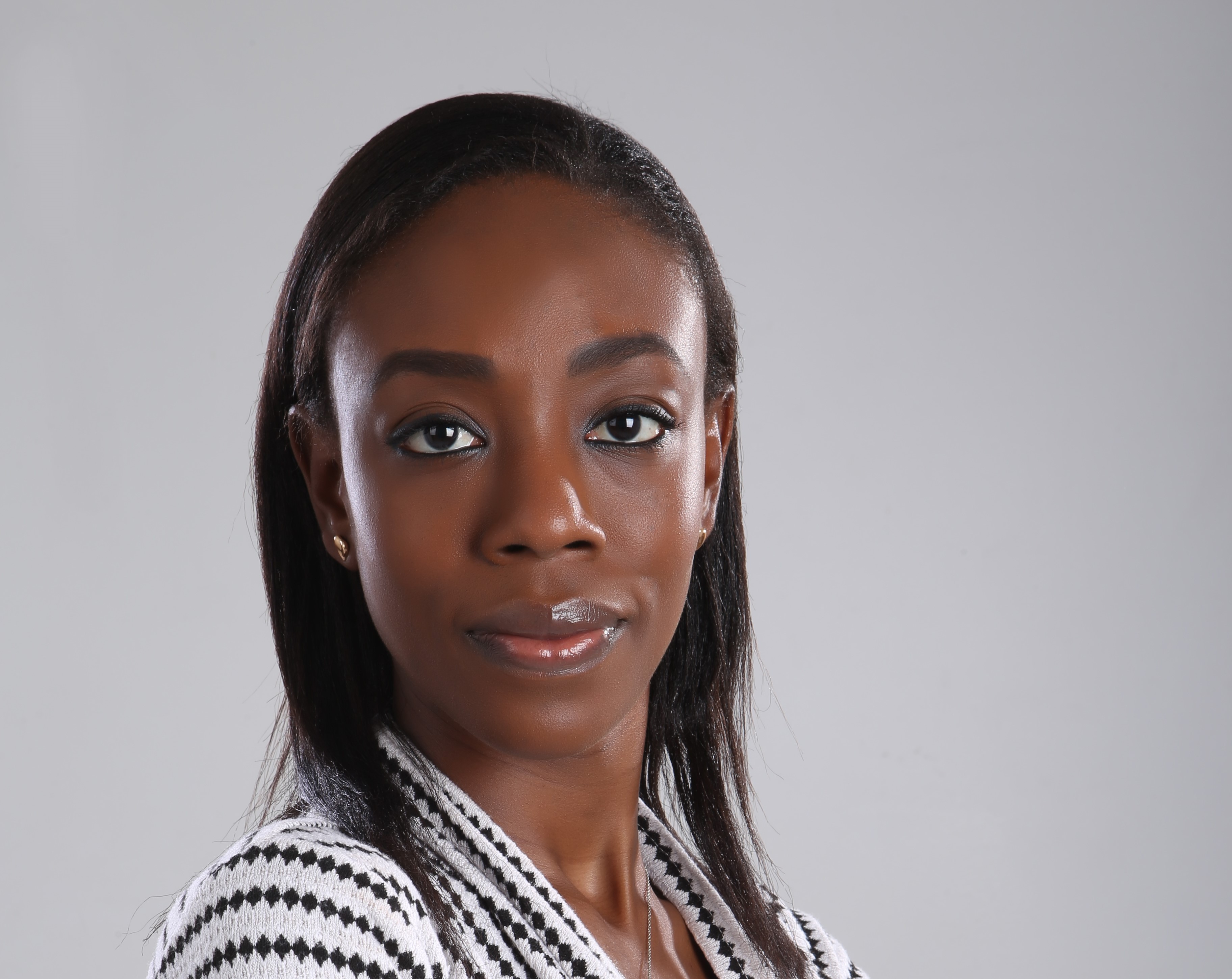
Anita Osariemen Omonuwa from Edo-state has set a record that has never been attained in the 122 years of existence of the University of Reading.

Anita is a triple First class holder from the University of Reading, UK (LLB), University of Birmingham, UK (LLM) and the Nigerian Law School (BL).

At Nigerian Law School, she received several prizes including, the Council of Legal Education Star Prize, best overall performance, best outstanding academic performance, Best Female Student and Best Student in Corporate Law Practice.

Anita also won some other notable prizes which include the Clarks Legal Prize for best performance in Part 2; Equity and Trust, presented by David Rintoul; the Managing Partner, Keith Wright Memorial Prize for best overall performance in Part 2; the Shoosmiths Prize for best overall performance in Part 2; and the Boinime Jackson Lott Foundation Prize.

She’s attractive, charming, delightful, appealing, alluring, prepossessing, lovely, and intelligent girl that every Nigerian Youth should emulate.

Folasade Bamisaye is passionate about empowerment of women and girls, and that’s evident in the impact she’s made in about a decade.

Folasade started impacting her community in 2009, volunteering for organisations working on issues of women and young people’s sexual and reproductive health and rights.

Women and girls in under-served areas around Nigeria are faced with huge challenge of coping with their menstrual period hygienically. Then there is the issue of shame and embarrassment.

Folasade decided to change this. She founded My Period Kit, to provide women and girls with a menstrual hygiene kit which includes sanitary pads, tissue wipes, pantyliners, and disposable, bags an affordable cost, with the goal of keeping young girls in school.

My Period Kit partners with individuals, organisations government agencies, donors, and CBOs to improve menstrual hygiene and well-being of young girls and women of reproductive age and to increase access to an affordable and healthy transition into womanhood.

For women and girls with limited access to running water, My Period Kit developed a sustainable, disposable sanitary pad made from banana and plantain stem fibre called “GreenPads.”

Folasade’s work also involves debunking the myth that menstruation is a taboo or a dirty process.

Folasade is a 2017 Mandela Washington Fellow. In 2018, she was selected as a finalist to represent Nigeria in the $1 million global startup competition, Chivas Venture.

She’s a Monitoring and Evaluation Specialist with the Prime Health Response Initiative and was recently announced as a 2019 Obama Foundation Leaders: Africa participant.

She holds a Bachelor of Education degree from University of Ibadan, and a masters degree in Counsellor Education/School Counselling from the University of Ilorin.

Source: Bellanaija

Determined to help women realise their God-given potentials and live a purpose-driven life, Onyebuchi Madiebo-Solomon, the founder of Ordinary Women Doing Extraordinary Things (OWDET) is touching lives through her non-governmental organisation. With degrees in Law, and International Business and Marketing from Lagos and London respectively, this trained marriage counsellor is also the CEO of BC Madiebo & Company Limited. She sat down with GuardianWoman to talk about what led her into starting a non-profit fighting female mortality in Nigeria, gender equality and how marriages can last in today’s world amongst other issues.


Give us an insight into your background; what led you to start OWDET?

I studied law at the University of Lagos before going on to read international business and marketing at the American Intercontinental University, London. I am the CEO of BC Madiebo & Company Limited, an insurance brokerage firm which I inherited from my father and I run that alongside Ordinary Women Doing Extraordinary Things (OWDET). OWDET, which I started when I was looking for clarity in my own life is basically an organisation dedicated to teaching women to live a life of purpose and one of the things OWDET is focused on doing is building free maternity clinic at grassroots level because Nigeria has the second highest mortality rate in the world. Everyday, babies and mothers die for very trivial reasons like malaria, fake drugs and bad drinking water. We are starting our first clinic, we already have the land to build, which was donated to us and we would soon start the building for the first free maternity clinic.


Why free maternity clinics, what was the inspiration?

It was the Holy Spirit that spoke to me. Initially, when the Holy Spirit spoke about starting something for women, I was going to prisons, doing a prison ministry but the Spirit told me, “this is not what I called you to do. I need you to reach out to women because women do not understand that they have a purpose. I am not calling you to preach or be an evangelist, I am calling you to get women together and help them understand that each of them, whether Christian or Muslim has a purpose.” After this revelation, I started OWDET. We meet four times yearly and talk about living a life of purpose. We also have a book club to encourage women to read as well, we read one book a month and talk about it extensively just to encourage one another.


What type of women do you look out for, who is an OWDET woman?

Every single woman. It doesn’t matter your colour, state, race, tribe or financial standing. Picture a mansion that houses a family with several daughters, amongst them a senator, hairdresser, doctor, teacher and a truant but at the end of every three months, they all come together into this house. As soon as they walk through the doors, the senator sister and the truant are on the same level, calling each other by name and relating freely because they are sisters. I tell all the women, we may not know each other but the moment you walk into our doors, we are all sisters.


Tell us about your growing up years?

I am the last of six children and I think this made me a little stubborn. I grew up as a “single child” because all my siblings were abroad when I arrived and there’s a bit of age difference so I was at home alone with my parents and sort of got away with most things my older siblings would never have dreamt of. Still, my mom was very strict and all I remember is whenever she says “don’t do that,” I would still go ahead and do it and so I was always getting a beating for being mischievous but that didn’t deter me. When I felt I was old enough, I travelled to London on my own and started fending for myself. My parents told me they were going to cut me off if I didn’t come back, but I didn’t mind and insisted on standing on my own feet. I was working on any job that came my way to keep body and soul together. I wasn’t discriminating and was quite hardworking. One time, my friend and I started a car cleaning company; we didn’t have a car to carry our hoover, water and all so we put everything in a bag and drag it to where we need to be. My dad didn’t spoil us and then, the only sure way to get money out of him is to tell him you wanted to buy a book or for your education.

Looking at the country today, would you say Nigerian women have achieved gender equality?

I don’t think we are quite there yet because women are still discriminated against till date in every area in Nigeria. It is a case of what a man can do here, a woman can probably not, but women need to realise that you can do whatever it is you set your mind to do. When I started building, I didn’t know anything about it, all I know was that I wanted to make money from it. So my sister encouraged me because she is good at painting; she would buy paint and paint the inside and outside of our house on her own. Initially I couldn’t read drawings, I would send them to my sister, she would read and teach me and explain; by the time we were finished, I could tell you everything involved in the building. If I can learn it, and I am not the most intelligent woman in the world, if I can then everybody else is capable.

What would you say is the major challenge women of this generation face?

Everybody wants to be somebody without having to do anything. Women today want to drive a Range Rover, go to Dubai, use expensive gadgets and things but they are not ready to put in the work. We want to live a life we can’t afford. You need to put in the work, you need to get rid of certain mindsets, you too can make money and live large, you can do anything you set your mind on doing.

If you were to mentor a woman, what would you tell her?

The first thing I would teach that woman is that she has the ability to be any person or thing she aspires to. Also, you are not better than the next person. My mom used to say you’re not better than the staff that works for you, you are just privileged. Your maid might be smarter than you but you are more privileged. The next step is to learn to believe and not look down on yourself. People look at themselves and say they are poor because their parents are poor. Tell yourself a different story, believe in yourself and start doing the work necessary to break that cycle.

Would you say women have conquered the fear of getting into male-dominated fields?

I personally believe that anything a man can do, a woman can do it better, it is not a cliché. That’s the way I see it. We have not overcome it but I think we are getting there. Women are beginning to understand that they need to make money and are doing what it takes to make it. We are still far from our goal but I think we are getting there. I think to myself, I can do what men normally do and even better than they are doing, this is how I thrive. The average Nigerian woman is a strong woman, God-fearing and takes prides in herself. People look at pride as a bad thing but you have to be proud of yourself for people to take you seriously, believe in you and respect you. African women are so strong; we go through a lot but still get up and keep going.

You have a funny story with regards to how you met your partner…?

(Laughing) Yes, I met my husband through a police officer that I met at the police station when I went to report a case there. My maid stole from me and I went there to report and was attended to by a female officer who is married to my now husband’s uncle. She introduced us and the rest as they say is history. Turns out that incidence was a blessing in disguise. Though it wasn’t love at first sight, spending time with him, doing things together, he grew on me. It also helped that he was very nice and kind and this attracted me to him eventually.

As a marriage counsellor, how can couples safeguard their marriage?

Marriage is not a bad thing. I am a very troublesome person and my husband is the complete opposite of me and I think that’s why we get on well because I’m hot-tempered and he’s not. However, marriage is not easy, it’s a union of two very different people born and raised differently and when you bring them together, there are bound to be problems. However, you need to learn to meet yourselves halfway but you must marry the right person to achieve this. A lot of people these days just get married for flimsy reasons and when they enter, they see things they can’t live it and start looking for escape routes. Before I got married, I dated some men I didn’t really like and people were saying, “marry him, later things would change,” and that’s where the problem starts from. You cannot change anything, what you see before marriage will amplify times 10 after marriage. Ask yourself if you can live with it, it’s very important. Whenever my blood is hot and I am boiling, my husband usually calms me down. There was a man I dated with a temper like mine and people told me to marry him because he is rich, but can you imagine what a union like that would have looked like? Two of us angry with nobody to calm the other down, it wouldn’t have worked. These are some of the things you have to keep in mind; it’s not rocket science.

What are the challenges you have faced and how are you overcoming?

So far, I am funding everything myself because in Nigeria, people find it difficult to give money as they believe you’re going to squander it and I don’t blame them because some crooks have given everyone a bad name. When I started, I didn’t even look for funds, whenever I have money, I simply put it in and do what I can. At the last programme we held, people told me they want to donate because they’ve come a couple of times and noticed I wasn’t asking for anything from them. This was how we got land given to us free of charge. I think until people see you’ll spend their money wisely; they won’t donate to your cause. I tell the people that work with us, if you are not going to live your life purposely, you cannot work with us. If you concentrate on the purpose for which you were created, and you’re focusing on it, you won’t spend your time doing things that you shouldn’t be doing. You need to focus on your purpose. Your purpose alone is huge, if you start honing it on time it’s a lifetime journey, you won’t have time for anything else. That is the way God created us.

Would you say women have been treated fairly in terms of political appointments?

Truth be told, I feel the president has not been fair despite all the promises and assurances given before 2015 and in this term. I don’t think it’s out of spite but what he knows and understands but he can do better.

Would you say women are doing enough to support other women?

No and I think it’s because some women can be unnecessarily selfish. I think they see men exhibiting this behaviour and they want to do the same thing. Almost like a case of if you can’t beat them, join them. I keep telling women around me to do the right thing and they are not listening because they are afraid of “losing our or not fitting in.”

What last words do you want to leave for women?

I just want to tell them to believe in themselves. If you want to dream, dream big and live a life of purpose. Whatever you can dream, you can achieve it.

Source: Guardian
One person’s so-called testimony here was another’s source of nightmare.

I hear people say there are three truths to every story: your truth, the other person’s truth, and the real truth. They say this means they’re all true, but it depends on whose angle of the story you hear.

There’s another saying that I’ve heard often, too, and it is: “There’s only one truth.” This came to mind when I heard the story I’m about to share. Coincidentally, I heard it from both sides.

I met Kema at a breakfast meeting I attended in London. She came to give a testimony to encourage people at the meeting. She explained how she had been trying to get into England for a long time, but kept getting refused a visa at the embassy. Until a relative sponsored her application, so she could work as an overseas domestic worker. She got an education in the process, as they were very kind to her, and now she had been in the UK long enough to start processing her papers for stay.

This miracle, however, was not the subject of the day’s testimony. Along the line, she fell out with the relative on account of them being in the habit of reading her her life story at every infraction. She’s only human and she was young. Also, she wasn’t given a chance to have a life. She had to be on duty 24/7 on a pay that was a joke. It was so bad it was bordering on abuse. She bore it, but kept praying about her situation. Before long, her prayers were answered.

Some friends of the relatives who lived in Nigeria had bought a massive house in the country side. They had the idea to furnish the house and let it out as a studio for films or documentaries. The house thus was fully kitted, and they needed a manager to run it. They thought of Kema, and she was elated. She earned a salary tax free, with no overheads. We were all so thrilled for her.

I bumped into Kema at the salon in Lagos about two years after, and she had another testimony. This time, she related how the family with the house were wicked and stingy people. How she managed the house so well that from them barely getting clients when they started, with her they began to be fully booked. There was even a waitlist. She made them pots of money. But, sometimes, when they didn’t have clients, she would let her friends use the house.

Anyhow, a frenemy or her relative snitched on her to the family, and without giving her a chance to explain they fired her, and even tried to report her to the authorities for deportation. But, ‘small girl, big God’ things, they failed. Can you imagine?

She now has her papers, and can come to Nigeria on holidays sometimes. Isn’t God good all the time?

About three months after this, at a Women’s Conference in Lagos, we broke into small working committee groups. This issue of women supporting women came up, and a lady in my group, let’s call her Lady A, nearly spat at the concept. She explained how she decided to invest in a property in the UK and she set it up to use as a studio. She was able to get a loan from a fund structured for her by her son. There was a TV company that gave her a 12-month lease to use the studio. The agreement stated that they would pay her monthly, so the fund was happy to loan her to do up the place. However, they had an MOU that was the true reflection of their transaction. They didn’t need the studio every month, and they would be able to sublet it to other people when they were not using it. If they could do so for more than the rent, they would split the proceeds with Lady A. She was very happy. Lady A needed a manager, and she wanted a woman and a Christian. She met Kema in church through Kema’s relatives. Kema told her the horror of her situation and she gave her the job. She felt she could trust her to run it properly for her as a woman, fellow Nigerian and a Christian. She felt she would be so grateful she helped her situation, and would value the opportunity. She went back to Nigeria happy.

All Kema had to do was organise the upkeep of the house, and take stock with the clients before and after each show to make sure there was no damage or loss. She also managed the bookings. There was no need nor mention of her looking for clients for the house, Lady A said. After a while, she began getting emails from the TV company about her breaching their understanding, because each time they found a client to rent the studio when they were not using it, Kema would tell them it wasn’t available. They were threatening to pull out of the deal.

Lady A didn’t understand what was going on because she was getting paid, and all the while thought it was coming from the TV studio. When the threatening emails didn’t stop, Lady A went to London.

It was then she found out Kema had been letting the studio out on the side, for more than Lady A was charging, and not letting the TV studio let it as they agreed with Lady A. The TV station thus refused to renew the contract, and without that Lady A could not secure the loan, and the fund wanted their loan back. She almost lost the house and the whole investment. She went after Kema. In trying to fraudulently make a side hustle that she didn’t work for, she had ruined Lady A’s business. Someone who just set out to help another young woman. However, luck struck for Lady A when her son found her an events company who made her the same deal, but better, as they were going to run it themselves.

When this happened, she decided to forgive Kema and leave her to her own fate. I was also shocked to find out that apart from the fact that no frenemy or relative snitched on Kema, Lady A was not even aware Kema had no papers at the time, talk less of her processing any.

Lady A said she has now vowed never to help on the basis of gender or race or religion, as it almost cost her and her family dearly. It took a lot for me not to mention that I knew Kema and state her version of things, as I knew that would be like picking at a sore. I just made a note to self to be mindful about other people’s testimonies and comparing my life or my luck or my miracles or lack of for that matter.

One person’s so-called testimony here was another’s source of nightmare.

Funkola is the Co-founder and CEO at DIYlaw – a legal technology company committed to empowering Nigerian entrepreneurs through the provision of accessible and affordable legal services and free legal and business resources, Funkola is also the Corporate-Commercial and Intellectual Property lead at The Longe Practice LP (TLP), an entrepreneur focused law practice. Funkola is able to identify with her clients having been involved in various entrepreneurial pursuits, including founding a grocery e-commerce business.

She has a background in commercial & corporate law firm practice with years of in-house counsel experience in investment banking. Funkola’s legal experience prior to founding TLP and DIYlaw cuts across capital markets, investment advisory, compliance and securities.

Funkola has a Masters in Finance and Financial Law from the School of Oriental & African Studies, University of London in addition to her LLB from the Lagos State University and BL from the Nigerian Law School.

In 2018, Funkola represented DIYLaw and Nigeria at Pitch@Palace Commonwealth which took place during the Commonwealth Heads of Government Meeting in London. She pitched to an audience which included Prince Andrew, The Duke of York and various Heads of Government of Commonwealth countries and emerged one of the winners.

In May 2019, she led the DIYLaw team to the United Nations and presented and exhibited at several different forums during the Science, Technology and Innovation Forum. She is an Obama Leader, having been chosen as a 2019 Obama Africa Leader and also an Innovating Justice Fellow of The Hague Institute for the Innovation of Law (HiiL). In her words “Entrepreneurship is the most sustainable solution to unemployment”

She shares her inspiring story and some legal nuggets with me in this interview

Growing Up

I grew up with my 2 sisters in a family where both our parents are entrepreneurs. Transitioning from secondary school to university and during university holidays, we had to work for my parents. That was the only guarantee to getting a flight ticket for summer holidays.

This taught us discipline and the value of hard work and I will also say that it exposed me to entrepreneurship. I guess it’s not surprising that my sisters and I have various entrepreneurial pursuits.

Inspiration  behind DIY Law

Our vibrant and hardworking youth demography in Nigeria is our biggest inspiration at DIYLaw. Things have really shifted and the youth are breaking away from parent-pleasing that makes them unhappy. We now see a lot of professionals who are in sports, entertainment, hospitality and are generally following their dreams. Even a lot of people with 9 to 5 jobs have “side-hustles”, vlogs, tech companies, you name it.

These are the people who need accessible and affordable legal services; they are constantly on-the-go building the next big thing and can’t be bugged down with complexities.

Why I am focusing on Entrepreneurs

My co-founder (Odun) and I realized in 2014 that the sector was underserved and that was really all we needed to quit our day jobs and start a law firm focused on entrepreneurs. Prior to that, we were both informally advising entrepreneurs in our circles like our family and friends and we had seen all kinds of missteps, bad decisions and lost opportunities because entrepreneurs didn’t have their legal affairs in order.

Knowing the contributions of entrepreneurs to job creation and the economy, it would have been a disservice to do nothing and so I have now made it my life’s mission.

Being an Obama fellow with ties to other notable Organizations

Being recognized by these various organisations validate the work that we do. Beyond money, it’s the fuel that I need to keep moving. Knowing that someone somewhere values the work that we do and believes in the changes that we are trying to spark, helps me keep head above water on the not-so-good days.

Also, some people don’t take you seriously enough until they realize that someone else or a notable organization does. I am grateful for these coattails I have been able to ride; they have opened some doors and given us access to other opportunities.

Women who Inspire me

There are too many women who inspire me. If I had to mention just one, it will be my mother – Oluyemisi Ani; even though she is 65, she still works extra hard. She is never satisfied with yesterday’s achievement; she sets new challenges for herself everytime and she just goes for it.

If I had to mention more though 😊, it will be Serena Williams for her determination and rising above her challenges with going back to work and giving her best after having a baby; Michelle Obama for everything that she stands for and Sara Blakely for being a constant reminder that being dogged, knocking on every door and having fun yields good results.

Nigerians and appreciation of female lawyers

I honestly don’t think we are treated any differently from our male counterparts. Law is such a prestigious profession and I think we are all accorded the level of respect we deserve whether male or female. I haven’t ever walked into a meeting or a courtroom and been silenced because I am female.

I think being female is a gift that all women should try to take advantage of. My co-founders and I never hesitate to tell people that we are “an all-female founded” tech company and we get people ooh-ing and aah-ing and showing more interest when we use that line.

That being said, I won’t deny that generally there is workplace harassment and that there are small-minded people who don’t take women seriously or show them respect.

Challenges

I can’t think of any. Just like I think that we get our due like our male colleagues, I think we equally face the same challenges but I can only speak from my own experiences and I won’t say that as a matter of fact.

On giving up

Too many times; it is really difficult being an entrepreneur.

The number of “no-s” that I have received, shut doors, emails that begin with “unfortunately…”, “we are sorry to inform you…” make me want to just pull the curtains and say “show is over”. Having a great support system such as co-founders who remind you why you are on the journey, family who let you cry on their shoulders and care about your welfare and employees who step up on your off days, keep me going.

There are too many things that make running a business very challenging in Nigeria, like epileptic internet service and stand-still traffic. Those little things that distract us from our focus also have the tendency to make us want to throw in the towel.

Being a woman of Rubies

I honestly don’t know what makes me one. I just strive daily to be an excellent leader, excellent co-worker, excellent wife, excellent mother, excellent daughter, excellent sister, excellent aunt and excellent friend. If I fail at any of it, it wouldn’t be from not trying.

Advice for Entrepreneurs, from a legal perspective                       

Getting it right from the beginning is very important. Put your books in order, file your tax returns, honor your agreements. Don’t wait until your big break is around the corner before you start scampering to do the right thing. The cost of non-compliance is more expensive than complying.


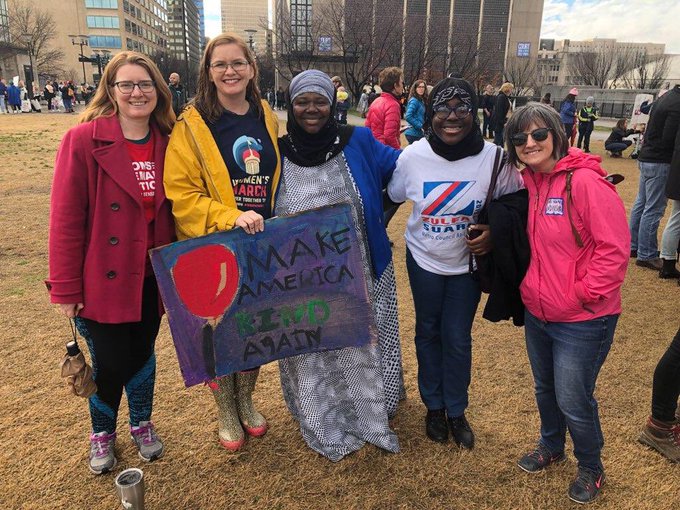
If all goes well for her, this Nigerian immigrant Zulfat Suara a candidate for at-large member of the Nashville Metro Council in Tennessee, US will become the first muslim to become a lawmaker in the state.

Nigerian Woman Zulfat Suara Set To Become The First Muslim Lawmaker In Tennessee, US

Suara will be running in the general runoff election on September 12, 2019, after advancing from the general election on the 1st of August.

According to TN Holler, Zulfat is one of the 15 candidates running for 5 at-large seats on the Metro Council in the August election.

The report added that she’s the first Muslim woman to have ever run for any position in the state of Tennessee, running in 2014 in Bolivar for school board.

If elected, she’ll be the first Muslim lawmaker ever elected in Tennessee.


"MEET ZULFAT SUARA – Candidate for Metro Council At-Large"

NEW VIDEO: "MEET ZULFAT SUARA, Candidate for Metro Council At-Large" — Zulfat would be the first Muslim EVER elected in Tennessee. She has persevered through intense hate online, just endorsed by the Tennessean. (Boost Paid for By Friends of Zulfat Suara, Samar Ali – Treasurer) "I believe we're one humanity – we breathe the same, we hug the same, we smile the same." – ZulfatPlease watch and share. For more on Zulfat, visit her website: https://zulfatsuara.com – ELECTION DAY AUGUST 1

Posted by The Tennessee Holler on Monday, July 22, 2019

We need to use Integrated Pest Management systems to effectively control pest and prevent illegal use.

I once came across a video of a woman trying to buy stockfish from a man. She was asking him why he uses Sniper to preserve the stockfish, and he said, “Everybody dey use am, nobody dey wey no dey use am.” Shock gripped me as I watched the video. Then I quickly remembered a rumor I had heard, that this same sniper was used to preserve beans.

A few days prior to that, a lady had used Sniper to wash her hair and died in her sleep. Sniper is a pesticide not food preservative. We need to understand that sniper is intended for use as a pesticide for crops. Farmers and traders shouldn’t use it to preserve food.

Pests, which are organisms that attack food, crops and livestock, can become a menace to farmers if not properly mitigated against or handled. They are disease-carrying organisms that destroy farmlands, clothing, buildings, etc. Examples of pest are: termites, caterpillars, mosquitoes, fleas, cockroaches, bedbugs, weeds, snakes, rats. Pests are not generally harmful; they are only harmful when they are detrimental to plants, animals or humans. They can be beneficial under different circumstances or conditions. These pests often lead to a low crop yield for farmers, because of destruction of their produce before harvest, or even while in storage. Hence, the reason pesticides are used to curb their impact on crops and animals.

The World Health Organization (WHO) defined pesticides as a universal name given to different forms of chemical compounds used to kill pests. Fungicides, biocides, herbicides and insecticides are all forms of pesticides used. There are several pesticides that have been banned in Nigeria, but Nigerians, for selfish reasons, continue to use them on food, crops and livestock. Examples of these banned pesticides are: Aldrin, Carbamates, DDT, Toxaphene.

Environmental & Health Effects of Pesticides

  1. Pesticides pollute water, which can lead to the death of waterbodies such as fish.
  2. They lead to soil pollution that accumulates in the soil for up to 20 years or more, and may appear in the food chain (bioaccumulation and biomagnification).
  3. Air pollution is a major effect of pesticides, and can lead to severe health problems.
  4. The health effects of pesticides are limitless, because one health problem can lead to another. Examples are: skin diseases, respiratory problems, food poisoning, cancer and can eventually lead to death.

There are three main ways pesticides can be introduced to humans. They are: dermal (skin), oral (mouth) and inhalation (nostrils) exposures. Now traders have started using it directly on produce [fresh fruit and vegetables grown for the market] to prevent pests without informing the buyers.

Although the use of pesticides is necessary, it is to be used under policies and guidelines that have been approved by the regulatory bodies responsible. Which is why the proper implementation of Integrated Pest Management is needed urgently in Nigeria.

So what is Integrated Pest Management (IPM)?

As defined by Environmental Protection Agency (EPA), “Integrated Pest Management (IPM) is an effective and environmentally sensitive approach to pest management that relies on a combination of common-sense practices.”

Food and Agricultural Organization (FAO) of the United Nations defines IPM as “the careful consideration of all available pest control techniques and subsequent integration of appropriate measures that discourage the development of pest populations and keep pesticides and other interventions to levels that are economically justified and reduce or minimize risks to human health and the environment.”

IPM is an effective way of handling pest management, using methods such as pest-resistant plants, natural predators, and other methods. They can be cultural, mechanical, physical and biological. There are different pest strategies and tactics that can be used to effectively eliminate pest problem, without farmers or market individuals using it directly on food products, which can cause harm to humans. Some steps such as intercropping with aromatic herbs to prevent insects, crop rotation and pruning, are examples of strategies in IPM.

While speaking with the Environmental Safeguard Specialist of the Transforming Irrigation Management in Nigeria (TRIMING) Project, Oyebankole Agbelusi, he mentioned the importance of IPM in Nigeria. Lack of adequate knowledge on the effects of the wrong usage of pesticides or the usage of banned pesticides is what has led some Nigerians to use pesticides, such as sniper, to preserve dry fish and other food produce in the market, and even go as far as using it on the human body.

Most recently, it is being used as a suicide drug, which has led to hundreds of death across the country. Around June this year, it was published across media outlets that the Senate is looking to ban sniper as a pesticide in Nigeria. Our problem is beyond the banning of one pesticide. What then happens to the one the market traders use on our food that causes diseases which lead to death. The difference between suicide and this is: suicide is an individual decision, but the use of sniper and other pesticides on food directly is Nigerians slowly killing fellow Nigerians because of their pockets. 

We as citizens of this great nation need to do better. Just like the woman that sent the video of the man using it in Oyingbo market, we need to report such cases and take necessary actions. Most importantly, we need to use Integrated Pest Management systems to effectively control pest and prevent illegal use.

Source: Bellanaija

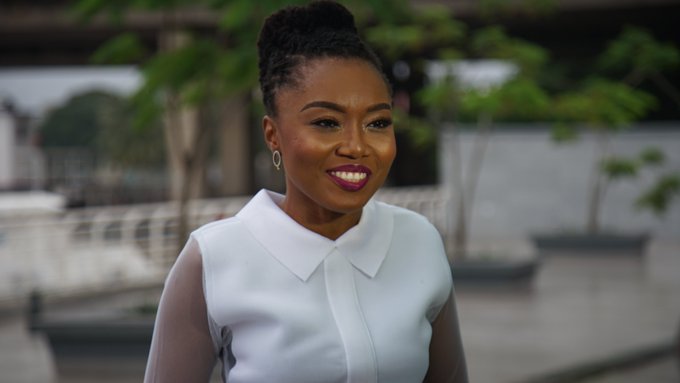
Arit Okpo is the new host of CNN African Voices.

She will help usher in the new chapter of the program dubbed African Voices Changemakers, airing from Friday, August 9th.

The news was shared on the official twitter handle of CNN Africa. The tweet says

Meet the new host of African Voices – Arit Okpo (@menoword). She will help usher in a new chapter of the program dubbed African Voices Changemakers. It starts tomorrow!


Media personality, Toke Makinwa might have just announced her plans to have a wedding before 2020.

She took to her Instagram page announcing her birthday coming up in November, using a hashtag that got our attention – #Lastyearsingle.

She wrote:

*Temp Post*
PSA .. Calling on all travel companies, let’s make magic together this November, I turn 35 and I want a solid girls trip to my dream destination Phuket – Thailand 🇹🇭 I want to wake up to the sounds of the ocean, visit nearby islands, drink some rum and live it up as it’s my last year as a single girl ready to give marriage a second chance and of course the bambinos too. So if you’ll like to sponsor my friends and me to create the best content ever, let’s do it big in November.
#TMat35 #The35Club #Lastyearsingle
Tag them all.


Source: Bellanaija

The work of Shirley Chisholm, the first Black woman elected into U.S. Congress, will be displayed in a new limited series coming to FX called “Mrs. America.”

Emmy-winning actress Uzo Aduba will play Chisholm, who represented New York’s 12thcongressional district from 1969 to 1983 and who became the first Black female candidate from a major political party to run for president. 

According to The Root, FX said in a press release that the limited series will tell “the story of the movement to ratify the Equal Rights Amendment (ERA), and the unexpected backlash led by a conservative woman named Phyllis Schlafly, played by [Cate] Blanchett. Through the eyes of the women of that era – both Schlafly and second wave feminists Gloria Steinem, Betty Friedan, Shirley Chisholm, Bella Abzug and Jill Ruckelshaus – the series explores how one of the toughest battlegrounds in the culture wars of the 70s helped give rise to the Moral Majority and forever shifted our political landscape.”

Aduba is one of 11 actors who have been selected so far to play in the nine-episode series that will premiere in 2020. The series, which is written by Emmy-winning producer Dahvi Waller, is executive produced by Waller, Coco Francini, Anna Boden, Ryan Fleck and Blanchett. 

The FX series will be the second portrayal of Chisholm coming up as Oscar-winning actress Viola Davis will also portray the politician and civil rights activist in a movie that she is producing at Amazon Studios. According to Deadline, Maggie Betts will direct the screenplay that will be written by Emmy-nominated writer Adam Countee.