Women of Rubies

Author

Esther Ijewere

Browsing

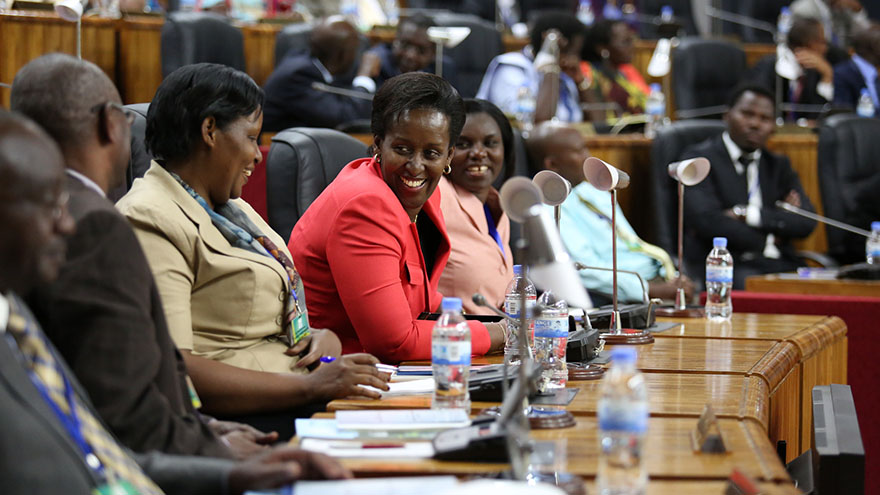
On the occasion of International Women’s Day (IWD) celebrated this March 8 around the world, several voices are rising to claim better places for women. In most countries, it is difficult to find a parity. But in Africa, there is one exception: Rwanda.

With more than 61% of women in the Chamber of Deputies, the country is at the top of the world rankings. A country that remains a model in several fields.

But in the case of women’s representation in the Assembly, it is a reference case. While they already had a respectable place in some key institutions, women saw their numbers increase in recent elections in 2013.

Of the 80 seats in the Rwandan Parliament, 51 are occupied by women. Since 2008, Rwanda has been at the top of the IPU (Interparliamentary Union) world ranking of women in national parliaments.

An important place reserved for women which is the fruit of several initiatives taken for decades. After the 1994 genocide that killed 800,000 people, several laws that have been adopted, go in favor of parity.

For illustration, the new Constitution adopted in 2003 establishes as a fundamental principle the equality between men and women with “the attribution of at least 30% of the posts to the women in the decision-making institutions of the State”.

Since then, the electoral system has been respected to the letter with 24 seats reserved for women. These are chosen, in theory, on non-partisan bases, by colleges and councils at the local and national levels.

Despite prejudices, it must be recognized that it was the Rwandan women themselves who had to struggle to win.

With the introduction of higher educational standards, the women of Africa have started experiencing opportunity and freedom to enterprise more, which was against the old believe that African woman can actually strife to best and peak of their carriers, recently African woman has demonstrated the real vigor in typical Africa, they have been performing expediently well in their various chosen field, this brought Africa to limelight which her contemporaries have been striving to attain. So we ask:

Ten African women have shown this and have become the top 10 richest African women that employ thousands of people through ventures and firms which has continually help to keep many families and household in shape, the full alacrity African woman exhibit has always be of notable and paramount importance.

The top ten richest African women are listed below

  • 1. ISABEL DOS SANTOS

    • Asset Value: $2.7 Billion
    • Date of birth: 20th April 1973
    • Country: Angola
Isabel Dos Santos
Isabel Dos Santos

This woman Isabel Dos Santos is the richest African woman. The eldest daughter of the wealthy former Angolan President Jose Eduardo Dos Santos. She is part of the board of directors of several firms in Portugal and Angola of which media firms and major Portuguese banks with oil and diamond interest.

Isabel Dos Santos has shares in Ciminvest, an Angolan cement firm and also another firm was known as Banco African De Investimentos that made her among the top list, she studied engineering in the well-known Kings College in London and her first enterprise was at the age of 24. Her stake in the Portuguese media conglomerate Zone Multimedia is up to 14%. Isabel Dos Santos also has major stakes in the banks of Portugal like Banco Portuguese De Investimento, Banco Espirito Santo and in Portuguese energy firms like Energias De Portugal. These investments have made her more than $1 billion mark which is why she became the first woman in Africa to be a billionaire.

  • 2. FOLORUNSHO ALAKIJA

    • Asset Value: $1.76 billion
    • Date of birth: 15th July 1951
    • Country: Nigeria
FOLORUNSHO ALAKIJA Second Richest Woman In Africa

Next to Isabel Dos Santos is this woman who is 66 years old. Folorunso Alakija she is Africa’ s second richest woman. She is the Executive Director of Famfa Oil, an oil and gas exploration company that is worth up to $600 million.

Folorunso Alakija was the secretary of Africa’ s earliest investment banks known as International Merchant Bank of Nigeria in the 1970s. She proceeded to do her studies in fashion design in the United Kingdom and then formed her fashion house firm within Nigeria known as Supreme Stitches in the years 1985, from where she became the largest designer in Nigeria. Then in 1993, the Nigerian President Ibrahim Babangida awarded her firm, Famfa Oil, a license in oil prospecting after which the firm turned to be one of the most prolific blocks with Famfa Oil having up to 60% stakes in the block. President Olusegun Obasanjo in the year 2000 acquired in an illegal manner up to 50% stake in the block without proper compensation to Alakija or her firm but this was revoked later by the Supreme Court of Nigeria.

  • 3. NGINA KENYATTA

    • Asset Value: $1 billion
    • Date of birth: 24th June 1933
    • Country: Kenya
Top 10 Richest Kenyan Politicians
Mama Ngina Kenyatta – Top 10 Richest Kenyan Politicians

She was known popularly as Mama Ngina, who is the widow of the first president of Kenya, Jomo Kenyatta and also one of Africa’s richest women. Even though she had undeclared assets, she remains among the richest women in Africa. She is 84 years old and is welcoming and charitable. Her life now is reclusive and she has gained much respect from the citizens of Kenya due to her position in promoting and defending enterprises that include sectors like education, banking, farming, insurance, manufacturing, hospitality and real estate. She has many stakes, investments, and portfolios that are under her authority.

Mama Ngina Kenyatta is among major shareholders in one of the largest privatized banks in Kenya known as the Commercial Bank of Africa and a chain of hotels known as Heritage. This is an endless list including Brookside Dairies which is an East African leader in the industry with shares that are from East Africa to the Middle East. Others include Media Max which is a media company and Timsales Timber which is among her portfolio. She also has stakes in estate sector where she developed a 500-acre estate which is among the largest gated community in the region.

  • 4. HAJIA BOLA SHAGAYA

    • Asset Value: $630 million
    • Date of birth: 10th October 1959
    • Country: Nigeria
HAJIA BOLA SHAGAYA - Richest African Woman
HAJIA BOLA SHAGAYA – Richest African Woman

The 58-year-old is the 4th richest woman in Africa. She runs enterprises and is the CEO of a diversified Nigerian firm known as Bolinus Group International including real estate interests, oil interests, and banking interests. She is a brand member of the Unity Bank Plc where she is also engaged in photography and communications. Her enterprise activities reach the oil and gas sector, finance and banking which include real estate that has hundreds of townhouses in the choicest neighborhoods of Nigeria with properties in the United States and Europe.

Hajia Bola Shagawa is a board member of a Nigerian group known as the National Economic Partnership for African Development ( NEPAD). She seemed to be aligned with necessary political and military personnel in Nigeria and is very much close to the former Nigerian president Ibrahim Babangida and Same Patience Jonathan.

  • 5. WENDY APPELBAUM

    • Asset Value: $259.3 million
    • Date of birth: 1962
    • Country: South Africa
Top 10 Richest Women In Africa
WENDY APPELBAUM – Top 10 Richest Women In Africa

The 56-year-old is a South African millionaire that became head of the real estate and insurance firm of her father known as Liberty Investors. She was the only daughter of Appelbaum. Donald Gordon who is a South African billionaire. Her shares were sold for her to rake in her fortune but when she sold it she now made her personal fortune.

Wendy Appelbaum was one of the Deputy Chairman of Women’ s Investment Portfolio Limited which is the first women dominated firm to be listed in the Johannesburg Securities Exchange (JSE) with assets that exceed with R1 billion. She made investments in De Mortenson which is a wine estate that is famous in the region of Stellenbosch. She has made philanthropical aid that is more than 23 million US dollar to support the Gordon Institute of Business Science and the Donald Gordon Medical Centre in her father’s memory. The net worth of a Wendy Appelbaum by early 2012 is up to $259.3 million which have made her one of the African women.

  • 6. WENDY ACKERMAN

    • Asset Value: $190.2 million
    • Country: South Africa

Wendy Ackerman is a retail tycoon in South Africa and also a Non-Executive Director of Pick N Pay Holdings Limited. Her assets are worth $190.2 million and she runs the Ackerman Family Trust. Her husband has up to 50% of the major grocery of South Africa. The company is worth $3 billion and they have outlets in Zimbabwe, Nigeria, Australia, Zambia, Namibia, Mozambique of which Ackerman is the Executive Director.

  • 7. IRENE CHAMLEY

    • Asset Value: $150 million
    • Date of birth: May 1960
    • Country: South Africa

The 57-year-old South African woman is a former unionist with assets that are $150 million. She has spent up to 13 years as a negotiator for the National Union of Mine Workers in South Africa after which she later became the Executive Director of MTN which is the largest telecom company in Africa. Now, she is the CEO of Smile Telecoms which is a telecommunications products firm. She has initiated the expansion of MTN across Africa and have played a major role in accumulating Iranian and Nigerian operating licenses for the firm. She was also the director of First Rand Bank and Johnic Communications. Her assets which are up to $150 million made her among Africa’s richest women.

  • 8. BRIDGET RADEBE

    • Asset Value: $100 million
    • Date of birth: 26th February 1960
    • Country: South Africa

She formed the mining firm known as Mmakau Mining in South Africa that has operations in platinum, gold, uranium, chrome mining and exploration. This 57-year-old woman first became a mine worker. She is now the president of an association known as the South African Mining Development Association and she won an award from the Global Foundation for Democracy.

  • 9. SHARON WAPNICK

    • Asset Value: $43.1 million
    • Date of birth: 1964
    • Country: South Africa

The total calculation of her assets is worth more $43.1 million and she double to be among the largest and biggest shareholders in listed loan stocks firms known as October Investments and Premium Properties which were both formed by her father Alex.

  • 10. ELISABETH BRADLEY
    • Asset Value: $32 million
    • Date of birth: 1962
    • Country: South Africa

Her father Albert Wessels introduced Toyota to South Africa in the year 1961. She was the chairman of Wesco Investments that sold their 25% stake in the South African Toyota to Toyota Motor Corp of Japan for $320 million. She remains the Chairman of Wesco Investments, South Africa.

That’s all about Top 10 Richest Women in Africa 2019.

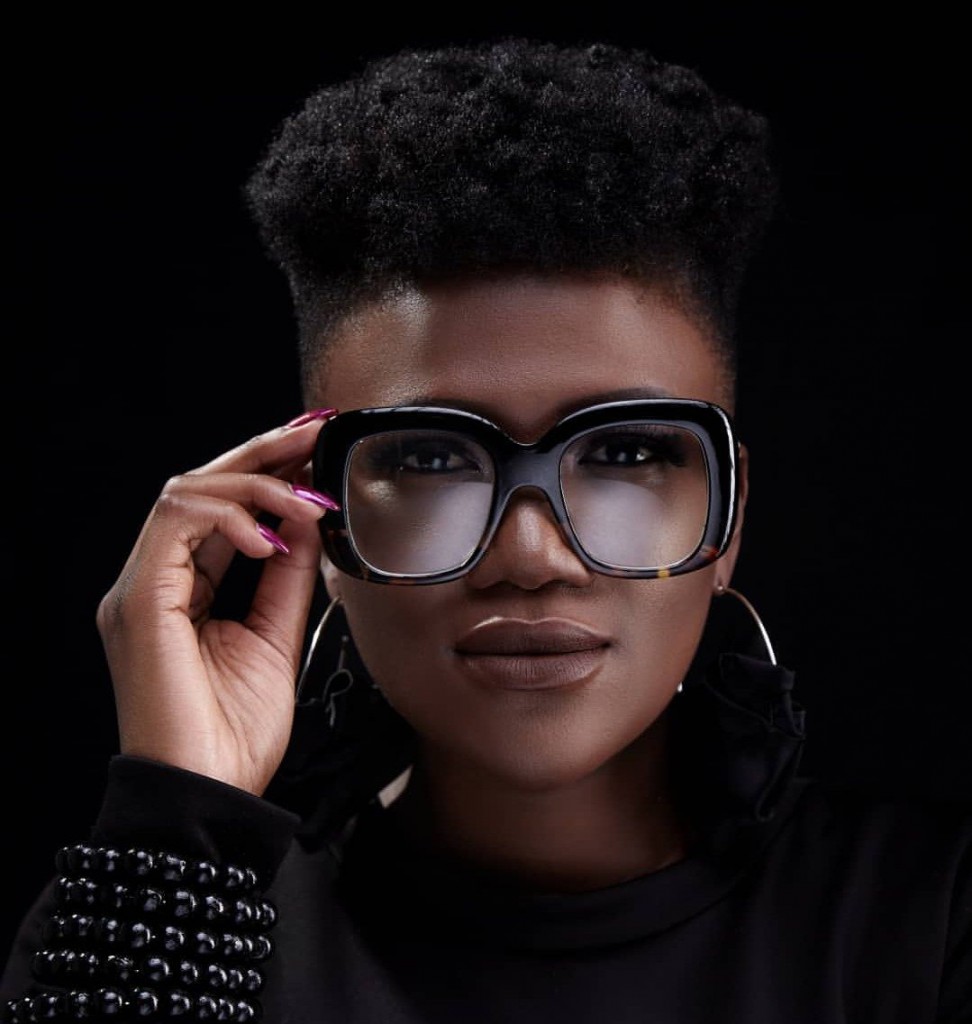
The Nigerian music industry is evolving and music stars are also re-inventing themselves,, fans get to enjoy diverse sounds and unique music from different genres, some are infusing culture into their craft while others reflect the pop side. Toby Grey is a mix of both.

The young music star started out at the age of 16 and is best known for her creativity, passion and stage presence. She recently went viral when she did a cover of Kizz Daniel’s Music Challenge, using it as an avenue to expose some of the ills in the music industry and speaking up for female artistes who are silent victims of sexual harassment. A topic many shy away from for fear of being blacklisted in the Industry.

She recently released an EP titled LOVE IN LAGOS where she teamed up with two of Nigeria’s best producers to re-register her presence in the Music story and also project Lagos state in good light.

While the Music star is very sad female artiste don’t support eachother enough, she is willing to do her bit to support upcoming female artiste and show the world that the sky is wide enough for everyone to soar and prosper.

The beautiful graduate and multi-lingual, shares her Inspiring story with me in this interview.

Growing Up

I grew up in a household where music was always played. My mum loved to sing and my dad? Well I knew he loved music but I don’t remember him being a great singer. I remember listening to Fuji, APALA and some western songs every Saturday while doing house chores and singing along. All through my childhood I loved to dance even before I knew I could sing. So in a way, my love for music validated my passion for music.

The impact of starting out at age 16

Starting early helped me learn faster and understand the techniques behind singing. The things I learned when I was 16, I probably wouldn’t have the patience to learn them now if I didn’t then. But again, I didn’t have a choice cos I had do it right and the only way was through learning.

Combining school with music back in the days

It was not easy at all. Sometimes I missed classes or important events. But I always had it at the back of my mind that my education comes first! Also, I had really supportive friends who studied with me whenever I felt stuck. It’s crazy because you have classes, and you have lectures, and you have tests to write, and you have a project to defend or you any other academic stuff know like that and so you have to learn to combine multiple activities and get the best out still. It was hard mixing music with school, I mean music is a very jealous profession and school takes a lot of time and so doing those things together hand-in-hand was a big challenge to me. But I’m glad am over with it, I’m so glad, I’m so glad but nevertheless I’m proud to have been through these process cuz it makes me appreciate what I have. Not everybody has the opportunity to go to school but if you are fortunate enough to go to school just stay in school and if you are also fortunate enough to have people around you that can guide you know, through the journey, music and education, it’s amazing.”

The journey so far..

The Nigerian music industry, I feel like, you know people say a lot about the music industry. They are like it’s hard to blow, it’s hard to do this. Yes those things are true but the hardest part is the finance. I mean I am an indie artiste and I can say that for sure. It’s really, really hard financing yourself well but with the help of my family and supportive people I’m glad to be where I am today. There are people who say Oh Tobi let me see how I can help or I work here let me see how I can tell somebody to help you do this or do that and that’s how we’ve gotten certain things done. So it’s been very challenging trust me but I thank God because where I am today, I can say it’s only through God’s grace. A lot of people have been trying to get into that market, and well I am not saying am there yet, but it’s a work in progress so I thank God.”

My Music

All my songs have played a role in putting me out there over the past few years mostly because each song is unique and opens me up to a different audience each time.

Addressing the Sexual assault rumor in Kizz Daniel’s Music Challenge

I was never sexually assaulted at any point in my career. One of the purposes of the song was to make people aware of the ills females have to go through sometimes in the industry. Alot of the victims are scared to speak up for fear of being stigmatized and judged. Some will probably not be able to perform at big concerts and shows If they ever come out with such news.

Sexual harassment of female artiste in Nigeria and the way forward

I think it is totally appalling and unfortunately it has been in existence for a very long time. As a starting point to curbing it, females should be sensitized to know that it’s okay to speak up if they are in that situation. It may be hard but being brave and bold to speak could go a long way in gradually eradicating sexual harassment.

Challenges of being a female artiste

The major challenge has mostly been finance. Music is a very expensive business and being female even makes it more challenging because not only do we have to spend more, even society has certain expectations that affect our expenses. This also makes it hard for labels to invest in a female artiste.

Female artiste & support for eachother

Sadly, the answer is No, we don’t support ourselves enough.

New Music

I recently put out an EP titled LOVE IN LAGOS where I teamed up with two of Nigeria’s best producers – DJ Coublon and Tyemmy to put together my first body of work. The EP houses 6 tracks and portrays a variation of love songs which could be considered as atypical i.e. not the regular ‘boy meets girl’ story line. Also, one of the songs is dedicated to the ever vibrant and dynamic ‘Lagos State’ and transcends to the core aesthetics of the songs in terms of vibrancy, fun and creativity. It presents a twist of traditional, alternative, trap, folklore, pop and comic vibes all produced, written and recorded in Lagos state, Nigeria. The EP is also available on every digital platform.

Being  a Woman of Rubies

I may not be perfect, but I inspire people especially women to do more, be more and believe in themselves because every woman is special.

To young women who want to go into music..

I would say, perfect your craft because it’s not enough to have a talent for singing. Keep working on yourself, believe strongly in yourself because bad days will come when you feel like you’re not good enough and you just feel like giving up. Your belief, good friends or family you can rely on will see you through. Lastly work hard, be humble, be hungry for success and pray!

Caster Semenya isn’t new to her gender being questioned and used against her. The athlete recently shared that even as youngster she had to sometimes prove she was a woman as her teammates struggled to compete against her. “They started questioning, are you really a girl? One day, I walked naked into the change room [to prove to them],” Semenya was quoted as saying by The Sowetan.

The athlete was speaking at the Standard Bank Top Women Conference held at Emperors Palace in Kempton Park in Johannesburg.

The athlete, who also revealed she used to be a soccer player, shared some of the reasons she is as strong and fast as she is. She said she grew up with boys and walked long distances to school. She added that she used to train on sand.

“I think my parents raised me well,” Semenya said. “They have never questioned what I do, my feelings, how I see life. They accepted me for who I am. They could see that this one was a little bit different. I did not like being in the kitchen, but being in the garden. I just wanted to give you background why I am tough, why am I fearless, why I do not care about what other people think about me.”

The Court of Arbitration for Sport recently ruled against Semenya in her case against the International Association of Athletics Federations (IAAF) forcing female athletes to regulate their testosterone levels.

Semenya, always resilient, was quoted in May of this year as saying after the ruling: “For a decade the IAAF has tried to slow me down. But this has actually made me stronger. The decision of the CAS will not hold me back. I will once again rise above and continue to inspire young women and athletes in South Africa and around the world.”

Meet Omowunmi Sadik, the inventor of microelectrode biosensors that can detect foreign materials and can be used to spot drugs or explosives.

According to patent number 20060275786A1, the request for the patent was filed on December 7, 2006.  Sadik also has patents for additional distinct biosensors

Sadik is a surface chemist, inventor, and college instructor. She was born in Lagos, Nigeria in 1964.  In 1985, she earned her Bachelor’s degree in chemistry from the University of Lagos. She also obtained a Master’s degree in chemistry in 1987.  In 1994, she earned her PhD from Wollongong University in Australia.

Sadik is the recipient of several fellowships to include the American Institute for Medical and Biological Engineering, the Royal Society of Chemistry, and the National Research Council to name a few.

She is also a collaborator with the Environmental Protection Agency, the National Science Foundation, UNESCO in Romania, Turkey, and Japan; and previously a panel member for the National Institution of Health on Instrumentation and Systems Development.

In 2012, Sadik in conjunction with Barbara Karn formed the not-for-profit Sustainable Nanotechnology Organization.

Sadik is currently a professor at Binghamton University in Upstate, New York while formulating technology that will recycle metal ions from waste for industrial and environmental purposes.

A Nigerian, Dr Eleanor Nwadinobi, has emerged President-elect of Medical Women International Association (MWIA) in the United States.

The MWIA is a global association of all medical women doctors in the world, Igbere TV reports.

The association’s spokesperson, Dr Udochi Okoronkwo, said in a statement on Monday that Nwadinobi became the first Nigerian to emerge as president-elect of the 100-year-old association, an indication that she would become the International President by 2022, Igbere TV reports.

She said Nwadinobi, who hails from Umuahia, Abia State, was celebrated during the closing ceremony of the Centennial Congress of the MWIA, organised by American Medical Women’s Association (AMWA) from July 25 to July 28 in New York.

According to the spokesperson, Nwadinobi joined the association in Nigeria through its Enugu branch in 1982 and rose to become President of the Enugu branch in 1997.

In 2005, the MWIA president-elect was elected as the National President of Medical Women Association of Nigeria and served on the Scientific, Ethics and Resolution Committee and chaired the Finance Committee.

Nwadinobi is also a co-country representative for the Working Group on Women Youth Peace and Security for UN Office for West Africa and the Sahel (UNOWAS)

Pakistan went to the election voting a month ago and among the legislators selected is a lady of African plunge assigned to a women’s reserved seat at the regional parliament of southern Sindh region.

Tanzeela Qambrani originates from the Sidi, a community made up of a larger part of individuals of African descent.

Qambrani’s progenitors originated from Tanzania simply like the ancestors of numerous Sidi individuals, who are accepted to be either the descendants of slaves conveyed to Asia by the Portuguese or traders and pilgrims.

“My father told us that his grandparents had been brought to Sindh now around a century ago from Tanzania. That’s why one of my sisters is married in Tanzania,” she said.

Photo: Daily Messenger

The Sidi have managed to hold onto their roots and cultures but still face racial discrimination.

“As a tiny minority lost in the midst of local populations, we have struggled to preserve our African roots and cultural expression, but I look forward to the day when the name Sidi will evoke respect, not contempt,” Ms Qambrani, told the BBC.

Qambrani, a member of the  Pakistan People’s Party (PPP) of Benazir Bhutto, was nominated by Bhutto’s son Bhutto Zardari, making her the first Sidi to join parliament.

Photo: Twitter

It is not the first time the mother of three who holds a postgraduate in computer science has held political office. She has served as a local councillor in Badin, where she comes from.  She, however, says the new position comes with a lot of responsibility and expectations.

“I can already feel the weight,” she said. “I’m a Sidi, and all these middle class, lower-middle class and working class Sidis know that I’m one of them. And this means there will be expectations.”

Source: Women4Africa