
Women of Rubies

Author

Esther Ijewere

Browsing

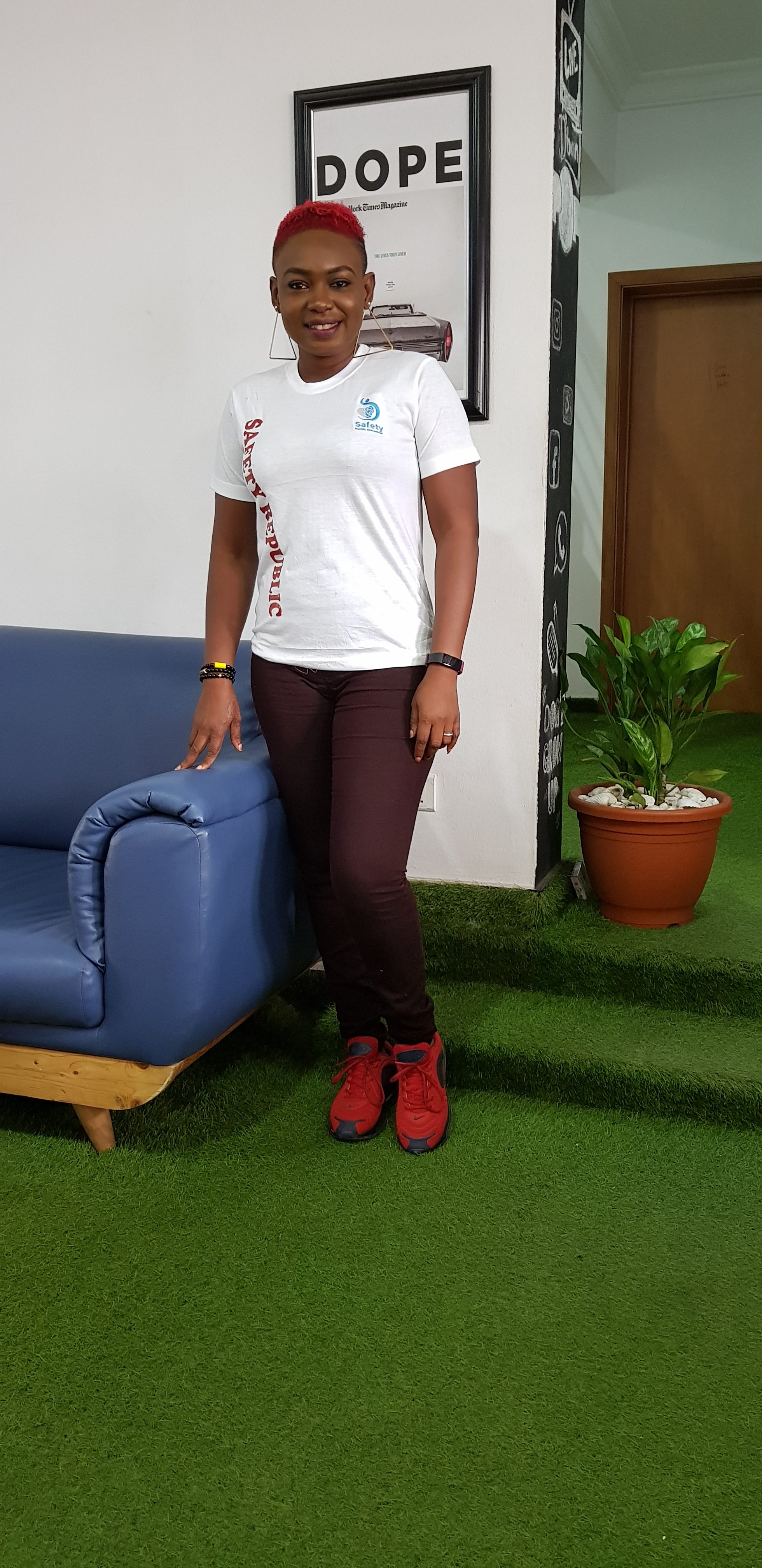
Bukola Lameed,  fondly called “Bookkies” is an incredible blend of passion and skill. Professional Counselor, Certified Cognitive Behavioural Change Therapist and one of Africa’s leading Family Mental Health Coach. The founder of Safety Republic  International whose job is to create solutions for preserving the mental and emotional wellness of every member of a nation (the family), help influence the best behaviour and happiness through Training, Coaching, Therapy and Advocacy.

She is an Author of the book, “In a Child’s Mind” and “A parenting Manual” as she uses her skills to raise the confidence and esteem of children who will feel secured as they transit into adulthood.

She is an Emotional Intelligence Certified Specialist, a seasoned International Speaker, Registered Social worker and licenced Family Life Therapist and Broadcaster using the media to propagate the awareness of mental wellness.

An Alumnus of Coventry University United Kingdom and intentional parent to three lovely children.

The wonderful coach who has helped a lot of Parents, especially moms understand the full scope of parenthood shares her inspiring story and journey with me in this interview.


Childhood Influence

I grew up in the midst of boys, 4 of them.  So I have the premonition of what the society term Masculinity. I am the 5th child the 1st girl in a family of 8.  Growing up for me was very adventurous and exciting, my childhood experiences were a little diffrent from a normal girl child, I was raised to be very indulged, never did house chores, never ran errands, no thanks to my dad (R. I.P).

Inspiration behind Safety Republic

The inspiration came from a place of helplessness and clueless ness to curiosity. If I didn’t know anything I knew I didn’t want to raise my children the way I was raised. I knew there was more to parenting than what I knew then. So I began to search for answers first on how to raise my children well. Moreso I have a deep passion to protect children because I wasn’t protected as a child, I decided to join and learn from several social groups that focuses on children. Then I discovered there’s a lot to learn, unlearn and relearn not only to raise my children but for every precious child. I realised beyond passion skill is required.

Parental Influence on a Child’s Mental Health

As an expert in the field of family mental and emotional health, child protection and safety,  I have discovered that children are the reflection of the adults around them, as a child handler you have to be mentally and emotionally stable before you can raise a mentally and emotionally stable child, who would also transit into becoming a stable adult and the cycle continues.  I realise that whoever we are as a  child is who we become as an adult.  So as parents (primary and secondary caregivers) we must consciously begin to preserve childhood experiences by first ensuring we intentionally  unlearn some unhealthy narratives first about ourselves as adults  and about our parenting roles and responsibilities.

Modern day Parenting & Social Media

Personally I believe that there is nothing like modern day parenting, parenting should still remain the same regardless of the century but the methods in achieving the desired results are what should be updated, just like how a car company would upgrade the features of a car brand, its still the same brand but they keep reviewing the systems and features for it to be relevant to what is obtainable at that period.

Challenges of being a Mental Health Advocate

Doing this work in it’s own is challenging, one of the many challenges we encounter is the ability to make adults unlearn certain cobditioned belief systems and unhealthy behaviours learnt from the environment,  culture and religion that had greatly affected and limited the benefits of living a wholesome lives…

Effect on broken Marriages on Kids

One of the many behavioural challenges children are facing came from the fact that they experienced their parents broken marriages. Adverse childhood experiences is a major factor every family should consider whenever they are making their decisions either to stick together or go their separate ways. Adults must begin to embrace therapy and seek professional counsel for both themselves and their children in order to make their decisions (divorce) easy on their children.

Being a Woman of Rubies

Looking at the meaning of Rubies, is exactly who I have always seen myself to be “a priceless precious jewel, passionate, powerful, pretty, and fierce, once in a life time kind of woman”. I am a Woman of Rubies

Parenting Nuggets

Parenting is an ART, you must learn it… you must first parent yourself before you can parent a child..

A child is a unique product that comes with his own unique user’s manual, that must be read and understood on order to get it working at it’s best!

As a parent you do not have the power to change a child, but you can learn the tools of influence.

Children’s vulnerability is adults responsibility,  children are not vulnerable when adults are responsible enough to parent them well.

Finally, the idea of parenting is not to raise your carbon copy, but to raise a wholesome child who can make his or her  own mistakes and create experiences to become his own unique self.


Oprah Winfrey says she does not have any regrets over deciding to not marry or have children.

The 65-year-old talk show host has been in a relationship with long-time partner Stedman Graham for 33 years.

And, despite getting engaged in 1992, the couple have never tied the knot or expanded their family.

Speaking to People magazine, Winfrey revealed that while she did consider becoming a mother following Graham’s proposal, she felt it was the one job she might not be cut out for.

“At one point in Chicago I had bought an additional apartment because I was thinking, ‘Well, if we get married, I’m going to need room for children,’” Winfrey said.

The philanthropist added that much of the reason she decided against having children was because she witnessed “the depth of responsibility and sacrifice that is actually required to be a mother” during her years on The Oprah Winfrey Show.

“I realised, ‘Whoa, I’m talking to a lot of messed-up people, and they are messed up because they had mothers and fathers who were not aware of how serious that job is,’” Winfrey said.

“I don’t have the ability to compartmentalise the way I see other women do. It is why, throughout my years, I have had the highest regard for women who choose to be at home [with] their kids, because I don’t know how you do that all day long.

“Nobody gives women the credit they deserve.”

Winfrey continued by explaining why she and Graham decided to remain engaged for so long, admitting that she believes things “would have changed” if they had got married.

“I used to think about this all the time, that I was working these 17-hour days, and so were my producers, and then I go home and I have my two dogs and I have Stedman, who’s letting me be who I need to be in the world,” she said.

“He’s never demanding anything from me like, ‘Where’s my breakfast? Where’s my dinner?’ Never any of that, which I believed would have changed had we married.”

Winfrey adds: “Both he and I now say, ‘If we had married, we would not be together’.

“No question about it — we would not stay married, because of what that would have meant to him, and I would have had my own ideas about it.”

Winfrey’s decisions to not marry or have children are ones she still stands by today, explaining that she has “filled that maternal fold” with charitable work.

“I have not had one regret about that,” Winfrey explained.

“I also believe that part of the reason why I don’t have regrets is because I got to fulfill it in the way that was best for me: the Oprah Winfrey Leadership Academy for Girls in South Africa,” she says.

“Those girls fill that maternal fold that I perhaps would have had. In fact, they overfill — I’m overflowed with maternal.”

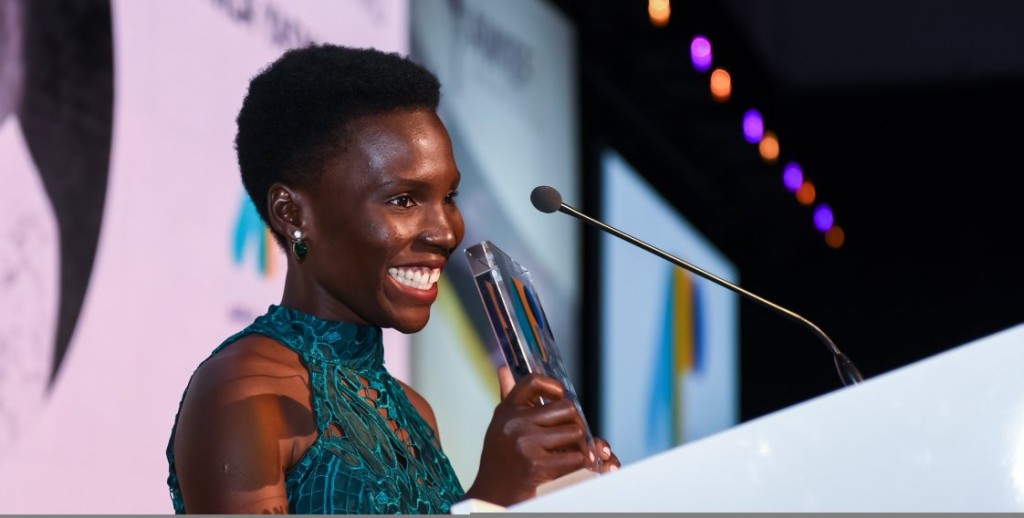
Ugandan Journalist, Nila Yasmin has won the 2019 APO GROUP, African Women in Media Awards, which recognises, celebrates and empowers African women journalists who support female entrepreneurship in Africa.

The actress and journalist who co-founded GLIM and currently works with Media 256, (producers of CNN African Voices and Inside Africa) is a passionate advocate for women empowerment.

In 2018, she co-directed and featured in ‘Me Myself and You’ a short film that tackles personal insecurities, image and identity among young females and was nominated in the 2019 CineChico Awards in Spain. And in 2019, she was among Uganda’s first all-female cast and crew that was behind the groundbreaking film ‘Bed of Thorns’ that tackles Gender Based Violence and urges women to speak up.

As promised, the winning African female journalist was bestowed with a USD 2,500 cash prize, an all-expenses paid trip to a prestigious International Women’s Forum, and online courses from one of the most respected international universities.

Way to Go Nila!

Source: Espact.com

Life is an uncertain roller coaster. You can choose to embrace it and enjoy the ride, joyfully learning from your experiences along the way; or you can choose to rebel against all of life’s challenges, resenting every moment of your journey. The latter robs you of any growth or development, while the former gives you the opportunity to learn from those challenges and become a better person for having experienced them.

While “better” may be relative, one thing is certain – “better” means improved. No matter where you find yourself, there is always room for improvement. Even a monk strives daily to improve himself, striving always to become a better person.

Challenges in life are a given, and they can be used to your advantage. Each one is an opportunity for personal growth and self-improvement. Ultimately, the goal is to use what you learn as you grow to become the best version of yourself.

Here are 6 common challenges in life you must overcome on your road to becoming a better person:

1. Loss

Whether you lose your job, an opportunity, or a relationship – loss is an inevitable part of life.

Regardless of how it happens, loss is one of the life’s biggest challenges. It can feel abrupt and disruptive. However, loss gives you the opportunity to reflect on what is truly important so that you to keep moving forward.

Losing something that you had, or really wanted, can be a welcome wake up call. Loss forces you to ask yourself, “What about what I lost was valuable to me?” and “What am I willing to do to get what I want?”

Choosing to examine your loss through the lens of these questions causes you to assess the true value of what you lost, as well as why you value it. Having a clear understanding of what you value and why you value it, is key to becoming a better person because it gives your words & actions integrity.

2. Failure

There is not a single person alive who hasn’t experienced failure. To grow, you must fail. Failure offers a natural checkpoint on your journey, one that allows you to evaluate your recent behavioral choices so that you can make improvements. When you fail, you get the chance to review your decisions and behaviors, like an athlete reviews the taped footage between games.

Reviewing the decisions and actions that lead you to fail is an invaluable exercise. Understanding how the decisions you made led to certain behaviors and actions can prevent you from making the same mistakes again. Such a review can also reveal important details you missed the first time that would allow you to take a better and more informed approach the next time.

The experience of failure causes you to develop compassion, empathy and sympathy. Your experience gives you a point of commonality with anyone who has had a similar experience. Those three emotions are essential tools on your journey to becoming a better person because they allow others to feel safe and seen around you.

3. Setbacks

They have many names: missteps, monkey wrenches, unforeseen circumstances. But setbacks are ever present on our journey to becoming a better person.

We have all experienced a slow in progress, hindrance or delay on our journey. The challenge is understanding why the delay happened. What caused our progress to slow down or plateau?

You can intellectually know all the right things to do or say, but there are those moments when your humanness gets the best of you. Despite your best efforts to be a better person, you suddenly do or say something you regret. Perhaps you react in a way that is negative or out of alignment with your desire to become a better person. ITS OKAY!

Setbacks are learning opportunities. Having a firm understanding of the types of things that slow your progress will allow you to both avoid and preempt them.

Resilience is one positive side effect of overcoming setbacks. The journey to becoming a better person requires that you be mentally tough. Setbacks are an organic way to build that mental toughness while still maintaining integrity in your actions, and a sense of emotional awareness that promotes a safe environment where others feel seen.

4. Establishing Your Moral Compass

Distinguishing right from wrong for yourself is an ever present life challenge. You may agree with one ideology today, and another tomorrow. Changing your mind is your right, and deciding where you stand is your responsibility. The two go hand in hand.

Deciding what you believe is important on your road to bcoming a better person. Self-improvement is anchored in your own personal sense of right and wrong.

Most people act in accordance with their values and beliefs. Giving yourself permission to grow as person means taking time to reexamine them both. It is possible you will discover that your values and beliefs are no longer in alignment with your end goal.

Thankfully, your assessment of the misalignment will lead you to do what is necessary to once again find your true north. The ability to self-correct will serve you on you journey.

5. Mastering Your Mind

Your mind can be a formidable opponent on your path to becoming a better person. It can pipe up with all kinds of negative commentary when things are not going well, and can have the power to derail you with doubt and fear – if you let it. Mastering your mind is one of the greatest life challenges of all.

Your mind controls your perspective, it informs how you receive and process your interactions with the world around you. Unlike other things you can claim mastery over after a finite amount of time, the mind can take some a lifetime to master. The challenge is showing up willing to do the work of mastering the mind everyday, while having a complete awareness of the infinite nature of this work.

Where ever you go, there you are; thus it’s impossible to hide from yourself. If your mind is unruly and unkind, then it will be hard for you to become a better person, primarily because you are not being better to yourself.

Luckily, there are a myriad of ways to begin the work of mastering you mind. The key is to create space for you to be with yourself in a healthy way that promotes growth. Some common methods to facilitate focused personal time are therapy, meditationself-reflection, prayer, intentional silence, journaling and being out in nature.

6. Overcoming Your Story

Everyone was once a child. There are things you experienced that were outside of your control, regardless of their severity those experiences stay with you. Those experiences become part of your story. Overcoming the story you tell yourself about your own experience can be quite the life challenge.

Whether you grew up poor, didn’t have a lot of love in your house, or didn’t feel seen, it affects the way you move through the world. There are the facts of these experiences and there are fuzzy edges where our minds fill in the blanks.

For Example: if you say “I grew up poor and I am always going to be poor,” that is an example of your story taking control.

Comparatively, if you said “I grew up poor, but I am working hard now. I’m doing whatever I can to make sure I have all the things I need and am comfortable”– even if it’s hard, that is still an example of overcoming your story.

Author: Awilda Rivera

US Supreme Court Justice, Ruth Bader Ginsburg has been awarded a $1 million prize given annually to a thinker whose ideas “have profoundly shaped human understanding and advancement.”⁣⁣
⁣⁣
The 2019 Berggruen Prize for Philosophy & Culture was announced on Wednesday. The prize, first awarded in 2016, is given by the Berggruen Institute, a Los Angeles-based research organization dedicated to improving governance and cross-cultural understanding. Recipients direct the prize money to the nonprofit organization of their choice.⁣⁣
⁣⁣
The three previous winners have all been philosophers. They are Charles Taylor of Canada, Onora O’Neil of Britain and Martha Nussbaum of the United States. Five hundred people were nominated for this year’s prize.⁣⁣
⁣⁣
The prize committee called Ginsburg “a lifelong trailblazer for human rights and gender equality,” and “a constant voice in favor of equality, the rights of workers and the separation of church and state,” according to the New York Times.⁣⁣
⁣⁣
Ginsburg will receive the award during a private ceremony at the New York Public Library in December.⁣⁣
Source: Times of Israel⁣⁣

We all know what anxiety can feel like; it can be utterly debilitating and soul-destroying. Many of us are familiar with the pounding chest where you feel your heart is about to explode. Your face flushes or goes suddenly quite pale. You can feel the blood draining from your face.

The panic inside you says: “People are going to notice you experiencing this. Get out of here!” And the stinging fear of embarrassment and humiliation can overwhelm you to the point of tears.

Such experiences can be completely terrifying. We often want to stop feeling these symptoms altogether, however we need to recognize that in many cases, experiencing anxiety actually serves us well.

Our brains are biologically wired to help us survive. What’s happening here however, is our innate fear response has become hyper vigilant in a way that no longer serves us. It’s working in overdrive when we perceive (often subconsciously) there is a threat to our safety but there may not actually be a physical and real threat.

There are strategies you can use to regain control but you will need to consciously learn how to manage anxiety and reduce the emotional, mental and physical experiences you’re suffering.

1. Work with a Professional to Identify and Get Familiar with Your Triggers

Your experience of anxiety will be different to the next person and the next person after that. It’s important to recognize that the specific prescription of tools and techniques that work for you will be different to how they work for someone else.

Spending time to recognize patterns and common features of your anxiety should be a primary step in your management and recovery plan.

Despite popular belief that we need to go back to the root cause of how and why your anxiety started, it’s important to know that sometimes significantly traumatic events and/or experiences are better contained in the box with the lid on. In other cases, accessing the catalyst can be a lengthy and experience and near impossible.

Working with a qualified and trained mental health professional can greatly help you to gently and safely assess and determine things which can derail you. Doing so will not only help you protect your emotional and mental health, but add a greater sense of control in mapping and identifying graduated steps to work through as a treatment plan.

Look to partner with a supportive, empathetic trained professional in your corner who can see risks and help you develop suitable tailored action plans to manage and reduce symptoms that trigger your symptoms. You’ll increase control of your own progress, and your growing confidence can exponentially increase your recovery than trying to go it alone.

If you can’t access face to face or group workshops, online therapy (e.g. Better Help or Talk Space) is becoming much more widely available. There are options available for everyone.

2. Have Breathing Techniques up Your Sleeve

The mistake often made by those in the throes of experiencing heightened symptoms, is trying to recall specific ‘helpful’ thoughts to eradicate the unhelpful ones in that moment. This doesn’t work very often. It’s like trying to open the door of a front loader washing machine just commencing a spin cycle to put more laundry inside!

If your symptoms are highly intense, such strategy is unlikely to succeed. Your mind is the washing machine, by the way.

The way we breathe has incredible power beyond simply inhaling oxygen and expelling it from our lungs. The rhythm, pace and depth all have significant calming and healing effects on us.

Neuroscience documents that by switching focus to managing your breath halts certain neurons sending panic signals throughout your body.[1] The result is calmer physiology.

Making it your job to calm your breath first helps reduce intensity of those tangible symptoms screaming at you.

We breathe in two ways: through our thoracic region and through our diaphragm. The latter is the one you want to focus your attention to:

  1. Place your non-dominant hand, palm down flat over your chest and place the other just under your ribs on your diaphragm.
  2. Either close your eyes or drop your gaze to a 45° angle and choose a spot to loosely focus on.
  3. Draw a breath in through your nose, gradual, slow and smooth as silk for three counts.
  4. Hold the breath for a split second.
  5. Purse your lips and expel your breath again for 4 or 5 counts, slow, smooth as silk. Control the exhalation.

The next breath cycle, you may want to breathe in for three counts and exhale for five counts. Practice this for at least 5 cycles or at least till you start to notice you are physically calmer in some respects.

If you suffer from panic disorder,[2] you can initially feel increased panic or anxiety doing this technique. Stop and practice again a little while later. You need to switch focus from thoracic (chest) breathing which is common during panic attacks, to diaphragmatic breathing.

Don’t wait until you’re in the heat of the moment to try putting the technique into effect. Practice during a time when you are calmer so your brain and body develop a familiarity of the process and what a reduction in your symptoms feels like.

Like a competitive sport, you practice off the court so that when you get on the court, you’re well familiar with what you need to do. You only need to press the proverbial button and let a more automatic, practiced process wield its magic. Practice.

3. Learn Grounding and Distraction Techniques Which Give Your Mind Something to Do

Such techniques are distractions. Do they get rid of your anxiety? Unlikely. Do they help to cope with and reduce the intensity of your symptoms? Yes, so that you can recalibrate yourself to a more organized mental state from which you can engage cognitive exercises that challenge and reframe unhelpful thoughts.

If you’re never thought games such as eye-spy would ever come in handy in your adult years, here is news for you!

Start with the letter ‘A’ and look to name everything you can see around you starting with ‘A’. Move on then to the letter ‘B’ then ‘C’ and so on. Search as far, wide and deep as you can looking for objects that start with your letter of focus.

Or, use colors. Work your way through the colors of the rainbow sequentially identifying as many things as you can that showcase that color. Fully immerse into the exercise and give your mind something to focus on. Spend a few minutes to do this.

A tangible grounding technique is to focus on what you have physical contact with. Pay attention to the sensations; how your bottom touches and squishes into the chair or your back muscles press into the back of your seat.

How do your feet feel in your shoes? How do your clothes feel against your skin? You’re tasking your mind with an activity which decreases capacity for it to focus on your present symptoms of anxiety.

4. Try Cognitive Behavioral Therapy (CBT)

Professor Jasper Smits and Professor Stefan Hofman have conducted extensive research into the most effective treatments for managing adult anxiety. They published findings in the Journal of Clinical Psychiatry from an extensive meta-analysis which revealed CBT to consistently have strong impact in the treatment and management of anxiety.[3]

CBT involves addressing, challenging and reframing negative thoughts and re-shaping unhelpful behavior. A task-based, practical approach is applied to help clients recognize maladaptive thinking and habits, learn more helpful and positive ways to behave and think; and in turn, transform their symptoms.

For individuals to really experience benefit, undertaking regular applications of doable homework exercises is most effective. CBT is highly effective but requires individuals’ regular commitment.

Expect to work with a mental health professional on a weekly basis for three to four months. Find someone who won’t just give you homework sheets (that’s lazy therapy) but is closely attuned to providing you with good education, comfortably assess any resistance to change, and be able to modify and adjust exercises that best enable you to do them.

You won’t just experience a reduction in your symptoms because you develop such strong self-awareness and self-monitoring skills. You’ll learn mental skills that will strengthen your resilience and propel you further forward toward goals of how you want to feel, think and behave.

5. Try the Emotional Freedom Technique (EFT)

EFT which involves applying light repetitive pressure to meridian points, is becoming increasingly documented as an effective symptom reduction technique for anxiety.[4] Also known as ‘tapping,’ anyone can learn to self-administer it with the guidance of a practitioner.

In collaboration with professional associate Gary Craig, Clinical psychologist Dr Roger Callahan[5] developed a simple yet effective self-administered process where individuals self-apply pressure to acupressure points on their body.

Using techniques from neuro linguistic programming and thought field therapy, individuals consciously lean into degrees of discomfort concerning their thoughts, feelings and physical symptoms.

Best learned under instruction and support of an EFT practitioner or trained professional, you initially apply mindfulness to consciously become aware of your anxiety symptoms – thoughts, feelings and physical sensations.

As you tap, you gradually start to experience relief and reduction in your symptoms. However, remember the level of impact felt will differ and progress at different rates from one person to the next.

Research shows that the positive effect of tapping is long lasting, particularly for anxiety disorders and post traumatic stress. It is becoming used more widely for other mental health challenges including weight loss, grief and loss, low self-esteem and confidence.

6. Use Imagery to Help Manage Anxiety

This is such an under-utilized but very powerful mechanism of our brain when it comes to directing our thoughts and behavior in a way to serve us, particularly in the context of anxiety.

Our brains are neuroplastic. We can train and rewire them to work better in our favor, yet we often live the majority of our day unconsciously by default.

Think about how many times you have day-dreamed today. When your tummy starts growling just before lunchtime, can you easily hook into images of what you want to satiate your hunger?

Often we engage imagery without thinking, but guided imagery is a key technique that helps with the reduction of anxiety with diagnoses of PTSD, social phobia and performance anxiety.[6]

Your brain’s amygdala plays a key role in emotional regulation[7] and hence those emotions connected with perceived fear responses when you feel anxious.

Imaginal exposure therapy (vividly imagining the feared object, situation or activity) works to dampen amygdala activity and reduce the intensity of emotions experienced in anxiety. You have the advantage of visiting memories in a safe, controlled space interspersed with grounding/relaxation, and gently exposing your mind’s eye to that which you feel anxious about. Starting this process should be done with a trained professional.

7. Ensure Relaxation Techniques Are in Your Toolkit

Being anxious is exhausting. For those who suffer from general anxiety, your stress response mechanisms are constantly running, so you need to learn how to tell your body to relax.

Having a couple of meditative instructional relaxation apps you can instantly access through your phone should be on your list of essential management strategies.

In your choice of apps and relaxation techniques. consider choosing one which engages as many of your senses as possible. The more physical feedback you’re directed to notice a reduction in your physical symptoms throughout the relaxation exercise, the more likely you will stick to it and be motivated to repeat it.

Progressive muscle relaxation should be in your anxiety management toolkit. This method directs you to focus on noticing the different feeling between active tension and resulting relaxation when you release the tension of a muscle. Sequentially working through muscle groups in the body from head to toe, your mind is directing and telling your body to become calmer.

You need to be sensible with this one where you might be recovering from an injury or be at risk of developing a physical injury. Certainly avoid this exercise (and meditation) whilst driving.

Again, practicing this one at regular times throughout the day gives your brain and muscles a mental blueprint to relax such that it will be more effective in anxiety-provoking situations. Because you can also feel immediate tangible differences, it can boost your confidence earlier than starting with exercises that are purely cognitive.

The Bottom Line

Reviewing your diet and exercise regime is a given. Reducing caffeine intake, processed food and improving physical movement you engage in daily has incredibly strong impact and makes the strategies above even more effective when you do them.

However, for you to get a strong handle on how to manage and reduce your experience of anxiety, you’re going to have to develop a commitment to regularly applying changes.

If you don’t know where to start, get in touch with a therapist. Your first step is to develop a strong awareness of what you’re experiencing and what could be triggering it.

When you know and understand more, you can do far more in the pilot seat to land your anxiety back on the tarmac and potentially never let it take off from that runway again.

Author: Helen Dasilva

Have you ever sat down and tried to read for work or school and wondered if there was a way that you could learn the material faster and not forget what you’ve learned? I have great news, there is! Learning these five techniques will make a world of difference in how fast you’re able to learn your new technique, and how well you’re able to make it stick in your brian afterwards.

1. Measure a smaller unit of success

Let’s be honest, when it comes to learning new things it isn’t always a breeze. You start reading information and a few times you probably comes across something that confuses you or is an area of difficulty. No matter what you do, you just can’t seem to find a way to get yourself to learn the mater.

Your first reaction may be to try and figure out what you don’t understand all at once. When you do this, you slow the learning process down. One of two things will happen: you’ll either never learn to do them well or it will take you a long period of time to do so. Instead, deconstruct the new skill or technique into much smaller components and work on them individually until you can put them all together.

2. Drill one thing until it becomes a habit, then move on

Everyone has multiple areas in their life where they’d like to make some improvements. Maybe you want to change your eating habits to be healthier, go to bed earlier, or go to the gym consistently. Even if you’re committed and have the best intentions to work towards your goals, it’s just natural to fall back into old habits eventually.

Each day, train your mind to focus on one thing at a time so you don’t lose focus. When you do this, you stop your mind from going off into a million different directions thinking about all the other things you need to do. It’s overwhelming and can be discouraging. Once you’ve made a habit or reached a new goal you’ve been working towards, then you can move on to the next one.

3. Short periods of study every day is better than long, sporadic cramming sessions

We’ve all crammed our brains with information in a short period of time, especially in college the night before a test at 8 AM. But if you think about it, how much of that information did you actually retain several days later? Probably not much.

You learn best from repetition. If you sit down and try and study for 6 hours and then come back and try to review, there’s a pretty good chance you will have remembered very little. When you study a little bit each day, you’re able to go back and review information from a shorter time span which will help you learn faster. This requires will-power so be strong!

4. When starting, test many different methods; when growing, stick with one

When you’re starting out with something new, start testing out a bunch of new methods that will help you learn faster as well as one that you enjoy. When you find it lock it down and stick to it. You may find at some point that things are beginning to level out or you’ve hit a plateu. This will be the time that you take a step back and think about the place you’re currently in. Things have changed now, you have changed, it’s time to switch things up so you can keep progressing.

5. Debrief to avoid making the same mistakes

When you’re learning new things, you’re going to make mistakes along the way no doubt. It’s difficult for some, but this is an iportant time to ask for help from someone who can show you where the mistake was made and what you can do next time to avoid repeating said mistake. When you mess up, you’re going to want a second pair of eyes on you to help you out. Find that person that will guide and help you jump over those hurdles.

Hopefully you’ve found the 5 tips above helpful. You’ll notice a significant different in how quickly you learn new things. Remember, no matter how slow you’re moving, progress is progress. Good luck!

Author: Erica Wagner

Most people mistakenly think that love is a feeling. Here’s the thing, they have it all wrong.

“You mean it’s not?” Gasp! “But when I see him, I feel butterflies, my heart flutters, and my knees buckle. If that’s not love, then what is it?” Those may be physical feelings, yes, but those feelings don’t amount to genuine love.

In order to be more loving, you have to understand what love truly is. It’s not just a feeling. It’s a Commitment. It’s an Action. It’s a Decision.

Those initial feelings–the butterflies, the heart flutters, and the buckling knees, are all part of “falling in love.” It’s like a knee-jerk reaction. It’s not planned, and it doesn’t last. It’s a short honeymoon period that ends if the relationship lasts for any length of time.

It’s understandable why we’re confused about love. Hollywood has put a spell on us. They have us believe that two people can fall in love in hours (look at The Sun is Also a Star ); or days (look at Titanic), or through emails (look at You’ve Got Mail), and a host of other spell-binding ways. But that’s not true love!

True, genuine love begins after the spell wears out, after the honeymoon ends and real life begins. This is great news! If we know that actually loving someone starts at the end of the buckling knees, then we’re prepared, we don’t give up. We don’t think, “Oh, no, it’s over! My heart doesn’t flutter anymore, and the butterflies? What butterflies?”

If you’re currently in a relationship that you feel is circling the drain, or one in which love has flown the coop, or so you think, then you’ve got a nice surprise coming. It doesn’t have to be over!

Read on and learn some of the doable ways in which you can learn how to love — become more loving, win your partner back, and enjoy a satisfying relationship. Once you know what genuine love looks like, it will be easy to implement.

You might be thinking, This is too good to be true. And that’s fine, you can’t always help what you think.

But here’s the thing, it isn’t too good to be true. You can become a more loving partner by applying the following suggestions to your relationship.

Are you ready to become a more loving partner? You look ready to me. Let’s go!

1. Commit to Your Relationship

Decide that you are going to be in the relationship; that you are going to work toward its growth; that you will nourish it to the best of your ability.

Without that commitment, you don’t have the necessary foundation to build a loving relationship. That is why this first step is crucial.

If you have that commitment, read on.

NOTE: It’s never too late to make a decision to commit.

2. Invest Time

The workaholic who works 60 hours a week might say, “I love my family so much. I’m working hard to provide for them.” That’s not love. Remember, love is not a feeling; it’s not words. It’s an action that you decide to take.

M. Scott Peck, M.D., in his book, The Road Less Traveled, states,

“…love is an action, an activity.”

One of the most important ways to demonstrate love is to spend time with the person you love. After all, time is our most prized possession. You show someone you love them by spending quality time with them.

If you want to become more loving, find time every day to connect with your loved one. You can do this with a text, a phone call, or a lunch date. Be creative.

3. Communicate Your Love

There are countless and effective ways to do this. When my husband notices I’m in a hurry, he makes the bed for me in order to give me a few additional minutes in the morning. If I run out of a certain food I love, he stops at the store to pick it up; he saves the last of anything for me. If he never said the words I love you, I would still know he does. Clearly, his actions are speaking loudly.

Find ways to communicate your love through action. Bring home a treat, do the dishes, make dinner, leave a note in his favorite coffee mug, etc. Before he leaves for the gym, my husband takes off his chain and sets it on his nightstand. When he’s not around, I shape the chain into a heart and leave it for him to find. It always puts a smile on his face when he does. You get the idea.

As a writer, one of my favorite guidelines is, show, don’t just tell. By doing this, the writer provokes a reaction from their readers, helps them feel the emotion the character is feeling. This works in real life as well.

Take an action, however small, that SHOWS your partner you love them.

4. Be Spontaneous

Relationships can fall into ruts. Years together can dull the excitement felt in the beginning when everything is new. It doesn’t have to stay that way.

Spontaneity can liven any relationship. Imagine yourself walking into the kitchen, wondering what to make for dinner, not feeling like cooking at all. Suddenly, your husband walks in and says, “Take off that apron, I’m taking you out to dinner.” How would you feel? I don’t know, but I’m guessing you’d want to jump for joy.

Or you come home, see your partner sitting in front of the TV and say, “Let’s go, I’ve made reservations at a great Air B&B. Pack your bags.”

Spontaneity adds a thrill to any relationship. Try surprising your partner this week!

5. Acknowledge the Thoughtful Things Your Partner Does

One of the ways to be a more loving partner is to acknowledge all your partner does for you. You might be taking your partner for granted and not even realizing it.

Do you thank them for doing the laundry, walking the dog, making dinner, doing the dishes, working out, replacing the soap and shampoo before it runs out, etc? There are a million little things that keep a home going, and it’s easy to forget that someone is doing it. Acknowledge it.

My husband had just taken a shower one day when he said, “Thank you! I never have to worry that I won’t have shampoo, or soap. It’s always there. I really appreciate that.” I felt warm and fuzzy after hearing that. It made me feel very appreciated. Your partner will too.

6. Be Supportive

When I decided to go back to school to become a therapist, it would mean a great deal of sacrifice. I would eventually have to quit my job; come up with tuition money, and devote time for studying. My husband said, “You’ll make a great therapist. We’ll make it work.”

When I decided to write The Healing Alphabet, 26 Empowering Ways to Enrich Your Life, my husband said, “I can’t wait to read it. People will love it.” When I decided to cut my long hair, my husband said, “You’ll look really cute with short hair.” He has been supportive throughout our 33 years together. That support demonstrates his love.

In what ways can you be supportive to your partner? Maybe it’s supporting a hobby they have, or wishing them a fun girl’s day out, or being there for every music recital, etc. When you’re supportive, your partner will feel like they can’t fail. It will provide the encouragement they need to keep going and have fun at the same time.

7. Provide Space

Clinginess can ruin a relationship. Too much of anything can be deleterious to its survival. Yes, it’s good to spend time together. In fact, I recommend it, but it’s also good to find a healthy balance.

Providing space means you allow your partner to express himself/herself in the way they enjoy. Allowing your partner time with friends and family is important. You don’t have to be by their side 24/7. In the article 10 Signs You’re in a Healthy Relationship by Scott Christ, he writes,

“We all need time to explore, reflect, and express ourselves individually.”

Create a space for your partner so that they can express their creativity. Let them be them without you. Remember, they were someone long before you came along.

8. Take the Good with the Bad

A good relationship takes a lot of work. The day you married your partner, you probably thought you’d hit the jackpot by marrying the most perfect being on this earth. That day, you didn’t think about the fact they kept you awake snoring, laughed like a hyena, scratched the wrong places in public, chewed with their mouths open, and who knows what else. You were just thinking about the trip to Bora Bora, how beautiful she looked in the dress, how handsome he looked in the tux, and what pretty babies you’d eventually have…

But like I mentioned earlier, the honeymoon will end. It always does. And then you’re left with the real stuff: the smelly socks on the floor, the dirty mugs in the sink, the crumbs on the kitchen table, etc.

Of course, I’m painting a bad picture. Maybe none of this has happened to you, and after 15 years you still feel like you hit the jackpot. Congratulations!

For the rest of you, understand that there’s no perfection. It doesn’t exist. Yes, your partner is going to annoy you. You probably annoy your partner. If you want to be more loving, look past the imperfections. Find a way to see it as quirky. It’s part of who they are, what makes them them. According to Jeff Auerbach, Ph.D, in his book, Irritating the Ones You Love, he writes,

“We may not be able to change who we fundamentally are, but we can do the best that’s possible with what we have.”

And that goes for both people in the relationship. Neither one of you is perfect. Be more loving by accepting the not so appealing, and bask in all the goodness they do provide.

9. Avoid Put Downs

Here’s the thing, when you’re in a relationship, you pretty much know everything about your partner–the good, the bad, and the ugly. It’s easy to resort to put downs when you’re angry and upset about something they’ve done.

For example, let’s suppose they’re late for a movie. It happens. Don’t start in with, “Late again?! Jeez, you’re never on time, you moron!” Or, “No wonder your parents are disappointed by you!” Or “It’s a pleasure to meet the poster child for lateness!” And on and on.

What are you trying to accomplish? It certainly doesn’t sound like you’re having a constructive discussion. It actually sounds like a war in progress.

We have enough strife in the world. Don’t allow it to infiltrate your home. Speak with respect. Let love be the motivator, not pettiness.

10. Be Willing to Compromise

Relationships are partnerships. Often, one or both of the people involved forget that; they’re a little too self-absorbed, always wanting what they want when they want it regardless of how their partner feels.

Since all relationships require some form of compromise to be successful, the couple has to work as a team. It’s always a give and take; a quid pro quo; a back and forth between the people involved. “Hey, since we saw Shaft last week, how about we see A Dog’s Journey this week?” Both people are willing to give in to make their partner happy, even if they have to sacrifice a little bit.

A willingness to compromise can go a long way in creating happiness and feelings of well-being in the relationship.

11. Tell Your Partner 3 Things You Love About Them

My husband and I attended a couple’s seminar years ago. One of the exercises we were asked to perform was to walk around our partner while they sat in a chair, and tell them all the things we loved about them. It was an amazing experience. The focus was to be only on the good, on what you loved about them, what you admired, respected.

As the exercise progressed, the partner reciting all the compliments was reminded about why they were with that person to begin with. It was very powerful, and the feelings created from the exercise lingered for days.

12. Listen

You might think you’re listening, but next time your partner is talking, pay attention to your thoughts. What are you thinking? Are you really listening? Are you formulating your answer? Have you tuned out? True listening requires a great deal of effort, but it is a gift to the person who is feeling heard.

When you truly listen, the other person feels valued, important, like they matter. And isn’t that a gift you want to give your partner? It doesn’t cost a thing, but the dividends are priceless. True listening is the encapsulation of love.

Tonight, ask your partner a question, then really listen. Don’t get discouraged if your mind wanders for a spell, bring it back and re-focus. Your partner will sense your attentiveness and be ever so grateful.

13. Drop Old Issues

It might sound crazy to bring up past issues and hurts while in an argument, but couples do it all the time. It’s not uncommon for a partner to say, “Remember when you broke that vase and you said you’d replace it and you never did? You’re just as clumsy as ever!” The partner stares dumbfounded. “But that was 17 years ago! Why are you bringing that up now? Just because I accidentally dropped your cup and broke it?” You can see that this can quickly escalate.

There is no reason to bring up the past. Ask yourself: “What’s the point? What am I trying to accomplish? Am I trying to fix the problem or make it worse?” Old issues have no place in the present. Let them go. Concentrate on the here and now.

The bottom line is: make your relationship stronger, not weaken it.

Author: Rosanna Snee

In 2017, I had a major crisis that had me on an oxygen mask for days. The doctors didn’t want me moving about because of the oxygen I was taking, so again I had to pee via a catheter throughout my stay in the hospital.

***
I can go on and on about terrible experiences that I’ve had, but I choose not to dwell on those. We, as humans, always find a way to magnify our wants and needs above the things God has given us on a platter of gold! We fuss, compare and contrast. This forces us to overthink, and then we discountenance the things we have and long for those things that others have.

Has there ever been a time you wanted to get up from bed but you physically couldn’t? Like your mind and body wanted to get up but your legs couldn’t. And as much as you willed yourself to, the pain just wasn’t worth it and you had to lie there at the mercy of others, waiting for the next person who will come to check on you so you could ask for help? Have you ever wanted to pee so badly but you couldn’t? I don’t mean in a sense that you were pressed and there wasn’t a restroom close to you, but rather, your bowel was full and you were terribly pressed but you physically couldn’t get the pee out?

Has there ever been a time that you were hospitalized and the doctors needed to set a line for a drip and they couldn’t find a vein in your hands so they had to resort to using a vein in your leg or your neck? When was the last time you took a breath freely without the help of an oxygen mask?

Back in 2016 when I had my last surgery, for the two hours that I was being operated on, I was also being infused with fluids via a drip. Before the procedure started, they had injected me with anaesthesia on my spinal cord to numb my body from my waist to my legs.

After the surgery was done, and I had been taken back to my ward, I became pressed and needed to pee. The spinal anaesthesia they gave me hadn’t worn off and my brain had signalled that I needed to pee badly. But my waist down to my legs was still numb, so I couldn’t get the pee out.

The nurses tried using hot balm, hot water, massaging and a lot of other methods to wake up the lower part of my body so I could pee, but nothing worked. You can’t begin to imagine how painful and uncomfortable it was to be in that situation. To make matters worse – because everything they had tried didn’t work – I had to have a catheter inserted so I could pee.

I didn’t feel the pain at the time because of the anaesthesia but after the anaesthesia had worn off, I felt a sharp pain every time I tried to pee for the next few weeks. In 2017, I had a major crisis that had me on an oxygen mask for days. The doctors didn’t want me moving about because of the oxygen I was taking, so again I had to pee via a catheter throughout my stay in the hospital.

Throwback to 2001, I was 8 years old when I had a terrible crisis that required me to have blood transfusion immediately. The doctor’s searched over and over, but they couldn’t find a vein on either of my hands to use. When they suggested looking for a vein on my legs, I thought they were joking until they found one on my right foot and decided to use it.

I was not about to let them use my leg because I had never heard of it before or experienced it. The doctors tried to explain their logic but I wasn’t having it, so they had to call in backup. My uncles came and held me down by my arms and the nurses held down my left leg while the doctor inserted the cannula into the vein they had found on my right leg.

I was crying and screaming, and as I cried and screamed out in pain, my mum was crying because she just wanted me to get better. I walked with a cannula and drip in my leg for the length of time I was on admission in the hospital and it was not an easy task.

I can go on and on about terrible experiences that I’ve had, but I choose not to dwell on those. We, as humans, always find a way to magnify our wants and needs above the things God has given us on a platter of gold! We fuss, compare and contrast. This forces us to overthink, and then we discountenance the things we have and long for those things that others have.

All of this is because we don’t see the gift of life as a blessing, or the fact that we can talk, move about, hear and breathe freely every day as major breakthroughs.

Everyone should have dreams and goals but when life isn’t going as planned, don’t act as if that’s the zenith of all problems. The fact that you can get up in the morning should be a boost to your morale.

I know so many people who have attained all qualifications but can’t use them because they are confined to the four walls of a hospital room. I used to be one of them, and I would lie in bed thinking about all the things I could do if God would just give me a chance to.

I usually say that I’m not like everyone else. When you’ve experienced the kinds of things I have, you form an appreciation for the things the world deem as ‘little’. I have so many hopes and dreams, but like Korede Bello sang: “I wake up see today lasan, na God Win”.

If the people you are comparing your life with open up to you about their secret anguish and pains, you wouldn’t dream of walking in their shoes. What problem of yours is so great that the One who woke you up this morning and caused all your organs to function can’t resolve?

Someone once said, “A thinker is a thanker”. Lol. This simply means that if you can think of all the things you have that God gives you freely, you will be more grateful. A grateful person remains positive, and positive energy attracts positive results! Worrying and stressing has gotten no one anywhere great, so of what use is it? The good book says “if you’re faithful in little, you will be given more”.

Think about this: if you had to pay for the life you have and the air you breathe, could you afford it?

Source: Bellanaija

I remember my life as a young mum, having to take care of my toddlers and still go to work. On this particular day, I was so overwhelmed and exhausted and started to wonder if this was what motherhood was all about. How long was I going to continue like this? I felt so helpless that I broke down in tears.

This wasn’t the plan. I want to take care of my kids and also excel in my work as a mum. I discussed with my husband about how I felt and how he needed to help with school runs and some other things. Lo and behold, he agreed immediately. I then asked him why he didn’t suggest to help out all this while. I mean, must I get to this point before you help? He then said something profound, “You never asked for help.” 

Interesting!

Anyway, this is history. After that, I learned the act of asking for help, not just from my husband, but from anyone around me that could be of help, even if it will cost me money. I am happy to say that since then (over 10 years ago), my life has been less overwhelming.

Life as a mum can be pretty demanding and overwhelming. You are faced with basically the same routine and responsibilities on a daily basis. Having to cook, prepare the kids for school, do their homework, handling home chores and to cap it all, you have to work too.

Many times, we are so overtaken by all these demands and it starts to take a toll on your life. It starts to affect everything from physical appearance to emotions, mental health, and even your relationships.

So, how do you know you’re overwhelmed. Here are a few telltale signs:

  • You feel disorganized. Everything seems out of place at work and at home
  • You are anxious. You worry about everything, even the little things.
  • You don’t get enough sleep or you have difficulty sleeping.
  • Zero focus. You go through each day as it comes, you have nothing to look forward to. No drive or goal to achieve anything.
  • You feel depressed and unhappy.  You’re unexcited about life and even the small wins you achieve means nothing to you.
  • Health challenges start to surface. Frequent headaches, chest pains, high BP or worse, heart attack.

Tips to help you overcome being overwhelmed:

  • Feel free to talk to a friend or someone about how you feel and use any good suggestions given.
  • Learn to break down your tasks in order of priority.
  • Learn to say NO. It is better to turn down a request than take it up and not do it properly.
  • Learn to ask for help from family, friends or siblings so you can focus on other tasks.
  • Tell your spouse how you feel and how you want him to help.
  • Take time out to cool off, watch a comedy, listen to music, take yourself to lunch, watch a movie or just take a nap.

Having done all these, pray! Always rely on God for help, wisdom, and direction.

Benefits of not being overwhelmed:

  • Your mind is open to opportunities.
  • Your mind is free from self-imposed limits, you start to see solutions rather than problems.
  • Your mind is free of negative thoughts and feelings.
  • You have better chances to love and be loved by others.
  • You have increased energy to take action on your tasks/goals.
  • You have more time to spend with your kids and your partner.

As a mum, the less overwhelmed you are, the less stressed you are and the happier everyone is.

About the Author

Temi Olajide is a Certified Child Sleep Consultant and Child Psychologist.Co-founder of Association of Child Sleep Consultants of Nigeria and a member of International Association of Child Sleep Consultants.Founder of Mummyclinicc, an online platform that provides strategies & result driven solutions to the challenges of child rearing and helps mothers to successfully combine the requirements of life and motherhood while responding correctly to the peculiarities of the digital age. Temi is the author of Wi-Fi Kids and Analog Parents, a comprehensive book that equips parents on how to raise well-rounded kids in the digital age. www.mummyclinicc.com,Instagram @mummyclinicc

Source: Bellanaija