
Women of Rubies

Author

Esther Ijewere

Browsing

Homeownership is a secure way to build wealth. For many Americans, homeownership is an instrumental way of creating generational wealth for their families. For Jamisa McIvor-Bennett, founder and CEO of Rosebud’s Investments, her introduction to ownership began with a conversation with her grandmother, which ultimately led her to become a real estate investor at the age of 19.

After a conversation with her guardian about being next in kin to own and manage the family home, Mclvor-Bennett was added to the deed. Months later, her grandmother passed away unexpectedly.

“I took what she said to heart…to be responsible and to help my family because this [family home] is all we had. That kept replaying in my mind over and over again,” says Mclvor-Bennett.

At that time, she worked as a cashier and could not afford home renovations on her own, so she had to make an executive decision.

“In the back of my mind, I kept hearing my grandmother say, ‘this is all we have’, and one day I asked my myself, ‘why is this all we have?’” and that question led to her selling the house for $152,000. After doing research of her own and speaking with financial advisers, Mclvor-Bennett decided that investing her earnings into real estate would be the best way to never have to work for someone else again.

BUILDING WEALTH REQUIRES A MILLIONAIRE MINDSET 

Mclvor-Bennett’s humble beginnings taught her how to be conservative with money and wise in her dealings.

“During that journey, I ran into a guy who was a real estate investor. That was my first time making the differentiation between an investor and a little estate agent,” says Mclvor-Bennett.

Under the tutelage of her mentor’s guidance, she went on to purchase her first home for $6,500 in cash. And she didn’t stop there.

Now 26, McIvor-Bennett is the owner of 18 properties throughout Pennsylvania—and she only has one mortgage. In addition to owning and investing in properties, she also teaches others looking to generate more income and learn the ins and outs about real estate and real estate investing.

Her company, Rosebud’s Investments, caters to people interested in real estate investment but unsure of where and how to get started. The company offers individualized services in investor processes, for both new and seasoned investors who are looking to enhance their knowledge and expertise. Beginning with their individualized investment call, new clients work with a member of the Rosebud’s Investments team to create a blueprint for purchasing property without using credit.

KNOWLEDGE AND MENTORSHIP ARE KEY

Like many business owners and investors, Mclvor-Bennett has been met with challenges. After purchasing nine properties, she began to hit a wall.

“I was down to $15,000 and some of my properties needed to be rehabbed. I wasn’t educated on the loan process. And keep in mind, I didn’t even have credit cards. These are all things that I had to pretty much learn as I went along. But I do remember playing monopoly as a child—so, I decided I was going to sell a house.”

After selling a few of her properties, she learned more about the business through that process. As a first-generation real estate investor and entrepreneur, Mclvor-Bennett knew that she had to seek the formal training to educate herself so that she could grow her business after buying her properties in cash.

“It was helpful to me to learn the terminology and more about contracts.”

Online businesses have become very popular these days and I have to say that I love them. Apart from the fact that they save you the hassle and stress of going shopping by yourself, they provide a larger variety of options for you without having to leave the comfort of your home. So many things are now sold online; from clothing to accessories and even food items. Thank God for the internet and social media! However, there are a few things that a lot of online vendors have to stop doing.

Posting products without prices

This one really has to be the most annoying for me. I can’t explain how seeing that ‘DM for price’ note at the bottom of product posts annoys me and a lot of people online complain about it too. Someone on Instagram likened it to being asked to go to the checker at a supermarket or shopping mall to ask for the price each time you see a product you want to buy. How stressful! You might think it is to ensure only serious buyers contact you but it only repels prospective customers. A prospective buyer might think: “what if I can’t afford your price after inquiry?”

Personally, I would rather save myself from the awkward situation of having to explain that I can’t afford it. Some vendors do this so that they can size up the potential buyer first from their social media account, and then give them a price depending on ‘how rich they look’. If you don’t want your business to be perceived that way, please post with your price. Trust me, it saves your own time as well.

Using inappropriate words like ‘dear’ and ‘love’ to talk to customers

This is sometimes as funny as it is annoying. You should run a business professionally and avoid using inappropriate words to address customers. Person wey no go buy, no go buy! I remember having this same experience with an Instagram clothing vendor and even with all the ‘love’ and ‘dears’, it still ended in tears. The dress I ordered was a terrible case of ‘what I ordered versus what I got’. Anytime I think of that dress, I still feel heartbroken. A simple ma’am or sir is appropriate enough to address a customer. It saves your business from appearing unprofessional.

Comment section advertisement

I know you’re trying to get your business more customers but ask yourself this: would you patronize a business from the comment section? I go through comment sections sometimes and see business handles advertising their products and I usually just scroll past. I’m no marketing expert but I can tell you this: sponsored ads can draw more people to your page than comment section adverts. Social media influencers can also help you with advertisements, for the right price of course. I have seen businesses advertise in the comment section of posts that talk about death and gotten bashed for it. If you must advertise in comment sections, use your head!

Using product pictures from other vendors/poor photography

Have you ever seen the same picture of a product being used by many different sellers? Does it ever make you wonder if the business is genuine? As a business owner, you should learn to take your own product pictures and avoid using pictures of others, even if it is the same product you both sell. You should invest in good photography as well to avoid posting poor quality pictures. Remember, we are mostly attracted by what we see.

Posting no reviews

Because you want people to see all the amazing products and services you have to offer immediately they visit your page, you bombard your page with product pictures alone. This is wrong. One thing about online buyers is that they want to see some proof that others have ordered and indeed received their product. Buying online is as risky as it is helpful. Reviews are very important in getting buyers to trust you enough to send their money to you without fear. You should post reviews of your products regularly, especially if you have been running your business for a while. Avoid posting fake reviews though. Simply ask your buyers to take pictures with your products after receiving them and send them to you.

About Author

Jesupemi Are is a young, creative and passionate writer. She likes to write about her personal life experiences, ideas and opinion on subject matters that give her a thought. She holds a degree in Industrial Chemistry from Achievers University, Ondo state. You can reach her on Instagram- @theafricanlily and via Email- jesupemiare@gmail.com

Source: Bellanaija

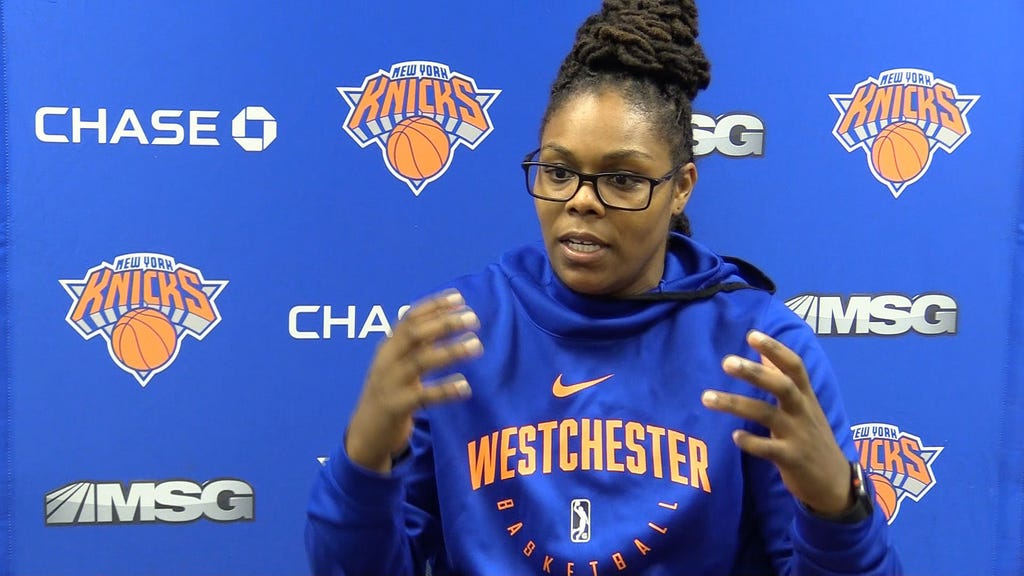
History has been made in the state of New York! According to The Washington Informer, the Westchester Knicks have added former WNBA player Lisa Willis to their coaching staff, becoming the first female coach in the history of New York’s basketball franchise.

In addition to Willis’ hiring, the Westchester Knicks—the official NBA G League affiliate of the New York Knicks—also announced the hiring of Allen Deep as an assistant coach.

Willis, who was the fifth overall pick in the 2006 WNBA Draft, played for the Los Angeles Sparks her first two seasons before continuing her playing career with the New York Liberty (2007-08). While attending UCLA (2002-06), the Long Beach, California, native was recognized as the nation’s best defender by ESPN’s Nancy Lieberman. She graduated as the Bruins’ all-time three-point leader and second all-time in then-PAC-10 history and ranked ninth all-time in scoring.

“The Westchester Knicks continue to be a vital part of our player development program at the New York Knicks,” said Steve Mills, president of the New York Knicks in a press release. “Today, we’ve added two talented coaches who will improve our players’ skills both on and off the court.”

Willis participated in the heralded NBA’s Assistant Coaches Program (ACP), a program formed by the NBA G League’s Player Development department, providing an educational conduit for former NBA, WNBA, and NBA G League players to the ranks of coaching and front office opportunities.

While this generation seems to have come late to the financial literacy table, it doesn’t have to be the same for our children. It isn’t too early to start exposing them to the truth about money. In fact, according to researchers at the University of Cambridge, money habits are formed in children by the age of 7. So starting off early is important.

Financial literacy is something Nigerians are beginning to take more seriously; given the recent wave of awareness from different quarters on the essence of financial education, and the stiff economic environment, there is an urgency to manage scarce financial resources wisely, and also learn ways of growing extra funds.

Growing up, talks about investing in treasury bills or money market mutual funds were not things we heard about. The truth is, most of these financial instruments were not even available when we were growing up. So the talk about money and how to invest it wisely wasn’t a thing back then.

But times are changing, the world is evolving. We now understand the importance of financial skills in navigating life. If we had the kind of knowledge available now about money when we were growing up, we would definitely be better positioned financially.

While this generation seems to have come late to the financial literacy table, it doesn’t have to be the same for our children. It isn’t too early to start exposing them to the truth about money. In fact, according to researchers at the University of Cambridge, money habits are formed in children by the age of 7. So starting off early is important.

The question is: how does one teach children about money? Where do you even start from? There are different ways of inputting money lessons in children (most of which will be discussed subsequently), but the most important thing is starting them off with the right mindset by being an example for them to emulate.

It is a known fact that children learn a lot by merely watching what is done around them. Your actions and words about money shape the ‘money mindset’ of your children.

Most of us have the wrong mindset about money because of the way our parents and guardians talked about money or reacted to issues of money. I remember growing up, most of the ‘money conversations’ around me were about how hard it is to get a well-paying job. So somewhere in my subconscious mind, I believed it was difficult to get a job that pays above a ₦100,000. It took a lot to break out of that mindset. Hence, it is important we portray the right money habits for our children to imbibe.

To create a wealth mindset in children, you need to use the right words around them. You need to exude positive ‘money energy’ around them. So you select your words. Instead of saying things like, “I can never afford that,” say, “I’ll work toward buying that in the next couple of weeks or months.” Instead of “It is impossible to make it in this economy,” say, “The economy might seem tough but there is always a way out.”

You should also involve them in planning for major expenses – like changing the car or buying a major appliance for the house. Show them how you are saving up for the expense or how you intend raising money for the expense, and window shop online together, to see the options available to you.

Discuss your preferred brand and price with them. Let them know why you prefer the brand and the price. If possible, take them along with you when buying the appliance. These are some of the ways your actions will create the right money mindset in your children.

It is also important that you let them understand that money is a scarce resource, hence, the need to prioritize when spending money. Let them understand the difference between ‘wants’ and ‘needs’. Explain to them that needs are essentials that we cannot do without. You can drive this point home by showing them your budget for the month or your shopping list. Show them how you listed the essential needs first and then guide them in drawing up a budget or a spending plan with their needs coming first.

One other way of creating the right financial mindset in children is to introduce them to the concept of value creation. It is a known fact that the amount of money an individual is able to earn, is tied to how much value the individual can bring to the table.  It is important that we make children understand that their ability to create solutions to everyday human problems determines how much money they can make. You can do this by making them earn their allowance, or better still, guide them in raising money for something they want to buy. Help them identify products they can sell or services they can render in return for money.  This would go a long way in making them understand that value creation is key in making money.

Your actions about money also speak volumes. Don’t have an argument about money with your spouse in front of your kids. If there is a disagreement about money, resolve it when they are not around.

In subsequent articles, I’ll share more on how you can incorporate the right money habits into your kids, from as early as 3 years old. And if you have any questions, send them to me through the comment section. Let’s raise financially responsible children together.

About Author

Omolola Olorunnisola is the lead consultant at BullsnBearsNG, a financial consulting firm that specializes in providing financial advise and helping individuals build profitable investment portfolios. You can reach her via this email address bullsnbearsnig@gmail.com.


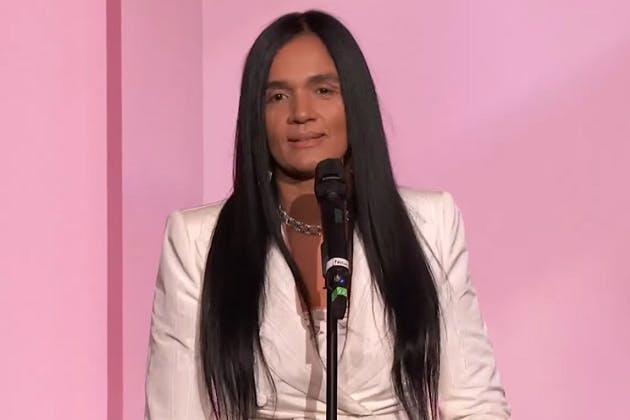
Few days ago, Jayz announced Desiree Perez as the CEO of Roc Nation, according to a press release. Perez will “lead development and growth across all aspects of Roc Nation including music, management, all new business development, philanthropy, publishing, touring, and TV and film development.”

Perez was most recently chief operating officer of Roc Nation; she will be taking over the role from the previous CEO, Jay Brown, who was named vice chairman. Both roles are effective immediately.

“Desiree is one of the most driven women I’ve ever met,” Atlantic Records COO and Co-chairman Julie Greenwald recently told Billboard.com. “I always kid her and say, ‘When are you taking a vacation?’ She never does, because she’s always working. She’s there morning, noon and night, really driving that business. Everyone looks at Roc Nation as synonymous with Jay-Z, but she’s really the engine that drives it.”

According to Crunchbase.com, Perez has been an associate of Jay-Z for two decades and has a long track record running his enterprises. She participated in the negotiation of the Beyoncé Formation stadium tour and played a large role in the Rihanna-Samsung deal. She has been in charge of operations at Roc Nation including labeling operations and publishing.

“I respect Desiree enormously,” UMG chairman/CEO Lucian Grainge told Billboard. “She’s tough yet extremely pragmatic and is someone you can do business with. Operationally, she’s very experienced and has the ability to resolve complex and difficult issues while maintaining a great sense of humor throughout the process.”

For Perez, this news comes the same week she was named “Executive of the Year” by Billboard, with the publication writing: “Desiree Perez has quietly become one of the most formidable figures in the music business.”

Brown, the former CEO who is now vice chairman, fostered and discovered superstar artists including Rihanna and Ne-Yo. He previously served as executive vice president of Def Jam Recordings from 2005 to 2008, and as senior vice president of Elektra Records from 1999 to 2004.

The 2018 U.S. Open final did not go as Serena Williams and her fans had expected. Instead of securing her 24th Grand Slam singles title, the iconic tennis star was defeated by a then 20-year-old Naomi Osaka in a dramatic showdown. During the heated match, Williams clashed several times with umpire Carlos Ramos, who fined her for receiving illegal coaching, verbal abuse, and breaking her racket. Williams later accused Ramos of being sexist in a post-game press conference.

Now, more than a year later, a Manhattan memorabilia dealer has made a hefty profit from Williams’ frustration. According to CNN, the racket she smashed has been sold for $20,910 at a New Jersey auction.

The 38-year-old tennis superstar initially gave her smashed racket to ball boy named Justin Arrington-Holmes, who sold it to a dealer in Manhattan for $500 earlier this year with negotiating, reports the New York Times. “Looking back I wish I’d had someone help me with the process,” said Arrington-Holmes. “I was not familiar with how any of this works. I just wanted to get rid of it.”

The racket was one of a number of sporting memorabilia that sold at Goldin Auctions. Other items included a Jesse Owens gold medal from the 1936 Olympics that sold for $615,000; a signed LeBron James rookie card from the 2003-4 season that sold for $198,030; a canceled check signed by Michael Jordan, which sold for $12,300; and a used Jerry Rice 49ers jersey from 1995 fetched for $27,060.

“This was truly a remarkable event in both the wide assortment of items and the record prices realized for so many of them,” said Ken Goldin, founder of Goldin Auctions, reports CNN.

Earlier this year, it was revealed that Williams joined Bumble Fund, an Austin-based startup that invests in female founders of color and aims to end bias in venture capital.

“I’ve learned how impactful one woman’s voice can be when given a platform to speak and be heard. I am passionate about building on this progress and opening doors for women of all backgrounds, especially women of color, to share their message and trust in their potential to accomplish great things,” she said in a statement. “By joining forces with the Bumble Fund, we will continue amplifying female entrepreneurs and creating a place for them to personally and professionally champion their growth.”


Mariah Morning has recently launched her own business called Mariah’s Munchies in Cleveland, Ohio, in which she sells homemade baked goods and she’s only 4 years old. With her mother, Angela Tatum-Morning, being her source and guide, the very young entrepreneur is already well on her way to becoming highly successful.

According to an interview done by KTNV, Mariah’s story begins when her mother noticed something about the pastries she created. Mariah, who got her love for cooking from her mother and grandmother, has always had a passion for baking as well as cooking in general. She gets her recipes from both her mother and grandmother, who passed it down to her from past generations.

Mariah’s mother noticed that her daughter’s baked goods were so delicious and eventually made the decision to allow Mariah to sell them. The goal was to teach Mariah financial literacy including the ins and outs of managing money and being an entrepreneur at an early age. Angela figured that her daughter can build a stable future by running this bakery. Furthermore, to Angela, this business is a huge dream of her, her mother, and her daughter. She hopes that Mariah’s Munchies also promotes “positive relationships between grandmothers, mothers, and daughters” according to KTNV.

Mariah’s Munchies officially launched with many people from their community including various vendors who came in to taste her delicious inventions. Not to mention, the launch caused a substantial increase in orders for the upcoming holidays. Mariah and her family have also given back with her business by donating some of the leftover Munch Boxes from their launch to Cleveland VA’s Fisher House. All in all, Angela hopes that Mariah’s baking continues its growth since this was what both her and Mariah have always put their faith in.

Love is patient, love is kind, love is this, love is that – these things are all easy to say. However, considering the negative things that happen even when we say we are in love, one cannot help but ask what love really is.

Growing up, I remember writing a very hateful letter to my dad once – the same daddy that I love as well. Sometimes, when our spouse does something we think is ‘annoying’ to us, at that moment, everything called love is thrown away, leaving us with resentment and sometimes, vengeance.

No doubt, there are many classifications of love, but asides the agape kind of love (which sometimes becomes incomprehensible), is there any other form of love that can be said to be unconditional? Is there love that does not change with feelings or deeds? Feelings in the sense of the emotions we have when they do something that goes down well with us, and deeds in the sense of their actions that are pleasing to us.

No doubt we love our parents and we love our partners as well, but, things tend to go wrong when they offend us. This can make us throw every teeny bit of love we have for them away at that instant and almost immediately, we replace these ‘feelings’ of ‘love’ with some form of coldness.

So is love a feeling, or a state of mind?

Some married couples, when asked if they love their spouse, replied that they do not know. This is shocking to me. I thought love was supposed to be the bedrock of every marriage! So if you do not know if you love your spouse or not, what then is the bedrock of your marriage? This, I usually ask myself, especially when I see couples who have lovingly been together for over 10 years, 20 years and more.

Is love based on the emotions of what one’s spouse does for one, or on the deep reality that this person is a good person and always means good for us? Is love actually a feeling that goes and comes, or one that stays and goes nowhere? Or perhaps an accumulation of all the good deeds only, leaving no space for the seemingly bad days?

For Temi, when asked if she loved her spouse, her reply was yes. When asked why and how she knows, a reply was not forthcoming. This made me wonder how love truly is between couples. A school of thought says that when you love your spouse, you love him or her for no reason (this may be why it was hard for Temi to explain why she loved her husband. For her, it was a feeling with a particular kind of depth and awareness that she could not explain).

Another school of thought says one way to know if you love your spouse is to examine the reasons why you are with him in the first place. In other words, the reasons why you are with him would show you if you love him or not. The question now is: if you are with him for reasons that can be classified as selfish in some ways, would you still say you love him? Let’s say you are solely with him for the comfort he gives, his soft-spoken nature, and the fact that he meets all your needs and beyond, would you still call that love? Considering that love has been said to involve some forms of service and not just what we can get or solely what suits us?

Because I have no firm answer to these questions – especially ‘categorical’ opinions about the various schools of thought involved in love and loving a person – I’ll push this to you: What really is love? Do you think true love is when we love with reason, or without reason?

I’ll be looking forward to reading your answers in the comment session.

About the Author

Eniola Olaosebikan is a creative, spontaneous and in-depth writer. She writes poems, fictions, articles, songs, speeches and biographies. She holds a master degree in International Business Management from the Aberystwyth University, Wales, United Kingdom. She also speaks at conferences and seminars. You can connect with her on her social media handles; @Facebook- Eniola Olaosebikan @Instagram – cream_legend @Twitter- TheEniolaOBlog site: https://soulwriteralways.blogspot.com.ng/

If you are a woman in corporate America, you are probably familiar with the term, lean in. In 2013, lean in became a business term derived from the book, Lean In, written by Sheryl Sandberg, COO of Facebook and CEO of Lean In. When the book first hit the shelves, it became a hit. Yet over the years, a number of women have been vocal about the lean in methodology not being as effective for all women. Late last year, former first lady Michelle Obama said that it does not work. And other leaders have weighed in on the matter in agreement.

In all of my readings of other perspectives on the practice of leaning in, I realized that no one had a conversation with Sandberg about their ideas, work, or experiences.

I recently had the opportunity to sit down with Sandberg for a one-on-one conversation about women in the workplace. When planning for our conversation, I knew that it would be important to explore the findings specific to black women in the 2019 Women in the Workplace report. I also knew that it was critical to speak with her about her thoughts about black women leaning in.

During our time together, I asked Sandberg about leaning in, mentorship, allyship, and how women in the workplace can find their voice.

There are a number of women of color, black women in particular, who think that leaning in does not work for them. What is your response to women who think that?

One of the good things about the title Lean In is it’s a very strong title. And everyone thinks they know what it means. One of the bad things about the title Lean In is it’s a very strong title–and everyone thinks they know what it means. The book never said, ‘it’s all on women to lean in all on their own.’ It doesn’t say that. My foundation’s work, from the beginning, has worked on both institutional issues and personal issues. But the name Lean In doesn’t really communicate that. The other thing is when I wrote Lean In, I just didn’t know that anyone would even read the thing. The original draft of the book had no stories, it was just data.

I got persuaded to put my story in. Data comes alive with stories. And there should have been many more stories from people with different backgrounds in the first version of the book. I think that would have solved the problem. One thing that’s super interesting is part of the message of Lean In, and not all of it. Part of it is, let’s make ambition safe for women. Black women are more ambitious.

What I hear is that black women have been leaning in for a long time because there was no [other] choice.

Lean In services women all around the world, is there work that the organization is doing specifically to advance black women in the workplace outside of the data and the stories that are being told?

We go by far the biggest on Black Women’s Equal Pay Day. Equal pay day is a new thing. It took people a long time to figure out that women are paid less than men and it’s 18% for women overall. It’s 38% for black women. From the day of Equal Pay Day, you have to work through  2020 to make the same amount of money a white male makes in 2019. We do a huge push around black women’s equal pay day and I think that really matters.

What charge do you have for white women as it relates to forming allyships?

There’s this [idea] that women don’t help each other. And then across races, women don’t help each other. One, that’s not true. And two, we have to make it not true.

We [white women with privilege] need to make sure that as women we are trying to raise up all of us. It’s why my foundation does a deep dive on women of color in this data. When we solve the problem, it needs to be not just for white women, but for women of all backgrounds

What advice do you have for women as they move forward as they climb corporate ladders, as they lean in, and especially find their voice in the workplace?

We have to tell women not to not ask. Ask for promotions, ask for raises, and demand to get paid equally.

I think women should say, ‘Hey, I know the data. And I know you’re probably paying a lot of attention to it—but I’m a woman or I’m a black woman and on average, we get paid 30% less. I want to make sure that you’ve benchmarked my offer to white men in this role. I’m sure you’re doing that. But, if you could double-check that before I accept this job, I would really appreciate that.’

We celebrate award-winning journalist Hannah Ajakaiye, whose interest is in development and social justice.

While in the university, Hannah decided she wanted to go into journalism after coming across a page called Campus Live where students can write and get their articles published in the national newspaper.

With her interest in public service, Hannah chose to go into journalism because she didn’t want to just write, but also visit places, report their stories and help their situation change. She wanted to be a voice in the society that holds government accountable.

When it was time to graduate, Hannah was then faced with the decision to choose journalism or public relations, but having seen the power of the written word to effect change in the society, she launched her journalism career.

In 2015, she joined The Nation Newspaper and in that same year, she got her first taste of international reporting as a Thomson Reuters UN/SDG Fellow, traveling to New York to cover the 70th assembly of the United Nations.

Hannah has covered stories exposing organisations who engage in activities that have negative environmental and health impact on Nigerians. She also focuses human interest stories, being a voice to the often ignored communities and IDP camps in Nigeria.

In 2016, Hannah won the Most Innovative Reporter award at the Nigeria Media Merit Awards and participated in a 2017 News Corp Fellowship hosted by the Times of London and the Wall Street Journal Bureaus in London. She is also a 2017 grantee of Impact Africa, the funds which she used in reporting on water safety in Lagos, Nigeria.

Hannah is a 2018 Reham Al-Farra Memorial Journalism Fellow and has also been a recipient of media fellowships organised by BudgIT and the International Center for Journalists. She’s also a Chevening Scholar.

We celebrate Hannah for her interest in development, and her passion for ensuring social justice through her work.