Women of Rubies

Author

Esther Ijewere

Browsing

Sexuality is a rarely discussed topic in Nigeria. When it is discussed, it is in hushed tones or cloaked in shame and guilt, especially among young people. Making matters worse, many health-care practitioners bring their biases onboard when dealing with clients, which has led people to make poor choices with lifelong effects. Florida Uzoaru, a public health and policy graduate and the founder of MerDroits, is leveraging the power of the internet to address these issues.

MerDroits — an amalgamation of the French word merde, which means “sex” and droits, meaning “rights” — began officially in February 2016, when Uzoaru opened a Twitter account. Now, every Friday at 6 p.m., different hosts share their stories on sex and sexuality. Some write anonymously, while others reveal their identities.

Uzoaru hopes for a time when everyone can speak freely about sex. With the byline “Destigmatising all conversations about sex,” her Twitter account now has more than 1,000 followers and over 13,000 tweets. MerDroits sparks conversations on “taboo” subjects, such as anal sex, abortion, domestic violence, rape, child sexual abuse, sexual assault, consent, birth control, vaginal atrophy and more.

Through regular conversations on Twitter and Facebook, MerDroits creates safe, judgment-free spaces where young people can talk about their sexual and reproductive health. #MerDroits60 focuses on personal sex stories, and #WhatResearchSays debunks sexual myths with research. Uzoaru believes that technology is central to the key goal of disseminating information about sex rights, as it is affordable, accessible, and provides anonymity.

“Technology has made things easy, cheaper. Being online, you can reach far more people than you would have offline. What about safety? You are not thinking of the dangers associated with long-distance travel,” says Uzoaru.

She also points out that in a society with a weak medical infrastructure, access to sexual and reproductive health is a double burden.

“Many ‘traditional’ healthcare spaces are clogged with cultural bias that considers some subjects taboo, and this jeopardizes access to quality treatment,” she says, adding, “Breaking through the wall is hard because many Nigerians are still uncomfortable to talk about [their] sexual and reproductive health.”

Uzoaru is busy working on a strategy for MerDroits to have an impact offline as well. With three facets to the business — an online shop for contraceptives; access to qualified, unbiased sexual and reproductive health practitioners; and access to laboratories for tests — MerDroits hopes to improve the availability of quality sexual and reproductive health care without stigma.

Composed of six doctors and a pharmacist, the MerDroits online store has kicked off in Lagos, Abuja and Port Harcourt, and Uzoaru looks forward to further growth.

“In five years, I hope we can operate nationally. I hope we can have about 100 doctors, 100 pharmacists and many nurses. There are a lot of things they can do for us, particularly some contraceptives that medical personnel can insert for us,” she says. “Many say that they had always wanted to be part of a group like this. People are also now confident to ask almost any question without that fear of reproach.”

Beyond the internet, Uzoaru looks forward to eventually running a sex clinic where all of these needs can be met.

Source: http://www.radianthealthmag.com


While the brilliant Adenrele Sonariwo was an auditor at one of the world’s top accounting firms, PricewaterhouseCoopers (PwC), she discovered her love for art – a love she found while looking for an outlet for self-expression outside of work.

This passion for the arts led her to quit her enviable job and start the Rele Gallery: a cultural and contemporary art space that offers art for public consumption and at the same time, nurtures the creators of the art – bringing their work to the attention of a larger, global audience.


Since Rele’s launch over two years ago, Adenrele has organized various programs – from book readings to exhibitions – that have attracted talents like Victor Ehikhamenor and Kelechi Amadi-Obi.

Adenrele also has a passion for young artists which led her to create Young Contemporary. The annual project finds five artists working with various mediums, showcases their work and gets corporate brands to sponsor.

In 2011, Adenrele tried to start the first solely Arts university in Nigeria, The Modern Day School of the Arts, and although that didn’t work out, it’s still something she plans to do in the future – and we are definitely rooting for her.

You can keep up with the Rele gallery on Instagram and their website.

Source: Konbini.com


Grammy Award winner, Alicia Keys gets an accolade for saving the world in her spare time.

For a long time, Alicia has championed the fight against HIV/Aids in children across the globe through the organization she co-founded called “Keep a Child Alive.”

The Girl on Fire singer accepted Amnesty International’s Ambassador of Conscience Award for 2017, calling the honour “one of the most proud moments of my life.”

Especially as an activist, as a woman, here in this world, who is driven to recognize the injustice in the world and recognize the unfairness, the inequality, the things that have to change, the ways that we, as everyday people, all of us, have a part to play in that,” Alicia said in a statement.

Also, amongst others the singer has spoken out against gun violence, the refugee crisis and criminal justice reform among other social justice issues.

It encourages me to continue to speak out against injustice and use my platform to draw attention to the issues that matter to me,” she said about the award.

The organization will officially present Alicia with the award on Saturday, May 27 in Montreal, Canada, according to People.

Source: Bellanaija


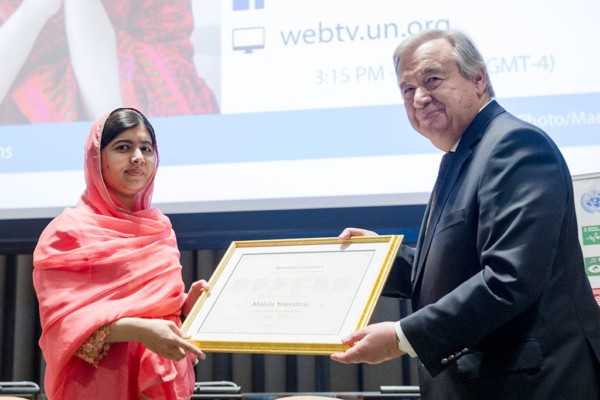
UN Secretary-General António Guterres, has designated children’s rights activist and Nobel Laureate Malala Yousafzai, as a UN Messenger of Peace with a special focus on girls’ education.

Guterres, at a ceremony at UN headquarters in New York on Monday, praised Malala for her contributions to girls’ education even in the most difficult places.

“You have been to the most difficult places, visited several refugee camps. Your foundation has schools in Lebanon, in the Beka’a Valley. You are a symbol of perhaps, the most important thing in the world, ‘education for all’,” the Secretary-General said.

Guterres, while conferring the highest UN award on her, said Yousafzai’s life was “a remarkable example of solidarity”.

“Yet, Pakistan was also such an example. We live in a world where so many borders closed; so many doors are closed. But Pakistan has received seven million refugees with open borders, open doors and hearts – open a symbol of generosity,” he said.

Guterres said he hoped “this spirit can serve as an example that it is not by closing doors that we will all be able to move forward”.

Accepting the conferment, Yousafzai, 19, underscored the importance of education, especially education of girls, for advancing communities and societies.

“Bringing change starts with us and it should start now. If you want to see your future bright, you have to start working now and not wait for anyone else,” she said.

UN Messengers of Peace are distinguished individuals, carefully selected from the fields of art, literature, science, entertainment, sports or other fields of public life, who have agreed to help focus worldwide attention on the work of the UN.

Backed by the highest honour bestowed by the Secretary-General on a global citizen, these prominent personalities volunteer their time, talent and passion to raise awareness of UN’s efforts to improve the lives of billions of people everywhere.

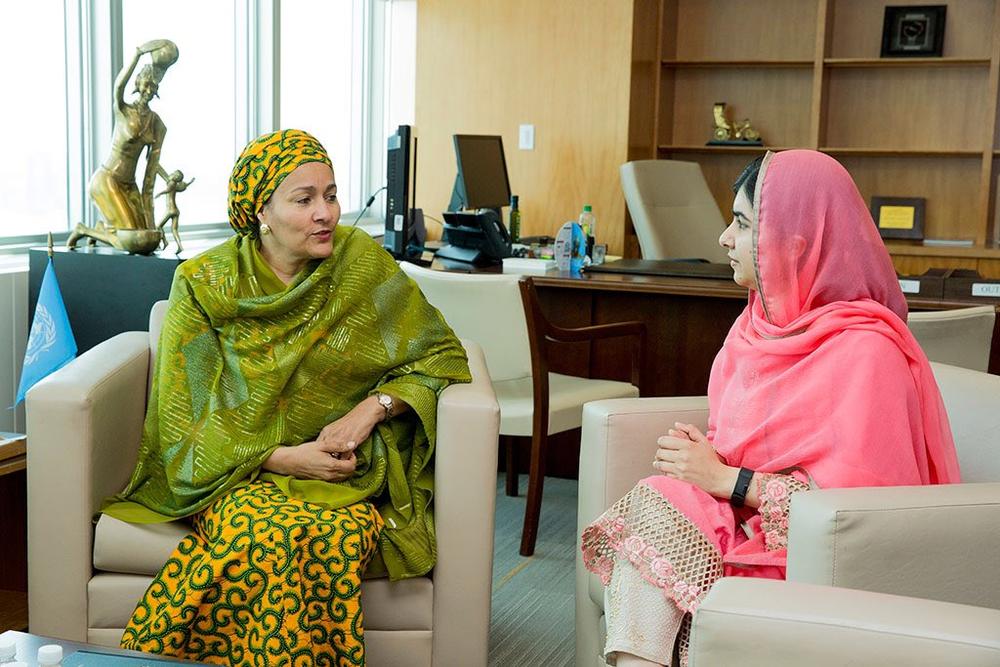
After her designation, Guterres, Yousafzai and UN Deputy Secretary-General Amina Mohammed, conversed with youth representatives from around the world on the theme of girls’ education.

Malala Yousafzai and UN Deputy Secretary General Amina Mohammed. Photo Credit: UN

Malala, in her remarks, said the most difficult time she faced had been from 2007 to 2009 in the Swat Valley.

“Because we were at a point of making a decision about whether to speak out or remain silent. And I realized that if you remain silent, you are still going to be terrorized. So speaking out, you can help people,” she said.

Malala,  who was shot in 2012 by the Taliban for attending classes, is the youngest-ever UN Messenger of Peace and the first one to be designated by Guterres since he assumed office in January.

She said while recovering from the Taliban attack, she realized that “extremists tried everything to stop me and the fact that they didn’t is clear evidence that no one can stop me.

“I have second life for the purpose of education and I’ll continue working on this issue”.

Malala went on to say that brothers and fathers must also support women and girls in the global effort to ensure education for all and, more importantly, “be who they want to be”.

According to her, her father always told people not to ask him what he “did for Malala, but ask what I didn’t do – I didn’t clip her wings”.

Source: Bellanaija

A facilitator/management trainer, she is also a consultant on non-profit management and strategy. A Sustainability Expert and Speaker, she is the founding curator, Global Shapers Forum Nigeria. Owing to her experiences, Osayi sits on the board of several organisations that includes Immediate past Chairperson Women in Management, Business and Public Service (WIMBIZ), House of Tara, Chairperson Zapphire Events, Culinary Academy and Global Dignity, an affiliation of the World Economic Forum in Norway impacting the lives of over 100,000 students over the last five years. In this interview with TOBI AWODIPE, she talks about juggling several responsibilities, why women are not doing well in business and her plans for the future.

Tell us about yourself briefly
I am Osayi Alile, CEO of ACT Foundation, a subsidiary in partnership with Access Bank. I have been doing this for 18 months and before taking up this position, I was CEO at FATE Foundation for nine years. Before joining FATE, I worked at Junior Achievement where I was the Vice-President of programmes. I have always been in this sector: non-profit community development and it is something I have enjoyed doing over the last few years.

I had my primary school education in Lagos before moving on to FGGC, Warri for my secondary education. For university education, I have a degree in Sociology from the University of Lagos and a master in Public Administration from Rutgers University, New Jersey, USA. Notwithstanding, I have done several courses and executive programmes at Yale Univeristy, Harvard Business School, Stanford and so on. I believe it is necessary for everyone to try as much as possible to always continually take themselves to the next level and that is what I have been trying to do in the last few years.

Do you think that is where you are now? The next level?
Life is a journey and you never know where you are going to but I just feel I am practically just starting my life; it’s still at the beginning stages and we will see how it goes from here.

How has your journey been like, getting several educational qualifications, sitting on the board of so many companies and industries?
It has been very eventful and interesting and I have learnt a lot, faced a lot of challenges, and had some successes and quite a few failures as well along the way. I have never told myself, “This is exactly where I want to go,” but when the environment throws different things to you, you learn to cope. Gathering knowledge and education I believe is necessary. I was once asked at a conference if it was necessary to keep getting and education and learning and my answer is: learning is continuous, it doesn’t stop. No matter how much you think you know, there is always something new to learn. I have been CEO of a company for nine years, but this is a new challenge and there are new things to learn here. Education and knowledge is constant.

You mentioned challenges you face; how do you handle them?
I always take a step back. In the past, when things happen, I rush around, trying to find solutions, but now I take a step back and think things through. Challenges would come and you have to be ready because things cannot go smoothly forever. In my mind, I know they will come, I might not know which challenge or where it is coming from but my mind is prepared that if it does happen, how will I manage it? You also need strong people around you and I always employ people that I think are smarter than me, a bit more knowledgeable than I am so that when challenges come, you can have the right people around you to get ideas from.

Also, it’s always good to have a strong board that you can go back to and mentors that can help so you can run to them for help. Even on boards I sit on, we are always available to help because we are not in the grind constantly and they can come to us for another perspective.

You talked about mentoring and truthfully, a lot of women going into entrepreneurship have mentioned the difficulty in getting good mentors. How can female entrepreneurs access good mentors and how can it help them grow?
Mentoring is key and I cannot talk about my success today without talking about all the wonderful people that have walked with me and held my hand. Of course, the major foundation for me is God but there have to be people around you that guide you along the way. I wouldn’t be where I am today if I didn’t have people guiding me. With FATE Foundation, I had Mr. Fola Adeola and he was such a great mentor to me and he still is. So many things happened in my eight year journey with him, so many mistakes I could have made but he guided me and pushed me to do things I never thought I would be able to do. It is essential, especially if you want to get into leadership position, to have someone you can speak to. You need to have a critic and a coach at all times. A critic would tell you what you’re doing wrong and your mentor can be both to you. However, you must be mature enough to accept correction and work with them and plot the direction you want to go.

After your exit from FATE Foundation, is it still serving the purpose for which it was set up?
Yes. I am still close to FATE and still relate very well with the founder. The present CEO is someone I talk to constantly. I believe it is one organization that has pushed itself out there, constantly working with entrepreneurs. This has been my field in the last few years, building businesses, working with entrepreneurs and helping businesses to be sustainable long term.

Tell us about ACT Foundation and the purpose it is serving?
We just started recently and it is my new baby. We are working in four major areas of health, environment, leadership and entrepreneurship. We are trying to work with communities, give them grants and see how they can improve the communities they’re living in. in a few months, we are hoping to expand and push it out more, work with other NGOs and other community based outfits and see how we can improve communities based on those four pillars.

You’re a facilitator and management trainer as well, what does this aspect entail?
It is not my full time job but something I love to do. In a week, I teach at one or two places, schools, conferences, seminars and so on. I would describe it as a calling because I believe there is so much to share with people and also an avenue to learn. There is no way you can sit in a room with thirty people and you’re speaking to them about something and not get something in return.

How do you joggle all your responsibilities: sitting on several boards, being a full time CEO, teaching and mentoring?
(Laughing) I am a very organized person and like to plan everything. Also, I have a passion for small businesses and once you have a passion that you feel obligated to, it becomes easier, doesn’t feel like work. I sit on several boards and enjoy seeing them grow, I enjoy seeing them enjoy what they do and this doesn’t feel challenging. I will put it down to organization, preparation and time management. Relationships are key as well; I can’t work with you or sit on your board if I don’t have any form of relationship with you. We don’t necessarily have to be best friends but we need to have some form of understanding, the same values system, be on the same page to some extent. It is necessary and easier because when you’re saying something or trying to make changes, they know it is coming from a good place.

A lot of women are going into businesses now but several fold up quickly. What do you think they can do differently to change this?
I believe there are several factors responsible for this. I have been involved with small businesses and enterprise for 14 years now and I am happy to say many women are going into businesses and from my observation over time; women tend to enter businesses from passion or a hobby. Most don’t realize that though it is a small business, the foundation has to be in place from the onset. Just like building a house, you have to ensure that the foundation is done properly. Even if it started out as a passion, once it becomes a business, you have to do things properly. A lot of women don’t know how to handle the financial part of their business, taking it day by day. There are no defined structures or plans in place and it is difficult for an investor or bank to take this kind of business serious.

Also, women find it hard taking risks and so you see a business a man and woman started at the same time with the man’s own doing better after a while. However, I wont say it is all bad because things are changing steadily. You sit in a room with ten women, seven are running businesses and at least four are doing exceptionally well with strong foundations in place. Any woman that wants to venture into business must realize that every business is a risk but must ensure the foundations are in place from the beginning.

The ratio of women to men taking advantage of available opportunities like loans, grants and the likes is still very lopsided and poor. In your experience, why is it so?
It still boils down to the risk factor mostly when it comes to loans. Out of 10 people looking for loans or grants, eight would be men with two women. Women are sadly averse to taking risks and it is sadly being passed from generation to generation. Women can take loan from friends and family members but when it comes to structured loans, they are absent.

Regarding trainings, sometimes it is lack of information; women are not following and reading what they should be reading. When I was chair at WIMBIZ, we had so many opportunities available but we had to consciously make noise about them to get the women to follow through. Even with the YouWin programme then, I can tell you confidently that 85% of the people that applied were men and the government was puzzled. This was free money, there was no repayment needed and still women didn’t apply. They had to do another programme for just women alone and WIMBIZ had to get involved to ‘force’ women to apply. I tell women that the same force they use in bringing up children, they should apply it to their businesses and the difference would be clear. Happily, the younger women coming up are pushing and trying to change the status quo.

You’re affiliated to the World Economic Forum (WEF), tell us how it applies to Nigeria and what benefits can be derived from it?
It is an international body and I became a member and Young Global Leader several years ago. It is a platform for coming up with suggestions on how the world should be run. In it, you find private sector, government, non-profit, everyone is there, coming up with different solutions with issues and it affects every single country. Nigeria hosted the WEF Africa four, five years ago. I started the Global Shapers Forum here in Nigeria and it is mostly for youths, to come up with unique solutions to issues peculiar to them. We have a few YFGLs and Global Shapers and everyone is doing their own thing. I have a forum, Global Dignity and it has held in 13 states, reaching over 100, 000 students in the last six years. This is my pet project and it is affiliated to the parent WEF.

What has been the impact of Global Dignity so far?
Global dignity is all about dignity of labour, of life, and trying to push the students to think outside of the classroom. We try to open their minds to think big, to think beyond where they are presently. We teach them on the dignity of working to fend for themselves, to be independent and innovative. We have set up clubs in different schools called Global Dignity Club and we now have ten in the different schools we work with.

How do you think we can make the economy more appealing to foreign investment?
The world has become a global village and no country can work in isolation. Over the last few weeks, some changes have been happening and I’m hoping it continues like this. It is a slow process and everyone is feeling the pinch. There are opportunities out there and despite the recession, people are becoming billionaires daily, new businesses are taking off and doing well. Things are hard but there are opportunities and we have to remove our eyes from problems and think on managing available opportunities. This is where foreign collaboration is good because nobody can do it alone, you never know what can happen.

How can SMEs and startups be encouraged in doing business, as the environment and present infrastructure is not exactly favourable?
I believe this government has started making little efforts in this regard. The amount of days to register a business has gone down and things like that. The process would take time and there are several new policies in place now to help SMEs; the government is thinking in the right direction and we need to remain patient but insistent on what we want.

What can be done on the issue of double taxation, which is crippling a lot of startups?
Not to support the government but when you go and find out, a lot of people re not getting their information from the right places. Someone says he has six taxes to pay and the next person beside him says the same thing or even increases the number. If you do diligent checks, it is not as much as people claim they are. I always tell entrepreneurs to check everything for themselves and not depend on word of mouth. Once you pay all necessary and legal taxes, anybody that comes to you asking for extra money, bring out your phone and record the transaction. Ask questions, find things out for yourselves, do your own research so that you don’t fall victim to thieves.

On another note, how do you relax?
I’m a spa addict, I like massages and going to the spa. Every person has to take time out to wind down. Lagos is stressful, Nigeria is a stressful country and you wont realize until you leave the country and come back. I either go to the spa or watch series all day; it helps me de-clutter my mind.

What legacies do you want to be remembered for?
I am a helper; I don’t believe that because one door has been opened to me I cannot now take other people along with me. One of the things I want to walk away with is looking back and saying to myself that along my journey, I helped X number of people and they themselves helped others. I want it to be like a ripple effect and I tell others this as well. When my time is up, I want people to be able to say I was gracious to them and I opened doors for them and their lives and businesses became better by virtue of meeting me. In another ten years, I might think differently but at the moment, I believe God has called me to help and to work with people.

For women that look up to you, what would you tell them?
I haven’t started yet so they shouldn’t look up to me (laughing), I’m just starting my life. This generation thinks things must be immediate and fast but it is a journey, there is no easy way to get things and we all have to work hard to get what we want. Of course, there would be challenges but always put your best foot forward and do the best you can. I will tell women: life is a journey and as you journey along, enjoy the process, enjoy every moment and live in it. You don’t want to look back and begin to have regrets of what you wanted to do but were afraid of doing.

Culled from : Guardian

 

Olubukola Adio is wife, mother and a business owner. A graduate of business administration from Yaba college of Technology. Bukky worked in the banking sector before relocating to south Africa to pursue a career in nursing, On her return she started a clothing store out of her passion for humanity, after encountering several kids who were clothe less, she started donating to these kids and some orphanage homes, this informed her decision to start her clothing store “Clothezoo”. Bukky shares her inspiring journey in this interview.
Childhood Influence
I will say a yes to that because I practically grew up not knowing my mother. I lost her early in life and I have a polygamous background, even though I have a caring father the absence of a mother growing up meant I had to do a lot for myself . I have always looked inwards rather than look in the wrong places to fill the void. So growing up I had a little poultry in the house and I sold eggs, made and sold clothes, I sold cold drinks, marketed computers and a host of other little businesses that bred the entrepreneurial spirit in me. So I would say yes my childhood had a major part to play.

Meet Bukky!
My name is Olubukola Adio nee Okoya. A wife, mother to 3 wonderful kids and a business owner. I attended Yaba college of Technology. Studied business administration and I’m also a chartered administrator. Prior to now in terms of work experience I had my industrial attachment at First Bank then my Service year at Tantalizers. I worked at This Present House as an admin staff before temporarily relocating to South Africa to pursue a career in nursing .

Starting “ClothesZoo”
I have always had a thing for clothes; it has always been in my head that I will do this one day as I was compelled to go into this business when I saw a lot of clotheless kids when I returned to Nigeria and So there was no looking back once I started . I started by giving free clothes to some street kids before delving into this business full time. I hope to come out with our own branded clothing soon that will match quality with affordability and also support people who can’t afford to clothe themselves. With my clothing store “Clotheszoo” I hope to be able to make an impact not just as a clothier but one who also gave hope to those who can’t afford to clothe themselves.


Women Who Inspire me to do more
People’s success stories are a great source of inspiration to me .It works like a rush of adrenaline in my system. People like Oprah Winfrey who I think is a standard of success for women inspire me, also Iyanla Vazant, Nkoyo Rapu, Grace Aiyedogbon and every striving and thriving woman out there.

Reward
It gladdens my heart when people walk into my store but also make reference to hearing about me by or two people I clothed for free. This make me realize there is something I am getting right and that’s my reward.

Challenges
Finance is always a major issue and it’s further compounded by the seeming uncertainty in the financial market. Funds for expansion is readily not available, interest rates are most unfriendly and the lack of support for growing businesses from regulators

Giving to the less privileged
I run a socially responsible business that gives back at every given opportunity .We’ve and are still supporting orphanages with clothes for the children. We do a regular give away during festive seasons and clothe street kids

Never felt like giving up
It has never crossed my mind to want to give up. Primarily because I’m living my dream, to be successful one has to be happy on the inside and that’s what propels me in addition to having a wonderful and supporting husband. Not forgetting an amazing family and friends.

I am a woman of Rubies
A woman of rubies exemplifies moving from adversity to a position of strength. I started from nothing then from a suitcase, to a shop to where we are right now and we still aspire to be bigger than this. Just like an airplane that takes off against the wind I keep breaking through adversities and a shining example to other women. The fact that I also give freely to the less privileged makes me a woman of rubies.

Women are not weak!
I want women to understand that we have a role to play in the scheme of things. God created Man then Woman as support .What we must understand is this; what must support another object should also be stronger or of equal strength as the object. God did not create women weak; we are not the weaker vessel.

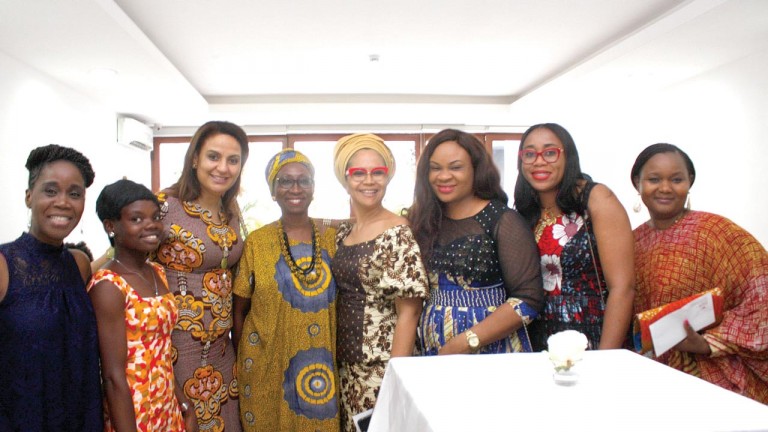
In recognition of Nigerian women who’ve made strides in Leadership, Enterprise, Advocacy and Business, Leading Ladies Africa recognized Nigeria’s 100 Most Inspiring women at the LLA 100 Women celebrated 100 Most Inspiring Women at a special gala and awards night tagged the LLA 100 Women Gala.

The LLA 100 Women Gala is a follow up to the 100 Most Inspiring Women In Nigeria list published on March 8, this year in commemoration of the International Women’s Day.Themed “Celebrating Leadership, Diversity & Impact,” the #100 Women Gala recognizes and spotlights the achievements of Nigerian women who have made tangible impact and contributions in four unique spheres of the society.
“At Leading Ladies Africa, our key objective is to promote leadership, diversity and inclusion for African women – a call to have them participate in activities that ensure they lead better, fulfilling, and ultimately more productive lives,” says Francesca Uriri, Founder, Leading Ladies Africa.

“As Nigerian women and Africans, it is important that we begin to tell our own stories. We need to begin to craft the narrative that we want the world to know about us – that we are successful, courageous, determined and bold! At LLA, we have a clear intent of inspiring a new wave of Nigerian female change makers, leaders and entrepreneurs, and recognizing these 100 Women is an important way to achieve that objective” she emphasized.

Speaking at the event, Omotola Oyebanjo, Head Strategic Communications and Media, Union Bank said: “This year, Union Bank celebrates its 100th anniversary and for those 100 years, we have supported and empowered women to achieve their dreams,both within the bank and externally. It is therefore a pleasure to support this amazing list of 100 impressive ladies making an impact in Nigeria. As their bankingpartner of choice, we look forward to supporting them and other such industrious women as they move on to the next phase of their incredible journeys.”

17586551_247966609007479_5459855447076896768_n

“Boldness and courage are synonymous with leadership” said keynote speaker, WISCAR Founder, Amina Oyagbola, who spoke on ‘Leading with Boldness and Courage in times of Change.’ “As leading ladies, we must banish all negative conditioning from our lives.  We must fight for the change that we seek in our nation and in our world.Now more than ever, the proper response to the challenges we face lies in principled, resolute, imaginative, courageous, and focused leadership by each and every one of us.”

Harping on the need for women to collaborate with and support each other, Ndidi Nwuneli, Founder, Leap Africa, and Co-Founder, AACE Foods, said: “The concept of “small is beautiful,” is overplayed, and we women need to learn to be authentic, to be vulnerable to ask for help. On leading and creating a succession plan, she said: “A great mistake any leader can make is to take the thought of succession for granted. As a leader, you must think beyond now. A woman must have a succession plan regardless of how young her business is.”

In addition to the 100 honourees, the Leading Ladies Africa Gala was also attended by Power Women in the Corporate and Business sector, including: Adesuwa Oyenokwe, Publisher TW Magazine, Aishah Ahmad, Chair Person, WimBiz, Chizor Malize, CEO Brandzone Consulting, Nkiru Olumide-Ojo, Head Marketing Communications, Stanbic IBTC, Osayi Alile, CEO, ACT Foundation, Ini Abimbola, CEO, Thistle Praxis, Tampiri Akemu, MD, Sesema PR, Okaima Ohizua, Executive Director Transcorp Nigeria, Owen Omogiafo, Chief Operating Officer, The Tony Elumelu Foundation, Esther Ijewere, Founder Women of Rubies, Sasha Alabi, Glory Edozien, Founder Inspired By Glory, Ewemade Emokpae, CEO Shakara Couture, and others.

17438512_1699401256742852_1562086868344897536_n

The Leading Ladies Africa Gala was made possible by the support of Union Bank Nigeria, Avon HMO, Aramex Nigeria, Fidelity Bank, Gazmadu Photography Studios, Sesema Public Relations and Zerophur Concepts.

See more photos from the event;

Adetuke Morgan during her performance

Osayi Alile, CEO ACT Foundation

Ozoz Sokoh

Stephanie Obi

Kene Rapu receiving her plaque of recognition

Somkele IdhalamaAdesimbo Bello-Ukiri, CEO Avon HMO

Adesuwa Oyenokwe

Eleanor Goodey, Founder, Eleanor Goodey Photography

One more for the roadGuests having fun!

Stephanie Buhari of CNN

Amina Oyagbola, Founder, WISCAR during her Keynote Speech

Crystal Chigbu, Founder, Irede Foundation (1)

Mfon Ekpo, Founder, The Discovery Centre (1)

Women in Successful Careers (WISCAR) a non-profit high level and structured mentoring programme for entry/mid-career professional women, held its fundraising cocktail at the Ruff n Tumble premises in Ikeja GRA last Sunday.

The event was also a testimony time as mentees, who have been mentored by other women in the organization, revealed how their mentorship have helped them in their various careers.

Here are the faces at the relaxing evening on Mother’s Day.

Source: Guardian.ng

American reality star Mama June Shannon has revealed her incredible weight loss transformation after months of keeping it a secret.

With a gorgeous first photo released exclusively in People Magazine, the reality star shows that she has gone from a Size 18 to a size 4 following months of intense workout as well as surgeries to get rid of the loose skin on her arms, neck and body.

She will also be documenting her journey on a new show called “Mama June: From Not to Hot”

Source: Bellanaija

I hate to break it to you, but if your life seems extra awful lately, you could be the reason why. I couldn’t figure out what was leeching the enjoyment from my life until I researched happiness. The realization that I was the reason for my long bouts of self-pity was shocking. Let me tell you, that knowledge was eye-opening and left me feeling distraught and frustrated.

Instead of dwelling on how miserable I felt, I decided to figure out how to rid my life of my nasty bad habits and find true happiness.

  1. Resisting change

Change is inevitable. Although it’s scary, change is such a positive part of your life. Fighting change traps you in a land of no progression. You remain stagnant, with no means to better yourself.

Change isn’t the problem here – your resistance to the inevitable is! Go with the flow and don’t be afraid to embrace trends and welcome new ideas. The fastest way to understand change is by getting involved and helping getting into the swing of things.

  1. Living in the past

People stuck in their glorified past miss out on all the incredible opportunities of the present. Six years ago, I was a skinny, confident, determined and unbeatable ballroom dancer with a six-pack. The more I look back at what I was, the more awful I feel about myself and my circumstances now. I realized it’s time to start loving myself for who I am at all times, instead of who I was int he past.

Choose to look at your past fondly and move on. Remember the lessons learned and the memories made, but choose live in the moment.

  1. Waiting for the future

There’s nothing wrong with looking ahead and planning for the future, but saying, “I’ll be happy when…” stops you from finding satisfaction in your life now. No matter how you finish that sentence, that long-awaited moment will never bring the happiness you’re seeking.

Instead, focus on being happy now. The future is unpredictable

4. Pessimism

Pessimism makes you (and everyone around you) miserable. Negativity only contributes to your self-pity and makes you feel worse. And honestly, nobody wants to hear you complain about how terrible your life is.

Shake off the negative and stop letting bad vibes define you. Look for the good things (no matter how small they are). Change your attitude by remembering everything isn’t as bad as it seems, and look for the light at the end of the tunnel.

5. Staying home

Staying in with your cat every weekend keeps you from an adventurous life. You’ll convince yourself that your life is a bore. If being boring is your personal goal, then you’ve met it, but most people want to be likeable and interesting.

Get up, go out, get dressed up, try something new and strive to be the dynamic character you’ve always wanted to be. Have courage and treat each day as a clean slate. Have the confidence to break out of your comfort zone every once and a while.

6. Envying

Constantly comparing yourself to others is exhausting. There will always be a “cuter” couple, a “thinner” woman or a person who seems to have unlimited funds for amazing trips.

7. Get over it.

Start pointing out the things you love about yourself. You’re just as good as everyone else and constant comparison only makes you feel (and appear) less like the amazing person you are. Who knows, someone may wish they had your life because you’re unaware of all your blessings.

Lastly, Being ungrateful : Grateful people are happier than those who aren’t. Count your blessings — it’s not a waste of time. Even the most miserable person on earth can find something they’re thankful for. So, express your gratitude, one thing at a time.

Once you understand the ways you’re killing your happiness, break those bad habits. Psychologist Timothy Pychyl said, “Breaking a habit really means establishing a new habit.” Give it a try. What do you have to lose… your happiness?”

Source: Family Share