
Women of Rubies

Tag

Esther Ijewere

Browsing

Repressed emotions refer to emotions that you unconsciously avoid. These differ from suppressed emotions, which are feelings you purposely avoid because you don’t know exactly how to deal with them.

When you realize that you are repressing your emotions, you have to take drastic measures to stop it for your emotional and physical health.

I have struggled with this for many years,  and it  got intense when life happened.

I look back at some of the challenges I dealt with silently this year, and wonder how I survived.

I was in between repressing and suppressing my emotions just to stay grounded.

I battled with arm injury for many months, was on strong medications, yet I put on a brave front.

At some point, I couldn’t sleep for  months as my pain kept me awake. I’d binge series on Netflix or  pace my apartment, just to get my mind off the pain. Sometimes I practice “Mindfulness” through meditation.

I was struggling with balancing my duty as a parent, working,  home schooling my daughters, and staying on top of things. I’d speak with folks and act “normal” even while I was breaking apart, drained and numb.

I have lived the past 11 months with repressed and suppressed emotions. Perhaps all of my almost 4 decades on mother earth.

I was encouraging people to stay positive, and telling them to keep faith, and keep pushing, yet I as dealing with my own physical pain that almost made me relapsed into depression, maybe I did and wish not to call it that.

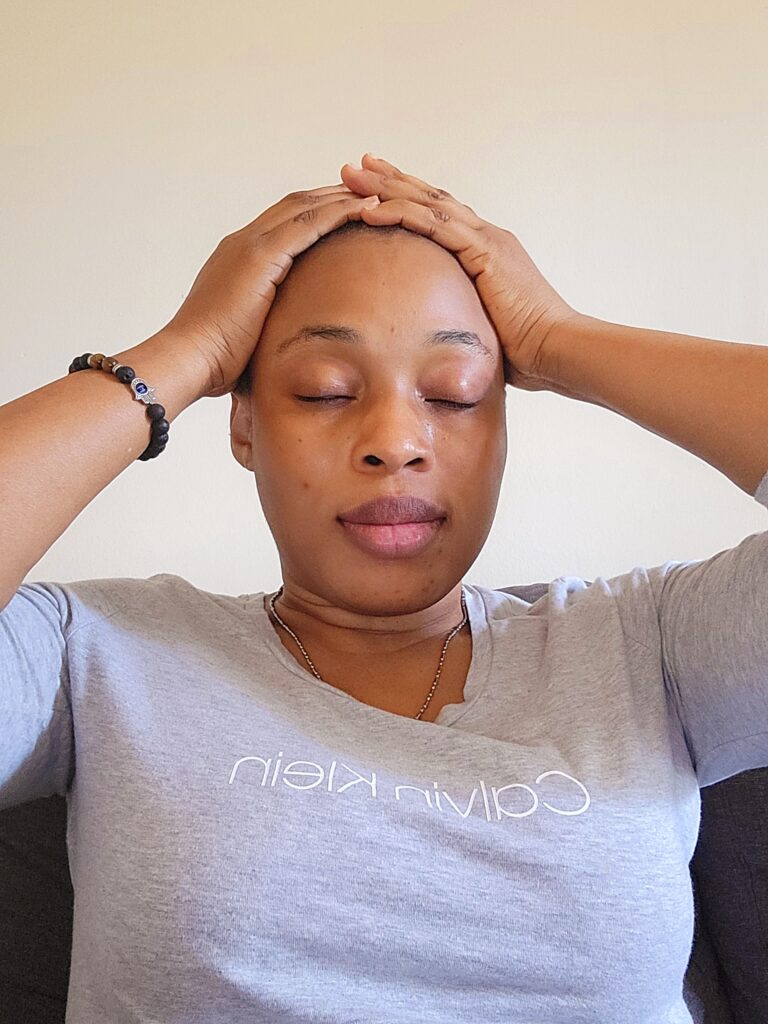
I couldn’t lift the affected arm to say “Halleluyah” . Just giving a visual representation of how bad it was lol.

I was sleeping on one side for  months, couldn’t sleep on my back either, as my shoulder blade and back were badly affected.

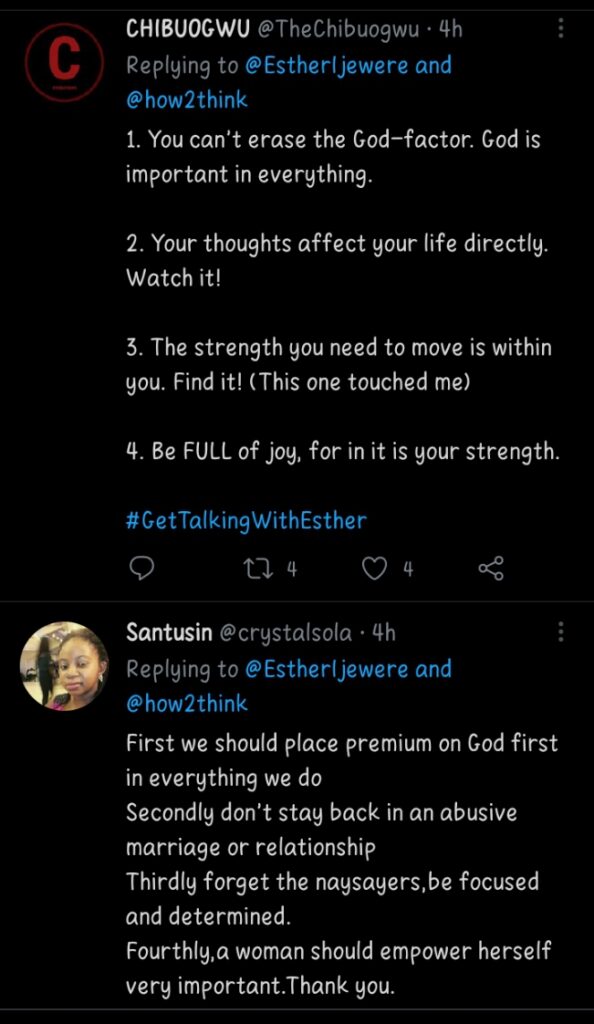
Esther Ijewere – At the beach In June 2021 for “mindfullness” while battling with arm Injury

While dealing with my physical pain, I had other matters that threw me off balance; from breech of privacy,  Gmail account hacked, laptop bugged,  trespassing, and  attempted theft. Just to mention few…

I almost lost my mind, but for God, my commitment to his word and prayer, plus Therapy.

Through my pain I found a stronger purpose in Christ. I started praying better and objectively without season.

I even turned my prayer to conversations, like God was sitting right in front of me.

I can’t also downplay the role Physio-Therapy played in my healing journey.  Grateful to my Physio-Therapist (s). Two amazing humans who focused on my healing, and made sure I didn’t downplay the level of pain I was In. I guess they saw through my “Repressed emotions” approach. *Laughs*.

However, I had to also address my repressed emotions through therapy, on the count of separating spirituality from reality. I committed more time to Therapy.

I became  intentional with Therapy,  digging deep into my repressed emotions, and sharing some of my painful experiences with my Therapist (s).

What emotions are you repressing or afraid to confront?

How do those emotions affect your life ?

What measures are you taking to address those emotions?

What kind of emotions are you trying to repress? Anger, frustration, sadness, fear or disappointment?

Perhaps you grew up hearing things like:

  • “You don’t have any reason to be sad.”
  • “Calm down.”
  • “You should be grateful.”

Childhood trauma is one of the major causes of repressed emotions, and could lead to chronic illness if not addressed.

It’s not always easy to recognize when you’re dealing with emotional repression, and there’s no definitive test you can take.

If you do have repressed emotions, however, you might notice a few key signs. These signs might show up in your feelings or your behavior — both toward yourself and other people.
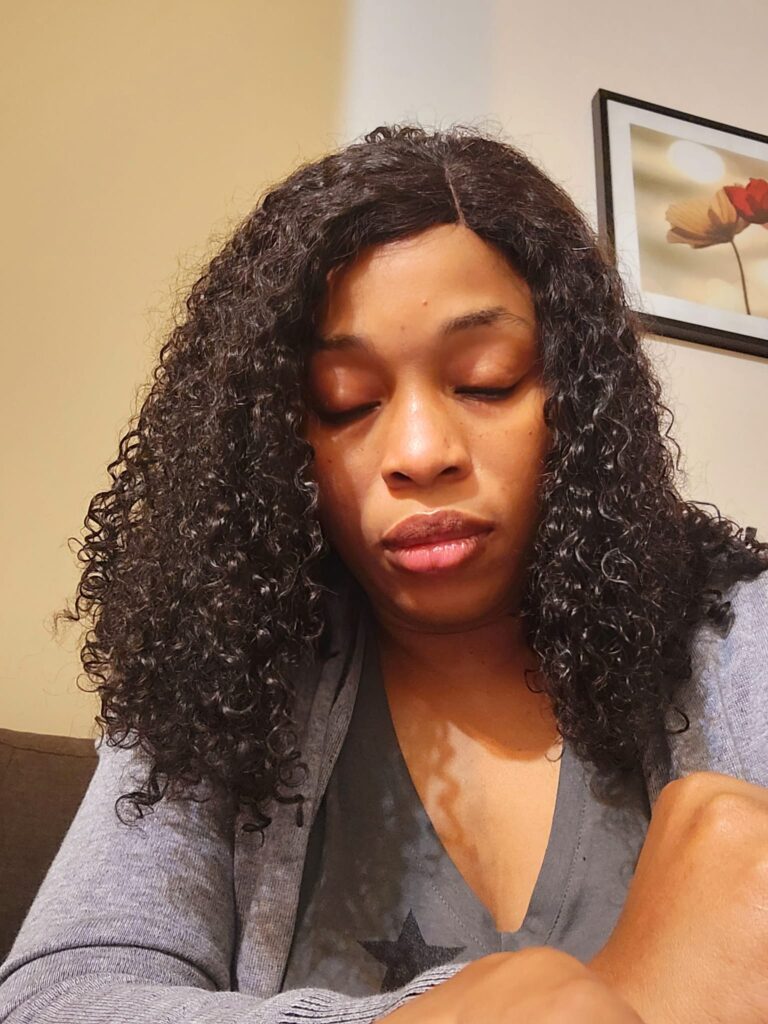
People with repressed emotions often have trouble naming and understanding their emotional experience; I do. This can make it tough to describe how you feel to others, but it also makes it difficult for you to recognize when certain aspects of your life aren’t serving your needs.

You might:

  • regularly feel numb or blank
  • feel nervous, low, or stressed a lot of the time, even if you aren’t sure why
  • have a tendency to forget things
  • experience unease or discomfort when other people tell you about their feelings
  • feel cheerful and calm most of the time because you never let your thoughts linger on anything significant or upsetting
  • feel distressed or irritated when someone asks you about your feelings

Emotional repression can affect your ability to:

  • talk about things that matter to you
  • build intimate relationships
  • understand how other people feel
  • encourage of praise yourself

You might also notice that you:

  • go along with situations instead of expressing what you really want and need – I’m guilty of this one.
  • use  TV, social media, or other activities to help you numb and avoid feelings you don’t want to explore
  • spend most of your time with other people to avoid being alone
  • exhibit passive-aggressive behaviors to deal with situations that upset you

If you have trouble expressing or regulating your emotions, talking to a mental health professional is a good first step. A therapist can help you explore potential causes of repressed emotions and offer guidance and support as you begin to address these reasons.

Therapy also provides a safe space to:

  • work on naming and understanding your feelings
  • increase your comfort level around talking about emotions
  • learn more helpful methods of emotional regulation

What worked for me?

  • Using “I” statements. Expressing my feelings with phrases like; “I feel confused. I feel nervous. I feel terrified.”
  • Focus on the positive. I do this through therapy and positive affirmations, using the “I statements”. I often say things like; “I am healed”, “I am whole”, “I am resilient”, “I am a magnet for light and love”, “I am winning at life”, “I am highly favoured by the divine”, “I am at peace”, “I have will-power”, “I am fine”….You can choose what resonates with your situation or midframe.
  • Let go of judgement. No matter what emotion I am feeling , I am learning to avoid  judging  myself I   shouldn’t feel a certain way. Instead, I try finding a reason for the feeling: “I feel nervous because I just read something that triggered me”. “I am afraid because I don’t feel safe”. etc
  • Make it a habit.  I name  and share my emotions with the people I feel closest to, and encourage them to share their feelings, too. That way I create balance.

Above all, I take therapy seriously.

I am still on a journey of healing, and releasing baggages and things that no longer serve me.

I hope you find comfort in my article and confront your repressed emotions before the end of the year.

You can also read my article on Understanding the Impact of Trauma Here  

Sending love, light and peace to anyone on this journey of releasing repressed emotions.

You are not alone.


At least since I became a single parent.

I try to stay away from sensitive issues to avoid triggers, sadly I can’t sit this Sylvester Oromoni issue out.

The 12-year-old who was killed at Dowen College by his seniors for allegedly refusing to join a cult group

My motherhood hormones won’t let me turn the other cheek on this case.

His dad’s account of the situation as revealed in the interview with Punch is heart wrenching 💔

They tortured and de-humanized Sylvester Oromoni.

Nobody should be treated that way.

Poor boy, he would have wished someone teleported and saved him from those wicked humans.

I have not been myself since I watched that video, it re-opened old wounds, especially when I was falsely accused of theft in the University & tortured.

I know I have shared that story many times, but it’s a part of my life that killed & awakened another part of me.

The torture & humiliation – I can’t forget.

Torture could make you wish for de.a.th.

The chants of “Oju ole re” as me and my friends took the walk of shame to the shrine we were taken forcefully to prove our innocence….

The look of disgust from onlookers as we walked down to Ijebu Igbo road….

I repressed my emotions for years, and blamed myself instead for following my friends to Bisoye’s apartment in Oru, Awa -Ijebu, that year.

From the moment I confronted my repressed emotions, I became overly ⚠️ cautious when I visit people & my threshold of pain doubled up.

I thought I was some hero for many years because I’d rather keep silent than confront situations, even when I was unhappy. I”d woman up…

I didn’t go for therapy…nothing.

Just went about my life till the wound re-opened after another episode of violence & psychological abuse.

I’m shaking writing this…no worries I’m good.

When I have the courage to confront situations, I become empathetic almost immediately.

I had a safety concern at home the other day, and instead of calling the police immediately, I focused on my luck of getting out of the situation.

I felt pity for the human who could have hurt me.

It shouldn’t be so, but it was a denial and numbing stage I’ve gotten used to.

I went about my day, and woke up at 5.37am, processed what had happened the previous day, and realized I should have called the police immediately.

I should have gotten this human arrested, she could have hurt me badly if she had a sharp object.

Self-blame kicked in again.

Trauma & Torture can mess your whole system up, no matter how many therapy sessions you go for.

Let’s not even talk about the PTSD jab that puts you in fear and flight mode constantly.

You are easily startled and frightened.

The pain lives rent free in your head.

You may experience very strong feelings of anxiety, sadness every now and then.

You are healed, but the reality of being human or hearing other people’s story triggers you.

You don’t want to be grateful at the expense of another person’s pain too. Perhaps that’s what I feel towards Sylvester’s death.

I have experienced other forms of pain in life, even worse than the false theft accusation, but that experience is hard to forget.

Perhaps it’s the residue of the torture, and the reality that those boys could have killed us, and made it look like an accident.

The sight of armful objects they kept as last resort if we didn’t confess.

All for what? N22k gold chain.

They were cult boys too.

I wish I slapped the day light out of Bisoye when she begged after we were vindicated, but I just wanted to go to our hostel, and get away from the humiliation.

They said I should always wish her well, but Karma won’t. That’s on what goes around.

Perhaps I need to document this in a book for closure.

For those asking us to take it easy on the boys who killed Sylvester, I hope you never experience what that little boy suffered.

I pray your kids never find themselves in that kind of situation.

I pray your kids never experience bullying and torture.

I hope they are not hiding their experience from you, because you don’t pay attention to them.

I pray you never lose a child 🙏🏿

I pray you don’t raise bullies who would become menace to the society.

Don’t ever judge a pain you’ve not experienced.

There are many people living with different childhood traumas, experienced at school or their home.

Some of us have mastered masking our pain just to look the part society demands, even when we are standing with our broken parts.

Justice must be served! Not just for Sylvester alone, but to encourage silent victims of bullying in our schools to speak up and break the silence.

I said I was “good” at the beginning of this write up, I’m triggered actually, but I’d check in with my therapist.

Therapy….I’d address on another post.

I just had to get this off my chest 😩.

May Sylvester’s soul rest in peace 🙏🏿 🕊

#Justiceforsylvester #dowencollege

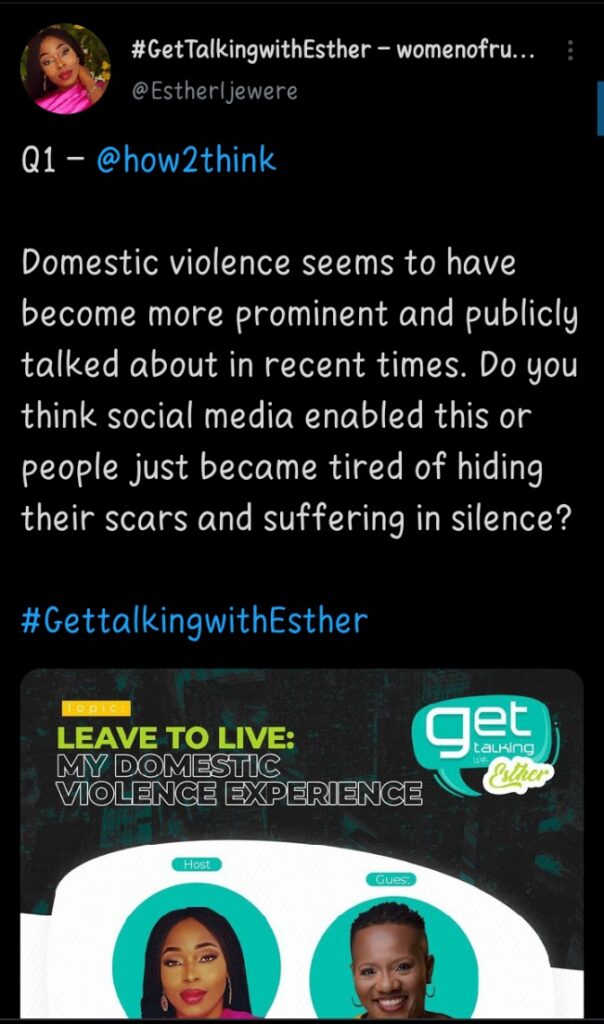
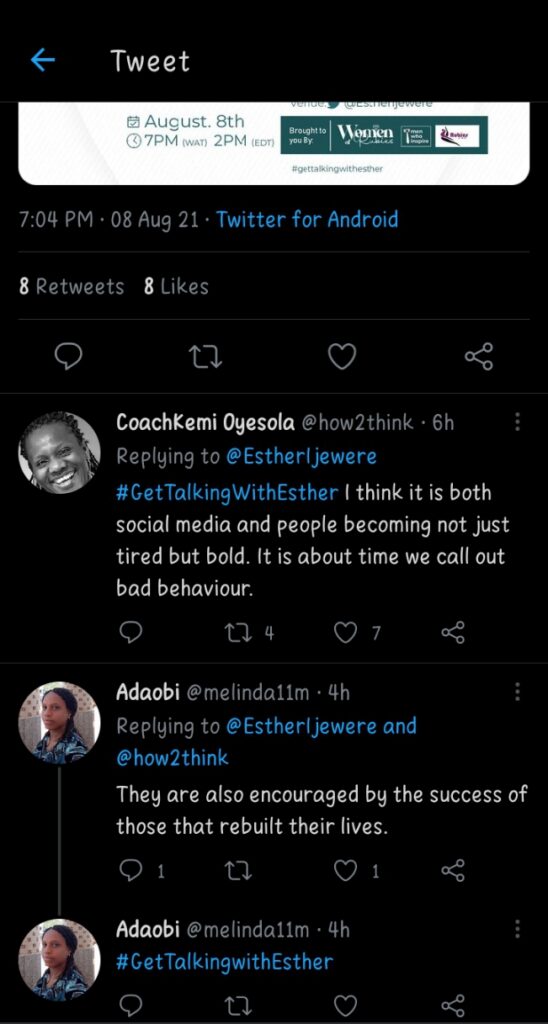
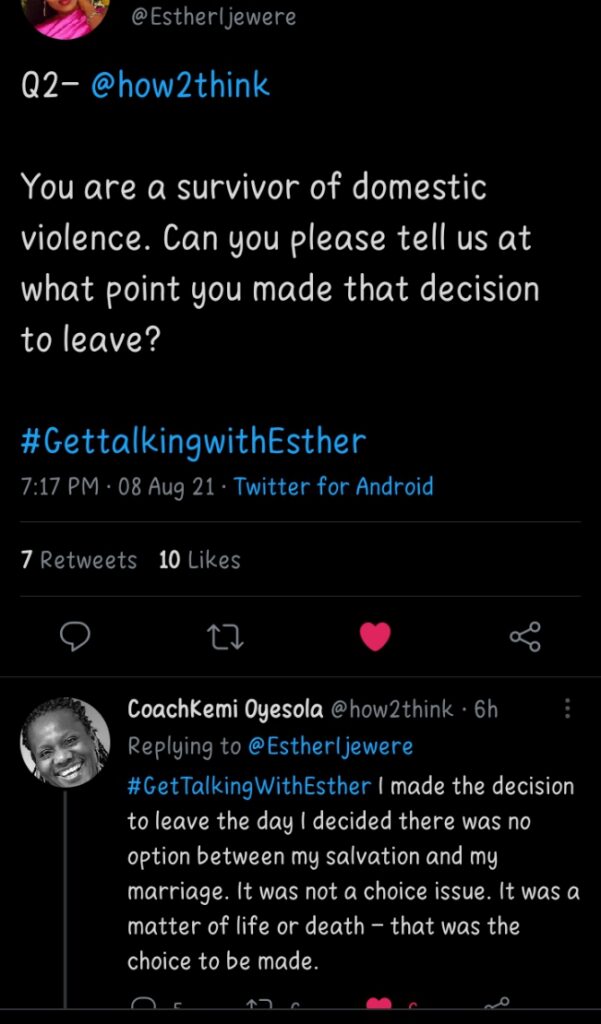
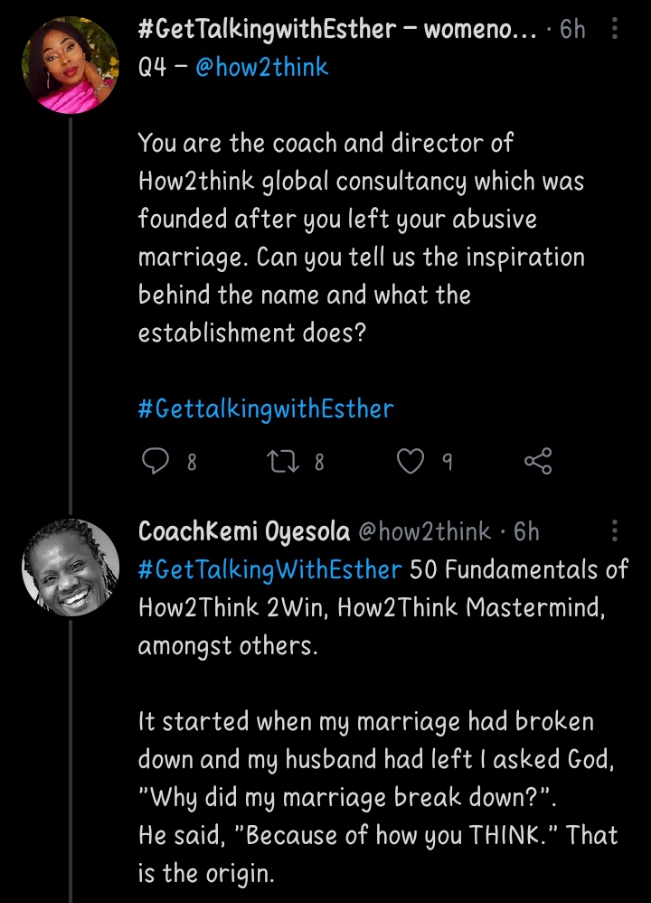
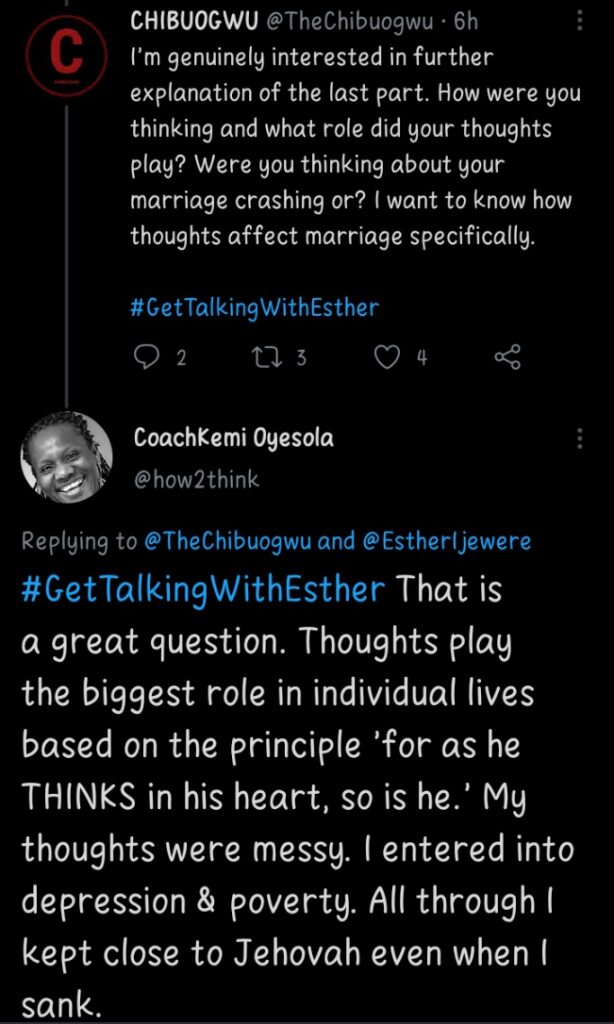
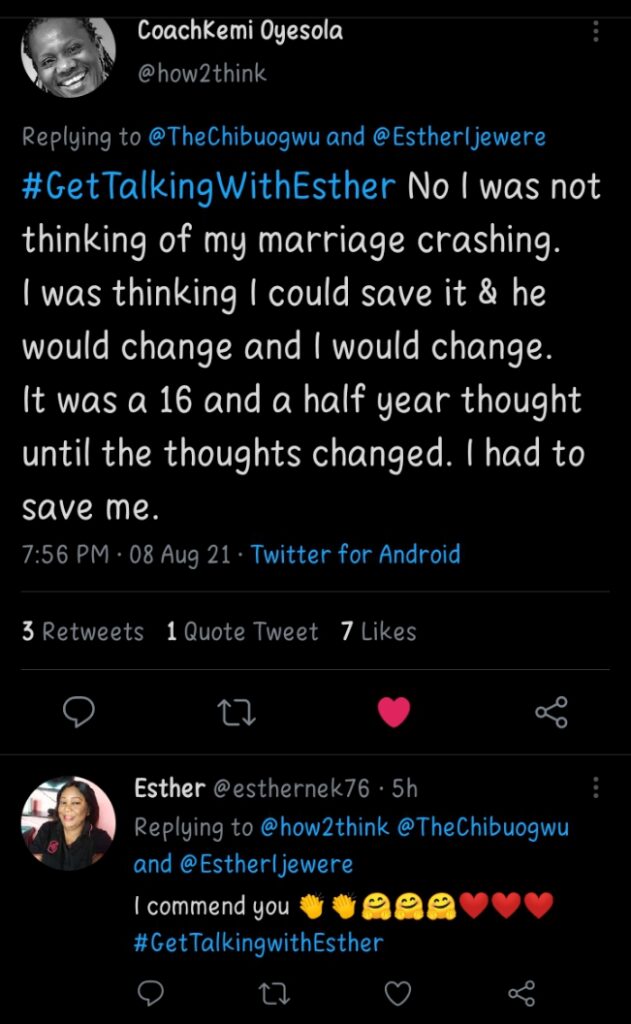
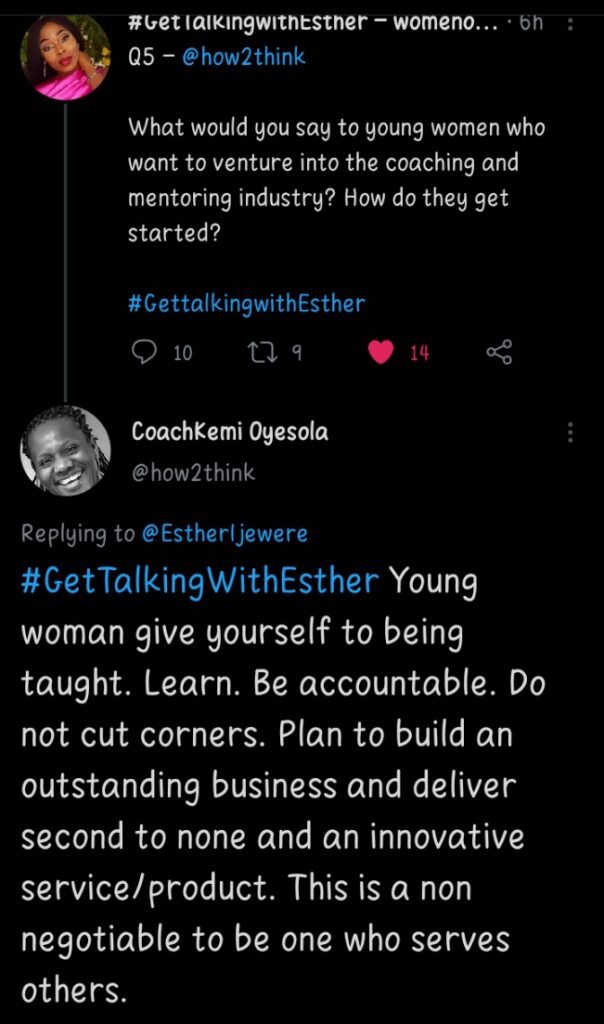
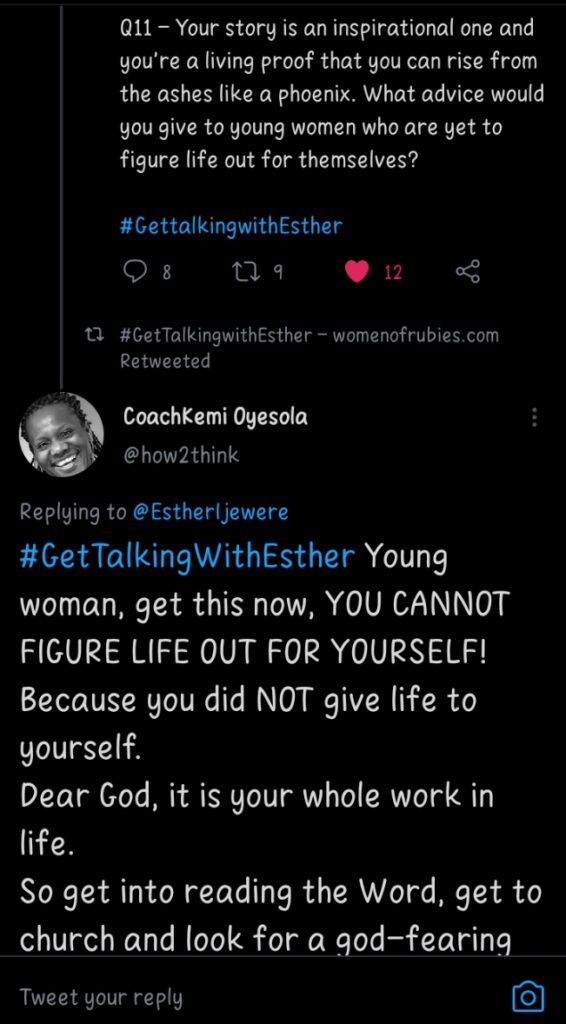
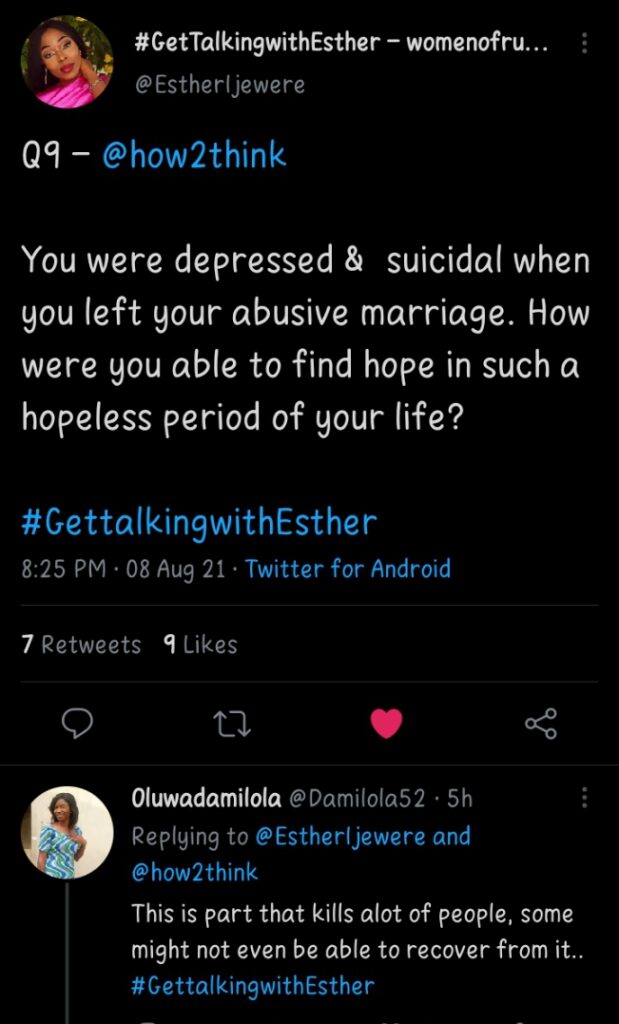
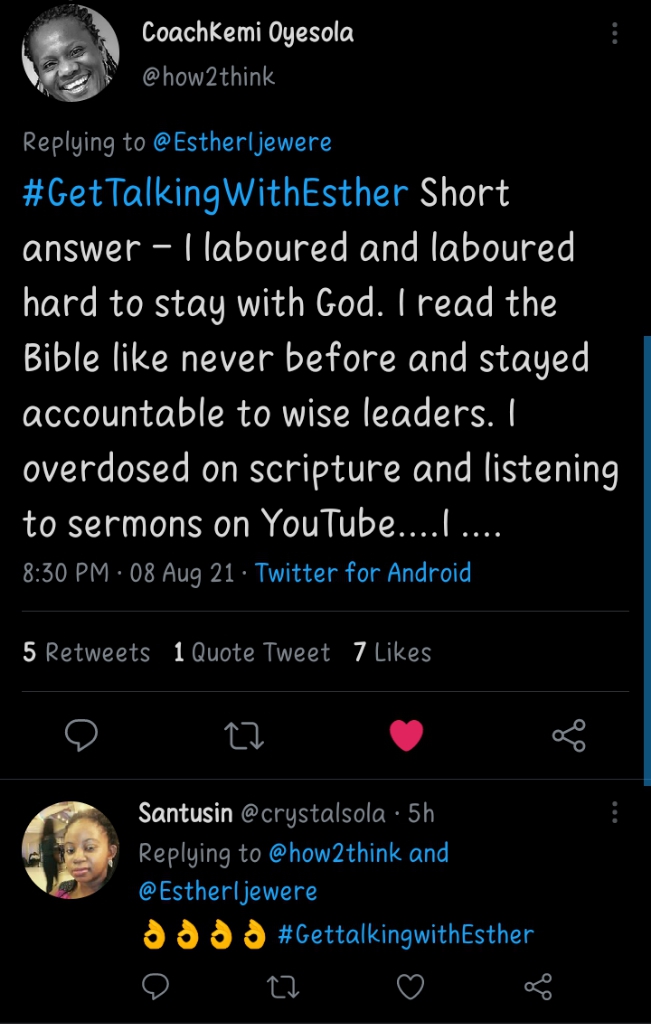
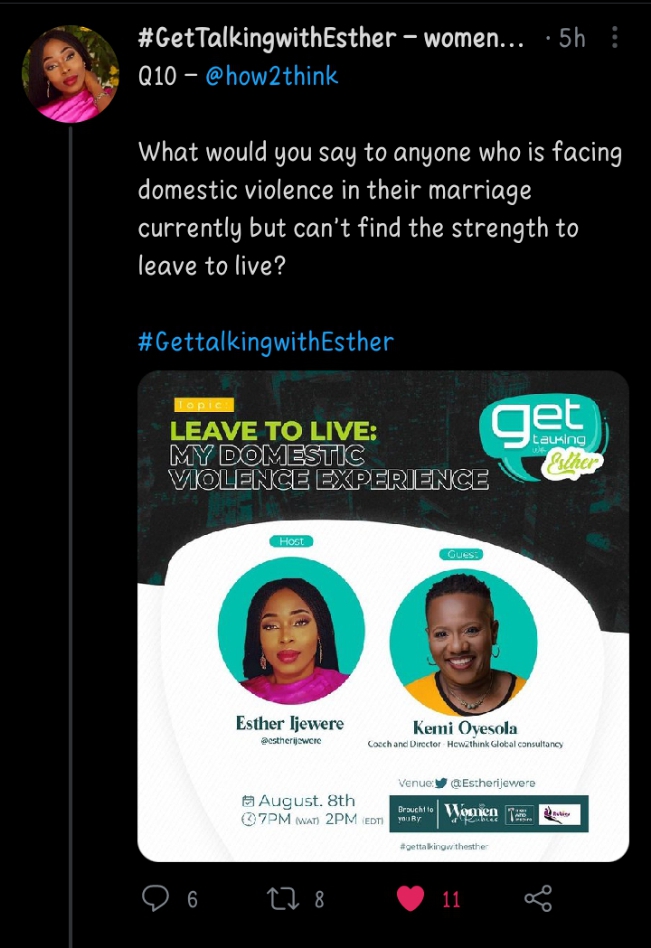
On the 8th of August, 2021 and to mark the one year anniversary of the tweet chat #GetTalkingWithEsther, hosted by Esther Ijewere, Kemi Oyesola, a coach, director of How2think Global Consultancy, and survivor of domestic violence was invited to speak on the topic “Leave to live: My Domestic Violence Experience.”

It was a moment of real truth and baring her journey, her mistakes and most importantly, her recovery and rebirth process.

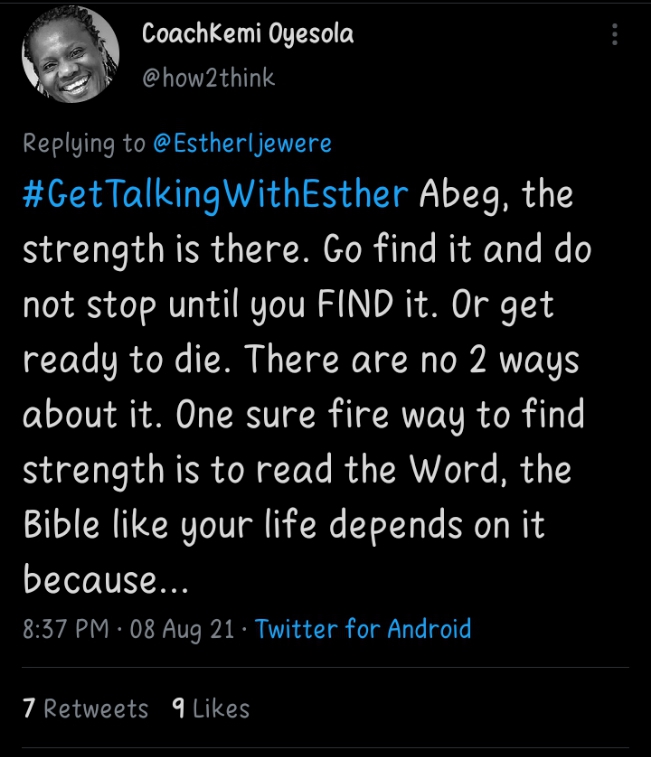
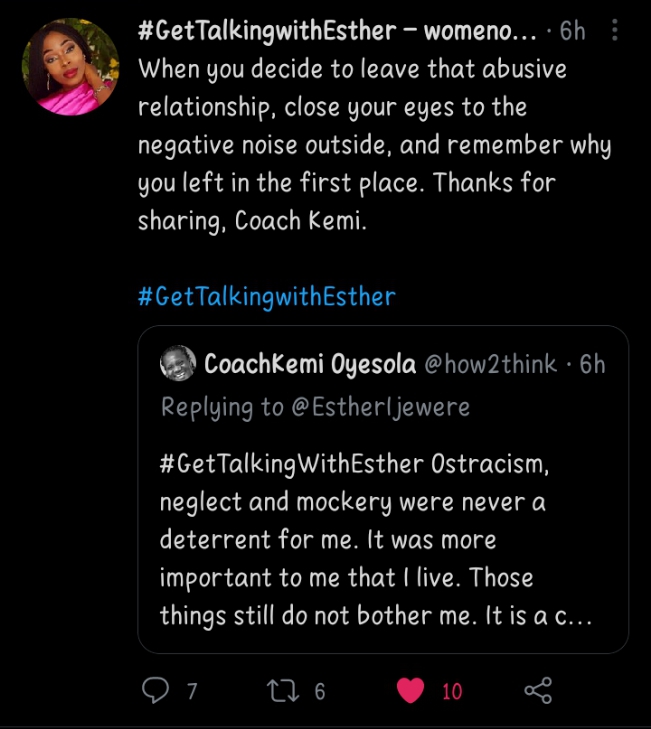
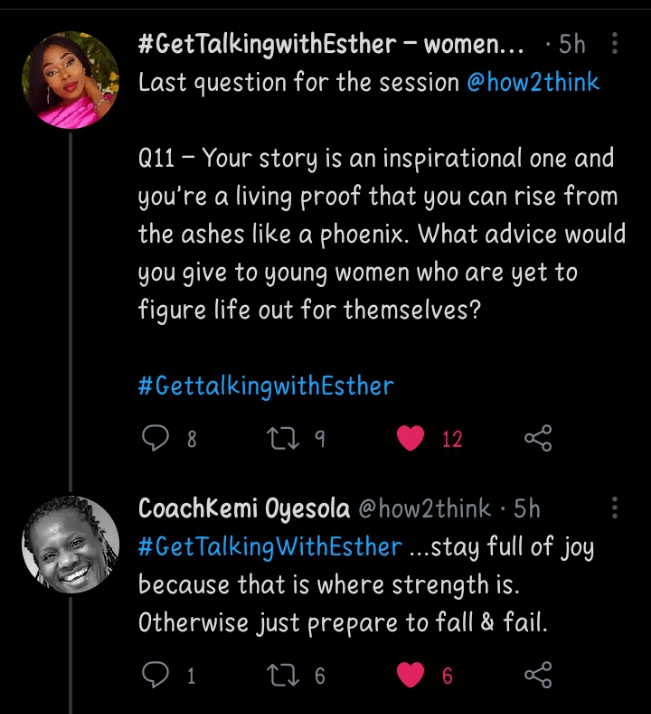
Kemi Oyesola, our guest at the popular tweet chat dropped a lot of nuggets that had attendees reacting in awe.

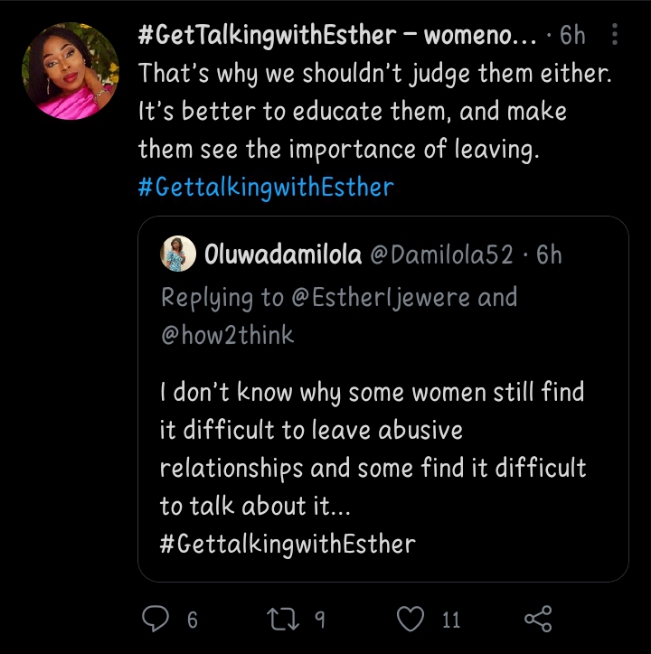
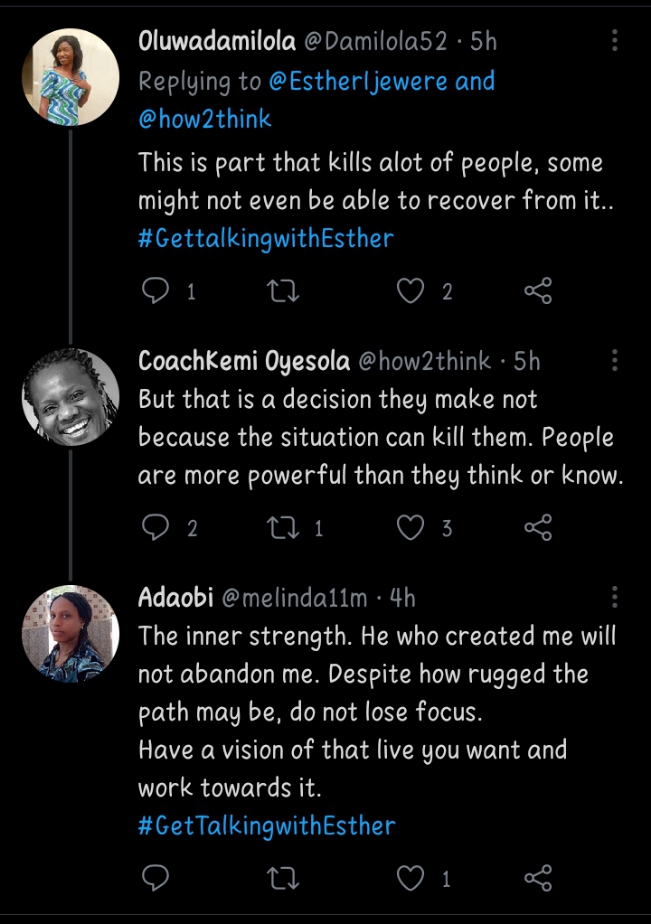
Here are excerpts from the conversation and how it all went down.


This tweet chat was a moment of learning and unlearning and one thing that was constant in our guest’s response is the God-factor and how much role your thoughts play in shaping your life.

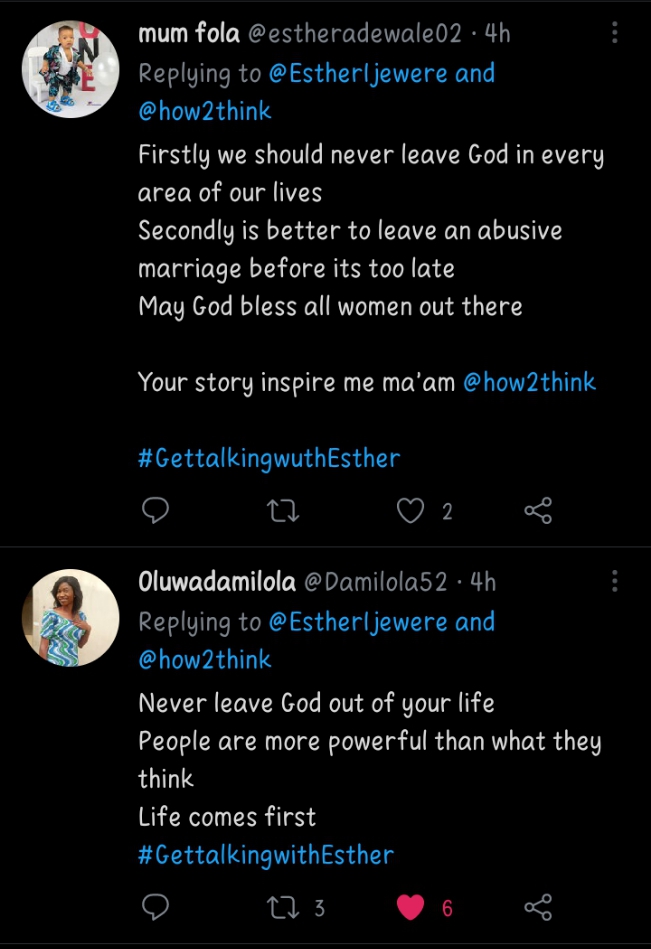
Those who attended the tweet chat testified to how much they learned when the Host asked them to mention what stood out for them. Here’s what they have to say about it.

Coach Kemi Oyesola is a living proof that you can rise from any hopeless situation. As long as you can find the strength, courage and determination to do so.


Find out more about the rest of this insightful tweet chat via the Twitter handle of the host or simply follow the hash tag #GetTalkingWithEsther on Twitter for updates on the next one.

London photographer Nadine Ijewere just made history as the first Black woman to shoot a cover for American Vogue

Ijewere is no stranger to firsts; she was also the first woman of color to shoot a British Vogue cover in 2018. When speaking to the cut  magazine about the lack of diversity in the industry she said, “When I was studying, there were virtually no female photographers of colour…I feel like in doing this I’m proving to younger girls from a similar background that it’s achievable. It also feels like part of a broader shift within our culture to include far more diversity, both behind the camera and in front of it.” 

The Jamaican-Nigerian photographer worked with fellow trailblazer, Gabriella Karefa-Johnson, who served as stylist and fashion editor for this historic cover. In January 2021, Karefa-Johnson made history as the first Black woman to style a Vogue cover. As she continues to break down walls, Ijewere hopes her work will pave the way for more Black women in a historically male-dominated industry.

“As a young Black woman, I didn’t imagine that I would one day have the opportunity to shoot a cover for American Vogue. I’m so honored to have been able to work with my fellow sister Gabriella Karefa-Johnson. I hope this encourages Black women that there is space for us to take in this industry,” the 29-year-old said. 

Source: Thecut.com


2020 ended leaving me feeling emotionally exhausted , even while I consciously detoxed at intervals through out the year, When  I laid my head on my pillow on December 31st ,  I felt I used up all my energy, and I could hear  my body screaming “Slam the brakes, Esther”. I listened….only to wake up on January 1st to the sad news that a friend passed away due to Covid19.

This is my situation, but truth is we all get emotionally exhausted at some point in our lives. It is normal to experience an overdose of one emotion or another and deal with their hardship and struggle, and only through this experience can we truly see the beauty of life. But when the emotional exhaustion turns into a perpetual experience of negative emotions, it isn’t healthy anymore.

Emotions are the driving forces that build our character, and they give flavor to our lives. The more we understand emotions, the better we can deal and nurture them. The ability to deal and nurture our emotions and the emotions of others is called emotional intelligence.

Emotional intelligence is the capacity for identifying the signs of emotional exhaustion. It is natural to be emotional, show emotions to oneself, and share and express them to others. It is a crucial part of the individual’s personal and social development.

But can we really recognize our emotions in a way so we don’t get entangled by them—in a way that we get emotionally exhausted?

The Meaning of Emotional Exhaustion

Emotional exhaustion is the state when negative emotions overwhelm the present moment—in any aspect of life—over and over again,. Today, emotional exhaustion is closely linked to emotional labor, which when poorly managed results in being burn out

However, emotional exhaustion can also be an outcome of social, familial, friendly, or intimate relationships.

Regardless of the source, when you repeatedly feel the following:

  • Worried
  • Bored
  • Anxious
  • Unworthy
  • Unhappy

This increases the emotions of becoming even more:

  • Frustrated
  • Fearful
  • Doubtful
  • Angry and
  • Annoyed

And you reach a state of being emotionally exhausted—a state of dullness, confusion, and tiredness.

“Repeatedly” means daily. Every day, deep inside of you, there is the feeling of one or few of the above-mentioned emotions, overwhelming your present moment, playing a part in your daily activities—robbing a significant amount of your physical and mental strength and vitality.

What Are the Symptoms?

The symptoms are subjective or objective indicators that you feel within yourself. The first symptoms feel mostly like:

  • Tiredness – a subjective indicator that you feel somehow exhausted (physically or mentally), which at the same time might also be true that you’re not if your statement has the inclination of complaining.
  • Boredom – an objective indicator that gives you the unpleasant feeling of not knowing what to do—being disengaged from positive emotions, feeling dull, and empty.

Further symptoms would be the constant feeling of being unworthy of the things you do or unhappy with the things you do, regardless of your accomplishments.

Feeling constantly tired (physically) and disconnected from what is going on around you is a symptom that you’re emotionally exhausted. These symptoms lead inevitably to a behavioral pattern that evolves into a chronic habit of complaining. This leads to the objective signs of emotional exhaustion, which impacts professional and social life.

What Are the Signs?

The signs of emotional exhaustion can be detected through speech, tone of voice, body, and facial movements. Normally. they are to be detected by an outside observant like a professional or a loved one—any trusted person with an understanding of how emotions work.

Here are two things we need to do to identify the signs (as well as the symptoms) of emotional exhaustion:

  1. Improve self-awareness for more precise detection of the signs (the same goes for the symptoms as well);
  2. The openness to share our situation, feelings, and emotions with a trusted person—an observer with enough competence on the subject matter who can inform us about any signs of emotional exhaustion.

3 Signs of Emotional Exhaustion

The signs of emotional exhaustion are hidden in your emotional expression, and they show through your mood and the way you react and manage your emotions.

When lacking self-awareness, the most efficient way to identify the signs of emotional exhaustion is to seek professional support or ask your loved ones to have a closer look at your behavior, your reactions—like body posture, facial movements (micro-expression), and verbal or non-verbal expressions.

I know, it is not easy to share such personal feelings and weaknesses with others. But one thing that we must understand is that we are all interconnected, and our personal growth is dependent on communication and interrelation with the people around us. And that applies especially when things go wrong.

If you don’t open to your closest, how can you nurture your positive emotions and express positive qualities and virtues to others?

Self-awareness detects emotional exhaustion. As a meditation teacher, it is my daily business to analyze, study, and share my opinions about emotions. The meditation as the fundamental element of reviving the self-awareness can help to manage this whole subject matter.

My research in this field has proven that we can detect signs of emotional exhaustion once we objectively experience the following moods:

1. You Feel Tired Very Quickly and Very Often (Physical Exhaustion)

It is nothing but natural to become physically exhausted after performing physical activity. After a rest, the body recovers, recharges strength, and replenishes energy. Usually, in this condition, you have the stamina and the resilience to absorb many of the below-mentioned signs. But once the physical exhaustion becomes chronic, the body cannot replenish its energy that easily. That’s when you will feel fatigued.

2. You Lose Interest in Engaging in Daily Activities

Chronic tiredness results in a mood that expresses demotivation, idleness, annoyance, and frustration. These are signs of emotional exhaustion—showing no motivation, no vitality for engaging in or exploring new things in life.

3. You Feel Insecure, Incapable, and Unworthy

The need for isolation arises and you reach a mood where you feel insecure. Doubtful and anxious, you begin to question your capabilities and your self-esteem sinks lower and lower. The cocktail of these feelings and moods creates so much confusion, resentment, and sadness up to a point of complete emotional exhaustion—a state of burn-out.

How to Prevent or Get Over This Exhaustion?

One organic way to recover from emotional exhaustion: Meditation. I meditate alot .

  • Prevent the development of emotions—in other words, learn to identify the emotion before it arises and cut its process of evolvement. For example, the feeling of boredom leads to annoyance, and that leads to rejection, irritation, frustration, and so on.
  • Once a negative thought arises and creates a destructive feeling, it is a sign that negative emotion is about to erupt. The idea here is to disrupt the creation of this process and exchange it with a constructive mental and physical activity.
  • As emotions are the result of the unconscious repetition and acknowledgment of feelings that are supported by the constant creation of thoughts, it is imperative to understand that the root cause of emotional exhaustion is found in the creation of these thoughts.

Final Thoughts

One thing worth remembering is that no human being is spared from the turmoil of emotions. You, me, and everyone else suffer and enjoy the effect of the emotions that we create for ourselves.

The above technique sheds light on how you can identify, understand, and move through the whole spectrum of emotions to get over the emotional exhaustion and achieve emotional balance. This way, you can safely experience being the victim as well as the beneficiary of your various emotions.

Know that emotions are there to be analyzed and understood, not only to be enjoyed or avoided. Embrace them, handle them, and don’t get lost in them.

Stay Safe, Stay Safe and keep your thoughts positive in 2021!

Do you sometimes feel you are not good enough, or think your best isn’t enough? This article is for you.

Confidence — it’s a powerful word and an even more powerful feeling. Can you remember a time in your life when you felt confident? A time when you felt unstoppable… on top of the world? Now imagine you could feel that way more often. What impact would that have on your health and well-being, your career, your relationships?

Not only does being confident feel good, it helps you seize potential opportunities, take more chances and make that big change or take the next step in your life and career. Life is crazy, busy and beautiful. Figuring out how to be more confident is just part of the journey.

So how to be more confident?

Lack of confidence can stem from many places.

Perhaps, growing up, your parents said a certain career was outside your reach and you could ‘never do that’. Or maybe you have a belief system that says ‘I could never start my own business, I’m not entrepreneurial’.

Perhaps you had a bad experience which opened the door for self-doubt to creep in. Or maybe your inner self-critic is telling you ‘you can’t’ or ‘you’re not good enough’. Maybe (ok, likely) you’re comparing yourself to someone else – a friend, colleague or spouse.

Or perhaps you feel there is something missing in your life – a relationship, the dream job, kids, a degree or title.

Here are 9 powerful ways to be more confident

1. Uncover What Gives You Confidence

This is personal, so it will vary from person to person. There’s no one size fits all approach to confidence and what works for one, won’t always work for another.

How can you figure out what gives you confidence? Think about a couple times in your life when you felt most confident. Now, think about what was it about those times that made you feel so empowered.

Was it the environment you were in? Something you were doing? A feeling you had? The more you get clear about this for yourself, the easier it will be to tap into when you need it.

2. Be True to You

One of the surest ways to lose confidence is try to be someone else. One of the best ways to build your confidence? Be true to yourself

When you’re trying to be someone you’re not, every part of you resists it. You are not everyone else. You are you. And the more you can understand who you are and what you value the stronger you will be.

When you stray away from who you are, you lose confidence because it’s ‘just not you’.

How?

Think about what makes you, uniquely you. Write it down. Think about what you value and what’s important to you. Write that down, too.

3. Stop Comparing Yourself

Nothing zaps your confidence more than comparing yourself to others. Especially now, with social media and the wonderful opportunity to judge yourself against so many others! Lack of confidence comes from a gap in where you see yourself and where you think you should be.

Imagine you are preparing to give a big presentation or speech. So you do your research, which includes watching some of the best speakers in the world doing their Ted Talks. Of course you are going to feel inferior.

How?

Stop comparing yourself to others. Just stop. If you still feel a compelling need to compare – compare yourself to yourself. Measure how far you’ve come. See how much improvement you’ve made. Acknowledge your wins and successes.

4. Realize You Are Enough

This may sound a little bit corny, but try it. This positive affirmation will resonate at a deep level and have a powerful effect on your subconscious.

How?

Every day for the next 21 days repeat this mantra “I am enough.” Don’t just say it, but feel it, deeply, at the core of who you are.

Want to get more specific? Replace ‘enough’ with whatever word you’d like to ‘be’. What would give you the most confidence?

I am brave. I am strong. I am smart. I am beautiful. I am confident. I got this.

5. Acquire New Skills

Since confidence is often directly linked to abilities, one of the best ways to build your confidence is to get new skills or experience and step out of your comfort zone.

Growing your skills will in turn grow your confidence. And please, as you work on building your skills and expertise, don’t mistake a lack of perfection for a lack of ability. No one is perfect. But if you’ve got a perfectionist bone in your body (like I do), it can make you think that just because you’re not the best, that you’re not good at all.

Make sure to check yourself – am I really not good at this, or am I not good as I want to be just yet?

How?

Ask yourself: Is there a specific area where you are lacking confidence? How can you expand your expertise in this area?

6. Change Your State

Changing your physical and mental ‘state’ is one of the quickest ways to access a feeling of confidence. To do this, you need to know what the state of ‘confidence’ looks, feels and sounds like for you.

How?

Here are a few strategies you can use to access that:

  • Remember – Think of a specific time, associated with feeling confident. Sink into that feeling deeply and moment by moment relive every detail.
  • Imagine – Imagine how you would feel if you were confident. How would you act? Feel? Be?
  • Modelling – Think about someone you know who exudes confidence. Imagine what that person would do.

7. Find Yourself a Cheerleader

Yes, while I understand confidence is a state from within, you can also boost your confidence by the people you choose to spend your time with.

How?

Make a concerted effort to surround yourself with others who provide encouragement, positivity, and inspiration.

Spend more time with people who ‘get you’ and see all of your greatness – and less time with those that zap your confidence or cause you to feel self-doubt.

8. Just Do It

When Nike came up with this slogan in the late 80’s, they knew just how to get the general population off their butts and moving. Turns out, this is a great strategy for being more confident too.

Action builds confidence and each step you take builds it further.

How?

Think of one step you could take right now that would get you moving in the right direction. Then Just Do It and see what happens. An incredible thing about human brain is that once it realizes something is working, it will keep that momentum going!

Final Thoughts

Being more confident starts with one thing — YOU.

YOU making the decision to take action. And when all else fails, YOU can make a choice.

YOU can choose to be confident. YOU can choose confidence over fear and self-doubt.

Your mind believes what you tell it. If you continue to tell yourself the story that you are not confident, you will believe it and your self-doubt will continue. But if you tell yourself you can do it, that you got this, your mind will believe that too.

Remember, fostering a strong sense of confidence is critical to experiencing overall levels of health, happiness and success.

And once you get started you’ll be unstoppable. Be brave. Be confident. You got this.

When life breaks  you that it seems impossible to ever be healed. However, you were made to overcome and conquer. Here are eight  ways you can find hope when your world gets dark.

  1. Find hope in letting go

Sometimes you need to realize the thing making you feel hopeless really is hopeless. Much of the circumstances of this world are out of your control. When this is the case, the most helpful thing to do is to realize that you can’t change the situation and teach yourself to accept it and let go.

2. Find hope in charity

This one is my best therapy. Serving others works in two ways to help you redevelop hope. First, it gets you outside of yourself and your hopeless feelings by focusing you entirely on someone else and their needs. Second, serving helps you see the world from the perspective of someone less fortunate than yourself, elevating your perspective on your issues.

3. Find hope in prayer

Connecting with a power greater than yourself is key to redeveloping faith. You can find so much peace from the assurance that there is someone greater than you.

4. Find hope in gratitude

Reflecting on all the amazing things in your life makes all the difference when attempting to rediscover hope. When you are desperately hopeless, this can be an enormous challenge. However, with effort, you can discover meaningful and valuable pieces of your life. Make a habit of taking inventory of all your blessings and use it as a way to redevelop hope.

5. Find hope in people

Sometimes you need to lean on other people and that’s fine. Let your friends and family know that you’re struggling and look to them for that light in your life. You will feel better.

6. Find hope in stories

Engaging with uplifting stories does everything to build your hope. Seeing examples of people who were able to make their way out of hard times is an inspiring and powerful tool to redeveloping hope.This is my niche and one of the reasons the women of rubies platform came into existence.

7. Find hope in fun

Sometimes you need to separate yourself from everything that’s bringing you down. Reinvent your life by doing things that make you happy.

8.  Find hope in change

Sometimes the smallest change can make the biggest difference in restoring hope. Make a new friend, take a different route to work or try a new diet. Small changes, even though they may not be related to the source of your hopelessness, make all the difference when rediscovering hope.


About Esther

Esther is the  Editor-in-chief of women of rubies, a social  activist, PR expert, Writer, Author and columnist with the Guardian Newspaper.

Twitter & IG : @estherijewere

Facebook: Esther Ijewere

Email: admin@womenofrubies.com


We can all feel stuck at times in our emotions. They can be so strong that they literally dominate our thoughts and it can be hard to focus on anything else. God gives us a way to deal with tough emotions and that it through prayer. Let’s  look at 5 emotions we can all face and how you can turn your heart to God.

When you’re feeling worried….

Don’t worry about anything; instead, pray about everything. Tell God what you need, and thank him for all he has done. Then you will experience God’s peace, which exceeds anything we can understand. His peace will guard your hearts and minds as you live in Christ Jesus. Write down everything you are worried about. Write down everything you feel grateful for.  Pray about each worry. Thank God for everything you feel grateful for.

PHILIPPIANS 4:6-7

God’s promise is that by turning to prayer, he can take our worries away and actually give us peace!

When you’re feeling afraid…

I prayed to the Lord, and he answered me. He freed me from all my fears. God wants us to tell him all our fears and share all our feelings with him.

PSALM 34:4

God met me more than halfway, he freed me from my anxious fears. [5] Look at him; give him your warmest smile. Never hide your feelings from him.

When your heart is sad and angry

What relationships in your life cause you pain and sadness? Who do you feel bitter towards? Pray about the hurt, sadness, and pain you feel that is making you angry.

When you are angry, do not sin, and be sure to stop being angry before the end of the day. Do not give the devil a way to defeat you. Share the anger with God and ask him to help you let go of it.

Pray about how the anger hurts relationships and allows Satan to defeat you and divide relationships.

PSALM 73:21

God can help us  deal with our pain and sadness. He can help us overcome bitterness when that is our response to the pain.

When you’re feeling jealous…

Anger is cruel and destroys like a flood, but no one can put up with jealousy! Who do you have jealousy towards? Admit jealousy to God in prayer and how it hurts, divides, and distances your  relationships. Peace of mind means a healthy body, but jealousy will rot your bones.

PROVERBS 14:30

Pray about how jealousy harms you, how it makes you unhappy or depressed because you always feel like other people have it better than you.

When you’re feeling disappointed…

It is sad not to get what you hoped for. But wishes that come true are like eating fruit from the tree of life. What disappointments have you experienced in your life? Take time to share those things with God.

PROVERBS 13:12

Disappointment affects our hearts more than we realize.

Challenge:

Decide everyday to take time to journal out your feelings to God (each of ones listed above). Take time to pray through those feelings everyday along with scriptures that help you understand God’s perspective on those emotions.

Photocredit ; http://thehoustonblackpages.com/

By: Esther Ijewere

Email: Esther@womenofrubies.com

Twitter & Instagram : @estherijewere

Facebook: Esther Ijewere

***Esther Is a Social Activist, Writer, Author Columnist and the Editor in Chief of Women of Rubies.

Jim Rohn said, “You are the average of the 5 people you spend the most time with.” If that’s true, you’d better believe that you’re going to catch any noxious qualities your top 5 are suffering from. Keep in mind: these kinds of infections aren’t only spread through physical contact. You can catch them through social media or even television. In other words, the 5 people you spend the most time with could be people you haven’t met, people whose Instagram profiles you constantly peruse or even fictional characters on a television show you watch daily.

At any rate, if any of your top 5 people are on this list, quarantine yourself from them post-haste before you catch their bad qualities.

The pessimist

You find the day looks a little grayer after hanging out with this fellow. She has a habit of seeing the mud instead of the sun, and she tends to leave glasses half empty all over your house. Her negativity is catching, so make sure to expel this friend from your life.

Symptoms of spending time with the pessimist are: loss of sunny attitude, prevalent dissatisfaction with daily activities, whiny voice and chronic complaining.

The envier

She can’t help but want what you have. This is the girl  who starts telling you how great single life is as soon as you have a boyfriend or plays down the fact that you rocked it at work. Good friends are happy about your successes, but the envier is not a good friend.

Symptoms of having this character in your life: unusual dissatisfaction with and unwarranted guilt for things you were previously grateful for.

The gossiper

I’m not going to say there’s no satisfaction from gossiping, but at the end of the day, do you want to be a person who talks about others behind their backs? This friend makes all that dishing so easy-it’s practically inescapable. He thinks he’s making others look bad, but when all is said and done, the gossiper is the one who’s looking pretty awful.

Symptoms of chilling with your gossiper homie: increased unfair judgment, damaged friendships and loss of trust.

The victim

“Woe is me!” is the mantra of this friend. She doesn’t appreciate your advice because there’s obviously nothing she can do to fix the situation. I mean, it’s not like any of her life’s tragedies are her fault.

Symptoms of having a victim in your life: recurring pointed finger, loss of problem-solving skills and reduced motivation.

The backstabber

Let’s be real-Caesar didn’t seem too surprised when Brutus approached him with a knife. You know which friends you can trust and which you can’t. Don’t give someone trust they don’t deserve. The backstabber wants the upper hand, and staying friends with this character is just giving him the opportunity to take it.

Symptoms of developing a relationship with a backstabber: damaged reputation, diminished self-esteem and increased desire to grab knives.

Even though these people are infecting you, take care when removing them from your life. After all, your goodness may have a healing effect on them. This doesn’t mean you should be in the business of fixing anyone. It just means you should do your best to avoid causing further damage when you might have the power to soothe their ails.

On the other hand, you can always avoid making these toxic people the top 5 who occupy your life. Limit their presence on your news feed. Dilute their influence by hanging out with them in groups. And if this toxic person is someone you don’t even know, remove him or her completely.

Achieving personal goals feels great. However, failing to achieve them can deal a massive blow to our egos. After all, this failure is personal, and it often makes us question our own convictions. Of course, every life is filled with failures: some are not too severe, and some are valuable lessons, but failures make us feel weak, powerless, and demotivated.

When things don’t go as we planned, we start to experience this lack of control, and that is truly depressing. It affects how we behave; it prevents us from being happy, and we feel stressed out as a result of all the self-doubt we are experiencing. Luckily, these problems are not beyond solution, and you can conquer this weakness one step at a time.

  1. Learn to accept yourself and give yourself some more credit.

You need to know that every trait you possess can be viewed from both a negative and a positive perspective. If you consider yourself to be determined, and if you do not give up easily, other people might perceive this trait as stubbornness. If you are ambitious, others might call you greedy, whereas if you are humble, they might say that you lack ambition. Abandon the notion that you can become someone that everybody will admire, and focus on being someone you would admire. If you try to impress everyone, you’ll end up forsaking yourself and, as mentioned, these personal failures are far more disappointing. It’s a truth as old as humanity itself: we have our own vision of ourselves, while others have a different perception, and the truth is somewhere in between. In other words, do not take criticism too seriously, and do not be self-absorbed all the time; just learn to accept yourself, and only work on the flaws that you truly wish to eliminate.

  1. Learn how to handle your finances.

Another reason why we might feel stressed out and powerless is when we have trouble handling our finances. When you start to live your own life, there are unexpected expenses that pop up each month, and since these expenses can easily lead to debt, you need to think ahead and save money for those occasions. Whether we want to admit it or not, money is also a form of power, and without it, we feel less secure and less confident. If you are stressed out because of your finances, there are two solutions. You can see what you can do to earn more money; you can ask for a higher paycheck at work, and see what the requirements are; or, you can simply learn how to redistribute your spending budget. Sit down and calculate how much money you need to pay the bills, and then see how much money you have left and create your daily budget based on that number.

  1. Add more organization to your life.

When you feel a lack of control over your life, then you can combat it with a grain of OCD. Start to organize everything you can. It was already mentioned how you can organize your finances and how to earn money by selling things you don’t use. However, you can take this a step further and reorganize your home and daily schedule. The main reasons why this is useful is because you’ll feel a lot better when you are in a well-organized environment, and unexpected problems and obligations are less likely to sneak up on you when you monitor things more adequately.

One thing is certain though: you will feel so much better if your entire living space is neatly organized and if everything feels in its place. Plus, you’ll be motivated to maintain that order, since you worked hard on building it.

  1. Work on self-improvement.

Self-improvement can imply a lot of things. It can mean a change in your governing philosophy, or acquiring new skills, or simply changing your lifestyle for the better. So far, everything mentioned here was a form of self-improvement, and all that remains is that you work on your competence. You can try and do better at work, or you can start to learn other skills that can help you with house maintenance. You don’t need to spend money on this, since you can find online tutorials and start learning this way. As you improve, you will start to fix things on your own; you will start to feel that you have greater control of your life, and you will be proud of yourself. You can train yourself to become a good craftsman, which is fulfilling, and it can help you earn some extra cash on the side.

  1. Learn to rely less on other people.

Lastly, the less you rely on others to solve your problems, the more powerful you will feel. It’s all right to ask for help, and you don’t have to do everything on your own, but if you aren’t able to solve problems without relying on others, then you will be frustrated.

This is why self-improvement is important, because when you are self-sufficient, you feel more liberated and less pressured. Furthermore, with more skills at your disposal, you can even help others, and people will start to appreciate you more. Besides, when you are helpful, you will feel better.

So, know that you are capable of many things, know that you do not need to rely on others, but also, do not refuse or shy away from asking for help. The whole point of this is to make your life easier and to gain more control over it — not to embrace unnecessary struggles.

By: Esther Ijewere

Email : Esther@womenofrubies.com

Instagram & Twitter : @estherijewere

Facebook : Esther Ijewere

***Esther is a social activist, Entrepreneur, Author and prolific writer. She is the Editor-In-Chief of the Award winning Blogazine “Women of Rubies”.