Category

self development

Category

Roheemah Arogundade and Kehinde Lawal broke 21-yr-old record in Obafemi Awolowo University.

Both Kehinde Lawal and Roheemah Arogundade graduated with 4.56 CGPA, something no student has been able achieve in the last 21 years.

Since 1997, Obafemi Awolowo University (OAU) did not produce first class graduates in its English Department. In fact, the last distinction graduate of the department, Akinmade Akande is now a professor of English.

In OAU, the English and Geology Departments have a reputation for not producing first class graduates. However, on Wednesday, December 12, 2018, the university at its 43rd joint convocation ceremony announced Roheemah Arogundade and Kehinde Lawal as the first graduates of the University to bag first class from the English Department.

Roheemah and Kehinde

Roheemah and Kehinde

In this interview with Pulse, the two outstanding graduates talked about their lives on campus and their academic achievements.

Pulse: Did you determine to break the jinx when you realized there’s been no first class graduate since 1997 in your department?

Roheemah: Growing up, the thirst for excellence was instilled in me by my parents. So I always aspire to excellence wherever I find myself and upon my entry into the university. That’s what I worked towards achieving.

Kehinde: I strongly desired it but it was hard at the same time to dispel the thought of the long-believed “impossibility.” From the onset, I was determined to try and make a stride for goods grades (maybe not for a first class but to be the best in a class of about 400 students). The desperate zeal to really finish with a first class grew when I made a 5.0 CGPA in my 200 level 2nd semester result. At that point, I was wowed and I made up my mind to try all I could to have first class. So, from that time, I was working towards it.

Kehinde Lawal

Kehinde Lawal
Kehinde Lawal

Pulse: What did you do differently that made it easy for you to break the record?

Roheemah: I wouldn’t know if I had done something different, only that I decided to work not only hard but smart too. I had a plan for every semester. I had a senior colleague who I would meet at the end of every semester to make copies of her notes and materials in order to prepare for the next semester in advance. I also ensured that I attended every class, attended discussions and tutorials, met with lecturers and fellow students when I needed to understand some topics. Also, I ensured that I read all the topics treated in class in a day. And most importantly, I never neglected my prayers.

Roheemah Arogundade

Roheemah Arogundade
Roheemah Arogundade

Kehinde: Well, I can not state specifically what I did differently from others because I do not know how much effort some other people pumped towards having a first class in the department. But, on a general note, what I noticed that I did differently from many of my colleagues was to study every night ( even if it was just for an hour). Many students failed to cultivate the habit of consistent revision or studying until it’s time for assessments. “Crash reading” never works for me. So, I tried to prepare for exams from the beginning of the semester.

Pulse: What were your campus days like?

Roheemah: They were quite interesting. Apart from academics, I was involved in other activities. I was a member of the drug-free club and also a member of Association of Nigerian Authors. I participated in volunteering activities such as Nigerian cleanups and some others. I took a course in project management. I was engaged in freelance writing and editing and also tutoring.

Kehinde: Campus life was quite stressful for me. I had too many extracurricular activities I delved into. From my 200 level, I was committed to being a member of different committees in the department. I was a member of the Audit committee, Trip and Excursion Committee, Award Dinner Committee, Class party committee and others. In my 2nd year also, I started as a member of NASELS’ Communication Bureau (the press outfit of the department). Gradually, I rose in rank to become the assistant managing editor, the managing editor and the Editor-in-Chief in my final year. I was actively involved in the publication of the departmental magazine (FOUNT) in 2015 too.

Pulse: Were you aware there was another student in the department with record-breaking CGPA and did you see her as competition?

Roheemah: No, I didn’t know earlier on but when I did, I was quite happy when I realised that a friend was also doing excellently well. There was no competition of any kind, instead, we always met to discuss difficult topics and explain them to one another.

Kehinde: Yes, there were rumours. Same way mine was a rumour until I finally graduated. But I didn’t see her as competition. During exams, we had group discussions and revised past questions together. I was very happy we made it but we were surprised that we finished with the same point- 4.56.

Kehinde Lawal

Kehinde Lawal
Kehinde Lawal

Pulse: What do you think is responsible for the lack of first class graduates for 21 years in the department?

Roheemah: I believe every student works hard or tries their best to be excellent too. So I just believe it wasn’t time.

Kehinde: I can’t say precisely. However, I feel the orientation fresh students get on admission into the department is quite discouraging. So, even without making an effort to make the first class, students in the department just naturally feel comfortable having average grades because everyone believes the first class grade is impossible.

I hope that the achievement Roheemah and I have made would further encourage students and prospective students of the department to do better. Now it is established that it is possible, I hope to see more people graduating with first class in years to come. Although it’s not by default, hard work is highly recommended too.

Pulse: Apart from studying what would you say helped to achieve this academic feat?

Roheemah: God and my support system i.e. my family and friends

Kehinde: God, Prayers and support from my mother, family and my best friend.

Pulse: Did the school management reward you for breaking the record?

Roheemah: At this moment, no.

Kehinde: There are not many awards in the department and the single one that exists was not awarded to anyone.

This is something that also needs to be changed to encourage students. The school should make provisions for awards and Alumni too should do the same.

Pulse: With your first class degree in English what career path do you intend to follow?

Roheemah: I’m passionate about academics, so I’ll be getting involved one way or another in that but I also love writing. So definitely that’s something I will be pursuing too. I’m open to anything really, as long as it is something that contributes positively to the society and gives room for self-growth.

Roheemah Arogundade

Roheemah Arogundade
Roheemah Arogundade

Kehinde: Good grades aren’t guarantees for a secured career path but they open doors of life-changing opportunities for those that seek it.

With a first class from OAU and in a department where it was previously considered impossible, I have a certain level of confidence that it would be relatively easy to study further anywhere in the world.

I would love to explore opportunities in the communication field like corporate communications, marketing, advertising, media relations, brand management, and public relations. All these are interrelated fields that my degree in English would help me with immensely.


Credit: Pulse News

For the first time since 2016 I’m spending Christmas home in Turkey; for the first time in forever I get to spend a whole month home. A whole month calls for as many reunions with friends as one can fit in. As tricky as it might be logistically to get together a number of friends during the festive season, considering I haven’t seen some in almost 20 years and this is the first time I am home for an extended period of time it was a challenge I was willing to take on. Hence the tale of two reunions.

The first was a dinner date with three friends two of whom I hadn’t seen since our high school graduation – a whopping 23 years ago. The second a lunchtime birthday celebration with a group of friends from university some of whom I had seen since graduation or at least kept in touch with on social media. The two reunions couldn’t have been more different.

In hindsight, perhaps the first was no more than giving the past another shot, potentially an oversight. As my friends who’d since kept in touch and met each other regularly over the last two decades and some caught up with each other, deep in conversation, they also discussed mundane matters – the ever rising inflation and currency rates, different levels of credit cards, different levels of upper middle class folk we all went to school with… At one point, talking about a guy who was one of the jocks in high school, one of my friends mused, “We didn’t know he was that rich then, did we?” At which point, I was struggling to pick my jaw off the floor.

Granted we went to the top private school in Turkey and rubbed shoulders with some of the richest heirs in the country, those kids you knew were born with a silver spoon and raised to take over the golden key to Daddy’s empire. Regardless, I don’t think I ever contemplated ‘the rich list of Robert College’. To think that, 23 years on, some people were still hung up on high net worth, platinum cards and brand names, was baffling.

Incidentally, the jock in question years later married the sister of a friend I went to university with who happens to be the birthday girl of the second reunion. When I mentioned this conversation, she was equally baffled.

Then we thought of how our friendship circle was never defined by the money our parents made, the first car we had, the labels we wore or the holidays we took. As a friend pointed out, even in twenty years of friendship, none of us had ventured to ask another what their husband did for a living – not because we don’t care for those dear to our friends, but because it didn’t make a bit of difference whether their significant other was a prince or a pauper.

There were of course those who would boast about their latest designer buy or their last holiday skiing in Courchevel, but we quickly x’ed them out of our friendship circle. Labels didn’t define us but the bonds we had created over the years, built on love, trust, respect, nourished with shared experiences. Maybe it is for this reason when we meet, several months, years or even decades later, the conversation flows with ease, just like we’ve only see each other yesterday. Because what we see is what we get – the very same friend we’d made all those years ago, with no labels.

This is why when in the company of those who define themselves or others any other way, I struggle to see what the fuss is about. I am tempted to shake them up and ask: How do you define ourselves? What’s your label? What’s your price tag? Surely, it is more than our pay check, or the red sole of the shoe we wear, or our postcode. And if it is, perhaps it is time to rip these off and have a long hard look at your reflection in the mirror to find what really defines you.

Next time you’re tempted to keep up with the Joneses, or reach for the designer handbag, or obsess over the Os in someone’s pay check, Consider this, if you have a label, you have a price. What sets you apart from mere merchandise?


Credit: Sinem Bilen-Onabanjo, Guardian Woman

Ángela Maria Ponce Camacho, who is the reigning Miss Spain became the first ever transgender woman to compete in Miss Universe pageant.

After the preliminary rounds on Sunday, the 27-year-old model said it was “an honor and pride” to be part of the history of the pageant.

“This is for you, for those who have no visibility, no voice, because we all deserve a world of respect, inclusion and freedom,” Ponce wrote on Instagram on Friday. “And today I am here, proudly representing my nation, all women and human rights.”

Meet Angela Ponce of Spain, the first transgender woman to compete in Miss Universe (Photos)

The record set by Angele comes after the Miss Universe organization was heavily criticized in 2012 after disqualifying a transgender woman, Jenna Talackova from the Miss Canada competition because she was not “naturally born” a woman.

Meet Angela Ponce of Spain, the first transgender woman to compete in Miss Universe (Photos)

After Talackova threatened legal action, the organization then owned by Donald Trump changed the rules to allow transgender contestants in its pageants.

“As long as she meets the standards of legal gender recognition requirements of Canada, which we understand that she does, Jenna Talackova is free to compete in the 2012 Miss Universe Canada pageant,” Trump attorney Michael Cohen said at the time. “Nobody is capitulating . . . Like all the other contestants, [Talackova] is wished the best of luck by Mr. Trump.”

Meet Angela Ponce of Spain, the first transgender woman to compete in Miss Universe (Photos)

Talackova ultimately finished in the top 12 of the Miss Canada pageant and was one of four contestants awarded “Miss Congeniality.” But did not advance to the Miss Universe pageant that year.

Meet Angela Ponce of Spain, the first transgender woman to compete in Miss Universe (Photos)

Speaking on making history, Ponce, who is from Pilas in southern Spain, credited her family for supporting her.

“They’re my foundation so that my life could unfold,” Ponce told Today.com. “They saw to it that I did not have a traumatic childhood. They are my strength.”

Meet Angela Ponce of Spain, the first transgender woman to compete in Miss Universe (Photos)

The 2018 Miss Universe pageant was won by Miss Philippines, 24-year-old Catriona Gray.


Credit: LIB

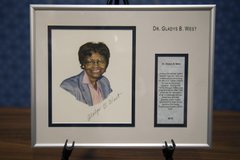
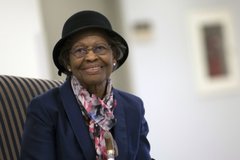
Dr. Gladys West, one of the “hidden figure” who contributed significantly to the team charged with the computing that laid the foundation for what we now refer to as a GPS navigation system.

Dr. West has now been formally honored by being inducted into the Air Force Space and Missile Pioneers Hall of Fame, one of Air Force’s Space Commands highest honors.


View image on TwitterView image on TwitterView image on Twitter

AF Space Command

@AFSpace

Unable to attend the Aug 2018 induction ceremony, Dr. Gladys West was honored at the Pentagon as one of the 2018 Air Force Space and Missile Pioneers for her contributions to the @usairforce space program. Read more about her incredible career: https://go.usa.gov/xPJVy 

19 people are talking about this

Dr. West served as only the second African American woman at Dahlgren Naval Base in Dahlgren, Virginia and only one of four African Americans to work on the base during the 1960s and 70s. The Virginia State University alumna was hired as a mathematician at the United States Naval Weapons Laboratory and ultimately worked with a team of noteworthy engineers to develop what would become the Global Positioning System (GPS). She engaged in extensive astronomical research and study to determine the most accurate reflections of planet sizes, gravitational pull, and other forces that may distort the Earth’s shape.

She was tasked with entering data into ‘supercomputers’ that were solving complex equations and then also working with software that performed countless calculations to ensure the accuracy of the Earth’s model that then became optimized for the creation of the GPS.

The Air Force Space and Missile Pioneers Hall of Fame recognizes the leaders whose innovation and vision significantly impacted the early years of the Air Force space program. The award honors and celebrates those who created and leveraged new technology and operational systems that would forever change space exploration and national security concerns.

#Bloom is a hashtag my friend recently started using when discussing (with) women and I understand perfectly why she has become obsessed by the need to see the womenfolk flourish.

Yesterday, I was further steered into analyzing what exactly my friend is on about. I was watching a movie, of a flourishing woman, who would rather be relegated and have her partner take the limelight. She wished, prayed and acted. Consulted all sorts of people to make this happen.
Women deal with a lot of unhealthy emotions and now, thoughts. It is perfectly okay to wish well for others but do not, I repeat, DO NOT wish any less for/on yourself.
 ‘Love your neighbor AS yourself’- This was said with the expectation that you have loved yourself first and foremost.
Do you know the saying that the sky is big enough for all birds to soar? It’s literal meaning is not only in birds but also humans (notice how this is human and not gender specific?)
It beats me to see women lurking in the shadows or wanting to.
To you, woman;
You are created with enormous potential. Your powers are phenomenal. Your wisdom is unprecedented. You are not an after thought creation, you were created to fill a palpable, conspicuous void. You are created with a purpose.
Stop lurking in shadows. Stop taking the backseat when the best has been reserved for you. Love yourself!
Approve of yourself. Bloom woman, bloom!

Ifedolapo Olayemi-Okewole is the CEO of Hadassah Bridals, a complete bridal outfit based in Lagos. A graduate of Microbiology from Obafemi Awolowo University, Ile-Ife and a World Bank Scholar, she relocated from England back to Nigeria to start her business, a journey she describes as tough. Recently opening a mega bridal showroom in Gbagada, she talks about her journey to the top, rising from running the business out of her living room with practically no capital and the use of the internet and sheer will to succeed. 

Tell us a bit about yourself and background?
I am the CEO of Hadassah Bridal House, one of the fastest growing bridal houses in Nigeria. The business started as a strictly online home-based business but it has grown and opened its first showroom in Gbagada, Lagos. I have maximised the use of the Internet and social media in growing my businesses. I am a World Bank Scholar having completed the Certificate In Entrepreneurial Management at Enterprise Development Centre, Pan African University under the Women X program. I am a graduate of Microbiology from Obafemi Awolowo University and I have professional experience in banking, HR and customer service both in Nigeria and the U.K.

You recently opened a new mega showroom, how did that make you feel?
Wow, a sense of relief and fulfillment. Taking a step that is higher than the last usually requires a lot of determination and energy. I am glad that this has finally become a reality. We have created a strong online presence for the brand and a lot of people want a total, satisfying bridal experience from us; this is what we are hoping to create with our flagship store in Gbagada. This business has really evolved. It has grown from our living room to this showroom that we are currently using. I remember our first bride vividly and we have since inception, attended to different brides from all over the country. Our first shop was in a shopping complex and I struggled with myself before getting there and I had less than five wedding dresses to keep on the rack. I tell you, the journey to growth can be a big stretch.

Why bridal fashion, how did you get into it and which field were you in before?
Well, the business started as a result of the experience I had when I was shopping for my own wedding. I was a young busy executive and my career at that time didn’t afford me the luxury of moving around shops for my wedding gown. I was working in a bank in Abuja and shopping in Abuja is quite different from Lagos where you can walk into Lagos Island market to shop for everything; moreover, I didn’t really have the time to do so. I bought virtually everything online. I knew at that time that there would be other people in my shoes as well. I wanted to help people shop for their bridal needs irrespective of their location. I used to work in banking, HR and customer service and I did these both in Nigeria and England.

What are some of the challenges you have faced and how did you overcome?
One of the first challenges I faced was getting customers but the Internet came to my rescue. We’ve been able to attend to different customers from different parts of the world from our little corner in Lagos. Understanding what brides wanted was also a challenge but with careful study, we gradually got around it.

What has been the highlight for you so far?
My highlight is basically the reach that we have. I am very excited every time a new customer calls or sends us a message that she found us online especially those from outside Nigeria. I have seen our products travel to different countries in the world. This year alone, I’ve had brides from Germany and the USA who came to get married in Nigeria and they got wedding gowns from us. It’s really a beautiful and humbling experience. At a point, our international logistics partners were asking us how come we were shipping wedding gowns from Nigeria to places like Switzerland and so on. This shows me the power of the Internet and how far we can reach the world.

What makes Hadassah stand out from other bridal houses?
I will say our reach. We want potential brides from everywhere find affordability at their fingertips. We have a Live chat system on our website which runs 24 hours a day. This helps us promptly attend to and process inquiries from our potential customers. We also ensure that our business has a presence on so many platforms online and this helps to boost our visibility. I’ve heard customers say they keep seeing our name everywhere; we want to be the first and most lasting impression on the minds of potential brides searching for their dream wedding gowns.

How did you raise capital to start out?
This business started with near-zero capital. Our first sets of transactions were basically pre-orders. Clients paid and we got their wedding gowns for them. We gradually grew from this till we started having wedding gowns and accessories on demand.
The Nigerian bridal business is quite saturated with a lot of substandard goods, how do you intend to maintain standards?
We always ensure quality checks on our products before they are sent to our customers. Also, we have worked with credible suppliers over the years in order to ensure a consistency in the quality of our product offerings. Even though the market might become compromised because of the economic conditions, we have decided to keep serving our customers without bias.

What should we expect from you in the next couple of years?
We are looking at the brand growing and expanding to major cities in Nigeria and across Africa. We are also looking at a boost in our supplier base so we can attend to a wider section of the market. I also see myself empowering more women to start up their own businesses and leverage the power of social media and the Internet for this. I currently do this on a low scale but I’ll be doing more. It can be a lonely road running a business especially if you are starting from home, but I want to show other women that it is possible and achievable to not only do so but scale up from there.

Interview by: Tobi Awodipe for Guardian Newspaper


This actor and campaigner’s story is an inspiring one.

Sarah Gordy, 40, with Down Syndrome has become the first person with the condition to receive an honorary degree from a UK university.

The University of Nottingham on Wednesday honoured Sarah with a Doctor of Laws degree at a ceremony at University Park campus.

Sarah had earlier in November, became the first woman with Down Syndrome to be made an MBE.

She’s starred in British TV show “Call The Midwife” and is a very active campaigner for people with learning disability.

“If I believed all the things that people said I couldn’t do, I would not have done any [dancing, acting and campaigning],” she said during her acceptance speech

She adds: “Don’t listen to doubt… believe in yourselves.”

Sarah’s mother, Jane Gordy said of her daughter: “As far as I was concerned Sarah was going to have every experience there is and if she wants to do something, just do it.”

Watch Sarah below:


Source:Bellanaija


A woman is a person,” Nollywood actress Nse Ikpe-Etim writes in an Instagram post, letting everyone know womanhood is not contingent of motherhood.

Not all women will be mothers, she shared, some because they are unable to and others because they don’t want to. This doesn’t make them any less of a woman, she shared.

A woman is a person. A person who can decide what she wants to do with her body or her time.

So, it is extremely ignorant to expect all women to eventually be mothers.

There are many reasons why a woman may not have children.

Infertility is more common than we know and to immediately ask a woman why she doesn’t have a child is extremely insensitive.

There are also women who have chosen to not have children simply because they will not put their bodies through pregnancy. They simply do not want to have kids and this is perfectly okay.

Whatever a woman decides to do – to have babies or to not; or whether they are battling infertility is no one’s business.

Happiness is all that matters. Gratefully, it is absolutely free.

My prayer and hope is that one day we will not judge unfairly unmarried or childless women.

That being said, if children will make you happy, I pray that you have loads of them.

If you do not want or cannot have kids, remember that you can still find joy and do not allow anybody make you feel less.

Enjoy life. Breathe freely and enjoy all the beauty in the world.

For me, love and light are the truth and all I ever want is to live in happiness and pure truth.

From being kicked out of her home at 17, to getting fired from a grocery store and then working as a stripper, Cardi B shared her story with Maurice DuBois, talking about her very public persona, her social media presence, and the challenges she’s had to face in her career.

“It’s been an extraordinary year for Cardi B, the woman who keeps beating the odds,” the platform said of Cardi.

Watch below:

Credit: BN

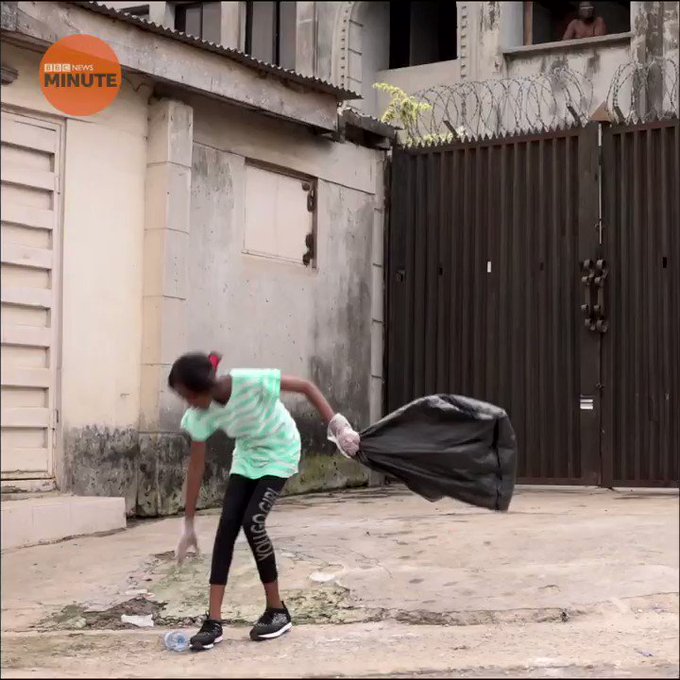
11-year-old Misimi Isimi also known as ‘Miss Environmental’, is determined to save Lagos from all of its environmental waste.

Speaking to BBC, Isimi shared just how annoying waste disposal is in Lagos and her efforts to rid the city of its waste.

Isimi explained how a lot of adults are not environmentally responsible, and how she educates kids on proper waste disposal.

Watch her speak below:

Embedded video

BBC World Service

@bbcworldservice

This 11-year-old girl is on a mission to clean up pollution in Nigeria’s largest city.

More stories from around the world: https://bbc.in/2RkMExH

177 people are talking about this

Credit: Bella Naija, BBC