Category

Interviews&profile

Category

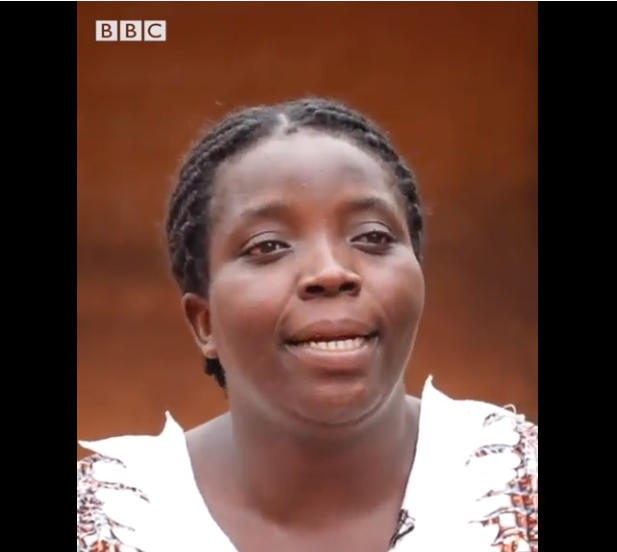
After her son, Ikemefuna Orji, died, Felicia Orji was determined to find a wife for him so the family lineage could continue. Her family performed all the marriage rites and Chinyere Ikemefuna Orji joined their family as Ikemefuna’s wife after his passing.

Twelve years later, Chinyere now has three children, whose father is an agreed member of Ikemefuna’s extended family.

This is a story of a long-standing tradition among the Igbo people that you probably have never heard of.

Watch.

Source: Bellanaija

Born in the 90s, beauty entrepreneur, media personality and actress, Iheme Faith Uloma, a.k.a Ifu Ennada, is no stranger to the limelight. Bursting into our consciousness as a Big Brother contestant last year, she is also an event host and speaker and has moderated several panel discussions in various fields. Shortly after leaving the #BBNaija show, Ifu launched her beauty brand, beautIFU Ennada which debuted as a haircare line for natural hair girls. BeautIFU Ennada turns one today and, in celebration, she is launching a wig line, a line of pre-stretched braiding hair extensions called E’Zee braids, a state of the art salon, a beauty academy and store. She has also announced a reward program for everyone on her beautIFU Ennada train, 5millionaday, a platform for teaching entrepreneurs how to grow their business. In 2017, her self-produced and written short film, “Tears of A Broken Virgin”, which premiered at the In Short Film Festival won her Award for Best Actress. In 2016, she was nominated for AMAA Awards best young and promising actress for her role in O Town by CJ Obasi and has since featured in top TV Series like Tinsel, Ebony Life’s HM Travel and Tours, MTV Base Shuga and movies like Obsession by Judith Audu, The Quest by Dabby Chimere and Hire A Woman by Chinney Love. Passionate about women and a strong advocate for women who have gone through abuse, she sits down with GuardianWoman to talk about being in the eye of the storm, how poverty pushed her to do well, her soft spot for women and her plans to take over the beauty industry.

Your stage name is very interesting. Tell us how you came about it? Did you always have it or you coined it for BBN?
Ifu Ennada is actually also my official name, just not what I have on my passport, but it is recognised legally as my name and I have also trademarked it. Ifu Ennada is simply my name creatively rearranged, it’s the initials of Iheme Faith Uloma and Ennada is Adanne spelt backwards. I created Ifu when I was 17 years old and added Ennada when I was 19. I was a newbie TV presenter and needed a name for TV. I wanted something catchy but original, so that was how Ifu Ennada came to life.

Since leaving the BB Show last year, you have been in the eye of the storm severally. Is this deliberate?
Everything I say or do is deliberate, but how people react to it is not my responsibility. I’m very expressive and bold. I am also kind and respectful, so I’d never do or say anything to hurt anyone, but the media has a way of twisting one’s words and action to make great headlines that’ll bring them more traffic.

Tell us about your beauty brand in detail? 
My beauty brand, Beautiful Ennada turns one today. It debuted with a line of haircare products inspired by the hair loss I suffered about two years ago. My hair wasn’t growing and I had lost my edges and every product I tried had failed. So, I started doing research and taking mini courses online and finally came up with some of my recipes. At the time of this discovery, I didn’t have the resources I needed to launch the business, but going into Big Brother changed that. We have helped a lot of women get back their hair including popular celebrities like Mercy Aigbe, who endorsed us publicly after our super hair growth oil restored her hair. We’ve also been publicly endorsed by American-Nigerian celebrity hair blogger, Naturally Temi. Since we launched, we have gradually expanded and are now set to introduce more products into the line while launching a new look. Also these products will cater to people with different hair types, natural and relaxed, textured and so on. We’re also set to launch a state-of-the-art salon, beauty store and a beauty academy.

You launched a product this week, tell us about it; what impact do you think it would have?
This week, I launched a first-of-its kind fashion accessory called the Wig Hat. It solves the problem of bad hair days by providing a fashionable Wig Hat covering. Wig Hat is basically a wig sewn to classy Fedora hats and baseball caps. We introduced it with six different styles. Everyone can preorder till August 7, when the Wig Hats will become physically available.

The beauty industry as we know is well saturated. How are you managing to break through and be seen?
In my corner in the beauty industry, it is saturated with mostly products that are hardly effective and give no value for money, but that can’t be said for my products. A lot of my sales are based on referrals and testimonials. This is what has made me successful in a short period of time. In everything, I always strive to give value even if it means making little or no profit. I’ve spent almost a year working on two major projects I want to launch. The new and improved recipes for my products and a hair extension line called beautiful Ennada E’Zee braids. Any other person could have launched quickly and made it available to the general public, but not me. It has to be 100 per cent and my conscience must be at peace with me before I can put it out for sale.

Tell us, what does 5millionaday mean and what does it do?
5millionaday is an online platform where I teach entrepreneurs how to grow and make money with their businesses. The name was inspired by a statement I made on TV. I was talking about the power of sales and how I made up to N5 million during a sales period, but people twisted my words and said I claimed I make N5million everyday. The small mindedness of these set of people led me to start 5millionaday. I wanted to teach young entrepreneurs everything I know in business and also motivate and inspire them with my work. I’ve been doing that since we started. I’m currently teaching my first online course on the platform titled, “How To Secure The Bag In Your Business.”

As someone firmly entrenched in both the beauty and entertainment industry, how are you marrying both worlds and making it work?
I am very passionate about beauty and entertainment. When I have a very demanding project in my business, I don’t take on any demanding acting jobs, but I do a lot of MC work because that is easier to execute.

You revealed that you suffered abuse in the past, how are you using your experience to help other women?
I counsel and speak to women when I can. I try to be there for them and help them get through it all. Also I connect them to some of my influential friends who take up the case and try to bring the abuser to book.

If you hadn’t gone down this line, what do you think you would have been doing now?
If I wasn’t in my line of businesses, I would have still been a creator in another capacity. I’m a creator and I love to bring things to life.

What do you think of mentoring for women, is it important especially for women-owned businesses?
Over the years, the society we live in has constantly dragged women to the back of the line and made her feel she’s not enough when she’s the very giver of life here on earth. Women are so powerful, but we live in a world that has been made to feel like it belongs to men. A lot of ladies have been brainwashed into thinking that only men have the capacity to make wealth. This is why it’s important to continuously mentor women in business, especially the young ones just starting out and to make them understand the limitless power in them. I truly wish more women would be supportive of women. It’s truly sad that when you look around, you find out that there isn’t much unity amongst women, but I’m here to change all that in my own capacity as a public figure and celebrity entrepreneur.

Both industries you are presently in are billion dollar industries all over the world. In your opinion, what can Nigeria do to become a major player?
Reduce the taxes paid by businesses in these industries and invest in these industries. Make very low interest loans available and generally just give us a survivable environment to operate in.

Doing what you are presently doing cannot be easy; what are some of the challenges you have faced and how did you pull through?
Getting the right staff, people who share your energy and goals is a challenge. Also, not being able to control certain factors, which are just beyond control, is another challenge. Business can be very frustrating, but the joy of fulfilling someone’s need by giving them good value makes it worth it.

Tell us something that has influenced your life and career positively today?
My past, growing up in extreme poverty, watching my sibling die in front of me due to lack of money to get good healthcare, reading other people’s stories and so on; all these have influenced me positively and made me the woman I am today.

How are you using your voice to help and encourage other women?
Everyone who knows me personally and follows me online knows I have a soft spot for women. A good number of my following online are women who are inspired by me. I try to be there for them when I can and if there’s a cause that needs my voice, I lend my voice to it, by all means.

If you could influence change, what change would you effect for Nigerian women?
I would change the way the average Nigerian woman thinks; how she sees her fellow woman as competition. I would make them know that wealth is not exclusive to men. We women are so powerful but we don’t even know how much power we have and possess.

What does your typical day look like?
My typical day starts with me not wanting to wake up from sleep because I barely sleep for three hours and have a lot of work to do. After I get ready for the day, if I’m working from home, I dive right into work and also monitor my staff. Sometimes I forget to eat till late into the night. I always end my day with prayers and thanksgiving to God Almighty who made and makes everything possible. I usually go to bed by 2:00am or 3:00am, sometimes even 4:00 am.

Wow! So how then do you relax and de-stress? What is your guilty pleasure?
I haven’t had time to do anything for pleasure or leisure in a long while. For now, I just sleep when I can because I’m always working, so I spend time resting my body and mind when I can.

Who and what inspire/drives you?
My past inspires me to work hard. My father inspires me. He’s my biggest cheerleader and supporter. When I have no faith in myself, my father has faith in me and never gives up on me. He tells me that I can do anything if I believe I can.

Tell us what the next five years would look like for you and your brand?
Growth, growth, growth; that’s all that’ll happen. Having more business partners and taking over the world. I’m presently partnering with a Kenya business woman, Nasieku Ellein who’s also the CEO of The Merakii beauty salon and studio and jointly, we’re taking over the East African market. I’m also partnering with the CEO of Adaora Beauty Supply, Los Angeles to take over the US market as well. I have a number of key partnerships that have been executed and more to come. In the next five years, my businesses, my business associates and myself will be regulars on the Forbes List.

What last words do you want to leave with those that have been inspired by you?
Less than two years ago, there were days when all I had on me was just N100, some days I had nothing, but today my story is not close to that. Keep pushing and never give up, always know that nothing is impossible, this I believe is the meaning of Ifu Ennada.

Interview by Tobi Awodipe  for Guardian

Sonnia Agu is the founder of G-1st International Foundation, an acronym for God First, an NGO designed to propose solutions to social problems that affect the well-being of Nigerians. She is a devout believer in the Nigerian dream with over seven years of strategic and diversified professional experience in Social Work, Media, Aviation, Oil and Gas as well as Business Development. Agu is a certified Harvard Business School entrepreneur, self-motivated millennial and social entrepreneur. She is also a member of the Pan African Youth Commission and an executive board of director for the Nigerian chapter and has won numerous awards for her selfless service. In her bid to make Nigeria a better place, her foundation has partnered and volunteered internationally with organisations including Growth Foundation, London; SOS Foundation, Gambia; Lawrence Hope Foundation, South Africa and Food for Life, Hungary. The Civic Engagement arm of G1st Foundation is The Sapiosexual Club which is Nigeria’s first social will association, open to both local and international membership, driven by intellectual capacity and social enterprise. The Club employs a novel approach to empower young Nigerians so they are stirred and inspired to take social development seriously and apply their creative minds to contribute tremendously to the all-round progress of Nigeria and the advancement of the entire human race. The Sapiosexual Club now has a membership strength of over 10,000 young professionals and birthed a vibrant community of high achieving entrepreneurs, civil society leaders and public servants. In this interview with IJEOMA-THOMAS-ODIA, she shares her passion for driving social change.

Tell us about your growing up 
I was born and bred in Lagos. I attended Christland Primary School, then Federal Government Girls College (FGGC), Oyo State. I got into University of Lagos where I studied Creative Arts, until my third year and then moved to Eastern Mediterranean University, Cyprus where I graduated with a first- class in Public Relations and Advertising. I then started my masters in critical aspects of Media and Communications. To further deepen my knowledge, I recently got certified in Entrepreneurship in Emerging Societies from Harvard Business School.

What informed your decision to start the Sapiosexual Club? 
I have always had an innate desire to change the narrative and do good. I come from a very charitable family as well; I remember growing up with people always in front of the house with one issue or the other. The ice cream truck pulls up and the whole street lines up because my dad is buying for us all. We had over 30 cousins and extended family in the house every holiday as my dad was the one they looked up to, the list is endless. My Mum would take all our clothes and have us give to charity always. So, moving back to Nigeria and the things I saw broke my heart. I had to struggle too. Even with my First Class, I was working at the airport where I had to push wheel chairs and earn not up to N70,000. Men and women with children earned way less. I was transferred to Cargo at some point and it was crazy as the men I saw had families and they earned lesser salaries and were expected to live right, not steal, come to work Mondays to Saturdays for peanuts. I need not tell you my NYSC experience. The truth is, people are suffering.

Tell us about some of your activities 
We have monthly gatherings, debates and a platform that allows us continue our intellectual conversations which are centered around entrepreneurship, work- life balance, human personal developments and relationships. We try to also change people’s opinions and narratives especially when the issues of Nigeria come to play. We also have a mandate to carry out monthly charity works and good neighbourliness projects; during the past election, we managed to register over 5000 Nigerian youths in
Lagos and encouraged young people to carry out their civic duties.

What has been the impact of G1st International Foundation as an arm of the community?
With our foundation, we have impacted, empowered and partnered with other charity foundations across Africa and the western part of the world. Our flagship initiatives-Essence of Nigeria, Girls in Nigeria and the Hub Project- respond to issues in the areas of civic engagement, education, girls/women empowerment and community development respectively. We recognise that people, norms and the way we interact in groups and communities are the processes that shape our development. Our projects and programmes are therefore geared towards educating, empowering, engaging and giving Nigerian youths a platform to nurture and realise their potential so that they are well-placed to contribute selflessly to Nigeria’s sustainable development.

What has kept you going in your social development drive? Aren’t there challenges?
I will say God’s grace. Not trying to sound sanctimonious but take His grace out and I will stop. The last intervention I had in Makoko scared the life out of me. I was held hostage at knife point, robbed etc. The hoodlums held me and my team and asked for money. I was first all robbed off my money in my purse, they helped us carry some cartons of food stuff, which they stole and didn’t bring it to the other end of the boat. It really hurt and scared me so bad. I don’t want to think about the feelings that incident brought me, as I almost threw in the towel.

How can more young people especially women be empowered to take on their dreams and make impact?
Women need to be intentional, especially women who are already successful. Women should learn to support and encourage one another. The fight isn’t against us, it’s against poverty.

From your experiences, what in your opinion is the challenge hindering young people from breaking grounds?
Fear! Most if not all of us are very skilled and industrious but the fear of failure and the unknown. A friend once said to me that he won’t marry even with N10 million in his account until he is sure he can be earning N1million a month. My point is, do it while you are scared, married, working, have a job, whatever it is, just start.

When you are not chasing your dream in social development, what is Sonnia doing?
To be honest, this is all I do day in, day out. I’m getting scared and worried myself. I have had to sacrifice all for this dream. I quit managing my dad’s company and my printing press. My dad owns a real estate and building factory which I was managing alongside the club. For some reason, the club demands my undivided attention.

What advise do you have for young people?
When you get please try to give, when you learn please try to teach. That way, the world becomes a somewhat better place. For instance, in your journey and life if you find an investor that’s willing to give you N10 million, I am pretty sure in the nearest future someone may need N100, 000 from you, please give them. If also you learn a skill or an idea, please share, mentor and teach others genuinely so they can be encouraged by your story.

What is your philosophy of life?
God first, stay happy, serve humanity.

Interview by Ijeoma Thomas-Odia for Guardian

Grace Ihejiamaizu, a lecturer and social entrepreneur who’s working to promote quality education and empower the next generation of leaders and entrepreneurs.

Grace, who graduated from the Sociology Department of the University of Calabar, now teaches social work at the institution, armed with a masters degree in rural sociology and community development from the University of Uyo.

She’s the founder of iKapture Centre for Development, a centre for youth development that provides afterschool education and services to students and out-of-school youth in Nigeria using creative learning methods and ICT.

While studying for her first degree, Grace joined a global campus-based organisation called Students In Free Enterprise (SIFE) UNICAL (it’s now known as Enactus UNICAL), and eventually served as its project director, shaping her life and helping her kickstart her career as a social entrepreneur.

After graduation from the university, she worked as a full-time volunteer with American Corner, Calabar and in the process, she kick-started my first personal project, RYPE (Raising Young and Productive Entrepreneurs) Initiative which later metamorphosed into iKapture Center for Development.

In 2012, Grace founded Opportunity Desk, a platform for youths looking for international experience through global scholarships, internships, jobs, conferences, competitions, fellowships, grants and awards.

She’s also the author of Go Global with Opportunities.

Grace has been named one of Google’s 12 brightest Young Minds in 2011 and a Global Changemaker in 2012. She’s one of the nominees for the 2013 Future Awards Africa Young Person of the Year Prize.

She’s been recognised by the US State Department as the “International Exchange Alumni Member of the Month for September 2012.”

Grace holds certificates in Civic Leadership from Kansas State University; and another in Social Entrepreneurship from University of Connecticut, USA.

We celebrate her for following her passion and impacting the society in the process.

The best way to deal with challenges is to not just keep fighting until you win, but also to help others who may be going through something similar win.

Abimbola is a sickle cell warrior who’s helping other warriors fight and win.

She’s the founder and coordinator of WarriorStory Initiative, a non profit community of people living with sickle cell diseases.

The platform provides education, counselling and advocacy for sickle cell health. The community shares stories of warriors with the aim of inspiring others.

It’s also begun a monthly sickle cell clinic where it brings together varying consultants who have specialties in caring for SCD patients.

The aim of this initiative is for sickle cell patients to have access to affordable, fast and reliable monthly check ups and first aid care.

It’s providing the service for free for the first three months, after which patients can attend by paying a token as monthly subscription to access care.

Worried about the shortcomings in Nigeria’s healthcare system, Abimbola, who holds a post graduate diploma in Biomedical Engineering, decided to fix a part of it.

Nigeria needs to do a lot technology-wise to be able to care for patients, and Abimbola is helping to achieve this. She founded Toyo Meditechs.

Toyo Meditechs provides sales, installation, maintenance, repairs, and training in the use of medical devices and equipment.

We celebrate Abimbola for devoting her life to solving problems and helping warriors win. We’re rooting for her!

Entrepreneurship anywhere is tough, and arguably tougher in a country like Nigeria. There’s the issue of funding, that of trust, and the challenge of surpassing “roadblocks” like power supply, fast internet connection, and access to affordable advisory services, especially for young entrepreneurs.

Nigeria is slowly getting there, and Funke has taken it upon herself to help young entrepreneurs scale the hurdle of legal advisory services and not breaking the bank.

Funkola Odeleye is the co-founder and Director of DIYlaw, a legal technology company which creates access to legal services and information.

Funkola and her friends Bola Olonisakin and Odunoluwa Longe founded the company in 2015 with the aim to make “legal transparent, simple, and affordable”.

DIYlaw helps entrepreneurs and individuals generate legal documents (some of them at no cost), get access to a pool of lawyers across several fields, register their businesses, as well as get access to other resources in a simple way.

Funkola is also the co-founder & Corporate/Commercial Lead at The Longe Practice LP, a startup focused boutique law firm that provides cost-effective services to new businesses.

In 2015, DIYlaw won Hague Institute for the Internalisation of Law (HiiL), SME Empowerment Innovating Justice Challenge, East & West Africa.

Funkola holds a masters degree in Finance and Financial Law from the School of Oriental and African Studies at the University of London.

She’s also one of the 200 emerging leaders from across Africa selected for the 2019 Obama Foundation Leaders: Africa programme.

We celebrate Funkola for contributing her knowledge to the development of entrepreneurship in Nigeria.

What does it take to stand out as a female mixologist in Nigeria? CEO of Lagos-based cocktails design and consulting company, Eventi Cocktails, Lara Rawa has beaten all the odds to become a key player in the male-dominated cocktail industry. An award winning certified mixologist with a passion for creating cocktails, Lara obtained a law degree from University of Lagos and a Masters Degree in International Business Law from Queen Mary University of London and was called to the Nigerian Bar as a Barrister and Solicitor of the Federal Republic of Nigeria in 2007. In a bold career move, transitioning from law to entrepreneurship, her transition into mixology was fueled by her passion for the art of cocktail making and ultimately inspired by a brief period of unemployment. She began building her mixology career when she decided to establish her very own mobile bar company. Eventi Cocktails is the organiser of Lagos Cocktail Week, a first-of-its-kind event in Nigeria. In this interview, Lara talks about how being unemployed led her to entrepreneurship, the upcoming Lagos Cocktail Week and what the government can do to support women entrepreneurs amongst other issues.

What does it take to be a female mixologist in a male dominated industry such as yours?
From my perspective, I think what it takes is hard work, dedication, perseverance and focus. Though it’s a male dominated industry as you rightly said, it doesn’t mean that there isn’t space for female mixologists. There is, but you just need to show that you’re up to the task, no pity party. Just do what needs to be done and do things the right way.

You switched from law to entrepreneurship, what informed this decision?
I would say it was due to the situation at the time. I always saw myself as a career woman; I never would have thought I would be an entrepreneur. However, at a point in time, I was out of a job, and I was trying to get another but it was difficult. I just thought to myself, “you know what? I don’t like being idle, I need to do something.” I was very versatile at my previous job. I did a lot of things, and I worked with a lot of event planners. So this experience came in handy when I decided to get busy while unemployed. First and foremost, I started to organize events, and then after a while, I realised that the event jobs were not coming in regularly. I just thought that there should be another way out. Then it occurred to me that since I love to drink cocktails, I could actually do some research regarding mixology and start mixing cocktails at events. I reasoned that by adding mixology to my workload, I would at least be working every weekend or every other weekend. So, in a nutshell, that’s how it all happened. I was unemployed and had nothing to do. I didn’t want to be idle, and I needed to get busy and that was how I started my business.

You hold degrees from various schools both home and abroad. How would you say they prepared you for entrepreneurship?
My degrees have armed me with critical thinking and research skills. I would also say that my education has helped me to be very results-oriented. In law, there’s something called IRAC, Issue, Rule, Application and Conclusion. I apply IRAC on a daily basis in everything I do, and this has helped me a lot. Most of the time, I do it subconsciously, as it’s become a part of me.
You organise the annual Lagos Cocktail Week (LCW),

how did you come about this?
Eventi Cocktails has been in existence since 2009. In 2014, I became really curious about what was happening in the global cocktail industry, so I did my research and stumbled on the London Cocktail Week, and I thought it would be nice to attend, not as a guest but as a volunteer, to work and see why they do what they’re doing. I sent them an email. I didn’t know anyone there, I just sent an e-mail to the listed contact person I saw on the website. I got a response stating that I was welcome, but I would not be getting paid for my volunteer work. I was like, I don’t mind, I just wanted to come. I bought my ticket, went down to London, took part in the event, and asked a lot of questions. When I came back home, I resolved to do something similar in Nigeria. In a nutshell, LCW was founded based on the premise that we also needed to do something similar to what I had experienced in London. I believed we needed to have an event, an experience in which we could inform people about cocktail trends, international trends, as well as local trends. I saw it as an avenue to educate people and sort of entertain them too. Those are actually the three pillars that LCW stand on, education, information and entertainment.

What will be different about this year’s edition and what can attendees look forward to?
This year is going to be very different. I am working with a couple of bars to create a “Cocktail Village.” We’re going to have a one-day conference that will have an international mixologist attend and facilitate some very interesting discussions and workshops. This year will also be different because we are giving out awards and we’re working with new partners as well. In addition, we’re working with Enterprise Development Center (EDC) to help upcoming entrepreneurs in the industry. We’ve got so much in store and in due time, we will reveal everything.

In your opinion, what are some of the key issues startups face?
I think some of the key issues are financial access and capacity development. When I started, I think funding was one of the issues I faced. But I started from where I was with what I had. I did not let inadequate funds discourage me. I feel that as a business owner/ entrepreneur, you can’t always wait till you have everything before you start out. I would advise aspiring entrepreneurs to start first with what they have, and then in due time, start looking for ways to access funds to expand. I also feel that capacity development is also another issue. This is where different platforms like the EDC would need to come on board to help people put structure into place. Developing an efficient structure in your business can be a huge issue with startups, because you realize that, as an entrepreneur, when you’re first starting up your business, you’re doing everything by yourself. As a result, you’re not sorting out your finances properly and other critical aspects of the business. And this always causes a lot of issues.

You have been a judge on several platforms, how did the experience help you grow?
Bailey’s Bake Fest was actually my first-ever judging platform. It was really fun. I had fun because I was working with chefs, and you know, they had their own terminologies for different things. It was quite fascinating being around them. When I did it the first time around, I was very careful about what I was saying and doing, as I had no prior experience with being a judge. But guess what, by the next one I already learned so much from the previous experience and so I felt very comfortable. I knew what I was looking for, and I knew what was expected of me. I would say being a judge has actually helped my business because in critiquing others, you also get the opportunity to look inward at yourself to see if you’re also doing the same thing or if you could do better. So this has helped me a lot and I look forward to more judging opportunities and speaking engagements.

How important is mentoring for women especially those in business?
Mentoring for women is really important. When I started, I had no one to mentor me; I just went into it without any real guidance. I think the first mentorship experience I had was with Weruche Majekodunmi, Executive Director Newton & David (we call her aunty Uche). She sort of asked me a few questions and she gave me invaluable advice I hold dear to my heart till today. I think what she said to me is actually one of the things that have brought me this far. She said: “You need to learn the craft. It’s not about the paparazzi or having a fancy bar; you need to know your onions, you need to go and study about it,” and that was the push I needed. The moment she said those words was such an invaluable time for me. I feel like if I had a mentor back then, probably, I would have done things in a different way when I first started out. So with the benefit of hindsight, I will say it is really important to have a mentor.
I’m part of the WimBiz mentoring program and I’m mentoring someone right now and I will say that I enjoy it because when you’re mentoring people you’re also learning. I sit down with her; we have timelines, deliverables and deadlines. So, if she’s doing that, then it means that by the time I see her again, I should also have met my own deadline; I should have followed through with my timelines and my deliverables. Mentorship is really important. You can’t take it away, especially for those who are in business. They need that extra push from a mentor. They can learn from the experiences, weaknesses, and strengths you’ve. So, it’s very important.

Running a business cannot be easy, what are some of the challenges you have faced?
Trust me, running a business in Lagos is not easy, especially when you’re in the service industry. Some of the staff I work with are not full-time but contract staff. So you’re always shouting, you’re trying to sell your vision to these people who really can’t be bothered about your vision really. Manpower is the major issue that I face. Also, when people apply for the job and you look at their CV, it is fantastic, but when they come in to work, you realize they really don’t know much. You have to draft the letters yourself, you have to type yourself, and you have to proofread everything. Yet you’re dealing with a graduate. To be honest, I’ve sat down with other people who are in my industry to discuss it and clearly, we all have the same issues. It’s always the staff. It’s a huge issue we face in this industry.
What do you think the government can do to support and encourage women- owned SMEs?
Things that can be done to encourage women, I think is training programs, capacity development and structure. When you go to school, you go to school to get a degree for a certain course. But nobody goes to school to learn to be an entrepreneur. So I feel like programs centered on entrepreneurship that would help women is key. You go for a lot of master classes and everybody gives you all these nuggets, “if you do it this way, you will be successful” but nobody is ready to hold your hand to make sure you actually put such recommendations in to practice. In addition, I think that the government should help entrepreneurs with low interest loans and, possibly, put up some other structures like agencies that could offer on-going support.

Tell us something that has influenced your life and career positively today?
What has influenced my life and career positively today is actually prayer. There have been times in my business when I just thought things were not going to pick up and I decided to be prayerful, to have faith. Another important driving force in my life is my mom. I’ve always looked up to my mom; she has been a positive role model to me. Growing up, I’ve seen my mom work hard and work smart. She never for once sat around folding her arms. Even till now, she’s always doing something. This has helped me so much in my work ethic, because as a business owner, I don’t wait for my staff to do things. I roll up my sleeves, and work even harder. Sometimes people say I did not attend their event, and they feel bad. And I’m like, yes, I might not have been at the event. But guess what, I was working behind the scenes. I know what goes on at every venue and I know about all the items taken to the venues. Why? Because either I sourced for it, or I was there when they were transporting everything. I’m there to make sure that the checklist has been followed to the letter, and this has helped me tremendously. Because I am very prayerful and dogged, I do not take no for an answer. I remember for Lagos Cocktail, there was a period someone had said to me, “No, you won’t be able to do it this year.” I said to the person, “I am going to do it this year. I am going to be consistent. Yes, the funds might not be there. I might have to use my personal funds. But I will be consistent.” And I did it. And later the person said to me, “Look, Lara, I respect you. You do not take no for an answer.” I have a positive spirit. I see the light at the end of the tunnel. No matter what the challenges are, I believe that I can always go over those obstacles.

As an experienced entrepreneur, briefly tell us three basic things women must do or avoid in business?
Three basic things you must do are always take a break, you don’t want to break down. So a break is highly necessary. Second, you must stay focused. You must always keep your eye on the prize. Don’t look left, don’t look right. Avoid distractions. You know why you’re in business, so maintain your focus. Finally, you must be prayerful. You cannot do anything without prayer. Whether you’re Muslim or Christian, prayer is key. Because when the pressure comes, the only way you can look is up and not down.

If you could influence change, what change would you effect for Nigerian women?
If I could influence change, the change I would effect for Nigerian women would be to make ways to see more women in politics and governance, especially in key positions. They understand better the concerns of women and would be able to advocate as well as make better legislations to improve the conditions of women and children in the country.

What do you do to relax? What is your guilty pleasure?
Honestly, having a lazy day is my form of relaxation, just being at home, watching TV, and sleeping. You know, those days when you’re not under pressure, nobody is calling your phone and you are in chill mode. My guilty pleasure would be a day at the spa.

How do you achieve work-life balance?
Work life balance is not easy, honestly, but I try. I have a daughter, and I try to make time for her. I drop her in school every morning, and that’s our mother-daughter time when we get to talk. Piano classes, I’m there; school activities, I’m there. In fact, I’m her class administrator, so I’m always there. And weekends I try to balance it out. I take her for drama school, maybe we have lunch, and I make sure I’m home. It’s not easy, but I do it.

What last words do you want to say to those that have been inspired by you?
What I’ll say to people who are inspired by me is, if you have any idea, any business idea, there is never a right time to start that business. Now is the time to start that business. Don’t wait till you have all the money. Whatever it is you have, start the business and maintain your focus. You should know why you’re in business. Yes, you’re in business to make profit. But also you should be in business to impact your world, impact your generation, and to impact that industry. So, make sure that whatever it is that you do, you want to actually create an impact, a positive impact. Remain focused. Do not take no for an answer.

Source: Guardian Woman

MiAngel Cody had seen enough of the criminal justice system. As a capital investigator, she listened to the stories of those headed for death row, and after working as a corporate lawyer and a state-federal defender, MiAngel Cody decided to look for new ways to use the legal system to dismantle mass incarceration. So Cody created The Decarceration Collective, a federal criminal defense firm that works to release people sentenced to life in prison on drug charges.

According to the Sentencing Project, drug offenders make up one-third of those serving life sentences in federal prison. The U.S. Sentencing Commission states that offenders can be sentenced to life if they are caught with a large number of drugs. However, “large quantities” under federal law can be as small as 1 kilogram of a drug substance.

Not interested in fighting for those who were “innocent,” Cody joined forces with Brittany Barnett’s Buried Alive Project to bring home those sentenced to die in prison.

“It started with, like, a text message one night, and we were like, ‘We should see how many people we can get free,’” Cody says. From there, the duo created spreadsheets of all of the people who had been admitted into district courtrooms throughout the country. They began reaching out to those with federal life sentences for drug offenses and gave them a survey to gather information about their case. 

Seventeen people were released under their #90DaysOfFreedom campaign, where they used the newly passed law, The First Step Act, to gain their freedom. In their new Third Strike Campaign, Cody centers the stories of formerly and currently incarcerated folks who received life sentences for nonviolent drug offenses, specifically highlighting those affected by the notorious Three Strikes Law, a law that gives mandatory minimum life sentences to those who have been convicted three times with nonviolent drug offenses. 

The Third Strike Campaign

When The First Step Act was passed last December, it included a provision that made The Fair Sentencing Act retroactive, a law that gave mandatory minimum sentences to eliminate the inequality of crack cocaine and powder cocaine cases. No longer subjected to mandatory minimum sentences, cocaine offenders were able to receive reductions in their sentences or an early release.

One of the folks freed by MiAngel Cody was Albert Reed, Jr., who shares his experience of incarceration through the Third Strike Campaign. When Reed received a life sentence for a drug-related “crime”, he was determined to get out of prison. He applied for clemency and was denied under the Obama administration. The rejection for his freedom shook him to his core. 

The Third Strike Campaign

A year after his rejection, Reed received a survey, sent it back with his information, and was released from prison under Cody’s legal representation. Cody used The First Step Act to her advantage as a way to litigate his release.

In addition to cocaine offenses, The First Step Act also reduced the mandatory minimum sentence for non-cocaine drug offenses from life to 25 years, but it was not made retroactive, meaning those who have already been sentenced to life imprisonment for non-cocaine drug offenses, such as marijuana possession, won’t have their sentenced reversed. 

Now, Cody is going back to free the rest, particularly those that The First Step Act did not consider.

“There are a whole bunch of people who are still sitting in prison today under yesterday’s law. And that’s really the point of the Third Strike Campaign. It’s to say if it’s unfair going forward, then it’s unfair looking back, particularly when we’re talking about black bodies being imprisoned,” Cody says. 

As for Reed, he can now move forward. He is now reunited with his family and is still rebuilding his connection to his community by working with a basketball camp and a cleaning company. He has dreams of getting into real estate to develop some affordable housing in his neighborhood.

“Anything’s possible after this year. I say to myself every day, ‘Why not dream big? Because you blessed, and all you had to do is think it, and you can bring it into existence.’”

Credit: blavity.com

Poppy Northcutt began her career as NASA’s first female engineer in mission control, and the sexism she faced on the job inspired her to pursue a legal career egal career fighting for women’s rights. Now the state president for the National Organization for Women’s Texas chapter and still handling the occasional legal case, she tells Teen Vogue that she wants her multifaceted career to be a model for young women today.

“The idea of having one career in your life — that was what people had 100 years ago,” she says in an interview. “You need to be more flexible these days.”

Northcutt, a pioneering woman in hard sciences before the idea of STEMeducation or jobs even existed, also tells Teen Vogue about how she’s seen sexism change, the importance of doing the hard thing, and more about her groundbreaking work at NASA, which is documented in the new threepart series from PBS’s American Experience, “Chasing the Moon.”

Teen Vogue: Could tell us a little bit about what led you to your job at NASA when you were coming up through school and how you got that position?

Poppy Northcutt: In high school, I always scored well in math classes, and I enjoyed them. I decided to major in mathematics when I was in college. The stereotypical jobs for women were very limited. If women went to college, they were expected to end up as executive secretaries, nurses, or teachers.

When I got out of college, I started looking for a job in the Houston area and ended up taking one with a contractor for NASA. I hadn’t been planning on going to work in the space program; I just lucked into it. The job title I had when I started was “computress.” I don’t know if you’ve seen the movie Hidden Figures, but that’s the title that those women had as well. But at the time, I had no idea about the history. I didn’t know about the women in Langley.

I mainly just thought that my title was really strange. First of all, I’m not a computer. Secondly, you’re going to gender me as a computer?

TV: Was that gendered title indicative of what working there was like?

PN: They may not have had the gender in their title, but at that time, almost all jobs were highly gendered. If you opened the newspaper, the newspaper had sections for “Help Wanted: Female” and “Help Wanted: Male.” And it was the late ’60s, before litigation and demonstration stopped newspapers from classifying jobs that way.

I started work as a computress number-crunching for engineers. After I’d been there about six months, I had my first job evaluation. The head of Houston operations told me that they were looking to promote me to the technical staff, which is the phraseology they used for the people doing engineering work. I started working on Apollo in that first year that I worked there.

TV: You were in the mission control center at Houston. What was it like being a woman in a space like that?

PN: By the time I was there, I was used to being the only woman in the room because that was just sort of the normal situation. There just weren’t many women doing technical functions. We did have some women doing computer programming.

TV: Were there any specific challenges you were facing as a young woman doing this incredible scientific work?

PN: It wasn’t just me. It was all women at that time. We existed in a sea of sexism. The waters are a little clearer now. They’re not as murky as they were 50 years ago. But all women at that time, in all the places around the world, were living in a sea of sexism.

If you were the only woman in a particular area, you stood out because you were different and you had the feeling that people were watching you more. Some people may be hoping that you failed.

I was fortunate I worked for a company that was very progressive for the time. You might not think they were very progressive, looking at them through today’s eyes, but if I had been working at one of the other companies, I might not have been promoted. The promotion was very hard for my company to get.

The head of Houston operations told me later was he could’ve more easily fired me and rehired me than to get that promotion because the increase in pay was so great. They have these rigid rules about how big of a salary increase somebody can get, so he had to fight for it. Most people would not have had somebody who fought that hard for them.

Even after I got the promotion, he told me, “You’re still underpaid.” All he could do was to get me to the bottom of that pay category, but he said, “I’m still going to work on trying to improve that.”

That’s a problem women still have today. If you were hired in and underpaid, it is extremely difficult to ever catch up because your future employers so often are basing your new pay on your previous pay.

TV: What made you want to go to law school after you’d worked at NASA?

PN: I had become very conscious of the women’s rights movement, partly because of my experiences being the only woman and with pay disparities. I also became very aware of the fact that I was actually really lucky. Even if I was discriminated against, I wasn’t experiencing nearly as much as most women were in the workforce.

I became involved in the National Organization for Women and was on their board of directors in the early 70s and became an activist. As a result, I was contacted by a new mayor elected in Houston, a new young, progressive mayor. He had made a commitment to appoint a “women’s advocate” on his staff. I was lucky enough to end up in that role.

Part of what I was doing was looking at equal pay problems and other kinds of discrimination. I was looking at the treatment of rape victims by the police and our health department and trying to increase the number of women who were on boards and commissions. I became increasingly aware of how laws affect us and can help close some of these gaps. I ended up going to law school.

TV: It seems like that activist streak carried through your work with Jane’s Due Process, the nonprofit ensuring legal protections for pregnant minors in Texas.

PN: I still work with them! I had worked for the Harris County district attorney’s office, and I was the first felony prosecutor in the domestic violence unit when we set that up. As for activism, I’ve always tried to do something to improve the status of women.

TV: People may think of studying STEM and studying law as very separate paths. What would you say to young people who want to have the range that you’ve had in your career — who have this activist streak and might also be into science?

PN: They should go for it. The idea of having one career in your life — that was what people had 100 years ago. But our life span is greatly increased at this point.

They may also want to change careers, or it may actually be a need. You need to be more flexible these days. I think you need to pay more attention to what’s going on in the world around you in terms of economics and be flexible.

TV: Any other advice for Teen Voguereaders?

PN: My big advice is to go back and read what John F. Kennedy said when he laid out his plan of going to the moon and understand that mission statement — land a man on the moon and return safely back to the earth — was a specific goal. But it was also followed by the reason why: We do it not because it’s easy, but because it’s hard.

We should all look at doing the hard things, especially when setting goals for our careers. Do the things that are going to challenge you. That’s where you’ll really find your potential. And you’ll also make bigger contributions to society as a whole.

Culled from: Teen Vogue

Dr Venita Simpson became the first Black woman in Baylor College of Medicine’s history to finish a neurosurgery residency.

The wildly accomplished Navy Lieutenant Commander has joined the 1% of Black women neurosurgeons in the U.S., according to Because of Them We Can

She’s served in the Navy for 13 years and is slated to return in the near future. She’ll now be working for the Navy in Portsmouth, Virginia.

“When I knew I wanted to go to medical school, my high school guidance counselor told me to be realistic. Even though I had a 4.0 GPA, she recommended another student of privilege for the scholarship I was applying,” she told Because of Them We Can.

“When I originally applied to Neurosurgery I did not match, but I dug my heels in, got back on the grind and matched the second time around. Never let anyone tell you what you can’t do. God is always in control and has a plan far greater than you imagined if you keep faith.” 

Baylor College of Medicine has been around since 1956 and is known for its connections to prestigious cancer hospitals and massive amounts of funding for research.

Before getting to Baylor, Simpson earned a doctorate from Georgetown University. She finds much of her inspiration from Dr. Alexa Canady, the first woman and Black woman neurosurgeon in the U.S.

“I was inspired to go into medicine since I was seven-years-old after I had surgery. I was just amazed at all the gadgets in the hospital. I fell in love with Neurosurgery after witnessing Deep Brain Stimulation for Parkinson’s Disease and movement disorders and how life changing a seamless placement of electrodes in the brain could alter and enhance someone’s life,” Simpson told Because of them We Can.

“Dr. Alexa Canady resonated with me more so because not only was she Black, she was a woman. In a field dominated by white men it can be intimidating, but she persevered and I definitely have pulled strength from her.”

Simpson was featured in a fun Washington Post article last fall where she jokedthat she “left a patient open on the table” while trying to vote for the first time in Texas.

Credit: blavity.com