Category

Interviews&profile

Category

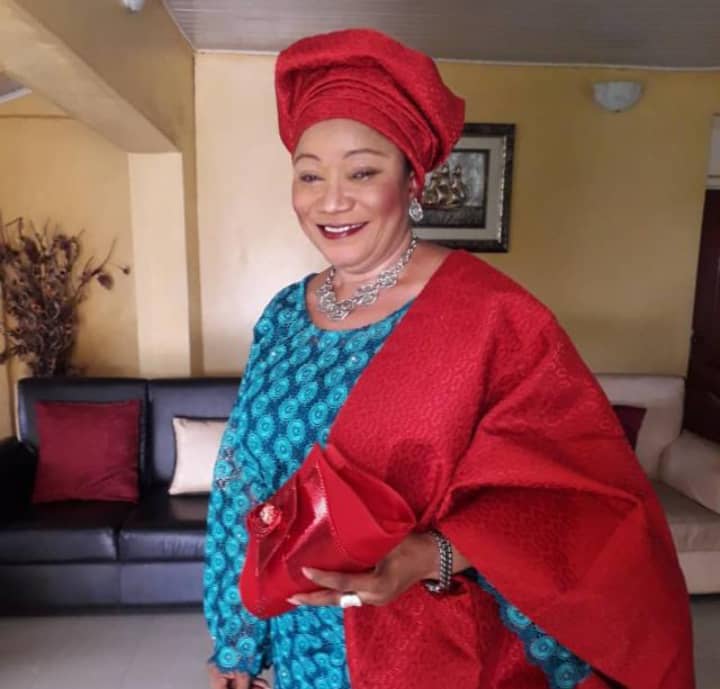
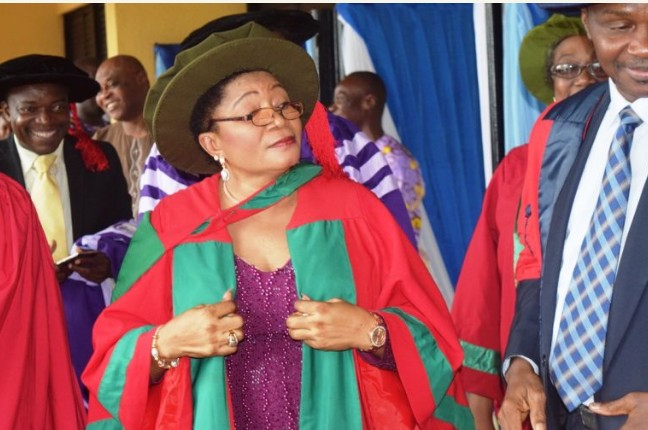
Professor Mrs. Lilian I. Salami was recently appointed as the new Vice-Chancellor of the University of Benin (UNIBEN).
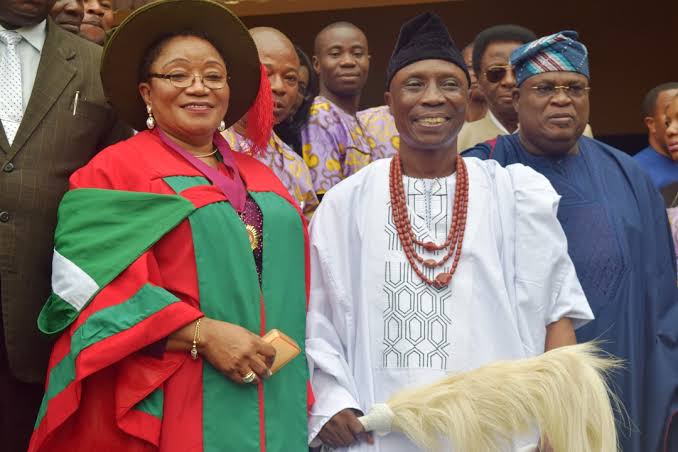

Here is a brief profile on her.

She was born in Jos, Plateau State, Nigeria on the 8th of August, 1956.

Her early schooling started in Jos but was affected by the Nigerian Civil War. Her primary and secondary education was then completed in Edo State.

She obtained her West African School Certificate (O’ levels) from Baptist High School, Benin City. In 1975 she travelled to the United States of America to University of Wisconsin, Stevens Point Campus and had her summer schooling at the University of Minnesota, St. Paul. She later transferred to North Dakota State University, Fargo after she got married in 1977. There she obtained her Bachelor of Science degree in 1979 in Home Economics and Master’s degree in Nutrition in 1982.

She returned back to Nigeria in 1983 and enrolled to serve in the National Youth Service Corps in Benin City. Upon completion of the national service, she made a brief start of her teaching career with the then University of Ife, now Obafemi Awolowo, Nigeria. Between 1985 and 1994 she lectured Nutrition at the University of Maiduguri, Borno State, Nigeria. This was interjected when she gained admission into the University of Nigeria, Nsukka for a doctoral degree in Human Nutrition in 1989 which she obtained in 1991.

In 1994, she was appointed a Senior Lecturer with the University of Benin, Benin City, Nigeria and acted as a Head of Department between 1996 and 1998 and rose to the rank of Professor in 2005.

In her desire to be well-grounded in teaching, she gained and obtained a Postgraduate Diploma in Education in 2001 from the University of Benin.

In 2004, Prof. Salami proceeded to the Vaal University of Technology, Vanderbijlpark, South Africa as a post-doctoral fellow which she obtained in 2005.

Achievements

She has held numerous positions at the prestigious University of Benin, Director of General Studies, Part-time programme and Chairman of the Board of University of Benin Integrated Enterprise. She has also served as a member of many other committees.

She is the immediate past Dean of the Faculty of Education and was a member of the apex body of the University, the Governing Council. Prof. Salami has taught numerous undergraduate and postgraduate courses in Home Economics and Nutrition.

She has successfully supervised over 40 masters and 15 Ph.D. students.  She is a fellow of Nutrition Society of Nigeria and the International Federation of Home Economics/Home Professional Association of Nigeria.

As an administrator, she has held numerous administrative positions at the University of Benin and currently the Director-General/Chief Executive of the National Institute for Educational Planning and Administration (NIEPA, Ondo).

She has to her credit over 75 peer-reviewed articles in national and international Journals. Outside academic, she is a member of the Advisory council to his royal majesty, the Oba of Benin, Omo N’Oba N’Edo, Ukukpolokpolo, Ogidigan, Oba Ewuare II.


Credit: fabwoman.ng

Years later, while studying and living in a boarding secondary school, I often wondered why kids whose parents were divorced or separated cried and went about with sad faces. That is because I never considered my parents’ separation a thing to cry about.

For most of my life, my parents have been separated. As a little girl, I remember often moving from one place to another, living with different people and changing from one elementary school to another.

When I wasn’t with either of my parents, I lived with relatives – uncles, aunties, grandparents (maternal and paternal) in different locations within the country. So I had the privilege of attending and experiencing life at both public and private schools in Nigeria. You could say I had quite the adventure growing up.

In primary one, I remember being called “fatherless” by a fellow pupil when I was in public school. My guess is that he assumed I was fatherless because he had never seen my dad at the school, and the only person he knew me with was my grandma who worked at the school at the time. The incident made me so sad and I couldn’t stop thinking about it. The next time my father visited me at my gran’s, I reported the boy to him and daddy gave me his pictures to take to school and show to the boy that “that’s my father right there”. And oh, I did! I took the pictures to school the next school day and I rubbed it in his face. With that, the boy never had the gut to call me fatherless again.

Years later, while studying and living in a boarding secondary school, I often wondered why kids whose parents were divorced or separated cried and went about with sad faces. That is because I never considered my parents’ separation a thing to cry about.

Majority of my peers and friends at the time spoke a lot about their parents. How their mum and dad did this, how they did that, how they went to this place and that place together. They had lots of pleasant things to talk about and for me to listen to. I remember being internally ashamed a lot because I didn’t have that. So for a very long time, I kept it to myself. I mean, I couldn’t contemplate being the “Doyin” kids talked about in class, hostel and dining hall when the gist of “did you know that Doyin’s parents are “divorced?” came up.

But as I grew, something in me longed for depth. For more. To live. To accept what I have been given, who I am and where I came from. So, I gradually started being open about my parents not being together.

With time, I soon noticed majority of these people began to pity me. Sometimes, I’d meet older people and when the topic of parents came up and I say “No, my parents aren’t together”. Some of them with similar backgrounds will have this really sad look on their face and then go, “I’m also from a broken home so I understand what you’re going through and how you must be feeling. Just stay strong”. But I’m always left wondering what is going on. I mean, “what’s with the talk of ‘broken home’? Can you please not be like this? Nothing is wrong with me. I’m perfectly fine. This right here, what you’re doing now, is what will make me feel bad.”

But then, I realized that the reason some of those people with similar background give pitiful looks while saying things like that is because:

They lack understanding

Some assume that since your parents aren’t together, then automatically you must be a sad person.
Truth be told, the separation of two people who once loved/professed love to each other is a sad thing and it often has an effect on the children. However, the kids don’t remain kids forever. They eventually grow up, realize and come to an understanding of why their parents are not together and they move on with their lives.

A habit of self-pity

For some of these people, they react that way because of a personal habit of self-pity. They could be the type that sit and feel sorry for themselves for a very long time because of unpleasant happenings in their lives.

I believe that as humans, it’s okay to be sad when you go through terrible experiences or witness unpleasant things. What’s not okay is staying in that state forever. You may be tempted to get into the self-pity mode, but don’t fall for it. Don’t accept it. Realize that you’re better off without self-pity.

More importantly, it is better to not give people the chance to plunge you into self-pity by highlighting your deficiencies and rubbing it in your face.

However, if you’re already there, it’s time to get up, take charge of your life and move. I challenge you to leave the self-pity zone and go make beautiful things happen.

The Association of Professional Women Bankers (APWB) Presents, Female Champions in the Banking Sector.

Women have played and continue to play a key role in Nigeria’s banking sector. To shed light on this instrumental and vital role, the Association of Professional Women Bankers, has created a definitive list of female champions within the industry.

These women have not only been pivotal in the shaping of the sectors regulatory framework but have also created a strong legacy for other women to follow.

Read the list and be inspired

Abiola Adekoya – MD/CEO of RMB Nigeria Stockbrokers

Abiola Adekoya is a financial expert with over 18 years’ experience working with leading financial service firms whose activities span across various continents. She is currently the MD/CEO of RMB Nigeria Stockbrokers, a subsidiary of the First Rand Group, a leading financial services group in Africa with footprints across the globe.

Adaeze Udensi – Executive Director at Titan Trust Bank Nigeria

Adaeze Udensi is the Executive Director of the bank. Udensi has over twenty-three (23) years cognate banking experience; sixteen of which were spent at Zenith Bank Plc where she rose to the level of General Manager/Group Zonal Head supervising the Commercial Banking and Oil & Gas businesses in Southern Nigeria, which she grew to the second largest portfolio in the bank.

Adaora Umeoji – Deputy Managing Director of Zenith Bank Plc

With over 20 years of cognate banking and broad executive management experience, Adaora rose through the ranks to her current position. Adaora has at different times participated in high-level Bankers’ meetings with impactful contributions towards the advancement of the banking industry and national economic growth and development.

Adebimpe Olambiwonnu – Group Head, Finance & Performance Management/ Financial Controller, Sterling Bank

Bimpe is an integral member of the finance group and has helped to develop processes for monitoring Sterling Bank’s long-term and short-term financial results. Bimpe began her career at Nigeria’s premier merchant bank, NAL Bank which merged with four other banks to form Sterling Bank.

Adeola Azeez – Deputy Country Head at Deutsche Bank Nigeria

Adeola Azeez is a seasoned banker with over 20 years of professional experience, more than half of which has been as Deputy Country Head/Deputy Managing Director of Deutsche Bank Nigeria, the leading client-centric global universal bank with approximately 30 million customer accounts and activities in more than 70 countries and jurisdictions.

Adobi Stella Nwapa – General Manager, Zenith Bank Plc

Adobi is currently the Group Zonal Head, Ikoyi Zone, with management and supervisory responsibilities over branches and business units in the zone. Adobi joined Zenith Bank in 1990 and has over twenty-eight (28) years cognate banking experience, most of which have been in Senior Management positions.

Aishah Ahmad – Deputy Governor at the Central Bank of Nigeria (CBN)


Aishah Ahmad was appointed Deputy Governor at the Central Bank of Nigeria (CBN) on the 23rd March 2018. As Deputy Governor in charge of Financial System Stability, she is responsible for leading the effort to promote a sound financial system in Nigeria; one of the principal objects of the Bank as specified within the CBN Act.

Atinuke Leye-Isola – Business Development Manager – Wema Bank PLC

Tinuke Leye-Isola started her banking career with Societe Generale Bank Nigeria Limited in 1988. Holds a Diploma in Banking and Finance from the University of Lagos and a Bachelor of Science, Banking and Finance from Ogun State University now (Olabisi Onabanjo University) Ago-Iwoye; An MBA in finance from University of Nigeria, Nsukka. An Associate of the Chartered Institute of Bankers as well as an Associate Member of the Institute of Loan and Risk Management of Nigeria.

Bashirat Odunewu – Group Executive, International Banking Group, First Bank of Nigeria Limited

Bashirat Odunewu has over 27 years’ experience across institutional banking, corporate banking, commercial banking, investment banking and treasury in various financial institutions. Until this appointment in January 2016, she was Group Executive, Institutional Banking Group. She is a Fellow of the Institute of Chartered Accountants of Nigeria and has attended several executive programmes in Harvard Business School and Columbia Business School.

Bola Adesola – Senior Vice Chairman, Africa, Standard Chartered Bank

Bola Adesola is the Managing Director and Chief Executive Officer of Standard Chartered Bank Limited, Nigeria. Prior to joining the bank in March 2011, she was an Executive Director at First Bank of Nigeria Plc and prior to that Managing Director of Kakawa Discount House, Nigeria. She also worked in Citibank for 9 years in senior leadership roles in Nigeria and Tanzania.

Bola Atta – Group Head Corporate Communications, United Bank of Africa
Bola Atta was voted one of the top 40 Nigerians under 40 in 2008. She was also celebrated as one of the 100 most influential women in Nigeria in March 2015. She has over 25 years of experience in diverse fields ranging from Banking, Business, Communications, Publishing, Entertainment, and the Media

Bimbola Wright – Group Head Coverage & Corporate Banking Group at FBN Quest Merchant Bank.

Abimbola oversees a team managing the bank’s corporate/investment banking relationships across all sectors. Her 30+ years in banking spans Coverage, Corporate Banking, Treasury, Wealth Management and Strategy. She has contributed to the development of the Nigerian financial market in several ways including serving on the Advisory Committee of the Nigeria Interbank Settlement System, and the Code of Conduct Committee of the Money Market Association.

Bukola Awosanya – Group Head, Agric, Export Finance & Solid Minerals, Sterling Bank

Bukola pioneered the Agriculture Finance Department in Sterling Bank. Under her leadership, Sterling Bank became a role model to other Banks in the implementation of Agricultural schemes like the current Anchor Borrowers Scheme, Growth Enhancement Scheme of the Federal Government of Nigeria among others which have garnered local and international awards and recognition for the bank.

Chizoma Okoli – Executive Director, Business Banking, Access Bank Plc.

Chizoma has over two decades of cognate experience. Prior to this, she was the Executive Director and Head-Business Development at Diamond Bank Plc. She served as Head of Business Development, Head of Corporate Banking, Divisional Head of Institutional Banking and Regional Manager at Diamond Bank Plc.

Chinwe Egwim – Economist, FBNQuest Merchant Bank

Chinwe is a seasoned Economist with specialisation in Macro Economics as well as Fixed Income analysis. She currently works at FBNQuest Merchant Bank (an arm of FBN Holdings). Prior to joining FBNQuest Merchant Bank, she had similar roles at FBN Capital, Fitch Ratings Milan and the Central Bank of Nigeria.

Cornelia George Utuk – Group Head, Legal Services & Administration – Coronation Merchant Bank

As the Group Head and Company Secretariat of the Legal and Administration Group at Coronation Merchant Bank, Utuk’s responsibilities include providing advice and support on matters related to statutory regulations, employee relations, litigation, with the aim of mitigating Coronation Merchant Bank’s legal exposure; leading the development and implementation of the Bank’s legal strategy, as aligned with business goals; coordinating the identification of risks and their implications and advising accordingly; and reviewing the regulations of the organisation.

Dupe Olusola – Group Head Marketing, United Bank of Africa

Dupe made Ventures Africa’s 10 Most Influential Nigerian CEOs Of 2015. Prior to her current role, she was the group Head Embassies, Multilaterals and Development Organizations (EMDOs) and Global Investors Services (GIS) at United Bank for Africa (UBA) Plc. Her professional experience spans various sectors locally and internationally in capacities that encompass private equity from African Capital Alliance, investments and SME experience from Growing Business Foundation, Bloomberg Financial Markets UK, SecTrust (now Afriinvest), Transcorp Corporation and Northern Trust Corporation of Chicago, UK.

Efemena Esalomi – Senior consumer analyst (Africa Frontier Markets) at Standard Bank Group

Efemena Esalomi, CFA, is a senior consumer analyst (Africa Frontier Markets) at Standard Bank Group. Efemena has a proven record of academic and professional excellence, exemplified in graduating cum laude and passing all three levels of the Chartered Financial Analyst (CFA) program examinations in one seating.

Emem Usoro – Head, Strategic Business Group, Lagos, United Bank of Africa

Emem is currently a Group General Manager. She has over 20 years of banking experience. She has strong capabilities in Relationship Management, Effective Communication and Business Development with a track record of winning and executing high-powered transactions. She has won several high-performance awards over the years of her career and has strong competencies in Corporate, Commercial and Public Sector Banking.

Emily Atebe – Chief Financial Officer, FBNQuest Merchant Bank

Emily has 25 years of financial management experience across sectors including banking, aviation and insurance. Her experience encompasses financial control and strategic planning, financial analysis, banking operations, treasury and investment, risk management, airline revenue accounting, credit analysis and marketing, audit and procurement.

Evelyn Oputu – Non-Executive/Independent Director – Coronation Merchant Bank Ltd.

Oputu currently sits on the boards of several companies in a diverse range of sectors, including insurance, mining, medical services, manufacturing and oil and gas. In 1982, she was headhunted to finding the Treasury & Financial Services Division at International Merchant Bank, before she progressed to Senior Manager & Deputy Head of the Corporate Finance Division.

Folake Ani–Mumuney – Global Head, Marketing & Corporate Communications, First Bank of Nigeria

Folake Ani-Mumuney is a seasoned Marketer and Communicator. Earlier in her career, she was responsible for Brand Policies and communications at British Airways PLC, across the Europe & Africa region made up of 59 countries.

Folake Sanu – Executive Director of Wema Bank Plc

Folake is an astute finance professional and banker of repute with over 32years working experience in banking, professional accounting and auditing practice. Her experience spans Corporate Strategy, Financial Control, Operations, Technology, Risk management, Audit, Mergers & Acquisitions, Credit and Marketing. She has worked as Chief Financial Officer of Sterling Bank.

Funke Ladimeji – Chief Operating Officer (COO), FBNQuest Merchant Bank

Funke Feyisitan Ladimeji is a uniquely skilled and experienced Investment Banking Executive, with a global career spanning both Markets and Corporate Finance businesses, across multiple regions, products and functional areas. She has an unparalleled track record in driving wallet share and revenue growth, as well as restructuring environments and leading businesses to new levels of success.

Hadiza Ambursa – Executive Director, Commercial Banking- North; Access Bank

Hadiza has over two decades of banking experience from Guaranty Trust Bank and Access Bank. Her experience covers Transaction Services, Public Sector, Commercial Bank and Corporate Finance. Prior to joining Access Bank in 2003, she was a Relationship Manager Public Sector in Guaranty Trust Bank Plc.

Hajara Adeola – Managing Director/CEO, Lotus Capital Limited

Hajara Adeola heads Lotus Capital Limited, a Nigerian pioneer in Shari’ah compliant Asset Management, Private Wealth Management Advisory Services and Financial Advisory Service. She began her career as a consultant at Andersen Consulting (now Accenture). From there she joined ARM Investment Managers as a pioneer staff and rose to Vice-President and Head of the Research and Financial Advisory Units. She has over 20 years of international experience in research and analysis, investment management and corporate finance. Adeola is the former President of the Fund Manager’s Association of Nigeria.

Ibukun Awosika – Chairperson, Board of Directors, First Bank of Nigeria Limited

Ibukun Awosika is one of the most recognized female leaders in the Nigerian banking sector. She also serves as the founder and Chief Executive Officer of The Chair Centre Group, a conglomerate consisting of 5 companies with interests in several sectors such as manufacturing, retail and bank-way security systems services. She is a graduate of Chemistry from the Obafemi Awolowo University and has several certifications from relevant bodies globally

Iyobosa Sorae – Group Head, Securities Dealing, Coronation Merchant Bank

Sorae is a Fixed Income expert with experience in Fixed Income Trading, Portfolio Management, and Operational Management. As the Group Head of Securities Dealing at Coronation Merchant Bank since August 2015, Sorae’s responsibilities include ensuring and managing the solvency of the bank, market and liquidity risks, profitable investments, and facilitating the development and implementation of activities to contribute to the business’s market share, annual revenue and growth targets.

Lola Cardoso – Chief Digital and Innovation Officer, Corporate Strategy and Innovation, Union Bank

Lola joined Union Bank in August 2013 to drive the Bank’s strategy, anchor its overall transformation and support execution bank-wide. With over 17 years of experience providing strategic advice to corporate, start-up, and public sector organisations, she continues to drive Union Bank’s strategic growth priorities and support critical efforts aligned to growth including sustainability and innovation.

Mojisola Bakare – Divisional Head, Corporate Client Coverage Sterling Bank

Mojisola sees a lot of similarities between her two passions; mentoring and banking. They are both driven by relationships and a quest for knowledge. Having spent over 25 years in the banking industry, she has built expertise in business planning, risk management, sales and wealth management.

Mosun Belo-Olusoga – The Chairperson, Board of Directors of Access Bank Plc

Mosun is a seasoned veteran of the banking sector in the country. Having served in various senior capacities at Guaranty Trust Bank, she became Chairman of the Board of Directors of Access Bank in July 2015. Belo-Olusoga graduated from University of Ibadan in 1979 with a Second Class Upper Degree and is a fellow of both the Institute of Chartered Accountants of Nigeria and the Chartered Institute of Bankers of Nigeria.

Miriam Chidiebele Olusanya – Executive Director at GTBank

Miriam Olusanya has over 20 years of banking experience that cuts across Transaction Services, Asset and Liability Management, Financial Markets, Corporate Finance and Investor Relations. She also serves as a Non-Executive Director on the Board of Guaranty Trust Bank (Gambia) She joined the Bank as an Executive Trainee and rose through the ranks to become a General Manager, a position she held until her appointment as Executive Director.

Ngover Ihyembe Nwankwo – Head Coverage at Rand Merchant Bank Nigeria Limited

Ngover is a Corporate and Institutional Banking Executive with 17+ years’ experience in Financial Services across a wide range of functions including, Corporate Relationship Management, Sales, Credit, Transaction Banking, Remedial Account Management and Risk.

Ngozi Edozien, Independent Non-Executive Director – Stanbic IBTC Holdings

Ngozi Edozien holds a B.A in Politics, Philosophy and Economics from Harvard University and an MBA from Harvard Business School. Ngozi was previously the Chief Executive Officer of Actis West Africa and has served on the Board of Diamond Bank Plc. She is currently a Non-Executive Director on the Boards of Vlisco Group and PZ Cussons Plc. Ngozi is a member of the Board Risk Management Committee and the Board IT Committee.

Olamide Adeosun – Head of Finance, Business Management and Investor Relations

Experienced finance professional with 20 years of cross-sector experience (local and international). Highly skilled in; Financial Control, Business Process, Operational Excellence, Change Management and Leadership. Fellow of ICAEW and Associate Member ICAN.

Olubunmi Fayokun – Non-Executive/Independent Director – Coronation Merchant Bank Ltd.

Fayokun is a Senior Partner in the law firm of Aluko & Oyebode and heads the firm’s Capital Markets’ and M&A practice groups. Prior to joining the firm, Fayokun was the Legal Adviser/Company Secretary of Denham Management Limited. Fayokun has served on various committees established by the Securities and Exchange Commission for the purpose of promoting the development of the Nigerian capital market, including the CMC Rules and Compliance Sub-committee and the CMC Market Infrastructure Sub-committee.

Oluwatomi Ojo, Chief Compliance Officer, Heritage Bank Plc

Olutomi Ojo is a versatile professional with competencies and experience cutting across Structured Finance and Transaction Advisory, Banking, Corporate Governance Advisory and Company Secretarial services, Risk Management, Human Capital Management and recently, Compliance.

Olutomi has a keen legal mind and is renowned for her role in strategic decision making as well as change management processes. She currently heads the Compliance Division of Heritage Bank Plc.

Oluwatomi Somefun – MD/CEO Unity Bank Plc

Oluwatomi Somefun has proven her capabilities both analytical and negotiation skills in the Nigerian banking space. Somefun has over 25 years experience in the financial industry spent most of her career life at Arthur Andersen (now KPMG) and United Bank for Africa Plc.

Oluwayemisi Disu – Director, Heritage Bank Plc

Yemisi has had a successful career with various banks which spanned 25 years, during which she worked in various departments such as Corporate Banking, Foreign Exchange Treasury, International Operations, Branch Banking, Energy Sector, Telecommunications, Oil and Gas (downstream), Public Sector, Credit & Marketing, Audit and Investigation. She is a Fellow of the Chartered Institute of Stockbrokers (FCIS), Fellow of the Institute of Chartered Accountants (FCA) and an Honorary Senior Member, Chartered Institute of Bankers of Nigeria.

Onayimi Aiwerioghene – Group Head, Enterprise Management, Coronation Merchant Bank

Onayimi ‘s core focus is on developing her knowledge and potential in Human Resources, Process Redesign, Business Effectiveness, Strategy Articulation, and Corporate Communications and Branding.
Over the course of her career, she has built a core expertise in HR and strategy advisory, project management and business planning. Her career began in 2007 at Ariosh Limited Nigeria.

Ope Oduwole, Country Head, Private Banking at Sterling Bank

Opeyemi Oduwole is a seasoned wealth management professional with knowledge in both local and international wealth management and advisory services. Having spent over a decade managing High Networth Individuals (HNI) and Ultra High Networth individuals (UHNI) by providing wealth advisory and transactional services both locally and internationally, Ope is currently the Country Head of Private Banking for Sterling Bank, she had previously served as the Head of Privilege Banking for Diamond Bank.

Osaretin Demuren, Chairman at Guaranty Trust Bank Plc

Osaretin Demuren served 33 years at the Central Bank of Nigeria (CBN) where she held several significant roles in Research, Exchange Control and Trade & Exchange Departments. In 1999, she made history as the first female to be appointed a Departmental Director of the Apex Bank as the Director of Trade & Exchange. In April 2013, Osaretin Demuren was appointed to the Board of Guaranty Trust Bank (GTB) Plc., as a non-Executive Director, where she served on the Board Remuneration Committee and Chair of the Board Risk Management committee until April 2015, when she was appointed as Chairman of the Board of Directors of the Bank.

Osepiribo Ben- Willie, Directorate Head, South bank & Private Wealth Management – Heritage Bank Plc

Osepiribo Ben-Willie is an experienced Deputy General Manager with a demonstrated history of working in the banking industry. She is skilled in Business Planning, Team Building, People Management, Financial Risk, Credit Administration, Investment and Wealth Management and Business Relationship Management.

Oyinkansade Adewale

Oyinkansade Adewale is a Non-Executive/Independent Director of FBNQuest Merchant Bank. She began her banking career with Citibank, where she rose to the position of executive director and CFO for West Africa. She joined Union Bank Plc in 2012 where she was an Executive Director/Chief Finance Director, retiring in September 2018.

Sola David-Borha

Sola David-Borha is the Chief Executive of Africa regions for Standard Bank Group since 2017. She was Chief Executive Stanbic IBTC Bank from May 2011 to November 2012. She is an honorary fellow of the Chartered Institute of Bankers of Nigeria (CIBN).

Temi Dalley 

Temi manages Sterling Bank’s most valuable resource – the human capital. In addition to the traditional role covering employee benefits and compensation, training and development, employee engagement, recruitment and exit programmes, her background in political science has helped her to build a structured and positive working environment across the bank.

Yemisi Lowo-Adesola

Yemisi is the head of Financial Institutions Business for Nigeria and the extended African region. She is responsible for developing, leading and executing Africa-wide strategic initiatives for the business from Lagos where she is based.

Yetunde Ogunremi – Head, Balance Sheet Management and Treasurer of Rand Merchant Bank Nigeria Limited

Yetunde is a qualified finance professional with a demonstrated track record spanning over 17 years in the financial services sector with primary responsibility for managing risks associated with capital, liquidity and market risk in the banking book.

Source: Bellanaija

As the world strives to achieve the United Nations Sustainable Development Goals 2030, on the front burner of most governments, industries, organisations and individuals is Goal number five, which seeks gender equality and empowerment of women and girls. It is in this light that the Africa Women Innovation & Entrepreneurship Forum (AWIEF) Conference, Exhibition and Awards is set to hold its 5th edition next month. MARGARET MWANTOK spoke with the founder Irene Ochem on the project and the need for societies to allow stronger empowerment of women.

Can you tell us the objectives of your organisation?
My organisation is the Africa Women Innovation and Entrepreneurship Forum (AWIEF). It is a pan-African non-profit organisation that nurtures and actively promotes women’s innovation and entrepreneurship in Africa through its development programmes, accelerators, and networking events. AWIEF’s mission and principal objective is to foster the economic inclusion, advancement and empowerment of women in Africa through entrepreneurship support and development.

Why are you involved in this project?
This is the most difficult of all the questions that I have always had to contend with. I believe that my passion for AWIEF is a cumulative resultant of the circumstances and experiences I have lived all my life, born and raised in rural Nigeria and by a very strong woman; and spending my work life between Africa and Europe.

There have been talks of empowering women and the impression sometimes is that such efforts have the tendency to break the family units, what is your take?
I would beg to differ from the impression that empowering the African woman would tend to break the family units. Quite to the contrary, I would say that empowering the African woman would strengthen the family units because the empowered woman has the deep feeling of personal satisfaction and that she has attained her highest potentials as endowed by nature et al. To the best of my knowledge, and as far as I can remember, women who have engaged in farming with their families in the rural areas have not failed to maintain their family units even after toiling with their members in the farms. Therefore, I am simply unable to imagine how empowering the woman to benefit more from what she already does would lead to breaking the family unit.

However, we must keep in mind that every person’s life, man or woman, has several components including work, leisure, hobby and family, and that my thesis is only valid where the different components of a person’s life are each accorded the right portion of the person’s time and space. This is valid so much for the woman as it is for the man. There will be clear disequilibrium and tendencies to “cracks” in scenarios where one component of an individual’s life tends to overshadow other components, so much for the man as it is for the woman.

We are aware that the traditional African woman was economically relevant while still placing premium on the family order of things. What could today’s woman learn from this?
I quite agree that the traditional African woman has always been economically relevant. Afterall, the average African woman, especially those in rural communities, have always engaged in some sort of petty trading and in subsistence agriculture alongside their other family and household chores. In some cases, the monies generated in these mini and micro engagements and undertakings have constituted the backbone of their individual family finances. Furthermore, several cases are known of widows who have had to raise their children on their own. Therefore, it may be affirmed without doubts that women all over the world have always been and will always be economically relevant in the societies where they live and work.
Consequently, the talk about women empowerment inter alia is essentially a discourse for the enhanced recognition and appreciation of the fundamental role played traditionally by the woman in the family, in the economy, at national level and globally.

Some people believe that using the terms, “inclusion” “empowerment” and “support” still deepens the dependency mindset against women and even by the women themselves. Any idea of how a change in nomenclature can strengthen the agenda?
No, I don’t believe there is need for a change in nomenclature, but a clearer understanding of the definition and context of the terms in question. Of course, talking of “inclusion” “empowerment” and “support” for women, which fails to underpin excellence in the women would only exacerbate the dependency mindset against women. I feel personally and particularly very concerned in this particular debate because these key words form the integral part of my Organization’s glossary and lexicon.

There is need to state emphatically here that we talk and push for “inclusion” “empowerment” and “support” for women in scenarios and circumstances wherein the principal cause for their exclusion is their gender, and this is diametrically opposed to situations where females are “granted” career opportunities specifically because they are women. Obviously, this latter scenario would only deepen the dependency mindset even by the women themselves. We are all aware that one’s best judge is their conscience. Therefore, a woman who secures a job, a promotion or rises significantly in her career because of her gender rather than her ability and competence in the field would certainly suffer from severe inferiority complex when compared to their male colleagues and counterparts. But such simply can never be the case for any female who soars in her career exclusively because of her capacities and ability to deliver great value in her field of competency.
When these necessary ingredients are available, I would simply encourage women to fight even harder for their rights because nothing good comes without a struggle.

Affirmative action has been around for a number of years, yet women are neither growing in political structure nor climbing in the corporate ladder as the men. What could be the reason, especially given that women almost outnumber the men in population?
I have always tried to tread this issue of “Affirmative action” with great caution. We need to distinguish clearly “Affirmative action” that seeks to achieve equal opportunities for capable women to their male counterpart in the context of any work that needs to be done from the Affirmative action, which merely tends to promote women for the simple fact that they are women. I would consider the former as effective “Affirmative action” while the latter would rather be destructive “Affirmative action”. However, having made this distinction there remains, in the case of the former, the need to draw a clear line between what gets said and what gets effectively done. In fact, an interesting Italian proverb states that: “There runs a sea between what is said and what gets effectively implemented”. So, I daresay that so much talk about affirmative action without visible impact on the career path of competent women in Africa, both in politics and the corporate world, would be tantamount to mere lip-service. But again, we must not lose sight of the notable exceptions, also among African countries both in politics and the corporate world, where women have achieved great heights in their careers. “Rome was not built in a day” is yet another proverb, so we may not imagine resolving decades-long problems of female marginalisation and exclusion, which are consequences of cultural barriers, almost overnight. The important point here is to ensure that the ascent of women in their respective careers is gradual and steady and commensurate with their individual capacities and capabilities.

Reaching rural women is critical to any enduring change, many argue. But most interventions are limited to the urban areas. What plans do you have to impact the critical mass of the rural women populace?
That’s quite very correct. I mean that reaching and positively impacting the rural woman is pivotal to any enduring change especially in the context of Africa where the larger percentage of the population are rural dwellers. But I would rather think and argue differently and say that the idea of interventions limited to urban areas is fast becoming a thing of the past. In other words, there are currently several national and regional initiatives, programmes and projects that are specifically and purposefully designed for grassroots women, and I have been part of some of these projects.

Take for instance one of our major flagship programmes: the VALUE4HER project, a continental programme that seeks to strengthen women-led agribusiness enterprises in Africa, which is sponsored by the Technical Centre for Agricultural and Rural Cooperation (CTA), a European Union funded institution based in the Netherlands. VALUE4HER is specifically designed to target both urban and rural women agriculture value chain actors. This AWIEF-implemented programme has had tremendous impact on many African women agripreneurs.

There is no gainsaying the fact that Africa remains the hardest hit world region in terms of food insecurity, and this may only be successfully addressed by implementing successful agricultural programmes as VALUE4HER that aim to boost food production across the continent. The challenge is for our African countries and continental regional bodies to step up the necessary policies to effectively reach women in the grassroots.

Can we learn some of your achievements across the continent?
Thank you very much for this question. This year we are celebrating the 5th anniversary of the AWIEF brand and we have a great record of landmark successes and achievements attained vis-à-vis the advancement and empowerment of women in Africa through entrepreneurship support and development.
The impact of AWIEF incubation and accelerator programmes for hundreds of young women entrepreneurs across the continent, range from improved business operations, business growth with increased revenue, new business partners and joint ventures, to job creation. In June we launched #VALUE4HERConnect, the first continental digital marketplace for women in agribusiness, a customised market information and intelligence platform where women agripreneurs can reach out to one another, share and access structured resources and services, and create opportunities for women-to-women and intra-African agribusiness trade.Launched in 2017, the AWIEF Awards are annually celebrating great achievements as well as showcasing that women can thrive in male-dominated sectors. And of course, as you know, since 2015, we host the annual AWIEF Conference and Exhibition which has become Africa’s largest female entrepreneurship platform. Last but not the least, we have been able to establish strong partnerships with reputable global organisations and institutions.

What do you think would happen if society allows stronger empowerment of women, especially in Nigeria and Africa?
This is a very interesting question. I sincerely believe that Nigeria and Africa in general would get a lot richer if society allowed stronger empowerment of women. In fact, there are several published reports by renowned institutions that detail the loss of several trillions of US Dollars to the global economy due to denied empowerment of women. Considering that this plague is more typical and characteristic of many African countries, it is easy to assume that the windfall beneficial impact of women empowerment would reflect more evidently on the national economies of African countries.

But looking at this question from another viewpoint: that the society is merely a collective of the single building-blocks, the individual and the family, it is possible to take this question a bit personal and put the question to oneself. What would happen to me or change in me if the woman became more empowered? Invariably, responding truly and sincerely to this simple and straight forward self-interrogation would probably shed more light or rather the correct light on what would happen if society allowed stronger women empowerment in Nigeria and Africa.

QUOTE: Women who have engaged in farming with their families in the rural areas have not failed to maintain their family units even after toiling with their members in the farms

QUOTE: There are several published reports by renowned institutions that detail the loss of several trillions of US Dollars to the global economy due to denied empowerment of women

Source: Guardian

Friends and colleagues of celebrated actress and filmmaker, Toyin Abraham, have commended her decision to become a herbal medicine vendor.

Celebrities such as Annie Idibia, Mercy Aigbe, Adunni Ade, Dayo Amusa, Chioma Akpotha, Faithia Balogun-Williams and Venita Akpofure took to their respective Instagram pages to praise the controversial nursing mother.

They described her action as commendable and worthy of emulation. @annieidibia1 wrote, ‘‘I just want to use this medium to congratulate My Gurl @toyin_abraham on the launch of her new project, a solution for women with infertility issues. As a woman I  understand how personal this is and I  could not be prouder (sic)’’

Aigbe, on her part wrote, ‘‘This is a big congratulatory message going out to my very good friend @toyin_abraham on the launch of her project. This is a big win for women all around and I am so glad to be a part of the story. It’s time we stop spending fortunes on fertility drugs and treatments…(sic)”

‘‘This is a congratulatory message going out to my colleague @toyinabraham on the launch of her project. It’s such a big win for women all around and I am so glad to be a part of the story (sic),” Adunni Ade also wrote on her IG

Toyin said her journey to conception was what opened her eyes to what she described as the wonders of traditional African remedies (herbs).

Source: Punch

Kafayat Sanni made history on Tuesday, October 15, 2019, when she became the first female fighter pilot in the 55-year-old history of the Nigerian Air Force. After emerging as the overall best pilot at the NAF 401 Flying Training School, Kaduna State, in 2017, she was sent to the United States of America to train at the US Aviation Leadership Programme. Upon the completion of the programme, Sanni is back and was decorated alongside 12 new fighter pilots at the NAF Headquarters, Abuja, on Tuesday.

As she grabbed the first female trophy in flying Alpha Jets and others, her colleague, Tolulope Arotile, also trained at the Starlite International Training Academy, South Africa for 14 months, to become the first female combat helicopter pilot. After a decoration ceremony attended by the Minister of Women Affairs, Mrs Pauline Tallen, the females, alongside their male counterparts will soon be deployed to the North-East to join in the Boko Haram counter-insurgency operation and other internal security operations across the country.

In an interview with Punch, she speaks on her achievements, playing a big role as a female officer and her contribution to counter-insurgency.

Read excerpts from the interview:

On how she felt concerning her achievement in the Nigerian Air Force

It is a privilege for me to be winged as the first female fighter pilot in the Nigerian Air Force. My appreciation first goes to the Almighty God for making this possible for me. It also goes to the Chief of the Air Staff for giving me the opportunity and for making this possible.

On being the first female fighter jet pilot

It was what I wanted to do. And I felt that everyone is not supposed to fold their arms and watch what is happening in our country. Everyone could always play their part. So I did not think there was any reason for me to think that it is not possible for me to actually fly the jet because there was no female that ever flew the jet. I believed I could achieve it and I did.

On contribution to counter-insurgency operations

It will motivate me of course. There are other pilots there in the fronts and they are playing their part. They have been doing their best. So I am also just going to join my male counterparts in the insurgency fight and every other thing that have been going on in our country. So I am just going to get there and play my part.

Advice for younger girls who would like to be in the military

The advice I want to emphasise to them is that they should never say no to opportunities. They should always strive to be the best and put in their efforts. They should never look at anything that seems to want to overpower or overshadow them. For me, you can always attempt things and if they do not work out well; fine. But at every point in time, you just need to put in your best.

As it stands, women make 80 cents to every dollar earned by men. But, for women of color, that gap is far larger with Black women earning 61 cents to their white male counterparts and Native American and Latina women earning 58 cents and 53 cents, respectively. 

Working to help address not only this wage gap, but the many other biases and micro-aggressions that women of color face in the workplace is entrepreneur and author Minda Harts. In her latest book, “The Memo: What Women of Color Need to Know to Secure a Seat at the Table,” Harts provides actionable and relatable tips for how women of color and their allies can make an impactful change in the workplace. 

“I realized there was a gap in career development geared towards Black women and women of color,” Harts told Because of Them We Can. “Most of the career narratives are written through the lens of a white man or woman and I felt we were being left out of the conversation.”

Harts continues by saying she wanted women of color to read about some of the shared experiences they face in the workplaces and walk away with the tools needed to not just survive corporate America, but also thrive in it. 

Referring to her book as a “love letter to Black and brown women,” Harts explains how her book is a continuation of the company she started in 2015 called The Memo, which is a career development platform for women of color.

Unlike other career books that offer a one size fits all approach to achieving success in the workplace, Harts says “this book is different because the career narrative is written by us, for us.”

“As Dr. King so eloquently wrote in his letter from the Birmingham jail, ‘we will live in the monologue and not the dialogue,’” she says. “I wanted that for Black and brown women at work.”

Harts, who is also an assistant professor of public service at New York University, is currently on tour helping to bring discussions about her book and the many issues women of color face in the workplace to cities across America. Known by many to be a career revolutionary, she says she hopes her book will teach women of color how to be better advocates for themselves at work and how to quantify their worth. 

“Every time we have the opportunity to make an ask, we are helping chip away at the wage gap,” she says. “Every time we don’t ask, we widen it. I realize that just because you ask for more money doesn’t mean you’ll always get it, but at least you’re working on the part of the equation that you can control.”

Oritoke Eniola Adeniyi is an undergraduate of Olabisi Onabanjo University (OOU). She is a third year student in the department of Business Administration. Oritoke is the third child in a family of seven. She loves web surfing, music, writing and reading.

She owns her own YouTube channel where she talks about beauty, hair and lifestyle, showcasing different shades and attributes of a dynamite to the world.

She owns an Instagram page named “Oritoke.dynamite” where she builds her brand, write and design amazing quote pictures.

She shares her Ruby Girl story in this interview.

MEET ME

My names are Adeniyi Eniola Oritoke Lateefat, I am a 300level Business Administration Student of Olabisi Onabanjo University. I am the third child in a family of seven.


HOBBIES

Web surfing, listening to music, writing and reading.


INSPIRATION

Music, pictures and things inspire me in different ways, for example I can see a beautiful painting, get inspired by it and draft a poetry out of it.

BIGGEST FEAR

Losing my family.


MY YOUTUBE CHANNEL

Yes, I started a YouTube channel about two months ago where I talk about Korean BTS. I haven’t been really active on it though I am looking forward to doing more interesting things on it which is generally not going to be in the directions of Kpop stuffs. What actually made me created the YT Channel was because I felt uncomfortable about how idle I was ‘I am a girl with talents and I never want that talent to go to waste, so, I decided it is best to showcase it to the world.’


TO SAY THE TRUTH OR LIE NOT TO HURT…

I would rather say the truth in a less hurting way.

ONE THING I WOULD LOVE TO CHANGE ABOUT MYSELF…

The act of procrastinating.


WHAT I WOULD DO IF I WASN’T AFRAID

If I were not afraid, I would walk to the presidential villa and tell the president to his face the numerous ways he has failed us.


IF GIVEN THE CHANCE TO BE THE PRESIDENT OF NIGERIA FOR A DAY

If given the chance to be president for a day, I will change the laws that favor the corrupt officials.

I understand that I cannot make a total change in Nigeria if I become a president for a day but surely what I would do is to make adjustment in the rules that favour and caress our corrupt political officials; place them on same level with ordinary citizens.

WHAT KEEPS ME UP AT NIGHT

My phone.


INSPIRATION BEHIND MY INSTAGRAM PAGE ‘ORITOKE.DYNAMITE’

Nothing inspired me really, I created my handle like every other person. I choose to upload my stuffs there to gain awareness and catch the attention of people that are not within reach. I build my brand there, also write and design quote pictures on the page.

‘DYNAMITE’ means something to be very impressive and that is who I am “full of exciting mysteries.”


MY BRAND IN THE NEXT FIVE YEARS

Starlight.


WORDS OF ADVICE TO GIRLS FIVE YEARS YOUNGER THAN ME

My advice to a group of girls five years younger than I am will be for them to try their possible best to build a happy life for themselves and also make sure to leave a mark on earth.

Adesewa started her career as a child actor both on stage and on screen, and then went on to become a TV show host, working alongside veteran comedian and actor, Julius Agwu.

She was also on a Nigerian reality television show called Next Movie Star.

Adesewa earned her undergraduate degree (Biochemistry) from the University of Ado Ekiti and also holds a professional certification from the Nigerian Institute of Science Laboratory Technology.

She received a Certificate in News Production and Reporting from BBC World Service in 2009, and in 2012, earned a certificate in TV Presenting from UK’s Aspire Presenting Institute. She also holds a Certificate in Basic Presentation from Radio Nigeria.

In 2011, she completed her postgraduate diploma in International Relations from Lagos State University, and earned a master’s degree in Politics and Global Affairs from Columbia School of Journalism in 2017.

Adesewa joined Channels Television in 2012 as co-host of Sunrise Daily.

In 2015, Adesewa was assigned to the United Nations headquarters in New York to report on Nigeria’s rotational presidency at the Security Council.

She also was host of the Emmy nominated UN documentary, 21st Century.

Adesewa joined TRT World News in 2017, working as a correspondent at its Africa Desk and also as producer of The Newsmakers, a TRT World’s flagship current affairs programme, featuring in-depth reports and interviews with the drivers of the biggest stories of the week.

Adesewa has told hundreds of stories about community development and gender based issues in Africa since she began her career, bringing the right nuances and perspectives to African stories in international newsrooms.

In 2013, deciding not to just tell people what’s wrong with the world they live in, but being a part of the change, Adesewa founded Project Smile Africa, to address some of the issues she has reported on over the years.

Through Project Smile Africa, Adesewa works as a community development strategist, identifying key development issues in poor rural communities and proffering sustainable solutions.

Adesewa won the Xceptional Women in Media Awards in 2014 for her reporting on community development issues in Africa. In 2017, she was a nominee in The Future Awards Africa (TFAA) Prize for On-Air Personality (Visual). She was also named in Leading Ladies Africa’s 100 most Inspiring Women in Nigeria list for 2019.

We celebrate Adesewa for being a voice for the voiceless, and for contributing her skills and resources to community development.

Source: Bellanaija


Jesica Nabongo has become the ‘first’ black documented woman to visit all countries in the world.

Ugandan Woman Becomes the First Black Person to Visit All the Countries in the World

 Jesica Nabongo becomes the “first” documented black woman to travel to all countries in the world.