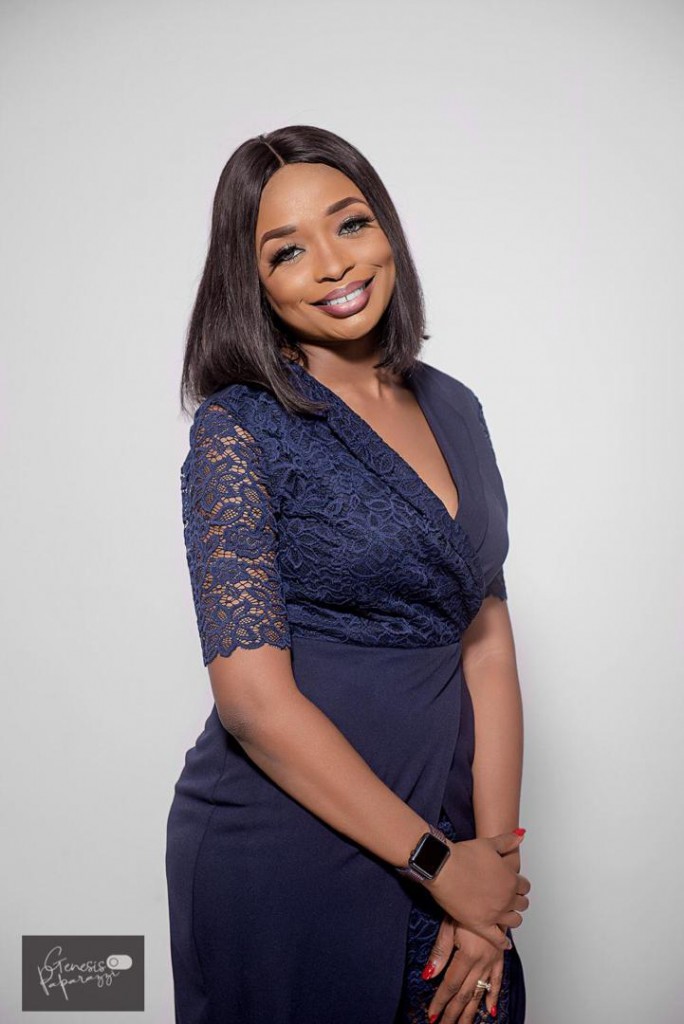
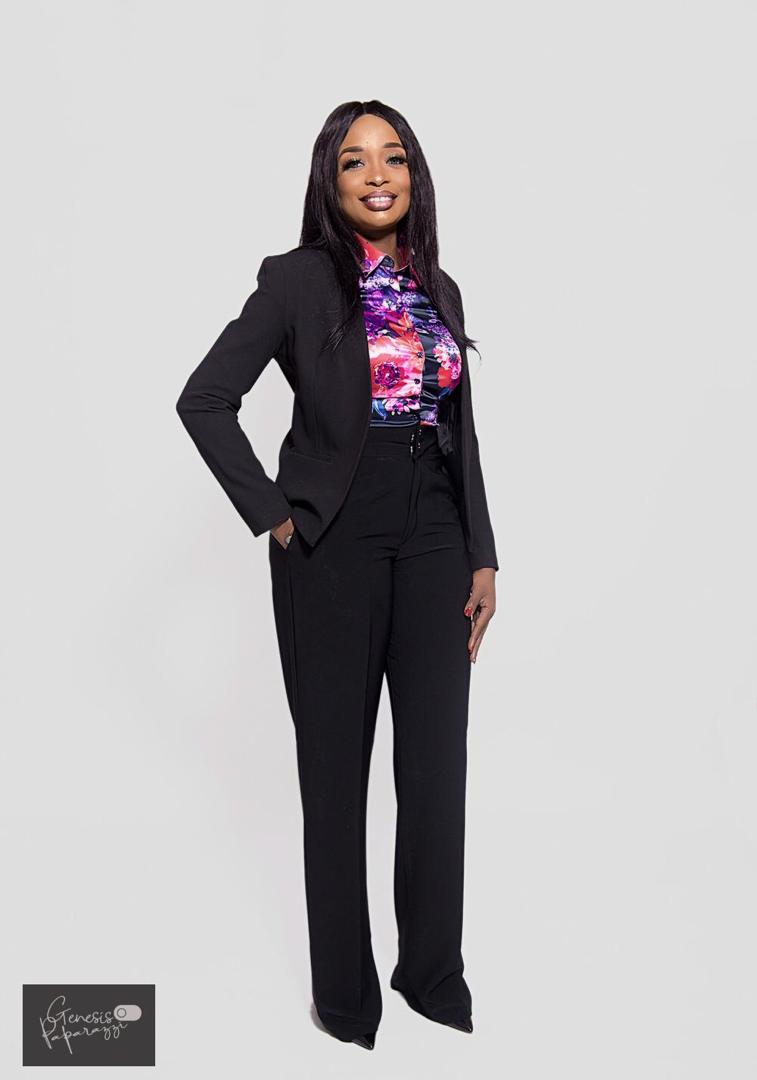
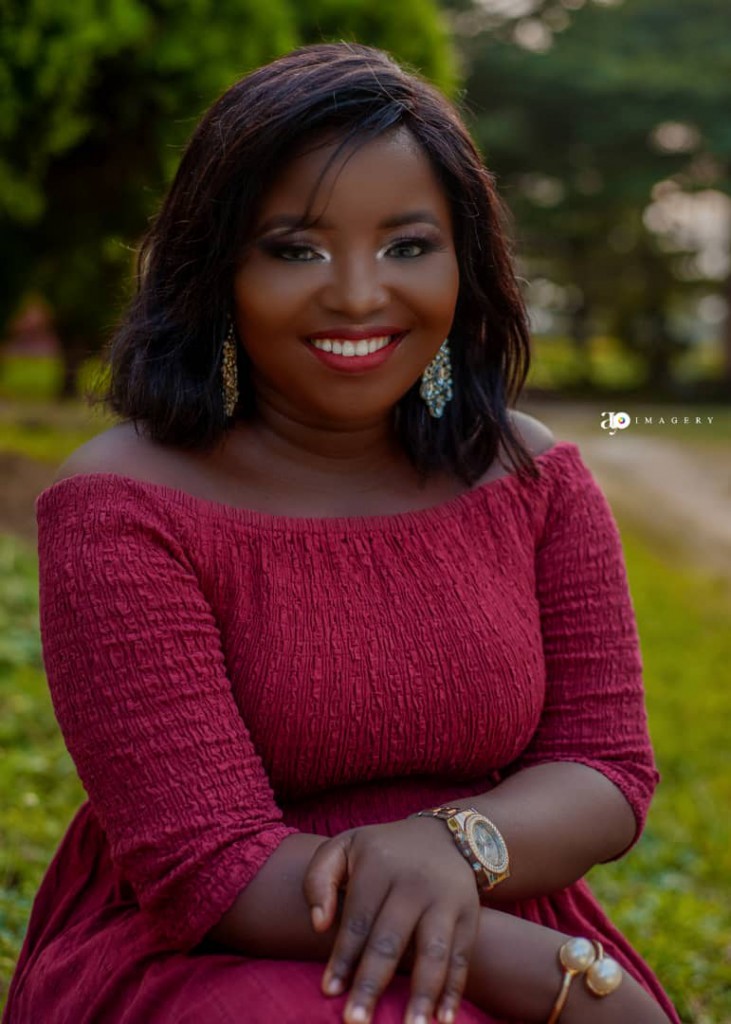
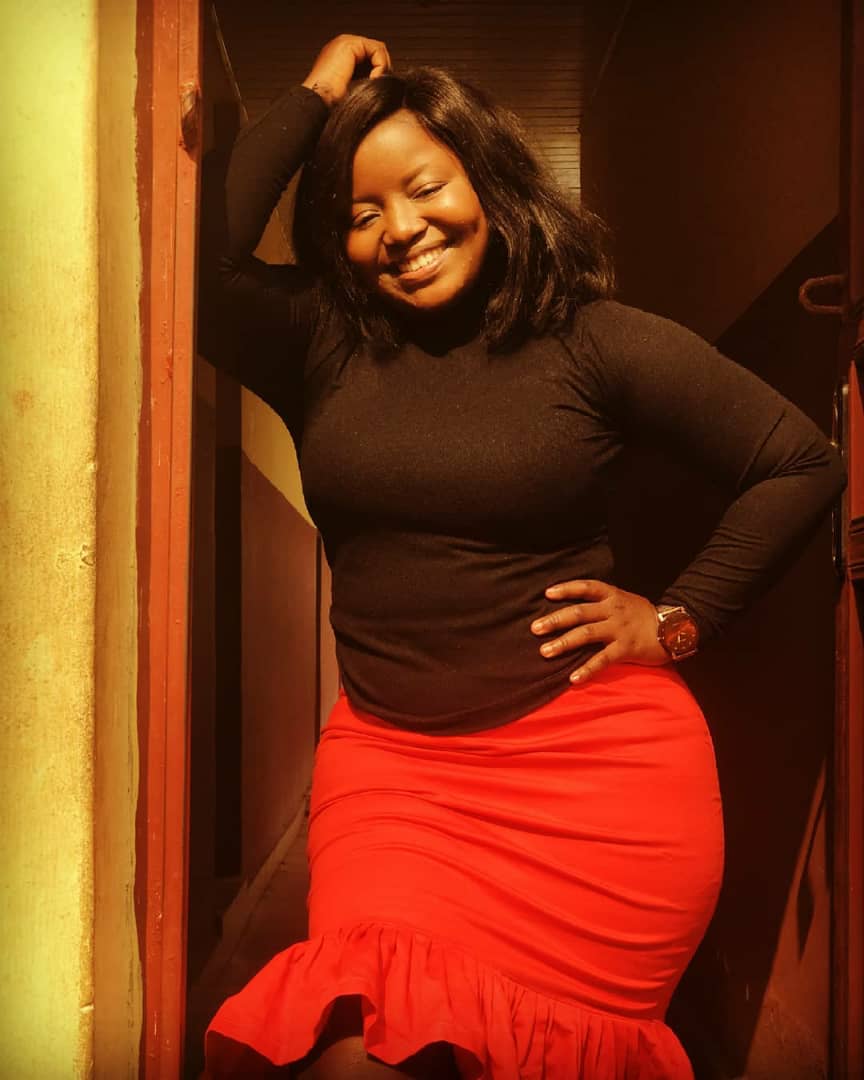
Alake Olanike Pelumi is a plus-size model and fashion designer. She speaks about overcoming body-shaming and how tough it can be because the society made her feel she has to be a particular size to be beautiful. She is now in love with her body and flaunting what she’s got.
Pelumi created Curvy Pink, a platform where she inspires and motivates plus size women to love and accept their body and maximize their talents.
She wrote:
My definition of body negative is how people see their self in a negative way, when you don’t like anything about your body, unrealistic way of how you see your body. Body negativity can be from the result of body shaming, feedback about your body from peers,family members and friends etc.
Sign and symptoms of body negativity * obsessive self criticize or study in mirror *frequent comparison of your own body to our people’s body size and shape *envy : the body of a celebrity or some one else in the media.
I usually tell people that media is one the causes of body negativity, when the media portray the kind of beauty and the society feel you have to look a certain way or standard size, Women and young girls are now living in a society where their bodies define who they are. Girls are terrified to gain weight and are continually reminded by the media about various new diet products on the market, and the value in weight loss.
They are also bombarded by countless television shows on plastic surgery and the number of cosmetic surgeries in this country are increasing every year. Women today face impossible images of beauty on a daily basis when they watch television, see a movie, or view a magazine. It is estimated that young girls are exposed to 400 to 600 media images per day.
Solution to body negativity/ways to overcome body negativity
1. Fighting fatism
Learn to accept people of all sizes and shapes, this will help you appreciate your own body. Who are the people you admire, who are your mentors, do they preach body confidence create a list of people you admire that do not have “perfect” bodies. Does their appearance affect how you feel about them? Do you know in 1940’s the women that are consider beautiful women like Marilyn Monroe(size14) and Mae West were full bodied and truly plus-size women but today those beautiful women will be considered over weight, fat. Learn to fight fatism( the discrimination of fat people)
2. accept heredity
Always remember that many part of your body can not be changed, 20 percent of your body can be determine by your genes. While they are some aspect of your body you cannot Change. Learn to accept change and change start with you it is inside of you and it start with self respect, self love and body confidence. So it important to focus on your health more than your size and it is important not to compare your body with your friends, celebrities, family member or media images.
3. Think of your body as a tool. Create an inventory of all the things you can do with it, You know I usually say this all the time, learning to express your self with what you are good at,what you are best at doing it might be fashion, beauty, motivation talks, just express your self with whatever you are best at. I knew I loved fashion and I wanted to be a voice to plus-size women I combine it and created @curvypink.
5. Replace the time you spend criticizing your appearance with more positive, satisfying pursuits.
6. Be your body’s ally and advocate, not its enemy.
7. Have this positive mind that your body is perfect just the way it is.
Don’t let your size keep you from doing things you enjoy( fat is not a disease).
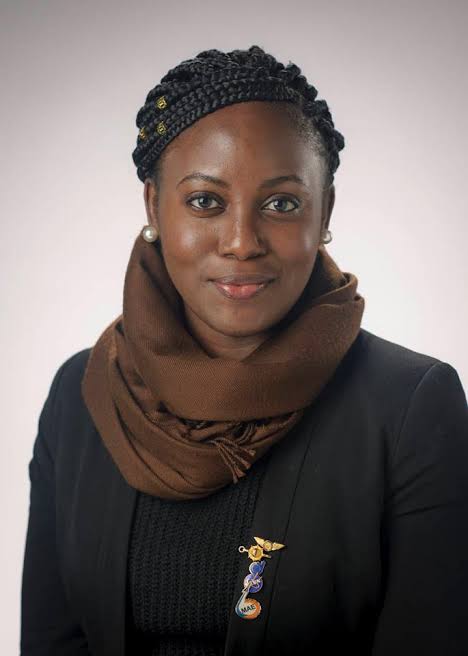
Dr Wendy A. Okolo is the first black woman to obtain a Ph.D. in aerospace engineering from the University of Texas at Arlington and the 2019 winner of the BEYA Global Competitiveness Conference award for the most promising engineer in the United States government.
At only 26 years old, did she became the first black woman to obtain this Ph.D, where she earned both her undergraduate and doctoral degrees.
Today, the 30-year-old is an aeronautics and space administration genius. She works as an aerospace research engineer at the Ames Research Center, a major research centre for the National Aeronautics and Space Administration (NASA) in Silicon Valley.
In her undergraduate she was president of the society of women engineers in the university.
Working in the Control Design and Analysis Branch of the AFRL – Wright Patterson Air Force Base – Okolo was part of the team that flew the world’s fastest manned aircraft, which flew from coast to coast in 67 minutes.
Okolo, then a graduate student, at first felt she had no place working with such a great team.
“I was like I am sure these guys are so smart, what am I going to bring in,” she said.
She found an error in the code in the systems and she fixed it and “that fixed the impostor syndrome for a while,” she was quoted by The Cable.
Wendy Okolo. Pic credit: The Cable
She received her BSc and PhD degrees in aerospace engineering from the university in 2010 and 2015 respectively.
Okolo calls her sisters all-time heroes – who gave her biology and other science lessons through their everyday realities.
She would subsequently excel in school and make tremendous moves during her undergraduate years at the University of Texas in Arlington, where she became the president of the society of women engineers in the university.
Wendy Okolo. Pic credit: NASA
During this period, she interned at Lockheed Martin working on NASA’s Orion spacecraft and first worked in the requirements management office in systems engineering before moving to the Hatch Mechanisms team in mechanical engineering.
Okolo later worked as a summer researcher at AFRL and has since taken off her career at NASA, a United States agency responsible for the civilian space program, as well as, aeronautics and aerospace research.
Having done research in the area of aircraft formation flight as a fuel-saving method of flight, Okolo has written several publications and is currently a special emphasis programs manager in the Intelligent Systems Division of NASA’s Ames Research Center.
She is working on the System-Wide Safety (SWS) project, where she has led the task of predicting GPS faults in drones, according to The Cable. The talented engineer is further working on a Space Technology Mission Directorate Early Career Initiative (STMD-ECI) project at the Ames Research Center.
Doreen Moraa Moracha, now 25-years of age but was only 13 when she got to know that she was HIV positive. This was despite her parents being aware of her status five years earlier. “My parents knew about it when I was 8. But they informed me about my status when I was 13,” she opened up in an exclusive interview with TUKO. The question is how exactly did she contract a disease that would otherwise pass as deadly among most African societies at such a tender age?
Apparently, Doreen was born with the virus to an HIV discordant couple whereby she is the only child among her siblings to have been diagnosed of HIV. Owing to the stigma that surrounds HIV and the horror of getting rejected by her peers, she was asked to remain silent about her condition through her teenage years.
However, she could not remain silent forever. In 2015, Doreen resolved to go public about her status in a move aimed at offering encouragement and hope for a full life with adherence to treatment to others living with HIV. She also wanted to use her story to raise awareness about the virus and to help the fight against the stigma HIV still has in her community. This was amid protestation and censure from her father who is HIV negative. “I was doing my attachment at TSC and most of the times we would go out to learning institutions for outreaches and HIV testing and while at the field, that is when I learnt that there was need for more information about HIV out there. My boss then, also pushed me that I should come out and try make a change with my story,” she recalls.
, however, acknowledges that this was certainly not an easy process and that disclosure took a lot of courage. “I was afraid considering the stigma associated with HIV. The first time my story came out and NTV shared it on their Facebook page and my friends were commenting how they know me and all that, I got scared and deactivated my Facebook account temporarily,” she remarks. Emboldened, Doreen has been unstoppable ever since. She has been able to share her story at countless conferences, talk shows, and the very latest – the internet. Like many in her generation, she has turned to Facebook to share her 25-year journey with HIV. In one profound Facebook post, Doreen uncovers how she, alongside her mother traveled over 500km from Kenya to the remote village of Loliondo in Arusha, Tanzania to get a cure for the virus.
At the time, the village had shot to fame with thousands of people flocking the area to get a herbal concoction purported to cure HIV/Aids, cancer, diabetes, epilepsy, asthma, hypertension and any other ailment. “I wanted to get well so bad that I convinced my mum that we head to Loliondo for a cup of the herbal medicine. She agreed, but I didn’t get better and this led me to defaulting from taking my ARVs for 2 years which most definitely affected my health,” she narrates. “The journey has not been easy but I finally accepted my status and i’m using my story to end stigma related to HIV and to encourage people infected that they shouldn’t let a small virus that cant talk to control their lives,” she contends.
Her posts have since been gaining so much traction, with many social media users commending her for being bold enough to share her story. Despite her condition, her beautiful and sassy photos have still attracted potential suitors who would love to get into a relationship with her. “I use my social media mostly Facebook for advocacy and motivational purposes and yes, I do get men sliding into my inbox, some even promising to take Pre-Exposure Prophylaxis (PrEP) dr*gs as long as I agree to date them,” she recounts. Her greatest piece of advice to the young people is the very same one that most have likely heard time without number: abstaining or use of protection.
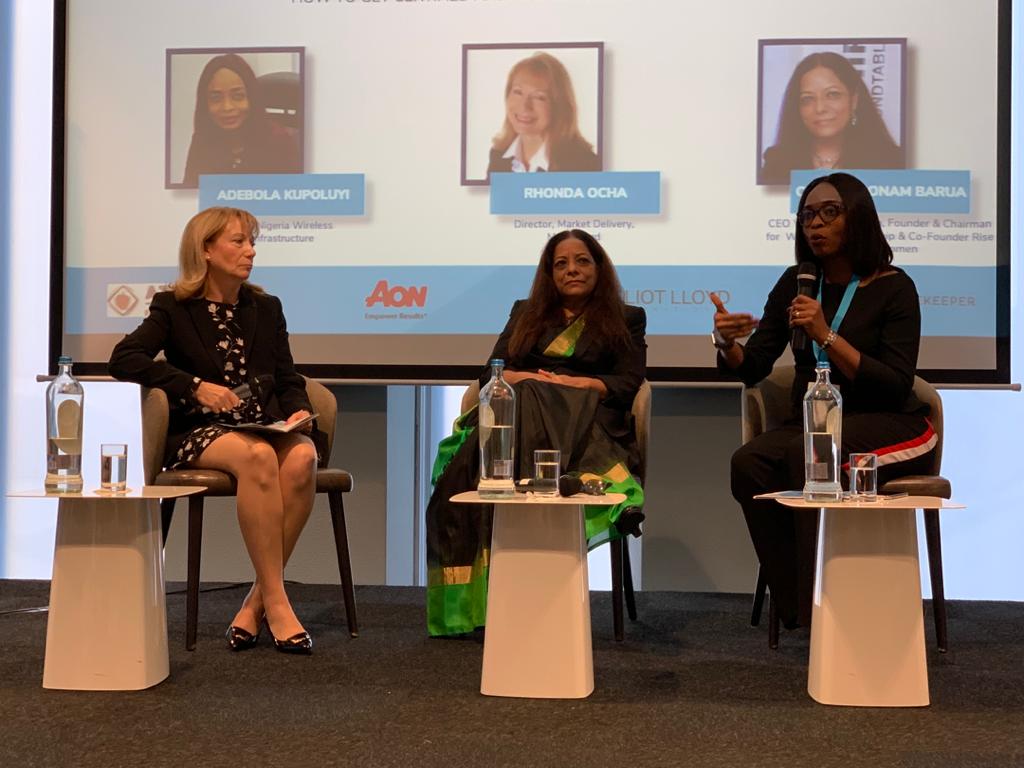
Adebola Kupoluyi is a seasoned professional with over nine (9) years of valuable experience garnered in diverse challenging roles. She possesses general management experience overseeing key functions of Finance Operations, Quality Assurance, Health& Safety, and Network Operations.
Burdened by the number of street kids, she started Mantle of Mordecai (MOM) foundation many years ago, a registered non-profit organization with the mission to reduce the population of out-of-school children in Nigeria and by extension Africa. Adebola Kupoluyi also champions the Culture Preservation Initiative with the mandate of ensuring that the culture of her home country Nigeria is preserved all over the world. As part of impacting her world she is a volunteer mentor of The Tony Elumelu Foundation tasked with empowering young entrepreneurs in Africa.
Adebola Kupoluyi was recently appointed Country Ambassador, Nigeria for Rise & Lead Netherlands; a global knowledge sharing, education and advocacy platform that connects leaders, emerging leaders, NGOs and change-makers to promote the inclusion of women in leadership in the workplace, marketplace and society to foster peace and prosperity in society. Adebola’s mandate in life is to impact all lives she encounters; she shares her Inspiring journey with me in this Interview.
Growing Up
I had a relatively tough childhood because I was diagnosed of chronic asthma before I turned five. I lived most of my life on admission in the hospital and sometimes I wrote my exams in the confines of my hospital bed. I was a very frail child and all I found comfort in was my books, so I guess that made me appreciate the importance of education.
However, I know that seed of what I do now was sown at the National Youth Service Corps (NYSC) orientation camp of Yobe state in Fika town in April 2009. While in camp I had two “adopted” sons Musa and Mohammed whom I connected to immediately I met them. They were part of the group of kids that came to camp for menial jobs daily. Once they came into the camp it was always straight to my hostel; my roommates knew them already so they would call out to me that my kids were outside. Off we would go to the canteen together once it was time for any meal to eat.
During our last week, my friends and I put funds together and we bought necessities such as slippers (they were always bare footed) and clothes. Seeing the way their faces lit up because of this seemingly insignificant gesture made me realize there was so much more that could be done. Although, I did not know how to go about it then but the desire to help kids had been sown in my heart and it kept germinating.
Mantle of Mordecai Foundation and Its impact since Inception
Mantle of Mordecai foundation popularly known as MOM foundation is an inspiration from God and our mandate is simply to reduce the number of out -of -school children in Nigeria and by extension Africa . Every time I see a kid that should be in school hawking during school hours my heart breaks knowing the kind of potential that is being wasted.
MOM is a registered non-profit organisation in Nigeria and our primary aim is to seek funds to enable out- of -school children have access to quality education. MOM has children from different parts of Nigeria, but currently focuses on the children in Dustbin Estate, a slum in Lagos State, Nigeria where families literally live on refuse dump.
Our success stories have been what has kept us going. As at December 2019, we had our first university graduate Olatunji Benedict from Ondo State University of Science and Technology, Okitipupa. He studied B.Tech Applied Geophysics . I met Latunji Korede about 5 years ago petty trading on Lagos streets, because his father lost his only source of income and became bed ridden, hence Korede had to step up to cater for the family. Another beneficiary Solomon Aare, who is currently in his final year at the university, after graduating from the polytechnic with a distinction, has also become a serial entrepreneur even while still in school. He runs Point of Sales (POS) agency shops in three different locations in Lagos. This is a boy that lived in dustbin estate prior to MOM sponsorship.
How my Strong Background in the Corporate World Impacted me
I will say I have been privileged to have an interesting and positively challenging career that has spanned over nine years now. Valuable experience has been garnered in diverse roles and sectors. I am currently the Senior Manager, Finance Operations at American Towers, a New York Stock Exchange (NYSE) quoted company. This is a general management capacity role which sees me managing key functions and team members working within the Finance Operations, Health & Safety and Network Operations. At the early stage of my career I gained four(4) years consulting experience in KPMG with specialty in Enterprise Risk Management (ERM). I have also had the privilege of mentoring at the Tony Elumelu Entrepreneurship Programme (TEEP), coaching four promising women in their chosen field of entrepreneurship. I am also a New Leader for tomorrow at the Crans Montana forum, Monaco. Advancing in my career despite all odds shaped my thought process; made me realise that I am here for a time such as now and that beyond my success in career there is more I should be doing to impact my world.
My appointment as Country Ambassador for Nigeria rise and Leads Netherlands
The Rise and Lead is an education and social impact organization founded in the Netherlands in 2018, providing skills, knowledge and thought leadership to individuals, entrepreneurs and
organizations. Our mission is to support women to achieve their personal and professional goals while leading the change towards closing the gender leadership gap.
As Country Ambassador that is leading a new Country Forum from scratch, I have the opportunity to grow my leadership and impact and develop more leaders in my circle of influence. Some of the expectations are to create, manage and lead all local events, meetups and training programs as well as planning and execution of all major summits and local meetups.
Challenges of being an Advocate
The major challenge I face as an advocate is the resistant to change on all fronts. As human beings, we seem to be quite set in our ways and find it difficult to embrace another way of doing things.
An example is changing the mindsets of the parents of our beneficiaries at the MOM Foundation. Specifically, some parents do not believe that education should be prioritised therefore they are not usually very supportive of the beneficiaries. Asides, providing funds to the beneficiaries, there is usually a need for an orientation of the other stakeholders involved in the process. This ensures that the entire programme is not frustrated and our mission is accomplished.
Our International Women’s Day Summit
Rise and Lead team decided it is the best time for us to have the inaugural African summit, after two successful summits in the Hague, Netherlands in 2018 and 2019.
The summit is called the Rising Leaders’ African Summit, taking place on 27th March 2020 at Four Points by Sheraton, Victoria Island, Lagos, Nigeria.
Theme is: Leadership. Women. Inclusion
The Summit will host progressive panel conversations, keynote speeches and impact workshops which will focus on Digital Transformation, Entrepreneurship, and advancing more women into leadership positions”. High-level business leaders, policymakers and international keynote speakers will attend to share their experience and best practices in innovation and leadership while addressing the significant potential of Women and Youth to transform the African Societies.
As part of the summit we are also gifting 25 women with free entrepreneurial training under our Inclusive Founders program to enable them grow and expand their businesses.
Registration is currently ongoing at https://riseandleadsummit.com/summit-african/ and we have discounts for corporate bodies and group registrations. Attendance of the summit is a perfect gift organizations can give their women in celebration of the International Women’s month.
The Nigerian Government and it’s impact on Women and Children
According to Edmund Burke, “the only condition necessary for the triumph of evil is for good men to do nothing”. This is my summation of the way the Nigerian government has prioritized issues regarding women and children. I do not see any visible or targeted effort to alleviate the peculiar issues faced by women and children.
To buttress my point, according to UNICEF data in 2014 Nigeria had the highest number of out of school children in the world ( 10.5 million). Despite all the promise made by the Nigerian government to correct this anomaly, UNICEF declared that the number had gone up by 25% to 13.2 million in 2018. This shows a complete neglect for the cause of children and lack of focus on the future of the country. My question is if education is a priority for developed countries why isn’t it a priority for a country like Nigeria contributing the highest quota to the pool of uneducated kids?
Same concerns are valid for women, in a country with such diverse and talented women, it shouldn’t be out of place to have a quota system that ensures that women are able to compete on the same levelled playing field as their male counterparts.
Adebola
Being a Woman of Rubies
I have decided to dedicate my lifetime to impacting my world in every sphere I find myself. When others see problems, I search for solutions to fix the problem. I will love to die empty one day, knowing that the world knew I was here because of the lives I would have touched just like the lyrics of the song “ I was here”
I want to nurture kids, put as many of them in school, I want to mentor teenagers especially the ones that have gone through some form of molestation because I am also a sexual abuse survivor. I want to coach young women in career and also empower the currently disempowered women. I just want to give my ALL to my world, because I have realised that waking up every morning is actually a gift that should be maximized and not taken for granted.
To Female Change-makers who are trying to find their Voice in the World
Be the light the world is desperately looking for. Have an audacious goal that is greater than you on your journey to changing the world; divide that goal into smaller subsets, tackle it daily, celebrate small wins and learn from your failures. Never forget to thank God for the doors that are being shut currently, because not every opportunity is a good opportunity. Be very deliberate about self-leadership and self-development, be yourself always and never doubt your ability to change the world. Although your sphere of influence may look small, you are actually a critical and crucial part of a greater battalion of army whose common goal is to make the world a better place; however, the tasks have been apportioned to us all in different dimensions .
You can and you will change the world in your own sphere of influence. Keep at it!!
Mention 5 women who inspire me and why
Olajumoke Adenowo – we fondly call her Mrs A. She has been of huge influence in my life since I started listening to her and eventually getting to know her. One thing she stands for which unfortunately has taken the back burner these days is excellence in the marketplace. She has shown in all her endeavors that she is on earth for a purpose and has taught us that; purpose should be fulfilled on any pillar of life we stand on.
Ibukun Awosika– she epitomizes integrity as a woman in business. I have learnt from her that though taking an ethical stand may be unpopular at the time you are taking that decision, it speaks for you behind closed doors years later and takes you to places your certificate or experience couldn’t have.
Debola Deji- Kurunmi – we fondly call her General DDK! Meeting her healed me of a small mindset. She is my Coach and one thing she has done for me is open my eyes to see that I can be multi-influential and productive at it. She debunked the “jack of all trade and master of none” theory. This has brought me to where I am today and all I am doing and the more that is still coming.
My Mum– Mrs. Bolanle Salako- seeing her struggles and limitation as a woman who innately had it in her to be successful, who did all the hard work but just couldn’t break even. toughened me up. Unknowingly, I just wanted to be a way better version of her. I decided that apart from no one stealing my joy; I was going to be the light that is desperately needed in this world.
My late Grandma -we fondly called her “Abby”. I say to myself that I am who I am because I had a praying grandmother. She was a warrior who fought wars on her knees for us. She took care of me as a sickly child and nurtured me for year(s). I am eternally grateful I got to spend time with her before she passed on 8 yeas ago.
Please reach out to the Rise and Lead team and Adebola Kupoluyi on adebola@riseandleadwomen.com or support@riseandleadwomen.com
You can also follow our conversations on social media with the hashtags #RiseandLeadWomen #RisingLeadersSummit, #RLSummit2020 #drivethechange #leadtheconversation #togetherweriseandle
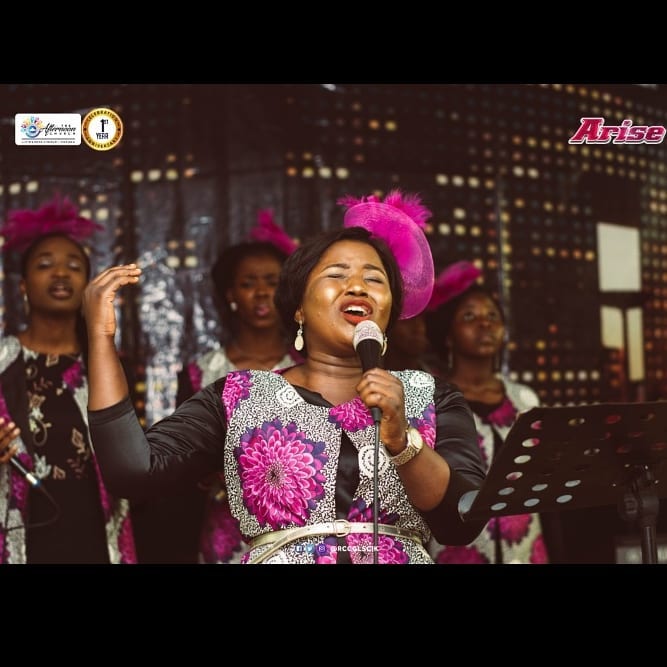
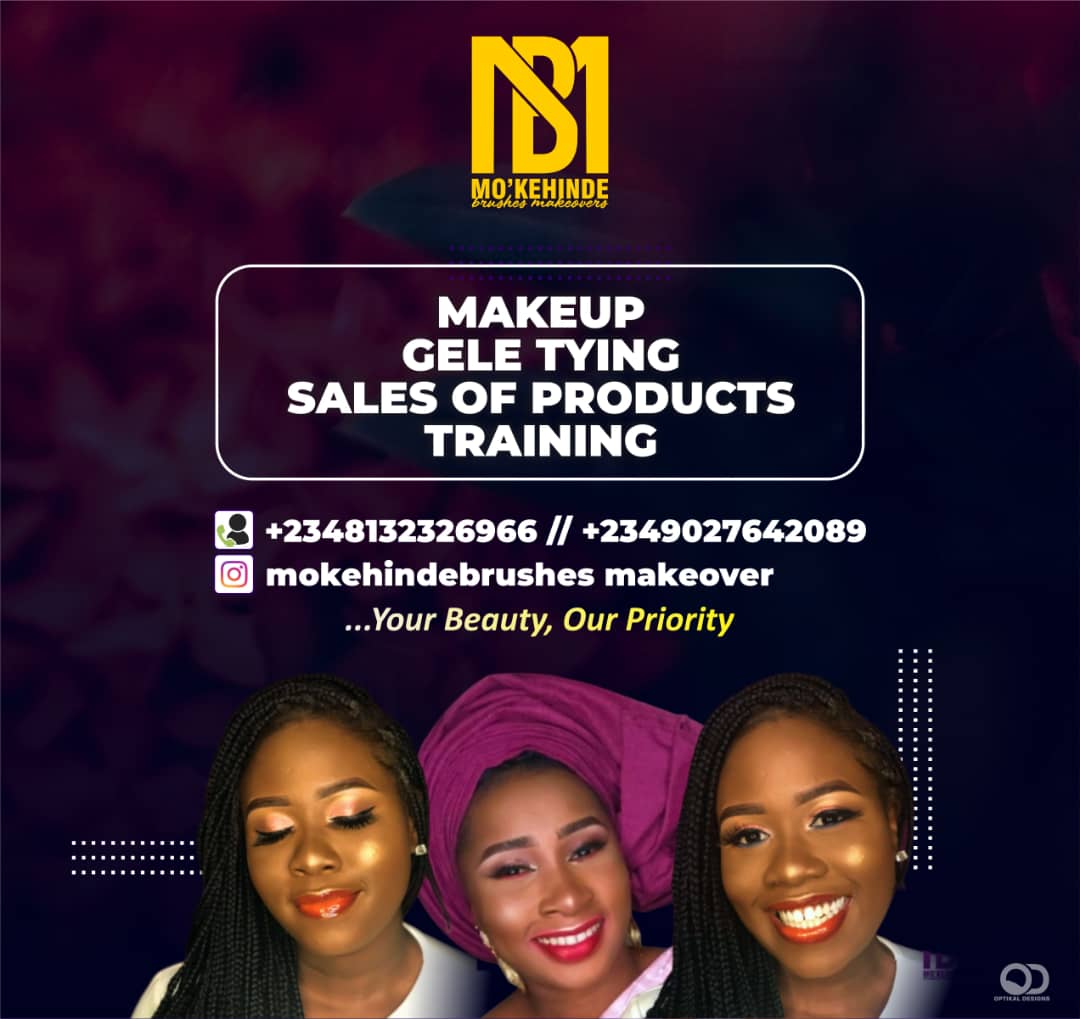
Omokehinde Elufioye is a graduate of Linguistics at Ekiti State University currently running her second degree in Law at Joseph Ayo Babalola University (JABU.) She is a professional makeup artist and CEO of Mokehinde brushes makeovers.
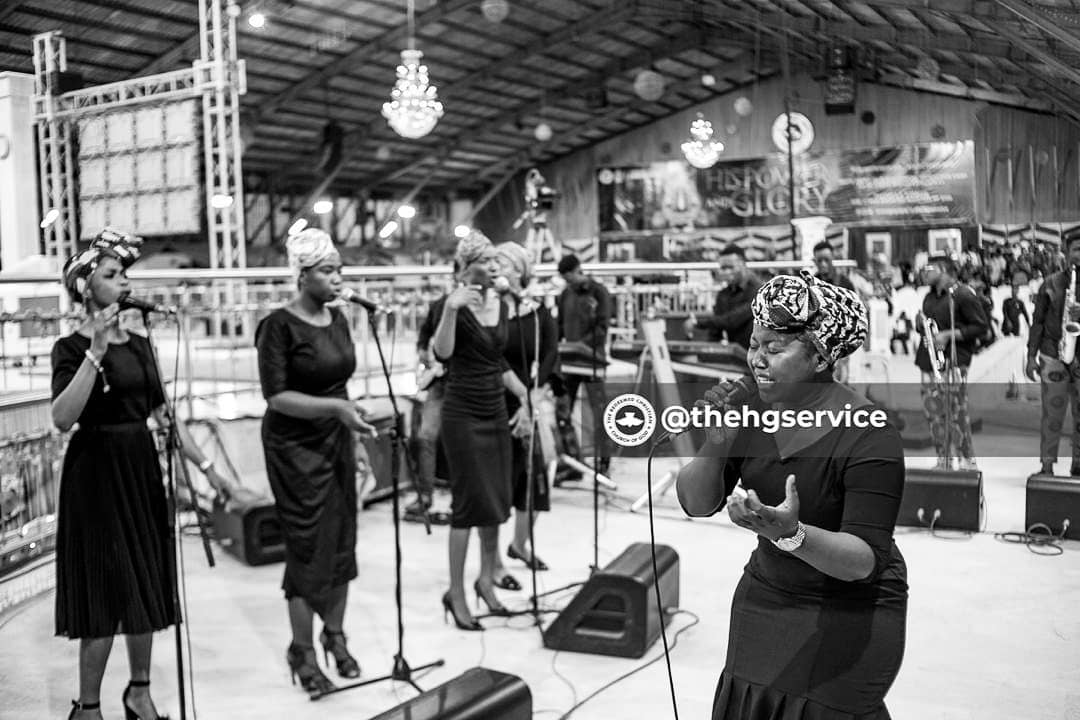
Omokehinde popularly called Mokenny runs a program on WhatsApp, ‘LoveTalk with Mo’ a platform where Love, it’s action and consequences are discussed. She is a gospel music minister set to release her first single.
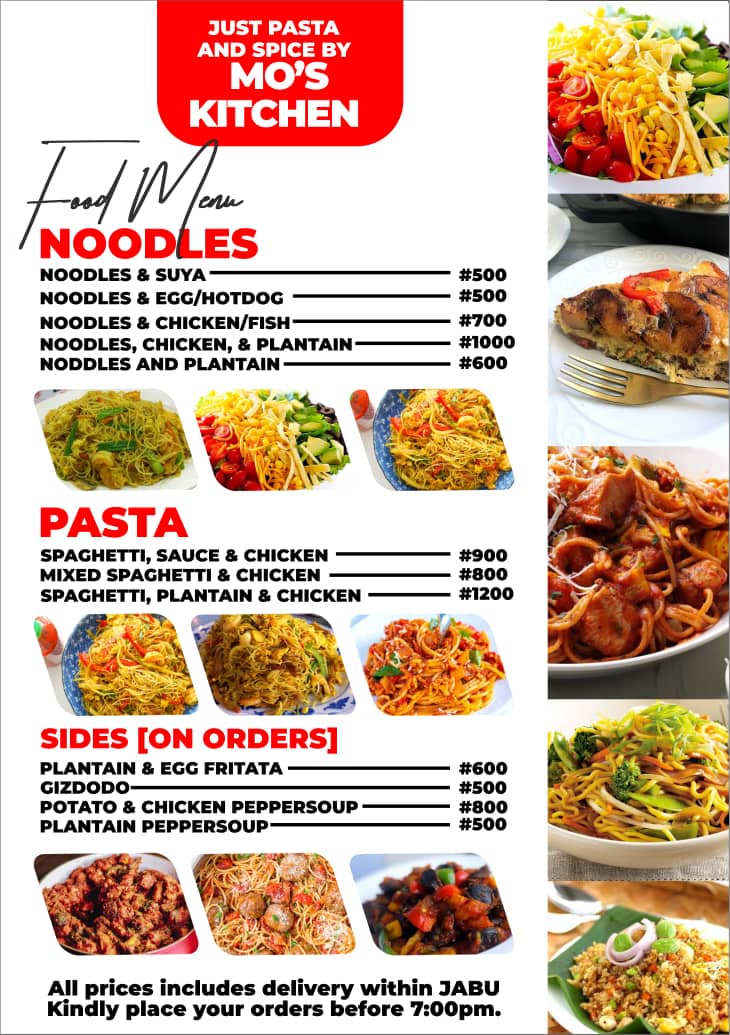
Omokehinde recently launched her cooking business in JABU “Just Pasta and Spice by Mo’s Kitchen.”
1.Let’s meet you. Who is Omokehinde….?
Well, Omokehinde is a Lover of God, a goal getter and a strong Faith walker.
2. Who and what is your inspiration?
My Dad inspires me a lot on becoming a better version of myself, seeing him and how he pours out so much into his work and never expecting anything in return and scarcely receiving this “Earthly” reward drives me so much to telling myself I will achieve all I want and I don’t need anyone’s reward for it to keep me at it so long as it blesses God and humanity.
3. One accessory you can’t leave home without?
Pen and Jotter! You would always find it in my bag or my hand… And if I don’t want to carry anything, I have my phone notepad to the rescue.
4. You are a professional makeup artist and CEO of Mokehinde Brushes makeover where you’re into makeup, gele tying, sales of products and training. How did MB start and how has it been so far?
Hmm. Mokehinde brushes makeovers started with a heavy inspiration and passion in 2015 when I quit my job as a teacher after few months of so much work and stress and I knew I wasn’t made to work for anybody. I started out with experimenting on my friends’ faces, I’d call them over, cook for them and work on their faces for hours because I didn’t have the money to go for training and I taught myself.
5. What do you do in your darkest moments?
I sing my heart out to God and I write.
6.You are a gospel music minister. What are the challenges you’ve faced so far, have you ever had to choose between gospel songs and other genres? Do you compose your own songs? And What does faith mean to you as a gospel musician?
No particular challenge. It’s not a competition. We’re all made differently! I’ve never had to choose, I’m sold out to God and so I’m proudly a Music Minister.
For me, Faith is trusting in God and working it out with the mind of God. You can’t have faith and just sit down, faith is activated by works!
7. You recently took your versatility and entrepreneurial spirit to a whole new level by launching “Just Pasta and Spice” by Mo’s Kitchen. How do you balance having your own kitchen with your everyday schedule?
Justpasta and Spice! I Love pastas (noodles and Spag and the likes) and my friends love me making their noodles so instead of doing it for free, I turned it to business. It’s not been so easy but I try to balance it. I take orders before 7pm so I meet up all my cookings before 8pm so I can rest too.
8. What is that one thing you’ll like to change about yourself?
Before it was my height (laughs.) This woman is short but on the bright side, it has its advantages too. I think I’ll still like to have a little more height.
9. You are a graduate of Linguistics at Ekiti State University. You went further to obtain a Diploma in Law and now you’re currently studying Law as your second degree. Why a second degree and why Law?
I had always wanted to study Law. The year I entered Eksu, Law was put on hold so I was given another course. After I finished Dad still pushed me to go on to studying Law. I lost interest and I wanted to back out but I didn’t want the future to arrive and I’d regret why I didn’t do what I wanted. So here I am.
10. If given the chance to be the President of Nigeria for a day, what will you change?
Corruption. I’ve never really thought about it though. But if I was given the chance, I will do what I promise and not do otherwise.
11. Did your upbringing in any way prepare you for everything you are into today?
Yes! I matured quickly! I saw life and things in a different perspective. Lost my mum at quite a young age and being the first child, I just had to grow.
12. Where do you see yourself/your brand in the next 5 years?
Fully fulfilling purpose and writing another vision for another next five years.
13. If you were given the opportunity to address a group of girls five years younger than you, what will be your advice to them?
Do YOU. Let no one or anything stop you. You’re not weak, don’t feed yourself with such mentality and you begin to act in that line. Rise up and be what God has called you to be, be a kingdom warrior and make your generation proud.
While sketching and crocheting is not a common skill, Akosua Asabea Obese’s passion is enabling her to build her dream through the art.
The young Ghanaian creative makes some of the most stunning pieces with unmatched quality.
Akosua Asabea Obese had her secondary education at Wesley Girls Senior High School Cape Coast where she studied Visual Arts.
Prior to having her secondary education, she had an idea of what she wanted to become.
Asabea spent her early days with her grandparents and showed signs of a talented girl while growing up at her grannies.
She recounts her grandfathed realised her potential during the early stages as a toddler.
Asabea disclosed that her granddad often told her that she drew a lot.
”Most times, I drew the pattern of the houses we lived in where I grew up,” Akosua Asabea Obese told Pulse.com.gh.
Asabea perfected her crafts when she enrolled to study Technical Drawing in Junior High School. Her teacher by then let her know her potential.
She started nurturing herself in that direction, taking up Visual Arts as her line of study during her days at Wesley Girls High School.
Having heard on many occasions from her grandfather that she was destined to be an architect, the young Ghanaian realised her dream after being accepted as an architecture student at the Kwame Nkrumah University of Science and Technology.
”My grandfather told me I would be an architect. I realized he and my JHS teacher really had a point,” Asabea said.
Despite becoming an architect, Akosua Asabea Obese fell in love with something different after gaining her architecture degree.
She developed a stint for crocheting during her early days. With the focus of being an architect triumphing over everything else, Asabea didn’t realize that was also a passion.
The wait for national service placement turned an inspiration to channel more of her energy into crocheting.
When she started, she realised she could make money from the art and decided to take it serious.
In 2018, received an award for Female Entrepreneur of the Year at Miss Malaika.
Watch video:
Asabea’s vision has moved on from being just a one-woman business. She wants to have the capacity to train more people and not just focus on the market in Ghana.
The end as an architect is not nigh for Akosua Asabea Obese. She still takes on part-time jobs in what she spent years studying at school.
Currently, she is focusing on building her dream through crocheting.
Marsai Martin’s film, Little, which is based on original ideas from the teen actress but inspired by the movie Big, helped her ink her name in the history books.
Nigerian-British Actress and dancer Kelechi Okafor pens an open letter to applaud Meghan- Duchess of Sussex’s choice to live happily-ever-after on her terms.
She has a large online following talking about issues affecting black British women.
Dear Meghan,
When you were a little girl, did you, like me, wonder what happened after the princess married the prince? Did you think it would be what you’re currently experiencing? Probably not. Following the news of you moving to Canada with Harry and Archie, I want you to know that as a Black British woman, I get it.
When people think of Britain they often don’t think of racism. The conversation around race happens more openly in the USA. Racism in Britain is insidious. It festers just under the surface of literally every institution and system that we navigate but we hardly speak about it because, in line with British sensibilities, it is simply impolite to talk of such things.
When it was announced you’d be marrying Harry, I wondered if absolutely anybody had talked to you about the history you’d be joining and the ways of a country you would call home. I kept thinking of that line from Ghost where Whoopi Goldberg’s character deadpans, “Molly, you in danger girl.” From your interview with Tom Bradby, it seems your British friends warned you, still you didn’t think it would be this bad. It’s a shame you had to see a glimmer of the racism Black people continue to face in Britain.
I can’t imagine the frustration you’ve felt watching your integrity be questioned by people like Piers Morgan, who are hellbent on using dog-whistle terminology to communicate their dislike of you which is inextricably linked to your proximity to Blackness. Oh yes, they pretend it’s nothing to do with race. They use cunning means claiming it’s the fact you’re an actress, or you’re American, or in some cases they flat out say they “it’s just something about you.” I wonder what that “something” is?
Probably that same “something” that led to our first Black Female MP, Dianne Abbott receiving 45% of the hate mail sent to all female politicians. The tabloids and ignorant British public claim Abbott’s treatment isn’t “about race” either. They say they just think she’s “incompetent” even though her track record proves the stark opposite.
The very sophisticated nature of racism, and why it thrives in Britain, is that there’s a concerted effort (due to lack of accurate history being taught in schools) to ensure the public is perpetually unequipped to discuss race and racism. Whenever a blatantly racist incident happens, the media fall over themselves to organize inflammatory debates about whether that blatantly racist thing was in fact racist. It’s an elaborate game that the public is incapable of resisting.
I feel sad for the British public really because you seemed rather nice in my opinion, and as much as I have my reservations about the monarchy due to its imperialist past and present, I think your presence could’ve actually helped their image. For a country so desperate to prove their “tolerance” of those deemed as other, embracing you would’ve been their chance to prove that they’re not in fact prejudiced and maybe the Black and brown people who have suffered for centuries because of their actions, might’ve just imagined it. Alas, Britain is so committed to her racism that she isn’t willing to give it up even if it means losing their princely darling, Harry.
Black British women could see exactly what was really being said every time an article spoke about you in ways they would never speak about Kate Middleton for doing the exact same thing. Black British women like myself rallied together and spoke out on your behalf by going on the news, writing articles and highlighting your mistreatment on podcasts. When your son, Archie was compared to a baby chimpanzee literally hours after being born by a well-known radio DJ, we refused for the incident to be swept under the rug despite all who were adamant it was just a harmless joke.
The neuroses of Whiteness manifests itself in Britain in various ways and one of the ways has been made clear since you and Harry have decided to spend less time in Britain. A lot of the British public are very accustomed to the racial violence inflicted on Black people to simply be tolerated. Any push back against racism in this country is met with furor and claims of “reverse racism” which we know doesn’t exist. The fact that you’ve shown your autonomy by choosing to distance yourself from the vitriol makes the dissenting British public and the media furious because, like Diana, they thought you would stick it out for the sake of your family and their “good” name.
We all know what happened to Diana and Black British women are glad you chose your happiness over their bloodlust.
I’m sorry you had to experience the dusty behavior of this woe begotten island. I am glad you were insulated from the maddening violence experienced by the Black people of a lower class in this country. Just as we’ve seen with the Grenfell fire, the government is very happy to deny safe living conditions for working-class Black and brown people.
Meghan, you are creating what happens next when the princess marries her prince, not the ravenous tabloids or ignorant British public. Go get your happily ever after.
Sincerely,
A Black British Woman Who Gets It
Kelechi Okafor (@kelechnekoff) is writer, multi-award-winning Benz Punani Womanist and creator of @SayYourMindPod and #SallyinHR
As women share their stories, awareness increases and the attitude towards post-partum depression is changing for the better. Mother of three, Bunmi Laditan shares her experience with post-partum depression, and here are three things we learned from her post.
1. It does not only happen to first time mothers – Bunmi had instant connection with her first two children and only experienced it after her third child.
2. You can be taking good care of your child and be going about your normal mummy duties even when you have not felt the connection to your child yet – Some people think that having post-partum depression means that you will not want to see or take care of your baby, while this can be true for some women, it is not always the case, so because a mother is going on with her normal activities doesn’t mean she doesn’t have post-partum depression.
3. It can take some time – While some mothers are able to get through it in few months, for others it could take years.
“Let’s talk about postpartum depression.
I had it bad with my third child who is my last baby and first son. We all know about the anxiety, OCD, chilling thoughts, rage that sneaks up on you like a flash fire and then is drowned by your own shame-filled tears and all that fun stuff but what no one can prepare you for is how it feels to hold a baby and not feel like he’s yours.
With my first two I felt that magical insta-connection. You know what I’m talking about. That mama-bear-I will-kill-a-mofo-who-touches-this-stroller-primal-let-me-drink-in-your-euphoric-scent-jacob-imprints-on-renesmee-you-are-in-my-bones-realness. But when I came home with my little cub while he was cute as a button, I knew something was missing.
He didn’t feel like mine. I felt like I was taking care of someone else’s child. My body felt distinctly postpartum and was leaking from too many places but as I’d change his diapers and gently push his sweet little arms through his yellow and white pajamas, I remember locking my bedroom door, half expecting his real mother to walk in and say, “excellent work, fräulein, I’ll take it from here.”
In those early days, I’d sit up in the dark of night nursing him, looking like the picture of maternal devotion, but there was something missing and one of my greatest fears was that someone would notice.
Once I was finally diagnosed and medicated, my mood began to stabilize, but that connection? God is my witness, it took three solid years.
In that time I loved my baby boy, took him to play centres, parks, we cuddled. I painted his hands and pushed them into soft clay for keepsakes and snapped a million photos, but there was a valley between us that I prayed he didn’t feel.
Then one day, or perhaps over several days, or maybe through each day of showing up, his real mother finally walked through the door and it was me. 100% me.
Now I can confidently yell at him to stop standing on the back of the couch because no, I am not going to the emergency room tonight because you think you’re spider man without feeling like I’m stealing someone else’s lines.
I wipe up his messy hands after he’s gotten into the poster paint saying, “What am I going to do with you,” a little annoyed, mostly delighted by his mischievousness the way mothers are knowing this moment is mine, all mine.
I am his mother and he is my child with no doubts, no angst, nothing between us except the hoodies I’ll wear 3- 4 days in a row.
So mother, if you’re going through this today, changing a baby’s diaper or giving a toddler a bath with the shaking fear in your heart that this little one will never feel like your own, please just wait. Keep showing up.
Keep rocking them to sleep searching their little faces for what you need. Keep wiping down that high chair and kissing their pillow soft cheeks. Every time you do you, the angels throw a handful of sand into the canyon between you. One day it will be full and you’ll walk across it to find you were always there somehow.
No, it’s not fair that you have to work at what’s supposed to come naturally, but in life the only thing that’s promised is work. Have faith, sweet mother. Your efforts will be rewarded. Speak gently to yourself. Breathe. Ask for help. Dawn will come, girlie. Just stay.
Mary was born in Jamaica to a black mother and a Scottish father in 1805. Her father, James Grant was a lieutenant in the British Army, and this privilege gave Mary the right to be born free. Her mother, who was of African descent, earned her freedom after having Mary. Despite their freedom, Mary and her mother still suffered as much as the slaves did at the time. They had no rights to vote or set up businesses to make a good income.
Mary’s mother was a slave brought from Africa who had managed to retain her knowledge and training in traditional herbal medicine and healing as well as adopting the Carribean methods. This made her one of the most sought after in Jamaica, and she passed on a significant amount of knowledge to Mary.
Mary received a sound education learning how to read and write through the kindness of an unnamed elderly woman she lived with for a few years. As slavery was fought, the privileges of mixed race children increased, and this allowed Mary more freedom in movement and working. She used her privileges to assist her mother in setting up a boarding house which served as a private hospital and hotel in Jamaica.
She got married in 1836, but her husband died in 1844. After the death of her husband, Mary travelled extensively and settled in Central America in 1851 where she suffered racial discrimination and struggled to set up a trading business. In the end, she was successful and traded in medicine until she moved to London in 1854.
Her main reason for moving to Britain during the war was to work as a healer in the British Army. Mary was fully aware of the racial disputes but attempted to be signed into the army by visiting the war office. She requested that she be sent as a nurse to Crimea where many soldiers were dying because of poor medication and facilities, but she was rejected.
Mary travelled to Crimea and set up a hotel called the British Hotel. Due to inadequate funds, the hotel was just a small quarter with mess-table for the injured and a resting room. With time, Mary became the most sought-after nurse in Crimea with a reputation for healing all sorts of deadly wounds.
Many wounded soldiers were sent to her hotel, and she visited the battlefield during more dangerous times to cater for the sick. She soon became known as Mother Seacole, the black Florence Nightingale.
After the war in 1856, Mary fell seriously sick and was bankrupt; with the help of the media, a festival was organized for her and money was raised. The festival was supported by Count Gleichen, Queen Victoria’s nephew and it raised enough money to cater for Mary and her illness as well as her livelihood. Mary wrote and published her memoir; Wonderful Adventures of Mrs Seacole in Many Lands.
Between 1860 and 1881, Mary moved in and out of Jamaica and Britain and became nationally recognised in both countries. She became close to the Britsih royal and was decorated with medals by the military in Jamaica. She lived in London until she died on May 14, 1881.
Even in death, Mary still suffers racial discrimination. Her life and the success of Mary Seacole have not been fully accepted by many western historians and scholars. In 1991, she was posthumously awarded the Jamaican Order of Merit.
In 2012, there were threats to remove her from the educational curriculum, but this was stopped in 2013 by a group called Operation Black Votes. This threat started in 2004 when she was voted the most celebrated black Briton.
A statue of the Black British who dedicated her life to saving soldiers stands at the St. Thomas Hospital in London. Although it was significantly spoken against, the figure was raised in 2016 with the inscription: apioneer nurse.
Whether you wear makeup every day or occasionally, you are sure to have heard of the term highlighting. You go on social media and see a lot of ladies glowing as they bathed in gold. Well, it’s no news that highlighters are very much trendy.
Yet, with the endless number of shimmery options out there, how do you know which one is right for you? While highlighter has been all the rage for its ability to brighten your face instantly, finding the perfect one when you have a darker skin tone can be a serious struggle.
When it comes to choosing the highlighter of your dreams, dark women should avoid pinks and frosty whites. You want to pick a highlighter that would look like a part of your skin, as opposed to, like, a disco ball.
Top beauty blogger, Dimma Umeh has made life easier by putting together her top 5 highlighters for women of color.
Products mentioned
Black Up Sublime Powder – NPS 01
Bobbi Brown highlight powder – Bronze Glow
Anastasia Beverly Hills Highlighter – So Hollywood
Mac Mineralized Skin Finish – Gold Deposit
J Cat beauty only you glow girl baked highlighter – Pink Goddess