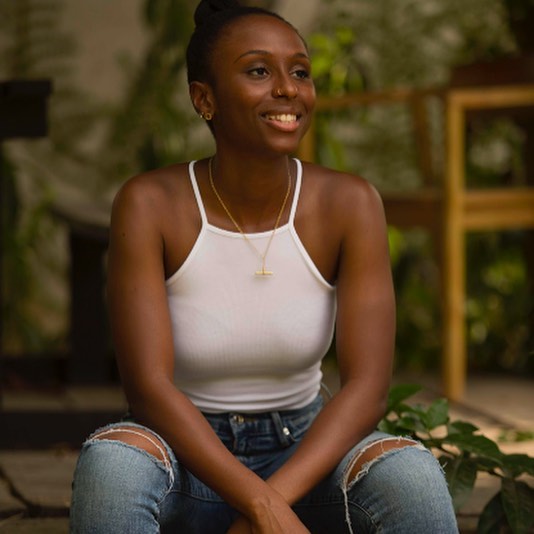
Iam a tech founder, innovator, entrepreneur, machine learning researcher, and high school student.
At age 15, my life seems to be a series of beginnings, but I’ve found that sometimes you don’t recognize the start of something important until after it’s happened. Before everything else, I was a primary school kid who really liked computers.
I began coding when I was six years old by bouncing cartoon cats around the edges of my screen. Scratch, the tool MIT released to teach kids about coding when I was about five years old, was full of fun characters (“sprites”) that you could rotate and whose colors you could change by dragging vibrant blocks of code into the window. The blocks would join together with a satisfying “snap” that I can still recall. I remember sitting on my grandmother’s couch many days after school, holding a heavy laptop, and playing with the sprites, before I began looking into other users’ projects and starting to figure out more complex structures.
WATCH: Changing the world with code | Emma Yang | TEDxFoggyBottom
A few years later, my interest turned from games and animations to mobile apps. I stuffed my heavy laptop into my parents’ black mesh computer bag and took the bus to First Code Academy, one of the first coding schools in Hong Kong (where I lived at the time), which was founded by a female entrepreneur, Michelle Sun, who had just returned from Silicon Valley.
Learning loops, logic, and user interfaces at First Code was exciting and presented three beginnings for me: it was the first time I learned about developing mobile apps, which is a significant part of my work now; it was the first time I was one of the youngest people in the room, a role to which I’ve since become accustomed; and it was the first time I was one of very few girls, if not the only girl, in the room, another role I’ve since gotten very used to.
My interest in coding and eventually computer science continued to expand. I took online classes in HTML/CSS and learned Java with books about object-oriented language, encapsulation, and methods. In sixth grade, my family moved to New York, and I found the Technovation Challenge, a global technology entrepreneurship challenge for girls. I participated with a friend of mine from school and we made it all the way to the finals in San Francisco, where we won second place globally. The challenge was the first time I was in a room full of girls who were all passionate about using technology for good. I started to see technology not just as blocks of code or an animated whack-a-mole game, but as a strength, tool, and platform for a middle-school girl who wanted to change something (maybe even the world).
Emma Yang holds the grand prize at the Women Who Tech Emerging Tech Challenge in 2018 for her app, Timeless.
I took my second live coding class when I was in the seventh grade. It was a high school class for creating iOS apps, and, again, I was the youngest in the room and one of the only girls in the class. The four other girls and I would sit in the back and work through group projects together, almost forgetting how isolated we were from the rest of the class. The class dynamic was so different than what I experienced at the Technovation Challenge and served as another beginning: my first exposure to the gender imbalance that exists in much of the tech world.
Timeless’ “Today” screen shows the patient’s upcoming events for the day.
For the last three years, I’ve been building my company and mobile app, Timeless, which I created to help my grandmother, who has Alzheimer’s disease, stay connected with my family. Now, Timeless 2.0, which we just launched globally, helps hundreds of families across the world do the same. Timeless has given me unthinkable opportunities to travel the world, sharing my story and using my voice to encourage more girls and young people to pursue their passions.
All of these small moments have broadened my understanding of what it means to be a girl in the 21st century who wants to improve the world, and who wants to become her best self
There was no single event that gave me my start down this path. I had no “aha” moment animating cats on my grandma’s couch in Hong Kong or listening to girls from across the world pitch their solutions for social injustice in an auditorium in San Francisco. It wasn’t just the fact that I’m often the youngest person in the room, or the only girl, or the only computer science geek, that made me want to create something that was meaningful to me and, ideally, to millions of Alzheimer’s patients around the world. But all of these small moments have broadened my understanding of what it means to be a girl in the 21st century who wants to improve the world, and who wants to become her best self.
Someone recently asked me what I would want to achieve if I had unlimited resources. I said that I would cure Alzheimer’s, expand the way we leverage machine learning, and optimize research for diagnostic tools. At Timeless, we’re working on it. And in the meantime, I’ll keep my eyes and mind open for new opportunities, because you never know what might change the future.
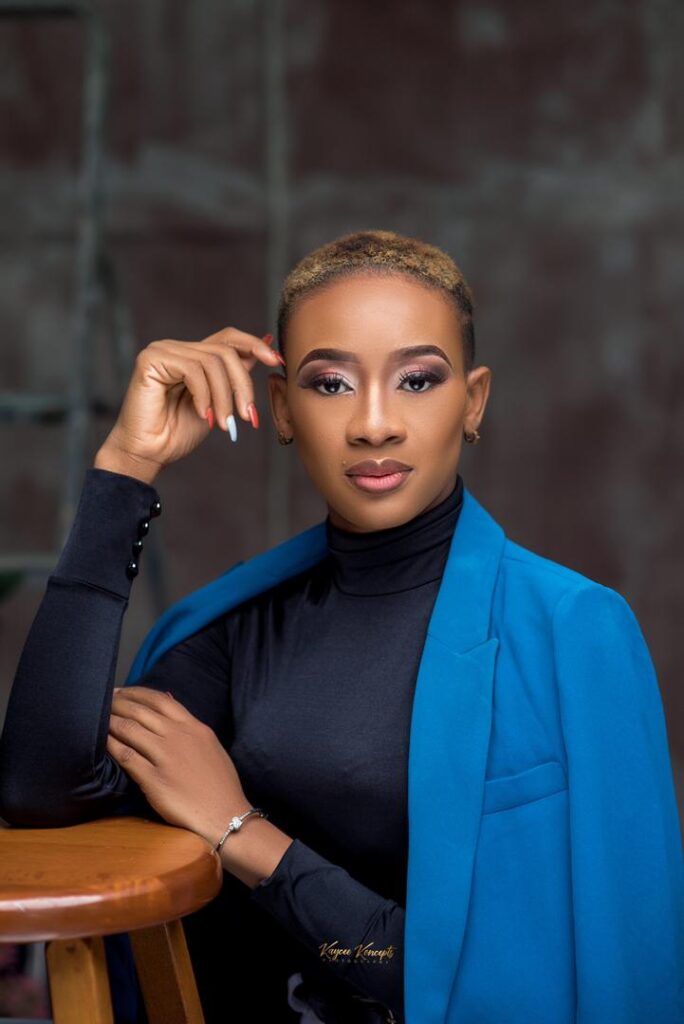
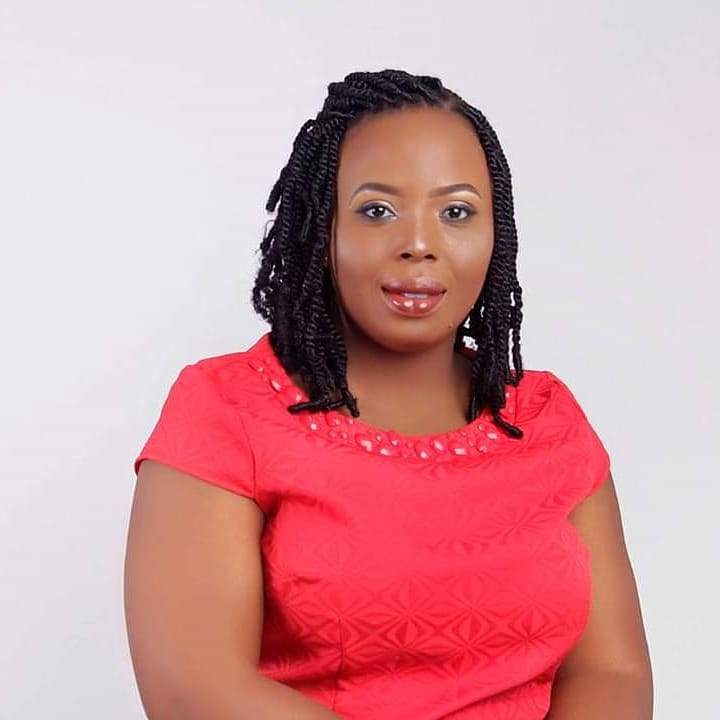
Victoria Nwanna is a strong and active young woman with an admirable zeal. With a passion for nation building, leadership, youth empowerment, education she has nurtured over 3000 youths in personal development through trainings, mentorship platforms, volunteering opportunities,conferences, magazine and media. She is a two time Amazon bestselling author of five books public speaker and trainer.
In an interview with Women of rubies below, she shares her story;
Victoria
Childhood Influence
While growing up as a child, I always knew I wanted to be influential. I was very agile and active as a child.
As little as I was in primary school I knew I wanted to study accounting.
I never fancied other professions like being a doctor, lawyer, nurse etc. People said it was because my dad is an accountant… Maybe.
While n secondary school, I was so good at writing. English was my best subject. I loved talking so it wasn’t any news I joined the press club. Fast forward to my SS1 my junior secondary English teacher Mrs Obimma having heard I was going to the commercial arm called me alongside two other teachers. She was heartbroken that I decided to pursue accounting. Why not law? Mass communication? What is wrong with you? I want to talk to your parents! Blah blah blah! My mind was made up a long time ago… As regards profession it was only accounting I saw.
Just to inform you though I never liked maths or account! So what was the biggie? Why the interest in accounting?
Let’s reverse to my primary/early secondary school days.
I love(d) talking and writing. I had the voice and the aura while presenting speeches.
I remember I always picked my dad’s newspaper and pretended to be the newscaster…Oh how I enjoyed it!
I remember holding my hands as the mic and introducing my self. I just spoke(whether it made sense or not but I’m sure it did make sense😉) I hosted all the events at my children church, I anchored news in my school.
But I still wanted accounting as a profession! It was the perfect profession I thought. I didn’t want to put on white coats like the doctors, or wear a robe like the lawyers, and gloves like the engineers. I wanted to wear suit! As little as I was I admired great ladies and knew I could be one, I termed it as ‘boss lady’
I have lost counts of how many times I imagined myself in an executive office. Ngozi Okonji was one of my models.
So despite my not so strong love for maths I opted for accounting because of my childhood desire to be a boss(well as a child I thought bankers and accountants were cool😂😂)
But! I also wanted to talk! Be on TV, inspire people… When I got to secondary school I always wanted to see YOUths do things right, I was Miss adviser.
It’s amazing how far I have come from my desires and dream as a child till now.
How by bits I have started playing out my dreams.
Clarity isn’t gotten in a day! I stand in awe each day and a lot about what I only thought as a child without even knowing how is coming to play.
My dreams are valid, Rome wasn’t built in a day so I will keep moving.
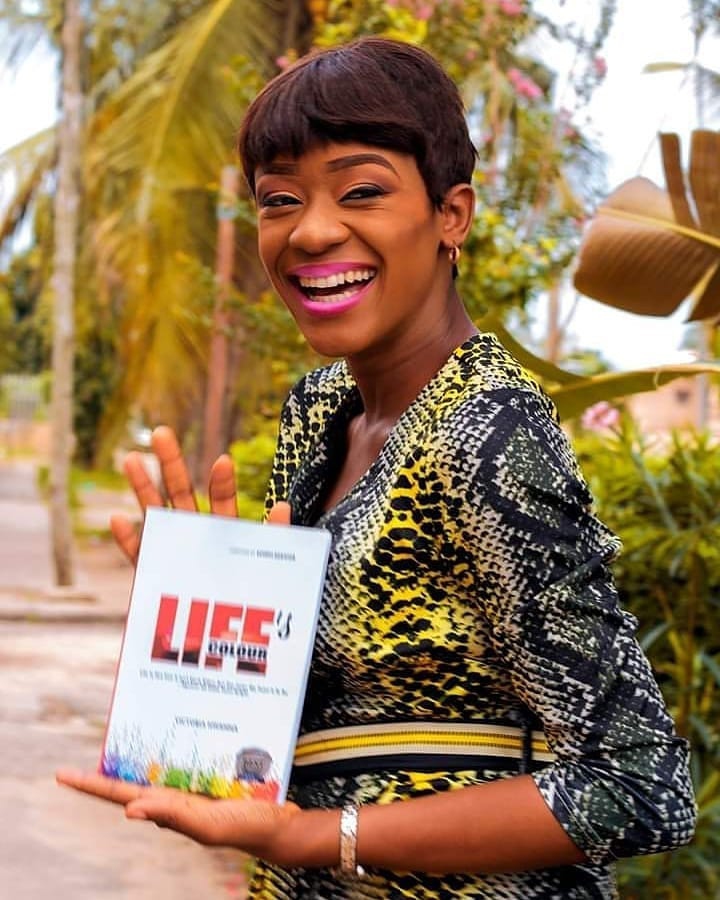
Yes,this is me VICTORIA NWANNA, an ‘accountant by profession’ but a ‘boss lady’ by inherent nature with or without the accounting profession, inspiring others and living purpose. It’s all adding up! Also,I don’t believe I have wasted four years studying accounting it is all instrumental to my build up (although I ‘might’ not use this certificate)Please don’t tell my dad Godwin Nwanna (hahaha) My childhood dreams and plays is all turning out for real. In my book Life’s colour I shared some practical steps I took in turning my dreams to reality https://thevictorianwanna.com/shop/
GET UP YOUTH AFRICA and Life As An Executive Director
Get Up Youth Africa is a non-profit youth organisation focused on building a generation of changemakers and African leaders who would champion sustainable growth in Africa. Via our three-fold mandate (to Inspire, Ignite Imagination and Provoke Right Action for sustainable nation building), we are establishing avenues for young people to proactively engage in personal and community development to fight unemployment through Quality Education (SDG4), create a positive environment for Decent Work and Economic Growth (SDG8) and End Poverty (SDG1).
We have executed several projects, the project pad a girl, our girl child empowerment where we trained over 1500 young girls on purpose passion, sex education and financial literacy. We have also taught 700 of them on digital skills in partnership with girl lead Africa and other facilitators in Benin City. We launched the skill Up Academy Last year where we empowered over 700 youths in relevant digital skills like website design, presentation and communication, brand communication, project management and 12 more skills, we partnered with facebook and JCI. Recently we launched our secondary school tour Not Too Young To Make Sense project -This programme is committed to crusading and championing self and purpose discovery, intentional career choices. It is designed to provide the teenagers with the knowledge, skills and network required to effectively lead their lives at young age through our mentorship, career fair,discussion sessions and distribution of books(personal development, business and career books). We cannot afford to allow these kids to be kicked (by whatever reason) into becoming the adults they won’t be proud of so we arm them with the right war tools now for life’s battle.
As A Professional Master Of Ceremony
Our event is as good as your host. Naturally I am energetic and people wonder how I take on a lot but my skill and experience as an MC has also helped me in achieving certain results.
My Expectations.
I expect the older generation to create a conducive environment for growth, there is no competition. If the youths are not properly allowed to grow in years from now when the older generations are no longer on the scene what will sustain our dear nation?
Also according to Alvin Toffler ‘For society to attempt to solve its desperate problems without the full participation of even very young people is imbecile.”
I expect that brands increase the active participation and partnership with young people. The more comprehensively brands work with us as service partners, the more we all increase our public value to the entire community because Nigeria need all the energy, brains, imagination and talent that young people can bring to bear down on our difficulties.
Challenges As A Youth Driver.
A lot of challenges and one major challenge is our value system especially in this part of the world.
It is disheartening that many times youth developmental projects lack funding while heavy funding goes into supporting a brand that sells short of decency and the values we should upload as a nation. I grew up to this fact, hardly do we have good sponsors for value adding events or projects. In my university days huge sum are spent on beauty pageantry and all the sort but hardly on conferences. What we are thereby communicating is that ‘we are ‘only’ interested in the financial returns than the investment on good values and this has affected so many aspects of our lives as a society.
Also I have heard many people say we aren’t loud enough and while sometimes it is important to put our work out there, I personally think it changes the essence of what we stand for if all I am committed to doing is ensuring I am ‘loud’ enough for awards, recognition etc. By loud I mean just vanity metrics. My point is this, while it is great to invest in a good PR when that becomes the focus of all that we do we truly lose the meaning in the long run.
Plans About Unemployment through Skill Up Academy
It absolutely makes sense to skill up. In present days emphasis is laid on performance not just certificate. We are interested in your ability to do, not just in saying you know and this is where skilling up comes in. Our educational system is faulty to an extent, real life skills and even practical relevant skills are not taught but it is our responsibility as youths to take charge of our life and create what we want.
My coach always says your competition isn’t your neighbours or village person but global. If we must stand tall in the global stage then we must level up in terms of relevant 21st century skills.
I always ask the youths I have been honoured to speak with, What skills do you have that you can be paid for?
What skills do you have that can upscale your business? What skills do you have that can be an extra source of income?What skills do you have that can add value to your employee? What skill do you have that can make you a better person and extra buck of money?
The challenges just like any worthy movement is real. One major challenge is getting to partner with organisations that can provide job(full time or contract based) opportunities to our students to use the skills learnt. We also are running on a snail pace instead of on a jet speed because we do not have the support from many yet. Most of our projects are self funded, which isn’t really sustainable in the long run. Project that are focused on human capital development is really capital intensive.
Despite the seeming challenge, Get Up Youth Africa in line with the SDG 8 aims at promoting development-oriented projects that support productive activities, decent job creation, entrepreneurship, creativity and innovation, and encourage the formalization and growth of micro-, small- and medium-sized enterprises.
We are ready to take immediate and effective measure towards dealing with unemployment. Step by step we will get there. We refuse to allow the process mapping cripple our present efforts however little.
The consequences of high unemployment rate in Nigeria affects each and everyone of us as members of the Nigerian Society. The rate of crime…
This is a fight we are interested in engaging in at Get Up Youth Africa and we do hope more people join us in this fight.
As a two time Amazon bestselling author, I want you to know this
Don’t be in a hurry to just blow focus more on growing than blowing, growth is sustainable, ‘blowing’ is fickle. Commit to Process!
Would I consider a Senatorial/ House of Rep position
I have always been ‘interested’ in politics as a child, and I just have this special love for my country,I want us to get this right ..
But, my involvement in politics so far hasn’t been an active one in terms of taking ‘positions’. I want to be a leader in my own right who influences certain decisions for the good of my country but I am not sure yet if it is via the active political platform.
As a Woman of Rubies
First of all I appreciate this platform for celebrating, inspiring and being a sounding board to many women.
I am a woman of rubies because I understand that I was not created as an experiment,I was not created as a test to see if I would function/work properly or not. The moment I realised who I am the game changed, I am a detail oriented being creating with every specificity only I possess and this has empowered my many actions. I am committed to being the best version of myself per time and act with the conciousness that lives are connected to me, my failure to raise and live my beet best is and hindrance to those lives. So this isn’t just about Victoria, but the generation tied to my existence.
5 women who inspire me to be better and why?
• Udo Okonjo. She has built a business…a successful one, is committed to investing in others as well and her relationship with God remaining unshaken. I am glad to know a successful woman can balance it all…I actually believe in having it all.
• Esther Ijewere…she is fierce in a good way! She is the definition of support and even though I really don’t know any toxic person in my corner I am aware there are lots of them out there, having a woman who doesn’t hold back in helping is really commendable.
• Dr Yolanda(Aunt Landa) for a long time right from my child hood this woman was my woman crush back to back. Her outreaches are amazing , she is in fact love personified! She daily shows that love is an action word. To think of it now, maybe this unconciously influenced my community actions.
•Oprah Winifred and Michelle Obama. No way would I leave them out of this hahaha. Sweetly enough we are January born and I look forward to hosting them to a diner event sometime in the future(January). These women are epitome of strength and more, they operate at a dimension I marvel at and this all the more makes my dreams look possible and valid! If they can grow into a delight we all applaud I sure can too. I shouldn’t be the one to say this but allow me toot my own…Let’s watch out for Victoria Nwanna.
Final word for young female change makers
I know while starting out it could be overwhelming trying to balance a lot and prove a point, the need to always do is heavy. Hello hero, learn to pull down your mountains one step at a time. Be careful of analysis paralysis, yes drafting out a full plan is great but sometimes you can not see the next turn until you make the move. It is also important to understand the place of being and not just doing (Low current no dey carry iron). You can’t give what you don’t have, grow, learn, volunteer. You can be a change maker not necessarily by starting out your NGO, sometimes by working with someone’s vision too you are part of the solution. It is an honorable thing to be a midwife birthing others babies and so the title of executive director or CEO shouldn’t be the motivation. Be careful not to be the problem you are trying to solve for others. In this journey called life it is you and your assignment, no one before you or after you. Finally God has left the creation process to you, you have been given the power to create the reality you want on your life. Life is by design not fate…live as such god! You are the real deal…unapologetically so.
Further information
Get Up Youth Africa is open to collaboration, partners and sponsors for our projects. We are dealing with the seeds (Teenagers and Youths) of our country and so investment must be made in their lives. We are planning skill up Academy again but this time a physical one and this would cost a lot financially and getting experts. We trust that you can come in and help on skilling up the youths of our dear country.
www.thevictorianwanna.com
getupyouthmovement@gmail.com
Take it or leave it, technology is here to stay – forever and ever. As the world changes, humans evolve and technology advances, there’s always a need to be innovative and explore the many opportunities technology offers us.
Technology in Nigeria today has gone beyond torchlight phones and coloured televisions, we can (almost) explore the world through our mobile devices. Thus, it is important for everyone to not only be abreast of new technological innovations, but to be able to harness the immeasurable potential of technology.
Contrary to many people’s belief, the tech space is not for men only. There are women who have gone beyond using technology for themselves alone to empowering more people in the tech space – and women (and people) in general – and changing the face of technology one step at a time.
Juliet Ehimuan-Chiazor
Juliet Ehimuan is the Country Manager of Google in Nigeria. Often called Nigeria’s ‘Queen of Technology’, she is passionate about bringing affordable internet access to Nigeria and also increasing the participation of women in technology. She previously worked with Microsoft in the UK and also Shell Petroleum Development Corporation. Juliet is the founder of Beyond Limits Africa, an initiative geared at mentoring young women to achieve success.
For Juliet, knowing your strengths and knowing how you operate is very important. She says: “…some people are night people, when everybody has gone to sleep and its all quiet, that’s when you do your best work, right? So it’s important to understand your patterns in that way. In your day to day life as well, make sure that you’re able to leverage opportunities to be productive.”
Damilola Anwo-Ade
Damilola is the managing partner of Sprout Consulting and the founder of CodeIT – a platform that mentors the next generation of coders, including young women. Damilola strongly believes in encouraging and empowering young girls to study in science and technology areas. She was honored by the American embassy in Nigeria in 2017 for her contribution to technological education in Nigeria.
Focused on driving effective Educational and social impact-driven Solutions as well as work to improve the structure and efficiency of IT systems in education-focused organizations.
Nkem Okocha
Nkem Okocha is the boss! A former banker, Nkem is the founder of Mama moni, a social enterprise and Fintech startup that empowers women with microloans and free financial and vocational skills training.
Through her Mama moniplatform, Nkem is changing the narrative of Nigerian women who struggle to secure investment, loan, or do not have any vocational training.
Nkem is very passionate about lifting women out of poverty and her company aims to break the cycle of poverty in Nigeria. The startup has been able to impact the lives of more than five thousand low-income women in rural communities across Lagos. Nkem is an alumnus of the Tony Elumelu Foundation Entrepreneurship Programme and the Young African Leaders Initiative, as well as a LEAP Africa 2016 Social Innovator.
Ire Aderinokun
Ire Aderinokun is a self-taught Frontend Developer and User Interface Designer from Lagos, Nigeria. She is currently the co-founder, COO, and VP Engineering of BuyCoins (YC S2018), a cryptocurrency exchange for Africa, and previously worked with eyeo, the company behind products like Adblock Plus and Flattr Plus, building open-source software to make a better internet.
Ire is a Google Expert, specializing in the core front-end technologies HTML, CSS, and Javascript, but is passionate about all aspects of technology.
Ire is giving back to the society through her blog; she has a mailing list of almost 3,000 subscribers on her blog and has written over 100 articles on topics related to tech. She also shares her knowledge by speaking at conferences around Africa and the world.
She organizes Frontstack, a conference for front-end engineering in Nigeria and started a small scholarship program to sponsor Nigerian women to take a Udacity Nanodegree in a technology-related field of their choice. One of her many dreams is to “build up the technical knowledge of women in technology”.
After 20 years of working in U.S. telecoms, Funke Opeke returned to Nigeria to ‘correct the country’s connectivity problems’. The former Verizon executive joined public telecoms company NITEL and learned satellites were just part of the problem. So in 2008, she turned her engineer’s eye towards the ocean, raised $240 million in funding and laid 4,400 miles of fibre optic cable from Nigeria to Portugal. The big business quickly followed; online banking, booking services, and retail websites helped build what is now Africa’s biggest economy. Nigeria’s internet presence, once associated mostly with scams, is now a growing space for international business opportunities. It’s a change for which Opeke is often credited.
She obtained a first degree in Electrical Engineering from Obafemi Awolowo University, Ile-Ife Nigeria and a Master’s degree in Electrical Engineering from Columbia University, New York.
***
We are so proud of these women and every other Nigerian woman doing amazingly well in their various fields. So do you know other women doing amazingly well in tech? Go ahead and share their names.
In 2015 Temie Giwa-Tibosun was revealed in Nigeria with the creation of LifeBank, a platform that supplies Nigerian health centers with blood. This Nigerian entrepreneur wants to save lives. And to achieve its goal, it has relied on technology to improve access to blood transfusions in Nigeria.
LifeBank works with blood banks, hospitals and blood donors. Because Temie Giwa-Tubosun would at all costs want to ensure a better availability of blood to save lives.
After her training in the United States where she studied at the University of Minnesota, the young entrepreneur made the decision to return to her country to make a difference in the development of her country. She puts her know-how at the disposal of her compatriots. It is by working with a non-governmental organization that she noticed the lack of blood in the country’s hospitals. The problem is much more common in poor communities.
Childbirth, accidents and other situations are poorly managed due to lack of blood. In addition to this, in his report, the absence of an organization that allows to store the blood banks according to blood groups and protect them in good conditions.
For the last three years, LifeBank has been helping hospitals better understand the sources of blood, oxygen and vaccines. Then the platform team takes care of the delivery. Today, LifeBank has about 40 blood banks.
To be effective and respond to a concrete and urgent request. “We have cars and motorbikes to avoid traffic jams. We can deliver in less than an hour, “she says. To ensure the safety of boxes that contain blood, there is Bluetooth locking system. A real innovation.
To mark the success, LifeBank will continue to educate people about the importance of blood donation. Every year she organizes blood donation campaigns in the country. These campaigns take place at least four times each year and can supply the startups’ blood stores. The platform already has more than 5,000 volunteer blood donors.
Since 2015, LifeBank has delivered nearly 10,000 units of blood. The platform collaborates with a hundred hospitals in the country. Beyond Lagos the capital, the startup intends to expand its activities in other cities.
Elizabeth Amoaa was born with a rare condition: two vaginas, two cervixes and two wombs. She only got to know five years after the birth of her daughter.
Amoaa in 2015 was diagnosed with uterus didelphys. Uterus didelphys, or “double uterus,” occurs during fetal development, when the two tubes that normally form one uterus instead become two separate structures, according to the Mayo Clinic.
A double uterus may have one cervix that opens into one vagina, or each separate uterine cavity may have an individual cervix and vagina, leaving a woman with two vaginas, according to Health.com.
It’s entirely possible for women with a double uterus to carry a baby to term. However, the condition does come with an increased risk of miscarriage or premature labor per Health Line.
Amoaa’s double womb caused excruciating problems throughout her pregnancy – but neither she or her doctors noticed its existence.
Picture: Barcroft
“In 2008 when I was diagnosed with uterine fibroids, I was told that conceiving was going to be very difficult for me.
“They told me I was actually infertile, so when I fell pregnant it was a huge surprise [and] it was a challenging pregnancy, I was bleeding throughout, fainting and feeling tired,” Amoaa told Metro.
“They actually thought it was ectopic pregnancy as they didn’t know I have a double womb, and nor did I. I would go to have a scan, which I had to do frequently because of my fibroids, and one minute they would see the baby is in the womb, then the next they could not find the baby.
“Sometimes they were scanning the wrong womb, I had 20 scans and no-one pointed out I had a double womb – because it’s so rare they weren’t looking out for it.”
At some point, doctors suggested that Amoaa terminate the pregnancy but she kicked against it.
Picture: Mirror
“They’d say ‘We cannot see the baby, maybe the fibroids are hiding the baby’ and persisted in saying I should have a termination, but my belly was growing and I realized “actually it’s a baby” and I was determined to carry it to birth. The day my daughter was born was a miracle because during the pregnancy it didn’t feel real,” she said.
An MRI scan in 2015 eventually revealed Amoaa’s condition. She had two vaginas, two wombs, and two cervixes. “It was kind of a shock; you want answers to your health but that wasn’t what I was expecting.
“It was new, I had never heard of anyone born with a double womb, then in 2016 they did keyhole surgery and found I also had two cervixes and two vaginas,” she said.
The surgery also revealed that Amoaa had stage 5 endometriosis – a painful disorder where uterine tissue grows outside the uterus – on her bladder, Metro reported.
In 2017, Amoaa was pregnant again but suffered a ‘silent miscarriage’– a miscarriage without bleeding four months into the pregnancy. She had to have a medical abortion and evacuation of the womb to remove the fetus.
Amoaa set up ‘Speciallady’ – an organization dedicated to educating women and young girls on gynecological conditions and menstrual hygiene after the miscarriage.
“I always say that Speciallady is my second baby. I want to be the voice of the voiceless for every woman out there who is going through symptoms like what I went through.
“My condition means that I am a high risk of cervical cancer or ovarian cancer, so I decided I wanted to live out my dreams,” said Amoaa who is originally from Ghana, but moved to the UK from France in 2003.
She was in Ghana recently to create awareness of gynecological issues.
Lupus or SLE – Systemic Lupus Erythematous is an autoimmune disease in which a person’s immune system attacks its own body’s tissue, with symptoms and severity varying from patient to patient.
In simple terms your immune system is doing exactly what it is not supposed to do; which can cause disease of the skin, heart, lungs, kidneys, joints and nervous system. 90% of Lupus patients are women.
Although the disease can affect anybody, 90% of lupus patients are women between the ages of 14 – 45 years-old. For some, it’s life-threatening and for others, it’s entirely manageable.
Unfortunately, There is no known cause of Lupus and also no cure. The only way to manage it is through medication and maintaining a healthy lifestyle.
The symptoms vary from person to person but here are 9 common symptoms every woman can recognize easily.
NB: Here are some symptom, not all.
1. Joint swelling and pain
Joint pains and joint swelling and stiffness in the morning are all classic signs of lupus. It most commonly presents in the wrists, knuckles, and fingers. Swelling can also come and go with lupus and doesn’t get progressively worse it tends to occur more in younger patients.
2. Shortness of Breath or Chest Pain
There are manifestations of lupus where the disease attacks the lining of the lungs, causing fluid to leak out and surround the lungs.
This can make it feel painful to breathe. “In some cases, that same process can occur around the lining of the heart, which is called pericarditis,” she adds.
3.Skin rashes and photosensitivity
Lupus is sometimes marked by a distinctive “butterfly rash” forming over the bridge of the nose and cheeks, which is exacerbated by sun exposure.
4. Hair loss
Lupus also causes women to lose their hair especially when combing. It can also cause sores in the scalp and lead to baldness. If you present with this symptom, you should also have your thyroid evaluated because hair loss is a classic symptom of hypothyroidism.
5. Ulcers of the mouth and nose
Unlike typical sores that develop on the sides of the mouth or gums, ulcers triggered by lupus usually develop on the roof of the mouth and are painless. Lupus-related ulcers can also appear inside the nose.
Growing up in Lagos, Nigeria, my mother’s hair salon housed many vivid memories. I recall how my eyes would tear up from the sting of menthol as I greased scalps. I remember my arms cramping from prepping hair extensions, or worse, undoing micro braids. (This was the 1990s. These days, we are more into Peruvian weaves, wigs, and crochet braids.)
I also remember eavesdropping on women swapping recommendations for skin lightening products. Some women gave directions to beauticians who were known for mixing special creams. Others would exchange homemade concoctions, like how combining certain products with moisturizer could mitigate the harshness of the chemicals, or how a certain egg-based shampoo made for effective lightening results. Sometimes code words like skin toning, brightening, or glowing would be used in place of the pejorative “bleaching.”
Thinking back, the question “what are you using?” was a common refrain in my youth.
Personally, I didn’t feel like I needed to be lighter, but I certainly didn’t want to get darker. Like so many Nigerian girls and women, I found myself avoiding the sun as much as I could, a habit that continued into my early adulthood. My older sister is very light skinned, and growing up, it was palpable how both men and women fawned over her. Somewhere in the depths of my subconscious, I too had equated lighter skin tone with beauty.
As I entered my early 20s, I began to interrogate beauty standards and those ideals started to lose their power. But still, despite all the work I’ve done to accept my natural color, when I walk into a salon to get my eyebrows waxed, someone inevitably recommends a product to, as they put it, “heighten my glow.”
Today, the global skin lightening industry is estimated to be in the multibillion dollar range. In Africa, Nigeria is the largest consumer of skin lightening products. While there is no substantial data on the use of skin lightening products around the world, a World Health Organization report claims that 77 percent of Nigerian women use them on a regular basis. Countries like Togo, South Africa, and Senegal are not lagging too far behind.
Skin lightening, however, is not limited to Africa. In 2017, according to Future Market Insights, Asia-Pacific made up more than half of the global market for skin lightening products, with China accounting for about 40 percent of sales, Japan 21 percent, and Korea 18 percent.
In Africa, there is no documented history of when skin lightening took off, but Yaba Blay, who teaches black body politics and gender politics at North Carolina Central University, believes that it began as African countries gained their independence.
In a 2018 interview with the online publication Byrdie, Blay says that white women have historically used their whiteness as a way to communicate purity. This belief was exported to Africa, and around the time of independence, skin lightening began “exploding.”
Television host and actress Folu Ogunkeye has experienced her share of rejection when auditioning for film and television roles as a dark-skinned woman. “What I have found in Nigeria is that leading roles are not readily available for dark-skinned actresses,” she explains. “Initially I had simply assumed that I wasn’t suited for the particular role for which I had auditioned, but then each time, the role was given to a lighter-skinned contemporary. After discussions behind the scenes with industry experts, it has been said outright that certain leading roles are simply not given to darker-skinned actresses because executives do not believe that audiences [want to] see darker women in romantic or leading lady roles.”
One of the seemingly oxymoronic aspects of skin lightening in Nigeria is the sense of shame and denial attached to using these products, particularly among elite women.
A few African countries, like Kenya and Ghana, have attempted a crackdown on the importation and sale of certain skin lightening products, especially those containing chemicals like hydroquinone and mercury. More recently, Rwanda enforced a nationwide ban on skin bleaching products, leading to authorities removing creams and soaps from shelves across the country.
Colorism is a complexand loaded notion that requires re-examining our cultural norms of beauty. This sort of long-term educational approach will take a lot of time and effort. But I think there is hope.
Just in the same way that the natural hair movement caused a decline in the sale of chemical hair relaxers, forcing beauty companies to create products for natural hair, or how black YouTubers forced the makeup industry to rethink its products and marketing, the same can happen to the skin lightening industry.
With education and awareness campaigns and a deliberate move to broaden the spectrum of the skin tones that we see on our television screens and billboards, the needle on colorism will eventually shift. However, while we wait for that change to happen, we need strict regulations to ensure the safety of skin products being sold in stores across the continent.
Now in my 30s, I am surprisingly asked about my skin regimen despite sporting a heavy tan from taking on swimming as a new hobby. I think this is because Nigerian’s perception of what it considered beautiful skin is becoming more expansive, and there is an increased awareness that beauty isn’t monolithic.
Recent shifts in how we see beauty such as the body positivity and natural hair movements as well as dark-skinned, Oscar-winning Kenyan actress Lupita Nyong’o becoming ambassador for French luxury cosmetics house Lancôme, are contributing to our gradual redefining of beauty. My hope is that one day in the near future, no woman in Nigeria will feel she has to lighten her skin to feel beautiful or improve her odds of success in life.
Mary Abye Ombugadu is the very first female pilot from Nasarawa State, North-Central Nigeria.
In a chat with Vanguard, Mary speaks on her life as a pilot, working in a male-dominated field, among other issues.
“I like to say flying chose or found me. Growing up and watching my father have a remarkable career as an engineer, all I wanted to be was an engineer”, she said.
She got trained at the Nigerian College of Aviation Technology, Zaria, Kaduna State. She also had further training in the Finnish Aviation Academy, Finland; Flight Safety in the USA; South Africa and CAE in the UK.
“I had wanted to apply for an engineering course when my mother picked up my form from the Aviation College but because there was no engineering course selection exercise scheduled at the time, I was advised to try the Standard Pilot Course exam and I did.”
Interestingly, she had an exciting training “I was going into something I hadn’t dreamed of but the opportunity availed itself and I caught the flying dream right after resuming as a flying student. I made up my mind to give it my all and excel.”
“There was no bias whatsoever. We all wore the same uniform, black pants, white shirts, black ties, and the school provided the same schoolbags. We were given equal opportunity and I didn’t feel less simply because I am female as much as there were more males than females. Coming into the industry fresh from school.
” I didn’t know what to expect but all the men I have come across so far are encouraging, supportive and I am grateful. I see everyone at work first as a colleague whom I need to work with to achieve a common goal, irrespective of gender. There may be conflict of interest at some point and that comes with living and sharing the world with other humans.
“Although, Mary experienced a low point like most graduate when she needed employment but never gave up. “Low point I remember was after I graduated, and was told at a job interview that I didn’t have the minimum experience required for their kind of operation, and I wondered “how do I get any experience if you do not employ me?” That did not deter me, I kept applying to airlines and general aviation flyers until I got my first job.
A typical day of work for her involve showing up ready and fit for the day. “You show up ready and fit, report at the operations control center where your flight dispatcher gives you all relevant information pertaining your flight, from weather to serviceability of your aircraft, to any route changes, and gives you a briefing pack containing all the paperwork.”
“The captain briefs the entire team also. You then proceed to your aircraft, do your external and internal checks; set up the aircraft and ensure the cabin is comfortable and ready. Checks are done by professional cabin crew.
You call for boarding of your esteemed passengers, fly the aircraft safely and efficiently from point A to point B, and repeat again until you have completed your assigned flights for the day,” said Mary.
To quit flying is something she wouldn’t do because, she loves it so much.
“Since the first day I started line flying in school, I told myself there is no going back. Some of the flight training exercises were tougher than others but we had a chance to repeat before moving onto the next.
I have never felt like quitting. Thankfully, my instructor, Instructor Shettima Abba Jato, was very kind and patient.”
“I have come to love and enjoy flying, it is not just a job but a way of life for me. I intend flying until retirement. I suppose my ever-growing passion for what I do has kept me going.”
Mary believes every young woman has a world full of opportunities before them and can achieve whatever they want because they really can.
“There are different career opportunities in the aviation industry for pilots, from airline to general aviation. After your initial flight training, you decide early what you want out of it and go on to have a rewarding and fulfilling career,” she added.
Perpetua and her slave girl Felicitas including four others, were in jail in Carthage in North Africa. The charge against them: They were Christians.
It was around the year 200 AD The Roman emperor Septimus Severus was out against traitors. These Christians showed a dangerous lack of loyalty. They wouldn’t offer incense to the Roman gods even under threat of death.
Historians like Eusebius and Tertullian who lived centuries later helped this ladies to be known.
Perpetua began writing her diary when she and Felicity, along with three others, were arrested for apostasy.
Perpetua is probably the first known female chronicler of Christianity. She was about 22 years old and had recently given birth to a son, and likely new Christian, too–she was actually baptized while in prison. Felicitas, her slave girl, was like a sister to her. And she too was a new mother, giving birth shortly after her arrest.
Three times Perpetua’s father was allowed in to beg her to change her mind. No decent daughter in this patriarchal society would deny her father’s pleas and cause him public disgrace.
The resolve of the two young women and their friends was unshakable. To deny Christ was worse than death. To follow Him was their first loyalty, no matter what the cost. Shortly before her trial, Perpetua received a series of visions from the Lord, reassuring her of his strength and presence.
When the fatal day came, Perpetua and Felicitas left the prison for the arena “joyfully as though they were on their way to heaven,” as the eyewitness account puts it. Before a raging crowd, the Christians were thrown to the wild beasts. A mad heifer charged the women and tossed them, but Perpetua rose and helped Felicitas to her feet. She was ready, even eager, to die for the Lord.
As the Catholic apologist site, New Advent, puts it: “The sufferings of the prison life, the attempts of Perpetua’s father to induce her to apostatize, the vicissitudes of the martyrs before their execution, the visions of Saturus and Perpetua in their dungeons, were all faithfully committed to writing by the last two.”
For their faith, the two were sentenced to death in the most cruel way. They were let into an arena, the scene of ancient bloodsport and along with others, including actual criminals, Perpetua and Felicity had wild animals released against them to battle.
The two women are now considered martyrs of the Catholic church and in commemoration of their faith, the church celebrates a feast every March 7.