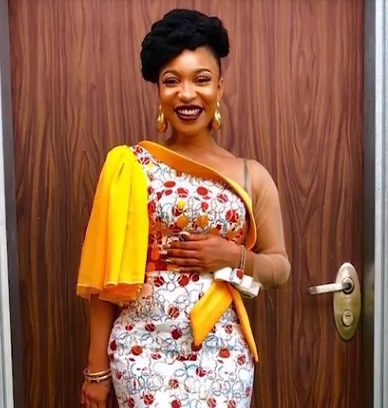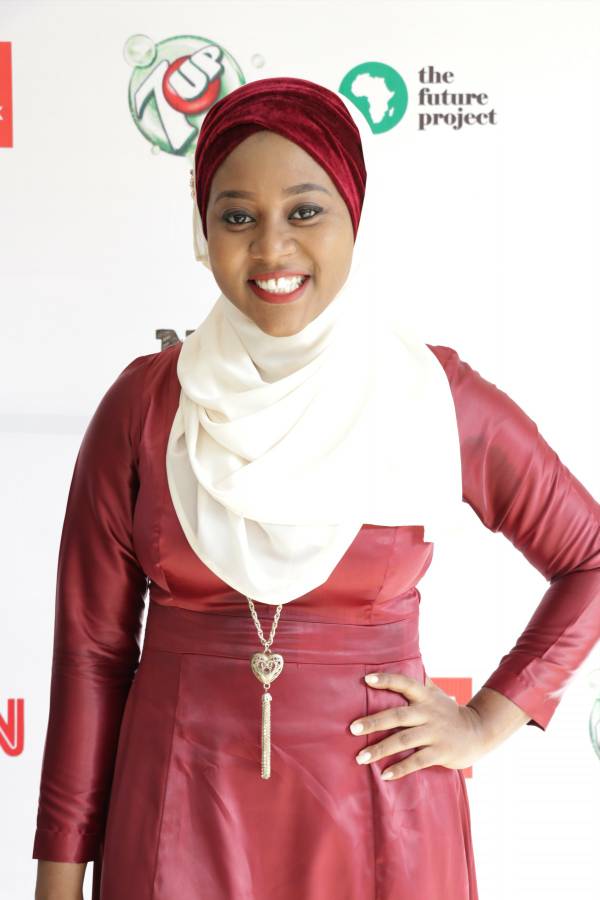
During her interview, the media personality talked about her brand and her journey so far.

African Voices is a feature series that airs on CNN and examines Africa’s fastest rising stars who are making an impact in their various industries.

Toke shared a clip of her interview on her Instagram page.

See her post below:

The likes of Waje, Tiwa Savage,  Gbubemi Fregene, Funke Akindele, to name a few, have also been featured on African Voices series.

Another beneficiary will be the Benue State born lady who was married with two kids, and suffered domestic violence throughout the marriage that lasted for 7years.

The tragic shock that led to the divorce of the couple was that the husband forcefully slept with her 15-year-old younger sister, the domestic violence victim.

She was also empowered by Tonto Dikeh who will be paying up her university school fees and also starting up a business for her.


Credit: Pulse News


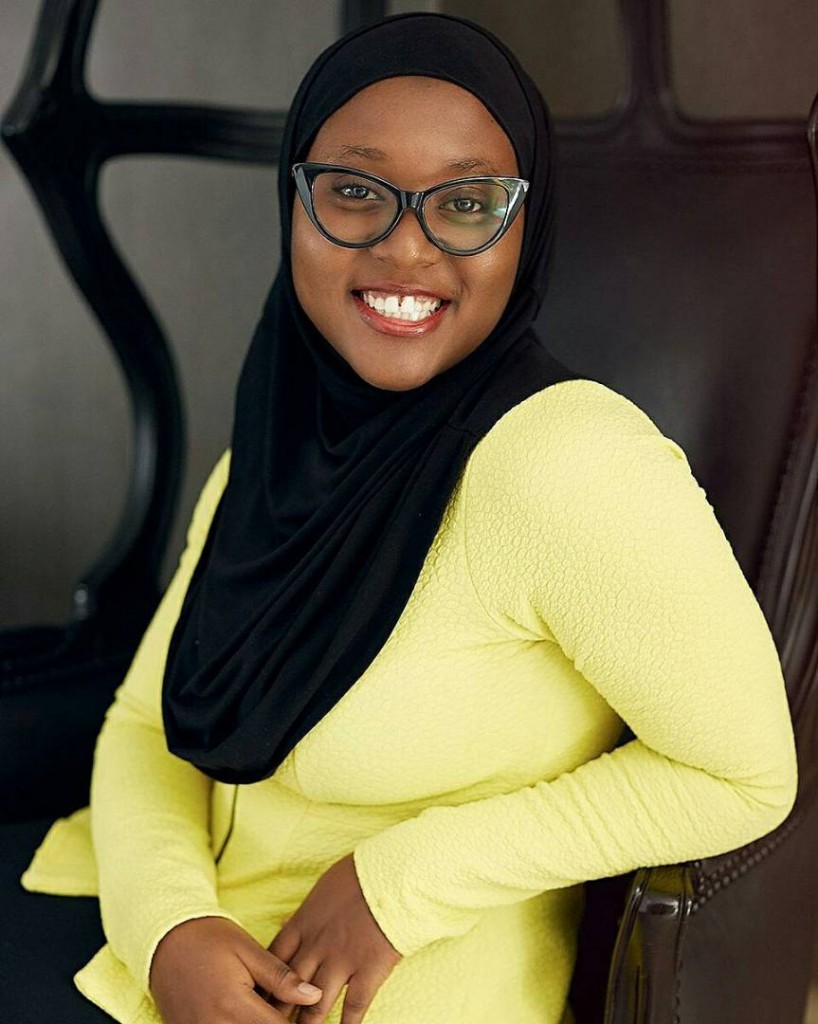
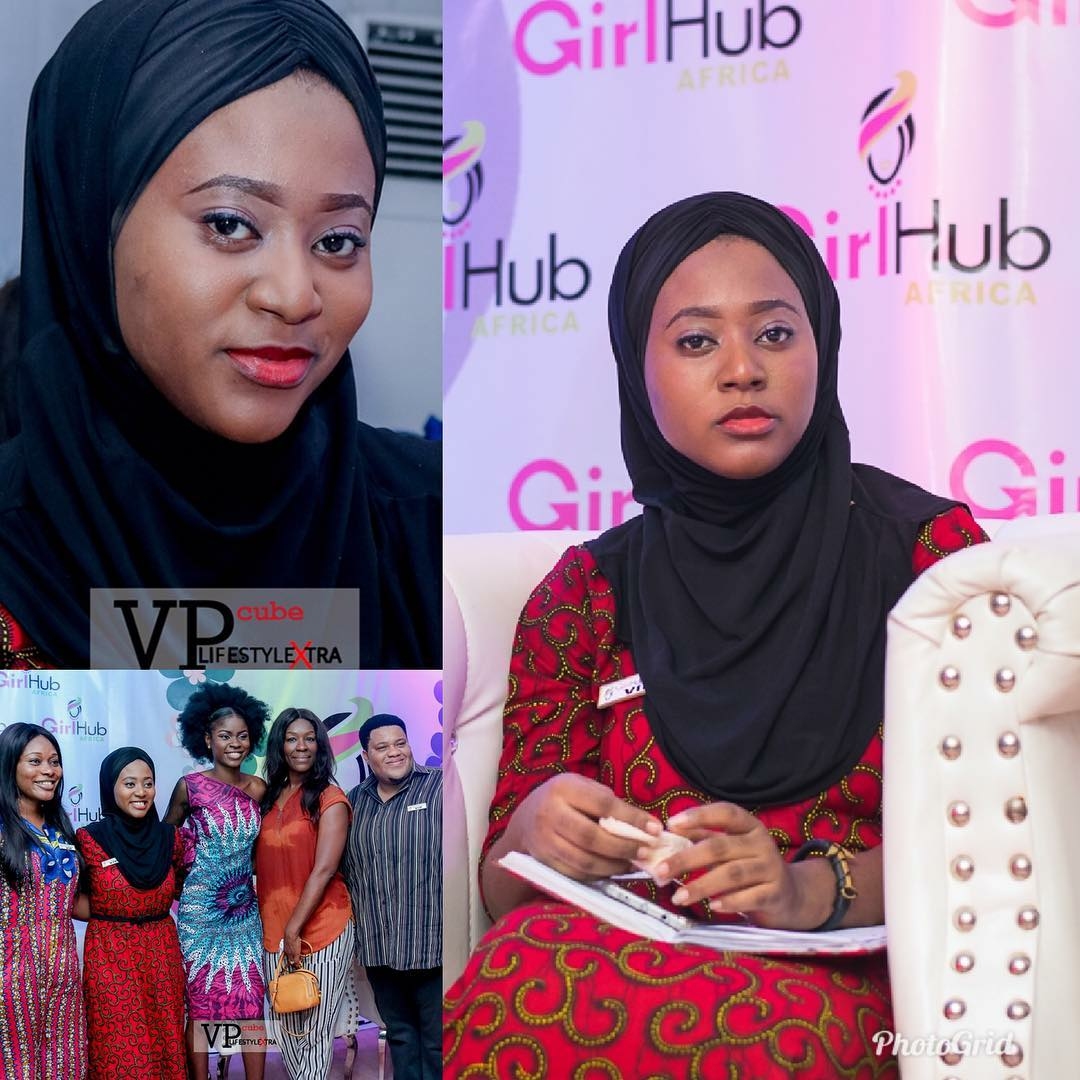
Hauwa Ojeifo is a certified Life, Mind and Mental health coach, and Neuro-Linguistic Programming practitioner – helping individuals, groups and organisations maximise their potential and performance by cultivating the right thoughts, values, beliefs, emotions and behaviour. She is the Founder and current Executive Director at She Writes Woman – an award winning movement of love, hope and support for women living with mental disorders in Nigeria. She is giving mental illness a voice; taking back the existing misinformed narrative and normalising the mental health conversation in Nigeria.
Hauwa holds an MSc in Investment Banking & Islamic Finance from Henley Business School, University of Reading, England and has a career that spans 6 industries including health, finance, fashion, event planning, retail services and digital marketing.
She is the only Nigerian female recipient of the Queen’s Young Leaders award 2018 by the Royal Commonwealth Society and the Queen Elizabeth Diamond Jubilee Trust and voted as of the most influential young Nigerians in 2017. The beautiful mental health coach bares it all in this inspiring interview.

Childhood Influence
I believe my childhood was very instrumental to what I have become. From a very young age, I was taught to value excellence. Resilience was also big for me whilst growing up. It’s no wonder that though I was very unaware of what those teachings would do for me, they have been key to who I’ve become and what I do

Meet Me!
I am the last of four children. I’m from Ewu-Ishan, Edo state and I’m a Muslim. I graduated top of my class with a BSc (Hons.) Business Administration (specifics in International Business) from Bells University of Technology, Ota, Ogun state. I went on to obtain a Masters degree in Investment Banking and Islamic Finance from the prestigious ICMA Centre, Henley Business School, University of Reading, UK and INCEIF Malaysia. I have worked across 6 industries – fashion, finance, health, event planning, digital marketing and retail services – and own and co-owned 4 businesses in the last 10 years.
 

Venture into the mental health industry
I got diagnosed with bipolar II and Post Traumatic Stress Disorder (PTSD) in December of 2015 and it completely changed my life. From delusions to suicidal thoughts, to feelings of worthlessness and hopelessness to paranoia ad mild psychosis, I experienced a great deal of the spectrum of mental illness including issues with medications and therapy. What was most profound to me in my journey to recovery was the fact that complete healing didn’t lie in any 1 thing. It had to be a holistic approach. I didn’t set out to become a mental health coach, it happened to me.
When I started She Writes Woman in April 2016, it was purely to serve as an outlet for me and to somehow see if there was anyone who could relate to what I was saying. Today, She Writes Woman has impacted over 7000 Nigerian women directly and over 15,000 women globally indirectly. We run a mental health helpline, monthly support groups, quarterly outreach to psychiatric patients, social media live streams, a creative gift and souvenir store as well as the mind and mental health coaching practice. We have presence in 6 states and counting.
I now talk about my mental illness – diagnoses that are theoretically speaking, incurable – in the past tense because I haven’t had any of my symptoms in over a year. People often ask me how I did it and why their recovery is much more lengthy and cumbersome than mine seemingly was, the answer for me is in how holistic the approach is.
I learnt and got certified in coaching and therapy. I also consult and train individuals and organisations in mental wellness. This is largely because this offers me the opportunity to proffer an integrative and holistic approach to mental wellness. Many people are in an extended state of mental, emotional and behavioural dysfunction because they don’t have a 3D approach to mental wellness. As a mind and mental health coach, I can give you that.

The journey so far
It has been fantastic. People have been overwhelmingly receptive towards the work we do. I often say that considering how quiet the mental health space was prior to when we came in compared to now, I believe lots of Nigerian women were waiting for someone to speak up and echo their silent whispers. When I began to drop bits and pieces of my story, I got a lot of “me too”s in DMs and emails. People make anonymous donations and seek partnerships with us. It was beyond having a medical practitioner talk about mental health, people need to see faces behind the stats and someone to take the lead, and that’s what we did and continue to do.

Being the only Nigerian female recipient of the Queen’s young leaders award
It’s very humbling to be selected as the only Nigerian female recipient of the Queen’s Young Leaders Award 2018 by the Royal Commonwealth Society, Comic Relief and The Queen Elizabeth Diamond Jubilee Trust. I feel validated for the work I do in the mental health space in Nigeria and to think that Her Majesty has seen that is such an honour. Mental health is so important and this exposure and visibility gives me even more credibility and a much bigger platform to keep doing the good work. I can’t wait to meet the other QYLs across the commonwealth and collectively learn, network and get mentored to create even more impact.

Greatest reward
Hmmm…this one’s tricky. I’ve gotten quite a number of prestigious awards and recognition over time which I’m truly grateful for. These are fantastic. What I’ll say are the greatest rewards are the testimonials of people across Nigeria who send in mails and text messages telling me that I saved them from taking their lives or that my story inspired them to speak up and seek help. This is my greatest reward; being the instrument of another person giving life another shot, and not only overcoming their present state but living out their fullest purpose and potential. It reinforces to me that there is truly purpose in pain and as the Qur’an says,’…with every hardship there is ease’. It further tells me that really and truly when a woman decides to unapologetically speak her truth, she gives other women the permission to do same. What’s even most profound is that IF I didn’t step into who I was meant and destined to be, the lives of the people who were tied to that single decision could’ve been lost.

Never giving up
There was never such a time I felt like giving up. That’s not an indication there weren’t challenges, but it just never occurred to me or crossed my mind that giving up was an option to consider. I take what I do very seriously. It’s my God-given purpose.

Who and what inspire me to be better
People often say that I’m “deep”. LOL. I guess that’s largely because I draw inspiration from big and seemingly mundane things and experiences. I must say also, that I’m highly self-motivated even though I understand the impact many spiritual teachers, thought leaders and social entrepreneurs across the world have had on me. I find the life and times of the Prophet Muhammad (Peace Be Upon Him) and his companions very profound and highly inspiring. Allah says in the Qur’an (3:110) that “You are the best of nations to be created (as an example) for all of mankind…” I take that very seriously. Excellence is my DNA.

My other projects
At She Writes Woman, we initiated the first-ever privately held 24/7 mental health helpline in Nigeria. It’s a first point of call for mental health first aid, information, finding mental health care around you, caring for a loved one living with mental health challenges, information about healing and recovery, referrals to mental health professionals etc. With the helpline, we have also successfully managed crisis situations like suicide in over 26 women till date.

Our monthly mental health support group – Safe Place – is a confidential and anonymous group that meets to release, be vulnerable and have honest conversations. It’s a healthy mix of professionals, enthusiasts, advocates, victims, survivors and carers.

Hope Visits is our initiative that seeks to reach and empower the most vulnerable people within the mental health ecosystem in Nigeria. By visiting neuro-psychiatric hospitals across Nigeria, we carry the message of Hope for a life beyond the mental health facility. We provide clothing, toiletries, provisions and render skill acquisition programs to empower them socially, financially and economically.

Is the Government doing enough in mental health advocacy and are Nigerians well informed?
The short answer is NO and NO. The longer answer is that though the tides are shifting, majority of Nigerians are either uninformed about mental health or ill-informed about mental health. In the area of advocacy, we’ve honestly barely scratched the surface. Our work is very much cut out for us and collectively, we must amplify our voices so as to cause ripple effects and echoes across the country.

The government can do so much more in supporting, promoting and providing mental health solutions.But here’s the thing, we can’t honestly say that Nigerians generally are ill-informed and somehow expect that our lawmakers are better informed. Stigma and prejudice is no respecters of social class, religious or cultural orientation, gender or position held in society. The very people who occupy positions in government are also a product of generations of misinformed narratives about mental health. Mental health problems – be it structural or social – are a Nigerian problem, not a government problem. The more we advocate and educate about mental health and the true narrative, the more we cause Nigerians (be it government or otherwise) to unlearn the prejudice and biases they hold toward the space. This in turn will lead to better informed decisions (politically as well) and urgency in mental health care in Nigeria.

Being a woman of Rubies
Rubies are exceptionally durable, they command the highest prices for any coloured gemstone and break records at auctions. Yet they have imperfections in them including colour impurities and inclusions of needles. These qualities of rubies are exactly what I see in myself.

People using bitterness and toxic behavior to cover up depression on social media
Hurting people hurt people. And there’s a difference between giving help and receiving help. If help is given to someone who doesn’t want help, they won’t receive the help even though they go ahead to see a therapist or even start taking medications. Let’s also not forget that there’s flat out bad behaviour and there’s mental illness. If we are seeing a spike of bitterness and toxic behaviour on social media, it just means that we too need to amplify our voices of love, hope and support on social media. All they need to know is that there’s a Safe Place. Love is the answer.

Women dealing with mental health issues but in denial
Don’t wait till you have a mental breakdown before you seek help. If you’re wondering whether or not you should seek help for something, that’s exactly the right time to seek help. If you’re worried about being judged by family or friends, come to She Writes Woman Safe Place support group (www.shewriteswoman.org/safeplace). If you’ll like to make sense of what’s in your mind, please call or whatsapp our helpline on 0817 491 3329. The same way that seeking help when you have malaria seems like a no-brainier, is exactly how it is with mental health. There’s help all around you. You just have to want it. There’s help, there’s hope and you’re definitely not alone. Our social media pages @SheWritesWoman are very good companions too.

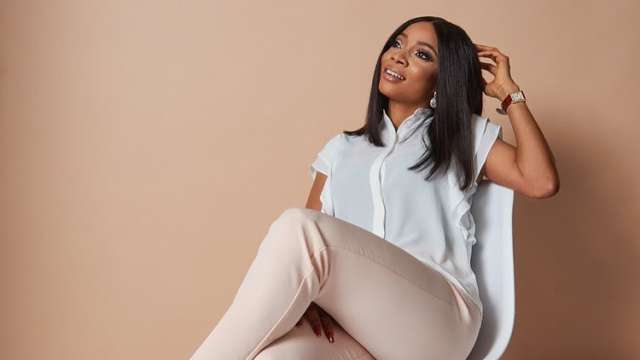
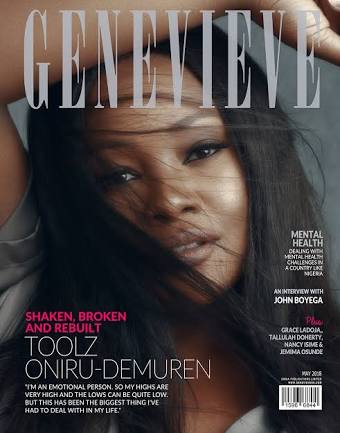
Toolz, in an interview with Genevieve Magazine, said that it was a painful experience for her.

Speaking, she said that she finds hard to talk about the loss of her baby.

According to LIB, Toolz lost her baby sometime in 2017.

Also speaking on the marriage, she said “I’m a die-hard romantic, so I did think marriage was going to be like a Disney movie….no arguments, birds singing every morning.

To be honest It’s not quite like that, but I’m very happy. I think what I love most about being married is being part of this team.

“It’s amazing knowing that whatever I’m going through good/bad – someone will always be there with me to hold my hand or cheer me on,” BellaNaija reports.

Full interview is on Genevieve Magazine.

Channels TV reported that ‘Money Marriage’ is an age-long tradition of the Becheve tribe of Obanliku in Cross River State, as almost all family in the community are involved in it.

The girls are reportedly called ‘Money Woman’ or ‘Money Wife’ and are sometimes sold out even before they were born.

The Money Marriage culture does not in any way favor the money woman or wife. The moment a man shows interest in a girl, her immediate family and other relatives are free to visit the man and collect things from him.

“Anything offered them during their visit is given monetary value and recorded by their in-law (the man who is marrying the girl). If the mother is the greedy type, she’ll often visit her ‘in-law’ to get stuff,” Channels TV reported.

Where the man has made full payment, the girl is given out in marriage.

Aji Patience, a girl whose sister was sold at four years old said, she was given out for N2, 000.

Unfortunately, when the husband dies, his next-of-kin marries the girl and if she dies without giving birth to children, her parents are mandated to bring a replacement.

Victoria Tabang is a victim of this. After the death of her husband, she was expected to remain with his people.

“Even when I went to my people, they drove me away, saying I now belong elsewhere,” she told Channels TV.

Money women or wives are sold for as low as N10,000, few goats and pigs, tubers of yam, depending on the man’s bargain power. They are also not allowed to be educated.

“Money that the man give in my head (sic) was not much. It was N20,000 and one goat,” a money wife said.

Once a girl is sold out for Money Marriage, she is considered dead by her immediate family and warned never to return irrespective of how she is treated by her husband or his relatives.


Credit: woman.ng, Channels TV

According to Africa Check, a total of 14,333 murders were committed in South Africa between April and December 2016. 1,713 of those murders were women, meaning that a woman was murdered every four hours in South Africa. 57.1% of these women are killed by their partners – boyfriends, fiances, husbands – according to the South African Medical Research Council’s Gender and Health Research Unit. So, one woman is murdered every eight hours by an intimate partner.

Not to be dramatic, but this means that women are an endangered specie in South Africa. South Africa’s femicide rate is five times higher than the global rate, according to stats from the World Health Organization’s Violence and Injury Prevention Programme. The global femicide rate in 2015 was 2.4 per 100,000 women. South Africa’s rate for the same year was 9.6 per 100,000 women, meaning that femicide in South Africa is four times that of the global average.

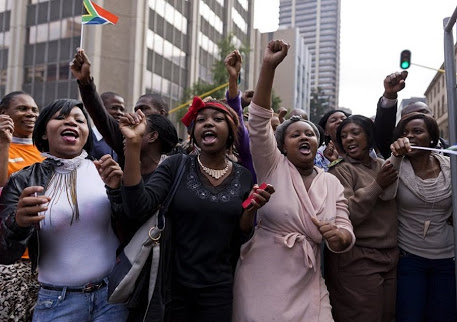
In South Africa, gender-based violence is an everyday reality, and even when justice is done in courtrooms as in the case of Sandile Mantsoe, women still live in constant fear. Across Africa, and the world, women live in fear. Walking down the road, going to work, at work, at conferences, at restaurants, women are in a constant state of alert because the danger is everywhere – mostly from men.


This is a call for women all over the world to stay woke. The society can do only little or nothing to protect you. It is sad but it is what it is. Once you notice signs of abuse in your partner, run as fast as your legs can carry you (that should be faraway) Do not try to make excuses for an abusive partner. Be street smart too. If you notice someone stalking you, report to the authorities right away.


Reports source: konbini.com

Image credit: face2face Africa


OK, so I figured it was time to come up with some highly practical ways to spend. Shopping was always a part of my life; I just didn’t put any conscious thought or energy into understanding it, or my relationship to it.


Recently though, I started wondering why I bought unplanned items and overspent with a ‘reasonable margin’. I also realised that 40% of items in my shopping trolley were unplanned, not immediately required and bought on impulse.
Guess I need to improve on my ability to say NO. Let me re-phrase, ‘Why can’t I say No’. or rather, will the direction in which I am looking within the store change my perspective?


All these different views can be taken in without moving my feet beyond one square foot. I only have to turn 90 degrees one way or the other, and what I see changes dramatically.


When it comes to shopping, so much of what we experience as shoppers and consumers has to do with the perspective in front of us which is based on the direction we are facing. And it is almost always within our power to change our direction, even if just a little bit. Sometimes just the smallest change in direction or approach can lead to the largest changes in perspective and outlook. Our shopping environment is much cluttered due to space constraints and also because the competition has become fiercer as alternatives and variants are on the increase. If it must catch the shopper’s attention, communication material must cut through the clutter, with unique ways of engagement that creates brand love and affinity.

I know what I want to be looking toward. And it ain’t the carpark…Most definitely, as there was this huge red signage in front of me that not only had sales written in my favourite yellow colour, but read 50% off!.

It was a no brainer, it was disruptive and in my face, seeking attention – I went for it.
Familiar experience? I guess.
Here are a few tips to that breakout and breakthrough the clutter.

• Campaignable Ideas/Communication: The fundamental law of successful is engagement: if you’re not engaging the consumer with a compelling story, they’re going to make up one of their own. It’s important to provide shoppers/consumers with memorable ideas and engagements they are compelling to talk about and share.

• Harnessing the creativity of shoppers/consumers: While conventional consumer research provides an essential foundation, it no longer creates a competitive edge. As there’s more need to experiment with non-traditional, sometimes radical and untried approaches that seek upfront inspiration – and actual ideas – from creative consumers who have a passion to innovate. These gives an opportunity to tap into consumers’ minds and passions to co-create products, solutions, communications and “experiences” that are truly resonant.

• Word of Mouth: Taking the time to watch / Listen /read feedback including feeds from Social Media for common themes and insights can provide a plentiful source of fresh, consumer-inspired ideas. Striking up relationships with the most prolific, influential bloggers with the aim of better understanding what makes their shoppers/consumers tick and how to improve the engagement platform is key.


Shopping these days have become defining moments with powerful choices instigated by compelling in store and out of home communication which usually brings consumers under the spell of ‘Fear of Missing Out’…but really, this butterfly called ‘satisfaction’ is going to be constantly out of reach, we need to start getting contented!.


ABOUT THE AUTHOR

Bamigbaiye-Elatuyi Omotola is a Regional Marketing Manager for West Africa in an FMCG.
A firm believer in empowering others for success in the work place as she is a well sought after facilitator on Marketing and Business management. She also manages Workplace Management columns and Consumer Insight columns in magazines published across West Africa as well as volunteering with NGO’s as a child educator.
Instagram: tolaspeaks
Twitter: alottola
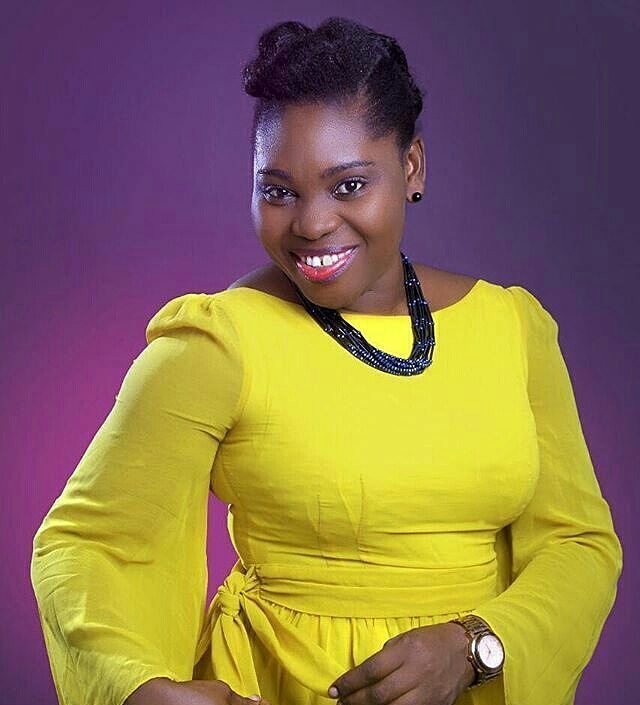
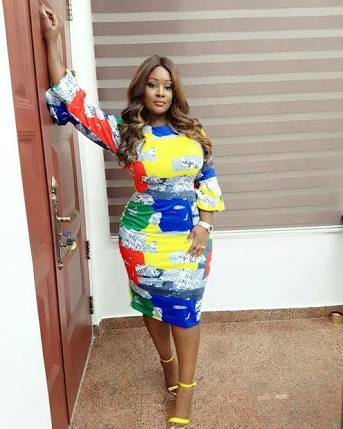
Media personality, Tolu Oniru popularly known as Toolz has launched an inspirational brand for plus-size women, called “Sablier
Sablier is a brand that represents confidence, female empowerment, and self-expression, especially among plus-size women. It is set to drive a message that promotes inclusivity and change the stereotypical perception of plus-size women.
She wrote:
 
“As a plus-size and curvy girl, you tend to feel out of place – my body type wasn’t the hot thing back then. I just didn’t fit in. I became very self-conscious – I thought my hips were too wide… my bum was too big, and I was on the short side.


As a teenager, you are dealing with a lot, especially when it comes to self-identity and accepting yourself. And you often get confused about what beautiful is. My self-consciousness got so bad at one point that I had to cover up all the time.

In the middle of summer, I would wear a light coat to cover up my hips, and people thought I was weird. Clothes shopping was a bit of nightmare, not to talk of shopping for lingerie. Most of the lingerie in plus sizes were quite unattractive; boring styles and colours with super thick straps. Sadly, inclusivity wasn’t such a big thing when I was growing up, you were basically stuck with what was available.

Later in life, I began to notice and research curvy/plus size models like Tabria Majors, Candice Huffine, Anita Marshall and Ashley Graham – her confidence is incredible! In an industry that is notoriously discriminating about anyone above a size 8, seeing this beautiful and curvy ladies flourish was magical. I was extremely inspired to say the least.

Being in the public eye also had a big impact on my ‘acceptance journey’.


 I have been bashed and shamed about my body on so many occasions, I can’t even count. The first few times it happened, I was very hurt, because there was always so much venom behind the attacks, and I would be at home in tears thinking what did I do to anyone to warrant this? Unfortunately, this comes with being in the public eye, and I soon managed to get a thick skin.

On the positive side, as I got more popular I began getting messages from women who admired me for being one of a few plus size women in the public eye. I would get messages from young women who had contemplated suicide because they looked different, and they were being bullied for that. They would write and say how seeing pictures of me boosted their confidence – making them accept themselves and their bodies. These comments made me realize that my presence and visibility in the industry was having a positive impact on at least a few people.

My experience strengthened me and gave me a voice – one which I have decided to use in empowering and boosting the confidence of plus-size women like me – those who are currently in a physical and psychological battle to accept their own bodies.

I am Tolu Oniru-Demuren. You probably call me ‘Toolz’.

Welcome to this journey with me.”


Credit: fabwoman.ng

There’s a saying that “A confident woman is not afraid to stand alone, and that’s why everyone wants to stand with her”

When you see a confident woman, you see class, grace, and power. A confident woman inspires everyone including people who don’t like her.

So what are really the major habits of a confident woman?

See five habits of a confident woman below:

They seek challenges.

The fear of failure stops many people from taking chances — but not confident women. Instead, they search for opportunities to challenge themselves and view any “failure” that comes from it as simply a stepping stone to get to where they want. These women collect experiences through trial and error, expose themselves to new ideas, and constantly push themselves to continue learning. Whether it’s changing their career path or investing time and money into mastering a new hobby, confident women aren’t afraid to step out of their comfort zone — they live for it.


2. They support instead of compare.

With the convenience of social media, it’s nearly impossible to not know what someone is doing. It takes a swipe of a finger and a screenshot of an image to discover what someone is up to and share it with your friend. Although it’s easy to begin comparing yourself to the successes and life decisions of others, confident woman avoid this toxic decision and choose to support. Thus, they open the door to networking with more people and feeling inspired by the milestones of others (instead of threatened by them).

3. They hold themselves accountable.

Confident women not only have goals — but they also have steps they take to achieve them. They’re not waiting for a sign to make a move, because they’re already too busy taking action and pursuing what they want. These women understand that their lives are happening right now and that it’s up to them to take control of it. From sticking to the new monthly budget they’ve set for themselves to taking time out of their schedule to dedicate to their side hustle, they make the conscious effort to better themselves and make their own luck happen.


4. They communicate effectively.

The ability to communicate is a skill that anyone in any field of work or situation can gain from. Confident women are the walking definition of this — they easily adjust to social settings and can hold conversations on a wide variety of topics due to their knowledge and natural curiosity to learn more. Not only are they a pleasure to speak to, but they also have positive body language that makes them easy to approach. Whether a confident woman is giving a professional presentation or explaining her feelings during a conflict, she’s able to clearly communicate in a way that’s simple for people to understand, making others want to listen.


5. They ask questions.

Similar to how confident women live outside of their comfort zones, they also don’t accept views and ideas simply because they’re told to. They’re individuals, and they aren’t afraid to be who they are — and fight for it. Confident women are natural born leaders — they’re people who aren’t afraid to ask questions to try to understand a concept better. Furthermore, they won’t settle their standards to comply with what the majority of people believe. They aren’t afraid of standing alone, and that’s what makes them worth standing with.


Photo credit: google.com, every girl.com

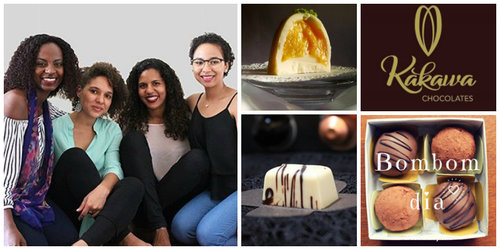
Four best friends who have known each other since childhood and also share a love of chocolate, has decided to start a company called Kakawa Chocolates in Mozambique.

Kakawa Chocolates makes beautiful handcrafted chocolates bonbons with both local and foreign flavors.

The four friends are a team of 3 doctors and 1 architect but decided to start their company in 2017, after they all had completed their college degrees.

Screen Shot 2018-05-06 at 8.55.07 AM.jpg
Screen Shot 2018-05-06 at 9.07.22 AM.jpg
While talking about their future plans and goals, they revealed that they are opening their first physical store soon. They also plan to expand their products to the rest of the country and to the world in the nearest future.
Credit: lionessofafrica.com