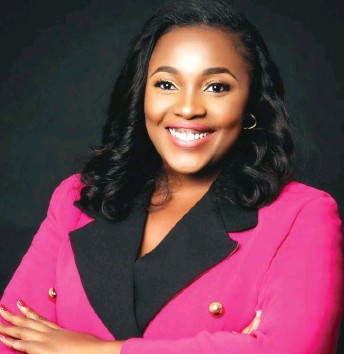
Mavis Kusi and Sharon Aforo Acheampong are two young Ghanaian women graduates who have just perfected a device that can incapacitate mosquitoes. The goal is to prevent insects from biting humans to help eradicate mosquitoes completely from Ghana.

The device is composed of IoT technology and is able to repel and collect data on mosquitoes that are within two meters in specific areas

According to various reports, Kusi and Acheampong were motivated by the apparent lack of impact of mosquito repellent products in Ghana. Kusi says the product is sold at a reduced cost and would help people do their business without fear of mosquitoes.

Available information suggests that some outpatient departments in Ghana have identified about 11 million cases of malaria in 2018, up from 10 million in 2017. 428 people died from malaria in 2018. This is a decrease of 29% compared to 2017, when 599 people died.

The crowded terrain of the make-up industry following the popular cliche that “Everybody is now a makeup artist” has definitely not slowed down those who have taken it upon themselves to create a legacy in the beauty industry. The Nigerian beauty industry is undoubtedly  massive and has continued to grow as a result of makeup artists that have proven to be exceptional and excellent. These makeup artists come in to make their mark, create a name for themselves and stand out of the crowd and are constantly pulling amazing traffic to the makeup world.

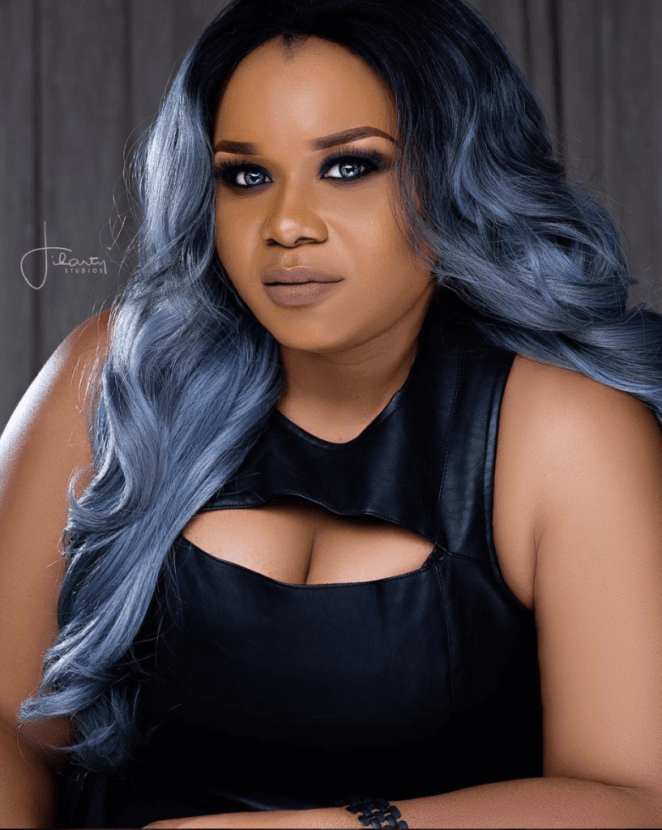
So whether you are a celebrity or not and you are looking for the best of the best or just to keep up with the trend, in no particular order, here are 5 skilled female Make Up Artists you should know in Nigeria:

1. Banke Meshida Lawal, popularly known as ‘Bmpro’.
The CEO, BMPRO Makeup, is one of the biggest brands in the Nigerian make up industry, with over 400k followers on Instagram. Being the highest followed IG make-up artist in Nigeria, she is on speed dial of first ladies and wives of billionaires, celebrities and stars in the country. She is described as the queen of Make Up Artists, having worked with several top celebrities as clients. With over a decade in the beauty industry that started as a hobby from her days at the University of Lagos, she doesn’t come cheap at all. She has successfully created a name for herself, evident in the numerous awards she has won over the years.

2. Lola Maja Okojevoh, CEO ‘Sacred Beauty’.
Lola Maja is highly reputed for not just bridal or facial make-up, but “Special Effects” in addition to eyebrows and eyelashes visual. She started working as a make-up artist at age 14 and has since grown into a brand. She launched her lashes range “Sacred Lashes” in 2010 which later metamorphosed into “Sacred Group of Companies” and has won several awards for tricks she has used in the visual, film and theatre world. She is a massage therapist, beauty tutor, spa and cosmetics brand consultant, has worked on several music videos, tv series, fashion events and films. Creating a name for herself in a rare part of the make-up world is why she is popular.

Well done Lola!

3. Adetola Anita Adetoye, popularly known as “Anita Brows”
The creative director of “Anita Brows Beauty”, started makeup as a hobby and self –taught herself through “Youtube” by posting pictures and videos of her work on social media which attracted potential customers to her services ranging from wedding ceremonies , television commercials, photoshoots and many more. Her star studded clients include the likes of Tonto Dikeh, Toke Makinwa, Annie Idibia and many more. Over the years, she has created a name for herself and was recently listed as a game changer in Forbes 25 under 25 list.

4. Elaine Shobanjo, Make UpArtist Extraordinaire, Funder of ShoMya
Elaine Shobanjo is one of the most talented ladies in the Makeup business, and she has caught our attention by how she has managed to move from working in the financial sector in London to pursuing a career in makeup artistry. She is often regarded as beauty and brains as she topped her class studying Economics and later Finance before quitting and delving into make-up. She has somehow managed to combine motherhood and a career successfully. Despite being armed with degrees from the world’s most prestigious institutions she chose an unusual path and decided to pursue her passion. She has worked with several celebrities, a beauty consultant for Television and has won several awards excelling in the Makeup world.

5. Omontese Akhethuamen , CEO “BeautyCook Studio”
Omontese Akhetuamen is a make-up artist with an edge. Her studio, established in 2005 managed to bring in a one-stop centre for beauty matters, skillful in the art of gele-tying and hairdressing, her brand specializes in hair, make-up and beauty- products. She is one of the most followed make-up artists on Instagram and has managed to make a name for herself in the past decade by making up several celebrities and having them as clients. So for your one shop look, Omontese’s beauty studio has got you covered and we love a woman who knows her onions, walk in and walk out looking it all!

Source: Women4Afria

Many people fear to leave their loved ones with caregivers because they are usually underqualified. Many families end up complaining that when they leave elderly people in homes they tend to be mistreated. However, Chika Madubuko is changing that with her company, Greymate care. Greymate care has an online platform that connects specialist carers to those in need of care, giving both patients and families the peace of mind they are looking for.

While we may have figured out how to move around and get food delivered to our doorsteps, we haven’t really done enough to make technology useful.
Greymate Care is the uber for home care. It is the online platform that connects the elderly to a vetted and insured caregiver/doctor/nurse at the click of a button. They take the stress of care off busy professionals using technology. Greymate Care not only solves the problem of finding a companion right in the comfort of one’s home but they also have the potential of providing 10,000 jobs within Africa.

So what inspired Chika to start this company?
Every startup has a story behind it and as for Chika her company was started as a result of a highly personal experience. They found it difficult to find someone to provide care during the last days of her diabetic grandmother. At a point, they took turns in the family to spend time with her and this made their school work and jobs suffer. Even when they opted for a paid caregiver, there was no regulated marketplace and they were worried about the quality of the caregivers they found as none of them was background checked or trained. She eventually lived the rest of her life with less care and attention than she truly deserved. She decided to solve this problem for other families by getting some training in the UK and started Greymate Care in Nigeria.

Obviously, the reason why anyone would use this platform is rather obvious.
For starters, who wouldn’t want their loved ones with caregivers that are actually qualified? Greymate Care differentiates itself from other home care services due to their highly mechanised processes and equipment as opposed to the regular manual handling methods that are currently available. They thoroughly check their caregiver’s backgrounds and make sure that they are well suited for the job.

I think this is a phenomenal woman and this is a very useful and selfless way of using technology.

Marine Corps Col. Lorna Mahlock has been nominated to serve as the first black female brigadier general, the Marine Corps media office said. Mahlock was nominated by President Donald Trump, and Defense Secretary James Mattis announced the nomination on Tuesday.

According to his announcement, Mahlock is currently the deputy director of the Operations, Plans, Policies, and Operations Directorate at the Marine Corps headquarters in Washington.

Her nomination was one of several by the President that Mattis announced Tuesday. Last year, an infantry battalion at Camp Lejeune in North Carolina received the first female infantry Marines, who were set to serve in the 1st Battalion, 8th Marine Regiment, with specializations as rifleman, machine gun and mortar, 1st Lt. John McCombs, a Marines spokesman, said at the time.

Marine Corps Col. Lorna M. Mahlock currently serves as the deputy director of Operations, Plans, Policies and Operations at Marine Corps headquarters.

The Defense Department’s April 10 release of slated general promotions includes a historic first for the Corps.

Marine Corps Col. Lorna M. Mahlock, the deputy director of Operations, Plans, Policies and Operations at Marine Corps headquarters outside Washington, D.C., will become the first black woman to don the rank of brigadier general if she is confirmed.

Mahlock’s nomination was first reported by ABC News. The Marine colonel has not made a public statement since her nomination, but in 2016, she discussed her experience in the Marine Corps as part of a video dedicated to Women’s History Month.

“Over my 30 years in the Marine Corps, my experience in terms of how women have evolved has been very positive,” she said in the video. “It’s been a steady rise. I’m very, very hopeful.”

The Marine Corps is the smallest of the four military services and has the lowest percentage of female members, according to Marine Corps Community Services.

And just under a hundred women across active duty and reserve Marines are serving in various combat job fields that were previously closed to women.

The first black general in Marine Corps history was Marine aviator Frank E. Petersen Jr. He was selected as a second lieutenant in October 1952 after completing flight training and was promoted to brigadier general in 1979, according to Marine Corps University.

Lt. Gen. Frank E. Petersen, Jr. the first African-American Marine Corps aviator and the first African-American Marine Corps officer to be promoted to brigadier general. (Marine Corps)

The Marine pilot served in the Korean War and Vietnam. He flew more than 350 combat missions.

Petersen retired as a lieutenant general in 1988, and passed away on Aug. 25, 2015.

Mahlock previously was stationed in Okinawa, Japan, where she was charged with overseeing 1,300 military and civilian personnel and $250 million in military equipment in support of U.S. interests in the Asia-Pacific region.

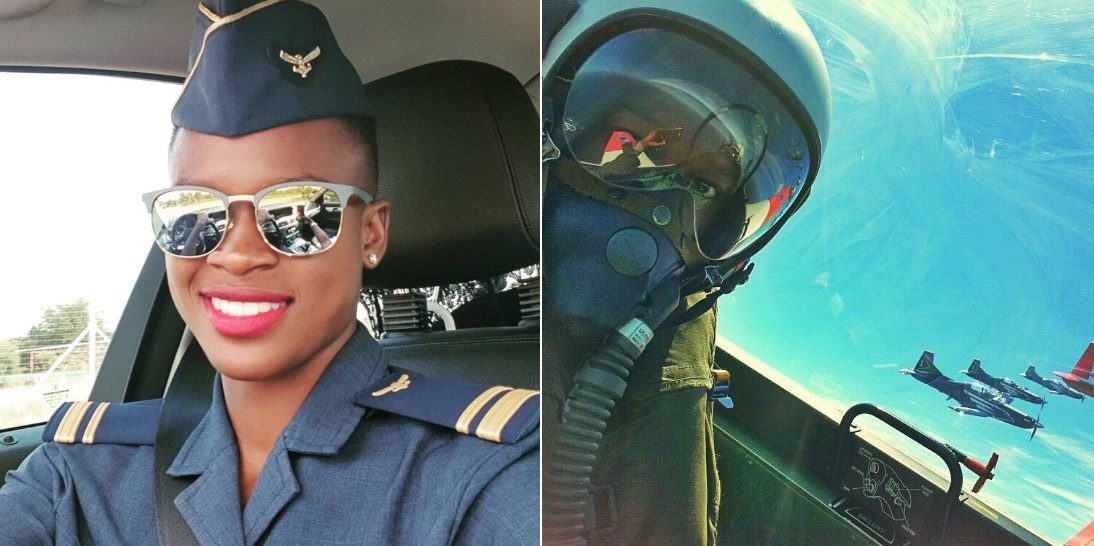
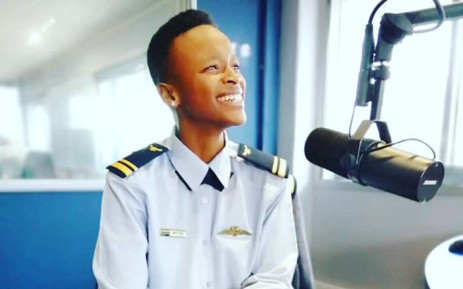
Mandisa Mfeka is the world’s first Black African female fighter pilot and she is from South Africa.

Major Mandisa Nomcebo Mfeka, a Combat Pilot in the South African Air Force.

She is regarded as the world’s first Black African female fighter pilot and hails from South Africa!

Image result for Mandisa Mfeka

Mandisa, who was born in Ntuzuma Kwazulu-Natal grew up in Malvern. She says she realised her love for aviation when she was about five years old when her mother and grandmother used to take them to airshows in Virginia Airport.

Due to the inability to afford the entry fee, Mandisa says her mom would park outside the airport and they would watch the displays from there.

Growing up she thought she wanted to be a doctor but when she was in grade 10, she started researching careers that used math and science. As a result, she discovered aeronautical engineering. She decided to apply to different universities to study exactly that but she came across an article for the South African Air Force and after seeing that she exceeded the requirements of entry, plus she could become a pilot, she was immediately sold.

“From the moment I discovered the SAAF, I knew that’s what I wanted to do, and since then I haven’t looked back.”

In 2008 she joined the South African Air force (SAAF), and in 2010 she started at the Central Flying School in Langebaan; in 2011 she got her wings.

Mandisa says her journey as a Combat Pilot really shifted her perspective about what aviation and what being a military practitioner looked like. Nonetheless, she believes that becoming a combat pilot has been an amazing experience.

“It is such a dynamic environment and so mentally stimulating, and I love it because I’m growing in my technical expertise and learning more about aerodynamics.”

One quote that Mandisa lives by is, “The sky is the baseline.” Which means, the excellence bar that you pushed yesterday should be your starting point, tomorrow.

Nigerians have been and won’t stop representing in diaspora or will they? No! we doubt it. What do you think? Well, as for us, we believe that there are still innumerable feats waiting to be accomplished and achieved by Africans especially Nigerians anywhere they find themselves on planet earth

Anita Osariemen Omonuwa from Edo-state has set a record that has never been attained in the 122 years of existence of the University of Reading.

Anita is a triple First class holder from the University of Reading, UK (LLB), University of Birmingham, UK (LLM) and the Nigerian Law School (BL).

At Nigerian Law School, she received several prizes including, the Council of Legal Education Star Prize, best overall performance, best outstanding academic performance, Best Female Student and Best Student in Corporate Law Practice.

Anita also won some other notable prizes which include the Clarks Legal Prize for best performance in Part 2; Equity and Trust, presented by David Rintoul; the Managing Partner, Keith Wright Memorial Prize for best overall performance in Part 2; the Shoosmiths Prize for best overall performance in Part 2; and the Boinime Jackson Lott Foundation Prize.

She’s attractive, charming, delightful, appealing, alluring, prepossessing, lovely, and intelligent girl that every Nigerian Youth should emulate.

Folasade Bamisaye is passionate about empowerment of women and girls, and that’s evident in the impact she’s made in about a decade.

Folasade started impacting her community in 2009, volunteering for organisations working on issues of women and young people’s sexual and reproductive health and rights.

Women and girls in under-served areas around Nigeria are faced with huge challenge of coping with their menstrual period hygienically. Then there is the issue of shame and embarrassment.

Folasade decided to change this. She founded My Period Kit, to provide women and girls with a menstrual hygiene kit which includes sanitary pads, tissue wipes, pantyliners, and disposable, bags an affordable cost, with the goal of keeping young girls in school.

My Period Kit partners with individuals, organisations government agencies, donors, and CBOs to improve menstrual hygiene and well-being of young girls and women of reproductive age and to increase access to an affordable and healthy transition into womanhood.

For women and girls with limited access to running water, My Period Kit developed a sustainable, disposable sanitary pad made from banana and plantain stem fibre called “GreenPads.”

Folasade’s work also involves debunking the myth that menstruation is a taboo or a dirty process.

Folasade is a 2017 Mandela Washington Fellow. In 2018, she was selected as a finalist to represent Nigeria in the $1 million global startup competition, Chivas Venture.

She’s a Monitoring and Evaluation Specialist with the Prime Health Response Initiative and was recently announced as a 2019 Obama Foundation Leaders: Africa participant.

She holds a Bachelor of Education degree from University of Ibadan, and a masters degree in Counsellor Education/School Counselling from the University of Ilorin.

Source: Bellanaija

Determined to help women realise their God-given potentials and live a purpose-driven life, Onyebuchi Madiebo-Solomon, the founder of Ordinary Women Doing Extraordinary Things (OWDET) is touching lives through her non-governmental organisation. With degrees in Law, and International Business and Marketing from Lagos and London respectively, this trained marriage counsellor is also the CEO of BC Madiebo & Company Limited. She sat down with GuardianWoman to talk about what led her into starting a non-profit fighting female mortality in Nigeria, gender equality and how marriages can last in today’s world amongst other issues.


Give us an insight into your background; what led you to start OWDET?

I studied law at the University of Lagos before going on to read international business and marketing at the American Intercontinental University, London. I am the CEO of BC Madiebo & Company Limited, an insurance brokerage firm which I inherited from my father and I run that alongside Ordinary Women Doing Extraordinary Things (OWDET). OWDET, which I started when I was looking for clarity in my own life is basically an organisation dedicated to teaching women to live a life of purpose and one of the things OWDET is focused on doing is building free maternity clinic at grassroots level because Nigeria has the second highest mortality rate in the world. Everyday, babies and mothers die for very trivial reasons like malaria, fake drugs and bad drinking water. We are starting our first clinic, we already have the land to build, which was donated to us and we would soon start the building for the first free maternity clinic.


Why free maternity clinics, what was the inspiration?

It was the Holy Spirit that spoke to me. Initially, when the Holy Spirit spoke about starting something for women, I was going to prisons, doing a prison ministry but the Spirit told me, “this is not what I called you to do. I need you to reach out to women because women do not understand that they have a purpose. I am not calling you to preach or be an evangelist, I am calling you to get women together and help them understand that each of them, whether Christian or Muslim has a purpose.” After this revelation, I started OWDET. We meet four times yearly and talk about living a life of purpose. We also have a book club to encourage women to read as well, we read one book a month and talk about it extensively just to encourage one another.


What type of women do you look out for, who is an OWDET woman?

Every single woman. It doesn’t matter your colour, state, race, tribe or financial standing. Picture a mansion that houses a family with several daughters, amongst them a senator, hairdresser, doctor, teacher and a truant but at the end of every three months, they all come together into this house. As soon as they walk through the doors, the senator sister and the truant are on the same level, calling each other by name and relating freely because they are sisters. I tell all the women, we may not know each other but the moment you walk into our doors, we are all sisters.


Tell us about your growing up years?

I am the last of six children and I think this made me a little stubborn. I grew up as a “single child” because all my siblings were abroad when I arrived and there’s a bit of age difference so I was at home alone with my parents and sort of got away with most things my older siblings would never have dreamt of. Still, my mom was very strict and all I remember is whenever she says “don’t do that,” I would still go ahead and do it and so I was always getting a beating for being mischievous but that didn’t deter me. When I felt I was old enough, I travelled to London on my own and started fending for myself. My parents told me they were going to cut me off if I didn’t come back, but I didn’t mind and insisted on standing on my own feet. I was working on any job that came my way to keep body and soul together. I wasn’t discriminating and was quite hardworking. One time, my friend and I started a car cleaning company; we didn’t have a car to carry our hoover, water and all so we put everything in a bag and drag it to where we need to be. My dad didn’t spoil us and then, the only sure way to get money out of him is to tell him you wanted to buy a book or for your education.

Looking at the country today, would you say Nigerian women have achieved gender equality?

I don’t think we are quite there yet because women are still discriminated against till date in every area in Nigeria. It is a case of what a man can do here, a woman can probably not, but women need to realise that you can do whatever it is you set your mind to do. When I started building, I didn’t know anything about it, all I know was that I wanted to make money from it. So my sister encouraged me because she is good at painting; she would buy paint and paint the inside and outside of our house on her own. Initially I couldn’t read drawings, I would send them to my sister, she would read and teach me and explain; by the time we were finished, I could tell you everything involved in the building. If I can learn it, and I am not the most intelligent woman in the world, if I can then everybody else is capable.

What would you say is the major challenge women of this generation face?

Everybody wants to be somebody without having to do anything. Women today want to drive a Range Rover, go to Dubai, use expensive gadgets and things but they are not ready to put in the work. We want to live a life we can’t afford. You need to put in the work, you need to get rid of certain mindsets, you too can make money and live large, you can do anything you set your mind on doing.

If you were to mentor a woman, what would you tell her?

The first thing I would teach that woman is that she has the ability to be any person or thing she aspires to. Also, you are not better than the next person. My mom used to say you’re not better than the staff that works for you, you are just privileged. Your maid might be smarter than you but you are more privileged. The next step is to learn to believe and not look down on yourself. People look at themselves and say they are poor because their parents are poor. Tell yourself a different story, believe in yourself and start doing the work necessary to break that cycle.

Would you say women have conquered the fear of getting into male-dominated fields?

I personally believe that anything a man can do, a woman can do it better, it is not a cliché. That’s the way I see it. We have not overcome it but I think we are getting there. Women are beginning to understand that they need to make money and are doing what it takes to make it. We are still far from our goal but I think we are getting there. I think to myself, I can do what men normally do and even better than they are doing, this is how I thrive. The average Nigerian woman is a strong woman, God-fearing and takes prides in herself. People look at pride as a bad thing but you have to be proud of yourself for people to take you seriously, believe in you and respect you. African women are so strong; we go through a lot but still get up and keep going.

You have a funny story with regards to how you met your partner…?

(Laughing) Yes, I met my husband through a police officer that I met at the police station when I went to report a case there. My maid stole from me and I went there to report and was attended to by a female officer who is married to my now husband’s uncle. She introduced us and the rest as they say is history. Turns out that incidence was a blessing in disguise. Though it wasn’t love at first sight, spending time with him, doing things together, he grew on me. It also helped that he was very nice and kind and this attracted me to him eventually.

As a marriage counsellor, how can couples safeguard their marriage?

Marriage is not a bad thing. I am a very troublesome person and my husband is the complete opposite of me and I think that’s why we get on well because I’m hot-tempered and he’s not. However, marriage is not easy, it’s a union of two very different people born and raised differently and when you bring them together, there are bound to be problems. However, you need to learn to meet yourselves halfway but you must marry the right person to achieve this. A lot of people these days just get married for flimsy reasons and when they enter, they see things they can’t live it and start looking for escape routes. Before I got married, I dated some men I didn’t really like and people were saying, “marry him, later things would change,” and that’s where the problem starts from. You cannot change anything, what you see before marriage will amplify times 10 after marriage. Ask yourself if you can live with it, it’s very important. Whenever my blood is hot and I am boiling, my husband usually calms me down. There was a man I dated with a temper like mine and people told me to marry him because he is rich, but can you imagine what a union like that would have looked like? Two of us angry with nobody to calm the other down, it wouldn’t have worked. These are some of the things you have to keep in mind; it’s not rocket science.

What are the challenges you have faced and how are you overcoming?

So far, I am funding everything myself because in Nigeria, people find it difficult to give money as they believe you’re going to squander it and I don’t blame them because some crooks have given everyone a bad name. When I started, I didn’t even look for funds, whenever I have money, I simply put it in and do what I can. At the last programme we held, people told me they want to donate because they’ve come a couple of times and noticed I wasn’t asking for anything from them. This was how we got land given to us free of charge. I think until people see you’ll spend their money wisely; they won’t donate to your cause. I tell the people that work with us, if you are not going to live your life purposely, you cannot work with us. If you concentrate on the purpose for which you were created, and you’re focusing on it, you won’t spend your time doing things that you shouldn’t be doing. You need to focus on your purpose. Your purpose alone is huge, if you start honing it on time it’s a lifetime journey, you won’t have time for anything else. That is the way God created us.

Would you say women have been treated fairly in terms of political appointments?

Truth be told, I feel the president has not been fair despite all the promises and assurances given before 2015 and in this term. I don’t think it’s out of spite but what he knows and understands but he can do better.

Would you say women are doing enough to support other women?

No and I think it’s because some women can be unnecessarily selfish. I think they see men exhibiting this behaviour and they want to do the same thing. Almost like a case of if you can’t beat them, join them. I keep telling women around me to do the right thing and they are not listening because they are afraid of “losing our or not fitting in.”

What last words do you want to leave for women?

I just want to tell them to believe in themselves. If you want to dream, dream big and live a life of purpose. Whatever you can dream, you can achieve it.

Source: Guardian

One person’s so-called testimony here was another’s source of nightmare.

I hear people say there are three truths to every story: your truth, the other person’s truth, and the real truth. They say this means they’re all true, but it depends on whose angle of the story you hear.

There’s another saying that I’ve heard often, too, and it is: “There’s only one truth.” This came to mind when I heard the story I’m about to share. Coincidentally, I heard it from both sides.

I met Kema at a breakfast meeting I attended in London. She came to give a testimony to encourage people at the meeting. She explained how she had been trying to get into England for a long time, but kept getting refused a visa at the embassy. Until a relative sponsored her application, so she could work as an overseas domestic worker. She got an education in the process, as they were very kind to her, and now she had been in the UK long enough to start processing her papers for stay.

This miracle, however, was not the subject of the day’s testimony. Along the line, she fell out with the relative on account of them being in the habit of reading her her life story at every infraction. She’s only human and she was young. Also, she wasn’t given a chance to have a life. She had to be on duty 24/7 on a pay that was a joke. It was so bad it was bordering on abuse. She bore it, but kept praying about her situation. Before long, her prayers were answered.

Some friends of the relatives who lived in Nigeria had bought a massive house in the country side. They had the idea to furnish the house and let it out as a studio for films or documentaries. The house thus was fully kitted, and they needed a manager to run it. They thought of Kema, and she was elated. She earned a salary tax free, with no overheads. We were all so thrilled for her.

I bumped into Kema at the salon in Lagos about two years after, and she had another testimony. This time, she related how the family with the house were wicked and stingy people. How she managed the house so well that from them barely getting clients when they started, with her they began to be fully booked. There was even a waitlist. She made them pots of money. But, sometimes, when they didn’t have clients, she would let her friends use the house.

Anyhow, a frenemy or her relative snitched on her to the family, and without giving her a chance to explain they fired her, and even tried to report her to the authorities for deportation. But, ‘small girl, big God’ things, they failed. Can you imagine?

She now has her papers, and can come to Nigeria on holidays sometimes. Isn’t God good all the time?

About three months after this, at a Women’s Conference in Lagos, we broke into small working committee groups. This issue of women supporting women came up, and a lady in my group, let’s call her Lady A, nearly spat at the concept. She explained how she decided to invest in a property in the UK and she set it up to use as a studio. She was able to get a loan from a fund structured for her by her son. There was a TV company that gave her a 12-month lease to use the studio. The agreement stated that they would pay her monthly, so the fund was happy to loan her to do up the place. However, they had an MOU that was the true reflection of their transaction. They didn’t need the studio every month, and they would be able to sublet it to other people when they were not using it. If they could do so for more than the rent, they would split the proceeds with Lady A. She was very happy. Lady A needed a manager, and she wanted a woman and a Christian. She met Kema in church through Kema’s relatives. Kema told her the horror of her situation and she gave her the job. She felt she could trust her to run it properly for her as a woman, fellow Nigerian and a Christian. She felt she would be so grateful she helped her situation, and would value the opportunity. She went back to Nigeria happy.

All Kema had to do was organise the upkeep of the house, and take stock with the clients before and after each show to make sure there was no damage or loss. She also managed the bookings. There was no need nor mention of her looking for clients for the house, Lady A said. After a while, she began getting emails from the TV company about her breaching their understanding, because each time they found a client to rent the studio when they were not using it, Kema would tell them it wasn’t available. They were threatening to pull out of the deal.

Lady A didn’t understand what was going on because she was getting paid, and all the while thought it was coming from the TV studio. When the threatening emails didn’t stop, Lady A went to London.

It was then she found out Kema had been letting the studio out on the side, for more than Lady A was charging, and not letting the TV studio let it as they agreed with Lady A. The TV station thus refused to renew the contract, and without that Lady A could not secure the loan, and the fund wanted their loan back. She almost lost the house and the whole investment. She went after Kema. In trying to fraudulently make a side hustle that she didn’t work for, she had ruined Lady A’s business. Someone who just set out to help another young woman. However, luck struck for Lady A when her son found her an events company who made her the same deal, but better, as they were going to run it themselves.

When this happened, she decided to forgive Kema and leave her to her own fate. I was also shocked to find out that apart from the fact that no frenemy or relative snitched on Kema, Lady A was not even aware Kema had no papers at the time, talk less of her processing any.

Lady A said she has now vowed never to help on the basis of gender or race or religion, as it almost cost her and her family dearly. It took a lot for me not to mention that I knew Kema and state her version of things, as I knew that would be like picking at a sore. I just made a note to self to be mindful about other people’s testimonies and comparing my life or my luck or my miracles or lack of for that matter.

One person’s so-called testimony here was another’s source of nightmare.

Oprah Winfrey took it all back to where it all began as she posed for her first Oprah magazine cover with her best friend, Gayle King.

The billionaire media mogul said the reason her 40 years friendship with Gayle King has lasted without arguments or fallouts is because they’ve always been happy with their lives. According to Oprah, a true friend can’t be jealous of you or want to take advantage of you in any way.

She wrote as they covered Oprah Magazine September’s friendship issue;


I can’t tell you how many times people have introduced me to their best friends as, “She’s my Gayle.” The reason our friendship has worked for over 40 years, without arguments or fallouts, is that we’ve always been happy with our own lives. A true friend can’t be jealous of you, or want to take advantage of you in any way. Ever since we met in 1976, we’ve been doing the same thing. Listening. Talking. Laughing (a lot). Building dreams. Cheering. Being a shoulder to cry on. Speaking the truth. Being the truth. And now? Posing for our FIRST @oprahmagazine cover for September’s friendship issue.


Oprah Winfrey poses for her first magazine cover with her best friend Gayle King, reveals why their friendship has lasted since 1976

Credit: LIB