Constance Matshidiso Lelaka completed her doctorate studies in January this year and she celebrated the achievement at her graduation day. Lelaka used to work as a hotel cleaner and waitress before pursuing her dream of furthering her studies. Just over two decades ago, Lelaka served tables and swept the floors of the Sandton City’s Garden Court Hotel. IOL reported the 43-year-old is now working as a Social Scientist Researcher at the Wits Reproductive Health and HIV Institute.

Lelaka went on to obtain her doctoral degree in Literature and Philosophy. Lelaka started working in the hotel in 1995 after her mother – a domestic worker – encouraged her to save money to further her studies. The 43-year-old said she made good tips during the 1995 Rugby World Cup. The doctorate graduate realised she had wanted to do social work since the tender age of 14. Lelaka was accepted to the Fort Hare University and she resigned from her hotel job to focus on her studies. In 1996, she enrolled for an honours degree in social work. Lelaka’s dream is to make a difference in other people’s lives.

Her supervisor, Professor Azwihagwisi Mavhandu-Mudzusi, persuaded Lelaka to pursue her PhD. “I decided to apply for the PhD later in 2015 and I completed it in January 2019,” she said. In similar news, Briefly.co.za previously reported that a SA man graduated with a doctorate degree at the age of 91. Andries Conradie became the oldest person to graduate with a PhD from Unisa.

This new family would like you to know they “don’t have to match!”

When we saw Sadie Sampson’s story of how her baby boy Ezra came into her life, we just had to know more about this loving new mother and her husband, Jarvis.

Their journey to parenthood was slow and then happened practically overnight. The couple went through a complicated fertility journey and had come to terms with the idea that pregnancy and parenthood would not be in their future.

But everything changes when Sadie got a random text message from a friend: “Would you guys foster/adopt a child?

To understand their story you have to go back to the beginning of their story. After getting married in 2017, the Texas couple was determined to have a baby. When Sadie didn’t get pregnant she sought medical help, and doctors were quick to suggest her weight was the issue.

” ‘Lose weight, and you’ll get pregnant right away,’ said every doctor I saw,” Sampson wrote on Love What Matters. “I had tried to lose weight on my own for so long without success, so I started seeking out other options. In February 2019, I underwent gastric bypass surgery.”

Sampson has been chronicling her weight loss since then on her Instagram page. Jarvis joined her, getting his surgery this summer. But still, she couldn’t get pregnant.

A week after deciding she was going to put her dreams of parenthood aside, Sampson heard from a good friend of hers who had a random question for her.

“Well, a friend of mine, and her boyfriend are considering foster care or adoption for their son,” the friend said. “I told them that I thought you guys would be a great fit.”

The Sampsons said yes. They were even prepared to be only temporary foster parents for the baby, who was born prematurely. Just over a week after that phone call, a caseworker informed them that the birth mother would like them to adopt.

“We went from not having any children, to the possibility of fostering one, to, ‘You guys are parents!,’ overnight,” Sampson wrote.

Her whole family had been away on a cruise while this was happening, and returned the day before the adoption took place.

“My mom was very confused at first,” Sampson told Motherly. “But once I was able to explain everything we stood in the kitchen and jumped up and down and then ran into the living room and told everyone else.”

Because this was happening privately, they needed only a lawyer and no agency involved in the paperwork. They were able to greet baby Ezra in the NICU just an hour after he became theirs.

“The first time I saw him it was so hard for me to grasp the fact that he was mine,” Sampson told us. “It took a while for me to realize that he is my son and I am his mom.”

Ezra is the name his birth parents, who are white, had chosen for him. “When Jarvis and I looked up the meaning, which is ‘helper,’ we couldn’t think of a better fit.”

Sadie and Jarvis posed for photos proudly proclaiming their adoption story. “Not Showing Still Glowing” reads Sadie’s shirt, while Jarvis’ tee says, “Families Don’t Have to Match #Adoption.” Friends and followers on Instagram helped the new family, buying baby supplies on their registry and donating funds for their final adoption process. Now, social media is where they’re sharing all the typical milestones of new parenthood.

“We had one plan and God changed the game completely,” she wrote on Instagram. “Ezra has given us a larger purpose and we’ve learned so much from him in the short two weeks he’s been with us. Families DON’T have to match! They are built on LOVE!”

Source: Mother

As the world strives to achieve the United Nations Sustainable Development Goals 2030, on the front burner of most governments, industries, organisations and individuals is Goal number five, which seeks gender equality and empowerment of women and girls. It is in this light that the Africa Women Innovation & Entrepreneurship Forum (AWIEF) Conference, Exhibition and Awards is set to hold its 5th edition next month. MARGARET MWANTOK spoke with the founder Irene Ochem on the project and the need for societies to allow stronger empowerment of women.

Can you tell us the objectives of your organisation?
My organisation is the Africa Women Innovation and Entrepreneurship Forum (AWIEF). It is a pan-African non-profit organisation that nurtures and actively promotes women’s innovation and entrepreneurship in Africa through its development programmes, accelerators, and networking events. AWIEF’s mission and principal objective is to foster the economic inclusion, advancement and empowerment of women in Africa through entrepreneurship support and development.

Why are you involved in this project?
This is the most difficult of all the questions that I have always had to contend with. I believe that my passion for AWIEF is a cumulative resultant of the circumstances and experiences I have lived all my life, born and raised in rural Nigeria and by a very strong woman; and spending my work life between Africa and Europe.

There have been talks of empowering women and the impression sometimes is that such efforts have the tendency to break the family units, what is your take?
I would beg to differ from the impression that empowering the African woman would tend to break the family units. Quite to the contrary, I would say that empowering the African woman would strengthen the family units because the empowered woman has the deep feeling of personal satisfaction and that she has attained her highest potentials as endowed by nature et al. To the best of my knowledge, and as far as I can remember, women who have engaged in farming with their families in the rural areas have not failed to maintain their family units even after toiling with their members in the farms. Therefore, I am simply unable to imagine how empowering the woman to benefit more from what she already does would lead to breaking the family unit.

However, we must keep in mind that every person’s life, man or woman, has several components including work, leisure, hobby and family, and that my thesis is only valid where the different components of a person’s life are each accorded the right portion of the person’s time and space. This is valid so much for the woman as it is for the man. There will be clear disequilibrium and tendencies to “cracks” in scenarios where one component of an individual’s life tends to overshadow other components, so much for the man as it is for the woman.

We are aware that the traditional African woman was economically relevant while still placing premium on the family order of things. What could today’s woman learn from this?
I quite agree that the traditional African woman has always been economically relevant. Afterall, the average African woman, especially those in rural communities, have always engaged in some sort of petty trading and in subsistence agriculture alongside their other family and household chores. In some cases, the monies generated in these mini and micro engagements and undertakings have constituted the backbone of their individual family finances. Furthermore, several cases are known of widows who have had to raise their children on their own. Therefore, it may be affirmed without doubts that women all over the world have always been and will always be economically relevant in the societies where they live and work.
Consequently, the talk about women empowerment inter alia is essentially a discourse for the enhanced recognition and appreciation of the fundamental role played traditionally by the woman in the family, in the economy, at national level and globally.

Some people believe that using the terms, “inclusion” “empowerment” and “support” still deepens the dependency mindset against women and even by the women themselves. Any idea of how a change in nomenclature can strengthen the agenda?
No, I don’t believe there is need for a change in nomenclature, but a clearer understanding of the definition and context of the terms in question. Of course, talking of “inclusion” “empowerment” and “support” for women, which fails to underpin excellence in the women would only exacerbate the dependency mindset against women. I feel personally and particularly very concerned in this particular debate because these key words form the integral part of my Organization’s glossary and lexicon.

There is need to state emphatically here that we talk and push for “inclusion” “empowerment” and “support” for women in scenarios and circumstances wherein the principal cause for their exclusion is their gender, and this is diametrically opposed to situations where females are “granted” career opportunities specifically because they are women. Obviously, this latter scenario would only deepen the dependency mindset even by the women themselves. We are all aware that one’s best judge is their conscience. Therefore, a woman who secures a job, a promotion or rises significantly in her career because of her gender rather than her ability and competence in the field would certainly suffer from severe inferiority complex when compared to their male colleagues and counterparts. But such simply can never be the case for any female who soars in her career exclusively because of her capacities and ability to deliver great value in her field of competency.
When these necessary ingredients are available, I would simply encourage women to fight even harder for their rights because nothing good comes without a struggle.

Affirmative action has been around for a number of years, yet women are neither growing in political structure nor climbing in the corporate ladder as the men. What could be the reason, especially given that women almost outnumber the men in population?
I have always tried to tread this issue of “Affirmative action” with great caution. We need to distinguish clearly “Affirmative action” that seeks to achieve equal opportunities for capable women to their male counterpart in the context of any work that needs to be done from the Affirmative action, which merely tends to promote women for the simple fact that they are women. I would consider the former as effective “Affirmative action” while the latter would rather be destructive “Affirmative action”. However, having made this distinction there remains, in the case of the former, the need to draw a clear line between what gets said and what gets effectively done. In fact, an interesting Italian proverb states that: “There runs a sea between what is said and what gets effectively implemented”. So, I daresay that so much talk about affirmative action without visible impact on the career path of competent women in Africa, both in politics and the corporate world, would be tantamount to mere lip-service. But again, we must not lose sight of the notable exceptions, also among African countries both in politics and the corporate world, where women have achieved great heights in their careers. “Rome was not built in a day” is yet another proverb, so we may not imagine resolving decades-long problems of female marginalisation and exclusion, which are consequences of cultural barriers, almost overnight. The important point here is to ensure that the ascent of women in their respective careers is gradual and steady and commensurate with their individual capacities and capabilities.

Reaching rural women is critical to any enduring change, many argue. But most interventions are limited to the urban areas. What plans do you have to impact the critical mass of the rural women populace?
That’s quite very correct. I mean that reaching and positively impacting the rural woman is pivotal to any enduring change especially in the context of Africa where the larger percentage of the population are rural dwellers. But I would rather think and argue differently and say that the idea of interventions limited to urban areas is fast becoming a thing of the past. In other words, there are currently several national and regional initiatives, programmes and projects that are specifically and purposefully designed for grassroots women, and I have been part of some of these projects.

Take for instance one of our major flagship programmes: the VALUE4HER project, a continental programme that seeks to strengthen women-led agribusiness enterprises in Africa, which is sponsored by the Technical Centre for Agricultural and Rural Cooperation (CTA), a European Union funded institution based in the Netherlands. VALUE4HER is specifically designed to target both urban and rural women agriculture value chain actors. This AWIEF-implemented programme has had tremendous impact on many African women agripreneurs.

There is no gainsaying the fact that Africa remains the hardest hit world region in terms of food insecurity, and this may only be successfully addressed by implementing successful agricultural programmes as VALUE4HER that aim to boost food production across the continent. The challenge is for our African countries and continental regional bodies to step up the necessary policies to effectively reach women in the grassroots.

Can we learn some of your achievements across the continent?
Thank you very much for this question. This year we are celebrating the 5th anniversary of the AWIEF brand and we have a great record of landmark successes and achievements attained vis-à-vis the advancement and empowerment of women in Africa through entrepreneurship support and development.
The impact of AWIEF incubation and accelerator programmes for hundreds of young women entrepreneurs across the continent, range from improved business operations, business growth with increased revenue, new business partners and joint ventures, to job creation. In June we launched #VALUE4HERConnect, the first continental digital marketplace for women in agribusiness, a customised market information and intelligence platform where women agripreneurs can reach out to one another, share and access structured resources and services, and create opportunities for women-to-women and intra-African agribusiness trade.Launched in 2017, the AWIEF Awards are annually celebrating great achievements as well as showcasing that women can thrive in male-dominated sectors. And of course, as you know, since 2015, we host the annual AWIEF Conference and Exhibition which has become Africa’s largest female entrepreneurship platform. Last but not the least, we have been able to establish strong partnerships with reputable global organisations and institutions.

What do you think would happen if society allows stronger empowerment of women, especially in Nigeria and Africa?
This is a very interesting question. I sincerely believe that Nigeria and Africa in general would get a lot richer if society allowed stronger empowerment of women. In fact, there are several published reports by renowned institutions that detail the loss of several trillions of US Dollars to the global economy due to denied empowerment of women. Considering that this plague is more typical and characteristic of many African countries, it is easy to assume that the windfall beneficial impact of women empowerment would reflect more evidently on the national economies of African countries.

But looking at this question from another viewpoint: that the society is merely a collective of the single building-blocks, the individual and the family, it is possible to take this question a bit personal and put the question to oneself. What would happen to me or change in me if the woman became more empowered? Invariably, responding truly and sincerely to this simple and straight forward self-interrogation would probably shed more light or rather the correct light on what would happen if society allowed stronger women empowerment in Nigeria and Africa.

QUOTE: Women who have engaged in farming with their families in the rural areas have not failed to maintain their family units even after toiling with their members in the farms

QUOTE: There are several published reports by renowned institutions that detail the loss of several trillions of US Dollars to the global economy due to denied empowerment of women

Source: Guardian

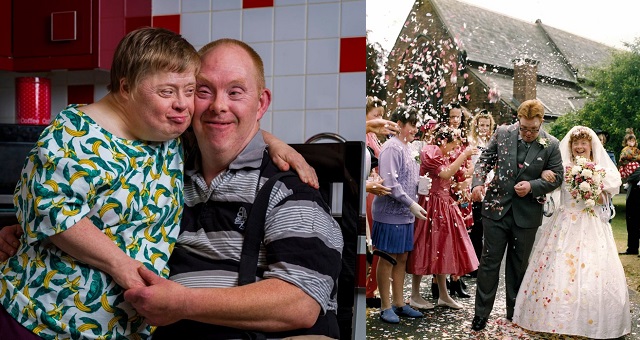
A couple with Down Syndrome have gone viral on the internet after heartwarming photos of them surfaced online.

Gareth and Deana Tobias who are officially the world’s first couple with Down’s syndrome to get married, are still inseparable 27 years later.

Gareth Tobias was just 17 when he met 19-year-old Deana and they both eventually tied the knot in front of 40 friends and family on July 4, 1992.

Gareth in an interview with Metro uk said:

‘Before I met Deana I had three girlfriends. ‘I chose the right one, and that’s Deana.’

‘I put up with Deana and she puts up with me.’

Deana, 57, talking about the relationship said: ‘I thought “he’s ginger”. I like gingers. He had a beard at the time as well. A red one.’

‘I’m ginger as well.’

See more photos below ;

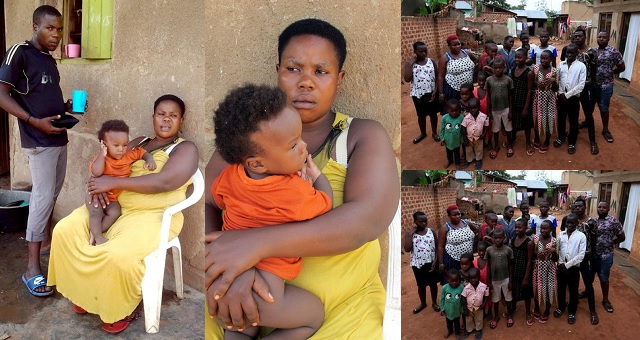
A woman in Uganda has been crowned the ‘most fertile woman in the world’ as she’s a biological mother to 44 Children (yep, you read that correct).

Doctors have finally found a way to stop Mariam Nabatanzi, said to be the world’s most fertile woman from having more kids.

Nabatanzin, a single mother who works as a tailor, hairdresser and herbalist to earn enough money to raise her 38 surviving children was reportedly sold into marriage at the age of 12 to a man who was 40-year-old at that time (28 years her senior). She had her first child one year later.

“Generally, I have tried to educate them. My dream is that my children go to school. They can lack anything (else), but they must go to school.” I can’t say they are nagging because they are my children. I can’t say I will abandon them because they are my children and I love them,” Nabatazni revealed in a recent Al Jazeera documentary.

She recalled being warned by a doctor that birth control, like the Pill, could cause her problems because she had unusually large ovaries. So after her first set of twins, the babies just kept coming.

Mirror reported that at 23, Nabatazni had 25 children and was desperately begging her doctor for help to stop her from having any more. However the medical advice was for her to continue getting pregnant because her ovary count was so high.

Her last pregnancy which led to the birth of her sixth set of twins 3 years ago, ended in tragedy. One of the babies died while she was in labour and then her husband who would often leave for weeks, left her for good.

Mariam said: “I have grown up in tears, my man has passed me through a lot of suffering.

“All my time has been spent looking after my children and working to earn some money.”

It was after that pregnancy that she got the medical help she needed to stop her having more babies. She said the doctor told her he had “cut my uterus from inside”.

After two years of living together with a man as wife, popular Yoruba actress, Bose Oladimeji, says she’s had just about enough and walking out fast. Her reason is none other than domestic abuse, which she says has become not only brutally violent but life-threatening as well.

“Yes I’m ready to go, in fact, I’m not with him right now. I just have to run for my life, my life is very precious to me. I can’t just allow someone to kill me like that and I want to address some ladies out there that they should not love a guy because of what he gives them. They should be sure the love is genuine and not be fooled by money and comfort. I’m leaving right now, I need to run away for my life. I need to save myself. My life will be in danger if I continue to stay with him, so I’m leaving right now,” she said in a chat with Potpourri.

Highlighting the gory details of the abuse, Bose Oladimeji said the beatings start whenever he comes home drunk

“Whenever he’s drunk he’s out of his senses and starts misbehaving, beating me. He acts very crazy. Any weapon he sees around he uses it on me but when he is sober he starts to regret whatever he has done. What I’m saying is that in the process of beating me what if I collapse and die or get injured, what will people say?” she said with agony in her eyes.

When asked if she didn’t see it coming, Bose Oladimeji said he pretended and hid his true nature at the beginning of their relationship, explaining how they met and how all the abuse began.

“We meet in the club through a friend and he was well presented and loving, humble and respectful and he spent a lot of money that night but after everything, to be honest, we went home separately. The following day we hooked up and that was how it all started. He was taking good care of me and that was one of the reasons I fell in love with him. But what I found odd about him is the forceful way he has sex with. No foreplay, nothing, just to jump on me and forces his way through. No affection, no cuddling, no romance just brutal sex. I was raped like this most nights, and usually followed by beating and insults,” she added

Though not legally married, they lived together for two years with issues between them. But Bose Oladimeji would not want to drag the children into it.

A Nigerian model, Olu, with the Instagram Handle, @Kxng.Olu has been ‘blessed’ with a brand new iPhone 11 from Oprah Winfrey after he met with her, and made a video, ‘With his cracked mobile phone.

Apparently, he had a sit down conversation with Oprah, and immediately after the event, he quickly stepped out to cattch up with her in her car, to have another, “one-on-one” conversation with her.

After the conversation, he quickly brought out his phone, to make a video, and Oprah made a comment about his cracked phone.

Watch the video below, where she says, “That’s me with in your cracked phone”

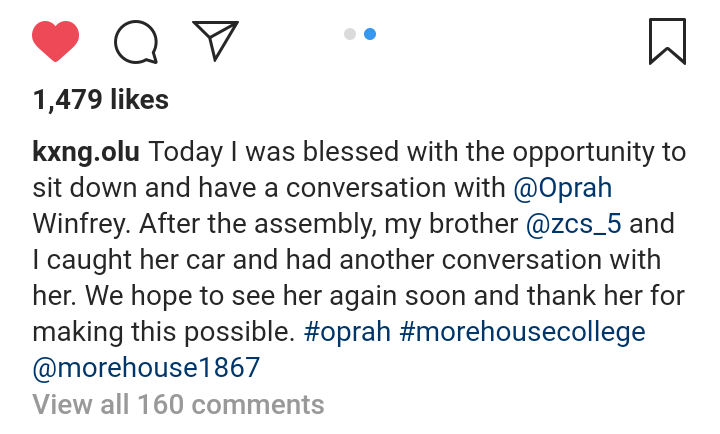
He then shared the video on his Instagram page, captioning it; “Today I was blessed with the opportunity to sit down and have a conversation with @Oprah Winfrey. After the assembly, my brother @zcs_5 and I caught her car and had another conversation with her. We hope to see her again soon and thank her for making this possible. #oprah #morehousecollege @morehouse1867”


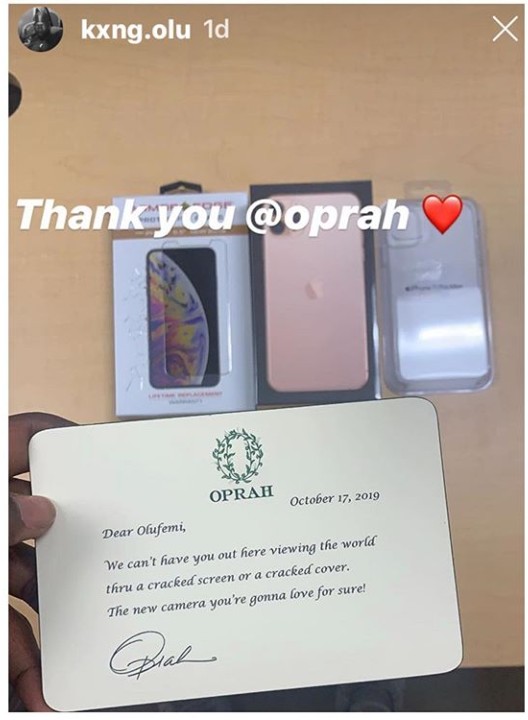
A Few days Later, Oprah sent him a note with a brand new iPhone 11.

The signed note reads; “Dear Olufemi. We can’t have you out here viewing the world through a cracked screen or a cracked cover. The new camera you’re gonna love for sure”

Being unmotivated is a nasty feeling. You get stuck trying, and no matter what you do during your day (eating your meal, talking to your boss, reading an article), everything seems to blur into sheer dullness.

What this boils down to is a growing pile of assignments and an incredibly dissatisfied you. Don’t let this feeling control you and your life. Break out of it by doing at least one of these 8 simple things that will ignite your motivation.

1. Make a to-do list

Sometimes, there’s a gazillion things we need to do, which could take a toll on our willingness to work. Especially when nowadays our emails get flooded and the tasks we were never assigned to, multiplies. That’s why I always compile a to-do list that covers the 3 main assignments I need to do. Anything minor, I do them at the end of the day or in-between my breaks.

Phone. Laptop. Good old post-its. Use whatever suits your style. As long as you write down all the tasks you got to do the night before, you’ll be prepared for tomorrow’s work. Regain control of your life and sort your priorities. Nothing drives people more forward than usefulness. So let that feeling overcome any procrastination or laziness and start writing that list.

2. Get rid of social media

Social media may seem like a godsend, but it can also be work’s worst enemy. Let’s admit it — almost all of us have secretly peeked at our Facebook or Instagram feed behind our boss’s back. While it seems harmless to take a quick glance from time to time, it actually kills your motivation and stops you from doing what matters most.

According to a study in Irvine, it takes 25 minutes for us to regain our focus after getting distracted. Think about all those wasted minutes every time you check your notifications or browse through your friend’s feed. Remember, your day is more real than people’s updates. Make it productive, and shut down your social news feed. You’ll feel so much better — I guarantee that.

3. Remember what you’re grateful for

Look at what you have, not what you wish you had.

Your computer, your phone, TV, heating, air conditioner, fridge, home. These are all things to be grateful for. But first and foremost is your health and your ability to read this. Don’t you realize how great your situation is? Then what’s stopping you from working hard towards living the life you want?

The faster you understand the importance of the little things you have, the better and more motivated you’ll feel. Want a suggestion? Write ‘thank you’ notes to all the things that make you happy. No one needs to read them — just you.

4. Do what makes you happy

Based on a study by economists at the University of Warwick, happiness makes us 12% more productive at work. We have more energy, learn faster, make better decisions, and work better with others.

How to feel happy? Grab your favorite book and start reading, call your best friend, make yourself a nice cup of coffee, or watch some inspirational YouTube videos. The possibilities are endless.

5. Move your body

Stop for a moment and examine your physique. Did you exercise? Did you step out of the house?

If not, you might want to plan some physical activities to get your blood flowing. This will give your mind a good break from stressing over on the unfinished tasks from your to-do list. Keep your body strong — your mind will follow through.

6. Start small

If you can’t seem to start on anything no matter how hard you try, maybe you’re pushing yourself too much. Start with small steps instead.

Instead of writing a book, write a page first. Make it a habit to write 100 words, then 200, then 300 words, until you finally get to one page. As the time passes, you’ll eventually be able to write a chapter. The idea to keep pushing yourself into achieving the small goals, so you feel more pumped up the next day to do something greater.

7. Aim big

Yes, you should start small, but always aim big. This means having a clear image of your goal before your eyes at all times. More importantly though, aspire to make it happen with class. You get nowhere if you only dream and don’t deliver.

So if your goal is to finish college, expand it with being ‘at the top of your class.’ If you want to be a successful blogger, think higher and aim to attract editors from highly-reputable sites to republish your articles.

It’s more tempting to finish a task when you know how the rewards will pay off in the future.

8. Take a break

As much as you might think taking a break is lazy advice, it isn’t. Sometimes, when we get too invested into something that consumed more of our time than we anticipated, we become irritable which shatters our motivation. That’s why it’s important to know when to stop and how to do so.

Go for a walk, visit a friend or simply stay at home and watch a few hours of Netflix. Your brain needs a little time off as much as you.

Credit: Tifanny Sun; The Writing Cooperative

Friends and colleagues of celebrated actress and filmmaker, Toyin Abraham, have commended her decision to become a herbal medicine vendor.

Celebrities such as Annie Idibia, Mercy Aigbe, Adunni Ade, Dayo Amusa, Chioma Akpotha, Faithia Balogun-Williams and Venita Akpofure took to their respective Instagram pages to praise the controversial nursing mother.

They described her action as commendable and worthy of emulation. @annieidibia1 wrote, ‘‘I just want to use this medium to congratulate My Gurl @toyin_abraham on the launch of her new project, a solution for women with infertility issues. As a woman I  understand how personal this is and I  could not be prouder (sic)’’

Aigbe, on her part wrote, ‘‘This is a big congratulatory message going out to my very good friend @toyin_abraham on the launch of her project. This is a big win for women all around and I am so glad to be a part of the story. It’s time we stop spending fortunes on fertility drugs and treatments…(sic)”

‘‘This is a congratulatory message going out to my colleague @toyinabraham on the launch of her project. It’s such a big win for women all around and I am so glad to be a part of the story (sic),” Adunni Ade also wrote on her IG

Toyin said her journey to conception was what opened her eyes to what she described as the wonders of traditional African remedies (herbs).

Source: Punch

Kafayat Sanni made history on Tuesday, October 15, 2019, when she became the first female fighter pilot in the 55-year-old history of the Nigerian Air Force. After emerging as the overall best pilot at the NAF 401 Flying Training School, Kaduna State, in 2017, she was sent to the United States of America to train at the US Aviation Leadership Programme. Upon the completion of the programme, Sanni is back and was decorated alongside 12 new fighter pilots at the NAF Headquarters, Abuja, on Tuesday.

As she grabbed the first female trophy in flying Alpha Jets and others, her colleague, Tolulope Arotile, also trained at the Starlite International Training Academy, South Africa for 14 months, to become the first female combat helicopter pilot. After a decoration ceremony attended by the Minister of Women Affairs, Mrs Pauline Tallen, the females, alongside their male counterparts will soon be deployed to the North-East to join in the Boko Haram counter-insurgency operation and other internal security operations across the country.

In an interview with Punch, she speaks on her achievements, playing a big role as a female officer and her contribution to counter-insurgency.

Read excerpts from the interview:

On how she felt concerning her achievement in the Nigerian Air Force

It is a privilege for me to be winged as the first female fighter pilot in the Nigerian Air Force. My appreciation first goes to the Almighty God for making this possible for me. It also goes to the Chief of the Air Staff for giving me the opportunity and for making this possible.

On being the first female fighter jet pilot

It was what I wanted to do. And I felt that everyone is not supposed to fold their arms and watch what is happening in our country. Everyone could always play their part. So I did not think there was any reason for me to think that it is not possible for me to actually fly the jet because there was no female that ever flew the jet. I believed I could achieve it and I did.

On contribution to counter-insurgency operations

It will motivate me of course. There are other pilots there in the fronts and they are playing their part. They have been doing their best. So I am also just going to join my male counterparts in the insurgency fight and every other thing that have been going on in our country. So I am just going to get there and play my part.

Advice for younger girls who would like to be in the military

The advice I want to emphasise to them is that they should never say no to opportunities. They should always strive to be the best and put in their efforts. They should never look at anything that seems to want to overpower or overshadow them. For me, you can always attempt things and if they do not work out well; fine. But at every point in time, you just need to put in your best.