Lagos State Commissioner for Women Affairs and Poverty Alleviation (WAPA), Mrs. Cecilia Bolaji Dada has said that the war against domestic violence must be jointly fought by parents, schools and society as a whole.

Dada made the call on Wednesday at a symposium organised by the Domestic Violence Unit of the Ministry with the theme, “Parents as Social Agents of Change”.

The Commissioner said that parents must play a crucial role in curbing domestic violence, appealing that they should set good examples for children by avoiding behavioural patterns that can set the young ones on the path destruction.“Parenting as an art is not limited to the biological parents of a child alone; rather, it is a tripartite phenomenon sitting on a three-legged stool.

This stool consists of the home, the school and the society at large, as what is fed into the child from the home front is what is taken to the larger society,”

Dada stated.While noting quarrels and disagreements are inevitable in some homes, Dada urged parents and other relevant stakeholders to make conscious efforts to shield children away from such fracas whenever they arise.According to Dada, the symposium was aimed at guiding parents against becoming a negative influence in the lives of their children and wards.In her words;

“I wish to state here that we do not encourage war or fighting in our homes, we are peace ambassadors. But then, as humans, challenging issues might arise from time to time, we disagree to agree. But when there are disagreements, let us avoid violence and also learn to shield our young ones from such challenging issues.”She advised both parents and young ones to engage themselves productively and avoid idleness at all cost, stressing that “an idle mind is the devil’s workshop.”.

I was in Uganda a few years ago for one of the programs we used to run at the African Women’s Leadership Institute. One day, there was a report about something that had happened in one of the local markets. One of the women in the market went into labour unexpectedly. It seemed there was no time to get her to a nearby hospital or clinic, so the women around went into action. Some of them ran around to look for basins, hot water, towels, and razors. A few held her hand and encouraged her to push. Majority of the women around took out their wrappers and held them up, creating a protective ring around the woman, shielding her from prying eyes. Every now and then, this scenario plays itself in other markets around the continent, and the response is mostly the same – women bring out their wrappers to protect one of their own.

Sadly, this is no longer the case these days. Instead of wrappers coming out, it would be cell phones to record every graphic detail. Sure, help might still come, but not before the person concerned has all their pain and agony out there for all the world to see. Recently, there was the case of a young woman in Ajah, Lagos, who was found wandering the streets. Reports on how she got there vary, but she was stark naked, extremely emaciated and incoherent. Instead of immediately rushing to help, covering her up and getting her medical attention, onlookers laughed at her, threw things at her and recorded her on their cell phones. Without any idea of who she was or how she got there, judgements were made on the spot about her being the victim of ritualists which she must have brought on herself in her quest to make quick money. A good Samaritan, Keira Hewatch, stepped in and took her to the hospital. Even though many onlookers where not prepared to help the poor woman on the road, they tried to stop Keira from helping her, saying she too might be bewitched. Essentially, they refused to bring out their wrappers to protect and save someone and tried to stop someone else who was willing to bring out hers.

What do these wrappers signify? To me they mean protection, solidarity, sisterhood, empathy, kindness, compassion, duty, all those things and more that make us human beings. In the market places where the scene I described in Uganda happens, there is an unspoken protocol amongst the women – a responsibility to take care of one of their own who needs them. She is in pain. Afraid. But she has sisters around her, rooting for her and helping her. So, I ask us my dear sisters, where is your wrapper? Where is your wrapper to shield and protect other women and girls who need you? Where was your wrapper for the little girl who was molested by someone in your household and you said ‘Shhhhh’ and looked the other way? Where was your wrapper when someone you know said she was raped by someone she trusted? Did you ask her what she was wearing? Or if she seduced him? Where was your wrapper when your friend needed succour from an abusive husband? Did you gossip behind her back that it served her right, she is too arrogant? Where was your wrapper when your sister or daughter told you that her lecturers were harassing her in the University? Did you tell them that they must have done something to encourage them? Where was your wrapper when a young woman who could have been your own sister, daughter or niece was found on the streets naked? Where you one of the women who stood by and recorded her misery and threw things at her? Where you one of the men who tried to stop brave Keira from helping? What was in it for you to have a very sick woman die untended in broad daylight, with human beings baying for her blood like animals? Even animals care more for their own.

Our wrappers might all look different, with varying sizes, shapes and colours, but each and every one of us has a wrapper. Bring that wrapper out to shield another woman, or a man. Use it to help get her a contract, help with her rent, pay her children’s fees, help her with capital for a business or simply a discreet shoulder to cry on. Never let a day go by without bringing out that wrapper. The way God works is that the more wrappers you bring out for others, the more will come out for you. We don’t only need wrappers when we celebrate and buy Aso Ebi. We need the wrappers for our trials and tribulations and we all have them.

The women in the market place might never see the woman they helped again. She might never be able to say thank you. Yet she will never forget that other women stood by her and gave her dignity and covered her nakedness. Are we prepared to cover the nakedness of others, or do we want to be part of the mob that strips them naked? These days there seems to be a war against women. Not only is sexual violence at an all time high, these crimes are now committed in full view of the public. A young woman is accused of stealing and stripped naked, hands all over her and objects being stuck into her. When this happens, what do we do, will we look the other way? When a woman is being harassed online, do we join in the abuse? The more wrappers we bring out, the safer we will all be. There is another conversation to be had with the men, with our male leaders, with those who have the powers and privileges that weaken our agency and make us forget that we have wrappers in the first place. Today, we are talking to and about ourselves.

Let us all agree to bring out our beautiful, strong, diverse wrappers. Our wrappers of respect, love, dignity, support and endless hope. Thank you for bringing out your wrapper Keira. God bless us all.

This is an expanded version of a brief speech that was given at the ARISE Women’s Conference in Lagos, October 26th, 2019.


Bisi Adeleye-Fayemi is a Gender Specialist, Social Entrepreneur and Writer. She is the Founder of Abovewhispers.com, an online community for women. She is currently the 1st Lady of Ekiti State. She can be reached at BAF@abovewhispers.com


In Rwanda, a traditional sexual practice almost guarantees female orgasm when done right. Female pleasure is not shunned but celebrated here. When contextualized to the current world realities, kunyaza is the height of equality in the bedroom.

Kunyaza: The Sensual Rwandan Tradition Which Guarantees Explosive Female Orgasms

 Photograph: Trevor Cole/Unsplash

Here are some important tips to help you safely handle your first date in the “real” world.

Ihoma Nwigwe a.ka. The African Fitness Queen is the founder and CEO of Selfitness, a foremost fitness and health destination. The passion for fitness goes back to her childhood and parents who didn’t let her unrealised dreams of joining Nigeria’s Olympic track team stop her from playing sports throughout her academic career.

A graduate of Quinnipiac University, Connecticut where her fitness journey began, she majored in Health Science and minored in Sociology. Dropping from a US 12 dress size to a 7, she went from spin novice to instructor in Elite Fitness gyms across the US. Moving back to Nigeria five years ago to set up her business, her passion for aerobics sees her elevating the standard in Nigeria’s health and wellness industry. A certified Zumba instructor, she is also into meal planning and prepping.

After being in the fitness space for over 10 years, she is launching her product line for both women and men. In this interview, she talks about discovering her love for fitness, her upcoming projects, the importance of diet in fitness, how to effectively practice healthy eating amongst other issues.

How and when did you discover your love of fitness? Did it stem from personal experience?
I started my fitness journey at a very young age. Both my parents were into fitness, my mom was a Physical Education (P.E) teacher and my dad played football and lawn tennis representing Total in the Oil and Gas games, I think it was called then. I remember just around the age of eight or so, my mom would always take us to the stadium for morning jogs.

You and your siblings are known in the showbiz scene, is this deliberate?
(Laughing) Not at all. My brother and I are practically in different spaces when it comes to what we do. I do not see what I do as entertainment, though interesting.

Would you say your upbringing played a role in shaping your present path?
I would say very much so. Like I said earlier, we were raised by parents who loved fitness and my parents made sure to enroll us in various sports such as lawn tennis and so on. I remember we had tennis instructors growing up and had sessions every Saturday. Then, my mom would also take us jogging with her very early in the mornings, sometimes to the stadium and sometimes we would jog on the road. I realized soon enough that I was a fast runner and that started my love for track and field.

You have a new project coming out soon, what can your fans look forward to seeing from you?
Yes, Curvy Girl Magic is a project I came up with a few months ago. I got to a point where I felt an emptiness with my love for fitness. I felt like I needed to try something different, reach out more to people who may have never been in the fitness/gym space before, or fell off the bandwagon. I always knew I wanted to work more with women hence the birth of Curvy Girl Magic.

What made you decide to start this program?
I know a lot of women are afraid to start this journey or not even sure where or how to start. I also know that a lot of people aren’t willing to invest in keeping fit, so they do not see the need for gym memberships. I decided I would introduce this program for free to women over 70kg, get them together in a positive space and train them in a fun environment. Sooner or later, I was confident they would fall in love with the lifestyle and I was definitely right.

What is the importance of diet in fitness? Would you say it is more important than actually exercising?
I think they are both very important. Let me clarify that diet is more important if you are trying to lose weight, diet takes about 70 per cent and exercise, 30 per cent. However, when it comes to general fitness, both are highly important. If one is trying to lose weight, you cannot keep eating crap and exercising and expect to see results. However, if you start eating right and start losing weight, exercise is very important as well to keep the body toned so you don’t end up with flabby skin. Also, cardio exercises are highly important for your cardiovascular system (it helps with having a healthy heart.)

Your soon-to-be-launched product line would be out next month, who exactly will it cater to?
I have two lines, Selfitness products which are mainly gym accessories like resistance bands, gloves, sandbags, squat belts, squat shoulder pads, and a few men’s items and Curvy Girl Magic which is 100 per cent dedicated to curvy women. As a curvy woman myself and after over 10 years of being in fitness, I have learned a lot about women’s fitness clothing and understand what would make most curvy women feel comfortable and sexy at the same time. So, CGM products are mainly gym clothing, waist trainers, thigh trimmers, and little girls’ swim-wears. The gym wears can be worn even if you are not at the gym. You can leave the gym and still feel good enough in them to go shopping or go for a quick bite.

There are several known names already in the fitness space in the country, what stands you out?
What I think stands me out is my passion and love for fitness. I realised at a later age that this was and is my purpose on earth. My whole life I have been surrounded by sports/fitness. In high school, I was a sports prefect. I ran sprints and was actually the fastest girl in my school. In college, I stayed consistent, continued in track and field plus lawn tennis as well. While working in corporate America, this was the one thing that also stayed consistent. As a mother of a 10-year-old child who is also a sprinter, I try to stay consistent. My consistency and over 10 years of experience stand me out. My brand represents thick curvy women and I cannot think of anyone else who holds this niche.

Seeing as Nigerians love foreign brands so much, how readily do you think you’ll be able to break into the market?
I do not see this as an issue at all. Foreign brands are expensive and sometimes size limited. My brand focuses on the curvy woman, so size should not be an issue. Also, not everyone has access to obtaining foreign brands; my wears will be more accessible plus affordable. Do not get me wrong, I love foreign brands but I also love to mix and match with other nice quality brands.
Running a business in Nigeria cannot be easy, what are some of the challenges you face?

I think maybe bringing in my products into the country has been the major challenge to date. To be honest, this is still new to me so I can’t say yet what my challenges will be.

Tell us something that has influenced your life and career positively today?
My daughter. She pushes me to be the best version of myself. She literally gives me ideas on how to move forward on this path.

Is there any experience that has threatened to derail you at any point?
Of course. I would not call it an experience per se, but having moved back from the USA, there are also moments where I feel that I could be more successful over there. However, one of the reasons I moved back to Nigeria was to build my brand here and grow this love for fitness.

Lots of women find it difficult to practice healthy eating, kindly recommend a few easy steps that can help them?
First, meal prepping. I meal prep a lot and also run a meal prepping business. I always recommend that my clients meal prep. This prevents you from eating unnecessarily. You actually have your meals ready to eat at every point in time, so you realise that you no longer pick on things you have no business putting into your mouth. Another recommendation that I make is to grocery shop with intent. Write a list of healthy items to buy and make sure you avoid keeping junk food in your house. Stack your fridge with organic foods, fruits, and nuts. That way, if you are hungry, even late at night, you are forced to only grab a fruit or some nuts. Finally, eat every few hours. I hear a lot of women tell me they eat once or twice a day. I recommend that you eat every 3 to 4 hours. When you eat once or twice a day, your body stores it and refuses to process it because it realizes that you will not feed it for the rest of the day. Your body is like a brain, it remembers. Eating once a day slows down your metabolism. Eat small meals every three to four hours.

As a mother, businesswoman, entrepreneur amongst other roles you play, how do you make them all work?
I am thankful to God for strength. I sometimes cannot comprehend my strength as a woman. I have always been someone who works better under pressure. I love to multi-task so it makes my lifestyle easy. I have always depended on me and knowing that makes me get up every day and put in work. I also have a daughter who looks up to me and for me, it’s important that she sees me pursue what I love and I allow her the same.

In your opinion, how can we attract more women to take on entrepreneurship full time?
I tell young women all the time to think through and find out what they love and then work on converting it to a source of income. We should allow women at a young age to explore their passion. For instance, my daughter loves to build things, draw and so on. She can take an empty can of coke and make it into a house. I allow her to build things because I know she loves the craft. She would sometimes even sell her work to my siblings. We need to encourage more women to step out and begin to take on entrepreneurship from a part-time basis and slowly evolve into full time.

If you weren’t doing what you do now, what do you think you would be doing?
I would probably be working for someone else, doing something I don’t love. Going to work for someone else and never living my purpose.

Who and what inspires you?
This might sound cliché, but I will say, my daughter. I always say that if we could all have the mind of a child, the world will be a better place. I have an amazing daughter who is resilient, yet kind and thoughtful. She inspires me every day.

What do you do to relax?
Basically I watch TV and binge on Netflix.

What is your guilty pleasure?
I would say Sushi.

What last words would you leave with women inspired by you?
I always say, you never know what your body is capable of unless you push it past its limits. We have this one body, which is God’s temple, so we must take care of it. Feed it right and train it right.

By: Ihoma Wigwe for Guardian Newspaper

Becoming independent is a critical part of growth and making mistakes can be a natural phenomenon that every individual will go through. How it is handled and lessons learnt from mistakes make the difference.

When kids make mistakes, most parents can be quick to judge their incompetence and lack of maturity, but then, it is a learning curve that gives everyone the opportunity to grow and become truly independent.

According to a parenting enthusiast and mum, Gift Adokie, when kids make mistakes that embarrass or disappoint their parents, it is important for parents to learn how to overcome the feelings of failure and not take it personally.

Having worked with parents as an educator of students with severe behaviour issues, she said that parents can do everything “right” and children will still make mistakes. Mistakes are a natural part of life and critical to learning, growing, and becoming independent. Missteps and failures allow kids to gain valuable insight, develop critical thinking skills, and acquire essential traits like resilience, grit, and self-compassion.

According to Adokie: “When your child makes a mistake that disappoints or embarrasses you, berating yourself is not going to help this situation. Feeling guilty is not either. In both cases, you are taking responsibility for something that is not yours to own. If your children think you are blaming yourself for their actions or making excuses for them, that is giving them the wrong message.

“Taking time to communicate your expectations, your belief in their capability, and making a plan for moving forward is a far better way to spend your time and energy.”

Adokie stressed that it may be helpful to keep in mind that when parents take on their children’s mistakes, this becomes a detriment to their children when they get into the real world and do not know how to handle failure or take responsibility for their poor choices.

She added: “By communicating that mistakes are part of life, you also dismiss the notion that perfection is needed in life’s journey, which is also very damaging to personal growth, happiness and wellbeing. We never want our kids to believe they are failures when they experience failure.

“Commending them for owning a mistake and getting back up to try again is extremely beneficial. Sharing mistakes from your own life and how you handled them helps kids perceive you as a trusted source of support when things go wrong.”

Owning your own mistakes and apologising for them provides a powerful example for young people to follow.

She added that, above all, these are the three mistake reminders to keep in the forefront when kids make mistakes:

• How I collect myself and move forward in courage and love after making a misstep shows kids how to move forward in courage and love when they make a misstep.

• We are not the sum of our mistakes; we are not a collection of our failings; we are human and sometimes we just need a moment and every moment is a chance to start anew.

• Mistakes mean we are learning, growing, taking risks, and showing up. The day we stop making mistakes is the day we stop living. Let us live bravely, boldly, flawed, and full of hope.

By Ijeoma Thomas-Odia for Guardian

Princess Adebowale Odutola, a lover of excellence is the brain behind The Potter’s Signature (TPS) that creates bespoke delights. A trained lawyer and political scientist, Paul Harris Fellow and a royal daughter, Odutola has created premium hand- crafted works by paying attention to details. What started in her bedroom only five years ago has today become an enterprise prominent for luxury bespoke items. Dumping law for real estate before venturing into the world of entrepreneurship, she speaks about dumping law to pursue her real passion, how her business took off from being a hobby, how Nigerian made goods can compete favourably in international markets and the relationship and values she shared with her father, the late Ooni of Ife, Oba Okunade Sijuade.

You dumped law for real estate, what informed this decision?
I studied Political Science and later Law, but never practiced. For me, law was boring and I studied it to have an idea before venturing into real estate and I was a realtor for a long time. I practiced real estate and with my knowledge of law, I practiced well and excelled in it. However, when the industry nosedived a couple of years ago, I thought of what to do to make money. I thought of opening a restaurant because I love to cook, I thought of opening an amala joint because I love making amala, and with food, you tend to make a lot of friends. I eventually did. I used to have an amala joint at the Bar Beach; it was called “Wuraola Omo Oba,” my name and title. We used to deliver to offices on the island, and it was really booming, but I eventually left that behind. However, I am still going to make amala, and it will not distract me from my present business.

So how and when did you decide entrepreneurship was the way forward?
In 2013 when I was looking to branch out of real estate, I told myself I wanted a business that would give me fame and fortune. As fate would have it, on my birthday that year, someone gifted me an Ankara bag, which was beautiful, but was not well made. I looked at the bag and told myself it could look far better than it did. I got up the next day and brought out all my scarves and leftover fabrics from clothes sewn in the past, and started using them to make handbags. My mother gave me 36 wrappers to start with. I never tied them, I just started cutting to make bags and that was how it all began. I also did some market analysis. This was in 2013, my teething period. I discovered real leather in Mushin in Lagos and crocodile skin in Kano. That was how TPS Luxury started, as a hobby. Eventually, I went to train in London and imported a sewing machine. I always tell people, you must have a passion for what you are doing. I think what has driven me this far, is the passion I have for fashion. No matter how simple I dress, I get noticed, somebody will notice something that is so unusual. I have been able to put that into practice and put it to good use for my products.

How tough was it getting people to embrace a locally-made luxury product?  
When I started, some people said, “Is it not made here, why is it expensive?” It was difficult initially but those who started buying are those who usually bought original designers and appreciated quality. That’s why I’m always very thankful to God when I look at my brand. I started from a humble beginning but those who encouraged me did and that has kept me going.

What would you say is the response now, has it improved?
For me, Nigerians are beginning to appreciate what we have if they know the quality. Right now, when anybody faces a direction and is successful, everybody will start facing that direction. There are so many designers now in the country but please, there must be good finishing to goods. Let us have international standards; products that can sit well on the shelves of international brands. Also, because it is made-in-Nigeria, doesn’t make it cheap; people need to realise that. I think with the recession, a lot of people are beginning to appreciate what we have. I see a lot of people wearing Ankara now, I am proud of my African print, I am proud of my heritage.

Talking about export, would you say the government is doing enough to help local entrepreneurs export their products?
I think the government has put in place machinery for us to be able to export. It is left for manufacturers to go and get the certificate. For instance, with Walmart, there are a few things to be done; you need some licenses and a broker. I believe we will get there someday, because with the 2015 Executive Order, which amongst other things supports local content, it is definitely moving us towards export in this country. Soon, we will see made in Nigeria products on every shelf, which is the ultimate aim. We can’t keep them here where we made them; it is for the international market. I know and strongly believe that Nigerian brands will take over the world someday.

How much local content goes into your work?
Everything is locally sourced, including the leathers and fabrics, except for the hardware. We get crocodile skin from Kano and to process, skive, colour and cut takes about 12 days. Even the cutting of the bones is tough; it breaks knives. It’s a lot of work but there must be attention to detail. For me, we have to set a standard. If we say made-in-Nigeria is going out there, then it must compete well in the international market.  We desire international standards and that was why we approached manufacturers abroad who also manufacture hardware for big brands. We, however, have an edge in terms of attractiveness and our use of African fabrics. Every material here has been locally sourced from Mushin and Balogun markets. Initially, I was bringing them in from Australia; but later, I found out that they were far cheaper in Lagos. My Ankaras are from Balogun but I make sure I take the veritable wax, for sustainability, durability and for the theme.

What challenges do you encounter as an entrepreneur and the biggest lesson running a business has taught you?
Humility. I’ve always had that virtue but now, it’s more. Business has also taught me to be very calm. It takes patience to deal with some customers but I have learned to stay calm; especially with those that doubt our work. The initial challenge I had was with staffing until I got it right. When I had Nigerians working with me, they were meant to learn from the people from the Francophone countries and become experts, but the moment they learnt one or two things, they left to start up their own business to make quick money. Now, the major problem I have is to meet up with demands. Made in Nigeria is becoming something that Nigerians are proud of. About 70 percent of the designer bags women in this country carry around are fake.

Let’s talk about your late father; did he make you feel different from other girls?
He made us mix with everybody. I remember he would ask that I should be taken to Mile12 Market, so I learned how to shop. There’s a lot of mud in that market and people wear rain boots but my dad would make sure I was taken there. That was in the 80s and that was how I learned how to price tomato and pepper. I wasn’t different from any other person but I remember he used to say to me: “Yes, you were born with a silver spoon but you should do things better than any other person because of your upbringing.” We had everything we wanted but we had discipline, too. My father did not beat nor abuse but he had a way of disciplining us, and it registered. We were 17 children and I am the last of the girls. My father is from the South West while my mother is from the Middle Belt. I grew up in Lagos and my background is English and Yoruba. When I look back from where I am coming from and where I am today, I just see myself as the female version of my late father. He was business oriented, a strict disciplinarian, a devout Christian and above all, he was very neat- values I would say he passed unto us his children. My childhood has influenced a lot of things I do today. I have a niche for excellence and perfection and very elegant, and a taste for the good things of life, and as a result, I work very hard to enjoy those things.

Which of your parents would you say you were closer to?
I was closer to my dad; I was the last girl. He taught me how to cook. Even when I saw my period for the first time, I turned to him and he was the one who taught me about monthly period using my biology textbook. In fact, we went to UTC to buy my first sanitary pad together and he told me I must change them every hour. He taught me everything I know about cleanliness and keeping myself as a woman. My dad was an avid lover of the colour white; he loved white a lot and people used to call him Baba oni white. He taught me how to be a neat person because he was very neat. In fact, he complemented my mom because she was also very neat. I’m a product of two well-groomed and accomplished adults; and that has reflected in everything I do. I must confess that I miss the envelopes of money he always gave me even as an adult. My mother is still alive, she is in her 90s.

What should we expect from you in say, the next five years?
In the next five years by the grace of God, now that we have gotten our export license, we are ready to move. We might not go to the big stores because it is a bit challenging and the taxes are quite high. What I am looking at is for people to distribute my goods in major countries where we will have stores, it will be a Nigerian store for Nigerian products. We will have a lot of road shows at different countries where we can show what we have in this country beyond oil. We have tested the Canadian market and it is doing well. I look forward to dominating every country. Already, a company in Kuwait has asked us to produce for them to sell there and I’m happy our pursuit of excellence is paying off.  For me, I believe we should always seek perfection in whatever we are gifted at. I love to do things with my hands and I know that zeal is what has taken me this far. My talent I would say comes from God but I was told my grandmother too used to crochet and do a lot with her hands. I love crafts. In fact, I remember that while in the university, I had tailors who were making my clothes with a Singer sewing machine that I bought for myself. I’ve always loved fashion and liked to do things differently.

So what lessons have you learned about life so far?
I have learnt to be focused and very, very patient. If I am not patient, I might not be able to continue as an entrepreneur because this is not the kind of business that is going to bring you huge amounts of money at a time. It comes in trickles, somebody might buy a bag today, you might not get anyone to buy in the next two weeks, but that does not deter me. If you are not patient, you cannot persist, you cannot be in business.

What last words do you want to leave with women?
Women please do not stay in the house and say you’re a housewife. Whatever you know how to do, even if it is chin-chin, do it well and sell it. Someday, it is going to grow. I started this business not just as a passion alone, but because I needed to do it. When I started this business, I said I was going to create bags that were remarkable, that people will love to buy. So whatever you know how to do as a woman, just do it well, do it diligently and put your whole heart to it. Let us encourage one another and let the government encourage entrepreneurs by providing a working environment that is conducive, where entrepreneurship thrives.

Source: Tobi Awodipe for Guardian Nigeria

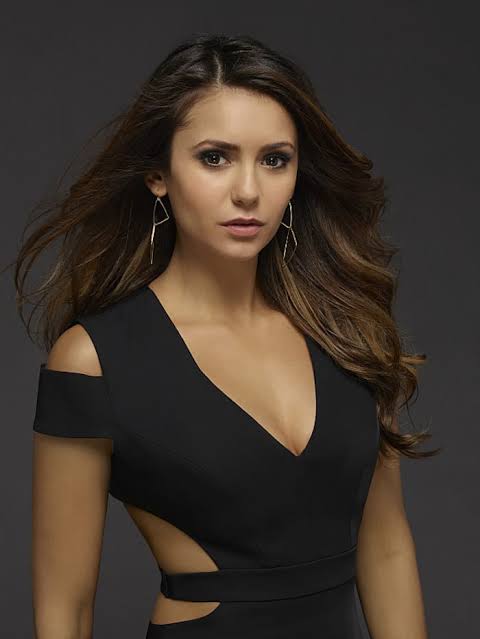
Nina Dobrev has been named the newest Brand Partner for Dior Beauty.

The 30-year-old actress chatted with Harper’s Bazaar about the partnership and dished on her favorite items in the brand.

“I always looked up to Dior. It felt so timeless and classy and elegant in every way,”

Nina says. “I think the Miss Dior scent is what I always associated with that grace and timelessness. That was probably the first product I recognized, purchased, and aspired to as a little girl.”

Some of her favorite items include the “999” Rouge Dior Ultra Care Lipstick, and Forever Foundation.

Nina also revealed what she’s looking forward to in the coming year.

“2019 was a whirlwind it had a lot of great moments and some tough moments and that’s all part of being a human,” she says. “I am looking forward to a fresh start and fresh slate, new year. I set some new intentions and start this partnership that I am super excited about with Dior and see what the future has in store.”


Credit: justjared.com