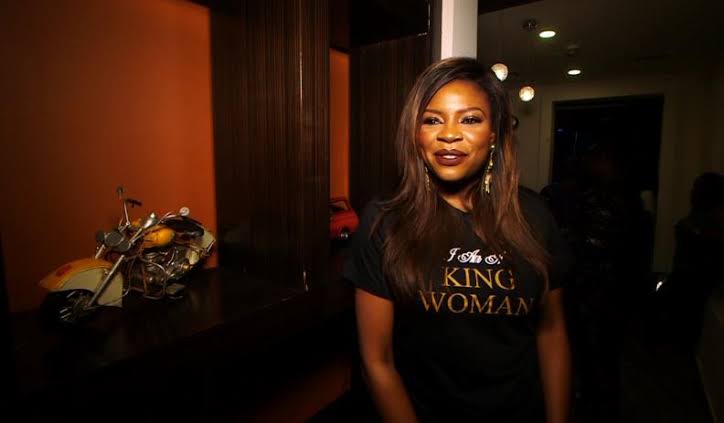
At 25, Sinenhlanhla is the founder of Passcara and Partners Incorporated based in Durban, South Africa. Her firm focuses on family law and personal injury.

Sinenhlanhla Passcara Mthembu, completed law school and started working with a law firm but she’d always wanted to establish her own business so she quit her job and became her own boss. “It is hard based on my age. People see Law as a difficult field. It is a scary field and a man’s world but I took it as a challenge upon myself to do it.”

“I then decided that no matter what people are actually saying, I’m going for it regardless of my age and the challenges I may face,” she told Power FM.

“It was difficult from the point where I started my degree to where I am now. I don’t regret anything.” She is the only person running the law firm at the moment, according to reports.

The journey has not been so smooth, butwent it comes to market herself. But she is positive that word-of-mouth marketing from her clients will help her.

“What is hard in our field is marketing yourself. There is a thin line between marketing and touting. Touting is like when you are asking or begging for clients,” she said. “It makes it hard to market because you don’t want to cross that thin line that the [legal] council has put for us.”

Sinenhlanhla is also a content creator at Youtube, who shares beauty tips with her followers.

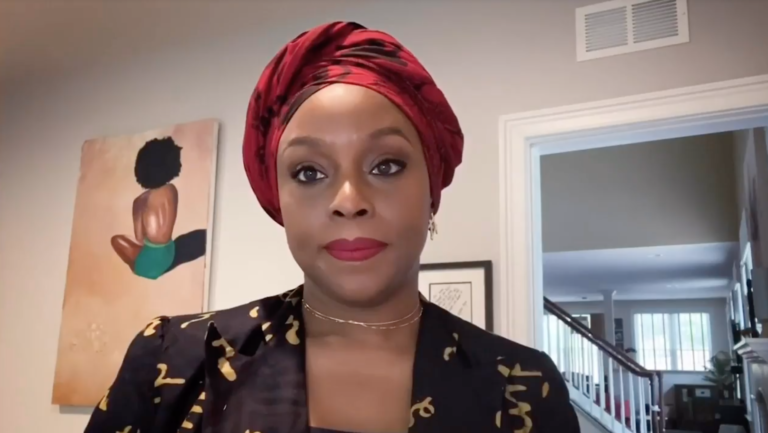
After 42 years, Chimamanda Ngozi Adichie has become the first black woman to deliver a Commencement Day speech at the University of Pennsylvania. Since 1978, was when then-US Secretary of Housing and Urban Development Patricia Harris did so.

The announcement was made by the Vice President and University Secretary Medha Narvekar.

“We are honored to bestow our highest degree on Chimamanda Ngozi Adichie and have her address our graduates at Penn’s 264th Commencement,” said President Amy Gutmann. “Her compelling narratives and absolutely fascinating commentary on complex cultural issues elevate the power of the individual voice.”

Chimamanda spoke virtually to the class of 2020, who chose her as their Commencement Day speaker, telling them about what strange times we live in.

These may be strange times – they certainly are for me – but I want to urge you to remember that there is so much to celebrate. You’ve done it. You’ve graduated. Congratulations.

She will be speaking physically to the UPenn class of 2020 on May 22 and 23, 2021, as those dates have been confirmed as the 264th Commencement Day event.

Watch her give her speech below:


FREE was launched virtually in Lagos on Wednesday, 13 May 2020 at 3pm on Zoom.

FREE is a book by Debola Salako-Kupoluyi that exposes sexual molestation in children, its effects and provides a guide to healing through transformational tools.

The book FREE was inspired by God and the essence is to bring change to the next generation by shining a bright light where few others dare to go.

Free reveals how six successful women were sexually abused when they were children. It highlights precautions that could be taken to avoid sexual abuse in children and emphasizes the importance of parenting. The book FREE is real and powerful – it would leave you in awe of the potentials that the human soul has to endure pain and rise to great heights.

FREE is for people of all ages and more specifically written for children, teenagers, their parents/guardian and anyone at all who has suffered the ugly acts of sexual molestation and its effects.

The author is in partnership with Cece Yara Foundation and Mantle of Mordecai (MOM) foundation to provide professional counselling, treatment and ongoing support to children who are victims of sexual abuse helped through FREE.

As part of the commitment to eradicating childhood sexual molestation, 25% of proceeds from the sale of FREE would go to Cece Yara foundation. Its mission is to prevent child sexual molestation through community empowerment and support. Also, 25% to Mantle of Mordecai (MOM) foundation. Its mission is to enhance the value of life of children by ensuring that they get quality education. The proceeds will be used to sponsor the education of a child who is a victim of sexual abuse.

The e-copy of the book is now available online on Amazon Kindle and Okadabooks. Hardcopy preorder is also ongoing, and it will be ready for distribution within three weeks.

See link to order e-copy or preorder hardcopy https://linktr.ee/Freebydsk

Follow us on social media via the handle below for more information

Twitter, Facebook and Instagram: free_by_dsk

Fashion entrepreneur, Aderonke Enoabasi had a question and answer session on her Instagram page and while answering her followers questions, she urged business owners to share the truth about how they started their business and not mislead the younger ones.

She wrote,

“At age 19, I started selling Okrika bra, I failed. At 20, a lot of people took advantage of my naïveness and the hunger to just wanna work. At 21, I started selling bags and accessories. I made so much gain.

At 22, Mummy gave me money to learn make-up at House of Tara. I did makeup business till 26. At 26, I started fashion business till now, I’m 27 going on 28. Business is fine, I’m learning. I own RHONKEFELLA, I’m still learning but I feel fulfilled.

I always preach something, no one owes you anything. After secondary school, I didn’t get admission into the university on time so I’ve always had the urge to work. At age 19, after my Okrika bra business failed, I thought the business wasn’t for me so I dumped the idea and I started to look for office work.

So many people took advantage of me. Some along the line would tell me, shebi you know you’re beautiful. You know the rest of the story! Did I fall for those story line? Once or twice I did and once they had me, they dumped me.

I have met people who will never help or invest in you. I have also met people who will rather give you fish than teach you how to fish. So, if you find someone who helps you or finances your idea, please don’t lie or take the glory.

If you are handed money and you don’t work hard or smart with that money no matter how little or big, it will not amount to anything.

We all need HELP. As much as we strive to be independent, it’s okay to ask for help. If you can do it yourself go ahead but if you get help, be proud to say you did! It takes nothing from your success story, enough with God help me tales.

God won’t come down, he will send people to help you. Let us be more truthful to the younger ones. It’s okay if you don’t feel the need to speak about your journey but if you must, please speak your truth, don’t “LIE”.

May God bless everyone who has invested in my IDEAS! They made RHONKEFELLA a reality. God bless the “BOYFRIEND “ but most importantly, God bless IYA RONKE! My mum has come through a zillion times…”

https://www.instagram.com/p/BlvVvu0nRn1/?taken-by=therealrhonkefella

Source: Woman.ng

Hello WORriors, it’s #WomanCrushWednessday, and our Woman Crush is Kemi Adetiba!

She is a multi award winning movie director, cinematographer, music and video director known for excellent work in the industry, especially the blockbuster movies, ‘The Wedding Party’ and ‘King of boys’. Her works have made appearance in places like BET, Netflix, MTV base, Sound city Tv, amongst others.

Born in Lagos on January 8, 1980,  Adetiba started her journey into the media really young where she headlined two national television commercials for the detergent brand OMO, just like her father, Dele Adetiba, a veteran in the advertising and broadcast industries who played a pivotal role in the development in Nigeria.

In 2007, with a love for storytelling, the law graduate enrolled in the New York Film Academy. Her body of work includes music videos, commercials, television content and films.

The exceptional film-maker and music video director believes the year still holds many promises’. She came out clear with her opinion known through her Twitter and Instagram handles.

She said, “ I think 2020 still has more to offer. There is no pretending it is increasingly becoming harder and harder to remain positive in these peculiar times. It is very natural to want to simply throw your hands in the air and give permission for the year to throw you anywhere and anyhow it wills.

I know it seems unfair to be forced in the position where you have to choose between hunger or health for both yourself and your family, but alas, here we are and there is no running from it.”

She sermonised that lamenting about the situation will not make it disappear, and therefore advised we give it whatever it takes to live our normal lives. “Blinking hard or “woe is me” laments will not make it disappear. But if this THING will not play fair, then neither will we. The only thing sure about LIFE is CHANGE. And as long as you have breath… There is always HOPE!!! No one would have predicted an invisible virus would come shut down the entire world for half the year. This is what you call “humbling!!” But as long as the world is still spinning, we have an obligation to keep pushing,” she added.

She prophesied that when things go wrong, it is only those who spent time warming up, preparing that will gather the most nuts in the end.

She tweeted : “I think 2020 still has more to offer. My dad once said to me “What you lose on the stretch, you gain on the curve.” I pray there is more once we round this bend.”

One of the greatest feelings a woman can ever have is a man’s true love. Though your boyfriend may take time telling you he is in love with you, chances are he already has through his actions. That’s what happened to me. I knew my husband was in love with me by the way he paid close attention to all my needs. He genuinely cared to hear about my good days and my bad days. Moreover, I didn’t have to ask him to do something for me. He just knew. He loved spending time with my family and me. And he said “I love you” first.

For the most part, women are quicker at expressing their emotions to their partners; meanwhile, men take a longer time. You may assume that your boyfriend is not in love with you because he has not verbally expressed his feelings or revealed the three words all women love to hear. But take a close look at his gestures, his mannerisms and how he looks at you. The love he has for you is in the tiniest details.

Here are six ways you can tell the man you love is in love with you, too.

  • Shows interest

When your boyfriend starts to ask you in-depth questions about your likes, dislikes and future goals, he is in to you. He wants to learn everything about you. He sincerely cares.

  • Delicate touches

He grabs your hand gently during a walk in the park or at a family gathering. He caresses your hair softly. He hugs you for no reason at all. He affectionately touches your face as he stares at you. Sometimes just sitting at home watching a movie and cuddling on the couch speaks volumes.

  • Spending time together

When you find your boyfriend spending less time with his friends and more time with you, he is in love. He is not giving up on his friends; he simply chooses to spend as much time with you as possible. His priorities begin to shift.

  • Does anything for you

He doesn’t care what it takes, but he will make anything possible for you. He may not necessarily be interested in the things you are interested in, but he makes the effort to take part. He doesn’t mock what brings you joy. Perhaps you love a particular musician, and he doesn’t. But he surprises you with two concert tickets – one for you and one for him.

  • Meeting his family and friends

As old-fashioned as this may sound, when a boyfriend introduces the woman in his life to his family and friends, he is serious. He has hopes to take the relationship to another level. His feelings are deeper than you know.

  • Talks about marriage and children

If your boyfriend inquires about your feelings on marriage and children and expresses his thoughts on the matter, chances are he’s been thinking about a future with you. And if you both share the same feelings about marriage and creating a beautiful family together, love exists.

  • Says those three special words first

He tells you “I love you” before you do. It doesn’t matter when or where he says it. All that matters is that he wants to say it first.

Again, it’s easier for a woman to share her innermost thoughts compare to most men. Many men have a hard time verbalizing their feelings even though they do love you. However, through their positive actions and attentive ways, you will know he is in love. Give him time and you’ll hear “I love you.”

Fagbenro Christiana Boluwatife, best known as Tife Chris, is a young creative studying Geology at Olabisi Onabanjo University, Ago Iwoye, Ogun State. She hails from Ado Odo-Ota, Ogun State. Tife started making art at a very early age of 5, but she developed deep interest at the age of 18 when she learnt how to draw using pencils and started using oil colours. Her passion for Art went deeper when she discovered the beauty in it and not just beauty, but also a way of expressing oneself. She’s a Christian, a lover of science and very active in sports in the likes of swimming and basketball. She shares her Art to the world through stage painting, writing, music and poetry, she is also an active volunteer and a member of few NGOs that aim at making positive impact to the lives of others. Tife reminds me of my years as an undergraduate, her passion and tenacity is unwithered and it’s very reflective in her work and ambience. She shares her journey with me in this exclusive Interview.
 

Childhood Preparation
MY childhood didn’t prepare me for what I do now, although it played a huge role due to the fact that I was very creative at that stage. I started painting and using watercolours at a very young age but I never for once saw myself doing what I’m doing today. I did those things for fun and never expected them to be a huge part of my life. Growing up was quite interesting and, as a normal child, I have both good and bad memories. I grew up in a strict and competitive environment where everyone had to meet certain standards. There was no one to share my thoughts or emotions with, so I learned to develop myself even when there was no one to talk to. This has made me active in few NGOs so I could give to the society what I couldn’t get. It wasn’t always easy and I got to learn from challenges.

My passion for Art
I wasn’t directly inspired to go into Art, truly, science has been my passion since childhood. I’ve always wanted to be a medical doctor, to help people, that’s where my passion came from. I loved to see people heal, get better. And I never for once thought of going into Art, so nothing could inspire me to venture down the world of Art.

I can only say God made a turn of events to make me see what I was completely oblivious to. At a stage in my life where science wasn’t responding, I was forced to look at the bright side of Art. And since then I’ve been falling deeper in love with Art, all dimensions of it.

My Artistic Journey
I thank God for the journey so far, it’s been wonderful, even though there have been lots of challenges especially due to the fact that I studies a different field from Art, finances as a student and the fact that I ultimately have to balance up my academics first before anything else. I’ve had experiences with lessons I know would be very useful even after I graduate.

Balancing School with Art
That dexterity has been a natural part of me, human beings are very dynamic and when we put our minds to something, no matter how diverse or colossal it may be, you’ll be done with it before you know it. Timing is also very important even though I find it hard sometimes to meet up within the appropriate time, going for lectures at the right time, going to church, creating time for art and writing, meeting up with basketball practice and guitar lessons, time to study, taking few hours to swim and sacrificing time for rehearsals. As long as I have a mental timetable and I try not to overwork myself while creating a compulsory time to rest, by God’s grace I’m able to do just fine.

My Aspiration
The first is to be a successful Artist. Let the world realise your talents can make you stand out. I would also love to travel the world and explore all forms of Art. I really have a lot to learn, I go on the internet and discover lots of amazing works from different artists. I would love to learn as many forms of Art as I can.

I also hope to own an Art firm with a gallery where everyone can be who they want to be and create ideas, use the beauty of Art to make people’s lives better, to make them heal.

Lastly, I aspire to be a role model as an artist, someone who inspires, an artist people can look up to. I want to be happy both in the outside world and with my family and home.

Three women who inspire me to be better and why
Ms. Esther Ijewere, convener of Women of Rubies, Ruby Girls, Rubies Ink and Walk Against Rape and Benita Nnarchortam, personal photographer /SA to the former governor of Ogun state and co-founder, Kuta Nigeria. And my mother, CEO k2cut fashion. These women have inspired me to be better no matter where you’re starting from, they’ve taught me to sacrifice and I’ve felt the love of a woman from them especially on the Ruby Girls page. I love people who break limits and create new ideas and Benita has really inspired me in that area.

Challenges of being an Artist
Time is my major challenge, meeting up with schedule is very hard and sometimes I have to cancel some events and I’m grateful to HRM, my friends because they help me when they can and cheer me to move on when I seem tired. Managing my craft and handling school has indeed been stressful and sometimes I realise I have just little time to myself.

Funding and equipment has also been a challenge, what’s the use of time without money? Getting school materials and Art materials too. Thank God for my parents, my sister and close friends and the fact that I get commissioned works to support myself with. Also, the environment where I’m based as a student doesn’t give enough exposure and insight into Art, they rarely appreciate Art and sometimes volunteering would be depreciated.

Being a Woman of Rubies
I believe I’m special in my own way. Everyone has that hidden talent in them that makes them stand out and unfolding these talents has made me realise I’m a Woman of Ruby. I can achieve whatever I put my mind to.

Dear Young Women,
It’s never too early to start trying, now is best. Don’t let your present state limit you. The only thing you should be afraid of is not to have a dream. If you have a vision, pursue it!

I

Positive thinking is a mental and emotional state of mind that focuses on the good and expects positive outcomes. Staying positive can be tough. Positivity can start to wain when you are bombarded with a succession of negativity, failures, disappointment and heartbreak.
Every challenge you face withdraws from your energy, resilience and a little bit of your faith. Once your positive energy is depleted, pessimism slowly begins to creep in and take hold.

If you want to stay positive when facing challenges and negative situations, here are 10 things you can do to help revive your positive energy:

1. Perform random acts of kindness

Finding ways to put a smile on the face of others affects you just as much as it affects them. It takes the focus off of you and your problems and allows you to be a positive force in the lives of others. Doing good for others makes you feel good. It lifts your mood, improves self esteem and self-worth and it serves as a small distraction from your current challenges.

2. Take a mental break
Exhaustion is the silent killer of positivity.Learn to take breaks when things get overwhelming. Do something that gives your mind a break from whatever challenge you are facing–and that could just mean taking a nap.

2. Develop an attitude of gratitude
Noticing and appreciating the positives in our lives is a great way to lift your spirits and provide yourself a mental boost. Start to practice gratitude by being thankful for the simple things in life.

4. Laugh
Laughter truly is the best medicine for most of what ails us. Laughter strengthens your immune system, boosts mood, diminishes pain, and protects you from the damaging effects of stress. Find a way to laugh–often. Watch a comedy, spend the evening with your crazy friend who knows how to keep you in stitches.

4. Hang around with positive people
“You are the average of the five people you spend the most time with.” The bottom line here is our behavior and thought patterns mirror those we hang around. Choose carefully who you allow into your circle.

5. Look for the silver lining immediately
Trying to force optimistic thinking amidst emotional turmoil or a bit shocked usually don’t work that well.
Training yourself to look for the lesson and find the bright spot not only eases the burden a little, it also slowly begins to transform your entire thought process.

8. Breathe deeply
Breathing exercises help expel toxic air from your body and refills your body and more importantly–your brain with fresh air. It clears your mind and allows you to regain mental clarity. One moment of clarity at the right time can change everything.

9. Don’t dwell on negativity
Avoid dwelling on downers. Downers bring you down!
Focusing on negatives isn’t just unpleasant, it also makes you less effective in tackling other tasks you face. Negativity produces more negativity.
Bad things happen–try not to replay them over and over and fixate on un-pleasantries. Play positive scenes in your mind instead.

10. Engage in positive self-talk
Talk to yourself. Tell yourself things are going to turnaround and will work out in the end.
Say it out loud. Speaking what you believe out loud reinforces and strengthens the message. You say it and hear it simultaneously.

Esther is an activist, Writer, Columnist, Author and editor-in-chief & founder -Women of Rubies. She is passionate about issues that affect women and children. 

Facebook: Esther Ijewere

Twitter & IG : @Estherijewere

LinkedIn: Esther Ijewere

Email: admin@womenofrubies.com

Bolanle Adewole is the founder and executive director of TLP Centre, the first full day school for children with autism and other related developmental disorders. A certified autism specialist, she is also the director of The Learning Place Montessori School in Lagos. Trained in London, Canada and the USA, she certified as an Autism Specialist with International Board of Credentialing and Continuing Education Standards (IBCCES) in 2018. Passionate about autism awareness advocacy and believes no child should be left behind, she continuously engages in the empowerment and fluent integration of the differently able into mainstream schools. She engages in various charitable outreach activities with the Lagos State Government as well as corporate organisations. To date, she has directly or partly influenced the education of over 500 indigent children in Nigeria. A renowned speaker and teacher, Bolanle belongs to several professional bodies and serves on the board of several companies. In this interview, she talks about how the education of students with autism and other developmental challenges have been affected by Covid-19 and how she is tackling this as well as integrating special needs children into mainstream education amongst other issues.

COVID-19 and the subsequent stay-home order have undoubtedly disrupted the educational calendar somewhat. How are you working around this issue?
The stay-at-home order came with the closure of schools and saw us putting in place measures to ensure that our students’ learning remains optimally maintained. A saving grace for us was the fact that we had always operated online on a large scale so migrating our curriculum online was prompt. We were live in 48 hours and classes actively commenced until the Easter break. These, as well as parents communication, have continued to date. We miss the physical presence of our students but all main school activities have continued online.

Students are now being home-schooled as best as possible. Is this a feasible solution or would it be better to halt the school calendar till the lockdown order is lifted?
Education is a critical part of child development. It drives factors responsible for the advancement of their minds, acquisition of social skills, facilitation of learning and much more. Every child benefits from consistent learning opportunities, a halt in these or in the school calendar is likely to create learning gaps, accompanied by adverse long-term shortfalls.

LASG is employing radio/TV to educate students as they sit at home, can students really learn like this especially students that struggle academically?
First, I would like to applaud the Lagos State Government for this initiative. It would go a long way towards ensuring that children continue to learn regardless of their location. It is important to note that every child is different and each has a unique learning style. The remote or virtual learning may not benefit all but it goes without saying that some will definitely acquire knowledge and skills from the remote classroom. If the lessons are practical, engaging and interactive, they should captivate the interest of more students than less, including the different learners who may display academic challenges. The worst one can do is not to try at all.

For children that come from less-privileged backgrounds and have no access to TV, Internet, laptops or educational tabs, how would virtual learning work for this category of students?
The teaching of this category of children may not necessarily be through the use of inaccessible devices but through a practical sustainable approach. This is an area where the government and corporate organizations need to intervene. An organised outreach in the form of creating alternative learning modes, including the “United Nations School in a box” model; the creation of a structured teaching curriculum, a community empowerment based program; donation of practical inexpensive devices and training of parents or relatives who though may be indigent, are willing and able to learn, would go a long way.

You work extensively with autistic children and children with related developmental disorders, would you say this disruption has affected them more?
Children with autism thrive on routine and predictability. One of the key ways of managing their behaviour is to have a predictable schedule, which directs their day-to-day activities. The first disruption to them during this crisis was the abrupt closure of schools without adequate notice or preparation. It became compounded with the uncertainty, absence of consistent therapy and withdrawal of physical activities. It hit them hard and evoked some new undesired problem behaviour for parents and caregivers at home.

How are you still managing to teach the children seeing as face-to-face method is not feasible at this time?
A face-to-face meeting is feasible in the form of synchronous virtual meetings. This has been a lifesaver and has worked for a good number of our students. They’re excited to see their teachers and peers and have engaged pretty well on this platform since we launched online schooling. Like physical school, there is an attendance timetable, lesson resources and concept presentations, all done online. This has helped keep and retain some semblance of normalcy. We have spent time training parents also and most have adapted and are coping.

Has the pandemic and the resulting problems it has created made your job harder in any way?
The COVID-19 is unparalleled and has hit the entire globe in an unprecedented way. Life would never go back to the same again. It has brought about a lot of changes, which have affected our operations, our lifestyle and service delivery. The financial impact on our organisation is immense. We have had to get creative and think out of the box to keep our operations together. A lot of strategic adjustments have been put in place to cut excesses and maintain expediture. It gets deeply worrisome when it threatens to affect staff income. We hope it all ends soon.

Tell us about some of the work you have done in integrating differently abled children into mainstream schooling?
As a strong believer in equal opportunity for all, I advocate for inclusion for every child. This starts with conducting probes and identifying the existing strengths and ability that lie within each child. This helps us give the required intervention, develop a transition plan and place him into the right educational setting. We have helped prepare several children for various mainstream schools using this technique and most have successfully transitioned.

Tell us about your educational programs for at-risk children, what does it entail?
Differentiated teaching is used for children with at-risk behaviour. It entails closely observing and paying attention to the traits and characteristics of the children. The “at-risk” child would always stand out. The first thing would be to determine the function of the at-risk behaviour and set out to eliminate the stimulus that reinforces it. A lot of factors are considered and an individualised program addressing the function of the behaviour is designed. This becomes the bedrock for the educational program that is subsequently used.

What has this ongoing experience taught you, what would you be taking from it when this is finally over?
As unwanted as the pandemic is, it has come with different facets. It has exposed us to many new skills, brought us closer together and enabled us look inwards. We have critically analysed our offerings and services with a view to coming back stronger. On a personal note, it has helped me appreciate life better and brought me closer to God, friends and family. When this over, I know I will be stronger for it.

What last words do you want to leave with women reading this that have been inspired by you?
Stay true to yourself. Be not moved by fear and negativity. Get innovative and choose to be positive in these times.

Source: Guardian