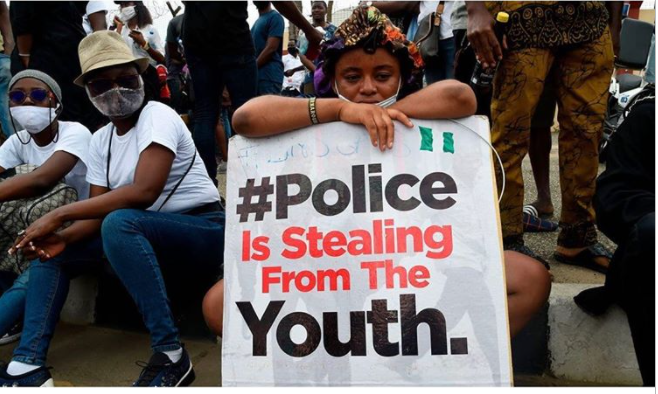
The End SARS protesters on Wednesday shut down the Warri Port of the Nigerian Ports Authority, NPA as well as critical oil facilities in riverine communities of Delta State.

The Coordinator of the protesters in Warri and its environs, Comrade Israel Joe confirmed the report in a chat with News Correspondents in Uvwie Local Government Area. While noting that the protest is in phases with a section being manned by Ijaw youths, Comrade Joe said that they are shutting down oil facilities in the riverine areas.

He also added saying that, The government cannot be getting oil to develop cities in Abuja, Kaduna, Lagos and the rest of them, yet their villages and communities where the oil is gotten from are being underdeveloped; still suffering from the iron road of intimidation battered by bad water and the creek of thatched houses. He said they will continue the End SARS protests until the Delta State Governor, Arthur Ifeanyi Okowa come out to address them on Friday, October 23 at the Effurun roundabout in Uvwie Local Government Area.
Joe threatened a total shut down of all critical facilities if the governor fails to meet with them.

According to him, Protesters are not going to back out of the protest as they do not have any plans to declare a 12-day revolution.  He concludes by revealing that if the government wants to test their resolve, then it should fail to give a public address on Friday.

Source: https://www.newsnow.co.uk/h/World+News/Africa

Article by Vivy LaBelle

Over the last week, a wave of protests spread across Nigeria, Africa’s largest economy and home to over 200 million people, about 60% of whom are less than 25 years old.

The protests were sparked by rising police brutality, specifically that of the Special Anti-Robbery Squad (SARS) of the Nigerian Police Force, that disproportionately targeted the youth, often on trumped-up charges and typically leading to harassment, torture, rape, unlawful arrests, and extrajudicial killings.

It is thought that the groundswell of support for the movement could soon be shifting towards demanding accountability from the nation’s legislators, who are rumoured to be the highest paid in the world, and from there expanding to clamour for good governance in the nation as a whole. Let it be clear that we are not just taking this stance against SARS; we are making a statement against bad governance.

The protests, led largely by the nation’s youth, have attracted the attention of the international press with the hashtag #EndSARS trending across all social media platforms for several days in a row. Observers have commended the peacefulness and the organisational competence of the protesters, likening their tactics to those used by the Hong Kong protesters in 2019. Some have gone as far as to liken the October 2020 protests to the Arab Spring of 2011, calling it the start of the ‘Nigerian Spring’.

Here are six reasons why the October 2020 protests have been so successful so far:

Egalitarian

The movement has fiercely resisted the traditional leadership structure, and has, instead, opted for a decentralised style of leadership. Youths from different walks of life have contributed their skills and time into making the protests successful and no one person or role is seen as more important or less valuable.

But having no “leader” is not the same as having no “leadership”. There are several individuals and organisations spearheading different aspects of the protest, but none of them claim ownership of the movement and have eschewed calls to act as spokespersons for the protest. In sharp contrast to the Occupy Nigeria protests of 2012, there are no celebrity leaders or appointed heads, and many see this as a direct jab at the many NLC and ASSU leaders who after being called to Abuja to “negotiate” are alleged to have abandoned the cause.

Members of the Nigerian tech industry, which has been disproportionately targeted by SARS, have mooted the idea of creating a Nigerian version of Reddit where the Nigerian youth can participate in true egalitarian decision making via online polls. This will be similar to the LIHKG platform used by the Hong Kong protesters in 2019.

Organisation

One of the hallmarks of the protests has been the perceived excellence with which the youth have organised and the agility of the collective response to meet the operational, logistical, and strategic challenges of sustaining a nationwide protest. Within a few short days, the protesters have organised security, media, welfare, legal aid, emergency medical services, and refreshments for the protesters on the streets, while also ensuring a steady supply of mobile data, commonly known as “recharge card credit” to sustain the online protests.

Crowdfunding

Individuals and organisations across the country and in the diaspora have funded the uprising, sending in donations to help provide for the protests. But it has not only been money; many service providers, restaurants, bakeries, confectioners and bottling companies, to name a few, have turned up at the protests with free merchandise, food, and drinks for the protesters, each one of them seeing it as their civic duty to do something to reclaim the nation. In a country where billions of Naira are allocated for projects that are never completed, there has been a meticulous accounting for every dollar spent during the protest.

Technology and Connectivity

The use of technology is widely touted as a major ingredient in the success of the protests. Social media networking has been used to drive online protests. Slogans tweeted by protesters at home encourage the street protesters, and messages sent via instant messaging provide vital information and security updates from one protest site to others. GPS-based location tracking is being used to trace protesters who have been arrested, aerial drone photography is being used to capture unprecedented images of the crowd, and cryptocurrency is emerging as the major stream of the crowdfunding effort.

Community

Protesters, both online and on the street, fundraisers, organisers, lawyers, doctors, civil rights activists, journalists, photographers, and so on are all working in unity of purpose. The movement has created a unique sense of camaraderie, the kind only formed between people who share a common trauma. It is said that this generation of youth have grown up never knowing the “good days” fondly spoken of by the older generations, and that they are determined to bring change to the nation, one demand at a time.

Women

What do the English Suffragettes of the late 19th century, the Aba Women’s riot of 1929, and the October 2020 protests have in common? Women! Some of the most powerful voices online and on the streets, and some of the most prolific organisers behind the scenes, have been women. Buoyed by a burgeoning African flavour of the feminist ideology, the female input in the success of the protests cannot be overemphasised.

Source: Bellanaija

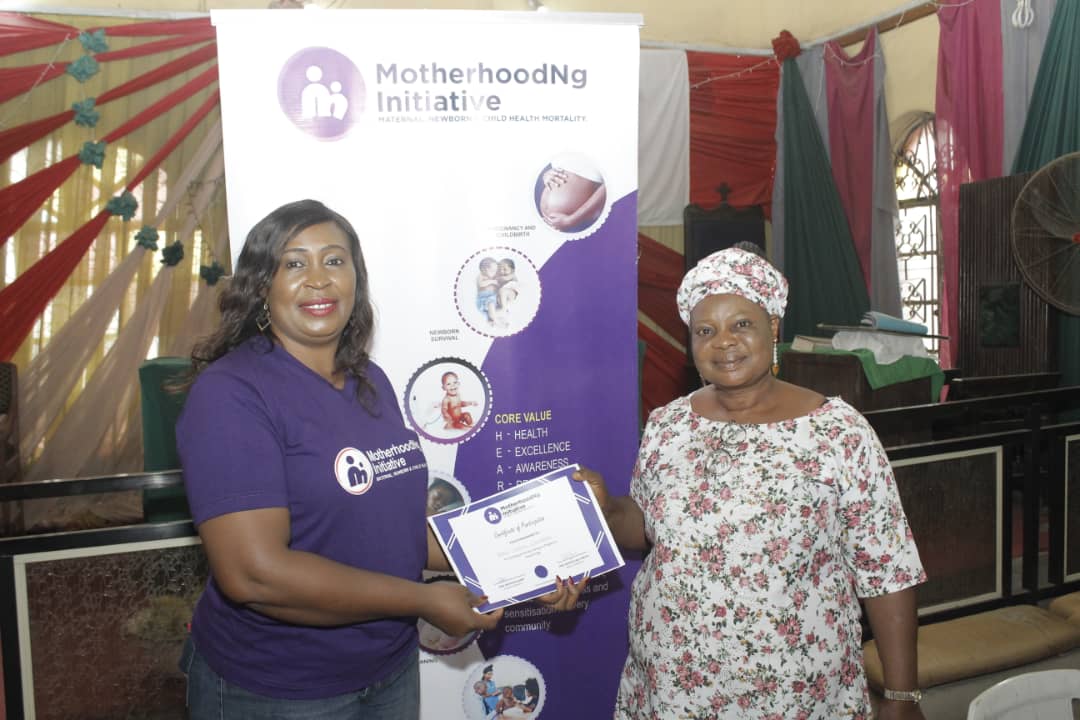
Motherhood NG Initiative is a women-led non-governmental organization with the mission to improve maternal, neonatal and child health in underserved communities in Nigeria.

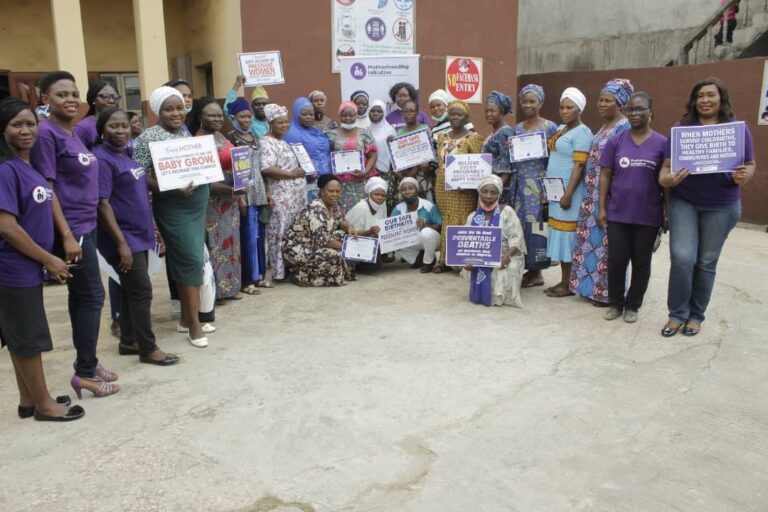
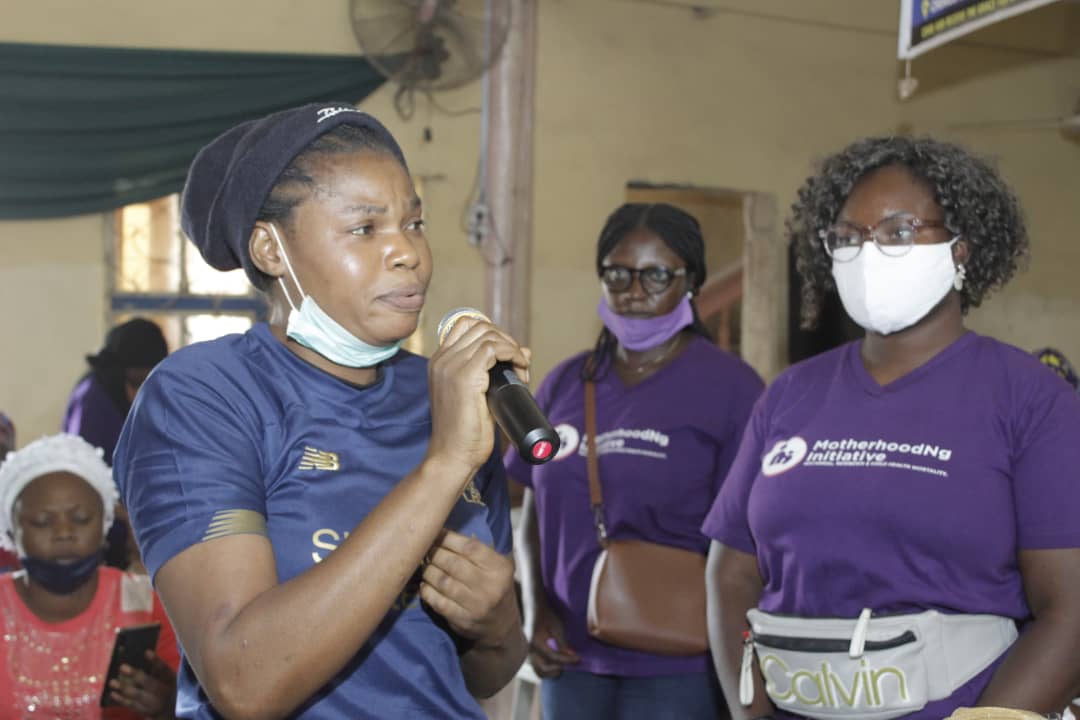
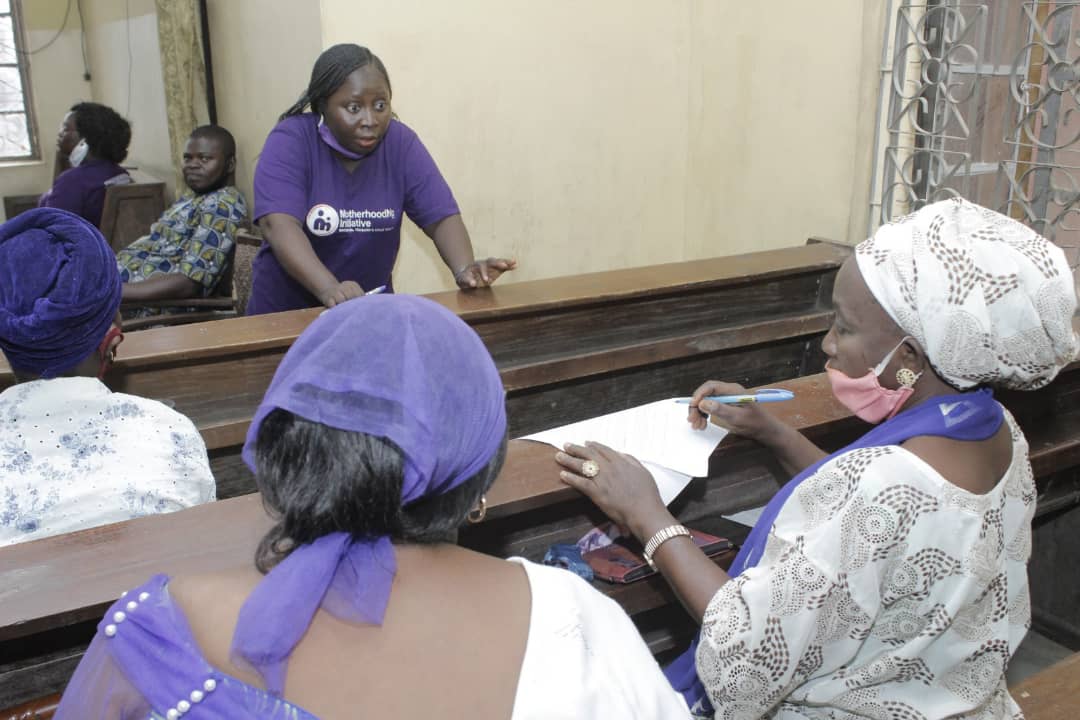
In line with its commitment to improving maternal health outcomes in underserved communities, Motherhood NG Initiative held training under Project Safe Birth for 50 Traditional Birth Attendants at Ado-Odo Ota Local Government in Ogun State on prevention of postpartum hemorrhage. Postpartum hemorrhage has been identified as one of the top 3 leading causes of maternal mortality in Nigeria.

The one day eye-opening training was facilitated by two certified medical practitioners and the traditional birth attendants were taught the signs that can lead to postpartum hemorrhage and how to prevent it. However, they were also cautioned to know their limits, so as to reduce maternal and child mortality in Nigeria.

The founder, Motherhood NG Initiative, Abiodun Alabi, stated that Project Safe Birth is focused on reducing maternal mortality in underserved communities in three ways; by training of traditional birth attendants, providing free safe birth kits to pregnant women in rural communities and causing social behavioral change towards family planning through sensitization and following up with messages to promote family planning to these women via E-mobile in their respective indigenous languages.

The Sustainable Development Goal 3 (SDG3) aims to ensure healthy lives and promotes wellbeing for all across all ages and genders. The first target of the SDG 3 seeks to reduce the global maternal ratio to less than 70 per 100,000 live births. According to the World Bank, the maternal mortality ratio in Nigeria as of 2017 was 917 per 100,000 live births.

Motherhood NG Initiative is working towards achieving the SDG3 by 2030.

On this episode of “Toke Moments“, Toke Makinwa is sharing her protest experience and describing the different types of people you see at a protest.

She says,

What a week, what a season, what a moment….. What a time to be alive. The protest against Police brutality in Nigeria has put Nigeria yet again in the centre of major world wide conversations and I am super proud of every young Nigerian for pushing for change. The #EndSars #EndPolicebrutality #EndSwat #Sarsmustend movement is on going and you can be a part of it too. the History books will definitely not forget this generation. I went out on the streets to protest and the energy was out of the world, watch my protest experience and share yours too in the comment section.

Watch the video:

Joshua Onyinyechi who hails from Ebonyi state is a final year student of University of Abuja
in the department of Biological Sciences.

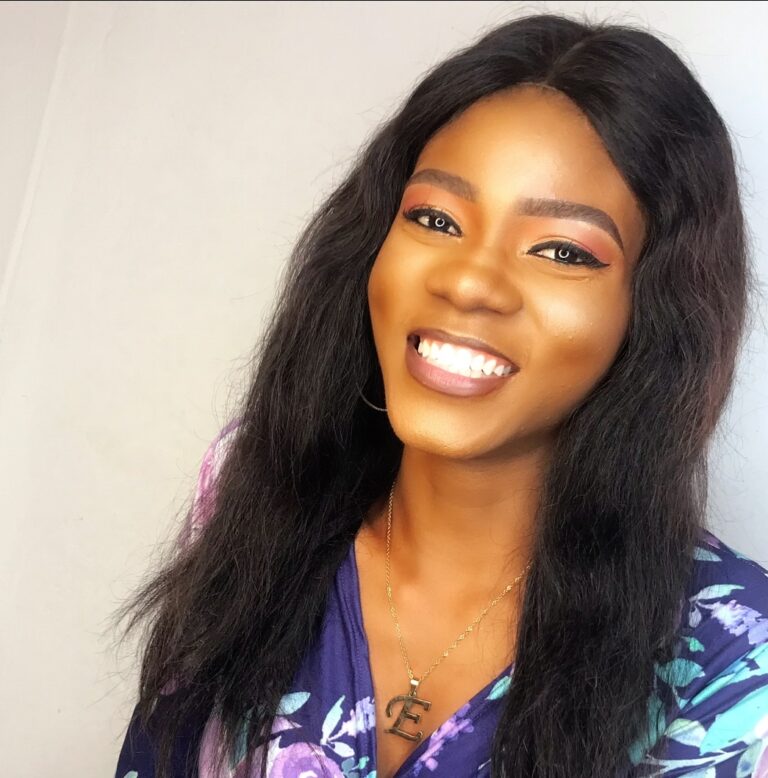
Oyinye is an entrepreneur and CEO of Gift and Souvenir. She also runs a firm that connects prospective interns to their desired organizations. She shares her Ruby girl story with the team

1. Who is Joshua Onyinyechi Esther?

I’m an entrepreneur with extra sauce and grace, a strong and focused lady who believes I can succeed at anything I set my mind to do.

2. ‎ What is the inspiration behind Gift and Souvenir?

My passion for business. I’ve always wanted to have a business that has to do with problem solving.

3. ‎What is your greatest fear?

Not living purposefully.

4. ‎ How has the Covid-19 pandemic affected you as a student and entrepreneur. What have you been able to learn from it?

As a student it affected me because I’m supposed to be a graduate by now but with the whole pandemic graduating this year is not feasible.

As an entrepreneur the pandemic affected sales, But I’m glad everything is coming back to normal.

I learnt to trust God’s plan.

5. ‎What led to the birth of Internship opportunity?

Internship opportunity is a God given idea.
I noticed how graduates and undergraduates struggle to fit into the right place for interns, most graduate or undergraduate just apply for internship anywhere not minding if it’s in line with what they want to do, simply because they just want to get busy.

That was how interns was birthed, to help connect graduate and undergraduate with the right company that will allow them to grow, develop and advance their professional goals/career.

6. ‎ An accessory you can’t leave home without?

My phone please.

7. ‎How has internship opportunity been able to help people with placement?

It has been helpful to people especially in this pandemic, graduate and undergraduate have gotten paid interns opportunity in different states via our platform.

8. ‎What was growing up in a Nigerian home like for you? Did it in anyway contribute to everything you do now?

Growing up in a Nigerian home is one of the best though it wasn’t all rosy. Because I lost my dad at a very tender age, growing up was just with my mum and siblings..and yes it has contributed alot.

My dad taught me not to be dependent on anyone and it has helped me alot, I started having passion for business at age 9, when I return from school I joyfully hawk pure water and the likes in the market, which made me have a business mindset from early stage.

After secondary school it continued, but this time I applied for a job and I got it which also helped my marketing skills, people management etc today by God’s grace I have a business of my own and all I went through contributed to what I am and do today.

9. ‎What are the challenges you faced when you started the gift shop and internship opportunity? Do you still experience them? And also how were you able to overcome them?

Challenges I faced when I started gift and Souvenirs was sales, before I started the business I had people who were like “oh wow I’ll be the first to patronize you,” but when I started all of them were no where to be found (japa).

I didn’t really make sales when I started, I’ll advertise for one week nobody will even ask me how much by mistake (laughs) but I don’t experience such anymore by God’s grace.

I was able to overcome through consistency, despite not making sales then I kept advertising Because I know people are watching and when they think of gift I’ll come to their mind first because I’m always advertising.

Challenges I faced when I started interns was looking for organizations seeking to engage the services to Interns to register on our website( www.internsopportunity.com) Registration and Job listing is free (Internship Only)

I still experience this, I’ve not been able to get lots of organisations as expected to register on our website, I’m putting more efforts to get them register.

10. ‎If you were to be the President of Nigeria for a day, what would you change?

I’ll change the policy in hospital ( especially government hospitals) that says you have to pay first before doctors attend to you, all fingers aren’t equal and no one makes budget for sickness. Lots of people have been rushed to the hospital on emergency and probably don’t have money at hand to deposit first. Doctors will not touch you until you pay money, they won’t even attend to you to save your life first while your family members run around for money, at the end the person might end up dying.

As president l’ll make provisions too for that.

Secondly about NHIS card which is made available for only government workers will be accessible also to those who can’t fully pay their bills, the less privileged.

Provisions will be made for sickle cell warriors/people living with disabilities.

Good water and electricity will be fixed in some villages where people drink dirty water to survive.

11. ‎Mention 3 women who inspire you and why?

My Mum, Mrs Nike Adekunle, Ma Esther Ijewere.

My Mum is a strong woman, she has a large heart, despite what life throws at her, she never gives up. I’ve seen her fight so many battles and still standing tall.

She trained my siblings and I right from childhood when we lost our DAD. Not all mothers can do that, some will just share their kids to different family members. But my Mum stood her ground, held us close we are what we are today because of God and her.
I’m grateful for her.

Mrs Nike Adekunle is a goal getter, she is so humble despite all her achievement. She gives listening ears always, she inspires me alot. She made walking in purpose for me easy. And I see myself in her always.

Ma Esther Ijewere is a strong woman, I admire her alot.

With her story she is still making impacts and touching lives.

I love her passion for humanity.

12. Where do you see yourself in the next five years?

Next five years, I see myself at the top controlling businesses, and owning a shoe line.

13. ‎If you were given the opportunity to address a group of young females five years younger than you, what will be your advice to them? Not to let anyone pressure them, not even social media, they can succeed in anything they set their mind to do.

Be grateful for the small and big wins!

It’s okay to make mistakes, mistakes are part of success!
Never allow your background put your back on ground.
No matter what life throws at you please keep moving forward, lastly ever depend
on anyone financially.

Muna Onuzo-Iyanam, is a brand and business strategist with over 14 years professional experience, working with diverse organisations as a consultant and learning and education facilitator to develop 360 degrees branding strategy, especially for startups.

She has coached and trained and mentored over 2000 Nigerian youths in the ABCs of business ethics and on the importance of image, branding and etiquette in business. Muna’s expertise include cross-cultural communication, human capital training and development, new/digital media and CSR strategy development and execution.

Muna is the founder of Gazzelle Academy Vocational Centre, a first-rate skill acquisition centre, approved by the Industrial Training Fund (ITF) approved vocational centre which trains artisans and entrepreneurs.

Muna is currently the SA, Technical Planning, Research & Development to the Minister of State for Education in Nigeria.

Muna Onuzo is also a certified corporate etiquette, cross-cultural communication, international protocol and business image consultant. She is the Principal Consultant at Personnelty Fit Ltd. She obtained her Etiquette and Protocol certification from The Protocol School of Washington.

Muna holds a bachelors degree in Mass Communication from Imo State University and a masters degree in Media and Communication from the School of Media and Communication, Pan Atlantic University.

She’s the President of the Nigeria chapter of Foundation for Women in Film and Television – an International NGO spread over 44 countries. She is a sitting Board of Trustees member of the Society for the Performing Arts of Nigeria – an award winning NGO helping the Nigerian youth to live out their dream through dance and the Arts.

We celebrate Muna for her work in helping Nigerian youths develop both practical, entrepreneurial and employability skill that will give them a fighting chance to live a more productive life.

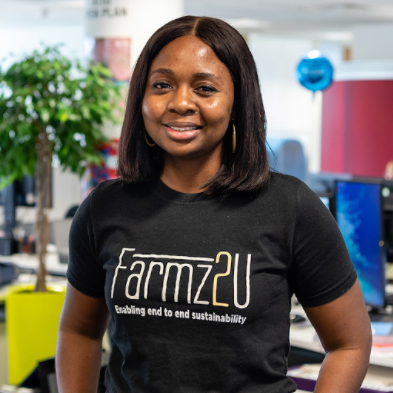
Aisha Raheem-Bolarinwa ,  co-founder of Farmz2U, a digital platform that prevents food waste by helping farmers plan their crops.

Aisha made headlines in 2019 after she made the shortlist for the 2020 edition of the Royal Academy of Engineering’s Africa Prize for Engineering Innovation. This September, she was announced as one of the runners-up.

How Farmz2U works is that farmers tell the application how much land they have, what crops they want to grow, what their budget is, and even their target profit. Farmz2U then calculates how many seedlings the farmer should get, what fertiliser and pesticides to use, and provides training guides and videos for certain crops. Farmers can also find out where there is demand for their product, track orders and invoices, and find storage locations. Farmz2U even allows users to access financing, insurance, and receive weather reports and warnings.

Aisha, a strategy consultant, developed Farmz2U after a health scare prompted her to eat more healthily, which in turn exposed her to the challenges faced by the food industry. She became determined to reduce food waste and improve the nutritional intake of other people.

Farmz2U has already partnered with two commercial farmers as well as with the Nigerian Ministry of Agriculture’s farmer support programme to access its network of smallholder farmers.

Farmz2U is working to create another app that will include a nutrition management platform for health-conscious consumers who can create meal plans and shopping lists. Users will be able to buy fresh produce directly from farmers who are registered on the Farmz2U farm management platform, creating additional markets for local farmers.

Aisha is an Economics graduate from Queen Mary University of London and she cut her teeth in business consulting and strategy in a variety of firms in London.

Apart from the Prize for Engineering Innovation, Aisha’s Farmz2U received a £5,000 grant from  ShellLivewire in 2016.

Aisha is helping farmers farm better with tailored agricultural expertise and access to market and we’re rooting for her!

Adeola Shasanya, is the co-founder of Afro-Tech Girls, an organisation with the aim of inspiring and encouraging more girls and young women to embrace STEM (Science, Technology, Engineering, and Mathematics).

Across the world, women remain underrepresented in STEM fields and this is especially true in Nigeria and so many African countries. In June 2014, Adeola and two of her friends came together with a vision: a world where the number of women in the STEM industries has risen and women feel welcomed and appreciated for their efforts and achievements. They realised that one way to do this was by encouraging more young girls to take up STEM subjects at secondary school and university and stick with it even after education. That was how Afro-Tech Girls was born.

Afro-Tech Girls holds STEM events across the country for secondary school students as well as supply “STEM at home” kits to women and girls.

Growing up, Adeola was always found tinkering with gadgets attempting to fix them. She also loved watching science/tech themed cartoons. In school, she particularly enjoyed science and math and did very well in them. Leaving secondary school, she got mentored by a senior family friend who had just completed her degree in Electrical and Electronics Engineering. After winning the student prize award in Applied electricity, she had the desire to further my knowledge by studying Electrical and Electronics Engineering which enabled her appreciate technology.

Adeola has gained work experience in project management and consulting in both engineering and technology. She’s currently the Project Manager, Digital Skills for Africa at Google.

Adeola’s engineering degree is from Covenant University, Nigeria, and she also has a masters degree in Renewable Energy and Clean Technology from the University of Manchester.

Adeola is one of the 50 women spotlighted in Tech Cabal’s Tech Women Lagos series profiling 50 women in the Lagos technology ecosystem from different backgrounds and at different stages of their technology careers.

In 2019, Adeola won an ELOY award for her contribution to ICT and Technology. In 2017, Afro-Tech Girls won the SME 100 Nigeria, 25 under 25 Young Entrepreneurs Award in the Technology and Cybersecurity category.

We celebrate Adeola for contributing her quota to making STEM education accessible to women and girls and we’re rooting for her.

Popular Kumawood Actress; Ama Oduma Odum has made an interesting revelation about why and how she failed her Wes Africa Senior Secondary Certificate Examination (WASSCE).

I failed my WASSCE to ‘punish’ my father for forcing me to study science - Kumawood actress (video)
I failed my WASSCE to ‘punish’ my father for forcing me to study science – Kumawood actress (video)

According to the beautiful actress, her failure to pass the WASSCE was a predetermined decision to more or less teach his father a lesson that he could ‘take the horse to the riverside but could not force it to drink the water’.

Ama told Zion Felix on the ‘Uncut’ Show that her father compelled her to study science at Senior High School against her will and passion, all because he wanted her to be a nurse or a doctor at all costs.

Although she completed Juaben Senior High School in 1997 as a science student, Ama said she learned the course under duress, disclosing she had yearned to study General Arts since she had a passion for poems and drama.

In a bid to ensure she did not pass the science course which was imposed on her, the actress revealed that she abandoned classes to have fun at some drinking joints while her colleagues were studying.

She expected to have her father change his mind and allow her to choose General Arts when rewriting the examination but all to no avail.

Ama further revealed how chasing her dreams and following her passion was such a dealbreaker for her that she had to leave her adamant father’s house at a point in time to enable her to have the freedom to do what she desired.

Watch Ama Oduma Odum in the video below as she makes all the disclosures: