Everyone likes to have that one person they can confide in and have the most fun with. It’s true that you can find this in a life partner but you also need a friend or two to be there for you.
It is very important to surround yourself with the right people because of the role they play in your happiness, success, and confidence, but who exactly is in that circle?
Research shows that having a strong friend group increases longevity and even reduces blood pressure and cholesterol levels. It is true that many women do not like to have a large number of friends yet is important that your close-knit friends have one or more of these qualities.
Here are 7 types of friends you need to surround yourself with especially when you are in your twenties and thirties.
1.The Confidant
Everyone needs a confidant. You need that one person that you know you can tell anything to and your secrets are safe with them. This friend understands how much you trust her, she knows all of your dirty little secrets and has kept every single one of them under lock and key.
2. The Fun One
When you’re having a bad day and in need of a good laugh this is the friend you turn to. All of your funniest stories probably include her some way or another.
She also the friend who asks you to go on a spontaneous road trip and is always down for an adventure. She gets you out of your comfort zone and puts you in a great mood.
3. The Listener
Sometimes you just need to vent — you don’t want advice, you don’t want to know if you’re right or wrong, you just want someone to listen. This is that friend. It’s important to let out your emotions and know that you don’t need to carry the burden alone.
4.The Motivator
This friend is always pushing you to be the best you can be and achieve your goals. There are always going to be times when you’re gonna be down on yourself when you need that extra push. They’re like your cheerleader, someone who is always pushing you and really believes in you,” she says.
5. The Counselor
This is the one that gives the best advice. She’s been there and done just about everything. For some reason, you are comfortable discussing your most private thoughts with her that you wouldn’t dare share with anyone else.
She’s the level-headed one who you can vent to about anything and she will not judge you. You feel so much better after your conversations with her.
6. The Older One
This is your older friend, the one you go to for all of your major life advice. She’s had a lot of experience and has been in your shoes before, so she has a lot of wisdom to offer. Whether you’re deciding to make a major career change or take your relationship to the next level, she’s got an answer.
7. The Blunt One
This is the one that will tell you like it is, even when you don’t want to hear the truth. But she’ll tell you in a loving, sisterly kind of way ( and sometimes, she’ll just give it to you with no filter because the situation calls for it).
This is the one that when everyone else is walking on eggshells around you (to avoid hurting your feelings), she’ll tell you exactly how she feels, take it or leave it.
Lashana Lynch has been cast in the upcoming “James Bond” film as the franchise’s first-ever black and female 007.
According to the Daily Mail, “James Bond 25” will introduce the new secret agent in a “pivotal scene.” While Daniel Craig will still portray the titular charcter, Lynch’s character has taken over the iconic number 007 after Bond’s retirement.
“There is a pivotal scene at the start of the film where M says, ‘Come in 007,’ and in walks Lashana who is black, beautiful, and a woman. It’s a popcorn-dropping moment. Bond is still Bond but he’s been replaced as 007 by this stunning woman” an anonymous source told the Mail.
The upcoming “Bond” film will be directed by Cary Joji Fukunaga and co-written by Phoebe Waller-Bridge, who wrote BBC’s acclaimed comedy “Fleabag” and Golden Globe-winning thriller “Killing Eve.”
Yvonne Nelson has some regrets about her years as a student, and it is about not being serious with her education.
The Ghanaian actress and Mother of one in an interview with Joy FM, narrated how she had little time for her books after getting a spot in the entertainment industry. She further explained the challenges she faced in making out time to re-sit for some papers, after she failed her Senior High School (SHS) examination.
“I would go on stage every Saturday in SHS. I had to rewrite some papers. I was so into entertainment that I didn’t take my schooling serious. You can easily mess up and not make it to university. I regret not paying attention to my books so when I see kids of today, I tell them to pay attention to their books,” she said.
Yvonne Nelson also stressed the need to climb the educational ladder, regardless of career path.
“I was in Central University. And it wasn’t easy mixing sets with classes. I had to make up my mind. It was tough. Nigerian producers were giving me juicy offers and I was torn between accepting the offers or not. But, I had to focus on school and I was so happy to have graduated, I didn’t want to defer,” she added.
MiAngel Cody had seen enough of the criminal justice system. As a capital investigator, she listened to the stories of those headed for death row, and after working as a corporate lawyer and a state-federal defender, MiAngel Cody decided to look for new ways to use the legal system to dismantle mass incarceration. So Cody created The Decarceration Collective, a federal criminal defense firm that works to release people sentenced to life in prison on drug charges.
According to the Sentencing Project, drug offenders make up one-third of those serving life sentences in federal prison. The U.S. Sentencing Commission states that offenders can be sentenced to life if they are caught with a large number of drugs. However, “large quantities” under federal law can be as small as 1 kilogram of a drug substance.
Not interested in fighting for those who were “innocent,” Cody joined forces with Brittany Barnett’s Buried Alive Project to bring home those sentenced to die in prison.
“It started with, like, a text message one night, and we were like, ‘We should see how many people we can get free,’” Cody says. From there, the duo created spreadsheets of all of the people who had been admitted into district courtrooms throughout the country. They began reaching out to those with federal life sentences for drug offenses and gave them a survey to gather information about their case.
Seventeen people were released under their #90DaysOfFreedom campaign, where they used the newly passed law, The First Step Act, to gain their freedom. In their new Third Strike Campaign, Cody centers the stories of formerly and currently incarcerated folks who received life sentences for nonviolent drug offenses, specifically highlighting those affected by the notorious Three Strikes Law, a law that gives mandatory minimum life sentences to those who have been convicted three times with nonviolent drug offenses.
When The First Step Act was passed last December, it included a provision that made The Fair Sentencing Act retroactive, a law that gave mandatory minimum sentences to eliminate the inequality of crack cocaine and powder cocaine cases. No longer subjected to mandatory minimum sentences, cocaine offenders were able to receive reductions in their sentences or an early release.
One of the folks freed by MiAngel Cody was Albert Reed, Jr., who shares his experience of incarceration through the Third Strike Campaign. When Reed received a life sentence for a drug-related “crime”, he was determined to get out of prison. He applied for clemency and was denied under the Obama administration. The rejection for his freedom shook him to his core.
A year after his rejection, Reed received a survey, sent it back with his information, and was released from prison under Cody’s legal representation. Cody used The First Step Act to her advantage as a way to litigate his release.
In addition to cocaine offenses, The First Step Act also reduced the mandatory minimum sentence for non-cocaine drug offenses from life to 25 years, but it was not made retroactive, meaning those who have already been sentenced to life imprisonment for non-cocaine drug offenses, such as marijuana possession, won’t have their sentenced reversed.
Now, Cody is going back to free the rest, particularly those that The First Step Act did not consider.
“There are a whole bunch of people who are still sitting in prison today under yesterday’s law. And that’s really the point of the Third Strike Campaign. It’s to say if it’s unfair going forward, then it’s unfair looking back, particularly when we’re talking about black bodies being imprisoned,” Cody says.
As for Reed, he can now move forward. He is now reunited with his family and is still rebuilding his connection to his community by working with a basketball camp and a cleaning company. He has dreams of getting into real estate to develop some affordable housing in his neighborhood.
“Anything’s possible after this year. I say to myself every day, ‘Why not dream big? Because you blessed, and all you had to do is think it, and you can bring it into existence.’”
Music icon Patti LaBelle is expanding her huge frozen foods empire with a new line of soul food that will be sold at Walmart.
Onstage at Essence Festival on July 8, LaBelle announced that she was partnering with Walmart to sell a line of frozen soul food that she believed was one of the first widely available.
“Coming soon to a Walmart near you, you’ll have my savory foods. There will be nine skus, foods like macaroni and cheese. It’s greens, it’s brisket, it’s chicken and biscuits, and five more I can’t think of them,” she said onstage during a cooking presentation.
In addition to her legendary singing career, LaBelle has created a wildly successful line of pies that have sold out at Walmarts across the country since 2015.
“Patti LaBelle and I are now partners in our new Co BCH GROCERS LLC – bringing frozen dumplings such as French Onion Soup, Pastrami, Lamb Gyro & Bacon Cheeseburger Dumplings to Walmart – adding to the huge success with Walmart of Ms Patti’s record selling Sweet Potato pies,” famed author and restaurateur Stratis Morfogen said after celebrating the deal at Brooklyn Chop House with LaBelle, her son Zuri Edwards, Alex Thompson and Charles Suitt.
Poppy Northcutt began her career as NASA’s first female engineerin mission control, and the sexism she faced on the job inspired her to pursue a legal career egal career fighting for women’s rights. Now the state president for the National Organization for Women’s Texas chapter and still handling the occasional legal case, she tells Teen Vogue that she wants her multifaceted career to be a model for young women today.
“The idea of having one career in your life — that was what people had 100 years ago,” she says in an interview. “You need to be more flexible these days.”
Northcutt, a pioneering woman in hard sciences before the idea of STEMeducation or jobs even existed, also tells Teen Vogue about how she’s seen sexism change, the importance of doing the hard thing, and more about her groundbreaking work at NASA, which is documented in the new three–partseries from PBS’s American Experience, “Chasing the Moon.”
Teen Vogue: Could tell us a little bit about what led you to your job at NASA when you were coming up through school and how you got that position?
Poppy Northcutt: In high school, I always scored well in math classes, and I enjoyed them. I decided to major in mathematics when I was in college. The stereotypical jobs for women were very limited. If women went to college, they were expected to end up as executive secretaries, nurses, or teachers.
When I got out of college, I started looking for a job in the Houston area and ended up taking one with a contractor for NASA. I hadn’t been planning on going to work in the space program; I just lucked into it. The job title I had when I started was “computress.” I don’t know if you’ve seen the movie Hidden Figures, but that’s the title that those women had as well. But at the time, I had no idea about the history. I didn’t know about the women in Langley.
I mainly just thought that my title was really strange. First of all, I’m not a computer. Secondly, you’re going to gender me as a computer?
TV: Was that gendered title indicative of what working there was like?
PN: They may not have had the gender in their title, but at that time, almost all jobs were highly gendered. If you opened the newspaper, the newspaper had sections for “Help Wanted: Female” and “Help Wanted: Male.” And it was the late ’60s, before litigation and demonstration stopped newspapers from classifying jobs that way.
I started work as a computress number-crunching for engineers. After I’d been there about six months, I had my first job evaluation. The head of Houston operations told me that they were looking to promote me to the technical staff, which is the phraseology they used for the people doing engineering work. I started working on Apollo in that first year that I worked there.
TV: You were in the mission control center at Houston. What was it like being a woman in a space like that?
PN: By the time I was there, I was used to being the only woman in the room because that was just sort of the normal situation. There just weren’t many women doing technical functions. We did have some women doing computer programming.
TV: Were there any specific challenges you were facing as a young woman doing this incredible scientific work?
PN: It wasn’t just me. It was all women at that time. We existed in a sea of sexism. The waters are a little clearer now. They’re not as murky as they were 50 years ago. But all women at that time, in all the places around the world, were living in a sea of sexism.
If you were the only woman in a particular area, you stood out because you were different and you had the feeling that people were watching you more. Some people may be hoping that you failed.
I was fortunate I worked for a company that was very progressive for the time. You might not think they were very progressive, looking at them through today’s eyes, but if I had been working at one of the other companies, I might not have been promoted. The promotion was very hard for my company to get.
The head of Houston operations told me later was he could’ve more easily fired me and rehired me than to get that promotion because the increase in pay was so great. They have these rigid rules about how big of a salary increase somebody can get, so he had to fight for it. Most people would not have had somebody who fought that hard for them.
Even after I got the promotion, he told me, “You’re still underpaid.” All he could do was to get me to the bottom of that pay category, but he said, “I’m still going to work on trying to improve that.”
That’s a problem women still have today. If you were hired in and underpaid, it is extremely difficult to ever catch up because your future employers so often are basing your new pay on your previous pay.
TV: What made you want to go to law school after you’d worked at NASA?
PN: I had become very conscious of the women’s rights movement, partly because of my experiences being the only woman and with pay disparities. I also became very aware of the fact that I was actually really lucky. Even if I was discriminated against, I wasn’t experiencing nearly as much as most women were in the workforce.
I became involved in the National Organization for Women and was on their board of directors in the early 70s and became an activist. As a result, I was contacted by a new mayor elected in Houston, a new young, progressive mayor. He had made a commitment to appoint a “women’s advocate” on his staff. I was lucky enough to end up in that role.
Part of what I was doing was looking at equal pay problems and other kinds of discrimination. I was looking at the treatment of rape victims by the police and our health department and trying to increase the number of women who were on boards and commissions. I became increasingly aware of how laws affect us and can help close some of these gaps. I ended up going to law school.
TV: It seems like that activist streak carried through your work with Jane’s Due Process, the nonprofit ensuring legal protections for pregnant minors in Texas.
PN: I still work with them! I had worked for the Harris County district attorney’s office, and I was the first felony prosecutor in the domestic violence unit when we set that up. As for activism, I’ve always tried to do something to improve the status of women.
TV: People may think of studying STEM and studying law as very separate paths. What would you say to young people who want to have the range that you’ve had in your career — who have this activist streak and might also be into science?
PN: They should go for it. The idea of having one career in your life — that was what people had 100 years ago. But our life span is greatly increased at this point.
They may also want to change careers, or it may actually be a need. You need to be more flexible these days. I think you need to pay more attention to what’s going on in the world around you in terms of economics and be flexible.
TV: Any other advice for Teen Voguereaders?
PN: My big advice is to go back and read what John F. Kennedy said when he laid out his plan of going to the moon and understand that mission statement — land a man on the moon and return safely back to the earth — was a specific goal. But it was also followed by the reason why: We do it not because it’s easy, but because it’s hard.
We should all look at doing the hard things, especially when setting goals for our careers. Do the things that are going to challenge you. That’s where you’ll really find your potential. And you’ll also make bigger contributions to society as a whole.
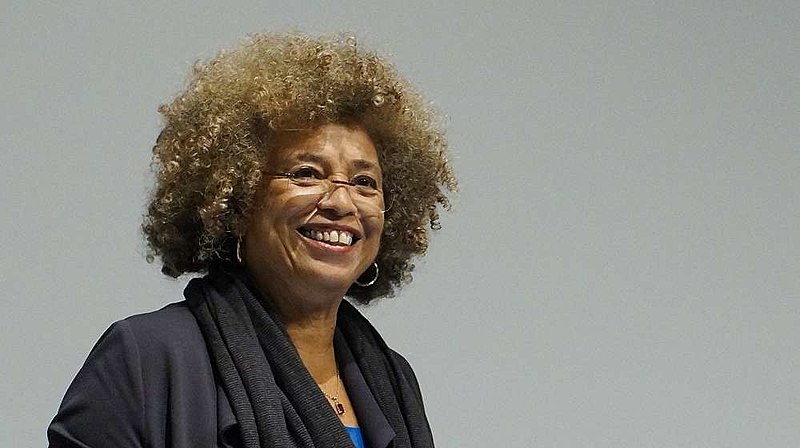
In honor of her tremendous strides in social justice and education, professor and activist Angela Davis is set to be induced into the National Women’s Hall of Fame.
The organization, which was established in 1969 and is the oldest membership entity and museum dedicated to celebrating the achievements of American women, announced Davis and others as the 2019 cohort of inductees on Wednesday. More than 250 women have been honored by the National Women’s Hall of Fame.
The University of California Santa Cruzemerita professor was nominated by the public and selected by a group of experts across various disciplines based on her contributions to the areas of the arts, education and humanities.
This year marks a century since the 19th Amendment was ratified, giving women the right to vote. Davis’ involvement in the fight for human rights has spanned over the past six decades as a former member of the Black Panther Party and the Student Nonviolent Coordinating Committee (SNCC). In recent years, she has focused on social problems of economic injustice, mass incarceration and the criminalization of Black and brown communities.
Davis, along with nine other inductees, including U.S. Supreme Court Justice Sonia Sotomayor, will be honored. The ceremony will take place on September 14.
A pre-teen developed an impressive robot to help with one of life’s most tedious tasks.
Many people put off folding their clothes after washing and drying. While you were piling your garments in your closet, 12-year-old Fathia Abdullahi developed a robot with the ability to fold clothes.
“This is the t-shirt folder,” the young Nigerian told Reuters. “I made it because there are too much clothes to fold on Saturdays and Sundays when you wash a lot.”
When someone places a shirt in the middle of the surface, it is folded by the four grey beams on each side. The machine is a prototype, according to India Times, but it already folds t-shirts perfect.
Abdullahi started coding when she was 11 years old and aspires to be a food scientist. Coding is a passion for the young techie.
“When I grow up, I will love to be a food scientist,” she told BBC last month. “I would be able to use this coding to build so many things that would help me.”
Abdullahi’s peer, Oluwatobiloba Nsikakabasi Owolola, is also dabbling in robotics.
“This is the robot grabber,” he said. “I programmed it to identify the object, grab it and take it to another position.”
Owolola started coding when he was only 10 years old and wants to learn everything about it.
“I found Lego robotics interesting,” he said. “I wanted to do it all though.”
Like Abdullahi, he truly enjoys it.
“I love coding, that is why I want to be a robotic engineer,” Owolola declared.
Mrs Bisi Fayemi, the Ekiti State First Lady, has said it is discriminatory to expel pregnant schoolgirls from school while allowing the boys who impregnated them to continue their education.
Mrs Fayemi said this Thursday during a meeting in Ado-Ekiti with wives of Coordinating Directors and Community Development Officers of the 16 Local Government Councils in the state.
She pointed out that all girls, regardless of their status, have a right to education.
The Ekiti State First Lady acknowledged that pregnant girls face various forms of punishments, including discriminatory practices that deny them their right to education. She went on to reveal that the state government is ready to implement relevant laws, including the Child Rights Act, Gender Equality and other laws to protect the interest of children.
She added that a sensitizattion campaign to increase awareness on the importance of protecting the rights of children, especially the girl child, will hold in the state in the coming month.
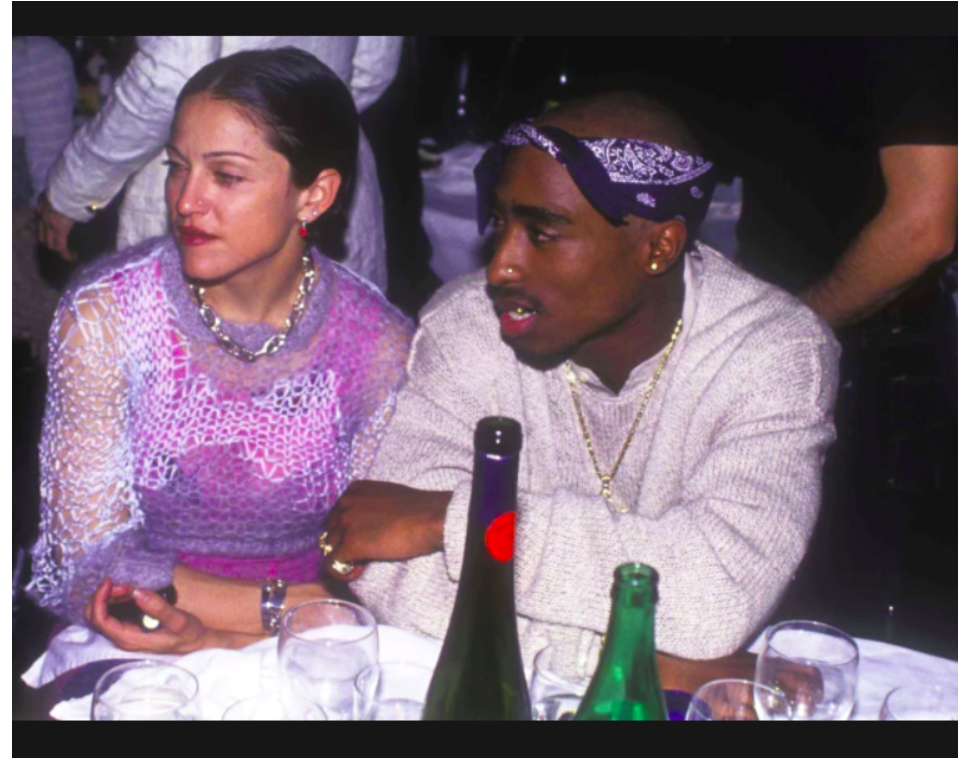
The New York Supreme Court has ruled that Tupac Shakur‘s infamous breakup letter he wrote to Madonna while he was in prison should be auctioned off.
The court said that the letter now belongs to the auction company Gotta Have Rock and Roll and not the pop icon despite her protests for the letter not be sold.
The company obtained the letter from Madonna’s former art consultant Darlene Lutzand they plan to auction it off to the highest bidder on July 17.
Shakur hand-wrote the three-page letter from prison in 1995 when he was 24. In it, he ends his relationship with Madonna, who was 37 at the time. He died the next year.
“I must apologize to you,” he wrote. “Because like you said I haven’t been the kind of friend I know I am capable of being. Not because I am evil or because you weren’t worthy but at the risk of sounding overdramatic, the effects of racism make it difficult for a young black man to properly show affection for an older white woman.”
The memorabilia company estimates the letter will sell for up to $300,000. The minimum bid is $100,000.