Author

Esther Ijewere

Browsing

I didn’t know the importance of setting boundaries until life hit me in the most unusual way. It was in that moment I realized I was an “Open book” and “Easy target” for emotional warfare that often times stems from my lack of having personal boundaries  . From finding it hard to say “No”, to being scared of hurting others even when their actions hurt me. I had to take my personal growth as a project, and it all started from putting myself in check.

If the first paragraph  sounds like you then this article is just for you…. Let’s dive in!

How would your life change if you were able to maintain personal boundaries? This includes stopping people from overstepping into your personal space, as well as sticking to the personal boundaries that you set for yourself later.

What Are Personal Boundaries?

Personal boundaries are the limits that you set when it comes to what you expect from a person and how they behave towards you. They indicate what you find acceptable and unacceptable in someone else’s behavior, particularly with someone that you are close to, such as family, friends, or a partner.

Personal boundaries can be restrictive or free depending on your own personality and preferences. Other common domains of personal boundaries include personal space,, time, energy, interaction, communication, religion, and ethics. However, personal boundaries are by no means limited to these things.

Why Are Personal Boundaries Important?

The fundamental reason why people set boundaries is to try and create stronger relationships with themselves and other people. Personal boundaries are an essential part of any thriving relationship and should never be overlooked.

Just like fences and walls in the physical world are used to determine where you can and can’t go, what is yours and what isn’t yours, personal boundaries determine how far others can go before crossing the line.

They stop people from walking all over you. They stop people from manipulating you. They stop people from getting too far into your personal business.

How to Set Personal Boundaries

Just like anything else in life, in order to become an expert at setting and being comfortable with personal boundaries, you have to practice. Luckily, we have 7 amazing ways for you to get started and to start reclaiming your own life.

Are you ready?

1. Identify Your Boundaries

It is impossible to begin setting personal boundaries when you don’t even know what they are or where they lie. This is why the starting point for anyone who feels like they may need more/fewer boundaries is to identify where they currently stand.

Are you getting pushed around too often? Or are you completely resistant to any change?

Do you find yourself arguing with people a lot? Or do you find it difficult to speak up when you know you should?

Everybody has different starting points when it comes to their personal boundaries, and those boundaries will inevitably change with time. The first thing you should do, though, is to find your starting point.

2. Determine Your Values

One of the best ways to identify what your boundaries are and how you want them to change is to determine what your values in life are. If you value creative freedom and thinking time, consider placing a strong boundary around your personal space and your free time.

If you value the small things in life over the big, extravagant things, maybe consider loosening your boundaries a little to let more serendipity in.

If you value yourself or you want to start valuing yourself more highly, start placing firmer boundaries around how people speak to you and treat you.

Whatever your unique personal values are, your personal boundaries that you set are going to be what helps you to maintain them.

3. Start Simple

Rather than completely pushing back on people that are overstepping, turning your back on every single aspect of your old beliefs, or selling all of your stuff to live in a remote forest, there are small steps that you can and should take first.

If you have a friend that always calls you to make plans, and you feel pressured into doing so, politely tell them that you don’t want to this week. What will happen? Not much, probably. This small step will give you the confidence to say no again in future weeks when you don’t feel like going out.

If you feel like you are getting too much input and overwhelming information from your phone, my favorite hack is to delete the troublesome apps for a day. Missing them? Download them again tomorrow. Didn’t miss them as much as you thought? See what another day without them is like[2].

It is just as important to set boundaries with yourself and your own routines as it is to set boundaries with other people. The only way to begin in both respects is to start simple.

4. Listen to Your Feelings

If you aren’t sure about where your personal boundaries should be, it might be a good idea to check in with your feelings and the sensations in your body every now and then[ These will usually give you an excellent indication.

Signs to look out for include an increased heart rate, sweating, tightness in your chest or stomach, and other general feelings of discomfort. Of course, just because you feel these sensations does not mean that you should close yourself up to the world — that won’t help you in any way.

Your feelings are like directions on the side of the road. They will let you know what areas that you should probably investigate a little further.

5. Learn to Say No

Possibly the biggest stumbling block that people who struggle with setting personal boundaries have is that they find it extremely difficult to say no.

This comes in all sorts of packages. You might find it impossible to say no to social gatherings for Fear of Missing Out . You might find yourself doing loads of favors for people who asked you even though they could have probably done those things themselves.

You might even have a friend or spouse who encroaches too far into your personal stuff, but you struggle to tell them no because they are your friend or partner. The problem is with you and not them, right?

Probably not. The reason most people face resistance to saying no is that they are worried about how it will make the other person feel. Maybe it’s time to stop and think about how you are feeling for once.

You are allowed to say no without an explanation . It likely won’t affect the other person nearly as much as you think it will.

6. Practice Self-Awareness

When you are aware of your thoughts and feelings and what they are doing for you (or to you), you can start to work out where specific boundaries need to be set.

For example, if you are an overthinker, and your thoughts begin to race whenever you are in a situation, be aware of this. Set a boundary with yourself that whenever a negative thought pops into your mind, you will let it go. No matter what. It won’t have anything useful to say, so don’t fall for it.

Of course, this can apply to other people, too. However, self-awareness and boundaries with yourself not only go hand-in-hand, but are essential to a life of peace and joy.

7. Seek Support

A common mistake to make when trying to set personal boundaries is that you have to do it alone. You have to plan everything yourself, enforce everything yourself, and work out what is and what isn’t working for yourself. That simply isn’t true.

If you find yourself struggling or simply want an easier ride, talk to your friends, family, or spouse about the boundaries that you will set and explain why. You might think that opening up will create arguments and resistance, but more often than not, people appreciate you letting them know.

Setting boundaries can be extremely difficult though, whether that be setting them with other people or setting them with yourself. Don’t ever have any shame about seeking professional help. If you feel like your life will greatly benefit from help, then it is something that you absolutely should consider getting.

About Esther

“Esther is an activist, Writer, Columnist, Author and editor-in-chief & founder -Women of Rubies. She is passionate about issues that affect women and children. 

Facebook: Esther Ijewere

Twitter & IG : @Estherijewere

LinkedIn: Esther Ijewere

Email: admin@womenofrubies.com
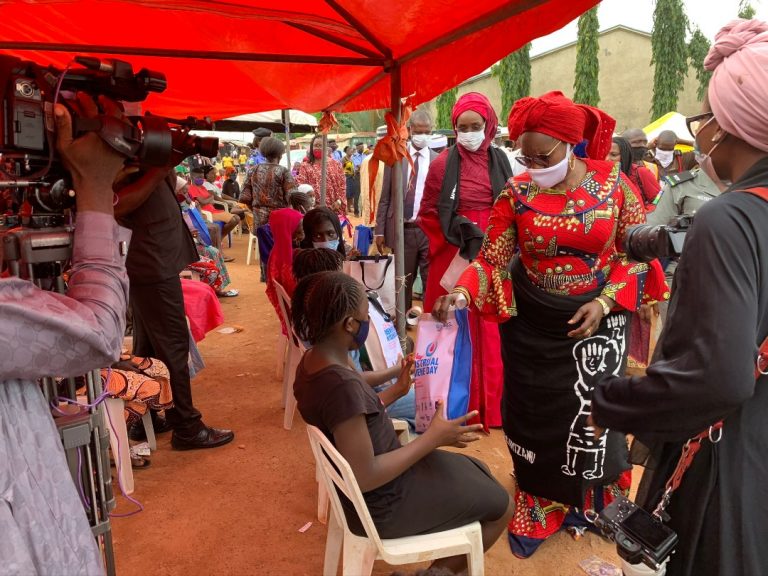


The Federal Government, through the Ministry of Women Affairs, has launched a project to distribute about one million sanitary pads to women and teenage girls in the country in order to cushion the effect of COIVD-19.

Minister of Women Affairs, Dame Pauline Tallen, launched the project at Kado village, Abuja, in a ceremony organized by the ministry with support from Water Supply Sanitation and Collaborative Council (WSSCC) and other stakeholders to commemorate World Menstrual Health and Hygiene Day.

The Minister lamented lack of access to menstrual health and hygiene products, education and sanitation facilities by vulnerable women and teenage girls.

She disclosed that each beneficiary would receive at least four packs of sanitary towels.

According to her, the project tagged, “One Million Pads Distribution Project” targets adolescent girls in all states of the federation.

“This project is hinged on the fact that girls’ and women’s choices of menstrual hygiene materials are often limited by costs, availability and social norms. Therefore, providing access to menstrual hygiene products will go a long way to solve the problem to a great extent,” the Minister said.

She further commended development partners, especially WSSCC and others for providing technical and financial support to the Ministry for Menstrual Health and Hygiene Management (MHHM).

She also applauded the First Lady, Aisha Muhammadu Buhari for her benevolence in supporting Nigerian women and girls and thanked Procter and Gamble for providing 4000 sanitary towels to kick off the first phase of the project.

While acknowledging that COVID-19 pandemic has further worsened access to menstrual management materials, Elizabeth Jeiyol, WSSCC National Coordinator for Nigeria urged all stakeholders to team up to change the negative social norms surrounding menstruation so that women and girls can practice menstruation in dignity.

She said: “Poor knowledge and understanding of menstruation may lead to unsafe hygienic practices for women and girls noting that access to menstrual hygiene materials is – a basic human right. Together, we can empower all women and girls to realize their full potentials everywhere in the world. It is commendable to see the contribution of other development partners including Action Against Hunger (AAH), United Purpose, NEWSAN, Youth WASH and OPS-WASH and numerous other CSOs to make this day a huge success.

“There is no gainsaying the fact that effective menstrual hygiene has direct and indirect effects on the overall well-being of women and girls – in the context of education, empowerment and health.

However, women and girls face continuous mental, physical and health traumas during their periods – as a result of discriminatory social norms, cultural taboos, supernatural beliefs, gender inequality, and limited access to basic services such as WASH facilities in private and public spaces which leads to ‘Period Poverty’ for women and girls across the world – especially in developing countries like Nigeria.”

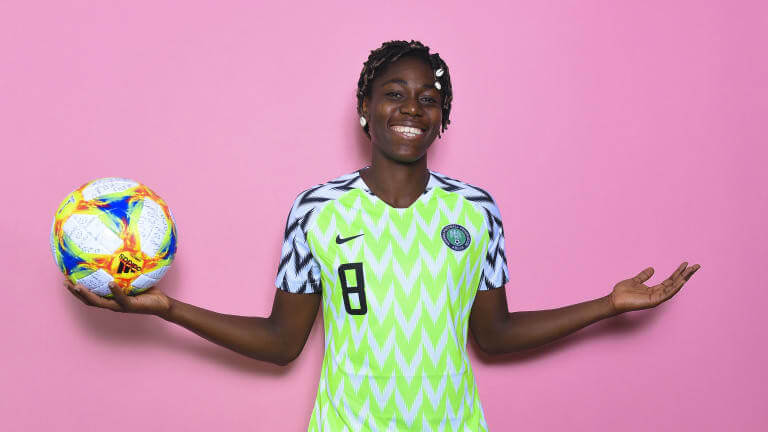
Super Falcons Captain, Asisat Oshoala, is worried that despite the strides women football has made in recent times, Africans still do not accord the ladies the respect they deserve. The FC Barcelona Ladies top striker is particularly disturbed by the apathy those running the game in the continent display when it comes to women’s teams.

Speaking at the weekend, Oshoala faulted the outright cancellation of the 2020 African Women’s Cup of Nation’s by CAF, saying it was not the right direction “to take at this critical moment when women football is struggling to grow in the continent.” She said the decision further shows that women football is not regarded as an important aspect of life in Africa.

She argued that if it involved men or boys, the national federations would have risen against the cancellation.

“The news of the cancellation of the 2020 CAF Women’s Nations Cup was a shock to me because as a player, this is a tournament we all look forward to every two years. It would have been better if it was postponed and not totally cancelled. It is not fair on women footballers.

“If it were the men’s Nations Cup, the various football federations and the media would have been lamenting, making noise and mounting pressure on CAF to reverse the decision. But now that it is women football nobody is talking. Other women footballers in the continent are not delighted with the cancellation of the championship.”

She condemned the attitude of CAF and the other federations to women football, adding that poor funding has retarded the growth of women football in Africa.

“In 2016, Cameroun hosted the African Women Nations Cup and CAF was highly commended for a fantastic show. And now after four years, CAF was still contemplating in March if Nigeria or any other country would host the championship scheduled for November 2020.

“Notwithstanding the COVID-19 issue, this is not right. We are supposed to have gone beyond this level in Africa.

“At the FIFA level, the host of the next Women World Cup is already known. Women football in Africa needs help by the stakeholders showing more interest in the game,” she said.

Oshoala, however, expressed delight at the prospect of teams in the continent playing in the CAF Champions League, saying it would help in promoting the game across the continent.

“I thank CAF for this move, but I am not happy with the cancellation of the CAF Awards as it should be held visually by Zoom or any other online process. That would have saved CAF the cost of inviting people to a venue.

“I am not saying this for selfish reasons because I already have four awards. It is for the progress of the continent. This is the only award we look up to in Africa,” she added.

On the local scene, Oshoala said the Nigeria Football Federation should organise more quality friendly games for the Super Falcons to keep the team in shape.

“We, the players, have been discussing with the NFF to organise more games for us. Apart from the qualifiers, the team needs to meet often to make it easier for the players to blend well. This is why other teams in Europe are ahead of us. I believe after the sports lockdown, the NFF will look on it,” she said.

The National Association of Women Journalists (NAWoJ), Plateau State chapter, has described as disturbing the increasing cases of rape and child molestation in the state.

In a communiqué issued at the end of the association’s meeting at the Nigerian Union of Journalists’ (NUJ) Press Centre, NAWoJ called for concerted efforts to curtail the spiking and worrisome number of rape cases.

The communiqué signed by its chairperson, Madam Jennifer Yerima of the Plateau Radio Television Corporation (PRTVC), noted that women and young girls living where there are no toilet facilities are more vulnerable to being raped.

She also pointed out that minors are mostly raped by family members and neighbours, but their parents keep sealed lips for fear of stigmatisation.

It’s interesting that some of our educated African brothers and sisters (African-Americans included) are ignorant of the reality of depression, even when we experience it. We worry more about what our kinsmen, friends, colleagues, and neighbours would say, rather than find ways to help ourselves, our loved ones or that stranger; crying out for help.

Son: I am depressed, Dad.

Dad: God forbid! It is not your portion!

Son: What does that even mean?

Dad: Rebuke it, Son! Depression is not for us. We are Africans. It’s a term oyinbo people use to seek for attention.

Son: I have been feeling depressed for weeks, Dad.

Dad: Biko, don’t let anybody hear you say that nonsense again. Tufiakwa! Abomination!

The next morning, this father found his only child in a pool of his blood, with a blood-soaked suicide note on his bedroom floor. All the signs were clearly there, just like in many cases.

***

Not many people experiencing depression express it or seek help. The question remains: how many people are attentive to these signs? How many people offer help?

There are several triggers for depression. Each trigger depends on an individual’s experiences, lifestyle, and/or thought-process.

There’s no shame in feeling depressed. It is not an abomination or a sin against God or Allah. Depression is real, as real as you can feel your breath under your nose. It is as real as the pain and emptiness it comes with.

Depression is a poison that can numb you physically, mentally, emotionally, and spiritually. Who can relate? Say I.

You don’t have to have experienced depression to know it is real, or show empathy to someone experiencing it.

Depression literally kills many people on a daily basis. It does not discriminate, just like death. Even children as young as seven feel depressed. Many children and teens have committed suicide because they were depressed. No one is immune to feeling depressed. Many “normal people” have lived it too. They all felt depressed: lost, empty, alone, scared, and hopeless.

We need to educate Africans and families that depression is not a taboo. We need to be open to new information to better ourselves and wellbeing. There’s absolutely nothing to be ashamed of to say, “I am depressed,” or “I need help.” It’s interesting that some of our educated African brothers and sisters (African-Americans included) are ignorant of the reality of depression, even when we experience it. We worry more about what our kinsmen, friends, colleagues, and neighbours would say, rather than find ways to help ourselves, our loved ones or that stranger; crying out for help.

All the signs are there. They are always there. We just have to pay more attention. When we are the ones experiencing depression, we should find the courage to talk to someone. Bottled emotions are like time bombs that will eventually explode. Rebuking “depression in the name of Jesus” is like rebuking the blood dripping on your face from a cut. You see the blood, you wipe it clean to treat the cut, and then ask God for healing, or you call your doctor for antibiotics. Being ignorant of the fact will simply make the cut/bruise prone to infection.

We need to know the difference between ignorance and foolishness. Being educated doesn’t equate to having common sense.

August Strindberg said, and I agree: “There are poisons that blind you and poisons that open your eyes.”

Depression is poison that can either blind us or open our eyes. It is like death slow in coming, if/when not taken care of.

Love can certainly help cure depression. Agape-kind-of love.

After all is said and done, what we tell ourselves takes root in our minds, therefore, controls our emotions and steps. Easier said than done, right? But, when being strong becomes our only way to survive, we start to see things differently, and we become the best of us … eventually. No doubt!

About Nkem

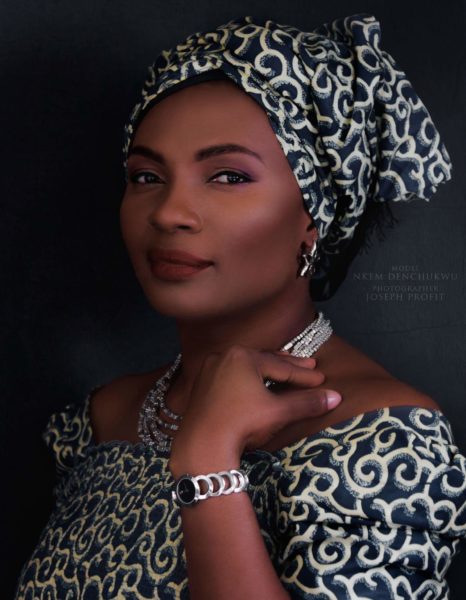
Nkem DenChukwu is a bonafide creative writer and filmmaker. In 2019, she became Houston Literary Awards – Reader’s Choice Winner. She delved into the arts of filmmaking and creative writing in 2012, and has since then, written 7 inspirational books for children, teens, and young adults. Nkem has produced 14 indie films in Texas. In 2018, she was featured in Forbes (Digital Edition) while five of her creative verses have been featured in Oprah Winfrey Magazine. Nkem was a Huffington Post Contributor. For more details on Nkem DenChukwu’s work, visit www.nkemdenchukwu.com

IBM Corporation has announced its first African and female Regional Head for Africa, Ghanaian Angela Kyerematen-Jimoh.

Angela, who until her appointment served as the Chief of Staff to the Senior Vice President in charge of Global Markets and Sales in IBM’s corporate headquarters in New York, will be responsible for IBM operations in over 40 countries in Africa including Morocco, Nigeria, Kenya, Senegal, Uganda, Ghana and Tunisia.

She was also IBM’s first female Country Head, serving in that capacity for the company’s operations in Ghana.

Prior to joining IBM she worked in banking for UBS Investment Bank and ABN AMRO in London, and GTBank Ghana.

Accolades have poured in from everywhere, with Chris Kirubi, East Africa Business Mogul and founder of Centum Investment, saying:

I am exceptionally proud of Angela. Her dedication and commitment to her work is unwavering. She has all our support and I know she will make this a huge success story. We welcome her back to Africa.

Halima Aliko Dangote, Executive Director of Dangote Industries, also hared her enthusiasm for the news, saying:

This is indeed an inspiring story for our continent to have a woman lead this very important region and we look forward to her making great strides in this role.

Angela Kyerematen-Jimoh is an alumna of the Harvard Business School, and has been named one of Africa’s most influential women by Avance Media. Her awards include the US African Women Forum’s Global Impact Leadership Award and the prestigious African Achievers Awards for Excellence in Business.

At one point or another, we all burn out. It wouldn’t be wrong to think that plopping yourself down on the couch for a few days would leave you feeling recharged. You may not know this, but physical fatigue can have more to do with mental exhaustion than the exercise you’re getting that day.

Below I’ve listed some effective ways to recharge your mind when it starts feeling burned out.

1. Change up Your Routine

It really can be hard to not fall into a routine. Every day you’re doing the same thing over and over, but breaking up that routine can be a really good way to kick that mental exhaustion. Make a point to challenge yourself to do something totally new once a week.

I mean, if you’re feeling really enthusiastic, try doing something new once a day. It can be something really simple. Instead of taking your usual way to work, take a different one that may be more scenic.

Think about activities that you enjoy that really feed your soul and start doing them. When your mind is opened to new ways of thinking and perceiving, you tend to be much happier overall.

2. Keep a Journal

Keeping a journal is a great way to relieve stress and get it all out on paper.[1] It can be really helpful down the road because it gives you the opportunity to look back and reflect on the progress you’ve made in your life.

Journaling also jolts your creativity, builds confidence, boosts comprehension, and encourages you to follow through with goals. It shouldn’t be something that makes you put pressure on yourself, you don’t need to have an entry for every day either.

Write down what comes to mind, you’ll feel such a release when you’ve finished. Make it a priority to write in your journal a few times a week. Eventually, you’ll find writing to be an outlet for recharging your brain.

3. Meditate

You may have seen this one coming. There are so many articles and people out there who rant and rave about the benefits of meditation, but it truly works. Roughly 80 percent of doctor visits are for stress-related issues. A lot of money and time can be saved if you learn to practice self-care through meditation. It can reduce stress, boost immunity, improve sleep, and can quite possibly increase happiness.

4. Re-evaluate Your Relationships

Having relationships is very important, but it’s even more important to really be mindful of how healthy they are.

You may find that you have a few toxic relationships in your life. It may seem difficult to end these relationships because often times you grow to be comfortable in them. Sadly, dysfunctional relationships may become a ‘normal’ part of life and you may not realize how mentally exhausting they can be.

Take time to be mindful of all your relationships. It’s crucial to once in a while reassess and decide whether they are adding value to your life and well-being. In toxic romantic relationships, you can become extremely mentally drained when you’re  putting energy into something that just may not be right.

People who are mindful of their relationships typically tend to be more confident in their own judgment.

5. Get Some Exercise

Exercise isn’t just beneficial for your overall well-being, it’s helpful for when you’re feeling drained as well. You don’t need to get a gym membership to get activity in.

We’re all busy, I get it, but setting aside just 20 minutes a day can really make all the difference. Multiple studies have shown the value of exercise in boosting your concentration and mental focus.[3]

With a daily 20-minute intense workout, blood flow to the brain increases and you improve your mood, creativity, and memory.

Ditch Your Ego, Be Mindful of Your Soul

DO WHAT MAKES YOU HAPPY. This can get confused with doing something that brings you a sense of achievement. That feeling of achievement won’t always necessarily bring you joy.

Spending a few extra hours at work to get things done can be productive but powering through can really burn you out. Allow yourself to buy the shoes you’ve been wanting to buy for weeks, or take a spontaneous weekend trip with friends or your significant other.

In the grand scheme of things, our time on earth really is short. Whatever it may be that you choose to do, do it because it truly brings genuine joy to your soul.

Source: Lifehack.org


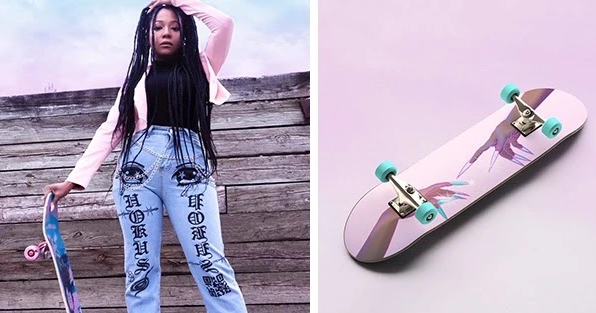
Meet Latosha Stone, the brains behind Proper Gnar, the first Black women owned skateboard company. 

According to Black EnterpriseProper Gnar was created by Stone in 2013. Over the last several years, Stone has continued to grow her business, channeling her love for the sport into custom skateboards, clothing and paraphernalia that reflects her personal aesthetic. The company is a lifestyle brand geared towards teen girls and young women interested in skateboarding or alternative fashion. Stone’s skateboards have been featured on HBO’s “Betty,” a show about girls who skate, and on Beyonce’s Black Parade Route, a recently curated directory of Black owned businesses. 

“Skateboarding has traditionally been a man’s sport, which is why I am so passionate about my role as a Black woman who challenges past assumptions and shows that skateboarding is for all of us. I take pride in creating authentic and beautiful art that stands out from other skate brands. I live and breathe skating and art, and I think that is reflected in the work I produce,” Stone said. 

In addition to the products Stone sells, she also helps bring women skaters to the forefront of the sport through sponsorship. “I believe that representation is the key to having more young girls interested in skating. Genuinely loving skateboarding means you have to advocate and support it when you can,” said Stone. 

Congratulations Latosha!

Source: Becauseofthemwecan

I’ve activated my ‘recruiter super-powers’ and collated some red flags you can look out for to spot a fake job advert, so that you don’t even bother applying.

It’s no news that there is a high rate of unemployment in Nigeria, which has resulted in people looking for creative ways to defraud Nigerians. Companies involved with multi-level marketing like GNLD, Neo-Life, etc. now create ‘job vacancies’ just to bring people together to ask them to pay a fee to join their distribution network.

This is a scam, because it lures people into applying for a role that doesn’t exist. If the intention was clearly stated in the job advert, then it won’t be a scam. Some adverts out there are worse, especially those pushed out by kidnappers, corporate robbers, and fraudulent people. Therefore, young graduates need to be more careful when sending out CVs that contain personal details like ‘home address’.

I’ve activated my ‘recruiter super-powers’ and collated some red flags you can look out for to spot a fake job advert, so that you don’t even bother applying.

No website or online presence
If all the results that come out on Google are random job adverts on job boards with no website where you can read more, it’s likely to be fake. Any serious company will have an online presence like Google My Business, VConnect, or any other verified website – even if they cannot afford a good website. I advise that you search for what others are saying on Nairaland, because as scammers rebrand, someone comes to Nairaland to update others.

No experience required
Some genuine job posts do not require any experience, but when you see a job that offers lots of juicy packages that ideally fit a senior role, and does not require any experience, then it is a sign that they are not genuine. Do your research very well! If they don’t have a functioning website, then how do you expect them to meet up with all that was stated?

Unprofessional E-mail address
A company that can afford a website will most likely use an official email for recruitment. What I mean is that their email address usually ends with ‘@(the name of the company.com (or the domain address)’. So if you see an email address that says recruitment@careerlife.com.ng, their website would most likely be careerlife.com.ng. I know of genuine recruiters that use Gmail to collate CV’s, google them first! See if they have posted adverts with the email and what people have said. Any serious recruiter won’t use funny email addresses like sexyrecruiter15567@yahoo.com.

Your results don’t add up
Sometimes, I see some fishy job adverts and after searching it, the email address provided is not related to what’s on the company’s job site. E.g., if it includes someone’s name attached to the email, check the person out on LinkedIn to see if the person really works there. I see a lot of Shell and Chevron vacancies being shared on Whatsapp. It is important to note that these companies don’t even use email addresses for their vacancies. Even if they do, the email address provided isn’t the same template with what they really use, so that’s a big red flag.

The job description is sloppy
When you see a job advert that barely contains proper information about a role or the job title is entirely different from the job description or there are a lot of grammatical errors, this should deter you from applying. Be very wary of those adverts from big multinationals that are poorly written. Most times, they are not from the recruitment team. Structured companies have a good HR Team with quality checks in place.

Ibidunni Ighodalo Foundation (IIF) announces the commencement of its 40at40 initiative in accordance with its founders last wish before she transited on Sunday 14th June, 2019. Her desire was to celebrate her 40th birthday which would have come up on the 19th of July by granting 40 couples in dire need of reproductive interventions a once in a lifetime opportunity to become parents. The board of IIF is determined to ensure that her last wish is fulfilled.

Speaking during the launch of the initiative, Chairman of the Foundation, Pastor Ituah Ighodalo, said “We understand the emotional, psychological and financial strain that comes with pursuing fertility treatments and having gone through that pain herself, Ibidunni in her lifetime made it her life’s work to help desiring but struggling parents; we are committed to Ibidunni’s vision to give joy and keep hope alive.

Since her demise, IIF has enlarged and strengthened its board, governance structures have been put in place all in a bid to ensure capacity to deliver on her last wish and more. A transparent application and selection process has been put in place and we actively seek the support of everyone to keep this dream alive.

The Executive Secretary of the foundation Mrs Adedayo Richard also added that the annual activities the foundation was known for will continue, – The flagship IVF annual grants, the Mothers in waiting conference, the babies day out, hospital visits amongst many others. IIF, also known for their advocacy against stigmatization will continue their active sensitization programs.

As with most grants, the chairman noted that certain technicalities must be met by applicants to ensure that the grants are made available to those who need them the most. More Information on criteria is available on all the foundation’s platforms. Interested applicants and donors should visit the foundation’s website www.ibidunnifoundation.org

Those who wish to support the foundation financially and in other ways are  encouraged to do so.