
When someone searches for your name on Google, what do they find?
For some people, it’s a website, a LinkedIn profile, and perhaps a few social media accounts. For others, Google displays an information box featuring their photo, biography, occupation, achievements, and official profiles. This is known as a Google Knowledge Panel.
A Google Knowledge Panel has become one of the strongest indicators of online credibility and authority. While many people assume there’s a form to apply for one, that’s not how it works. Google automatically creates Knowledge Panels when it has enough trusted information to confidently recognize a person, organization, or brand.
The good news is that you can improve your chances by intentionally building a strong digital footprint.
In this guide, we’ll explain what a Google Knowledge Panel is, why it matters, and the practical steps you can take to strengthen your online presence.
What Is a Google Knowledge Panel?
If you’ve never seen one before, here’s an example of what a Google Knowledge Panel typically looks like in Google Search.
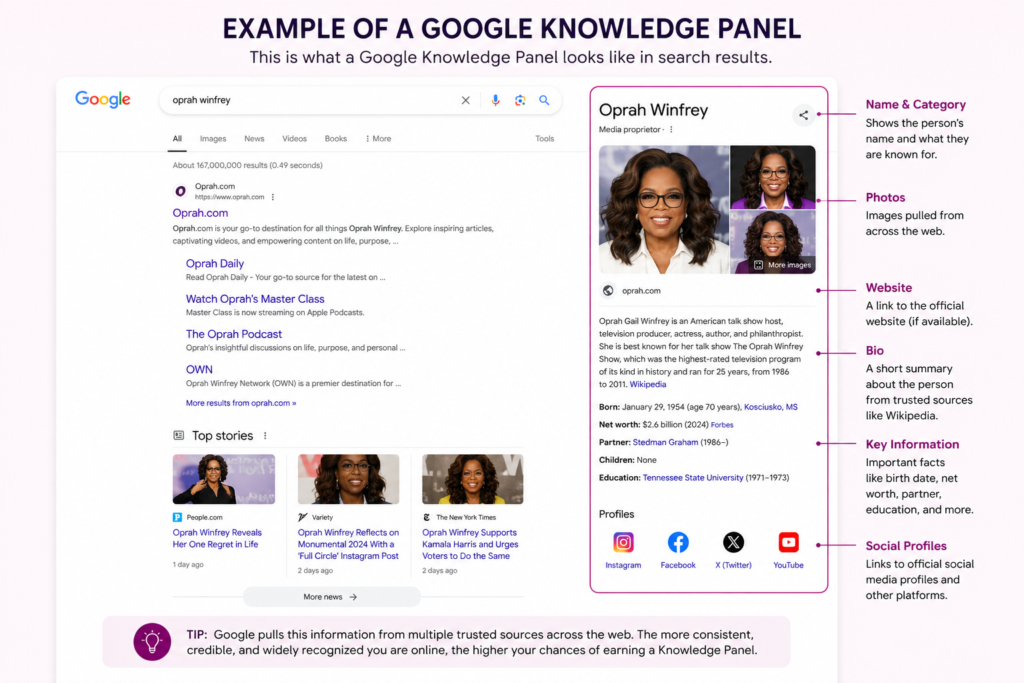
A Google Knowledge Panel is an information box that appears on Google Search for recognized people, businesses, organizations, books, films, and other notable entities.
The information comes from Google’s Knowledge Graph, a system that connects trusted information from multiple sources across the web to better understand people, places, and things.
A personal Knowledge Panel may include:
- Professional photo
- Occupation
- Biography
- Employer
- Website
- Social media profiles
- Awards
- Books
- Organizations
- Notable achievements
Unlike regular search results, a Knowledge Panel represents Google’s confidence that it understands who you are.
Can Anyone Get a Google Knowledge Panel?
The short answer is yes—but there is no application process.
Google decides whether to create a Knowledge Panel based on the quality, consistency, and credibility of information available about a person across trusted websites.
Rather than trying to “get” a Knowledge Panel, focus on becoming someone Google can confidently recognize.
Why a Google Knowledge Panel Matters
A Google Knowledge Panel does more than make your search results look impressive. It helps establish trust, authority, and credibility. Some of the benefits include:
- Builds instant credibility
- Creates a stronger first impression
- Helps journalists verify your identity
- Increases opportunities for speaking engagements
- Supports personal branding
- Makes it easier for potential clients and partners to find reliable information about you
For entrepreneurs, professionals, consultants, nonprofit leaders, authors, and speakers, this level of visibility can open doors to new opportunities.
Your Digital Footprint Is the Foundation
Before you think about a Google Knowledge Panel, think about your digital footprint.
Your digital footprint is the collection of information that exists about you online. It includes your website, biographies, interviews, articles, podcast appearances, conference speaker pages, social media profiles, business directories, and every credible mention of your name.
Google doesn’t rely on just one website. Instead, it looks for patterns across multiple trusted sources.
When your online presence is consistent and well-established, search engines can more easily recognize you as a distinct entity.
Think of your digital footprint as your professional reputation on the internet. Every quality mention helps strengthen your authority.
At Women of Rubies, we often remind women leaders that visibility isn’t just about posting on social media. It’s about building a digital presence that reflects your expertise, achievements, and impact.
10 Ways to Increase Your Chances of Getting a Google Knowledge Panel
1. Create a Professional Website
Your website should serve as the central hub of your online identity. Include:
- Professional biography
- Media features
- Awards
- Speaking engagements
- Press mentions
- Contact information
- Blog
- Professional photos
Use the same version of your name throughout the website.
2. Earn Credible Media Coverage
One of the strongest signals Google uses is third-party recognition.
Seek opportunities to be featured by:
- News publications
- Industry magazines
- Podcasts
- Television
- Online publications
- Business websites
Independent coverage carries far more weight than publishing only on your own website.
3. Keep Your Information Consistent
Consistency matters.
Your name, job title, biography, and organization should appear the same across:
- Your website
- Media interviews
- Conference profiles
- Author pages
- Company website
This consistency helps Google connect all your online profiles.
4. Build Strong Professional Profiles
Create and maintain profiles on trusted platforms such as:
- Professional associations
- Conference websites
- Company leadership pages
- Industry directories
Complete every profile with accurate information.
5. Publish Valuable Content
Google recognizes expertise over time.
Share content that demonstrates your knowledge.
Examples include:
- Articles
- Blogs
- Opinion pieces
- Research
- Videos
- Podcast interviews
- Educational content
Thought leadership helps establish authority.
6. Speak at Events
Speaking engagements create valuable digital references.
Conference websites often include:
- Professional biographies
- Speaker photos
- Session descriptions
These pages help strengthen your digital footprint.
7. Showcase Awards and Recognition
Awards add credibility to your online presence.
Display them on your website, biographies, and professional profiles.
Whether they are industry awards, leadership recognitions, or community honours, they all contribute to your professional reputation.
8. Monitor Your Search Results
Search your own name regularly.
Ask yourself:
- What appears first?
- Is the information accurate?
- Are outdated pages ranking?
- Are there duplicate profiles?
Managing your online presence should become a regular habit.
9. Strengthen Your Entity SEO
Entity SEO helps search engines understand who you are.
You can improve this by:
- Using one professional name consistently
- Linking your profiles together
- Publishing authoritative content
- Keeping biographies updated
- Earning mentions on reputable websites
The easier it is for Google to verify your identity, the stronger your online authority becomes.
10. Be Patient
Building authority takes time. Some professionals receive a Knowledge Panel after several months, while others may wait years.The goal shouldn’t be quick results. The goal should be building lasting credibility.
Common Mistakes to Avoid
Avoid these common mistakes:
- Having no personal website
- Using different versions of your name
- Relying only on social media
- Buying fake media coverage
- Publishing inconsistent biographies
- Ignoring search engine optimization
- Leaving outdated information online
A credible digital footprint is built through consistency and authenticity.
Does Having a Wikipedia Page Guarantee a Knowledge Panel?
No. While a Wikipedia page can sometimes contribute to Google’s understanding of a person, it does not guarantee a Google Knowledge Panel.
Many people have Knowledge Panels without Wikipedia pages, while others have Wikipedia pages but no Knowledge Panel.
Google considers many trusted sources before making its decision.
How Women of Rubies Can Help You Build Your Digital Footprint
At Women of Rubies, we believe visibility creates opportunity. Many talented women are doing exceptional work, but their online presence doesn’t reflect the impact they’re making.
Our media visibility and PR services help women entrepreneurs, executives, founders, nonprofit leaders, consultants, and professionals build stronger digital footprints through strategic storytelling, media placements, personal branding, and thought leadership.
Whether your goal is to become more discoverable online, attract speaking opportunities, secure media interviews, or increase your credibility, investing in your digital footprint is one of the smartest decisions you can make.
A Google Knowledge Panel isn’t built overnight, but every article, interview, website update, and media mention brings you one step closer.
Final Thoughts
A Google Knowledge Panel should be viewed as the result of a strong online presence, not the starting point. Focus on building a credible digital footprint through quality content, professional branding, media visibility, and consistent online information. As your authority grows, Google becomes more likely to recognize you as a trusted entity.
Remember, your digital footprint isn’t just about search engines; it’s about ensuring that when someone searches for your name, they find a story that truly reflects your expertise and impact.
Frequently Asked Questions
How long does it take to get a Google Knowledge Panel?
There is no official timeline. It depends on the quality and consistency of your digital footprint.
Can I apply for a Google Knowledge Panel?
No. Google automatically creates Knowledge Panels when it has enough trusted information about an entity.
Does media coverage help?
Yes. Credible third-party media coverage is one of the strongest signals that contributes to building your online authority.
Do I need a website?
Yes. A professional website acts as the foundation of your digital footprint and gives Google a trusted source of information about you.
Ready to Strengthen Your Digital Footprint?
At Women of Rubies, we help women entrepreneurs, founders, executives, consultants, and professionals increase their visibility through strategic PR, media features, storytelling, and personal branding.
If you’re ready to build a stronger digital footprint, enhance your online reputation, and position yourself for greater opportunities, including improving your chances of earning a Google Knowledge Panel, we’re here to help.
Visit our Work With Us page to learn how we can support your visibility journey or email us:info@womenofrubies.com